Is Your Mattress Worsening Your Sleep Apnea?
Your mattress choice can significantly worsen sleep apnea symptoms by disrupting spinal alignment and airway positioning, with soft sagging models causing throat collapse while overly firm ones strain neck posture reducing airflow up to 50% per studies.
Medium-firm memory foam or hybrid mattresses promote neutral spine support, optimal head elevation, and side/stomach sleeping (proven to cut apnea events), unlike 7-10-year-old beds that lose firmness and trap heat, exacerbating snoring and awakenings.
Understanding the Hidden Connection
Sleep apnea, especially the most widespread form of obstructive sleep apnea, extends far beyond the stereotype of loud snoring or feeling drowsy during the day. It is a serious chronic health condition where the airway collapses intermittently through the night, interrupting breathing and robbing the body of essential oxygen.

A Quick Guide to Sleepmaxxing: How to Optimize Your Sleep for Maximum Results
How to Choose a Mattress if You Have Sleep Apnea?
Sleep apnea is a sleep disorder where breathing pauses during the night, leaving you restless and drained by morning. While medical care is essential, the mattress you choose can make a big difference in how well you rest.
The right mattress can:
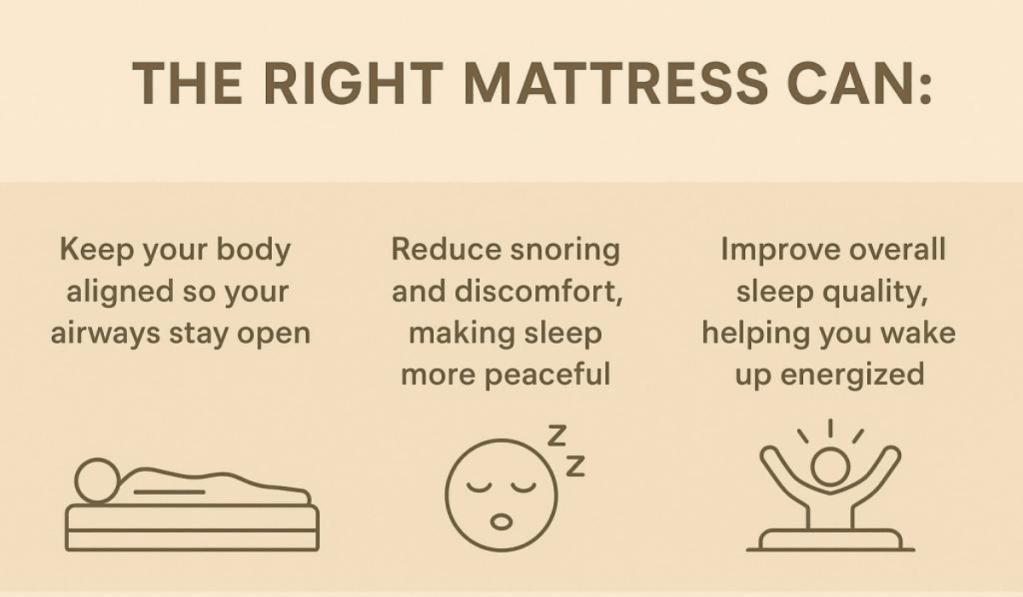
- Keep your body aligned so your airways stay open.
- Reduce snoring and discomfort, making sleep more peaceful.
- Improve overall sleep quality, helping you wake up energized.
Think of your mattress as a partner in better sleep. If it supports your body the right way, you’ll not only breathe easier but also feel more comfortable throughout the night. The wrong mattress, on the other hand, can make symptoms worse, leaving