
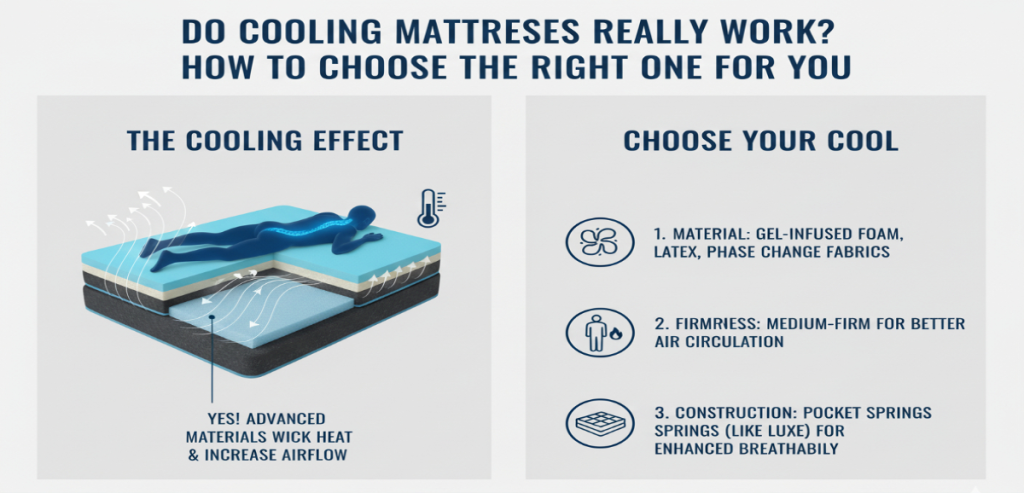
Do Cooling Mattresses Really Work? For many sleepers, yes. Overheating at night disrupts rest, and cooling mattresses are designed to regulate temperature for greater comfort. Using breathable foams, gel-infused layers, phase-change materials, or active-cooling systems, these mattresses draw heat away from the body and improve airflow.
An effective cooling mattress minimizes night sweats, enhances comfort, and supports deeper sleep. Performance varies by design and materials, but the right model can deliver consistent temperature regulation. Knowing how cooling mattresses work and which features matter most helps sleepers choose an option suited to their body type, sleeping position, and comfort nee
What Is a Cooling Mattress?
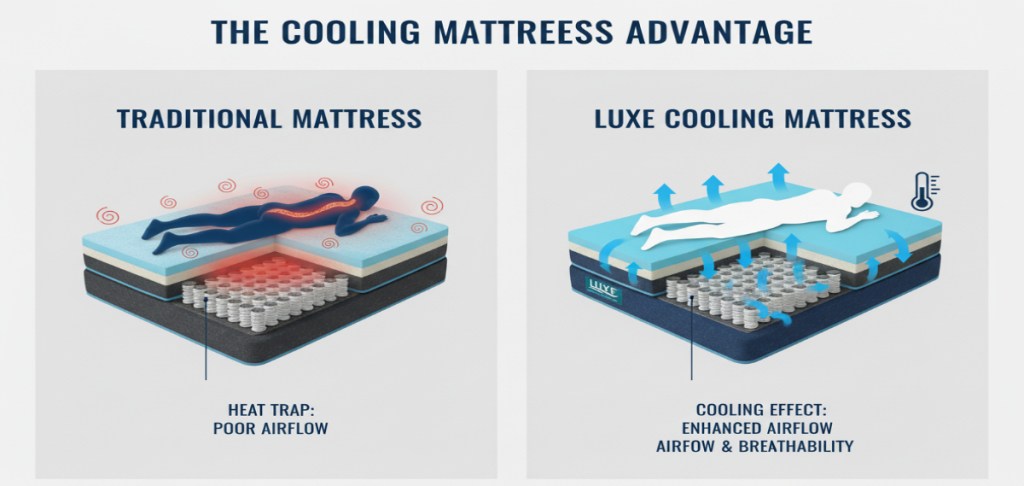
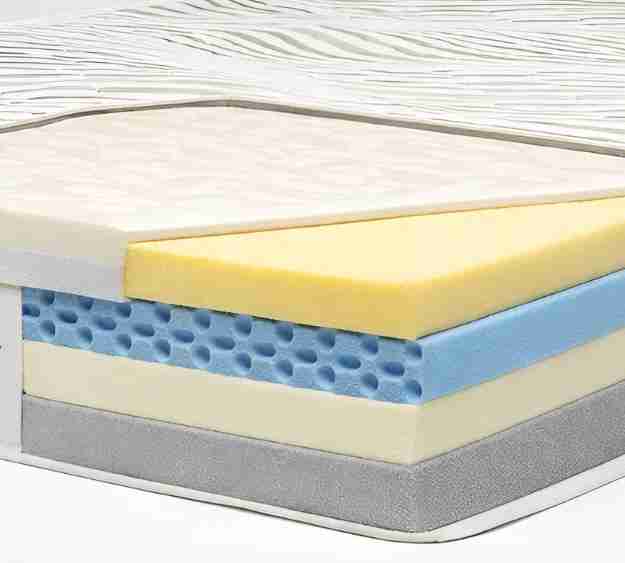
A cooling mattress is designed to regulate body temperature and prevent heat buildup during sleep. Unlike traditional mattresses that trap heat, cooling models use advanced materials and construction methods to enhance airflow and dissipate warmth.
Common Materials and Technologies
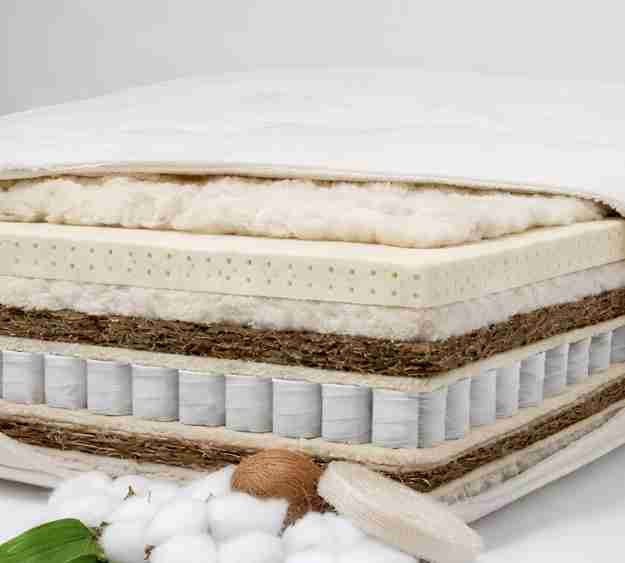
- Breathable Memory Foam or Latex: Open-cell structures allow air to circulate more freely.
- Gel-Infused Layers: Absorb and disperse heat to maintain a neutral temperature.
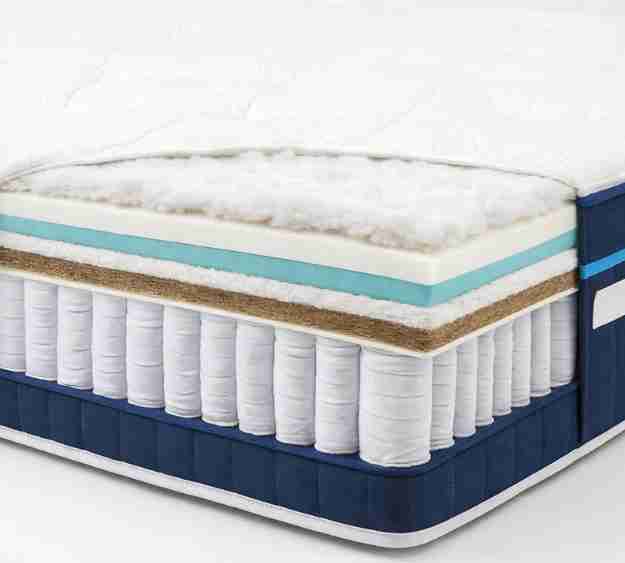
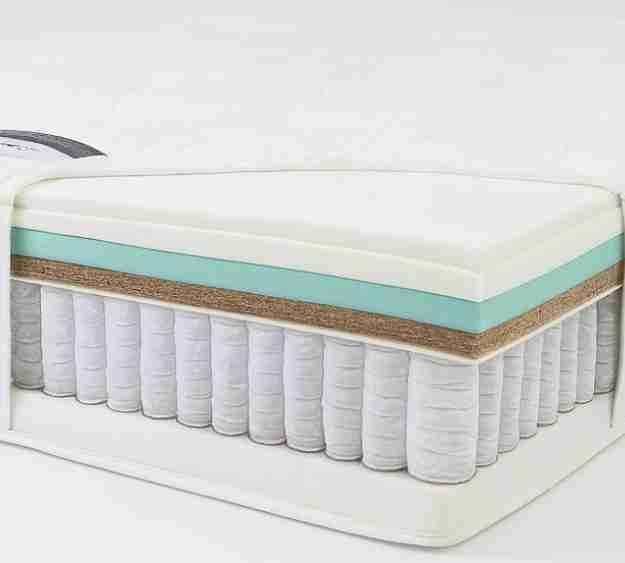
- Hybrid Designs: Combine coils with foam for improved ventilation and support.
Popular Variations
- Cooling Mattress Toppers: Add a temperature-regulating layer to an existing mattress.
- Cool Gel Mattresses: Feature gel-infused foams for extra heat absorption.
These innovations make cooling mattresses especially beneficial for hot sleepers seeking consistent comfort throughout the night.
How Do Cooling Mattresses Work?
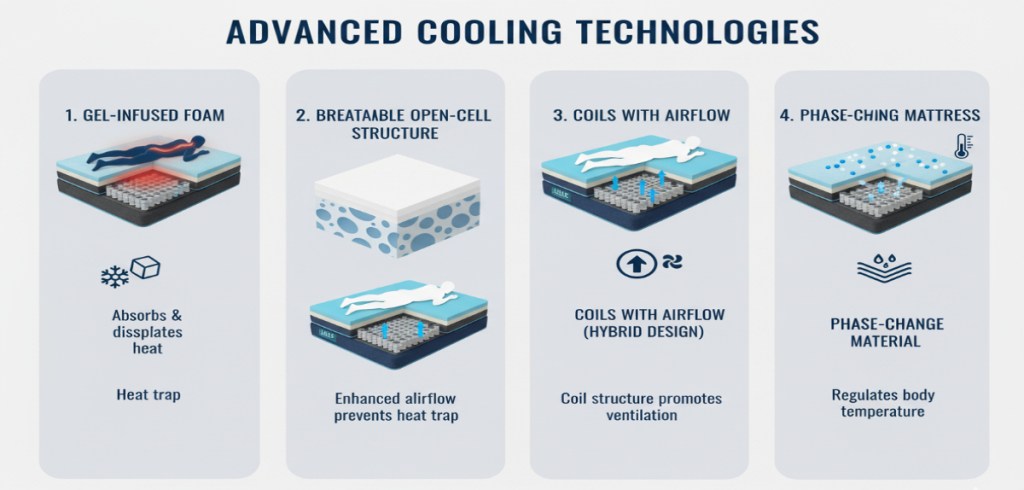
Cooling mattresses are engineered to manage body temperature and prevent heat buildup during sleep, using either passive cooling or active cooling technologies. Each method targets temperature regulation differently, ensuring sleepers remain comfortable throughout the night.
Passive Cooling
Passive cooling relies on materials and design to naturally dissipate heat:
- Breathable Foams and Latex: Open-cell structures in memory foam or latex allow air to circulate, preventing heat from being trapped within the mattress.
- Gel-Infused Layers: Gel beads or layers absorb excess heat and disperse it across the mattress surface.
- Hybrid Designs: Combining coils with foam enhances airflow and provides additional support, reducing heat accumulation.
- Moisture-Wicking Covers: Fabrics designed to draw sweat away from the body keep the sleeping surface cooler and drier.
Active Cooling
- Phase-Change Materials (PCMs): Absorb heat when changing phases, releasing it when cool.
- Integrated Cooling Systems: Built-in fans or water channels actively circulate cool air.
Examples: The Purple Mattress uses passive cooling with its hyper-elastic polymer grid for airflow, while the Cocoon Chill Mattress features active cooling with phase-change materials.
Do Cooling Mattresses Really Work?
The question “Do Cooling Mattresses Really Work?” is common among sleepers struggling with overheating. The answer is largely yes, though results depend on mattress design, materials, and individual sleep preferences. Consumer feedback and cool mattress reviews consistently show that well-constructed cooling mattresses reduce night sweats, regulate body temperature, and improve overall sleep quality.
Evidence from Reviews and Data
- Consumer Reports Best Cooling Mattress rankings indicate that gel-infused memory foam, hybrid mattresses, and mattresses with active cooling systems perform best at maintaining a neutral sleep temperature.
- Users frequently report a noticeable reduction in nighttime discomfort, especially for side sleepers and back pain sufferers.
Pros & Cons
| Pros | Cons |
| Effective temperature regulation | Higher cost for advanced cooling tech |
| Reduces night sweats | Passive models may underperform in hot climates |
| Enhances comfort for hot sleepers | Some mattresses have limited size options |
Best Cooling Mattresses for Different Sleepers

Choosing the best cooling mattress depends on sleeping position, body type, and personal comfort preferences. Different models excel for side sleepers, individuals with back pain, and heavier sleepers, offering the right combination of support, pressure relief, and temperature regulation.
Side Sleepers
Side sleepers often experience pressure points at the shoulders and hips, making a mattress that balances softness with support essential. A mattress with gel-infused memory foam or a hybrid design can relieve pressure while maintaining a cooler surface.
- Purple Hybrid Premier: Features a hyper-elastic polymer grid over supportive coils, enhancing airflow and reducing heat buildup while conforming to body curves.
- Tempur-Pedic TEMPUR-breeze: Advanced cooling layers integrated with memory foam absorb excess heat, helping side sleepers stay comfortable throughout the night.
Back Pain
Back sleepers need proper spinal alignment alongside effective temperature regulation. Cooling mattresses with supportive foam and breathable layers prevent heat retention while offering the necessary back support.
- Nectar Memory Foam Mattress: Gel-infused foam layers provide temperature control while promoting healthy spinal alignment.
- Saatva Classic: Combines innerspring coils with a breathable cover, offering consistent support and effective airflow to reduce nighttime overheating.
Heavy People
Heavier sleepers require durable mattresses that maintain support under greater weight without compromising on cooling. High-density foams, hybrid constructions, and gel layers are ideal for consistent comfort and temperature management.
- Bear Hybrid: Combines high-density foam with a cooling cover to support weight while promoting airflow.
- DreamCloud Premier: Hybrid construction with gel-infused foam and coils ensures deep compression resistance and effective heat dispersion for heavier individuals.
Selecting the right cooling mattress ensures personalized comfort, consistent temperature regulation, and restorative sleep tailored to each sleeper’s body type and needs. Understanding which features and technologies best suit your sleeping style can dramatically improve sleep quality and overall well-being.
How to Choose the Right Cooling Mattress for You
Selecting the best cooling mattress requires considering multiple factors, including sleeping position, body weight, firmness preferences, and temperature regulation needs. A mattress that suits one sleeper may not work for another, so understanding the key features is essential.
Sleeping Position
- Side Sleepers: Look for medium-soft mattresses with gel or hybrid layers to relieve pressure on shoulders and hips.
- Back Sleepers: Choose medium-firm mattresses that maintain spinal alignment while incorporating breathable materials.
- Stomach Sleepers: Firmer mattresses help prevent sinking in the midsection, reducing strain and overheating.
Body Weight
- Light to Average: Standard memory foam or hybrid mattresses provide sufficient support and cooling.
- Heavier Sleepers: High-density foam and hybrid mattresses with coils offer better durability, airflow, and heat dissipation.
Materials and Cooling Technology
- Memory Foam: Opt for gel-infused or open-cell designs to reduce heat retention.
- Latex: Naturally breathable and resilient, ideal for passive cooling.
- Hybrid Mattresses: Combine coils and foam for enhanced airflow and balanced support.
- Active Cooling Systems: Fans or phase-change materials provide dynamic temperature regulation for hot sleepers.
Additional Considerations
- Mattress Size: Ensure the mattress fits your bed frame and allows adequate space for comfort.
- Trial Periods and Returns: Many brands offer trial periods to test cooling performance before committing.
- Budget: While advanced cooling systems may cost more, investing in quality materials ensures long-term comfort and temperature regulation.
Evaluating these factors helps identify a cooling mattress that aligns with individual sleep preferences, body type, and thermal comfort needs, ensuring more restful and restorative nights.
Cooling Mattress Comparison
| Mattress | Type | Cooling Tech | Best For | Price (Queen) |
|---|---|---|---|---|
| Purple Hybrid Premier | Hybrid | Hyper-elastic grid | Side sleepers | $3,499–$6,998 |
| Cocoon Chill | Memory | Phase-change materials | Active cooling | $349–$949 |
| Nectar Mattress | Memory | Gel-infused foam | Back pain | $399–$1,300 |
| Bear Hybrid | Hybrid | Cooling cover + foam | Heavy sleepers | $1,200–$2,000 |
| DreamCloud Premier | Hybrid | Gel foam + coils | Heavy sleepers | $400–$2,000 |
| Tempur-Pedic Breeze | Memory | Gel layers | Side sleepers | $4,000–$10,000 |
| Saatva Classic | Hybrid | Breathable coils | Back pain | $1,400–$2,000 |
| Luxe Velour Hybrid | Hybrid | LTX Cooling Foam™ | All sleepers | £300–£650 |
Why Luxe Mattresses Stand Out
Luxe Mattresses combine advanced cooling technologies like LTX Cooling Foam™ and Zero Gravity Foam™ with eco-friendly materials, ensuring a comfortable sleep environment. Their hybrid construction offers optimal support, while the use of natural materials promotes breathability and durability. With a 100-night trial and a 10-year warranty, Luxe provides both quality and peace of mind, making it a top choice for sleepers seeking luxury and value.
Alternatives to Cooling Mattresses
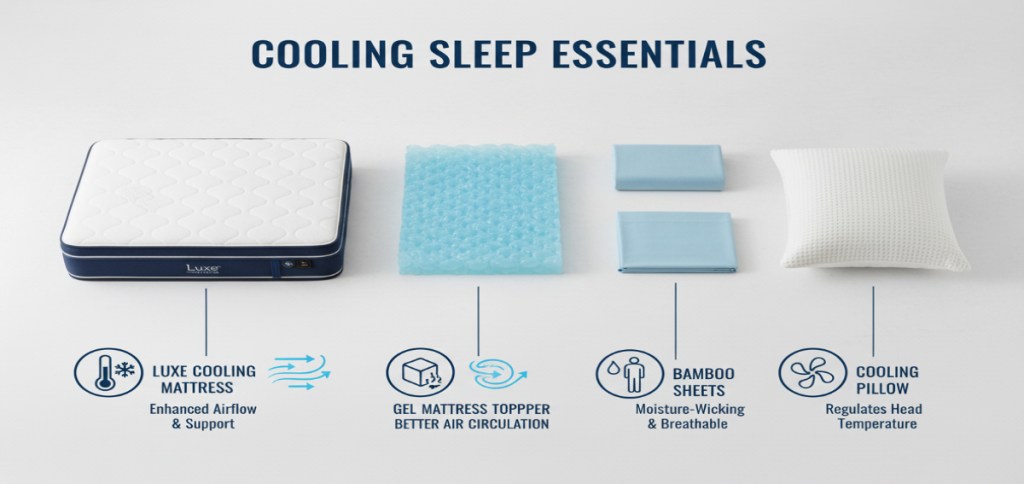
Not everyone is ready to invest in a full cooling mattress. Several cost-effective alternatives can help regulate temperature and improve sleep comfort.
Cooling Mattress Toppers
A cooling mattress topper adds a temperature-regulating layer to an existing mattress. Gel-infused foam or breathable materials can reduce heat retention, providing a cooler sleep surface without replacing the entire mattress.
Cooling Sheets
Moisture-wicking and breathable sheets, such as cotton, bamboo, or linen, enhance airflow and help dissipate body heat. They complement a standard mattress to create a cooler sleeping environment.
Cooling Pillows
Cooling pillows use gel inserts, phase-change materials, or ventilated designs to prevent heat buildup around the head and neck, further promoting overall comfort during sleep.
These alternatives are practical solutions for hot sleepers, providing temperature regulation and improved sleep without the cost of a full cooling mattress.
Conclusion
Do cooling mattresses really work? Absolutely. When selected with the right materials and technology, cooling mattresses effectively regulate temperature, reduce night sweats, and enhance sleep quality. Whether you choose a gel-infused memory foam, hybrid, or active cooling mattress, understanding your sleeping style, body type, and comfort needs is key.
For hot sleepers, cooling mattresses and affordable alternatives like cooling mattress toppers, sheets, and pillows offer practical solutions for a comfortable night’s sleep. Don’t forget to take advantage of trial periods and return policies when trying out a new mattress.
FAQs
The coolest mattresses typically feature gel-infused memory foam, latex, or hybrid designs with breathable coils. These materials enhance airflow and dissipate heat, preventing night sweats and maintaining a comfortable sleeping temperature.
For heavier sleepers, high-density foam or hybrid mattresses with coils and gel layers are ideal. Models like Bear Hybrid or DreamCloud Premier provide strong support, durable structure, and effective heat dispersion.
Yes, sheets should always be used. Breathable cotton or moisture-wicking sheets complement a cooling mattress by enhancing airflow and reducing heat retention, ensuring a cooler sleep surface.
With quality materials and proper care, a cooling mattress can last 7–10 years. Durability depends on foam density, coil construction, and frequency of use.
Yes. Cooling mattresses regulate temperature using gel layers, breathable foam, and active cooling systems, which significantly reduce night sweats and improve overall sleep quality.

I’m a professional sleep health and mattress content specialist with extensive experience writing about orthopedic mattresses, back pain relief, pressure-point support, and overall sleep comfort. I collaborate with industry research, sleep studies, and mattress performance insights to deliver accurate, trustworthy, and reader-focused content. I’m known for simplifying complex mattress technologies such as memory foam, motion isolation, and firmness levels, making them easy to understand for everyday buyers. My goal is to help readers choose mattresses that match their lifestyle, sleep posture, and health needs empowering them to achieve deeper, healthier, and pain-free sleep through informed decisions.