Introduction
When shopping for a new mattress, many people ask the same question: “Does a heavier mattress mean it’s better quality?” It’s an interesting thought because weight often feels like a sign of strength, durability, or luxury. While there’s some truth to that, the reality is a bit more balanced. A mattress’s weight can tell you about its materials and density, but it’s not the only factor that decides how comfortable or long-lasting it will be.
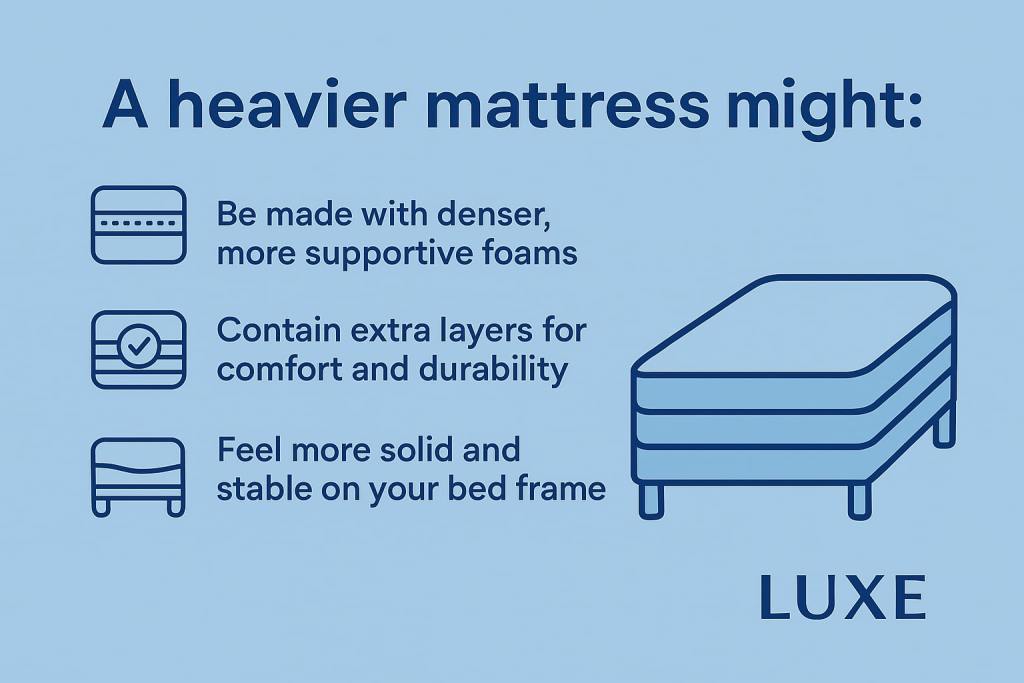
For example, a heavier mattress might:
- Be made with denser, more supportive foams.
- Contain extra layers for comfort and durability.
- Feel more solid and stable on your bed frame.
But that doesn’t mean lighter mattresses are always poor quality. Some lighter designs use smart materials that are supportive yet easy to move. The key is to look beyond just the weight and focus on what truly makes a mattress right for you.
What Determines Mattress Weight?
The weight of a mattress isn’t random it depends on a few key factors. Knowing these will help you understand why some mattresses feel heavier than others:
- Materials Used
- Memory Foam: Usually heavier because it’s made with dense foam layers. Great for body support and pressure relief.
- Latex: Naturally heavy but also extremely durable, supportive, and long-lasting.
- Innerspring: Lighter than foam or latex since it relies on coils, though hybrids with foam layers can add extra weight.
- Hybrid: A mix of foam + coils, making it heavier than basic innerspring but often more supportive.
- Thickness and Density
- Thicker mattresses with multiple layers will weigh more.
- High-density foams are heavier, but they also last longer and resist sagging.
- Size (Twin vs. King)
- A twin or single mattress will be much lighter and easier to move.
- Queen and king mattresses weigh more because they’re larger and have more material inside.
In short, mattress weight depends on what it’s made of, how thick it is, and the size you choose. Heavier doesn’t always mean better but it often shows strong, durable construction.
Does Mattress Weight Correlate with Quality?
Many people think a heavier mattress automatically means higher quality. While weight can give some clues, it’s not the whole story. Let’s break it down:
Heavier Foams = More Durability
Mattresses made with high-density foams are usually heavier. This extra density means they can support your body better and resist sagging over time. If you’re looking for a long-lasting option, heavier foams are often a good sign.
Latex Mattresses: Naturally Heavy, Naturally Strong
Latex mattresses are among the heaviest, but for a reason they’re durable, supportive, and breathable. They can last many years, making the extra weight worth it.
Innerspring & Hybrid: A Balance of Layers
Innerspring mattresses are lighter because they rely on coils. Hybrids, on the other hand, combine coils with foam or latex layers, so their weight depends on how many layers are inside. More layers often mean more comfort and support.
Lightweight Mattresses: Easy but Less Lasting
Light mattresses are easier to move, flip, and set up. However, they may not last as long, especially if the materials are less dense.
Does Mattress Weight Correlate with Quality?
Weight can hint at build and durability, but materials and construction matter most.
| Category | Weight Tendency | What Weight Suggests | Pros | Watch-outs | Typical Materials / Notes |
|---|---|---|---|---|---|
| Heavier Foams | Heavy | Higher foam density often means better support and resistance to sagging. | Durable, supportive, holds shape longer. | Can trap heat if not aerated; harder to move. | High-density memory foam, polyfoam cores. |
| Latex Mattresses | Very Heavy | Natural/organic latex is dense and resilient; weight comes from solid latex layers. | Highly durable, buoyant support, breathable pincore structure. | Premium price; heavy to move or rotate. | Natural or blended latex; long lifespans. |
| Innerspring | Lighter | Weight mostly in coil unit; fewer foam layers keep weight down. | Responsive feel, easy to lift and move. | May wear faster if thin comfort layers; motion transfer on basic designs. | Open coils or pocket springs with light foam. |
| Hybrid | Medium → Heavy | More layers (coils + foams/latex) increase weight and usually comfort. | Balanced support + pressure relief; good airflow from coils. | Heavier as layers stack; quality varies by materials used. | Coils + memory foam, polyfoam, or latex comfort layers. |
| Lightweight Builds | Light | Easy handling; often lower-density foams or thinner stacks. | Simple setup, easy to flip/rotate. | May not last long; prone to sagging. | Low-density foams, minimalist designs. |
In short, mattress weight can reflect quality, but comfort, durability, and support are even more important.
Pros of a Heavier Mattress
A heavier mattress often comes with some real benefits:
- Stays in Place – Doesn’t shift easily when you move in bed.
- Better Durability – Dense materials last longer and resist sagging.
- Stronger Support – Offers solid support for your back and body.
- Luxurious Feel – Feels more premium and sturdy on the bed frame.
- Less Motion Transfer – Heavier builds reduce movement, great for couples.

Cons of a Heavier Mattress
While heavy mattresses have their strengths, they also come with some drawbacks:
- Not Always More Comfortable – Weight doesn’t guarantee the right firmness for you.
- Hard to Move – Difficult to lift, rotate, or flip without help.
- Delivery & Setup – Getting it upstairs or through tight spaces can be tough.
- Challenging for Frequent Movers – Not ideal if you relocate often.
- Cleaning Issues – Heavier beds can be tricky to lift for cleaning underneath.
Other Factors More Important than Weight
While mattress weight can give you some clues, it’s not the best way to judge quality. What truly matters are the features that impact your comfort, health, and sleep quality.
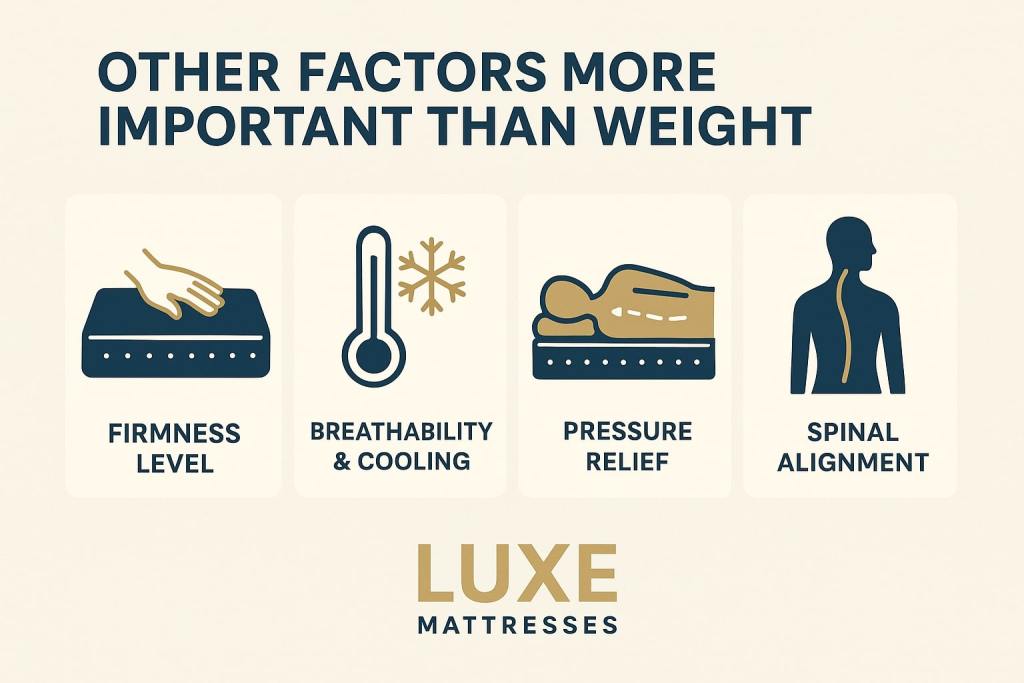
Firmness Level
The right firmness depends on your body type and sleeping position. For most people, a medium-firm mattress works best because it balances comfort with support.
Breathability & Cooling
If you tend to sleep hot, weight won’t help breathability will. Mattresses with cooling gels, open-cell foams, or breathable fabrics can keep you cool and comfortable all night long.
Pressure Relief
A good mattress should ease pressure on your shoulders, hips, and lower back. Proper pressure relief helps reduce aches and allows for more restful, deeper sleep.
Spinal Alignment
One of the most important factors is how well a mattress supports your spine. A quality bed keeps your posture natural, preventing back and neck pain over time.
In short, weight is secondary. The true signs of quality are comfort, support, and how well a mattress helps you sleep.
How to Choose the Right Mattress Beyond Weight
Weight alone doesn’t decide mattress quality. Here are the most important things to focus on when choosing the right one for you:

Know Your Sleeping Position
Your sleeping position plays a big role in choosing the right mattress. Side, back, or stomach sleepers all need different levels of firmness for proper comfort and support.
- Side sleepers need a softer mattress to cushion the shoulders and hips.
- Back sleepers usually benefit from medium-firm support.
- Stomach sleepers need a firmer bed to keep the body from sinking too much.
Consider Your Body Type
- Heavier sleepers often need denser foams or hybrid designs for long-lasting support.
- Lightweight sleepers usually feel more comfortable on softer mattresses that adjust easily to their body.
Check for Durability
- Look for high-density foams, quality coils, or natural latex.
- A mattress should ideally last 7–10 years with proper care.
The best mattress is the one that supports your body and feels right no matter its weight.
Conclusion
Mattress weight can give you some clues about its quality, but it’s not the only factor that matters. A heavier mattress may feel stronger, last longer, and offer better support but comfort, durability, and proper alignment are what truly make a mattress valuable.
Instead of focusing only on weight, think about your sleeping position, body type, and personal comfort needs. Also, check for features like breathability, trial periods, and warranties. In the end, the best mattress is not the heaviest one, but the one that helps you sleep peacefully every night.
FAQs
Not always. Heavier mattresses often use denser materials that last longer, but weight alone doesn’t guarantee comfort or quality.
Some do, especially if they’re made with lower-density foams. However, many modern lightweight mattresses are designed with durable yet easy-to-move materials.
A queen mattress usually weighs between 60–120 pounds, depending on the material. Foam and hybrid beds tend to be heavier than innerspring models.
Not directly. What matters more is firmness and support. A medium-firm mattress with proper spinal alignment is usually best for back pain, whether heavy or light.
No. Light mattresses can still be high quality, especially if they use strong foams or smart designs. They’re also easier to move, rotate, and set up.

I’m Zainab, and I write to help people choose the right mattresses. I share clear, useful information about everything from comfort to materials, so you can pick the one that’s best for you.