


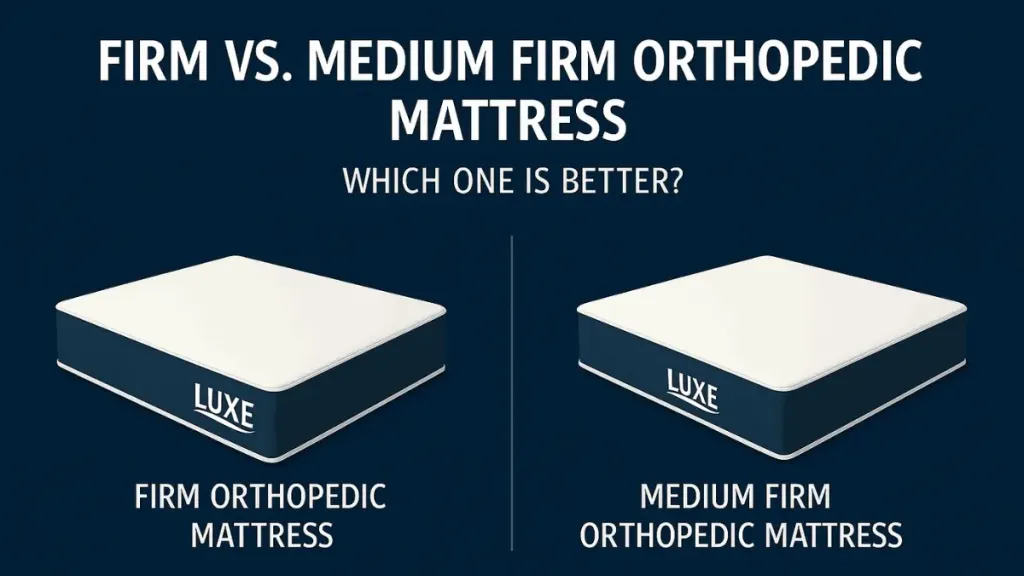
When you struggle with back pain or poor sleep quality, your mattress plays a bigger role than you might imagine. Choosing between a firm vs medium firm orthopedic mattress isn’t simply about comfort, it’s about aligning your spine, supporting your joints, and improving your overall well-being. The firmness level you select can directly influence posture, muscle relaxation, and how your body recovers overnight.
A mattress that’s too soft lets your body sink, straining the lower back. One that’s too hard can create pressure points around your hips and shoulders. The best solution lies in understanding how firmness, orthopedic design, and sleep ergonomics work together to promote better rest and pain relief.
Understanding Mattress Firmness Levels
Firmness refers to how much a mattress resists your body weight when you lie down. The industry commonly uses a firmness scale from 1 to 10, where 1 feels ultra-soft and 10 feels extra firm.
Most orthopedic mattresses fall between 6 and 8 on this scale, the sweet spot for spine support.
A firm orthopedic mattress typically sits around level 8, offering minimal sinkage and maximum spinal stability.
A medium-firm orthopedic mattress ranges between levels 6 and 7, balancing comfort and structure.
This mattress firmness comparison helps you visualize how each option supports different sleeping styles and body types. While both are classified as orthopedic, their subtle differences in pressure absorption and contouring can completely change your sleeping experience.
What Is a Firm Orthopedic Mattress?

A firm orthopedic mattress is built for strong support and targeted alignment. Its structure includes foam layers or firm pocket springs designed to keep the spine straight through the night.
The goal is to prevent spinal sagging and ensure even pressure distribution from head to toe.
This firmness type is especially beneficial for:
- Back and stomach sleepers
- People with chronic back pain
- Individuals who prefer a stable, non-bouncy surface
- Users with higher body weight needing enhanced support
Firm mattresses prevent the midsection from sinking too deeply, maintaining spinal curvature and improving circulation. These properties help reduce lumbar strain, making it ideal for orthopedic use.
What Is a Medium-Firm Orthopedic Mattress?
A medium-firm orthopedic mattress offers a compromise between rigidity and plush comfort. It supports the back efficiently but adds a subtle cushioning layer to cradle sensitive pressure points.
This option is perfect for those seeking balance, sturdy enough for spinal alignment yet soft enough to relieve hip and shoulder tension.
Medium-firm options suit:
- Combination and side sleepers
- Lightweight to average-weight users
- People seeking both comfort and medical-grade support
- Couples with different firmness preferences
From a sleep ergonomics perspective, a medium-firm mattress allows the spine to maintain its natural S-shape while adapting to your body contour. It’s particularly helpful for individuals who move frequently during sleep, as it offers responsive comfort across all positions.
The Science Behind Firmness and Spine Support
Every spine needs stable support to maintain its neutral alignment. Orthopedic mattresses are scientifically engineered to achieve this by using support level testing and orthopedic firmness chart ratings.
Key Support Principles:
- Spinal Alignment: The mattress should keep your neck, shoulders, and hips in one straight line.
- Pressure Relief: It must evenly distribute your weight across pressure zones like the lower back, hips, and shoulders.
- Muscle Relaxation: By maintaining alignment, the mattress minimizes muscle tension and promotes overnight recovery.
- Circulation: Proper firmness prevents restricted blood flow caused by sinking or stiff surfaces.
Both firm and medium-firm orthopedic types meet these scientific standards, but they differ in how they achieve the balance between pressure relief and firmness.
Comparing Firm vs Medium-Firm Orthopedic Mattress
Let’s look at a detailed mattress firmness comparison to understand how both perform across key parameters.
| Feature | Firm Orthopedic Mattress | Medium-Firm Orthopedic Mattress |
| Firmness Level (Scale 1–10) | 8 | 6–7 |
| Spinal Support | Maximum stability | Balanced alignment |
| Pressure Relief | Minimal contouring | Moderate contouring |
| Comfort Layers | Dense and flat | Slightly cushioned |
| Ideal For | Back/stomach sleepers | Side/mixed sleepers |
| Pain Relief | Best for chronic back pain | Best for shoulder/hip tension |
| Body Type Suitability | Heavier individuals | Light to average-weight individuals |
| Movement Absorption | High stability | Slight bounce for comfort |
This table helps visualize the performance differences between firm vs medium firm orthopedic mattress types. Both excel in orthopedic support but cater to distinct comfort needs.
Pressure Zones and Sleep Ergonomics
Human anatomy features several pressure-sensitive zones primarily around the shoulders, lower back, and hips. A mattress that doesn’t accommodate these zones can worsen stiffness or cause numbness.
The firm vs medium firm orthopedic mattress debate often revolves around how effectively each manages these areas.
- Firm Models: Distribute body weight evenly, ideal for individuals needing total stability and reduced motion transfer.
- Medium-Firm Models: Offer adaptive cushioning, which helps maintain blood flow and reduces soreness in side sleepers.
Proper sleep ergonomics depend on how the mattress interacts with these pressure zones, promoting relaxed posture and tension-free sleep.
Comfort Layers and Support Level Testing
Orthopedic mattresses go through multiple support level testing stages to ensure the right balance of firmness and flexibility. Manufacturers analyze how various comfort layers respond to different body weights, sleeping styles, and spinal conditions.
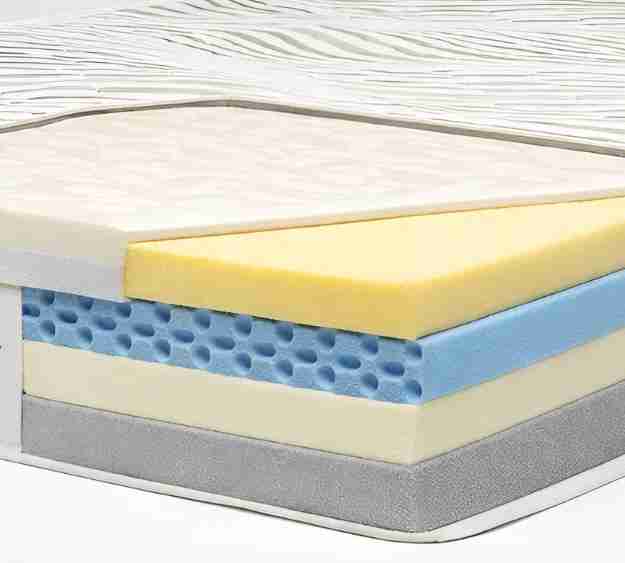
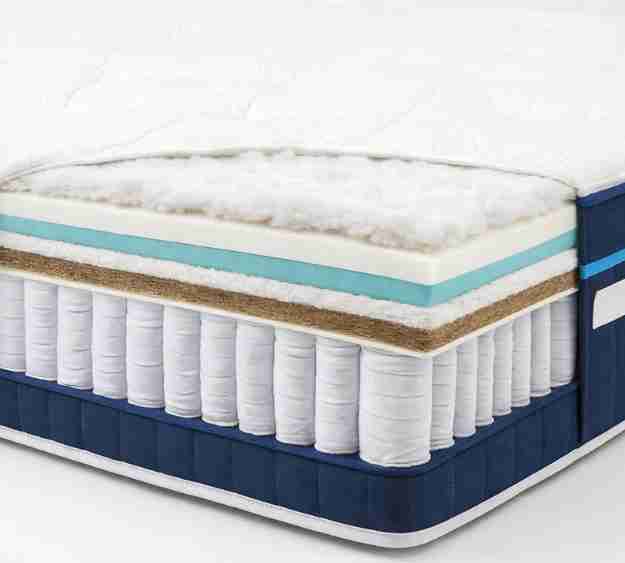
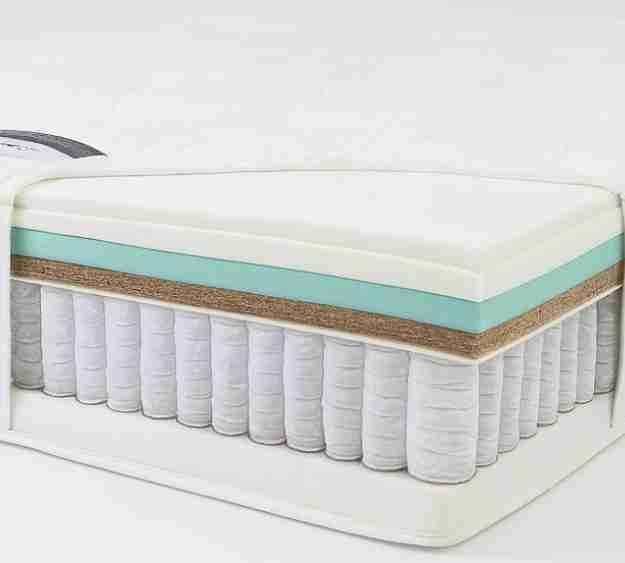
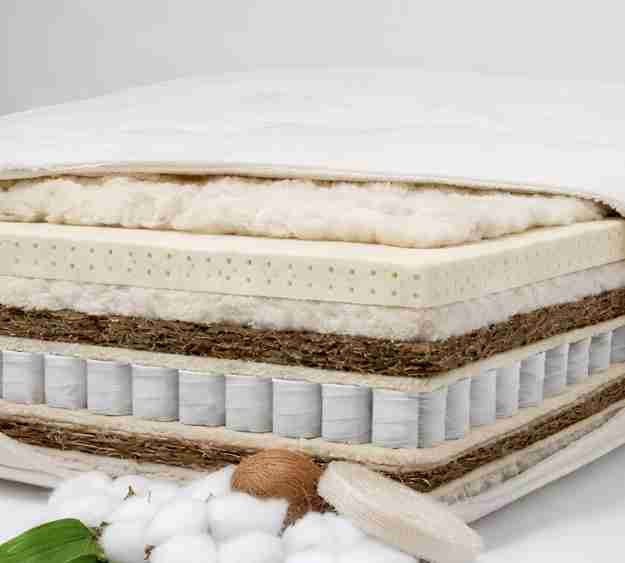
- Comfort Layers: These are the top segments of the mattress made of memory foam, latex, or gel-infused foam.
- Support Core: The base or spring layer maintains overall stability.
- Transition Zones: Found in medium-firm models, these zones allow gradual pressure absorption without losing structure.
A firm vs medium firm orthopedic mattress essentially differs in the density of these layers — firm versions use stiffer materials for posture correction, while medium-firm models include adaptive foams to enhance comfort.
User Preferences: UK Firmness Scale and Sleep Styles
In the UK, mattress preferences often depend on body weight, climate, and sleep style.
The UK firmness scale generally classifies:
- Soft (1–3) for light sleepers or side sleepers
- Medium (4–6) for balanced comfort
- Medium-Firm (6–7) as the most popular choice
- Firm (8–10) for orthopedic and back pain relief
A survey of UK households shows that over 60% of adults prefer medium-firm orthopedic options for their ability to blend comfort and support, while 30% choose firm orthopedic mattresses for targeted posture correction.
So, when selecting between a firm vs medium firm orthopedic mattress, consider not just your back condition but also your sleep posture and weight distribution.
Which One Is Better for Back Pain?
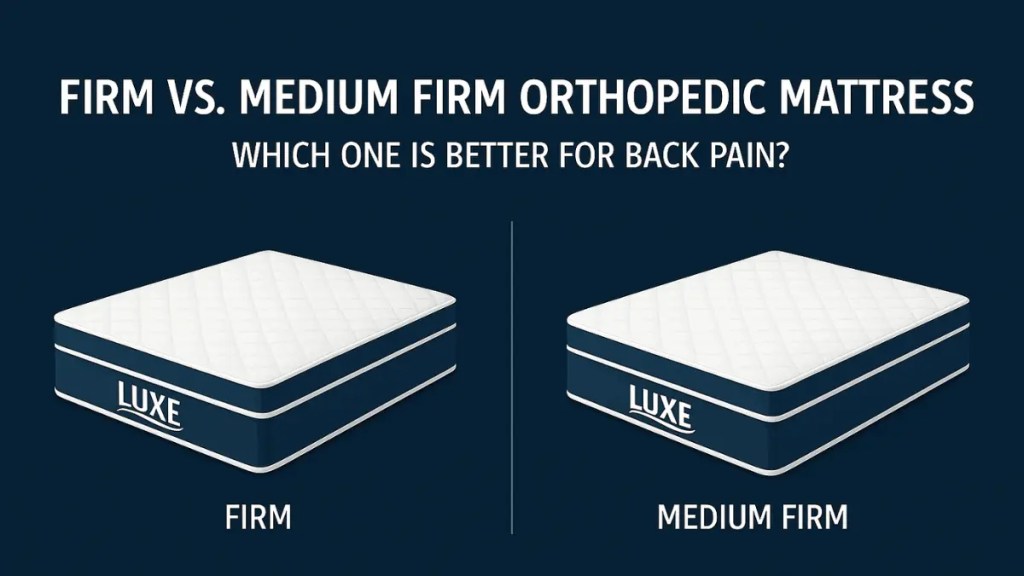
The relationship between mattress firmness and back pain is well-documented in clinical sleep studies.
- Firm Orthopedic Mattress: Ideal for individuals with lower back discomfort and lumbar misalignment. It ensures minimal sinking and corrects posture effectively.
- Medium-Firm Orthopedic Mattress: Favoured by healthcare experts for general back pain prevention and long-term comfort. It combines spinal stability with moderate cushioning.
In short, for acute pain or heavy body weight, firm mattresses work better. For chronic tension and comfort seekers, medium-firm options offer superior pressure relief.
Both promote healthy spinal curvature and improved back pain firmness levels, but your sleeping position and weight ultimately determine the winner.
Expert Insights: Choosing Based on Body Weight and Sleep Position
- Back Sleepers: Benefit more from firm surfaces that maintain neutral spine alignment.
- Side Sleepers: Prefer medium-firm models that ease shoulder and hip pressure.
- Combination Sleepers: Require adaptive surfaces with multiple comfort zones.
- Heavier Individuals: Should choose firm types for stronger lumbar support.
- Lightweight Sleepers: Often sleep better on medium-firm options for cushioning and contour.
This balance ensures your chosen firm vs medium firm orthopedic mattress meets ergonomic requirements without compromising relaxation.
Maintaining the Right Firmness Over Time
Over years of use, even the best orthopedic beds can lose structure.
To preserve firmness and orthopedic benefits:
- Rotate or flip the mattress every 3–4 months.
- Use a breathable, waterproof protector to prevent foam degradation.
- Keep it on a solid base to ensure even support distribution.
- Avoid prolonged sagging by not sitting in one spot regularly.
Routine maintenance safeguards the comfort layers and maintains consistent support across pressure zones.
Conclusion
The choice between a firm vs medium firm orthopedic mattress isn’t about which is universally “better”, it’s about what fits your body’s biomechanics.
- Choose Firm if you need unwavering support, posture correction, and less sinkage.
- Choose Medium-Firm if you value balanced comfort, adaptive cushioning, and subtle flexibility.
Both designs excel in orthopedic performance, but your sleep style, weight, and pain intensity dictate the right firmness level. A medium-firm model generally fits the majority of users due to its versatility, while a firm version remains unmatched for spinal precision and lower back relief.
FAQ’s
Not necessarily. While a firm option offers stronger support, a medium-firm mattress provides better adaptability for different body types and sleeping styles.
Use an orthopedic firmness chart or try mattresses in-store. Pay attention to how your hips and shoulders align, if your back stays straight without tension, that’s your match.
Yes. They balance stability and softness, making them ideal for partners with varying preferences.
Yes, firmer mattresses often retain shape longer, while medium-firm ones maintain comfort better over time.

I’m a professional sleep health and mattress content specialist with extensive experience writing about orthopedic mattresses, back pain relief, pressure-point support, and overall sleep comfort. I collaborate with industry research, sleep studies, and mattress performance insights to deliver accurate, trustworthy, and reader-focused content. I’m known for simplifying complex mattress technologies such as memory foam, motion isolation, and firmness levels, making them easy to understand for everyday buyers. My goal is to help readers choose mattresses that match their lifestyle, sleep posture, and health needs empowering them to achieve deeper, healthier, and pain-free sleep through informed decisions.