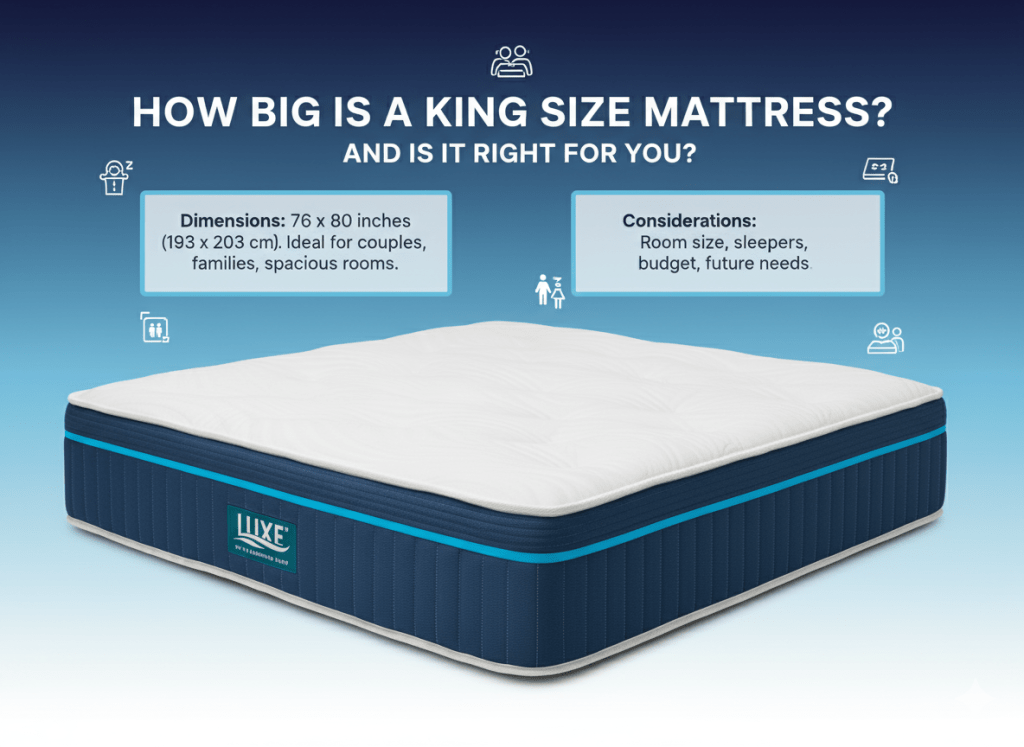
Many people struggle with cramped sleeping space, disrupted rest, or discomfort in shared beds. A king size mattress can solve these issues by providing ample room for stretching, reducing motion transfer, and enhancing overall sleep quality. King size mattresses are ideal for couples, tall individuals, or anyone who values extra space during rest.
They offer more comfort and support than queen or double beds, making it easier to maintain proper sleep posture and minimize disturbances. Understanding the dimensions, comfort features, advantages, and potential drawbacks of a king size mattress is key to deciding if it’s the right fit for your bedroom and sleep needs.
What Is a King Size Mattress?
A king size mattress is a large bed designed to provide maximum comfort and space for couples or individuals who prefer extra room while sleeping. It offers more width and length than a standard double or queen mattress, reducing disturbances and improving overall sleep quality.
The exact dimensions of a king size mattress vary by region. In the UK, a standard king size mattress measures approximately 150 cm × 200 cm (5 ft × 6 ft 6 in). In the US, the standard king size is larger at 193 cm × 203 cm (76 in × 80 in), while European king sizes may differ slightly depending on the country.
Understanding what a king size mattress is and its dimensions helps in choosing the right mattress for your bedroom layout, bedding, and personal comfort needs.
King Size Mattress Dimensions
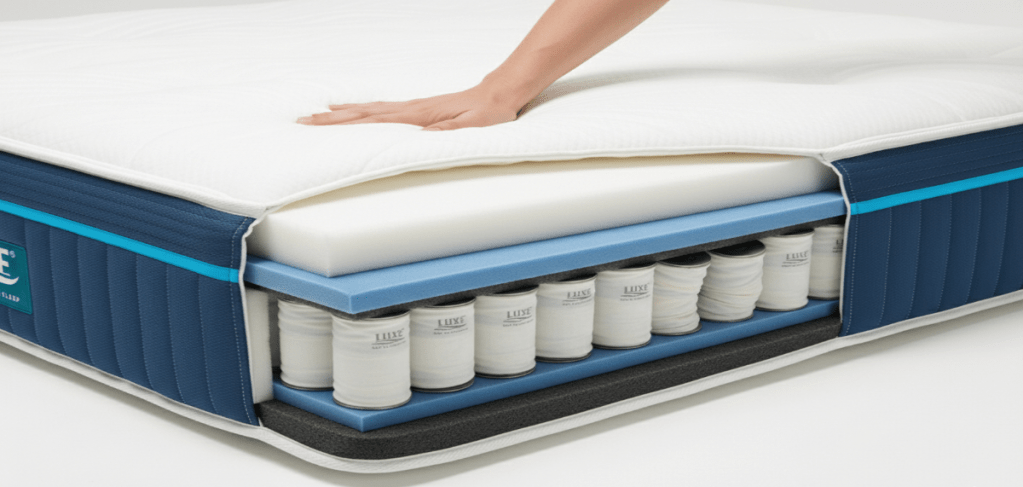
A king size mattress provides generous sleeping space, making it larger than a queen or double bed. In the UK, the standard king size measures 150 cm × 200 cm (5 ft × 6 ft 6 in), while in the US, it measures 193 cm × 203 cm (76 in × 80 in). This extra space offers comfort for couples, tall sleepers, or those who prefer room to move at night.
For comparison, here’s how king size mattresses stack up against other common sizes:
| Mattress Size | Dimensions (UK) | Dimensions (US) | Notes |
| Double | 135 cm × 190 cm | 137 cm × 190 cm | Standard for single sleepers or small rooms |
| Queen | 150 cm × 200 cm | 152 cm × 203 cm | Slightly smaller than king, suitable for couples |
| King | 150 cm × 200 cm | 193 cm × 203 cm | Provides ample space for couples and tall sleepers |
| Super King | 180 cm × 200 cm | 203 cm × 203 cm | Extra-wide option for maximum comfort |
Knowing how long a king size mattress is and its width helps you plan your bedroom layout and choose suitable bedding.
Pros and Cons of a King Size Mattress
A king size mattress offers significant advantages, including extra space, enhanced comfort, and improved sleep quality. It is ideal for couples, tall sleepers, or anyone who values personal space during rest. The wider surface reduces disturbances from a partner’s movements, making it easier to maintain a restful sleep.
However, king size mattresses also have some drawbacks. They require a larger bedroom, are generally more expensive than smaller sizes, and can be heavier and harder to move or handle.
| Advantages | Disadvantages |
| Extra space for comfortable sleep | Requires a large bedroom |
| Ideal for couples and tall sleepers | Higher cost than smaller sizes |
| Reduces disturbances from partner’s movement | Heavier and harder to move |
| Improved overall sleep quality | May limit furniture placement options |
Understanding these pros and cons helps determine if a king size mattress is the right fit for your bedroom and lifestyle.
Who Should Consider a King Size Mattress?

A king size mattress is ideal for couples who need extra sleeping space or for tall individuals who require additional length for comfort. It also suits anyone who enjoys stretching out during sleep without feeling restricted.
Bedroom size is an important consideration, as a king mattress requires enough space for movement around the bed and placement of other furniture. Typically, a room should be at least 12 ft × 12 ft to comfortably accommodate a king size bed.
Compared to queen or double beds, a king size mattress offers significantly more room, reducing disturbances and providing better sleep quality. It is the best option when comfort and personal space are top priorities.
Comfort and Sleep Benefits of King Size Mattresses
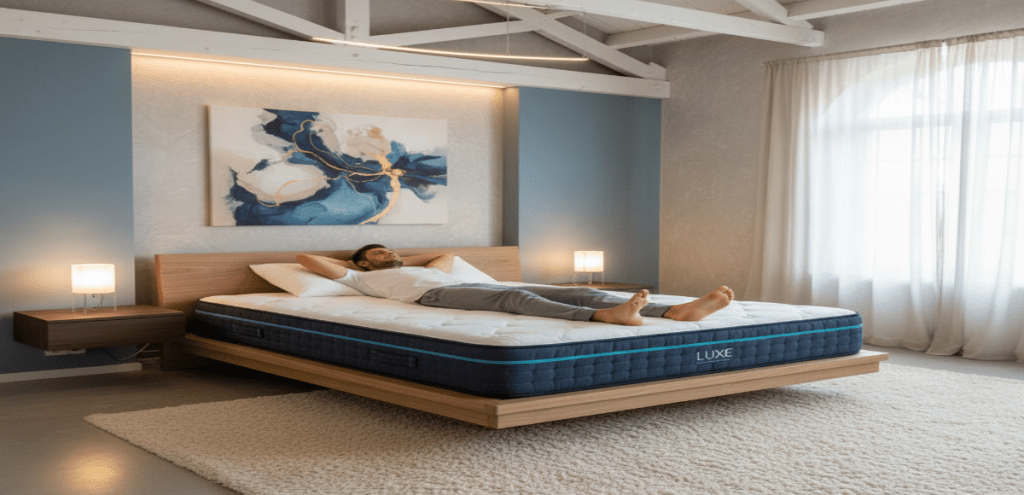
A king size mattress provides ample space, allowing sleepers to move freely without feeling restricted. This extra room helps reduce tossing and turning, which improves overall sleep quality and ensures a more restful night.
Motion isolation is another key benefit, as the larger surface minimizes disturbances from a partner’s movements. Personal space also promotes better sleep posture, reducing pressure on the spine and joints. Overall, a king size mattress supports sleep health, comfort, and long-term well-being for both individuals and couples.
Conclusion
A king size mattress provides ample space, superior comfort, and improved sleep quality, making it ideal for couples, tall individuals, or anyone who values extra room while resting. Understanding its dimensions, benefits, and suitability ensures you choose the right mattress for your bedroom and lifestyle.
When selecting a king size mattress, consider factors like room size, sleeping preferences, and mattress materials. Investing in the right mattress enhances sleep posture, reduces disturbances, and promotes overall well-being. Explore top-rated king size mattresses to find the one that perfectly fits your comfort and space needs.
FAQs
How big is a king size mattress in the UK?
A standard UK king size mattress measures 150 cm × 200 cm (5 ft × 6 ft 6 in). It provides extra space compared to a queen or double bed.
Is a king size bigger than a queen?
Yes, a king size mattress is wider and longer than a queen, offering more room for couples and tall sleepers.
Comfort depends on personal preference, but a king size mattress offers the most space, reducing disturbances and improving sleep quality.
Pros: extra space, comfort, better sleep for couples; Cons: requires a large room, higher cost, heavier to move.
The most comfortable king size mattress balances firmness, support, and materials like memory foam or hybrid layers for optimal sleep.
Yes, the extra space and reduced motion transfer allow for better sleep posture and fewer disturbances throughout the night.

I’m a professional sleep health and mattress content specialist with extensive experience writing about orthopedic mattresses, back pain relief, pressure-point support, and overall sleep comfort. I collaborate with industry research, sleep studies, and mattress performance insights to deliver accurate, trustworthy, and reader-focused content. I’m known for simplifying complex mattress technologies such as memory foam, motion isolation, and firmness levels, making them easy to understand for everyday buyers. My goal is to help readers choose mattresses that match their lifestyle, sleep posture, and health needs empowering them to achieve deeper, healthier, and pain-free sleep through informed decisions.