


Sleep apnea is a sleep disorder where breathing pauses during the night, leaving you restless and drained by morning. While medical care is essential, the mattress you choose can make a big difference in how well you rest.
The right mattress can:
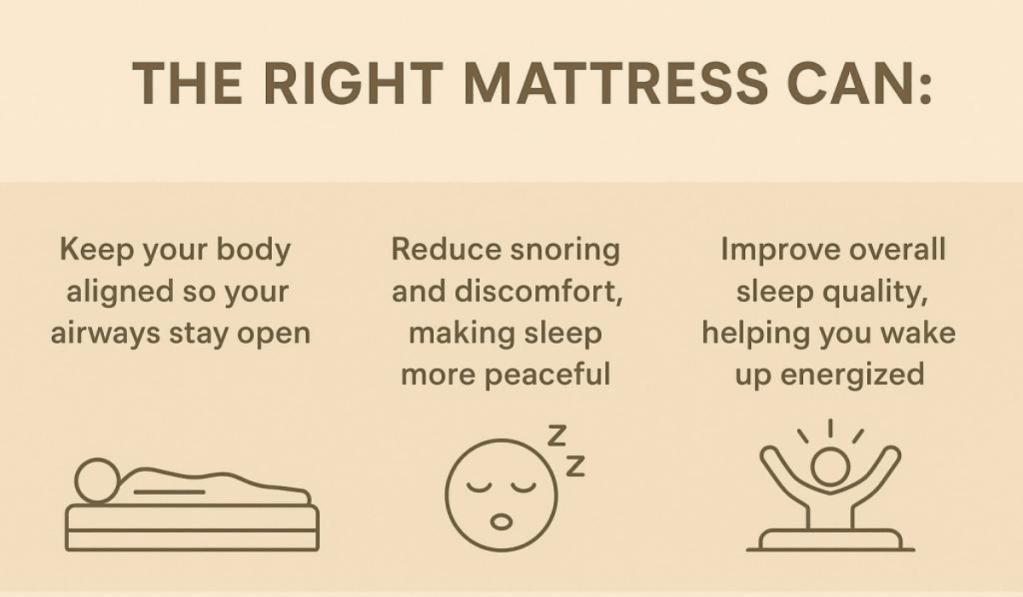
- Keep your body aligned so your airways stay open.
- Reduce snoring and discomfort, making sleep more peaceful.
- Improve overall sleep quality, helping you wake up energized.
Think of your mattress as a partner in better sleep. If it supports your body the right way, you’ll not only breathe easier but also feel more comfortable throughout the night. The wrong mattress, on the other hand, can make symptoms worse, leaving you tossing and turning. In this blog, we’ll share simple and practical tips to help you find the best mattress for sleep apnea so you can finally enjoy restful, refreshing nights.
Understanding Sleep Apnea and Sleep Needs
Sleep apnea happens when your breathing repeatedly stops and starts while you sleep. This can leave you feeling tired, groggy, and restless, even after a full night in bed. The good news is that small changes like choosing the right mattress can help reduce discomfort and make breathing easier.
Here’s why it matters:
- Airway Support: A mattress that keeps your spine and neck properly aligned helps keep your airways open.
- Sleeping Position: Side sleeping is often the best for sleep apnea, and the right mattress can make this position more comfortable.
- Better Rest: When your body is supported, you’re less likely to wake up from snoring, tossing, or breathing pauses.
By understanding how sleep apnea affects your body, you can make smarter choices. The right mattress won’t cure sleep apnea, but it can make a real difference in how well you rest every night.
Key Points to Look For in the Right Mattress
Choosing the right mattress for sleep apnea can feel confusing, but focusing on a few important features makes it much easier. Here are the key points to look for:
- Cooling Technology – Overheating at night can make sleep apnea worse. Mattresses with cooling materials or breathable designs help you stay cool and comfortable for deeper rest.
- Firmness Level – A medium-firm mattress is usually the best choice because it gives your body enough support while still being comfortable. It helps keep your spine in a natural position, which makes breathing easier during the night.
- Support & Alignment – A good mattress keeps your spine, neck, and head aligned. When your body is properly supported, your airways stay more open, reducing snoring and pauses in breathing.
- Pressure Relief – Look for a mattress that reduces pressure on your shoulders, hips, and back. This prevents discomfort, especially for side sleepers, while still keeping your body supported.
- Motion Isolation – If you share your bed, choose a mattress with strong motion isolation. This way, your partner’s movements won’t disturb your sleep or affect your breathing rhythm.
Best Mattress Types for Sleep Apnea
Not all mattresses are made the same, and if you have sleep apnea, some work better than others. The goal is to find a mattress that keeps your body supported, your airways open, and your sleep as comfortable as possible. Here are the top mattress types to consider:
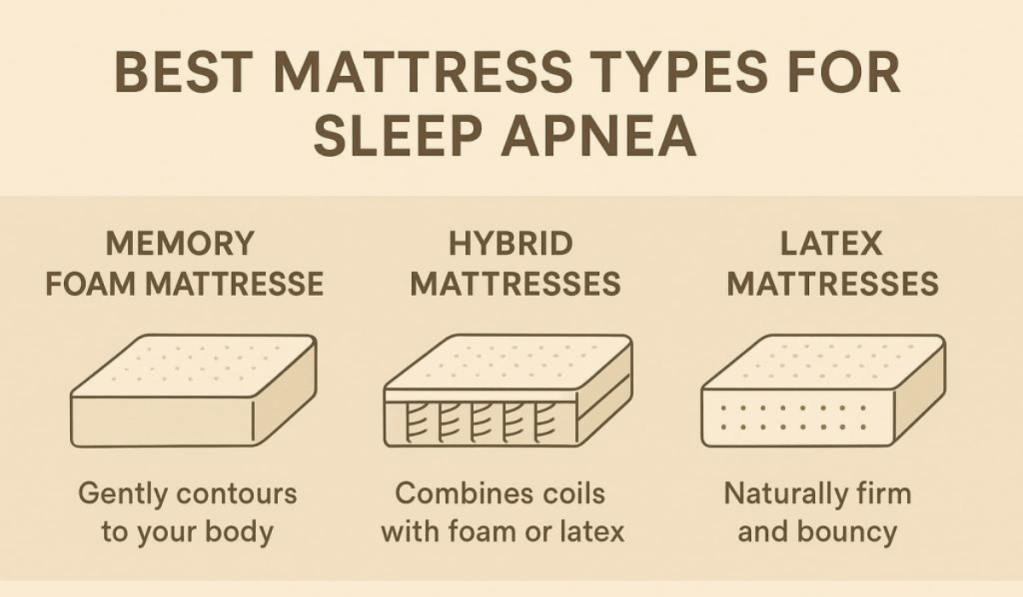
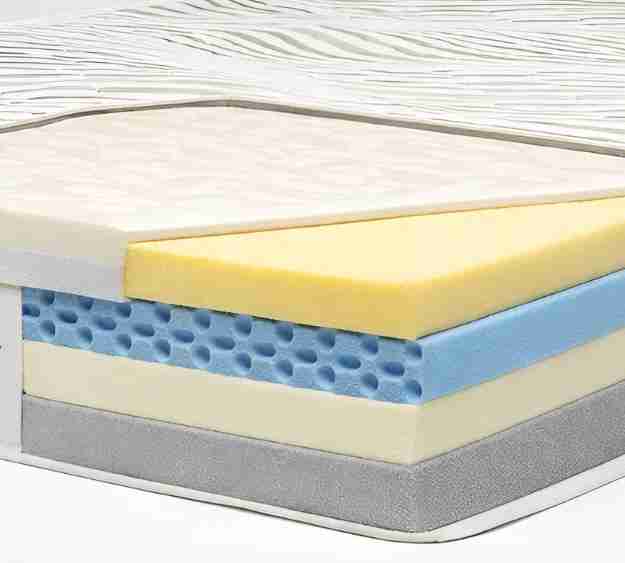
- Memory Foam Mattresses
Memory foam gently contours to your body, giving you personalized support. This helps keep your spine and neck aligned, which is important for easier breathing. It also reduces pressure points, making side sleeping (the best position for sleep apnea) more comfortable. - Hybrid Mattresses
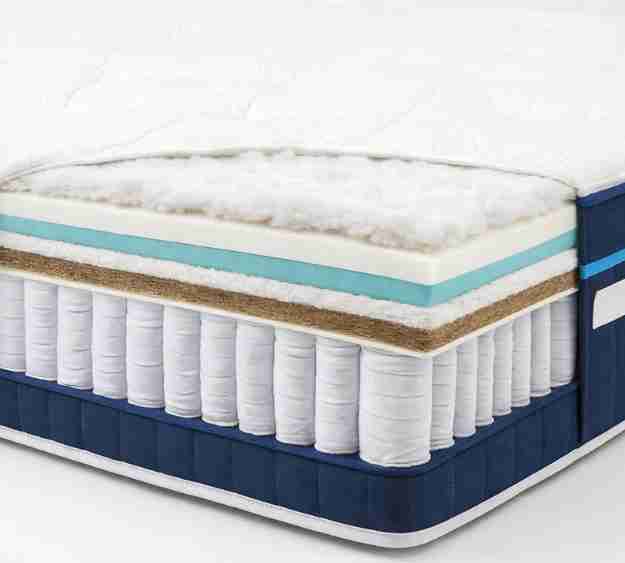
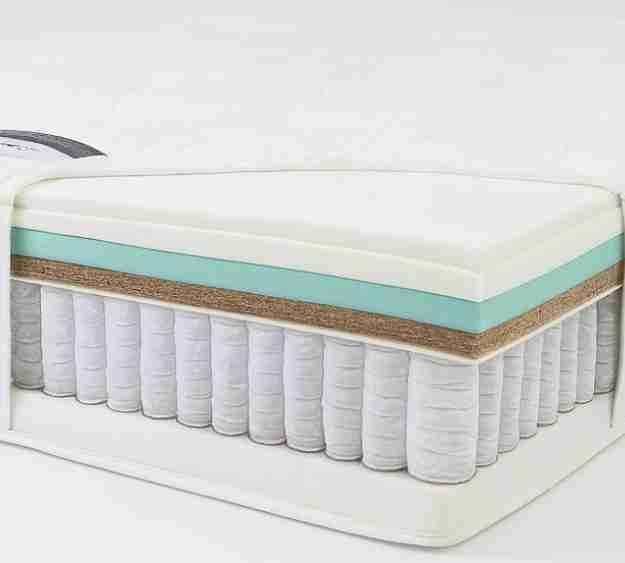
A hybrid mattress combines the support of coils with the comfort of foam or latex. This balance gives you both firmness and cushioning, which helps with proper alignment while still feeling soft enough to relax into. - Latex Mattresses
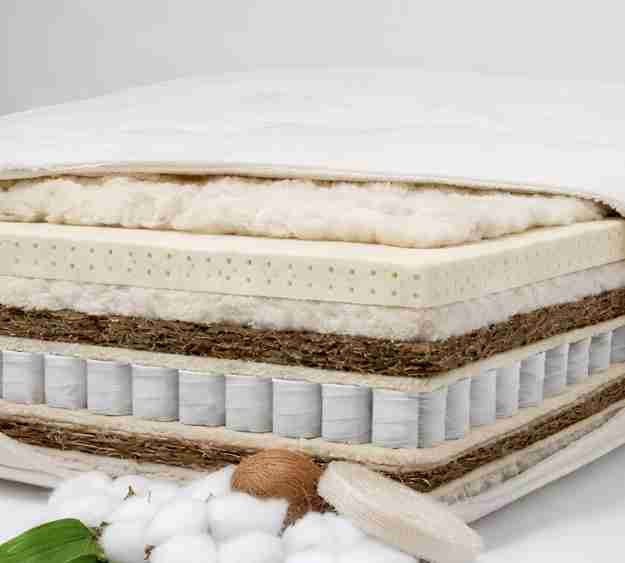
Latex mattresses are naturally firm yet bouncy, offering responsive support. They are also cooling, which helps prevent overheating at night a common issue for people with sleep apnea.
| Mattress Type | Ideal Firmness | Key Benefits for Sleep Apnea | Best For (Positions) | Notes |
|---|---|---|---|---|
| Memory Foam | Medium-firm | Contours for spinal/neck alignment; strong motion isolation | Side & back sleepers | Choose cooling foams to prevent heat build-up |
| Hybrid (Coils + Foam/Latex) | Medium to medium-firm | Balanced support + pressure relief; better airflow | All positions; great for couples | Look for zoned support for shoulders/hips |
| Latex | Medium to medium-firm | Responsive support keeps airway aligned; naturally cooler | Side & combo sleepers | Good bounce; consider softer top if you’re lighter-weight |
| Innerspring | Medium-firm with plush topper | Elevated support; breathable construction | Back & combo sleepers | Add a foam/latex topper for pressure relief |
| Adjustable Base (paired with mattress) | — | Head elevation can reduce snoring and airway collapse | Back sleepers; CPAP users | Confirm mattress is adjustable-base compatible |
Each of these options has its own strengths, so the best choice depends on your comfort preference and sleeping style. What matters most is finding the one that helps you breathe and rest better every night.
Sleeping Positions and Mattress
The way you sleep has a big impact on sleep apnea, and your mattress plays a huge role in supporting your preferred position. Choosing the right combination can make breathing easier and give you more restful nights.
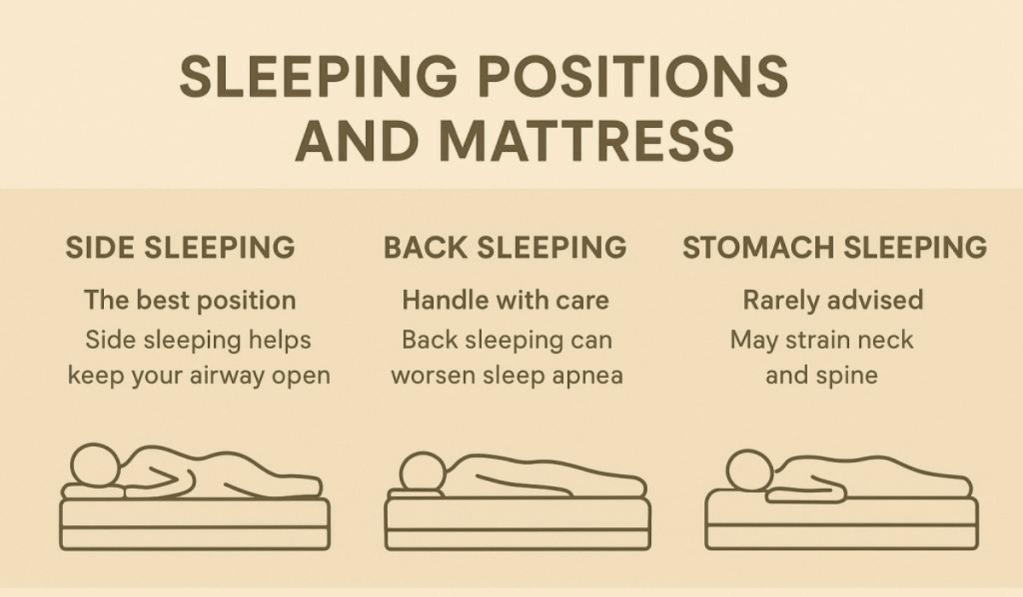
- Side Sleeping – The Best Position
Sleeping on your side is usually the most recommended for sleep apnea. This position keeps your airway more open and reduces the chances of snoring or pauses in breathing. A mattress with good pressure relief, like memory foam or a hybrid, makes side sleeping comfortable by supporting your shoulders and hips. - Back Sleeping – Handle with Care
Lying on your back often makes sleep apnea worse because gravity can push your tongue and soft tissues toward the airway. However, if you prefer this position, an adjustable bed or mattress that elevates your head can make a big difference. Elevation helps reduce airway blockage and improves airflow. - Stomach Sleeping – Rarely Advised
While sleeping on your stomach can sometimes reduce snoring, it puts strain on your neck and spine. Most people find it uncomfortable in the long run. If you do sleep this way, a softer mattress may reduce pressure points.
The right mattress supports your natural sleep position, helping you breathe easier and rest better.
Tips for Sleep Apnea Patients
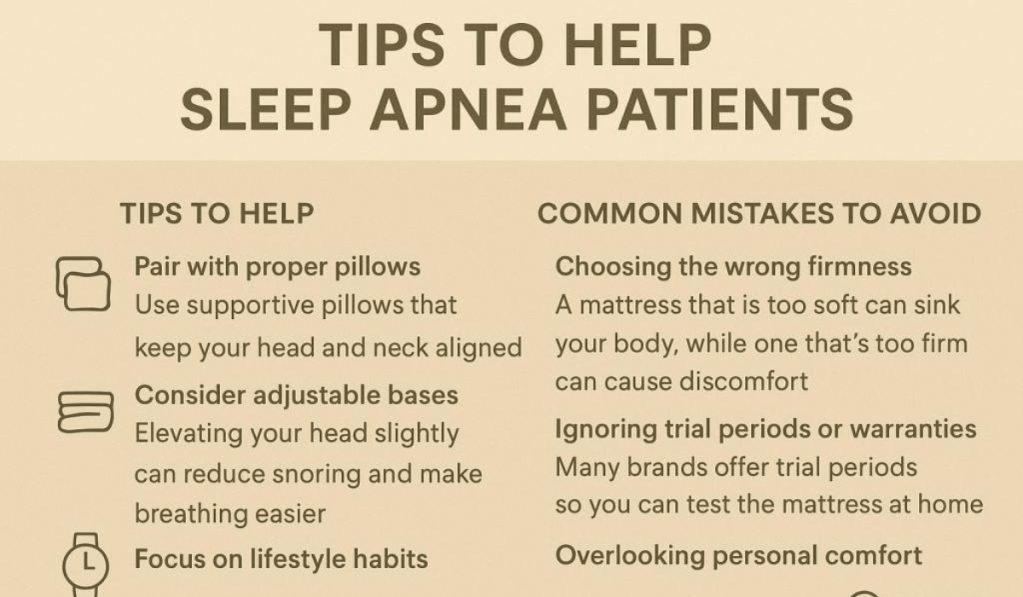
- Pair with Proper Pillows: Use supportive pillows that keep your head and neck aligned to help keep your airway open.
- Consider Adjustable Bases: Elevating your head slightly can reduce snoring and make breathing easier.
- Invest in Breathable Bedding: Choose lightweight, cooling sheets and blankets to stay comfortable throughout the night.
- Focus on Lifestyle Habits: Maintain a regular sleep schedule, stay active, and avoid heavy meals before bedtime.
- Combine Efforts: The right mattress, paired with healthy habits, creates the best environment for restful, refreshing sleep.
Common Mistakes to Avoid
- Choosing the Wrong Firmness: A mattress that is too soft can sink your body, while one that’s too firm can cause discomfort. Aim for a balance that supports your spine and airways.
- Ignoring Trial Periods and Warranties: Many brands offer trial periods so you can test the mattress at home. Skipping this option may leave you stuck with a bed that doesn’t work for your sleep needs.
- Overlooking Personal Comfort: Everyone’s body is different. Don’t just follow trends choose a mattress that feels right for you and helps you breathe and sleep better.
Conclusion
Choosing the right mattress can make a real difference if you have sleep apnea. The right one will support your breathing, keep your body aligned, and help you enjoy deeper, more restful sleep. Remember, there’s no single “perfect” mattress for everyone what matters most is finding the one that feels right for your body and your comfort.
Take advantage of trial periods, test different options, and listen to your body’s response. And while a supportive mattress is a powerful tool, don’t forget that medical guidance is just as important in managing sleep apnea for long-term health.
FAQs
No, a mattress cannot cure sleep apnea. However, the right mattress can reduce symptoms by keeping your body aligned, improving comfort, and helping you sleep more peacefully.
Yes, memory foam can be a great choice because it contours to your body and supports proper alignment of the neck and spine. This helps keep your airways more open during sleep.
Yes, adjustable beds can make a big difference. Elevating your head slightly reduces pressure on your airway, making it easier to breathe and reducing snoring.
Side sleeping is usually the best position. It helps keep your airway open and reduces pauses in breathing. Back sleeping can make symptoms worse, while stomach sleeping often causes discomfort.
It can take anywhere from a few days to a few weeks for your body to adjust to a new mattress. Be patient and give yourself time to experience the full benefits.

I’m Zainab, and I write to help people choose the right mattresses. I share clear, useful information about everything from comfort to materials, so you can pick the one that’s best for you.

Pingback: Sleep Apnea vs. Snoring: How to Tell the Difference Before It’s Too Late - Safe Online Health