
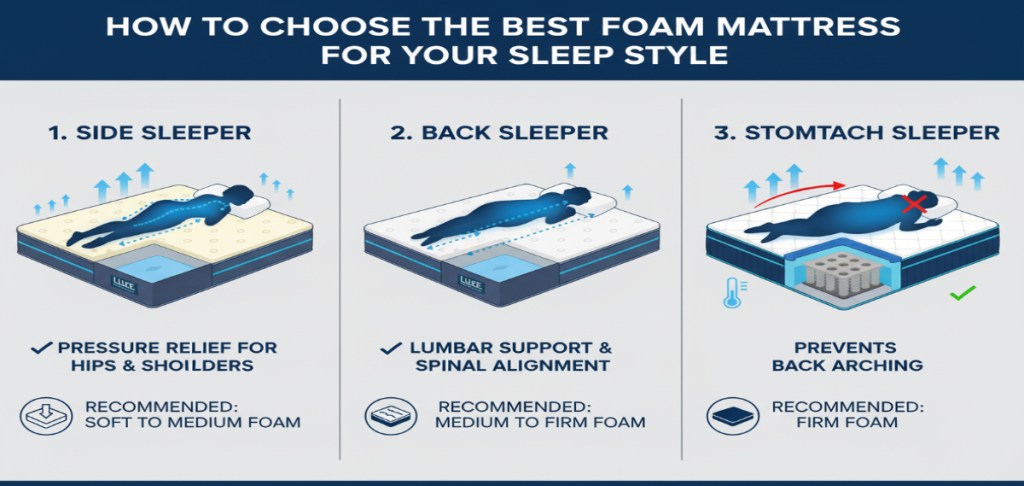
A sleeping foam mattress isn’t just about comfort it’s about sleep quality. It’s not only how many hours you spend in bed but also what you’re sleeping on. The right mattress relieves pressure points, improves posture, and supports deeper, healthier sleep. The wrong one? It can leave you sore, restless, and tired, even after a full night’s rest.
That’s where memory foam mattresses stand out. They mold to your body, support your back, and reduce motion transfer. Whether you sleep on your side, back, or stomach, the right foam mattress can completely transform your sleep. This guide breaks down key features, mattress types, and what to look for before buying.
What Is a Sleeping Foam Mattress?
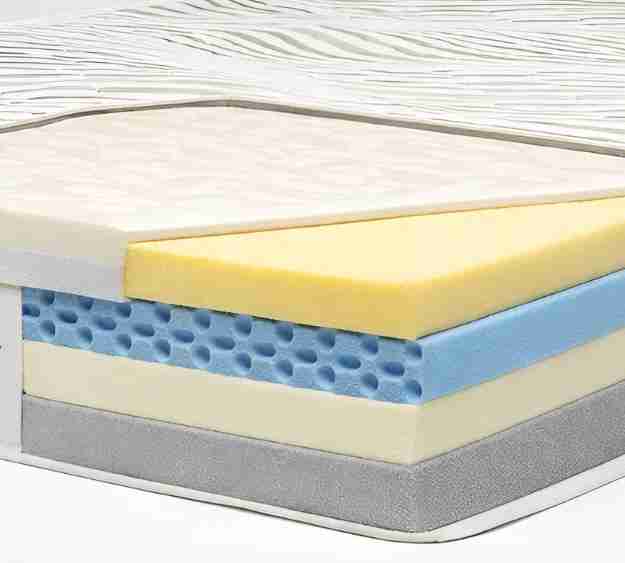
A sleeping foam mattress is made from high-density foams designed to provide consistent, full-body support. Unlike traditional spring mattresses, which can sag or create pressure points, foam mattresses distribute weight evenly and reduce stress on joints.
The most popular type is the memory foam mattress. Originally developed for NASA, this viscoelastic material responds to body heat, molds to your shape, and returns to its original form. It’s perfect for anyone who wants personalized support and minimal motion disturbance.
Other options include:
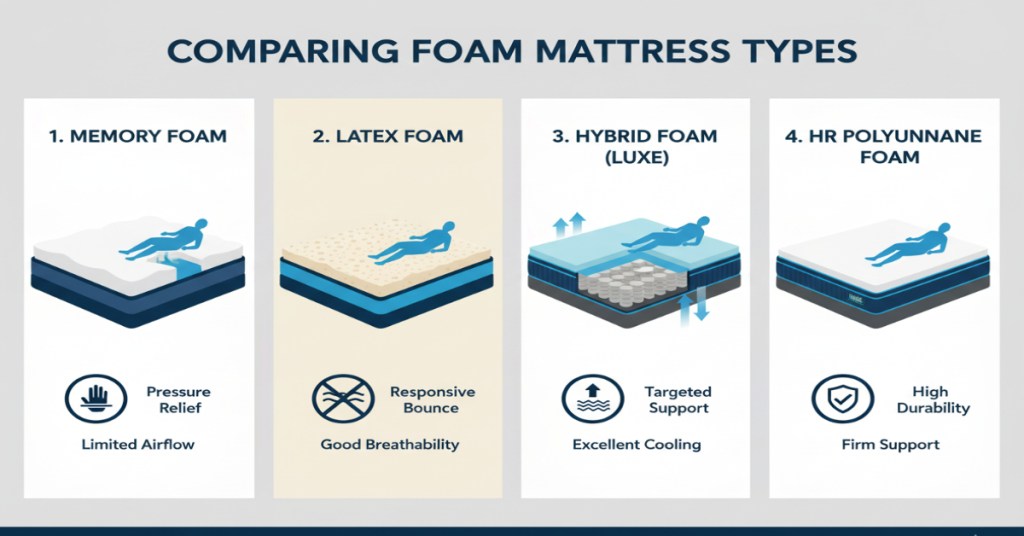
- High-resilience polyurethane foam – firmer and more durable.
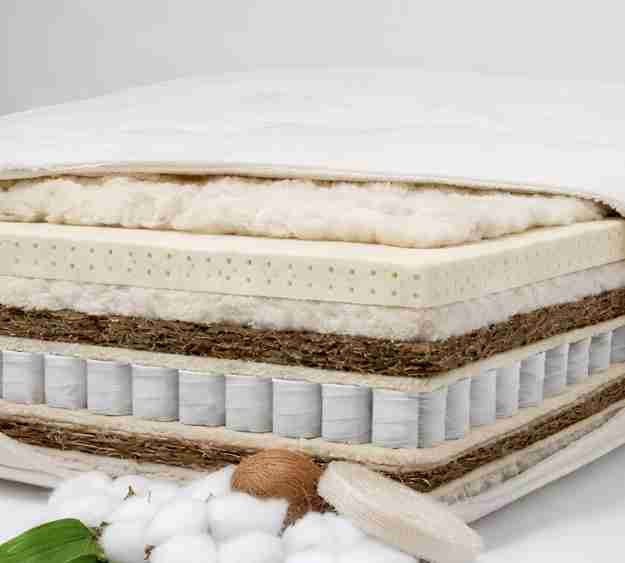
- Latex foam – eco-friendly and naturally responsive.
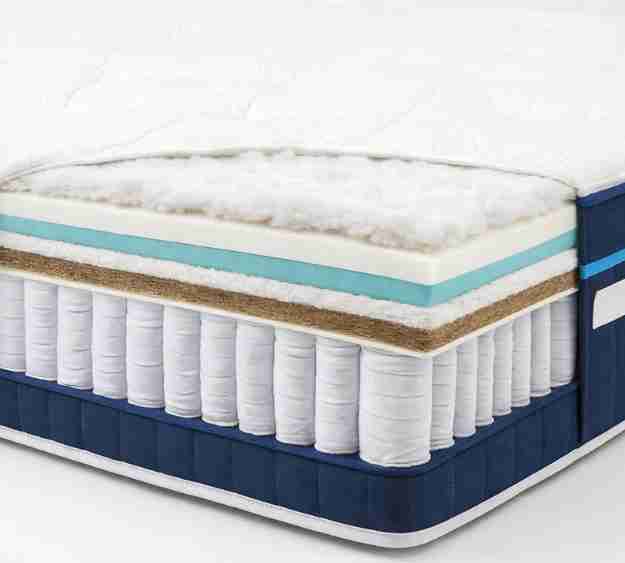
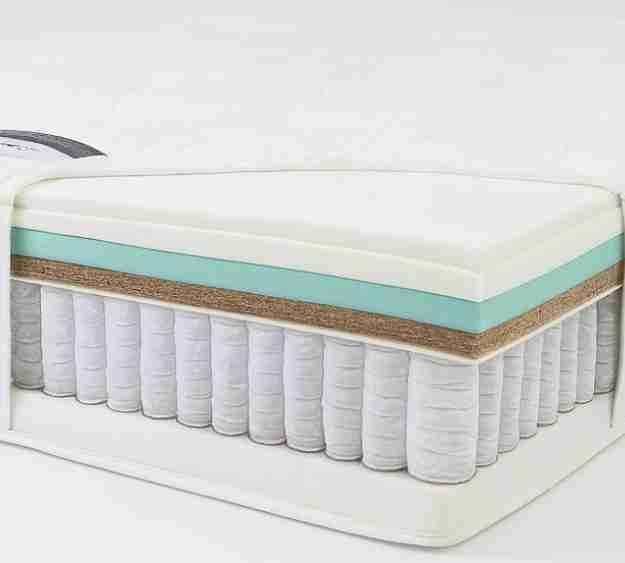
- Hybrid foam mattresses – combine memory foam with springs for added support.
Understanding these differences helps you choose a mattress that matches your sleeping habits, comfort preferences, and budget.
Why Choose a Memory Foam Mattress?
Memory foam remains the top choice for people who value comfort, support, and pressure relief. It adapts to your body, promotes better spinal alignment, and cuts down on motion transfer a huge plus for couples.
Key benefits of a memory foam mattress:
- Personalized contouring for all sleep styles.
- Even weight distribution to ease joint pain.
- Excellent motion isolation for undisturbed sleep.
- Long-lasting durability compared to regular foam.
Whether you’re looking for a double memory foam mattress for two or a queen size memory foam mattress for extra space, the right choice now means better sleep, better health, and better mornings.
Benefits of a Memory Foam Mattress for Better Sleep
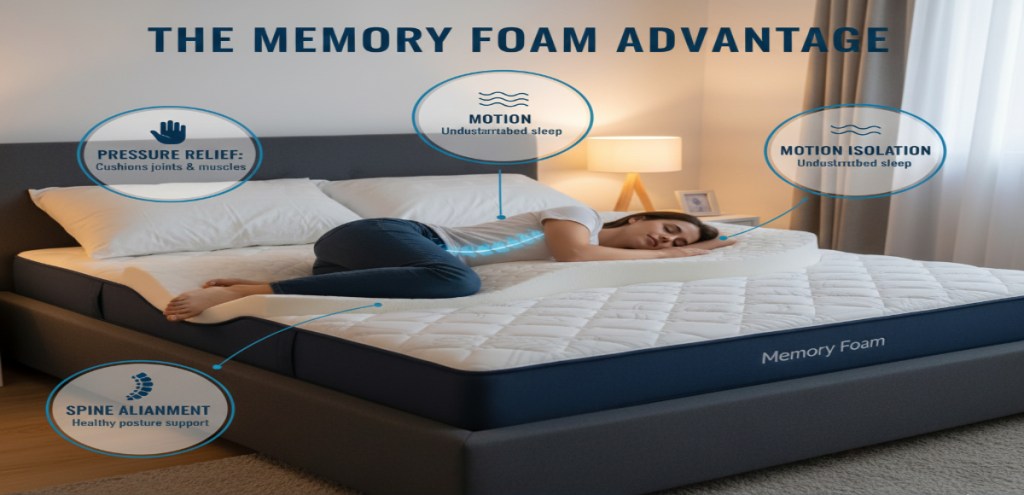
A good memory foam mattress offers benefits beyond basic comfort. Its biggest advantage is pressure relief. The foam molds to your body, reducing strain on your shoulders, hips and back ,areas that typically bear the most weight during sleep. This is especially helpful for people with joint pain or stiffness.
Posture and Motion Support
Another key benefit is posture support. By keeping your spine in its natural alignment, memory foam mattresses can reduce back pain over time. They also feature excellent motion isolation, meaning your partner’s movements won’t disturb your sleep.
Versatility for All Sleep Styles
For different sleep styles, memory foam is highly versatile. Side sleepers benefit from its contouring effect, while back and stomach sleepers get the support they need without losing comfort. Whether you choose a memory foam double mattress for shared beds or a single for solo use, you can expect consistent, high-quality sleep.
Types of Sleeping Foam Mattresses
Your mattress choice can make or break your sleep quality. Foam mattresses are popular because they blend comfort, support, and durability. But not all foam mattresses are the same each type offers a different experience. Knowing the differences can help you pick the perfect one for your sleep style and room size.
Memory Foam Mattress
The memory foam mattress is the most popular and widely used option. It molds to your body’s natural curves, relieving pressure on your shoulders, hips, and back. Ideal for people with joint pain or anyone who prefers a cushioned sleeping surface, it cradles your body and makes it easier to fall asleep and stay asleep.
Double Bed Memory Foam Mattress
Couples often struggle with tossing and turning at night. A double bed memory foam mattress is designed to solve that problem. It minimizes motion transfer, so you won’t feel your partner moving beside you. This size works well for smaller bedrooms while still giving both people enough space to sleep comfortably.
Queen Size Memory Foam Mattress
A queen size memory foam mattress offers generous space for individuals and couples alike. Larger than a double but still designed to fit most bedrooms, it strikes the perfect balance between comfort and practicality. With extra room to stretch out and premium support, it’s an ideal choice for those who want a touch of luxury without moving up to a king size mattress.
Latex & Hybrid Foam Mattresses
If you prefer a bouncier and cooler feel, latex foam mattresses are a great choice. They’re naturally more breathable and durable, making them ideal for hot sleepers.
Hybrid mattresses, on the other hand, combine memory foam with innerspring coils, giving you the best of both worlds foam’s pressure relief plus the support and airflow of springs. Both options are worth exploring if you want the benefits of foam but prefer a firmer or more responsive surface.
How to Choose the Best Mattress for Your Sleep Style
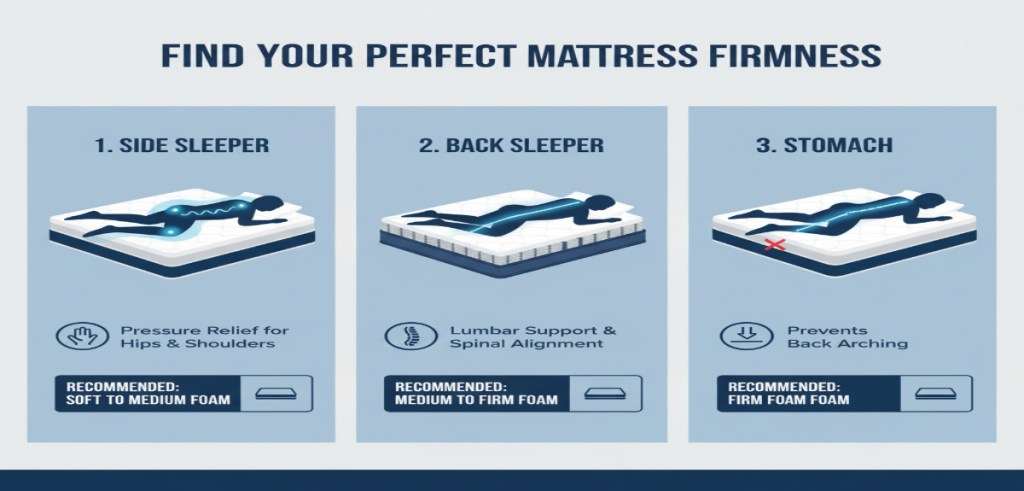
Your sleep style plays a huge role in deciding which sleeping mattress suits you best. Each position puts pressure on different areas of your body, so choosing the right foam can make a big difference to your comfort and support.
For Side Sleepers
Side sleepers need a softer, contouring memory foam mattress. This type of mattress cushions your shoulders and hips, relieving pressure points that can lead to discomfort or numbness overnight. A good memory foam mattress helps distribute weight evenly, keeping you comfortable throughout the night.
For Back Sleepers
Back sleepers benefit most from a medium-firm mattress. It keeps the spine in proper alignment while still providing enough give to support the body’s natural curves. Memory foam is ideal here because it prevents lower back pain by offering consistent support without sinking too deeply.
For Stomach Sleepers
Stomach sleepers should look for a firmer foam mattress. This prevents the hips from sinking too far into the mattress, reducing strain on the lower back and neck. A firmer feel adds stability and keeps your body in a healthier, more neutral position.
For Couples and Shared Beds
When choosing, also think about whether you sleep alone or share your bed. Couples may prefer a memory foam double mattress or a queen size memory foam mattress for extra space and better motion control. Balancing firmness, support, and comfort based on your usual sleep style is the key to waking up refreshed.
Key Factors to Consider Before Buying a Sleeping Foam Mattress
Before investing in a sleeping foam mattress, it’s important to look beyond marketing claims and focus on what truly affects your sleep quality. The right choice can improve your posture, relieve pressure points, and ensure long-lasting comfort. Here’s what you need to know:
Firmness Levels
The right firmness level can make or break your sleep. Soft, medium, and firm mattresses each suit different sleeping styles. For example, side sleepers often prefer softer foams for better contouring, while back or stomach sleepers may need something firmer for proper spine alignment. Always match the firmness to your sleep position and comfort preference.
Thickness and Density
A mattress’s thickness and density determine how it feels and how long it lasts. Thicker mattresses often offer more support and durability, while high-density foams contour to your body more effectively and last longer. Lower-density foams feel softer at first but may wear out faster over time.
Size Options
Size matters when it comes to comfort and convenience. Single, double, and queen size memory foam mattresses all cater to different room sizes and sleeping habits. Always measure your bed frame and bedroom space before making a choice to avoid issues after delivery.
Warranty and Return Policies
A reputable brand will back its mattress with a solid trial period and multi-year warranty. This protects your investment and gives you peace of mind, ensuring you’re not stuck with the wrong mattress if it doesn’t suit your needs.
Price vs Quality
When shopping for a foam mattress, you’ll notice prices can vary significantly. Smaller options like a single memory foam mattress are usually the most affordable, while a memory foam double mattress or queen size naturally costs more.
- Cheaper foam mattresses may lose shape quickly and provide poor support.
- Spending a bit more upfront often leads to better sleep and longer mattress life.
- Focus on value, not just price.
- Key quality indicators include high-density foam, breathable layers, and a reliable warranty.
- For budget buyers, seasonal sales or direct-to-consumer brands offer the best value.
Memory Foam vs Other Mattress Types: A Quick Comparison
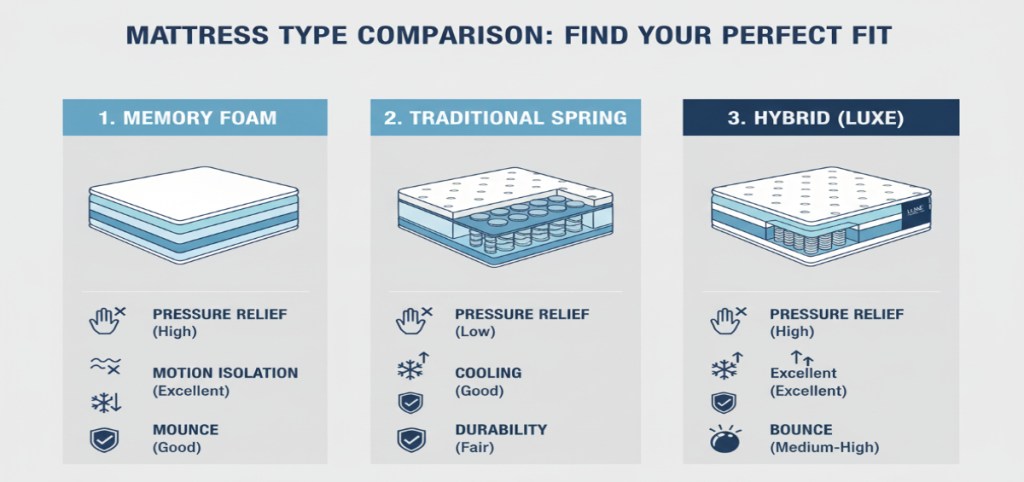
Not all mattresses are created equal. Each type offers its own feel, support, and durability. Understanding the differences can help you choose the best option for your sleep needs.
Memory Foam vs. Spring Mattress
Memory foam mattresses excel at pressure relief and motion isolation. They contour to your body, reducing strain on your joints and keeping your spine aligned. In contrast, spring mattresses provide more bounce and better airflow, making them cooler to sleep on. However, springs can wear unevenly over time, leading to sagging or discomfort.
Memory Foam vs. Hybrid Mattress
Hybrid mattresses combine layers of foam with innerspring coils to offer a balance of contouring and responsiveness. They’re a smart choice for people who like the feel of foam but want extra support or a bit more bounce. This combination also improves airflow compared to pure foam models, making hybrids cooler for hot sleepers.
Pros and Cons at a Glance
- Memory foam: Unmatched comfort, pressure relief, and body alignment but can retain heat if not designed with cooling layers.
- Spring mattresses: Breathable and bouncy but may lack long-term durability.
- Hybrid mattresses: Deliver versatility but often cost more than traditional foam or spring models.
For sleepers who value personalized comfort and consistent support, a quality memory foam mattress remains one of the best options available.
Tips for Maintaining Your Sleeping Foam Mattress
Even the best mattress needs regular care to stay comfortable and last for years. By protecting, rotating, and cleaning your memory foam double mattress, you can maintain its shape, freshness, and support for much longer.
Here’s how to keep your mattress in top condition:
- Rotate your mattress every 3–6 months to prevent uneven wear.
- No need to flip just rotate.
- Air it out regularly to avoid moisture buildup.
- Vacuum the surface lightly to remove dust, dirt, and allergens.
- Use a mattress protector to prevent spills, stains, and sweat from damaging the foam.
- Avoid placing heavy items or jumping on the mattress to maintain its shape.
With basic care, a quality memory foam mattress can last 8–10 years while still offering solid comfort and support.
Common Myths About Foam Mattresses
Many people hesitate to buy a foam mattress because of common myths. The most popular one is that foam mattresses trap heat. While older models did, modern designs use cooling gels and breathable covers to keep you comfortable throughout the night.
Another myth is that foam mattresses sag quickly. In reality, high-quality memory foam can last 8–10 years with proper care. Low-density foams may wear out sooner, but investing in a reputable brand makes all the difference.
Some also believe foam mattresses are too soft for proper support. This isn’t true. Memory foam mattresses come in different firmness levels, from soft to extra-firm, to match various sleep styles. Choosing the right density ensures you get both comfort and stability.
By separating fact from fiction, you can make an informed decision and enjoy the full benefits of your new mattress.
Final Thoughts
A sleeping foam mattress can transform your sleep by easing pressure points, reducing movement, and improving support. Memory foam stands out for its comfort, durability, and ability to adapt to any sleeping style. Choose the firmness, size, and budget that fit you double for couples or queen for extra space. Matching your mattress to your sleep habits ensures better rest, health, and energy every day.
FAQs
Look for high-density foam, appropriate firmness for your sleep style, and a reputable brand with a good warranty. Try to test it or buy from a retailer offering a trial period.
Your sleeping position is key. Side sleepers need softer contouring, back sleepers benefit from medium-firm support, and stomach sleepers do better with a firmer foam.
Memory foam remains the top choice for personalized comfort. However, latex foam and hybrid options work well if you prefer a cooler or bouncier feel.
A good mattress should keep your spine aligned, relieve pressure points and show minimal sagging even after years of use. Consistent, comfortable sleep is the ultimate indicator.

I’m a professional sleep health and mattress content specialist with extensive experience writing about orthopedic mattresses, back pain relief, pressure-point support, and overall sleep comfort. I collaborate with industry research, sleep studies, and mattress performance insights to deliver accurate, trustworthy, and reader-focused content. I’m known for simplifying complex mattress technologies such as memory foam, motion isolation, and firmness levels, making them easy to understand for everyday buyers. My goal is to help readers choose mattresses that match their lifestyle, sleep posture, and health needs empowering them to achieve deeper, healthier, and pain-free sleep through informed decisions.