
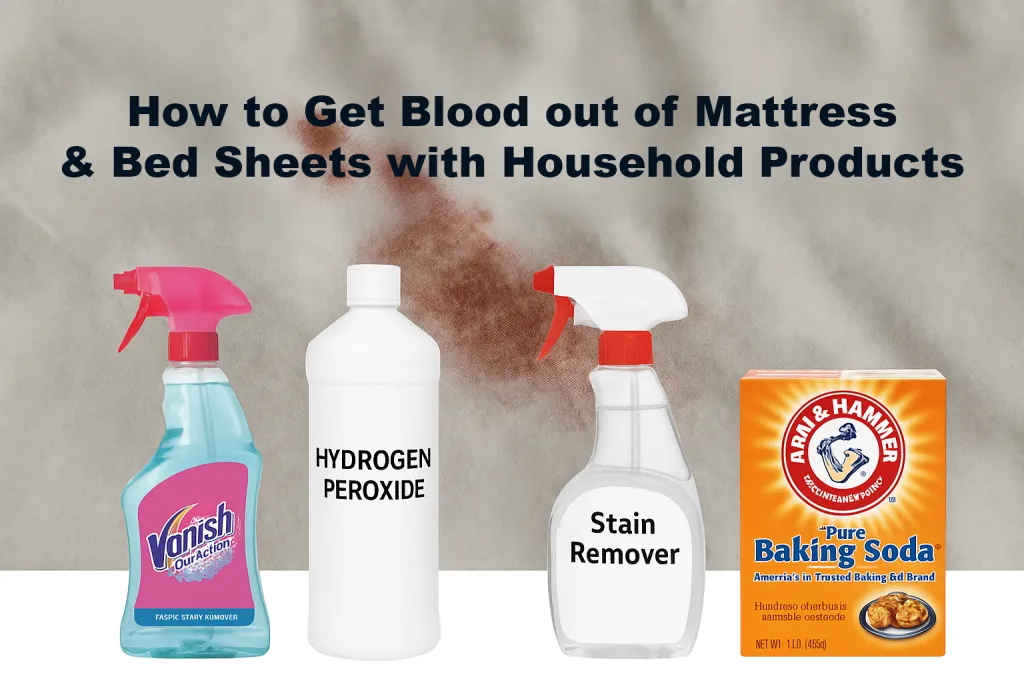
Blood stains on bed sheets can be frustrating and stubborn, especially if you’re working with light-coloured or high-quality materials. Whether the stain is from a nosebleed, menstrual leak, or minor injury, acting quickly and using the right cleaning products can make all the difference.
This step-by-step guide explains how to remove both fresh and dried blood from bed sheets using real, effective products that are safe for use on most fabrics, including luxury cotton, linen, and bamboo sheets.
Why Blood Stains Are Difficult to Remove
Blood contains protein and iron, which bind tightly to fabric fibres. Once exposed to heat, these proteins coagulate and “set” into the fabric, making the stain much more difficult to remove.
This is why it’s essential to avoid hot water or machine drying until the stain is completely gone.
What You’ll Need: Recommended Products
These are real, accessible products that can effectively remove blood stains from bed sheets:
Basic Supplies:
- Cold water
- Clean cloth or white towel
- Soft-bristled brush or old toothbrush
Stain-Fighting Products:
- Hydrogen Peroxide (3%) – Excellent for white or colourfast sheetsProduct: Care+ Hydrogen Peroxide 3% from Boots
- Enzyme-based stain remover – Breaks down proteins in bloodProduct: Vanish Oxi Action Pre-Treat Stain Remover Spray
- Mild laundry detergent – Gentle yet effectiveProduct: Ecover Non-Bio Laundry Detergent
- White vinegar – Helps with stain removal and deodorising
- Baking soda (bicarbonate of soda) – Natural stain lifter and deodoriser
Optional for delicate fabrics:
- Woolite Delicates Wash – Safe for bamboo, silk, and linen sheets
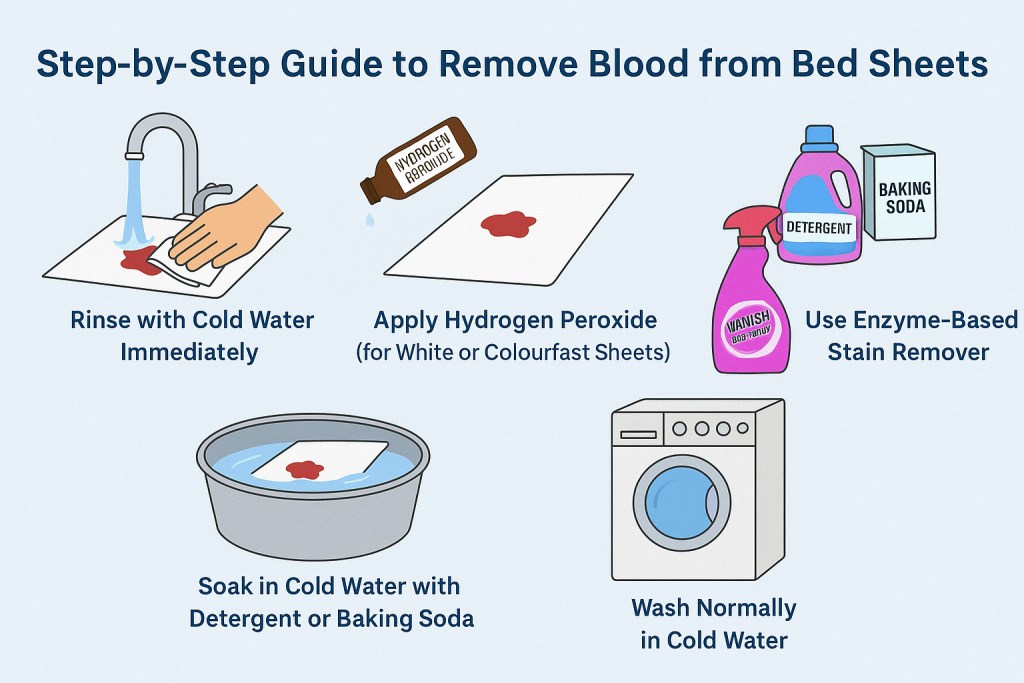
Step-by-Step Guide to Remove Blood from Bed Sheets
Step 1: Rinse with Cold Water Immediately
If the blood stain is fresh, place the sheet under cold running water. Flush the stain from the backside of the fabric to push the blood out of the fibres, rather than deeper into the material.
Blot gently with a clean cloth or paper towel to lift excess moisture. Do not rub, as this can spread the stain or damage the fibres.
Step 2: Apply Hydrogen Peroxide (for White or Colourfast Sheets)
Hydrogen peroxide can help lift blood stains from white sheets or light-coloured, colourfast fabrics.
- Place the sheet flat.
- Pour a small amount of 3% hydrogen peroxide directly onto the stain.
- Let it fizz for 5 to 10 minutes.
- Blot with a clean cloth.
- Repeat if necessary.
Always test on a small, inconspicuous area first to ensure it doesn’t bleach or discolour the fabric. Do not use hydrogen peroxide on silk or dark-coloured sheets without testing.
Step 3: Use Enzyme-Based Stain Remover
Enzyme cleaners like Vanish Oxi Action are formulated to break down organic stains such as blood, sweat, and food.
- Spray the stain directly with the enzyme cleaner.
- Allow it to sit for 15 to 30 minutes.
- Lightly agitate the stain using a soft-bristled brush if needed.
This step is essential for breaking down the proteins in dried or stubborn stains.
Step 4: Soak in Cold Water with Detergent or Baking Soda
Prepare a basin or bathtub filled with cold water and either:
- 2 tablespoons of mild laundry detergent, or
- 1 tablespoon of baking soda
Soak the stained sheet for at least one hour. For dried or older stains, leave it overnight.
Soaking loosens the remaining residue and lifts the stain from the fibres.
Step 5: Wash Normally in Cold Water
Wash the sheet in your washing machine using:
- A gentle or normal cycle
- Cold water
- Mild detergent
Do not use hot water or dry the sheet in a tumble dryer until the stain is completely removed. Heat can set any remaining blood into the fabric permanently.
After washing, inspect the sheet. If the stain remains, repeat the previous steps before drying.
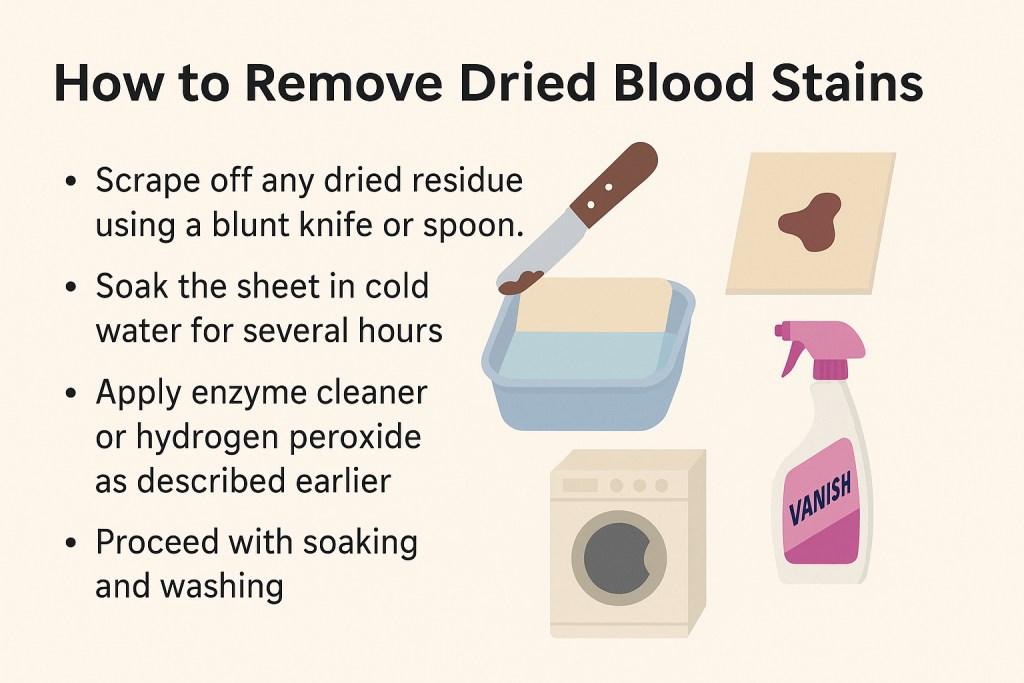
How to Remove Dried Blood Stains
If the blood stain has already dried, follow these steps before soaking:
- Scrape off any dried residue using a blunt knife or spoon.
- Soak the sheet in cold water for several hours.
- Apply enzyme cleaner or hydrogen peroxide as described earlier.
- Proceed with soaking and washing.
Patience is key when dealing with dried blood. Multiple treatments may be necessary.
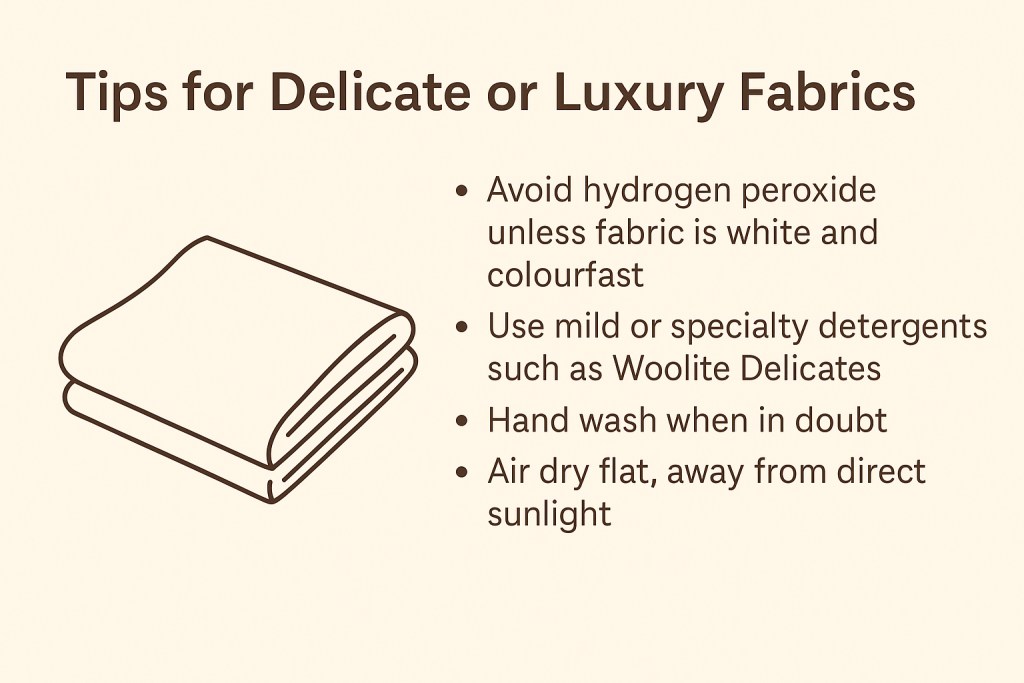
Tips for Delicate or Luxury Fabrics
Luxury sheets made of bamboo, silk, linen, or Egyptian cotton require gentler care:
- Avoid hydrogen peroxide unless the fabric is white and colourfast.
- Use mild or specialty detergents such as Woolite Delicates.
- Hand wash when in doubt.
- Avoid wringing or scrubbing the fabric.
- Air dry flat, away from direct sunlight.
Always refer to the care label on your bedding to avoid damage.
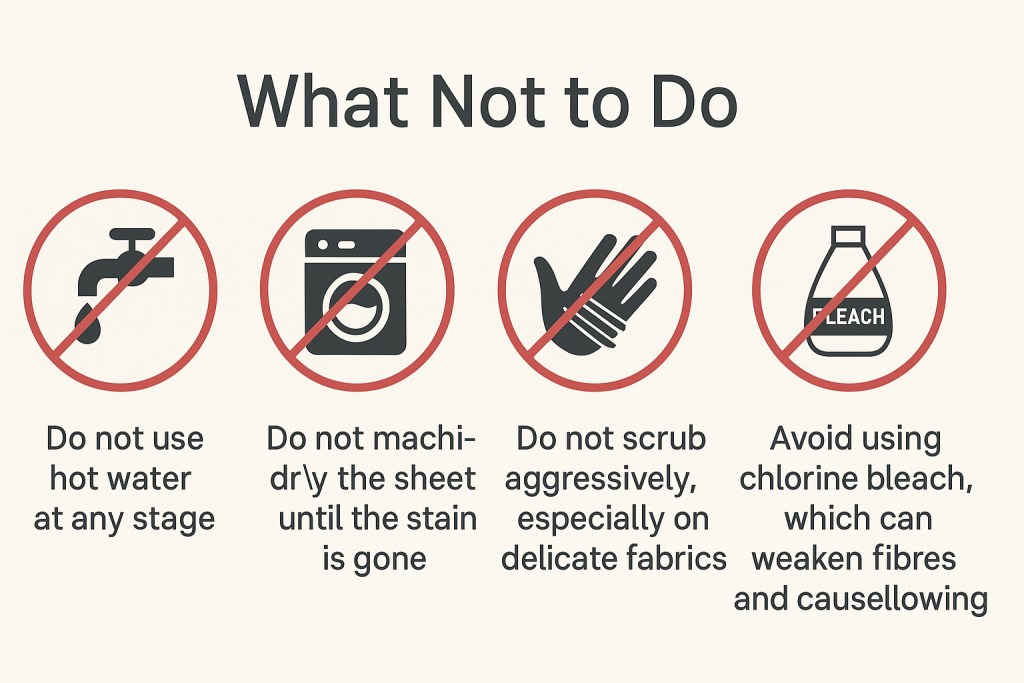
What Not to Do
- Do not use hot water at any stage.
- Do not machine dry the sheet until the stain is gone.
- Do not scrub aggressively, especially on delicate fabrics.
- Avoid using chlorine bleach, which can weaken fibres and cause yellowing.
Prevention Tips for the Future
- Use a waterproof mattress protector to guard against deep stains.
- Consider using darker-coloured or patterned sheets during menstrual cycles.
- Keep an enzyme stain remover spray in your laundry area for quick spot treatment.
- Wash sheets regularly to prevent build-up of bodily fluids and stains.
- here are 5 tips to clean your mattress properly
- how to look after your mattress?

Conclusion
Blood stains can be challenging but not impossible to remove—especially when you act fast and use the right techniques. Cold water, hydrogen peroxide (for whites), enzyme-based cleaners, and proper soaking are your best allies.
For luxury bedding, extra care should be taken to protect fabric integrity while effectively removing stains. By following this step-by-step method and using the recommended products, you can restore your sheets to a clean, fresh condition without permanent damage.
Frequently Asked Questions (FAQ)
Can you use hot water to remove blood stains from sheets?
No, hot water should be avoided. Heat causes the proteins in blood to set into the fabric, making the stain more difficult to remove. Always use cold water when treating blood stains.
What is the best stain remover for dried blood?
Enzyme-based cleaners like Vanish Oxi Action Pre-Treat Spray are highly effective. For white or colourfast sheets, 3% hydrogen peroxide can also help lift dried blood stains.
Does hydrogen peroxide damage bed sheets?
Hydrogen peroxide can bleach or weaken dark or delicate fabrics. Always test a small, hidden area first. It is generally safe on white or colourfast cotton sheets.
What if the stain doesn’t come out after the first wash?
If the stain persists, repeat the stain treatment and avoid using the dryer. Heat will set any remaining residue. Patience and repeated soaking or pre-treatment are often needed for older stains.
Is baking soda effective for removing blood stains?
Yes. Baking soda acts as a gentle abrasive and deodoriser. It works well when used in a soaking solution with cold water, especially on minor or fresh stains.
Can I remove blood stains from silk or bamboo sheets?
Yes, but use extra care. Avoid hydrogen peroxide and use mild detergents like Woolite Delicates. Always hand wash and air dry. Refer to the fabric care label for specific instructions.
What if I accidentally used hot water or dried the sheet?
If the stain has set, try soaking the sheet in cold water overnight, followed by multiple treatments with enzyme cleaner or hydrogen peroxide (for whites). Removing set-in stains may take several attempts.
How do I prevent blood stains in the future?
- Use a waterproof mattress protector
- Keep an enzyme stain remover spray nearby
- Use darker-coloured sheets during your period
- Wash sheets regularly to avoid buildup of bodily fluids
Is it safe to use bleach on white sheets with blood stains?
It’s not recommended. Chlorine bleach can weaken fabric fibres and cause yellowing. Use hydrogen peroxide instead, which is safer for cotton and just as effective.
Can I use vinegar to remove blood stains?
White vinegar can help loosen fresh blood stains when combined with cold water. However, it is not as effective as enzyme cleaners or hydrogen peroxide for dried stains.

Marie Soukup is a seasoned senior copywriter and editor who’s written for global brands like Virgin Australia, blending storytelling and strategy to create content that connects. She’s passionate about bringing ideas to life across the travel, lifestyle, and business worlds.