
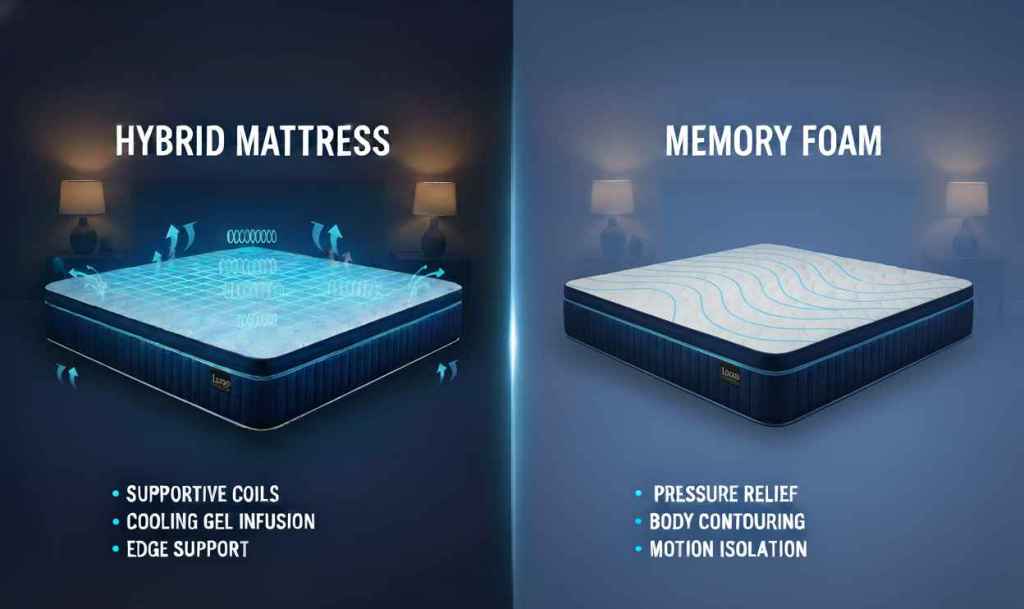
When it comes to choosing a mattress, Hybrid Mattress vs Memory Foam is a common debate among sleepers. The right mattress plays a critical role in your overall sleep quality, spinal alignment, and comfort. A good mattress not only ensures restful sleep but also supports your health, helping reduce pain and discomfort during the night.
Hybrid mattresses combine coils and foam for balanced support, offering both pressure relief and a sturdy foundation. Memory foam mattresses contour to your body, providing personalized comfort by relieving pressure points. In this comparison, we’ll explore comfort, support, durability, and more to help you choose the right mattress for your sleep needs.
What Is a Hybrid Mattress?
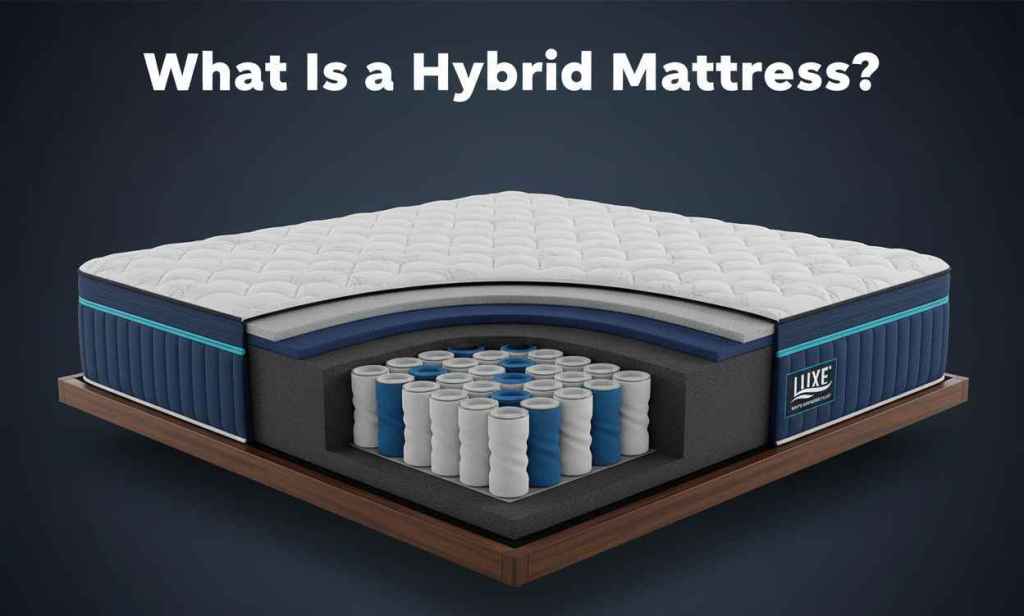
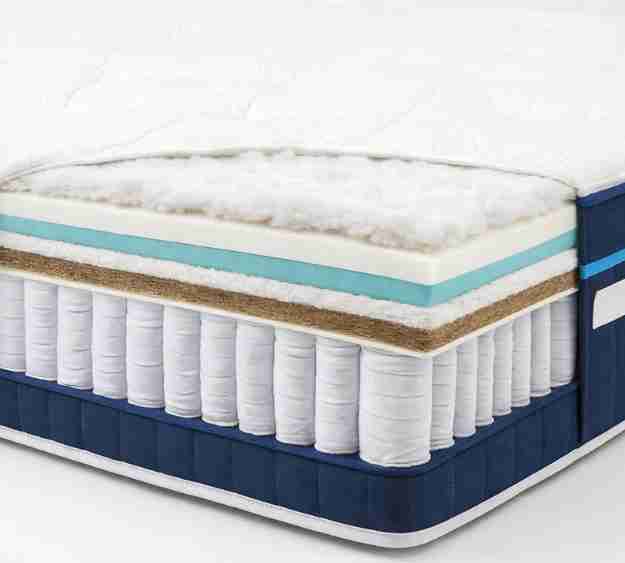
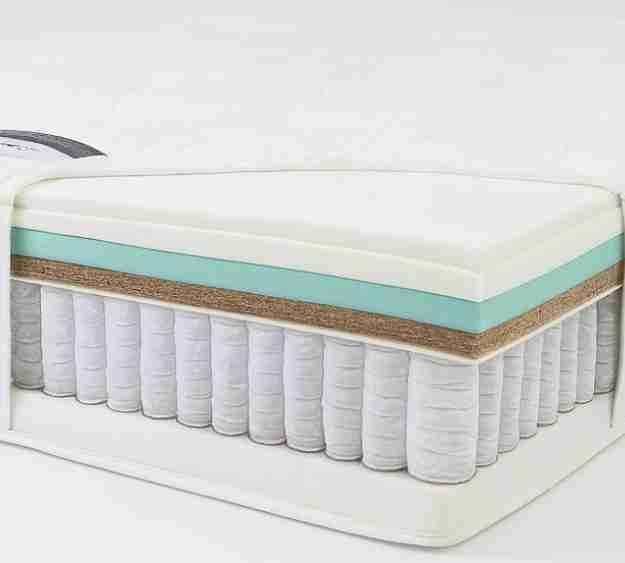
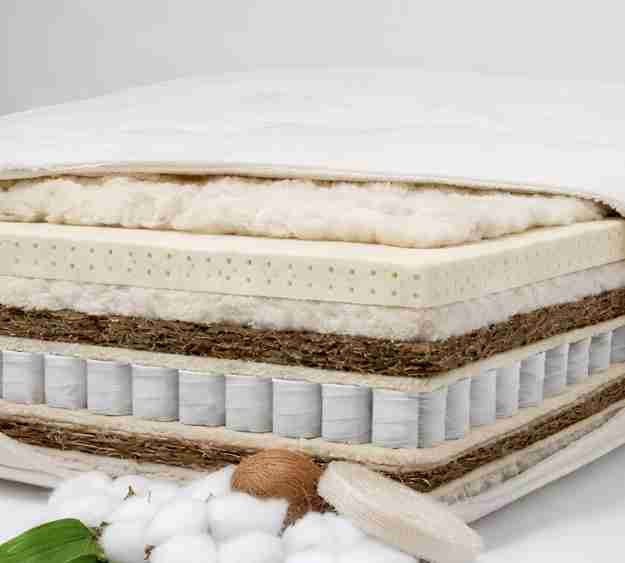
A hybrid mattress combines two key components, memory foam (or other foam types) and innerspring coils. The foam layers provide comfort and pressure relief, while the innerspring coils offer support and durability. This blend of materials creates a sleep surface that balances the softness of foam with the firmness of coils, giving you the best of both worlds.
Key features of a hybrid mattress include:
- Bounce: The coils add a bit of bounce, providing a responsive feel, especially for combination sleepers.
- Airflow: The coil system promotes better airflow, helping to keep the mattress cooler compared to all-foam mattresses.
- Support: The pocketed coils offer targeted support, keeping your spine aligned while you sleep.
Advantages of Hybrid Mattresses
Hybrid mattresses combine the supportive innerspring coils with the comfort of foam, offering a balanced sleep experience. They adapt to various sleep positions, providing the right support and pressure relief. Ideal for side, back, or stomach sleepers, hybrids deliver both comfort and durability.
- Balanced Support: Hybrid mattresses combine innerspring coils with foam, offering optimal support and comfort.
- Better Airflow: The coil system promotes airflow, keeping the mattress cooler and preventing heat buildup.
- Motion Isolation: Pocketed coils reduce motion transfer, making hybrids ideal for couples or light sleepers.
- Durability: High-quality coils and foam layers ensure a longer lifespan and better long-term support.
- Versatility: Hybrid mattresses cater to different sleep styles, making them suitable for side, back, and stomach sleepers.
Disadvantages of Hybrid Mattresses
Hybrid mattresses offer many benefits, but they also have some downsides. They can be heavier, making them harder to move, and tend to be pricier. Also, their firmness may not suit all sleepers, with some finding them too firm or too soft.
- Higher Cost: Hybrids are generally more expensive than standard innerspring or memory foam mattresses.
- Heavy Weight: The combination of coils and foam layers makes hybrids heavier and harder to move.
- Potential for Too Firm/Soft: Depending on the foam and coil combination, hybrids may not suit those seeking a specific firmness level.
- Limited Edge Support: Some hybrids may not offer strong edge support, making them less comfortable when sitting or lying near the edge of the mattress.
- Noise Issues: Some hybrids may produce noise over time due to the coils, especially if the coils are not pocketed.
What Is a Memory Foam Mattress?
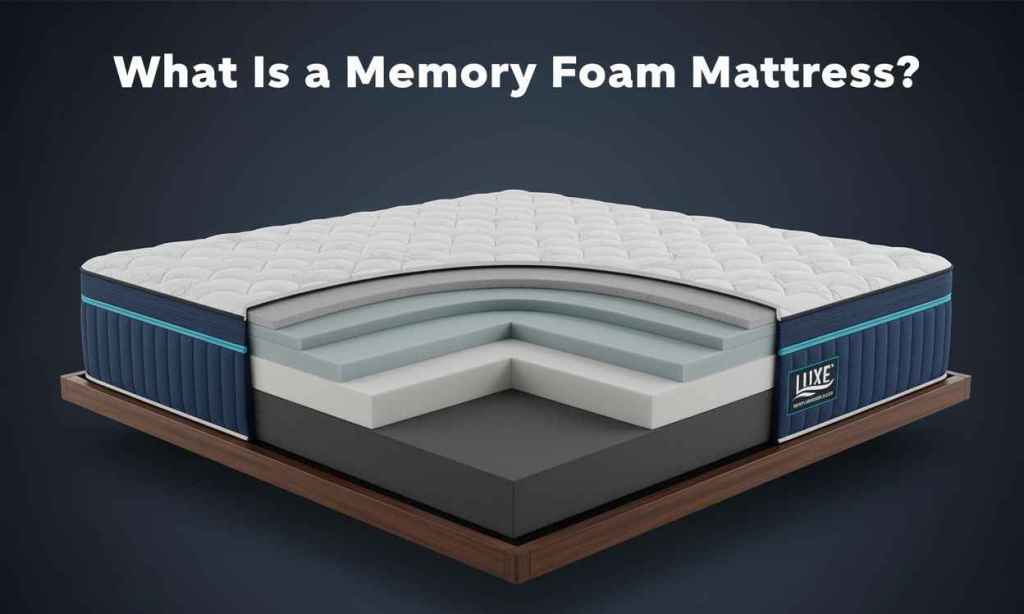
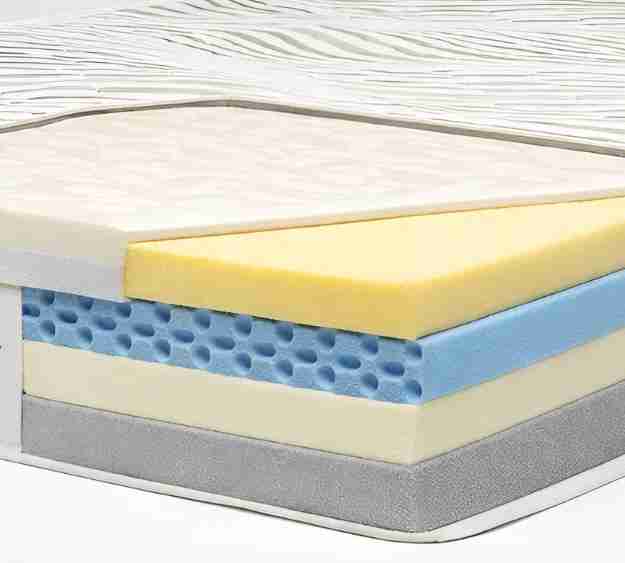
A memory foam mattress is made of foam layers that provide support and comfort. The top layer of viscoelastic foam contours to your body, offering pressure relief. Known for motion isolation, these mattresses are perfect for light sleepers or couples.
Key Features:
- Body Contouring: Memory foam adapts to your body shape, providing personalized comfort and support.
- Motion Isolation: It absorbs movement, reducing disruptions from a partner’s movements.
- Pressure Relief: The foam evenly distributes body weight, relieving pressure on key areas like hips, shoulders, and back.
Ideal For:
- People who suffer from joint or back pain, as the foam provides gentle support.
- Couples or light sleepers who want minimal motion transfer.
- Those who prefer a plush, body-hugging feel during sleep.
Advantages of Memory Foam Mattresses
Memory foam mattresses are designed to provide superior comfort and pressure relief by contouring to the shape of your body. The foam responds to body heat and weight, offering personalized support, which can help alleviate pressure points and promote better spinal alignment.
Key advantages include:
- Pressure Relief: Memory foam evenly distributes body weight, reducing pressure on areas like the hips, shoulders, and lower back, making it ideal for those with joint pain or back issues.
- Motion Isolation: The dense foam absorbs movement, making memory foam mattresses perfect for couples or light sleepers who are easily disturbed by their partner’s movements.
- Durability: High-quality memory foam retains its shape and performance over time, offering long-lasting support without sagging.
- Hypoallergenic: Memory foam is resistant to allergens like dust mites, mold, and pet dander, making it a good choice for allergy sufferers.
Memory foam mattresses are best suited for sleepers who prioritize conforming comfort, pressure relief, and motion isolation, particularly those with back pain, side sleepers, or light sleepers.
Disadvantages of Memory Foam Mattresses
While memory foam mattresses offer numerous benefits, they also come with some drawbacks that may not suit every sleeper.
Key disadvantages include:
- Heat Retention: Memory foam can trap heat, causing discomfort for hot sleepers.
- Limited Bounce: It lacks the responsive feel of hybrid or innerspring mattresses.
- Off-Gassing: New memory foam mattresses may release an unpleasant chemical smell.
Heavy and Hard to Move: Memory foam mattresses are often bulky and difficult to move.
Overall, memory foam mattresses may not be ideal for hot sleepers, those who prefer bounce, or people who find it difficult to move heavy mattresses.
Hybrid vs Memory Foam: Key Differences at a Glance
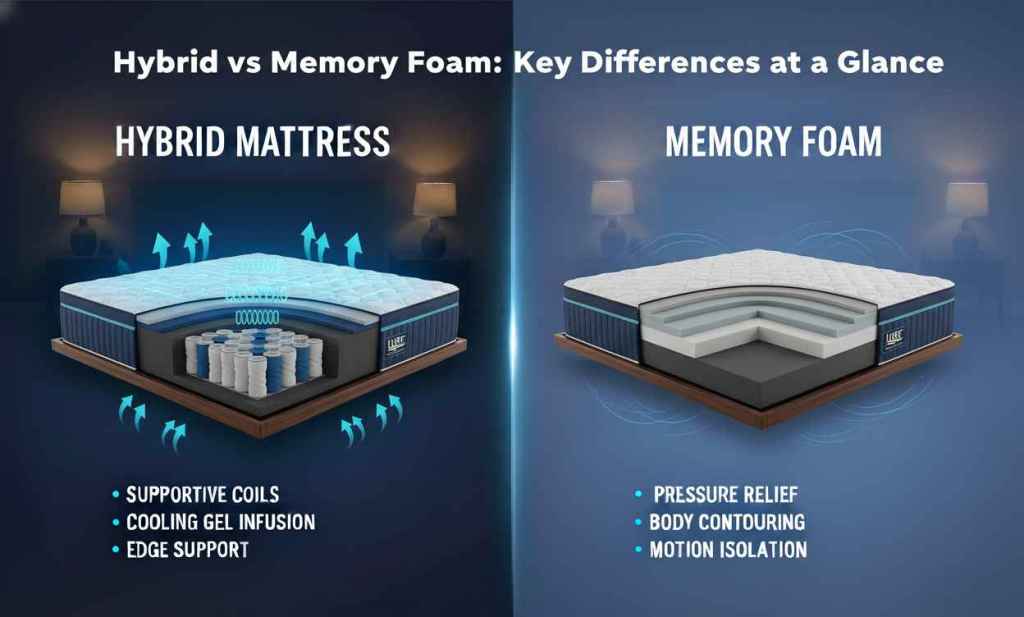
Hybrid mattresses combine innerspring coils with foam for a bouncy feel, airflow, and strong support. Memory foam mattresses contour to your body, offering pressure relief and motion isolation, but may trap heat. The choice depends on your priorities comfort, cooling, support, or durability.
Comfort and Feel
- Hybrid: Provides a bouncy, responsive feel due to the coils, giving you more “lift” as you sleep. This is ideal for those who prefer a slightly firmer mattress with some bounce.
- Memory Foam: Offers a slower, sink-in feel that contours closely to your body. The foam hugs your curves, giving you a deep, cradled sensation.
Who it suits:
- Hybrid: Great for sleepers who like a firmer, responsive mattress.
- Memory Foam: Perfect for those who enjoy a softer, enveloping feel.
Support and Pressure Relief
- Hybrid: The combination of coils and foam provides balanced support. The zoned coils offer different firmness levels to target areas like the back, shoulders, and hips for optimal support and spinal alignment.
- Memory Foam: Known for its excellent pressure relief, memory foam contours to the body, distributing weight evenly and relieving pressure on sensitive areas like the hips, shoulders, and lower back.
Who it benefits:
- Hybrid: Ideal for those who need both support and comfort, especially back and stomach sleepers.
- Memory Foam: Best for side sleepers or those with joint pain who need targeted pressure relief.
Temperature Regulation
- Hybrid: Offers better airflow thanks to the coils, which allow air to circulate freely, keeping the mattress cooler throughout the night.
- Memory Foam: Can trap heat because of its dense structure, although newer models with gel-infused foam or open-cell technology help with cooling.
Best for hot sleepers:
- Hybrid: The coil system keeps the mattress cooler with improved airflow.
- Memory Foam: Opt for gel-infused or open-cell memory foam for better heat dissipation.
Motion Isolation
- Memory Foam: Excellent at isolating motion due to its dense structure. This makes it ideal for couples or light sleepers who are easily disturbed by movement during the night.
- Hybrid: Good at reducing motion transfer, but the level of isolation depends on the type of coils used. Pocketed coils are better at motion isolation than traditional innersprings.
Best for couples:
- Memory Foam: Excellent for couples who need to avoid being disturbed by the other’s movements.
- Hybrid: Suitable for couples who prefer less motion isolation but still want reduced disturbances.
9. Durability and Longevity
- Hybrid: The sturdy coil base provides excellent durability, preventing sagging and extending the mattress’s lifespan. Hybrid mattresses typically last 7 to 10 years.
- Memory Foam: Durability depends on the foam’s density. High-density foam lasts longer but can be more expensive. Generally, memory foam mattresses last 6 to 8 years.
Lifespan expectations:
- Hybrid: 7–10 years, thanks to the durable coil support and high-quality foam layers.
- Memory Foam: 6–8 years, with durability depending on foam density and care.
| Feature | Memory Foam | Hybrid Mattress |
|---|---|---|
| Feel | Hug-like, slow sink-in | Bouncy, responsive |
| Support | Excellent body contouring | Zoned coils for balanced support |
| Pressure Relief | Great for joint pain | Good for back and side sleepers |
| Temperature Regulation | Can trap heat | Better airflow due to coil system |
| Motion Isolation | Excellent absorption | Good (depends on coil type) |
| Durability | Varies with foam density | Long-lasting with strong coils |
| Cost | More affordable | Generally pricier |
| Best For | Side sleepers, couples, joint pain | Back sleepers, hot sleepers, couples |
Who Should Choose a Memory Foam Mattress?
A memory foam mattress is an excellent choice for specific types of sleepers due to its unique qualities. If you’re someone who values deep body contouring and pressure relief, especially for joint pain or back issues, memory foam provides optimal comfort by evenly distributing your weight.
Here’s who can benefit most:
- Side Sleepers: Memory foam contours to the body, relieving pressure on the hips and shoulders.
- Couples: Excellent motion isolation, so movements on one side of the bed won’t disturb the other person.
- People with Back or Joint Pain: The mattress molds to your body, offering targeted support and reducing discomfort.
- Light Sleepers: If you’re easily disturbed by movement, the memory foam’s ability to absorb motion helps you stay undisturbed.
Who Should Choose a Hybrid Mattress?
A hybrid mattress is a great choice for those seeking a balanced combination of support and comfort. Its blend of innerspring coils and foam layers makes it adaptable to various sleep preferences. Here’s who can benefit from choosing a hybrid mattress:
- Back Sleepers: The support from coils ensures proper spinal alignment, while the foam layers provide comfort and cushioning.
- Combination Sleepers: If you change positions throughout the night, hybrids offer versatile support for all sleep styles.
- Couples: The motion isolation from pocketed coils minimizes disturbance from a partner’s movements, offering a restful night’s sleep.
- Hot Sleepers: The coil system allows for better airflow, helping to regulate temperature and keep you cooler compared to memory foam.
- People Who Need Extra Support: The hybrid design provides firmer support, ideal for individuals needing more structure, such as heavier sleepers.
Price Comparison
| Mattress Type | Price Range | Factors Affecting Price |
|---|---|---|
| Hybrid Mattress | £800 to £3,000+ | Material quality, coil system, brand, features |
| Memory Foam Mattress | £300 to £2,000+ | Foam density, cooling technology, brand |
Best Mattress Based on Sleep Position
When selecting a mattress based on sleep position, it’s important to understand how different types of mattresses support various sleeping styles.
Here’s a breakdown of which mattresses work best for each type:
- Side Sleepers: Soft hybrids or memory foam offer pressure relief for hips and shoulders.
- Back and Stomach Sleepers: Firmer hybrids provide support to maintain proper spinal alignment.
- Combo Sleepers: Hybrids offer versatile support for changing sleep positions.
Which Mattress Type Is Right for You?
Choosing the right mattress depends on your specific sleep needs, preferences, and budget. Consider the following factors to determine which mattress type is best for you:
Comfort: Memory foam offers contouring softness; hybrids provide a balanced feel with support and bounce.
Support: Memory foam excels in pressure relief, while hybrids target support with zoned coils.
Temperature: Hybrids allow better airflow, ideal for hot sleepers; memory foam may trap heat.
Motion Isolation: Memory foam minimizes motion transfer; hybrids offer good isolation, but not as effective.
Budget: Memory foam is usually more affordable; hybrids are pricier due to their complex construction.
Conclusion
Choosing between a Hybrid Mattress vs Memory Foam depends on your sleep needs. Hybrids offer a balanced mix of support and comfort with foam and coils, ideal for various sleeping positions. Memory foam contours to your body for pressure relief and motion isolation, making it great for joint pain and light sleepers. The right mattress impacts sleep quality, so testing both options is key to finding the best fit for you.
FAQs
It depends on your needs. Hybrids offer bounce and cooling, while memory foam provides deep contouring and motion isolation.
Hybrids can be heavier and pricier. They may also be too firm or soft for some sleepers and may have slight motion transfer.
Yes, hybrids provide excellent support and pressure relief, helping with spinal alignment and comfort during pregnancy.
Hybrids typically last longer (8-10 years) due to the durable coil base, while memory foam mattresses last around 6-8 years.

I’m a professional sleep health and mattress content specialist with extensive experience writing about orthopedic mattresses, back pain relief, pressure-point support, and overall sleep comfort. I collaborate with industry research, sleep studies, and mattress performance insights to deliver accurate, trustworthy, and reader-focused content. I’m known for simplifying complex mattress technologies such as memory foam, motion isolation, and firmness levels, making them easy to understand for everyday buyers. My goal is to help readers choose mattresses that match their lifestyle, sleep posture, and health needs empowering them to achieve deeper, healthier, and pain-free sleep through informed decisions.