
Good sleep isn’t just a luxury it’s essential for your energy, mood, and long-term back health. Poor sleep quality often leads to fatigue, irritability, and persistent back discomfort. That’s where an orthopedic mattress pad can make all the difference.
Designed specifically to enhance comfort and support, an orthopedic mattress pad helps improve spinal alignment and relieve pressure points that disturb sleep. Whether your goal is better posture, fewer aches, or simply deeper rest, this guide explains everything you need to know from how these pads work to their materials, benefits, and maintenance tips for lasting performance.
What Is an Orthopedic Mattress Pad?
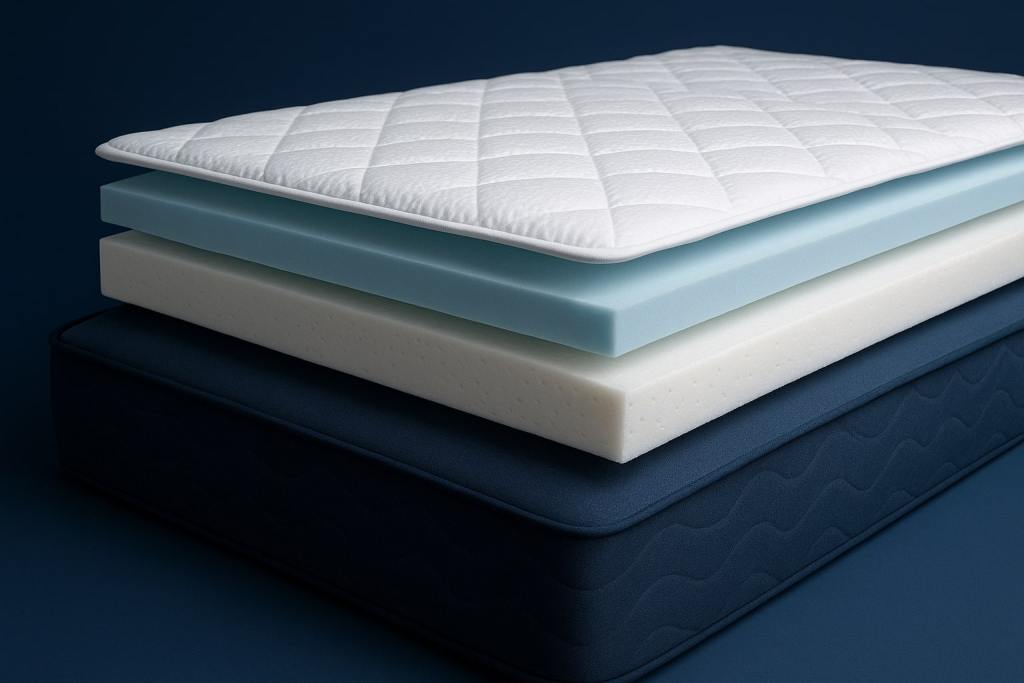
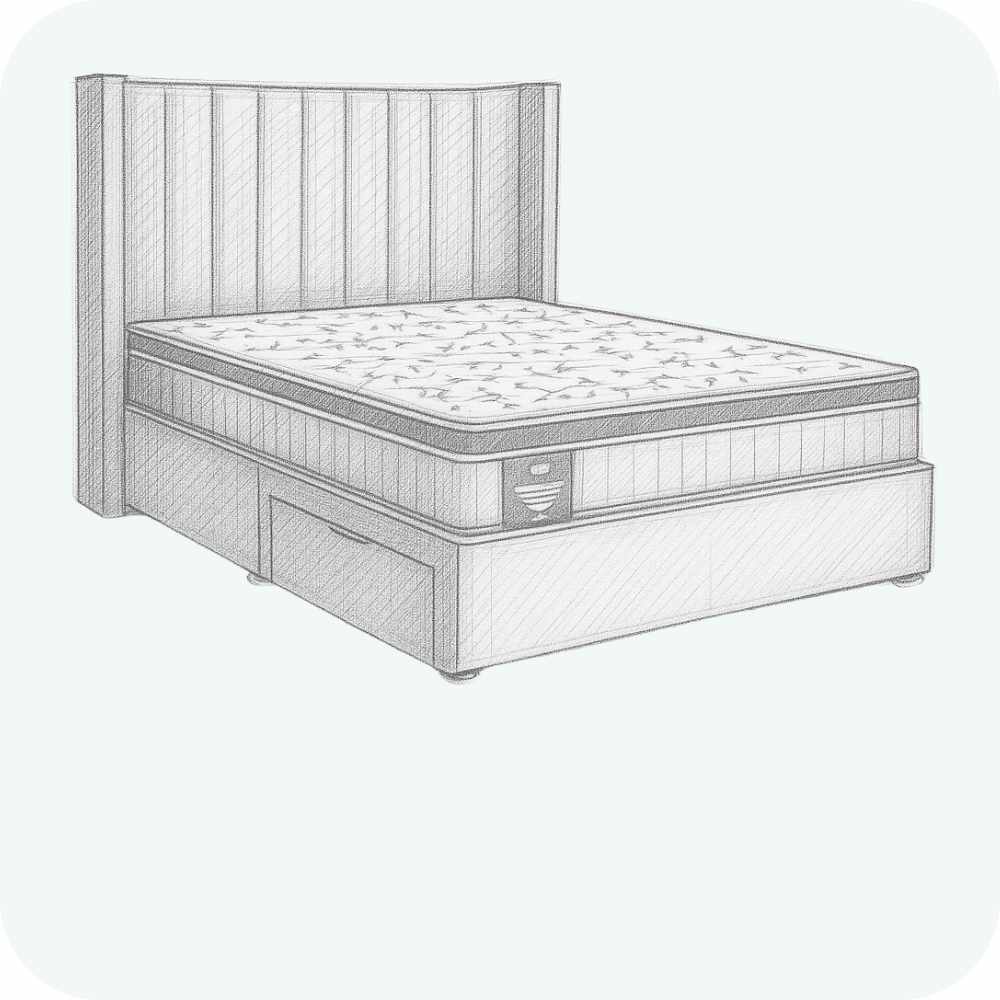
An orthopedic mattress pad is a supportive sleep accessory made to sit on top of your existing mattress. Unlike a regular protector or thin cover, it adds a distinct layer of orthopedic-grade cushioning that targets your body’s key pressure areas.
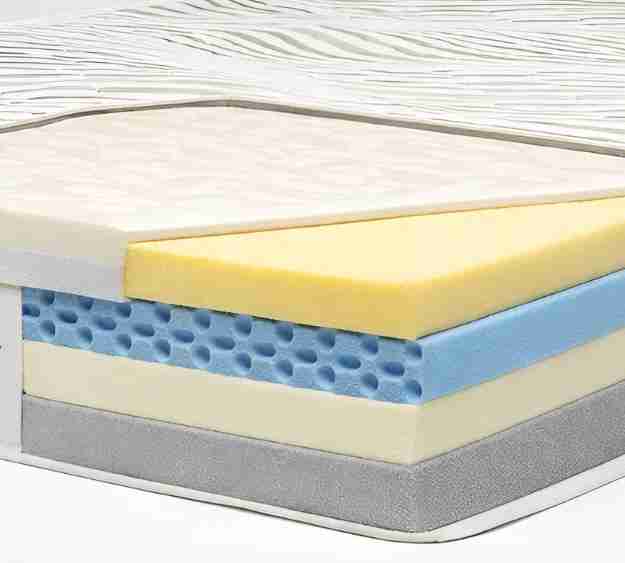
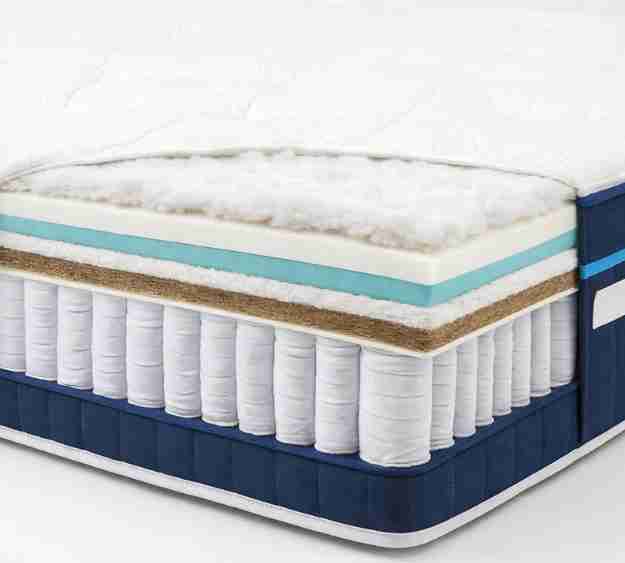
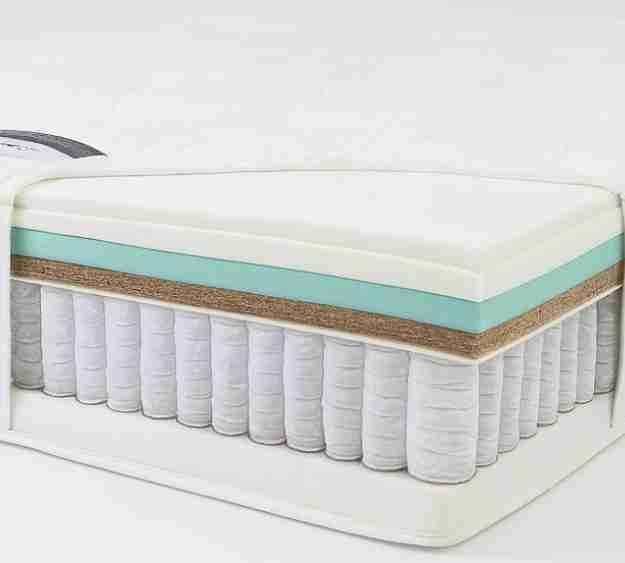
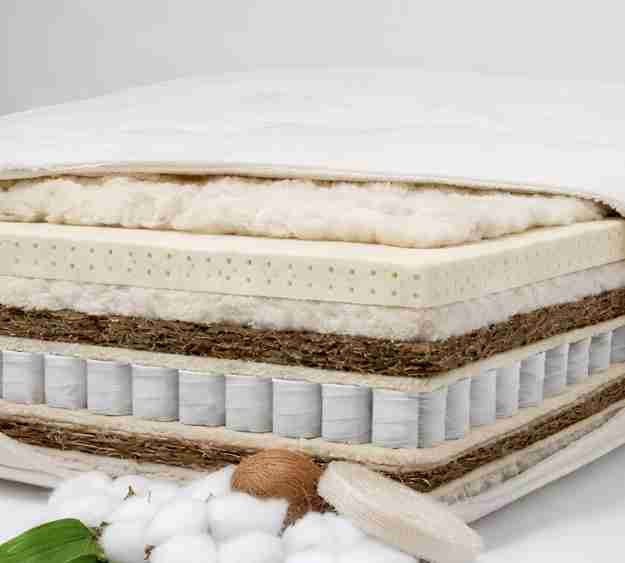
Its main purpose is to provide targeted back support, especially around the spine, shoulders, and hips where tension and misalignment are most common. Typically, these pads are made with specialized foam layers such as memory foam, latex, or gel foam. These materials balance comfort and firmness, cradling your natural curves while maintaining a stable sleeping surface.
While a standard mattress topper focuses mainly on softness or comfort, an orthopedic pad emphasizes therapeutic alignment and pain relief.
How Orthopedic Mattress Pads Support Better Sleep?
The secret to improved rest lies in how an orthopedic mattress pad supports your body. Here’s how it helps enhance sleep quality:
Spinal Alignment
It adapts to your body’s natural curvature, keeping the spine in a neutral position throughout the night. This helps prevent the morning stiffness or soreness caused by poor posture.
Pressure Point Relief
By cushioning sensitive areas like the neck, shoulders, hips, and lower back, it reduces strain and helps your muscles relax more completely.
Motion Isolation
Couples love orthopedic pads because they minimize motion transfer so if your partner tosses and turns, you won’t feel it.
Temperature Control
Many modern pads include gel-infused or breathable foam layers, which maintain an optimal sleeping temperature.
- Reduces tossing and turning
- Promotes deeper sleep cycles
- Aids recovery for people with back pain or joint stiffness
Key Benefits of Using an Orthopedic Mattress Pad
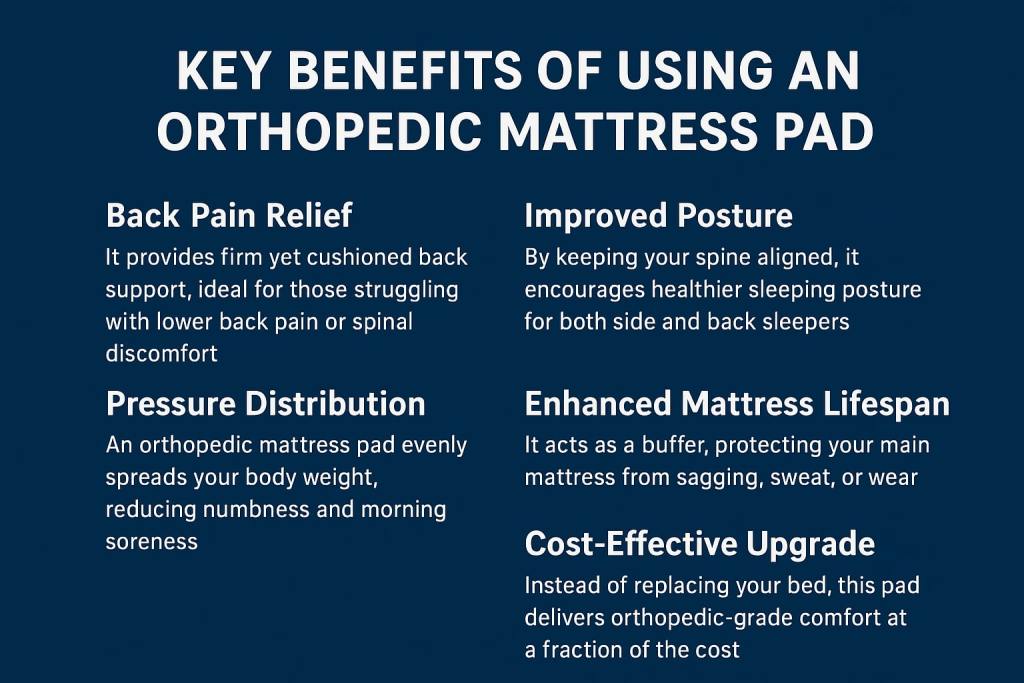
An orthopedic mattress pad offers more than just extra comfort it provides targeted support that can transform your overall sleep quality.
1. Back Pain Relief
It provides firm yet cushioned back support, ideal for those struggling with lower back pain or spinal discomfort.
2. Improved Posture
By keeping your spine aligned, it encourages healthier sleeping posture for both side and back sleepers.
3. Pressure Distribution
An orthopedic mattress pad evenly spreads your body weight, reducing numbness and morning soreness.
4. Enhanced Mattress Lifespan
It acts as a buffer, protecting your main mattress from sagging, sweat, or wear.
5. Cost-Effective Upgrade
Instead of replacing your bed, this pad delivers orthopedic-grade comfort at a fraction of the cost.
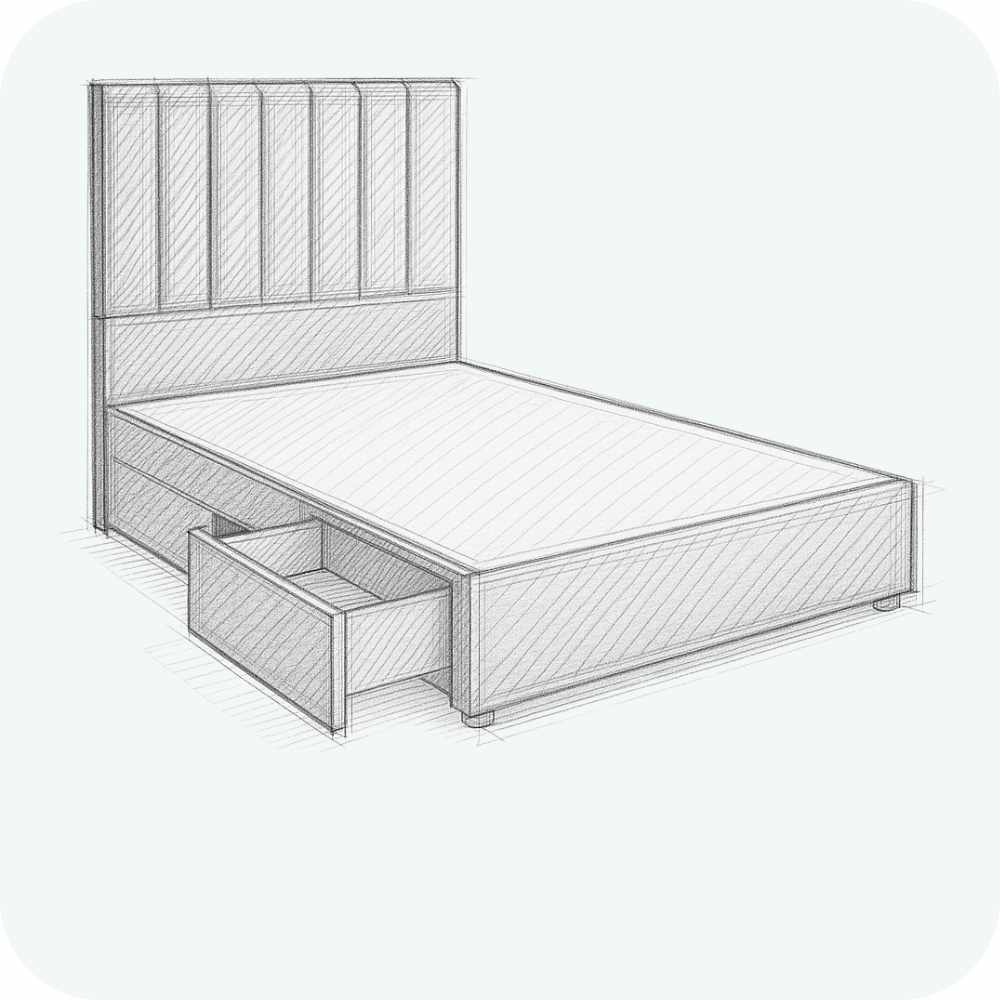
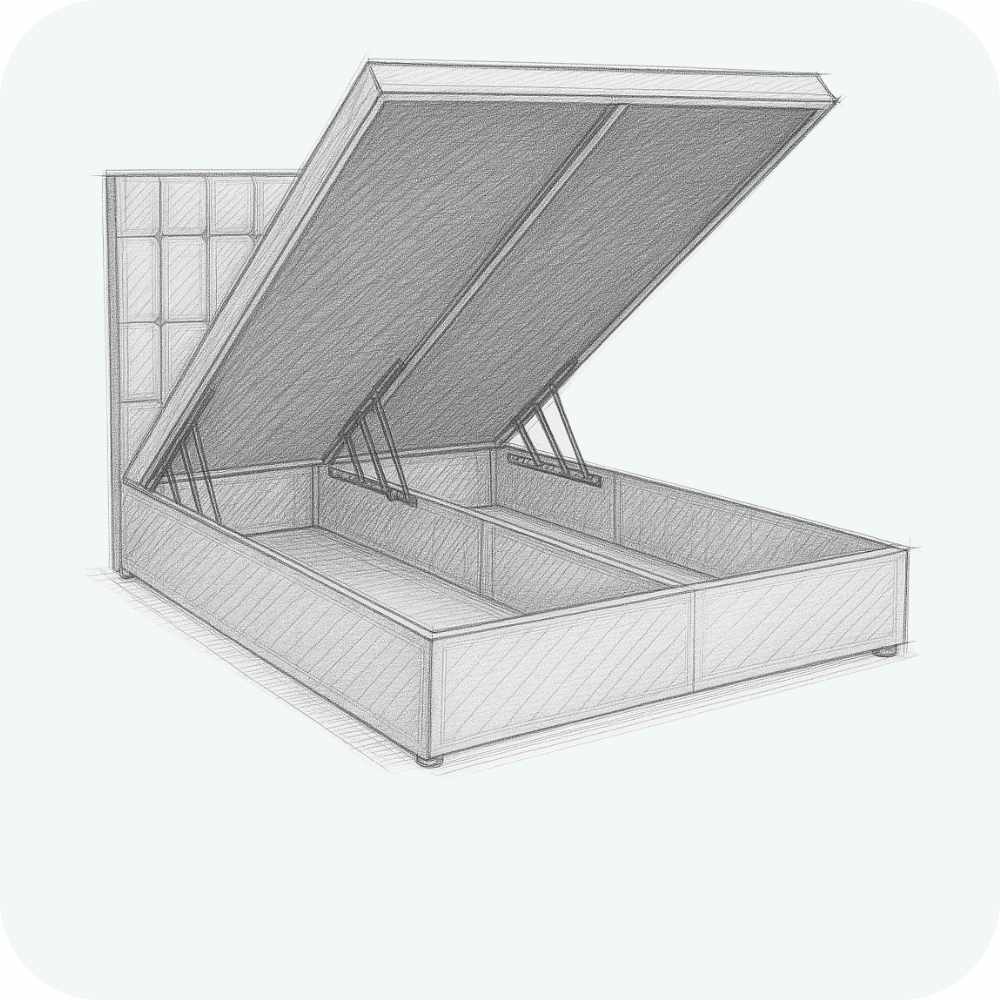
Pro Tip: Pair your pad with a strong bed frame or an orthopedic base for maximum benefits it helps maintain the right height, stability, and airflow beneath your mattress.
Types of Orthopedic Mattress Pads and Materials
When shopping, you’ll notice several material options. Each offers unique pros and cons:
a. Memory Foam Pads
- Mould precisely to your body shape for personalized back support
- Excellent for easing back and joint pain
- Can retain heat, so choose gel-infused memory foam for cooling comfort
b. Latex Pads
- Naturally springy, durable, and breathable
- Great for allergy sufferers or hot sleepers
- Provide balanced firmness and longevity
c. Gel-Infused Pads
- Designed for temperature control and pressure relief
- Perfect for people who sleep hot or live in warm climates
d. Fiber or Polyester Pads
- Budget-friendly and lightweight
- Offer moderate support but less orthopedic precision
Orthopedic Mattress Pads vs. Orthopedic Toppers: What’s the Difference?
| Feature | Mattress Pad | Mattress Topper |
|---|---|---|
| Purpose | Comfort + Protection | Firmness Adjustment |
| Support Level | Moderate | High |
| Best For | Light back pain, mattress protection | Deep pressure relief, chronic back issues |
While both add comfort, an orthopedic mattress pad fine-tunes the feel of your bed without drastically changing its firmness. In contrast, an orthopedic mattress topper is thicker and intended for people needing more intensive posture correction or rehabilitation support.
Choosing the Right Orthopedic Mattress Pad for You
Finding the right orthopedic mattress pad is all about balancing comfort, firmness, and support to match your unique sleep needs.
- Firmness Level: Go for medium firm this balance ensures both comfort and spinal stability.
- Material: Choose memory foam or latex for superior orthopedic-grade relief.
- Sleep Position:
- Side sleepers → Softer foam layers for shoulder and hip contouring
- Back sleepers → Medium-firm pad for balanced support
- Stomach sleepers → Firm pad for spinal alignment
- Allergy Concerns: Select hypoallergenic covers and washable fabrics for hygiene and comfort.
- Bed Frame Compatibility: Make sure your bed frame provides even surface support so the pad performs optimally.
Who Should Use an Orthopedic Mattress Pad?
An orthopedic mattress pad can benefit almost anyone, but it’s especially valuable for:
- People with chronic back pain or muscle stiffness
- Elderly individuals needing gentle joint cushioning
- Office workers who sit for long hours and experience lower back tension
- Athletes seeking recovery-focused rest
- Anyone wanting to upgrade an aging or uneven mattress affordably
Note: Even if you already sleep on a firm mattress or a hybrid orthopedic bed, adding a pad can enhance comfort and fine-tune your support level without overspending.
Care and Maintenance Tips for Longevity
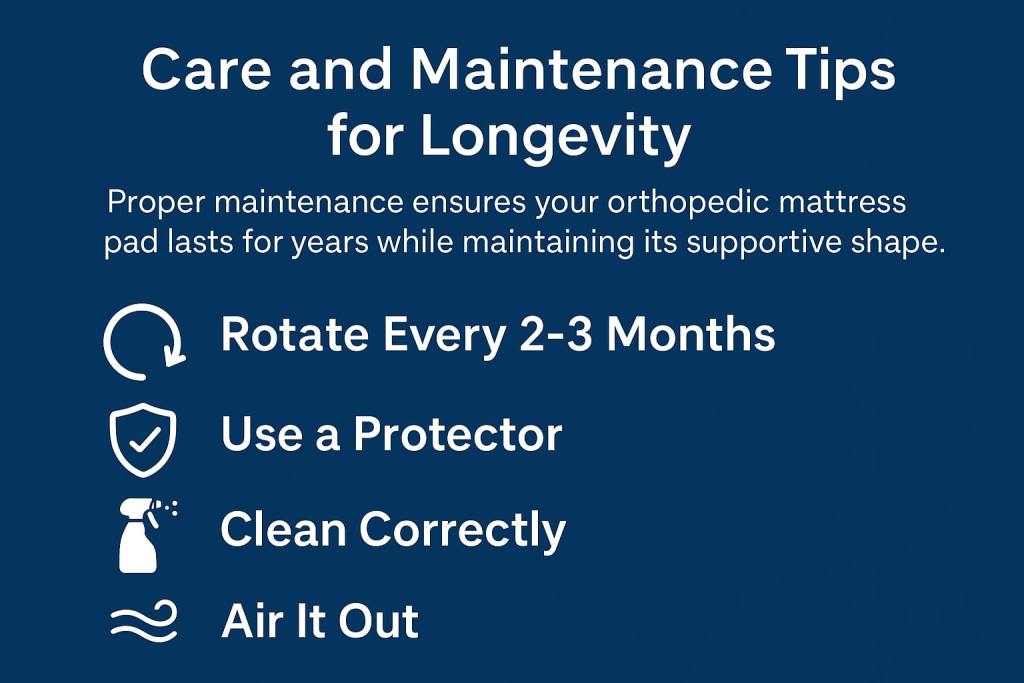
Proper maintenance ensures your orthopedic mattress pad lasts for years while maintaining its supportive shape.
- Rotate Every 2–3 Months: Prevents body impressions and ensures even wear.
- Use a Protector: Add a breathable mattress cover to guard against spills, sweat, and dust.
- Clean Correctly: Follow the brand’s washing or spot-cleaning instructions to preserve material quality.
- Air It Out: Let it breathe occasionally to remove trapped moisture and odors.
Pro Tip: Never fold or roll thick orthopedic pads; always store them flat to avoid damage or permanent creases.
Expert Insight: How Orthopedic Mattress Pads Improve Sleep Health
According to physiotherapists and sleep consultants, an orthopedic mattress pad is one of the simplest and most effective tools for improving sleep posture. By maintaining proper spinal alignment, it promotes better circulation and reduces muscle tension, especially around the lower back and hips.
Better posture during sleep doesn’t just ease pain it also enhances overall wellness. Proper back support can reduce fatigue, improve mobility, and help you wake up refreshed instead of stiff or sore. Over time, this consistency improves your body’s recovery process, especially for those dealing with mild injuries or chronic pain conditions.
Conclusion
An orthopedic mattress pad is more than just an accessory it’s a powerful upgrade for anyone seeking better rest, stronger posture, and long-lasting comfort. It combines the perfect mix of softness and firmness, giving your spine the alignment it needs and your body the relaxation it deserves.
Whether you’re dealing with back pain, an aging mattress, or restless nights, this simple addition can transform your bed into a true orthopedic-friendly sleep surface. Explore premium orthopedic mattresses designed to align your spine and elevate your sleep quality.
FAQs
The best orthopedic mattress topper is made from high-density memory foam or latex, offering targeted pressure relief and proper spinal alignment for deep, restorative sleep.
Orthopedic mattresses and pads often use memory foam, latex, or gel-infused foam layers that provide durability, comfort, and even weight distribution.
It’s a thicker layer placed over your existing bed to adjust firmness and support. It’s ideal for people with chronic pain or those needing stronger orthopedic correction.
A mattress pad is sometimes referred to as a comfort layer or mattress protector. An orthopedic mattress pad specifically adds therapeutic support along with comfort and protection.

I’m Zainab, and I write to help people choose the right mattresses. I share clear, useful information about everything from comfort to materials, so you can pick the one that’s best for you.