Sleeping on your stomach can feel cozy, but it’s actually the trickiest position for spinal alignment. The core goal for stomach sleepers is to keep the spine neutral and prevent the hips from sinking too far into the mattress.

When the midsection bows down, it puts stress on the lower back and can lead to pain over time. That’s why mattress firmness is such a key factor.
- Ideal firmness range: Most stomach sleepers find comfort on a medium-firm to firm bed (around 6.5–8/10 on the firmness scale). This sweet spot helps keep the body lifted without feeling like you’re lying on a rock.
- Body weight matters: Lighter sleepers may prefer slightly softer within this range, while heavier sleepers often need the firmer end for proper support.
According to both Sleepopolis and the Sleep Foundation, extra mattress features can make a big difference:
- Zoned support under the hips and torso helps maintain alignment while easing pressure in lighter areas.
- A responsive surface ensures you don’t feel “stuck” when turning over during the night.
- Solid edge support keeps the entire sleep surface usable, which is especially helpful if you share the bed.
The bottom line: stomach sleepers thrive on a supportive, balanced mattress that prevents sagging while still offering a touch of cushioning for comfort. Why Back & Stomach Sleepers Sleep Better with Hard Mattresses.
Why Firmness Matters for Face-Down Sleeping
When you sleep on your stomach, your body is already working against natural bio mechanics. Lying face-down increases lumbar extension in other words, your lower back curves more than it should.

On a mattress that’s too soft, the hips sink deeply into the bed, creating a pronounced swayback posture that stresses spinal discs and muscles. This is why firmness isn’t just a matter of preference for stomach sleepers it’s a safeguard for long-term comfort. Firm mattress for stomach and side sleeper.
- Bio mechanics 101: A firmer surface minimises the dip under the hips, helping to maintain a more neutral spine.
- Too soft trouble: Excessive sink age worsens swayback and strains the lower back.
- Too hard tension: On the flip side, ultra-firm beds can feel rigid, creating pressure points and limiting natural curves.
An evidence snapshot backs this up. According to research cited in PMC and insights from Modern Chiropractic Chicago, medium-firm mattresses consistently show better outcomes in spinal alignment, comfort, and reduced back pain compared to extremes on either end of the spectrum.
Translation for shoppers: Think “supportive comfort.” You want a mattress firm enough to keep your hips elevated, but not so stiff that it feels unforgiving. The goal is balance let the surface gently fill in small gaps, cradle the chest and knees, and keep your spine in a healthier line. Ultimately, the right firmness turns a tricky sleep position into a manageable, restful one.
Match Firmness to Body Type
Not every stomach sleeper needs the exact same mattress feel your body weight plays a big role in how firm (or soft) a bed feels beneath you.
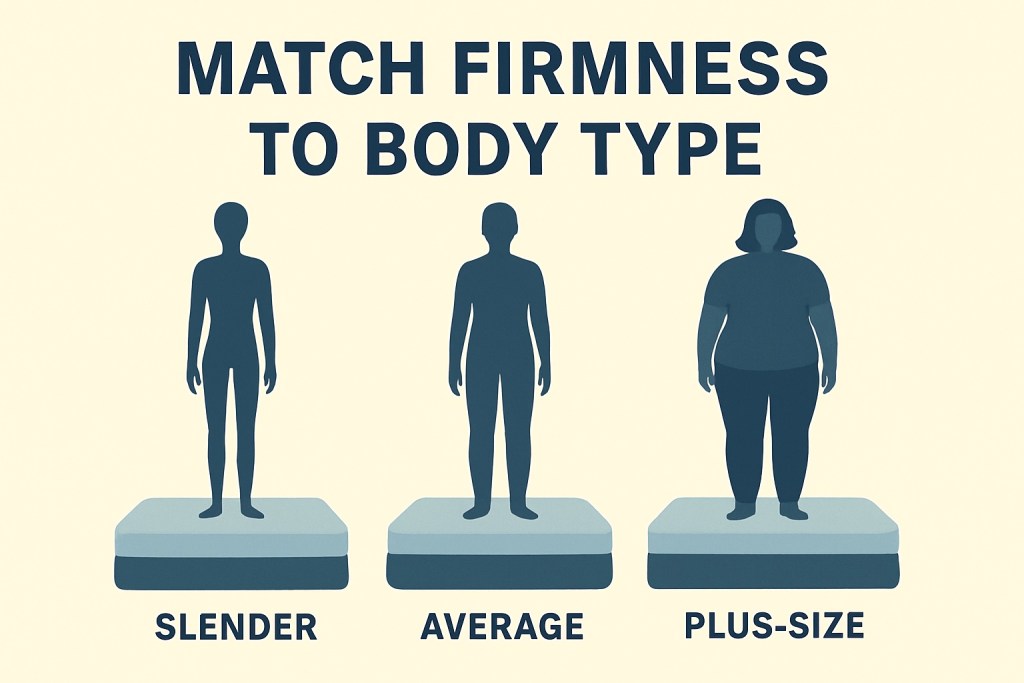
What registers as “just right” for one person might feel too stiff or too soft for another. That’s why matching firmness to body type is essential for keeping the spine aligned and preventing long-term discomfort. Firm Mattresses for Side, Back, and Stomach Sleepers.
- Under 130 lb (≈<60 kg): Medium-firm often feels firmer to lighter sleepers, so a 6–7/10 firmness with some added cushioning on top can provide balance. This way, the mattress supports the hips without feeling uncomfortably rigid. Extra Firm Mattresses for Heavy or overweight Sleepers: Do They Really Work?
- 130–230 lb (≈60–105 kg): This group tends to hit the “sweet spot.” A 6.5–8/10 firmness usually delivers the right mix of support and comfort, preventing sag while still offering some pressure relief.
- 230+ lb (≈>105 kg): Heavier sleepers need sturdier construction. A 7.5–8.5/10 firmness with denser foams or reinforced coils helps resist sagging and keeps the hips elevated.
A bonus feature across all weight ranges is zoned construction firmer support under the hips and softer zones elsewhere. This design fine-tunes alignment so each sleeper gets a more balanced feel, regardless of body type.
Mattress Types for Stomach Sleepers: Pros & Cons
Choosing the right mattress type is just as important as picking the right firmness. Each material behaves differently under the hips, shoulders, and chest so the right choice can make the difference between waking refreshed or stiff.
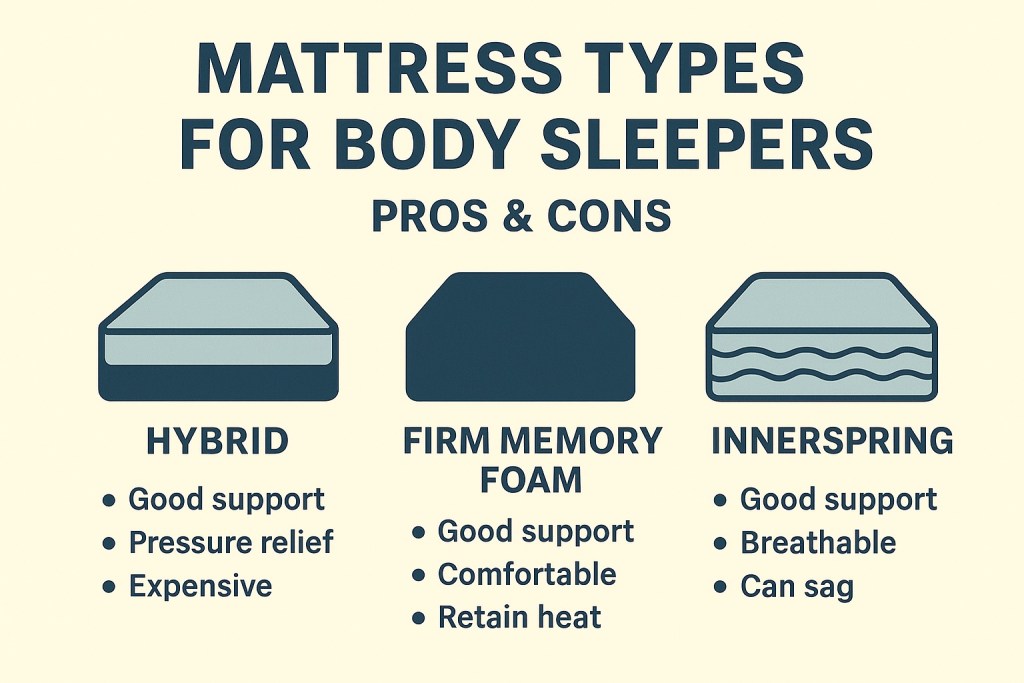
- Hybrid (coils + comfort layers): Hybrids are a popular choice for stomach sleepers because they offer buoyant support, great airflow, and easy repositioning. However, be cautious with plush pillow-tops if the hips sink too much, it can throw the spine out of alignment.
- Latex / Latex Hybrid: According to the Sleep Foundation latex beds provide natural springiness, support, and temperature neutrality. They’re excellent for keeping the hips elevated and make turning over at night nearly effortless.
- Innerspring (modern): Today’s innersprings aren’t the squeaky mattresses of old. They deliver strong support and reinforced edges, and when paired with a thin, firm Euro-top, they balance durability with surface comfort. Best Mattress for Side Sleepers with Shoulder and Hip Pain
- Memory Foam: Known for pressure relief, memory foam can be tricky for stomach sleepers since it’s often too pliant. The solution? Opt for firmer densities with thinner comfort layers, which cushion without allowing the midsection to sag.
- Air / Adjustable: Adjustable air beds shine with customizable firmness. Add zoned layering for targeted hip support to minimise midsection dip.
Finally, a note on “luxury” models: features like higher coil counts, stronger perimeters, and premium natural materials enhance not just comfort but also long-term spinal alignment and durability a smart investment for dedicated stomach sleepers.
Materials That Help (and Hurt) Stomach Sleepers
When it comes to mattress construction, the right materials can make or break comfort for stomach sleepers. The challenge is finding layers that support the hips without letting them sag while still offering enough cushioning to keep the rest of the body at ease.

- Support core: A strong foundation is essential. Sleep Foundation notes that tempered pocketed coils with a firmer gauge in the centre third are excellent for holding up the midsection. Alternatively, high-LID latex offers dense, springy support that resists sagging.
- Comfort layers: Thin to moderate comfort layers are best for face-down sleepers. Prioritise latex or firmer high-density foams, which prevent hips from sinking too deeply while still softening the surface.
- Natural latex: According to both latex is a standout for stomach sleepers. It’s resilient, breathable, moisture-wicking, and highly durable, meaning it resists body impressions while keeping the spine more neutral.
- Wool & cotton: Natural fibres like wool and cotton, highlighted , enhance temperature regulation and also act as natural flame-retardant barriers. They’re ideal for sleepers who run warm.
- What to avoid:Thick pillow-tops, and low-density foams that compress quickly under the hips. These materials may feel cosy at first but often worsen spinal misalignment over time.
Feature Checklist for Stomach Sleepers
Shopping for a mattress as a stomach sleeper means looking beyond just comfort you need a design that actively supports spinal health while still letting you rest easily. The right combination of features can prevent sagging, overheating, and long-term back issues. Here’s what to prioritise:
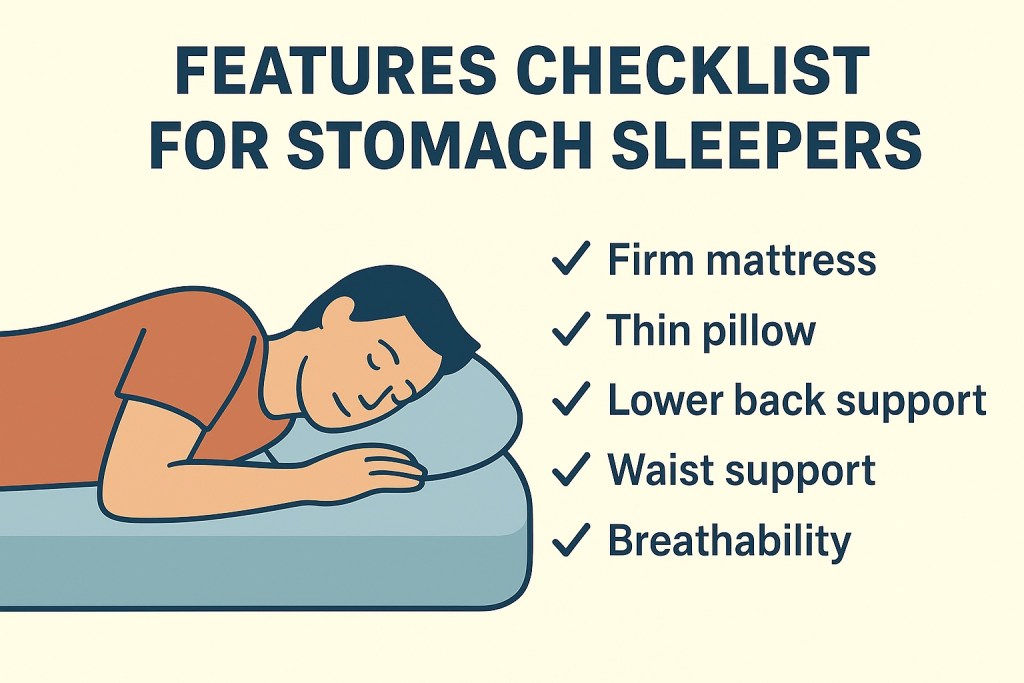
- Firmness rating: Aim for 6.5–8/10 firmness, the sweet spot that balances lift with comfort. According to Sleepopolis, this range is most effective for keeping hips and lumbar areas aligned.
- Zoned support: A firmer center third, as recommended by the Sleep Foundation, prevents the pelvis from dipping, which helps maintain a neutral spine.
- Responsive feel: Materials like latex or hybrids provide a springy, breathable surface. This makes breathing easier when lying face-down and allows effortless repositioning during the night (Sleep Foundation).
- Edge support: If you shift toward the perimeter, solid edge reinforcement keeps your posture consistent. Tom’s Guide suggests looking for coil perimeters or reinforced foams.
- Cooling: Overheating can be an issue for stomach sleepers. Look for breathable covers (cotton or Tencel), latex, coil-based airflow, or phase-change fabrics for active cooling. Extra Firm Mattresses for Heavy or overweight Sleepers: Do They Really Work?
- Durability: To keep support intact over years, opt for high-density foams, premium latex, and robust coil counts. These prevent sagging and preserve firmness.
With this checklist, stomach sleepers can filter out flashy extras and zero in on the features that truly protect their sleep and spine.
Final Checklist Before You Click “Buy”
Before committing to a new mattress, stomach sleepers should pause and run through a quick checklist. The right features can make the difference between waking refreshed and waking with aches.
The Best Firmness for Stomach Sleepers
| Body Weight | Recommended Firmness (1–10) | Best Mattress Types | Why It Works | Pillow Advice |
|---|---|---|---|---|
| < 130 lb (≤ 60 kg) | 6–7 (Medium-Firm) | Latex, Firm Memory Foam, Hybrid with thin top | Prevents hips from sinking while offering comfort | Thin pillow or no pillow |
| 130–230 lb (60–104 kg) | 7–8 (Firm) | Firm Latex, Firm Hybrid, Firm Innerspring | Keeps pelvis aligned and maintains neutral spine | Thin, flat pillow |
| > 230 lb (≥ 104 kg) | 8–9 (Extra Firm) | Extra-Firm Hybrid, High-Density Latex, Firm Innerspring | Provides strong support and prevents midsection sagging | Low-loft pillow or arm support |
| Hot Sleepers (Any Weight) | Prefer Firmer Side | Breathable Latex, Hybrid with coils | Less sink = better airflow, cooler sleep | Breathable pillow (latex, wool, or cotton fill) |
- Target firmness: Stay within the 6.5–8/10 range, ideally with zoned midsection support to prevent the hips from dipping.
- Surface feel: Responsive designs like latex or hybrids keep hips elevated and make it easy to change positions without feeling stuck.
- Materials check: If you prefer a more natural build, look for latex, wool, and cotton, which add breathability and durability while enhancing comfort.
- Policies matter: Double-check the trial period, warranty, and exchange options. Even pillow-top models can work just ensure they still hit the firmness and support benchmarks you need.
A quick review of these essentials ensures you’re not just buying a mattress you’re investing in healthier, more restorative sleep.
Conclusion
For stomach sleepers, the right mattress isn’t just about comfort it’s about protecting spinal health night after night. Because lying face-down naturally increases strain on the lower back, the key is choosing a bed that keeps the hips from sinking while still offering enough cushioning for overall ease. Medium-firm to firm surfaces (6.5–8/10) consistently prove best, especially when paired with features like zoned support, responsive materials, and solid edge reinforcement.
Latex, hybrids, and quality coil systems tend to shine here, offering buoyant support and breathability, while natural materials like cotton, wool, and latex elevate both comfort and durability. On the flip side, ultra-plush foams and thick pillow-tops can compromise alignment and should be approached with caution.
FAQ’s
Most experts, including Sleep Foundation , recommend a medium-firm to firm mattress (6.5–8/10). This range supports the hips and spine without feeling uncomfortably hard.
Memory foam can work, but only if it’s firm and not too thick. Plush memory foam often allows the hips to sink, which can strain the lower back. Look for high-density foams with thinner comfort layers if you prefer foam.
Zoned support offers a firmer center third under the hips and softer zones elsewhere. This prevents the pelvis from dipping while still giving comfort to lighter areas like the shoulders.
Hybrids and latex: buoyant, supportive, and breathable.
Modern innersprings: great edge support with a firm Euro-top.
Adjustable air beds: customizable firmness, especially with zoned layering.
Avoid ultra-plush memory foam toppers, very thick pillow-tops, and low-density foams, as these can cause hips to sink and throw off spinal alignment.

Hello, this is me Sidra and I am a professional content writer with a sharp eye for detail and I love to write about mattresses. Whether it’s blog post, website content or articles. I bring clarity, creativity and purpose to every piece of write. My goal is simple. I create content about mattresses not only inform but resonates. I can create professional content about mattresses. It’s help people to choose the write mattress. From all this you can choose the best for your comfort.