

When people shop for a new mattress, they often focus on comfort, price and perhaps size but one of the most vital factors tends to be overlooked: how the mattress affects your sleeping posture. The way you lie down for hours at night has a direct impact on your back, neck, joints and even your breathing. Choosing the right mattress material can therefore influence your overall health more than you might think.
Enter the world of latex mattresses. While these are commonly praised for eco-friendliness and durability, they also bring a wealth of lesser-known benefits — from improved posture to allergy resistance and dust mite avoidance. In this guide we’ll explore the many advantages of latex mattresses in 2025, how they support healthier sleep, and why they may be the smart choice if you’re focusing on true wellness and not just a soft surface.
Understanding Sleeping Posture and Why It Matters
Your sleeping posture refers to how your body aligns while you’re asleep — whether you’re on your back, side or stomach. Poor posture during sleep isn’t simply uncomfortable; over time it can lead to persistent back pain, stiffness in the neck and shoulders, poor circulation, and even headaches. Clinical research shows that mattress firmness, support and material all contribute to maintaining a neutral spine a key element of healthy posture.
When your spine curves or sags into the mattress, your muscles must compensate and your nervous system can be burdened. Over weeks, months or years, this can lead to fatigue, discomfort on waking, and sub-optimal sleep quality. A mattress that supports your body evenly, responds to your shape and keeps your spine aligned is therefore of high importance.
With a latex mattress, you get a combination of responsiveness and structure: the material adapts to your shape while still providing stable support so the sleeping posture remains more aligned throughout the night. In one study the latex surface was shown to reduce peak body pressure a major factor in preventing postural misalignment.
Health Benefit #1: Better Posture Through Even Support
One of the standout benefits of latex mattresses is their ability to distribute body weight more evenly, thereby helping maintain a healthier sleeping posture. A 2017 study on body pressure profiles found that latex mattresses reduced the highest contact pressures by up to 35 % (depending on position) compared to standard polyurethane foam. PMC
Why does this matter? High pressure spots such as hips, shoulders, lower back often lead to sinking, twisting or misalignment of the spine. A mattress that avoids large pressure peaks ensures your body remains supported, maintains a more neutral posture, and gives your muscles and connective tissues a rest.
Further, a review from the Sleep Foundation explains that latex’s natural resilience means the mattress doesn’t collapse unevenly or sag prematurely, which is a common contributor to poor posture over time.
From a practical perspective, this means less waking up stiff, fewer sleep interruptions, better spinal alignment, and overall more restful sleep all by virtue of improved sleeping posture thanks to the properties of latex.
Health Benefit #2: Natural Resistance to Dust Mites & Allergens
Another less-celebrated benefit of latex mattresses relates to their hypoallergenic nature and resistance to common allergens. If you suffer from allergies or asthma, this can make a major difference in your sleep quality and health.
Latex foam is inherently less hospitable to dust mites, mold and mildew compared with many standard mattress materials. Several sources note that natural latex is “dust mite resistant and antimicrobial” meaning it doesn’t provide the same kind of environment (moisture, organic fibers) where mites thrive.
One review from Mattress Clarity highlights that natural latex mattresses “are hypoallergenic and safe for everyone except those with severe latex allergies.” Mattress Clarity
While the scientific data on latex and dust mites is not exhaustive, latex’s physical characteristics (denser foam structure, fewer gaps, less absorbent) lend it advantages in limiting allergen build-up. Green America notes that natural latex rubber is “naturally dust mite resistant; it’s breathable so you don’t sleep hot; its resiliency is known to last for decades.” Green America
From a posture perspective, this means fewer disruptions at night (sneezing, coughing, waking up) and a cleaner environment for your spine and body to recover. A mattress that supports you without adding allergens is a strong dual benefit.
Health Benefit #3: Temperature Regulation and Comfort Which Enhances Posture
Comfort is intrinsically tied to posture. If you’re too hot, too cold or frequently adjusting your position, your sleeping posture suffers. Latex mattresses have a natural edge here thanks to their construction.
Latex foam tends to sleep cooler than memory foam, thanks to better airflow, open-cell structures and materials that don’t trap heat. According to the Sleep Foundation: “Latex sleeps quite cool compared to other materials like memory foam… A supportive sleep surface is important for spinal health, as sagging can force the spine into misaligned positions during sleep.” Sleep Foundation
Because you’re less likely to overheat, toss and turn or fall into an uncomfortable position, your posture stays more consistent. A cooler sleep environment means fewer posture-compromising movements. Latex’s responsive nature also ensures that when you move, your body is supported instead of sinking, which further helps maintain healthy alignment.
Health Benefit #4: Longevity, Durability and Consistent Support
A mattress that changes shape over time can undermine your sleeping posture — sagging areas, dips or uneven surfaces all lead to misalignment and disrupted sleep. Here again, latex offers a clear advantage.
Many sources state that latex mattresses can last significantly longer than traditional foam or spring mattresses. For example, the Naturepedic blog says home use latex can last up to 20 years if well cared for.
This durability means your mattress retains its shape, support and ability to maintain healthy posture for many more years rather than degrading quickly. From a posture and health perspective, that’s a big win. Your spine stays in a better position night after night, not just for a few years.
Health Benefit #5: Non-Toxic Materials & Better Sleep Environment
The materials used in a mattress affect more than just physical comfort — they impact air quality, off-gassing, and the quality of your rest. Latex mattresses (especially natural or organic latex) tend to have fewer volatile organic compounds (VOCs), fewer synthetic chemicals and lower off-gassing than many conventional foam mattresses.
A cleaner sleep environment (less chemical exposure, fewer off-gassing emissions) supports healthier breathing, less irritation and fewer posture-compromising micro-movements. Essentially, when your body isn’t fighting other stressors, your posture improves by default.
Health Benefit #6: Motion Isolation and Partner-Friendly Support
If you share a bed, achieving good sleeping posture can be compromised by partner movement. Latex mattresses perform well in motion isolation meaning one person’s movement won’t jolt the other, helping both maintain posture and uninterrupted rest. The pressure distribution study found that latex had higher proportions of low-pressure regions and limited motion transfer due to its damping properties.
Better alignment, fewer disturbances and a stable sleep surface contribute to overall healthier posture for both sleepers.
How Latex Enhances Sleeping Posture Mechanisms & Insights
It’s worth diving a bit deeper into how latex achieves these posture benefits. Several factors contribute:
- Bounce & Recovery: Latex responds quickly to movement. Instead of sinking in one spot (which can tilt your pelvis or misalign your spine), latex supports you and allows repositioning without the “stuck” feeling of some foams.
- Pressure Distribution: As shown in the body-pressure study, latex spreads contact forces more evenly, reducing peak pressure areas. This helps keep the spine more level and less stressed.
- Structural Integrity: Latex retains its form over time better than many foams, meaning the surface stays more uniform and doesn’t develop dips or hollows that affect posture.
- Cooler Sleep Surface: A cooler sleep surface reduces micro-movements (that someone may make when hot/uncomfortable), helping maintain posture stability.
- Hypoallergenic Environment: Fewer allergens and better air quality mean less sleep disruption, fewer nightly awakenings and better ability for your muscles and spine to recover in a stable position.
All these combine to support healthier sleeping posture in a way that many traditional mattresses do not.
Selecting the Right Latex Mattress for Posture Support
If you’re specifically interested in how a latex mattress helps your posture, here are some practical tips for choosing a model:
- Firmness level:
For good sleeping posture, a mattress that is medium-firm to firm is often optimal enough support to keep your spine aligned but sufficient give to relieve pressure. Some studies show mattresses in this range offer better outcomes for low back pain. - Pure or high-quality latex layers:
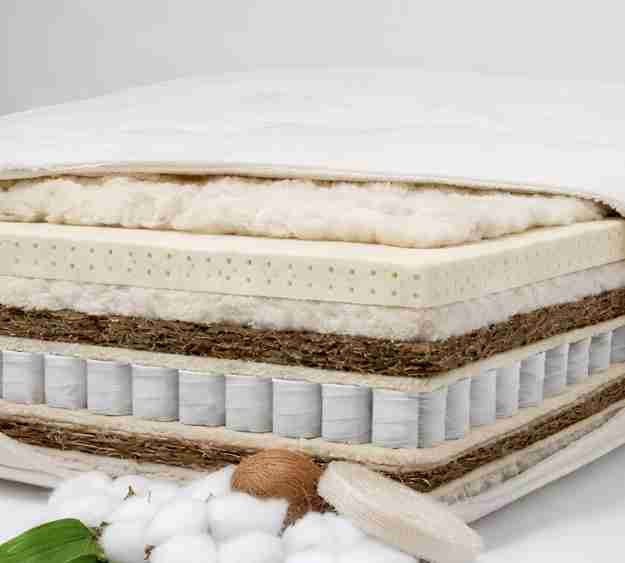
Aim for natural or certified latex (e.g., GOLS, OEKO-TEX) to ensure durability and the material benefits (cooling, resilience, less off-gassing). - Adequate thickness and support core:
A mattress should have a supportive base layer under the latex comfort layer so the posture support isn’t compromised. - Allergic or respiratory concerns:
If you have sensitivities, check for low-VOC materials, hypoallergenic covers and verify the mattress’s resistance to dust mites / allergens. Latex offers strong advantages for this. - Trial period & long warranty:
Since posture benefits come over time, choose a mattress with a long trial and strong warranty so you have time to assess how your body responds (especially your spine and posture).
Addressing Common Misconceptions
- “Latex is too firm or bouncy for me.”
Not necessarily. Modern latex mattresses are available in multiple firmness levels and even hybrid designs. They offer bounce, but not instability; the responsiveness helps posture rather than harming it. - “Latex mattresses are just for allergy sufferers.”
While they do offer excellent hypoallergenic benefits, their posture and pressure support advantages are broadly applicable. - “Latex mattresses trap motion so I’ll get stuck.”
On the contrary, latex’s quicker response means you’re less likely to feel “stuck” and more likely to maintain good posture when changing positions. - “Dust mites still get into latex.”
While no mattress can guarantee zero allergen presence, latex’s dense structure and fewer materials that support mite growth make it significantly less hospitable to allergens than many mattresses.
The Broader Wellness Impact
Improved sleeping posture affects far more than just how you feel in the morning. Better alignment and consistent support can lead to:
- Reduced incidence of chronic back or neck pain
- Fewer sleep interruptions and deeper sleep cycles
- Lower risk of joint strain and degenerative posture issues
- Better breathing and less snoring (due to improved airway alignment)
- Reduced wake-up stiffness and muscular discomfort
By choosing a mattress that supports your posture, you’re investing in long-term health, not just short-term comfort. Latex mattresses deliver in this regard.
Why Now (2025) Is a Great Time for Latex
The market trends support a shift towards latex and better sleep solutions. According to market data, latex mattress demand is increasing, propelled by benefits such as pressure relief, proper spinal alignment, and allergy resistance. Grand View Research
With advances in latex manufacturing, improved certifications, better hybrid options and more consumer awareness around posture and sleep health, now is a particularly strong time to consider a latex mattress if posture and well-being are priorities.
FAQs
1. How soon will I notice posture improvements after switching to a latex mattress?
Many users report fewer wake-up stiffness, improved comfort and clearer spinal positioning within a few nights to a couple of weeks. Long-term posture stabilization may take months, depending on prior mattress condition and body condition.
2. Are latex mattresses suitable for side sleepers or back sleepers?
Yes. For side sleepers you may want a slightly softer latex or zoned latex design to relieve hip/shoulder pressure, while back or stomach sleepers might prefer medium-firm to firm for spine support. The key is maintaining good sleeping posture.
3. What if I have a latex allergy?
Although latex mattresses are often safe for many allergy sufferers, individuals with true latex rubber allergies should consult an allergist. The latex foam in mattresses is processed and fewer proteins remain, but caution is advised. Saatva
4. Do latex mattresses cost significantly more for these benefits?
Usually yes, they tend to have a higher upfront cost than basic foam or spring mattresses because of material quality and longevity. But the long-term value (posture support, durability, health benefits) often makes them a wise investment.
5. How do I care for a latex mattress to maintain posture support?
Rotate the mattress every 3-6 months, use a breathable and supportive base, avoid excessive sagging or uneven surfaces, and keep it in a dry environment. A well-maintained latex mattress more reliably supports good posture over years.
Conclusion
In the quest for better sleep, it’s easy to overlook one of the most important factors: sleeping posture. The position your body holds for hours each night has far-reaching implications for spinal health, muscular recovery and overall well-being.
Latex mattresses offer a suite of hidden health benefits with posture support at their core — from better pressure distribution and spinal alignment, to allergy resistance and cooler sleep environments. As we continue into 2025 with greater awareness of sleep health, choosing a latex mattress becomes not just a comfort decision, but a health-forward choice.
If you’re ready to upgrade your sleep surface and care for your posture, a latex mattress is very much worth serious consideration. And to explore more about mattress materials, you might check out the mattress toppers and other latex-enhanced solutions referenced on blogs such as The Best Mattress Toppers and the Sleep Foundation’s Mattress Topper Guide.
Sleep well. Align better. Experience the hidden health benefits that a latex mattress can bring.

Results-driven Digital Marketing and E-Commerce Specialist with 5+ years of experience helping diverse clients achieve their online business goals. Proven expertise in managing end-to-end Shopify store operations, developing impactful Social Media strategies, and driving traffic through effective SEO techniques.
Core Skills & Expertise:
• E-Commerce Strategy & Management: Building, optimizing, and managing successful online stores, particularly on Shopify.
• Digital Marketing Campaigns: Planning, executing, and analyzing multi-channel campaigns (Social Media, Search, Email).
• Social Media Marketing: Creating engaging content, managing communities, running targeted ads (Facebook, Instagram, etc.), and building brand presence.
• Search Engine Optimization (SEO): On-page & technical optimization, keyword research, link building, and improving organic search visibility & rankings.
• Client Collaboration: Understanding client objectives, delivering measurable results, and maintaining successful long-term partnerships.
What I Bring:
• Proven Track Record: Successfully delivered projects for numerous clients across various industries.
• Platform Proficiency: Deep hands-on experience with Shopify, major social platforms, and SEO tools.
• Data-Driven Approach: Focusing on analytics and KPIs to optimize performance and demonstrate ROI.
• Holistic E-Commerce View: Integrating marketing, platform management, and optimization for sustainable growth.
Ready to help your business thrive online. Let’s connect!