More and more people are switching to hybrid mattresses, and it’s not just a trend, it’s science. Hybrid mattresses combine the best materials, like memory foam and innerspring coils, to deliver unmatched comfort and support.
Understanding how hybrid mattresses work reveals the unique ways their construction provides pressure relief, spinal alignment, temperature regulation, and durability. This blend of features makes hybrids an ideal choice for those seeking truly restorative sleep.
What Is a Hybrid Mattress?

A hybrid mattress combines innerspring coils with layers of foam comfort. It usually has pocketed coils topped by memory foam or latex layers. This design provides strong support and soft cushioning for better sleep.
Unlike traditional mattresses, hybrids mix the best of foam and coils. Memory foam often traps heat and feels slow to respond. Innerspring mattresses provide support but lack body contouring comfort. Hybrids solve these problems using zoned support and advanced materials.
Thanks to new mattress technology, hybrids improve airflow and pressure relief. These innovations also enhance motion isolation for undisturbed rest. Overall, hybrid mattresses offer excellent comfort, durability, and support.
Inside the Hybrid Mattress: Materials and Engineering
Hybrid mattresses use a mix of memory foam, latex, and coil springs. Pocketed coils provide targeted support and reduce motion transfer during sleep. These materials work together to create comfort, support, and durability.
Key components include:
- Foam types: memory foam, latex, and high-density polyurethane
- Coil springs: pocketed coils designed for motion isolation
- Latex: adds bounce and natural responsiveness to the mattress
Foam density impacts comfort and mattress lifespan. Higher-density foams provide better durability and consistent support over time. Lower-density foams feel softer but wear down faster.
Coil spring technology varies by coil gauge and design. Lower gauge means thicker, more durable coils for firm support. Pocketed coils adjust individually to body shape and sleeping position.
Together, these materials balance pressure relief with spinal alignment. This blend offers optimal comfort for a restful night’s sleep.
The Science of Mattress Comfort Layers and Support Mechanisms
Foam layers like memory foam, latex, and polyfoam create the mattress’s comfort. Each foam type offers unique benefits for softness and support combined. These layers work together to provide pressure relief and body contouring.
Key foam features include:
- Memory foam: molds to the body for precise pressure relief
- Latex: adds bounce and natural responsiveness to support movement
- Polyfoam: provides lightweight cushioning and durable base support
Comfort layers also help regulate heat and promote airflow throughout sleep. Cooling gels and open-cell foam structures reduce heat retention. This keeps the mattress cool and comfortable all night long.
Together, these materials relieve pressure points and improve spinal alignment. They ensure a balanced, cool, and supportive sleeping environment for better rest.
How Hybrid Mattress Support Systems Work
Hybrid mattresses use zoned support systems to target different body areas. These zones provide firmer support where needed and softer cushioning elsewhere. This design improves spinal alignment and overall sleep comfort.
Key features include:
- Zoned support: firmer coils or foam in key pressure areas
- Responsiveness: mattress adjusts quickly to movement and body changes
- Pressure relief technology: distributes weight evenly to reduce stress points
- Pressure point relief: cushions sensitive areas like hips and shoulders
How Hybrid Mattresses Deliver Balanced Comfort and Zoned Support
Hybrid mattresses combine foam layers and coils to create balanced comfort. The foams provide softness and pressure relief, while coils offer firm support. Zoned support targets specific body areas for personalized comfort and alignment.
Key benefits include:
- Balanced comfort: soft foam cushions with supportive coil base
- Zoned support: firmer areas under hips and lower back
- Pressure relief: foam contours to reduce stress on joints
- Improved spinal alignment: promotes healthy sleep posture
This combination ensures comfort and support work together perfectly every night. Sleepers experience less pain and better rest with hybrid mattresses.
Motion Isolation and Temperature Regulation in Hybrid Mattresses
Hybrid mattresses excel at minimizing motion transfer between sleeping partners. Pocketed coils and foam layers absorb movement, preventing disturbances. This makes hybrids ideal for couples and light sleepers.
Key features include:
- Motion isolation: pocketed coils reduce partner movement across the bed
- Foam layers: absorb shock and minimize bounce for quiet sleep
- Temperature regulation: breathable coils promote airflow and cooling
- Cooling materials: gels and open-cell foams reduce heat buildup
Together, these features create a cool, undisturbed sleep environment. Hybrid mattresses keep you comfortable and motion-free all night long.
Mattress Firmness, Sleep Positions, and Spinal Alignment
Mattress firmness greatly affects spinal alignment and overall sleep quality. Different sleep positions need different support levels to maintain a healthy posture. Hybrid mattresses offer various firmness options to suit all sleepers’ needs.
Key points include:
- Side sleepers: benefit from softer mattresses to cushion shoulders and hips
- Back sleepers: need medium firmness for balanced support and spinal alignment
- Stomach sleepers: prefer firmer mattresses to prevent lower back sinking
- Hybrid mattresses: provide adjustable firmness with zoned support for all positions
Choosing the right firmness ensures proper spinal alignment and reduces discomfort. This leads to more restful sleep and less pain over time.
Benefits of Hybrid Mattresses
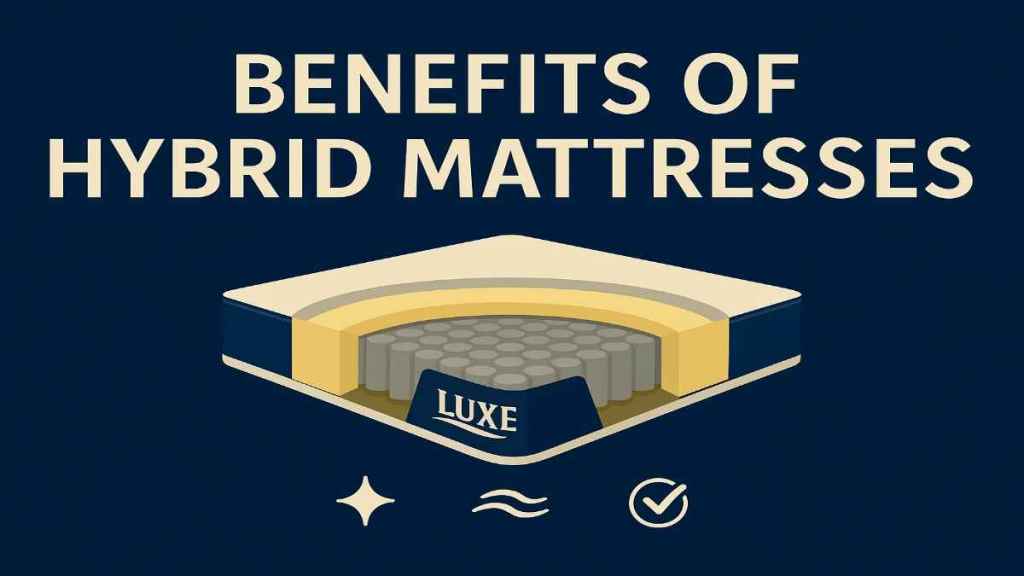
Hybrid mattresses combine the best features of foam and innerspring designs. This blend offers superior comfort, support, and durability for a great night’s sleep. Many sleepers report improved rest and reduced pain when switching to hybrids.
Key benefits include:
- Balanced comfort: soft foam with strong coil support
- Pressure relief: foam layers reduce stress on joints and muscles
- Temperature regulation: breathable coils and cooling foams prevent overheating
- Motion isolation: pocketed coils minimize partner disturbances during sleep
- Durability: high-quality materials extend mattress lifespan
- Adaptability: suits different sleep positions and body types
Overall, hybrid mattresses provide a versatile, comfortable, and long-lasting sleep solution. They are an excellent choice for nearly all types of sleepers.
Comparing Hybrid Mattresses with Other Mattress Types
Hybrid mattresses combine coils and foam to deliver balanced comfort and support. Compared to other mattress types, hybrids offer unique benefits that improve sleep quality. Let’s compare hybrids with memory foam, innerspring, and latex mattresses.
Key comparisons include:
- Memory foam: hybrids offer better airflow and quicker responsiveness
- Innerspring: hybrids provide more pressure relief and motion isolation
- Latex: hybrids balance bounce and contouring better than latex alone
- Budget mattresses: hybrids typically have longer lifespan and better support
Overall, hybrid mattresses outperform many traditional options in comfort and durability. They are a smart choice for those seeking advanced sleep technology.
Who Should Consider a Hybrid Mattress?
Hybrid mattresses suit many sleepers because of their balanced comfort and support. They work well for people with different sleep styles and health needs. Here are some groups who benefit most from hybrid mattresses.
Key candidates include:
- Side sleepers: need pressure relief and spinal alignment
- Couples: benefit from motion isolation and edge support
- Hot sleepers: enjoy cooling airflow and temperature regulation
- People with back pain: get targeted support and pressure relief
- Those wanting durability: hybrids last longer than many other mattress types
If you want a versatile mattress that adapts to your needs, hybrids are a great choice.
Expert Insights and Sleep Studies
Sleep experts and researchers widely support hybrid mattresses for quality rest. Studies show hybrids improve sleep comfort, support, and temperature regulation over time. Many professionals recommend hybrids for long-term spinal health and sleep efficiency.
Key insights include:
- Experts agree: hybrid mattresses balance comfort, support, and body alignment
- Clinical studies: show reduced pressure points and better spinal positioning
- Sleep surveys: report high satisfaction among hybrid mattress users
- Back pain research: supports hybrid use for pain reduction and posture improvement
These findings highlight the science-backed benefits of sleeping on a hybrid mattress. They’re not just popular, they’re proven to enhance rest and recovery.
Conclusion
The science behind hybrid mattresses clearly shows why they’re becoming a preferred choice. By combining pressure-relieving foams with responsive coil systems, hybrids deliver a unique balance of comfort and support. From better spinal alignment to temperature regulation and motion isolation, these mattresses are designed for the way we sleep today.
Whether you’re a side sleeper, experience back pain, or share a bed, hybrid mattresses adapt to your needs. Backed by sleep studies and expert approval, they offer long-term value and restorative rest. If you’re looking for a mattress that performs on all levels comfort, support, and durability a hybrid is a scientifically smart investment.
FAQs
Hybrid mattresses are very comfortable, offering soft cushioning and strong support.
They can be heavier, pricier, and harder to move or flip.
Comfort mattresses focus on softness; support mattresses focus on spine alignment.
Yes, it provides pressure relief, back support, and cooling for better sleep.

I’m a professional sleep health and mattress content specialist with extensive experience writing about orthopedic mattresses, back pain relief, pressure-point support, and overall sleep comfort. I collaborate with industry research, sleep studies, and mattress performance insights to deliver accurate, trustworthy, and reader-focused content. I’m known for simplifying complex mattress technologies such as memory foam, motion isolation, and firmness levels, making them easy to understand for everyday buyers. My goal is to help readers choose mattresses that match their lifestyle, sleep posture, and health needs empowering them to achieve deeper, healthier, and pain-free sleep through informed decisions.