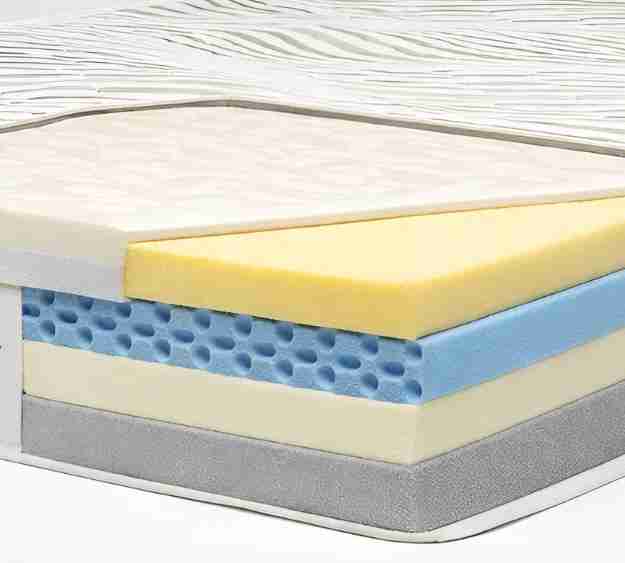
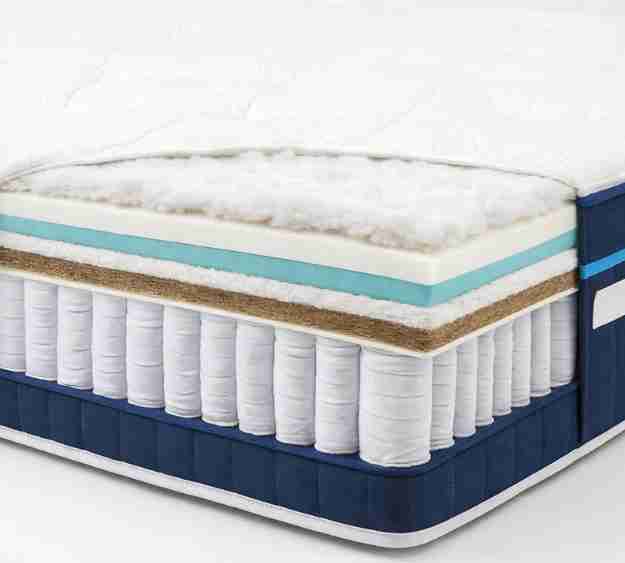
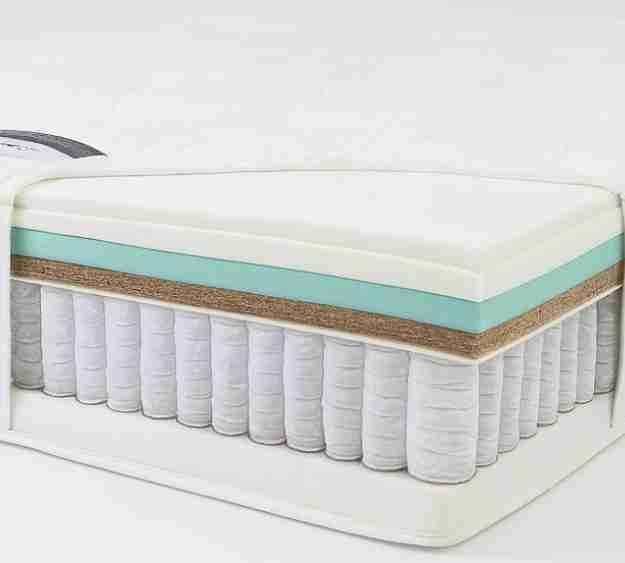
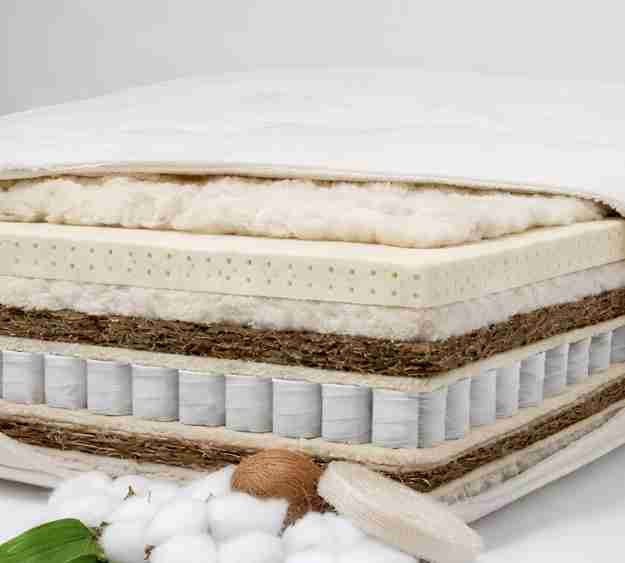

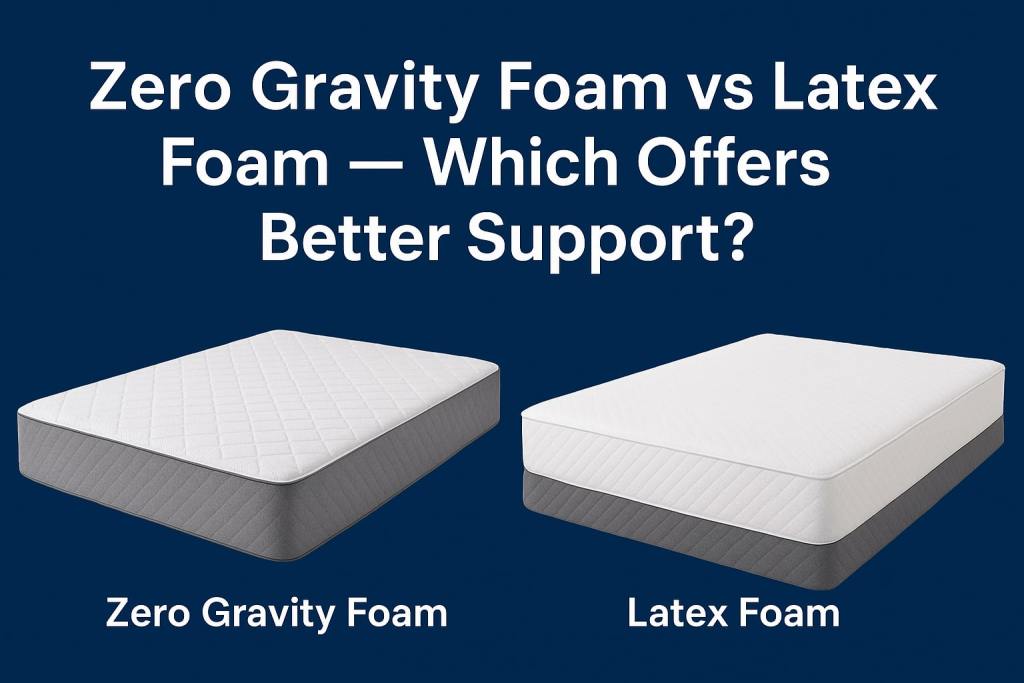
When it comes to achieving restful, pain-free sleep, the choice between zero gravity foam vs latex foam is becoming a hot topic in 2025. Both foams are designed to enhance comfort, but they differ significantly in structure, feel, and support.
Zero gravity foam is a modern innovation that mimics a weightless sleep sensation by evenly distributing body pressure, while latex foam derived from natural rubber offers springy, responsive support and exceptional durability.
In this detailed comparison, we’ll explore how zero gravity foam vs latex foam performs in terms of support, comfort, breathability, and sustainability. If you’re looking for the perfect mattress material, this guide will help you make an informed decision.
What is Zero Gravity Foam?
Zero gravity foam is an advanced viscoelastic material engineered to mimic the sensation of floating in space. It contours precisely to your body, reducing pressure on the spine, shoulders, and hips.
Key Features of Zero Gravity Foam:
- Pressure-Free Comfort: Designed to relieve tension points for a weightless feel.
- Adaptive Response: Adjusts to body movements without sinking too deep.
- Cooling Properties: Infused with gel particles or open-cell technology for improved airflow.
- Ideal For: Sleepers with joint pain, back pain, or those who prefer soft yet supportive surfaces.
In short, zero gravity foam provides deep comfort and excellent spinal alignment, making it a top pick for those seeking superior ergonomic design.
What is Latex Foam?
Latex foam is crafted from natural or synthetic rubber, offering exceptional resilience and responsiveness. Unlike traditional foams, it instantly bounces back when pressure is removed, maintaining its shape and structure over time.
Types of Latex Foam:
- Natural Latex: Derived from rubber tree sap, known for being part of eco-friendly mattress materials.
- Synthetic Latex: Created from petrochemicals, offering a lower-cost option but less elasticity.
- Blended Latex: Combines both natural and synthetic latex for balanced performance.
Key Benefits of Latex Foam:
- Natural Elasticity: Provides buoyant support and prevents the “stuck” feeling.
- Durability: Outlasts many other foams by several years.
- Hypoallergenic: Naturally resistant to dust mites and mold.
- Eco-Friendly: Ideal for buyers looking for eco-friendly mattress materials.
Latex foam is preferred by eco-conscious buyers who want sustainability without compromising on support or bounce.
Quick Comparison — Zero Gravity Foam vs Latex Foam
| Feature | Zero Gravity Foam | Latex Foam |
|---|---|---|
| Material Source | Synthetic viscoelastic foam | Natural or synthetic rubber |
| Support Type | Contouring and adaptive | Responsive and springy |
| Feel | Weightless, body-hugging | Firm, bouncy, and supportive |
| Cooling Ability | Moderate to high (gel-infused) | Excellent (natural ventilation) |
| Durability | 8–12 years | 10–15 years |
| Maintenance | Low | Moderate (requires occasional flipping) |
| Eco-Friendliness | Varies (depends on additives) | High (natural latex option) |
| Price Range | Moderate to premium | Premium |
| Best For | Pressure relief and spine alignment | Responsiveness and longevity |
This table highlights that while both materials provide outstanding comfort, your personal preferences soft contouring vs firm bounce will determine which is right for you.
Comfort and Support: The Core of Comparison
When comparing zero gravity foam vs latex foam, the real difference lies in how each material delivers comfort and support. While both aim to enhance your sleep experience, their unique structures create distinct sensations one cradles your body in weightless softness, while the other lifts you with firm, natural elasticity.
Zero Gravity Foam: Deep Pressure Relief
Zero gravity foam is engineered to cradle your body, dispersing weight evenly. It reduces stress on sensitive areas like the hips and shoulders, providing unmatched pressure relief.
Latex Foam: Responsive and Supportive
In contrast, latex foam supports your body with natural elasticity, gently pushing back against pressure rather than absorbing it. This responsiveness helps maintain spinal alignment throughout the night.
Verdict:
- For pain relief and softness, zero gravity foam wins.
- For firmness, bounce, and spine health, latex foam is the better choice.
Durability and Longevity
A major deciding factor between zero gravity foam vs latex foam is how long each lasts.
- Zero Gravity Foam: Typically retains performance for up to 8-12 years, depending on density and quality.
- Latex Foam: Known for superior endurance, lasting 10–15 years with minimal sagging.
If longevity and investment value matter most, latex takes the lead.
Temperature Regulation
Hot sleepers often struggle with traditional memory foam due to heat retention.
Zero Gravity Foam
Modern zero gravity foams incorporate cooling technologies like gel infusions or open-cell structures to improve airflow and reduce heat build-up.
Latex Foam
Latex’s open-cell structure and natural ventilation make it inherently breathable. It stays cool without any chemical additives, making it ideal for warm climates.
Winner: Latex foam, for its naturally cool sleep surface.
Eco-Friendliness and Materials
Sustainability is another key concern in 2025.
- Zero Gravity Foam: While some are produced using plant-based oils, most remain synthetic. This can limit their sustainability credentials.
- Latex Foam: Derived from the sap of rubber trees, latex is renewable, biodegradable, and part of eco-friendly mattress materials.
If environmental impact matters to you, latex foam is the greener option.
Motion Isolation and Noise
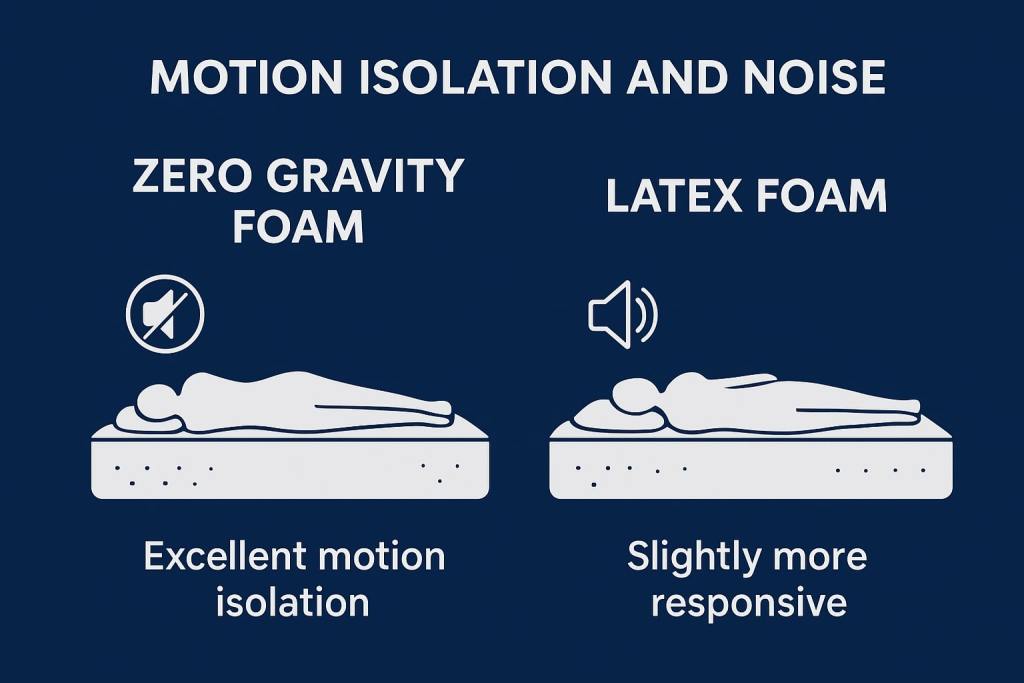
When it comes to motion isolation and noise, the debate between zero gravity foam vs latex foam highlights how each material manages movement and quietness during sleep.
Zero Gravity Foam
Provides excellent motion isolation, making it perfect for couples. Movement on one side of the bed barely transfers to the other.
Latex Foam
While latex performs well in this area, it’s slightly more responsive, meaning some motion transfer may still occur.
Result: For minimal disturbance, zero gravity foam performs best.
Firmness and Feel
| Sleep Type | Ideal Foam Type | Reason |
|---|---|---|
| Side Sleepers | Zero Gravity Foam | Cushions pressure points and shoulders |
| Back Sleepers | Latex Foam | Maintains spine alignment |
| Stomach Sleepers | Latex Foam | Prevents midsection sinking |
| Combination Sleepers | Either | Depends on firmness preference |
The firmness scale differs for everyone, but generally:
- Zero Gravity Foam: Soft to medium-firm feel.
- Latex Foam: Medium-firm to firm with more bounce.
Maintenance and Care
- Zero Gravity Foam: Requires minimal maintenance; just rotate every 6 months.
- Latex Foam: Needs occasional flipping and airing to maintain freshness.
Both types resist sagging, but latex’s structure keeps it newer for longer.
Pros and Cons
| Type | Pros | Cons |
|---|---|---|
| Zero Gravity Foam | Excellent pressure relief, motion isolation, and adaptive comfort | May trap heat, synthetic materials |
| Latex Foam | Naturally cool, durable, and eco-friendly | Heavier and more expensive |
Which One Should You Choose?
Your choice between zero gravity foam vs latex foam depends on your sleep style and personal priorities.
Choose Zero Gravity Foam if you:
- Want a plush, pressure-relieving surface
- Prefer a weightless, contouring experience
- Need motion isolation for a partner
Choose Latex Foam if you:
- Prefer a firmer, more supportive surface
- Value natural elasticity and eco-friendly design
- Want durability and natural materials
Both materials provide excellent comfort, but the right pick depends on whether you prefer soft contouring or resilient bounce.
Final Thoughts
The debate of zero gravity foam vs latex foam boils down to personal needs. If you value deep contouring comfort, zero gravity foam is ideal. If you prefer resilience, longevity, and sustainability, latex foam is unmatched.
Both provide impressive support systems that enhance posture and rest quality. The best choice depends on your lifestyle, body type, and values comfort or eco-friendliness. In 2025, the winning mattress is the one that supports not just your body, but your well-being and the planet too.
FAQs
Both perform well, but zero gravity foam offers better pressure relief, while latex foam provides firmer spinal support.
Yes, natural latex foam typically lasts 10–15 years, outlasting zero gravity foam by several years.
Absolutely. Latex foam is made from renewable resources and is part of eco-friendly mattress materials.
Modern zero gravity foams include cooling gel layers or ventilation systems to reduce heat retention.
Zero gravity foam is better for couples because of its motion isolation and quieter structure.

I’m Zainab, and I write to help people choose the right mattresses. I share clear, useful information about everything from comfort to materials, so you can pick the one that’s best for you.