

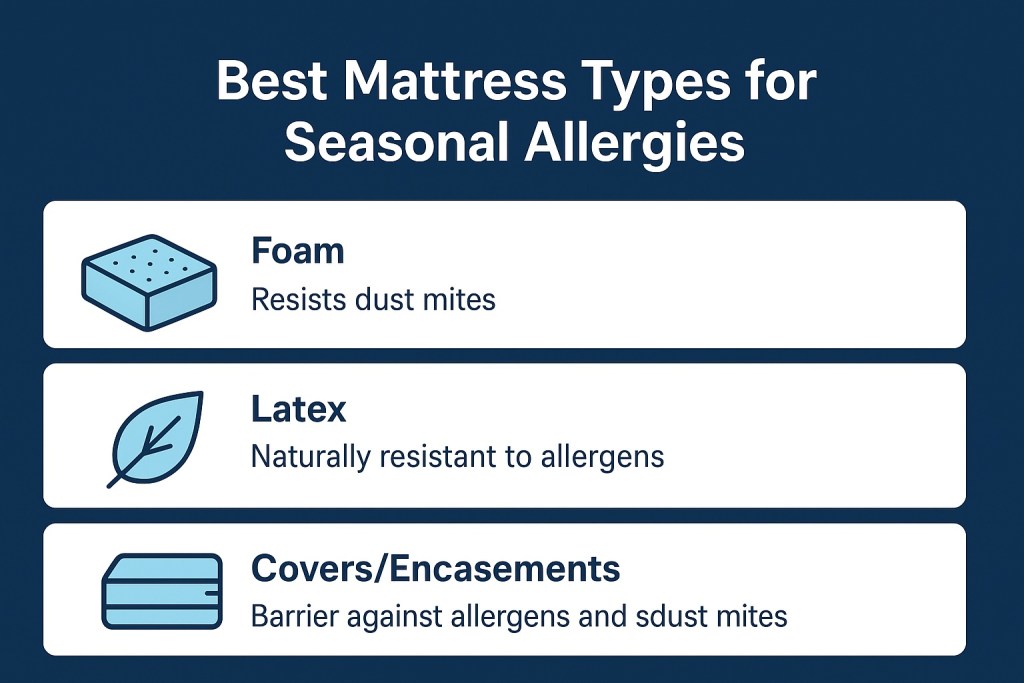
Mattress Types can play a surprising role in how well you sleep, especially for those with seasonal allergies. Sneezing, congestion, itchy eyes, and irritated airways often worsen at night, leaving many allergy sufferers tossing and turning. What many don’t realise is that their mattress may be part of the problem.
Dust mites, pollen, mold spores, and other allergens can accumulate in bedding materials, amplifying nighttime discomfort. Choosing the right mattress crafted from hypoallergenic materials and designed to resist allergen buildup can dramatically improve both sleep quality and overall health.
By understanding how mattress materials affect allergen exposure, sleepers can create a sanctuary that promotes deeper, cleaner rest. In this guide, we’ll explore the importance of hypoallergenic mattress options, the benefits of versatile mattress types, and why luxury natural mattresses are becoming a top choice for allergy-conscious sleepers.
Hypoallergenic Materials: Your First Line of Defense
The right materials can make all the difference in minimizing allergens. Mattresses that resist dust mites, mold, and pollen provide a healthier sleep surface.
- Natural latex: Resistant to dust mites and mold, offering a breathable surface that reduces allergen buildup.
- Organic cotton and wool: Naturally hypoallergenic, moisture-wicking, and temperature regulating.
Versatile Mattress Types for Allergy Relief
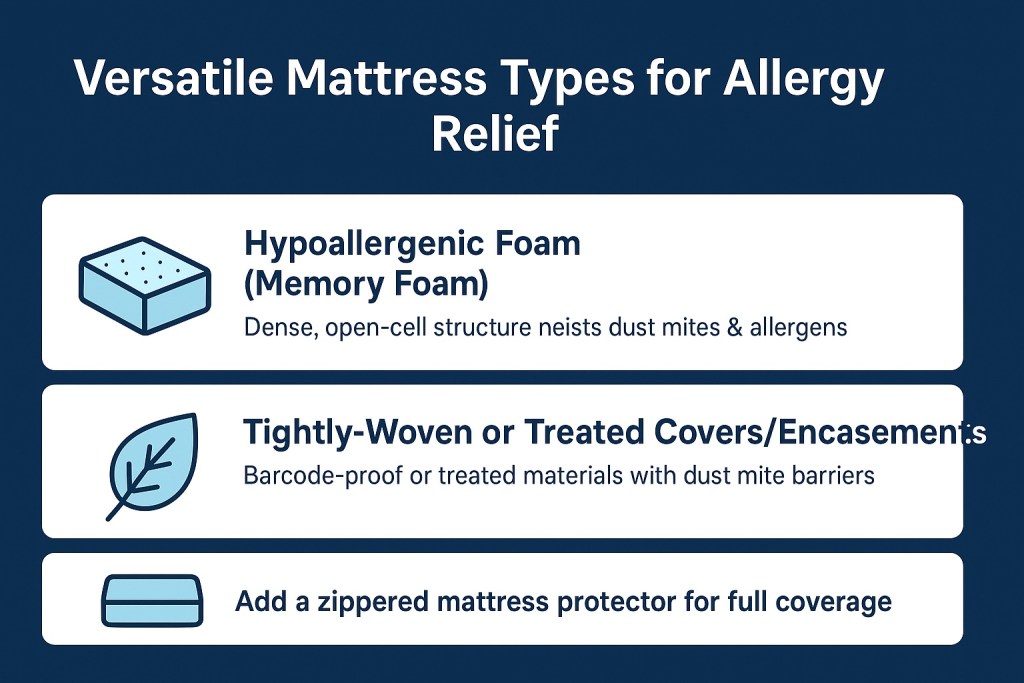
Not every sleeper has the same needs, which is why versatile mattress types are important:
- Latex mattresses: Highly durable, breathable, and naturally allergen-resistant.
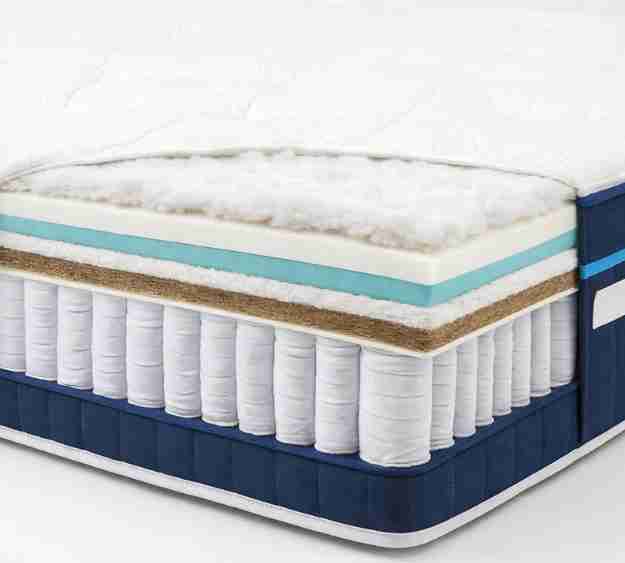
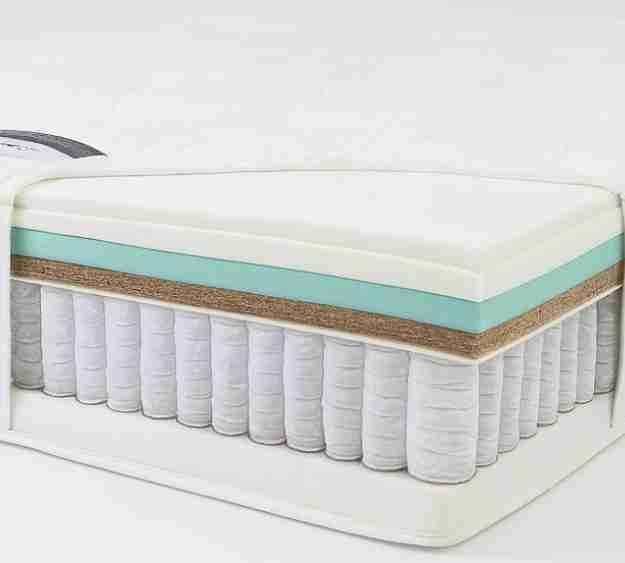
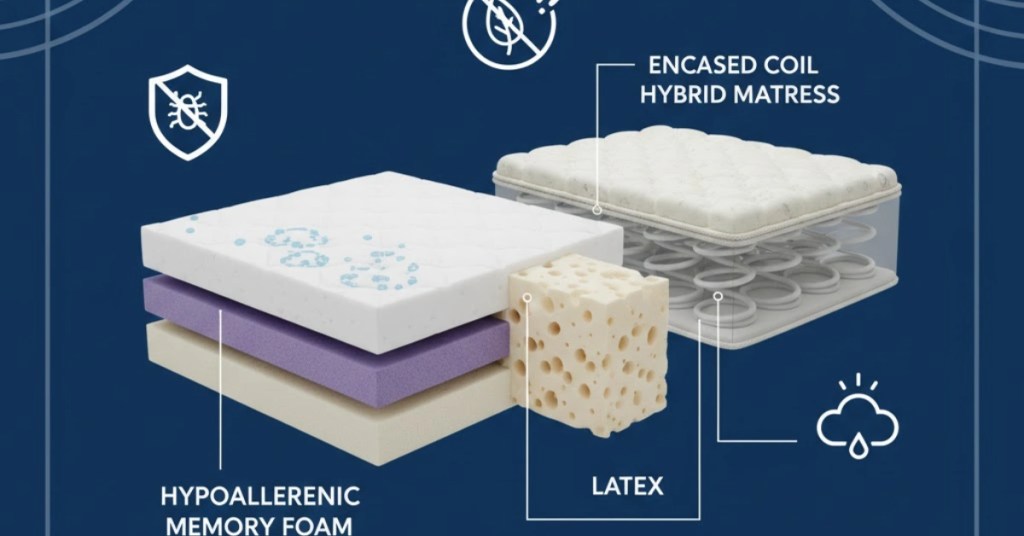
- Hybrid mattresses: Combine the supportive benefits of innerspring with the hypoallergenic nature of latex or organic foam.
- Adjustable firmness designs: Help ensure optimal spinal support while reducing allergen retention.
The Role of Luxury Natural Mattresses
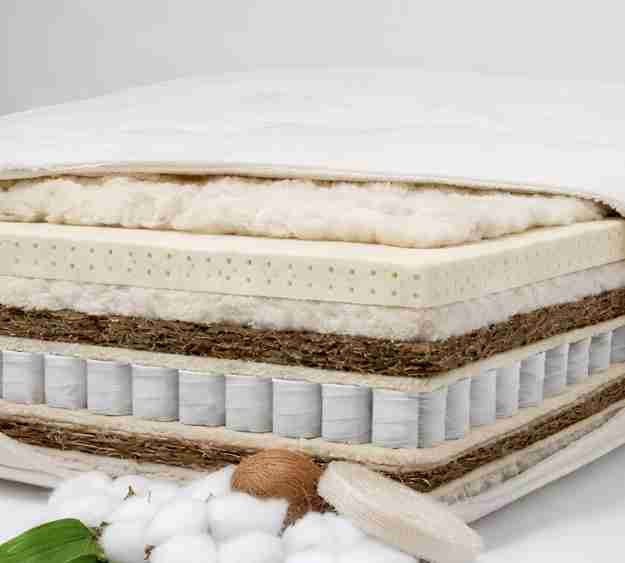
For those seeking both wellness and comfort, luxury natural mattresses are an ideal solution. These premium beds combine eco-friendly craftsmanship with allergy-safe sleep environments.
- Sustainably sourced natural latex, cotton, and wool.
- Free from synthetic chemicals that can trigger allergic reactions.
- Long-lasting durability with luxurious comfort.
Choosing a luxury natural mattress isn’t just about sleep it’s about investing in long-term health.
Why Mattress Choice Matters for Allergy Sufferers
For those who struggle with seasonal or year-round allergies, the mattress you sleep on plays a bigger role than you might think. According to insights from Sleepopolis and Sleep Advisor, warm, humid mattress interiors often become the perfect breeding ground for dust mites, mold spores, and pet dander.
These allergens thrive in the dark, insulated layers of traditional mattresses, triggering symptoms like sneezing, congestion, itchy eyes, and restless sleep. Over time, this hidden allergen buildup can make even the coziest bed feel like an allergy trap.
The good news is that mattress technology and materials have evolved. By choosing hypoallergenic designs, sleepers can create a much healthier rest environment. Guide to choosing the best king size mattress for better sleep.
Hypoallergenic Materials That Help Protect Against Allergens:
- Dense Memory Foam: Its tightly packed structure naturally resists dust mites and prevents allergen penetration.
- Natural Latex: Breathable, antimicrobial, and mold-resistant, making it one of the best options for allergy sufferers.
- Organic Cotton & Wool: Naturally moisture-wicking and chemical-free, helping reduce humidity levels inside the mattress.
Investing in a mattress designed for allergy prevention not only promotes better rest but also improves long-term health. Luxury natural mattresses, in particular, offer the perfect blend of comfort, durability, and allergen protection.
Best Mattress Types for Allergy Sufferers
Mattress Type matters greatly when it comes to allergy prevention. The material and construction play a major role in how well a bed resists dust mites, mold, pollen, and other common irritants. Drawing on insights from Sleep Advisor, Sleepopolis, Tom’s Guide, and the Sleep Foundation, here’s how popular mattress types compare:
Memory Foam
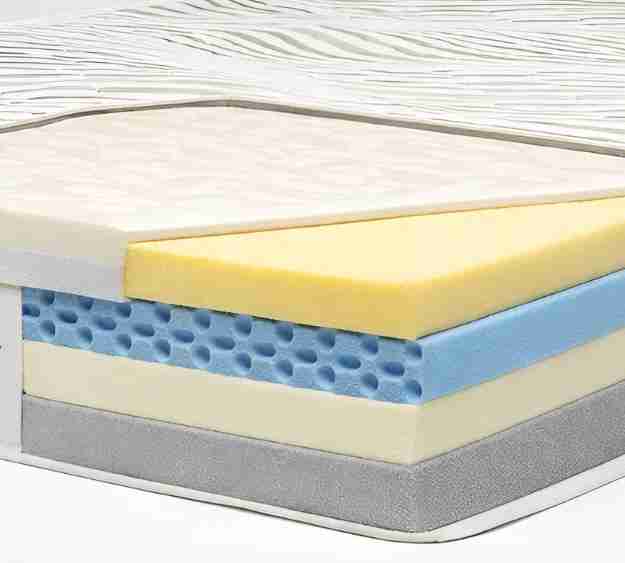
Memory foam earns high marks for allergy resistance. Its dense, non-porous structure makes it difficult for dust mites and other allergens to penetrate, while also offering superior motion isolation for couples. For hot sleepers, cooling-infused foams can counteract heat retention without compromising allergen protection (Tom’s Guide, Sleep Foundation).
Natural Latex (Dunlop/Talalay)
Latex is widely regarded as one of the best materials for allergy sufferers. It is naturally breathable, moisture-resistant, and antimicrobial, offering long-lasting defense against mold and dust mites. Dunlop latex tends to be denser, making it slightly better for allergen defense, while Talalay provides a softer, buoyant feel.
Hybrid (Innerspring + Foam/Latex)
Hybrids balance the airflow benefits of coils with the protective layers of foam or latex. While innerspring coils alone may trap allergens, the addition of a hypoallergenic top layer helps mitigate risks.
Innerspring
Traditional innerspring mattresses are the least ideal for allergy sufferers. Their open coil structure allows dust mites and allergens to accumulate more easily, leading to higher exposure (Sleep Advisor)here
Airbeds
Airbeds aren’t often discussed in allergy contexts, but their easy-to-clean surfaces can offer some benefits. However, they still require allergen-resistant covers or latex/foam toppers for reliable protection.
Natural Luxe Mattress Options: Allergen Benefits & Luxury Appeal
When it comes to mattresses, luxury often means more than comfort it can also mean better protection against allergens. Many high-end brands incorporate natural fibers like horsehair, wool, silk, and cashmere to deliver a healthier and more breathable sleep surface.
- Horsehair: Naturally breathable and moisture-wicking, horsehair also resists dust mites and mold, making it a rare but effective material in niche luxury mattresses.
- Cashmere, Wool, Silk, and Cotton: These fibers are commonly used by premium makers like Savoir Beds and Vispring, who craft mattresses with combinations of lamb’s wool, cotton, horsetail, silk, and cashmere for both luxury feel and allergen defense .
Architectural Digest highlights several standout luxury picks:
- Birch Luxe: Made with all-natural latex, organic wool, and firm eco-friendly support, it’s particularly appealing for eco-conscious, allergy-sensitive shoppers.
- Saatva Solaire & Tempur-Pedic ProAdapt: Feature luxury construction with cooling and supportive designs, though their allergen resistance varies.
- Birch Luxe is praised again for its breathability and natural, allergy-friendly build.
Memory Foam vs. Latex in Luxury Models
- Birch Luxe (Latex): Firmer, cooler, highly breathable, and naturally allergen-resistant.
- Nectar Luxe (Memory Foam): Plush contouring comfort but may retain more heat.
Additional Tips for Reducing Allergens Around the Mattress
Even the most hypoallergenic mattress benefits from a clean, allergen-free environment. According to the Sleep Foundation and Sleep Advisor, simple lifestyle adjustments can make a big difference in keeping your sleep space healthy and comfortable.
- Use Hypoallergenic Encasements: A dust-mite-proof mattress encasement and pillow covers create a protective barrier that blocks allergens from settling into your bedding.
- Wash Bedding Weekly: Launder sheets, pillowcases, and blankets in hot water at least once a week to remove dust mites, pollen, and other allergens.
- Control Humidity Levels: Dust mites and mold thrive in damp environments. Using a dehumidifier (or humidifier in dry climates) keeps bedroom humidity in the optimal 30–50% range.
- Invest in a HEPA Air Purifier: These devices capture fine airborne particles such as pollen, dust, and pet dander, helping maintain cleaner air quality.
- Manage Pet Dander: Keeping pets out of the bedroom or at least off the bed significantly reduces allergen buildup from fur and skin particles.
By combining these steps with a hypoallergenic mattress, allergy sufferers can create a true sleep sanctuary that supports deeper, healthier rest. Best mattress type for seasonal allergens.
Conclusion
The right mattress can make a world of difference for allergy sufferers. By focusing on dense, hypoallergenic materials such as memory foam, latex, and natural luxury fibers like wool, silk, and cashmere, sleepers can create a healthier environment that resists dust mites, mold, and dander.
Choosing natural luxe options not only enhances allergen protection but also elevates comfort and durability. For the best results, pair your mattress with smart sleep hygiene: use dust-mite-proof covers, wash bedding weekly, and control bedroom air quality. Together, these steps support cleaner rest and better health during allergy season and beyond.
FAQs
Natural latex and high-density memory foam are considered the best options. Their dense structure makes it hard for dust mites, pollen, and other allergens to accumulate. Organic latex also resists mold and mildew naturally.
Traditional innerspring mattresses can trap dust and allergens inside the open coil system. Unless paired with protective covers or latex/foam layers, they’re usually not the best choice for allergy sufferers.
Yes. Organic latex, cotton, and wool are hypoallergenic, breathable, and moisture-resistant. They also avoid chemical flame retardants and synthetic adhesives that can irritate sensitive individuals.
Look for:
CertiPUR-US® (safe foams, low VOC emissions)here
GOTS (Global Organic Textile Standard for cotton, wool)
GOLS (Global Organic Latex Standard)
OEKO-TEX (tested for harmful substances)here
Most mattresses last 7–10 years, but if you suffer from allergies and notice worsening symptoms, consider replacing sooner. Over time, even hypoallergenic mattresses can accumulate allergens.

Hello, this is me Sidra and I am a professional content writer with a sharp eye for detail and I love to write about mattresses. Whether it’s blog post, website content or articles. I bring clarity, creativity and purpose to every piece of write. My goal is simple. I create content about mattresses not only inform but resonates. I can create professional content about mattresses. It’s help people to choose the write mattress. From all this you can choose the best for your comfort.