
The Role of Pillows and Bedding in Sleep Quality
Struggling to sleep through the night? Your pillow could be the culprit. The right bedding doesn’t only make you more comfortable, it also impacts your sleep by aligning your spine, keeping you cool and stopping you waking up frequently during the night. Actually, 72% of people sleep better after getting a properly supporting pillow to sleep on. With the choices available, from cooling gel memory foam to hypoallergenic latex, how do you pick the best pillows for improved sleep quality?
Let’s go on to learn how pillow materials, loft height, and sleep position affect rest.
1. How Does Bedding Affect Sleep Quality?
To start, your bed isn’t simply for comfort – it’s science. The best pillows for sleep quality and mattress toppers improve rest through temperature regulation, spinal alignment support, and allergen blocking. Let’s break down how each factor works.
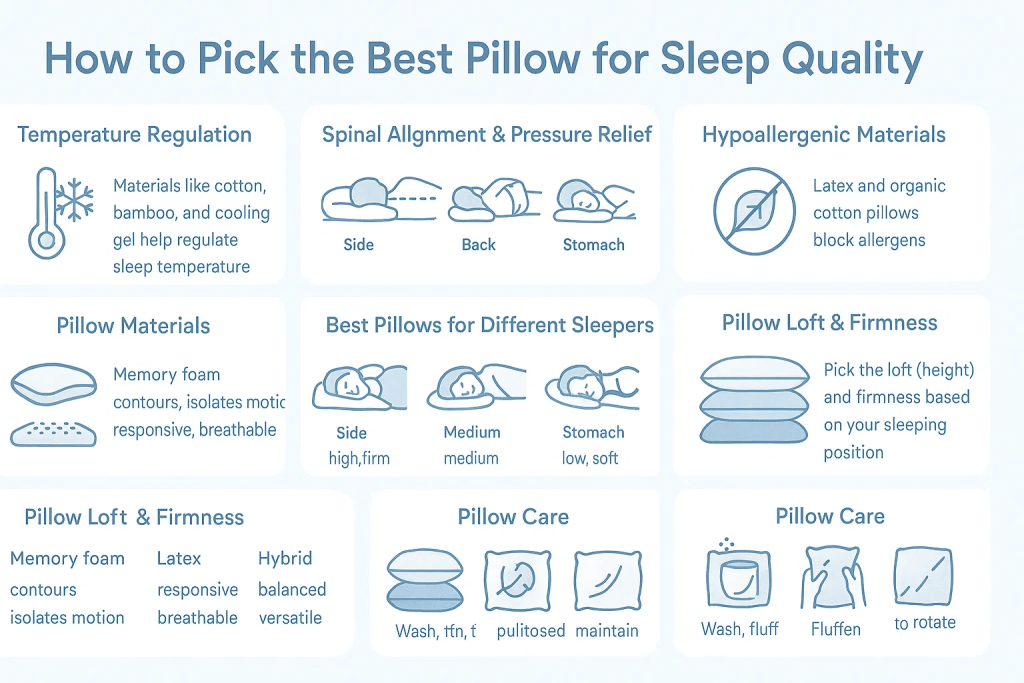
Temperature Regulation.
On the other hand, fabrics like cotton, bamboo, or Tencel breathes moisture to cool down. Materials like polyester, that retain heat, can mess with sleep. For those who sleep hot, the surface temperature will remain constant thanks to cooling gel pillows or phase-change fabrics. Research reveals that we sleep best when the temperature is kept between 60 and 67 degrees Fahrenheit (15–19 degrees Celsius). As airflow is vital to bedding, make sure your beddings allow for optimal airflow.
Spinal Alignment & Pressure Relief.
Next, firmness dictates posture. A too-soft pillow collapses under your weight, straining your neck. An too-firm one pushes back, creating pressure points on your head. Memory foam ease the curves of the body whereas latexes supports in a buoyant way. If you sleep on the side, you need a higher loft (4 – 6 inches) so that the neck-shoulder gap can be filled up. A back sleeper is good on a medium support. Having your spine aligned prevents morning stiffness and long-term stress on your joints.
Hypoallergenic Materials.
Lastly, your bedding can be home to dust mites and mold. This may trigger your allergies. Hypoallergenic pillows use tightly woven organic cotton to obstruct any particles getting into the pillow. Covers that can be washed to 130° F are deadly to mites. And latex will not grow mold. Waking up congested? Try sleeping on antimicrobial bedding.
2. How Do You Choose the Right Pillow for Better Sleep?
Finding the best pillows for sleep quality isn’t one-size-fits-all. Your perfect mattress is determined by your sleeping position, preferred material, and firmness requirements. Whether you’re a side sleeper with neck issues or a stomach sleeper who needs little to no lift, the right pillow can determine sleep success.
Best Pillows for Side Sleepers.
Due to the spinal alignment requirement of side sleepers, a higher loft pillow with a height of 4 to 6 inches ensures filling up of the space between the neck and the shoulder. Pillows made from memory foam or latex that contour to the head while maintaining proper elevation are best. Don’t go for the pillow that collapses under weight, as it can leave you stiff in the morning and misaligned.
Best Pillows for Back Sleepers.
Meanwhile, side sleepers are best with medium loft pillows (3-5 inches) that help to fill the space between our shoulder and neck. The ideal pillow for stomach sleepers is a hybrid pillow with shredded memory foam or a medium-firm latex option that doesn’t let the head tilt too much forward or backward. When you sleep with a proper alignment, it reduces the pressure on the low back and minimizes the tossing and turning.
Best Pillows for Stomach Sleepers.
Stomach sleepers should use soft, thin pillows that are less than 3 inches to avoid neck strain. One can keep the spine neutral without forcing the head upward with a down alternative or thin memory foam pillow. Using thick pillows for a long time can do more harm than good for your sleep.
3. What Are the Best Pillow Materials for Sleep Quality?
Let’s see how pillows can impact sleep differently. There are four types of pillows that will help you improve your quality of sleep: memory foam, latex, down, and hybrid. All are excellent choices from the point of view of support, temperature regulation and comfort. Your perfect choice is based on your sleep needs, allergies, and preferences
Memory Foam Pillows.
Memory foam pillows are great for contouring your head and neck. The material will slowly adapt to your shape to relieve pressure while supporting your spine. The side and sleeper makes them perfect for those with neck pain. Some memory foam traps heat. Therefore, look for gel-infused or ventilated designs if you sleep hot.
Latex Pillows.
Latex pillows which are durable, are responsive and cooling too. Latex rebounds right away instead of collapsing like memory foam, and stays cooler. Natural latex is also resistant to dust mites and mold, making it great for allergies. Because of the material’s medium-firm feel, back and combination sleepers will have no trouble sleeping on this mattress.
Down vs. Down-Alternative Pillows.
After all, down pillows are soft and adjustable, but they may cause allergies. Down-alternative pillows have a soft feel, made of synthetic fill which is hypoallergenic. Though not quite as breathable as actual down, they are easier to clean. Both work well for stomach sleepers who need minimal loft.
4. Does Pillow Height Impact Sleep Comfort?
After you select the appropriate material, pillow height (or loft) is essential for support. The best pillows for sleep quality support the head and neck at a neutral alignment. If a pillow is too high, it strains the neck. If a pillow is too low, it leaves the shoulders unsupported. Finding your perfect loft avoids stiffness in the morning and improves sleep continuity.
Pillows with Low, Medium, and High Loft
In general, stomach sleepers benefit from low-loft (under 3 inches) pillows to maintain neck alignment. Back sleepers should go for a medium-loft pillow, typically three to five inches. The medium-loft pillow will cradle the cervical curve. A flat pillow with a combined loft of four to six inches completes the neck-shoulder gap of side sleepers. Your body shape is important too: someone with petite frames often needs lower lofts.
Adjustable Pillows for Custom Support.
Adjustable pillows give you the option to add or remove fill. Versions made with shredded memory foam will mold to you and let you customize loft. Dual-layer designs consist of a stiff base and a soft layer. You can use any of these options regardless of your sleeping position.
5. How Often Should You Replace Your Pillow?
Over time, the best pillows for sleep quality lose their support and attract allergens. The Manufacturer and Experts Recommend Replacing Your Pillow Every 1-2 Years Memory foam is generally more durable than down while latex is the most durable. Having frequent changes keeps the mattress level for sleep.
Signs You Need a New Pillow.
Notice persistent neck pain or frequent tossing? These often signal it’s time for a change. Other warning signs include lumps you can see, smells that make it through the wash, or flattened areas that don’t go back up. If you have an allergy, be particularly vigilant about old pillows. They can be full of dust mites that exacerbate your condition.
How to Extend Pillow Lifespan.
Proper care can add months to your pillow’s usefulness. Use a protective cover to shield against oils and sweat. Wash as per the fabric guide; a wash twice a year will do a lot of good. When storing pillows, use breathable bags and do not compress them long-term. Fluffing it out every day will keep the loft constant while redistributing filling evenly.
6. Can the Right Bedding Help with Allergies?
Absolutely. Choosing hypoallergenic bedding makes a huge difference for allergy sufferers. The best pillows for sleep quality tend to be dust mite resistant with proper care to limit sneezing, congestions and more at night. Regularly clean and specialized material shall form a barrier.
Best Fabrics for Allergy Sufferers.
When you buy bedsheets, consider choosing sheets made of natural fibers like Tencel or bamboo. It is because these sheets resist dust mites and do not go against your breathing. Pillow covers with a pore size of less than 10 microns will physically block allergens.
Make sure your pillows are filled with synthetic fillings which are guaranteed not to cause any allergy. Dust mites and molds can easily be repelled by synthetic latex pillows.
Washing & Maintenance Tips.
Dust mites in washable covers can be killed by weekly hot water washes. Put non-washable pillows in the freezer overnight every month to get rid of mites. Make sure to place allergen-proof encasings on both pillows and mattresses. Swap out your pillows every 1-2 years to ensure that allergens don’t build up too badly.
7. What’s the Best Bedding for Temperature Regulation?
After that you will require breathable fibre, one that is preferably made of cotton or linen that can keep your body cool at night. These materials prevent the buildup of heat to allow for airflow to keep your body at the ideal temperature for sleep. If you sleep hot or reside in a warm climate, then the right bed linens make all the difference.
Cooling Pillow Technologies.
First, innovative materials such as gel-infused foam and phase-change materials (PCM) help dissipate heat. Foam pillows infused with gel absorb heat from the body. Another material called PCM (phase change material) was invented by NASA. It shifts from solid to liquid and vice versa in order to balance temperature. To boost ventilation, other companies utilize ventilated constructions or perforated latex. If you want the coolest pillow, you need to buy pillows with ghost ice fabric or similar technologies.
Best Bedding for Hot Sleepers.
On the other hand, tried to steer clear of polyester and other synthetic fabrics which trap heat and moisture. Instead, opt for.
Cotton percale: A light and breezy weave that is more breathable than sateen.
Tencel/Lyocell is made from eucalyptus trees and has a silky feel that’s great at moisture wicking.
Bamboo Fabric is Temperature Controller Softer than Cotton Fabric.
Linen is an airy loose weave fabric with some roughness.
When choosing sheets, we recommend moisture-wicking claims and deep pockets so they fit snug without trapping heat.
8. How Does Pillow Firmness Affect Sleep?
You must get the firmness of your pillow right. Otherwise, the pillow will be too soft, which will not support your neck. Moreover, if the pillow is too firm, it will create pressure points. The perfect firmness helps the spine stay aligned and relieve pressure. It is based on one’s sleeping position and body shape.
Soft, Medium, and Firm Pillows – What’s The Difference?
Usually, stomach sleepers benefit from soft pillows under their heads that do not elevate their heads and keeps it in a neutral position. Back sleepers do well with a medium-firm pillow that keeps the neck’s curve. A firm pillow can be useful for side sleepers as it fills the gap between your head and shoulder. Shredded memory foam is an adjustable option that may appeal to combination sleepers.
The Role of Pillow Loft in Comfort.
Keep in mind that loft (height) and firmness interact. A high-loft pillow must also be firm enough to hold its shape (not compress) while a low-loft pillow should compress minimally. For instance, side sleepers typically need a higher, firmer pillow while back sleepers require one of medium loft with medium give. Always consider both factors when choosing.
9. What’s the Best Way to Care for Pillows?
Taking good care of your pillow can help it last longer. Plus, it helps keep it hygienic. Although the specifics can be different in regard to the mattress material, most pillows require you to fluff them on a weekly basis and wash them at least twice a year to prevent allergens’ build-up and maintain their support. Always check the manufacturer tag first, as some materials require special handling.
Washing Different Pillow Types.
Do spot clean for memory foam. You may also handwash it gently, but never machine wash it, as the agitation will break the foam down. For cleaning down pillows, use a gentle cycle with mild detergent in a front-loading washer. Latex pillows tolerate machine washing but avoid bleach. You can wash synthetic fills using the washing machine on warm.
Drying & Fluffing Techniques.
After washing, dry pillows thoroughly to prevent mildew. Place down pillows in the dryer on low with tennis balls to fluff them. Memory foam must air-dry flat (never in direct sunlight). You should be fluffing daily by hand to move the fill around to avoid flatness. Rotate pillows weekly to ensure even wear.
10. How Can Luxe Mattresses UK Help Improve Your Sleep?
The right support is finally what upgrades your sleep. Luxe Mattresses UK manufactures ergonomic pillows to ensure a correct spinal posture and maintain temperature while being hypoallergenic. Their premium designs target key sleep disruptors and help a lot whether you’re a side sleeper needing pressure relief or a hot sleeper needing cooling technology.
Premium Memory Foam & Latex Options.
Check out Luxe’s pillow collection, made of certified memory foam and natural latex. Their hybrid designs combine foam with cooling gels. The hypoallergenic fills will help resist dust mites, great for sensitive sleepers. Each pillow is tested for durability and comfort, reflecting Luxe commitment to orthopedic wellness.
Expert Sleep Consultations.
Luxe goes beyond providing products to offer personalized sleep consultations customized to suit your posture, firmness and health needs. The group will look at the nature of your sleep; even the height and choices of material. Invest in pillows that’ll actually help you sleep soundly with this service with a 100 night trial to test risk-free.
Why Choose Luxe?
The pillows use LTX Cooling Tech to allow the pillow to ventilate heat and perspiration, is durable and soft to the touch, all while offering FortiCoil support for a boost in comfort. Eco Conscious- manufactured from sustainable, non-toxic material in carbon-neutral production in U.K.
Our focus is you. We offer free delivery, longer warranty coverage, and easy returns.
For further details, do check out Luxe Mattresses UK or their sleep guides on bedtime hygiene.
Conclusion: Elevate Your Sleep with the Right Pillow
Best Pillows For Sleep Quality – Choosing the best pillows for sleep quality involves balancing three factors. These are best pillows material, best pillow sleep position, and best pillow’s personal comfort needs. As already discussed, bedding supports comfort and regulates temperature, while also aligning the spine and minimizing microorganisms for a deep sleep.
If you’re a sleeper who is ready to invest in their wellness as you sleep, Luxe Mattresses UK has some pillows that have been scientifically designed to make sure such issues are taken care of. Their memory foam and latex options offer both pressure relief and breathability, and their sleep consultations will help you find the best fit.
Check out Luxe Mattresses UK for pillows with a 100 night trial because you shouldn’t guess when it comes to sleep quality.
FAQ’s
Every 1–2 years. Check for drips and cracks.
A medium-firm memory foam or latex will contour your neck while still providing support.
Absolutely. Mattresses that have gel-infused foam or phase-change materials keep you cool at night while you sleep.
Not typically. Pillow Hypoallergenic Down-alternative or Latex Pillow Is Better Safe Option.
Look at the label most of them benefit from bi-annual washing in hot water 130F or hotter to destroy dust mites.

As a passionate blog publisher and editor, I specialize in creating engaging and informative content that resonates with audiences across a variety of topics. With a keen eye for detail and a strong understanding of SEO practices, I ensure that every blog post I publish is not only captivating but also optimized for maximum visibility.
