
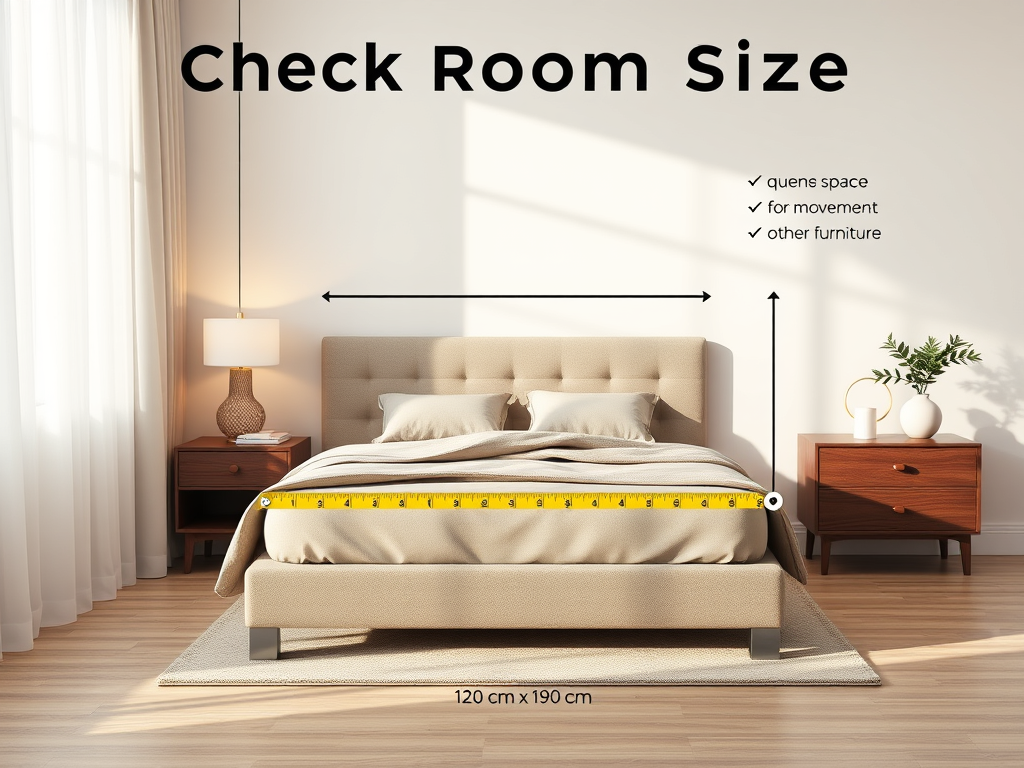
Choosing the right mattress size is one of the most important decisions you’ll make when furnishing a bedroom. For many households, a queen size bed offers the ideal balance between sleeping space and room layout flexibility. When considering a queen size mattress measurement, it provides generous width for single sleepers and enough comfort for couples, without overwhelming the room. However, before purchasing, it’s critical to ensure your space can properly accommodate the bed—not only in terms of floor dimensions but also overall flow, furniture placement, and clearance.
to read the detailed guide about mattress sizes click here.
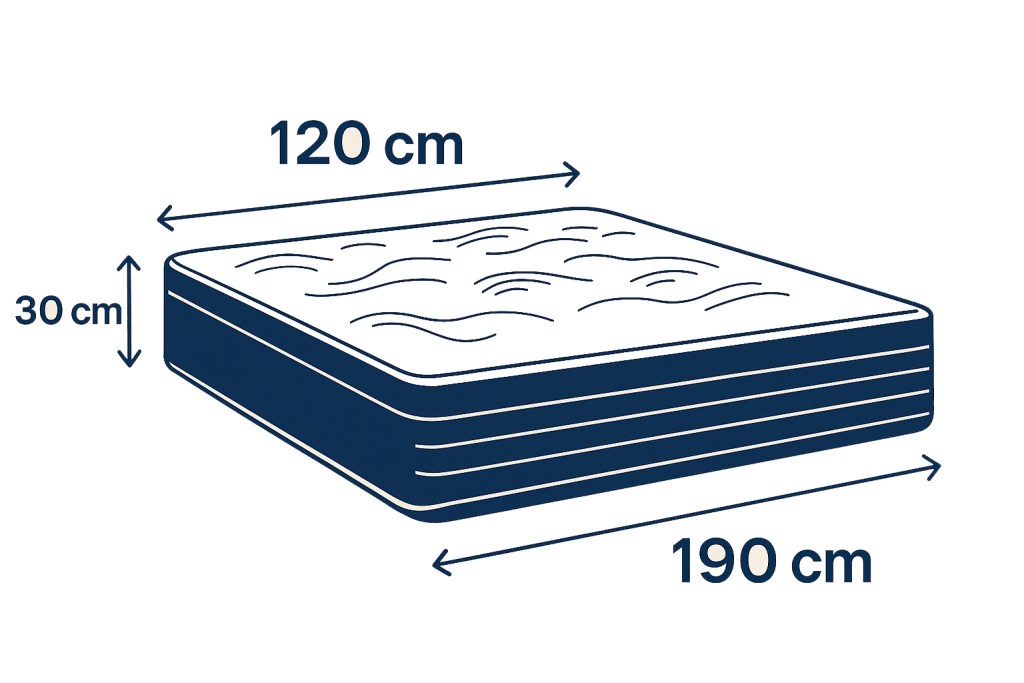
In the UK, a standard queen size mattress typically measures 120 centimetres wide by 190 centimetres long. This is roughly 4 feet wide by 6 feet 3 inches long (4ft x 6ft 3in). It falls between the UK’s small double and double sizes, offering extra space for individual sleepers or for compact guest rooms where a full double might be too tight. This guide will walk you through how to determine whether your room can comfortably fit a queen size bed, and how to assess your bedroom’s layout with precision and practicality.
Understanding Queen Size Bed Dimensions
A queen size mattress in the UK is not the same as a US queen. The UK version is slightly smaller and is often used in homes where space is a concern. Measuring 120 cm in width (approximately 4 feet) and 190 cm in length (approximately 6 feet 3 inches), it is noticeably more spacious than a single or small double mattress but requires less room than a full double or king size. This makes it a popular choice for guest bedrooms, smaller master bedrooms, or studio flats.
When evaluating your room for fit, you must go beyond the bed’s measurements and factor in additional clearance on all sides to allow for ease of movement, as well as space for other furniture.
Measuring Your Room Accurately
Start by measuring your bedroom’s length and width using a tape measure. Ideally, take measurements in both centimetres and feet/inches to compare with the mattress size and general furniture dimensions. Record the exact dimensions of the usable floor space, which excludes built-in wardrobes, alcoves, or protrusions from walls.
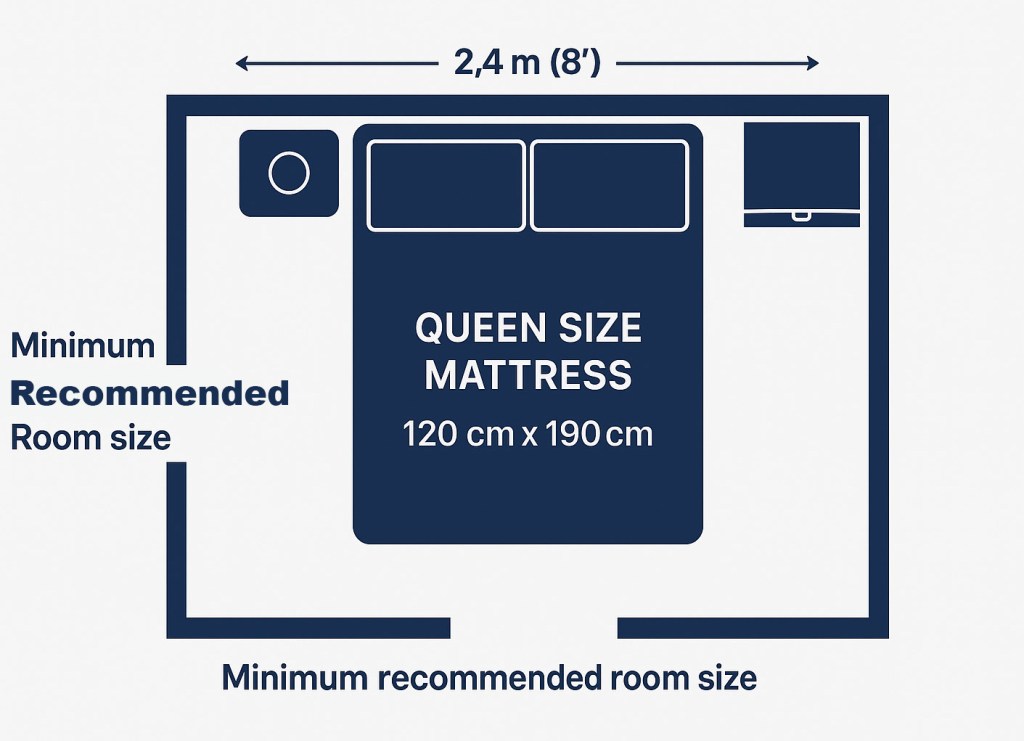
To comfortably fit a queen size mattress in your room, the minimum recommended room size is about 2.4 metres by 3 metres, which is roughly 8 feet by 10 feet. This gives you the bare minimum clearance to walk around the bed and to fit bedside tables or other small furniture items. For a more comfortable arrangement, a room that measures 3 metres by 3.3 metres (10 feet by 11 feet) or larger is ideal. This allows for better spacing between the bed and walls, unobstructed opening of drawers or closet doors, and the inclusion of larger furnishings like wardrobes or desks.
Planning for Walking Clearance and Furniture
One of the most overlooked aspects when placing a bed is walking clearance. Even if the bed physically fits in the room, it won’t be functional or comfortable if it’s squeezed against the wall or blocks access to other parts of the room.
A good rule of thumb is to leave at least 60 to 75 centimetres (approximately 2 to 2.5 feet) of walking space on each side of the bed and at the foot. This allows enough room to comfortably walk, change sheets, or move around without bumping into furniture. If your room includes features like radiators, swinging doors, or deep-set windowsills, make sure those are accounted for in your layout.
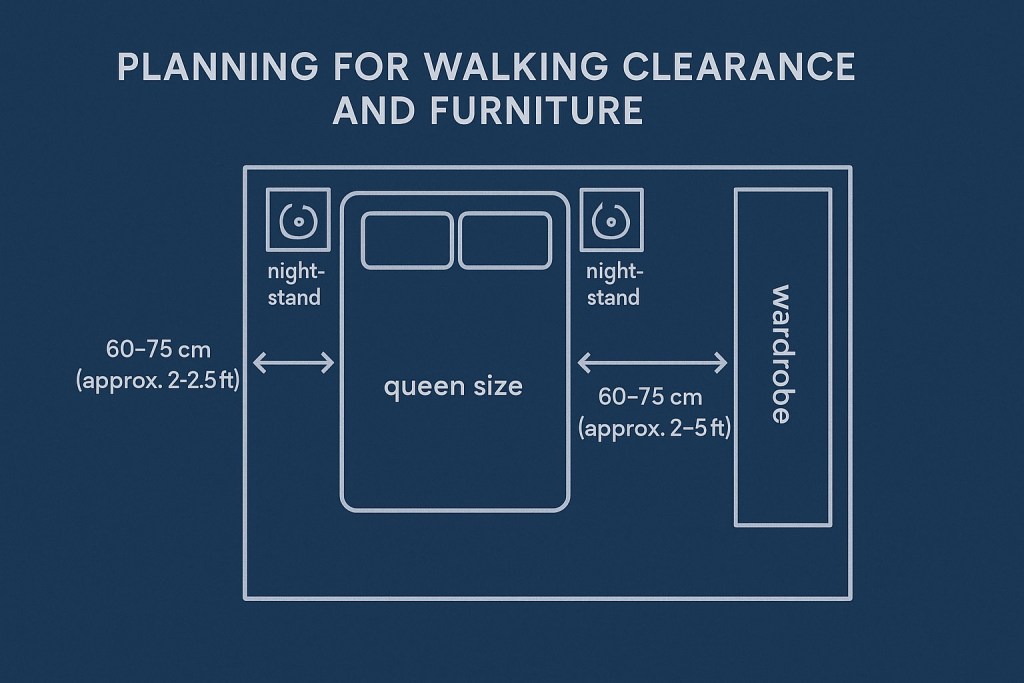
Furniture placement is equally important. Common items in a bedroom such as nightstands, a chest of drawers, or a wardrobe must be included in your layout plan. Most nightstands are about 40 to 50 cm wide and need space on either side of the bed. A wardrobe may require up to 60 cm depth and another 50 to 60 cm in front for door clearance. If you plan to include a desk or dressing table, ensure it doesn’t crowd the walking path or bed placement.
Using Layout Tools or the Tape Outline Method
Once you’ve taken your measurements, one of the best ways to visualise fit is the tape outline method. Use painter’s tape or masking tape to mark out the exact dimensions of the queen size mattress on the floor — 120 cm by 190 cm (or 4ft by 6ft 3in). Extend the tape to mark a clearance buffer of 60 to 75 cm around the mattress to simulate walking space, to read the all standard sizes and bed calculator click here.

This method allows you to physically stand inside the projected space and assess whether it feels too cramped or if the flow of the room remains functional. You can also position placeholder furniture using boxes or other items to mimic dressers or nightstands. This hands-on approach often gives a clearer perspective than simply imagining the layout on paper.
If you prefer digital tools, there are many free online room planners available that allow you to input room dimensions and virtually position furniture and mattresses. These tools can be helpful for trying out multiple configurations before committing to a purchase.
Mattress Height and Bed Frames Matter Too
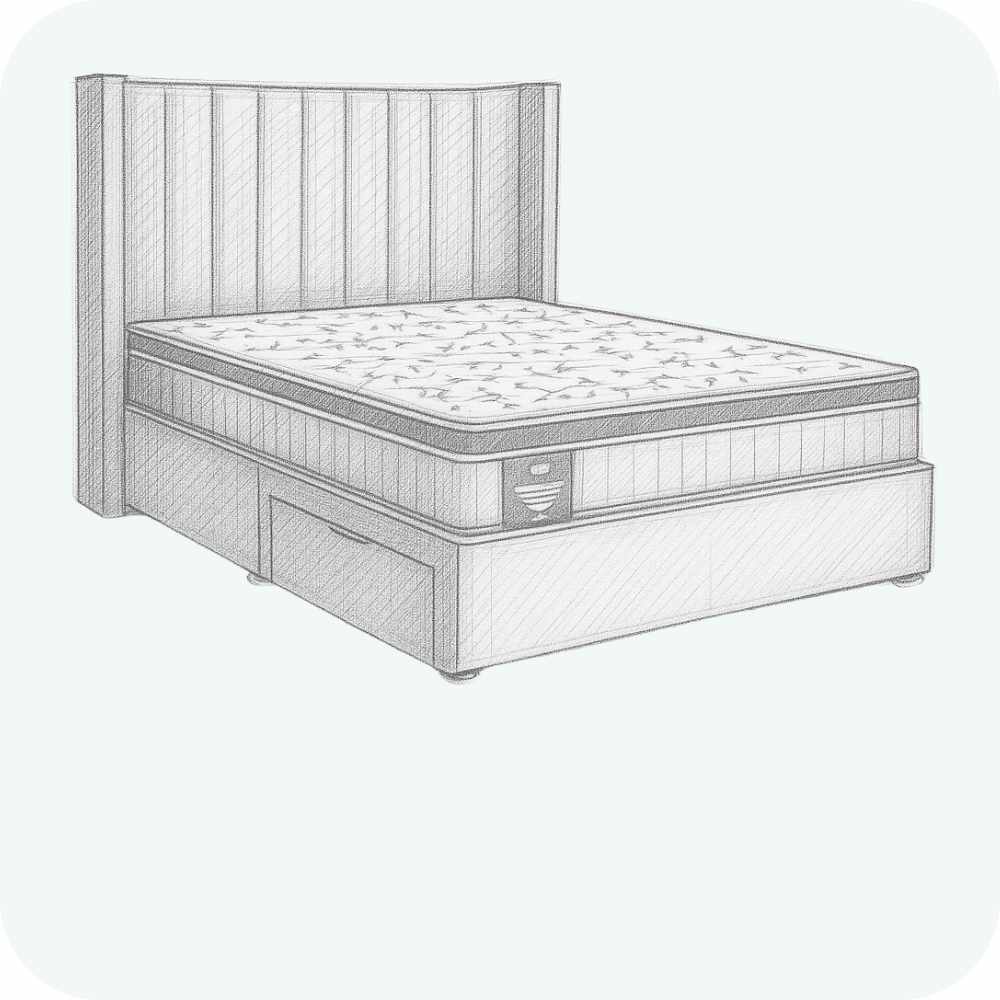
Another factor to consider is mattress height and the bed frame style. Some queen mattresses are low-profile, while others with extra cushioning or pillow-tops may be quite tall. Combined with a high platform or storage bed frame, your bed height can easily exceed 65 to 70 cm, which may be uncomfortable for some people or obstruct windowsills and wall outlets.
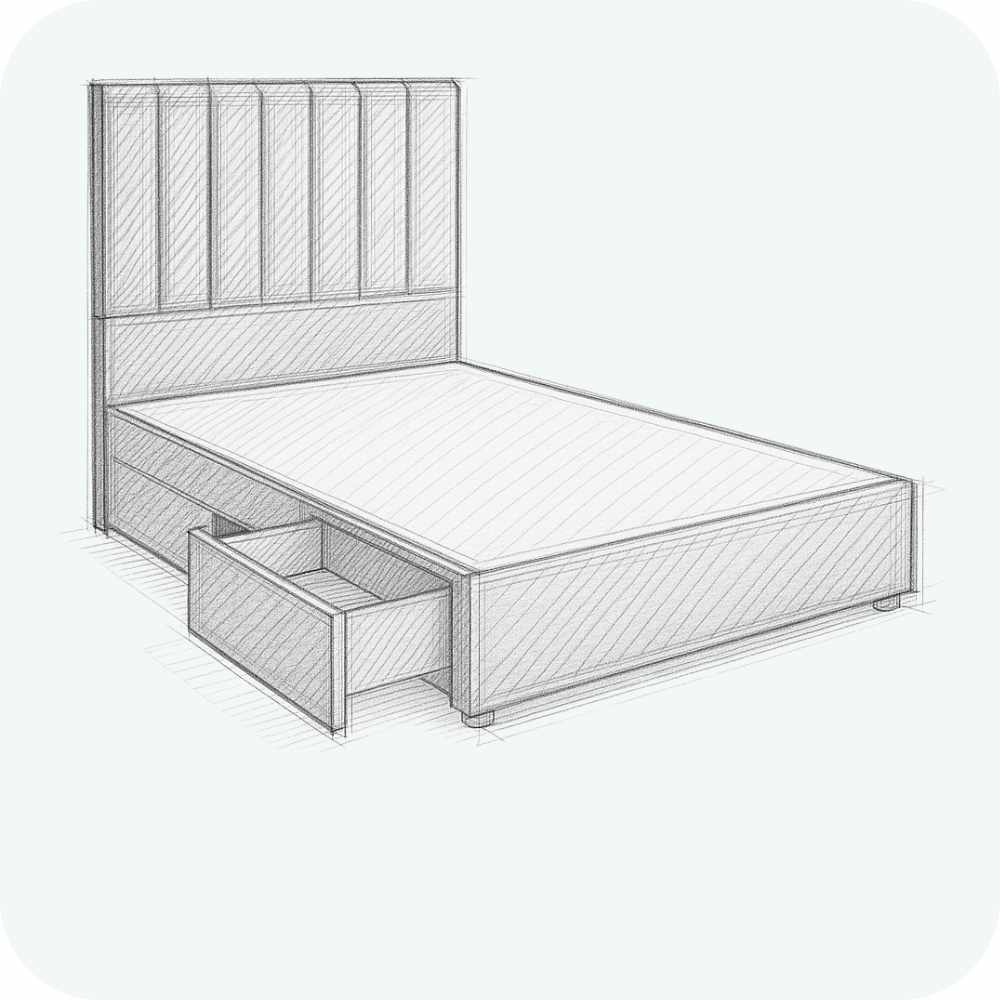
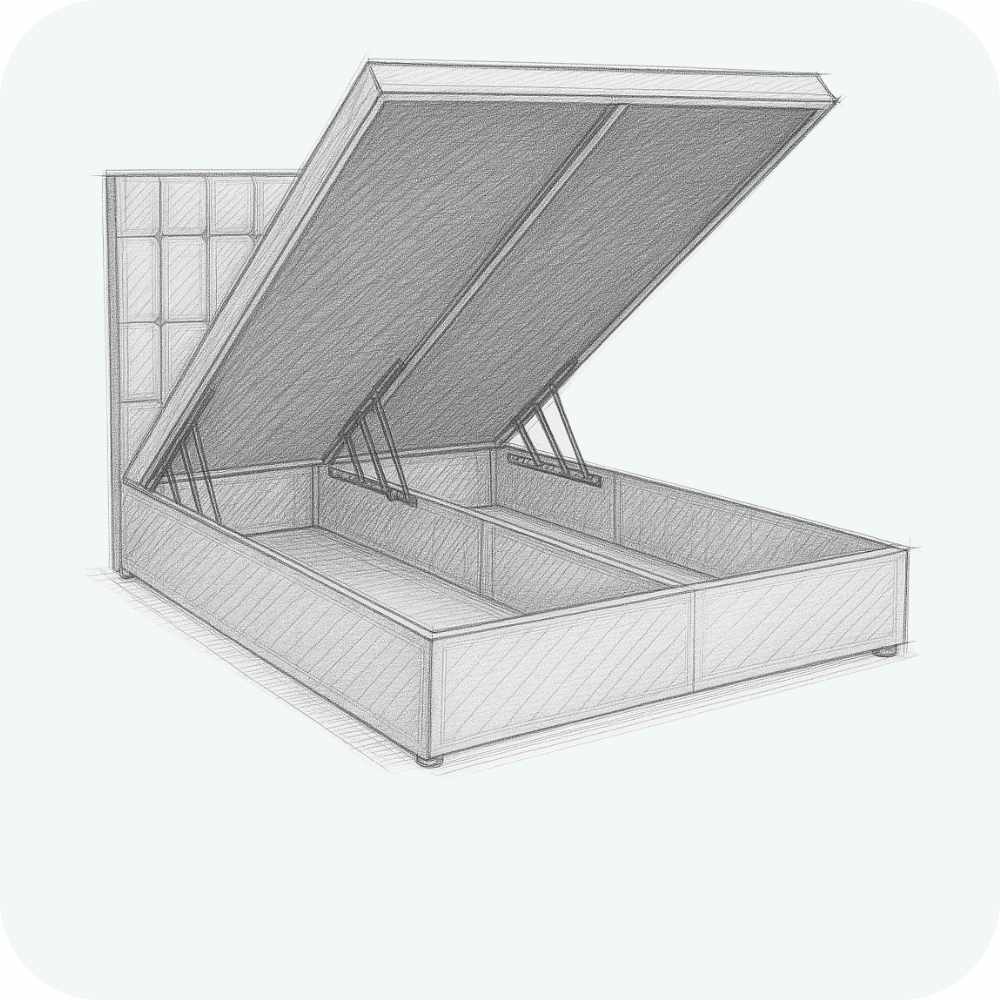
In smaller rooms, a low-profile frame can help make the space feel more open. Alternatively, a storage or ottoman bed frame may help reduce the need for extra drawers or wardrobes by offering under-bed storage, making better use of the floor area.
Special Considerations for Small Bedrooms
If your bedroom is particularly compact, say less than 8 feet wide or under 2.5 metres, placing a queen bed may still be possible, but you’ll need to make sacrifices elsewhere. This might include pushing the bed against one wall, which limits access to one side. While not ideal for couples, this setup can work for single sleepers or in guest rooms.
Floating shelves instead of nightstands, wall-mounted lighting instead of lamps, or sliding wardrobe doors rather than swinging ones can all help maximise space in tight layouts. Carefully selecting multi-functional furniture will go a long way in preserving comfort and accessibility.
Summary: Key Takeaways for Checking Room Size
To determine whether your bedroom can accommodate a UK queen size mattress, begin by understanding the dimensions: 120 cm wide by 190 cm long, or 4 feet by 6 feet 3 inches. Measure your room and account not just for the footprint of the bed, but also for adequate clearance and placement of essential furniture.
The absolute minimum room size is about 8 feet by 10 feet, but 10 feet by 11 feet or larger will offer a more comfortable setup. Use tape on the floor to mark mattress dimensions and walkable space, and plan around doors, windows, and any existing furniture. Don’t forget to factor in the height of the mattress and bed frame to ensure vertical clearance is also suitable.
Ultimately, with thoughtful planning and realistic layout expectations, a queen size bed can fit comfortably in most medium-sized UK bedrooms while still allowing for a functional and aesthetically pleasing design.

Roman is a seasoned expert in mattress development with over a decade of experience in sleep technology, material innovation, and product engineering. He has played a key role in designing and refining sleep solutions for leading mattress brands, with a deep focus on ergonomics, pressure relief, and sleep quality optimization.
With a background in product design and biomechanics, Roman combines scientific research with hands-on development to create mattresses that address real-world sleep issues—from spinal alignment to temperature regulation. His work has contributed to several award-winning mattress lines known for their comfort, durability, and user satisfaction.