
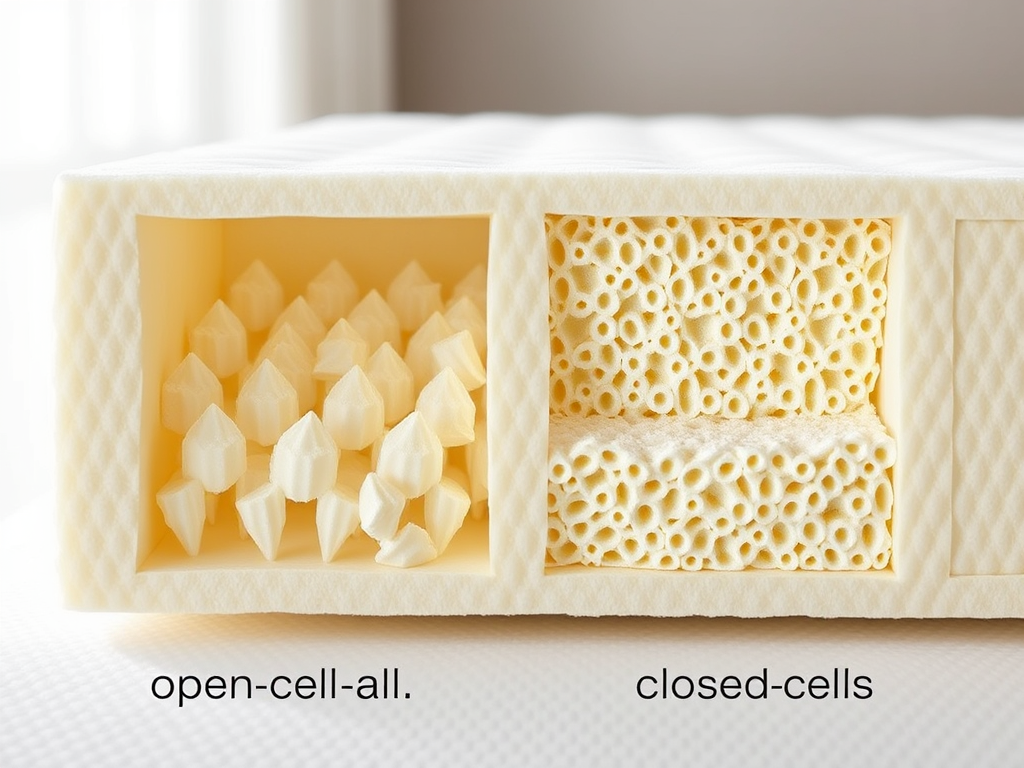
Estimated reading time: 8 minutes
What Makes Memory Foam Unique?
Memory foam, specially developed by NASA, contours to the body’s curves, making it an ideal option for personal support and pressure relief. In mattresses, pillows, and mattress toppers, it’s well-regarded for helping support spinal alignment and reducing motion transfer. However, not all memory foam is created equal; there are differences hidden within its structure and composition.
Why the Materials Matter for Your Sleep and Health?
The memory foam material (cell structure, density, and chemical makeup) is very important if you want to take your sleep to the next level! Not only does this influence how comfortable or supportive your mattress is, but also how long it will last and how safe it is for you to sleep on. From how the material responds to heat and airflow, to whether it releases harmful chemicals (also known as off-gassing), the materials that go into making memory foam can have a significant impact on your sleep quality and long-term health.
Open-Cell and Closed-Cell Memory Foam
What are open and closed cells?
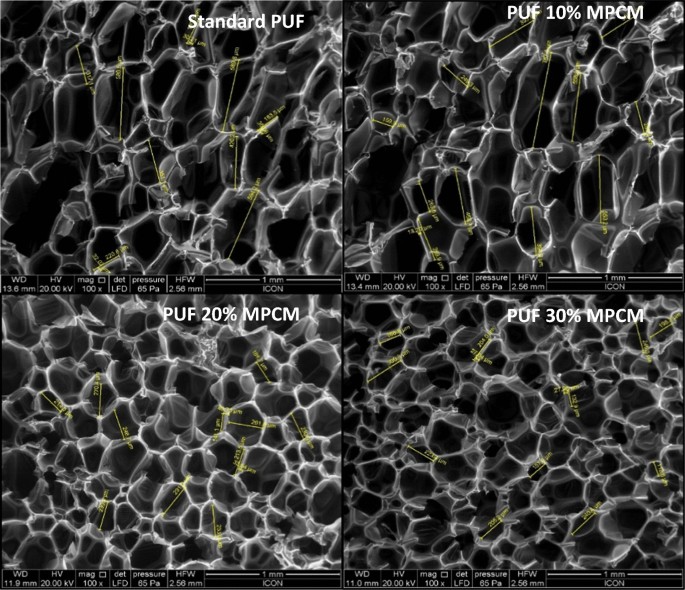
The memory foam cell structure consists of millions of tiny air pockets within the foam. These can be open-cell or closed-cell.
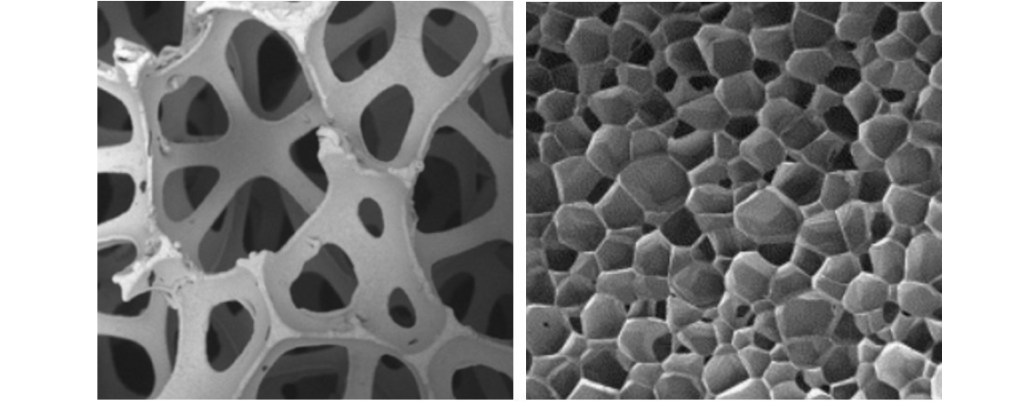
- Open-cell memory foam includes interconnected cells that allow the air to flow through more easily.
- Closed-cell memory foam is filled with sealed pockets of air, which turns the foam into a denser material and reduces ventilation.
How Cellular construction impacts breathability, firmness, and durability
Cell structure has a direct influence on how a mattress performs:
- Breathability: Open-cell foam allows for air circulation and regulates temperature. Closed cell foam has a tendency to trap in heat.
- Firmness: Closed-cell foam feels firmer because of its part structure. Open-cell foam provides a softer, more cushioning sensation.
- Durability: Closed-cell memory foam tends to be more durable, but it may feel less responsive. Open-cell foam may break down faster, but it is generally more comfortable at first.
Which Style Is Best for Sleepers?
Which is the better end depends on your preferences:
Hot sleepers may appreciate open-cell foam for its breathability.
Back or stomach sleepers who require firm support could prefer closed-cell foam.
Most contemporary mattresses are a hybrid, which combines the two in varying proportions to achieve a balance of comfort and support.
Memory Foam Density and ILD: What the Numbers Mean
Memory foam density explained:
Memory foam density is expressed as the weight of one cubic foot of foam, where the end number represents the weight in pounds per cubic foot (lbs/ft³). It influences durability, support, and cost.
- Low density (2.5 – 3.5 lbs/ft³): This type of foam is softer and less durable.
- Medium density (3.5 – 5 lbs/ft³): The best of both worlds, comfort and support
- High density (5+ lbs/ft³): Even more supportive and long-lasting, these are great for heavy-duty use
That being said, denser foams will provide even more contouring and support, but they also tend to trap more heat.
ILD (Indentation Load Deflection): Measuring Firmness
The ILD rating is a measurement and evaluation that measures the firmness of a mattress.
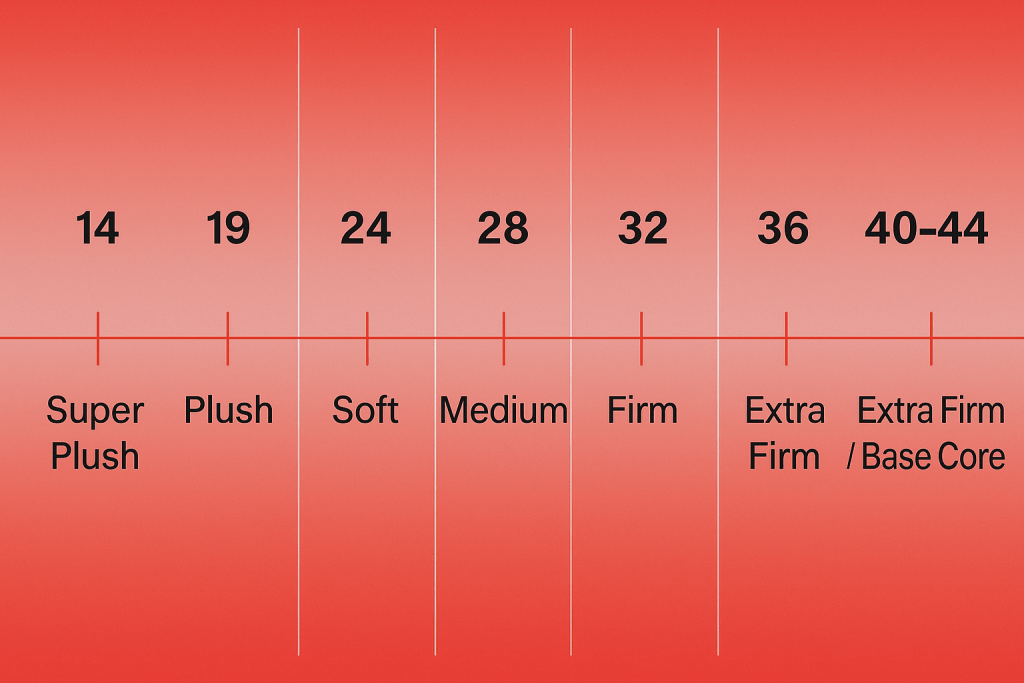
ILD memory foam is an abbreviation for Indentation Load Deflection, which measures the firmness or softness of a foam. A higher ILD indicates a firmer mattress.
- ILD 8–12: Soft
- ILD 13–16: Medium
- ILD 17+: Firm
ILD provides information about how much “give” the foam has when pressure is applied, which is crucial for determining whether side or back sleepers are better suited.
The Impact of Density and ILD on Comfort, Support, and Longevity
- Comfort: The lower ILD and density make it soft and perfect for side sleepers.
- Support: High-density and ILD foam provides strong support suitable for back or stomach sleepers.
- Longevity: Higher density is often representative of a better lifespan.
Picking the Perfect Density for How You Sleep:
how to find the Perfect mattress based on your sleeping preference,
Side sleepers: Soft to medium low density (3–4 lbs) with soft ILD
Back sleepers: Medium-firm (4–5 lbs) and medium ILD
Sleep position: Stomach Sleeper: High density (5+ lbs) and firm ILD
Knowing these numbers can help you pick a mattress that works well for your body, so you’re not relying on trial and error.
Memory Foam Off-Gassing: What is it and Should You be Concerned?

What Is Off-Gassing And Why Does It Occur?
Memory foam off-gassing is the emission of volatile organic compounds (VOCs) from the foam when it’s unpacked. That “new mattress smell” comes from the breakdown of chemical components and release of gases into the air.
Common VOCs in Memory Foam
Types of VOCs that may be emitted:
- Benzene
- Formaldehyde
- Toluene
- Acetone
Not all VOCs are harmful in low doses, but long-term exposure, particularly in poorly ventilated spaces, can lead to headaches, nausea or respiratory irritation.
Is Off-Gassing Harmful? Health and Safety Insights
So, is memory foam safe? For the most part, yes—especially if it’s CertiPUR-US® certified, which indicates it meets the following requirements:
- Made with less ozone substances
- Low levels of VOC’s (below 0.5 ppm)
- No toxic materials lead or mercury
- Free of formaldehyde and phthalates
Those that are not certified may present a greater health risk, especially for children and people with sensitivities.
How to Reduce and Remove Off-Gassing in Your Home?
- Unbox in a ventilated area
- Please allow 48-72 hours for this mattress to expand and take its proper shape.
- Try an air purifier to accelerate the elimination of VOCs
- Purchase certified foams, which should be third-party safety tested
By following these basic measures, your exposure can greatly diminish and the mattress will become safe to use.
Conclusion
Final Thoughts: How to Pick a Safe, Comfortable & Durable Memory Foam Mattress?
There’s more to love about the right memory foam mattress than just its softness (or firmness). You have to know the memory foam cell structure, the density, ILD and the way it acts over time. Also, think about other factors, such as memory foam off-gassing or if the foam is made from safe materials.
Check thiere’ss as well as open-cell vs closed-cell memory foam so that you continue to sleep at comfortable temperatures, and look for density levels based on the position you sleep in. Don’t forget to consider certifications for safety.
Tips for Evaluating Mattress Specs and Certifications
- Look for CertiPUR-US®, OEKO-TEX®, or Greenguard Gold certifications
- Inquire about foam density and ILD numbers
- Opt for open-cell foams if you tend to sleep hot
- Check off-gassing allegations and consumer comments
- Consider a trial period to evaluate comfort and sensitivity to odor
With the correct information, you can make an educated decision that promotes restful sleep, supports your health, and lasts for years to come.
Frequently Asked Questions
Memory foam is primarily made from polyurethane and various added chemicals that increase its viscosity and density. These ingredients create the foam’s signature “slow sinking” and contouring feel.
What’s the difference between open-cell and closed-cell memory foam?
Open-cell foam has tiny interconnected air pockets, allowing for better airflow and cooling.
Closed-cell foam traps air in sealed pockets, making it firmer and more durable, but also less breathable.
What does memory foam density mean?
Density refers to how much one cubic foot of foam weighs. It affects:
Durability (higher density = longer lasting),
Support (higher density offers more),
Heat retention (denser foam may trap more heat).
Typical ranges:
Low: 2.5–3.5 lbs/ft³
Medium: 3.5–5 lbs/ft³
High: 5+ lbs/ft³
What is ILD, and why does it matter?
ILD stands for Indentation Load Deflection—a measure of a foam’s firmness.
Low ILD (8–12): Soft
Medium ILD (13–16): Balanced
High ILD (17+): Firm
ILD helps determine how the mattress will feel under pressure and is important for sleep position compatibility.
Which density and ILD should I choose based on my sleeping position?
Side sleepers: Medium-low density (3–4 lbs) and soft ILD
Back sleepers: Medium-high density (4–5 lbs) and medium ILD
Stomach sleepers: High density (5+ lbs) and firm ILD
Is off-gassing from memory foam harmful?
Not usually. If the mattress is CertiPUR-US® certified, it meets standards for low VOC emissions. Still, those sensitive to odors or chemicals may want to air out the mattress in a ventilated room.
How do I get rid of the new mattress smell faster?
Unbox in a well-ventilated area
Let it air out for 48–72 hours
Use an air purifier
Avoid using sheets or covers until the smell subsides
Are memory foam mattresses hot to sleep on?
Some can be, especially high-density or closed-cell foams. To avoid this, choose open-cell memory foam or mattresses with cooling gel infusions or breathable covers.

Roman is a seasoned expert in mattress development with over a decade of experience in sleep technology, material innovation, and product engineering. He has played a key role in designing and refining sleep solutions for leading mattress brands, with a deep focus on ergonomics, pressure relief, and sleep quality optimization.
With a background in product design and biomechanics, Roman combines scientific research with hands-on development to create mattresses that address real-world sleep issues—from spinal alignment to temperature regulation. His work has contributed to several award-winning mattress lines known for their comfort, durability, and user satisfaction.
