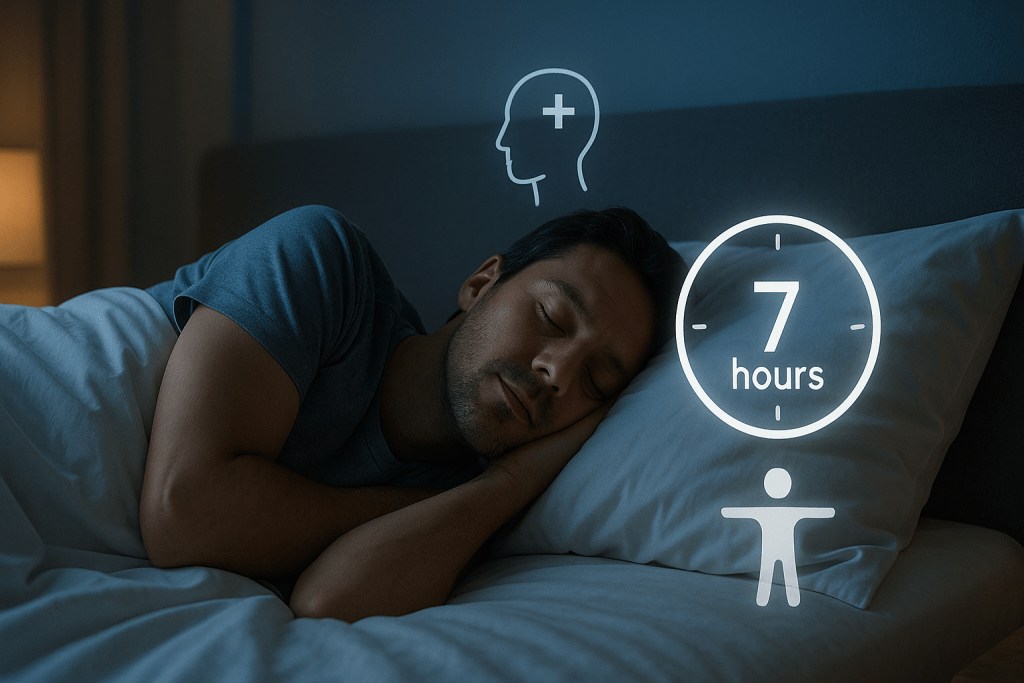
Sleep is one of the most essential aspects of health that many people underestimate. While adults are often told to get 7–8 hours of rest, a common question arises: is 7 hours of sleep enough for optimal physical and mental well-being? The answer isn’t one-size-fits-all. It depends on your lifestyle, age, and health condition. In this blog, we’ll break down everything you need to know about sleeping hours, how they affect your body, and how to ensure you get the most out of your rest.
Understanding Sleeping Hours
Sleeping hours are not just a number, they are the time your body spends in essential restorative processes. During sleep, your brain consolidates memories, repairs tissues, and balances hormones. A full night’s rest cycles through light sleep, deep sleep, and REM sleep, each playing a vital role in restoring your body and mind.
Sleep is divided into several stages:
- Light Sleep (Stage 1 & 2): Prepares the body for deeper sleep.
- Deep Sleep (Stage 3): Restorative sleep that helps with physical repair.
- REM Sleep: Supports mental health, memory, and emotional processing.
Knowing the structure of your sleeping hours is key to answering whether 7 hours of sleep is enough for your body.
Is 7 Hours of Sleep Enough for Adults?
Experts often recommend 7–9 hours of sleep for adults. But is 7 hours of sleep enough for everyone?
- For many healthy adults, 7 hours can be sufficient.
- Some people need 8–9 hours to feel fully rested.
- Others may function well on slightly less, but a consistent lack of sleep can lead to long-term health issues.
Here’s a quick table showing recommended sleeping hours by age:
| Age Group | Recommended Sleeping Hours | Notes |
|---|---|---|
| Infants (0–1) | 12–16 hours | Includes naps |
| Children (6–12) | 9–12 hours | Vital for growth |
| Teenagers (13–18) | 8–10 hours | Supports learning |
| Adults (18–64) | 7–9 hours | Depends on lifestyle |
| Older Adults (65+) | 7–8 hours | Sleep quality may decline |
This table highlights why the question is 7 hours of sleep enough may have different answers for different age groups.
Signs That Your Sleeping Hours Are Not Enough
Even if you log 7 hours, your body may need more. Look for these signs:
- Feeling groggy or drowsy during the day
- Poor focus and memory
- Mood swings or irritability
- Low immunity and frequent sickness
- Difficulty recovering from workouts
If you experience these symptoms, it may be time to reconsider your sleeping hours.
Factors That Affect How Much Sleep You Need
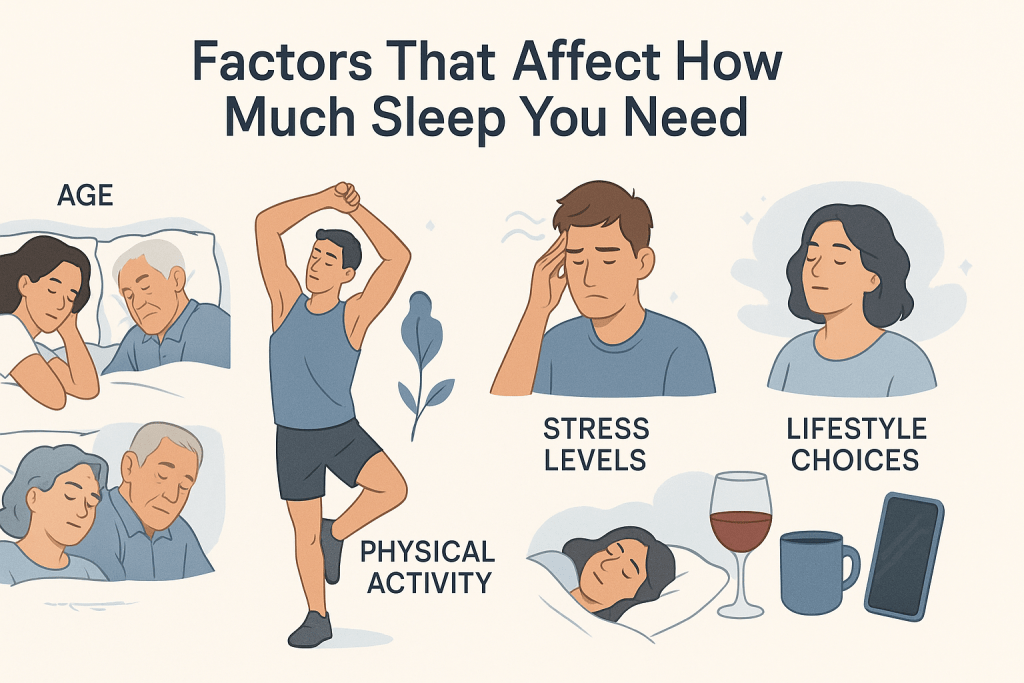
Several factors influence whether 7 hours of sleep is enough:
1. Age
Younger people typically need more sleep. Adults can function for 7–8 hours, while older adults may need slightly less.
2. Physical Activity
Athletes or highly active people require more restorative sleeping hours for muscle recovery.
3. Stress Levels
High stress increases your need for quality sleep, and 7 hours may not be sufficient.
4. Health Conditions
Chronic illnesses or mental health issues can impact sleep quality and quantity.
5. Lifestyle Choices
Alcohol, caffeine, and screen time affect your ability to achieve restorative sleep.
How to Make the Most of Your Sleeping Hours?
If 7 hours of sleep is enough for you, make sure your sleep is high quality. Here are tips to optimize your sleeping hours:
- Maintain a consistent sleep schedule: Go to bed and wake up at the same time daily.
- Create a sleep-friendly environment: Keep your bedroom dark, quiet, and cool.
- Limit screen time: Reduce blue light exposure before bed.
- Watch your diet: Avoid heavy meals and caffeine close to bedtime.
- Exercise regularly: Physical activity improves sleep quality.
- Practice relaxation techniques: Meditation or deep breathing before bed can help.
Benefits of Getting Enough Sleeping Hours
Proper sleep improves your overall health in numerous ways:
- Boosts Immunity: Adequate sleep helps fight off infections.
- Enhances Brain Function: Memory, focus, and decision-making improve.
- Supports Emotional Health: Reduces anxiety and depression risks.
- Regulates Weight: Sleep balances hunger hormones.
- Improves Longevity: Quality sleep is linked to longer life expectancy.
These benefits emphasize why evaluating whether 7 hours of sleep is enough is important for long-term health.
Common Misconceptions About Sleeping Hours
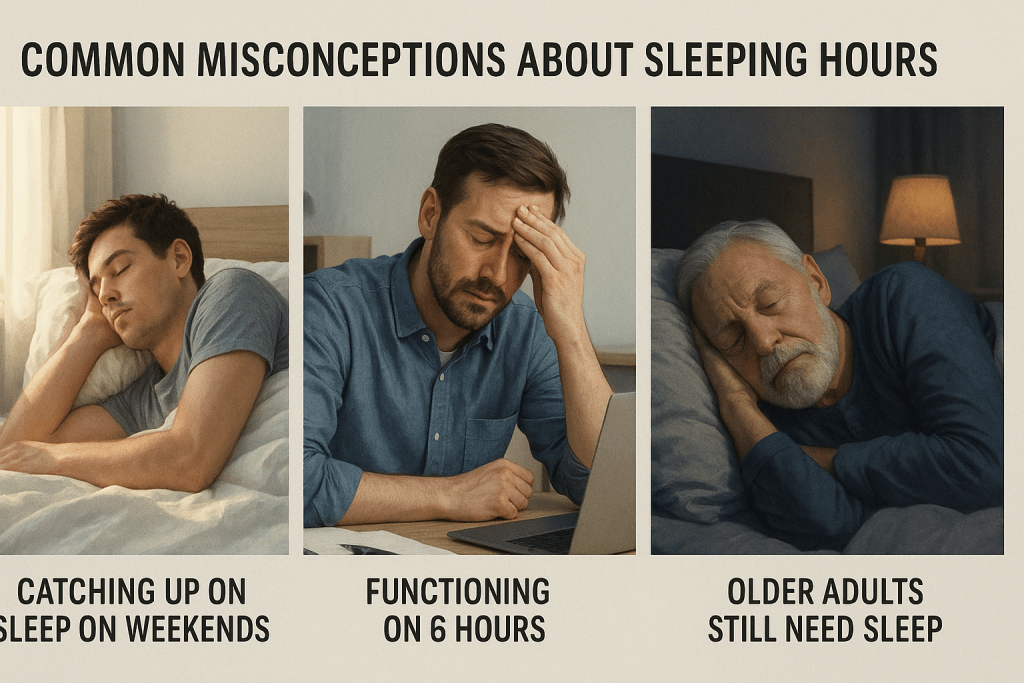
- “I can catch up on sleep during weekends” – Oversleeping on weekends can disrupt your sleep cycle.
- “I function fine for 6 hours” – Some may cope short-term, but chronic sleep deprivation accumulates.
- “Older adults don’t need sleep” – Older adults still require quality sleep, even if their duration is shorter.
FAQs
1. Is 7 hours of sleep enough for everyone?
It depends on age, health, and activity level. For many adults, it’s sufficient, but some may need more.
2. How do I know if my sleeping hours are enough?
If you feel rested, alert, and energetic during the day, your sleeping hours are likely adequate.
3. Can short naps replace sleeping hours at night?
Short naps can help, but they cannot replace continuous nighttime sleep.
4. What happens if I consistently get less than the recommended sleeping hours?
Chronic sleep deprivation can lead to cognitive issues, mood disorders, weight gain, and weakened immunity.
5. How can I improve the quality of my sleeping hours?
Stick to a consistent sleep routine, reduce screen time before bed, maintain a healthy diet, and create a calming sleep environment.
Conclusion
So, is 7 hours of sleep enough? For many adults, it is. However, the quality of your sleep and individual needs matter more than just the number of hours. Tracking your sleeping hours, maintaining a consistent schedule, and improving your sleep environment can help ensure that your body gets the rest it truly needs.
Remember, sleep isn’t a luxury, it’s a vital part of your health. Optimizing your sleeping hours ensures you wake up refreshed, energized, and ready to tackle the day. Read more about our mattresses and sleep guides.

Roman is a seasoned expert in mattress development with over a decade of experience in sleep technology, material innovation, and product engineering. He has played a key role in designing and refining sleep solutions for leading mattress brands, with a deep focus on ergonomics, pressure relief, and sleep quality optimization.
With a background in product design and biomechanics, Roman combines scientific research with hands-on development to create mattresses that address real-world sleep issues—from spinal alignment to temperature regulation. His work has contributed to several award-winning mattress lines known for their comfort, durability, and user satisfaction.