

Neck pain is a common issue that affects millions of people, often caused or worsened by improper sleeping posture and poor pillow support. The right pillow can significantly reduce discomfort and promote better spinal alignment, leading to restful sleep and a pain-free morning. In this detailed guide, we’ll explore the pillows recommended for neck pain, the best types for different sleeping positions, what features to look for, and how to choose the right pillow for your needs.
Understanding Neck Pain and Its Causes During Sleep
Before we dive into the types of pillows recommended for neck pain, it’s important to understand how sleep can contribute to the problem. Common causes include:
- Sleeping with a pillow that’s too high or too low
- Using an old, worn-out pillow that no longer offers support
- Sleeping in a position that twists the neck unnaturally
- Muscle strain from poor alignment during sleep
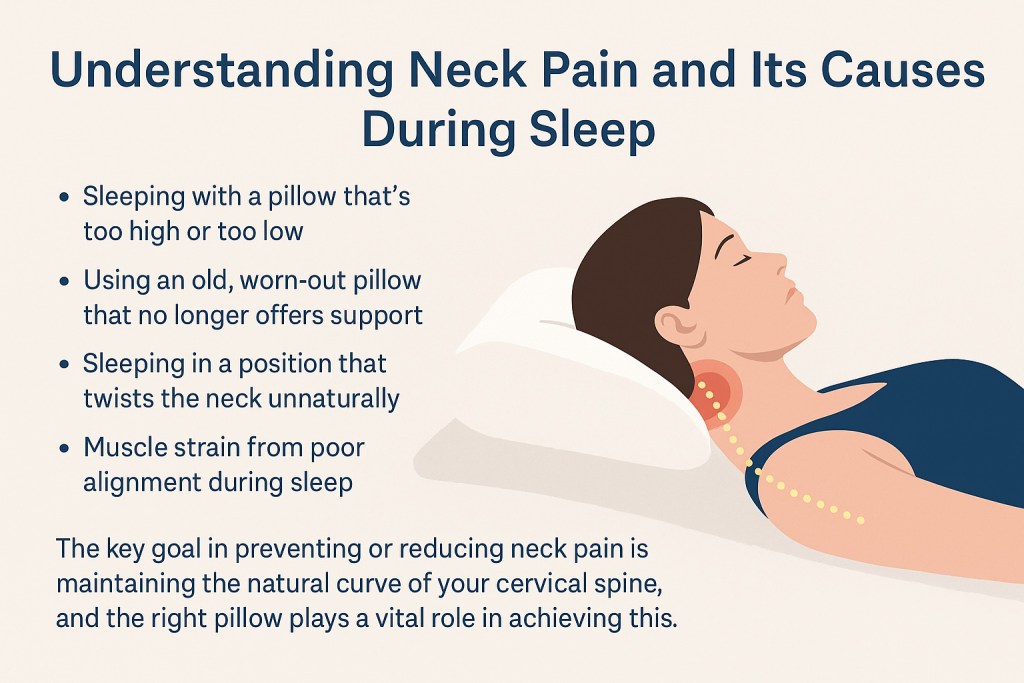
The key goal in preventing or reducing neck pain is maintaining the natural curve of your cervical spine, and the right pillow plays a vital role in achieving this.
Best Types of Pillows Recommended for Neck Pain
Not all pillows are created equal, especially when it comes to neck support. Here are the top types that are most effective for reducing neck discomfort:
1. Memory Foam Pillows
- Benefits: Conforms to the shape of your head and neck, maintaining alignment
- Best for: Back and side sleepers
- Variants: Solid memory foam and shredded memory foam
2. Cervical (Orthopaedic) Pillows
- Benefits: Designed with contours to support the natural curve of the neck
- Best for: Back sleepers, side sleepers with chronic neck pain
- Note: Takes time to get used to, but highly effective for posture correction
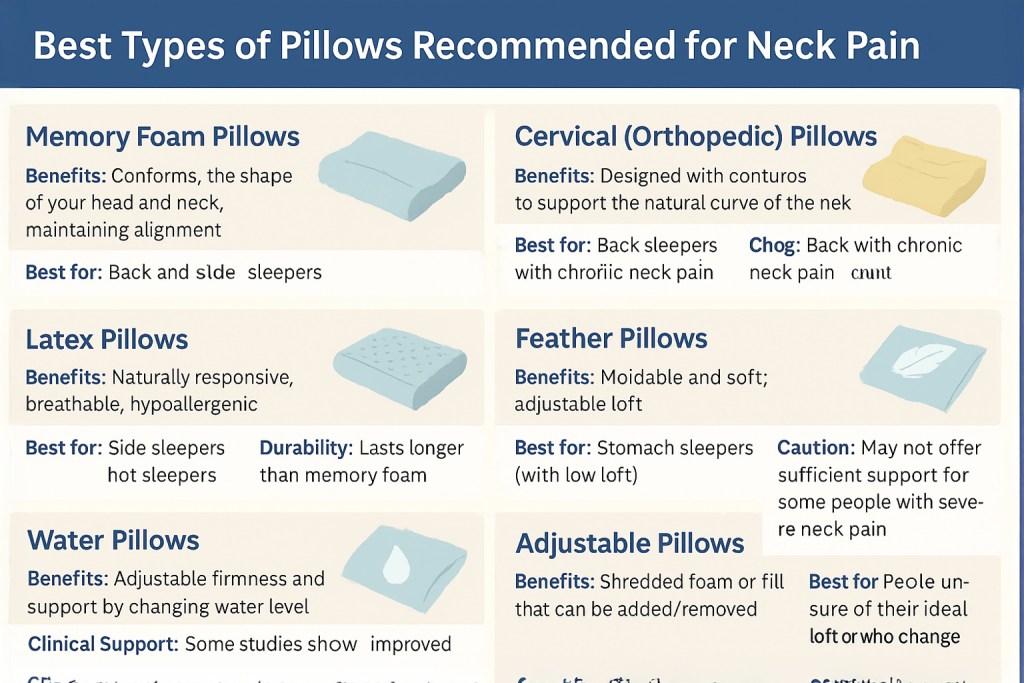
3. Latex Pillows
- Benefits: Naturally responsive, breathable, hypoallergenic
- Best for: Side sleepers, hot sleepers
- Durability: Lasts longer than memory foam
4. Feather Pillows
- Benefits: Mouldable and soft; adjustable loft
- Best for: Stomach sleepers (with low loft)
- Caution: May not offer sufficient support for some people with severe neck pain
5. Water Pillows
- Benefits: Adjustable firmness and support by changing water level
- Best for: People with varying support needs or changing sleep habits
- Clinical Support: Some studies show improved pain relief
6. Adjustable Pillows
- Benefits: Shredded foam or fill that can be added/removed
- Best for: People unsure of their ideal loft or who change positions
Sleep Positions and the Right Pillow Choice
Your sleeping position plays a major role in what type of pillow will work best for you. Here’s a breakdown:
Back Sleepers
- Recommended pillow type: Medium-loft memory foam or cervical pillows
- Goal: Support the natural curve of the neck without pushing the head too far forward
- Extra tip: A pillow under the knees can also relieve spinal tension
Side Sleepers
- Recommended pillow type: Firm, high-loft pillows like latex or memory foam
- Goal: Fill the gap between the head and shoulders to keep the spine straight
- Extra tip: Consider a body pillow to support the torso and reduce rotation
Stomach Sleepers
- Recommended pillow type: Soft, low-loft feather or down pillows
- Goal: Minimize neck twist and spine compression
- Warning: This is the least recommended position for neck pain; try to transition to side or back sleeping
Side Effects of Sleeping on the Wrong Pillow
1. Neck Pain
One of the most common consequences. A pillow that is too high, too low, or lacks proper support can strain the cervical spine, leading to stiffness and pain upon waking.
2. Shoulder Pain
Especially for side sleepers, a pillow that doesn’t fill the space between your neck and shoulder can put pressure on the shoulder joint, causing discomfort or soreness.
3. Headaches
Poor neck support can lead to tension headaches. These are often caused by tight neck and upper back muscles that result from misalignment during sleep.
4. Poor Sleep Quality
Discomfort from the wrong pillow can lead to frequent tossing, turning, and waking during the night, ultimately disrupting your sleep cycle and reducing REM sleep.
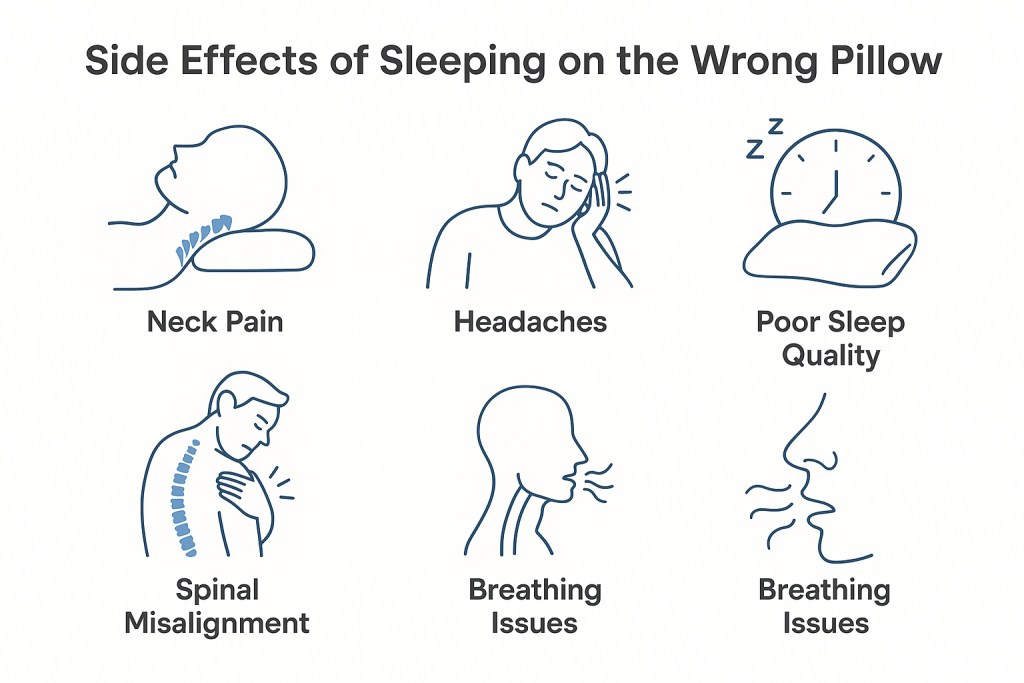
5. Spinal Misalignment
A pillow that doesn’t support the natural curve of your neck can misalign your spine, leading to long-term posture issues and back problems.
6. Increased Snoring or Breathing Issues
The wrong pillow height can affect the airway, especially in back sleepers. A pillow that’s too high may push the chin down, while one that’s too low may not support the head at all, both affecting breathing and increasing snoring.
7. Jaw and Facial Tension
Improper alignment of the head and neck can strain the jaw, contributing to TMJ (temporomandibular joint) discomfort or facial muscle tension.
8. Numbness and Tingling
If your pillow causes you to sleep in an awkward position, you may compress nerves in your neck or shoulders, leading to numbness or tingling in the arms and hands.
9. Allergic Reactions
Old or low-quality pillows can accumulate dust mites, mold, or allergens over time, leading to allergy flare-ups or respiratory discomfort.
10. Early Signs of Aging and Skin Irritation
Sleeping on the wrong pillowcase material (or one that traps heat) can cause friction on the skin, worsen acne, or even contribute to early wrinkles.
What to Look for in a Pillow for Neck Pain
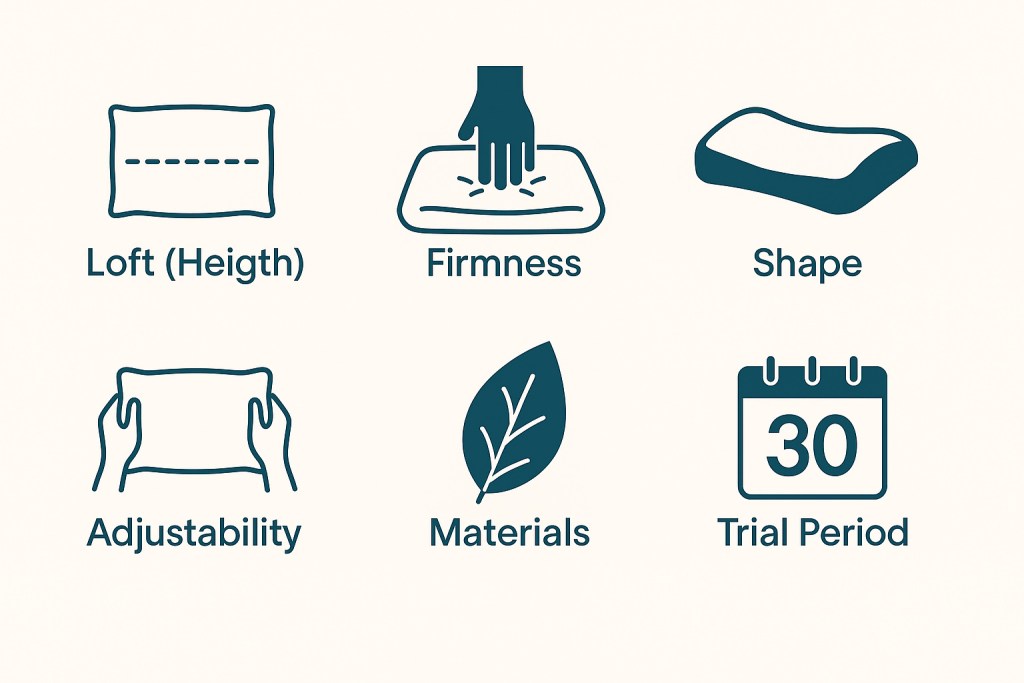
Here are the most important features to consider when shopping for pillows recommended for neck pain:
- Loft (Height): Choose the right thickness based on your sleep position
- Firmness: Medium-firm for back sleepers; firm for side sleepers; soft for stomach sleepers
- Shape: Contoured or ergonomic shapes work best for cervical alignment
- Adjustability: Great for customisation and experimenting with loft
- Materials: Look for hypoallergenic and breathable materials (especially for hot sleepers)
- Trial Period: Choose a brand with a sleep trial in case the pillow doesn’t suit you
Comparison Table: Pillow Types for Neck Pain Relief
| Pillow Type | Support Level | Best For | Adjustable | Cooling Properties | Durability |
|---|---|---|---|---|---|
| Memory Foam | High | Back, Side | Some | Moderate | 3–5 years |
| Cervical Pillow | Very High | Back, Side | No | Moderate | 2–4 years |
| Latex | High | Side, Hot Sleepers | No | Excellent | 5–7 years |
| Feather/Down | Low to Medium | Stomach | Yes | Good | 1–3 years |
| Water Pillow | Adjustable | All | Yes | Moderate | 2–3 years |
Our Top Picks: Pillows Recommended for Neck Pain
Note: Always consult with a healthcare provider if you have chronic or severe neck pain.
- Luxe – Neck Pain Pillow
- High-density memory foam
- Ergonomic shape for back and side sleeping
- Excellent pressure relief
- Coop Home Goods Adjustable Loft Pillow
- Shredded memory foam with adjustable fill
- Great for combination sleepers
- Hypoallergenic cover
- Mediflow Water Pillow
- Clinically proven to reduce neck pain
- Customisable support via water fill
- Saatva Latex Pillow
- Organic latex core + plush cotton outer layer
- Cool, supportive, long-lasting
- Beckham Hotel Collection Gel Pillow
- Budget-friendly
- Soft, breathable, suitable for stomach sleepers
Final Thoughts
Finding the right pillows recommended for neck pain can be a game-changer in your sleep quality and overall comfort. Whether you’re a back sleeper needing cervical support or a side sleeper looking to maintain spinal alignment, there’s a perfect pillow for you. Invest in a pillow that matches your sleep style, material preference, and ergonomic needs. Your neck and your sleep, will thank you.
Frequently Asked Questions
What type of pillow is best for neck pain?
The best pillows for neck pain are memory foam, cervical (orthopedic), and latex pillows. These provide proper support and maintain cervical alignment to reduce strain during sleep.
Are cervical pillows good for everyone?
Cervical pillows are especially helpful for people with chronic neck pain or posture issues. However, they may take some getting used to. They are most effective for back and side sleepers.
How do I know if my pillow is causing neck pain?
If you often wake up with stiffness, tension, or discomfort in your neck or shoulders, your pillow may be the cause. A pillow that is too flat or too thick can misalign your spine during sleep.
Can the wrong pillow cause headaches?
Yes. Poor neck support from the wrong pillow can lead to tension headaches caused by strained neck muscles and misalignment.
How often should I replace my pillow?
Most pillows should be replaced every 1 to 3 years, depending on the material. Memory foam and latex tend to last longer, while feather or polyester pillows flatten quicker.
Is it better to sleep on your back or side for neck pain?
Back sleeping is generally best for neck pain, as it promotes neutral spinal alignment. Side sleeping is also effective if you use a firm, supportive pillow that fills the gap between your head and shoulder.
Can adjustable pillows help with neck pain?
Yes. Adjustable pillows allow you to customize loft and firmness by adding or removing filling, making them ideal for finding the right support level for your sleep style.

Marie Soukup is a seasoned senior copywriter and editor who’s written for global brands like Virgin Australia, blending storytelling and strategy to create content that connects. She’s passionate about bringing ideas to life across the travel, lifestyle, and business worlds.

Roman is a seasoned expert in mattress development with over a decade of experience in sleep technology, material innovation, and product engineering. He has played a key role in designing and refining sleep solutions for leading mattress brands, with a deep focus on ergonomics, pressure relief, and sleep quality optimization.
With a background in product design and biomechanics, Roman combines scientific research with hands-on development to create mattresses that address real-world sleep issues—from spinal alignment to temperature regulation. His work has contributed to several award-winning mattress lines known for their comfort, durability, and user satisfaction.