
Seasonal Mattress Care: Preparing Your Bed for Weather Changes
The temperature change does affect the clothes we wear. But one surprising impact of temperature change is on your sleep. A mattress ideal for winter can trap heat in summer, while neglecting humidity can cause mold or odour issues. The secret to year-round comfort? Ensuring you care for your mattress seasonally is an easy yet often neglected task which ensures that your mattress remains supportive, fresh and free from allergies, irrespective of the season.
Find out how to turn the mattress to prevent sagging, pick the right protector for humidity, and the quickest fix to remedy any spill or sweat situation; keep reading.
1. How Often Should You Rotate Your Mattress Seasonally?
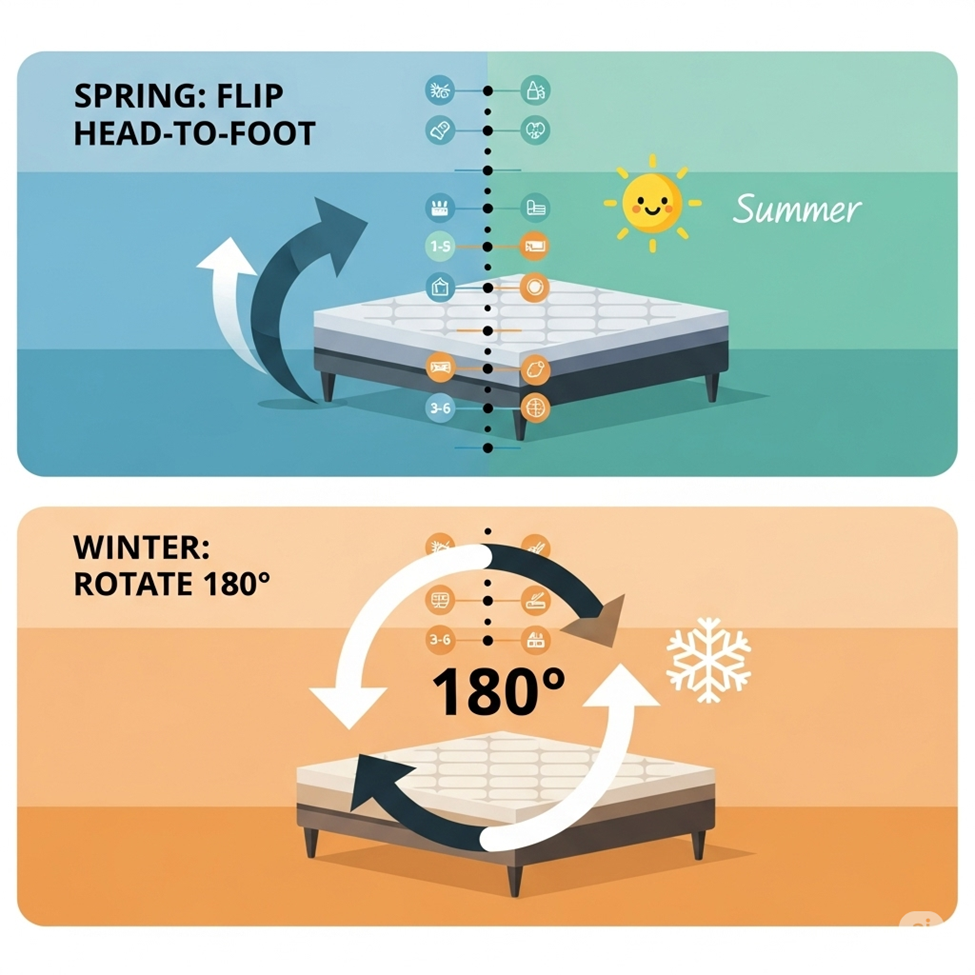
On the other hand, you should also be rotating your mattress seasonally to prevent wear. Make sure to rotate your mattress once every 3 months to every 6 months. This simple habit prevents sagging and prolongs mattress life considerably.
Why Seasonal Rotation Matters.
First of all, regular rotating prevents body impressions from forming in the same area. Over time dips will form that can become permanent, especially in memory foam or hybrid. It also evenly distributes the compression which prevents any one area from bearing repeated weight. Like a tire rotation, even mattress wear means consistent mattress support for 7+ years.
Best Rotation Schedule for Each Season.
Next, tailor rotations to weather changes. In spring/summer, to help absorb sweat, flip mattress head-to-foot. When it’s fall/winter, a 180° turn will not make cold spots in foam layers and also overall heat retention will be improved. Pro tip: Combine your mattress rotation with your deep cleaning for extra freshness.
2. What’s the Best Mattress Protector for Seasonal Changes?
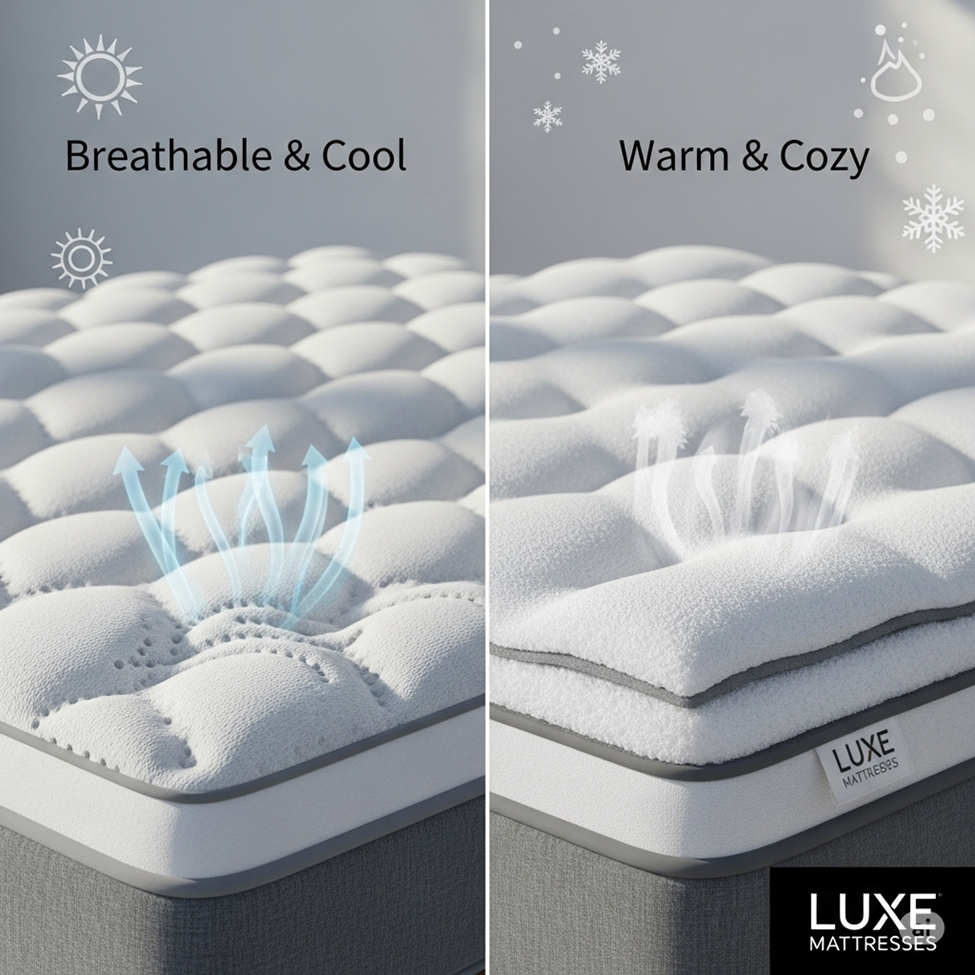
Now, we come to mattress protectors, your first line of defense against seasonal wear. An ideal shield must be waterproof and breathable for year-round use, with specialized versions for extreme temperatures. It doesn’t matter if it’s hot or cold outside, with a proper mattress protector the temperature always remains normal and allergen and spill can be blocked out from your mattress.
Moisture-wicking covers prevent sweat build-up.
In hot weather, you need breathable protective clothing that pulls moisture away from your body. Choose the bamboo or Tercel resembling fabric since they are cooler and drier textiles. These materials don’t allow sweat build up and also resist mold and mildew. This is important since memory foam mattresses trap heat.
Winter: Thermal-Lined Protectors Retain Heat.
During the colder months, thermally lined protectors would provide insulation. These trap body heat without making the bed feel stuffy. The best materials for your mattress protector are fleece or a wool-blend. Fleece is a good insulator, which regulates temperature naturally and wool-blends keep out pesky winter allergens like dust mites.
If you’re looking for a one-protector-for-every-season solution, opt for a hypoallergenic option. These block dust mites, pet dander, and pollen year-round. The ideal form of protection is waterproof yet breathable protectors with tightly-woven strands.
3. How Do You Deep Clean a Mattress Each Season?
Let us deep clean your mattress, because this is seasonal task that needs to be done. You should vacuum the couch once a month to get rid of dust and allergens. You should spot-clean stains from the couch seasonally. For instance, you can use baking soda and vinegar. By keeping your mattress clean, you will also prevent stains and other damage that can’t be removed.
Spring/Summer: Focus on Deodorizing.
First, warm weather brings sweat and odors. Evenly distribute baking soda all over the mattress and leave it overnight for 24 hours to soak the smells. Need help removing stubborn stains? Mix one part—the vinegar and one part water into a spray bottle. The acid in vinegar breaks down the residue without the use of damaging chemicals. Always finish by vacuuming thoroughly to remove all powder.
Fall/Winter: Sanitize with Light Steam.
Meanwhile, cooler months require a different approach. Use the hand-held steamer on low heat to sterilize and get rid of dust mites and bacteria trapped inside the fabric layers. Be quick and do not wet the mattress as the cold weather will mildew it, use rubbing alcohol instead of a water-based solution for spot cleaning to prevent dampness.
4. How Should Bedding Change with the Seasons?
Once the mattress is protected and cleaned, it’s now time to shift seasonal bedding. Change your fabric according to temperature. Which will keep you comfortable all year, as linen will keep you cool during summer nights, while flannel will keep you warm during winter months. The right materials help regulate your body temperature and sleep quality as the weather changes.
Summer: Bamboo, Tencel (Breathable).
To prevent sweating, pick light materials that give your skin support. Bamboo sheets remain surprisingly cool and odor repellent, while Tencel has great breathable properties for humid nights. These natural fibers feel soft against skin and quickly dry if you sweat. Choose a weave that enhances breathability, like percale, for the best results.
Winter: Flannel, Fleece (Insulating).
When it gets cold, insulation materials help make the sleep space warm. Flannel traps heat with its brushed surface, and fleece adds weightless warmth. Choose cotton blends so you don’t sweat a lot and won’t get cold. Add an extra layer with a down alternative comforter for extra warmth during cold snaps.
5. How Can You Prevent Mold in Humid Seasons?
While seasonal bedding makes you comfortable, humidity control will prevent your mattress from growing molds. Putting a dehumidifier in your bedroom and placing the mattress on top of a slatted base ensure proper air circulation and prevent moisture build-up during risky times.
Summer Monsoons and Wet Winters.
First, understand when mold thrives. Two problems result from the summer monsoons that create muggy, spore-perfect conditions and the cold wintery when heaters work round the clock, trapping moisture. Municipalities in coastal zones are likely to have humidity spikes of above sixty percent, a definite danger zone for mold on mattresses. Check corners and underside weekly during these periods.
Quick Fixes for Your Home: Silica Gel Packs Under the Bed
You can also use a silica gel pack and place it between the mattress and the bed frame to keep your mattress protected. These discreetly absorb any unwanted moisture and are effective in small spaces. Turn them every month and refresh in direct sunlight when saturated. Mattress pads that draw moisture prevent all dampness.
6. What’s the Right Mattress Support for Year-Round Comfort?
The right support system helps you sleep comfortably in all seasons, besides protecting your mattress from moisture. Seasonally altering your bed frame makes you more comfortable than you might expect. Those with a slatted base or open base can improve the airflow in the summer, while those with a solid base can help retain the warmth in the winter.
Summer: Slatted Bases for Airflow.
First, combat heat and humidity with proper ventilation. Using a slatted bed frame allows air to flow underneath your mattress, allowing heat to escape from your mattress rather than becoming trapped. To allow maximum air flow, choose wooden slats 2–3 inches apart. Moreover, this setup will minimize moisture retention and in conjunction with your summer mattress protector.
Winter: Solid Foundations for Warmth.
A solid platform bed will provide warmth when the temperature drops, or lay down a sheet of plywood over slats. As a result, a barrier is created that traps body heat. Place a fitted wool or thermal pad between your mattress and foundation for extra warmth. It gives snug insulation but does not lose its support.
Adjustable Bases: The Year-Round Solution.
For ultimate versatility, consider an adjustable bed frame. In summer, raise the head slightly for better air movement. In winter, flatten it to distribute the heat evenly. Today, you can find many models with climate control, making seasonal changes a breeze and the comfort much easier.
7. How Do You Remove Odors from a Mattress Naturally?
With seasonal care, your mattress will develop an odor over time. One of the best natural solutions utilizes the sun’s rays along with baking soda. The UV rays aid in killing bacteria that create odors. And baking soda helps in neutralizing the smell. It is an effective way of removal, without using strong chemicals.
Sun Exposure: Nature’s Disinfectant.
Use Sunny Days To Air-Out Your Mattress Outdoors. UV light serve to kill bacteria and dust mites that causes odors naturally. For the best results, place the mattress in direct sunlight for 4-6 hours, turning halfway. After humid seasons, it works particularly well for organic mattresses.
Baking Soda: The Ultimate Deodorizer.
Sprinkling a thick layer of baking soda for a deep clean should work. The powder absorbs oils and odors trapped in the fabric. Allow it to sit for a minimum of eight hours (overnight for really bad smells) and then vacuum it off thoroughly. You can always add 5–10 drops of essential oils to the baking soda for a light scent.
Vinegar Solutions for Tough Stains.
Equal parts water and white vinegar in a spray bottle can help you deal with urine or sweat stains. Lightly mist the area, then blot with a clean cloth. The acid breaks down odor molecules while disinfecting. Use baking soda to get rid of lingering vinegar odors.
8. How Frequently Should You Wash Bedding in Different Seasons?
Just as important as your mattress hygiene is the bedding. In the summer, sweat, and oil buildup in your bed can occur quicker, so you should wash your sheets every 1-2 weeks. In the winter, however, sheets may be able to last longer (2-3 weeks) as moisture levels drop.
It stops the build-up of allergens and keeps your sleeping surface fresh.
Summer: Weekly Washes for Hygiene.
During the hot months, wash your covers more often to remove the sweat and body oils that dirty dust mites, which will attract them. Use hot water (60 °C/140 °F) to kill bacteria and natural detergents to avoid skin irritations from too frequent washing. Don’t forget to wash mattress protectors monthly.
Winter: Extended Wash Cycles.
In cold weather, you can stretch the time between washes a bit, but not more than 3 weeks. Bedding made from flannel or fleece can be easily washed on a gentle cold cycle. Always dry completely to prevent mildew in damp winter air.
9. Should Pets Sleep on Your Mattress During Seasonal Shifts?
Pet habits need seasonal adjustment too. During summer (pollen) and winter (moisture) peaks, limit your pet’s access to your mattress. Fur and dander may affect your sleep quality and hygiene of your mattress.
Summer: Allergen Control.
The warmer months bring more dander and pollen into bedding. Make a separate pet bed with cooling gel mats so that the animals are comfortable without disturbing your sleep.
Winter: Moisture Management.
Moisture will be trapped against the mattress because of pet fur in winter. Thus, there are chances of mold formation. It doesn’t hurt if your pets are allowed on the bed, but be sure to use a waterproof mattress protector and brush your pet regularly to cut down on shedding.
10. What Are the Biggest Seasonal Mattress Care Mistakes?
Avoiding common errors ensures your mattress lasts longer. The worst mistakes are not seasonal rotation, cleaning the mattress using harsh chemicals and not monitoring humidity which can affect the material.
Rotation Neglect.
Failing to rotate leads to permanent body impressions. To avoid uneven wear, memory foam and hybrid mattresses should be turned over on a quarterly basis.
Improper Cleaning Methods.
Chemical cleaners break down mattress fibers. Use baking soda, vinegar and other natural solutions to prevent damaging materials of your home with deep cleaning every season.
Humidity Ignorance.
Humidity issues cause mold in the summer and overfrying in the winter. Check the levels using a hygrometer and use dehumidifiers or humidifiers as needed.
Why Luxe Mattresses UK Simplifies Seasonal Care
A good mattress also remains fluffy without much seasonal adjustment. A premium mattress snatches all that away from you. Plus, it promises you 365 days of comfort. Luxe’s temperature-regulating designs and high-quality materials respond to changes in the weather automatically, making them low-maintenance when compared to budget options that require a lot of rotating, deep cleaning and swapping of the protector.
Built-In Climate Control for Every Season.
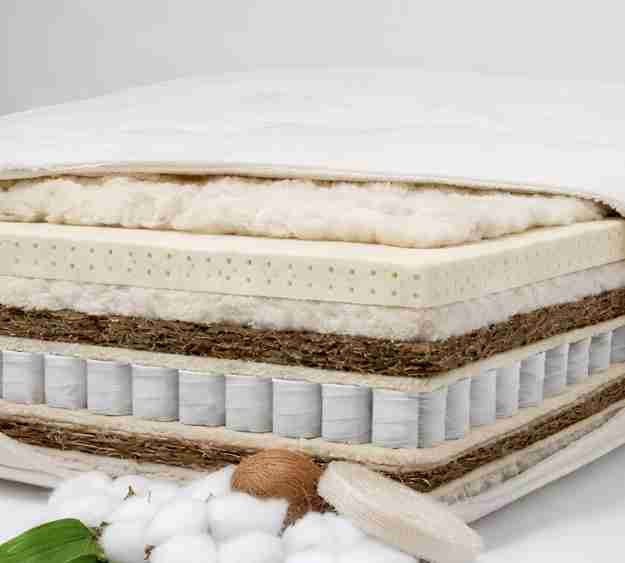
Luxe’s Organic Hybrid Mattress combines natural latex with breathable microcoils for effortless maintenance of perfect sleeping temperature.
- The summer open-cell latex design of this mattress draws heat away from the body, while the airflow coils prevent overheating. There’s no need for a cooling topper or for the mattress to be turned regularly.
- In winter, wool layers retain body heat without trapping moisture, so heavy thermal protectors are not required.
- During months when it’s humid, GOLS-certified latex does not grow mold and we can use it without dehumidifiers
Durable Construction = Less Maintenance.
- The Lumbar mattress, cutting rotation frequency down by 50% with High-density foams and reinforced edges which resist sagging.
- OEKO-TEX® certified fabrics helped to repel stains and allergens, resulting in less deep cleaning.
Smart Support for Longevity.
Luxe’s zoned pocket springs automatically adjust to changing body weights throughout the year without you having to touch them!
- You don’t have to flip this mattress over .
- Your investment is protected with a lifetime warranty that covers wear and tear.
Upgrade to Effortless Care.
Check out Luxe’s Climate-Adaptive Collection of luxurious mattresses that require minimal seasonal care. You really can’t get easier than free UK delivery and 100-night trials for smarter sleep.
Conclusion: Smart Care for Year-Round Comfort
Seasonal mattress upkeep is not just about maintenance; it’s also means better sleep and savings. By simply rotating your mattress once every 3-6 months, using breathable protectors and changing the bedding according to the season will not only add years to your mattress but also help in giving you added comfort.
Luxe Mattresses UK provides engineered solutions for those who wish to simplify seasonal care.
- Using fan systems, summer hybrids are made with built-in airflow.
- A layer of natural rubber that resists dampness.
- Sturdy buildings that require little upkeep.
For more expert tips, read Luxe’s Ultimate Care Guide or shop their Climate-Adaptive Collection, which helps high-quality fabrics deal with the seasons for you.

Roman is a seasoned expert in mattress development with over a decade of experience in sleep technology, material innovation, and product engineering. He has played a key role in designing and refining sleep solutions for leading mattress brands, with a deep focus on ergonomics, pressure relief, and sleep quality optimization.
With a background in product design and biomechanics, Roman combines scientific research with hands-on development to create mattresses that address real-world sleep issues—from spinal alignment to temperature regulation. His work has contributed to several award-winning mattress lines known for their comfort, durability, and user satisfaction.