

In our fast-paced world, sleep is often sacrificed in the name of productivity, parenting, entertainment, or late-night scrolling. Missing a few hours here and there may seem harmless, but over time, those lost hours pile up into something called sleep debt, a deficit that could cost you far more than just fatigue.
Sleep debt is the cumulative effect of not getting enough sleep on a regular basis. Just like financial debt, it comes with interest. It quietly builds in your body and brain, diminishing your energy, mood, mental clarity, and long-term health. Fortunately, sleep debt is measurable, and with the right tools and knowledge, it is also reversible.
This article explores what sleep debt is, how to calculate it, how it affects your body both in the short and long term, and what science-backed steps you can take to get back on track.
What Is Sleep Debt?
Sleep debt refers to the difference between the amount of sleep your body needs and the amount you’re actually getting. If you need 8 hours of sleep per night but only get 6, you’re in 2 hours of debt for that day. That debt continues to add up every day you fall short.
The term “sleep debt” was popularised in sleep science to help people visualize that sleep is not simply a nightly reset. It accumulates and requires repayment. According to the Sleep Foundation, most adults need between 7 to 9 hours of sleeper night to function at their best, but surveys show that nearly 35% of adults consistently get less than 7 hours.
Dr. Michael Breus, a clinical psychologist and diplomate of the American Board of Sleep Medicine, puts it clearly:
“Sleep debt doesn’t reset after one good night’s sleep. Cumulative deficits impair cognitive and physical function much like financial debt accrues interest.”
The Short-Term Effects of Sleep Debt
Even a small sleep deficit can result in significant changes in your day-to-day functioning. If you’ve ever had a night of bad sleep followed by a sluggish, irritable day, you’ve experienced it firsthand.
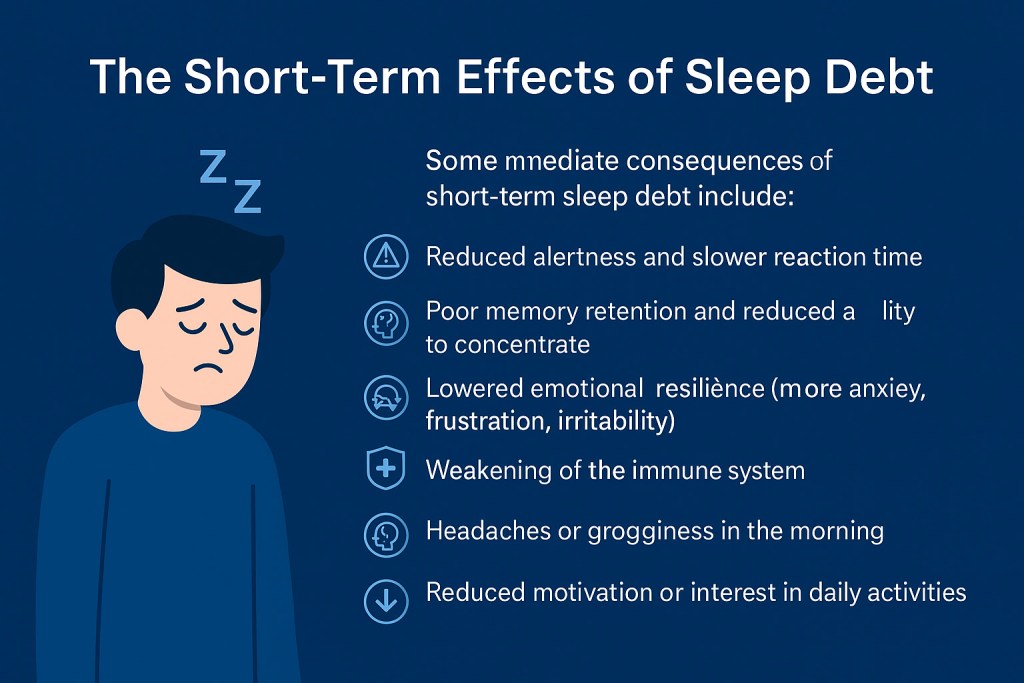
Some immediate consequences of short-term sleep debt include:
- Reduced alertness and slower reaction time
- Poor memory retention and reduced ability to concentrate
- Lowered emotional resilience (more anxiety, frustration, irritability)
- Increased risk of car accidents and workplace errors
- Weakening of the immune system
- Headaches or grogginess in the morning
- Reduced motivation or interest in daily activities
A study from the University of Pennsylvania found that people limited to six hours of sleep per night for two weeks functioned as poorly on cognitive tests as someone who had gone 48 hours without any sleep.
Long-Term Effects: The Health Risks You Can’t Ignore
While the occasional sleep loss is recoverable, chronic sleep deprivation can have profound long-term consequences on your body and mind. Prolonged sleep debt increases your risk for:
- Heart disease and high blood pressure
- Obesity and type 2 diabetes due to hormone imbalances affecting appetite
- Mood disorders such as depression and anxiety
- Cognitive decline, poor memory, and even early onset dementia
- Weakened immune system and slower recovery from illness
- Shortened lifespan — studies link ongoing sleep deprivation with a higher risk of mortality
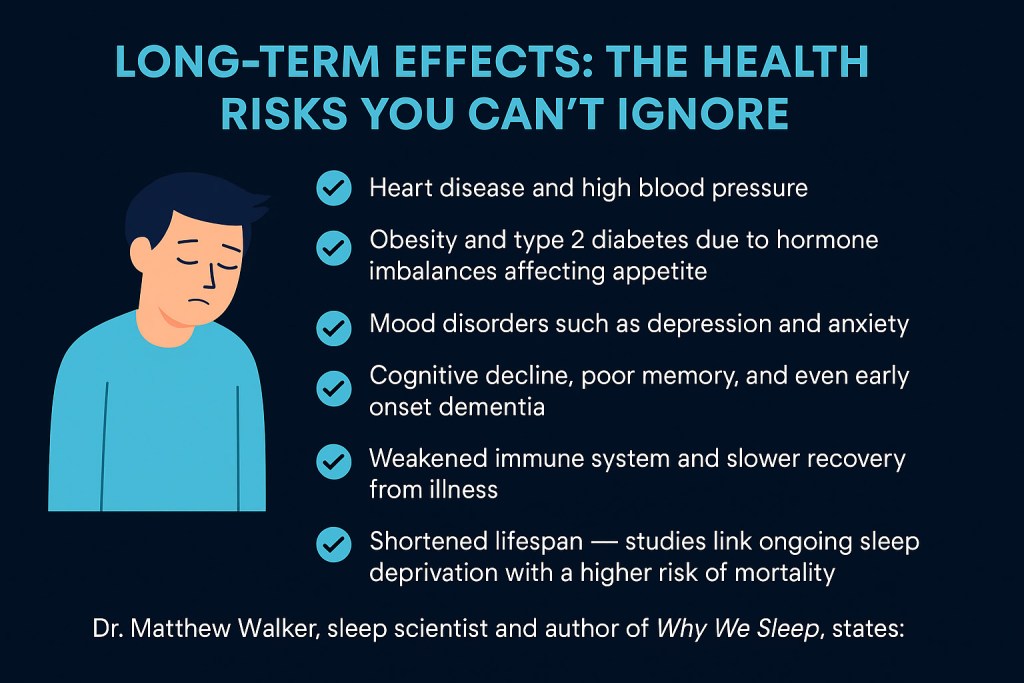
Dr. Matthew Walker, sleep scientist and author of Why We Sleep, states:
“The shorter your sleep, the shorter your life. Sleep is the most effective thing we can do to reset our brain and body health.”
How Much Sleep Do You Really Need?
Sleep needs vary by age and individual factors like stress, physical activity, and overall health. But here are general recommendations by the National Sleep Foundation:
| Age Group | Recommended Sleep |
|---|---|
| Adults (18–64) | 7–9 hours |
| Seniors (65+) | 7–8 hours |
| Teens | 8–10 hours |
| School Age | 9–11 hours |
| Preschoolers | 10–13 hours |
Consistently sleeping less than these recommendations means you’re falling into debt.
How to Calculate Your Sleep Debt
Calculating sleep debt is relatively simple. You only need to compare your actual sleep to your recommended need.
Here’s a basic formula:
Sleep Debt = (Recommended Sleep – Actual Sleep) × Number of Days
Example:
If you need 8 hours per night and only sleep 6 hours from Monday to Friday:
- 2 hours of debt × 5 nights = 10 hours of sleep debt
You may think you can catch up on the weekend by sleeping in, but studies suggest that even longer weekend sleep doesn’t fully compensate for the damage caused during the workweek.
Or You can use Luxe Sleep Calculator to Calculate Your Sleep Debt
Sleep Calculator
Plan your optimal bedtime and wake-up times based on your body’s natural sleep cycles. Wake up refreshed and energized every morning.
Why Use This Calculator?
- Calculate the ideal bedtime based on when you need to wake up
- Find the optimal wake-up time based on when you go to bed
- Work with your body’s natural 90-minute sleep cycles
- Minimize grogginess and maximize morning energy
- Based on sleep science research
Using Tools to Track and Understand Your Sleep
One of the most effective ways to measure and manage your sleep debt is to use a sleep calculator or dedicated sleep platform.
The Luxe Mattresses Sleep Debt Calculator provides science-backed tools and resources that help individuals track their sleep patterns, identify deficits, and adopt actionable strategies for recovery. Their sleep debt content explores not only quantity but quality—something many mainstream apps overlook.
Pairing such tools with wearables like Fitbit, WHOOP, or Oura Ring can give you precise data about your nightly rest, helping you understand both duration and how restorative your sleep actually is.
Can You Repay Sleep Debt?
Yes, but it requires consistency and strategy. You cannot simply sleep 14 hours in one night and expect full recovery. Sleep experts suggest the following:
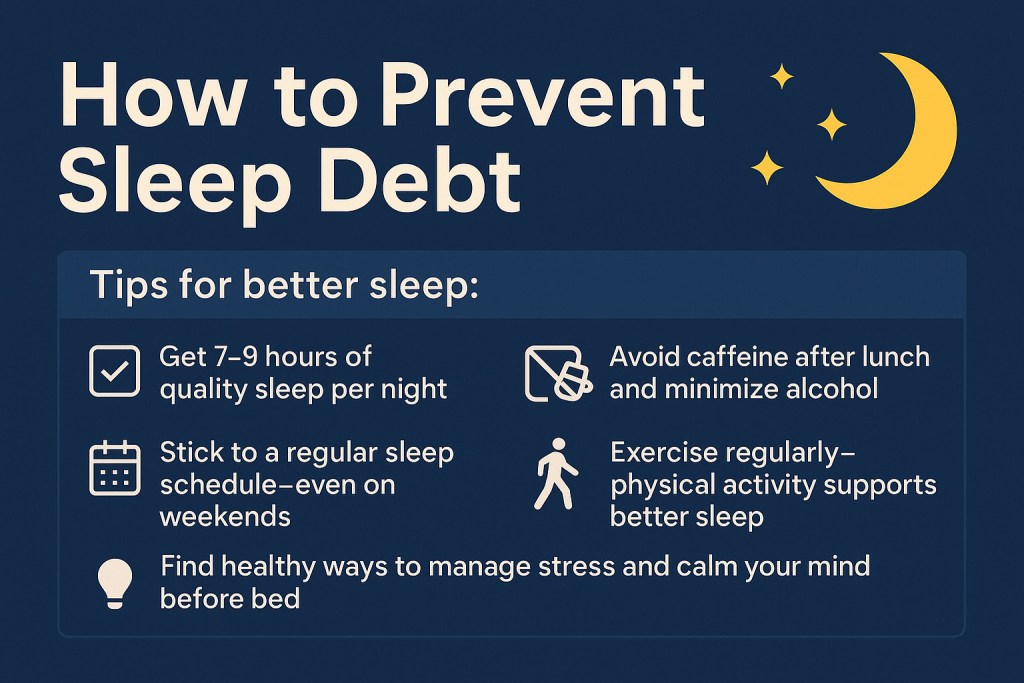
How to repay sleep debt:
- Add 30–90 extra minutes per night over several nights until you feel restored.
- Nap strategically: Short naps (20–30 minutes) during the day can reduce the effects of fatigue.
- Avoid “social jet lag”—going to bed and waking up at wildly different times on weekends.
- Practice good sleep hygiene: Cool, dark rooms, no screens before bed, and consistent bedtimes.
- Listen to your body: If you wake up without an alarm feeling refreshed, you’re likely caught up.
It may take a week or more to fully pay back even one long week of inadequate sleep.
Acute vs Chronic Sleep Debt
It’s important to distinguish between acute and chronic sleep debt.
- Acute Sleep Debt: Missing sleep for a few nights (e.g., during finals, parenting, travel).
- Chronic Sleep Debt: Ongoing under-sleeping over weeks, months, or years.
Chronic debt is more dangerous. It alters hormonal balance, immune function, and metabolism in ways that can persist even after you’ve caught up on sleep.
Comparing Your Sleep to Standards
Let’s say you sleep 6 hours per night. That might seem sufficient, but here’s how that stacks up:
| Sleep Duration | Effect |
|---|---|
| Less than 6 hrs | High risk for chronic illness and mental fog |
| 6–7 hrs | May seem “functional,” but cognitive decline begins |
| 7–9 hrs | Ideal range for optimal mental and physical performance |
| Over 9 hrs | May indicate an underlying health condition |
If you’re sleeping less than 7 hours most nights, you’re statistically at higher risk of hypertension, metabolic issues, and cognitive fatigue.
Additional Context: Sleep and Lifestyle Risks
Sleep doesn’t just affect how you feel, it directly influences lifestyle diseases. For example:
- Obesity: Sleep loss disrupts hunger hormones like leptin and ghrelin, increasing cravings and caloric intake.
- Heart disease: Poor sleep elevates cortisol and inflammation markers.
- Diabetes: Reduced sleep impairs glucose metabolism and insulin sensitivity.
- Mental health: Even one night of poor sleep can worsen depression and anxiety symptoms.
These impacts aren’t minor, they affect quality of life, work performance, and long-term health.
Final Thoughts: Your Sleep Deserves a Priority
Sleep debt is real, measurable, and dangerous when ignored. But it’s also treatable. By calculating your sleep debt, using tools like the Luxe Mattresses Sleep Lab to track progress, and making incremental changes, you can dramatically improve your health, clarity, and mood.
The body is remarkably forgiving when given the chance to heal. Prioritize your sleep tonight—not because you’re tired, but because your life depends on it.
Further Reading & Helpful Resources
- Sleep Foundation – How Much Sleep Do You Really Need?
- CDC – Sleep and Chronic Disease
- Luxe Sleep Lab Tools and Calculators
- How to Manage Insomnia Without Medication

Giulia is a content writer at Luxe Mattresses, where she blends her background in product development with a passion for sleep science and design. A graduate of Imperial College London, Giulia studied Product Development & Entrepreneurship, giving her a strong foundation in how everyday products like mattresses & impact human well-being.
At Luxe, she focuses on writing informative, user-friendly blogs that explore everything from mattress comparisons and sleep quality tips to innovations in bedding technology. Giulia is especially passionate about helping readers make smarter choices when it comes to comfort, health, and bedroom design.

Dr. Arshad Malik is an Associate Professor at Tsinghua University with a PhD from the same institution. He completed his prestigious CAS-TWAS Postdoctoral Research Fellowship at the Chinese Academy of Sciences in Beijing. With over 99 published research papers and 1,000+ academic citations, Dr. Malik brings a deep scientific perspective to topics at the intersection of biomedical science, health, and wellness.
He has previously served as an Associate Professor at the International Islamic University Islamabad (IIUI), and currently contributes as an editorial advisor and content reviewer on health-related topics for Luxe Mattresses & Beds. His insights help bridge the gap between academic research and everyday well-being.