






Sleep is one of the most crucial aspects of health and well-being. But getting a full night of restful sleep isn’t just about lying down; it’s about preparing your mind and body properly. The habits and routines you follow before going to sleep can significantly affect the quality of your rest. In this blog, we’ll cover everything you need to do before going to sleep to ensure better sleep, improved energy, and overall wellness.
Why Preparation Matters Before Going to Sleep?
Many people focus on the number of hours they sleep, but what you do before going to sleep is just as important. A good pre-sleep routine helps:
- Calm your mind
- Signal your body that it’s time to rest
- Improve deep sleep and REM sleep
- Boost overall sleep quality
Without proper habits before going to sleep, even 8 hours of rest may feel insufficient.
Key Habits to Follow Before Going to Sleep
Here are the most effective things you should do before going to sleep:
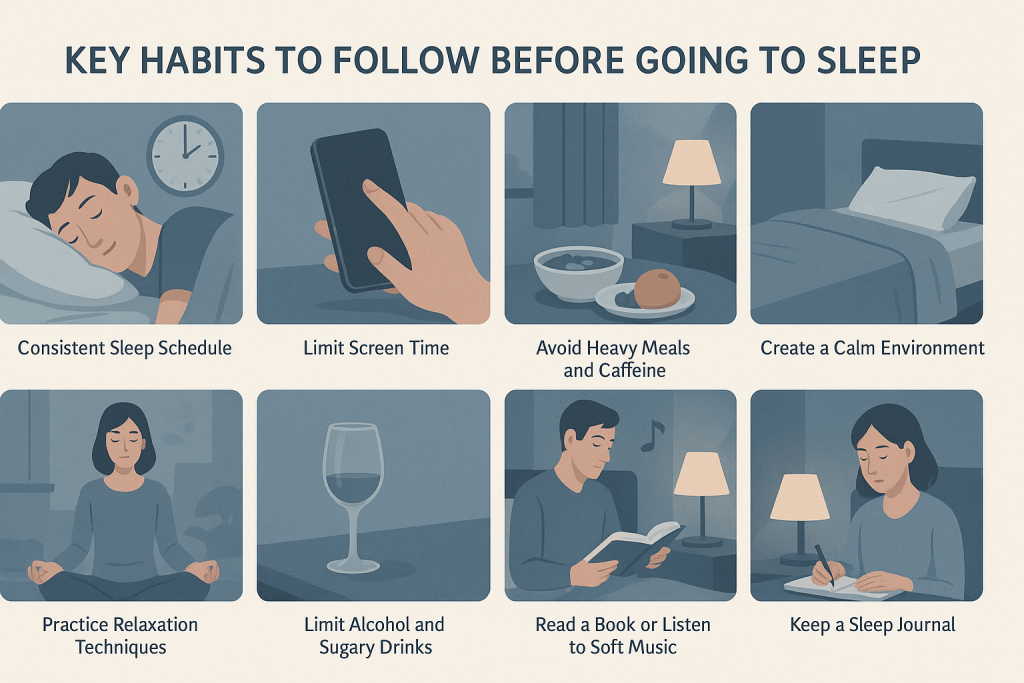
1. Stick to a Consistent Sleep Schedule
Going to bed and waking up at the same time daily trains your body clock. Adults should aim for 7–9 hours, while children and teens need more.
2. Limit Screen Time
Phones, tablets, and TVs emit blue light, which suppresses melatonin, the sleep hormone. Try to avoid screens at least 60 minutes before going to sleep.
3. Avoid Heavy Meals and Caffeine
Eating a heavy meal or drinking caffeine late at night can disrupt your sleep cycle. Eat light dinners and avoid coffee or energy drinks in the evening.
4. Create a Calm Environment
Your bedroom should be cool, dark, and quiet. Invest in comfortable bedding and blackout curtains to make your room sleep-friendly before going to sleep.
5. Practice Relaxation Techniques
Meditation, deep breathing, or gentle stretching can reduce stress levels and help your body prepare for rest. Doing this before going to sleep signals your brain that it’s time to unwind.
6. Limit Alcohol and Sugary Drinks
Alcohol may make you drowsy initially but disrupts deep sleep later. Sugary drinks can spike energy levels, making it harder to fall asleep.
7. Read a Book or Listen to Soft Music
Engaging in calming activities like reading a book or listening to soothing music before going to sleep can help transition your mind into a restful state.
8. Keep a Sleep Journal
Jot down your thoughts or worries in a notebook. Clearing your mind before going to sleep reduces anxiety and prevents restless nights.
Ideal Pre-Sleep Routine Table
| Time Before Bed | Activity | Purpose |
|---|---|---|
| 2–3 hours | Eat light dinner | Prevents indigestion and sleep disturbance |
| 1 hour | Limit screen time | Reduces blue light and improves melatonin production |
| 30 min | Relaxation techniques (meditation, stretching) | Calms mind and body |
| 15 min | Light reading or soft music | Signals the brain it’s time to sleep |
| 5 min | Journaling or reflection | Clears thoughts for better sleep |
This table shows a practical guideline for activities before going to sleep to maximize sleep quality.
Things to Avoid Before Going to Sleep
Even with good habits, certain activities can sabotage your rest:
- Intense Exercise: Working out vigorously right before bed can raise heart rate and delay sleep.
- Stressful Conversations or Work: Avoid stressful topics or work-related tasks before going to sleep.
- Overhydration: Drinking too much water before bed may lead to waking up frequently.
- Bright Lights: Exposure to bright or artificial lights can delay your sleep onset.
How Does Preparing Before Going to Sleep Improve Health?
Following a proper routine before going to sleep affects multiple areas of your health:
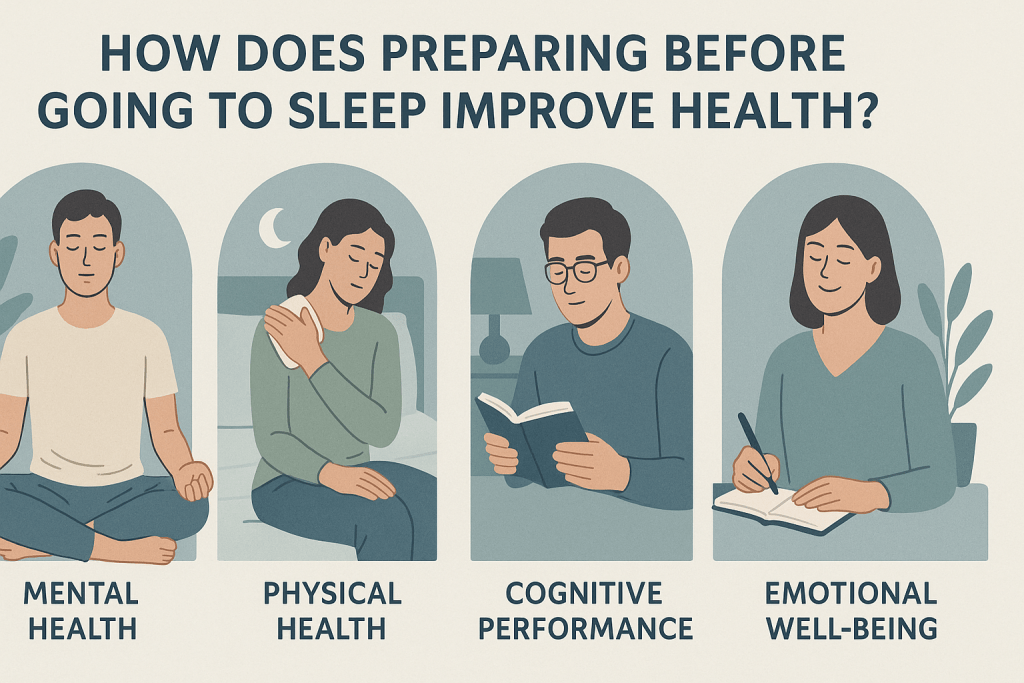
- Mental Health – Reduces stress, anxiety, and depressive symptoms.
- Physical Health – Supports muscle recovery, hormone regulation, and immune function.
- Cognitive Performance – Enhances focus, memory, and creativity.
- Emotional Well-being – Promotes a stable mood and better emotional regulation.
In short, your pre-sleep habits lay the foundation for restorative and deep sleep cycles.
FAQs
The most effective step is creating a calming routine that signals your body it’s time to rest, such as limiting screens and practicing relaxation techniques.
It’s best to avoid phones and other screens at least 1 hour before bedtime to improve melatonin production.
A 30–60 minute routine is sufficient for most people, including relaxation techniques, light reading, and journaling.
Short naps earlier in the day are fine, but avoid long or late afternoon naps as they can interfere with sleep before going to sleep.
Light stretching or yoga can help, but intense workouts should be done earlier in the day.
Conclusion
Preparing your body and mind properly before going to sleep is essential for quality rest. By following a consistent routine, avoiding stimulants, and creating a calming environment, you can significantly improve your sleep quality. Remember, it’s not just about the number of hours you sleep, but also what you do in the hours before going to sleep that counts.
Start small by incorporating one or two of these habits and gradually build a full pre-sleep routine. Over time, your body will thank you with deeper, more restorative sleep, better energy, and improved overall health. Visit our website for more useful sleep guides.

Roman is a seasoned expert in mattress development with over a decade of experience in sleep technology, material innovation, and product engineering. He has played a key role in designing and refining sleep solutions for leading mattress brands, with a deep focus on ergonomics, pressure relief, and sleep quality optimization.
With a background in product design and biomechanics, Roman combines scientific research with hands-on development to create mattresses that address real-world sleep issues—from spinal alignment to temperature regulation. His work has contributed to several award-winning mattress lines known for their comfort, durability, and user satisfaction.