



REM Sleep Behaviour Disorder (RBD): When Dreams Spill into Real Life
We all dream at night, and sometimes those dreams feel incredibly real. But for some people, dreams become physical. They may talk, shout, punch, or kick while asleep, completely unaware of what they are doing. This sleep condition is called REM Sleep Behaviour Disorder, or RBD.
At Luxe Mattresses, we understand that sleep is more than just time spent in bed. It is about restful, restorative sleep in a safe and comfortable environment. That is why we are sharing this guide to help you understand RBD, how it affects your health, and what can be done to manage it.
What Is REM Sleep and Why Is It Important?
Sleep occurs in cycles, and one important stage is called REM sleep, short for Rapid Eye Movement. It usually begins about 90 minutes after you fall asleep and happens several times a night.
During REM sleep:
- Your brain is active, and dreams are vivid.
- Your eyes move rapidly behind closed lids.
- Your muscles are typically paralysed to stop you from moving during dreams. This is called REM atonia.
This muscle paralysis is completely normal and keeps us safe. In people with RBD, however, that muscle control does not work properly. Instead of staying still, they may physically act out what they are dreaming about.
What Happens in RBD?
People with RBD may experience:
- Sudden arm or leg movements during sleep.
- Talking, laughing, shouting, or screaming in their sleep.
- Acting out dreams that may involve running, fighting, or defending themselves.
- Injuries to themselves or their bed partner.
- Vivid, action-packed dreams that often correlate with the physical actions seen during sleep.
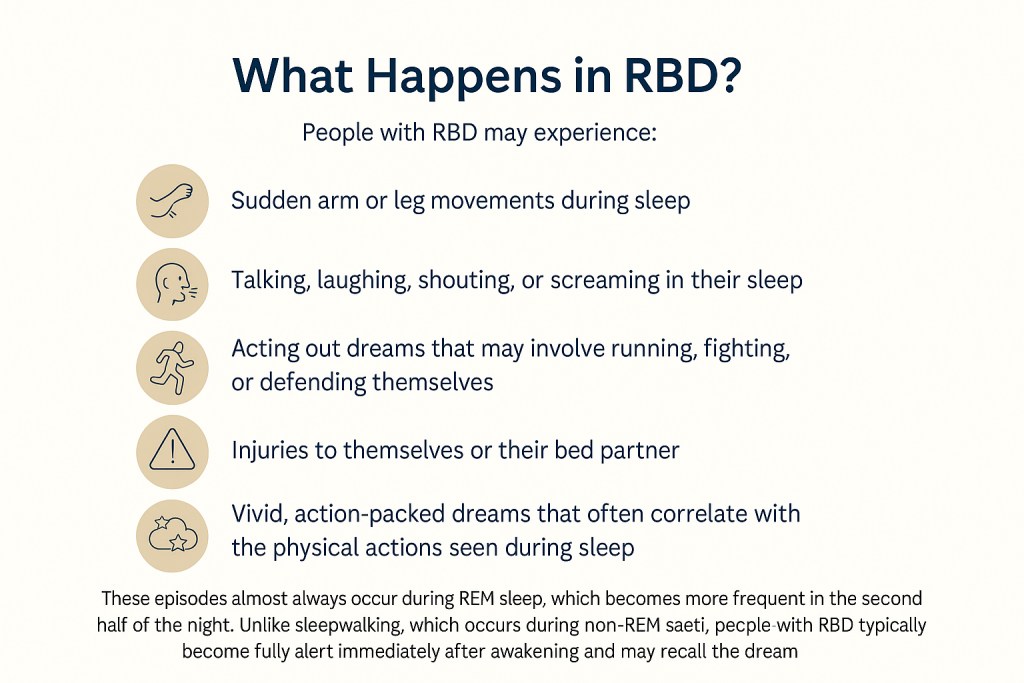
These episodes almost always occur during REM sleep, which becomes more frequent in the second half of the night. Unlike sleepwalking which occurs during non-REM sleep, people with RBD typically become fully alert immediately after awakening and may recall the dream they were experiencing.
Causes of REM Sleep Behavior Disorder
The exact cause of RBD is still being researched, but scientists believe it’s related to dysfunction in the brainstem areas responsible for regulating muscle tone during REM sleep. Several underlying causes and contributing factors have been identified:
1. Neurodegenerative Diseases
There is a well-established link between REM Sleep Behavior Disorder and several neurodegenerative diseases, particularly those characterised by the abnormal buildup of a protein called alpha-synuclein in the brain. These conditions include:
- Parkinson’s Disease A progressive disorder of the nervous system that primarily affects movement. It often begins with tremors, muscle stiffness, and slowed movements, and can later involve cognitive and emotional challenges.
- Dementia with Lewy Bodies A type of progressive dementia marked by visual hallucinations, fluctuating cognition, and symptoms similar to Parkinson’s. It is caused by abnormal protein deposits (Lewy bodies) that disrupt brain function.
- Multiple System Atrophy (MSA) A rare and rapidly progressive neurological disorder affecting the autonomic nervous system (which controls involuntary functions like blood pressure) as well as movement. It shares some features with Parkinson’s but tends to worsen more quickly.
Significantly, research shows that up to 80% of individuals diagnosed with idiopathic RBD, meaning the disorder arises without a known cause, may go on to develop one of these neurodegenerative conditions within 10 to 15 years. This has led many experts to consider RBD not just a sleep disorder, but potentially an early warning sign of neurological decline. Early detection can provide a valuable window for monitoring and preparing for future neurological symptoms.
2. Medications
Certain medications can trigger or exacerbate symptoms of REM Sleep Behaviour Disorder, particularly those that influence serotonin levels or directly affect the central nervous system. These medications may interfere with the brain’s normal control of muscle activity during REM sleep, increasing the likelihood of dream enactment behaivours.
Some of the most commonly associated medications include:
- Selective Serotonin Reuptake Inhibitors (SSRIs) These are widely prescribed antidepressants, including fluoxetine (Prozac) and sertraline (Zoloft), which work by increasing serotonin levels in the brain. While effective for mood disorders, they can disrupt REM sleep and lead to abnormal motor activity during dreaming.
- Tricyclic Antidepressants An older class of antidepressants, such as amitriptyline and nortriptyline. These medications also affect neurotransmitters involved in sleep regulation and have been linked to increased REM sleep disturbances in some individuals.
- Withdrawal from Sedatives Suddenly stopping the use of benzodiazepines (e.g., diazepam, clonazepam) or alcohol can lead to rebound effects in the brain, disrupting normal sleep architecture and increasing the risk of RBD-like symptoms.
If you suspect that a medication may be contributing to unusual sleep behaviors, it’s important to consult with your healthcare provider. Do not stop or change medication doses without professional guidance, as withdrawal or abrupt changes can worsen symptoms or lead to other health complications.
3. Brainstem Lesions or Injuries
Damage to brainstem structures due to trauma, stroke, tumors, or multiple sclerosis can lead to RBD, as these regions play a critical role in REM sleep muscle inhibition.
4. Sleep Disorders and Environmental Factors
- Narcolepsy is occasionally linked with RBD.
- Chronic sleep deprivation
- Alcohol use or withdrawal
- Exposure to certain toxins
How RBD Affects Daily Life
RBD can have a significant impact on the individual and their sleep partner. While the physical behaviors occur during sleep, the consequences are very real:
Physical Injuries
- Punching or kicking walls, furniture, or the bedframe.
- Falling out of bed.
- Accidentally hitting a bed partner.
- Sustained bruises, sprains, fractures, or head trauma.
Emotional and Psychological Effects
- Anxiety about going to sleep.
- Guilt or embarrassment from injuring a partner.
- Strained relationships due to disrupted sleep and fear of episodes.
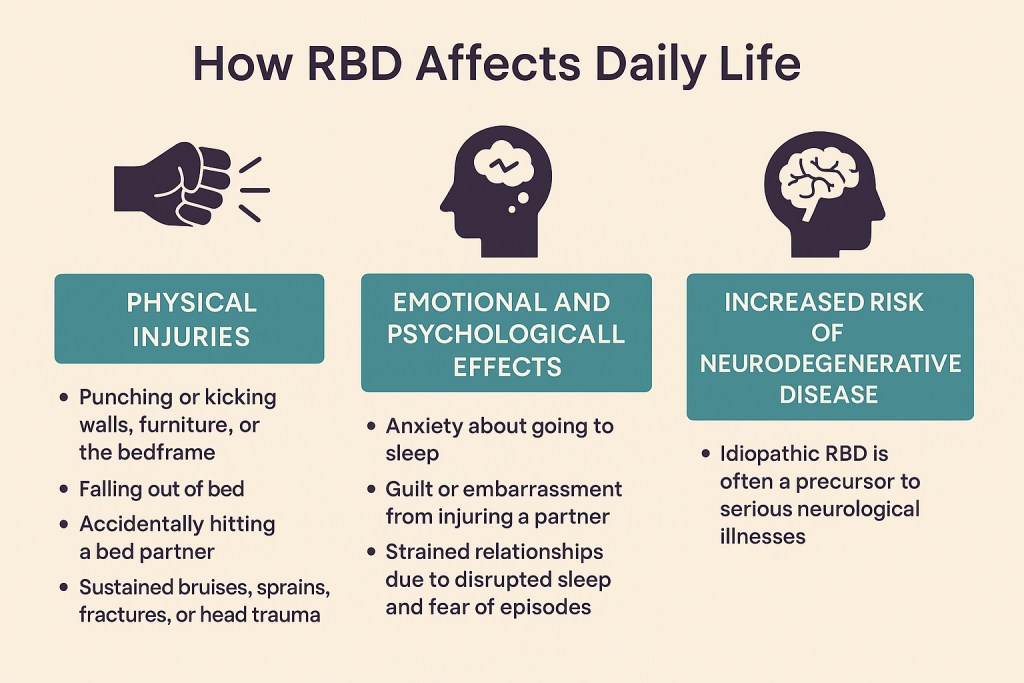
Increased Risk of Neurodegenerative Disease
As mentioned earlier, idiopathic RBD is often a precursor to serious neurological illnesses, sometimes surfacing years before other symptoms arise.
Who Is at Risk for REM Sleep Behavior Disorder?
RBD is more common than many people think, particularly among certain populations. Here are the most notable risk factors:
- Age: Primarily affects people over the age of 50, though younger individuals can also be affected, especially if they have narcolepsy or are taking certain medications.
- Gender: Around 80–90% of diagnosed cases are men.
- Neurological History: Individuals with Parkinson’s, dementia, or MSA are at much higher risk.
- Family History: Genetics may play a role, though familial RBD is rare.
- Medication Use: Use of antidepressants and other psychotropic drugs increases risk.
- Head trauma or brain injuries
It’s important to note that RBD can occur in healthy individuals as well, though these cases are often temporary or linked to medication use.
Use our Sleep Cycle Calculator to discover the best bedtime and ideal sleep duration based on your age.
Sleep Calculator
Plan your optimal bedtime and wake-up times based on your body’s natural sleep cycles. Wake up refreshed and energized every morning.
Why Use This Calculator?
- Calculate the ideal bedtime based on when you need to wake up
- Find the optimal wake-up time based on when you go to bed
- Work with your body’s natural 90-minute sleep cycles
- Minimize grogginess and maximize morning energy
- Based on sleep science research
How REM Sleep Behaviour Disorder Is Diagnosed
Proper diagnosis of RBD typically involves both clinical interviews and sleep laboratory studies. Because many people are unaware of their nighttime behaviours, bed partner observations are often critical to diagnosis.
Steps in Diagnosis:
- Medical History and Symptom Discussion:
- Frequency and nature of sleep-related behaviors.
- Details about medications, neurological history, and family background.
- Sleep Diary or Questionnaires:
- Useful for tracking patterns and triggers over days or weeks.
- Polysomnography (Sleep Study):
- A comprehensive overnight sleep test in a lab.
- Monitors brain waves, muscle activity, eye movements, heart rate, and breathing.
- Video recording is often used to capture abnormal movements.
- Neurological Examination:
- Screening for early signs of Parkinson’s or related conditions.
Early and accurate diagnosis is essential, not just to manage symptoms but also to monitor for the possible development of neurodegenerative disease.
Treatment and Management of RBD
While there is no known cure for REM Sleep Behavior Disorder, effective treatments are available to manage symptoms and reduce risk of injury. Treatment often involves a combination of medication, lifestyle adjustments, and environmental safety changes.
1. Medications
- Clonazepam (Klonopin):
- A long-acting benzodiazepine.
- Considered the most effective and commonly prescribed drug for RBD.
- Reduces dream enactment behaviors in most patients.
- Side effects include drowsiness, confusion, and increased fall risk in elderly.
- Melatonin:
- A natural hormone that regulates the sleep-wake cycle.
- Often used as a safer alternative to clonazepam, especially in older adults.
- May take several weeks to show benefits but is generally well tolerated.
- Others:
- Pramipexole and donepezil (used in Parkinson’s and Alzheimer’s) have shown some benefit in specific cases.
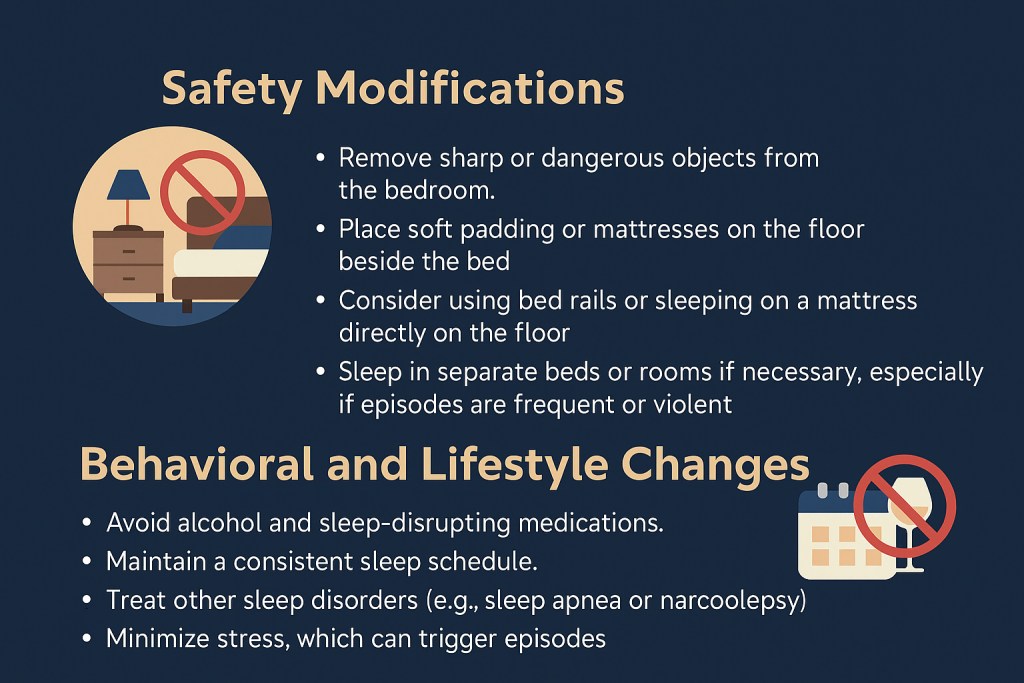
2. Safety Modifications
Making the sleep environment safe is critical to prevent injury:
- Remove sharp or dangerous objects from the bedroom.
- Place soft padding or mattresses on the floor beside the bed.
- Consider using bed rails or sleeping on a mattress directly on the floor.
- Sleep in separate beds or rooms if necessary, especially if episodes are frequent or violent.
3. Behavioural and Lifestyle Changes
- Avoid alcohol and sleep-disrupting medications.
- Maintain a consistent sleep schedule.
- Treat other sleep disorders (e.g., sleep apnea or narcolepsy).
- Minimize stress, which can trigger episodes.
Living With RBD: Long-Term Considerations
Living with REM Sleep Behavior Disorder often requires more than just treating symptoms it involves long-term vigilance and possibly ongoing monitoring for neurological decline. Since idiopathic RBD is strongly linked to Parkinsonian disorders, individuals diagnosed with it may undergo periodic neurological evaluations to detect early signs.
Tips for Long-Term Management:
- Establish a close relationship with a sleep specialist or neurologist.
- Keep a detailed sleep journal to track patterns or changes.
- Educate bed partners and family members about the condition.
- Stay informed about new research and treatment advances.
Final Thoughts: A Better Night’s Sleep Starts with Understanding
RBD is a serious sleep condition, but it does not have to control your life. With the right knowledge, care, and sleeping environment, people with RBD can still enjoy safe, peaceful nights.
At Luxe Mattresses, we believe every person deserves restful sleep. Our mattresses are designed for stability, comfort, and support, helping you and your partner feel secure no matter how you sleep. If you or a loved one has experienced unusual sleep movements or vivid dreams followed by physical activity, speak with a doctor. And make sure your bed is equipped to support your sleep journey safely.
Better sleep starts here.

Giulia is a content writer at Luxe Mattresses, where she blends her background in product development with a passion for sleep science and design. A graduate of Imperial College London, Giulia studied Product Development & Entrepreneurship, giving her a strong foundation in how everyday products like mattresses & impact human well-being.
At Luxe, she focuses on writing informative, user-friendly blogs that explore everything from mattress comparisons and sleep quality tips to innovations in bedding technology. Giulia is especially passionate about helping readers make smarter choices when it comes to comfort, health, and bedroom design.

Dr. Arshad Malik is an Associate Professor at Tsinghua University with a PhD from the same institution. He completed his prestigious CAS-TWAS Postdoctoral Research Fellowship at the Chinese Academy of Sciences in Beijing. With over 99 published research papers and 1,000+ academic citations, Dr. Malik brings a deep scientific perspective to topics at the intersection of biomedical science, health, and wellness.
He has previously served as an Associate Professor at the International Islamic University Islamabad (IIUI), and currently contributes as an editorial advisor and content reviewer on health-related topics for Luxe Mattresses & Beds. His insights help bridge the gap between academic research and everyday well-being.

Roman is a seasoned expert in mattress development with over a decade of experience in sleep technology, material innovation, and product engineering. He has played a key role in designing and refining sleep solutions for leading mattress brands, with a deep focus on ergonomics, pressure relief, and sleep quality optimization.
With a background in product design and biomechanics, Roman combines scientific research with hands-on development to create mattresses that address real-world sleep issues—from spinal alignment to temperature regulation. His work has contributed to several award-winning mattress lines known for their comfort, durability, and user satisfaction.