

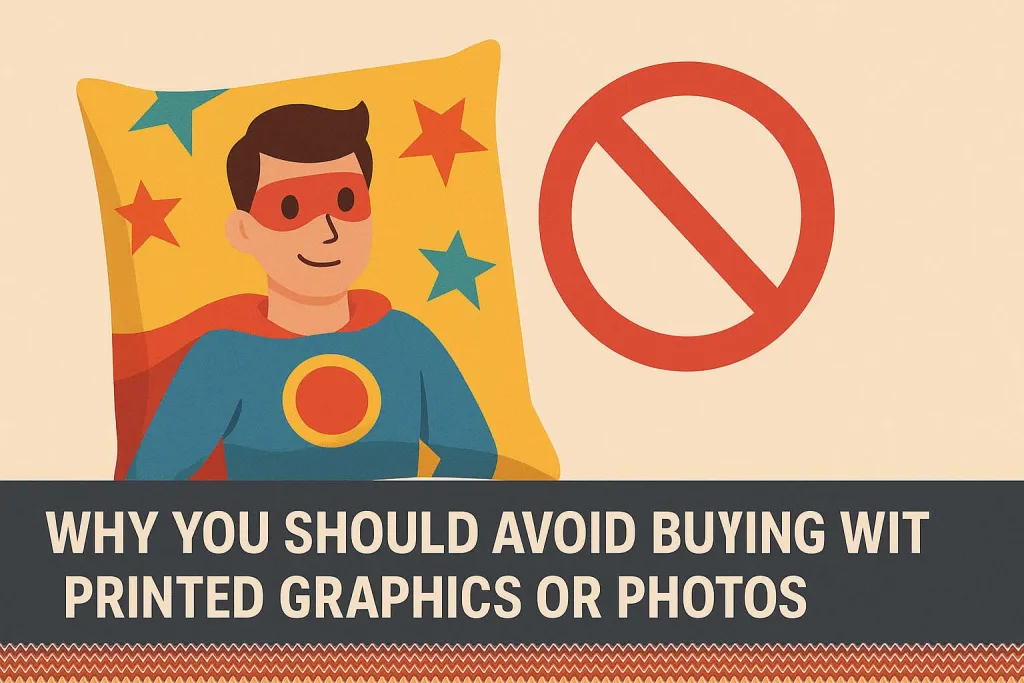
Pillows are meant to provide comfort, support, and restful sleep. They are an essential part of our everyday lives, often in close contact with our face and skin for hours at a time. However, not all pillows are created with your health and well-being in mind. In particular, pillows with printed photos, characters, or colourful graphics may carry hidden risks that are not immediately obvious to consumers.
This article explores the potential dangers of printed pillows, the chemicals involved in producing them, and why they might not be the best choice for your home. We’ll also look at what you should consider before buying a pillow and how to make safer, more informed decisions.
The Appeal of Printed Pillows
Printed pillows, often adorned with photos, cartoon characters, floral prints, or quotes, are popular among children, teenagers, and even adults. These designs are used to:
- Personalize a bedroom or living room
- Appeal to fans of certain shows or celebrities
- Provide a colorful, vibrant aesthetic
However, behind the pretty visuals is a manufacturing process that often involves synthetic fabrics and chemical-laden printing methods. While not all printed pillows are dangerous, many budget or mass-produced options can introduce toxins into your home.
How Are Printed Pillows Made?
Printed pillows are generally made using one of the following methods:
- Sublimation Printing: Involves transferring dye onto fabric using heat. Requires polyester-based materials.
- Screen Printing: Uses ink and mesh stencils to apply multiple layers of paint to fabric.
- Digital Direct-to-Garment (DTG) Printing: Sprays ink directly onto the fabric and uses heat to set it.
These processes rely heavily on chemicals to ensure colour durability, vibrancy, and wash resistance.
Common Chemicals in Printed Fabrics
Here are some of the key substances used in textile printing, particularly on synthetic pillows:
- Formaldehyde: Used to fix dyes and prevent fading. A known skin irritant and carcinogen.
- Phthalates: Found in PVC-based inks. Linked to hormone disruption.
- Heavy Metals: Lead, cadmium, and mercury may be present in pigments or inks.
- Acrylic Resins and Binders: Used to make ink adhere to fabric. May cause respiratory irritation.
- Solvents: Such as toluene and benzene, which emit volatile organic compounds (VOCs).
These chemicals are not always declared on product labels and are more likely to be present in unregulated or imported pillows.
Health Risks of Printed Pillows
1. Skin Irritation and Allergies
Sleeping with your face against printed fabric for hours every night can lead to:
- Contact dermatitis
- Rashes or redness
- Itchy or inflamed skin
This is especially true for people with sensitive skin, eczema, or children whose skin barrier is thinner and more absorbent.
2. Respiratory Problems
Many inks and resins used in printed pillows emit VOCs that can be inhaled during sleep. This can cause:
- Wheezing or coughing
- Asthma flare-ups
- Long-term respiratory sensitivity
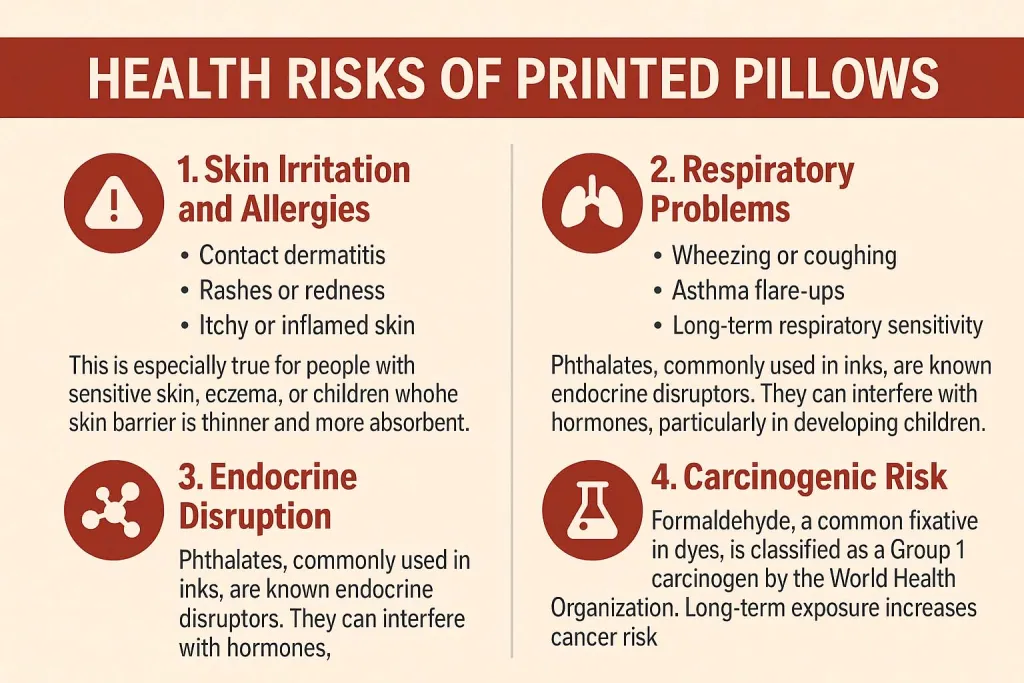
3. Endocrine Disruption
Phthalates, commonly used in inks, are known endocrine disruptors. They can interfere with hormones, particularly in developing children.
4. Carcinogenic Risk
Formaldehyde, a common fixative in dyes, is classified as a Group 1 carcinogen by the World Health Organisation. Long-term exposure increases cancer risk.
Real-Life Examples and Reports
- A 2021 case reported by a pediatric dermatologist in the UK involved a 4-year-old child who developed a persistent facial rash. After ruling out food and skincare allergens, the family discovered the rash was caused by the child’s polyester pillow featuring printed cartoon characters. The rash subsided within a week of replacing the pillow with an organic cotton alternative.
- On Amazon, dozens of users have reviewed printed pillows with complaints like: “Smelled like chemicals,” “Caused my daughter’s skin to break out,” and “Had to throw it away after one night.” These aren’t isolated experiences, especially among cheaper imported products.
Environmental Impact of Printed Pillows
Printed pillows often involve unsustainable practices:
- Synthetic Fabrics: Most printed pillows are made of polyester, a plastic-based material derived from petroleum.
- Water Waste: Textile dyeing and printing are among the top industrial users of water globally.
- Chemical Pollution: Dyes and printing chemicals can leach into local waterways during production.
- Non-Biodegradable: These pillows take hundreds of years to break down and contribute to landfill waste.
What to Look for Before Buying a Pillow
To make a safer and more eco-friendly choice, consider the following:
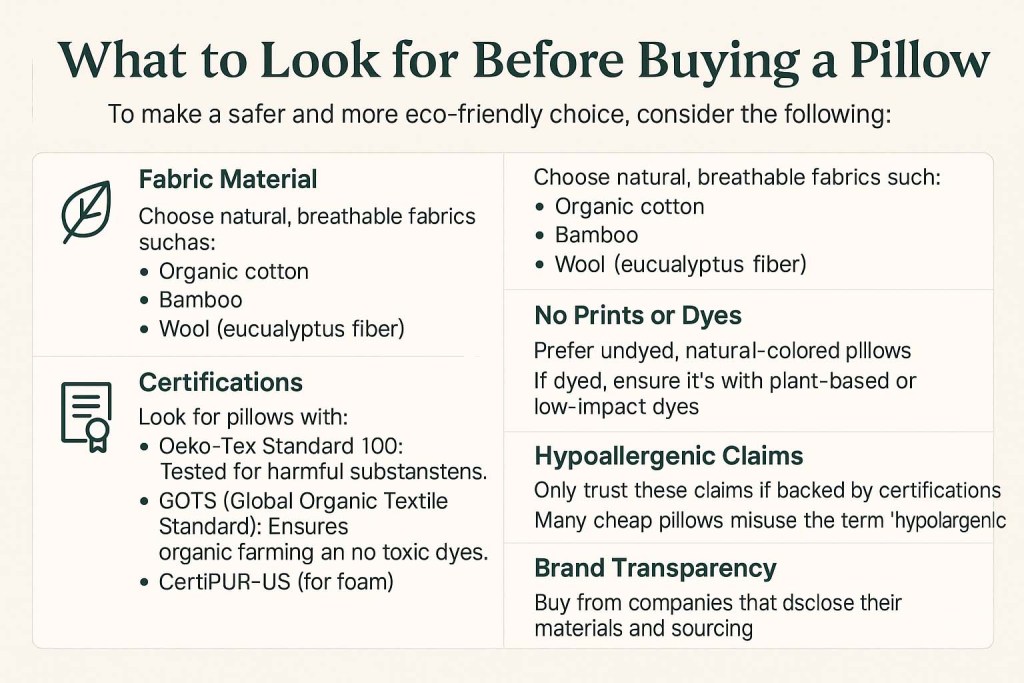
1. Fabric Material
- Choose natural, breathable fabrics such as:
- Organic cotton
- Bamboo
- Wool
- Tencel (eucalyptus fiber)
2. Certifications
Look for pillows with:
- Oeko-Tex Standard 100: Tested for harmful substances.
- GOTS (Global Organic Textile Standard): Ensures organic farming and no toxic dyes.
- CertiPUR-US (for foam): Free from formaldehyde, phthalates, and VOCs.
3. No Prints or Dyes
- Prefer undyed, natural-coloured pillows
- If dyed, ensure it’s with plant-based or low-impact dyes
4. Smell Test
- A strong chemical odor is a red flag
- If it smells like paint, plastic, or chemicals, avoid it
5. Hypoallergenic Claims
- Only trust these claims if backed by certifications
- Many cheap pillows misuse the term “hypoallergenic”
6. Brand Transparency
- Buy from companies that disclose their materials and sourcing
- Avoid generic or unbranded products with no material information
Safer Alternatives to Printed Pillows
If you want a healthy, non-toxic sleep environment:
- Organic Cotton Pillows: Soft, breathable, and chemical-free
- Natural Latex Pillows: Great support and naturally resistant to dust mites
- Kapok Pillows: Plant-based and biodegradable
- Wool Pillows: Naturally antimicrobial and flame-resistant
You can always add aesthetic touches with removable pillowcases that meet safety standards instead of compromising the core product.
Final Thoughts
Pillows are not just decorative pieces, they are intimate, functional sleep tools that affect our daily health. While printed pillows might look attractive or entertain your child, they often come with a hidden cost: exposure to toxic chemicals, allergic reactions, poor breathability, and negative environmental impact.
Always prioritize health, comfort, and sustainability over appearance when it comes to bedding. Choose high-quality, certified, and natural materials that support your well-being and the planet.
A pillow should help you sleep soundly, not come with unknown health risks printed on its surface.

Roman is a seasoned expert in mattress development with over a decade of experience in sleep technology, material innovation, and product engineering. He has played a key role in designing and refining sleep solutions for leading mattress brands, with a deep focus on ergonomics, pressure relief, and sleep quality optimization.
With a background in product design and biomechanics, Roman combines scientific research with hands-on development to create mattresses that address real-world sleep issues—from spinal alignment to temperature regulation. His work has contributed to several award-winning mattress lines known for their comfort, durability, and user satisfaction.