



For years, I thought I had a good understanding of sleep. After all, I was getting around 7 to 8 hours most nights, so why did I still feel tired during the day? It wasn’t until I started using a sleep calculator that I realised I was missing a critical part of the equation the timing of my sleep cycles.
Let me walk you through how this discovery changed everything for me, and how it might just do the same for you.
We Think We’re Sleeping Enough – But Are We?
If you’re anything like me, your evenings are full of well-meaning plans that somehow dissolve into a late-night scroll through social media or just “one more” episode on Netflix. We tell ourselves we’re fine as long as we get 7–8 hours. But what we often overlook is how and when we’re actually sleeping.
I used to fall asleep anywhere between 11:30 PM and 1:00 AM, depending on how the day went. My alarm, however, didn’t care it screamed at me at 6:30 AM like clockwork. On paper, I was sleeping “enough.” In reality, I was a walking zombie by midday.
And I’m not alone. According to the Sleep Foundation, inconsistent bedtimes and screen exposure before bed can disrupt your circadian rhythm, making you feel more tired even if you log enough hours.
The problem wasn’t just how long I was sleeping it was when I was waking up within my sleep cycle. Research shows that waking during deep sleep (slow-wave sleep) can result in significant grogginess and impaired mental performance also known as sleep inertia.
It wasn’t until I started aligning my bedtime with full 90-minute sleep cycles that I began to wake up feeling like myself again.
Understanding Sleep Cycles
The human brain goes through several stages of sleep, roughly every 90 minutes. These include light sleep, deep sleep, and REM (the dreaming stage). Ideally, you want to wake up at the end of one of these 90-minute cycles not in the middle.
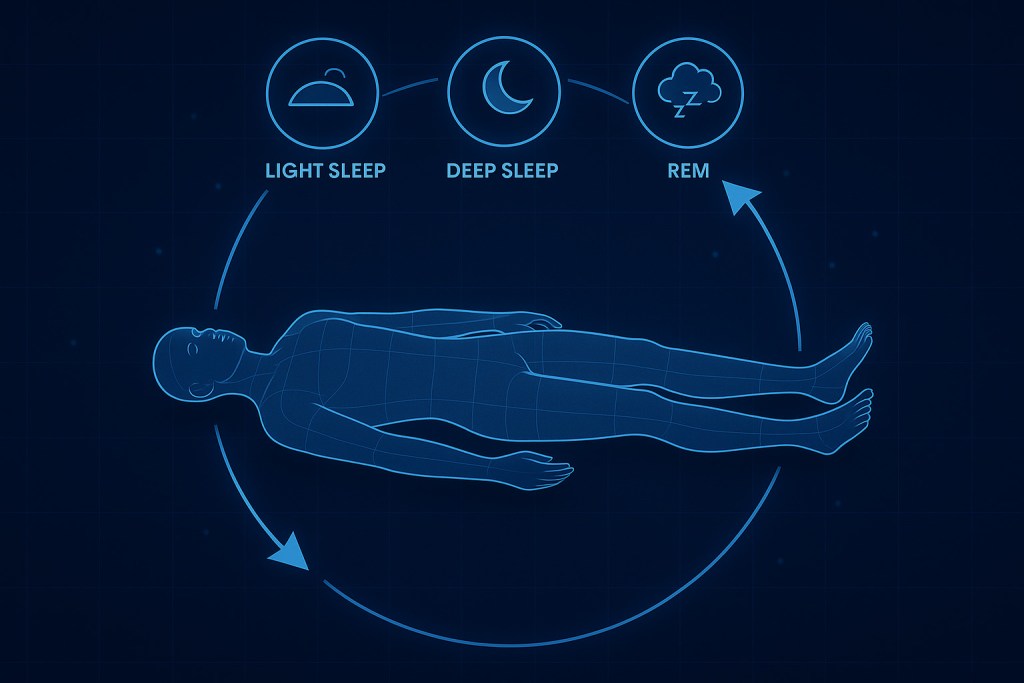
Waking up during deep sleep leaves you groggy, unfocused, and sluggish. But if you wake at the end of a cycle, you’ll often feel clear-headed and refreshed, even with slightly fewer hours of sleep.
This is where a sleep calculator comes in.
What Is a Sleep Calculator?
A sleep calculator is a simple tool that tells you what time to go to bed based on when you need to wake up, or vice versa. It calculates backward in 90-minute increments and adds an average of 15 minutes to fall asleep.
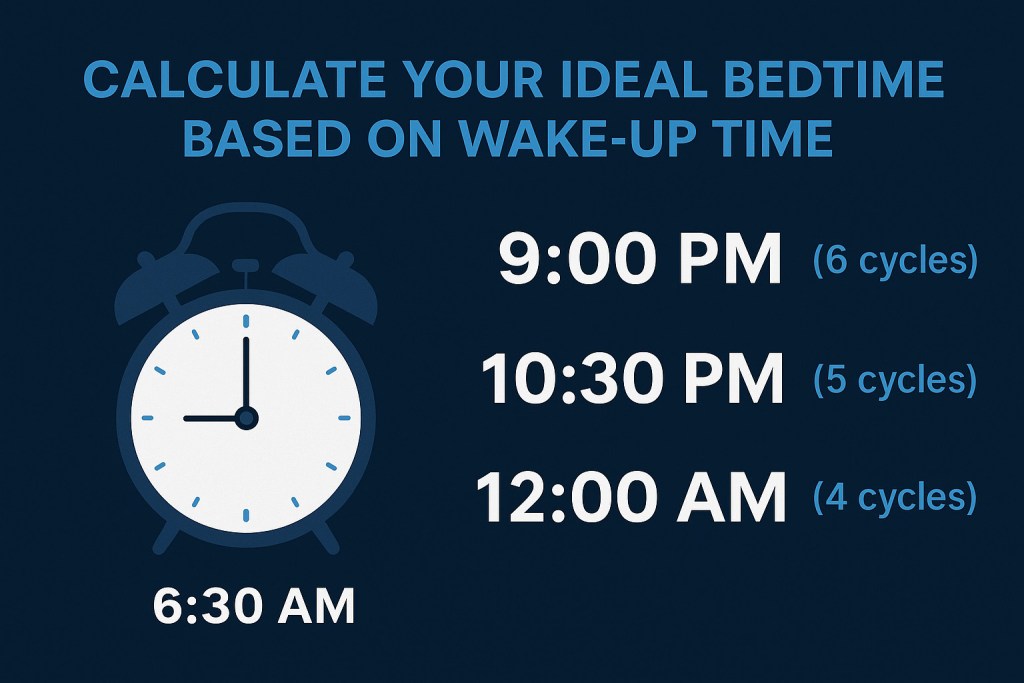
Here’s an example: If you need to wake up at 6:30 AM, a sleep calculator might suggest going to bed at:
- 9:00 PM (6 cycles)
- 10:30 PM (5 cycles)
- 12:00 AM (4 cycles)
And so on. The idea is to complete full cycles and wake at their natural end.
My Personal Experience
When I began using a sleep calculator, I committed to trying it out for two weeks. I chose to aim for five full cycles, about 7.5 hours and adjusted my bedtime to 10:30 PM to wake up at 6:00 AM.
The first few nights were rough. I was so used to staying up late that falling asleep earlier felt unnatural. But by night four, I started waking up minutes before my alarm. I didn’t feel groggy. I wasn’t reaching for coffee the second I opened my eyes. I felt genuinely rested.
That change gave me a new level of control over my day. I could focus better, my energy didn’t crash in the afternoon, and my mood was more stable. It was subtle at first, but undeniable.
Real-Life Habits That Disrupt Sleep
We often underestimate the small habits that disrupt our sleep quality and schedule. I’ve worked with clients who think they’re sleeping fine but experience constant fatigue. When we dig deeper, it’s usually due to one or more of the following:
- Late-night TV or phone use (blue light delays melatonin production)
- Eating large meals or caffeine late in the day
- Inconsistent bedtimes and wake-up routines
- Catching up on sleep on weekends, throwing off weekday rhythm
These things don’t seem like a big deal, until they become patterns. And then we wonder why our energy, focus, and mood are off.
The Long-Term Cost of Poor Sleep Timing
Sleep isn’t just about rest. It’s when your body repairs tissues, balances hormones, and clears out toxins from your brain. Missing proper sleep cycles or waking during the wrong phase consistently can lead to:
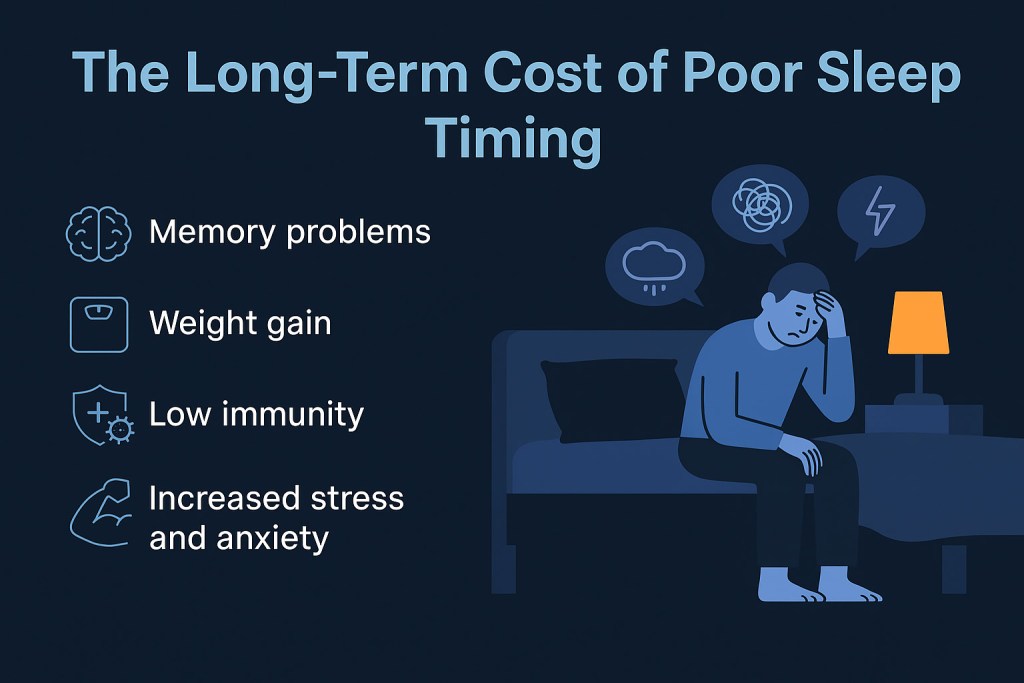
- Memory problems
- Weight gain
- Low immunity
- Increased stress and anxiety
For years, I didn’t connect the dots between my inconsistent sleep and my struggles with concentration and mood. Once I did, the change was not just noticeable, it was life-changing.
Global Sleep Struggles
Having worked with clients across the UK, US, Canada, India, and Pakistan, I’ve seen how sleep habits vary based on lifestyle and culture. But the struggle is universal.
In the UK, the lack of daylight during winter can confuse the body’s circadian rhythm. Many people oversleep or find themselves groggy throughout the day despite long rest periods.
In Australia, the abundance of daylight and active lifestyles often push bedtimes later, especially in the summer months. Social events and late dinners mean many aren’t getting consistent sleep duration.
In India and Pakistan, the combination of urban noise pollution, screen-heavy evening routines, and late-night meals creates a perfect storm for poor sleep hygiene. These environments make it hard to maintain a steady bedtime.
In Canada and the US, the biggest culprits tend to be screen exposure at night and irregular work schedules, especially among shift workers. Blue light from phones and tablets delays melatonin production, pushing sleep times later and disrupting natural cycles.
But in every case, when people begin aligning their sleep using a sleep calculator and committing to consistent cycles, results improve sometimes dramatically.
Best Sleep Calculator to Calculate Your Ideal Bedtime
Here are a few tools I’ve used or recommended:
Sleep Calculator
Plan your optimal bedtime and wake-up times based on your body’s natural sleep cycles. Wake up refreshed and energized every morning.
Why Use This Calculator?
- Calculate the ideal bedtime based on when you need to wake up
- Find the optimal wake-up time based on when you go to bed
- Work with your body’s natural 90-minute sleep cycles
- Minimize grogginess and maximize morning energy
- Based on sleep science research
You don’t need a smartwatch or expensive sleep tracker. You just need consistency — and to give your body the chance to work with its natural biology.
My Advice If You’re Just Getting Started
- Pick a consistent wake-up time and work backwards using a sleep calculator.
- Don’t try to change everything overnight. Start by adjusting your bedtime by 15–30 minutes.
- Create a wind-down routine: no screens, dim lights, maybe some reading or stretching.
- Avoid caffeine after 2 PM. It really does linger longer than we think.
If you stay consistent for even just a week, you’ll likely notice:
- Easier mornings
- More energy during the day
- Fewer cravings for sugar or caffeine
- Better focus and mood
Final Thoughts
You don’t have to be perfect with your sleep every night. But if you want to feel better, think clearer, and protect your long-term health, the timing of your sleep is just as important as the duration.
I learned this the hard way by burning out slowly without realising it. But once I discovered sleep calculators and aligned my schedule with my natural rhythm, things changed.
If you’re tired of being tired, start tonight. Calculate your ideal bedtime. Try it for a week. Your body will thank you.
And if you have questions or want help adjusting your schedule, I’m here to help.

Roman is a seasoned expert in mattress development with over a decade of experience in sleep technology, material innovation, and product engineering. He has played a key role in designing and refining sleep solutions for leading mattress brands, with a deep focus on ergonomics, pressure relief, and sleep quality optimization.
With a background in product design and biomechanics, Roman combines scientific research with hands-on development to create mattresses that address real-world sleep issues—from spinal alignment to temperature regulation. His work has contributed to several award-winning mattress lines known for their comfort, durability, and user satisfaction.