







Introduction
Sleep is one of the most important parts of our daily routine, yet millions of people struggle with sleepless nights, tossing and turning, or waking up feeling tired. If you’ve been searching for natural remedies to improve rest, you may have come across magnesium. But does magnesium help you sleep? Or is it just another wellness trend that sounds good on paper but doesn’t actually work?
In this blog, we’ll dive deep into the role of magnesium, explain how it works in the body, and uncover whether magnesium for sleep really makes a difference.
Why Does Sleep Matter So Much?
Before we discuss magnesium for sleep, let’s quickly highlight why quality rest is essential:
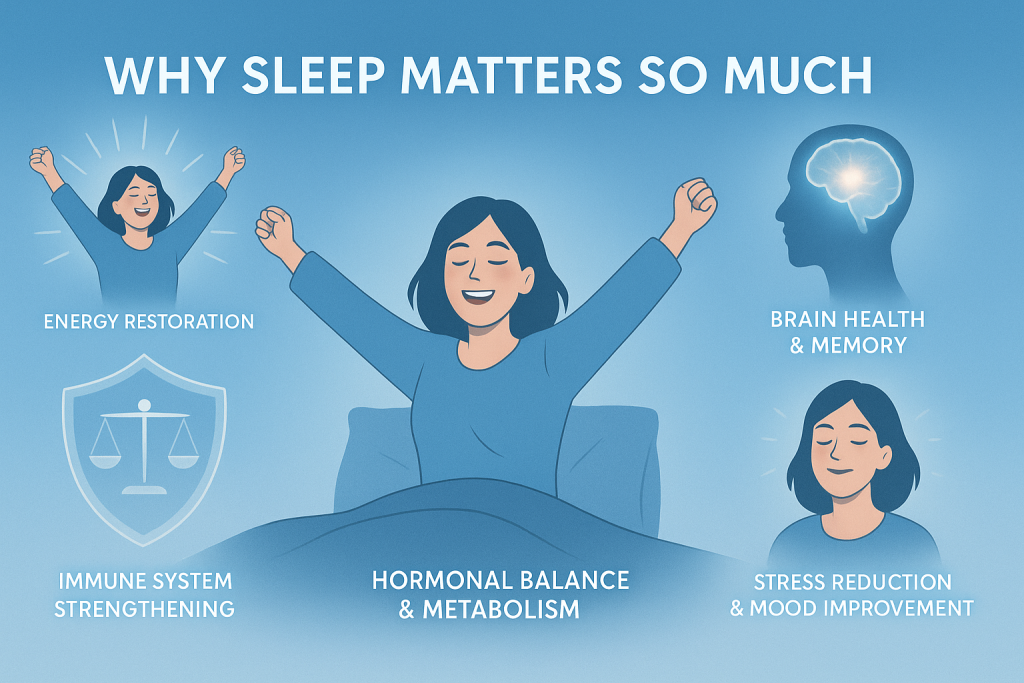
- Restores energy and repairs tissues
- Supports brain health and memory
- Strengthens the immune system
- Balances hormones and metabolism
- Reduces stress and improves mood
When you’re not sleeping well, everything from your concentration to your long-term health suffers. That’s why many people turn to natural remedies like magnesium.
What Is Magnesium?
Magnesium is a mineral found in your body and in many foods, such as leafy greens, nuts, seeds, and whole grains. It’s involved in more than 300 biochemical processes, including energy production, nerve function, and muscle relaxation.
One of magnesium’s most talked-about roles is its ability to promote calmness and relaxation, making people wonder: does magnesium help you sleep better at night?
How Magnesium Works for Sleep?
Research suggests that magnesium for sleep may be effective because of its impact on the nervous system and brain chemistry. Here’s how it helps:
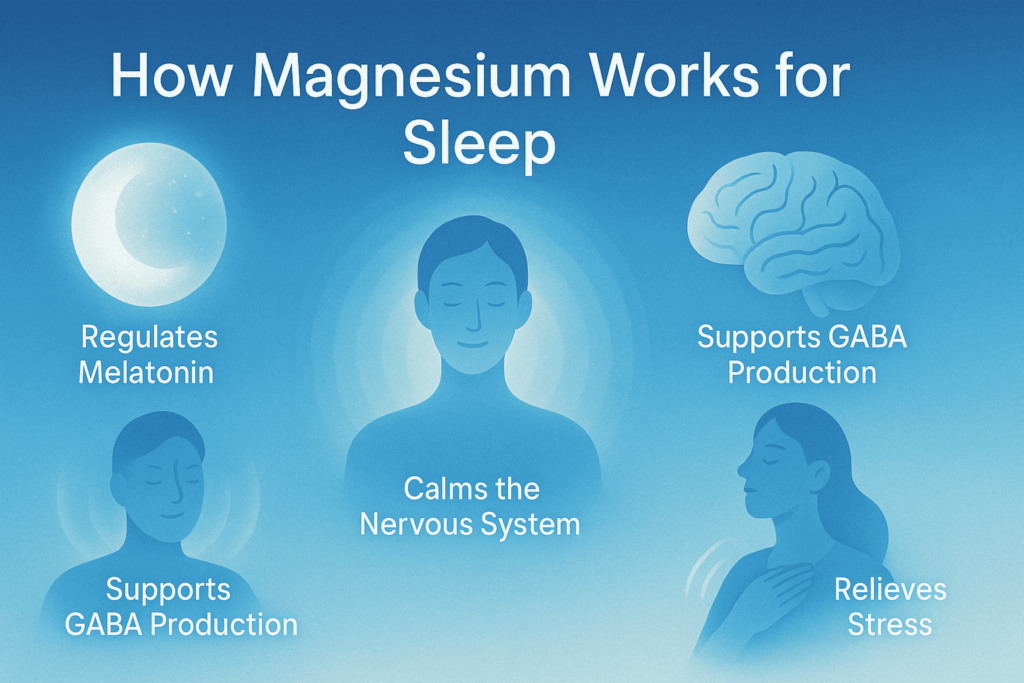
- Regulates Melatonin: Magnesium helps control melatonin, the hormone that signals when it’s time to sleep.
- Calms the Nervous System: It activates the parasympathetic nervous system, which helps the body relax.
- Supports GABA Production: Magnesium increases GABA (gamma-aminobutyric acid), a neurotransmitter that reduces brain activity, allowing you to fall asleep easier.
- Relieves Stress: Since magnesium helps regulate cortisol, the stress hormone, it can reduce bedtime anxiety.
So yes, there’s scientific reasoning to support that magnesium for sleep may actually improve the quality of your sleep.
Magnesium Sources and Their Sleep Benefits
| Source of Magnesium | Magnesium Content (approx.) | How It Supports Sleep |
|---|---|---|
| Spinach (1 cup cooked) | 157 mg | Relaxes muscles & calms nerves |
| Almonds (1 oz) | 80 mg | Helps regulate melatonin |
| Pumpkin seeds (1 oz) | 168 mg | Boosts GABA activity |
| Dark chocolate (1 oz) | 64 mg | Improves mood & relaxation |
| Magnesium supplements | Varies by product | Direct support for better sleep |
Signs You Might Be Low in Magnesium
Before jumping to supplements, it’s helpful to know if you’re lacking this mineral. Low levels can cause:
- Muscle cramps or spasms
- Fatigue or weakness
- Trouble sleeping
- Anxiety or irritability
- Headaches
If these symptoms sound familiar, then you may benefit from increasing magnesium for sleep naturally or through supplements.
Does Magnesium Help You Sleep? Research Findings
This is the big question: does magnesium help you sleep? According to multiple studies:
- People with insomnia who took magnesium reported falling asleep faster and waking up less during the night.
- Older adults with magnesium deficiency noticed improved sleep quality after supplementation.
- Those dealing with stress and anxiety reported that magnesium for sleep worked well to calm their minds before bed.
While results vary, the overall evidence points to magnesium having a positive effect on rest especially for those with low levels.
Best Forms of Magnesium for Sleep
If you’re considering supplementation, not all types are equal. The best magnesium for sleep includes:
- Magnesium Glycinate: Gentle on the stomach, highly absorbable, and great for relaxation.
- Magnesium Citrate: Good absorption, but may have a mild laxative effect.
- Magnesium Threonate: Known for brain benefits, which may also support deep sleep.
- Magnesium Oxide: Less absorbable, but sometimes used in higher doses.
Choosing the right type depends on your needs and digestive comfort.
Benefits of Magnesium for Sleep
- Calms nerves and reduces stress
- Improves melatonin regulation
- Relaxes muscles for easier rest
- Reduces nighttime awakenings
- Supports deeper, restorative sleep
Natural Ways to Boost Magnesium for Better Rest
If supplements aren’t your first choice, you can improve magnesium intake naturally:
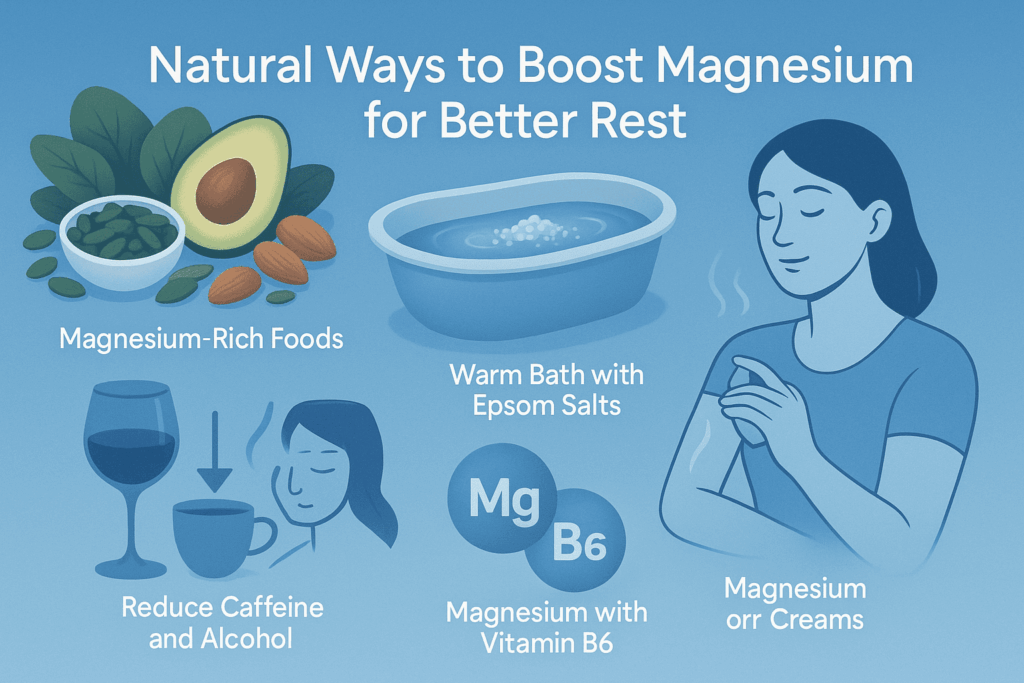
- Eat Magnesium-Rich Foods – Spinach, avocado, pumpkin seeds, and almonds.
- Take a Warm Bath with Epsom Salts – Absorbs magnesium through the skin.
- Try Magnesium Oil or Creams – Topical options can aid relaxation.
- Reduce Caffeine and Alcohol – Both deplete magnesium in the body.
- Pair Magnesium with Vitamin B6 – Helps the body absorb magnesium more effectively.
These lifestyle tips can make a big difference in your sleep quality.
FAQs
Not instantly, but many people notice improvements within a few days to a couple of weeks of consistent use.
About 30 minutes before bedtime is ideal.
Yes, excessive magnesium can lead to diarrhea, nausea, or low blood pressure. Stick to recommended doses.
Only under medical advice, since children’s needs differ from adults.
Pumpkin seeds, leafy greens, almonds, and dark chocolate are excellent sources,
Final Thoughts: Does Magnesium Help You Sleep?
So, the answer is yes, does magnesium help you sleep? For many people, it does. While it’s not a magic pill, research supports that magnesium for sleep can improve relaxation, regulate sleep hormones, and calm the nervous system.
Whether you choose magnesium-rich foods, supplements, or soothing Epsom salt baths, this mineral may be the missing piece in your bedtime routine. Just remember to start with safe doses and consult a professional if you have any health concerns.
If you’re ready to say goodbye to restless nights, adding more magnesium for sleep might just be the natural solution you’ve been looking for.

Roman is a seasoned expert in mattress development with over a decade of experience in sleep technology, material innovation, and product engineering. He has played a key role in designing and refining sleep solutions for leading mattress brands, with a deep focus on ergonomics, pressure relief, and sleep quality optimization.
With a background in product design and biomechanics, Roman combines scientific research with hands-on development to create mattresses that address real-world sleep issues—from spinal alignment to temperature regulation. His work has contributed to several award-winning mattress lines known for their comfort, durability, and user satisfaction.