


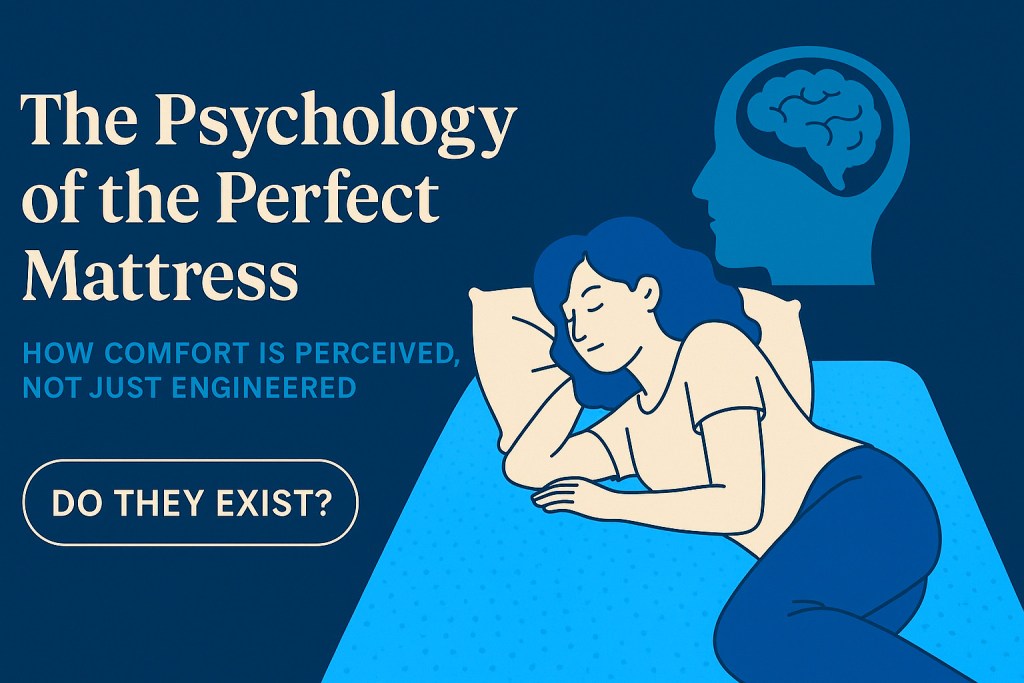
Introduction: Comfort Isn’t Just Physical
Mattress comfort goes beyond springs, foam and firmness levels. It is as much a matter of perception as of engineering. In fact, comfort has been defined as a “state of well-being or being relaxed,” and the comfort of a product is essentially “the level of well-being as perceived by consumers”.
This means that diverse things make us feel good. Modern mattresses are built of high-tech materials and have a lot of support layers, but how soft or firm they feel depends on the person, what they want, and even how they feel.
Researchers now know the difference between what we think will be comfortable before we lie down and what actually is comfortable. For example, believing a bed is high-end can prime us to feel even ordinary materials as luxurious. Likewise, familiar smells, fabrics or gestures (like the feel of a childhood blanket) can enhance relaxation.
In this article we will explore how sensory processing, mental set-up and culture shape our comfort. We will see how the brain’s interpretation of touch and temperature affects sleep satisfaction, and how mattress makers like LuxeMattresses blend engineering with psychology to design truly comfortable beds.
What Is Mattress Comfort? A Multi-Sensory Experience
“Comfort” is not a single sensation but a combination of touches, pressures, temperatures and even sounds. When you lie on a mattress, millions of skin receptors send signals to your brain about softness, support and warmth. These messages travel from the spine to the thalamus in the brain and then to the somatosensory cortex.
This portion of the brain generates a “map” of how the whole body feels. This means that your shoulders, hips, and feet all communicate signals. For instance, you might feel a soft cushion under your shoulders, a heavier push around your hips, and a certain warmth or coldness on your skin.
Most essential, everyone feels comfortable in a different way. Someone else could think something is “too soft and unsupportive,” yet to them it feels “plush and relaxing.” An extremely soft mattress could get rid of pressure points, but if it makes your back sag, your brain might think that’s pain or strain. An extremely firm mattress, on the other hand, gives you a lot of support, but it can feel unpleasant if you push too hard against it.
The NHS claims that the finest mattress “molds to the shape of your body but keeps your spine in alignment.” It should also “distribute your weight evenly” so that your hips and shoulders don’t experience too much pressure. In this way, tactile feedback, from the sense of sinking or pushing back combines with pressure sensation to form the overall feeling of comfort.
Temperature is another sensory factor. Sleep experts note that cooler bedding and well-ventilated materials can help you sleep more easily. A mattress that traps heat may make one feel restless or sweaty, even if its softness is ideal. Conversely, breathable layers (like natural latex or cooling-gel foams) can make the bed feel more pleasant. In short, mattress comfort is a multi-sensory experience: your skin, nerves and even your sense of smell (for example, fresh sheets or hypoallergenic fabrics all feed into your brain’s comfort calculation.
The Role of Expectations and Branding
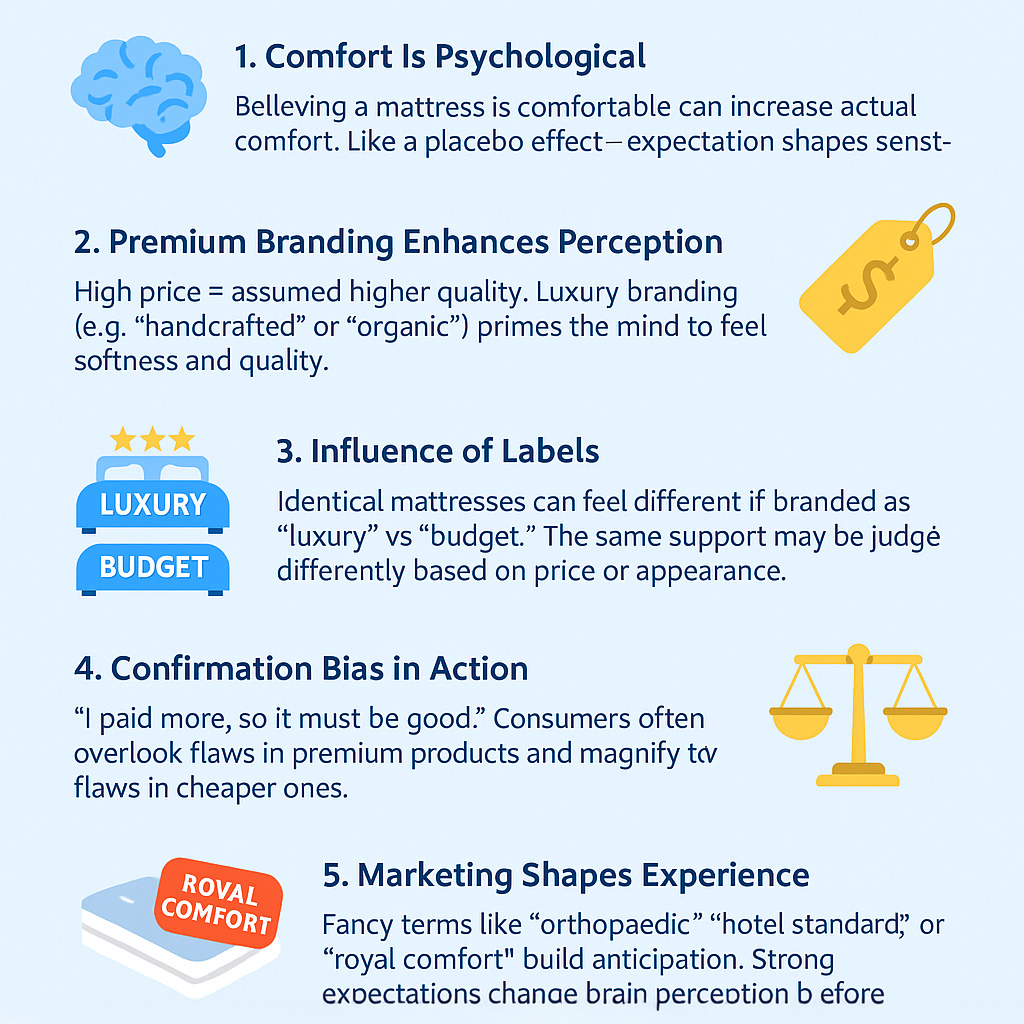
What we expect from a mattress strongly influences how we perceive it. In consumer psychology terms, comfort can be self-reinforcing: believing a bed will be cozy can actually boost the sense of comfort. This is a bit like a placebo effect.
People often pay more for a luxury bed believing it will help them sleep better, and that belief can shape their real experience. Research on product perception shows that “expected comfort”, the comfort a consumer anticipates, can alter the eventual sensation of comfort.
Mattress makers and retailers certainly play on this. A premium brand name or high price tag can create an expectation of quality and softness. For example, some luxury mattresses use tall, hand-tied springs and lavish natural materials (like horsehair) that are inherently comfortable, but they also market heavily on heritage and exclusivity.
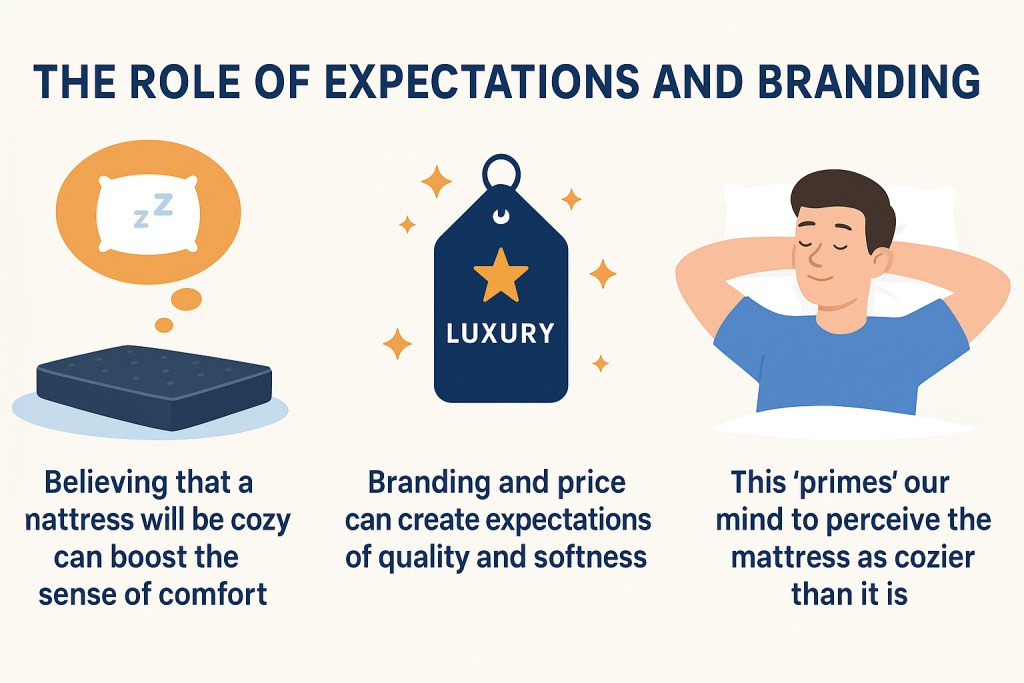
Confirmation bias plays a part, too: once you’ve chosen a mattress as a “luxury” option, you tend the cradling foam, the fine upholstery and downplay minor flaws. Conversely, if you doubt a mattress will suit you, you may hyper-focus on its least comfy features. As one study on product comfort noted, perceived comfort and product satisfaction often hinge on our preconceived data and expectations.
In practical terms, this means that two identical beds could feel different to people who think one is a “premium model” and the other a budget version. Marketing and branding thus “prime” our minds: a higher price or fancy name can make a mattress seem softer or more luxurious before we even lie down.
Memory and Emotional Associations with Comfort
Comfort is not purely in the body, it often has deep emotional roots. People often feel most at comfortable on sleep surfaces that remind them of wonderful moments or items they know.
For instance, the smell of clean sheets, a pillow you know well, or the fact that you go to bed at the same time every night can all help you sleep. Psychologists explain that youngsters typically feel safe with “transitional objects,” which include things like a favorite teddy bear, blanket, or toy. Your brain starts to link these items to safety.
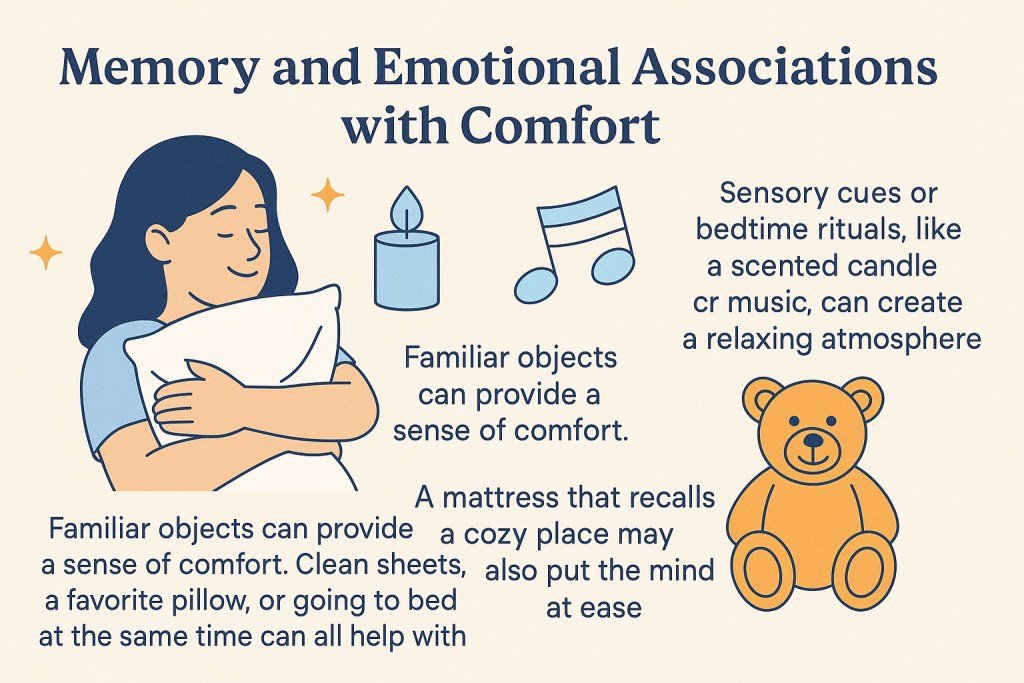
We may not always know it, but our brains still form associations. For example, a certain shape of cushion, the depth of a mattress, or even a smell in the house might help us rest.
Simple activities like lighting a certain scented candle, listening to the same music, or doing the same things before bed might help relax the brain. You could find it easier to relax if the surface of your mattress reminds you of a calm environment, like your childhood bedroom or a cozy hotel room on vacation.
Sleep therapists say that many adults have a pillow or blanket they “want to use” at night, just like a youngster has a favourite toy. These practices keep happening, which demonstrates that patterns and emotional familiarity help us relax in bed.
Cultural Differences in Mattress Preferences
Ideas of comfort vary widely around the world. Mattress norms are shaped by culture, tradition and even climate, so a firmness that feels ideal in one country can seem odd in another.
For example, traveler’s’ surveys show stark contrasts: in one study, 62% of Chinese respondents preferred a medium-firm mattress with only 16% choosing firm mattresses, whereas British traveler’s were almost evenly split between firm (43%) and medium (41%).
In Japan, traditional tatami mats and firm “western-style” beds dominate, so the Japanese are accustomed to a quite hard sleep surface. In contrast, Americans often expect a plusher, cushioned feel, reflecting a home industry that popularised pillow tops and thick foam layers.
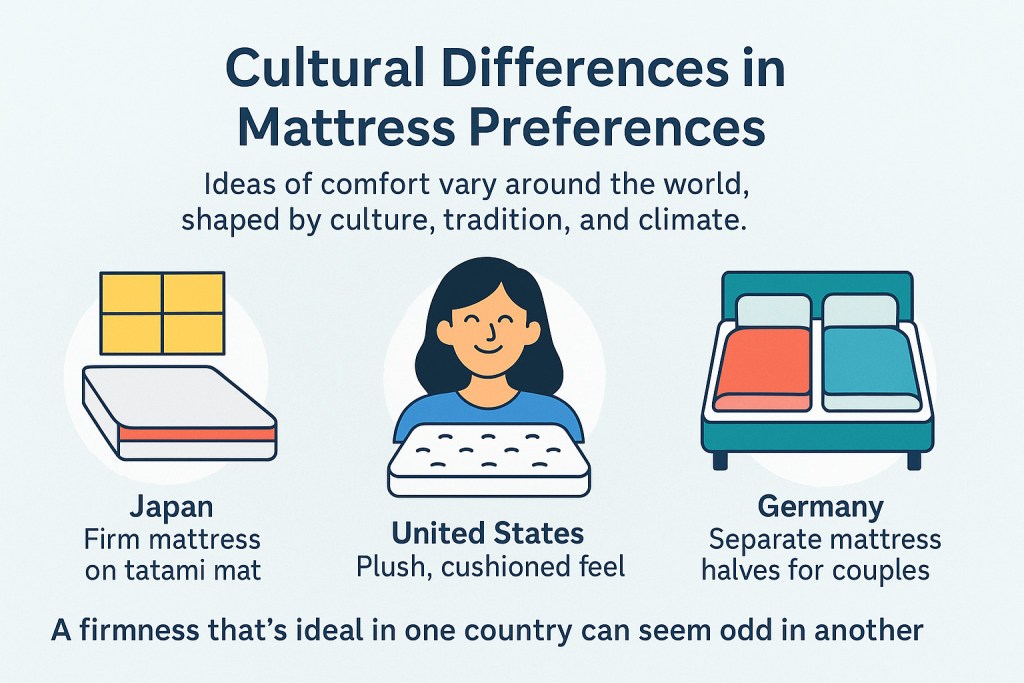
Sleep specialists claim that many Europeans prefer a harder bed since it supports them and is better for their health. Americans, on the other hand, tend to seek soft comfort straight quickly.
Regional customs are also important. In some European nations, like Germany or Scandinavia, it’s common for couples to have two different mattress halves on the same frame, with each person deciding how firm they want their side to be.
In Asia, on the other hand, couples might sleep on thin futons or mats on the floor, which makes the whole space feel softer and more grounded. People who grew up in a culture that emphasises strong back support may find a firm bed natural and comfortable, whereas people who grew up with soft duvets may find the same bed uncomfortably hard.
These cultural preferences are not just legends. This means that the way a bed seems “right” relies on the individual who sleeps on it and the world they grew up in.
When buying a new mattress, it’s important to test the firmness first. Consider your body weight, height, sleeping position, and preferences to find the right firmness level for you.
Find Your Perfect Mattress Firmness
Discover the ideal mattress firmness for your sleep position, body type, and support needs — backed by sleep science.
Take the Assessment →How the Brain Interprets Softness: Neuroscience of Sensation
Our brains are wired to interpret every stimulus in bed, from a gentle caress of the sheets to a cooling mattress topper. The somatosensory system converts physical sensations into perception.
As one neuroscience overview notes, tactile signals travel to the thalamus and then to the somatosensory cortex, “where signals are translated into a touch perception”. This cortical “touch map” integrates pressure, motion, temperature and texture.
Thus, if you shift your hips on a mattress, pressure sensors report how much you sink; if the mattress warms slightly under you, thermal receptors send that signal too.
Design elements in a mattress specifically target these perceptions. For example, motion isolation (found in pocket coils or dense foam) can reduce the movement you feel when a partner rolls over, which the brain registers as uninterrupted rest.
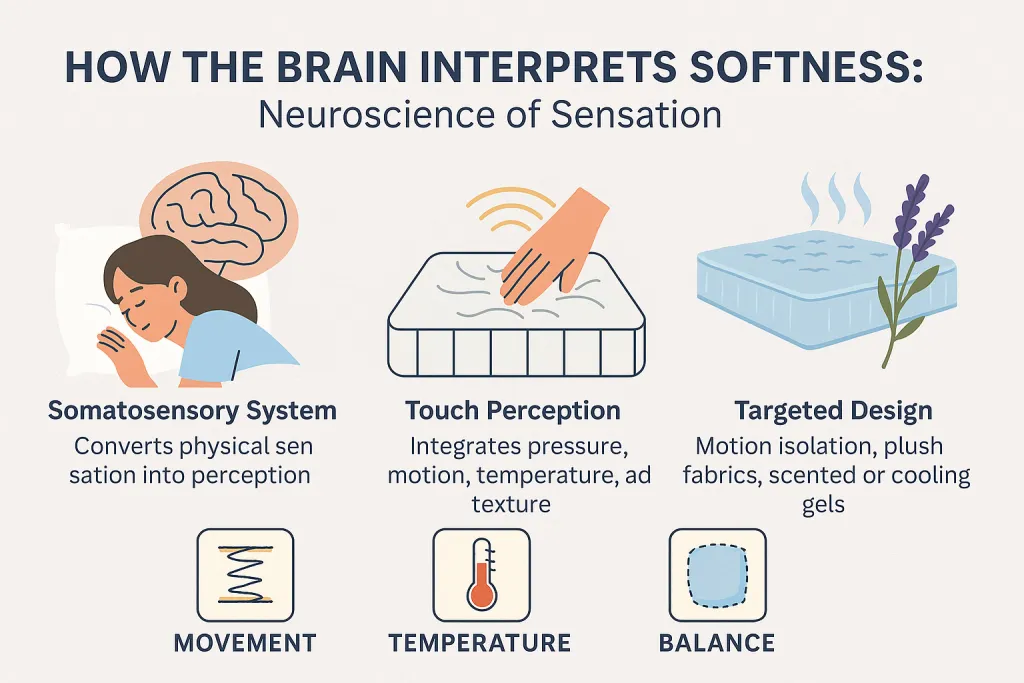
The smooth fabrics and padded surfaces feel comfortable and cozy on your skin right away, making you feel “plush.” Some mattresses even use fabrics with built-in scents or cooling gels to help the brain relax. If the mattress smells like clean cotton or linen, it might be clean and lovely. People have been able to fall asleep faster when they smell things that are soothing and familiar, like lavender or clean sheets.
The brain also pays attention to things like music and balance. A frame that squeaks or an edge that hangs down could be a concern, but platforms that are sturdy and silent tend to feel better.
You might even be able to adjust how rapidly your heart beats or how you breathe, which can help you feel better. In short, the neuroscience of mood shows us that our brains are always getting messages from all around our body that make us feel happy. The support zones, ability to breathe, and soft feel of a well-made mattress tell your brain that everything is fine. This will usually help you get a better night’s sleep.
Engineering Meets Perception: Why Materials Matter
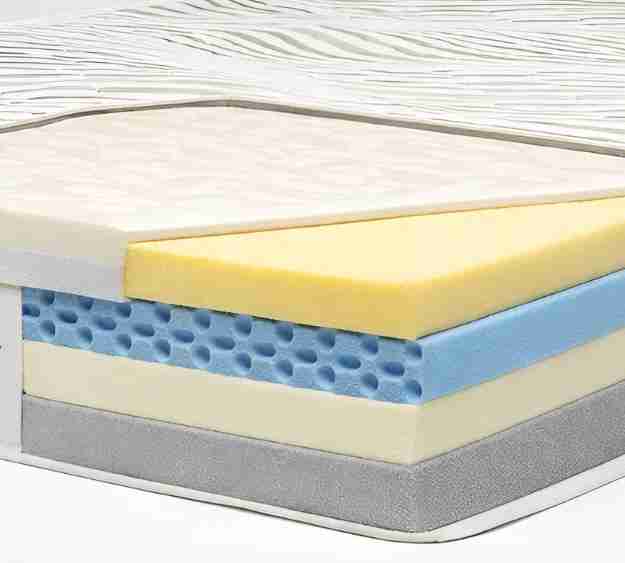
Of course the raw materials and construction of a mattress do influence the comfort feeling, they are the basis on which perception is built. Different layers and components create the body sensations that the brain will interpret.
For example, memory foam is known to hug the body, contouring to curves and relieving pressure. LuxeMattresses notes that its memory foam models provide “superior comfort and pressure relief” by molding to your shape.
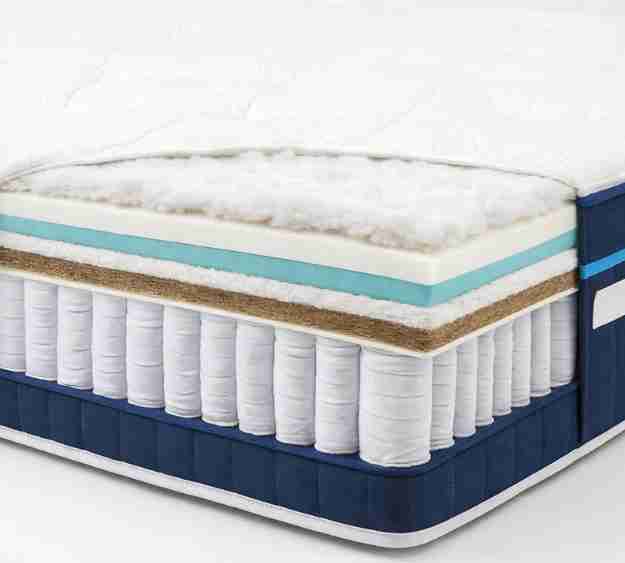
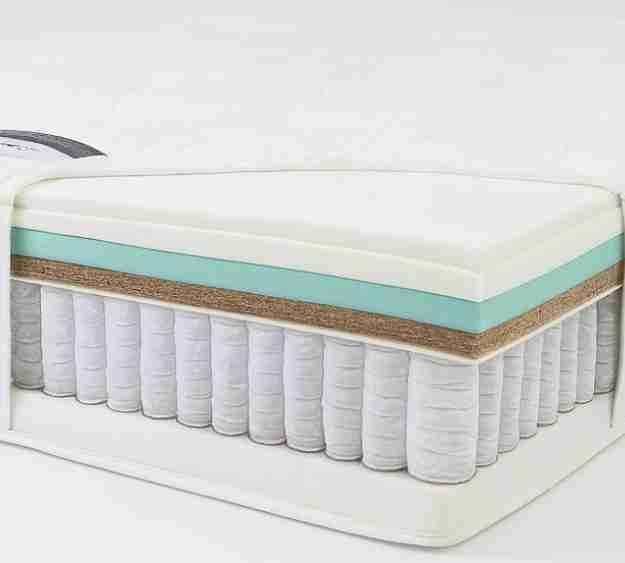
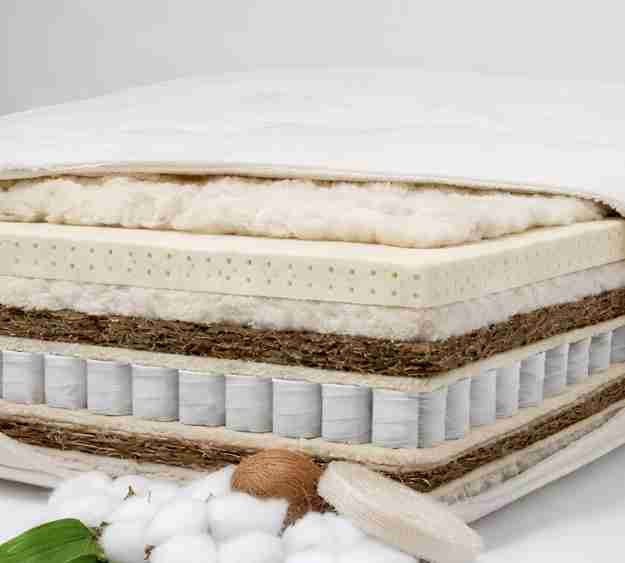
Latex, by contrast, offers a springy bounce and remains breathable; many sleepers describe it as feeling both soft and supportive. Pocket coils or springs give a responsive support core – when you press down, adjacent springs compress slightly less, producing a sense of support pushing back.
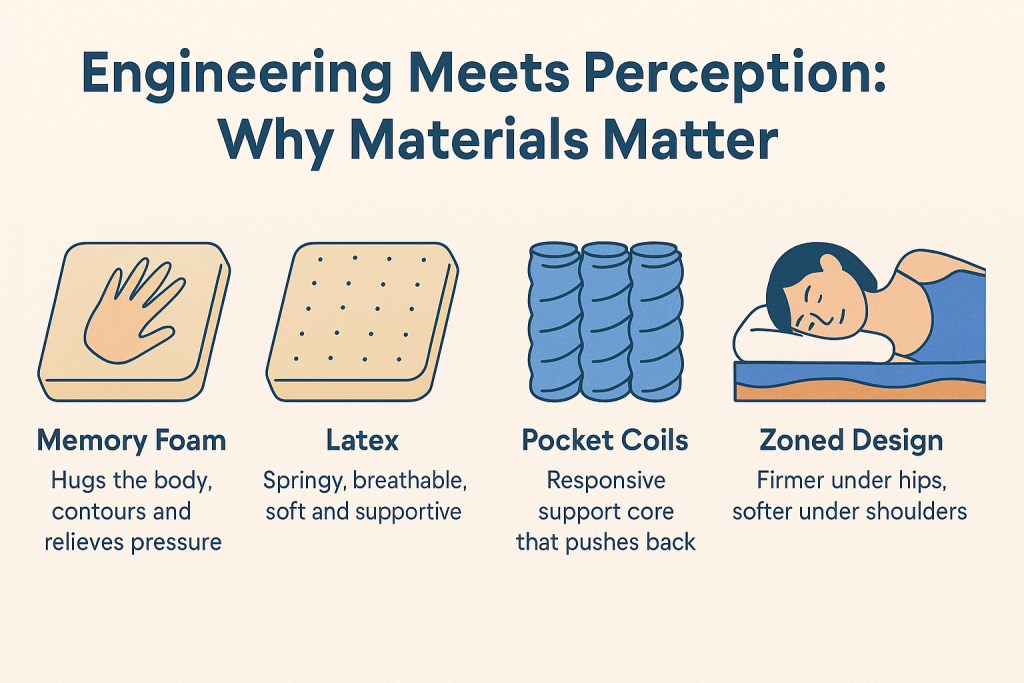
Mattress designers often use zoned layers so that the firmer part of the mattress is directly under the hips and the softer part of the foam is under the shoulders. This zoned design caters to our spine’s shape and keeps the body aligned even as the top feels soft.
The art is finding the right balance. An NHS guidance on sleep and posture emphasises that a mattress should not be so soft that your spine collapses, nor so firm that it creates pressure points. It “molds” just enough to cushion hips and shoulders, while maintaining straight spinal alignment.
Luxe Mattresses’ own products reflect this principle: our Hybrid collection, for instance, “integrates memory foam with pocket springs” to combine plush cushioning with sturdy core support. In practice, our Hybrids layer high-density base foam for durability with comfort foams and cooling gels on top. The result is a surface that feels soft yet upholds the body’s frame thanks to the coils.
The bottom line is that high-quality materials can achieve both the subjective “softness” and the objective support we need. At LuxeMattresses our design ethos is to offer “affordable mattresses without compromising on quality”, meaning we invest in the right foams, springs and fabrics so that perception and reality go hand in hand.
The Role of Sleep Position and Body Type in Perceived Comfort
Even the best-designed mattress will feel different depending on who’s using it. The way you sleep, how much you weigh, and the form of your body all affect how much pressure is exerted on it.
For example, those who sleep on their sides put their weight on one shoulder and hip. The surface needs to be soft to keep those pressure points safe. They’d desire the upper layers of their mattress to be a little softer since a mattress that is too hard under the hip bone can hurt.
But people who sleep on their backs spread their weight out more equally. They usually want moderate firmness: enough support under the lower back to keep the spine neutral, but also gentle cradles under the shoulders and pelvis.
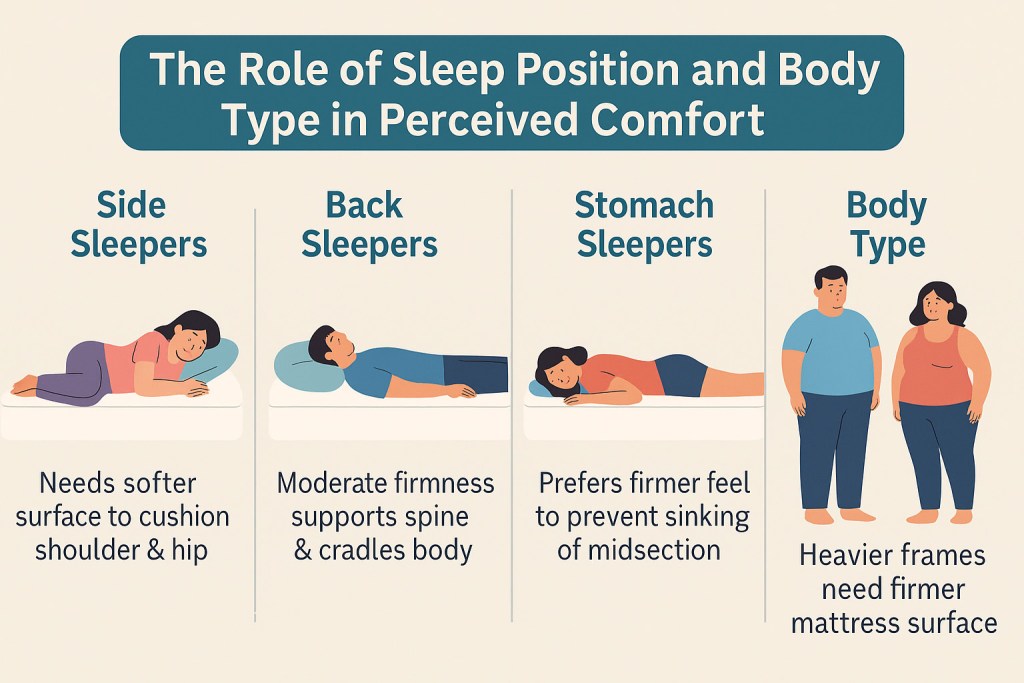
Stomach sleepers put a lot of pressure on the pelvis and chest; if the mattress is too soft, their midsection will sink and arch the spine. Stomach sleepers often do best on a firmer surface.
Body type is another factor. Heavier individuals such as plus-size people compress mattress layers more, so they typically need firmer cores or denser materials to prevent sinking too deeply.
Lighter sleepers may find a very firm mattress feels unyielding, since their lighter weight doesn’t push far into the layers. Many brands, including LuxeMattresses note that back or side sleepers often prefer firmer or zoned mattresses that support the low back, whereas lighter side sleepers can often enjoy plusher padding without losing support.
As the NHS guide suggests, the best approach is to choose a mattress that can mold just the right amount to your body shape while holding your alignment.
Modern beds often come in multiple firmness grades such as extra firm, medium, and soft. The good thing is you can test any of these mattresses at home. LuxeMattresses, for example, offer many firmness options and even orthopaedic models which are specifically used to optimise back health. There are also internal support zones in mattresses designed for side or back sleepers. In the end, comfort is highly individual: what feels like a cloud to one person could be a sinking hole to another.
Case Studies: How Two People Can Lie on the Same Mattress and Disagree
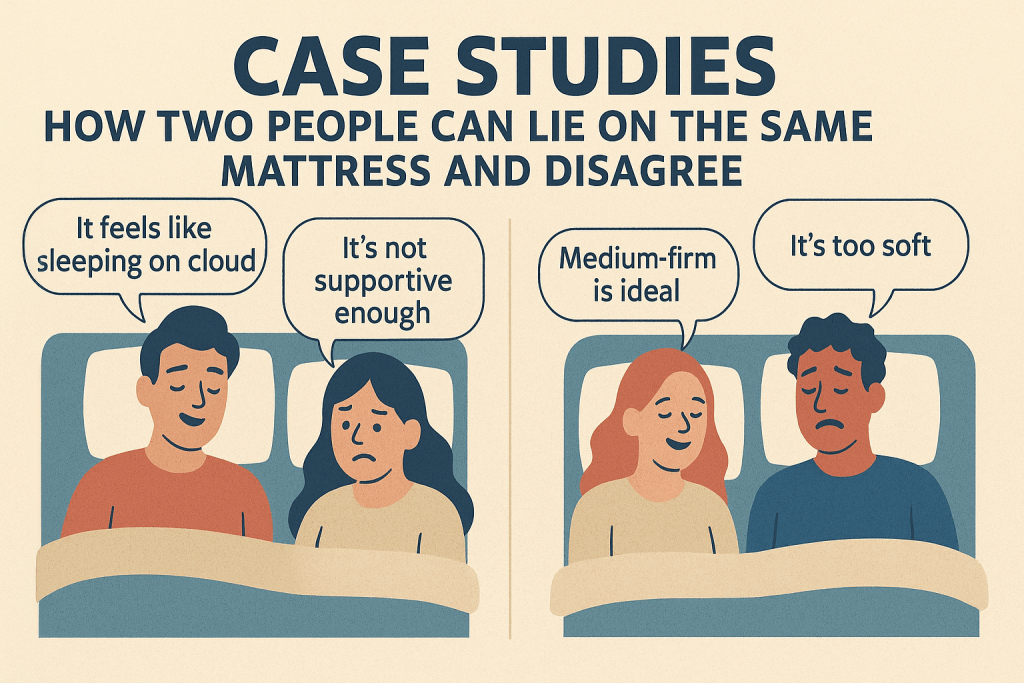
Real-world experience shows how subjective mattress comfort can be. Imagine a couple sharing a bed: one partner might love the plush softness, while the other feels it’s not supportive enough.
In customer feedback, it’s common to hear divergent opinions on the same model. Online reviews for midrange beds often include comments like “feels like sleeping on a cloud” alongside complaints of “sagging and backache,” often by people of different builds or expectations.
Another common example: a side-sleeper might praise how a mattress cradles their shoulder and hip, while a stomach sleeper of similar height may report the same bed causes a low-back arch.
Similarly, personal habits matter: someone who grew up on a traditional firm mattress might describe a medium-firm bed as “too soft,” whereas someone used to a pillow-top might describe it as “ideal”.
These anecdotes underscore that comfort is highly individual. There is no single “perfect” bed for everyone; it is a dialogue between body and mind, and what works for one person can feel quite different to another.
Designing for Subjective Comfort: What Luxe Mattresses Learned
At LuxeMattresses, the lesson is clear: you have to combine good engineering with customer understanding. The company invests heavily in research and feedback to get this balance right. For instance, our online Sleep Quiz built with sleep scientists, has matched over 3,000 customers to a mattress they ended up sleeping better on, with 80% of users reporting improved sleep quality within a month. This high satisfaction rate reflects that aligning mattress choice to personal factors (body type, position, heat sensitivity, etc.) pays off.
Luxe Mattresses also emphasises extensive product testing. We trial mattresses with people of different shapes, getting direct feedback on comfort. If one person’s shoulders feel numb or another’s hips feel pinched, they tweak layer thickness or firmness zoning. Marketing data like return rates and reviews guides them too.
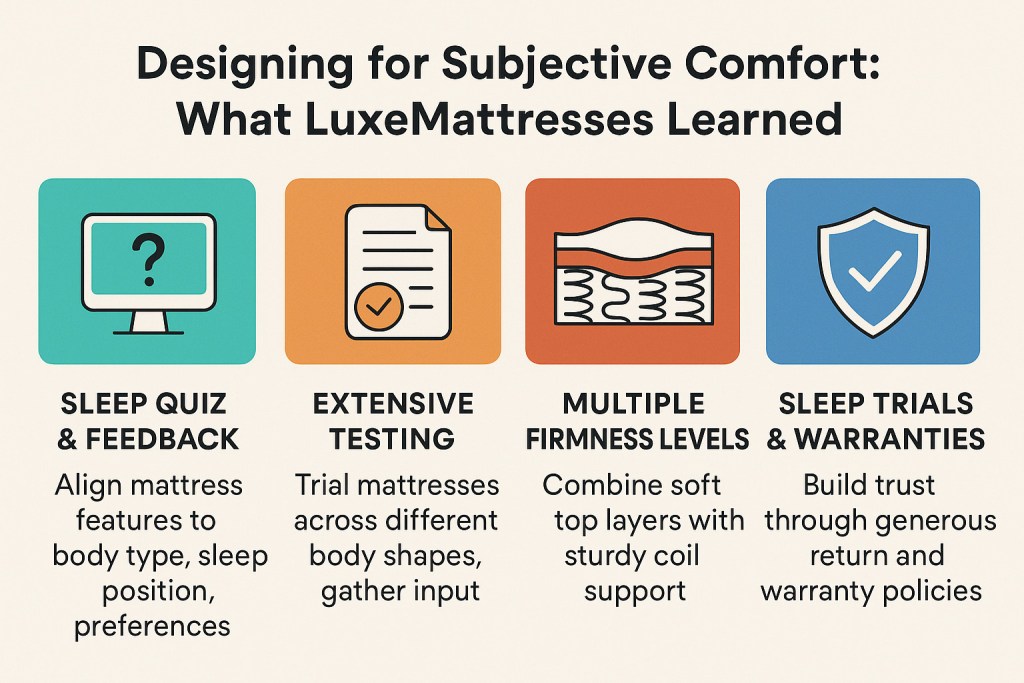
In practice, this has led us to offer multiple firmness levels and hybrid designs. For example, our Hybrid range uses memory foam for immediate softness but places a reinforced coil base (EnduraSpring™) for long-term support. By blending materials, we aim to let sleepers have a first feeling of softness without “losing” the spinal alignment.
Another focus is trust and testing. LuxeMattresses offers 100-night sleep trials and 10-year warranties, signalling confidence that their beds maintain comfort. Our About Us states we strive for “affordable mattresses without compromising on quality”.
That means real-world durability (materials that don’t sag prematurely) matches the initial “wow” factor. The design philosophy explicitly takes psychology into account: gentle curves in foam layers to mimic body shape, cooling fabrics to allay the fear of overheating, and even use of colors/textures meant to look plush.
In essence, LuxeMattresses has learned that subjective comfort isn’t left to chance. By combining neuromuscular design with smart customer profiling, we “engineer” the perception of comfort too. The result is a conversation between body and brain, guided by science that shapes the feel of the perfect mattress.
Conclusion: Comfort is a Conversation between Body and Brain
A truly comfortable mattress is more than the sum of its parts. It is where engineering meets psychology. The perfect bed for you will depend on a dialogue, not only between your body and the mattress, but between your expectations, memories and the mattress’s material responses. One person’s soft cloud could be another’s sinking trap; one person’s firm orthopaedic surface could be another’s ideal spine-saver. All of these experiences are valid because comfort is deeply subjective.
In deciding what feels best, it’s worth remembering the many influences: your sensory thresholds, your childhood associations, and even your cultural background. Brands like LuxeMattresses acknowledge this by offering a range of mattress types and firmness levels, and by giving tools like sleep quizzes and trials so that each customer finds their fit. No one mattress is perfect for everyone, but by understanding the psychology behind comfort, you can find the one that’s perfect for you.
Explore more on our resources: if you’re curious about your own preferences, check out our Blog for guidance. Sweet dreams start with finding what your body and brain agree on.
FAQs
A mattress feels soft because its comfort layers, such as memory foam or quilted foam, contour under your weight, easing pressure on shoulders and hips. A plush top layer combined with a supportive base gives a cushioned yet stable sensation. Too much softness, however, can allow your body to sink too deeply, so the best designs balance soft covers with firmer cores.
Expectations act like a placebo: if you believe a mattress is high-end or promises better sleep, you’re more likely to perceive it as comfortable. Branding, price and presentation can prime your mind to notice positives and overlook minor flaws. It’s always wise to test a mattress firsthand rather than rely solely on reputation.
Cultural norms and upbringing shape our comfort benchmarks. Europeans often favor firmer beds for back support, whereas Americans may prefer plusher mattresses; in Asia, traditional futons or tatami mats set a firmer standard. Each region’s typical bedding and sleep habits inform what its people consider comfortable.
Yes. Memory foam hugs the body and relieves pressure points, latex offers a springy, breathable feel, and pocket springs provide responsive support and airflow. Combining materials, like memory foam over pocket springs in LuxeMattresses hybrids, creates both a soft initial feel and reliable support.
A supportive mattress molds to your shape while keeping your spine aligned. Lie on your back: there should be only a slight gap at your lower back, and on your side, the mattress should fill the space between your shoulders and hip. If your spine curves too much or your joints press painfully, the mattress is either too soft or too firm.
Sleep satisfaction is your perception of how well you slept, and comfort plays a big role. A mattress that helps you fall asleep quickly and stay undisturbed leads to feeling more rested and alert during the day. In turn, better subjective sleep quality often boosts overall well-being.
Try a mattress with zoned support or dual-firmness, firmer under the hips and softer at the shoulders, or use a mattress topper to adjust one side. You could also consider separate mattresses on a shared frame, a common European approach. Many brands, including LuxeMattresses, offer trial periods so you can test and find the right compromise together.

Guinevere Dion, a native of Jacksonville, Florida, is a passionate article writer and Ph.D. candidate in Modern Thoughts and Literature. Her work blends academic insight with emotional depth, focusing on topics like mental health, culture, identity, and language in digital spaces. Driven by curiosity and shaped by her strong roots, Guinevere uses writing as a tool to explore, connect, and inspire meaningful dialogue. For her, writing is not just a profession—it’s a calling to illuminate ideas and foster human understanding.

Roman is a seasoned expert in mattress development with over a decade of experience in sleep technology, material innovation, and product engineering. He has played a key role in designing and refining sleep solutions for leading mattress brands, with a deep focus on ergonomics, pressure relief, and sleep quality optimization.
With a background in product design and biomechanics, Roman combines scientific research with hands-on development to create mattresses that address real-world sleep issues—from spinal alignment to temperature regulation. His work has contributed to several award-winning mattress lines known for their comfort, durability, and user satisfaction.

Dr. Arshad Malik is an Associate Professor at Tsinghua University with a PhD from the same institution. He completed his prestigious CAS-TWAS Postdoctoral Research Fellowship at the Chinese Academy of Sciences in Beijing. With over 99 published research papers and 1,000+ academic citations, Dr. Malik brings a deep scientific perspective to topics at the intersection of biomedical science, health, and wellness.
He has previously served as an Associate Professor at the International Islamic University Islamabad (IIUI), and currently contributes as an editorial advisor and content reviewer on health-related topics for Luxe Mattresses & Beds. His insights help bridge the gap between academic research and everyday well-being.