




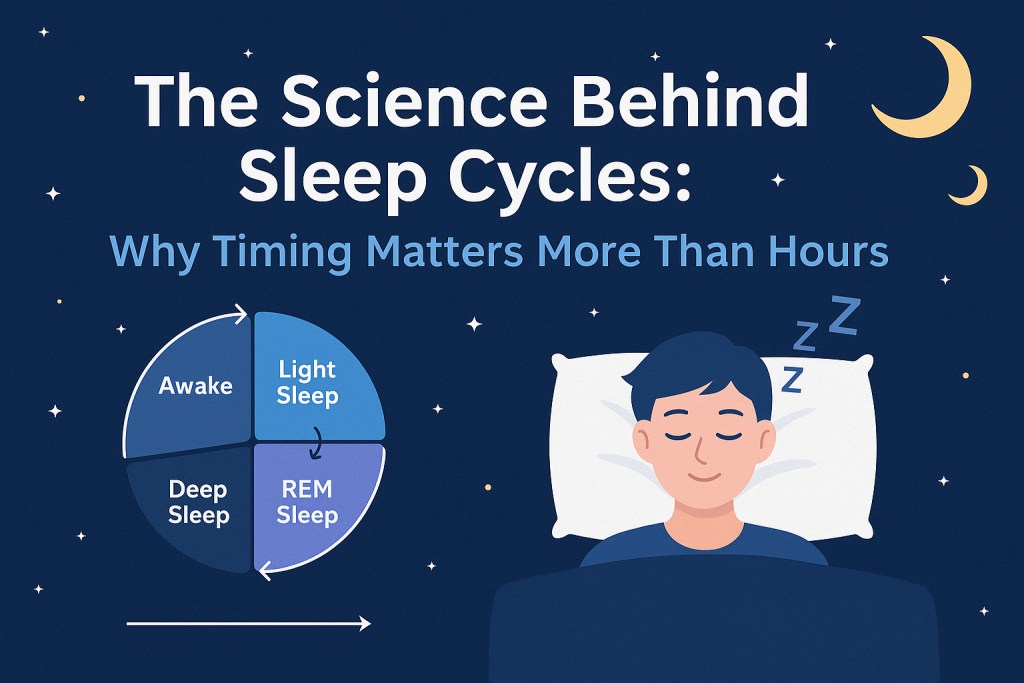
If you’re like me, you might find that after sleeping for 7 or 8 hours, you still feel tired, while 5 or 6 hours on other days can leave you feeling good. This baffled me until I learned about sleep cycles. Knowing when you wake up is as important as how long you sleep; sometimes, we don’t get the recovery our bodies need. Many people confuse sleep, naps, and rest; they are different, and one cannot replace the other.
Let me walk you through the science, and by the end of this, I promise you’ll be using a sleep calculator every night like I do.
What Are Sleep Cycles?
Sleep isn’t one big, continuous state of unconsciousness. It’s actually a sequence of repeating phases, called sleep cycles, that your brain and body go through multiple times each night. Each cycle typically lasts about 90 minutes, and we experience 4 to 6 cycles per night depending on sleep duration.
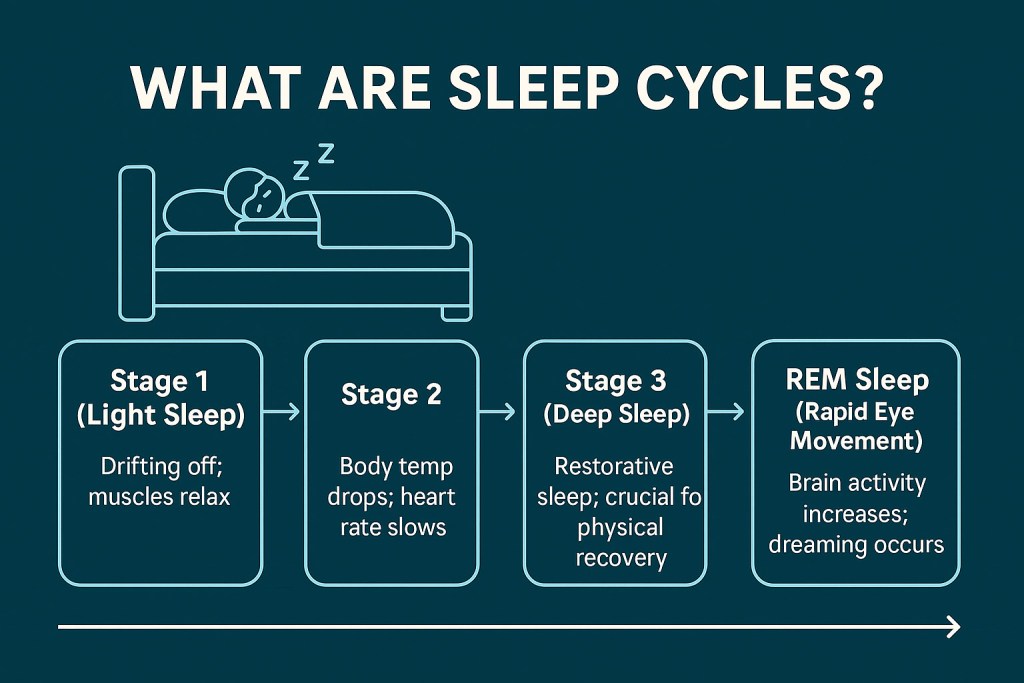
Here’s what a typical sleep cycle looks like:
- Stage 1 (Light Sleep): This is that drifting-off moment. Your muscles relax, and your brain activity begins to slow down.
- Stage 2: Your body temp drops, heart rate slows, and you’re less likely to wake up from minor disturbances.
- Stage 3 (Deep Sleep): This is restorative sleep. It’s crucial for physical recovery and immune system function.
- REM Sleep (Rapid Eye Movement): Brain activity increases, you dream, and it supports memory and emotional processing.
We cycle through sleep stages all night, with more REM sleep in the second half. Not completing these cycles can lead to sleep deprivation, affecting your health and lifestyle. I recommend using a sleep debt calculator, which you can find in this guide on your phone or access directly. It will ask a few questions about your sleep routine and compare your answers to standards from the Sleep Health Journal and NHS website, letting you know if you’re sleep deprived.
Sleep Calculator
Plan your optimal bedtime and wake-up times based on your body’s natural sleep cycles. Wake up refreshed and energized every morning.
Why Use This Calculator?
- Calculate the ideal bedtime based on when you need to wake up
- Find the optimal wake-up time based on when you go to bed
- Work with your body’s natural 90-minute sleep cycles
- Minimize grogginess and maximize morning energy
- Based on sleep science research
Why Waking Up Mid-Cycle Feels So Terrible
Here’s the kicker: If you wake up during deep sleep, your brain is still in “offline mode.” That’s when you get that horrible groggy feeling known as sleep inertia. It can take up to 30 minutes to fully recover, sometimes longer.
In contrast, waking up during light sleep or REM is much easier. Your brain is closer to waking consciousness, making it less jarring.
I tested this by tweaking my wake-up time in 15-minute increments using a sleep calculator, and guess what? The difference was astonishing. On days I woke mid-cycle, I felt like I needed an IV drip of coffee. But when I timed it right, even if I got slightly less sleep, I felt fresher.
Why 8 Hours Isn’t a Magic Number
The idea that we all need 8 hours of sleep is more of a general guideline than a scientific truth. Some people thrive on 6.5 hours; others need 9. The key isn’t just total time but rather how many full cycles you complete.
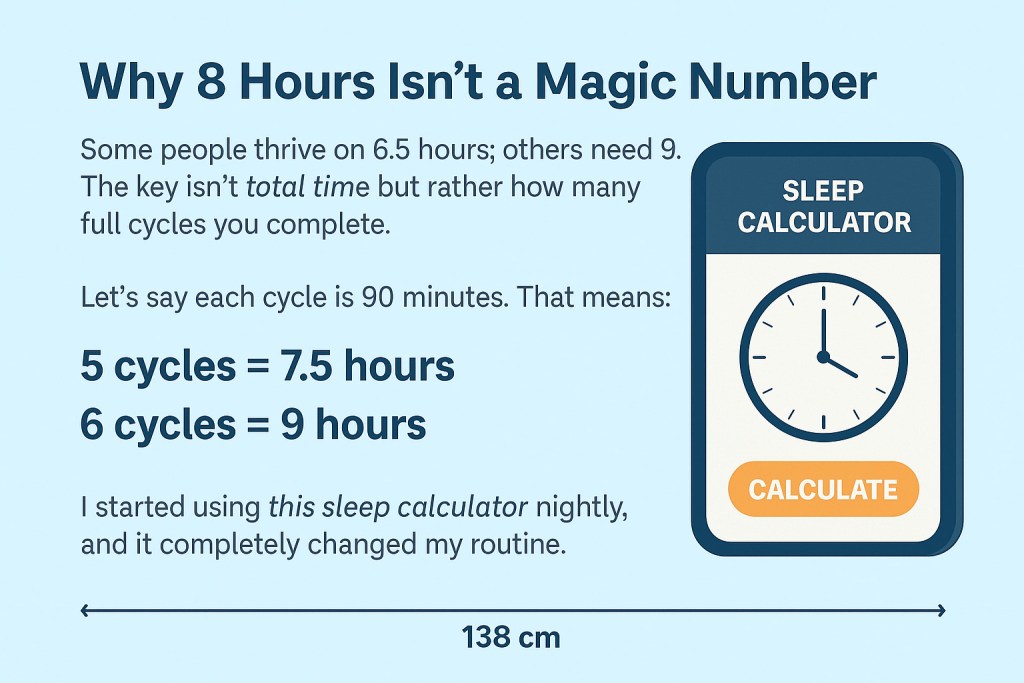
Let’s say each cycle is 90 minutes. That means:
- 5 cycles = 7.5 hours
- 6 cycles = 9 hours
This is why tools like sleep calculators work. They estimate backward from your desired wake-up time, ensuring you complete a full number of cycles. I started using this sleep calculator nightly, and it completely changed my routine.
The Role of Circadian Rhythms
You can’t talk about sleep cycles without mentioning your circadian rhythm. Think of it as your internal clock, influenced by light and hormones. It regulates not just sleep, but digestion, body temperature, and hormone release.
If you go to bed and wake up at erratic times, your internal clock becomes confused, making it harder to fall asleep or wake naturally. A sleep calculator works best when paired with a consistent sleep schedule, aligned with your circadian rhythm.
Sleep Cycles & Performance
Research from the National Sleep Foundation and numerous clinical studies show that well-timed sleep improves: read our article for the side effects of sleep deprivation
- Cognitive performance
- Mood stability
- Memory retention
- Reaction time
Athletes use this science religiously. Even tech CEOs and entrepreneurs have turned to sleep coaching and timing calculators to improve output.
What Happens If You Don’t Complete Your Sleep Cycles?
Missing out on full sleep cycles regularly doesn’t just leave you feeling tired, it disrupts the very foundation of how your brain and body restore themselves. Each sleep cycle is composed of light sleep, deep sleep, and REM (rapid eye movement), and skipping or interrupting these stages night after night can create a ripple effect across multiple areas of your health.
When these restorative phases are frequently cut short, whether by poor sleep habits, stress, or an inconsistent schedule, your body never gets the chance to fully reset. Over time, this deprivation goes beyond tiredness. It impacts memory, immunity, emotional regulation, metabolism, and even your heart health.
Short-Term Effects
In the short term, interrupted or incomplete sleep cycles can lead to:
- Cognitive Fog and Poor Focus: Without deep and REM sleep, your brain struggles to consolidate memory and stay alert.
- Mood Swings and Irritability: REM sleep is essential for emotional regulation; a lack of it leads to quicker frustration, anxiety, or depressive moods.
- Daytime Fatigue: You may feel like you’ve slept “enough,” but without completing full cycles, your body doesn’t truly rest, leaving you sluggish or “heavy-headed.”
- Weakened Immune Response: Even one night of poor sleep can impair your immune function, making you more susceptible to illness.

Long-Term Effects
When incomplete sleep cycles become a long-term pattern, the consequences deepen:
- Chronic Sleep Debt: Your body accumulates a deficit it can’t easily pay back, compounding physical and mental stress.
- Higher Risk of Disease: Long-term sleep fragmentation is linked to cardiovascular disease, Type 2 diabetes, obesity, and even neurodegenerative diseases like Alzheimer’s.
- Hormonal Imbalance: Disrupted sleep interferes with hormones like cortisol (stress), ghrelin (hunger), and melatonin (sleep), which regulate everything from appetite to mood.
- Impaired Learning and Memory: Without consistent REM sleep, your brain loses the ability to process new information or store long-term memories efficiently.
- Mental Health Issues: Chronic sleep issues can contribute to anxiety, depression, and even an increased risk of suicidal thoughts.
Should You Use a Sleep Calculator?
Absolutely and here’s why:
- It prevents waking mid-cycle (no more sleep inertia)
- Helps establish consistent sleep habits
- Maximises recovery and alertness

If you’re a shift worker, a parent of young kids, or someone juggling multiple responsibilities, a sleep calculator could be your best friend.
Factors That Affect Your Sleep Cycles
Your sleep cycles can be easily disrupted by both lifestyle choices and underlying health conditions. Even if you’re getting the recommended hours of rest, these interruptions can prevent your brain from completing full sleep cycles, leaving you groggy or unrested.
Here are some common factors that can interfere:
- Inconsistent sleep schedule (e.g., going to bed at different times every night, find you ideal bedtime according to your work schedule)
- Caffeine, alcohol, or heavy meals before bed
- Stress and anxiety
- Exposure to blue light from screens
- Poor sleep environment (e.g., too much noise or light)
- Sleep disorders like insomnia (trouble falling or staying asleep) and sleep apnea (brief interruptions in breathing)
Conditions like insomnia and sleep apnea are particularly harmful because they fragment your sleep, making it harder for your body to move through natural stages like deep and REM sleep, the very ones that help with memory, immune function, and emotional balance. Addressing these factors can dramatically improve your sleep quality and restore healthier cycles.
Final Thoughts: Make It Work for You
Once I started planning my bedtime using cycles rather than hours, mornings became easier. I now aim for 5 or 6 complete cycles and wake up during light sleep. My productivity, mood, and even workouts have improved.
Sleep smarter, not longer.
Start using a sleep calculator to determine your optimal bedtime, and let science do the heavy lifting. Trust me, your body and brain will thank you.

Giulia is a content writer at Luxe Mattresses, where she blends her background in product development with a passion for sleep science and design. A graduate of Imperial College London, Giulia studied Product Development & Entrepreneurship, giving her a strong foundation in how everyday products like mattresses & impact human well-being.
At Luxe, she focuses on writing informative, user-friendly blogs that explore everything from mattress comparisons and sleep quality tips to innovations in bedding technology. Giulia is especially passionate about helping readers make smarter choices when it comes to comfort, health, and bedroom design.

Dr. Arshad Malik is an Associate Professor at Tsinghua University with a PhD from the same institution. He completed his prestigious CAS-TWAS Postdoctoral Research Fellowship at the Chinese Academy of Sciences in Beijing. With over 99 published research papers and 1,000+ academic citations, Dr. Malik brings a deep scientific perspective to topics at the intersection of biomedical science, health, and wellness.
He has previously served as an Associate Professor at the International Islamic University Islamabad (IIUI), and currently contributes as an editorial advisor and content reviewer on health-related topics for Luxe Mattresses & Beds. His insights help bridge the gap between academic research and everyday well-being.