

100-Night Risk-Free Trial
Free Nationwide Delivery
10 Years Warranty
Call us at: 020 4572 5122
0% APR Finance Available
how sleep debt effect brain, mood and performance
July 19, 2025

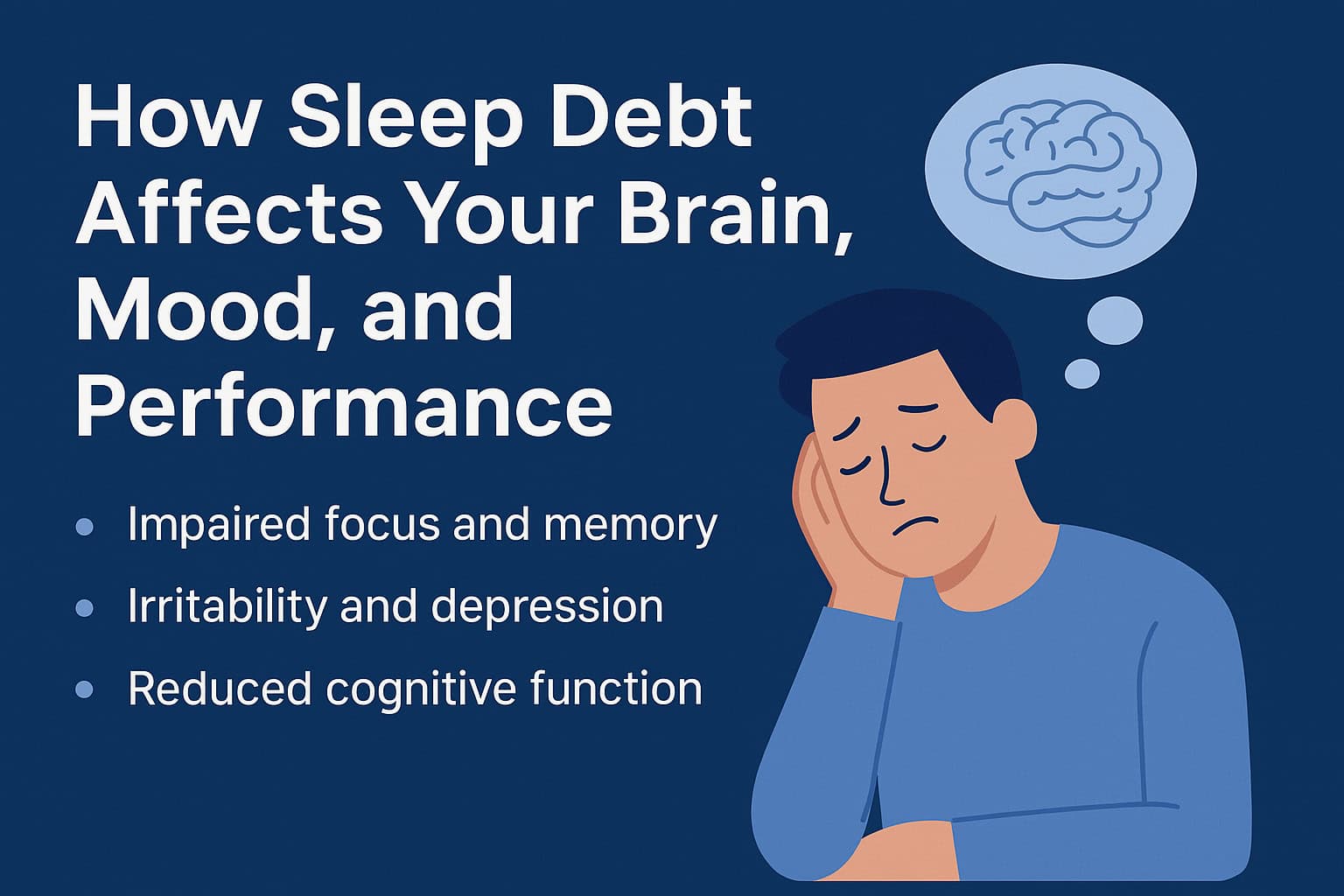
How Sleep Debt Affects Your Brain, Mood, and Performance

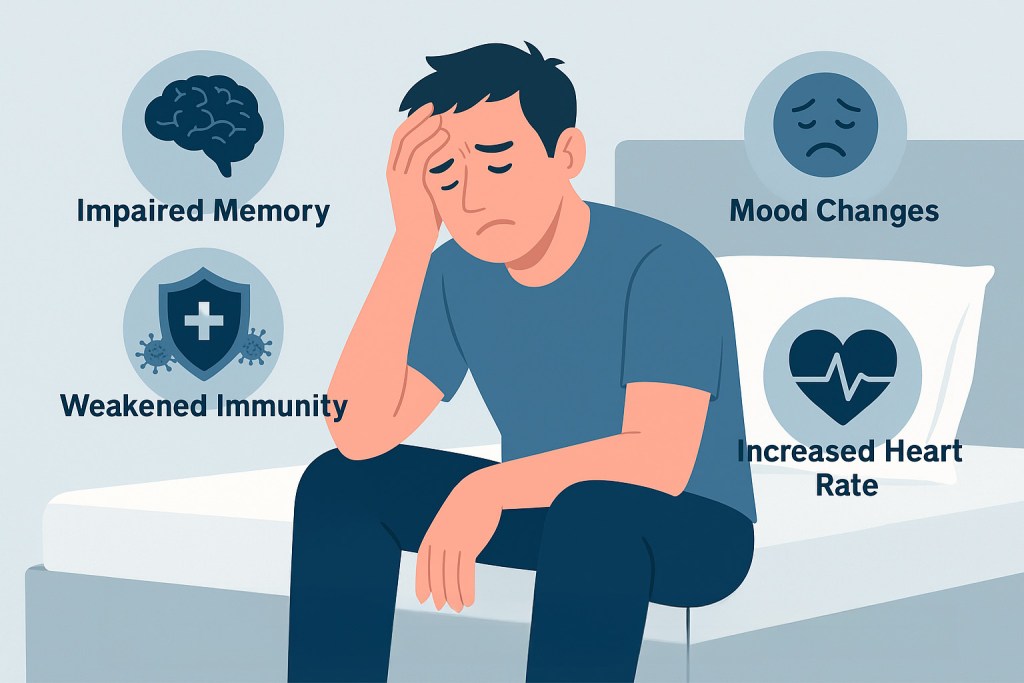
We often treat sleep like an optional luxury, something to squeeze in when everything else is done. But after a few nights of staying up too late or rising too early, you don’t just feel tired. Your body starts to keep score. That score is called sleep debt, and trust me, it’s more than just a catchy phrase, it’s your body’s way of reminding you that rest is non-negotiable.

I learned this the hard way, constantly burning the candle at both ends. What I didn’t realise was how that “just one more episode” mindset was slowly compromising everything from my ability to think clearly to my emotional balance.

What Is Sleep Debt?

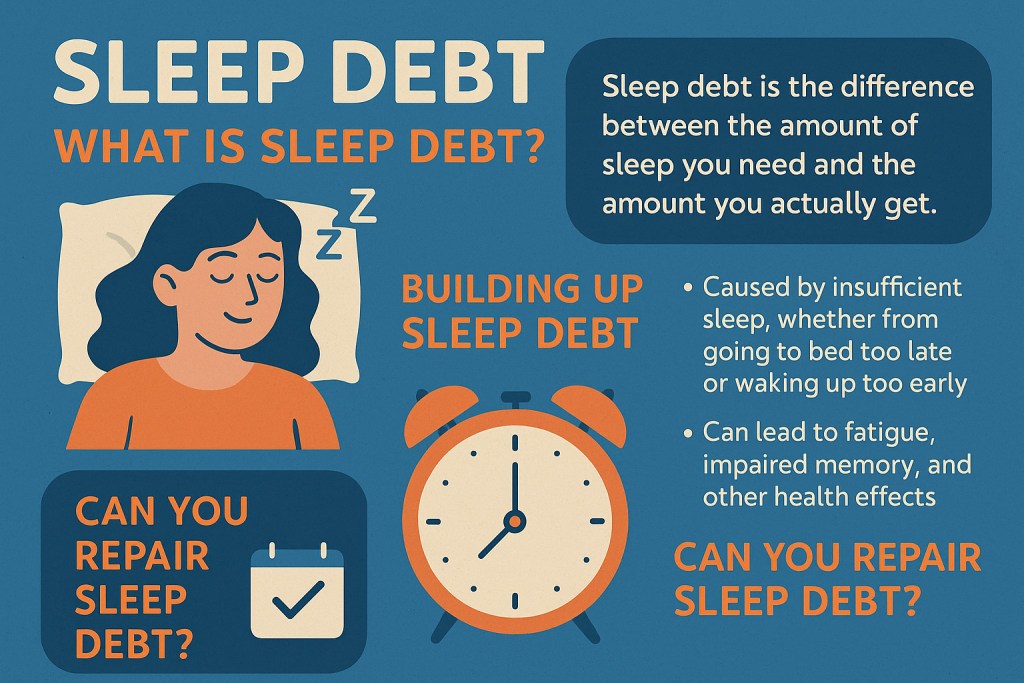
Sleep debt is the difference between the amount of sleep your body needs and what you actually get. For example, if your body needs 8 hours per night, but you’ve been sleeping only 6 hours a night all week, you’re carrying a sleep debt of 14 hours by the weekend. And unfortunately, you can’t always just “catch up” in one night.

what is sleep debt

Your Brain on Sleep Debt

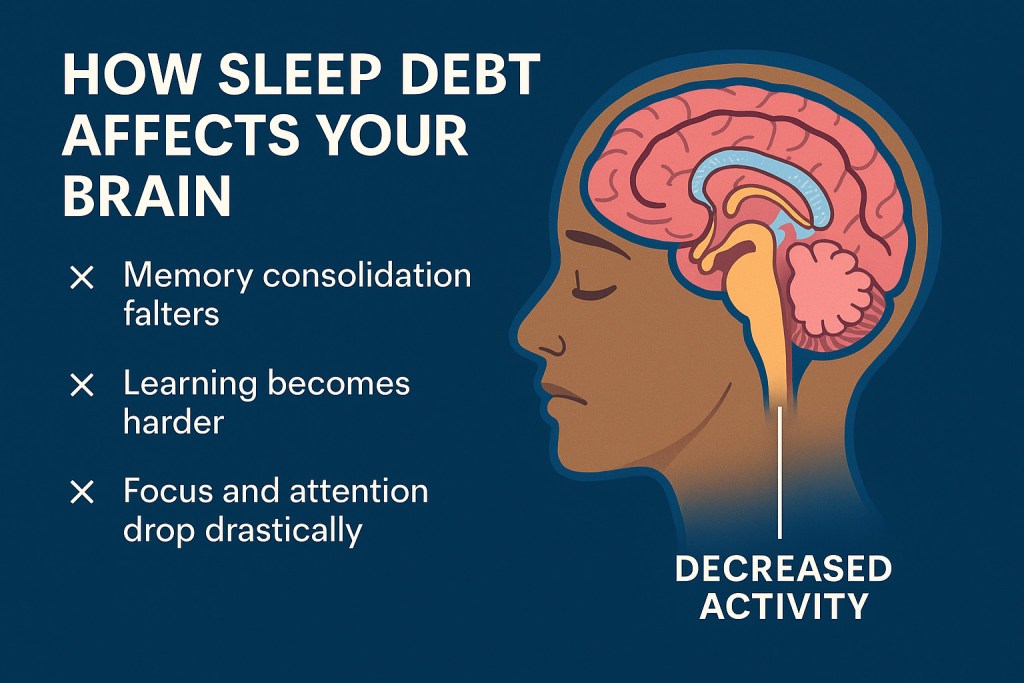
Sleep isn’t just for physical restoration; it’s when your brain performs its nightly cleanup. Research shows that during deep sleep, cerebrospinal fluid actually washes through the brain, clearing out toxins including proteins linked to Alzheimer’s. Without enough rest:

  • Memory consolidation falters
  • Learning becomes harder
  • Focus and attention drop drastically
how sleep affects brain

MRI scans even show decreased activity in the prefrontal cortex, the part of the brain responsible for complex thinking, decision-making, and impulse control, after just one night of poor sleep.

Emotional Regulation and Mood Shifts

Ever feel extra irritable or anxious after a bad night’s sleep? That’s no coincidence.

Studies from Harvard Medical School show that chronic sleep deprivation impacts the amygdala (the brain’s emotional control center), making it hyper-reactive. This can lead to:

  • Heightened anxiety
  • Increased irritability
  • Reduced ability to manage stress
  • A tendency to catastrophize or overreact to small issues

Over time, poor sleep is strongly correlated with depression, emotional instability, and even symptoms of bipolar disorder.

How Sleep Debt Often Goes Unnoticed

One of the trickiest parts of sleep debt is that it builds silently. You might not even realise it’s happening especially if you’re only missing an hour here or there.

For example, say your body needs 8 hours of sleep but you’re consistently getting just 7. That’s 7 hours of sleep debt per week, nearly an entire night’s rest lost. Because it happens gradually, your body starts adjusting to a lower baseline of energy and alertness. You think you’re functioning “fine,” but in reality:

  • Your productivity dips
  • Your focus narrows
  • Your stress response becomes exaggerated
  • Your memory gets patchy

Over time, you may find that tasks feel harder, your mood is more reactive, and your energy crashes earlier in the day. This creates a misleading perception: “I’m used to 6 hours.” But being used to it doesn’t mean it’s healthy or sustainable.

Who Is More Sleep-Deprived – Men or Women?

When it comes to sleep deprivation, both men and women are at risk, but women tend to be more sleep-deprived overall. According to multiple studies (including a large report by the Sleep Research Society), women typically need more sleep than men due to more complex hormonal cycles and multitasking demands, but often get less of it.

sleep deprivation comparison between men and women

This isn’t just about quantity, either. Hormonal changes during menstruation, pregnancy, and menopause can disrupt sleep quality, even when time in bed is adequate.

How Sleep Deprivation Affects Women’s Appearance

Sleep debt doesn’t just make you feel tired, it shows on your face. For women especially, this is often visible in:

  • Dark circles and puffiness under the eyes
  • Dull, dehydrated skin
  • Increased fine lines and wrinkles
  • Hormonal acne flare-ups

Lack of sleep disrupts collagen production and increases inflammation, which accelerates signs of aging. Your skin regenerates while you sleep and if you’re missing cycles, you’re missing your natural beauty reset.
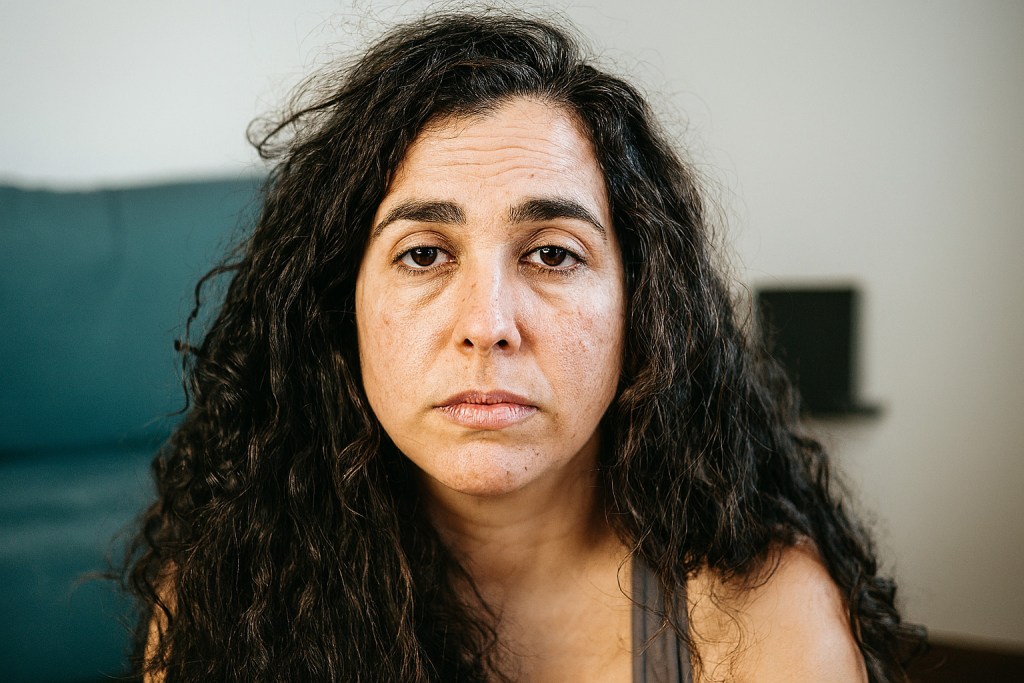
sleep deprivation effects on appearance

Plus, poor sleep throws off oestrogen balance, which plays a role in skin hydration and elasticity. That’s why even a few nights of poor sleep can leave your complexion looking noticeably fatigued.

How Sleep Deprivation Affects Men’s Health and Energy

Men aren’t immune to the downsides of sleep debt, in fact, they often face issues in different areas:

  • Reduced testosterone production: Even one week of short sleep can significantly lower testosterone levels.
  • Lower energy and motivation: Chronic fatigue dulls mental clarity and physical drive.
  • Impaired muscle recovery: Sleep is vital for growth hormone release, crucial for anyone physically active.
  • Increased risk of heart disease and weight gain
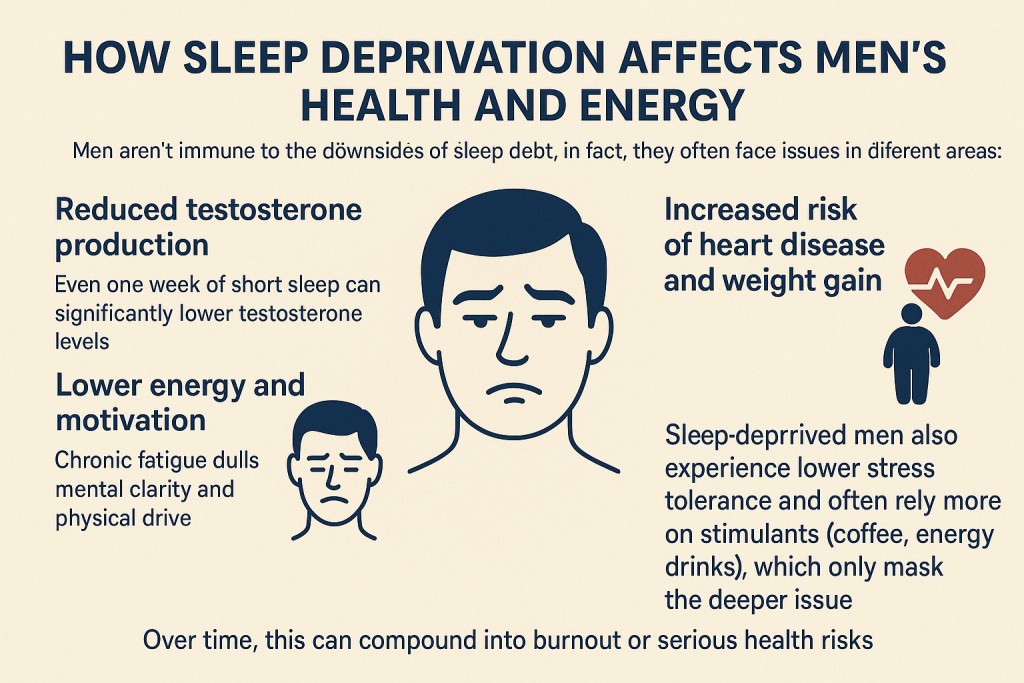
sleep deprivation effects on mens health

Sleep-deprived men also experience lower stress tolerance and often rely more on stimulants (coffee, energy drinks), which only mask the deeper issue. Over time, this can compound into burnout or serious health risks.

Physical Performance and Reaction Time

Athletes know that rest is as important as training. But even if you’re not competing for gold medals, sleep debt can seriously hinder your physical abilities:

  • Slower reflexes
  • Decreased endurance
  • Lower strength and coordination
  • Greater risk of injury

Even driving while sleep-deprived has been equated with driving under the influence — it’s that dangerous. One study found that staying awake for 18 hours impairs reaction time as much as having a blood alcohol level of 0.05%.

Sleep Debt Disrupts Your Circadian Rhythm

Your circadian rhythm, the body’s internal 24-hour clock, thrives on regularity. Accumulated sleep debt throws this rhythm into chaos, affecting:

  • Hormone release (including melatonin and cortisol)
  • Metabolic processes
  • Core body temperature
  • Digestive timing and hunger cues

This disruption makes it even harder to fall asleep at a healthy time, creating a vicious cycle of fatigue and misalignment.

Short-Term vs Long-Term Effects of Sleep Debt

Short-Term Effects Long-Term Effects
Brain fog and poor concentration Increased risk of cardiovascular disease
Moodiness or emotional volatility Higher likelihood of developing type 2 diabetes
Impaired judgment and slower reaction times Chronic anxiety or depression
Increased hunger and poor dietary choices Hormonal imbalances
Reduced immune function Premature aging and cognitive decline

My Turnaround: Using a Sleep Calculator

I reached a point where no amount of caffeine could save me. That’s when I turned to a sleep calculator to reset my sleep schedule based on natural sleep cycles. Instead of guessing when to sleep or wake up, I started planning bedtime around full 90-minute sleep cycles. The difference? I woke up more refreshed and less groggy, even with slightly fewer hours, because I wasn’t cutting REM short.
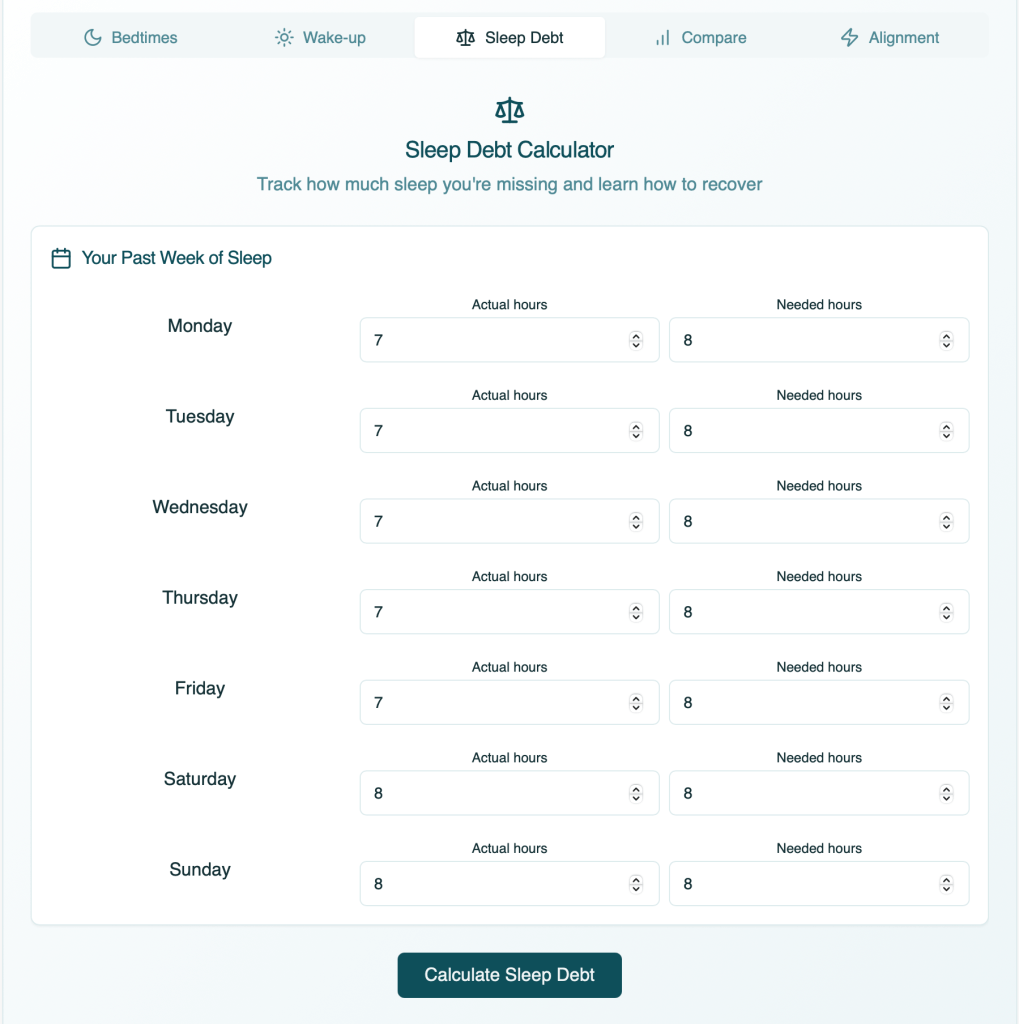
Tip: Try our sleep calculator to align your bedtime with your natural rhythms and start reducing sleep debt the smart way.

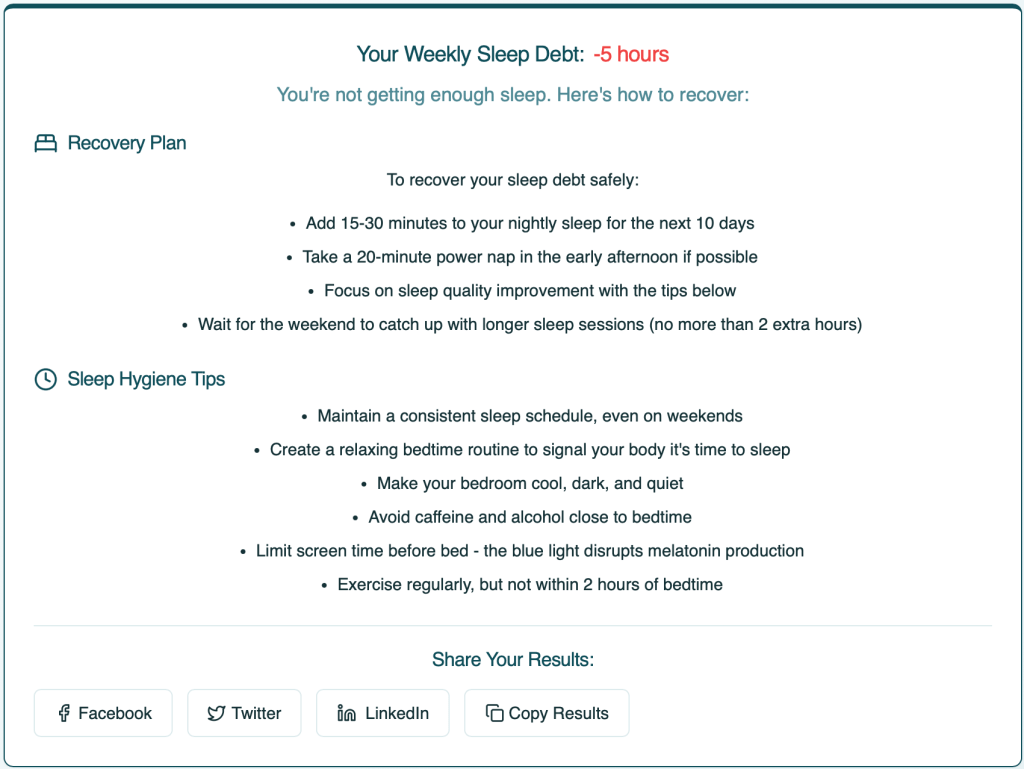
Sleep Debt Calculator Results
How to Repay Sleep Debt

Unfortunately, sleep debt isn’t cleared in one night. But the good news? It’s reversible. Here’s how:

  • Gradually extend your sleep: Add 30–60 minutes each night for a week instead of sleeping 12 hours at once.
  • Stick to a consistent sleep schedule, even on weekends.
  • Create a calming bedtime routine to fall asleep faster and deeper.
  • Avoid caffeine and screens before bed, which delay melatonin release.

Final Thoughts

Sleep debt doesn’t just make you tired, it affects your cognitive sharpness, your emotional health, and even your long-term physical wellbeing. If you’ve been ignoring sleep as a priority, your body and brain are already noticing.

You don’t need to overhaul your life overnight. Just start by calculating when you should sleep to complete full sleep cycles and work from there. It’s a small step that brings big returns in energy, focus, and overall health.

sleep cycles & stages
July 19, 2025

The Science Behind Sleep Cycles: Why Timing Matters More Than Hours

If you’re like me, you might find that after sleeping for 7 or 8 hours, you still feel tired, while 5 or 6 hours on other days can leave you feeling good. This baffled me until I learned about sleep cycles. Knowing when you wake up is as important as how long you sleep; sometimes, we don’t get the recovery our bodies need. Many people confuse sleep, naps, and rest; they are different, and one cannot replace the other.

Let me walk you through the science, and by the end of this, I promise you’ll be using a sleep calculator every night like I do.

What Are Sleep Cycles?

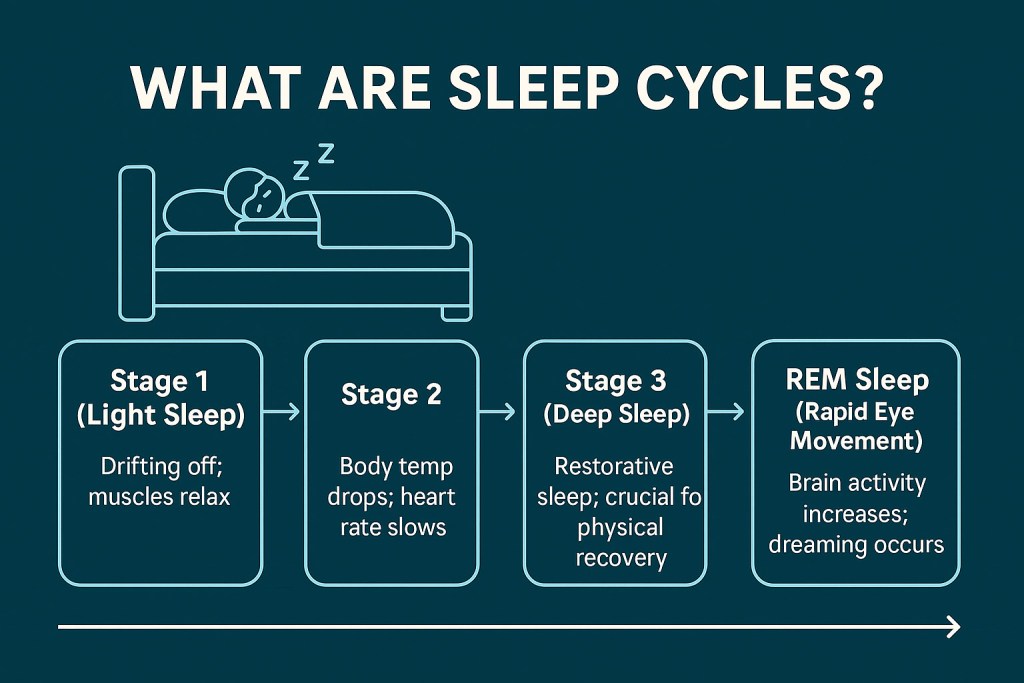
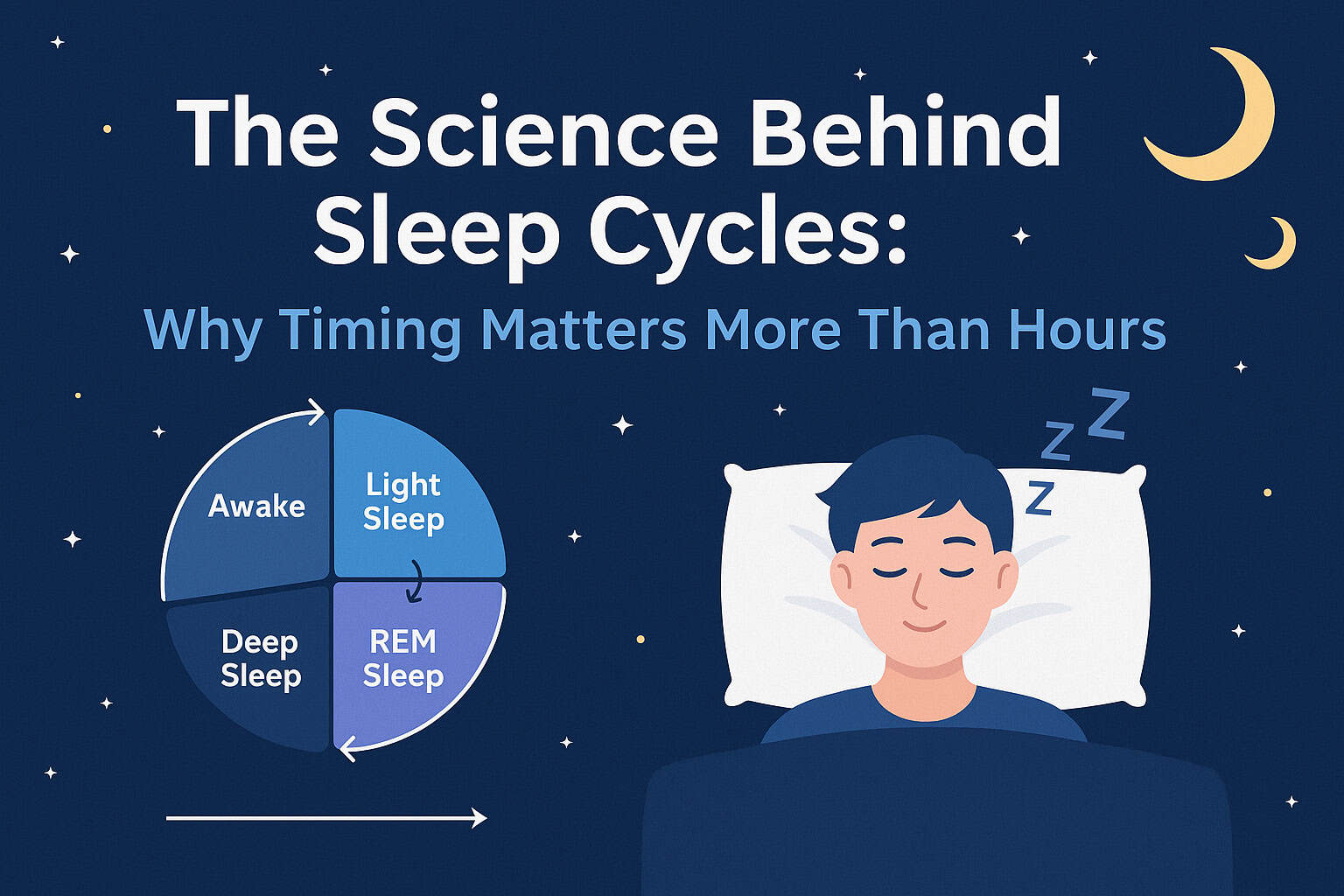
Sleep isn’t one big, continuous state of unconsciousness. It’s actually a sequence of repeating phases, called sleep cycles, that your brain and body go through multiple times each night. Each cycle typically lasts about 90 minutes, and we experience 4 to 6 cycles per night depending on sleep duration.

what are sleep cycles

Here’s what a typical sleep cycle looks like:

  1. Stage 1 (Light Sleep): This is that drifting-off moment. Your muscles relax, and your brain activity begins to slow down.
  2. Stage 2: Your body temp drops, heart rate slows, and you’re less likely to wake up from minor disturbances.
  3. Stage 3 (Deep Sleep): This is restorative sleep. It’s crucial for physical recovery and immune system function.
  4. REM Sleep (Rapid Eye Movement): Brain activity increases, you dream, and it supports memory and emotional processing.

We cycle through sleep stages all night, with more REM sleep in the second half. Not completing these cycles can lead to sleep deprivation, affecting your health and lifestyle. I recommend using a sleep debt calculator, which you can find in this guide on your phone or access directly. It will ask a few questions about your sleep routine and compare your answers to standards from the Sleep Health Journal and NHS website, letting you know if you’re sleep deprived.

Sleep Calculator

Plan your optimal bedtime and wake-up times based on your body’s natural sleep cycles. Wake up refreshed and energized every morning.

Why Use This Calculator?

  • Calculate the ideal bedtime based on when you need to wake up
  • Find the optimal wake-up time based on when you go to bed
  • Work with your body’s natural 90-minute sleep cycles
  • Minimize grogginess and maximize morning energy
  • Based on sleep science research
Use Sleep Calculator

Why Waking Up Mid-Cycle Feels So Terrible

Here’s the kicker: If you wake up during deep sleep, your brain is still in “offline mode.” That’s when you get that horrible groggy feeling known as sleep inertia. It can take up to 30 minutes to fully recover, sometimes longer.

In contrast, waking up during light sleep or REM is much easier. Your brain is closer to waking consciousness, making it less jarring.

I tested this by tweaking my wake-up time in 15-minute increments using a sleep calculator, and guess what? The difference was astonishing. On days I woke mid-cycle, I felt like I needed an IV drip of coffee. But when I timed it right, even if I got slightly less sleep, I felt fresher.

Why 8 Hours Isn’t a Magic Number

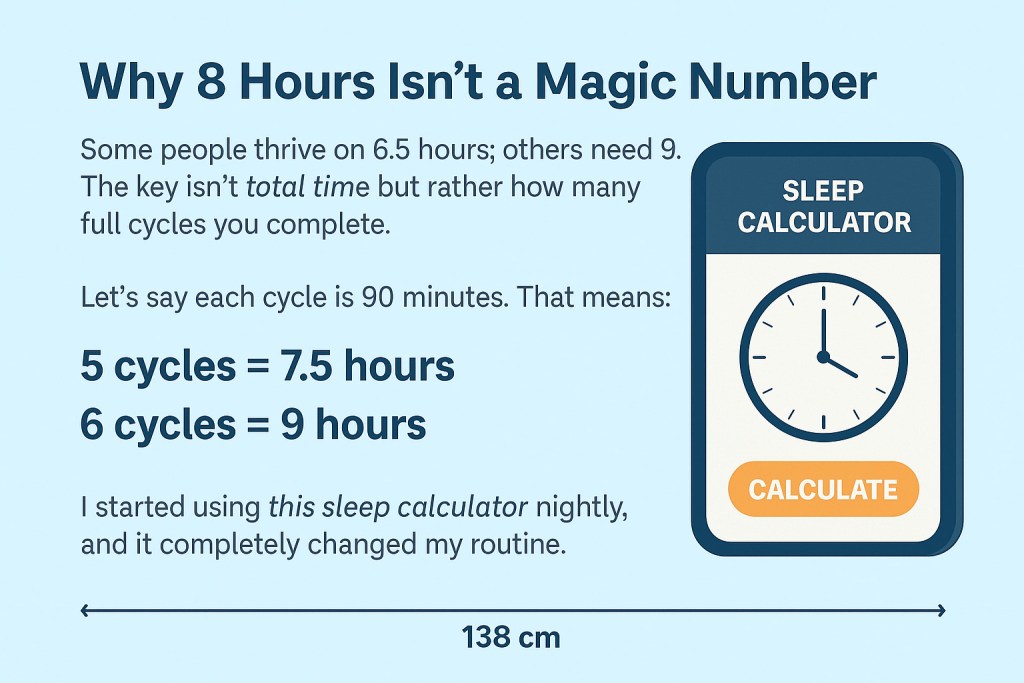
The idea that we all need 8 hours of sleep is more of a general guideline than a scientific truth. Some people thrive on 6.5 hours; others need 9. The key isn’t just total time but rather how many full cycles you complete.

how many hours of sleep do I need

Let’s say each cycle is 90 minutes. That means:

  • 5 cycles = 7.5 hours
  • 6 cycles = 9 hours

This is why tools like sleep calculators work. They estimate backward from your desired wake-up time, ensuring you complete a full number of cycles. I started using this sleep calculator nightly, and it completely changed my routine.

The Role of Circadian Rhythms

You can’t talk about sleep cycles without mentioning your circadian rhythm. Think of it as your internal clock, influenced by light and hormones. It regulates not just sleep, but digestion, body temperature, and hormone release.

If you go to bed and wake up at erratic times, your internal clock becomes confused, making it harder to fall asleep or wake naturally. A sleep calculator works best when paired with a consistent sleep schedule, aligned with your circadian rhythm.

Sleep Cycles & Performance

Research from the National Sleep Foundation and numerous clinical studies show that well-timed sleep improves: read our article for the side effects of sleep deprivation

  • Cognitive performance
  • Mood stability
  • Memory retention
  • Reaction time

Athletes use this science religiously. Even tech CEOs and entrepreneurs have turned to sleep coaching and timing calculators to improve output.

What Happens If You Don’t Complete Your Sleep Cycles?

Missing out on full sleep cycles regularly doesn’t just leave you feeling tired, it disrupts the very foundation of how your brain and body restore themselves. Each sleep cycle is composed of light sleep, deep sleep, and REM (rapid eye movement), and skipping or interrupting these stages night after night can create a ripple effect across multiple areas of your health.

When these restorative phases are frequently cut short, whether by poor sleep habits, stress, or an inconsistent schedule, your body never gets the chance to fully reset. Over time, this deprivation goes beyond tiredness. It impacts memory, immunity, emotional regulation, metabolism, and even your heart health.

Short-Term Effects

In the short term, interrupted or incomplete sleep cycles can lead to:

  • Cognitive Fog and Poor Focus: Without deep and REM sleep, your brain struggles to consolidate memory and stay alert.
  • Mood Swings and Irritability: REM sleep is essential for emotional regulation; a lack of it leads to quicker frustration, anxiety, or depressive moods.
  • Daytime Fatigue: You may feel like you’ve slept “enough,” but without completing full cycles, your body doesn’t truly rest, leaving you sluggish or “heavy-headed.”
  • Weakened Immune Response: Even one night of poor sleep can impair your immune function, making you more susceptible to illness.

Long-Term Effects

When incomplete sleep cycles become a long-term pattern, the consequences deepen:

  • Chronic Sleep Debt: Your body accumulates a deficit it can’t easily pay back, compounding physical and mental stress.
  • Higher Risk of Disease: Long-term sleep fragmentation is linked to cardiovascular disease, Type 2 diabetes, obesity, and even neurodegenerative diseases like Alzheimer’s.
  • Hormonal Imbalance: Disrupted sleep interferes with hormones like cortisol (stress), ghrelin (hunger), and melatonin (sleep), which regulate everything from appetite to mood.
  • Impaired Learning and Memory: Without consistent REM sleep, your brain loses the ability to process new information or store long-term memories efficiently.
  • Mental Health Issues: Chronic sleep issues can contribute to anxiety, depression, and even an increased risk of suicidal thoughts.

Should You Use a Sleep Calculator?

Absolutely and here’s why:

  • It prevents waking mid-cycle (no more sleep inertia)
  • Helps establish consistent sleep habits
  • Maximises recovery and alertness

If you’re a shift worker, a parent of young kids, or someone juggling multiple responsibilities, a sleep calculator could be your best friend.

Factors That Affect Your Sleep Cycles

Your sleep cycles can be easily disrupted by both lifestyle choices and underlying health conditions. Even if you’re getting the recommended hours of rest, these interruptions can prevent your brain from completing full sleep cycles, leaving you groggy or unrested.

Here are some common factors that can interfere:

Conditions like insomnia and sleep apnea are particularly harmful because they fragment your sleep, making it harder for your body to move through natural stages like deep and REM sleep, the very ones that help with memory, immune function, and emotional balance. Addressing these factors can dramatically improve your sleep quality and restore healthier cycles.

Final Thoughts: Make It Work for You

Once I started planning my bedtime using cycles rather than hours, mornings became easier. I now aim for 5 or 6 complete cycles and wake up during light sleep. My productivity, mood, and even workouts have improved.

Sleep smarter, not longer.

Start using a sleep calculator to determine your optimal bedtime, and let science do the heavy lifting. Trust me, your body and brain will thank you.

Product has been added to your cart