



Why Memory Foam Mattresses Are Ideal for Better Sleep
When it comes to choosing the perfect bed, a memory foam mattress is often one of the most trusted options for comfort and support. Known for its ability to adapt to body shape and relieve pressure points, memory foam has transformed the way people sleep. Unlike traditional spring mattresses, it provides a personalized sleep experience that helps reduce tossing, turning, and discomfort during the night. For those struggling with back pain or restless nights, memory foam is often the ultimate solution.
What Makes a Memory Foam Mattress Different?
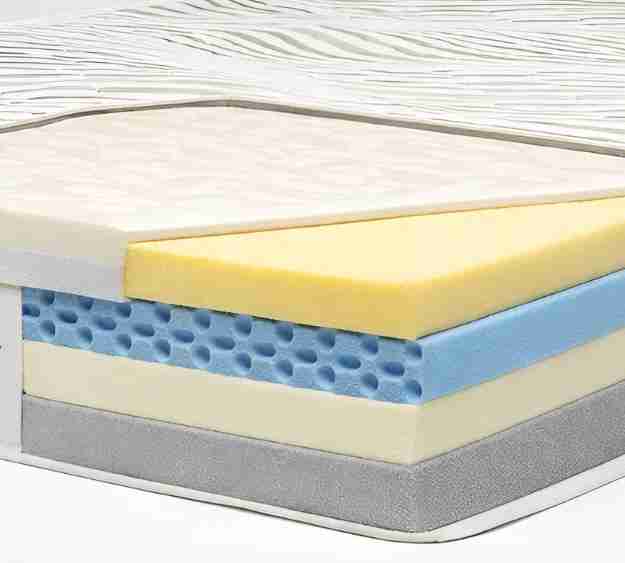
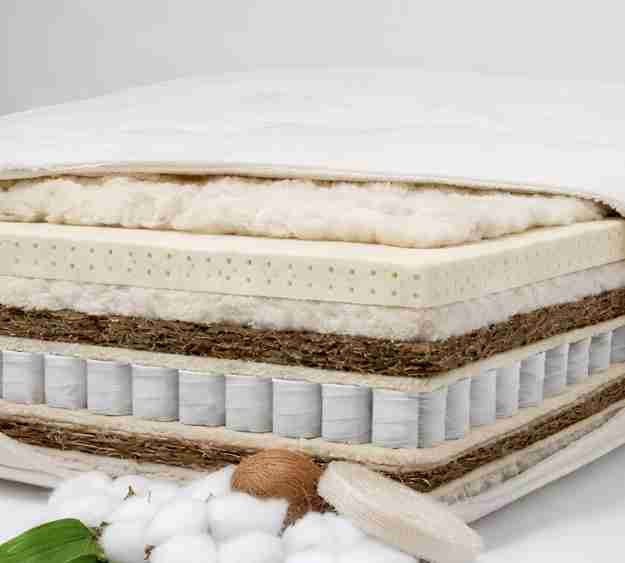
A memory foam mattress is not like other mattresses. It uses a unique material that responds to body heat and pressure, allowing it to mold perfectly around your body. This means it gives support exactly where you need it most, whether that’s your shoulders, hips, or lower back. Unlike spring beds that can feel bouncy or uneven, memory foam distributes your weight evenly across the surface. This difference makes it ideal for people who want both comfort and stability while they sleep.
Pressure Relief for a Pain-Free Sleep
One of the greatest benefits of a memory foam mattress is pressure relief. When you lie down, your body puts weight on certain points, especially the shoulders, hips, and spine. A regular mattress might not provide equal support, which can lead to discomfort or pain. Memory foam solves this problem by absorbing the pressure and spreading it across the surface, reducing strain on your joints and muscles, helping you wake up refreshed instead of sore.
Perfect Support for Spinal Alignment
Good posture is important not only when you are standing but also while you sleep. A memory foam mattress helps keep the spine aligned in its natural position. For side sleepers, it supports the shoulders and hips without sinking too much. For back sleepers, it provides enough firmness to prevent the lower back from arching unnaturally. Maintaining proper alignment throughout the night reduces the risk of back pain and long‑term posture issues Essentia Organic Mattress.
Motion Isolation for Undisturbed Rest
If you share your bed with a partner, a memory foam mattress can be a real game‑changer. Traditional mattresses often transfer movement across the surface, so if your partner tosses and turns, you feel it too. Memory foam absorbs these motions instead of spreading them, meaning you can sleep peacefully even if the other person is moving. Couples especially value this feature because it allows both partners to enjoy restful, uninterrupted sleep
Ideal for All Sleeping Positions
A memory foam mattress is suitable for every type of sleeper. Side sleepers benefit from pressure relief on their shoulders and hips. Back sleepers enjoy firm support that keeps the spine aligned. Even stomach sleepers find comfort because the foam adjusts to their body while preventing too much sinking. This versatility makes memory foam a great option for families or anyone unsure about which type of mattress fits their sleep style best American MattressNational Council on Aging.
Temperature Control and Cooling Options
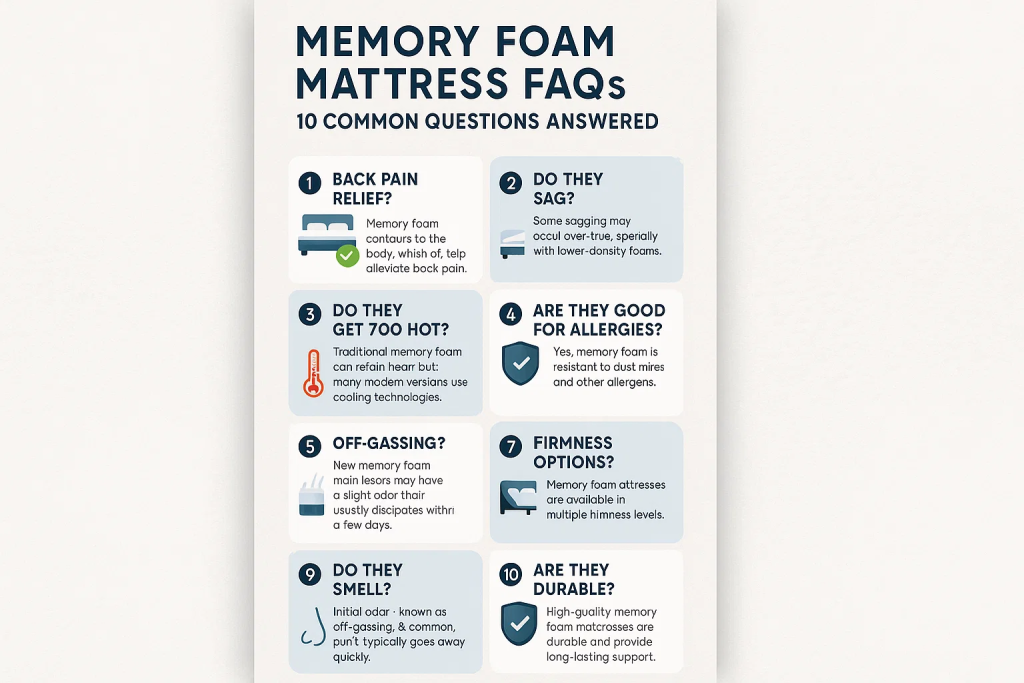
One concern many people have about memory foam is heat retention. In the past, these mattresses were known for trapping heat, which made them uncomfortable in warmer weather. However, modern designs now include cooling technologies like gel‑infused foam, open‑cell structures, and breathable covers. These upgrades ensure that a memory foam mattress stays cool and comfortable all night long, making it suitable even for people who tend to sleep hot.
Durability and Long-Lasting Comfort
Investing in a mattress is a long‑term decision, and memory foam mattresses are known for their durability. Unlike spring mattresses that may sag or lose shape over time, high‑quality memory foam maintains its structure for years. It returns to its original form after use, ensuring consistent comfort and support. With proper care, a good memory foam mattress can last 8 to 10 years, making it a worthwhile investment for better sleep American MattressWikipedia.
Hypoallergenic and Health Benefits
For people with allergies, a memory foam mattress is a healthier option. The dense structure of the foam prevents dust mites, mold, and other allergens from settling inside American Mattress. In addition, the mattress’s ability to relieve pressure and improve circulation reduces nighttime discomfort, helping you sleep more deeply and wake up feeling energized.
Affordable Options for Every Budget
Many people assume that memory foam mattresses are always expensive, but that’s not true anymore. With so many brands now offering different levels of quality and features, you can find a memory foam mattress that fits your budget. From basic models to luxury versions with cooling layers and advanced support, there is something available for everyone.
Why Choose a Memory Foam Mattress Over Others?
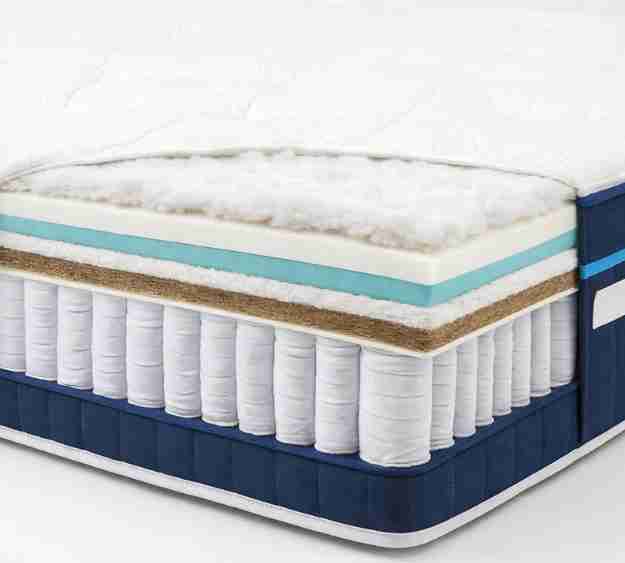
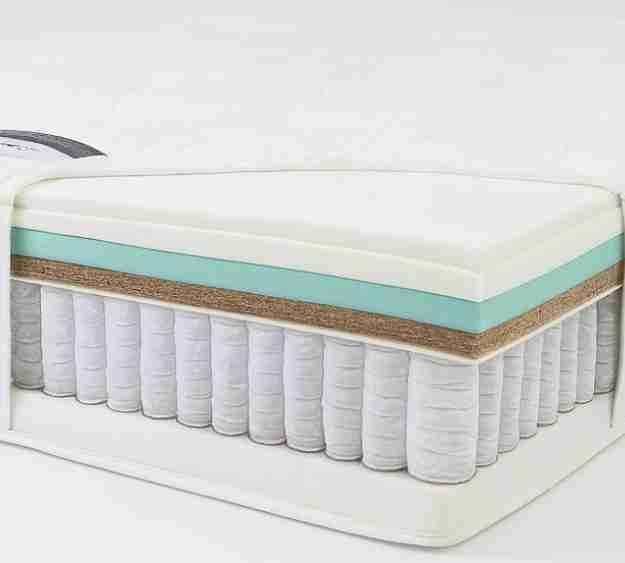
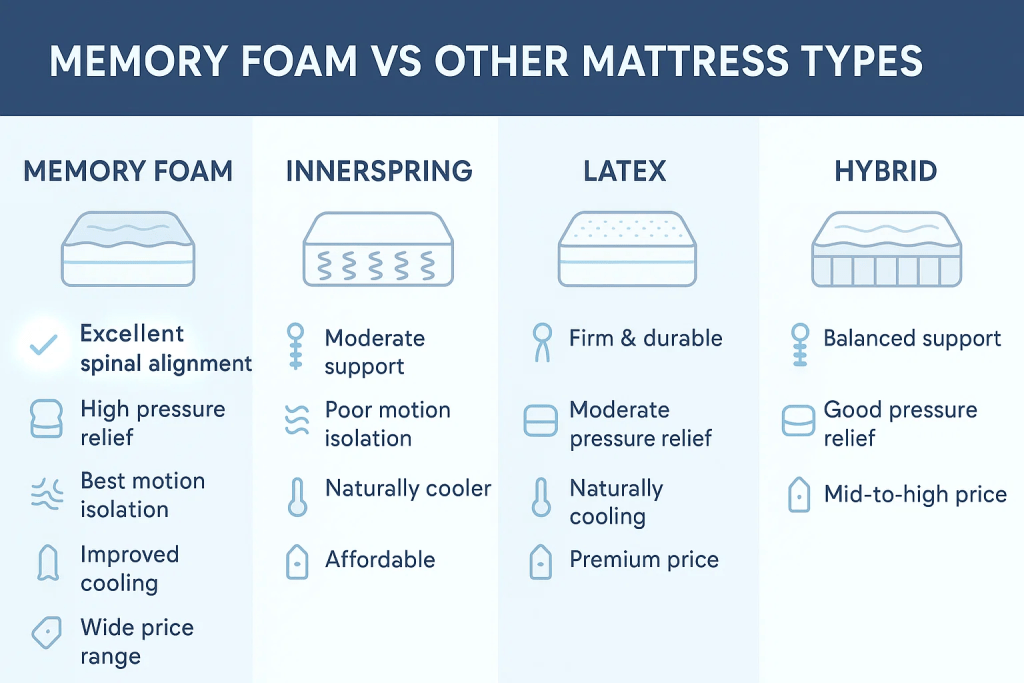
When comparing different types of mattresses, the advantages of memory foam stand out clearly. Innerspring mattresses may provide bounce, but they lack targeted support. Latex mattresses are durable, but they can feel too firm for some people. Hybrid mattresses combine multiple materials, but they are often more expensive. A memory foam mattress provides the perfect balance of comfort, support, and value, making it an ideal choice for better sleep GQThe Guardian.
| Mattress Type | Support & Alignment | Pressure Relief | Motion Isolation | Temperature Control | Price Range |
|---|---|---|---|---|---|
| Memory Foam | Excellent spinal alignment, contours to body | High – relieves shoulders, hips, spine | Excellent – absorbs movement fully | Improved with gel/open-cell tech | Wide range (£200 – £1,500+) |
| Innerspring | Moderate – depends on coil design | Low – uneven support on pressure points | Poor – transfers motion easily | Good airflow, naturally cooler | Affordable (£150 – £1,000) |
| Latex | Strong, responsive support | Moderate – firmer feel, less contouring | Moderate – some bounce remains | Excellent – naturally cooling | Premium (£800 – £2,000+) |
| Hybrid (Coils + Foam) | Balanced support and comfort | High – combines foam contouring with coil lift | Good – better than springs, not as good as foam | Moderate to good, depends on design | Mid to high (£500 – £2,000+) |
Caring for Your Memory Foam Mattress
To make the most out of your investment, it’s important to take proper care of your memory foam mattress. Always use a breathable mattress protector to keep it clean and safe from spills. Rotate the mattress occasionally to ensure even wear. Avoid placing it directly on the floor, as it needs proper airflow to remain fresh and hygienic. With these simple steps, your mattress can remain supportive and comfortable for many years.
Conclusion
Choosing the right mattress can completely transform your sleep, and a memory foam mattress is one of the best options available today. From relieving pressure and supporting spinal alignment to reducing motion transfer and improving sleep quality, it offers benefits that other mattresses can’t match. Modern versions are cooler, more durable, and available in every price range, making them suitable for all kinds of sleepers. If you are looking for comfort, support, and long-lasting value, memory foam is the perfect choice for better sleep.
FAQ’s
Yes, memory foam mattresses are highly recommended for back pain as they provide proper spinal support and pressure relief.
Older versions did, but modern memory foam mattresses use cooling gels and breathable covers to regulate temperature.
On average, a good-quality memory foam mattress lasts between 8 to 10 years with proper care.
Yes, memory foam is naturally resistant to dust mites and allergens, making it a healthier choice for sensitive sleepers.
Absolutely. It adapts to side, back, and stomach sleepers by offering personalized support and comfort.