
Memory foam mattresses have become one of the most popular choices for people seeking comfort and support during sleep. Known for their ability to contour the body, relieve pressure, and reduce tossing and turning, these mattresses are often recommended for better rest. But with so many options available, buyers are often left with several questions. This guide covers the ten most common queries about memory foam mattresses, helping you make an informed decision.
1. What is a memory foam mattress?
A memory foam mattress is made from viscoelastic material that reacts to body heat and pressure. It molds around the body to provide personalized support and comfort. Unlike traditional spring mattresses, memory foam minimizes motion transfer, making it a great choice for couples.
2. Is a memory foam mattress good for back pain?
Yes, memory foam is often recommended for people with back pain. Its ability to align the spine and relieve pressure points can reduce discomfort. However, the firmness level should match your sleeping style for the best results.
3. Do memory foam mattresses get too hot?
Older versions of memory foam mattresses were known for heat retention. Modern designs now include cooling gels, breathable layers, or open-cell technology to promote airflow and regulate temperature throughout the night.
4. How long does a memory foam mattress last?
A high-quality memory foam mattress usually lasts between 7 and 10 years. Proper care, such as rotating the mattress and using a protector, can extend its lifespan.
5. Are memory foam mattresses safe?
Yes, most modern memory foam mattresses are made with CertiPUR-US® certified foam, ensuring they are free from harmful chemicals like formaldehyde or heavy metals. Always check for certifications before purchasing.
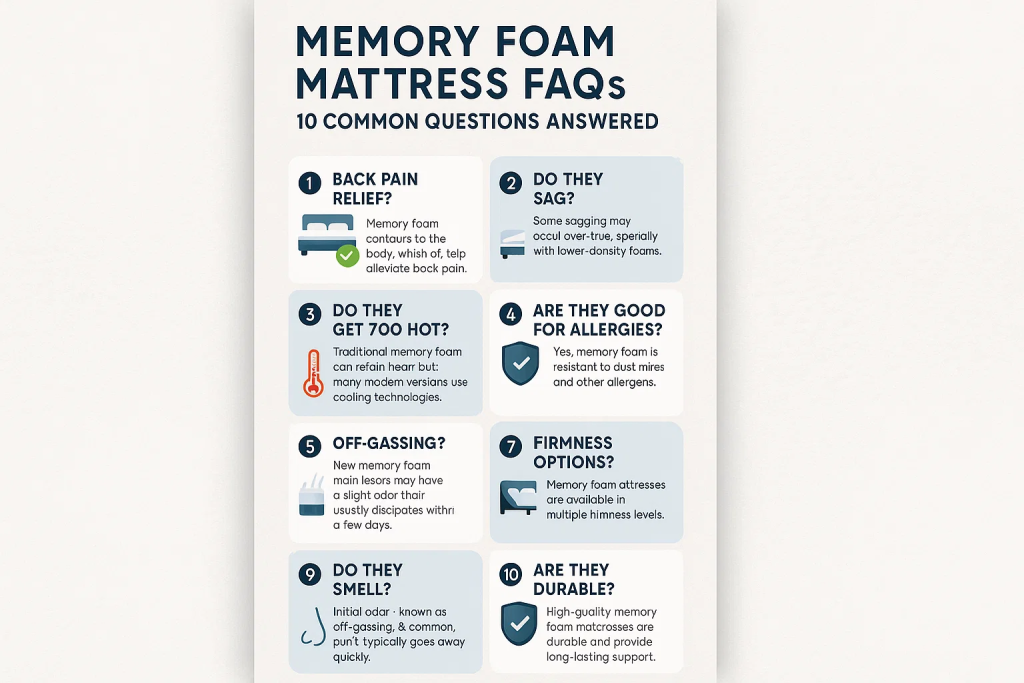
6. Do memory foam mattresses sag over time?
Like any mattress, memory foam can sag if it’s of poor quality or not properly maintained. Choosing a dense foam mattress and rotating it regularly can help prevent this issue.
7. Can memory foam mattresses help with allergies?
Yes, memory foam is resistant to dust mites and allergens, making it a good option for people with allergies. Pairing it with a hypoallergenic mattress cover provides even better protection.
8. Is a memory foam mattress suitable for all sleepers?
Memory foam works well for most sleeping positions, but side sleepers usually benefit the most due to pressure relief on the shoulders and hips. Back and stomach sleepers should opt for medium to firm options for better support.
9. Can you use a memory foam mattress on any bed frame?
Memory foam mattresses require a solid or slatted base for proper support. Using a weak or uneven frame can reduce mattress lifespan and comfort. Adjustable bases also pair well with memory foam.
10. Are memory foam mattresses expensive?
Prices vary depending on thickness, density, and brand. While they can be more costly than spring mattresses, their durability and comfort often make them a worthwhile investment.
| Question | Quick Answer | What to Look For | Pro Tip |
|---|---|---|---|
| What is a memory foam mattress? | Viscoelastic foam that contours to body heat and pressure; great motion isolation. | Quality foams, supportive base layer, breathable cover. | Choose reputable brands with clear specs and warranty. |
| Is it good for back pain? | Yes, when firmness matches your body and sleep position. | Medium‑firm feel, zoned support, good lumbar alignment. | Trial periods help verify relief within 2–4 weeks. |
| Do they get too hot? | Modern models add cooling gels, open‑cell foams, or airflow channels. | Perforated/ventilated foams, breathable covers, phase‑change fabrics. | Use a breathable protector; avoid plastic-y toppers. |
| How long do they last? | Typically 7–10 years with proper care. | High foam density and robust base (≥1.8 lb/ft³ polyfoam core). | Rotate quarterly and use a protector to extend life. |
| Are they safe? | Yes, when certified and low‑VOC. | CertiPUR‑US®, OEKO‑TEX® textiles. | Check certifications on the issuer’s website, not just the box. |
| Do they sag over time? | Low‑quality foam can; high density resists sagging. | Comfort foam density ~3–5 lb/ft³; sturdy support core. | Rotate every 3 months; ensure proper base support. |
| Good for allergies? | Yes—naturally resistant to dust mites and common allergens. | Hypoallergenic covers, zipped encasements. | Wash bedding hot weekly; vacuum mattress surface monthly. |
| Suitable for all sleepers? | Side: medium/soft; Back: medium‑firm; Stomach: firmer. | Firmness options matched to sleep position. | Couples: consider medium hybrid or split firmness. |
| Works on any bed frame? | Needs solid or slatted base; adjustable bases work well. | Slat gaps ≤3″ and center support on larger sizes. | Weak frames shorten mattress lifespan—upgrade if needed. |
| Are they expensive? | Prices vary by density, thickness, and brand; value can be excellent. | Transparent specs, trial/warranty length (≥10 years). | Prioritize foam quality over “gimmick” layers. |
Conclusion
Memory foam mattresses have revolutionized the way people sleep by offering comfort, pressure relief, and better spinal alignment. They are especially beneficial for those dealing with back pain or sleep disturbances. By understanding the most common questions, you can choose a mattress that matches your needs and ensures quality rest for years to come.
On average, every 8 to 10 years, depending on wear and comfort.
Not always. The ideal thickness depends on body weight and sleeping style.
No, most are one-sided. Rotating them every few months is recommended instead.
Yes, they can be compressed and vacuum-sealed, but repeated compression may damage the foam.
Off-gassing is usually temporary and harmless. Choosing a certified mattress minimizes any risks.

Roman is a seasoned expert in mattress development with over a decade of experience in sleep technology, material innovation, and product engineering. He has played a key role in designing and refining sleep solutions for leading mattress brands, with a deep focus on ergonomics, pressure relief, and sleep quality optimization.
With a background in product design and biomechanics, Roman combines scientific research with hands-on development to create mattresses that address real-world sleep issues—from spinal alignment to temperature regulation. His work has contributed to several award-winning mattress lines known for their comfort, durability, and user satisfaction.
