


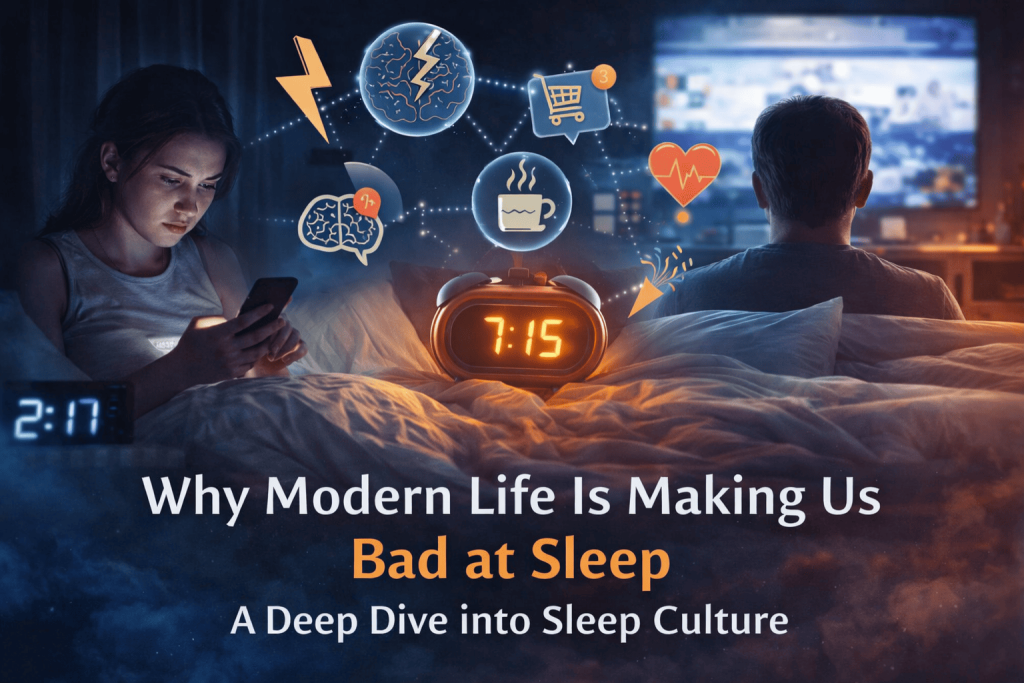
The sleep crisis no one is talking about
Modern life is taking a toll on our sleep. In the UK, many people report poor sleep quality. For example, a Mental Health Foundation survey found “almost one in three adults” in the UK has worse sleep quality due to financial worries.
This reflects a broader crisis. Despite knowing more about sleep and having smart tech, we’re sleeping worse than ever. One recent report notes that 30% of British adults have poorer sleep, and many more are anxious or sleep-deprived.
In this article, we’ll look at historical sleep patterns, the pressure to sacrifice rest for productivity, the effects of screens and tech, and how stress and our noisy, light-polluted environments disrupt slumber. Finally, we’ll share expert-recommended remedies to reclaim healthy sleep despite our 24/7 world.
A Historical Look at How We Used to Sleep
Long before electric light and 24-hour cities, human sleep was far more natural and even biphasic. Historian Roger Kirch found that until the 1800s, many people actually split the night into two sleeps: a “first sleep” and a “second sleep,” with a period of wakefulness in between.
People woke with the sun and slept when it set. When indoor lighting was limited, the day was ruled by sunlight. Anthropologists note that traditional societies today – without electric light – often sleep in a single consolidated block at earlier times, aligning closely with natural light.
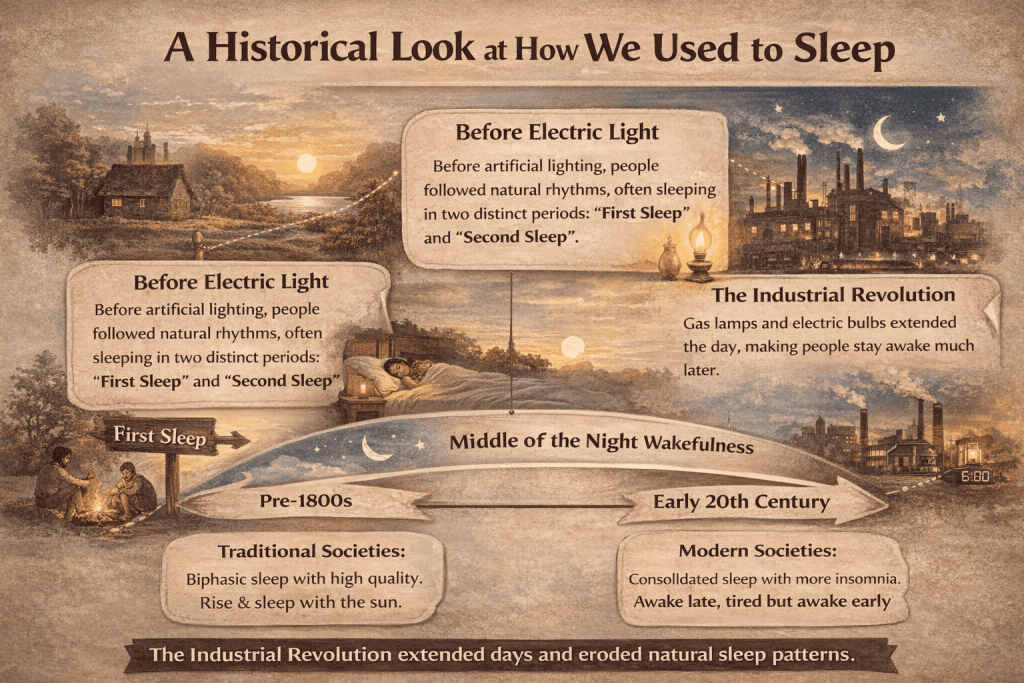
For instance, Amish and hunter-gatherer groups, who rise with dawn, report far lower insomnia rates (around 1–2.5%) than people in modern societies (where as many as 10-30% suffer chronic insomnia).
The Industrial Revolution changed all that. Gas lamps and then electric bulbs let people stay awake much later, even while still waking with the sun. As Ekirch explains, the spread of artificial light in the 18th–19th centuries “radically transformed” sleep patterns.
By the early 20th century, the segmented two-sleep pattern faded and most people tried to sleep in one long block. Electric light (and later screens) pushed bedtimes later without pushing wake-up time’s later, eroding total sleep. The fixed 9-to-5 (or 24-hour shift work) schedules common today also force many to sleep at unnatural times. In short, compared to our ancestors who rose and slept with the sun, modern life lets us ignore natural rhythms. We have more hours awake than ever, but often at the expense of quality rest.
The Culture of Sleep Sacrifice: I’ll sleep when I’m dead
In today’s culture, sleeping enough is often seen as a weakness. Hustle culture glorifies all-nighters and equates busyness with success. Phrases like “sleep is for the weak” or boasting about “4AM wake-up routines” are common in entrepreneurial circles.
Social media and business gurus celebrate the founder who sleeps only five hours a night. But these norms take a toll. Recent UK research highlights the scale: over a quarter (27%) of UK small business owners admit they survive on just five hours of sleep per night. Even worse, nearly 80% of British SMEs said they frequently lose sleep due to work stress.
Long work hours and irregular schedules make sleep problems worse. A new study by UCL found that people working 55+ hours per week – or who work nights or weekends have significantly shorter and poorer-quality sleep than those on normal schedules. These busy workers suffer often have short bouts of sleep which last for less than seven hours. But it gets even worse, it turns out that poor sleep in the UK leads to an estimated £40 billion in lost productivity every year.
In short, the “work hard, sleep later” mentality is now recognized as self-defeating. When people brag about cutting out sleep for extra work or study, it’s no badge of honor, it’s a path to burnout and health problems.
The result is that many feel trapped in a cycle of fatigue. We undervalue sleep in society: staying up late for the office or an email is often praised, while sleeping 7–8 hours is seen as lazy. This cultural mindset increases stress and makes insomnia more likely. In other words, the modern work-and-success culture actively discourages one of our most vital biological needs, and in doing so degrades our sleep quality and mental health.
Tech, Screens, and Blue Light Epidemic
One of the most studied disruptors of sleep is modern screen use. Smartphones, tablets, TVs and laptops emit blue light – a short-wavelength light that profoundly affects our brain’s sleep chemistry. Blue light from screens suppresses melatonin, the hormone that signals to our body it’s time for sleep.
In practical terms, scrolling through social media or watching videos late into the evening can trick your brain into thinking it is still daytime. This delays the onset of sleepiness and shifts your circadian rhythm later. Even the NHS agrees that we should avoid screens at least an hour before bed, since devices “all throw out blue light that stops sleep”.
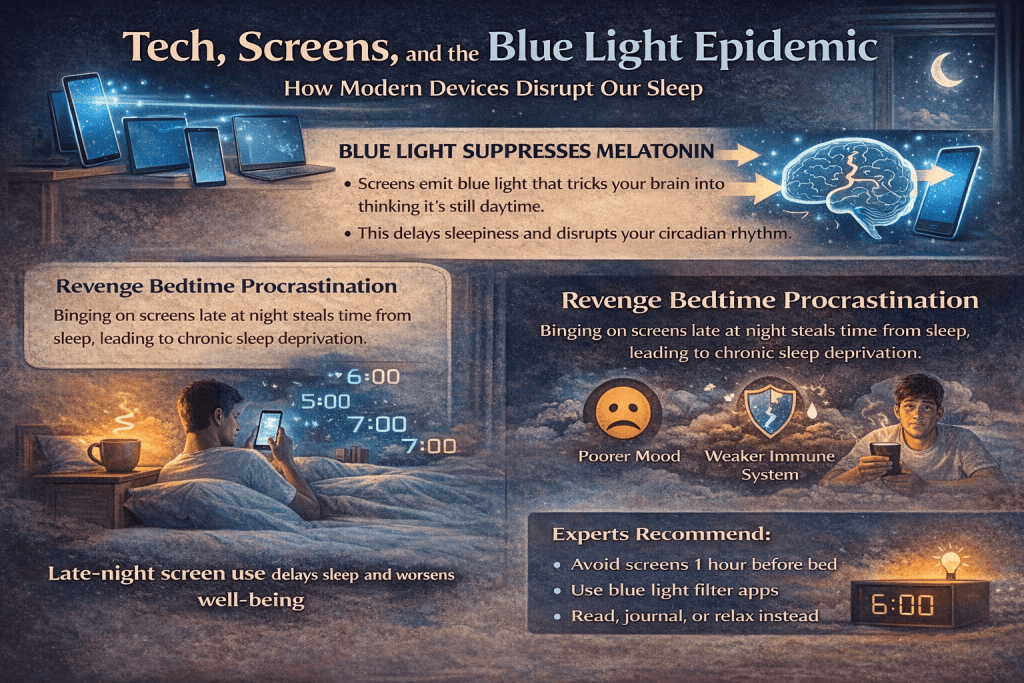
This screen effect also feeds “revenge bedtime procrastination”. That’s the phenomenon where busy adults delay sleep to reclaim personal time. After a long workday, it’s tempting to binge TV or social media even if you have to wake early.
Studies show that people with stressful jobs often trade sleep for late-night leisure. But this comes with its own adverse effects. Those extra hours spent awake can lead to chronic sleep deprivation, which in turn worsens mood and health. A UK survey during COVID-19 lockdowns reported a surge in both screen time and insomnia, coining the term “coronasomnia.” Experts note that the combination of more device use and blurred schedules causes “circadian rhythm disruption”. In sum, our obsession with screens in bed is a modern curse on sleep. The blue light effect delays drowsiness, and the habit of late-night scrolling leads to self-imposed sleep loss (often with a cup of tea or coffee involved too!). These behaviours undermine our natural sleep drive
Anxiety, Burnout, and Mental Load
Chronic stress and anxiety are sleep’s enemy. When we’re anxious or depressed, our brains stay in a state of “hyperarousal,” making it hard to relax at bedtime. Physically, stress hormones like cortisol and adrenaline are elevated, which directly fights the rise of melatonin needed to fall asleep.
Psychologically, worries and to-do lists keep our minds racing when we should be winding down. As SleepStation notes, “stress, anxiety and depression can all make it more difficult to sleep; on the flip side, poor sleep can also make these symptoms worse.”. In other words, insomnia and anxiety often amplify each other in a vicious cycle.
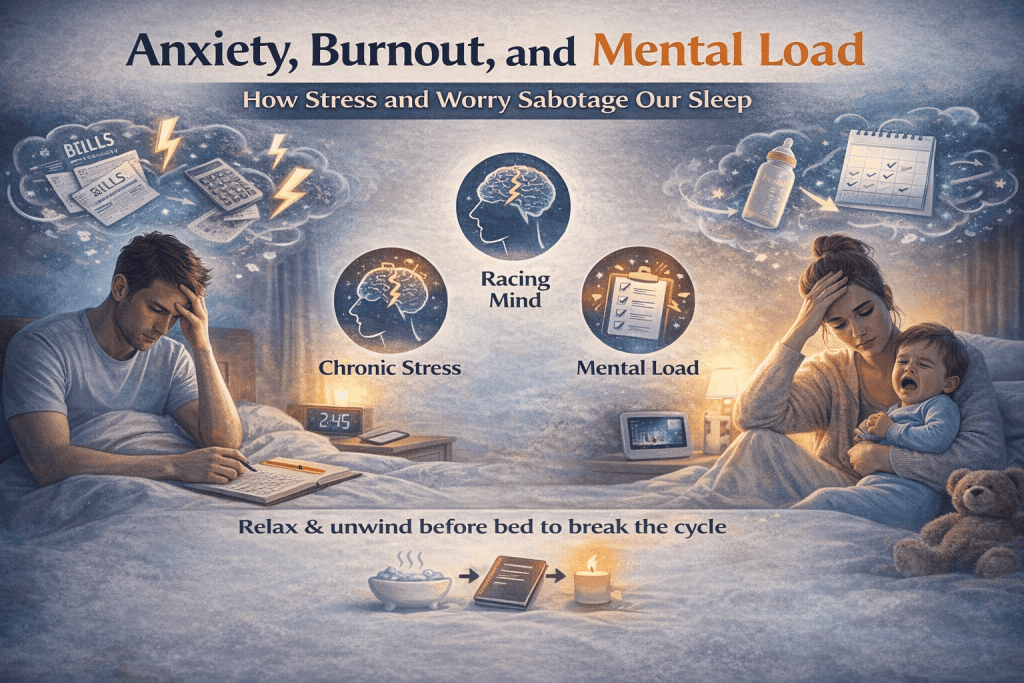
Parents and caregivers are especially hard-hit. New parents get far less sleep, of course, but even beyond infancy, the constant mental load weighs on sleep. The Mental Health Foundation reports that parents, especially mothers of young children, experience major drops in both the quality and quantity of sleep, contributing to stress and fatigue.
And it’s not just childcare: juggling any significant responsibility (caring for relatives, demanding jobs, etc.) leaves less bandwidth to unwind at night. UK surveys confirm this: nearly one-third of Britons said financial worries alone gave them worse sleep, and about a quarter cited money stress as a sleep disruptor.
Psychologists advise that addressing the underlying stress is key. Sleep experts often recommend relaxation techniques (warm baths, meditation, gentle stretching) and cognitive strategies (journaling worries, planning the next day well before bed).
The NHS Sleep Guide agrees that we should “relax at least 1 hour before bed” and set a regular bedtime to signal the brain to wind down. Importantly, if you’re lying awake with anxiety, it’s better to get up for a while than to toss and turn. By breaking the cycle of rumination (e.g. writing a to-do list so it’s out of your head), we can gradually let the mind settle.
In summary, the modern mental load – from economic worries to work pressure to social media stress – actively sabotages sleep. Experts emphasize treating anxiety and sleep together: improving one often helps the other.
UK authorities recommend talking therapies like CBT for insomnia, which address anxious thoughts around sleep. The upshot: managing stress and mental load is as important as mattresses for good sleep.
Environmental Disruptions: Noise, light and temperature
Even if we turn off the phone and the thoughts calm down, our bedroom environment can still be at war with sleep. Urban UK settings pose many challenges: noise, light pollution, and the wrong temperature can all prevent deep sleep.
Londoners and city-dwellers are often battered by late-night traffic, sirens, or even neighbors. According to the NHS, “silence is golden” for sleep – ear plugs or white noise machines can help mask disruptive sounds.
Light is another culprit. Streetlights or early dawn can prematurely arouse us. Good curtains or blinds are a must. The NHS advises making sure “your bedroom is dark and quiet”, using heavy curtains or blackout blinds to cut unwanted light. Small lights from electronic devices such as alarm clocks and chargers should also be eliminated.
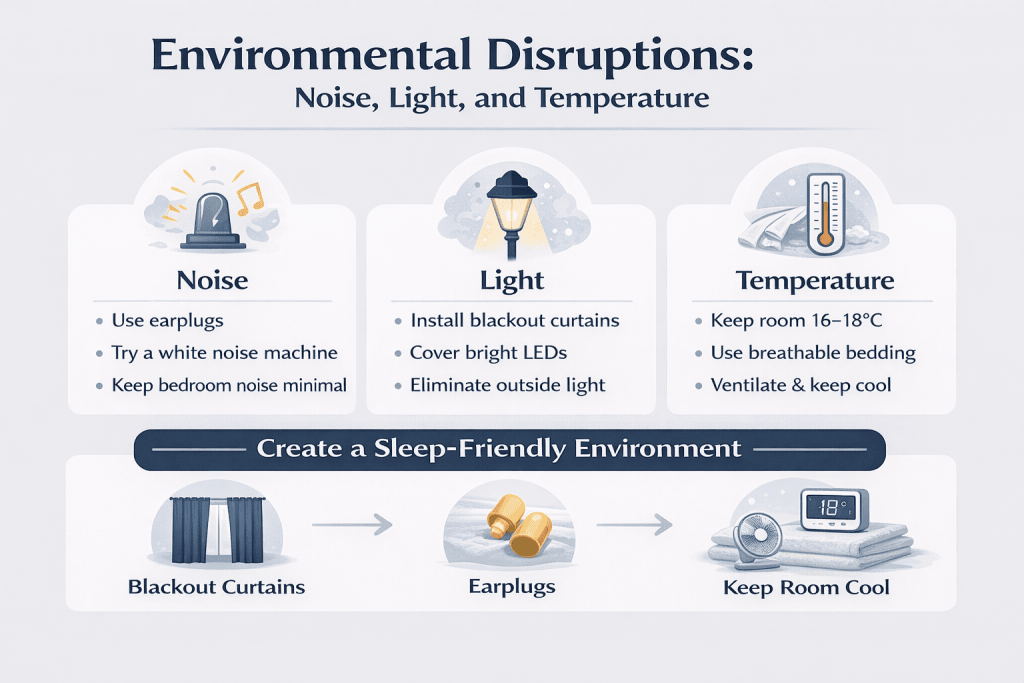
Temperature matters too. UK guidance notes that a cool, well-ventilated room is ideal: around 16–18°C is often recommended. Bedrooms that are too warm make falling asleep difficult. Use breathable bedding and open a window if needed. Natural fibers like cotton sheets and wool duvet are more breathable compared to synthetic polyester.
These simple remedies will work immediately if your bedroom is overly lighted, noisy, or heated. Adding blackout curtains and earplugs can make a big difference in how well you sleep. Abed that is excessively rough or too soft can keep you from sleeping or wake you up often.
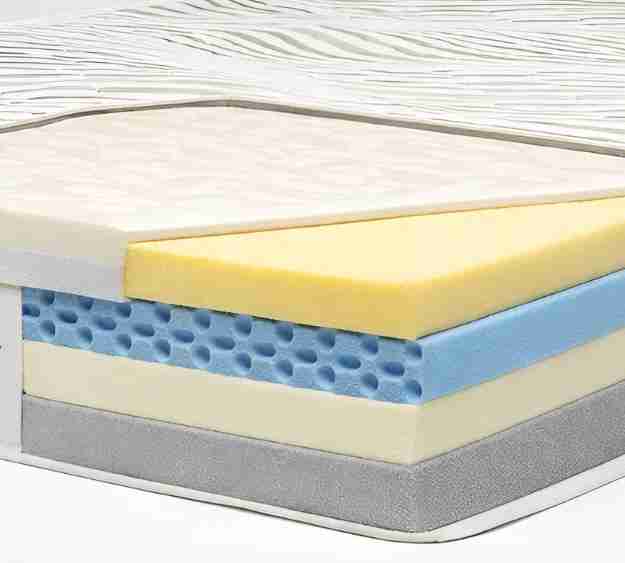
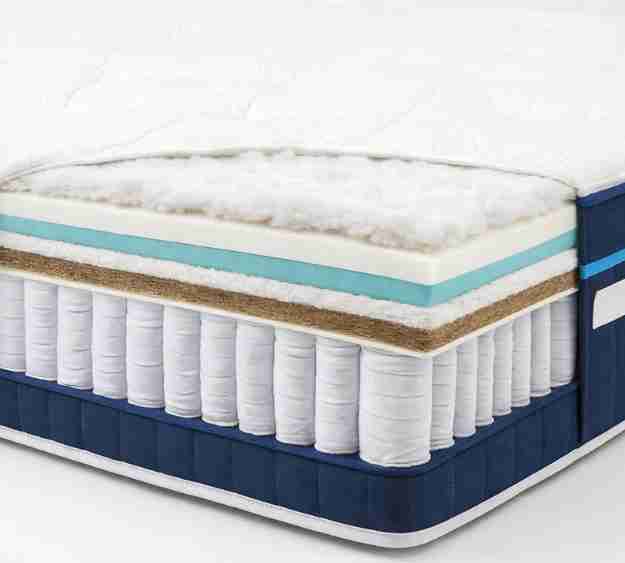
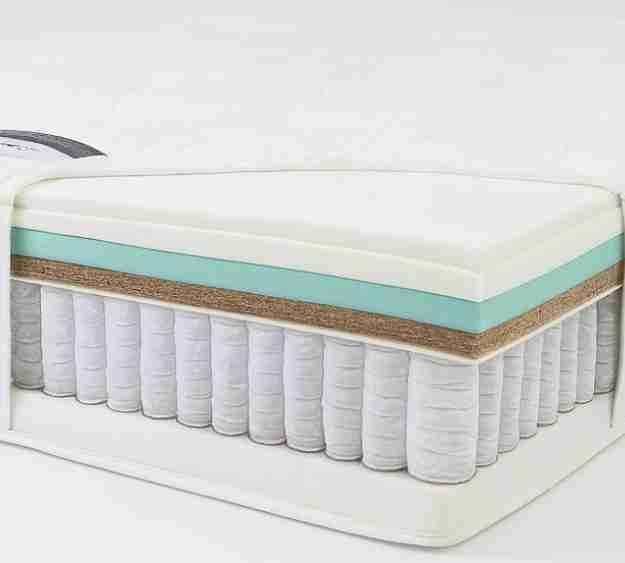
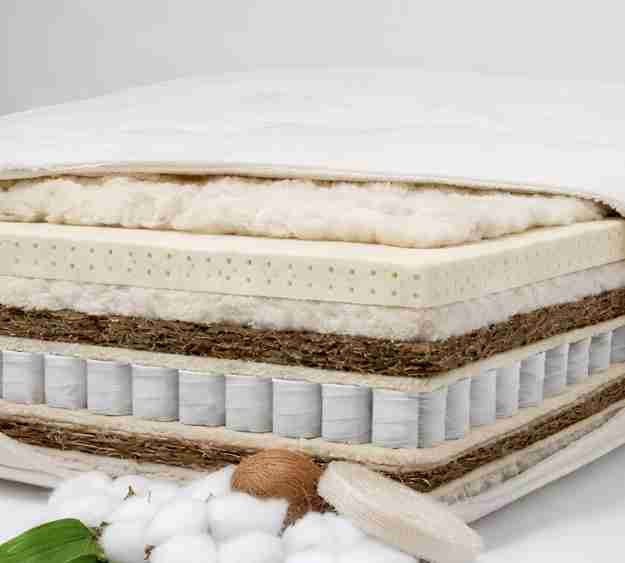
Think about getting a permeable mattress that lets air flow through it. This will help you adjust the temperature better. Many sleep experts now say that moving to a natural or hybrid mattress will help you sleep better and cooler. In short, carve out a true sleep haven: darkness, silence, and a cool, comfy bed.
Rise of Sleep Performance Culture
In recent years, we’ve had different advancements in sleep technology but perhaps one of the most impressive is the gentle art of quantifying sleep. From fitness trackers to smartphone apps, we have endless data about our slumber, but this has sparked performance anxiety. People now obsess over their nightly “scores”, time spent sleeping deeply, sleep efficiency, and REM percentage.
Paradoxically, this monitoring can make insomnia worse. The Guardian reports that the UK sleep-tracker market is booming at £270 million per year and many users develop “orthosomnia” an unhealthy fixation on getting perfect sleep readings.
Behavioral sleep therapists see this firsthand. One UK therapist noted that good sleepers rarely think about sleep at all they just drift off. In contrast, clients struggling with sleep often pressure themselves to hit a magic number on their tracker.
Seeing fewer deep-sleep minutes or brief awakenings on a graph can provoke panic, even though such readings are normal for most people. Researchers coined “orthosomnia” to describe how chasing perfect metrics can fuel anxiety and longer time in bed.
In short, the modern obsession with monitoring has backfired. Rather than trusting our bodies, we second-guess every blink of wakefulness or percent of REM. Experts warn that no device can capture the full reality of natural sleep.
Perfect sleep doesn’t really exist. This culture of “sleep optimization” means even bedtime is treated like a performance metric to improve, which ironically increases stress around sleep itself. True experts advise that you should let go of the numbers. The healthiest approach is to focus on habits and how refreshed you feel after sleeping, not on the nightly report your watch gives.
What Experts Say
Sleep experts and doctors agree on one thing. Make sleep a top priority and follow hygienic methods that are backed by research. The NHS and sleep foundations agree on the basics. Adults typically need about 7–9 hours per night. If you’re constantly tired, you’re probably not getting enough of those. Experts say to go to bed and rise at the same times every day, even on weekends, to stabilise your circadian clock. They also recommend winding down 30–60 minutes before bed either through reading, gentle stretches, or a warm bath and reserving the bed strictly for sleep, not scrolling or work.
Reclaiming Healthy Sleep
The good news is: we can flip the script on our sleep struggle. By taking deliberate steps to protect rest, the damage of modern life can be mitigated. Here are actionable strategies:
i. Set a screen curfew.
Turn off all devices at least 30–60 minutes before bed. Replace them with calming activities (reading, light stretching, herbal tea). This counters the blue light suppression of melatonin.
ii. Create a peaceful sleep space.
Make your bedroom as dark and quiet as possible. Use blackout curtains to block streetlights, and ear plugs if needed. Keep the room cool (around 16–18°C) and well-ventilated.
iii. Stick to a routine.
Go to bed and wake up at the same times daily. Build a short pre-sleep ritual such as washing your face, changing into pajamas and dimming the lights so your body learns the signal for sleep.
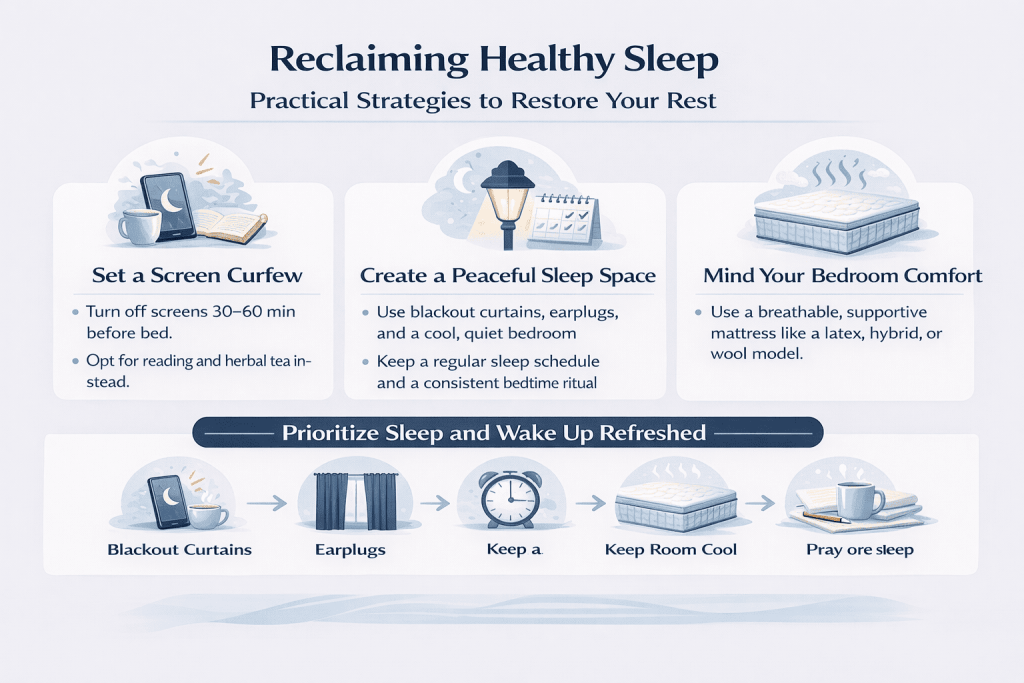
iv. Mind your bedroom comfort.
Invest in a good mattress that suits your sleep style. Luxe Mattresses recommends breathable designs: for example, latex or hybrid models that combine coils and foam can keep you cooler and more supported. Our Natural Mattresses (latex/wool hybrids) are engineered for airflow and are naturally hypoallergenic.
v. Manage stress mindfully.
Try some relaxation techniques before bed, such as deep breathing, meditation, or journaling. Schedule any worrying thoughts or tasks for earlier, so you don’t carry them to bed.
Reduce stimulants and overscheduling. Don’t drink caffeine or energy drinks late in the day. And learn to say no to non-essential late-night tasks. Remember: missing an hour of Netflix isn’t ruining your life, but missing sleep can.
By taking these steps, you align with what sleep science, actually recommends rather than the usual 24/7 grind culture. You’ll also earn back the right to sleep without guilt, which in turn boosts daytime productivity and health.
Every hour of quality sleep is an investment in your well-being. Your body and mind will thank you for reclaiming it.
Conclusion
As we’ve seen, our ancestors slept naturally with the sun, whereas today we fight our biology with devices and deadlines. The pressures of productivity and technology can disrupt circadian rhythms and fuel insomnia, but they are by no means insurmountable.
By recognizing these influences and adopting science-based strategies, we reclaim rest. It’s not weak to prioritize sleep, it’s necessary. So turn off that phone, draw the curtains, and give yourself permission to rest. Your body operates better when you listen to it. In the words of sleep experts, sleep is not a luxury; it’s the foundation of everything you do.
FAQs
Why can’t I sleep at night even when I’m tired?
Stress or anxiety can keep your mind racing and raise stress hormones like cortisol, which block sleep signals. Evening screen use also delays melatonin release. Creating a calming pre-bed routine and limiting screens often restores natural sleepiness.
How does stress or anxiety affect sleep?
Stress keeps your brain in “alert” mode and raises adrenaline, making it hard to switch off. Worrying thoughts can also wake you during the night. Techniques like journaling or simple breathing exercises can help break this cycle.
What is “revenge bedtime procrastination”?
It’s staying up late to reclaim free time after a busy day, even if it means losing sleep. Although it feels empowering, it reduces overall rest and disrupts your body clock. Setting a firm “lights-out” time helps avoid this trap.
What is “orthosomnia” and why is it a problem?
Orthosomnia is an unhealthy obsession with perfect sleep metrics from trackers. Worrying over nightly scores often increases anxiety and makes sleep worse. Experts recommend focusing on how you feel in the morning rather than the numbers.
How can I improve my sleep hygiene in modern life?
Good sleep hygiene means habits that support sleep. Key steps include: going to bed and waking at the same time every day; having a calming pre-sleep routine; keeping the bedroom dark, quiet and cool; and avoiding caffeine, alcohol or heavy meals close to bedtime. Crucially, reduce screen use in the hour before bed, since devices emit blue light that tricks your brain into staying alert.
How many hours of sleep do adults really need?
Most adults need about 7–9 hours per night, but everyone’s ideal is slightly different. If you feel refreshed and alert during the day, you’re likely getting enough. Consistent bed and wake times help your body find its sweet spot.
Does blue light from devices really make it harder to sleep?
Yes. Blue light suppresses melatonin, the hormone that triggers sleepiness. When we use phones, tablets or laptops in the evening, that light fools our brain into thinking it’s still daytime.

Guinevere Dion, a native of Jacksonville, Florida, is a passionate article writer and Ph.D. candidate in Modern Thoughts and Literature. Her work blends academic insight with emotional depth, focusing on topics like mental health, culture, identity, and language in digital spaces. Driven by curiosity and shaped by her strong roots, Guinevere uses writing as a tool to explore, connect, and inspire meaningful dialogue. For her, writing is not just a profession—it’s a calling to illuminate ideas and foster human understanding.

Roman is a seasoned expert in mattress development with over a decade of experience in sleep technology, material innovation, and product engineering. He has played a key role in designing and refining sleep solutions for leading mattress brands, with a deep focus on ergonomics, pressure relief, and sleep quality optimization.
With a background in product design and biomechanics, Roman combines scientific research with hands-on development to create mattresses that address real-world sleep issues—from spinal alignment to temperature regulation. His work has contributed to several award-winning mattress lines known for their comfort, durability, and user satisfaction.