

100-Night Trial · Refund to night 60 · Exchange to night 100
Free Nationwide Delivery
Covered by Our Own Warranty
Call us at: 020 4572 5122
0% APR Finance Available
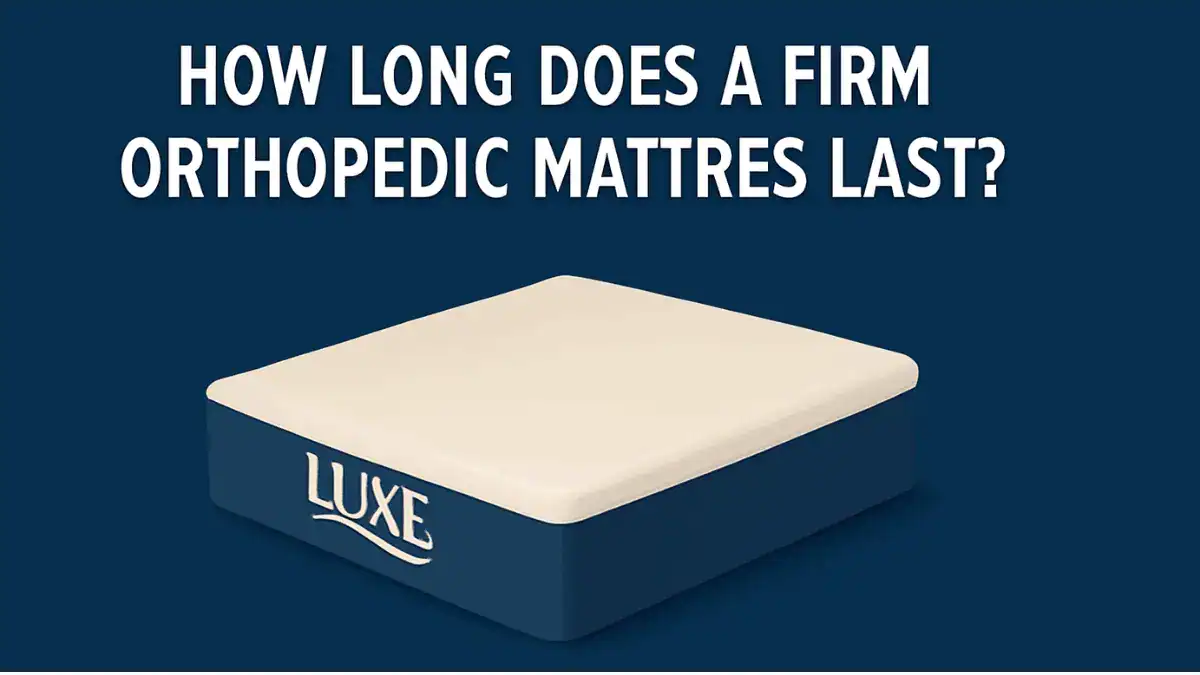
How Long Does a Firm Orthopedic Mattress Last? Firm Orthopedic Mattress Lifespan Explained
October 25, 2025

How Long Does a Firm Orthopedic Mattress Last? Firm Orthopedic Mattress Lifespan Explained

When people ask how long a mattress will last, they usually mean: how many years will I wake up with the same level of spinal support and comfort? That question is especially important for firm orthopedic mattresses, which are purchased primarily for long-term postural support, pain reduction, and clinical outcomes. Unlike pillows or duvets, mattress failure is rarely cosmetic only, sagging, spring fatigue, and foam breakdown can alter spinal alignment and worsen symptoms.

This guide treats firm orthopedic mattress lifespan as a measurable, multi-factor outcome. We combine empirical evidence, warranty realities, materials science, and pragmatic maintenance steps so you can estimate realistic longevity and make smarter purchases.

Defining lifespan: support life vs. cosmetic life

Before estimating years, define two useful lifespan windows:

  • Support lifespan (clinically meaningful): time until the mattress no longer provides the intended orthopaedic support (spine alignment, pressure distribution). This is the critical measure for buyers seeking therapeutic benefit.
  • Cosmetic lifespan: time until the cover stains, quilting flattens, or minor upholstery issues appear, while core support might still be acceptable.

For an orthopedic or medical-use purchase you should prioritise support lifespan. Most published guidance and longevity studies focus on overall usable lifespan (often 7–10 years), but the clinically meaningful support may degrade earlier or later depending on construction and care.

The evidence landscape: what studies and industry sources say

Several industry guides, consumer reports, and early academic studies coalesce around a similar headline: most mattresses last between 7 and 10 years, with variance by type. Memory foam and hybrid options commonly cite 8–10 years; innerspring systems often show shorter useful life unless high-gauge coils and quality foams are used. Recent preliminary academic work assessing long-term use finds measurable changes in firmness and sleep quality over time, but the rate of change depends heavily on material choice and density. 

Key takeaways from the literature:

  • Average guidance: 7–10 years for most modern mattresses.
  • Specialized constructions (high-density latex, premium pocket-sprung hybrids) can exceed 10 years before support decline becomes clinically relevant.
  • Warranty language and guarantees vary widely; a long warranty doesn’t always mean sustained support, it defines manufacturer liability. More on that later.

Materials science: what wears out and why

Materials science: what wears out and why

Understanding why a firm orthopedic mattress ages requires a short material primer.

Foam resilience and density

  • Density: Foam density (kg/m³) is the single best predictor of foam longevity. Higher-density polyurethane foams and high-grade memory foam resist permanent deformation and recover better after load cycles. Lower-density foams compress and œset more quickly. Put simply: density = durability.
  • Resilience (ILD/ILD-like metrics): How quickly foam returns to shape affects perceived firmness retention. Long-term cyclic compression testing shows lower-resilience foams soften and show increased indentation over thousands of cycles.

Springs and coil fatigue

  • Gauge and pocketing: Coil systems rely on metal fatigue properties. Thicker coils (lower gauge numbers) resist deformation longer. Individually pocketed coils localise wear and tend to retain support better than cheap Bonnell or continuous coils.
  • Spring fatigue: Repeated compressive cycles, heat, and moisture accelerate micro-fatigue in coils; you may notice “sagging” or edge collapse when this happens.

Hybrid interactions and structural integrity

  • Layer interactions: A hybrid mattress combines foam and coil layers. If the top foam layers are low-spec, they may compress sooner even if springs remain resilient producing a felt loss of support.
  • Zoning and reinforcement: Quality orthopedic designs use zoned support (differing firmness across lumbar areas) and reinforced edges. This structural integrity preserves support life.

Practical implication: for a firm orthopedic mattress you want high-density support foams (or latex) combined with robust coil architecture (if hybrid) to maximise support lifespan.

Measured metrics: how to judge lifespan in practice

You can’t rely purely on calendar years. Monitor these objective and semi-objective indicators:

  • Sag depth / indentation: National guidelines and many warranties consider sagging >2–3 cm as a defect; clinically, even 1–2 cm can alter pressure distribution. 
  • Change in firmness (subjective but trackable): Use a simple 1–10 firmness log every 6 months; note if perceived firmness declines steadily.
  • Edge support loss: Weak edges indicate core fatigue and are early signals of coil or core failure.
  • Noise from coils: Creaking suggests coil loosening or micro-fatigue.
  • Sleep quality metrics: Increased night-time awakenings, renewed back pain, or soreness on waking usually precede outward sag.

Academic pilot studies measuring long-term use document progressive changes in measured hardness and sleep quality, reinforcing that objective testing plus user-reported outcomes are both valuable. 

Typical lifespans by construction type (practical ranges)

These ranges are generalized; quality brands at the top end can push the high end.

  • High-density foam (orthopaedic-grade) / latex-like foam (premium): 8–15 years (latex often longest).
  • Memory foam medium/high density (premium): 8–10 years.
  • Hybrid (high-quality pocketed coils + high-density foam): 8–12 years.
  • Innerspring / low-cost coil with thin foam comfort layers: 4–7 years prone to early sagging and spring fatigue.
  • Low-density foam mattresses (budget): 3–6 years quicker compression and loss of support.

These ranges align with consumer guidance and retailer warranty norms and reflect the role of materials and build. 

How much does “firm” change lifespan?

Firmness is a design choice; the material that produces firmness is what actually governs longevity:

  • Firmness via dense foam or latex: The mattress may retain structural integrity longer because dense materials resist compression.
  • Firmness via thin comfort layers over weak cores: The initial feel may be firm but support declines quickly as top layers crush resulting in shorter firm orthopedic mattress lifespan in practice.

Therefore, always inspect how firmness is achieved (material specs) rather than trusting a marketing label.

Maintenance: the single most cost-effective way to extend life

Routine care meaningfully extends usable life. Key actions:

  • Rotate/flip according to manufacturer instructions: Rotating every 3–6 months distributes wear; older double-sided mattresses can be flipped. Most modern one-sided mattresses should be rotated (not flipped). Clinical guidance and industry experts recommend regular rotation to reduce permanent indentations and coil fatigue. 
  • Use a high-quality mattress protector: Prevents moisture, allergens, and stains which can accelerate foam breakdown and void some warranties.
  • Avoid using the mattress as a seating platform (sitting on edges): Repeated edge loading accelerates edge collapse.
    Manage humidity and temperature: Excessive heat and moisture can speed foam softening and biological decay.
  • Follow cleaning instructions: Spot clean only when instructed; avoid soaking.

Effect size: Proper maintenance can add 1–3 extra usable years to a high-quality mattress and may delay clinically meaningful support loss.

Warranties are commonly marketed as 10, 12, or even 20 years, but reading the fine print matters:

  • Guarantee vs warranty vs statutory rights: A manufacturer guarantee is marketing reassurance; a warranty sets terms for repairs/replacements. Separate consumer protection laws (UK) give rights that exist independently of commercial warranties. Which? 
  • Practical limits: Many warranties are pro-rata (coverage declines over time) or require proof of defect (e.g., sagging beyond a specified depth). Some long warranties cover manufacturing defects but exclude normal wear (which is what truly determines real-world lifespan).
  • Document everything: If you need to claim, date-stamped photos, purchase receipts, and documented maintenance (rotation, protectors used) strengthen claims.

Takeaway: Do not interpret a long warranty as a guarantee of a long firm orthopedic mattress lifespan, it is protection against manufacturing defects, not guaranteed clinical support longevity. Which?

Case-study vignettes: real-world comparisons

Below are three condensed, representative case studies (anonymised) illustrating how construction and care affect results.

Case A: Premium latex-hybrid (couple, UK)

  • Specs: Natural latex comfort layers, zoned pocket coils, reinforced edges.
  • Use: 2 adults, average weight, used protector, rotated annually.
  • Outcome after 12 years: Minimal sag, retained lumbar support; still clinically usable though slightly softer. Warranty still pro-rated but manufacturer service praised.
  • Interpretation: High initial material investment delivered long firm orthopedic mattress lifespan (beyond 10 years).

Case B: Budget “orthopaedic” foam (single adult)

  • Specs: Low-density polyurethane foam top over cheap base.
  • Use: Single heavier adult; no protector; not rotated.
  • Outcome after 5 years: Significant indents, perceived loss of support; back pain returned.
  • Interpretation: Marketing “orthopaedic” label is meaningless without material density real-world lifespan short.

Case C: Quality memory foam hybrid (older adult with back pain)

  • Specs: High-density memory foam, mid-range pocket coil unit.
  • Use: Good maintenance (protector, rotation), moderate weight.
  • Outcome after 8 years: Still supportive; some softening in top comfort layers but core support intact.
  • Interpretation: Correctly engineered hybrids preserve support for ~8–10 years.

These examples emphasise that firm orthopedic mattress lifespan is not a single number,it is conditional on materials, use, and care.

Buying checklist to maximise support lifespan (practical shopping tool)

Buying checklist to maximise support lifespan

When choosing a firm orthopedic mattress, prioritise the following:

  1. Material density specification: Ask for foam density numbers (e.g., 50+ kg/m³ for support layers is excellent; 30“40 kg/m³ is mid-range). Higher density = longer life.
  2. Coil specs (if hybrid): Pocketed coils with higher coil counts and thicker gauge (lower gauge number) last longer.
  3. Zoning and lumbar support: Look for explicit zoning claims and third-party test data.
  4. Edge reinforcement: Prevents collapse and spreads load.
  5. Warranty clarity: Read exclusions pro-rata vs full coverage, sagging thresholds, and return criteria. Which? 
  6. Trial period and returns: Try for at least 60–100 nights if possible; early replacements under trial are often the best safety net.
  7. Maintenance instructions: Confirm rotation requirements and whether the mattress is one-sided.
  8. Third-party reviews and durability tests: Search for lab testing results or independent reviews that measure long-term resilience.

Practical maintenance schedule (simple calendar)

  • Monthly: Air mattress (strip bedding for a day), visual check for staining or early wear.
  • Every 3“6 months: Rotate mattress 180°. If double-sided and recommended, flip every 6 months for first 2 years. 
  • Yearly: Deep clean according to manufacturer instructions; document condition with photos.
  • Every 3–5 years: Re-evaluate sleep quality logs; if pain returns or firmness drops substantially, consider inspection/replacement.

How to evaluate replacement timing (decision rules)

Replace the mattress when one or more of the following are true:

  • Persistent new back pain or morning stiffness linked to bed (not other causes).
  • Visible sagging/indentation exceeding manufacturer’s sag threshold (or >2–3 cm if unspecified).
  • Noticeable decline in sleep quality despite other interventions.
  • Edge collapse or coil noise indicating structural failure.

Rule of thumb: If you’ve had a typical-quality firm orthopedic mattress more than 8 years and you notice any of these signs, start budgeting for replacement the clinical support will likely be diminishing.

Quick checklist before you buy (printable)

  • Ask for foam density numbers.
  • Inspect coil gauge or pocket count for hybrids.
  • Check trial nights and return policy.
  • Read warranty exclusions and sagging/defect language.
  • Confirm rotation policy and whether a protector is required to maintain warranty.
  • Prefer zoned support and reinforced edging for orthopedic use.

Conclusion

Maximising firm orthopedic mattress lifespan requires aligning expectations with materials science and usage reality. If you buy a firm orthopedic mattress built from high-density support foams, latex, or robust pocket-sprung cores, keep it on a good base, use a protector, rotate regularly, and obey care specs, you should reasonably expect 8–12 years of useful support in many cases. Budget options or constructions that create “firmness” with thin layers will often lose clinically meaningful support much sooner.

Bottom line: treat the mattress as a long-term health investment. Verify material specs, insist on real trial periods, and document care. When used as directed, high-quality options deliver the support lifetime orthopaedic buyers require; otherwise, advertised firmness is only temporary.

FAQs

How long will a firm orthopedic mattress last?

On average most well-constructed firm orthopedic mattresses remain supportive for 7“10 years, with premium constructions (high-density foams, latex, reinforced hybrids) often exceeding this; lower-quality or budget constructions may need replacement within 4“6 years.

Does firmness make a mattress last longer?

Not automatically. If firmness comes from high-density materials, yes. If it’s simply a thin firm comfort layer over a weak core, no the top will compress and support will fail sooner.

What maintenance increases a firm orthopedic mattress lifespan?

Regular rotation, a quality mattress protector, avoiding excess edge loading, and following manufacturer care instructions are the simplest, most effective steps. Rotating every 3–6 months is commonly recommended.

Is a 20-year warranty a guarantee of 20 years of support?

No. Warranties protect against defects per the fine print; many are pro-rata and exclude normal wear. Always read warranty exclusions and understand sagging thresholds.
best orthopaedic mattress
October 25, 2025

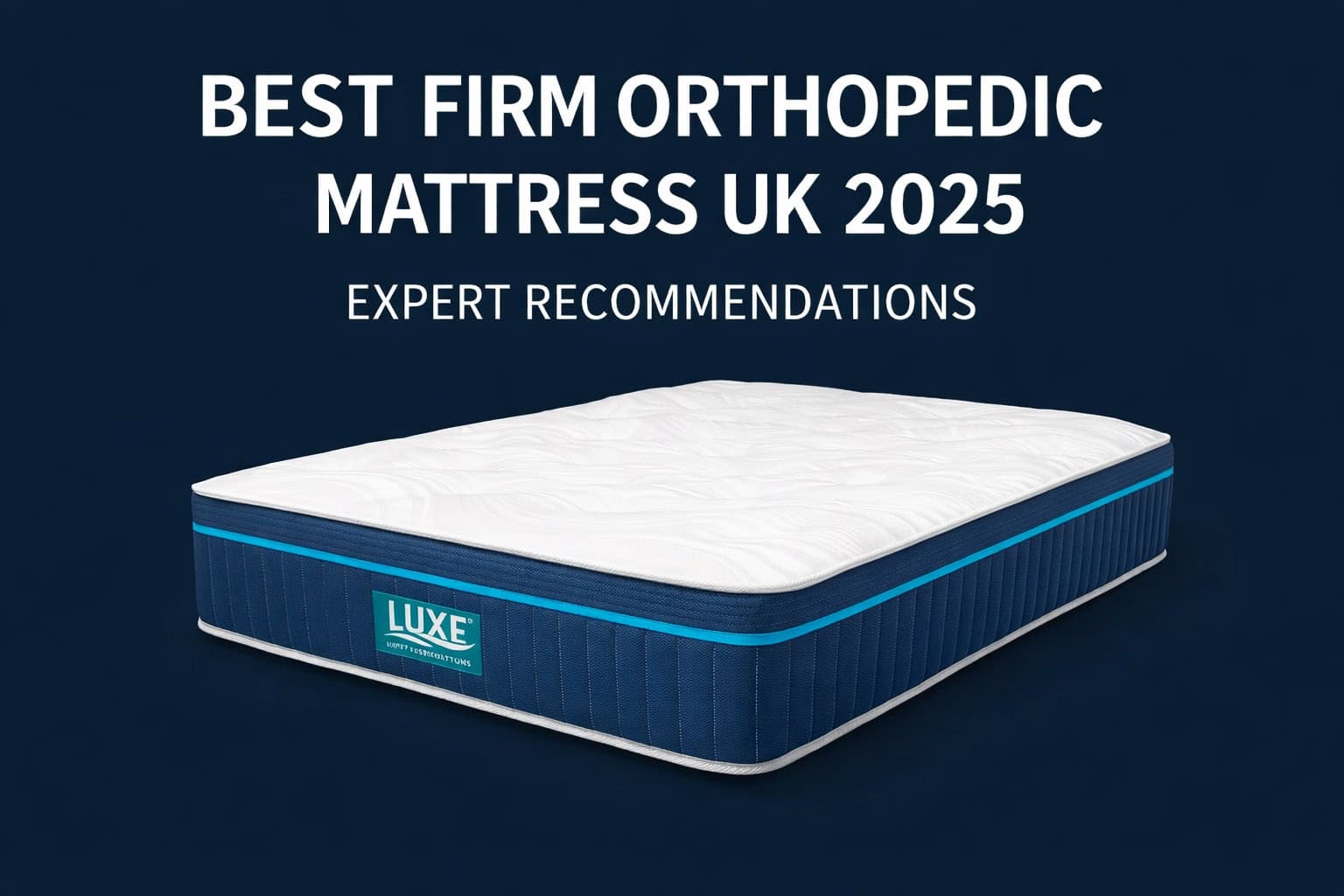
Best Firm Orthopedic Mattress UK 2025 Expert Recommendations

When you wake up with stiffness or pain, your mattress might be the real reason behind it. A poor surface can disrupt spinal alignment, increase pressure on joints, and reduce your sleep quality. Choosing the best firm orthopedic mattress UK is not just a comfort upgrade,it’s a step toward long-term back health and restorative sleep.

In 2025, orthopedic mattress technology has evolved dramatically. From brand reputation and eco-certified foams to sleep trial data and warranty comparison, British consumers now have more reliable options than ever before. This expert guide breaks down the top models, explains what makes them orthopedic, and helps you make an informed decision with confidence.

Understanding the Purpose of a Firm Orthopedic Mattress

An orthopedic mattress is designed to support natural posture and spinal alignment. Its firmness prevents your body from sinking, which helps maintain the correct spinal curvature throughout the night.

In contrast to softer beds that may lead to poor lumbar support, a firm orthopedic surface encourages better sleep ergonomics and promotes even pressure zone distribution. This means your shoulders, hips, and lower back receive balanced support, reducing morning stiffness and chronic discomfort.

The best firm orthopedic mattress UK options use advanced materials like high-density foams, pocket springs, or hybrid cores to ensure stability, breathability, and durability, qualities vital for people with back pain or posture-related issues.

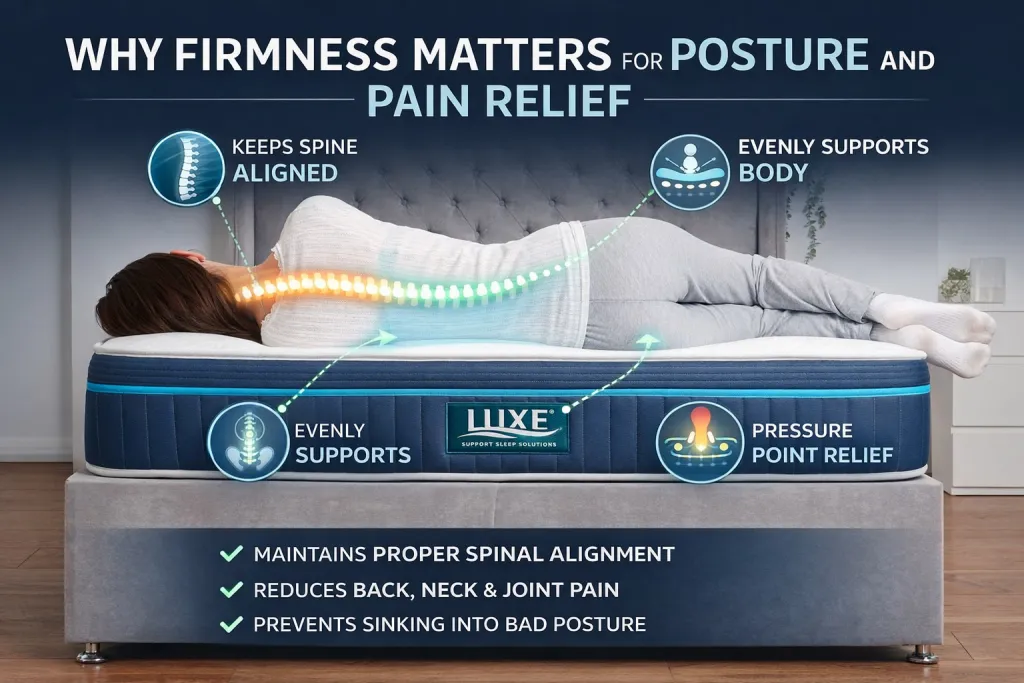
Why Firmness Matters for Posture and Pain Relief

firmness mattress for posture and pain relief
firmness mattress for posture and pain relefr

Firmness directly affects how your body aligns during rest.

  • Too soft: The spine sinks, causing misalignment and lower back pain.
  • Too hard: Pressure builds up on joints and reduces blood flow.

The perfect orthopedic firmness ensures proper lumbar alignment, encourages muscle tension relief, and helps the body maintain a neutral sleeping position. For most adults in the UK, a firm or medium-firm level between 7–8 on the firmness scale offers optimal orthopedic support.

This is why sleep specialists often recommend the best firm orthopedic mattress UK for those who spend long hours sitting or suffer from lower back strain.

Key Features of a High-Quality Firm Orthopedic Mattress

When choosing an orthopedic mattress, it’s crucial to understand the features that differentiate premium models from standard ones. Expert testing and support level verification reveal that the following attributes define a quality orthopedic product:

  1. Ergonomic Zoning: Multiple firmness zones to stabilize pressure-sensitive areas.
  2. High-Density Core: Provides unyielding support while resisting sagging.
  3. Certified Materials: Verified by UK and EU certification standards such as CertiPUR or OEKO-TEX.
  4. Breathable Comfort Layers: Promote airflow for temperature regulation.
  5. Durable Foundation: Reinforced edges and layered support for long-term comfort.

These elements combine to maintain orthopedic integrity and prevent uneven pressure build-up.

Top Rated Orthopedic Mattresses in the UK (2025 Picks)

The following expert recommendations are based on verified user reviews, durability testing, and orthopedic certifications. These models represent the best in firm mattress reviews UK, combining comfort, support, and long-term reliability.

1. LuxeErgo 3400 Mattress “ Best Firm Mattress with Orthopedic Technology

Best for: Balanced ergonomic support and cooling comfort for everyday luxury sleepers

The LuxeErgo 3400 by LuxeMattresses.co.uk is a standout hybrid mattress for 2025, blending orthopaedic-grade alignment with adaptive comfort layers for a perfectly balanced sleep experience. Designed and handcrafted in the UK, it combines 3,400 individually encased springs with Zero Gravity comfort foam, offering responsive support that relieves pressure without sacrificing plushness.

Highlights:

  • Firmness: Multiple Firmness Levels, Firm and Extra Firm (8/10) – supports spinal alignment while maintaining comfort
  • Technology: Dual-layer hybrid system with 3,400 micro and pocket coils for full-body contouring
  • Cooling: LTX Cooling gel-infused foam regulates temperature and disperses heat throughout the night
  • Trial & Warranty: 100-night comfort trial and 10-year warranty for total peace of mind
  • Cover: UltraDryâ„¢ breathable knit fabric – soft, hypoallergenic, and moisture-wicking

Key Feature: Orthopedic Zoned Support “ the LuxeErgo 3400 adapts to your body’s curves while maintaining firmer lumbar zones for superior back alignment.

Designed and made in the UK using CertiPUR® certified materials, LuxeErgo represents the next generation of smart hybrid mattresses for discerning sleepers who demand lasting comfort and genuine orthopaedic support.

by LuxeMattresses.co.uk

Best for: Ultra-premium orthopedic firmness with exceptional spinal alignment and handcrafted British quality

The Majesticâ„¢ 11000 represents the peak of orthopaedic mattress design in the UK — engineered entirely from high-density performance foams (C40–C48) to deliver uncompromising back and joint support. This mattress is precision-crafted for those who demand a firm, stable, and clinically supportive sleep surface without any of the sinking or softness associated with traditional foams.

Majestic 11000 mattress orthopaedic  mattress

Designed and manufactured in the UK by master craftsmen, the Majesticâ„¢ 11000 combines medical-grade support with luxury comfort materials, including natural cashmere, wool, and silk layers for superior breathability and surface softness.

Highlights:

  • Firmness: Extra Firm (9/10) — ideal for deep lumbar support and maintaining correct spinal posture
  • Construction: Multi-layer orthopedic foam system made entirely from C40–C48 density foams for consistent full-body support
  • Comfort Layers: Natural cashmere, wool, and silk enhance temperature regulation and comfort
  • Warranty & Trial: Protected by a 10-year warranty and a 100-night comfort trial
  • Craftsmanship: Expertly handcrafted in the UK, with reinforced edging and precision layering for lasting durability

Key Feature:

3D Orthopedic Support System – advanced layering prevents sinking and ensures correct spinal alignment for every body type, making it ideal for those with back pain or requiring firmer sleep support.

Trust Factor:

The Majesticâ„¢ 11000 is the flagship orthopaedic foam mattress from LuxeMattresses.co.uk, embodying the finest in British engineering and sustainable craftsmanship. Its balance of clinical firmness and handcrafted comfort has earned it recognition as one of the most trusted chiropractor-recommended mattresses in the UK for 2025.

3. Silentnight Miracoil Orthopedic Firm

Best for: Affordable orthopedic comfort
With a brand reputation built over decades, Silentnight’s orthopedic series remains a trusted household name.

Highlights:

  • Firmness: Level 7.5
  • Certification: British Chiropractic Association approved
  • Warranty: 5 years
  • Core: Miracoil zoned spring system

4. Tempur Sensation Elite Firm

Best for: Advanced memory foam and adaptive response
Tempur’s firm orthopedic line continues to be the gold standard for support level testing and NASA-grade foam technology.

Highlights:

  • Firmness: Level 8
  • Warranty: 10 years
  • Sleep Trial: 100 nights
    Feature: Adaptive pressure relief

Comparison Table: Best Firm Orthopedic Mattresses UK 2025

Rank Brand / Model Firmness Sleep Trial Warranty Key Features Certification / Reputation
1 Luxe Ergo 3400 8/10 100 Nights 10 Years Dual-layer comfort, high-density support, breathable cover UK Chiropractic Recommended & CertiPUR® Certified
2 Majestic 11000 9/10 100 Nights 10 Years Extra-firm high-density reflex foam CertiPUR® & OEKO-TEX® Certified
3 Simba Hybrid Firm 8–9/10 365 Nights 10 Years Graphite cooling layer, titanium micro-coils Trusted UK hybrid brand
4 Silentnight Miracoil Firm 7.5/10 60 Nights 5 Years Miracoil zoned system, orthopedic coil design British Chiropractic Association Approved
5 Tempur Sensation Elite 8/10 100 Nights 10 Years NASA-grade foam, motion isolation Tempur® global orthopedic brand

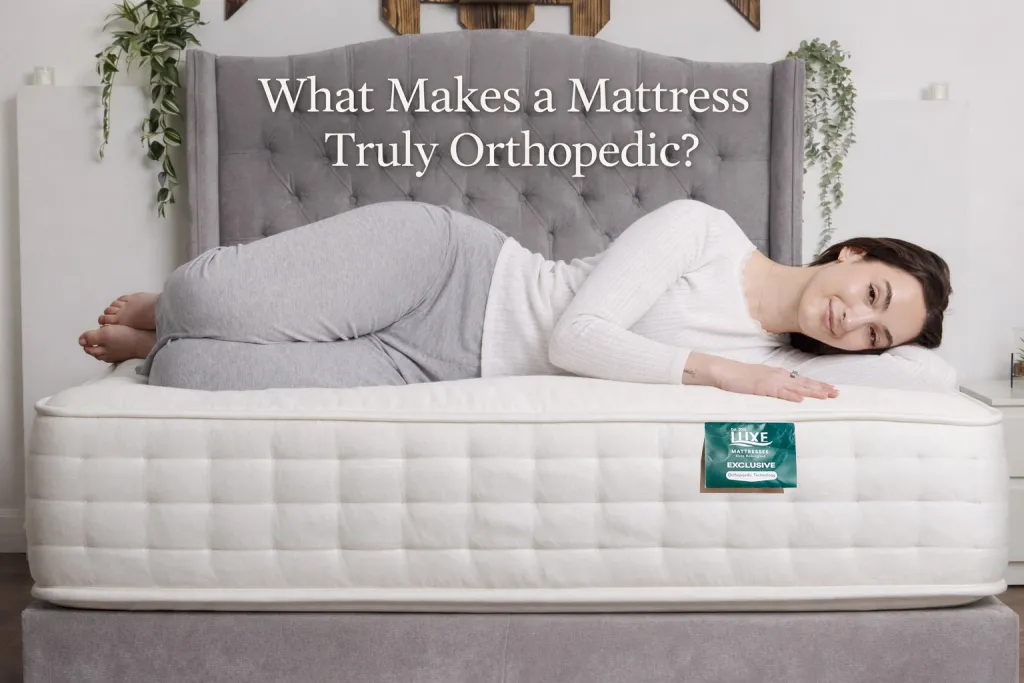
What Makes a Mattress Truly Orthopedic?

True orthopedic certification is earned through clinical testing and structural assessment. A genuine orthopedic mattress must:

  • Pass pressure mapping tests that validate support level testing.
  • Maintain less than 2% sag after extended compression.
  • Hold verified endorsements (such as NBF or chiropractic associations).
  • Offer sufficient comfort layers for pressure redistribution.

The best firm orthopedic mattress UK products undergo such certifications to guarantee both comfort and therapeutic efficiency. These parameters ensure that buyers receive clinically relevant support rather than marketing claims.

Expert Buying Tips for 2025

  1. Check Certification Standards: Always verify UK or EU certifications for material safety.
  2. Compare Sleep Trials: Go for at least 100 nights, it reflects manufacturer confidence.
  3. Assess Brand Reputation: Look for consistent ratings and after-sale support.
  4. Evaluate Warranty Comparison: Longer warranties indicate superior build quality.
  5. Read Firm Mattress Reviews UK: Real feedback reveals long-term durability better than specs.

Choosing an orthopedic mattress is not just about firmness, it’s about verified trust and tangible performance.

The Role of Warranty and Brand Trust

Warranty terms reveal how much a brand stands behind its product. While 5 years is standard, premium models now offer 10-year or lifetime coverage.
Brands like Emma and DreamCloud back their orthopedic ranges with extended protection, reflecting strong brand reputation and customer confidence.

Consumers should also consider service policies such as:

  • Free delivery and returns
  • Home setup options
  • Flexible payment plans

These trust signals contribute to long-term satisfaction and reinforce the value of investing in the best firm orthopedic mattress UK.

How to Maintain Firmness Over Time

Even the highest-rated orthopedic mattresses can soften with age. To preserve optimal performance:

  • Rotate every 3 months to prevent uneven compression.
  • Use a sturdy bed frame or solid base.
  • Avoid exposure to moisture or excess heat.
  • Clean with mild fabric-safe solutions to protect comfort layers.

Proper maintenance ensures your mattress retains its orthopedic structure for many years.

Who Should Choose a Firm Orthopedic Mattress?

A firm orthopedic mattress is ideal for:

  • Individuals with lower back pain or posture issues
  • Heavier sleepers needing firmer support zones
  • People who prefer minimal bounce and stable surfaces
  • Stomach and back sleepers

However, users with sensitive joints or side sleepers may prefer medium-firm alternatives. Understanding your body type and sleeping posture is the key to selecting the right product from the top rated orthopedic mattresses available in the UK.

The Future of Orthopedic Sleep Technology

2025 marks a new era for orthopedic sleep solutions.
Emerging innovations include:

  • AI-based pressure sensors for real-time spinal support tracking
  • Eco-certified materials improving sustainability
    Smart warranty tracking integrated with mobile apps

These advancements ensure that the best firm orthopedic mattress UK remains both health-focused and environmentally responsible for future generations.

Conclusion

Finding the best firm orthopedic mattress UK in 2025 means balancing science, comfort, and trust. With today’s clinically tested models offering better pressure relief, verified certifications, and generous warranties, there’s a solution for every sleeper.

Whether you prefer the dense support of Emma, the hybrid flexibility of Simba, or the premium resilience of Tempur, these orthopedic options guarantee healthier posture and pain-free sleep for years to come.

Investing in a firm orthopaedic mattress isn’t just buying a bed, it’s investing in your spine, comfort, and well-being.

FAQ’s

Are firm orthopedic mattresses good for daily use?

Yes. They provide continuous spinal support and are ideal for long-term orthopedic benefits.

How long does a firm orthopedic mattress last?

Most high-quality models last 8–12 years, depending on usage and care.

Which is better hybrid or full foam orthopedic mattress?

Hybrids offer improved breathability and durability, while foam variants excel at contouring support.

Do orthopedic mattresses require special bases?

A solid, non-flexing base is recommended for optimal firmness and alignment.

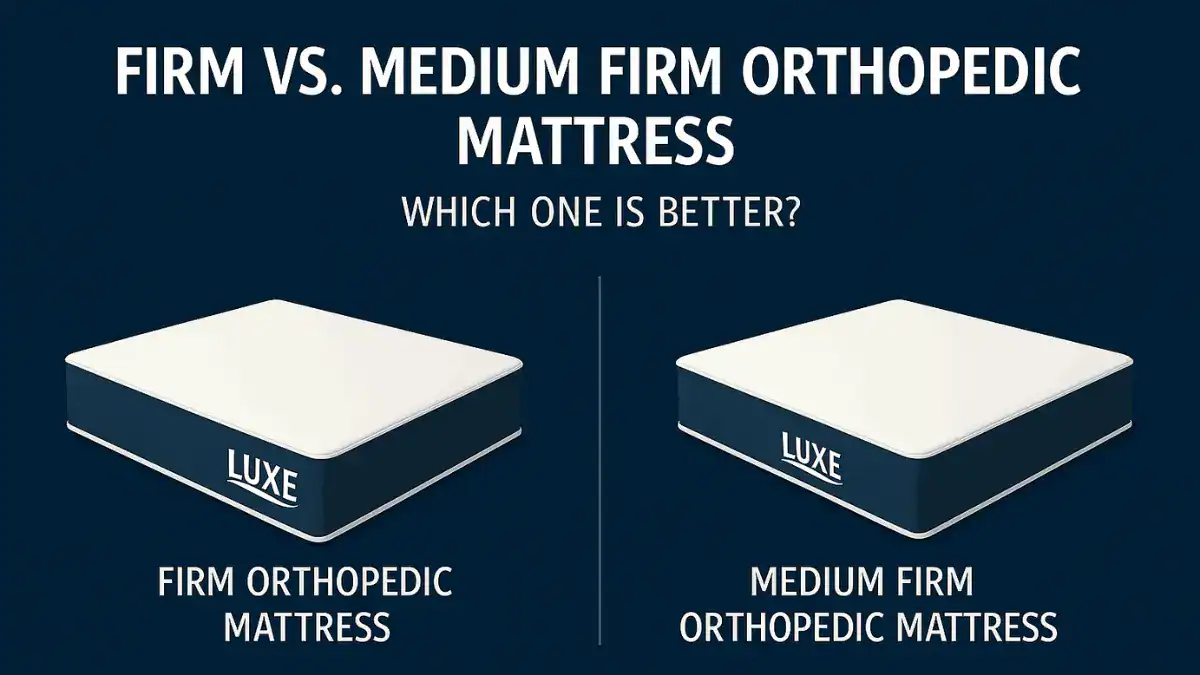
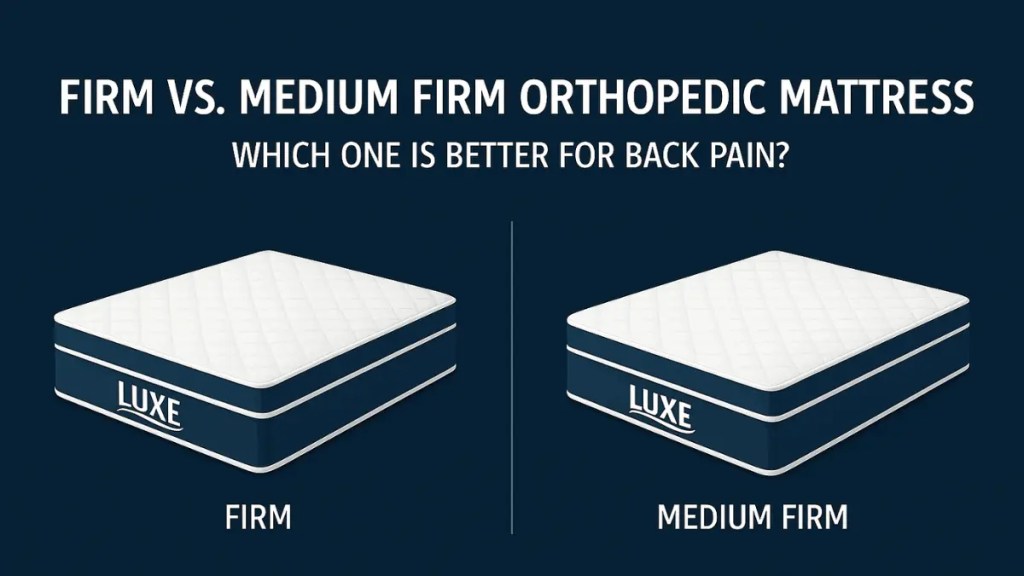
Firm vs Medium Firm Orthopedic Mattress Which One Is Better?
October 24, 2025

Firm vs Medium Firm Orthopedic Mattress Which One Is Better?

When you struggle with back pain or poor sleep quality, your mattress plays a bigger role than you might imagine. Choosing between a firm vs medium firm orthopedic mattress isn’t simply about comfort, it’s about aligning your spine, supporting your joints, and improving your overall well-being. The firmness level you select can directly influence posture, muscle relaxation, and how your body recovers overnight.

A mattress that’s too soft lets your body sink, straining the lower back. One that’s too hard can create pressure points around your hips and shoulders. The best solution lies in understanding how firmness, orthopedic design, and sleep ergonomics work together to promote better rest and pain relief.

Understanding Mattress Firmness Levels

Firmness refers to how much a mattress resists your body weight when you lie down. The industry commonly uses a firmness scale from 1 to 10, where 1 feels ultra-soft and 10 feels extra firm.
Most orthopedic mattresses fall between 6 and 8 on this scale, the sweet spot for spine support.

A firm orthopedic mattress typically sits around level 8, offering minimal sinkage and maximum spinal stability.
A medium-firm orthopedic mattress ranges between levels 6 and 7, balancing comfort and structure.

This mattress firmness comparison helps you visualize how each option supports different sleeping styles and body types. While both are classified as orthopedic, their subtle differences in pressure absorption and contouring can completely change your sleeping experience.

What Is a Firm Orthopedic Mattress?

What Is a Firm Orthopedic Mattress?

A firm orthopedic mattress is built for strong support and targeted alignment. Its structure includes foam layers or firm pocket springs designed to keep the spine straight through the night.
The goal is to prevent spinal sagging and ensure even pressure distribution from head to toe.

This firmness type is especially beneficial for:

  • Back and stomach sleepers
  • People with chronic back pain
  • Individuals who prefer a stable, non-bouncy surface
  • Users with higher body weight needing enhanced support

Firm mattresses prevent the midsection from sinking too deeply, maintaining spinal curvature and improving circulation. These properties help reduce lumbar strain, making it ideal for orthopedic use.

What Is a Medium-Firm Orthopedic Mattress?

A medium-firm orthopedic mattress offers a compromise between rigidity and plush comfort. It supports the back efficiently but adds a subtle cushioning layer to cradle sensitive pressure points.
This option is perfect for those seeking balance, sturdy enough for spinal alignment yet soft enough to relieve hip and shoulder tension.

Medium-firm options suit:

  • Combination and side sleepers
  • Lightweight to average-weight users
  • People seeking both comfort and medical-grade support
  • Couples with different firmness preferences

From a sleep ergonomics perspective, a medium-firm mattress allows the spine to maintain its natural S-shape while adapting to your body contour. It’s particularly helpful for individuals who move frequently during sleep, as it offers responsive comfort across all positions.

The Science Behind Firmness and Spine Support

Every spine needs stable support to maintain its neutral alignment. Orthopedic mattresses are scientifically engineered to achieve this by using support level testing and orthopedic firmness chart ratings.

Key Support Principles:

  1. Spinal Alignment: The mattress should keep your neck, shoulders, and hips in one straight line.
  2. Pressure Relief: It must evenly distribute your weight across pressure zones like the lower back, hips, and shoulders.
  3. Muscle Relaxation: By maintaining alignment, the mattress minimizes muscle tension and promotes overnight recovery.
  4. Circulation: Proper firmness prevents restricted blood flow caused by sinking or stiff surfaces.

Both firm and medium-firm orthopedic types meet these scientific standards, but they differ in how they achieve the balance between pressure relief and firmness.

Comparing Firm vs Medium-Firm Orthopedic Mattress

Let’s look at a detailed mattress firmness comparison to understand how both perform across key parameters.

FeatureFirm Orthopedic MattressMedium-Firm Orthopedic Mattress
Firmness Level (Scale 1–10)86–7
Spinal SupportMaximum stabilityBalanced alignment
Pressure ReliefMinimal contouringModerate contouring
Comfort LayersDense and flatSlightly cushioned
Ideal ForBack/stomach sleepersSide/mixed sleepers
Pain ReliefBest for chronic back painBest for shoulder/hip tension
Body Type SuitabilityHeavier individualsLight to average-weight individuals
Movement AbsorptionHigh stabilitySlight bounce for comfort

This table helps visualize the performance differences between firm vs medium firm orthopedic mattress types. Both excel in orthopedic support but cater to distinct comfort needs.

Pressure Zones and Sleep Ergonomics

Human anatomy features several pressure-sensitive zones primarily around the shoulders, lower back, and hips. A mattress that doesn’t accommodate these zones can worsen stiffness or cause numbness.
The firm vs medium firm orthopedic mattress debate often revolves around how effectively each manages these areas.

  • Firm Models: Distribute body weight evenly, ideal for individuals needing total stability and reduced motion transfer.
  • Medium-Firm Models: Offer adaptive cushioning, which helps maintain blood flow and reduces soreness in side sleepers.

Proper sleep ergonomics depend on how the mattress interacts with these pressure zones, promoting relaxed posture and tension-free sleep.

Comfort Layers and Support Level Testing

Orthopedic mattresses go through multiple support level testing stages to ensure the right balance of firmness and flexibility. Manufacturers analyze how various comfort layers respond to different body weights, sleeping styles, and spinal conditions.

  • Comfort Layers: These are the top segments of the mattress made of memory foam, latex, or gel-infused foam.
  • Support Core: The base or spring layer maintains overall stability.
  • Transition Zones: Found in medium-firm models, these zones allow gradual pressure absorption without losing structure.

A firm vs medium firm orthopedic mattress essentially differs in the density of these layers — firm versions use stiffer materials for posture correction, while medium-firm models include adaptive foams to enhance comfort.

User Preferences: UK Firmness Scale and Sleep Styles

In the UK, mattress preferences often depend on body weight, climate, and sleep style.

The UK firmness scale generally classifies:

  • Soft (1–3) for light sleepers or side sleepers
  • Medium (4–6) for balanced comfort
  • Medium-Firm (6–7) as the most popular choice
  • Firm (8–10) for orthopedic and back pain relief

A survey of UK households shows that over 60% of adults prefer medium-firm orthopedic options for their ability to blend comfort and support, while 30% choose firm orthopedic mattresses for targeted posture correction.

So, when selecting between a firm vs medium firm orthopedic mattress, consider not just your back condition but also your sleep posture and weight distribution.

Which One Is Better for Back Pain?

Firm vs Medium Firm Orthopedic Mattress Which One Is Better for Back Pain

The relationship between mattress firmness and back pain is well-documented in clinical sleep studies.

  • Firm Orthopedic Mattress: Ideal for individuals with lower back discomfort and lumbar misalignment. It ensures minimal sinking and corrects posture effectively.
  • Medium-Firm Orthopedic Mattress: Favoured by healthcare experts for general back pain prevention and long-term comfort. It combines spinal stability with moderate cushioning.

In short, for acute pain or heavy body weight, firm mattresses work better. For chronic tension and comfort seekers, medium-firm options offer superior pressure relief.

Both promote healthy spinal curvature and improved back pain firmness levels, but your sleeping position and weight ultimately determine the winner.

Expert Insights: Choosing Based on Body Weight and Sleep Position

  1. Back Sleepers: Benefit more from firm surfaces that maintain neutral spine alignment.
  2. Side Sleepers: Prefer medium-firm models that ease shoulder and hip pressure.
  3. Combination Sleepers: Require adaptive surfaces with multiple comfort zones.
  4. Heavier Individuals: Should choose firm types for stronger lumbar support.
  5. Lightweight Sleepers: Often sleep better on medium-firm options for cushioning and contour.

This balance ensures your chosen firm vs medium firm orthopedic mattress meets ergonomic requirements without compromising relaxation.

Maintaining the Right Firmness Over Time

Over years of use, even the best orthopedic beds can lose structure.

To preserve firmness and orthopedic benefits:

  • Rotate or flip the mattress every 3–4 months.
  • Use a breathable, waterproof protector to prevent foam degradation.
  • Keep it on a solid base to ensure even support distribution.
  • Avoid prolonged sagging by not sitting in one spot regularly.

Routine maintenance safeguards the comfort layers and maintains consistent support across pressure zones.

Conclusion

The choice between a firm vs medium firm orthopedic mattress isn’t about which is universally “better”, it’s about what fits your body’s biomechanics.

  • Choose Firm if you need unwavering support, posture correction, and less sinkage.
  • Choose Medium-Firm if you value balanced comfort, adaptive cushioning, and subtle flexibility.

Both designs excel in orthopedic performance, but your sleep style, weight, and pain intensity dictate the right firmness level. A medium-firm model generally fits the majority of users due to its versatility, while a firm version remains unmatched for spinal precision and lower back relief.

FAQ’s

Is a firm orthopedic mattress always better than a medium-firm one?

Not necessarily. While a firm option offers stronger support, a medium-firm mattress provides better adaptability for different body types and sleeping styles.

How do I know which firmness level suits me?

Use an orthopedic firmness chart or try mattresses in-store. Pay attention to how your hips and shoulders align, if your back stays straight without tension, that’s your match.

Are medium-firm orthopedic mattresses good for couples?

Yes. They balance stability and softness, making them ideal for partners with varying preferences.

Do firmness levels affect mattress lifespan?

Yes, firmer mattresses often retain shape longer, while medium-firm ones maintain comfort better over time.

Firm Orthopedic Mattress Benefits for Back Pain Relief
October 24, 2025

Firm Orthopedic Mattress Benefits for Back Pain Relief

When back pain starts affecting your daily life, finding the right mattress becomes more than a comfort choice it’s a health decision. A firm orthopedic mattress for back pain provides the perfect balance between comfort and spinal support. It’s designed to promote proper alignment, relieve pressure, and enhance sleep quality for those struggling with back discomfort.

Understanding the Purpose of a Firm Orthopedic Mattress

Understanding the Purpose of a Firm Orthopedic Mattress

An orthopedic mattress is built with precision to support your body’s posture and relieve pressure on the spine. Unlike soft surfaces that allow the body to sink, a firm orthopedic mattress for back pain keeps your spinal curvature in a neutral position. This supports lumbar alignment, ensuring that each vertebra remains properly balanced through the night.

With even pressure distribution, every part of your body gets stable support reducing morning stiffness and preventing long-term back issues.

Why Firmness Matters for Spine Alignment

Firmness determines how your spine rests as you sleep. A mattress that’s too soft may cause your back to curve unnaturally, while an overly firm one can lead to discomfort.
A firm mattress for posture encourages natural spinal curvature and helps relieve muscle tension, keeping your shoulders, hips, and lower back aligned.

This balance ensures smoother blood circulation and better posture correction—two key factors for reducing back pain.

Clinical and Ergonomic Benefits

Healthcare professionals often recommend a firm orthopedic mattress for back pain due to its proven support system. Orthopedic surfaces are specifically designed to contour to your body shape without compromising firmness.

Key clinical benefits include:

  • Enhanced spinal support: Maintains ideal lumbar alignment and posture.
  • Better pressure relief: Promotes even pressure distribution to avoid sore spots.
  • Faster muscle recovery: Reduces strain and encourages muscle tension relief overnight

This combination of firmness and adaptability makes orthopedic mattresses one of the most effective tools for managing chronic back conditions.

Comparing Orthopedic Mattresses with Regular Mattresses

While regular mattresses focus on comfort alone, an orthopedic back support bed prioritizes medical-grade support. A firm orthopedic mattress for back pain uses high-density foam or springs engineered to stabilize the spine and prevent distortion.

Regular foam beds tend to sag with time, but orthopedic models retain their structure and continue to support spinal curvature, reducing pressure on joints and muscles.

Who Should Use a Firm Orthopedic Mattress?

A firm orthopedic mattress for back pain is suitable for:

  • People with lower back or lumbar alignment problems
  • Office workers with long sitting hours
  • Seniors or individuals recovering from injuries
  • Athletes needing faster muscle tension relief

Its supportive structure helps align the body and reduce the pain caused by poor sleeping posture.

The Role of Firmness in Posture and Sleep Quality

The Role of Firmness in Posture and Sleep Quality

Firmness directly affects how your body relaxes. A firm mattress for posture supports natural spine alignment, helping you sleep comfortably without strain.
Overly soft surfaces often cause spinal sagging, but a balanced firmness promotes comfort while maintaining posture.

This blend of stability and relaxation makes firm orthopedic beds ideal for deep, restorative sleep.

Choosing the Best Mattress for Spine Alignment (UK Guide)

If you live in the UK, finding the best mattress for spine alignment UK means checking firmness ratings, foam density, and orthopedic certification.
Experts recommend medium-firm options that maintain spinal curvature while offering effective pressure distribution.

Always try the mattress before purchase to ensure it complements your sleep position and body weight.

Expert Tips for Maintaining Your Orthopedic Mattress

  • Rotate every few months to ensure consistent firmness.
  • Use a high-quality cover to protect against moisture and allergens.
  • Pair with a solid bed frame for optimal orthopedic back support bed performance.

Proper care extends the mattress’s life and preserves its orthopedic properties for years.

Conclusion

Back pain is one of the most common yet overlooked health problems today. Investing in a firm orthopedic mattress for back pain is a proactive step toward lasting relief and improved posture. By ensuring proper lumbar alignment, even pressure distribution, and natural spinal curvature, such a mattress helps your body heal each night.

Whether you’re seeking comfort, better posture, or long-term spine health, an orthopedic mattress offers the clinical and ergonomic support your body truly needs. For many users, this isn’t just a mattress—it’s a foundation for a pain-free, healthier life.

FAQs

Is a firm orthopedic mattress suitable for everyone?

Not always. While perfect for back and stomach sleepers, side sleepers may prefer medium-firm options for better shoulder comfort.

How long does an orthopedic mattress last?

A good orthopedic back support bed can last between 7–10 years with regular maintenance and rotation.

Can a mattress alone fix chronic back pain?

It may not cure pain entirely, but it greatly reduces symptoms and improves overall posture during rest.

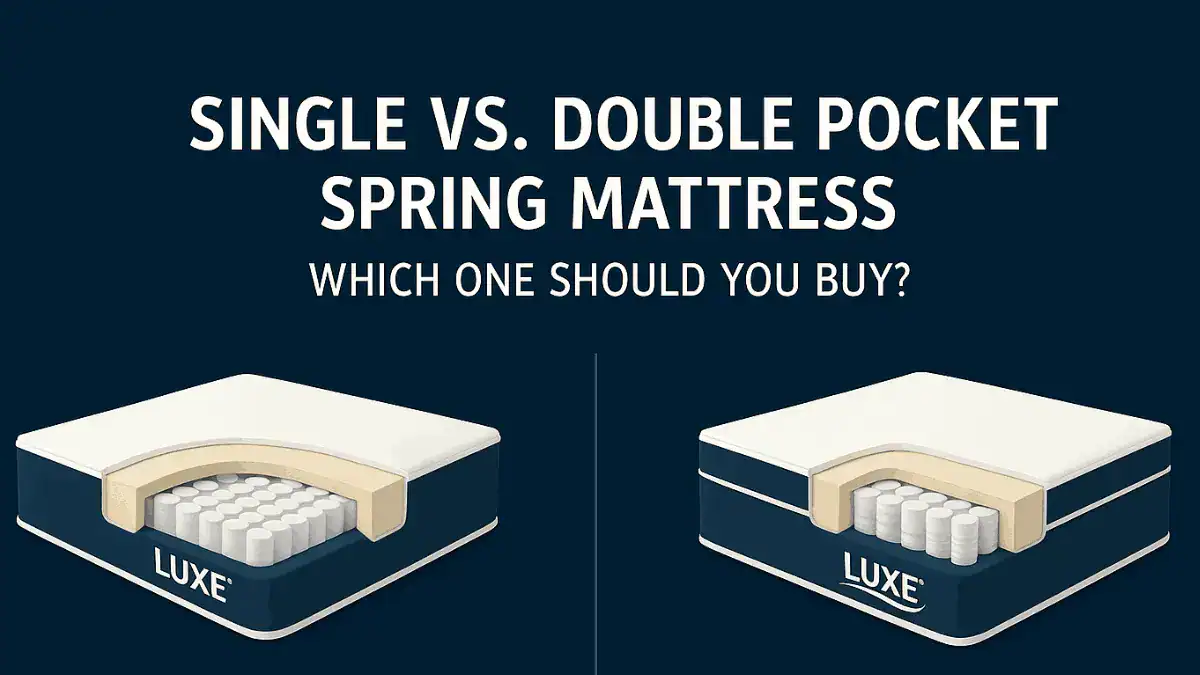
Single vs Double Pocket Spring Mattress Which One Should You Buy?
October 24, 2025

Single vs Double Pocket Spring Mattress Which One Should You Buy?

Choosing the right mattress isn’t just about comfort, it’s about space, sleep quality, and lifestyle fit. In the UK, one of the most common questions shoppers face before upgrading their beds is: Should I go for a single or a double pocket spring mattress?

This guide helps you make that decision by comparing single vs double pocket spring mattress models in terms of space, comfort, price, and practicality. Whether you’re a solo sleeper, a couple, or furnishing a guest room, understanding the differences ensures your purchase supports both comfort and space efficiency.

Understanding Pocket Spring Mattresses

Understanding Pocket Spring Mattresses

Pocket spring mattresses are built with hundreds of individually wrapped coils that move independently to support the body. Unlike open coil beds, they prevent motion transfer, promote sleeping space comfort, and adjust to your sleeping positions naturally.

Each spring in both single vs double pocket spring mattress options functions autonomously,  giving your body the precise support it needs, from shoulders to hips. The result? A restful sleep without tossing and turning.

Mattress Size Comparison UK What’s the Difference?

Standard Bed Dimensions in the UK

Understanding bed dimensions UK standards is the first step in choosing between single and double beds:

Mattress TypeDimensions (cm)Ideal For
Single90 x 190 cmChildren, teens, solo adults
Small Double120 x 190 cmSolo sleepers wanting more space
Double135 x 190 cmCouples or larger rooms

The size gap between single and double may seem small, but in practical use, it can change how comfortably you move during sleep.

Space Optimization and Room Layout

If your bedroom is compact, a single pocket spring mattress helps save floor space. For guest rooms or smaller apartments, this can make a big difference.

However, for couples or restless sleepers, the double pocket spring mattress offers added room to stretch without disturbing your partner. Considering space optimization and movement freedom, your decision often depends on room size and sleeping habits.

Comfort and Support Which One Feels Better?

Sleeping Space Comfort for Different Users

When comparing single vs double pocket spring mattress models, comfort depends largely on who’s sleeping on it. Singles offer adequate support for one person, especially for children, teenagers, or adults living alone.

But for couples, or anyone who values extra sleeping space comfort, the double version ensures both occupants get consistent spinal support. The additional width allows each person to maintain their comfort preferences and ideal sleeping positions.

Firmness and Motion Response

Pocket springs are known for responsive comfort. Regardless of size, both single and double models can be found across firmness levels on the firmness scale.

However, larger models tend to perform better in motion isolation. For example, if your partner moves frequently, a double pocket spring mattress will absorb that movement more efficiently, ensuring uninterrupted rest.

Budget and Affordability Balance

Price Difference and Long-Term Value

A single mattress typically costs less, which makes it attractive for guest rooms, hostels, or small homes. Yet, when you factor in comfort and usability, a double mattress often provides better long-term value.

The single vs double pocket spring mattress decision comes down to priorities: saving money or maximizing comfort. If you share your bed or want more space to move, the upgrade is usually worth the extra cost.

Durability and Maintenance

Both mattress types share similar lifespans, usually lasting 8–10 years with proper care. Turning and rotating your mattress every three months prevents wear and extends life.

Larger mattresses may weigh more, but their dual-sided designs help maintain shape and firmness evenly.

Which Mattress Is Best for Couples vs Solo Sleepers?

Which Mattress Is Best for Couples vs Solo Sleepers?

For Solo Sleepers

Single pocket spring models are ideal for those who prioritise space-saving and affordability. They’re also great for children or students living in shared accommodations.

For Couples

For shared beds, the double pocket spring mattress is the clear winner. It accommodates two people without compromising sleeping space comfort, allowing both sleepers to move naturally while staying supported.

In addition, larger mattresses are often available in upgraded comfort versions, with added foam layers or gel cooling, for couples who prefer luxury and motion control.

Expert Insight What Sleep Specialists Recommend

Comfort Preferences and Sleep Quality

UK sleep experts suggest that your comfort preferences and sleeping positions should drive your buying decision more than size alone. If you move a lot or share a bed, you’ll benefit from a wider surface area.

For those focused on ergonomics, a single vs double pocket spring mattress comparison shows that both provide similar back support; the difference lies in how much freedom you have to move.

Space Optimization and Lifestyle Fit

For city apartments or student rooms, space optimization is crucial. A single fits seamlessly in compact setups, while a double fits larger rooms or shared spaces.

If your goal is versatility, a bed that works for guests, couples, or individual use, the small double option (120 cm wide) can be the perfect middle ground.

Conclusion

Ultimately, your choice between single vs double pocket spring mattress depends on your room size, budget, and sleeping habits.

If you live in a smaller room or sleep alone, a single provides all the comfort and support you need. But if you share your bed or simply enjoy stretching out, the double version enhances sleep comfort, partner independence, and overall rest quality.

Whichever you choose, investing in a quality pocket spring design ensures durability, pressure relief, and body-contouring support essential elements for sound sleep in any home.

FAQ’s 

What’s the main difference between single and double pocket spring mattresses?

The main difference lies in size and sleeping comfort. Singles are designed for one person, while doubles provide more room and better motion isolation.

Is a double mattress worth it for one person?

Yes. If you have the space, it allows more movement freedom and superior sleeping space comfort.

Do both types offer the same back support?

Yes, pocket springs provide equal firmness and spinal support, regardless of mattress size.

What’s the best option for a small bedroom?

A single or small double mattress ensures efficient space optimization without sacrificing comfort.

How long do pocket spring mattresses last?

Typically 8–10 years with regular rotation and care.

pocket spring mattress double
October 23, 2025

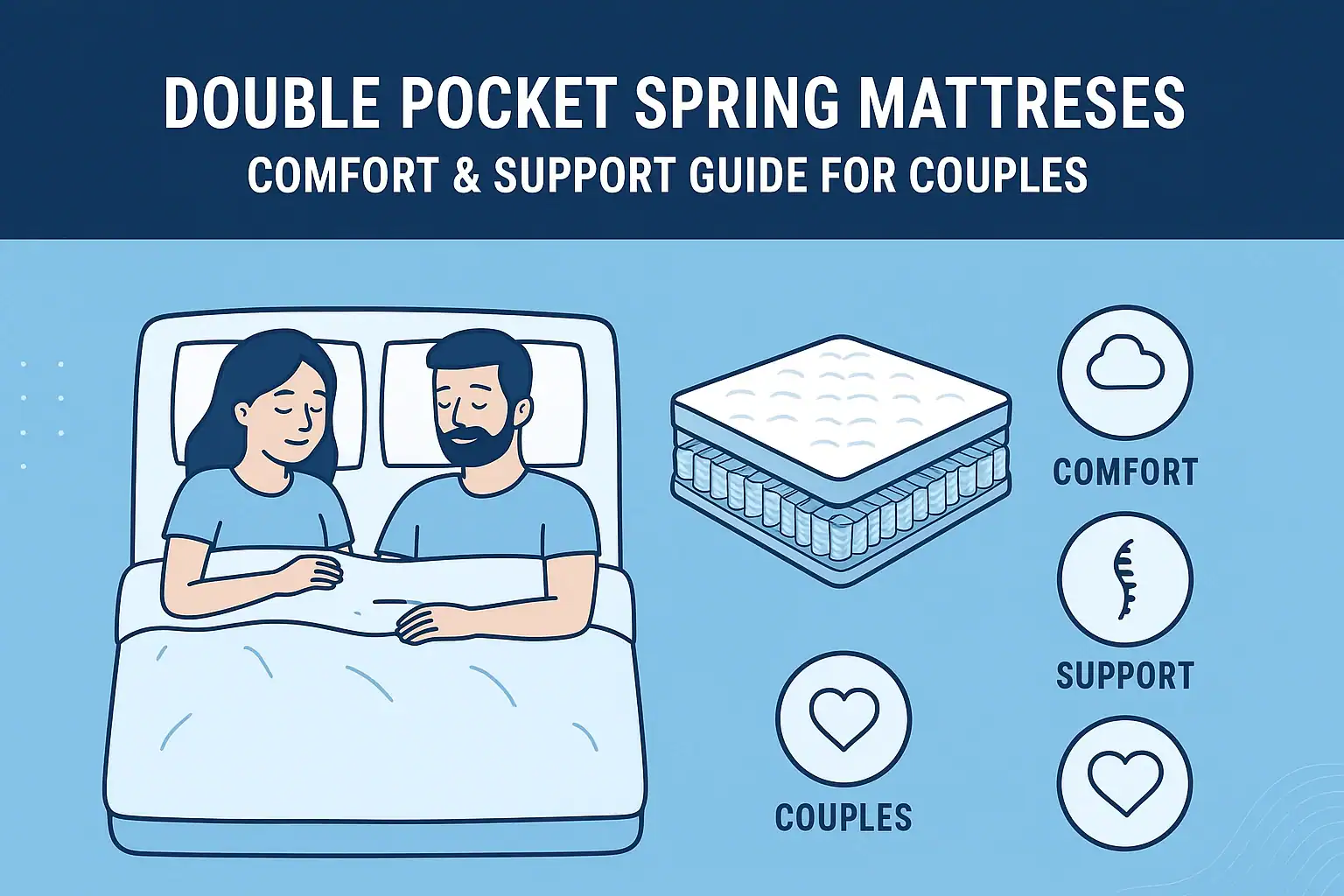
Double Pocket Spring Mattresses | Comfort & Support Guide for Couples

Couples don’t just need a bigger bed they need a smarter core that keeps both partners properly aligned, cool, and undisturbed. A pocket spring mattress double delivers that balance by pairing independent coil response with breathable comfort layers, so each partner gets support without dragging the other into their movement.

Compared with older open-coil designs, encased coils cut motion transfer, maintain truer spinal alignment, and resist premature sagging key drivers of sleep quality over the long term.
In this guide, we break down how modern coil technology works, what to expect from the comfort layer stack (foam, latex, or natural fibres), how pocketed coils limit motion transfer, and which construction details actually affect durability. You’ll also see clear comparisons with memory foam, a no-nonsense buying checklist, and care tips to extend lifespan.

What Is a Double Pocket Spring Mattress?

Understanding the Pocket Spring Support System

A double uses hundreds to thousands of individually wrapped coils that flex independently under load. This isolates movement, spreads pressure evenly, and supports curves at the shoulders, lumbar, and hips. 

What makes a pocket spring mattress double distinct is that each spring is stitched into its own fabric pocket, so force is absorbed locally rather than rippling across the surface. Coil count and wire gauge (thickness) shape how responsive it feels, more isn’t always better, and tensioning matters as much as totals. Open coil/Bonnell systems, by contrast, link coils, which amplifies partner disturbance and can create roll-together.

How the Double Size Enhances Sleep for Couples

A UK double measures roughly 135 — 190 cm (see the British Bed Sizes Chart), offering enough width for most couples in moderate rooms. The format works because it balances space, cost, and compatibility with standard frames and bedding. 

Paired with encased coils, you gain personal “micro-zones” of support on each side, so mixed sleep styles (side/back/combination) can coexist. Guidance from the Sleep Council UK consistently favours designs that minimise motion while keeping the spine neutral, precisely the sweet spot of a well-tuned double with pocketed coils.

The Science Behind Pocket Spring Technology

How Pocket Springs Improve Comfort & Support

Under load, each coil compresses to match local contours, offloading hotspots at the shoulders and hips while lifting the lumbar to neutralise swayback. In a pocket spring mattress double, that targeted response happens for both partners independently, so one person’s turn doesn’t tilt the other’s zone. The end result: lower peak pressures, fewer micro-awakenings, and more stable posture across the night.

Comparison: Pocket Spring vs. Memory Foam

Both can work preferences and priorities decide:

Pocket Springs vs Memory Foam ” Feature Comparison
Feature Pocket Springs Memory Foam
Feel Buoyant, responsive, easy to turn Deep contour, slow response
Heat Airflow through core; cooler Can retain heat without cooling tech
Motion Transfer Low (independent coils) Low (visco damping)
Edge Support Often stronger (framed edges) Often softer edges
Care Rotate + ventilate Rotate + protect from heat buildup

If you sleep hot, prefer bounce, or change positions frequently, coils win. If you want maximum “hug” and sharp pressure melt, foam can be effective, ideally in a hybrid with breathable layers. 

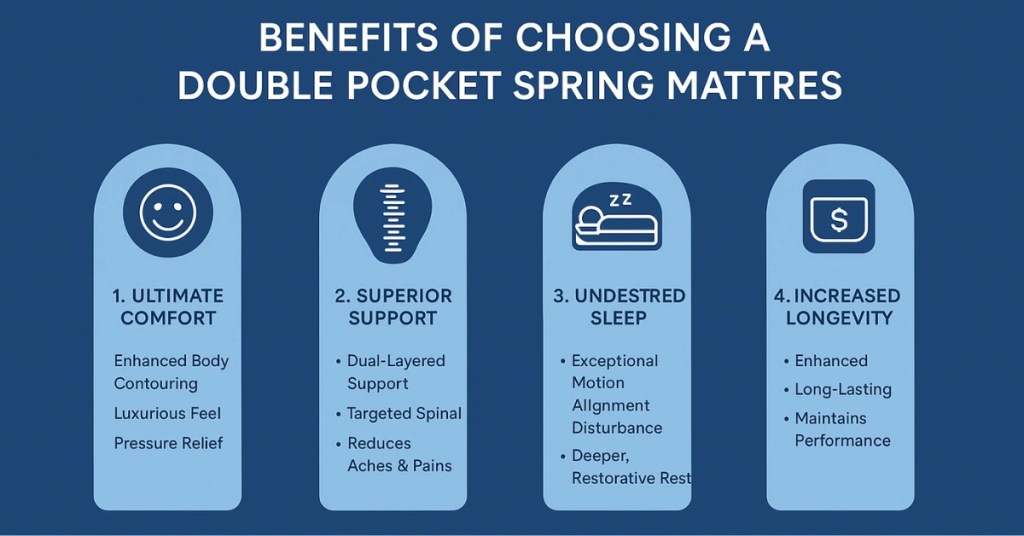
Benefits of Choosing a Double Pocket Spring Mattress

Choosing a Double Pocket Spring Mattress

Personalized Support for Each Sleeper

Individually wrapped coils adapt to body weight and shape, delivering lift where you need it and relief where you don’t. This cuts pins-and-needles at the shoulder for side sleepers and keeps the lumbar lifted for back sleepers.

Ideal Balance for Couples’ Sleep Styles

Mixed needs are common (e.g., one side sleeper, one back sleeper). Zoned coil maps and medium-to-medium-firm setups handle both without compromise.

Temperature Control and Breathability

Coil cores breathe by design. Air travels vertically and laterally between springs, helping the surface shed heat and moisture more effectively than dense foams.

Durability and Long-Lasting Comfort

Steel coils maintain tension longer than many soft foams, which means better shape retention and fewer body impressions over time especially in a double pocket spring mattress UK context where value and longevity drive buying decisions.

Reduced Motion Transfer

Because coils are not tied together, partner movement is muted. Less disturbance equals longer deep-sleep stretches and better morning recovery.

Double Pocket Spring Mattress Construction Explained

Core Layer – The Pocket Spring Support System

Look for clear specs: spring gauge, coil count, and distribution. A typical double contains 1000–2000 pocket springs (king sizes list higher counts by area). What matters is balance—wire thickness, zoning, and pre-tension. A thoughtfully tuned pocket spring mattress double with ~1000–1500 coils and firmer lumbar zoning often outperforms higher counts with poor tension control.

Comfort Layers Above the Springs

Comfort comes from the stack above coils: memory foam, latex foam, or natural fillings like wool and cotton. Latex and natural fibres breathe best; memory foam adds plush contour but may run warmer unless engineered for airflow. Blend to fit the sleeper: side sleepers often prefer a slightly plusher top; back/stomach sleepers usually need a firmer, flatter interface.

Edge Support and Reinforcement

A perimeter rod, high-density foam rails, or reinforced pocket rows stabilise edges. For couples, stronger edges expand the usable width and reduce that “slip-off” feeling.

Best Double Pocket Spring Mattress Options in the UK

Mattress Options in the UK

What Defines the Best Double Pocket Spring Mattress?

Clarity on specs, proven materials, and reputable warranties. The best double pocket spring mattress pairs tuned zoning with breathable, durable comfort layers and transparent coil data (count and gauge), plus credible third-party approvals (e.g., National Bed Federation).

Top-Rated Brands and Their Standout Features

  • Silentnight – Mirapocket ranges with solid airflow and dependable edge systems; frequent Which? awards.
  • Emma – Hybrid constructions blending coils and foams with strong trials and warranties.
  • Sleepeezee – Zoned springs and natural fillings; Royal Warrant heritage.
  • Hypnos – Hand-tufted, natural stacks, premium edge frames; luxury longevity.

Price Range and Value for Money Comparison

Buying tip: Pay for tensioning quality and breathable materials before chasing raw coil numbers. A pocket spring mattress double with correct gauge and zoning beats a higher-count unit with mushy layers.

Mattress Price Tiers (Double)
Tier Typical Price (Double) What You Get
Budget £300“£600 ~1000 coils, basic foam layers, decent cover
Mid £600“£1,000 1200“1500 coils, zoning, breathable comfort stack
Premium £1,000+ 1500“2000+ coils, natural fillings, reinforced edges, artisan build

Pocket Spring Double Bed – Perfect Match for Couples

Choosing the Right Bed Frame for Your Mattress

A pocket spring double bed pairs well with slatted frames (with adequate slat spacing), divans, or ottomans. Ensure solid centre support and ventilation; avoid solid boards that trap heat and humidity unless the cover is engineered to vent.

Pairing with Headboards and Bedding

A well-padded headboard reduces impact and echoes (useful in apartments). Choose breathable protectors and cotton/linen bedding to preserve airflow from core to surface.

Pocket Spring Mattress for Couples – What to Look For

Firmness Level That Suits Both Partners

Medium to medium-firm works for most couples. If weights or sleep styles differ significantly, consider zoning or a hybrid with slightly plusher top layers for the lighter partner.

Motion Isolation & Noise Control

Independent coils plus fabric pockets reduce both movement and squeaks. If you’re sensitive, avoid frames with loose slats and ensure fixings are tightened.

Support for Different Body Weights

Encased coils naturally scale compression with load. Heavier partners benefit from firmer gauges or extra lumbar rows; lighter partners get contour without bottoming out, one reason a pocket spring mattress double is so adaptable.

Double Pocket Spring Mattress Maintenance & Care Tips

Regular Rotation & Airing Out

Rotate head-to-foot every 3–6 months (unless the mattress is clearly one-sided). Air the room and the mattress monthly to release trapped humidity this keeps fibres lofty and the coil cavity dry, extending the life of a pocket spring mattress double.

Cleaning and Hygiene Practices

Use a breathable, washable protector. Vacuum the surface gently every few months. Spot-clean with mild solution; avoid over-wetting. Let it dry fully before re-dressing.

When to Replace Your Double Pocket Spring Mattress

Average lifespan: 7–10 years. Replace earlier if you see sagging, squeaks, torn ticking, or wake with persistent stiffness that wasn’t there before.

Real-World Data & Expert Insights

Sleep Studies Supporting Pocket Spring Technology

Independent encasement reduces motion transfer, linked to longer deep-sleep episodes—while zoned support helps keep the spine closer to neutral. Findings from organisations like the Sleep Foundation and NHS-aligned guidance repeatedly stress alignment and disturbance control as pillars of better sleep outcomes.

Manufacturers and sleep clinicians favour pocketed coils for their tunability: you can change gauge, height, and zone strength without sacrificing airflow or edge integrity. That adjustability is why coil cores still anchor many premium hotel and clinic-grade builds.

FAQs 

What makes a pocketed double different from other types?

Individually wrapped coils compress locally, so you get targeted support and less partner disturbance than linked coils.

Is a double with pocketed coils good for back pain?

Often yes look for firmer lumbar zoning and a medium-firm overall feel to keep the spine neutral.

How many springs should a good UK double have?

Around 1000–1500 is a strong baseline; gauge, zoning, and upholstery quality matter as much as count.

What’s the lifespan of a quality double?

Typically 7–10 years with rotation, ventilation, and a supportive frame.

Can I use pocketed doubles on adjustable frames?

Many are compatible, but confirm hinge tolerance and flexible perimeter design with the manufacturer.

Conclusion 

For two sleepers sharing one surface, independent coil response, airflow, and tuned zoning solve the three biggest problems: alignment, heat, and disturbance. A well-built pocket spring mattress double aligns each body, disperses heat through the core, and prevents one partner’s movement from waking the other. 

Choose clear specs (count and gauge), breathable comfort layers, credible warranties, and a frame that supports the centre line. Do that and you’ll get durable comfort, fewer wake-ups, and measurably better mornings.

What Are Pocket Springs?
October 23, 2025

How Many Pocket Springs in a Good Mattress?

When it comes to purchasing a new mattress, one question that often arises is, “How many pocket springs in a good mattress?” The answer is not just about the number of coils but also about the quality of support and comfort the springs provide. Pocket spring mattresses, known for their individually wrapped coils, have become popular for their ability to offer personalized support and minimal motion transfer.

The key to a good night’s sleep lies in the design of the mattress, and understanding pocket springs is crucial. These mattresses are distinct from other types, like memory foam or latex, due to their individual coil construction, which provides more tailored support for different areas of your body. So, how do the pocket spring count and the mattress’s overall construction affect your sleep quality?

High-Density Spring Mattress and Individually Wrapped Coils

Pocket spring mattresses come with individually wrapped coils that move independently, providing pressure relief and ensuring that each part of your body is properly supported. This type of construction is particularly important for those who suffer from joint pain or back issues. A higher pocket spring count generally means better overall support, especially for people who need more firm or targeted support.

What Are Pocket Springs?

What Are Pocket Springs?

Pocket Spring Mechanism

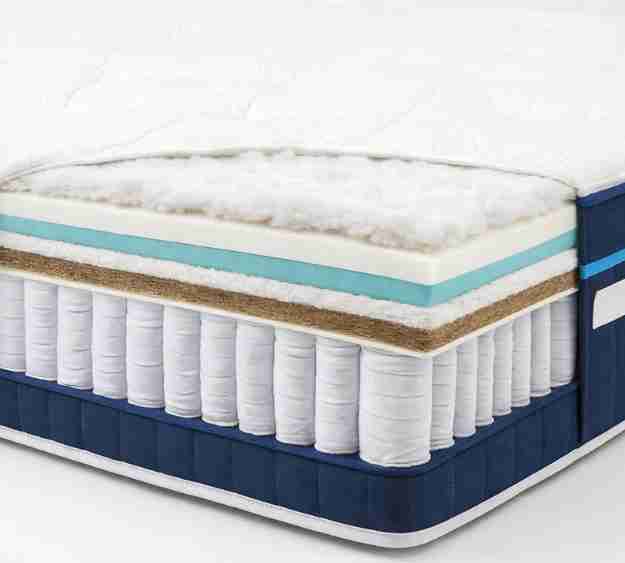
Pocket springs are coils that are encased in fabric pockets. These springs work independently, allowing them to react to the pressure exerted by the body. The main advantage of pocket springs is their ability to move independently of each other, which helps reduce motion transfer. If one person moves on the mattress, the other person is less likely to feel it, making pocket spring mattresses ideal for couples.

Zoned support is another feature of pocket spring mattresses. This means that different areas of the mattress may have springs with varying tensions, firmer springs in the center for lumbar support and softer ones near the edges for comfort. This zoning provides better spine alignment, a key factor for pressure relief and comfort.

The Science Behind Pocket Springs

Pocket springs play a significant role in maintaining spinal alignment by supporting the body at various pressure points. Proper alignment helps prevent back and joint pain, improving overall sleep quality. Chiropractors often recommend pocket spring mattresses for individuals who suffer from spinal misalignment or pressure-induced discomfort. By offering targeted support, these mattresses help alleviate discomfort and promote better sleep.

How Many Pocket Springs Should a Good Mattress Have?

Understanding Pocket Spring Count

The number of pocket springs in a mattress is directly related to its ability to provide support and comfort. A typical range for high-quality mattresses is anywhere from 1000 to 2000 pocket springs. More springs generally translate into better weight distribution and less sagging over time. However, it’s not just about the number, it’s also about how the springs are arranged and the mattress’s overall design.

A high-density spring mattress with 1500–2000 springs is ideal for those who need firm support, while a lower count may be more suitable for lighter sleepers or those who prefer a softer feel.

The Link Between Pocket Spring Count and Mattress Firmness

The number of pocket springs influences the firmness of a mattress. Side sleepers typically benefit from a mattress with a higher spring count and softer coils, while back and stomach sleepers often prefer firmer mattresses with a lower spring count for better spinal alignment. The spring count and tension vary between mattress types, brands, and models, so understanding your sleep posture is key to selecting the best mattress.

Pocket Spring Count vs. Comfort and Longevity

While it’s easy to assume that a mattress with more springs will always provide better comfort, this is not always the case. A mattress with fewer, but higher-quality springs, can often provide the same or better support than a mattress with a higher spring count. The balance between spring count and mattress longevity is crucial, too many springs in a low-quality mattress can result in quicker wear and tear.

The Role of Zoned Pocket Spring Support

The Role of Zoned Pocket Spring Support

What Is Zoned Support?

Zoned pocket spring support is a design feature that involves using different spring tensions in various areas of the mattress. For example, firmer springs are placed in the middle of the mattress to support the lumbar region, while softer springs are used near the shoulders and feet to reduce pressure. This targeted support helps keep the spine in a neutral position, which is important for people with back pain or those who need extra support in specific areas.

Is Zoned Pocket Spring Support Necessary?

Zoned support can make a significant difference, especially for side sleepers or those who suffer from joint pain. Mattresses with zoned support are designed to improve spinal alignment and provide relief from pressure points. Many high-quality mattresses, including those designed for back pain relief, feature zoned pocket spring support for optimal comfort.

Hybrid Mattresses and Pocket Springs

What Is a Hybrid Mattress?

A hybrid mattress combines pocket springs with other materials like foam or latex to offer the best of both worlds, support and comfort. Hybrid mattresses typically have a layer of latex foam or memory foam on top of the pocket springs, which helps with pressure relief, motion isolation, and overall comfort.

Benefits of Hybrid Mattress Construction

Hybrid mattresses are great for people who want the benefits of pocket springs but need the additional comfort of foam. These mattresses are ideal for couples, those with allergies, or anyone who needs a mattress that offers motion isolation and edge support. Hybrid designs also offer the durability and support of pocket springs, along with the comfort and adaptability of foam layers.

Pocket Spring vs Hybrid Mattress: Which One to Choose?

Choosing between a pocket spring mattress and a hybrid mattress depends on your personal needs. If you prefer the natural support of individual coils and don’t mind a firmer feel, a pocket spring mattress may be your best option. However, if you want the added comfort of foam or latex, a hybrid mattress may be more suitable for you.

How to Choose the Right Pocket Spring Mattress for You

Factors to Consider: Pocket Spring Count and Mattress Quality

When selecting a pocket spring mattress, consider factors like firmness, support, longevity, and price. Your body weight and sleeping habits also play a role in determining the ideal pocket spring count. High-density spring mattresses are better for heavier sleepers who require firm support, while lighter individuals may find that medium-density mattresses provide adequate comfort.

Sleep Position and Pocket Spring Count

The right pocket spring count varies depending on your sleeping position. For side sleepers, mattresses with a higher spring count and softer springs are ideal, while back and stomach sleepers typically require a firmer mattress with a lower spring count to maintain proper alignment.

Test for Comfort: Mattress Trial Periods and Firmness

It’s important to test a mattress before committing to it, especially since spring count can affect the feel during a trial period. Many brands offer mattress trials and 100-night returns, allowing you to test the comfort of a pocket spring mattress in real-life conditions.

Conclusion

The right number of pocket springs depends on your sleep needs, body weight, and preferences for firmness. A mattress with a pocket spring count between 1000 and 2000 offers a good balance of comfort and support for most sleepers. Zoned support and high-density spring mattresses provide extra benefits for individuals with specific needs, such as back pain or poor posture.

Ultimately, the best pocket spring mattress for you is one that meets your sleep posture, comfort preferences, and budget. Whether you choose a traditional pocket spring mattress or a hybrid, understanding the role of pocket springs and how they contribute to comfort will help you make an informed decision.

FAQ’s

How many pocket springs should a good mattress have?

A mattress with 1000–2000 pocket springs is typically considered high-quality. The ideal spring count depends on your personal preferences for firmness and support.

What’s the difference between high-density and low-density pocket springs?

High-density pocket springs provide firmer support and are ideal for heavier individuals, while low-density springs offer a softer feel.

How does the pocket spring count affect comfort and support?

A higher pocket spring count typically provides better support, pressure relief, and durability, though the quality of the springs also matters.

Can a high pocket spring count be too much for certain sleepers?

Yes, a mattress with too many springs may feel too firm for light sleepers or those who prefer a softer mattress.

Are hybrid mattresses better than regular pocket spring mattresses?

Hybrid mattresses combine the benefits of pocket springs and foam, offering a more adaptable feel. They are ideal for couples or anyone looking for a combination of comfort and support.

How Pocket Spring Mattresses Improve Sleep
October 23, 2025

How Pocket Spring Mattresses Improve Sleep | Benefits & Buying Tips

Quality sleep isn’t a luxury , it’s essential for mental and physical health. According to the Sleep Foundation UK, the average person spends nearly one-third of life sleeping, yet many still use mattresses that compromise their posture and spinal health.

That’s where the pocket spring mattress comes in. Designed for optimal comfort and orthopedic support, it has become one of the best pocket spring mattress UK options for those seeking restful, restorative nights. Its unique construction adapts to body contours, aligning with your sleep posture and reducing pressure points.

Choosing the right mattress can genuinely transform your rest, posture, and long-term well-being.

What Is a Pocket Spring Mattress?

A pocket spring mattress uses hundreds, sometimes thousands, of individual springs encased in separate fabric pockets. Each spring reacts independently to body movement, providing targeted support and reducing motion transfer.

Unlike traditional open coil mattresses where springs are interconnected, the pocket spring system functions like a set of mini shock absorbers, cushioning every part of your body independently.

Construction and Materials Used in Pocket Spring Mattresses

A high-quality pocket spring mattress features multiple layers, from a breathable comfort foam to a robust spring core wrapped in soft, durable fabric. This structure ensures exceptional motion isolation, enhanced durability, and consistent spinal alignment.

The fabric pockets also improve ventilation, keeping the sleeping surface cool and hygienic for years of use.

Pocket Spring Mattress Benefits for Every Sleeper

Pocket Spring Mattress Benefits for Every Sleeper

Let’s explore the key pocket spring mattress benefits that make it a superior choice for sleepers of all types, from restless partners to those with back concerns.

1. Superior Back and Spine Support

The main advantage lies in orthopedic mattress support. The springs contour to your natural curves, maintaining spinal alignment and reducing tension across the back and hips. For anyone seeking a mattress for back pain, this feature can be life-changing, promoting healthy posture and pressure relief.

2. Reduced Partner Disturbance

Since every spring moves independently, motion transfer is minimal. Whether your partner tosses or turns, you’ll barely feel it, making it ideal for couples who value uninterrupted rest.

3. Enhanced Airflow for Cooler Sleep

Air circulates freely between the pocketed coils, preventing heat build-up and maintaining a comfortable temperature throughout the night.

4. Durability and Longevity

A pocket spring mattress is engineered for endurance. The steel coils maintain their resilience far longer than memory foam alternatives, resisting sagging and compression.

5. Adaptability Across Weight and Sleep Positions

Each coil adjusts independently, offering consistent support whether you sleep on your back, side, or stomach. This adaptability makes it the best option for combination sleepers.

Pocket Spring vs Memory Foam – Which Is Better for You?

When comparing pocket spring vs memory foam, both materials offer distinct advantages, but they suit different sleepers.

Comfort and Feel

Memory foam delivers a contouring, hug-like sensation, while a pocket spring mattress provides a buoyant, supportive feel with natural bounce. It prevents the sinking effect common with dense foam models.

Temperature and Breathability

Memory foam tends to trap heat. Pocket springs, by contrast, allow superior airflow, making them a better choice for hot sleepers.

Motion Isolation

Both perform well here, but pocket springs slightly outperform foam by combining responsiveness with stability, especially when using smaller, individually wrapped coils.

Durability and Maintenance

Springs typically last longer, maintaining structure without softening over time. In this respect, pocket spring vs memory foam comparisons consistently favour springs for long-term use and easier care.

Is a Pocket Spring Mattress Good for Back Pain?

Absolutely. A mattress for back pain should distribute pressure evenly, support natural curvature, and maintain posture. Chiropractors and orthopedic sleep experts often recommend pocket spring designs for chronic pain sufferers.

How Pocket Springs Distribute Pressure Evenly

Each spring compresses individually under pressure, spreading your body weight uniformly. This prevents lower back tension and muscle strain.

Expert Opinions on Orthopedic Mattress Support

UK sleep research and NHS-backed studies highlight that consistent support — not excessive softness, is key to spinal health. Orthopedic mattress support provided by pocket springs helps maintain neutral spine alignment overnight.

Ideal Firmness Levels for Pain Relief

A medium-firm pocket spring model is generally best for comfort and stability, balancing contouring and resistance to reduce back discomfort.

Choosing the Best Pocket Spring Mattress in the UK

When selecting the best pocket spring mattress in the UK, consider key elements like spring count, materials, and certifications.

Factors to Consider Before Buying

  • Spring Count: Look for 1,000–2,000 springs for balanced comfort. Premium models exceed 3,000.
  • Materials: Natural fillings (wool, cotton, latex) increase breathability.
  • Firmness: Choose based on weight and preferred sleep position.
  • Sleeping Habits: Side sleepers need softer comfort layers, while back sleepers benefit from firmer bases.

Top Recommendations – Best Pocket Spring Mattress UK

  1. Silentnight Mirapocket 2000 Elite – Outstanding balance of comfort and durability.
  2. Simba Hybrid Pro – Combines pocket springs with cooling foam.
  3. Emma Premium Mattress – Ideal for posture support and cooling.
  4. Hypnos Wool Origins – Luxurious natural fillings and hand-crafted coils.

These are widely recognised as among the best pocket spring mattress UK options for long-lasting quality.

Hybrid Pocket Spring Options

Hybrid designs blend coils with foam or latex layers, delivering the best of both worlds, the bounce of springs and the contouring of foam.

Maintenance and Care Tips to Extend Lifespan

Maintenance and Care Tips to Extend Lifespan

Proper care extends the life of your pocket spring mattress, keeping it supportive and clean.

Rotating Schedule by Season

Rotate your mattress every 3–6 months to distribute wear evenly.

Vacuuming and Airing Out Regularly

Use a handheld vacuum to remove dust and allergens, and air it out monthly to prevent moisture build-up.

Signs It’s Time to Replace Your Mattress

If sagging, squeaks, or stiffness appear despite maintenance, it may be time for a replacement.

Always ensure a supportive bed frame and use a breathable mattress protector to preserve coil integrity.

Common Myths About Pocket Spring Mattresses

Let’s debunk some common misconceptions about pocket spring mattresses:

  • They’re only for luxury buyers.
    False. High-quality models are now available at various price points.
  • They lose support quickly.
    Wrong. Independent coils retain elasticity for years.
  • Springs always squeak.
    Modern pocket systems are silent, as each spring is fabric-encased.

These myths discourage buyers from experiencing genuine comfort and orthopedic benefits.

FAQs About Pocket Spring Mattresses

Q1: What spring count is best for me?

1,000–2,000 springs suit most sleepers. Higher counts improve contouring but aren’t always necessary.

Q2: Is a pocket spring mattress good for side sleepers?

Yes, because the coils adapt individually, cushioning shoulders and hips.

Q3: Do I need a box spring with a pocket spring mattress?

No. A flat, slatted, or platform bed frame works best.

Q4: What’s the difference between pocket spring and hybrid?

Hybrid models combine springs with foam or latex for added softness and bounce.

Conclusion – Why a Pocket Spring Mattress Is Worth It

A pocket spring mattress isn’t just about comfort, it’s about long-term orthopedic health, durability, and temperature regulation. It provides exceptional support for posture and back alignment, ensuring deep, rejuvenating rest.

If you’re seeking the best pocket spring mattress UK, consider reputable brands like Simba, Silentnight, or Hypnos. Their products consistently deliver the right mix of firmness, support, and cooling airflow.

Explore related guides to strengthen your understanding:

Choosing the right mattress today means investing in better sleep, stronger posture, and improved well-being tomorrow.

Best Memory Foam Single Mattresses for Comfort and Support
October 22, 2025

Best Memory Foam Single Mattresses for Comfort and Support

A good night’s sleep doesn’t just happen it starts with the right mattress. Memory Foam Single Mattresses can turn restless nights into refreshing mornings by contouring perfectly to your body. They cushion pressure points, improve posture, and help you drift into deep, restorative rest night after night.

In the UK, where bedrooms are often compact, Memory Foam Single Mattresses offer the perfect balance of comfort and practicality. Whether you’re refreshing a guest bed, furnishing a student room, or upgrading your personal space, the Luxe Mattress Memory Foam Collection combines premium craftsmanship, reliable support, and lasting softness for your best sleep ever.

What Makes a Single Mattress with Memory Foam So Comfortable?

A memory foam single mattress is built to adapt to you, not the other way around. Made from advanced viscoelastic materials, it responds to your body heat and weight for a tailored sleep experience. It gently cradles your natural curves, supports spinal alignment, and distributes pressure evenly for unmatched comfort.

Top Comfort Advantages:

  • Pressure Relief: Ideal for easing tension in the shoulders, hips, and lower back.
  • Motion Isolation: Perfect for solo sleepers who toss or turn.
  • Spinal Alignment: Keeps your posture neutral, preventing aches and stiffness.
  • Temperature Response: Modern foams regulate heat for balanced sleep comfort.

Luxe Mattress models are designed to deliver consistent foam support and cloud-like comfort, giving you the best of both luxury and practicality.

Top Features to Look for in the Best Memory Foam Single Mattress

Finding the perfect comfort foam bed isn’t just about softness, it’s about smart design and premium materials that promote better rest and durability.

Key Features to Check:

  • Foam Density: Medium-to-high density foams last longer and maintain structure.
  • Cooling Technology: Look for gel-infused or ventilated memory foam layers to avoid overheating.
  • Multi-Layer Construction: A supportive base layer paired with comfort and transition foams enhances resilience.
  • Removable & Washable Covers: Keeps your pressure relief mattress fresh and hygienic.
  • Warranty & Trial Period: Always choose brands that offer 5–10 year warranties and generous sleep trials.

These elements ensure that your mattress delivers the right balance of softness, structure, and temperature control.

Best Memory Foam Single Mattresses in the UK 2025

Choosing the best single mattress with memory foam can feel overwhelming, but Luxe Mattress simplifies the process with expertly crafted designs that combine premium materials, elegant comfort, and reliable support.

Best Memory Foam Single Mattresses – Models, Key Features, and Best For
Model Key Features Best For
Majestic 9000™ Memory Foam Mattress Firm orthopedic support with advanced memory layers for superior spinal alignment. Back sleepers or those seeking a structured, supportive feel.
Reverso Dual-Layer Mattress Flippable sides (Soft & Medium) with airflow channels and adaptive comfort layers. Side sleepers, teens, or anyone who wants flexible firmness.
Velour Cloud Elite Mattress Luxurious plush top, cooling gel-infused foam, and long-lasting durability. Anyone wanting premium sleep comfort and luxury feel.

Each Luxe Mattress single model is engineered for lasting comfort and is backed by years of design expertise making them ideal for both everyday use and guest bedrooms.

How Memory Foam Mattresses Improve Sleep Comfort

How Memory Foam Mattresses Improve Sleep Comfort

The core reason memory foam is so effective is its pressure-responsive nature. It shapes itself around your contours and helps maintain a neutral spine position. That means less tossing, less tension, and more restorative rest.

Why Memory Foam Enhances Sleep:

  • Promotes muscle relaxation and faster sleep onset.
  • Absorbs motion, so every movement feels gentle.
  • Aligns the spine for healthier posture.
  • Reduces morning soreness and fatigue.

With a memory foam single mattress from Luxe Mattress, you experience that “weightless” floating sensation where every inch of your body feels supported without sinking.

Who Should Choose a Memory Foam Single Mattress?

Memory foam mattresses are versatile and suit almost every sleeper type. However, they shine particularly well in smaller bed sizes like singles, where personalised comfort makes a big difference.

Perfect For:

  • Children & Teens: Provides balanced foam support for growing bodies.
  • Solo Adults: Ideal for compact rooms or studio apartments.
  • People with Back or Joint Pain: The foam’s contouring reduces strain and pressure.
  • Guest Rooms: Easy to maintain and universally comfortable.

If you prefer a mattress that feels snug, supportive, and gentle on pressure points a single mattress with memory foam is your best choice.

Choosing the Right Firmness and Thickness

Choosing the Right Firmness and Thickness

Firmness and thickness determine how your body feels supported throughout the night. The goal is to maintain natural alignment without losing cushioning comfort.

Recommended Firmness and Thickness for Different Sleeper Types
Sleeper Type Ideal Firmness Recommended Thickness Why It Works
Side Sleepers Soft–Medium 20–25 cm Relieves pressure on shoulders and hips.
Back Sleepers Medium–Firm 25–30 cm Keeps the spine straight and evenly supported.
Combination Sleepers Medium 22–27 cm Offers flexibility for multiple positions.

When shopping at Luxe Mattress, you can find varying firmness levels within the same model range giving you the power to pick your perfect comfort balance.

How to Care for and Extend the Life of Your Memory Foam Mattress

A memory foam single mattress can last up to a decade with proper care. Keeping it clean, supported, and rotated will help maintain its comfort and structure.

Maintenance Tips:

  • Rotate every 3–6 months to prevent dips.
  • Use a washable protector to keep it fresh.
  • Ensure your base has strong, evenly spaced slats.
  • Let your mattress breathe once a week by removing bedding for an hour.
  • Avoid prolonged sunlight exposure, which can affect foam elasticity.

Luxe Mattress models come with removable covers that make maintenance easy, keeping your comfort foam bed hygienic and like new.

Common Mistakes to Avoid When Buying a Memory Foam Single Mattress

Even with the best intentions, shoppers often make avoidable mistakes when buying mattresses. Avoiding these ensures better value and longer comfort.

Common Mistakes:

  • Buying based on price alone without testing firmness or reviews.
  • Choosing a low-density foam that sags quickly.
  • Ignoring breathability causing overheating at night.
  • Skipping trial periods or warranty coverage.

When you buy from trusted brands like Luxe Mattress, you get transparent product details, warranty coverage, and peace of mind no hidden surprises.

Conclusion: Sleep Better with Luxe Mattress

A single mattress with memory foam is more than just a bedding upgrade, it’s a lifestyle investment in your health, rest, and daily energy. Its ability to contour, cushion, and support your body makes it one of the best mattress technologies available today.

When you choose from the Luxe Mattress Memory Foam Collection, you’re not just buying a mattress, you’re choosing a partner in better sleep. Designed for comfort, built for durability, and priced for real homes, each model ensures that every night feels softer, cooler, and more restorative.

FAQs

What are the most comfortable memory foam mattresses?

The most comfortable memory foam mattresses combine contouring foam layers with strong base support for balanced comfort. Models like the Majestic 9000â„¢ and Velour Cloud Elite by Luxe Mattress offer plush feel and superior body alignment.

What type of mattress gives the best support?

Hybrid and high-density memory foam mattresses provide the best support by combining responsive foam with firm base layers. They help maintain spinal alignment and reduce pressure points for all sleeping positions.

What are the top 5 most comfortable mattresses?

Top picks for 2025 include Luxe Mattress Majestic 9000â„¢, Reverso Dual-Layer, Velour Cloud Elite, Emma Original, and Nectar Memory Foam Single. Each offers lasting comfort, strong foam support, and advanced cooling design.

Which brand is good for a memory foam mattress?

Luxe Mattress is a trusted UK brand known for its high-quality memory foam and hybrid mattresses. It blends innovative foam technology, breathable covers, and long warranties for reliable sleep comfort.

What thickness of memory foam mattress is best?

A thickness of 22 to 27 cm works best for most single sleepers, balancing plush comfort and firm foam support. Thicker models feel more luxurious, while mid-range options suit everyday use and compact frames.

Single vs Twin Mattress Sizes
October 22, 2025

Single vs Twin Mattress Sizes “ Which One Fits Better?

The right Single vs Twin mattress sizes goes beyond comfort it shapes your sleep quality, posture, and room design. Many people struggle to understand the difference between single and twin mattresses, especially since both are meant for solo sleepers.

This detailed mattress guide UK explores the real distinctions in the mattress size single vs twin, helping you choose a mattress that perfectly matches your needs and space.

Understanding Single vs Twin Mattresses – The Basics

While single and twin mattresses serve similar purposes, they differ slightly in measurement and naming conventions. The single mattress is standard across the UK, while the twin is more common in the United States.

Key Facts:

  • Single Mattress (UK): The most popular one-person bed, ideal for compact bedrooms.
  • US Twin Mattress (US): Slightly larger, designed for taller individuals or shared twin rooms.
  • Main Difference: Regional terminology and a small variation in width or length.
Mattress Size Single vs Twin – Key Dimensions and Measurements

Mattress Size Single vs Twin – Key Dimensions and Measurements

Understanding size differences helps you avoid fitting mistakes when buying a new mattress. Even a few centimetres can affect comfort, bedding, and bed frame compatibility.

Mattress Sizes and Best Uses
Mattress Type Dimensions (cm) Best For
UK Small Single 75 × 190 Children, narrow rooms
UK Single 90 × 190 Teens, adults, guest rooms
US Twin 99 × 191 Taller sleepers, U.S. setups
US Twin XL 99 × 203 Extra legroom for tall adults

Quick Insights:

  • Twin mattresses are about 9 cm wider than UK singles.
  • UK singles fit local frames and bedding more easily.
  • The difference may seem small but impacts twin mattress fit and comfort.

Comfort and Practicality – Which Feels Better to Sleep On?

Comfort isn’t just about size, it’s about how well a mattress supports your body and suits your lifestyle. The mattress size single vs twin comparison often comes down to space and movement preferences.

Single Mattress:

  • Compact yet supportive; ideal for children, teens, or solo sleepers.
  • Keeps small UK bedrooms open and airy.
  • Easy to move, clean, and maintain.

Twin Mattress:

  • Offers extra space for movement while sleeping.
  • Feels roomier for taller individuals or light couples.
  • Better suited for large or shared rooms.

Mattress Size Single vs Twin – Which Fits Your Room Better?

Your bedroom’s layout should guide your mattress decision. A single mattress can make a small space functional, while a twin works better in a larger room with added comfort needs.

Best Room Matches:

  • Single Mattress: Great for compact rooms, student flats, and minimalistic setups.
  • Twin Mattress: Ideal for guest rooms, shared spaces, or larger bedrooms.

Apartments: Single mattresses offer flexibility and more floor space.

Mattress Type and Recommended Room Width
Mattress Type Minimum Room Width Ideal Use
Single 2.0 m Solo sleepers, compact rooms
Twin 2.4 m Guests, tall users, shared setups

Durability, Support, and Material Options

The right material ensures lasting comfort and proper body support. Both single and twin mattresses are available in multiple types, each offering unique benefits for different sleepers.

Popular Material Types:

  • Memory Foam: Moulds to your body for pressure relief.
  • Pocket Spring: Offers bounce and better airflow.
  • Hybrid: Combines foam comfort with spring resilience.
  • Latex: Eco-friendly and naturally breathable.

Tip:
Because of their smaller surface area, single mattresses can feel slightly firmer than their twin counterparts made from the same materials.

Price and Availability in the UK Market

Price and accessibility are key when comparing the mattress size single vs twin. The single is standard and widely available in the UK, while the twin is often imported or custom-made.

Mattress Sizes, Price Range, and Availability in the UK
Mattress Size Price Range (Approx.) Availability
UK Single £180 – £350 Very Common
UK Small Single £150 – £300 Common
US Twin £250 – £450 Limited
US Twin XL £300 – £500 Rare

Market Insights:

  • Single mattresses are the most cost-effective option in the UK.
  • Twin models can cost more due to limited supply.
  • Always confirm dimensions before buying online.

Who Should Choose a Single Mattress?

The single mattress remains the go-to choice for most UK buyers. It’s affordable, practical, and fits seamlessly into compact spaces.

Best For:

  • Children, teens, and solo adults.
  • Small or multi-purpose bedrooms.
  • Those looking for lightweight, easy-to-move mattresses.

Why It Works:

  • Compatible with standard UK bedding and frames.
  • Ideal for student rooms or guest accommodations.
  • Maintains comfort without overwhelming small spaces.

Who Should Choose a Twin Mattress?

A twin mattress offers more sleeping area, making it perfect for those who value space or height comfort. It’s also great for pairing in guest rooms.

Best For:

  • Taller individuals needing extra width or legroom.
  • Families arranging dual guest setups.
  • International users with U.S.-sized furniture.

Considerations:

  • Limited frame and bedding options in the UK.
  • May require more room and a higher budget.
  • Slightly harder to transport through narrow hallways.

Mattress Size Single vs Twin – Pros and Cons Comparison Table

Every choice has trade-offs. This comparison table summarises how single and twin mattresses differ in the most important aspects.

Single vs Twin Mattress – Feature Comparison
Feature Single Mattress Twin Mattress
Size (UK) 90 × 190 cm 99 × 191 cm
Comfort Compact and firm Wider and softer
Space Use Ideal for small rooms Requires more width
Availability Common in UK Limited in UK
Cost Lower Slightly higher

Choosing Between Single and Twin – Key Considerations

Choosing Between Single and Twin – Key Considerations

Selecting between the Single vs Twin mattress sizes depend on your lifestyle, space, and long-term plans. Taking a few minutes to assess your setup can save years of discomfort.

Checklist Before Buying:

  • Measure your room and bed frame.
  • Match mattress size to your height.
  • Compare price and bedding options.
  • Think ahead, will you move or need more space later?

Quick Guide:
If you live in the UK or have limited room, choose a single. If you’re taller or have a larger bedroom, go for a twin for added comfort.

Expert Tips for Buying the Right Mattress Size

Making an informed choice ensures both comfort and value. Before purchasing, always double-check sizing and brand specifications.

Expert Advice:

  • Measure your floor space, including clearance around furniture.
  • Review brand-specific sizing charts before checkout.
  • Check mattress thickness for your preferred bed height.
  • Use a mattress guide UK to compare available options side-by-side.

Conclusion

Choosing between a Single vs Twin mattress sizes depend on how much space you have, your height, and your sleep preferences. A single mattress fits perfectly in most UK bedrooms, offering comfort and practicality without taking up extra room. Meanwhile, a twin mattress provides extra width and freedom to move, ideal for taller or more active sleepers.

No matter which you choose, the right size should balance comfort, function, and space. Take time to measure your room, compare frame sizes, and test mattress firmness before buying. A thoughtful choice ensures better posture, deeper rest, and a bedroom setup that truly feels like home.

FAQs 

Is a twin mattress bigger than a single?

Yes, a twin mattress is about 9 cm wider than a UK single. It offers a little extra room for added sleeping comfort.

How much bigger is a twin from a single?

A twin measures roughly 99 × 191 cm, while a standard UK single is 90 × 190 cm. The size difference slightly improves space and support.

Is a twin bed big enough for one person?

Yes, both single and twin mattresses are designed for one sleeper. They provide ample comfort and proper sleeping surface for adults or teens.

What are the benefits of a twin bed?

A twin bed gives extra width for better movement at night. It’s ideal for taller users or anyone who wants a bit more space.

Who should sleep in a twin bed?

Twin beds suit adults, teens, or guests who prefer more room. They also fit well in shared or guest bedrooms with flexible setups.

Product has been added to your cart