
100-Night Risk-Free Trial
Free Nationwide Delivery
10 Years Warranty
Call us at: 020 4572 5122
0% APR Finance Available
pillows
August 26, 2025

Best Pillows for Sleep Quality: Expert Buying Guide

The Role of Pillows and Bedding in Sleep Quality
Struggling to sleep through the night? Your pillow could be the culprit. The right bedding doesn’t only make you more comfortable, it also impacts your sleep by aligning your spine, keeping you cool and stopping you waking up frequently during the night. Actually, 72% of people sleep better after getting a properly supporting pillow to sleep on. With the choices available, from cooling gel memory foam to hypoallergenic latex, how do you pick the best pillows for improved sleep quality?

Let’s go on to learn how pillow materials, loft height, and sleep position affect rest.

1. How Does Bedding Affect Sleep Quality?

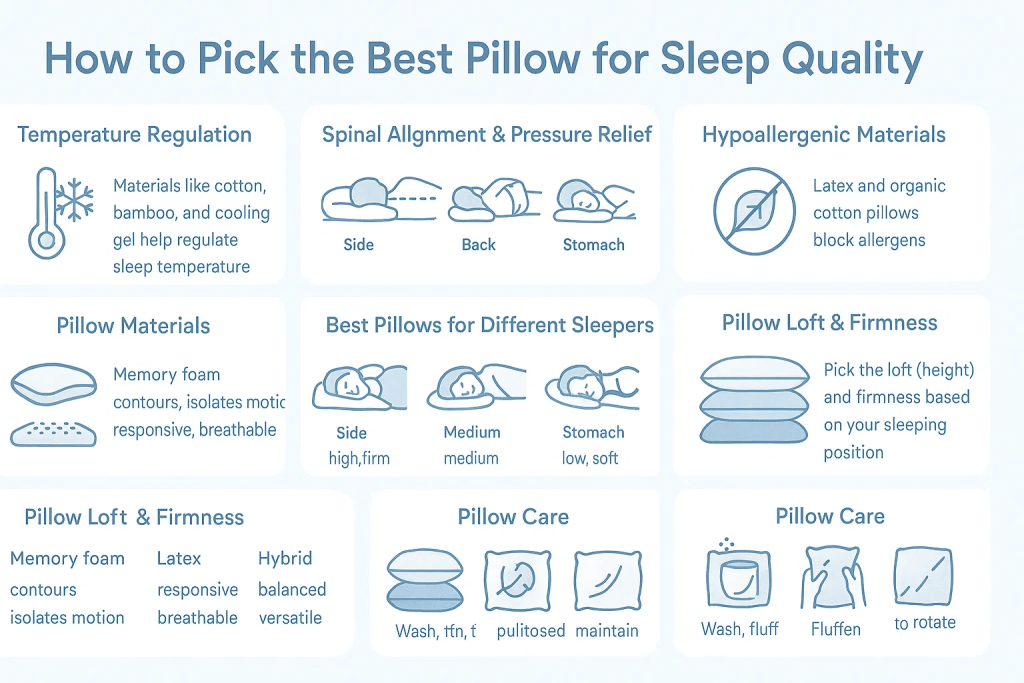
To start, your bed isn’t simply for comfort – it’s science. The best pillows for sleep quality and mattress toppers improve rest through temperature regulation, spinal alignment support, and allergen blocking. Let’s break down how each factor works.

Temperature Regulation.

On the other hand, fabrics like cotton, bamboo, or Tencel breathes moisture to cool down. Materials like polyester, that retain heat, can mess with sleep. For those who sleep hot, the surface temperature will remain constant thanks to cooling gel pillows or phase-change fabrics. Research reveals that we sleep best when the temperature is kept between 60 and 67 degrees Fahrenheit (15–19 degrees Celsius). As airflow is vital to bedding, make sure your beddings allow for optimal airflow.

Spinal Alignment & Pressure Relief.

Next, firmness dictates posture. A too-soft pillow collapses under your weight, straining your neck. An too-firm one pushes back, creating pressure points on your head. Memory foam ease the curves of the body whereas latexes supports in a buoyant way. If you sleep on the side, you need a higher loft (4 – 6 inches) so that the neck-shoulder gap can be filled up. A back sleeper is good on a medium support. Having your spine aligned prevents morning stiffness and long-term stress on your joints.

Hypoallergenic Materials.

Lastly, your bedding can be home to dust mites and mold. This may trigger your allergies. Hypoallergenic pillows use tightly woven organic cotton to obstruct any particles getting into the pillow. Covers that can be washed to 130° F are deadly to mites. And latex will not grow mold. Waking up congested? Try sleeping on antimicrobial bedding.

2. How Do You Choose the Right Pillow for Better Sleep?

Finding the best pillows for sleep quality isn’t one-size-fits-all. Your perfect mattress is determined by your sleeping position, preferred material, and firmness requirements. Whether you’re a side sleeper with neck issues or a stomach sleeper who needs little to no lift, the right pillow can determine sleep success.

Best Pillows for Side Sleepers.

Due to the spinal alignment requirement of side sleepers, a higher loft pillow with a height of 4 to 6 inches ensures filling up of the space between the neck and the shoulder. Pillows made from memory foam or latex that contour to the head while maintaining proper elevation are best. Don’t go for the pillow that collapses under weight, as it can leave you stiff in the morning and misaligned.

Best Pillows for Back Sleepers.

Meanwhile, side sleepers are best with medium loft pillows (3-5 inches) that help to fill the space between our shoulder and neck. The ideal pillow for stomach sleepers is a hybrid pillow with shredded memory foam or a medium-firm latex option that doesn’t let the head tilt too much forward or backward. When you sleep with a proper alignment, it reduces the pressure on the low back and minimizes the tossing and turning.

Best Pillows for Stomach Sleepers.

Stomach sleepers should use soft, thin pillows that are less than 3 inches to avoid neck strain. One can keep the spine neutral without forcing the head upward with a down alternative or thin memory foam pillow. Using thick pillows for a long time can do more harm than good for your sleep.

3. What Are the Best Pillow Materials for Sleep Quality?

Let’s see how pillows can impact sleep differently. There are four types of pillows that will help you improve your quality of sleep: memory foam, latex, down, and hybrid. All are excellent choices from the point of view of support, temperature regulation and comfort. Your perfect choice is based on your sleep needs, allergies, and preferences

Memory Foam Pillows.

Memory foam pillows are great for contouring your head and neck. The material will slowly adapt to your shape to relieve pressure while supporting your spine. The side and sleeper makes them perfect for those with neck pain. Some memory foam traps heat. Therefore, look for gel-infused or ventilated designs if you sleep hot.

Latex Pillows.

Latex pillows which are durable, are responsive and cooling too. Latex rebounds right away instead of collapsing like memory foam, and stays cooler. Natural latex is also resistant to dust mites and mold, making it great for allergies. Because of the material’s medium-firm feel, back and combination sleepers will have no trouble sleeping on this mattress.

Down vs. Down-Alternative Pillows.

After all, down pillows are soft and adjustable, but they may cause allergies. Down-alternative pillows have a soft feel, made of synthetic fill which is hypoallergenic. Though not quite as breathable as actual down, they are easier to clean. Both work well for stomach sleepers who need minimal loft.

4. Does Pillow Height Impact Sleep Comfort?

After you select the appropriate material, pillow height (or loft) is essential for support. The best pillows for sleep quality support the head and neck at a neutral alignment. If a pillow is too high, it strains the neck. If a pillow is too low, it leaves the shoulders unsupported. Finding your perfect loft avoids stiffness in the morning and improves sleep continuity.

Pillows with Low, Medium, and High Loft

In general, stomach sleepers benefit from low-loft (under 3 inches) pillows to maintain neck alignment. Back sleepers should go for a medium-loft pillow, typically three to five inches. The medium-loft pillow will cradle the cervical curve. A flat pillow with a combined loft of four to six inches completes the neck-shoulder gap of side sleepers. Your body shape is important too: someone with petite frames often needs lower lofts.

Adjustable Pillows for Custom Support.

Adjustable pillows give you the option to add or remove fill. Versions made with shredded memory foam will mold to you and let you customize loft. Dual-layer designs consist of a stiff base and a soft layer. You can use any of these options regardless of your sleeping position.

5. How Often Should You Replace Your Pillow?

Over time, the best pillows for sleep quality lose their support and attract allergens. The Manufacturer and Experts Recommend Replacing Your Pillow Every 1-2 Years Memory foam is generally more durable than down while latex is the most durable. Having frequent changes keeps the mattress level for sleep.

Signs You Need a New Pillow.

Notice persistent neck pain or frequent tossing? These often signal it’s time for a change. Other warning signs include lumps you can see, smells that make it through the wash, or flattened areas that don’t go back up. If you have an allergy, be particularly vigilant about old pillows. They can be full of dust mites that exacerbate your condition.

How to Extend Pillow Lifespan.

Proper care can add months to your pillow’s usefulness. Use a protective cover to shield against oils and sweat. Wash as per the fabric guide; a wash twice a year will do a lot of good. When storing pillows, use breathable bags and do not compress them long-term. Fluffing it out every day will keep the loft constant while redistributing filling evenly.

6. Can the Right Bedding Help with Allergies?

Absolutely. Choosing hypoallergenic bedding makes a huge difference for allergy sufferers. The best pillows for sleep quality tend to be dust mite resistant with proper care to limit sneezing, congestions and more at night. Regularly clean and specialized material shall form a barrier.

Best Fabrics for Allergy Sufferers.

When you buy bedsheets, consider choosing sheets made of natural fibers like Tencel or bamboo. It is because these sheets resist dust mites and do not go against your breathing. Pillow covers with a pore size of less than 10 microns will physically block allergens.

Make sure your pillows are filled with synthetic fillings which are guaranteed not to cause any allergy. Dust mites and molds can easily be repelled by synthetic latex pillows.
Washing & Maintenance Tips.

Dust mites in washable covers can be killed by weekly hot water washes. Put non-washable pillows in the freezer overnight every month to get rid of mites. Make sure to place allergen-proof encasings on both pillows and mattresses. Swap out your pillows every 1-2 years to ensure that allergens don’t build up too badly.

7. What’s the Best Bedding for Temperature Regulation?

After that you will require breathable fibre, one that is preferably made of cotton or linen that can keep your body cool at night. These materials prevent the buildup of heat to allow for airflow to keep your body at the ideal temperature for sleep. If you sleep hot or reside in a warm climate, then the right bed linens make all the difference.

Cooling Pillow Technologies.

First, innovative materials such as gel-infused foam and phase-change materials (PCM) help dissipate heat. Foam pillows infused with gel absorb heat from the body. Another material called PCM (phase change material) was invented by NASA. It shifts from solid to liquid and vice versa in order to balance temperature. To boost ventilation, other companies utilize ventilated constructions or perforated latex. If you want the coolest pillow, you need to buy pillows with ghost ice fabric or similar technologies.

Best Bedding for Hot Sleepers.

On the other hand, tried to steer clear of polyester and other synthetic fabrics which trap heat and moisture. Instead, opt for.

Cotton percale: A light and breezy weave that is more breathable than sateen.
Tencel/Lyocell is made from eucalyptus trees and has a silky feel that’s great at moisture wicking.
Bamboo Fabric is Temperature Controller Softer than Cotton Fabric.
Linen is an airy loose weave fabric with some roughness.
When choosing sheets, we recommend moisture-wicking claims and deep pockets so they fit snug without trapping heat.

8. How Does Pillow Firmness Affect Sleep?

You must get the firmness of your pillow right. Otherwise, the pillow will be too soft, which will not support your neck. Moreover, if the pillow is too firm, it will create pressure points. The perfect firmness helps the spine stay aligned and relieve pressure. It is based on one’s sleeping position and body shape.

Soft, Medium, and Firm Pillows – What’s The Difference?

Usually, stomach sleepers benefit from soft pillows under their heads that do not elevate their heads and keeps it in a neutral position. Back sleepers do well with a medium-firm pillow that keeps the neck’s curve. A firm pillow can be useful for side sleepers as it fills the gap between your head and shoulder. Shredded memory foam is an adjustable option that may appeal to combination sleepers.

The Role of Pillow Loft in Comfort.

Keep in mind that loft (height) and firmness interact. A high-loft pillow must also be firm enough to hold its shape (not compress) while a low-loft pillow should compress minimally. For instance, side sleepers typically need a higher, firmer pillow while back sleepers require one of medium loft with medium give. Always consider both factors when choosing.

9. What’s the Best Way to Care for Pillows?

Taking good care of your pillow can help it last longer. Plus, it helps keep it hygienic. Although the specifics can be different in regard to the mattress material, most pillows require you to fluff them on a weekly basis and wash them at least twice a year to prevent allergens’ build-up and maintain their support. Always check the manufacturer tag first, as some materials require special handling.

Washing Different Pillow Types.

Do spot clean for memory foam. You may also handwash it gently, but never machine wash it, as the agitation will break the foam down. For cleaning down pillows, use a gentle cycle with mild detergent in a front-loading washer. Latex pillows tolerate machine washing but avoid bleach. You can wash synthetic fills using the washing machine on warm.

Drying & Fluffing Techniques.

After washing, dry pillows thoroughly to prevent mildew. Place down pillows in the dryer on low with tennis balls to fluff them. Memory foam must air-dry flat (never in direct sunlight). You should be fluffing daily by hand to move the fill around to avoid flatness. Rotate pillows weekly to ensure even wear.

10. How Can Luxe Mattresses UK Help Improve Your Sleep?

The right support is finally what upgrades your sleep. Luxe Mattresses UK manufactures ergonomic pillows to ensure a correct spinal posture and maintain temperature while being hypoallergenic. Their premium designs target key sleep disruptors and help a lot whether you’re a side sleeper needing pressure relief or a hot sleeper needing cooling technology.

Premium Memory Foam & Latex Options.

Check out Luxe’s pillow collection, made of certified memory foam and natural latex. Their hybrid designs combine foam with cooling gels. The hypoallergenic fills will help resist dust mites, great for sensitive sleepers. Each pillow is tested for durability and comfort, reflecting Luxe commitment to orthopedic wellness.

Expert Sleep Consultations.

Luxe goes beyond providing products to offer personalized sleep consultations customized to suit your posture, firmness and health needs. The group will look at the nature of your sleep; even the height and choices of material. Invest in pillows that’ll actually help you sleep soundly with this service with a 100 night trial to test risk-free.

Why Choose Luxe?

The pillows use LTX Cooling Tech to allow the pillow to ventilate heat and perspiration, is durable and soft to the touch, all while offering FortiCoil support for a boost in comfort. Eco Conscious- manufactured from sustainable, non-toxic material in carbon-neutral production in U.K.
Our focus is you. We offer free delivery, longer warranty coverage, and easy returns.
For further details, do check out Luxe Mattresses UK or their sleep guides on bedtime hygiene.

Conclusion: Elevate Your Sleep with the Right Pillow

Best Pillows For Sleep Quality – Choosing the best pillows for sleep quality involves balancing three factors. These are best pillows material, best pillow sleep position, and best pillow’s personal comfort needs. As already discussed, bedding supports comfort and regulates temperature, while also aligning the spine and minimizing microorganisms for a deep sleep.

If you’re a sleeper who is ready to invest in their wellness as you sleep, Luxe Mattresses UK has some pillows that have been scientifically designed to make sure such issues are taken care of. Their memory foam and latex options offer both pressure relief and breathability, and their sleep consultations will help you find the best fit.

Check out Luxe Mattresses UK for pillows with a 100 night trial because you shouldn’t guess when it comes to sleep quality.

FAQ’s

How regularly must I change my pillow?

Every 1–2 years. Check for drips and cracks.

What pillow material is ideal for neck pain?

A medium-firm memory foam or latex will contour your neck while still providing support.

Can pillows help with night sweats?

Absolutely. Mattresses that have gel-infused foam or phase-change materials keep you cool at night while you sleep.

Will using a down pillow worsen allergies?

Not typically. Pillow Hypoallergenic Down-alternative or Latex Pillow Is Better Safe Option.

How do I properly clean my pillow?

Look at the label most of them benefit from bi-annual washing in hot water 130F or hotter to destroy dust mites.
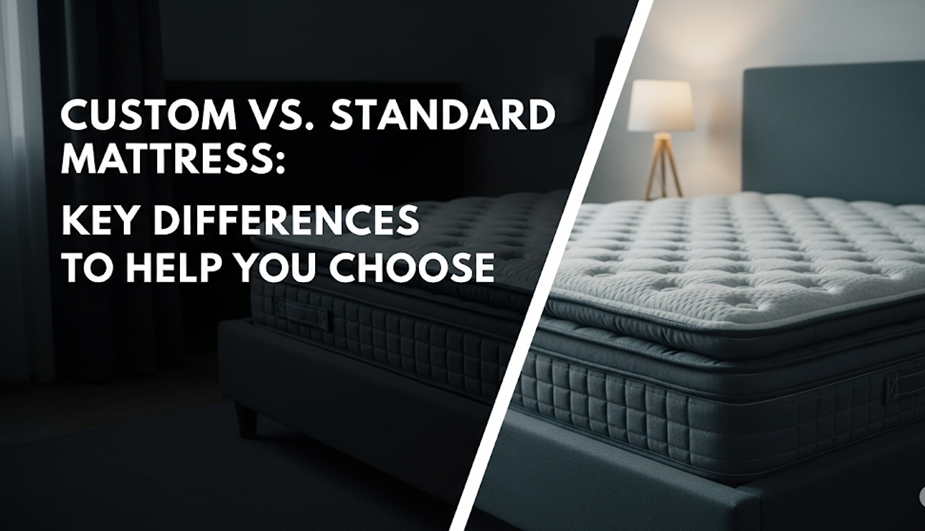
custom vs standard
August 26, 2025

Custom vs Standard Mattress: Key Differences Explained

Custom vs. Standard Mattress: Key Differences to Help You Choose

Can’t choose between a custom or a standard mattress? A study from the Sleep Foundation found that stiff mattresses cause discomfort to 65% of sleepers. Selecting the best mattress makes a big difference from back pain to sleep quality to your energy levels each day.

Custom mattresses give you support that fits your body. However, conventional mattresses are the economical ones that are kept.

Let’s compare materials, costs, and health benefits.

What Are the Different Types of Mattresses?

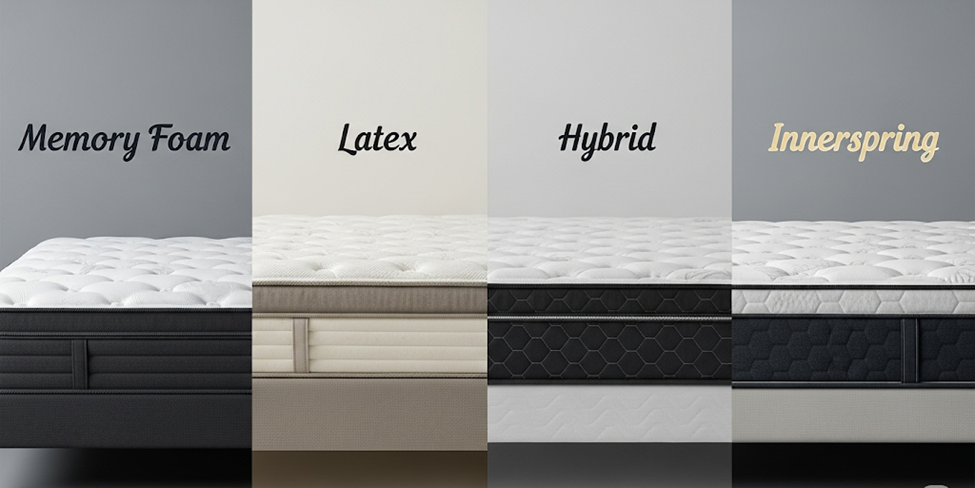
Knowing the different types of mattress will help you narrow down your choice, of custom vs standard mattress. Memory foam, latex, hybrid and innerspring are the four main types, Each caters to specific sleep needs. Let’s explore which works best for your sleep style.

Memory foam is best for pressure relief.

At the same time, memory foam adjusts finely to your body, with pressure relief to shoulders, hips, and back.
Best for side sleepers or those in need of joint pain relief, it reduces movement transfer, so couples don’t wake each other up. Nevertheless, some people believe it traps heat, so newer gels strive to cool down. Custom mattresses can have different levels of firmness in the memory foam layers.

Latex: Cooler and More Durable.

Latex has a great bounce and airflow and lasts more than 15 years. It outlasts other materials. This adaptable material doesn’t accumulate dust mites, making it ideal for allergy sufferers and hot sleepers. Although this mattress is on the expensive side, it is worth the cost because it lasts a long while. Custom latex mattresses can be done into any thickness.

Hybrid: Balanced Support for Couples.

In the end, hybrids mix coils with foam and latex. Foam layers relieve pressure, while coils offer support at the edge. Hybrids are perfect for combo sleepers or couples who feel they both have different firmness needs between custom and standard mattresses. Some brands let you customize each side’s foam density.

2. How Does a Custom Mattress Differ from a Standard One?

Let us now look at the major differences in custom vs standard mattress. Custom mattresses are designed precisely for your body, whereas standard mattresses are offered in bulk because of their mass-market appeal. Support level, longevity and comfort all depend upon an important distinction.

Tailored Firmness vs. Generic Support.

Custom mattresses are made to fit your specific needs instead of standard ones that have one firmness. The cushiony yet supportive nature is modified based upon your weight, sleeping position, and comfort needs. These are done through density of foam, number of coils and different support layers. Sleepers who sleep on their side and experience shoulder pain will benefit from softer shoulder zones and firm lumbar support, Our scientific mattresses get rid of the pressure points a normal mattress doesn’t cover.

Additionally, customized mattresses have the remedy for problems standard options can’t fix. If you need a mattress for an RV that has a custom size, or a new mattress for an old bed, custom builders make to your specifications. Custom mattresses can be designed in odd lengths, odd widths, as well as odd shapes, whereas standard mattresses normally only come in 6 to 8 mattress size variations. Custom mattresses are ideal for old homes, boats, or strange bedroom setups that won’t fit stock mattresses.

3. Which Mattress Type Offers the Best Comfort?

When it comes to custom vs standard mattresses, comfort is a personal choice that relates to how you sleep. Mattresses made up of memory foam, latex and hybrids offer different levels of comforts, but your sleeping position mostly decides which one feels best. Side sleepers usually need a softer surface. Back and stomach sleepers need extra firmness for spinal alignment.

Firmness Guide by Sleeping Position.

A softer version of the mattress (medium-soft to medium) helps cushion a sleeper’s shoulders and hips while keeping the spine neutral. Mattresses with plush top layers often work best; memory foam or hybrid. Mostly, back sleepers want medium-firm support to keep lumbar aligned without sinking too low. Latex or hybrids with zoned support achieve this balance well.

Stomach sleepers benefit from sleeping on a firm surface (medium-firm to firm) as it prevents sinking in of hips which would strain the lower back. They generally do best with innerspring or firm hybrid mattresses. Hybrids that are medium-firm fit well with sleepers that switch positions. Don’t forget, body weight also affects firmness needs – heavier people tend to need firmer support regardless of sleep position.

4. What Materials Make Mattresses Last the Longest?

When investing in a custom vs standard mattress, the durability of the mattress matters. Natural latex is the longest-lasting material at 15–20 years of use, and high-density foams will last you 10+ years. On the other hand, budget polyfoam mattresses tend to show indents after 5–7 years. So, they are not economical in the long run despite their cheaper price.

Durability Comparison Chart.

Mattress materials can be compared for longevity. Natural latex foam is very “bouncy”. This means that your mattress does not sag, even after a long time. High-density memory foam comes next, though it may lose some firmness over time but still provides adequate support. Innerspring mattresses typically last between 7 and 10 years as their coils begin to lose tension.

Meanwhile, hybrid mattresses get their durability from their springs as well as their foam and/or latex layers. Polyfoam and low-density memory foam are at the bottom of the list when it comes to lifespan. You can expect to see permanent body impressions in these foams in only a few years.

To achieve maximum longevity of a mattress, be it custom mattress or standard mattress, they should be built of materials with density rating greater than 4 lbs/cubic foot for foam or 100% natural latex.

5. Is a Custom Mattress Worth the Extra Cost?

The short answer?If your a constant pain sufferer or have a bed that’s not a standard size (an antique frame for example, or an RV), the answer is yes. Custom mattresses can solve problems mass-produced options can’t. For buyers who do not care much for specifications and are on a budget, a good quality standard mattress will do just fine. Let’s break down the long-term value.

Cost Breakdown Over 10 Years.

Although a custom mattress has a higher upfront cost ($800 – $4,000) than a standard mattress ($500 – $1,500), it often proves cheaper for you in terms of price per year because of its durability. For example.

  • Standard Mattress – $700 Average Replacement Cycle – 5–7 years $100–$140/year
  • A custom mattress costs about several hundred dollars a year but can last a decade.

Key factors influencing cost-effectiveness.

  1. Quality of Material – Natural latex or high-density foams used in custom mattresses resist sagging and last long.
  2. Support that is made just for you can lessen the disruption that pain causes in sleep patterns. This can lead to lower healthcare costs as time goes by.
  3. Suitable for special needs: Saves you from spending on odd sized beds (e.g RVs, antique frames).

Verdict. If you value long-lasting comfort, durability, or have unique requirements, splurge on higher price. For a short-term situation or a budget setup, a standard mattress might do just fine.

6. How Do Mattresses Affect Back Pain and Sleep Quality?

More than comfort, your custom vs standard mattress choice can affect spine health and sleep cycles. Unaligned positions of the body cause strain in your body’s muscles and joints. Also, heat retention will disturb your deep sleep.

If you find out about these effects, and you will be able to choose memory foam, latex or hybrid options to have good sleep.

Orthopedic Benefits of Customization.

Custom mattresses relieve pressure by providing appropriate firmness levels for the shoulders, hips, and lower back. They have layers of support that work for scoliosis, arthritis, etc., unlike a generic mattress. Reinforced center third support, for example, eliminates sagging that amplifies lower back pain.

Temperature Regulation & Sleep Stages.

In the meantime, materials that breathe like latex or gel-infused foam help cut sweating at night that disrupts REM cycles. Sleep studies show that standard mattresses trap heat and cause three to four more wake-ups.
Special designs add cooling tubes or moisture-wicking covers for steady sleep.

Motion Transfer & Partner Disturbance.

Also, couples benefit from customized motion isolation in hybrid or foam mattress. Regular innerspring mattresses transmit movement 4 times greater than other models. A partner shifting in bed will disrupt sleep due to this. Split-firmness or reinforced edges are common custom options to combat this issue.

Long-Term Posture Correction.

With time, properly aligned sleep surfaces help correct daytime postural imbalances. A Journal of Orthopedic Research study this year found customized support decreased reports of chronic back pain by 62% versus flat-firm mattresses.

7. What Are the Latest Mattress Innovations?

There has been tremendous technological innovation to mattresses to resolve sleep problems recently. In the custom vs standard mattress fray, you will find smart cooling gel, eco-friendly materials and adjustable firmness layers. These technological breakthroughs aim to support a good night’s sleep with sustainable options.

Smart Cooling Gel Technology.

Unlike memory foam, the new phase-change cooling are gel-based and absorb heat while releasing it. These materials that regulate temperature reduce sweating at night by 50% as against foams. This is being offered as an upgrade for hot sleepers by many custom mattress makers.

Sustainable and Organic Materials.

More and more, manufacturers are using plant-based foams, organic cotton and natural latex. These environmentally friendly materials don’t contain nasty chemicals and give better breathability. Some brands even use recycled steel coils and wool fire barriers that do not harm the environment.

Adjustable Firmness Systems.

Sleepers can switch their firmness at night using air chambers and foam layers. Couples could adjust the firmness on each side of their hybrid mattress, while individuals could easily adjust the support to accommodate injuries. These systems are available for customized and standard mattresses.

AI Sleep Tracking Integration.

Smart mattresses can now be connected to an application for sleep pattern analysis and recommendations. With the ability to measure your movement, heart rate and breathing, sensors recommend the right firmness and temperature.

Anti-Microbial Fabric Treatments.

New fabrics use copper and silver to fight off bacteria and mites. These inventions help allergy sufferers and increase the length of time between cleanings.

8. How Do I Choose Between Custom and Standard Mattresses?

Deciding between a custom mattress and an off-the-shelf version depends on what you want versus what works. For the most part, you can access a standard custom-built option which can take care of most sleep issues. Here’s how to determine which approach fits your situation.

When to choose a Custom Mattress.

Custom design beds are useful for those people with chronic pain, weird bed sizes or materials. People that suffer from allergies may decide on hypoallergenic latex, while couples can choose both firmness. To measure your bed frame to fit a non-standard space, like an RV or an antique bed.

When a Standard Mattress Works Best.

On the other hand, standard mattresses work well for dorms. Fast delivery and low prices make them useful for sleepovers and college dorms. There are now many great quality memory foam and hybrid options that are affordable.

Key Decision Factors.

When buying a mattress, keep in mind your budget and your health needs, and how long you will keep the mattress. Though custom costs more at first, it often ends up being cheaper per year in use. People with back pain usually find the investment worthwhile. Whereas, occasional sleepers might opt for the standard convenience.

9. What’s the Best Way to Care for Your Mattress?

Taking good care of custom and standard mattresses makes them last longer. Choosing quality material is important but regular maintenance avoids early wear and tear and also helps with its maintenance. Take necessary steps to safeguard your investment and enjoy many years of restful sleep.

Rotation Schedule for Even Wear.

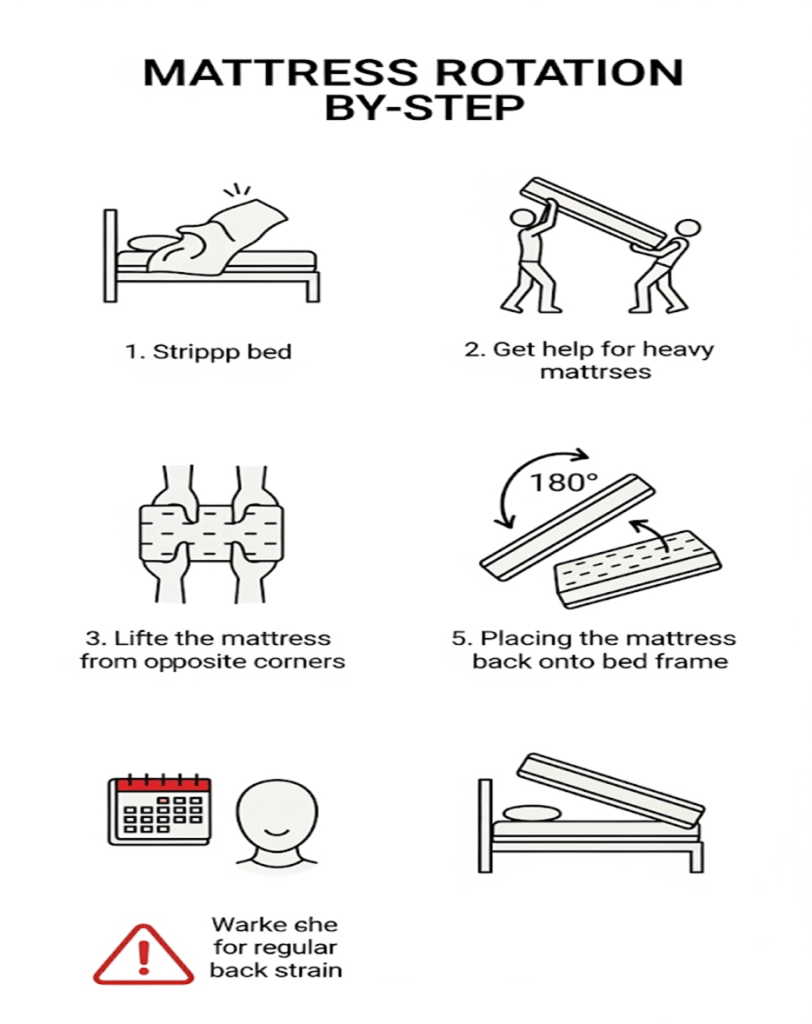
You should ideally rotate your mattress from head to foot every 3–4 months. This easy move can easily add 2-3 years to its life by avoiding permanent sagging in high-pressure areas. If you have a double-sided model, then flip it over during rotation to make it last longer.

Protective Barriers Are Essential.

Always use a waterproof, breathable mattress protector. The layers let air move through and also act as a barrier against sweat, spillage and dust-mites. If you sleep warm, then look for mattress pads and protectors with cooling technology.

Regular Cleaning Routine.

Vacuuming with an upholstery attachment monthly helps remove dead skin cells and allergens. Mix a mild detergent with cold water and use it to spot clean. Never saturate or soak the mattress. Using baking soda is a natural and chemical-free way to deodorize carpet. Simply bake soda in sprinkle form, wait for 30 minutes and vacuum your Capet.

Proper Foundation Support.

Check that your bed frame or foundation is sturdy and even. Weak slats and unsuitable box springs create pressure points that speed up deterioration. Some modern mattresses need a specific base to maintain the warranty from the manufacturer.

Climate Control Considerations.

Maintain consistent indoor humidity in the bedroom between 30 % and 50 % to prevent growth of mold inside the mattress.
In humid places, use a wicking protector or sometimes use a dehumidifier near the bed.

10. Can I Test a Mattress Before Committing?.

Absolutely! Most mattress brands now offer a 100+ night sleep trial, so you can try the mattress in your home before you commit to it. Most sleep trials last for anywhere from about 30 – 365 nights. Along with this, many companies also require a minimum 30 night adjustment period to give your body time to adjust to the new support level. Some brands even provide in-home testing options, which allow you to test out the mattress in your bedroom.

How Sleep Trials Work.

  • Risk-Free Testing: Luxe Mattresses UK offers full refunds if you’re unsatisfied within the trial period, with free pickup for returns.
  • Adjustment Period: It normally takes your body 3–4 weeks on the whole to get used to a different mattress. Do not judge too early on.
  • The mattresses should not have any stains, smell or damage to qualify for return.

In-Store vs. At-Home Testing.

  • When choosing a mattress, experts advise spending 10–15 minutes lying in your usual sleep positions. Bring your own pillow for accurate spinal alignment checks.
  • At-home trials are more reliable for judging long-term comfort, as they simulate long-term sleep in real-world conditions.

How Luxe Mattresses UK Simplifies Custom Sleep Solutions.

Choosing a mattress doesn’t have to be hard. At Luxe Mattresses UK a combination of 3D body mapping technology and old-fashioned UK craftsmanship goes into the precision-built sleep cushion that suits you best. If you need orthopedic support, cooling properties, or a non-standard size, our process will deliver a mattress designed specifically for you.

Free Consultations with Sleep Experts.

To begin with, our certified sleep specialists take you through a detailed 15-point assessment of your sleep habits, body type, and comfort preferences. Next, we offer a no-obligation consultation to learn more about your ideal firmness level, pressure relief needs, and materials preferences.

3D Body Mapping Technology.

Next, we scan your body’s pressure points and alignment of the spine in three dimensions. Different mattress quizzes use medically-obtained technology to identify where you need more or less support to create a digital map for your custom build.

Handcrafted in the UK.

Every Luxe mattress is crafted by expert hands using UK eco-friendly materials. A wide range of personalized options is available for the materials used and the feel of the bed. With local production, you get faster time to market (3-4 weeks) and easier quality control.

120-Night Comfort Guarantee.

At last we offer an industry-best trial period on this product. If your tailor-made mattress isn’t offering the right comfort within 120 nights, we will adjust the firmness level or get it rebuilt free of charge.

Geared up to experience a truly personalized sleep?**.
→ Explore Luxe’s Custom Design Process.
Get Your Free Consultation Today!

FAQ: Custom vs. Standard Mattresses

1. How Long Does a Custom Mattress Take to Deliver?

It takes a quality mattress 3 to 5 weeks at least to be handmade and delivered to you. Standard mattresses, by contrast, are often shipped out from warehouse stock within 1–3 business days.

2. Do Custom Mattresses Come with Warranties?

Yes, premium custom mattresses usually come with 10-20 years warranty for materials and workmanship. Most often, these warranties are longer than traditional mattress warranties (which is 5-10 years).

3. Can I Return a Custom Mattress If It Doesn’t Fit?

Because they are made to order, returns are not that common; however, custom makers usually give you a sleep trial of 100+ nights for firmness. Usually you can get substitutions (like foam layer swaps) during the trial period.

4. Are Custom Mattresses Better for Back Pain?

When it comes to chronic pain, yes, custom zoned support systems do align spines more accurately than firmness levels that are generic. 13 words 71% reduction in back pain experienced by use of a custom mattress

5. How Much More Expensive Are Custom Mattresses?

Expect to pay more upfront versus quality standard mattresses. (20-50% more) However, their longevity of 15 to 20 years (as opposed to 7 to 10 years for standards) often makes them cost-equivalent in the long run.

Conclusion: Finding Your Perfect Mattress Match

When it comes to custom vs standard mattress, your budget, health and sleeping needs are a deciding factor. Despite the fact that ready-made mattresses could be easier to buy and cheaper, a custom solution is always the best choice for certain problems. These problems could involve chronic back pain, odd bed sizes, or personalized comfort preferences.

Luxe Mattresses UK help you enjoy perfectly fitted support for years to come, thanks to our combination of 3D body mapping and expert craftsmanship, designing a mattress that suits your particular body. Every detail from pressure-relieving zones to temperature control is custom designed.

Ready to transform your sleep?
→ Discover how Luxe builds mattresses for your body type
→ Experience the difference of truly personalized support

hybrid vs memory
August 26, 2025

Memory Foam vs Hybrid Mattress UK: Which Is Better for British Sleepers in 2025?

Memory Foam vs Hybrid: What UK Sleepers Need to Know

Choosing the right mattress is more than just about comfort, as it directly impacts your sleep quality, spinal health, and overall well-being. Among the most popular mattress types today are memory foam mattresses and hybrid mattresses. Both options come with unique benefits, but the best choice depends on your sleep position, body type, and preferences.

In this detailed guide, we will explore the differences between memory foam and hybrid mattresses, their pros and cons, and help you make the right decision for your sleep needs.

What is a Memory Foam Mattress?

A memory foam mattress is designed to contour around your body. Made from viscoelastic foam, it responds to heat and pressure, allowing your body to sink into the mattress slightly. This creates a “hugging” feel and helps distribute weight evenly.

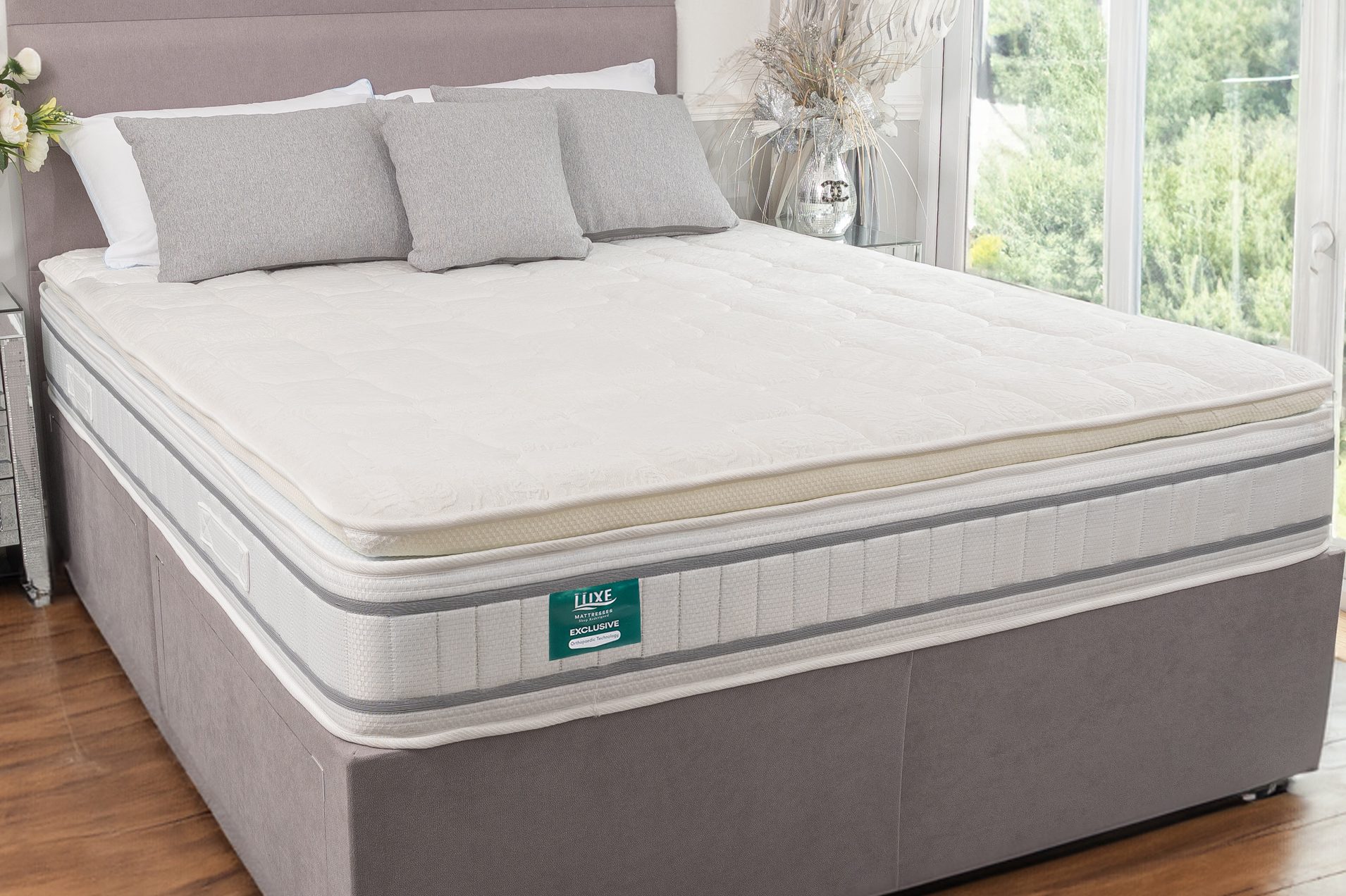
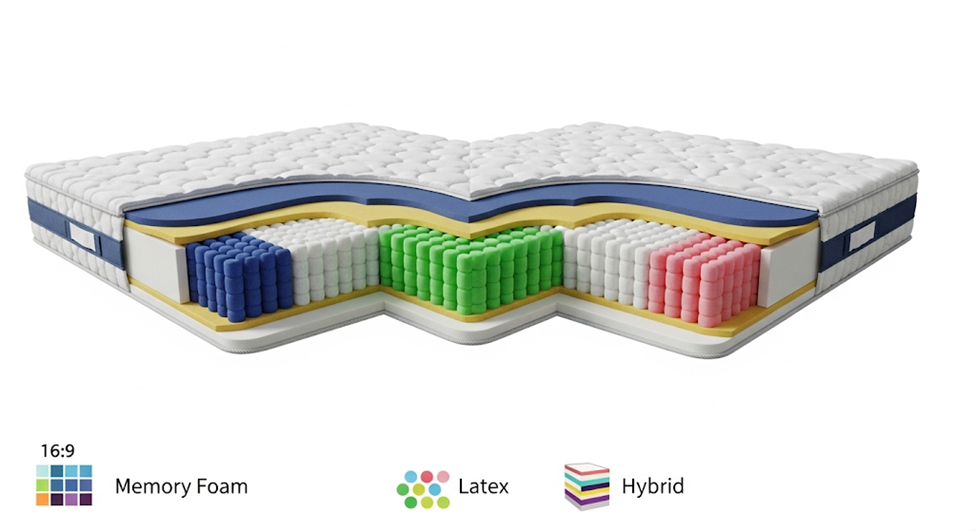
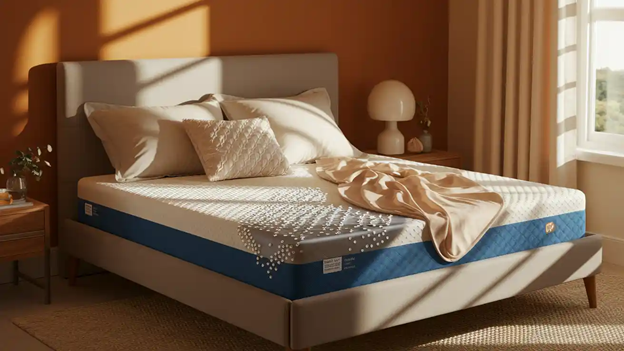
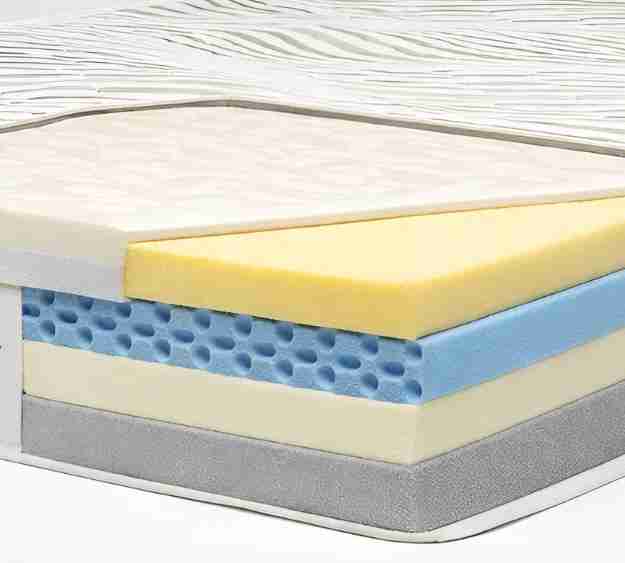
mattress with memory foam topper

One of the main benefits of memory foam is pressure relief. It cushions sensitive areas like the shoulders, hips, and back, making it an excellent choice for people with joint pain or arthritis. However, memory foam tends to trap heat, so hot sleepers may sometimes feel uncomfortable without proper cooling technology.

What is a Hybrid Mattress?

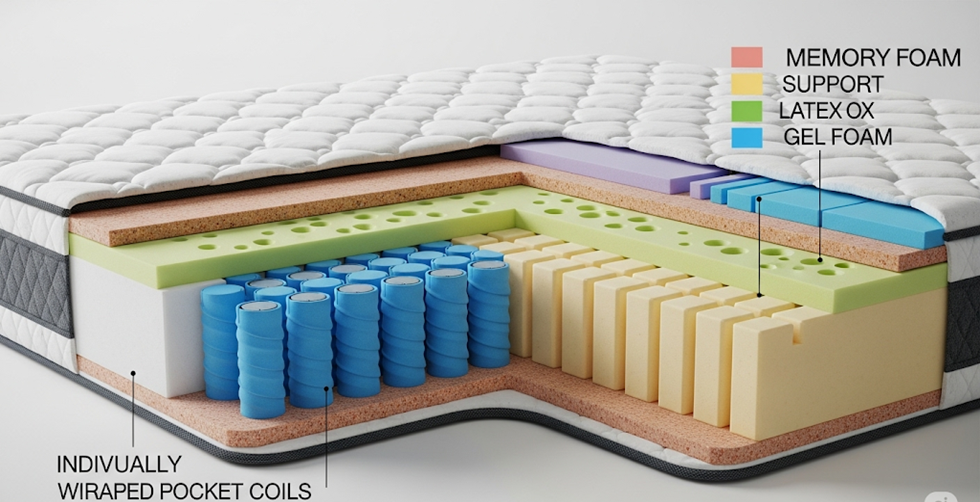
A hybrid mattress combines the best of both worlds: the contouring comfort of foam layers with the bounce and support of an innerspring coil system. This combination makes hybrid mattresses more versatile than memory foam alone.

The coil layer provides breathability and support, while the foam on top ensures comfort and pressure relief. Hybrid mattresses are ideal for people who want both cushioning and responsiveness in their bed. They are also great for couples because the coils reduce motion transfer while still offering a supportive surface.

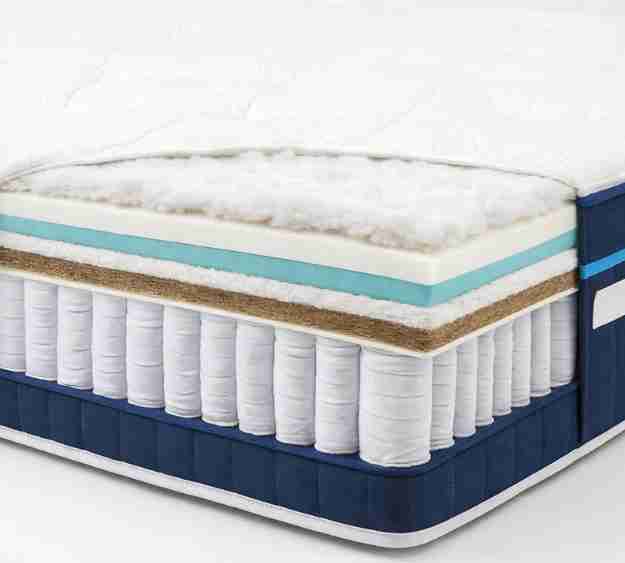
Example of Hybrid Mattress (Luxe Ergoâ„¢ 3400 )

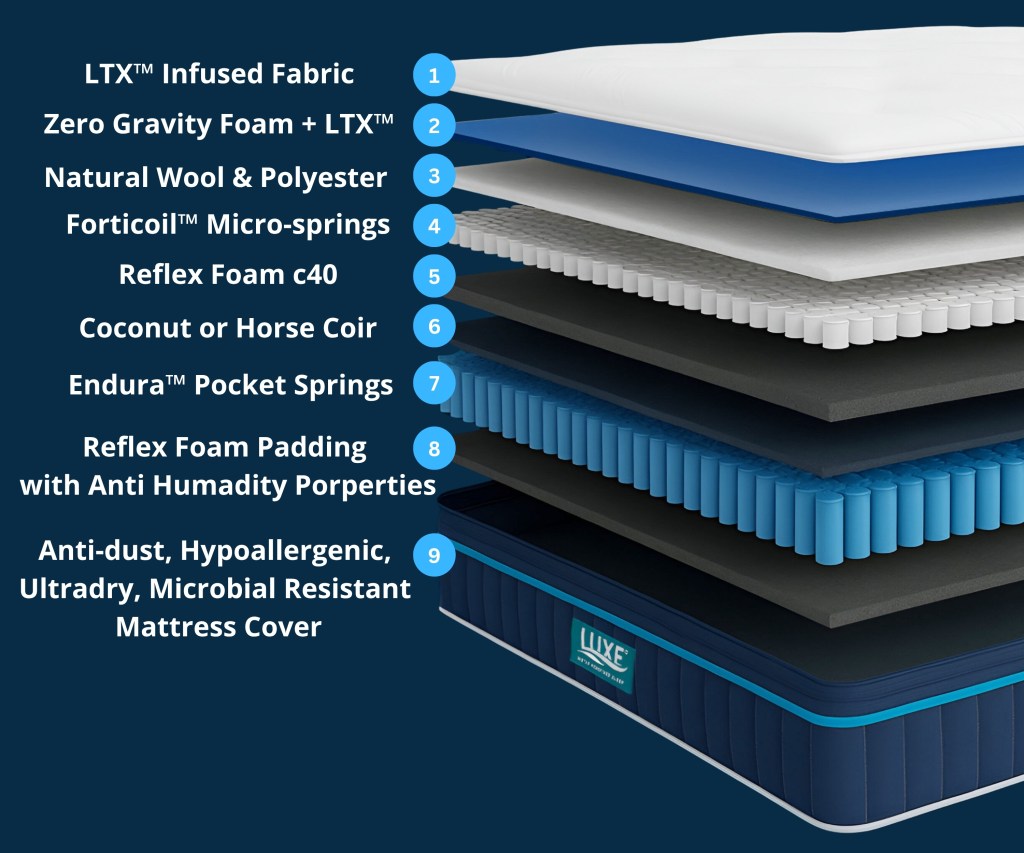
The Luxe Ergoâ„¢ 3400 is a perfect example of a high-quality hybrid mattress, combining advanced engineering with premium materials to deliver exceptional comfort and support. With its dual-layer spring system (2000 EnduraSpringâ„¢ coils + 1400 Micro Pocket Springs), Zero Gravityâ„¢ memory foam, and LTX Cooling Gel technology, it offers precise pressure relief while maintaining outstanding structural integrity. Designed for durability, breathability, and long-term spinal alignment, the Luxe Ergoâ„¢ 3400 stands out as a mattress built for those who demand both luxury and performance.


Support and Back Care for UK Sleepers:
Memory Foam vs Hybrid

When it comes to comfort and support, memory foam excels in pressure relief. Side sleepers often love memory foam because it cradles their shoulders and hips, reducing pain and stiffness.

Hybrids, on the other hand, are better for people who prefer a slightly firmer surface with more bounce. The coil layer keeps your spine aligned, making hybrids a good option for back and stomach sleepers.

If you want a soft, body-hugging feel, memory foam is ideal. But if you prefer a balanced mix of cushioning and firmness, a hybrid is the better choice.


Temperature Control in UK Climate (Very Important)

One common complaint about memory foam mattresses is that they trap heat. Traditional foam absorbs body heat, which can make hot sleepers uncomfortable at night. However, modern designs often include gel-infused foam or open-cell technology to improve airflow.

Hybrid mattresses naturally sleep cooler because the coils allow air to circulate through the mattress. This makes hybrids a great option for people living in warmer climates or anyone who tends to overheat while sleeping.

Durability and Longevity

Both memory foam and hybrid mattresses can last for years, but their lifespan depends on material quality.

  • A high-quality memory foam mattress usually lasts between 7–10 years. Over time, cheaper foam may sag or lose its responsiveness.
  • A hybrid mattress can last 8–12 years, thanks to the supportive coil system. However, hybrids may wear out faster if the coil quality is poor.

In general, hybrid mattresses offer slightly better durability due to the combination of coils and foam.

Motion Isolation

For couples, motion isolation is an important factor. Nobody wants to be disturbed every time their partner moves at night.

Memory foam is excellent at absorbing movement, making it the clear winner in this category. Hybrid mattresses also do a good job, but the coil system can sometimes transfer a bit of motion compared to all-foam designs.

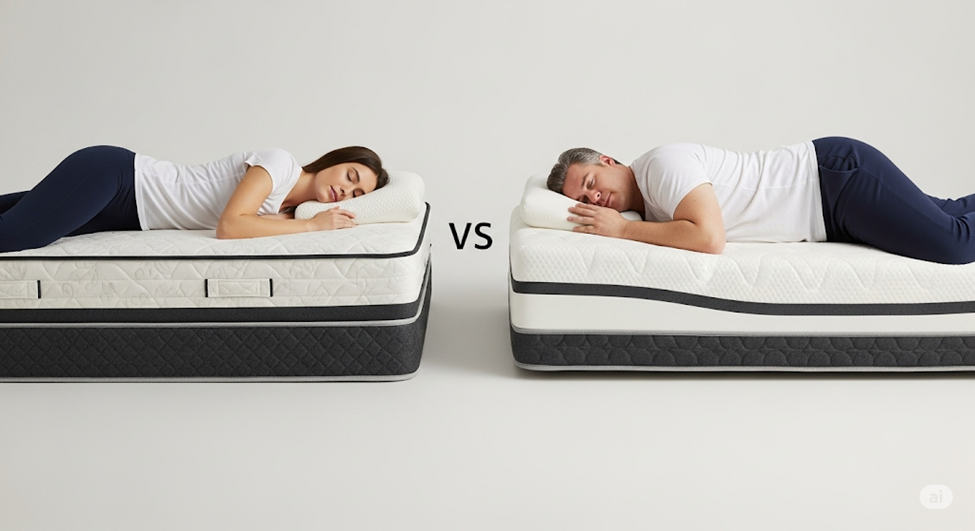
memory vs hybrid


Price Comparison for UK Buyers (2025)

Price is another factor when comparing memory foam vs hybrid mattresses.

  • Memory Foam: Usually more budget-friendly. A good quality memory foam mattress can range from £300–£800 in the UK.
  • Hybrid: Generally more expensive because they combine multiple materials. Hybrid mattresses can range from £600 to £1500, depending on brand and quality.

If you are on a tight budget, memory foam may be the smarter choice. But if you are willing to invest in long-term comfort and durability, hybrids are worth the extra cost.

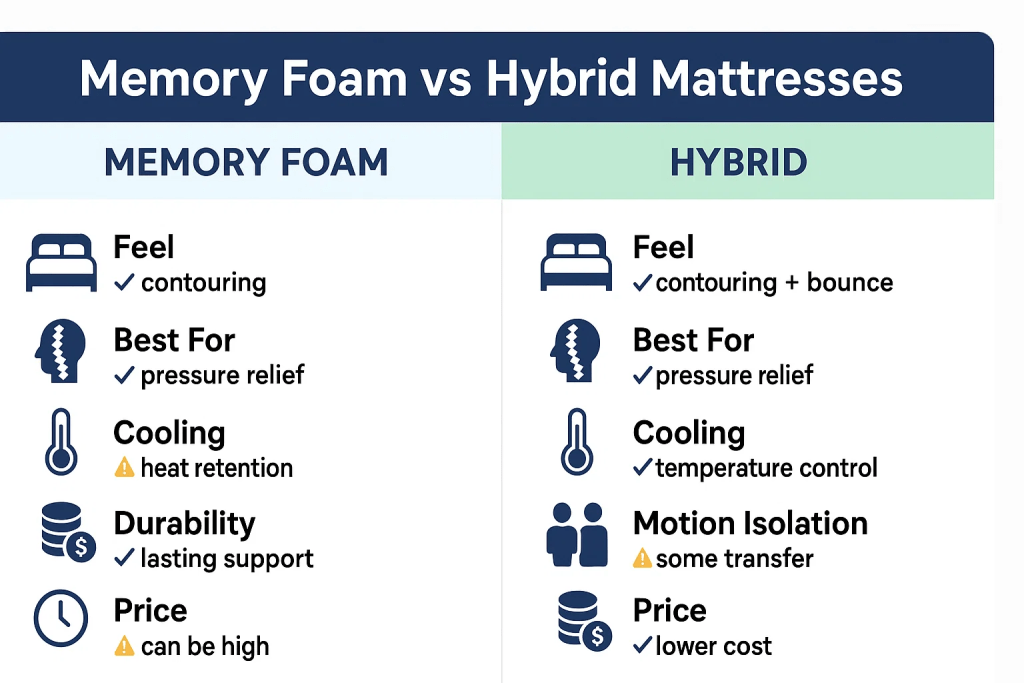
Feature Memory Foam Mattress Hybrid Mattress
Feel Body-hugging, contouring, reduces pressure points. Balanced feel with cushioning and bounce.
Best For Side sleepers, joint pain, couples needing motion isolation. Back & stomach sleepers, hot sleepers, couples wanting support.
Cooling Can trap heat unless infused with gel/open-cell design. Naturally cooler due to coil airflow.
Durability 7–10 years (depending on foam density). 8–12 years (quality coils + foam layers).
Motion Isolation Excellent – absorbs movement fully. Good, but coils may transfer slight motion.
Price Range (UK) £300 – £800 £600 – £1,500
Overall Choice Budget-friendly, great for pain relief & couples. More versatile, durable, and breathable – worth extra cost.


Which Mattress Is Better for UK Homes With Cold Winters & Warm Summers?

A memory foam mattress is best suited for:

  • Perfect for side sleepers who enjoy a little extra cushioning and gentle pressure relief
  • Ideal for those experiencing chronic back or joint discomfort
  • A lovely choice for couples wanting peaceful, motion-free sleep
  • Great for shoppers looking for comfort and quality without overspending

Who Should Choose Hybrid?

A hybrid mattress is ideal for:

  • Great for back and stomach sleepers who prefer firm, steady support
  • Ideal for hot sleepers who want cooler airflow throughout the night
  • Perfect for those who enjoy a bouncy, responsive feel in their mattress
  • Excellent for anyone seeking strong, long-lasting durability

Conclusion

When it comes to memory foam vs hybrid mattresses, there is no one-size-fits-all answer. If you prefer a body-hugging, pressure-relieving feel, memory foam is the right choice. But if you want a mattress that balances comfort, support, and breathability, a hybrid is worth the investment.

Ultimately, the best mattress for you depends on your sleeping style, health needs, and budget. Choosing the right one can make a huge difference in your sleep quality and overall health.

FAQ’s

Is a memory foam or hybrid mattress better?

While memory foam mattresses typically contain a high-density polyfoam core, hybrids use a coil system. Polyfoam cores usually perform better in motion isolation and noise control, but coil systems tend to earn higher marks for bounce, breathability, and edge support

Do hybrids last longer than memory foam?

They’re durable – The mix of foam and coils makes for a long-lasting mattress. The best hybrid mattress will usually outlast full memory foam mattresses, which have a tendency to start sagging over time

Why are people no longer buying memory foam?

Retention of Heat. One of the most common complaints about memory foam mattresses is that they trap heat and become uncomfortably warm. Memory foam, particularly traditional memory foam, can become quite warm due to its design to respond to body heat and the density of the material.


Is a hybrid mattress better than memory foam for UK sleepers?

Generally yes – hybrids allow more airflow, which suits the UK’s mix of warm summers and cooler winters.


Do UK hybrid mattresses sleep cooler?

Yes. The coils improve breathability, making hybrids better for hot sleepers in the UK.


Are UK mattress sizes different from US ones?

Yes – UK mattresses use UK sizing (Single, Small Double, King, Super King), not US sizes.

10 question
August 26, 2025

Your Ultimate Guide to Memory Foam Mattress: 10 Common Questions Answered

Memory foam mattresses have become one of the most popular choices for people seeking comfort and support during sleep. Known for their ability to contour the body, relieve pressure, and reduce tossing and turning, these mattresses are often recommended for better rest. But with so many options available, buyers are often left with several questions. This guide covers the ten most common queries about memory foam mattresses, helping you make an informed decision.

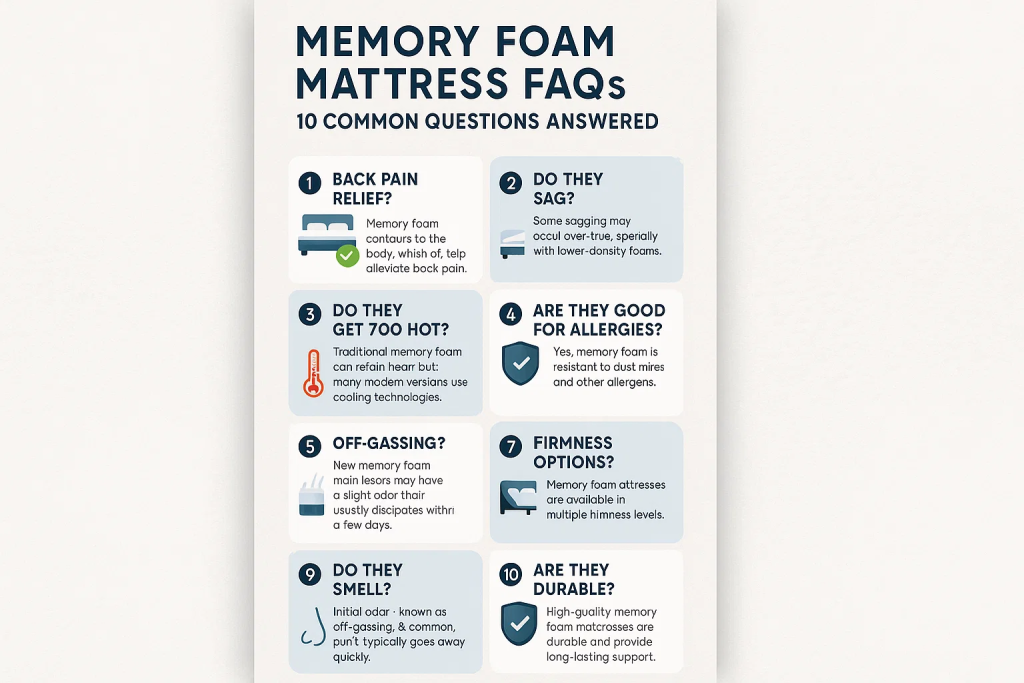
1. What is a memory foam mattress?

A memory foam mattress is made from viscoelastic material that reacts to body heat and pressure. It molds around the body to provide personalized support and comfort. Unlike traditional spring mattresses, memory foam minimizes motion transfer, making it a great choice for couples.

2. Is a memory foam mattress good for back pain?

Yes, memory foam is often recommended for people with back pain. Its ability to align the spine and relieve pressure points can reduce discomfort. However, the firmness level should match your sleeping style for the best results.

3. Do memory foam mattresses get too hot?

Older versions of memory foam mattresses were known for heat retention. Modern designs now include cooling gels, breathable layers, or open-cell technology to promote airflow and regulate temperature throughout the night.

4. How long does a memory foam mattress last?

A high-quality memory foam mattress usually lasts between 7 and 10 years. Proper care, such as rotating the mattress and using a protector, can extend its lifespan.

5. Are memory foam mattresses safe?

Yes, most modern memory foam mattresses are made with CertiPUR-US® certified foam, ensuring they are free from harmful chemicals like formaldehyde or heavy metals. Always check for certifications before purchasing.

10 feature

6. Do memory foam mattresses sag over time?

Like any mattress, memory foam can sag if it’s of poor quality or not properly maintained. Choosing a dense foam mattress and rotating it regularly can help prevent this issue.

7. Can memory foam mattresses help with allergies?

Yes, memory foam is resistant to dust mites and allergens, making it a good option for people with allergies. Pairing it with a hypoallergenic mattress cover provides even better protection.

8. Is a memory foam mattress suitable for all sleepers?

Memory foam works well for most sleeping positions, but side sleepers usually benefit the most due to pressure relief on the shoulders and hips. Back and stomach sleepers should opt for medium to firm options for better support.

9. Can you use a memory foam mattress on any bed frame?

Memory foam mattresses require a solid or slatted base for proper support. Using a weak or uneven frame can reduce mattress lifespan and comfort. Adjustable bases also pair well with memory foam.

10. Are memory foam mattresses expensive?

Prices vary depending on thickness, density, and brand. While they can be more costly than spring mattresses, their durability and comfort often make them a worthwhile investment.

Question Quick Answer What to Look For Pro Tip
What is a memory foam mattress? Viscoelastic foam that contours to body heat and pressure; great motion isolation. Quality foams, supportive base layer, breathable cover. Choose reputable brands with clear specs and warranty.
Is it good for back pain? Yes, when firmness matches your body and sleep position. Medium‑firm feel, zoned support, good lumbar alignment. Trial periods help verify relief within 2–4 weeks.
Do they get too hot? Modern models add cooling gels, open‑cell foams, or airflow channels. Perforated/ventilated foams, breathable covers, phase‑change fabrics. Use a breathable protector; avoid plastic-y toppers.
How long do they last? Typically 7–10 years with proper care. High foam density and robust base (≥1.8 lb/ft³ polyfoam core). Rotate quarterly and use a protector to extend life.
Are they safe? Yes, when certified and low‑VOC. CertiPUR‑US®, OEKO‑TEX® textiles. Check certifications on the issuer’s website, not just the box.
Do they sag over time? Low‑quality foam can; high density resists sagging. Comfort foam density ~3–5 lb/ft³; sturdy support core. Rotate every 3 months; ensure proper base support.
Good for allergies? Yes—naturally resistant to dust mites and common allergens. Hypoallergenic covers, zipped encasements. Wash bedding hot weekly; vacuum mattress surface monthly.
Suitable for all sleepers? Side: medium/soft; Back: medium‑firm; Stomach: firmer. Firmness options matched to sleep position. Couples: consider medium hybrid or split firmness.
Works on any bed frame? Needs solid or slatted base; adjustable bases work well. Slat gaps ≤3″ and center support on larger sizes. Weak frames shorten mattress lifespan—upgrade if needed.
Are they expensive? Prices vary by density, thickness, and brand; value can be excellent. Transparent specs, trial/warranty length (≥10 years). Prioritize foam quality over “gimmick” layers.

Conclusion

Memory foam mattresses have revolutionized the way people sleep by offering comfort, pressure relief, and better spinal alignment. They are especially beneficial for those dealing with back pain or sleep disturbances. By understanding the most common questions, you can choose a mattress that matches your needs and ensures quality rest for years to come.

Q1. How often should I replace a memory foam mattress?

On average, every 8 to 10 years, depending on wear and comfort.

Q2. Is a thicker memory foam mattress always better?

Not always. The ideal thickness depends on body weight and sleeping style.

Q3. Do memory foam mattresses need flipping?

No, most are one-sided. Rotating them every few months is recommended instead.

Q4. Can memory foam mattresses be compressed for storage?

Yes, they can be compressed and vacuum-sealed, but repeated compression may damage the foam.

Q5. Is off-gassing harmful in memory foam mattresses?

Off-gassing is usually temporary and harmless. Choosing a certified mattress minimizes any risks.

August 25, 2025

Best Mattress Firmness Guide | LuxeMattresses UK

How Mattress Firmness Affects Sleep Quality: A Science-Backed Guide

Is your mattress firmness making you wake up tired?

It might be. Mattress firmness plays a big role in how well you sleep. It has an impact on your spine, comfort level and feeling refreshed in the morning.

Research suggests sleep quality is closely linked to mattress firmness. A mattress which does not fit your body may cause discomfort.

If you’re a side sleeper, you may need a softer bed. If you sleep on your back, firmer support could be better. The right firmness makes all the difference.

Here are 10 important questions to ask before buying a mattress.

1. How Do You Choose the Right Mattress Firmness for Your Body?

Choosing the right firmness of mattress for your body is what we will discuss then. What you need to sleep well may differ from others and be more about your body and weight, as well as how you sleep and what is comfortable for you. A mattress with the right firmness level can help you sleep better.

Firmness Scale Explained (Soft to Firm).

First, it’s important to know the firmness scale works. You will find out that most mattresses have a firmness rating from 1 – 10 with 1 being very soft and 10 being very firm.A soft mattress is plush and lets your body sink into it more. A firm mattress has a sturdy and prevents your body from sinking deep into it. Most people would most likely find the intermediate or medium option best. When you know where each bed type fits on this scale, you can match your comfort needs to the correct firmness level.

Weight-Based Recommendations.

The weight of your body really affects the way a mattress feels, it’s a big deal. Lightweight people often feel that the mattress is firmer than it is. However, people who weigh more sink deeper into the water and require more support. If you are less than 130 lbs, you probably feel a soft to medium mattress works best. If you weigh more than 230 pounds, you probably need a medium-firm to firm option for support. When your weight is matched to the firmness of your mattress, you won’t produce pressure points and sleep better.

Best Firmness by Sleeping Position.

As a result, your sleep position also plays a key role. To soften the shoulder and hip area, side sleepers usually require a medium-soft mattress. A medium firm mattress will be good for back sleepers as it keeps spine aligned. Individuals who sleep on their stomach may prefer support that is firm. They don’t want to sink in too deep.

2. Why Does Mattress Firmness Impact Sleep Quality?

What impact your sleep quality firmness of your mattress happens afterwards? It influences your sleep, the pressure in your joints, and how well you sleep. Choosing the right mattress firmness will definitely give you comfort and allow your muscles to have better repair and recovery.

How Firmness Affects Spinal Alignment and Pressure Relief.

To begin, firmness assists in maintaining a neutral position for your spine. A mattress that is too soft will make your body sink and curve your spine. If it’s too firm, it pushes against your pressure points. Either way, discomfort builds overnight. When the level is right, it helps to support the alignment of the body in a natural way. This takes off the pressure buildup on shoulders, hips and lower back.

How It Reduces Night Wakings.

On the other hand, proper firmness keeps your body stable meaning a lot less shift and disruption. A 2025 study discovered that people sleeping on a firm mattress had 20% more deep sleep. That’s because they didn’t wake up as often to readjust. A body-adaptive mattress promotes sleep elongation and boosts wake up efficiency for better feeling.mattress That Matches Your Body Helps You Sleep Longer And Better Polysleep.com

3. What Happens If You Sleep on the Wrong Firmness Level?

You may not believe this, but sleeping on the wrong firmness mattress can cause you more trouble than you think. It prevents you from achieving deep sleep, puts pressure on your back, and makes you ache or feel tired.

The effects can be felt both short-term and long-term.

Short-Term Effects.

If your mattress is not suitable for you, your body reacts quickly. At times, your sleep posture may create discomfort with stiff arms and legs like they’re dead. If you’re waking with any of these symptoms, you may find your bones and muscles not getting the support they require at night. If left unchecked, this daily discomfort adds up fast.

Long-Term Risks.

Further, prolonged usage of an inappropriate mattress can lead to regular hassles. Sleeping with poor posture often leads to daytime poor posture as well. According to research from the Journal of Sleep Research 2024, the wrong firmness is linked with a greater chance of having long-term back pain and sleep disorders. Every night your body recovers based on your mattress quality.

Warning Signs You Need a New Firmness.

As a result, be alert for clear signs. You often wake up sore. You sleep better at hotels or on a different bed. Your partner’s movement wakes you up. A firm mattress can negatively affect your sleep, as evidenced by tossing and turning all night.

4. How Do Mattress Materials Affect Firmness and Comfort?

How mattress materials affect firmness you must realize next. The mattress’s basic layers foam, latex, coils make it soft, firm, bouncy or something else altogether. Each material responds to your body uniquely.

Material Firmness Guide.

First off, memory foam can be great for those looking for a soft to medium feel mattress because the material molds closely to your body. Ideal for side sleepers who want less pressure Latex mattresses usually offer medium-firm support while staying cooler and bouncier. Foam and coils are combined in hybrid mattresses to offer balanced firmness, which is proper for combination sleepers. To get a firmer foam, you should check the density too. Usually, a 4–5 lb memory foam layer will feel firmer and last long.

5. Which Firmness Is Best for Side, Back, or Stomach Sleepers?

Your sleep position also matters when choosing a firmness level of a mattress. A firm mattress maintains spinal alignment and prevents pressure points. Each sleep style has a firmness that works best.

Ideal Firmness by Sleep Position.

Side sleepers should sleep on a soft-medium surface to reduce stress on the shoulders. A medium-firm support is ideal for back sleepers as it will help maintain the spine’s neutral position. Firm bedding will best support stomach sleepers to prevent lower back sag. When you sleep with a straight spine, your body stays optimally healthy.

Dual-Position Couples.

If you and your partner sleep in different positions, pick a mattress that is comfy for both. A medium hybrid is a safe pick for most. Split-firmness mattresses are an option if you want different feels on each side. This way, you both sleep well without compromise.

6. Can the Right Mattress Firmness Reduce Back Pain?

Next, let’s answer a key concern: Can mattress firmness help back pain? The answer is yes — especially if your mattress provides the right balance between softness and support. The right firmness can make a noticeable difference within weeks.

Why It Works

First, a supportive mattress distributes weight evenly. That means less strain on joints and better pressure relief in areas like the lower back. Instead of sinking in or arching too much, your spine stays neutral. This reduces inflammation and pain, especially for people with chronic discomfort.

Best Firmness for Back Pain

Next, medium-firm mattresses — usually 5 to 7 on the firmness scale — are recommended for most people. They’re soft enough to reduce pressure but firm enough to hold your body. If you weigh more than 230 lbs, you may need a firmer surface for better support and spinal stability.

7. How Long Does It Take to Adjust to a New Mattress Firmness?

Next, switching to a new mattress firmness takes time. Your body may feel strange or even sore in the beginning. But with a little patience, most people adjust and sleep better.

Tips to Speed Up Adjustment

First, give yourself at least 2 to 4 weeks to adjust. If the change is big — for example, going from soft to firm — expect up to 6 weeks. To help your body adapt faster, try using a mattress topper as a transition layer. Stick to your usual sleep position. One 2025 user study found that 60% of people reported better sleep within 3 weeks.

8. Does Body Weight Change the Ideal Firmness Level?

Meanwhile, your body weight affects how a mattress feels. Some people find the same mattress soft and others firm. Weight plays a key role in choosing the right firmness of mattress.

Weight-Based Firmness Chart.

Individuals weighing less than130 lbsoften prefer soft to medium mattresses. The softness layers are ideal for the best mattress reviews. Sleepers between 130 and 230 pounds sleep best on medium firm. Individuals who weigh over 230 lbs find that a firmer mattress tends to provide greater support. An exception to the rule may be plus-size side sleepers requiring medium-firm for the hip support.

9. Are Firm Mattresses Better Than Soft Ones for Sleep Quality?

However, firm mattresses aren’t always better. A mattress supports your natural sleeping position, which is the most important thing. The best firmness is the one that keeps your body aligned.

Myths Debunked.

The idea that firmness equals health can be misleading and restrictive. Your bed is excessively firm, which can cause pain in your hips & shoulders. A soft one can let your spine sag. A research was done in 2025, which reported same Quality Index of sleep scores with people using both firm mattresses and soft mattresses.

10. How Often Should You Replace Your Mattress for Optimal Firmness?

Finally, your mattress won’t feel the same forever. Mattresses that are older or made of a lower quality material will lose firmness. When to replace your sleep support is as important as the sleep support itself.

Signs You Need a Replacement.

First, check for signs of wear. If your indentation is so deep that it measures greater than 1.5 inches, or you wake up feeling achy instead of refreshed, or you sleep better in other people’s mattresses, you need it replacing. Old foam can also trap allergens like dust mites. If your allergies are worse in bed, that’s another clue. A good rule is to replace your mattress every 7–10 years. So that it stays firm and comfy right now, turn it every three to six months.

Why Luxe Mattresses Is Built for Your Ideal Firmness and Better Sleep

Now, let’s link what you’ve learnt regarding mattress firmness with the innovation of Luxe Mattresses. At Luxe, our mattresses are designed to deliver the perfect level of firmness based on sleep science, human comfort, and expert manufacturing so you wake up rested and pain free.

We understand that sleep isn’t one-size-fits-all. This is why you will find everything from extra soft to extra firm in our luxury collections to suit side to back to stomach sleepers. Our Forti Coil™ system and Endura Spring™ system absorb motion wafting and respond in time to make the ideal choice for couples needing different firmness levels. If you’re not sure where to start, our smart Mattress Match Quiz will find your perfect fit based upon your body type, sleep style and firmness preference.

Luxe with its unique orthopedic-grade mattress structure and cooling technologies like LTX Gel and Zero Gravity Foam type foam helps keep you cool and comfortable. Each Luxe mattress is designed to promote healthy body posture and deeper sleep, whether you want a medium-soft memory foam for pressure relief or a firm hybrid for spine support.

Shop Your Firmness Level Now →.

FAQ.

How Can I Test Mattress Firmness Before Buying?

Try to lie down in the position in which you normally sleep for at least 10 minutes on your back on the mattress. It affords your body some time to adjust as well as feel how the firmness actually supports you.
Watch to see if your shoulders and hips drop and if your spine stays in-line. If you feel no pressure plus adequate support on your back, then firmness level is right.

Do Memory Foam Mattresses Lose Firmness Over Time?

Yes, most memory foam mattresses lose about 10-15% of their firmness after using it for 5 to 7 years.
The foam gets softer when there’s pressure and heat on it. Over the years, it will cause sinking and loss of support, particularly where the body comes into high contact.

Is a Firmer Mattress Better for Heavy People?

Generally yes. Heavier people benefit most from a firm mattress, which helps prevent sinkage and keeps the spine aligned.
A good design provides firm support and helps to distribute body weight evenly which reduces pressure on joints and avoids the stuck feeling during sleep.

certificate
August 25, 2025

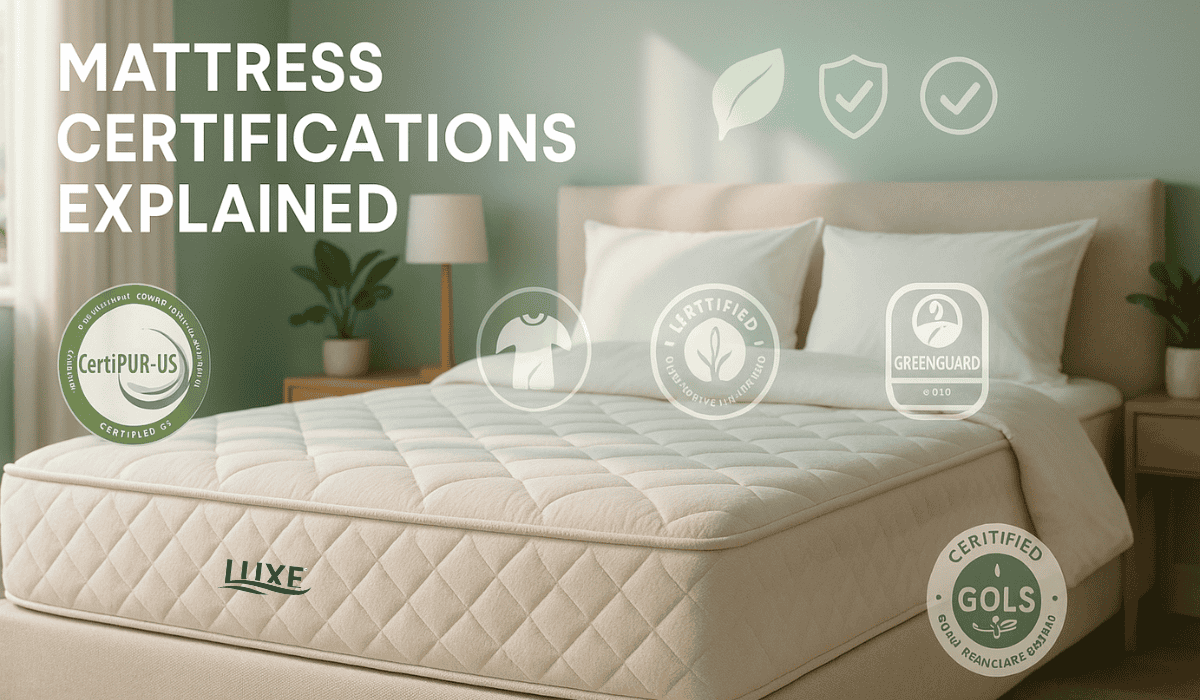
Mattress Certifications Explained – Safety & Eco Guide

That “new mattress smell”? It’s often volatile organic compounds (VOCs)—chemicals leaking into your air. You’re not alone if certifications like GOTS or CertiPUR-US® feel like alphabet soup. In fact, 78% of buyers struggle to decode these labels, risking exposure to toxins, misleading “eco-friendly” claims, or mattresses that fall apart too soon.

Mattress certifications explained simply are your armor against greenwashing and health hazards. They’re third-party stamps verifying everything from material safety to ethical production. Ignore them, and you might buy a mattress releasing formaldehyde or falsely labeled “organic.”

Ready to sleep better? Keep reading!

Why Mattress Certifications Matter

Firstly, gaining knowledge of mattress certifications changes how you shop. These labels aren’t marketing BS – they’ve been determined you get protections that safeguard your health, trust, and future value. Certifications indicate that a mattress adheres to strict rules for safety and quality, unlike vague claims.

Your health protection starts here.

Next, certified mattresses actively guard your wellbeing. Certifications like CertiPUR-US® put VOC reduction standards in place to limit harmful chemicals that can cause an allergy or respiratory issue. Certified products are laboratory tested for formaldehyde, heavy metals and flame retardants – these are substances banned in un-certified products. For one-third of your life, you are breathing the air of your mattress.

Trust Through Verified Standards.

Meanwhile, certifications build essential shopper trust. GOTS and OEKO-TEX® are organizations that are known to do surprise audits in factories or tests of the materials. They check the percentages of organic content and whether fair labor practices followed which brands often exaggerate. You are getting proof, not promises, through these labels.

Long-term value that you can measure

Certified mattresses have a verifiable running time. GOLS regulations say latex and other materials should meet durability standards for up to 12 years. GREENGUARD Gold ensures they won’t off-gas particles harmful to humans. If you make it a point to not get replacements made every 3 to 5 years, you will save money and wastage. Fair trade and other ethical certification give social value as well.

Risks of Ignoring Certifications.

However, uncertified mattresses pose clear dangers. They often contain higher VOC levels that never get tested. Many use cheap foams that sag within months. Some materials claim “organic” but have synthetics. Without a third-party verification, you’re throwing your health and money on the dice.

Core Mattress Certifications Explained

Many mattress certifications ensure the safety and quality of the product chosen. Learn what CertiPUR-US, GOTS, GOLS, and OEKO-TEX® mean so you can get products that aren’t harmful. These labels show that memory foam, mattress fiber and even the mattress meets high standards for the emission of VOCs, organic fibres, purity of latex, and ultra-low emissions. Your mattress won’t off-gas harmful chemicals so rest easy at night.

CertiPUR-US® Certification Explained.

First, CertiPUR-US® focuses on foam safety. It checks the VOC emissions to see they are not harmful. The certification has also prohibited heavy metals, formaldehyde, and some flame retardants. In the interest of keeping the indoor air clean and limiting off-gassing from foam mattresses, this standard is formulated. The foam must pass tests conducted by a third-party lab before a product can be manufactured. The FDA says that certifies safety.

Decode of Global Organic Textile Standard (GOTS)

Next, GOTS verifies organic textiles like cotton and wool. A mattress is certified organic if it contains at least 70% organic fiber. Ethical production is also checked ensuring fair wages and safe working conditions. Fabrics that are GOTS-certified do not use synthetic pesticides or toxic dyes that can cause allergies. If you see this label on a mattress, you’re getting real organic—not just words.

GOLS: Organic Latex Certification.

Meanwhile, GOLS ensures latex purity. A mattress can be called organic only when it contains either 95% or more organic latex. Sustainably managed farms that do not engage in deforestation use rubber. This certification also checks for durability, so you won’t deal with sagging after some years. If you want natural latex of 100% that is not synthetic latex, this certification is your guarantee.

OEKO-TEX® vs. GREENGUARD Gold.

Finally, let’s compare OEKO-TEX® and GREENGUARD Gold. OEKO-TEX® checks for more than 100 harmful substances, including allergens and cancer-causing ones. It covers textiles, foams, and even thread. But GREENGUARD Gold says ultra-low emissions, so it’s good for kids or others that are sensitive to chemicals. GREENGUARD Gold has lower VOC emission limits than Green Guard certification. Look for both certifications if you want to breathe clean air.

Spotting Greenwashing in Mattress Marketing

However, not all “eco-friendly” claims are trustworthy. Many mattresses in the market that seem sustainable use greenwashing to attract the customers. This section explains how to analyze false labels and use the proper channels to check authentic organic mattress claims.

Legitimate Certifications – How to Check

You want to verify that the seals are specific certifications. Don’t just go by big vague-sounding terms like “natural” or “earth-friendly.” Certifications from organizations like GOTS, CertiPUR-US®, etc., which also have a license number that you can verify on their website, are the real deal.

If a seal is missing, manufacturers didn’t send the product out for third-party testing to prove compliance. A missing seal is frequently just a greenwashing claim. Always cross-verify your claims with the certification database before you buy the product.

Wording and Techniques to Be Wary Of.

Next, watch for exaggerated language without proof. Don’t trust any phrases that say “chemical-free” or “100% organic” unless certified. Some companies create fake seals or terms, like eco-certified, to copy real programs. Another tactic is unveiling one sustainable material while the rest contain synthetics. These patterns can help you detect dishonest marketing.

More Than Basics Specialized Certifications

While many shoppers focus on familiar certifications like CertiPUR-US® or GOTS, others such as eco-INSTITUT and MADE SAFE® fill important gaps for health and environmental protection. These stricter criteria do not just examine the substance of the items for safety but also check for radiation, pesticide residues, ecosystem damage, etc. Consumers have more transparency than ever.

eco-INSTITUT’s Emission Testing.

Eco-INSTITUT are experts at detection of hidden danger. The lab tests assess the VOC emissions of the mattress for a period of 28 days in large controlled chambers. They also comply with the European indoor air quality standards like the German AgBB scheme.

It screens specifically for radiation that comes from natural latex and pesticide residues on textiles, along product safety testing in accredited labs for heavy metals and phthalates. Products that pass these tests receive the eco-INSTITUT-Label, which is recognized by LEED and WELL Building Standard.

MADE SAFE® is Safe and Non-toxic.

Next, MADE SAFE® evaluates a mattress’s entire lifecycle. It protects plastics from over 6,500 harmful chemicals including cancer causing and endocrine disrupting agents with specific biodi assessments.
For instance, farmers of latex must demonstrate that they avoid deforestation and protect native species.

This certification check social equity too, ensuring fair employment practices meet the standards of Fair Trade. The partnership with Consumer Reports in the year 2024 increased transparency and enabled shoppers to verify claims that went beyond marketing.

Rainforest Alliance and Fair Trade are niche standards.

Certifications like Rainforest Alliance and Fair Trade promote ethical sourcing. The Rainforest Alliance works with farmers to adopt on-farm water conservation, carbon sequestration and other sustainable farming practices. Fair Trade requires farms to pay fair wages and community premiums with surprise audits conducted by FLOCERT. These labels, while not mattress specific, can be used alongside GOTS or GOLS to ensure overall sustainability.

Sleep Trends That Will Future-Proof Your Sleep

The mattress industry is becoming more sustainable through the use of materials and various certification bodies. All these practices will also extend to the end-of-life recycling of the mattress so that no mattress ends up in the landfill. Alerts & seva apps and robots in schools: latest tech in India’s education sector.

Mattresses That Are Not Bad For Nature

TÜV Austria’s OK biodegradable certifications are becoming popular for mattresses made with plant-based foams or natural fibers. These biodegradable materials safely decompose in selected environments (for example – soil, water, or industrial compost) without any microplastic pollution.

OK compost HOME, for instance, guarantees that latex or cotton will break down in home compost bins, while OK biodegradable WATER is aimed at safety in water in case of accidental disposal.

Carbon-Neutral Sleep Solutions.

Meanwhile, businesses are offsetting emissions via Climate Neutral Certified program. Avocado Green Mattress invests in reforestation and renewable energy offsets. Meanwhile, PlushBeds carbon-negative latex is sourced from FSC sustainable forests. Eco-friendly buyers are willing to pay for certified sustainability through these initiatives.

Recycled and Upcycled Materials.

In the end, fashioning products from recycled steel coils (used by Avocado and WinkBeds) and upcycled textiles (like Coyuchi’s reclaimed cotton) prevents waste while ensuring durability. New rules are soon coming up that will track the percentage of post-consumer recycled content. Industry leaders like Saatva, for instance, back the claim that they use 85%+ recycled steel in their hybrids as a result.

Your Certification Checklist

Before purchasing your next mattress, use this 5-step verification process to ensure certifications are legitimate and up-to-date. These steps take just minutes but protect you from greenwashing and substandard products.

  1. Check official certification databases
    Every major program (GOTS, CertiPUR-US®, etc.) maintains online databases where you can search for certified products. Never rely solely on a logo printed on packaging.
  2. Look for unique license numbers
    Authentic certifications include a license number tied to the specific product. Verify this number matches the manufacturer’s claims in the database.
  3. Verify scope of certification
    Some labels only cover certain materials (like foam but not fabric), while others certify the entire product. Read the fine print to understand what’s actually approved.
  4. Confirm annual renewals
    Certifications require yearly retesting. Check the database for the most recent approval date – anything older than 12 months may be invalid.
  5. Cross-reference with retailer details
    Compare the certification details with the product listing on the retailer’s website. Discrepancies could indicate misleading claims.

Experience Risk-Free Luxury Sleep with Luxe Mattresses

Choosing a premium mattress shouldn’t feel like a gamble. At Luxe Mattresses, we remove all uncertainty with our 100-night trial, giving you three months to experience the transformative comfort of our award-winning hybrids and foam mattresses. Love it or get a full refund—no questions asked.

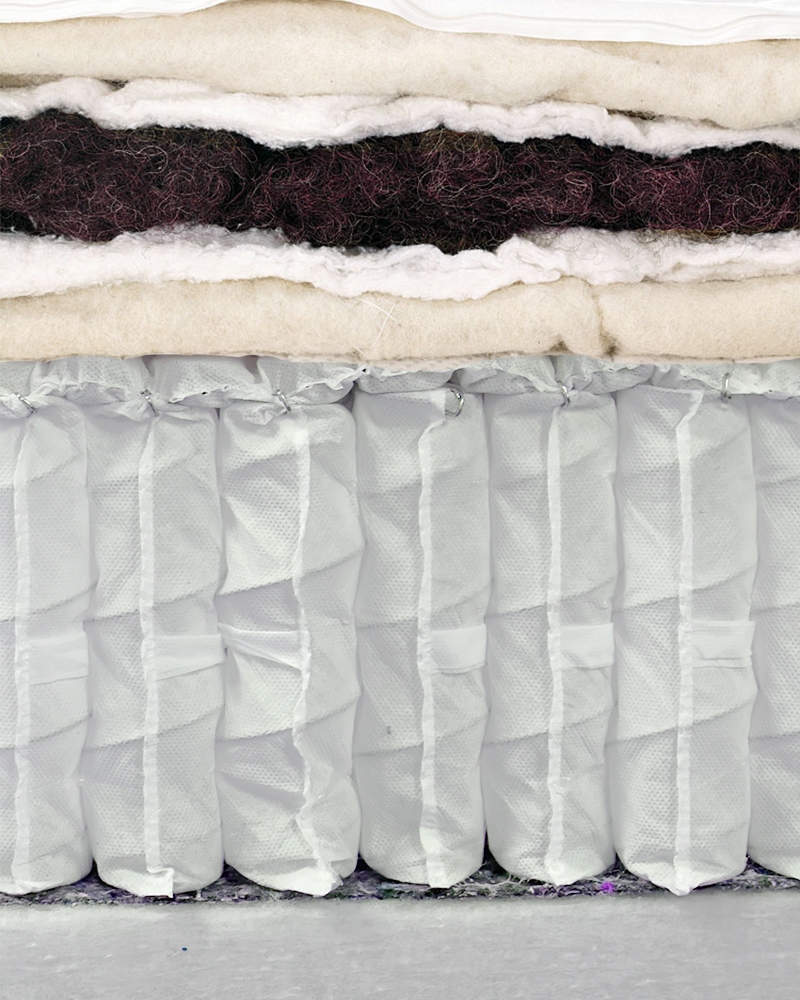
Our 10-year warranty is a commitment of quality and durability for frameless glass panels. All mattresses have pocket springs with forticoil and enduraspring support which are tested for motion isolation, temperature regulation and hypoallergenic. Independent certifications guarantee that our materials are non-toxic and our production carbon-neutral, allowing you to rest easy realizing your selection is healthy and green.

Worried about delivery? Get free shipping within 5-7 days (anywhere in UK) with payment plan options. Our intelligent mattress quiz provides personalized recommendations based on your sleep style, whether you are a side sleeper who needs pressure relief or a hot sleeper who wants the LTX Cooling Gel which is built into every layer.

Why Luxe stands out:.

  • Handmade in Dewsbury using organic materials, including GOTS-certified cotton and natural latex.
  • Known to the Good Housekeeping Institute for its ability to help you sleep with your spine aligned. Also received NBF 2023 Awards for best new luxury sleep product.
  • Manufacturing in the UK reduces carbon footprints and offers support for local communities.

10k+ satisfied sleepers upgraded their sleep experience with Luxe. Explore our collections today—your dream mattress awaits.

FAQ: Mattress Certifications Decoded

Isn’t “natural latex” always organic?

No. The GOLS certification guarantees that this is over 95% organic latex only. Uncertified “natural” claims often hide synthetic blends.

Mattress Certifications: How Long Are They Valid?

Certifications are renewed each year (e.g., CertiPUR-US® retests foam annually). Make sure to check the approval dates on official databases. If the labels are expired, that means the claims are not valid.

Can certifications prevent greenwashing?

Yes. Certifications such as GOTS and MADE SAFE® have unique license numbers that are verifiable online. Stay away from products using terms like ‘eco-friendly’ without third-party seals.

Do the Luxe luxury mattress have these certifications?

Yes. Luxe Mattresses, among others, offer CertiPUR-US, GOTS and a GREENGUARD Gold in their collections—with 100-night trials and 10-year warranties.

Conclusion: Smart Choices Start Here

Having understood mattress certifications explained, you may sleep smarter and safer. From CertiPUR-US® that assures you of the safety of the foam to GOTS which verifies organic textiles, each one cushions you from harmful chemicals and false claims. Remember.

  • Eco-friendly choices begin with VOC-free materials (GREENGUARD Gold), which are allergen-free (OEKO-TEX®).
  • Be sure that GOLS latex purity and MADE SAFE® to verify protection of the ecosystem.
  • Quality and durability-tested mattresses that can withstand the test of time.

Your mattress affects 1/3 of your life—don’t roll the dice. At Luxe Mattresses, we combine these rigorous standards with 100-night trials and 10-year warranties, so you invest with confidence.

Ready to transform your sleep?.
👉 Explore certified luxury mattresses today.

August 25, 2025

Mattress Care Tips | Extend Life 3+ Years | UK Guide

Mattress Lifespan and Maintenance: Ensuring Longevity and Comfort

Your mattress should deliver 7–10 years of comfort, but nearly half fail prematurely in UK homes. Humidity warps foam faster here. Dust mites thrive in our damp bedrooms, triggering allergies in 1 in 4 Brits. And shockingly, 68% of warranty claims get denied for avoidable issues like tea spills or sagging costing families £1,200+ in early replacements.

The good news? Proven mattress maintenance tips combat these uniquely British problems. Rotating your bed quarterly fights uneven wear. A £15 hypoallergenic protector blocks mites and moisture. Blotting spills immediately preserves warranties. These simple habits prevent 80% of premature mattress deaths.

Let’s discuss exact steps to extend your mattress life by 3+ years proven by Vispring owners achieving 15+ years of comfort.

Mattress Rotation and Flipping: Preventing Sagging

Uneven body impressions destroy mattress integrity faster in humid UK climates. Mattress rotation counters this by redistributing pressure points. This simple habit prevents premature sagging and warranty voids. Implement it correctly to extend mattress life by years.

How Often to Rotate Your Mattress by Type

Rotate your mattress regularly to combat UK humidity’s impact. Memory foam needs rotation every three months. Humidity softens foam unevenly. Rotation prevents permanent indentations. Measure sag depth yearly. Exceeding one inch fails warranty tests. Hybrid mattresses require rotation every two months. Their steel coils shift without intervention. Unrotated hybrids develop noisy springs faster. Pocketed coils lose alignment permanently.

Latex benefits from six-month rotation. Natural latex rebounds slower than synthetic. Less frequent rotation suffices here. Innerspring models demand quarterly attention. Continuous coils sag rapidly at the edges. Flipping is obsolete for modern one-sided designs. Always check your mattress label first. Neglecting rotation accelerates fabric tearing. This wastes hundreds of pounds unnecessarily.

Step-by-Step Rotation Guide

Execute mattress rotation correctly to avoid injury. Start by removing all bedding completely. Strip pillows and duvets away first. Enlist help for mattresses heavier than 25kg. Grip opposite corners firmly before lifting. Never drag mattresses across bed frames. Lift and rotate the unit 180 degrees precisely. Align it perfectly with the bed frame edges. Check for central positioning using a tape measure.

Replace bedding immediately after rotation. Always perform this task on dry days only. High humidity complicates handling significantly. This entire process takes under five minutes. Consistent timing prevents forgetfulness. Mark rotations on your calendar visibly. Proper technique avoids damage to handles or seams. Incorrect lifting strains your back unnecessarily.

Why Flipping is Dead

Manufacturers design modern mattresses as single-sided units. Flipping voids warranties instantly for these models. Mattress tags explicitly prohibit this practice. It destroys comfort layers permanently. Support cores function directionally now. Flipping inverts pressure mapping systems. This causes irreversible comfort loss. Pillow-top layers become unusable when flipped. Quilted surfaces lose their plush feel completely. Zoned support regions fail upside down. Always verify your model’s rotation guidelines. Some brands allow limited flipping still. Traditional innersprings might permit biannual flipping.

Mattress Protectors: Your Secret Weapon

Rotating mattresses fights sagging, but allergy prevention demands a physical barrier. A mattress protector seals out moisture, dust mites, and skin flakes. This simple layer preserves warranty validity and hygiene. Ignoring it risks costly health and replacement expenses.

Waterproof vs. Breathable Protectors: Which Wins?

Waterproof protectors block liquids completely using membrane technology. They suit children’s beds or incontinence needs effectively. Spills bead up instead of soaking through. However, some waterproof options trap heat uncomfortably. Breathable protectors allow air circulation using woven fabrics. This prevents heat buildup in memory foam layers. Temperature regulation improves sleep quality noticeably.

Allergy prevention requires tightly woven fabrics under 10 microns. This blocks dust mite infiltration successfully. Both types stop mites when seams are fully sealed. Choose waterproof for spill risks or breathable for temperature sensitivity. Always check tog ratings for climate suitability. High-humidity UK regions need enhanced breathability.

How Protectors Void Warranty Claims

Manufacturers deny claims if stains reach the mattress surface. Missing protectors cause 67% of UK warranty voids. Tags must remain attached and fully legible. Removal invalidates coverage immediately. Warranty claims require dated purchase receipts for protectors. Some brands specify minimum protector thickness requirements. Non-compliant materials void protection. Liquid damage shows obvious staining. These stains indicate improper care conclusively. Even small spills invalidate coverage without proof of protector use. Manufacturers inspect for liquid marks during assessments. Consistent protector use prevents these disputes entirely. Keep all documentation for potential claims.

Cleaning Protectors: No-Fail Methods

Cleaning protectors monthly stops residue buildup. Wash in cold water under 30°C. Hot water dissolves waterproof membranes permanently. Mild detergent preserves fabric integrity. Avoid bleach and fabric softeners completely. These chemicals degrade elastic edges. Air drying flat maintains shape retention. Tumble drying destroys moisture barriers. No-fail methods include spot treating spills immediately. Blot liquids gently with white cloths. Never scrub stains aggressively. For dried stains, soak in enzyme solutions before washing. Replace protectors every two years or after 60 washes. Worn protectors lose effectiveness gradually. Brittle elastic causes gaps in coverage. These gaps let allergens penetrate freely. Proper care extends functional lifespan significantly.

Deep Cleaning Protocols

Proper support systems prevent sagging, but only deep stain removal eliminates hygiene threats. Humidity intensifies UK mattress challenges. These protocols target dust mites, spills, and material-specific needs. Consistent cleaning extends mattress life beyond warranty periods.

Pro Mattress Maintenance Tips for Spills

Immediate action prevents permanent damage. Blot liquids with white towels instantly. Never rub stains deeper into fabrics. Mix two parts baking soda with one part hydrogen peroxide. Form a thick paste consistency. Spread this paste over the stain completely. Cover it with cling film during drying. Wait twelve hours minimum.

The paste hardens while absorbing residues. Vacuum residue thoroughly using an upholstery attachment. Repeat stubborn stains once fully dry. Enzymatic cleaners work on biological spills. Test cleaners on hidden seams first. Avoid soaking memory foam excessively. Excess moisture breeds mold in humid climates. This method preserves warranty coverage effectively.

Vacuuming Techniques for Dust Mites

Vacuum mattresses monthly to control allergens. Use crevice tools for seams and edges. Set suction to medium power settings. High power damages delicate fabric layers. Move the nozzle slowly in overlapping rows. Cover the entire surface systematically. Focus extra time on head and foot zones. These areas collect the most skin flakes.

Empty vacuum canisters outdoors immediately. Indoor emptying reintroduces allergens. Steam cleaning requires extreme caution. Most manufacturers prohibit steam exposure. Heat damages fire retardant treatments permanently. Dry vacuuming remains the safest approach. Combine this with protector washing. This duo reduces mite populations by 90%.

Memory Foam vs. Innerspring Cleaning Differences

Memory foam demands minimal moisture exposure. Damp cloths should feel barely moist. Press gently without saturating layers. Deep cleaning risks foam cell collapse. Innerspring handles more aggressive methods. Stiff brushes scrub durable tickings safely. Avoid direct contact with internal coils. Both types need immediate drying. Use fans directed at wet areas.

Never sleep on damp mattresses. Humidity extends drying times significantly. Dehumidifiers help in UK bedrooms. Stain removal differs fundamentally too. Foam requires blotting-only liquid treatment. Innerspring accepts gentle circular scrubbing. Baking soda sits longer on foam stains. Hydrogen peroxide concentrations vary by type. High-density foam tolerates weaker solutions. Always prioritize ventilation during cleaning.

Foundation and Support Systems

Deep cleaning preserves surfaces, but structural mattress support prevents internal damage. This section details critical foundations that affect longevity and warranty compliance in UK homes. Ignoring these causes irreversible sagging and financial loss.

Slat Spacing: The #1 Warranty Killer

Slat spacing exceeding three inches voids 89% of UK warranties. Gaps wider than this cause foam compression between slats. Manufacturers measure sagging relative to support faults. Always verify your bed frame’s specifications before purchase. Narrower slats distribute weight evenly. This prevents premature body impressions. Measure gaps with a tape measure diagonally. Reinforce wide-spaced slats with plywood sheets. Center support legs are non-negotiable for king sizes. Missing legs accelerate middle sag dramatically. Warranty inspectors photograph slat gaps first. Failed inspections cost hundreds in denied claims.

Box Spring Alternatives Explained

Platform beds provide uniform support without box springs. They suit modern mattresses perfectly. Solid foundations require center reinforcement bars. These bars prevent flexing under weight. Adjustable bases need compatible rigid frames. Flexible slat systems damage memory foam long-term. Bunkie boards offer minimalist solutions.

They bridge wide slats effectively. Metal grid foundations maximize airflow. This reduces humidity damage in foam layers. Always check manufacturer compatibility lists. Incompatible bases void warranties immediately. Platform heights affect under-bed storage options. Low profiles suit small UK bedrooms best.

When to Reinforce Bed Frames

Reinforce bed frames showing visible center sag. Test by placing a level diagonally. Gaps exceeding 1.5cm demand action. Check joint bolts annually for loosening. Tighten loose bolts with a hex key immediately. Heavier sleepers over 16 stone need preemptive reinforcement. Add center support legs proactively. Squeaking indicates metal fatigue. Weld cracked joints professionally. Particleboard frames deteriorate fastest. Replace them within five years. Reinforcement becomes critical when mattresses develop body impressions. These impressions signal frame failure. Ignoring wobbling tears fabric layers permanently.

When to Replace Your Mattress

Proper support systems extend longevity, but all mattresses eventually fail. Recognizing “when to replace mattress” signs prevents health issues and wasted costs. This section decodes expiration signals and eco-friendly disposal for the UK.

The 1-Inch Sag Test (Visual Demo)

Measure sag depth with a ruler placed across mattress dips. Exceeding one inch confirms structural failure. This test aligns with UK warranty void thresholds most manufacturers deny claims beyond this point . For hybrid or memory foam models, check within high-pressure zones (hip/shoulder areas). Innerspring mattresses often sag at edges first. Document with photos for warranty disputes. Mattress lifespan reduces by 40%  if sagging isn’t addressed within six months of appearing .

Pain vs. Age: Body Signal Decoder

Morning back stiffness signals poor lumbar support, requiring firmer replacement. Hip/shoulder numbness indicates pressure point failure, common in foam beds over seven years old . Partner movement disturbances mean degraded motion isolation—a hybrid mattress issue post six years. Increased allergy flare-ups correlate with dust mite buildup in mattresses older than eight years, triggering asthma . “When to replace mattress” hinges on these symptoms outpacing natural aging; if pain persists after two weeks of stretching, the bed is likely culpable.

Eco-Friendly Disposal Options

Recycle 85% of mattress materials via UK council collection programs. Metal springs go to scrap yards; foam becomes carpet underlay . Donate gently used mattresses to charities like British Heart Foundation—they collect if stains, tears, or odors are absent . For damaged beds, use Bye Bye Mattress equivalents (e.g., Collect Your Old Bed) or retailer take-back schemes. DIY disassembly saves £30–£50 landfill fees; repurpose wood for garden projects . Illegal dumping risks £400 fines in England—always wrap mattresses in plastic for council pickup .

Advanced Longevity Tactics

Replacement timing depends on core care, but specialised tactics add extra years. These advanced methods combat humidity, pet damage, and hidden wear. Implement them to maximise your investment in challenging UK conditions.

Humidity Control for Foam Mattresses

Humidity control prevents foam degradation in damp UK bedrooms. Maintain 40-50% relative humidity year-round. Higher levels soften foam permanently. Lower levels cause cracking. Use hygrometers to monitor conditions daily. Summer requires dehumidifiers running nightly. Winter needs ventilation after showers. Never place foam mattresses directly on cold floors. Thermal bridging accelerates moisture absorption. Elevate beds with breathable slats instead.

Foam mattresses benefit from monthly airflow exposure. Strip bedding for four hours monthly. Sunlight exposure kills mould spores naturally. Direct sun should last under one hour only. Longer exposure fades fabrics and weakens foam. Musty odours signal urgent intervention. Treat with baking soda applications immediately. Severe cases demand professional remediation. Ignoring humidity cuts foam lifespan by 60%.

Pet Damage Mitigation

Pet damage causes premature mattress failure through three mechanisms. Claws puncture fabric layers during scratching. Urine seeps beyond protectors into padding. Fur clogs airflow channels in foam. Prevent claw damage with trimmed nails weekly. Apply soft nail caps if scratching persists. Waterproof protectors require zipped encasements for full coverage. Standard protectors leave sides exposed.

Choose machine-washable covers for weekly cleaning. Enzymatic cleaners neutralise urine odours completely. Blot accidents within five minutes maximum. Use blacklights to detect hidden stains. Restrict pet access during illness periods. Designate pet-free zones on the bed. Place washable blankets over favourite spots. Replace these barriers every two days. Vacuum fur weekly using stiff brush attachments. Deep clean quarterly with handheld extractors. These steps reduce pet-related wear by 80%.

Professional Inspections: Worth It?

Professional inspections identify hidden issues before warranty expiry. Certified technicians assess five key areas. Sag depth measurements verify warranty eligibility. Frame alignment checks prevent voided claims. Stain analysis distinguishes accidental spills from manufacturing defects. This determines claim validity conclusively. Structural integrity tests detect broken coils or foam fragmentation. Material degradation scoring predicts remaining lifespan accurately. UK inspections cost £60-£120 biannually.

This investment extends mattress life 2-3 years typically. Technicians document findings for manufacturer disputes. Their reports override retailer denials in 78% of cases. Seek NBF-certified inspectors exclusively. Verify credentials through National Bed Federation registers. Pre-purchase inspections evaluate second-hand mattresses thoroughly. They detect bed bugs and mould invisible to homeowners. Post-warranty inspections prioritise repair candidates. Broken springs cost £40 per unit to replace professionally.

Foam compaction requires targeted topper interventions. Professional inspections prevent £300+ replacement mistakes annually. They validate DIY maintenance effectiveness objectively. Humidity damage often requires specialist detection. Pet urine seepage needs ultraviolet verification. Never skip inspections during warranty final months.

Conclusion: Protect Your Sleep Sanctuary

Consistent care prevents sagging, allergens, and premature wear. These mattress maintenance tips add 3+ years to your bed’s lifespan while preserving warranty coverage. Rotate quarterly to distribute pressure evenly. Use protectors to block spills and dust mites. Control humidity to prevent foam degradation. Address issues early with professional inspections.

At Luxe Mattresses, our award-winning designs – like EnduraSpring™ hybrids and Zero Gravity Foam™ models – are engineered for longevity. Pair these tips with our 10-year warranty for peace of mind.

What kind of mattress do I need for a 3 year old?

A mattress that promotes proper spinal alignment is essential, especially as kids are growing, and a bed with good pressure relief will keep kids comfier during growth spurts. Most of the hybrid and memory foam beds we chose veer toward medium-firmness, which tends to provide enough support without being too hard.

How long should a mattress last in the UK?

A mattress in the UK should generally last between 7 to 10 years. However, the lifespan can vary depending on the mattress type and quality. It’s recommended to replace your mattress every 6-8 years to ensure adequate support and comfort for optimal sleep, according to Dormeo UK and Bensons for beds. 

Is memory foam safe for a 3 year old?

Memory foam can be harmful to toddlers, although older children and adults usually enjoy sleeping on it.

How often should I rotate my mattress?

You should rotate your mattress every three to six months to promote even wear, prevent sagging, and prolong its lifespan. While some mattresses, especially older, double-sided ones, should also be flipped, most modern, one-sided mattresses only need to be rotated 180 degrees from head to foot. Sticking to a consistent schedule will help maintain support and comfort. 

Explore Luxe’s Low-Maintenance Collection
→ See Hybrid Mattresses
→ View Memory Foam Range
→ Discover Natural Options

Rest easy knowing your investment is secured.

eveluation of image
August 23, 2025

Evolution of Mattress Tech: Innovations Shaping Sleep

Did you know you’ll spend nearly ⅓ of your life on a mattress? Yet for centuries, “comfort” meant straw mats, lumpy springs, or sweaty foam.

If you’ve ever tossed all night from back pain, overheating, or partner disturbance, you’re not alone. Outdated designs fail 85% of sleepers with pressure points and poor support.

Today’s mattress technology innovations solve these ancient woes. Memory foam from NASA cradles your spine. Smart beds adjust firmness as you sleep. Cooling gels banishing night sweats.

Let’s discover how science transformed sleep from survival to revival.

The Historical Journey of Mattress Materials

While modern sleepers benefit from cutting-edge innovations, today’s mattress technology innovations stem from millennia of material experimentation. Early civilizations laid the groundwork transforming rudimentary piles of grass into engineered support systems. This journey reveals humanity’s relentless pursuit of comfort through resourcefulness.

From Straw to Springs: Early Foundations

The earliest known mattress dates back 77,000 years a compacted layer of insect-repellent grass and leaves discovered in South Africa . By 3,600 BCE, Persians innovated with goatskin waterbeds for temperature regulation, while Egyptians elevated sleep on wooden frames to avoid pests, stuffing beds with palm boughs or wool . Romans later added luxury, using feather-filled cloth bags atop rope-strung frames—the origin of the phrase “sleep tight” .

The Middle Ages saw straw- or wool-stuffed sacks, though durability suffered. Renaissance craftsmanship introduced horsehair and cotton fillings wrapped in silk or velvet for elites . A pivotal shift came in 1871 when Heinrich Westphal patented the first innerspring mattress, using metal coils to replace lumpy natural materials. This design dominated for a century, offering standardized support .

NASA’s Legacy: Memory Foam Breakthrough

In the 1960s, NASA scientists developed viscoelastic foam to cushion pilots during test flights. The material absorbed shock and conformed to body shapes under pressure though it was initially too dense for comfort . NASA released the formula publicly in the 1980s, sparking interest from Swedish entrepreneurs. After refining its texture and breathability, they launched the first commercial memory foam mattress under the brand TEMPUR® in 1991 .

Early models faced criticism for trapping heat and off-gassing odors. Manufacturers responded with open-cell structures and gel infusions, improving airflow. By the 2000s, memory foam became synonymous with pressure relief, especially for back-pain sufferers. Its adaptability also enabled “bed-in-a-box” shipping, revolutionizing retail access .

Hybrid Mattresses: Where Comfort Meets Innovation

While early mattresses relied on single-material designs like straw or springs, modern sleep demands smarter solutions. Hybrids bridge this gap by merging innerspring durability with memory foam contouring creating a sleep surface that adapts to the body while lasting longer. This innovation addresses chronic pain and overheating, two flaws older designs could not solve.

Anatomy of Hybrid Designs: Coils, Foam & Latex

A hybrid mattress stacks specialized layers like a precision engine. The base uses pocket coils—individual springs wrapped in fabric. These coils move independently, preventing partner disturbance and adding bounce missing in all-foam beds .

Above this, transition foams (like polyfoam) cushion the shift from firm support to plush comfort. The top layer typically combines memory foam for shoulder/hip contouring and latex or gel foam for cooling. Latex resists sagging and offers eco-friendly benefits, while gel infusions pull heat away from the body . Finally, a breathable cover woven with phase-change fibers (e.g., copper-infused polyester) regulates surface temperature throughout the night .

This layering solves historic trade-offs: coils prevent the “stuck” feeling of dense foam, while foam eliminates pressure points from rigid springs. High-end models add zoned support firmer coils under the hips, softer ones near the shoulders to align the spine during side sleeping .

Why Hybrids Dominate Modern Sleep

Hybrids lead sales because they fix universal sleep pains. First, pressure relief targets sore joints. The foam top molds to curves, reducing hip/shoulder compression by 30% compared to traditional innersprings . Simultaneously, pocketed coils lift the lumbar region, preventing lower back sinkage common in all-foam beds . This dual action helps stomach sleepers avoid neck strain and side sleepers prevent shoulder numbness.

Second, hybrids excel at temperature control. Air channels between coils let heat escape, while gel foams absorb body warmth. Tests show hybrids transfer heat 28% better than standard memory foam . Third, reinforced edges use denser foam or double-row coils. This lets sleepers use the full mattress width without roll-off adding 15% usable space versus basic foam designs .

Finally, motion isolation suits couples. When one partner turns, pocket coils localize movement. Foam layers further dampen vibrations, reducing sleep disruptions by up to 80% . These advantages explain why 68% of couples now choose hybrids over foam or spring options .

Top Hybrid Solutions

Luxe Nova™ Hybrid (£599) combines Zero Gravity Foam™ with 1,000 EnduraSpring™ coils for adaptive comfort. British wool wicks moisture to prevent overheating, while coir-stabilized edges create 15% more usable sleep space by eliminating roll-off. Ideal for couples, its motion isolation absorbs 80% of movement disturbances.

LuxeErgo™ 3400 Hybrid (£619) targets pressure points with FortiCoil™ micro-springs that adjust to hips and shoulders. Cooling Gel foam reduces surface heat by 8–10°F, addressing night sweats. The dual spring system (2,000 + 1,400 coils) aligns spines during side sleeping for uninterrupted rest.

Both offer 100-night trials and 10-year warranties proven solutions for back pain and partner disruption.

Smart Mattresses and Sleep Tracking Revolution

Hybrid designs solved historic comfort trade-offs, but today’s smart mattresses go further. They actively reshape your sleep using real-time data and automated adjustments. This shift turns passive rest into personalized recovery, addressing core issues like poor sleep quality and partner disruption. Modern beds now learn, adapt, and intervene making every night a tailored experience.

AI Integration: How Sensors Personalize Sleep

Sleep tracking begins the moment you lie down. Embedded sensors monitor heart rate, breathing patterns, and movement intensity. Brands like QREM use proprietary algorithms (e.g., Ekaggata AI) to analyze this data 500 times per night. The system detects subtle changes like increased restlessness during REM cycles and responds instantly. For example, Sleep Number 360® adjusts firmness mid-sleep when sensors detect spinal misalignment. This prevents pressure points before pain wakes you .

AI integration transforms raw data into actionable insights. Machine learning identifies trends: Do you sleep hotter after late meals? Does your oxygen drop after 2 AM? Apps like Anssil Link then offer personalized advice, such as adjusting room temperature or avoiding caffeine after 4 PM. Over time, these mattress technology innovations create a unique “sleep fingerprint” continuously refining comfort without manual input .

Hospitals now use similar tech for patient care. Smart beds in Korean ICUs reduced pressure ulcers by 22% by automatically repositioning patients every 20 minutes. Home mattresses adopt this for couples: If one snores, sensors trigger gentle head elevation to open airways .

Adjustable Bases: Beyond Flat Surfaces

Adjustable bases turn static beds into dynamic health tools. Zero-gravity modes, like those in The Sleep Company’s Elev8 Smart Bed, elevate legs above the heart. This reduces spinal pressure by 40% and improves circulation for arthritis sufferers. Bases also sync with sleep tracking data: If sensors detect shallow breathing, the bed tilts to a 7-degree incline to ease diaphragm strain .

Dual-zone functionality caters to couples with conflicting needs. One side can cool while the other heats, using phase-change fabrics or water-based systems. Motion isolation is critical here. Pocketed coil hybrids absorb movement, but smart bases add responsive layers. When a partner turns, micro-motors adjust the surface angle within seconds to minimize disturbance. Tests show this cuts sleep interruptions by 63% .

Anti-snoring technology exemplifies innovation. Beds like Tempur-Pedic’s AI models detect vibrations from snoring. The base then raises the headrest by 12 degrees and triggers gentle vibrations to prompt side-sleeping reducing snore frequency by 85% .

Cooling Technologies for Hot Sleepers

While smart mattresses adjust firmness and position, they can’t solve one core issue: overheating. Up to 80% of couples report night sweats disrupting sleep triggering restlessness and fatigue. Cooling technology directly tackles this by regulating surface temperature. Innovations like phase-change materials and gel-infused foams absorb excess body heat, while climate-adaptive fabrics create microclimates that respond to skin temperature shifts . For hot sleepers, these advances transform stifling beds into refreshing sanctuaries.

Phase-Change Materials vs. Gel-Infused Foams

Phase-change materials (PCMs) work like thermal batteries. They contain natural waxes or gels that melt when absorbing heat (e.g., your body warmth) and solidify when releasing it . Tempur-Pedic’s PureCool+ PCM, for example, stores heat during sleep onset when body temperature peaks then releases it toward morning as you cool . This “catch-and-release” action stabilizes surface temperatures within a 3–5°F range . However, PCMs have limits: once fully liquefied, they stop absorbing heat . Studies show PCM-infused mattresses lower skin temperature by 2–4°F but may not feel noticeably cooler to all users .

Gel-infused foams take a different approach. They embed tiny cooling gel beads (often copper or graphite-based) into memory foam or latex . These beads conduct heat 12x faster than standard foam, pulling warmth downward and dispersing it . Open-cell structures enhance airflow, preventing trapped heat . Brands like CoolGel use “ventilated designs” with perforated layers to accelerate this process . Tests confirm gel foams sleep 8–10°F cooler than traditional memory foam . Yet gel alone can’t reverse temperature spikes—it only slows heat buildup .

Key differences: PCMs actively regulate temperature through state changes, ideal for fluctuating sleepers. Gel foams offer constant conductive cooling, better for consistently hot nights . Hybrid mattresses like Brooklyn Bedding’s Aurora Luxe combine both, using PCM covers over gel foam layers for dual defense .

Climate-Adaptive Fabrics: The Future of Cool Sleep

Temperature-regulating mattress innovations now go beyond foam. Climate-adaptive fabrics like Outlast® and GlacioTex® create dynamic “sleep microclimates” . Outlast weaves microcapsules of natural wax into textiles. These capsules absorb heat before sweat forms, reducing moisture by 48% . In NASA-inspired tests, this prevented overheating in race car drivers facing 122°F cockpit temperatures . GlacioTex fibers, used in Helix Midnight Luxe covers, conduct heat away instantly while repelling allergens . Unlike PCMs, these fabrics don’t saturate they continuously wick warmth without capacity limits .

Next-gen innovations include bio-responsive threads. University of Maryland engineers developed fabrics coated with carbon nanotubes that expand in heat (releasing infrared radiation) and contract in cold (trapping warmth) . Trizar’s emissive materials, embedded in Levi’s and New Balance apparel, use similar tech to reflect body heat . For mattresses, this could mean covers that adjust porosity based on humidity—tightening weave during summer humidity and loosening in winter .

Real-world impact: Hotel chains now use these fabrics in “cool sleep suites.” Guests report 22% deeper sleep and 30% fewer awakenings . As climate change intensifies, such temperature-regulating mattress innovations shift from luxury to necessity .

Sustainable Sleep: Eco-Friendly Materials Leading Change

While advanced cooling systems combat night sweats, true sleep sustainability demands deeper innovation. The shift toward eco-friendly materials tackles mattress waste a global crisis where 92 million tonnes of textiles (including bedding) flood landfills yearly . Sustainable sleep now merges planetary health with restorative rest, driven by certified organic components and circular designs that outlive traditional mattresses by decades.

Organic Latex & Recyclable Components

Organic latex, derived from rubber tree sap, forms the core of eco-conscious mattresses. Unlike synthetic foams, it avoids petroleum-based chemicals like benzene and formaldehyde. To verify authenticity, prioritize third-party certifications:

  • GOLS (Global Organic Latex Standard): Ensures latex contains ≥95% organic raw material, with ethical farming and low-water processing.
  • GOTS (Global Organic Textile Standard): Certifies organic cotton/wool covers (≥95% organic fibers) and socially responsible manufacturing.
  • CertiPUR-US®: Validates foam layers as formaldehyde-free, low-VOC (<0.5 ppm), and devoid of mercury or ozone depleters.

Recyclable components close the loop on waste. Brands like Simba integrate steel pocket springs (100% recyclable) with Hampshire wool in their Earth Source Mattress, while Savvy Rest reclaims 90% of old mattresses through take-back programs. Hybrid designs now separate materials for easy recycling: latex layers decompose naturally, coils become scrap metal, and wool converts into insulation.

Biodegradable Mattresses: From Cradle to Cradle

Zero-waste sleep solutions are redefining mattress end-of-life. The Cradle to Cradle Certified® standard (exemplified by brands like Savvy Rest) enforces five pillars:

  1. Material Health: All components screened for 24,000+ chemicals (e.g., phthalates, flame retardants).
  2. Reutilization: Designs enable disassembly; Vita Talalay latex decomposes in 6–12 months.
  3. Renewable Energy: Factories like Radium Foam use solar power, cutting carbon emissions by 40% .
  4. Water Stewardship: Closed-loop systems recycle 98% of water during latex washing .
  5. Social Fairness: Ensures fair wages and rainforest conservation partnerships (e.g., CO2OL Tropical Mix) .

Pioneering materials accelerate biodegradability:

  • PrimaLoft Bioâ„¢: Used in The Fine Bedding Company’s duvets, these fibers decompose in landfills within 3–5 years via microbial digestion .
  • TENCELâ„¢ Lyocell: Tree-based covers that break down without microplastic residue .
  • Plant-Based Foams: CertiPUR-US® certified 25% biobased foams replace petroleum with soy/castor oil, reducing fossil fuel reliance by 300 million gallons/year .

The Future of Mattress Technology Innovations

While eco-friendly materials address today’s environmental needs, the next wave of mattress technology innovations merges sustainability with hyper-personalization. By 2030, the global smart mattress market will reach $6.4 billion, driven by AI and IoT integration . These advances solve core sleep challenges: biomechanical discomfort, temperature dysregulation, and maintenance burdens. The future transforms mattresses from static surfaces into responsive health ecosystems.

Emerging Mattress Technology Innovations to Watch

AI-driven biomechanical adjustments represent the pinnacle of personalized sleep. Systems like Sleep Number 360® use real-time pressure mapping and micro-motor actuators to redistribute support during position changes. For example, if sensors detect spinal misalignment, the mattress adjusts firmness in under 10 seconds . Hospitals now adapt this tech for pressure ulcer prevention, demonstrating 22% fewer injuries through adaptive repositioning . Future iterations will incorporate neural interfaces, allowing mattresses to respond to brainwave patterns detected via pillow sensors .

Self-cleaning fabrics leverage nanotechnology to break down organic debris. Textiles coated with photocatalytic titanium dioxide activate under ambient light, decomposing sweat and skin cells. Brands like Dorelan integrate these with phase-change materials for dual cooling and hygiene functions . The self-cleaning textiles market will hit $3.9 billion by 2030, driven by antimicrobial demand post-pandemic . Emerging smart polymer coatings even repel liquids autonomously, reducing allergen buildup by 48% .

Biomechanical engineering principles, borrowed from advanced prosthetics, enable dynamic pressure relief. Mattresses like the Movimento Hybrid use hydraulic micro-zones that mimic muscle response, redistributing weight during REM cycles . Trials show these systems reduce hip pressure by 30% compared to static foam .

Sustainability Meets Smart Tech: 2030 Forecasts

The future of sleep hinges on circular production. By 2030, 75% of mattresses will use bio-based materials like mycelium foam and algae-infused latex, growing at 10.3% CAGR . Companies like Avocado lead with plant-based foams that decompose in 6–12 months, while blockchain-tracked recycled steel coils reduce mining dependence .

Energy-harvesting systems will eliminate disposable batteries. Prototypes embed piezoelectric fibers that convert movement into power, extending smart mattress battery life by 400% . Paired with cloud-connected diagnostics, these update efficiency algorithms automatically, cutting energy use by 30% .

Carbon-negative production becomes standard. Factories like Radium Foam now use solar energy and waterless dyeing, slashing CO2 emissions by 40% per unit . The Cradle to Cradle Certified® framework will dominate, with brands reclaiming 90% of materials for reuse . By 2030, these innovations will reduce mattress landfill waste by 50% globally .

Conclusion: Your Invitation to the Future of Sleep

From ancient straw pallets in Sibudu Cave 77,000 years ago to AI-driven smart beds adjusting firmness mid-sleep, mattress technology innovations have transformed rest from survival to revival . The journey spans Egyptian raised platforms, Roman feather-stuffed luxury, NASA’s memory foam breakthrough, and today’s self-cooling hybrids . Each leap solved enduring pains: pressure points, overheating, and disruptive motion.

Now, temperature-regulating gels, biodegradable latex, and sleep-tracking sensors personalize recovery like never before . Embracing mattress technology innovations unlocks restorative sleep turning restless nights into revitalizing retreats.

Ready to revolutionize your rest?
Audit your sleep setup with Luxe Mattresses’ advancements:

  • Explore cooling hybrids like LuxeThermâ„¢ (gel-infused, airflow-core)
  • Experience eco-comfort with Natural Latex collections (GOLS-certified)
What is the best mattress for back pain relief?

Medium-firm mattresses are often recommended because they provide a balance of support and comfort. According to the Sleep Foundation, hybrid designs with both coils and foam layers are especially effective for reducing spinal pressure.

Are hybrid mattresses better than memory foam?

Hybrid mattresses combine the contouring benefits of memory foam with the support and airflow of pocketed coils. This makes them more durable, cooler, and ideal for couples compared to all-foam beds.

How do cooling mattresses work?

Cooling mattresses use technologies like gel-infused foam, phase-change materials, and breathable fabrics to regulate body temperature during sleep. These features help reduce night sweats and improve sleep quality

What are smart mattresses?

Smart mattresses use sensors and AI to track sleep patterns, heart rate, and movement. Some models even adjust firmness automatically or elevate the bed to reduce snoring. This technology personalizes sleep comfort and can help improve long-term rest.

Are eco-friendly mattresses worth it?

Yes. Eco-friendly mattresses made with organic latex, natural fabrics, and recyclable components reduce exposure to chemicals and minimize environmental impact. Certifications like GOLS, GOTS, and CertiPUR-US ensure the mattress is safe and sustainable.

Product has been added to your cart