
Pregnancy is a beautiful journey, but let’s be real, it’s not always the most comfortable one. As your body grows and changes to support your baby, many women start experiencing aches and pains that make restful sleep feel like a distant dream. Back pain. Hip pressure. Leg cramps. You name it.
If you’re nodding along, know this: you’re not alone, and it’s not something you just have to “deal with.†The right pregnancy pillow can offer serious relief and transform your nights from restless to restorative.
Let’s explore how these specially designed pillows work, why they matter, and how to choose the perfect one for your pregnancy journey.
The Problem: Why Sleep Gets Tougher During Pregnancy
As your pregnancy progresses, your body goes through rapid changes, your centre of gravity shifts, your ligaments loosen, and your belly grows heavier. These changes, while natural, can lead to increased pressure on your hips and lower back, especially when you lie down.
Lying flat on your back during the later stages of pregnancy can also compress major blood vessels, making it harder for blood to flow to your baby. That’s why doctors often recommend sleeping on your left side it improves circulation and eases pressure on internal organs. Great advice in theory, but not always easy to follow when your body feels like it’s being pulled in ten different directions.
That’s where pregnancy pillows and themattress for pregnancy come in. A supportive sleep setup makes a huge difference. The right pillow cushions your belly and back, while a well-designed mattress helps distribute weight evenly and prevents pressure buildup in the hips and lower spine. Together, they create the supportive environment your body needs to rest and recover.
The Solution: How Pregnancy Pillows Help
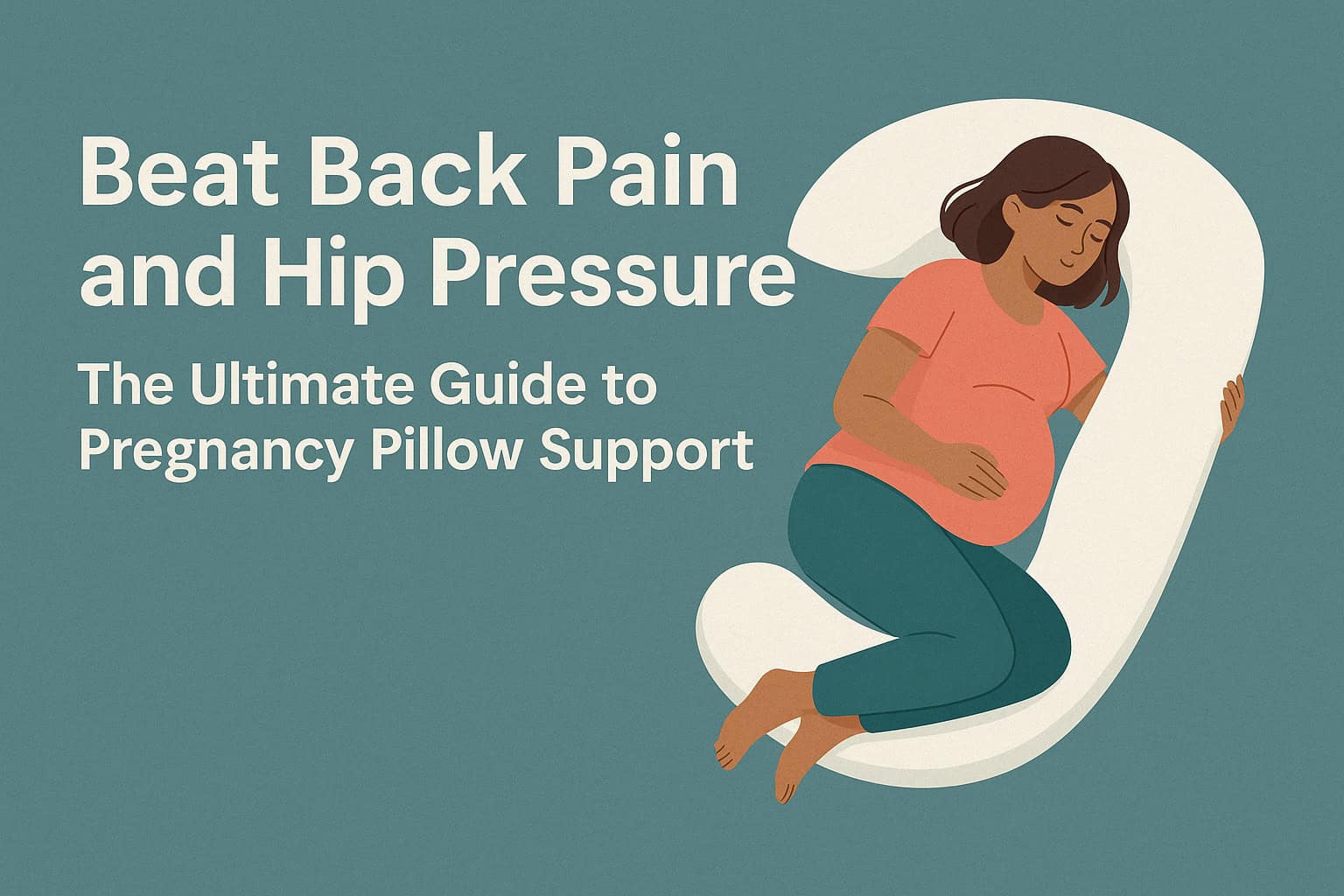
Pregnancy pillows are specially designed to support your changing body and encourage healthier sleep positions. They work by cushioning and aligning key areas like your belly, lower back, knees, and hips.
Let’s take Maya’s story as an example. Maya was six months pregnant and waking up multiple times a night with sharp hip pain and stiffness in her lower back due to using a soft mattress. After trying a stack of regular pillows to no avail, she finally invested in a medium firm mattress and U-shaped pregnancy pillow It cradled her belly, supported her spine, and gave her something to rest her knees on.
Within a few nights, she started sleeping more deeply. The difference, she said, was night and day.
Types of Pregnancy Pillows (and How They Work)
There are several kinds of pregnancy pillows, each designed to target specific discomforts. Here’s a breakdown:
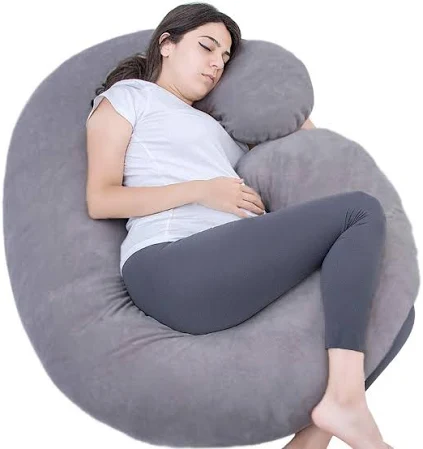
1. C-Shaped Pillows
Pregnancy Pillow, C Shaped Full Body Pillow – Image is taken from Ebay
Great for supporting the head, belly, and knees at once. They’re ideal for women who toss and turn but still need full-body support without taking over the whole bed.
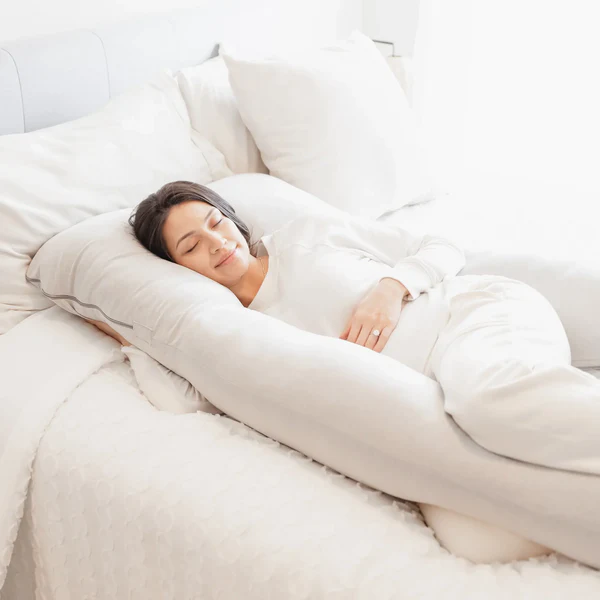
2. U-Shaped Pillows
Image is use from Regalo – U-Shaped Maternity Pillow
These are the heavyweights. They wrap around both sides of your body, offering total support whether you’re lying on your left or right. Perfect for back pain, hip alignment, and even neck tension.
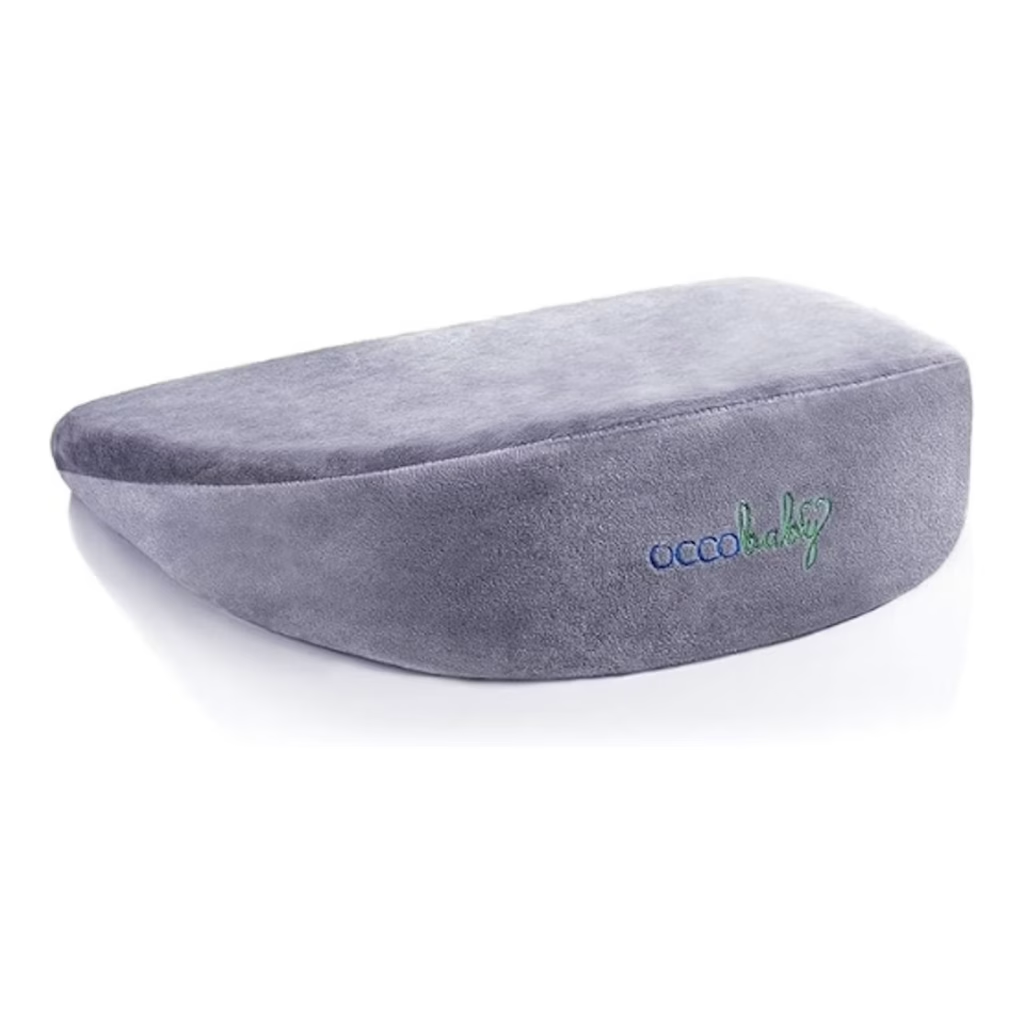
3. Wedge Pillows
Image – OCCObaby Pregnancy Wedge Pillow for Sleeping
Small and compact, wedge pillows slide under the belly or back to provide targeted support. They’re great if you don’t want a full-body pillow or travel often.
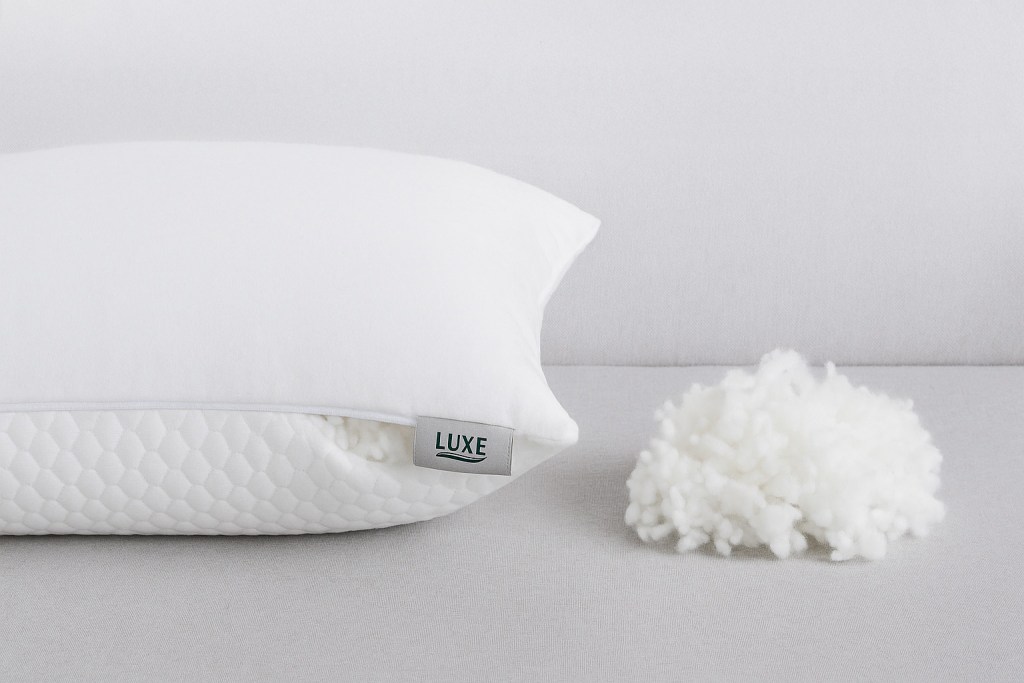
4. Customisable Pillows
This is where things get interesting. Some brands now offer adjustable fill pillows that can be reshaped and repurposed, ideal for those who want more control over their support. For example, you can adjust the firmness or fold them to tuck under specific pressure points.
How Pregnancy Pillows Help with Back and Hip Pain
Here’s the science behind it. When you sleep on your side (especially the left), your body needs alignment across three critical points:
Neck and spine: To reduce tension and promote good circulation
Hips: To prevent sagging and relieve pressure on the lower back
Legs and knees: To keep hips level and aligned
A pillow placed between your knees takes pressure off your hips and pelvis. Meanwhile, support under your belly stops it from pulling your spine out of alignment. The result? Less compression, less inflammation, and less pain.
A study published in The Journal of Obstetrics and Gynaecology Research found that women who used body pillows during pregnancy reported significantly better sleep quality and reduced musculoskeletal pain.
With so many options on the market, choosing the right pillow can feel overwhelming. Here are a few key things to consider:
Adjustability: Can you change the loft or firmness?
Breathability: Pregnancy can raise your core temperature, so cooling fabrics help.
Washable covers: Spills and night sweats happen. Easy cleaning is a must.
Size: Do you want full-body support or something smaller and travel-friendly?
Shape: Think about which parts of your body need the most support.
Real-World Tip: Combine with a Customisable Bed Pillow
Many women find that combining a pregnancy body pillow with a customisable head/neck pillow works best. Why? Because even if your hips and back are supported, your neck alignment still matters.
One of our customers, Lisa, shared how switching to a Luxe Pregnancy Pillow helped her during pregnancy. She adjusted the fill to better support her shoulders while sleeping on her side and it made a huge difference in morning stiffness.
Bonus: You’ll Still Use It After Baby Arrives
The best part about investing in a quality pregnancy pillow is that it doesn’t stop being useful after birth. Many mums use theirs for:
Postpartum support when recovering from delivery
Nursing and feeding (especially with U-shaped pillows)
C-section recovery to relieve pressure and improve comfort
Baby positioning for tummy time or bottle feeding
It’s not just a sleep aid, it becomes a daily tool in your new parenting life.
Final Thoughts: Listen to Your Body
Every pregnancy is different, and so is every sleeper. What works for one mum might not work for another, which is why customisation is such a big deal. Whether it’s adjusting the shape of a full-body pillow or modifying the fill in your head pillow, the more adaptable your sleep setup is, the better your rest will be.
You’re growing a human you deserve to sleep like one.
If you’re dealing with back pain, hip pressure, or just can’t seem to find the right position, don’t tough it out. Try a pregnancy pillow that fits your body, your space, and your needs. It might just be the best decision you make this trimester.
You wake up feeling either sore or sweaty, maybe even both. Sound familiar? You’re not alone. Whether it’s back pain that won’t quit or waking up feeling like you’ve just run a marathon in your sleep, your mattress might be the one to blame… or to thank.
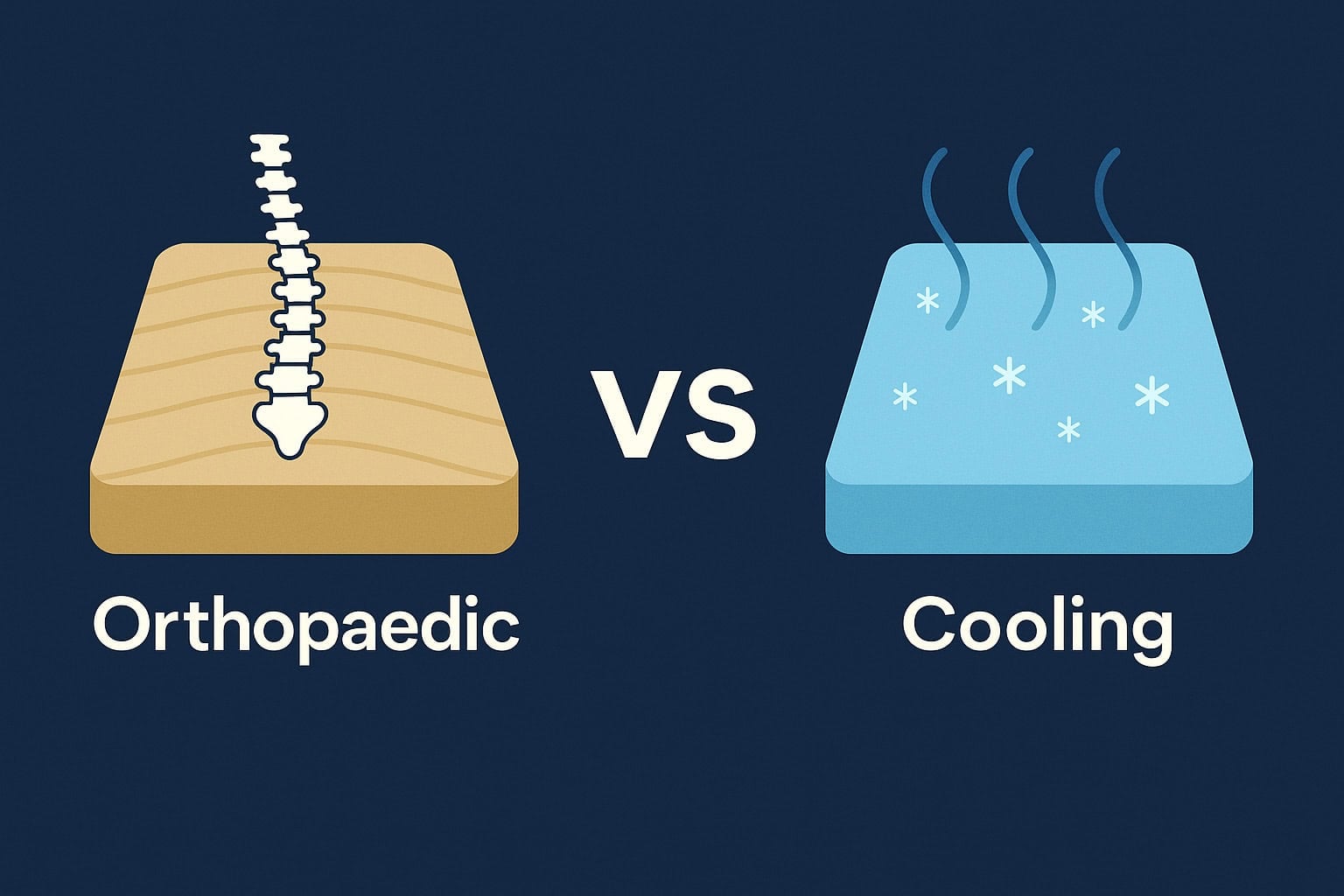
Two types of mattresses have been getting a lot of attention lately: orthopaedic mattresses and cooling mattresses. One is all about support and pain relief. The other is focused on regulating body temperature and keeping you from overheating at night.
But which one is right for you? Should you prioritise spinal alignment or cooling comfort? Let’s explore both options and figure out which is the better match, based on real needs, not just marketing claims.
What Is an Orthopaedic Mattress?
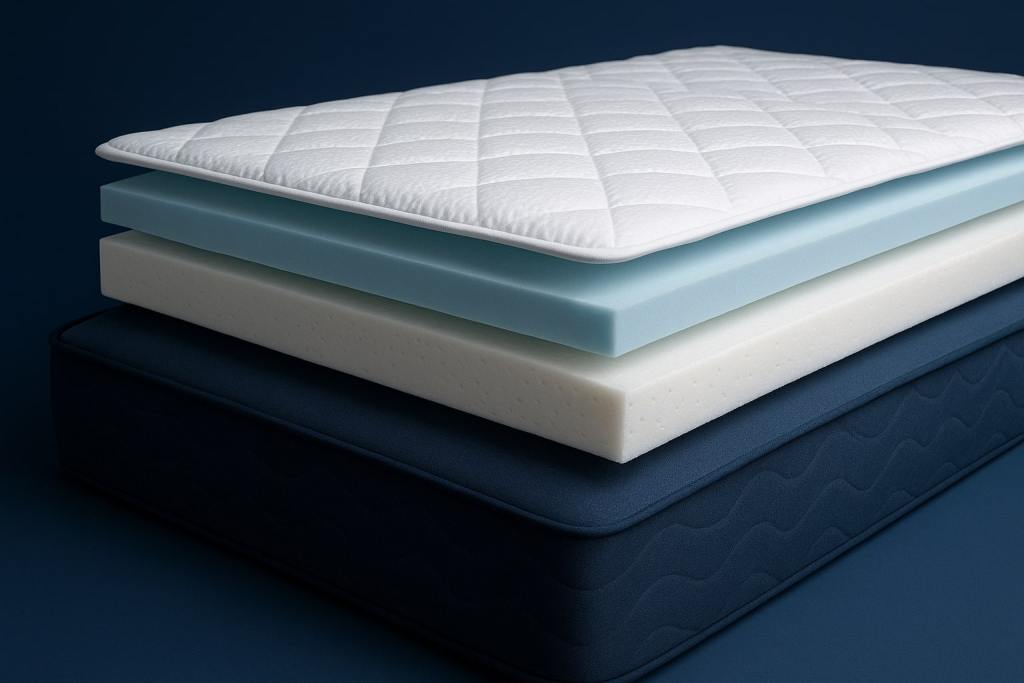
An orthopaedic mattress is designed to offer targeted support for your bones, joints, and muscles, especially your spine. They’re typically on the firmer side and built to promote proper alignment and reduce pressure on the body.
You’ll often hear the term associated with people who suffer from:
Lower back pain – One of the most common reasons people seek orthopaedic support; firm mattresses can help maintain spinal alignment and reduce pressure on the lumbar region.
Sciatica – Caused by irritation of the sciatic nerve, often worsened by poor sleeping posture or unsupportive mattresses.
Arthritis – Pressure-relieving surfaces can help reduce joint pain and inflammation, particularly in the hips and knees.
Slipped or herniated discs – Supportive mattresses prevent excessive spinal movement during sleep, which can aggravate disc issues.
Post-surgery recovery – A stable, firm mattress is often recommended to promote healing and reduce muscular strain after orthopaedic procedures.
These mattresses are not just for the elderly. Many young adults with active jobs or sedentary desk habits also find relief using an orthopaedic mattress, especially if they suffer from poor posture, stiffness, or discomfort in the morning.
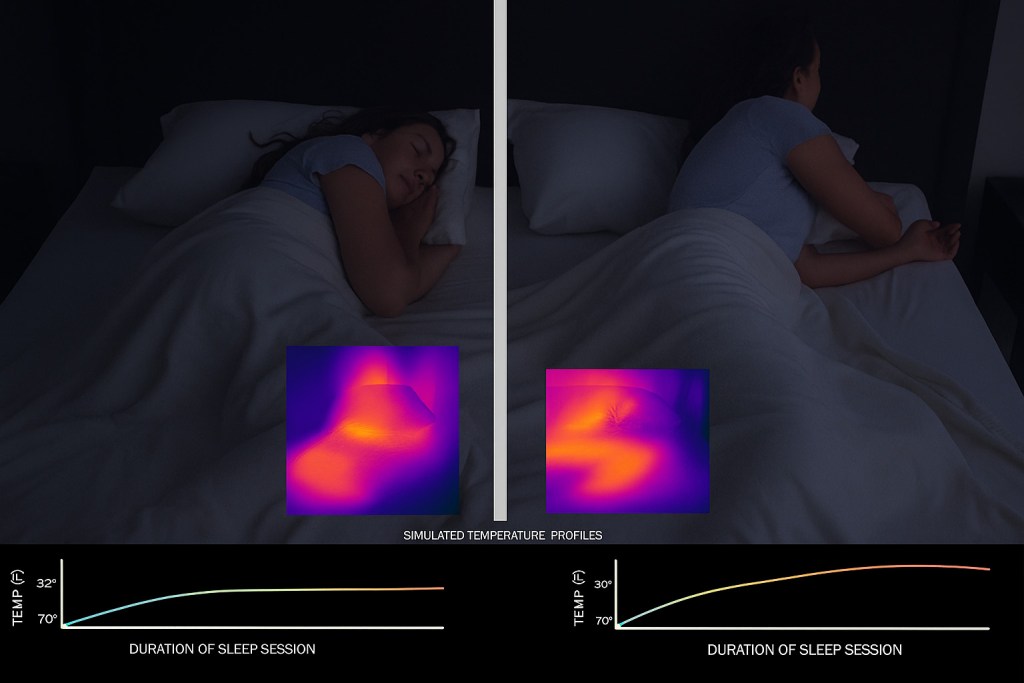
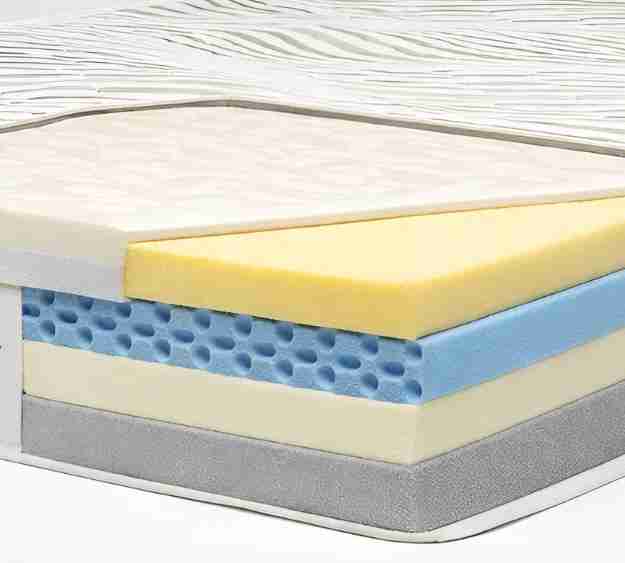
A cooling mattress, on the other hand, is designed to regulate temperature and prevent heat buildup while you sleep. Unlike traditional memory foam (which is notorious for trapping heat), cooling mattresses are made from breathable, moisture-wicking materials like gel-infused foam, latex, or open-cell designs.
They’re especially helpful for:
People who naturally sleep hot
Those going through menopause or hormonal changes
Couples who share a bed (because two bodies = double the heat)
Individuals with night sweats or certain medical conditions
Warmer climates or homes without air conditioning
Many modern models combine comfort with cool tech, like graphite layers, bamboo covers, or phase-change cooling gels, and you’ll find a wide selection of these in most premium mattress lines.
For those after a breathable option with eco-benefits, we also suggest checking out Luxe Mattresses’ latex mattress section, where cooling and sustainability meet.
Real People, Real Choices
Let me tell you about two customers from very different walks of life.
Brian is a 42-year-old warehouse supervisor in Nottingham. Years of lifting, bending, and working long shifts on concrete floors caught up to his lower back. After trying several soft and medium beds, he made the switch to an extra-firm orthopaedic mattress. Within weeks, he said the morning stiffness was gone and he started waking up with more energy and less pain.
On the other hand, Jasmine, a marketing manager in London, had the opposite issue. She constantly woke up hot, sometimes sweating through her sheets. She tried fans, lighter duvets, even sleeping with the window open, no luck. Finally, she invested in a gel-infused cooling mattress and said it felt like “sleeping on a calm breeze.†Her rest improved almost immediately, and her tossing at night practically disappeared.
Both made the right choice because they understood their sleep problem and picked a mattress that solved it.
Pros of Orthopaedic Mattresses
Spinal alignment support that helps reduce or prevent chronic pain
Firm and stable surface, which is ideal for people with mobility issues or post-surgery needs
Often recommended by physiotherapists and doctors
Long-lasting durability thanks to high-density materials
Great for: People with back pain, joint stiffness, or structural support needs
Pros of Cooling Mattresses
Helps regulate body temperature for uninterrupted sleep
Breathable materials like latex or gel foam enhance airflow
Often paired with motion isolation, making it ideal for couples
Reduces night sweats and heat-induced tossing and turning
Great for: Hot sleepers, couples, or anyone dealing with nighttime temperature spikes
When They Overlap (Yes, You Can Have Both)
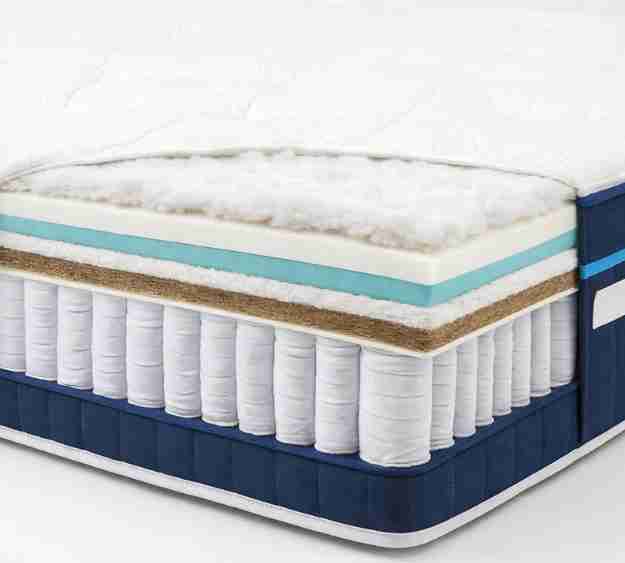
It’s worth noting that some mattresses do both, they offer orthopaedic-level support and cooling comfort. For example, some hybrid mattresses combine firm support with breathable coils and cool gel layers on top. Others use natural latex which is both supportive and temperature-regulating.
If you’re looking for a balance between both worlds, browsing a cooling orthopaedic hybrid can be a smart starting point. Retailers like Luxe Mattresses often carry collections designed to meet both medical and comfort demands in one.
How to Decide: Pain vs Heat
Still not sure what to pick? Here’s a quick guide based on what’s bothering you most at night:
Symptom/Concern
Go With…
Lower back or joint pain
Orthopaedic Mattress
Posture problems or stiffness
Orthopaedic Mattress
Night sweats or overheating
Cooling Mattress
Tossing and turning from heat
Cooling Mattress
Pain and heat combined
Hybrid or Latex Option
Final Thoughts: Choose What Your Body Needs Most
There’s no right or wrong answer when choosing between an orthopaedic and a cooling mattress, only what works best for your body, your climate, and your lifestyle.
If pain is your biggest enemy, focus on structured support. If heat is ruining your nights, find a breathable surface that keeps you cool. And if you’re somewhere in between, consider a firm latex or hybrid option that ticks both boxes.
Remember, sleep isn’t a luxury, it’s a foundation for health. Make your mattress work for you, not against you.
Do Heavy Sleepers Need a Firmer Mattress? The Science of Support & Pressure Relief
If you’re a heavier person in the UK (over 230 lbs or BMI 30+), you know how hard it is to find the best firm mattress for heavy sleepers. Many mattresses sink under your weight, causing back pain and making you overheat at night. You need one that’s firm enough to support you but soft enough to be comfortable.
Some people think the hardest mattress is best, but that’s not true. A mattress that’s too firm can hurt your shoulders and hips. The best mattress for heavier people gives strong support where you need it and soft cushioning where you want it. It should also help keep you cool at night.
Keep reading to learn how to find your perfect mattress.
Body Weight & Type: The Foundation of Mattress Choice.
You need to understand how your body interacts with it to choose the right mattress. For heavier people, weight and body type can impact comfort, support, and durability.
Here’s a simple breakdown of the relevance and priority of factors.
How Weight Impacts Mattress Performance.
A heavier body exerts pressure on the mattress which may lead to sagging, durability issues and loss of support. Mattresses standardly utilize materials with high compressive properties to improve surfaces and spinal alignment. A mattress suitable for heavier individuals should have an innerspring unit or high-density foams with a strong support system. If not built well, a firm mattress may still not be able to give you the support you need.
Why Durability is Non-Negotiable: Durable Mattress for Heavier Weights.
A tough mattress for heavier weights is a must since inferior materials wear down quickly when put under more pressure. Choose memory foam that has a high density of at least 4 lbs/ft³ and heavy-gauge pocketed coils that do not deform easily. Warranties under 10 years often indicate lower durability. A mattress that sags in a few years will further worsen back pain while also reducing sleep quality. A good design will last longer, require less replacement, and provide more support.
The Role of Body Type (Weight Distribution, Pressure Points).
Body shape determines where pressure concentrates. Side sleepers have broader hips and tend to require deeper cushioning to avoid shoulder and hip pain. Stomach sleepers with heavier midsections need firmer support to avoid back pain. A suitable mattress for a heavy person should feature zoned support or adaptable materials. Evenly distributed weights do not sink too deep and align your body.
How To Find The Right Mattress for Your Sleep Position
Your sleeping position alters your body’s mattress requirements. Those who weigh more than average should pay extra heed to this as their weight exerts higher pressure on the bed.
Let’s look at what works best for different sleepers, to read in more details click here.
Side Sleepers Need Extra Cushioning.
When you sleep on your side, the bulk of your weight is concentrated on your hips and shoulders. These areas need softness to prevent pain and numbness. Look for a mattress that’s medium-soft to medium firm. Mattresses like memory foam and hybrid do a good job of contouring to your body without sinking in too much. Make sure the soft top layer is at least 3 inches thick.
Back and Stomach Sleepers Require Firm Support.
A firmer mattress will suit you if you sleep on your back or belly. When your midsection falls down, it may also pull the lumbar spine which will aggravate your back. A mattress that has a firmness score of 6 to 8 over 10 is the most suitable. Flat surfaces are necessary for or stomach sleepers to maintain spinal posture.
Combination Sleepers Should Choose Responsive Materials.
If you toss and turn throughout the night, then you need a mattress that will too. Choosing latex or mattresses with pocket springs allows you to change positions easily Memory foam that’s too soft can make this harder. Medium-firm firmness (6-7) is considered good for all sleeping positions.
Understanding Mattress Firmness for Heavier Sleepers.
Choosing the right firmness of the mattress is the key. It’s not just a comfort thing; in fact, you need to comfortable, supported without pressure pain. Here’s all you need to know about how to choose firmness.
A medium soft (4-5) could be convenient for some side sleepers
A medium-firm mattress is the best choice (6)
A firm mattress (7-8) is ideal for back and stomach sleepers.
Usually too hard extra firm (9-10).
Why Medium Firm Works Best.
A medium firm mattress (level 6) gives the right balance.
Prevents you from going down too far.
Supports your spine properly.
Still feels comfortable.
Can be used for all sleeping positions
These mattresses are made of resilient material with heavy-duty foam or springs that won’t sag under your weight.
When to Choose Firmer Options.
Heavier people may need a firmer mattress according to their weight.
Sleep on their stomach.
Have back pain.
Weigh over 300 pounds.
A rigid mattress (9 or 10 on the firmness scale) is required in a few cases only – when you weigh over 350 pounds or have certain medical problems. Most people find them too hard and uncomfortable.
Support vs. Pressure Relief: Finding the Critical Balance.
The ideal mattress for heavy people should be firm, sure. But more importantly, it should offer just the right support and pressure relief. When this balance is well managed, it stops pain and helps sleep quality. This section discusses how these features work for heavier bodies.
Why Support Matters Most
Support is how well a mattress keeps heavy sleepers’ spines aligned under the pressure of weight. The ideal mattress will keep the spine in a neutral position. This take strong core materials such as high-density foams or reinforced coils that resist compression. When you lack proper support, your body will sink unevenly into the mattress, which could lead to misalignment of the spine and back pain.
The Importance of Pressure Relief
Cushioning which relieves the pressure of your heavier areas — like hips and shoulders. Memory foam or latex comfort layers distribute weight evenly. Too little pressure relief creates painful pressure points. Too much causes excessive sinkage. An excellent mattress offers ample cushioning and good support.
How the Best Mattresses Do Both
The mattress support a plus-size sleeper chooses will consist of a strong but soft material. That’s where a specifically designed firm mattress for heavy sleepers comes in. The core that supports the body helps stop sagging but the layer that comforts does the opposite, comforting the pressure points. Hybrid mattresses usually perform this balancing act best, by pairing coils with foam or latex.
Don’t Forget the Edges
Heavier folks may roll off the bed without edge support as they shift. With reinforced edges, you can sit or sleep nearer the side without being at risk of instability. A mattress with poor edge support will feel less spacious. Choose dense foam encasement or reinforced coils around the bed’s perimeter.
Comfort, Preferences & Other Deciding Factors
Everybody sleeps uniquely. The comfort can be significantly different when you carry more weight. Examine how your personal circumstances will help you find your perfect mattress.
Your Comfort Preferences Matter.
What feels good to you is important. While some like the “hugged†feeling of memory foam, others prefer solid support from springs. How you sleep also helps decide this – a side sleeper usually needs more cushioning to their hips and shoulders while a back sleeper tends to want firmer support. The best way to know? Test out different mattresses to see what feels good for you.
Staying Cool at Night.
Watch out for mattress materials if you are a hot sleeper. Heavier bodies naturally retain more heat, so look for.
Foams infused with gel eliminate heat.
Latex that allows air flow and does not trap heat in your bed.
Coil systems that allow air to flow. Your sleep quality can change drastically with these cooling features.
Why Hybrid Mattresses Shine.
Because they hit the sweet spot, many heavier sleepers like hybrid mattresses.
Use sturdy coils for strong support that won’t sag.
Including layers of foam or latex can help to add delightful cushioning.
Let air flow better than foam ones. Heavier bodies often find the ideal balance of support and comfort from this combination of materials.
The mattress that suits you well will have a firm enough support and yet feel comfortable, regulate temperature well and let you sleep as you usually do. Try various options fearlessly; you deserve to find your perfect choice!
How to Choose Your Ideal Mattress: Key Features Checklist.
If you have extra weight, not all mattresses will work for you. To help you sleep soundly, here’s everything you should look for – and avoid.
Non-Negotiable Features for Heavy Sleepers.
A mattress designed for people with a larger body must be firm and durable. The support core must be made of high-density foam material (a density of 4+ lbs/ft³) or heavy-gauge coils for spinal alignment. Having a strong edge support system can prevent roll-off and increase the usable sleep space. These elements ensure optimal comfort and no back pain.
Highly Recommended Features.
Cooling layers like gel-infused foam or breathable latex are designed to help temperature control for hot sleepers. It is easier to reposition when the latex or pocketed coils are responsive materials. Zoned support is a firmer reinforcement in places where heavier sleepers need it most, typically around the hips and shoulders. Other areas are still cushioned properly.
What to Avoid.
Low-cost all-foam beds often do not have the density to support heavier weights and sag quickly. Pillowy-soft toppers may seem comfy at first but usually sink too deep under pressure causing misalignment. For heavier people, thin comfort layers and low-density memory foam can lack sufficient long-term support.
Best Luxe Mattresses for Heavy Sleepers.
The Luxe mattress is designed specifically for heavier people. It ensures support with great comfort at the same time. These are the models with high-quality, pressure-relieving materials that promote healthy spinal alignment.
LuxeErgoâ„¢ 3400 Hybrid is ideal for heavier sleepers who need a good balance of pressure relief and support for a comfortable night’s sleep. The firmness of the mattress (6-7 out of 10 level) relieves pressure and does not sink in too much. This mattress features a dual-layer spring system, comprising 2000 EnduraSpringâ„¢ and 1400 FortiCoilâ„¢ micro springs, which provide excellent support. It consists of a layer of Zero Gravityâ„¢ memory foam with cooling gel that regulates body temperature. It would do well for back and stomach sleepers who weigh more than 230 pounds.
Majestic 9000™ – Extra Firm Orthopedic Support.
The Majestic 9000™ is ideal for heavy weight sleepers. Its extra-firm construction (8-9 firmness) features a 3″ V58 high-density memory foam layer over a reinforced base, providing exceptional spinal alignment for back and stomach sleepers. The motion isolation technology makes it ideal for couples, while the adaptive cushioning prevents pressure points. This model works best for individuals over 250 lbs who prefer a solid sleep surface.
LuxeTherm® Hybrid – Cooling Comfort for Heavy Sleepers
Hot sleepers will appreciate the LuxeTherm® Hybrid, which combines medium-soft comfort with advanced cooling technology. The LTX Cooling Gel™ foam and airflow-promoting 1000 EnduraSpring™ coils prevent overheating, while the Zero Gravity™ foam layer offers contouring support. Though slightly softer, its high-density materials prevent excessive sinkage for sleepers up to 275 lbs, especially side sleepers needing pressure relief.
Frequently Asked Questions (FAQs)
1.    Is a firm mattress always better for heavy people?
No. While firmness helps prevent sagging, excessive firmness creates pressure points. Medium-firm (6-7) often provides the best balance of support and comfort for most heavy sleepers.
2.    Can a soft mattress work if I’m heavy?
Rarely. Soft mattresses typically lack the density to properly support heavier weights, leading to excessive sinkage and spinal misalignment. Some plus-size side sleepers may benefit from medium-soft comfort layers over a firm support base.
3.    How long should a mattress last for a heavy sleeper?
Look for mattresses with 10+ year warranties and high-density materials (4+ lb memory foam, 13+ gauge coils). With proper care, a quality mattress should maintain support for 7-10 years for sleepers over 230 lbs.
4.    Do I need special sheets or a foundation?
Possibly. Check that your foundation has center support legs and can handle your weight (typically 600+ lb capacity). Deep-pocket sheets (15″+ depth) often work better for thicker mattresses. Some brands offer reinforced foundations specifically for heavier individuals.
Conclusion
People who sleep heavily need medium-firm to firm mattresses (5-8 on the scale). But just being firm is not enough; it should also provide adequate pressure relief to hips and shoulders. When you buy a proper firmer mattress for heavy sleepers that hase durable construction, reinforced edge support, cooling technologies, and responsive materials, then you will get more quality sleep and improve your spine health.
When choosing your mattress, prioritize these key factors:
Your weight and body type
Primary sleep position
Need for pressure relief versus support
Temperature regulation requirements
The right balance prevents pain, reduces overheating, and extends mattress longevity.