If you’ve ever woken up with stiffness or struggled through the night tossing because of back pain, you know how much it affects your daily life. Your mattress plays a huge role in supporting your spine, aligning your body, and helping you recover while you sleep. Choosing the best mattress for back pain can feel overwhelming, especially with so many options out there.
In this guide, we’ll break down how the right mattress can reduce back pain, what to look for when buying a mattress for back pain, and the top choices people love.
Why Back Pain and Mattresses Are Connected?
Your spine has a natural curve that needs proper support when lying down. A poor-quality or old mattress can put pressure on certain areas, causing or worsening back pain. Over time, sleeping on the wrong surface may lead to misalignment, stiffness, and discomfort.
The best mattress for back pain is one that:
Keeps your spine aligned
Distributes your weight evenly
Reduces pressure points
Provides the right balance of firmness and comfort
If you’re already experiencing back pain, your mattress could either be part of the problem or part of the solution.
Signs Your Mattress Is Causing Back Pain
Not sure if your mattress is behind your back pain? Watch out for these signs:
You wake up with stiffness that eases during the day
You feel more comfortable on a hotel bed or someone else’s mattress
There are visible sags or lumps in your bed
You toss and turn frequently to get comfortable
You notice worsening back pain after sleeping
If any of these sound familiar, it’s probably time to start looking for the best mattress for back pain that suits your needs.
Types of Mattresses for Back Pain Relief
When searching for the best mattress for back pain, it’s important to know what each type offers:
Lightweight sleepers: Softer mattresses work better
Heavy sleepers: Firmer options prevent sinking and help with back pain
4. Durability
Sagging is one of the biggest culprits of back pain. Always check the warranty and durability before buying.
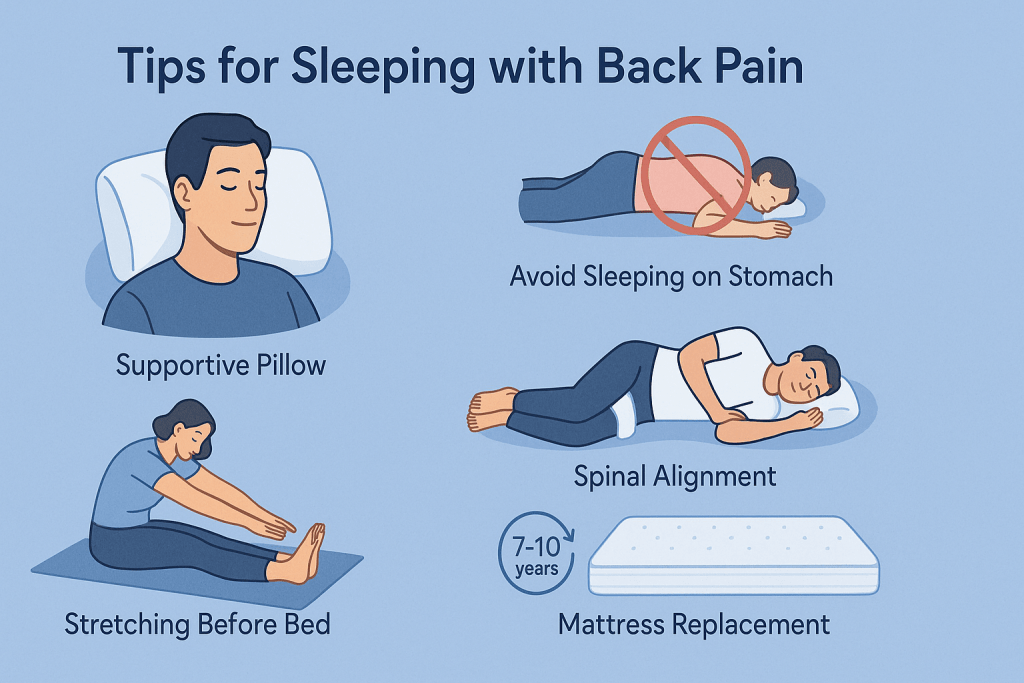
Tips for Sleeping with Back Pain
Even the best mattress for back pain won’t help if you don’t practice good sleep habits. Try these tips:
Use a supportive pillow for neck alignment
Avoid sleeping on your stomach if you already have back pain
Stretch lightly before bed to relax muscles
Keep your spine straight with a small pillow under your knees (for back sleepers) or between your knees (for side sleepers)
Replace your mattress every 7–10 years
FAQs
Q1: What firmness is best for back pain?
A medium-firm mattress is usually considered the best mattress for back pain because it balances support and comfort.
Q2: Can a mattress cause back pain?
Yes. An old or unsupportive mattress can trigger or worsen back pain.
Q3: How long before I notice improvement in back pain after buying a new mattress?
It can take a few weeks for your body to adjust, but many notice back pain relief within days.
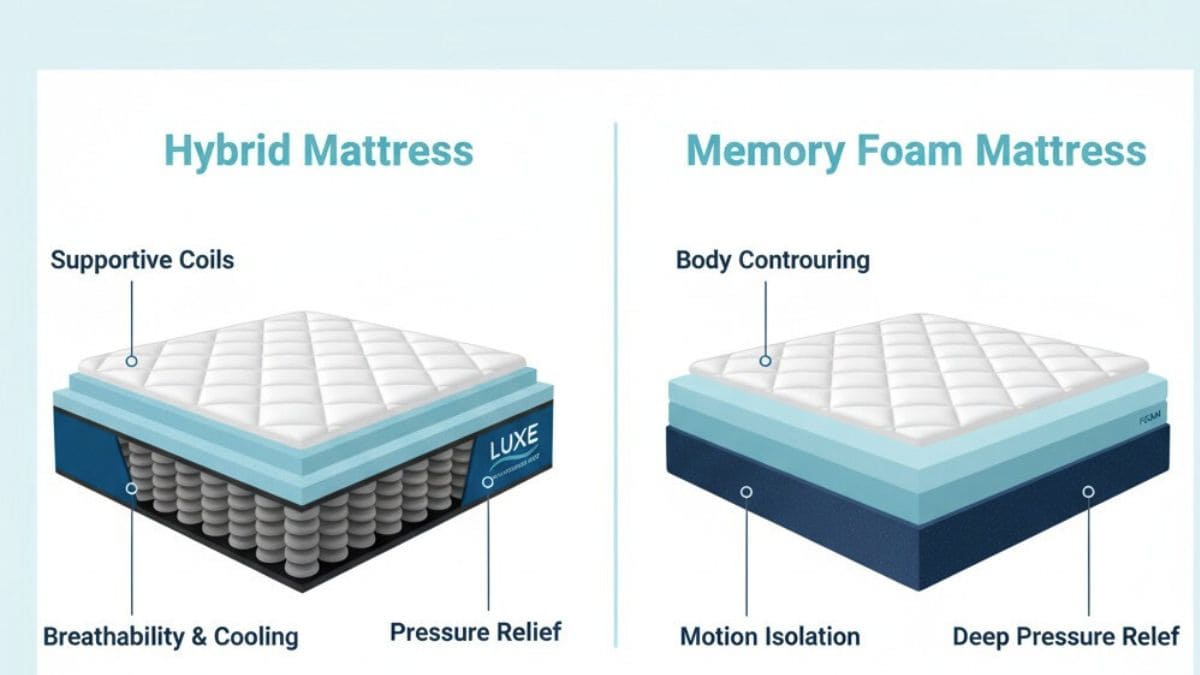
Q4: Should I choose memory foam or hybrid for back pain?
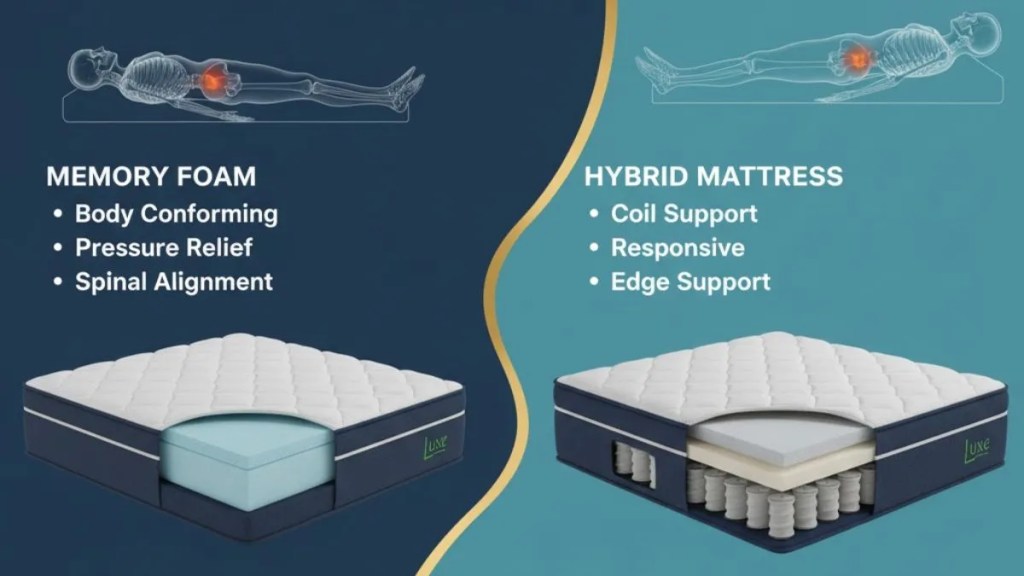
Both are great choices. Memory foam is better for contouring, while hybrids combine support and bounce making them strong options for the best mattress for back pain.
Q5: How often should I replace my mattress if I have back pain?
Every 7–10 years, or sooner if sagging or worsening back pain occurs.
Conclusion
Living with back pain can feel exhausting, but the right mattress can make a world of difference. Instead of waking up sore and stiff, you could start your mornings refreshed and pain-free. The best mattress for back pain is the one that aligns your spine, supports your weight, and fits your sleeping style.
Remember:
Choose medium-firm support
Match your mattress to your sleeping position
Don’t overlook durability and quality
By investing in the best mattress for back pain, you’re not just buying a bed, you’re investing in your health, comfort, and overall well-being.You can visit our website to explore the best back pain mattress options designed to give you maximum comfort and support.
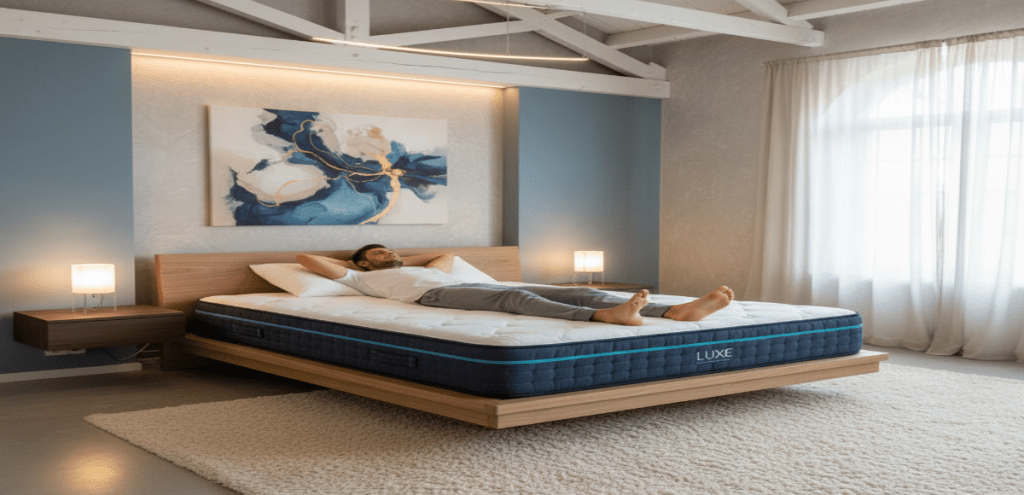
Many people struggle with cramped sleeping space, disrupted rest, or discomfort in shared beds. A king size mattress can solve these issues by providing ample room for stretching, reducing motion transfer, and enhancing overall sleep quality. King size mattresses are ideal for couples, tall individuals, or anyone who values extra space during rest.
They offer more comfort and support than queen or double beds, making it easier to maintain proper sleep posture and minimize disturbances. Understanding the dimensions, comfort features, advantages, and potential drawbacks of a king size mattress is key to deciding if it’s the right fit for your bedroom and sleep needs.
What Is a King Size Mattress?
A king size mattress is a large bed designed to provide maximum comfort and space for couples or individuals who prefer extra room while sleeping. It offers more width and length than a standard double or queen mattress, reducing disturbances and improving overall sleep quality.
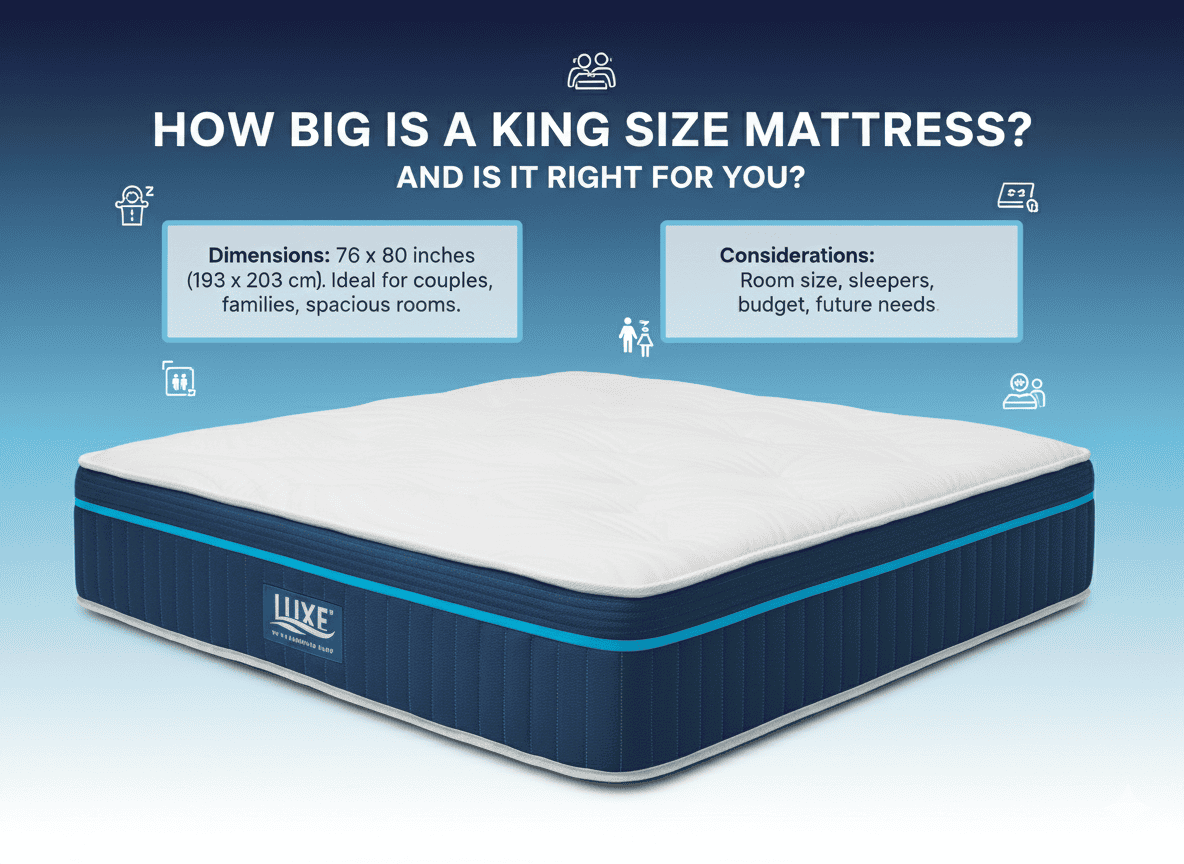
The exact dimensions of a king size mattress vary by region. In the UK, a standard king size mattress measures approximately 150 cm × 200 cm (5 ft × 6 ft 6 in). In the US, the standard king size is larger at 193 cm × 203 cm (76 in × 80 in), while European king sizes may differ slightly depending on the country.
Understanding what a king size mattress is and its dimensions helps in choosing the right mattress for your bedroom layout, bedding, and personal comfort needs.
King Size Mattress Dimensions
A king size mattress provides generous sleeping space, making it larger than a queen or double bed. In the UK, the standard king size measures 150 cm × 200 cm (5 ft × 6 ft 6 in), while in the US, it measures 193 cm × 203 cm (76 in × 80 in). This extra space offers comfort for couples, tall sleepers, or those who prefer room to move at night.
For comparison, here’s how king size mattresses stack up against other common sizes:
Mattress Size
Dimensions (UK)
Dimensions (US)
Notes
Double
135 cm × 190 cm
137 cm × 190 cm
Standard for single sleepers or small rooms
Queen
150 cm × 200 cm
152 cm × 203 cm
Slightly smaller than king, suitable for couples
King
150 cm × 200 cm
193 cm × 203 cm
Provides ample space for couples and tall sleepers
Super King
180 cm × 200 cm
203 cm × 203 cm
Extra-wide option for maximum comfort
Knowing how long a king size mattress is and its width helps you plan your bedroom layout and choose suitable bedding.
Pros and Cons of a King Size Mattress
A king size mattress offers significant advantages, including extra space, enhanced comfort, and improved sleep quality. It is ideal for couples, tall sleepers, or anyone who values personal space during rest. The wider surface reduces disturbances from a partner’s movements, making it easier to maintain a restful sleep.
However, king size mattresses also have some drawbacks. They require a larger bedroom, are generally more expensive than smaller sizes, and can be heavier and harder to move or handle.
Advantages
Disadvantages
Extra space for comfortable sleep
Requires a large bedroom
Ideal for couples and tall sleepers
Higher cost than smaller sizes
Reduces disturbances from partner’s movement
Heavier and harder to move
Improved overall sleep quality
May limit furniture placement options
Understanding these pros and cons helps determine if a king size mattress is the right fit for your bedroom and lifestyle.
Who Should Consider a King Size Mattress?
A king size mattress is ideal for couples who need extra sleeping space or for tall individuals who require additional length for comfort. It also suits anyone who enjoys stretching out during sleep without feeling restricted.
Bedroom size is an important consideration, as a king mattress requires enough space for movement around the bed and placement of other furniture. Typically, a room should be at least 12 ft × 12 ft to comfortably accommodate a king size bed.
Compared to queen or double beds, a king size mattress offers significantly more room, reducing disturbances and providing better sleep quality. It is the best option when comfort and personal space are top priorities.
Comfort and Sleep Benefits of King Size Mattresses
A king size mattress provides ample space, allowing sleepers to move freely without feeling restricted. This extra room helps reduce tossing and turning, which improves overall sleep quality and ensures a more restful night.
Motion isolation is another key benefit, as the larger surface minimizes disturbances from a partner’s movements. Personal space also promotes better sleep posture, reducing pressure on the spine and joints. Overall, a king size mattress supports sleep health, comfort, and long-term well-being for both individuals and couples.
Conclusion
A king size mattress provides ample space, superior comfort, and improved sleep quality, making it ideal for couples, tall individuals, or anyone who values extra room while resting. Understanding its dimensions, benefits, and suitability ensures you choose the right mattress for your bedroom and lifestyle.
When selecting a king size mattress, consider factors like room size, sleeping preferences, and mattress materials. Investing in the right mattress enhances sleep posture, reduces disturbances, and promotes overall well-being. Explore top-rated king size mattresses to find the one that perfectly fits your comfort and space needs.
FAQs
How big is a king size mattress in the UK? A standard UK king size mattress measures 150 cm × 200 cm (5 ft × 6 ft 6 in). It provides extra space compared to a queen or double bed.
Is a king size bigger than a queen? Yes, a king size mattress is wider and longer than a queen, offering more room for couples and tall sleepers.
What’s the most comfortable mattress size?
Comfort depends on personal preference, but a king size mattress offers the most space, reducing disturbances and improving sleep quality.
What are the pros and cons of a king size bed?
Pros: extra space, comfort, better sleep for couples; Cons: requires a large room, higher cost, heavier to move.
What is the most comfortable king size mattress?
The most comfortable king size mattress balances firmness, support, and materials like memory foam or hybrid layers for optimal sleep.
Do you sleep better in a king size bed?
Yes, the extra space and reduced motion transfer allow for better sleep posture and fewer disturbances throughout the night.
Choosing the right mattress is essential for a healthy spine. Are memory foam mattresses good for your back? It is a question many people in the UK ask. A good mattress can relieve pressure, improve sleep quality, and prevent long-term back issues.
This article examines the advantages, disadvantages, and practical tips for utilizing memory foam. We will cover its structure, the advantages of back support, when it might not be suitable, and provide expert guidance. By the end, you’ll understand whether memory foam mattresses are suitable for your back and how to select the right one for your specific needs.
Why Your Mattress Choice Affects Back Health
Your mattress affects spinal alignment and overall posture. Sleeping on a problematic mattress can worsen back pain. Proper support keeps your spine in a neutral position. UK sleepers often underestimate the impact of a mattress on their long-term back health. A mattress that suits your sleep style ensures proper pressure relief and comfort.
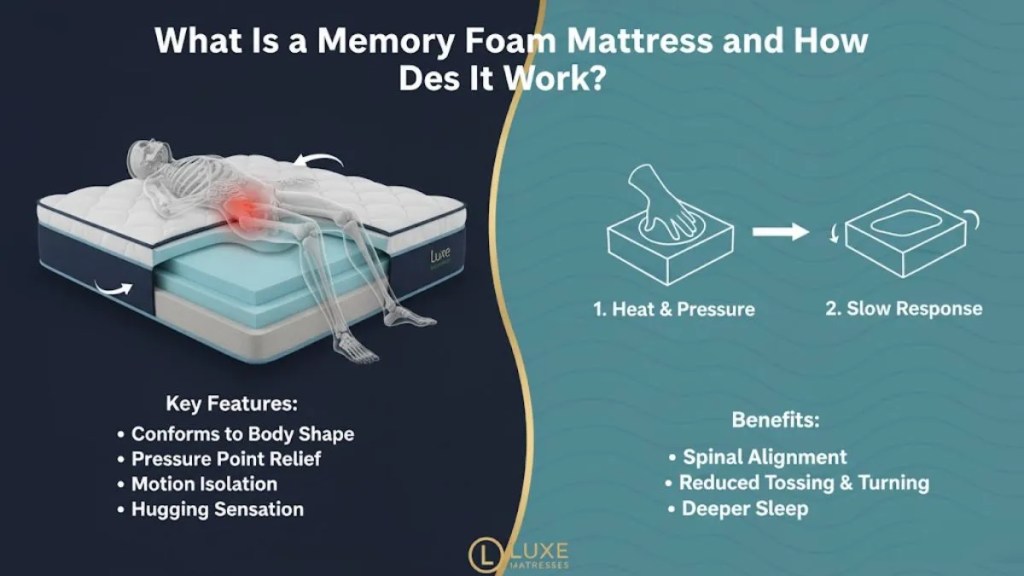
What Is a Memory Foam Mattress and How Does It Work?
Memory foam mattresses use foam that reacts to body heat, softening where pressure is highest and supporting natural spine alignment. This helps spread body weight evenly while reducing tension on joints. These mattresses adapt to every sleeper’s body shape, providing tailored comfort. They are ideal for people who often wake up with stiffness or sore backs.
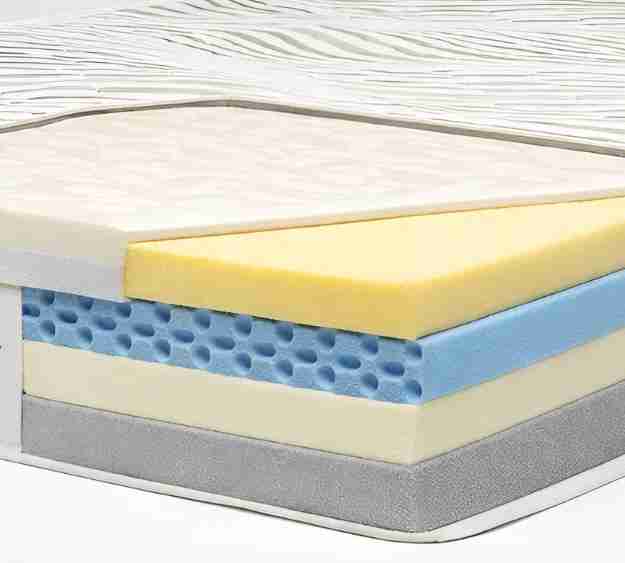
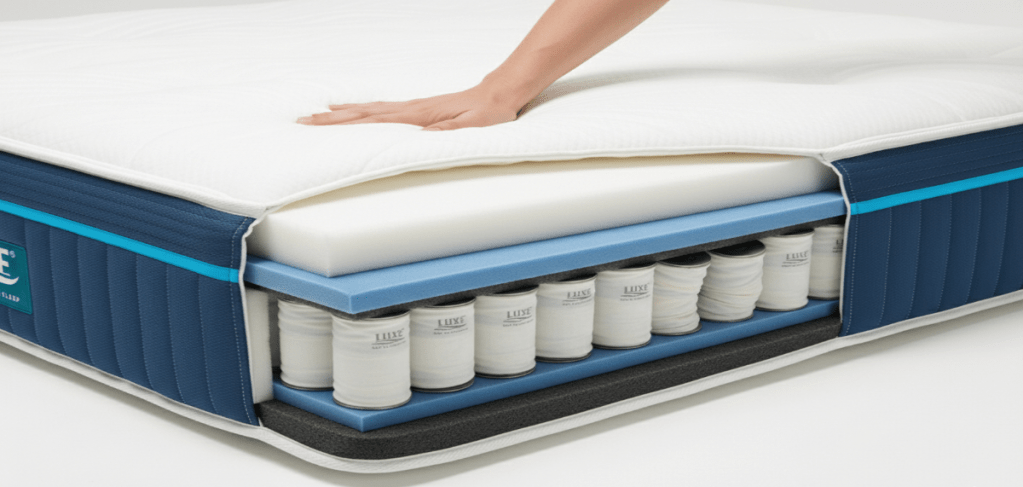
A memory foam mattress contains layers that include comfort foam and dense support foam. These layers work together to relieve pressure points during sleep. The design ensures better spinal posture and helps prevent pain throughout the night. Many UK users wonder if memory foam mattresses are good for their back, due to their proven comfort and support. Their structure effectively improves rest quality and overall sleep health.
Are Memory Foam Mattresses Good for Your Back Pain?
Many people suffering from back pain often ask, Arememory foam mattresses good for your back. Memory foam helps support the natural curve of your spine while reducing pressure on your shoulders and hips. It cushions sensitive areas, which decreases discomfort during sleep.
These mattresses also minimize tossing and turning, allowing better rest. With consistent support, they can help improve posture and prevent long-term spine problems, making them a popular choice for individuals struggling with chronic back pain. Memory foam mattresses evenly distribute body weight to prevent the formation of localized pressure points.
They adapt to various sleep positions, whether you sleep on your side, back, or stomach. Over time, this reduces tension in muscles and joints, helping the back relax fully. Users often notice fewer aches in the morning and improved overall comfort. Considering all these benefits, many healthcare professionals recommend memory foam to improve sleep quality and effectively reduce daily back pain.
Benefits of Memory Foam Mattresses for Back Support
Memory foam mattresses provide targeted support to keep your spine aligned. They reduce pressure points, improve posture, and enhance sleep comfort.
Promotes Natural Spinal Alignment
Memory foam supports your spine’s natural position, reducing strain on muscles and ligaments. UK users report better posture and less back stiffness. By moulding to your body, it prevents unnatural twisting and promotes spinal alignment.
Reduces Pressure on Joints and Lower Back
Memory foam distributes body weight evenly, relieving pressure from the hips, shoulders, and lower back. This prevents morning aches and stiffness, ensuring long-term comfort and joint relief.
Adapts to Body Shape for Personalized Comfort
Memory foam contours to your body, providing personalized support and reducing tossing and turning at night. It accommodates all sleep positions and adjusts evenly to the user’s weight, ensuring a comfortable and supportive sleep.
Improves Sleep Quality and Posture
Consistent memory foam support enhances sleep quality by reducing stiffness and fatigue, promoting a more restful night’s sleep. UK sleepers report more restful nights and less back discomfort. Proper sleep posture helps prevent long-term spinal issues. Memory foam balances comfort and support.
When a Memory Foam Mattress Might Not Be Suitable
Memory foam may be too soft for heavier sleepers. Overheating can occur with lower-quality foam layers. Some users prefer a more bouncy feel, which hybrid mattresses offer. Incorrect firmness can worsen back pain instead of improving it. Always test the firmness and thickness of your mattress for optimal comfort and spinal health.
Memory Foam vs Hybrid Mattresses for Back Pain
Hybrid mattresses combine springs with foam layers to create a unique sleeping experience. They provide bounce but sometimes less contouring. Memory foam offers greater pressure relief and enhanced support for spinal alignment. Choosing depends on personal preferences and sleeping position. Comparing options helps determine whether memory foam mattresses are suitable for your back and meet your needs.
How to Choose the Right Memory Foam Mattress for Back Pain (UK Guide)
Choosing the right memory foam mattress can greatly improve back comfort and sleep quality. Proper selection ensures your spine stays aligned throughout the night.
Let’s explore key factors to find the best mattress for long-lasting relief. Luxe Mattresses’ Reverso Memory Mattress can be highly effective for individuals experiencing back pain, as it offers advanced orthopedic support and adaptive comfort.
Pick the Right Firmness Level
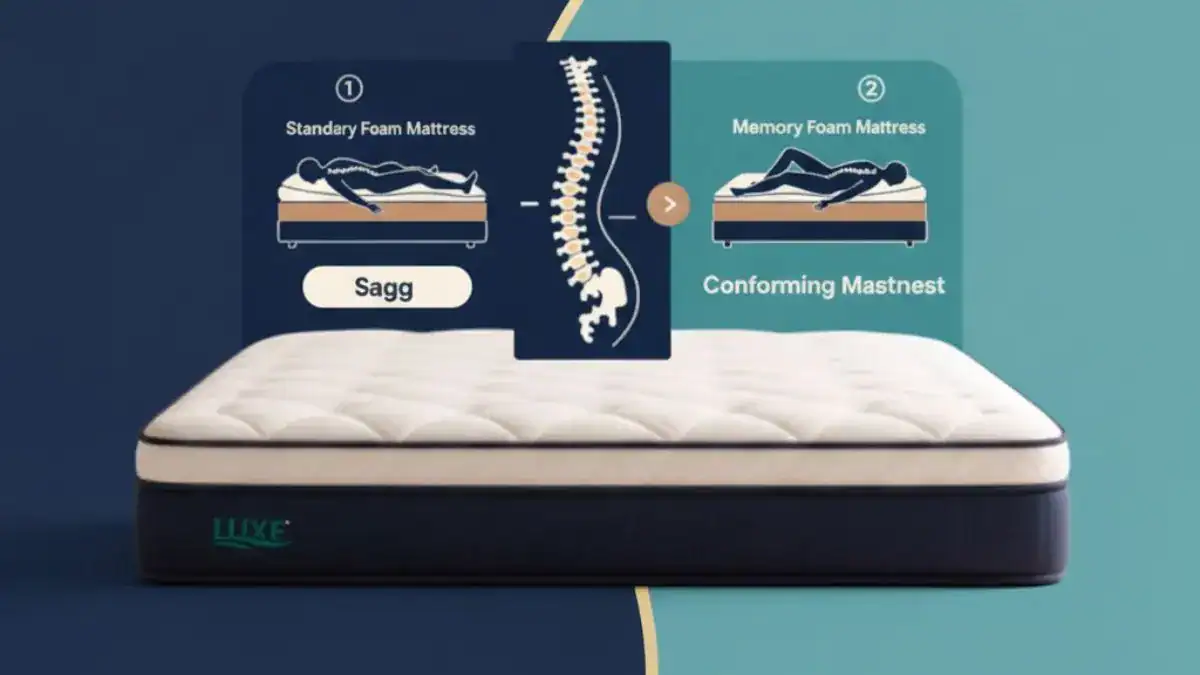
Medium-firm mattresses are generally ideal for most people experiencing back pain. A mattress that is too soft can sag, causing misalignment, while a very firm mattress may create pressure points and discomfort.
Always test options in-store if possible to feel support. Correct firmness supports natural spinal curves, reduces strain, and ensures that your back muscles remain relaxed throughout the night, helping you wake up feeling refreshed and pain-free.
Check for Orthopaedic or Pressure Relief Features
Look for memory foam mattresses that have received orthopedic or pressure-relief certifications. These features help relieve stress on your spine and reduce muscle tension. UK brands often include layered designs for extra ergonomic support.
High-quality certifications ensure long-lasting durability and effective spinal alignment. Pressure-relieving mattresses adapt to your body shape, supporting sensitive areas like the lower back and hips, which is essential for back pain sufferers seeking consistent comfort.
Choose the Correct Thickness and Density
High-density foam mattresses provide excellent durability and stable support for long-term use. Thickness plays a major role in contouring your body and maintaining proper spinal alignment. In the UK, mattresses with a 10–12 inch foam layer are popular for providing a balance of support and comfort.
Proper density prevents early sagging and ensures that every sleep position receives adequate support. Selecting the right combination of thickness and density is crucial for alleviating back discomfort and enhancing overall sleep quality.
Expert Tips for Relieving Back Pain During Sleep
Use the correct pillow height for neck support. Maintain proper sleep posture on your memory foam mattress to support your body’s natural alignment and promote a restful night’s sleep. Rotate the mattress occasionally to prevent uneven wear. Ensure a firm, flat base for optimal support. Combine a mattress, pillow, and bed frame for the best spinal health.
Conclusion
Whether a memory foam mattress is good for your back largely depends on its firmness and your sleeping style. These mattresses provide spinal support, reduce pressure points, and can improve posture. Quality memory foam offers long-term comfort and pain relief. Test different options and choose based on density, thickness, and personal needs.
Memory foam mattresses are a top choice for UK sleepers seeking comfort and support for their back. Following expert tips helps maintain proper posture and spine health.
FAQ’s
Q: Are memory foam mattresses good for your back?
A: Yes, memory foam mattresses support natural spinal alignment, relieve pressure points, and reduce back pain for most sleepers.
Q: What firmness level is best for back pain?
A: Medium-firm mattresses work best, providing support without sagging, while reducing pressure on the spine and promoting comfortable sleep.
Q: How does memory foam relieve back pain?
A: Memory foam contours to the body, evenly distributes weight, and supports spinal alignment, easing tension in back muscles and joints.
Q: Can memory foam mattresses be too soft or too firm?
A: Yes, overly soft mattresses sag, while extremely firm ones create pressure points, both potentially worsening back discomfort.
Q: Are there any UK mattresses recommended for back pain?
A: Yes, Luxe Mattresses’ Reverso Memory Mattress is excellent, offering orthopedic support, dual-sided comfort, and long-lasting spinal alignment relief.
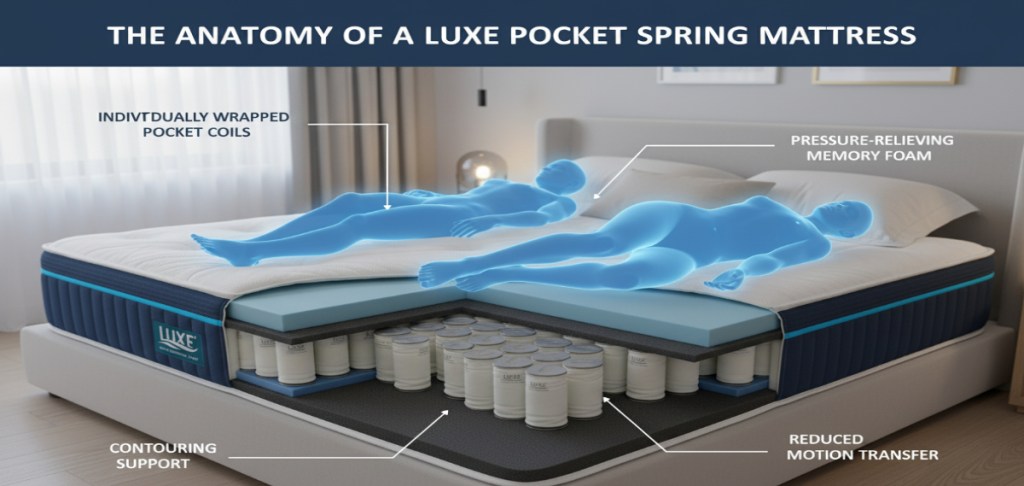
A pocket spring mattress offers targeted support by using individually wrapped coils that respond independently to your body’s movements. This design helps maintain proper spinal alignment, reduces pressure points, and minimizes motion transfer ideal for couples and light sleepers. It’s a modern upgrade from traditional innerspring or foam mattresses, enhancing both comfort and sleep quality.
Available in hybrid designs with memory foam, latex, or cooling layers, pocket spring mattresses cater to all body types and sleeping positions. They strike the perfect balance between firmness and cushioning, offering durable support without sacrificing comfort. Choosing the right model can help alleviate back pain, improve rest, and promote better overall well-being.
What Is a Pocket Spring Mattress?
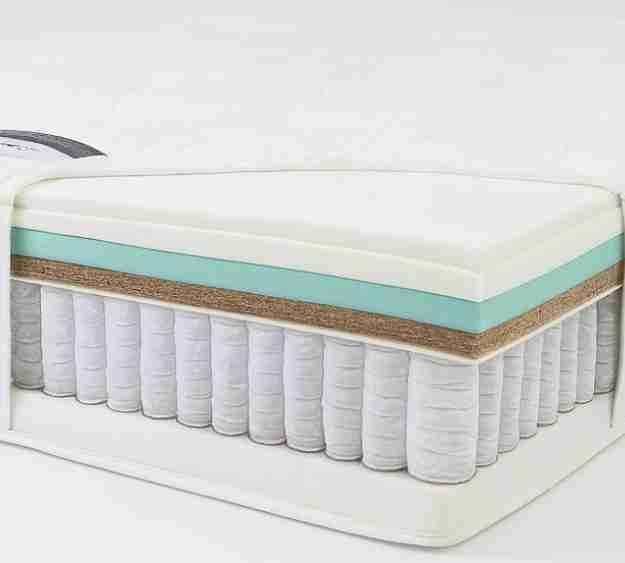
A pocket spring mattress features individual springs encased in fabric pockets, allowing each spring to respond independently to pressure. This provides targeted support, maintains proper spinal alignment, and reduces motion transfer, making it ideal for couples or restless sleepers.
Unlike traditional innerspring mattresses, where springs are connected, pocket spring mattresses contour closely to the body. This design helps relieve pressure on the shoulders, hips, and back.
These mattresses come in different constructions, including memory foam hybrids, latex layers, and multi-zone support systems. They are suitable for all sleeping positions and body types. Sizes range from single and double to queen and pocket spring mattress king size.
By combining adaptive materials with firm support, pocket spring mattresses improve sleep quality, enhance durability, and provide relief from back discomfort.
How Pocket Springs Work
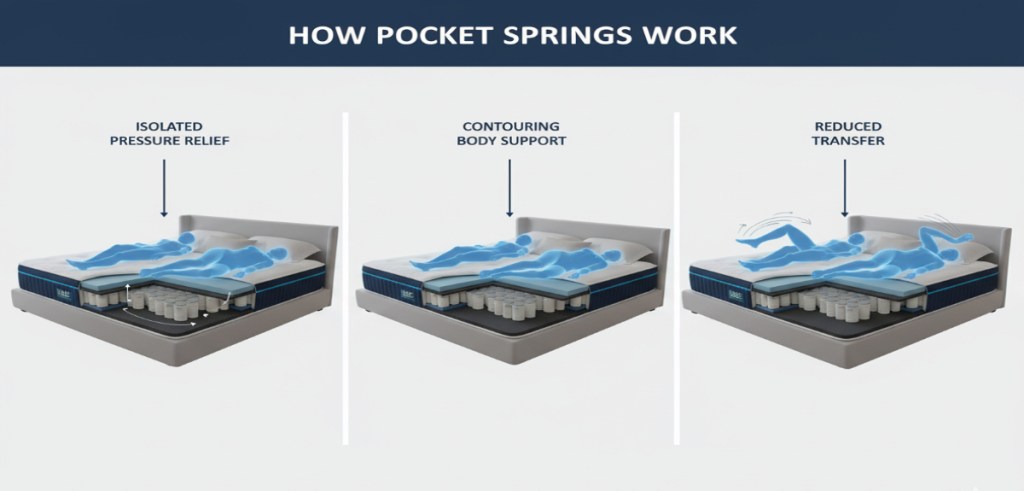
Pocket springs are individually wrapped in fabric pockets, allowing each spring to move independently. This design enables the mattress to adapt to the unique contours of your body, providing personalized support where it’s needed most.
Because the springs operate separately, motion transfer between sleepers is minimized. This means that if one person moves or gets out of bed, the other is less likely to feel it, making it ideal for couples.
Pocket springs also offer targeted support for the spine and joints, helping maintain proper alignment while relieving pressure on key areas like the shoulders, hips, and lower back. This combination of support and comfort makes pocket spring mattresses highly effective for improving sleep quality.
Pocket Spring Mattress Advantages and Disadvantages
Pocket spring mattresses offer adaptive support, pressure relief, reduced motion transfer, and improved airflow for cooler sleep. They’re durable and ideal for spinal alignment, especially when paired with quality foam or latex. However, they can be heavier, pricier, and may feel too firm for those used to softer beds.
Advantages and Disadvantages of Pocket Spring Mattresses
Advantages
Disadvantages
Targeted support and spinal alignment
Higher cost compared to standard mattresses
Reduces pressure points on shoulders, hips, and back
Heavier and harder to move or rotate
Minimal motion transfer between sleepers
Firmness may take time to adjust to
Better airflow and temperature regulation
Durability depends on spring quality
Suitable for various sleeping positions and body types
May require occasional maintenance (rotating/turning)
Pocket Spring Mattress Compared to Other Mattress Types
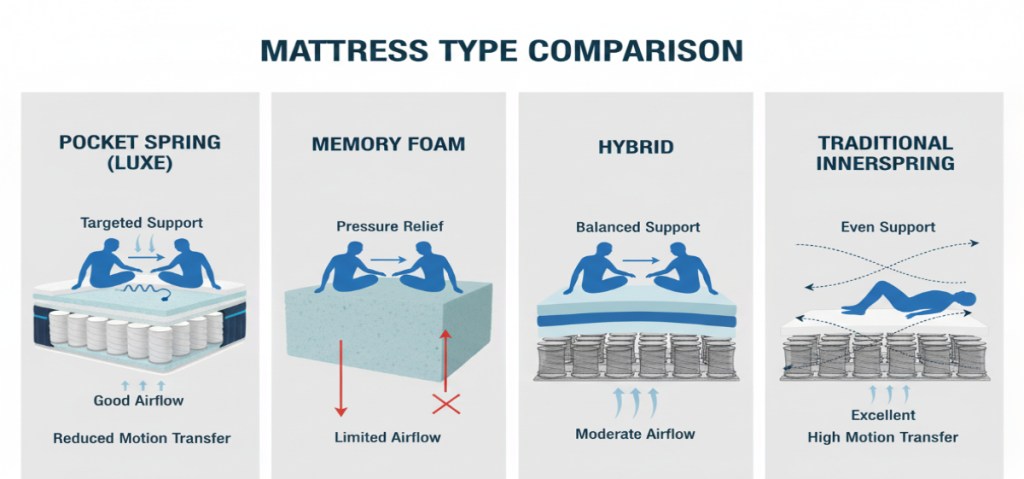
A pocket spring mattress offers unique benefits compared to foam, hybrid, and traditional innerspring mattresses. Unlike foam mattresses, pocket spring models provide independent spring support, which adapts to body contours and reduces motion transfer.Â
Compared to hybrids, pocket spring mattresses offer better airflow and spinal support, while traditional innerspring models tend to feel less adaptive and transfer more motion. Knowing these differences helps match your mattress to your sleep style and support needs.
Pocket Spring vs Other Mattress Types
Feature
Pocket Spring Mattress
Foam Mattress
Hybrid Mattress
Traditional Innerspring
Support
Independent springs adapt to body
Conforms to body but may sag
Combination of foam + springs
Connected springs, less contouring
Motion Transfer
Minimal
Moderate
Minimal to moderate
High
Pressure Relief
Excellent
Good
Excellent
Moderate
Airflow / Cooling
High
Low
Moderate
Moderate
Durability
Long-lasting
Medium
Long-lasting
Medium
Ideal For
Back pain, couples, all sleepers
Side sleepers, lightweight
Versatile, combination support
Budget-conscious sleepers
How Many Pocket Springs in a Good Mattress?
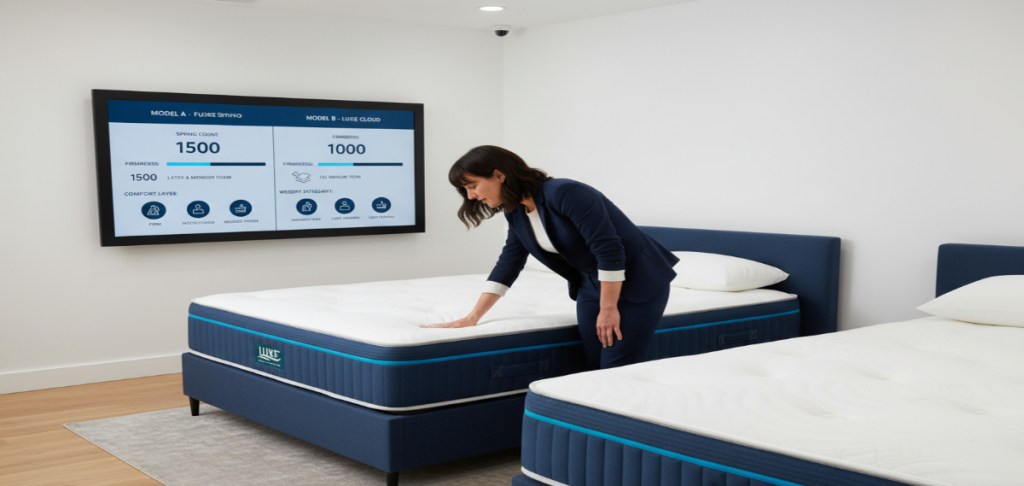
The number of pocket springs in a mattress significantly affects its support, comfort, and durability. More springs generally provide better contouring, pressure relief, and motion isolation, while fewer springs may feel less adaptive. The ideal spring count depends on the mattress size and personal comfort preferences.
For example, single and double mattresses usually have fewer springs than queen or king-size models. High-quality mattresses often feature over 1000 springs in a king-size mattress for optimal support. Choosing the right spring count ensures even weight distribution, proper spinal alignment, and a longer-lasting mattress.
Typical Pocket Spring Counts by Mattress Size
Mattress Size
Recommended Pocket Spring Count
Single / Twin
400 – 600 springs
Double / Full
600 – 800 springs
Queen
800 – 1200 springs
King
1000 – 2000 springs
How to Choose the Best Pocket Spring Mattress
Choosing the right pocket spring mattress depends on your sleeping position, body weight, and personal comfort preferences. Side sleepers may benefit from a slightly softer mattress for pressure relief, while back or stomach sleepers often require firmer support to maintain proper spinal alignment.
Body weight also plays a role. Heavier individuals may need higher spring counts and firmer layers to ensure durability and adequate support, whereas lighter sleepers can enjoy a softer feel without sacrificing alignment.
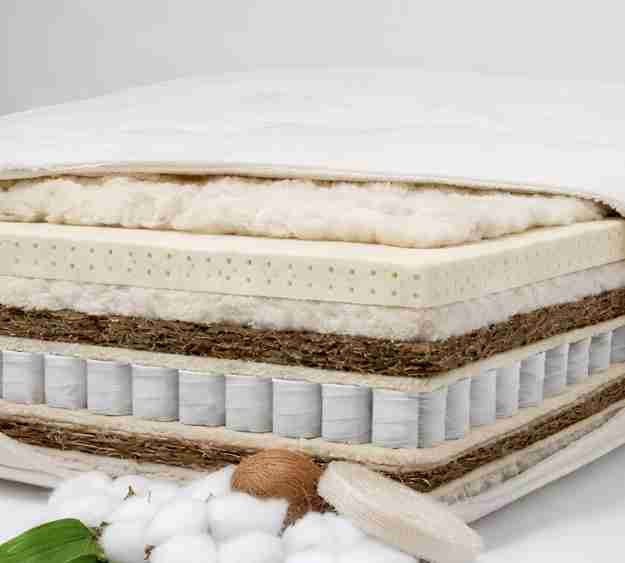
Materials and construction are equally important. Pocket spring mattresses with memory foam, latex, or hybrid layers can enhance comfort and provide better pressure relief. Also, consider mattress size options range from single and double to queen and pocket spring mattress king size.
Finally, check the spring count, firmness, trial period, warranty, and price before making a decision. Evaluating these factors ensures you select a mattress that supports your body, promotes restorative sleep, and lasts for years.
Conclusion
A pocket spring mattress offers targeted support, reduces pressure points, and minimizes motion transfer, improving sleep quality and spinal alignment. With independent springs and optional layers like memory foam or latex, it adapts to different sleeping positions and body types.
When choosing the best mattress, consider spring count, firmness, materials, and size. High-quality options provide durability, comfort, and long-term support, helping relieve back pain. Explore top-rated pocket spring mattresses with trial periods, warranties, and reviews to ensure restorative, comfortable sleep every night.
FAQs
1. Which is better, a pocket spring or a memory foam mattress?
Pocket spring mattresses provide independent support, motion isolation, and better airflow. Memory foam conforms closely to the body for pressure relief.
2. Which is the best pocket spring mattress?
The best pocket spring mattress combines a high spring count with quality comfort layers. Look for durability, proper firmness, and trial periods or warranties.
3. Is a pocket spring mattress good for back pain?
Yes, it provides targeted support and maintains spinal alignment. Proper spring count and firmness help relieve pressure on the back and joints.
4. Are pocket springs suitable for heavy people?
Yes, high-density pocket springs with firmer layers support heavier body types. They distribute weight evenly and prevent sagging over time.
5. How long does a pocket spring mattress last?
A quality pocket spring mattress usually lasts 7–10 years. Proper care and regular rotation can extend its lifespan.
6. How to choose a pocket spring mattress?
Consider sleeping position, body weight, firmness, size, and spring count. Layers like memory foam or latex enhance comfort and support.
Sleep quality is closely linked to spinal health, and many people experience back pain from inadequate mattress support. An orthopaedic mattress provides targeted support for the spine and joints, relieving pressure points and promoting proper alignment.
Experts recommend orthopaedic mattresses for long-term comfort and better sleep. With firm support and adaptive materials like memory foam, latex, or hybrid constructions, they balance comfort and stability, helping with chronic pain, injury recovery, or preventive spinal care.
What Is an Orthopaedic Mattress?
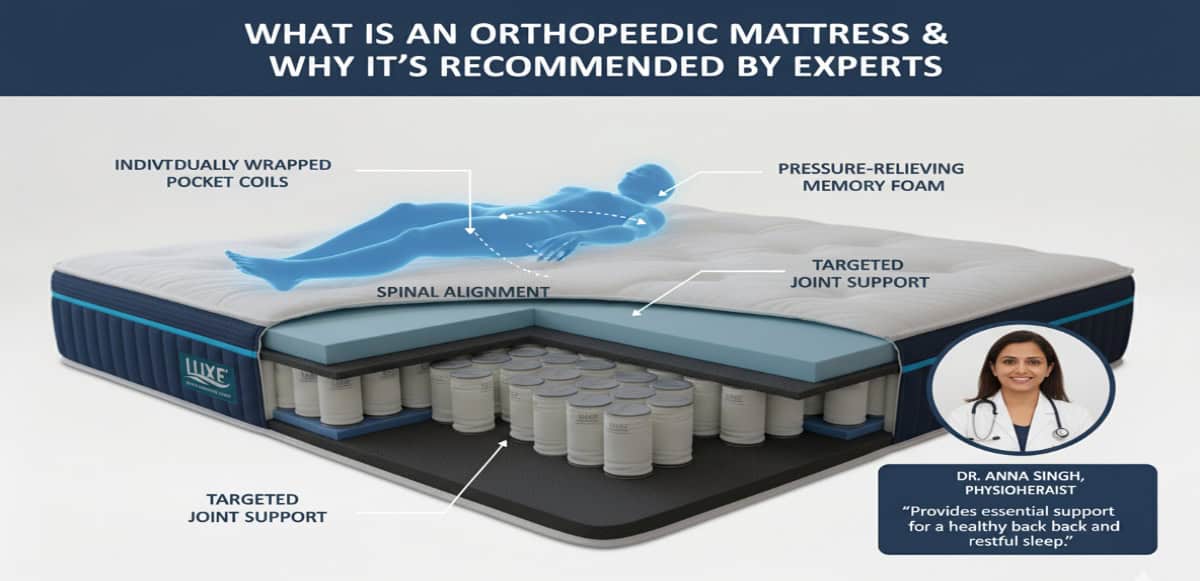
An orthopaedic mattress is specifically designed to support the spine, joints, and overall body alignment during sleep. Unlike traditional mattresses that focus primarily on comfort, orthopaedic mattresses prioritize proper posture, pressure relief, and targeted support, making them ideal for people experiencing back pain or joint discomfort.
Key Features of Orthopaedic Mattresses
Firmness Levels: Usually medium-firm to firm, providing stable support without excessive sinking.
Zoned Support: Different areas of the mattress are designed to support the shoulders, hips, and lower back.
By combining these features, an orthopaedic mattress helps maintain correct spinal alignment, reduces pressure points, and contributes to more restful and pain-free sleep.
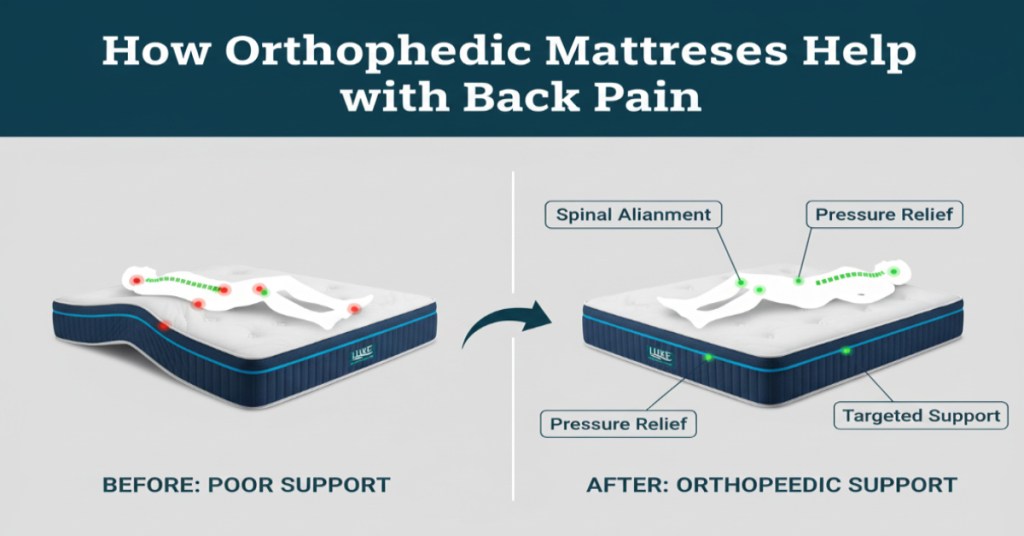
How Orthopaedic Mattresses Help with Back Pain
An orthopaedic mattress for back pain is specifically designed to provide targeted support that aligns the spine and relieves pressure on critical areas such as the lower back, hips, and shoulders. By maintaining proper posture throughout the night, it reduces strain on muscles and joints, which is essential for preventing discomfort and chronic pain.
Key Benefits for Back Pain Relief
Spinal Alignment: Supports the natural curve of the spine, reducing stress on vertebrae and muscles.
Pressure Point Reduction: Zoned support and firm materials prevent sinking in key areas, alleviating tension and discomfort.
Enhanced Comfort: Materials like memory foam and latex adapt to the body while maintaining consistent support.
Expert recommendations and cool mattress reviews highlight that individuals using orthopaedic mattresses often experience fewer nighttime aches and improved sleep quality, making them a trusted solution for back pain management.
Types of Orthopaedic Mattresses
Selecting the rightorthopaedic mattress involves understanding the different types available, their construction, and how each addresses spinal support, pressure relief, and overall comfort. Each type offers unique benefits, and the best choice depends on your sleeping style, body type, and specific back or joint issues.
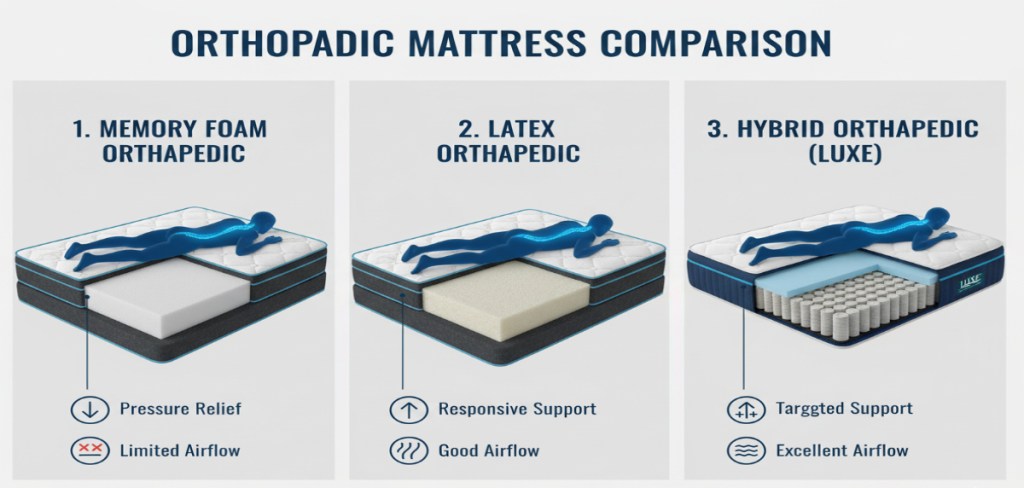
1. Memory Foam Orthopaedic Mattresses
Memory foam mattresses conform closely to the body’s contours, providing personalized support for the spine, shoulders, and hips. Many memory foam orthopaedic mattresses include gel-infused layers or open-cell designs to improve airflow and regulate temperature, preventing heat retention during sleep. This type is ideal for individuals seeking orthopaedic mattresses for back pain, as it distributes weight evenly and reduces pressure points.
2. Latex Orthopaedic Mattresses
Latex mattresses are naturally resilient, durable, and breathable. They provide firm support while maintaining comfort, promoting proper spinal alignment. Latex is also hypoallergenic and resistant to dust mites, making it suitable for allergy sufferers. Its firm yet slightly responsive feel makes it effective for relieving joint and back discomfort, while offering a cooler sleep experience than traditional memory foam.
3. Hybrid Orthopaedic Mattresses
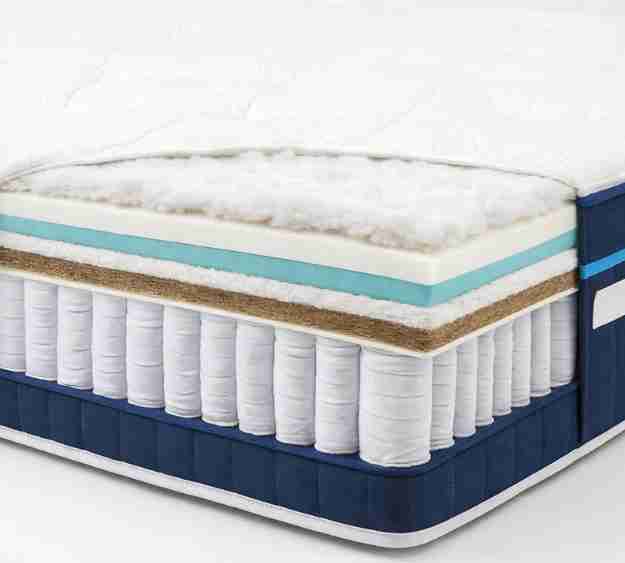
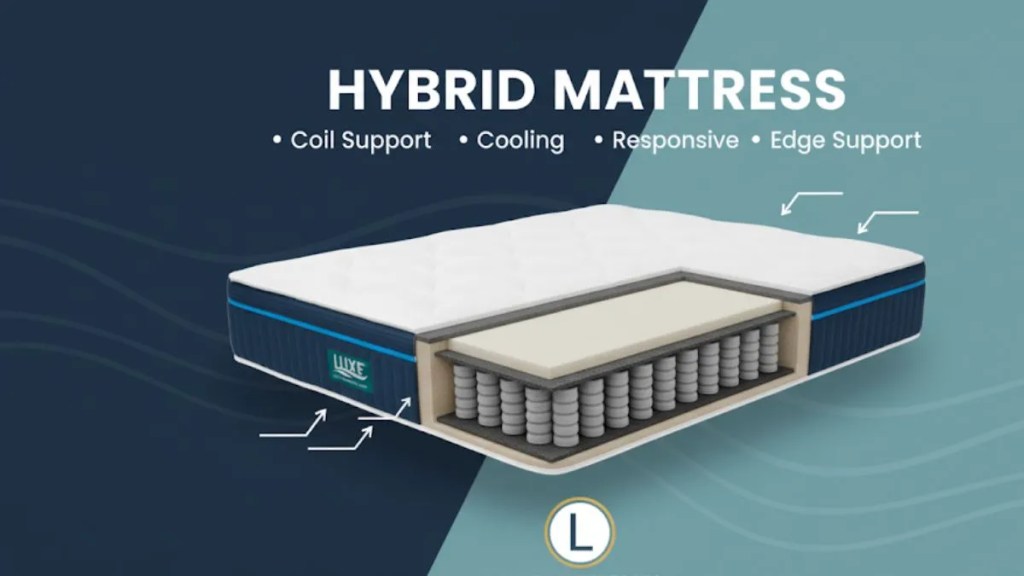
Hybrid mattresses combine the benefits of foam or latex layers with pocketed coil systems. The coils provide strong, responsive support and enhance airflow, while the foam or latex layers contour to the body to relieve pressure on the spine and joints. Hybrids are particularly effective for back pain sufferers who need a balance of comfort, support, and temperature regulation. They are often recommended as the best orthopaedic mattress UK options for people with chronic back issues.
By understanding these types and their unique advantages, sleepers can make an informed choice when selecting the best orthopaedic mattress tailored to their specific needs, sleeping positions, and comfort preferences. Proper selection ensures improved sleep quality, better spinal alignment, and long-term relief from back pain.
How to Choose The Best Orthopedic Mattress For You
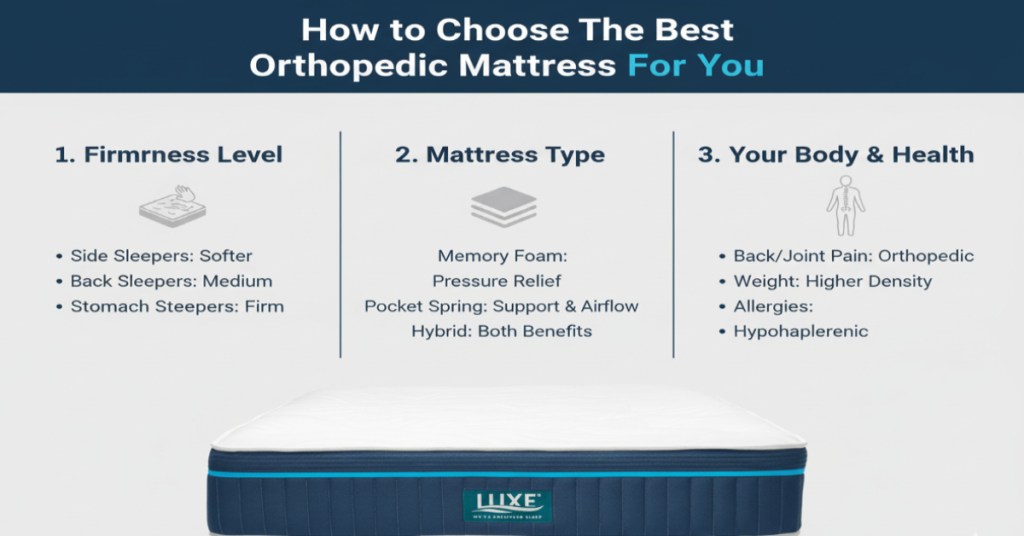
Selecting the best orthopaedic mattress requires more than just picking a firm mattress. Factors like sleeping position, body weight, back pain, and material preferences play a crucial role in ensuring proper spinal support and comfortable sleep.
1. Consider Your Sleeping Position
Side Sleepers: Medium-firm orthopaedic mattresses provide pressure relief for shoulders and hips while maintaining spine alignment.
Back Sleepers: Medium-firm to firm mattresses support the natural curvature of the spine and prevent sagging.
Light to Average Weight: Most memory foam or latex orthopaedic mattresses offer sufficient support and pressure relief.
Heavier Sleepers: High-density foam or hybrid mattresses with reinforced coils ensure durability, consistent support, and proper heat dissipation.
3. Materials and Technology
Memory Foam: Contours to the body while providing firm support. Gel-infused or open-cell foams enhance airflow.
Latex: Naturally resilient, breathable, and supportive for long-term spinal alignment.
Hybrid: Combines foam or latex with pocketed coils for optimal support, bounce, and temperature regulation.
4. Firmness and Comfort
Choosing the right firmness ensures proper spinal alignment and pressure relief. Medium-firm mattresses are generally recommended by experts as the optimal balance for most sleepers.
5. Size, Durability, and Budget
Select a mattress that fits your bed frame and sleeping space.
Look for high-quality materials that ensure long-term durability.
Consider brands offering trial periods or warranties to ensure satisfaction.
By evaluating these factors, you can identify the best orthopaedic mattress UK or local option that suits your sleep style, body type, and specific back or joint needs. Proper selection leads to enhanced comfort, reduced pain, and more restorative sleep.
Which Mattress Types Have Orthopedic Models?
Orthopaedic mattresses are not limited to a single type or material. Several mattress constructions are designed with orthopaedic features to provide spinal support, pressure relief, and enhanced comfort. Understanding the available types helps you choose the best orthopaedic mattress for your needs.
1. Hybrid Orthopaedic Mattresses
Hybrid mattresses combine layers of foam or latex with pocketed coils. The foam or latex contours to the body for pressure relief, while the coils provide firm support and durability. Hybrid orthopaedic mattresses are ideal for sleepers who want a balance of comfort and spinal alignment along with enhanced airflow.
2. Innerspring Orthopaedic Mattresses
Traditional innerspring mattresses with reinforced coil systems can also feature orthopaedic designs. These mattresses offer strong support for heavier sleepers and improved spinal alignment, especially when combined with a firm comfort layer. They provide responsive support that reduces sagging and promotes healthy posture.
3. Foam Orthopaedic Mattresses
Memory foam mattresses are a popular orthopaedic option because they conform closely to the body and distribute weight evenly. Gel-infused or open-cell foams improve airflow, reduce heat retention, and relieve pressure on the back, hips, and shoulders, making them ideal for back pain relief.
4. Latex Orthopaedic Mattresses
Latex mattresses offer natural resilience and firm support while maintaining comfort. They are durable, breathable, and hypoallergenic. Orthopaedic latex mattresses support spinal alignment and relieve pressure points while providing a cooler sleeping surface compared to traditional foam.
By choosing an orthopaedic mattress in any of these types hybrid, innerspring, foam, or latex sleepers can enjoy targeted support, improved posture, and enhanced sleep quality tailored to their individual needs.
Orthopaedic Mattress Comparison: Top Picks at a Glance
When it comes to spinal health and sleep support, not all mattresses are created equal. Whether you’re seeking pain relief, better posture, or simply a cooler, more comfortable night’s rest, choosing the right orthopaedic mattress can make a world of difference.
Note: Prices may vary depending on region, size, retailer, and seasonal offers. Use this table as a reference not a final quote.
Pros and Cons of Orthopaedic Mattresses
Understanding the advantages and potential drawbacks of an orthopaedic mattress helps you make an informed choice for your sleep and spinal health.
Pros
Cons
Helps with spinal alignment and reduces back pain
Premium models can be expensive
Distributes body weight more evenly
Firmer feel may require adjustment
Durable build if quality materials used
Hefty and harder to move/rotate
Often backed by warranties and trials
“Orthopaedic†label is not standardized, always inspect specs
When selecting, be especially cautious of brands that merely call “orthopaedic†without delivering firm structure, zoning, or quality materials.
Conclusion
An orthopaedic mattress supports the spine and joints, relieving pressure points and promoting proper alignment, making it ideal for back pain, posture issues, or long-term comfort. Memory foam, latex, hybrid, and innerspring options offer benefits like contouring, durability, and improved airflow for restful, pain-free sleep.
Experts recommend orthopaedic mattresses for spinal health and back pain prevention. By considering sleeping position, body weight, and firmness, you can choose the best orthopaedic mattress for your needs, enhancing sleep quality, reducing discomfort, and supporting overall well-being.
FAQs
What is the difference between an orthopaedic mattress and a normal mattress?
Orthopaedic mattresses provide targeted support for the spine and joints, while normal mattresses may focus primarily on comfort. Orthopaedic options reduce pressure points and promote proper posture.
Is an orthopaedic mattress soft or hard?
They are generally medium-firm to firm to ensure proper spinal alignment, though some models include softer comfort layers on top.
What is the difference between a spring mattress and an orthopaedic mattress?
Spring mattresses rely on coil support, while orthopaedic mattresses often combine foam or latex layers for targeted pressure relief and back support.
Is an orthopaedic mattress good for older adults?
Yes. Older adults benefit from enhanced support, joint relief, and reduced discomfort, making it easier to sleep comfortably.
What mattress do orthopedists recommend?
Experts typically recommend medium-firm to firm mattresses that provide full spinal support, often orthopaedic memory foam, latex, or hybrid designs.
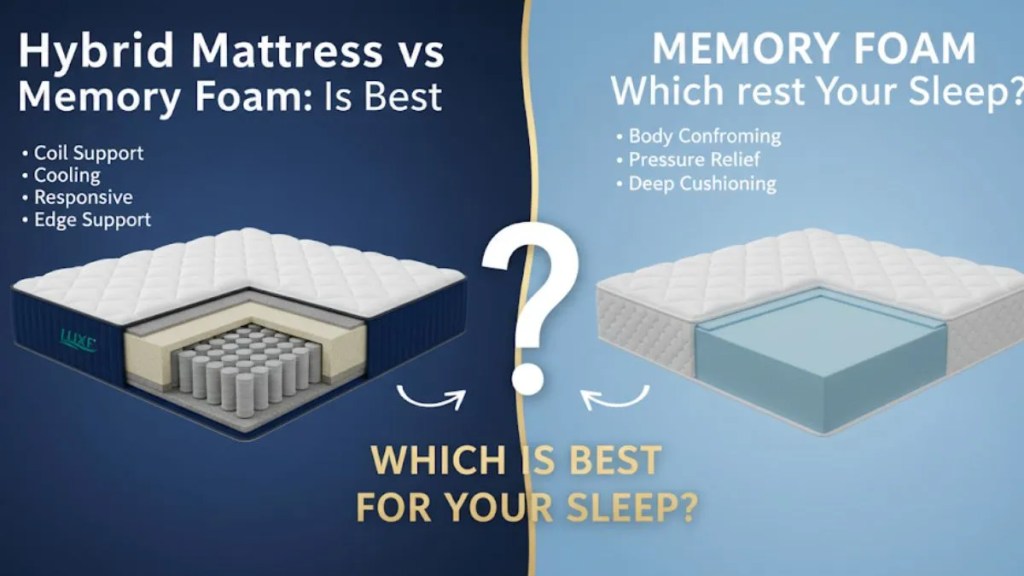
Hybrid mattress vs memory foam is a common question among sleepers these days. We wonder which option provides more comfort and support. Mattresses directly affect sleep quality, mood, and daily energy. A good mattress improves health and makes everyone feel refreshed.
Memory foam mattresses are known for their soft comfort and pressure relief. Hybrid mattresses combine springs and foam to provide balanced support and comfort. There are many types of mattresses, but sleep needs and styles vary. Choosing the right mattress depends on your body, habits, and preferences. We will explain the features, pros, and cons of the guide to make your decision easier. By the end, you will know which mattress is right for you.
Hybrid Mattress Overview
Hybrid mattresses are an innovative sleep solution that combines memory foam and pocket springs. Together, they provide a balance of comfort and support. Every sleeper gets proper spinal alignment and motion isolation with softness. When hybrid mattresses are meant and the definition of a hybrid mattress is understood, your qualities always stand out. The Lux velour hybrid mattress is a perfect example of the trend that provides durability and luxury in a single design.
1. Comfortable cushioning with foam layers
The foam layers follow the curves of the body, relieving every point. This design gives a relaxed and floating-like feeling that makes sleep deeper. Every night, the user gets a fresh and energized morning.
2. Strong pocket spring foundation
Hybrid mattresses are made with 1000 to 2000 pocket springs. Each spring has a separate function to maintain support and balance. This foundation is durable and holds its strength for up to 20 years.
3. Options for every sleep style
The soft version is the best choice for cushioning and relaxation. The firm option is for those who want spinal alignment and extra support. The medium-firm design provides a balanced feel for every sleeper type.
4. Long-lasting durability and warranty
Hybrid mattresses have a lifespan of 8-10 years and come with a warranty. This combination gives every buyer confidence and peace of mind. The Luxe Velour design provides a luxury experience at an affordable price.
5. Meaning and definition of a hybrid mattress in practice
The meaning of a hybrid mattress is simple: a combined system of springs and foam. The definition of a hybrid mattress explains that this mix design creates balance. The example of Luxe Velour always shows that comfort and support are possible together.
Advantages of Hybrid Mattress
The biggest advantage of hybrid mattresses is their balanced design. These mattresses combine the best features of both worlds by combining memory foam and pocket springs. Let’s now see their main benefits in detail.
Luxury Comfort with Memory Foam Layer: The memory foam top layer gives the sleeper a velvety and smooth comfort. This layer hugs the curves of the body and releases pressure points. The result is a floating and comfortable feeling that energizes every night.
Strong Support with Pocket Springs: EachLuxe Mattress Me has 1000 to 4000 springs. These springs provide a durable foundation that supports for up to 20 years. Each spring works separately, due to which the spine remains naturally aligned.
Temperature Control and Cooling Gel: Luxe Therm and Luxe Ergo mattresses use cooling gel and airflow layers. This system draws heat away from the body and pushes the spring. The result is a cool, dry and sweat-free sleeping environment that is perfect for all seasons.
Options for all sleepers: The soft option is perfect for cushioning and relaxation primers. The option with extra support is made for back pain and a medium firmness creates a balance for every sleeper type. Suitable solutions are also available for couples and hot sleepers.
Long-lasting durability: The life of the springs is estimated to be up to 20 years. The foam and supportive base ensure quality and longevity. Seven Hello is available with a 5-year warranty that provides peace of mind.
Disadvantages of hybrid mattresses
Hybrid mattresses often seem perfect, but everything has its limitations. These points are usually not a major concern for most people.
Weight restrictions for heavy sleepers: A hybrid mattress may not be ideal if you weigh more than 120 or 150 kg. In such cases, choosing a higher spring count option might be necessary.
More expensive than basic mattresses: Since their design is premium, they cost more than standard foam mattresses. However, their durability and comfort make the price worthwhile.
Memory Foam Mattress Overview
This mattress uses foam that molds to the body’s heat and pressure. A memory foam mattress is made of layers that follow the shape of the body. The foam remembers the shape of the body for a while. Then, when the pressure is released, the mattress returns to its original shape. Does it provide comfort and support to the sleeper?
1. Structure and Composition of Materials
Memory foam is made of polyurethane and some additives, which are determined by the quality of the density, viscosity and elastic additives. Open-cell or gel-infused materials may be included for cooling. Together, these layers give the mattress a unique feel and adequate support.
2. How does memory foam react to weight and temperature?
When you give, memory foam softens with body heat. Foam molds to your body shape, distributing pressure evenly. Foam feels a little firmer in a cool room. It loses its softness in hot months as body heat increases.
3. Durability and longevity
Memory foam mattresses can range from high-density and quality cores to salons. High-density foam works to cushion sagging and provide extra support. The warranty period and thickness of the foam core also affect durability. With care and proper circulation, it can last a lifetime.
4. Health and allergy effects
Memory foam can harbor dust mites and mold in humid areas. The dense structure allows allergens to penetrate the foam. It has better ventilation than gel or open-cell memory foam. Off-gassing, or a new mattress may smell when opened, but it will dissipate over time.
5. Cost, Comfort Level, and Sleeping Styles
Memory foam mattresses are slightly more expensive than innerspring mattresses in the average size. Soft, medium comfort levels are available to suit sleep preferences. Side sleepers get more pressure relief than memory foam. If you change positions during the night, a medium comfort level is best.
Advantages of Memory Foam Mattresses
Memory foam mattresses are designed to provide a more comfortable sleep. They support the body’s pressure points and absorb motion. They also come in a variety of price options and firmness levels to suit different needs.
Pressure Relief and Comfort: Memory foam follows the natural contours of the body perfectly. It works by evenly distributing pressure across sensitive areas of the body, such as the shoulders and hips. You get a soft and cushiony feel that promotes restful sleep. Does it help with back pain and stiffness?
Benefits of Motion Isolation: If you are a couple, memory foam mattresses offer a huge advantage. They absorb body motion and do not disturb your partner’s movements. The other person can still move around even when you change positions throughout the night. This feature is very helpful for couples.
Budget-Friendly Options: Memory foam mattresses are readily available in every budget category. You can find simple and affordable models that offer good comfort. Premium versions come with additional features like cooling gel and thicker layers. So every buyer can choose their mattress according to their budget.
Availability in different firmness levels: Every sleeper has a different comfort preference, and memory foam can meet that need. Soft, medium, and firm levels are available on the market. Side sleepers prefer softer, while back sleepers prefer firmer mattresses. This flexibility makes this mattress type even more popular.
Disadvantages of Memory Foam Mattresses
Memory foam mattresses provide comfort, but they also have some notable drawbacks. These issues are mainly related to heat, stability, responsiveness, and initial odor.
Heat retention issues: Memory foam absorbs more heat due to its dense structure. In hot climates, these mattresses can make sleepers a little uncomfortable. Gel-infused or open-cell versions provide some cooling. But traditional memory foam feels hotter and ventilation is limited.
Limited bounce and responsiveness: If you like a springy or bouncy feel, memory foam will do the trick. This foam hugs the body and can feel a little sticky. Active sleepers find it difficult to change positions. Its responsiveness is much lower compared to innerspring mattresses.
Can sag over time: Memory foam can permanently lose its shape over time. With frequent use and low-density foam, the mattress becomes spongy. It no longer supports the body effectively when you bend over. High-density foams are durable, but they also eventually compress a little.
Initial Odor (Off-Gasping): A new memory foam mattress will have a chemical-like odor when you open it. The odor is called off-gassing, which is a result of the manufacturing process. This odor usually goes away within a few days. For sensitive sleepers, this can be an initial discomfort.
Hybrid Mattress vs Memory Foam: Key Differences
Feature / Aspect
Hybrid Mattress
Memory Foam Mattress
Structure
Combination of pocket springs + memory foam layers
Pure foam layers (polyurethane or gel-infused)
Support System
Springs give bounce + alignment, foam adds cushioning
Foam molds with heat and pressure for body contouring
Comfort Level
Balanced feel: soft + firm options available
Softer feel, deep pressure relief, body-hugging
Motion Isolation
Good, but springs allow slight transfer
Excellent motion absorption, best for couples
Temperature Control
Cooling gel, airflow coils reduce heat
Traditional foam retains heat, gel/open-cell versions cooler
Durability
8–10 years with spring base lasting 20+ years
6–8 years average, high-density foam lasts longer
Best For
All sleeping positions, couples, hot sleepers
Side sleepers, back pain sufferers, budget-friendly buyers
Heat retention, sagging over time, limited bounce, odor
Unique Value
Hybrid mattress meaning: best of both worlds (support + comfort)
Memory foam known for comfort, contouring, and motion isolation
Which mattress should you choose?
Side sleepers
If you are a side sleeper, the hybrid mattress vs memory foam comparison provides pressure relief from memory foam. The foam provides soft support for your shoulders and hips.
Back sleepers
For back sleepers, the hybrid option is more suitable because the springs support proper spinal alignment and balance.
Stomach sleepers
Stomach sleepers need a firmer surface. That’s why, in the comparison of Hybrid Mattress vs Memory Foam, a hybrid mattress is often considered the best choice because of its firmer feel.
Couples
For couples, the memory foam in the hybrid mattress vs memory foam offers better motion isolation, but the hybrid also bounces the couple and gives them the benefit of airflow.
Best recommendation
If you are in the hybrid mattress vs memory foam comparison, you can’t find an option like the Lux Mattress website. It offers both quality and comfort.
Conclusion
The hybrid mattress vs. memory foam comparison has become quite common these days, and both options have strong positions in their respective fields. Memory foam mattresses are perfect for people who want deep pressure relief and body-hugging comfort, especially side sleepers and couples. Hybrid mattresses, on the other hand, are a mix of springs and foam that provide balance, bounce, and durability, the ideal choice for hot sleepers, stomach sleepers, and those who want back support.
Ultimately, it all comes down to your sleeping style, comfort preference, and budget. If you’re comparing hybrid mattresses vs. memory foam, Lux Mattress gives you a reliable platform where quality, comfort, and variety come together.
FAQ’s
Q: Is a hybrid mattress better than a memory foam mattress?
A: Hybrid mattress vs memory foam depends on sleeping needs. Hybrids offer bounce and cooling, while memory foam provides contouring pressure relief.
Q: Is hybrid or memory foam better for back pain?
A: Hybrid mattresses support spinal alignment with springs and foam. Memory foam gives pressure relief, but hybrids balance comfort and support better.
Q: What is the lifespan of a hybrid mattress?
A: A quality hybrid mattress lasts around 8–10 reliable years. Its strong spring base ensures durability, while foam layers maintain comfort.
Q: Do hotels use hybrid or memory foam mattresses?
A: Most hotels prefer hybrid mattresses for durability and support. Memory foam is used sometimes, but hybrids provide consistent guest comfort.
When it comes to choosing the right mattress, a single mattress size is one of the most popular options for people who want a comfortable yet space-saving bed. Whether you are buying it for your child, a guest room, or even for yourself, the single mattress size offers great versatility. Many people find it confusing to pick the right mattress because they are unsure about exact measurements, space requirements, and comfort levels. In this blog, we will explore everything you need to know about single mattress size, along with the exact single mattress dimensions, benefits, and tips for buying the best one for your needs.
What is a Single Mattress Size?
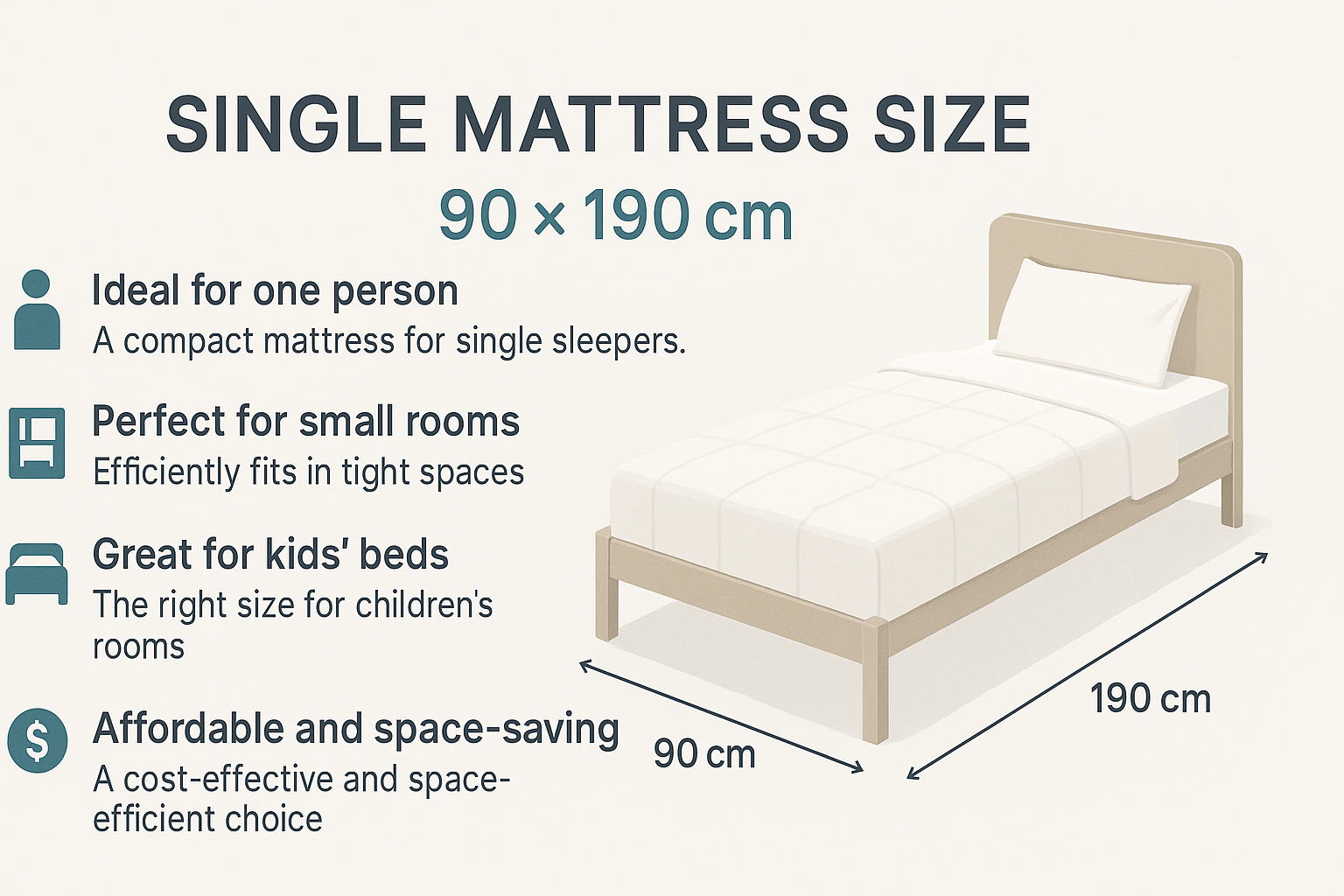
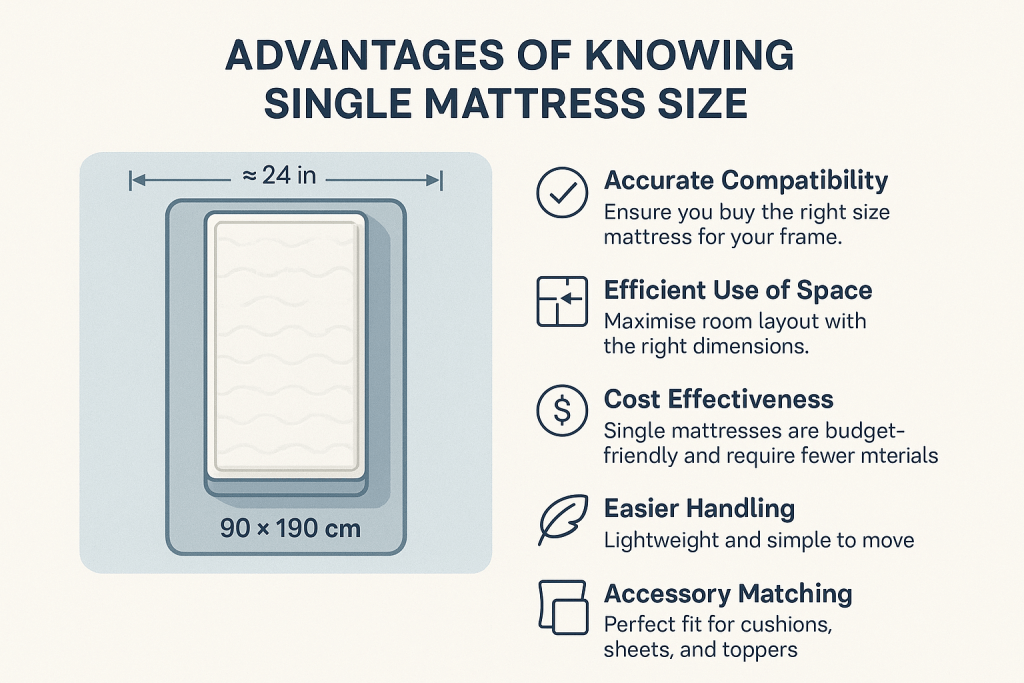
A single mattress size is typically designed for one person. It is smaller than a double or queen mattress but still provides enough sleeping space for a comfortable night’s rest.Thus the single mattress dimensions (90 cm × 190 cm) are the reference point for beds, frames, sheets, and accessories. When you aim to purchase a single mattress size, you want to ensure that your frame, bedding, and room layout are all suited for those single mattress dimensions.
The single mattress size is also ideal for hostels, dorm rooms, small bedrooms, and rental apartments where space is limited. Since it is lightweight and compact, moving and setting up a single mattress size is much easier compared to larger mattresses.
Why the Single Mattress Size (90 × 190 cm) Matters
Understanding that the single mattress dimensions are 90 × 190 cm helps in many ways:
Fit in your frame: If your bed frame is built for 90 by 190 cm, a true single mattress size will match snugly.
Room planning: You can allocate floor space in your room based on those single mattress dimensions.
Bedding and accessories: Sheets, covers, mattress protectors, and toppers must match the single mattress size (90 × 190 cm).
Comparisons to other regions: In some other countries, a “twin†mattress might be a different size but for UK standard dimensions, single mattress size means 90 × 190 cm.
Single Mattress Size for Different Users
For Children and Teenagers
A single mattress size (90 × 190 cm) is often ideal for a children’s bed. It gives enough length for growing kids while not occupying too much room. Because the single mattress dimensions are modest, you can still include desks, wardrobes, or shelves in the same room without overcrowding.According to sleep foundation, for growing children, choose a mattress that provides firm support to properly support their bones and joints
For Adults Sleeping Alone
Many adults choose a single mattress size when space is tight, such as in studio flats or small homes. The 90 × 190 cm single mattress dimensions allow a full-length sleep for single sleepers, provided they are not exceptionally tall (over ~190 cm). If you are significantly taller, some brands offer “extra-long single†variants, but the standard “single†line uses single mattress dimensions of 90 by 190 cm.
Guest Rooms & Spare Beds
Because the single mattress size is compact and cost-effective, it’s frequently used in guest rooms. A spare bed with single mattress dimensions is easy to manage, move, and tend to without consuming too much floor area.
Single Mattress Size vs. Larger Sizes: When to Use It
Let’s compare the single mattress size (90 × 190 cm) with a few larger sizes to see when it is and isn’t appropriate:
Mattress Size Comparison
Size Name
Width (cm)
Length (cm)
Notes
Single Mattress
90
190
This is the single mattress size
Double Mattress
135
190
Common for couples in smaller rooms
Queen Size Mattress
120
190
A midpoint between double and king
King Size Mattress
150
200
More spacious for couples
Super King Mattress
180
200
Largest standard UK size
Single Mattress Size (90 × 190 cm): Ideal for one person, small rooms, child beds, guest beds.
Double Mattress (135 × 190 cm): Gives more width for a person who moves around, or for couples in narrow bedrooms.
Queen Size (120 × 190 cm): Offers more width than a single but remains comfortable in many rooms.
King / Super King (150 × 200 cm / 180 × 200 cm): Best suited when space is abundant.
If your room is too narrow or you’re primarily a single sleeper, the single mattress size is a smart choice. But if you anticipate needing more space or potentially sleeping with a partner, one of the larger sizes may be better.According to sleep foundation, to avoid a cramped feeling, we recommend leaving about 24 inches of space around each side of your bed.
Advantages of Knowing and Using Single Mattress Size Correctly
Accurate compatibility: You won’t buy a mattress that’s too large or too small for your frame.
Efficient use of space: Your room is laid out knowing the single mattress dimensions.
Cost effectiveness: Single mattresses are generally cheaper and fewer materials needed for the single mattress size.
Easier handling: A mattress of single mattress size is lighter and simpler to move.
Accessory matching: Better matching for cushions, sheets, toppers, everything tailored to your single mattress dimensions.
According to the Sleep foundation, to avoid a cramped feeling, we recommend leaving about 24 inches of space around each side of your bed.
Single Mattress Size Bedding and Accessories
Once you buy a single mattress size, you’ll also need the right bedding. Since the single mattress dimensions are smaller than double or queen, you should buy sheets, blankets, and toppers designed for single mattress size. This ensures a neat and snug fit.
Many bedding stores specifically mention whether a product is for single mattress dimensions, so you can easily find the right size.According to sleep charity, in order to enjoy a restful night’s sleep, you must pay some attention to your environment.
Final Thoughts
The single mattress size is a compact, practical, and widely used mattress dimension especially in smaller homes, bedrooms, and for single sleepers. With LuxeMattresses, the single mattress dimensions are precisely 90 cm × 190 cm, as listed under their size options.
By using the table above, confirming the single mattress dimensions before purchase, and matching your frame and bedding, you can confidently choose a mattress that fits perfectly. Whether this bed is for a child, guest, or solo adult, knowing the true single mattress size ensures you make an informed decision.
FAQs
1. Is a single mattress size good for adults?
Yes, the single mattress size is suitable for adults, especially those who sleep alone or live in smaller spaces. However, taller adults may prefer an “extra-long single†if available.
2. What bedding fits a single mattress size?
You should buy bedding specifically marked for single mattress size (90 × 190 cm). This includes sheets, duvet covers, and mattress protectors designed to fit these single mattress dimensions.
3. Can two people sleep on a single mattress size?
A single mattress size is meant for one sleeper. While two people could technically fit, it would be very cramped. For couples, a double or larger mattress is recommended.
4. How much space does a single mattress take up in a room?
With single mattress dimensions of 90 × 190 cm, the bed will take up just under 1 m × 2 m of floor space. It’s ideal for smaller bedrooms, guest rooms, and kids’ rooms.
5. Is a single mattress cheaper than other sizes?
Yes. Generally, the single mattress size is more affordable because it requires fewer materials. It’s a budget-friendly choice for individuals or families.
When it comes to getting the perfect night’s sleep, choosing the right mattress size plays a huge role. Among all options, the king mattress size stands out as one of the most popular choices for couples and families. With its generous dimensions, it provides ample space to stretch out, move freely, and sleep without disturbances. The king mattress size is especially ideal if you share your bed with a partner, children, or even pets, as it offers both comfort and room to breathe.
In this guide, we’ll explore everything you need to know about the king mattress size from dimensions and comparisons to care tips so you can make the best choice for your bedroom.
What Is the “King Mattress Size�
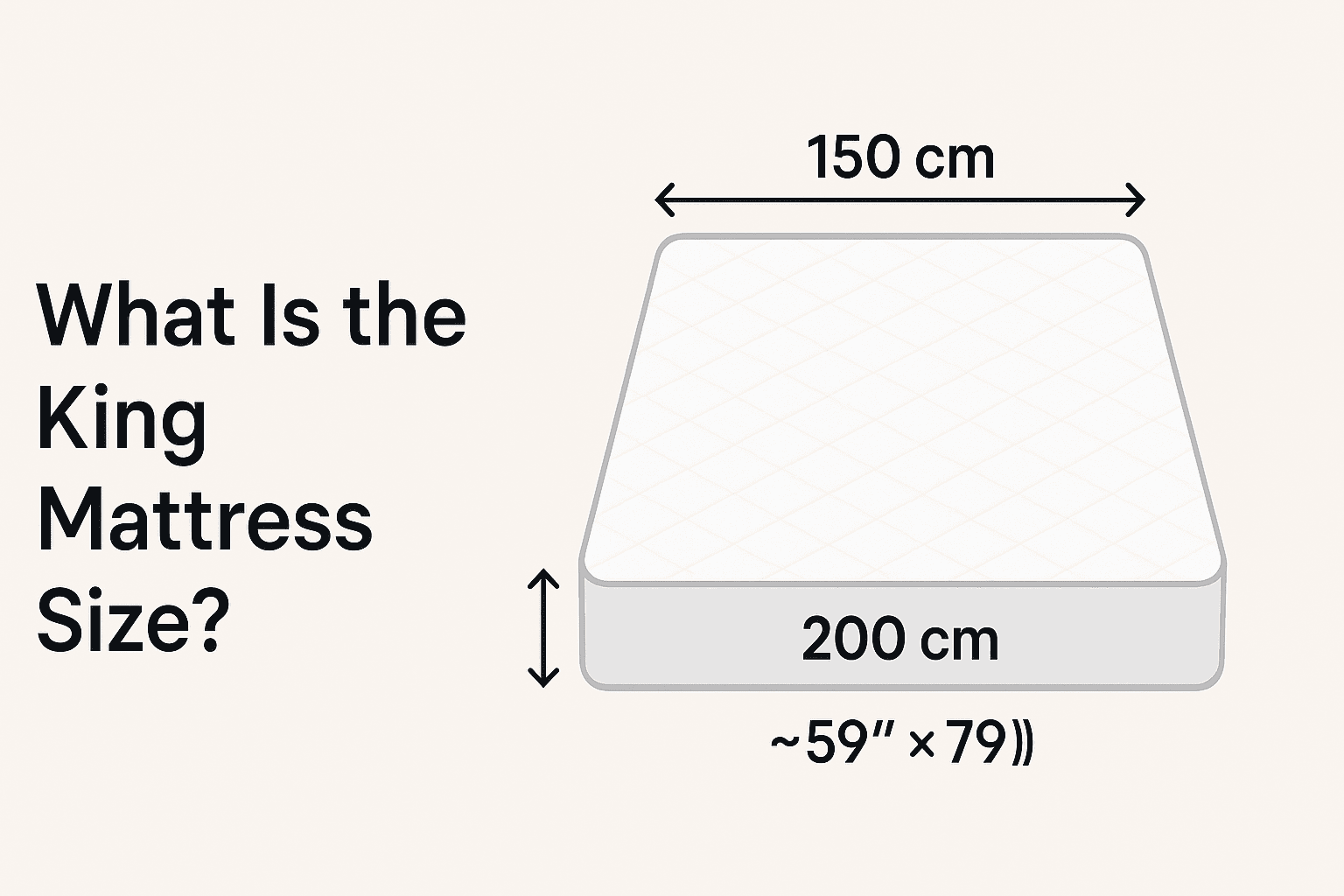
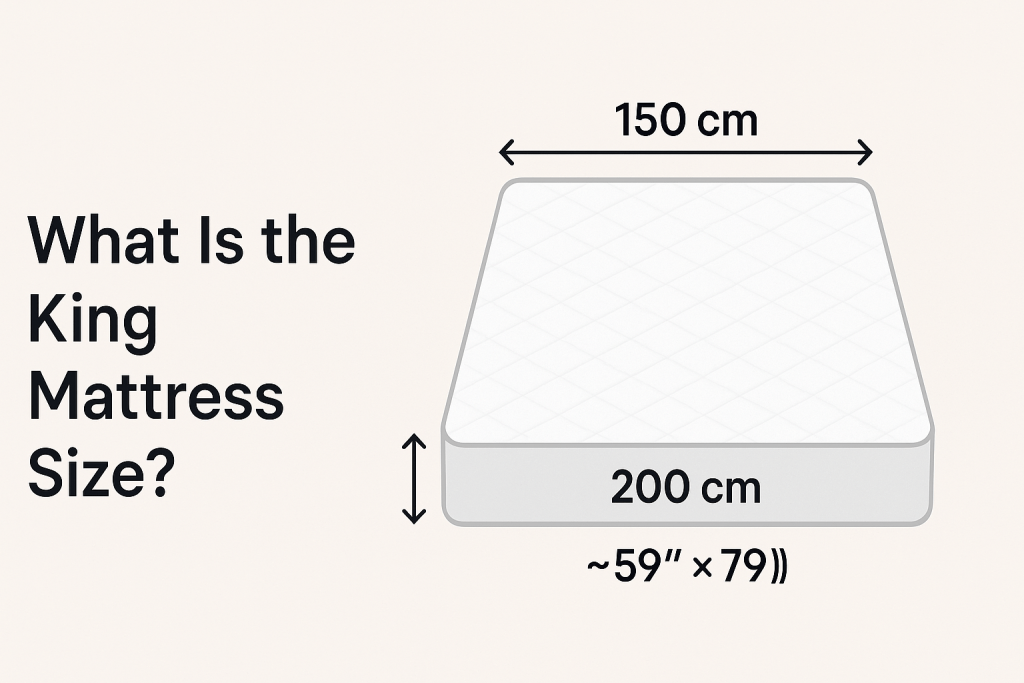
When mattress makers refer to a king mattress size, they typically mean a mattress that balances generous sleeping space with usability in many bedrooms. It is larger than a double bed, offering extra width and length for couples, families, or anyone who loves more sleeping space. The king mattress size is ideal for master bedrooms, giving comfort and room to stretch out without feeling crowded. The king size mattress is 150 cm × 200 cm (roughly 59″ × 79″).
King Mattress Size vs Other Standard Sizes
To better understand whether a king mattress size is right for you, it helps to see it in context. Here’s a comparative table showing how the king size stacks up:
Mattress Size Table
Mattress Type
Dimensions (cm)
Approx. in Inches
Notes
Single / Twin
90 × 190
~ 35.4″ × 74.8″
Ideal for one person, small rooms
Small Double / Queen (UK)
120 × 190
~ 47.2″ × 74.8″
A bit wider than single
Double
135 × 190
~ 53.1″ × 74.8″
Common “standard†couple’s size
King
150 × 200
~ 59″ × 79″
The king mattress size
Super King
180 × 200
~ 70.9″ × 79″
Wider than king by 30 cm (≈12″)
From that chart, you see that the king mattress size is comfortably larger than double size, but smaller than super king, often making it a good compromise between spaciousness and manageability.
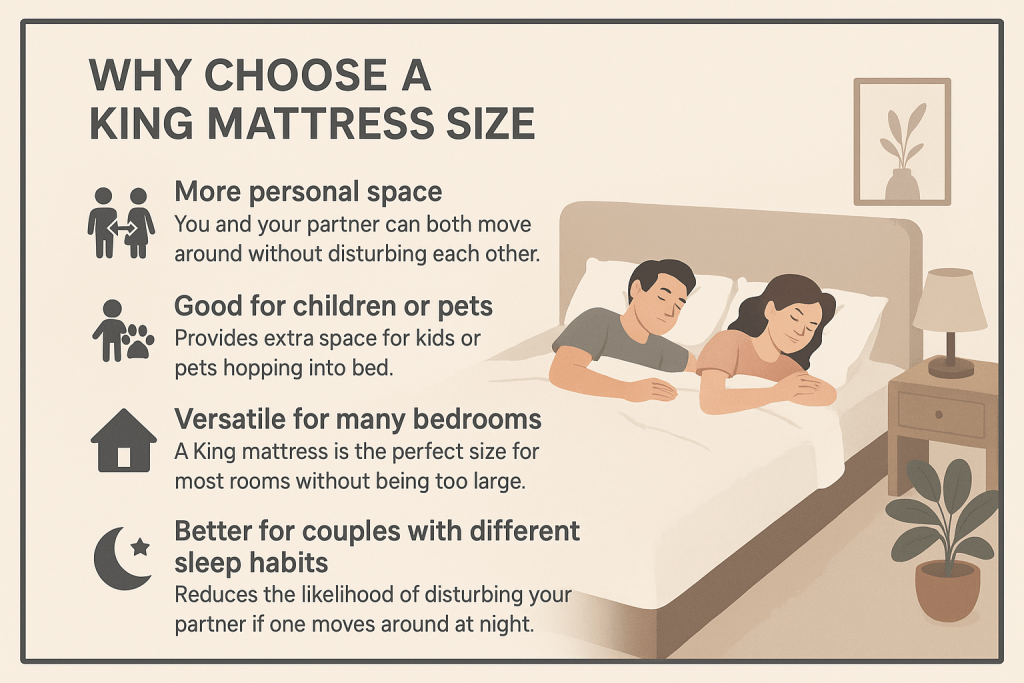
Why Choose a King Mattress Size?
Here are several reasons many people opt for a king mattress size:
More personal space — You and your partner both get ample room to move around without disturbing each other.
Good for children or pets — If kids or pets sometimes hop in, a king gives some buffer room.
Versatile for many bedrooms — A super king may be too wide for many master rooms; a king often “fits just right.â€
Better for couples of differing sleep habits — If one person tosses and turns, they’re less likely to disturb the other.
Things to Check Before Ordering a King Mattress Size
To make sure a king mattress size works well for your space and lifestyle, here are key considerations:
Bedroom dimensions: Measure the room, allowing for space to walk around, open wardrobe doors, etc.
Bed base or frame: Ensure your bed base supports 150 × 200 cm.
Doorways, stairs, and corridors: Can the mattress be delivered through tight spaces?
Weight and handling: A king mattress will weigh more to check whether two people are needed to move it.
Bedding & accessories: Sheets, mattress protectors, and toppers must match the king dimensions.
Mattress firmness and construction: Even for the same size, materials (memory foam, hybrid, latex) will affect feel and performance.
According to the sleep foundation, it’s important to take other factors into account when choosing the right king mattress. These include not only mattress quality and performance, but also your budget, bedroom size, and even the logistics of moving the mattress.
Best King Mattress Models
Here are a few mattress models that you can find in the king mattress size variant:
Luxe Organic Hybrid — available in king size (150 × 200 cm) as one of the options.
Majestic 9000 — listed in their size guide including king size 150 × 200 cm.
Luxe-Latex Natural Pillow Top — also offered with options including king size.Â
According to sleep charity, always choose a mattress that feels comfortable for your body type
Tips for Using & Caring for a King Mattress Size
Once you have a king mattress size, here are tips to maximize comfort, longevity, and performance:
Rotate regularly — Even though some modern mattresses are one-sided, if yours is double-sided, flip/rotate it every few months.
Use a proper base — A sturdy bed frame or slatted base helps support the mattress evenly.
Protect with a mattress protector — Accidents and spills happen; protect your investment. According to sleep foundation , use a mattress protector and wash your sheets regularly to keep dirt, sweat, and allergens from seeping into the mattress.
Clean lightly — Vacuum occasionally; follow manufacturer recommendations for stains.
Mind temperature — Use breathable bedding to keep the mattress ventilated.
Follow warranty instructions — For example, some warranties require you to register and maintain the mattress.
Frequently Asked Questions (FAQs)
1. What exactly is the king mattress size in the UK?
In the UK, the king mattress size sold by Luxe is 150 cm × 200 cm (≈ 59″ × 79″).
2. How does the king mattress size compare to super king?
A super king is 180 × 200 cm. So a super king gives roughly 30 cm more width than a king mattress size.
3. Is a king mattress size big enough for two people?
Yes, for most couples, a king mattress size gives plenty of space for two adults to sleep comfortably especially in the UK dimensions. The super king offers more, but often isn’t necessary.
4. Will king size bedding be easy to find?
Yes, because king mattress size (150 × 200 cm) is standard in the UK, you’ll find bedding, mattress protectors, toppers, and sheets to match without much difficulty.
5. Can I get a king mattress size in different materials or firmness?
Definitely. Luxe offers models like the Luxe Organic Hybrid and Luxe-LatexNatural Pillow Top in the king size format. You just choose the material and firmness you prefer at that size.
6. What to watch out for when buying a king mattress size?
Make sure your room and doorways can accommodate the king mattress size, check mattress base compatibility, confirm delivery logistics, and always verify the warranty terms. Also check whether the mattress is handlable by two people.
Conclusion
Choosing the right mattress size is one of the most important decisions for achieving quality sleep and creating a comfortable bedroom. The king mattress size (150 × 200 cm) strikes the perfect balance between spaciousness and practicality. It provides ample room for couples, families with kids, or even pets while still fitting comfortably in most bedrooms. Compared to smaller sizes, the king mattress size offers more personal space and comfort, without overwhelming your room like a super king might.If you’re considering upgrading to a king mattress size, exploring trusted options is key. You can visitLuxe Mattresses to find high-quality king mattresses designed for durability, comfort, and restful sleep.