



How Long Does Memory Foam Last? Understanding Material Degradation Over Time
Estimated reading time: 11 minutes
Have you ever slept on a mattress that isn’t supportive? Memory foam mattress mainly relieves pressure and provides comfort. Just like any other product, memory foam mattresses will lose effectiveness over time. Finding out how long memory foam lasts can save you more than just money. It can hugely affect the quality of your sleep and health, not to mention whether or not your spine can attain proper support.
A quality memory foam mattress can last anywhere between 7 and 10 years. Proper care and maintenance may prolong the lifespan of a mattress. It also depends on the density of foam, the usage pattern and other such things.
Let’s discuss memory foam that wears out, or how to identify older memory foam and extend the life of your memory foam with useful tips.
What Affects the Lifespan of Memory Foam Mattresses?
The length of time a memory foam mattress lasts. By knowing these, you can buy better and take care of your mattress better. The lifespan of a memory foam mattress depends on the following key factors.
Foam Quality and Density Determine Durability.
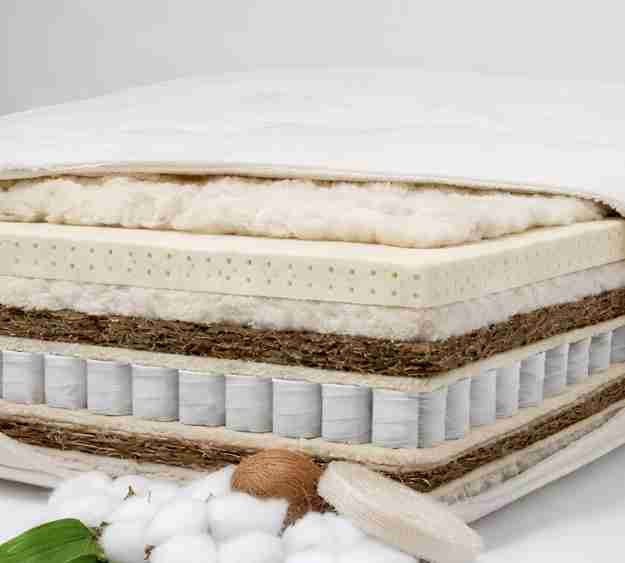
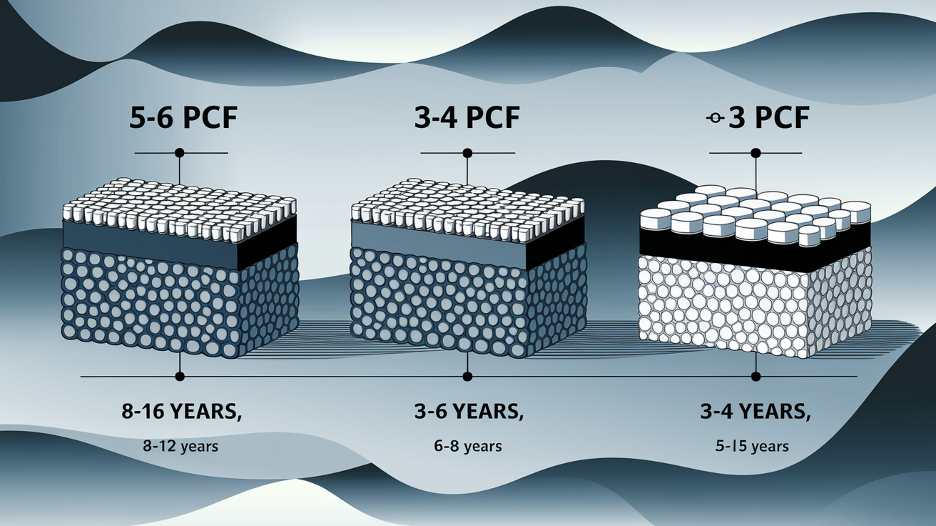
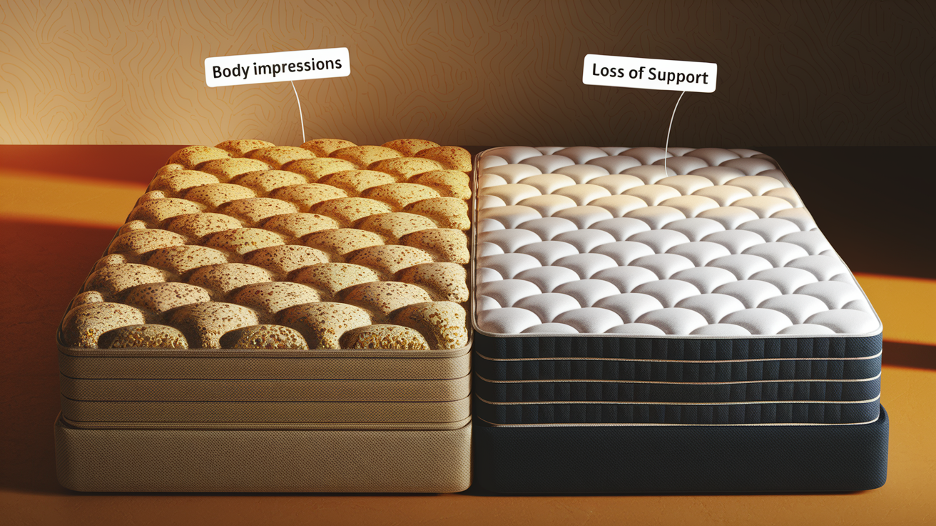
Mattress foam density is an important factor of memory foam durability. Foam that weighs a minimum of 5 lbs will not sag and maintain better support. Foam with a density lower than 3 lbs breaks down faster, causing body impressions and loss of comfort. Memory foam quality indicators refer to their density ratings, and CertiPUR-US certification means the foam is not harmful to health.
Weight Distribution Impacts Wear and Tear.
Extra weight from heavier people or uneven weight distribution stresses the mattress. Over time, foam breakdown speeds up, especially in poor-quality or low-density foam. A mattress that is used for one person will last longer than one for two people. A strong bed frame provides proper support that distributes weight evenly and removes the pressure points that can cause damage.
Usage Habits Affect Longevity.
The frequency you use the mattress affects its mattress longevity. Memory foam mattress in a guest bedroom will have a longer life than one in nightly use. Often moving around and sitting with feet dangling or jumping on the bed can speed foam deterioration. Using without maintaince can degrade the material quickly over time.
Maintenance Extends or Shortens Lifespan.
Poor maintenance habits speed up wear. Not using a mattress protector makes the foam vulnerable to sweat and spillage, which disintegrates it. Not rotating the mattress causes unequal wear in the memory foam. To keep foam in good condition, make sure to cover it up with a breathable foam or fabric cover and clean any spill immediately. A well-cared-for mattress can last more than a decade.
Foam Density and Its Role in Longevity.
The density of foam decides how long your memory foam mattress will continue to support you. The specification of pounds per cubic foot (PCF) allows you to evaluate how strong the item is, and in other words how much wear and tear it can withstand through daily use, Want to dive deeper into foam densities? Click here to explore our detailed guide on memory foam density and what it means for support and durability.
High-Density Memory Foam (5-6 PCF).
When chosen carefully and used properly, a high-density memory foam mattress can last up to 15 years. The responsive cell construction shields you from body impressions from heavier sleepers. With optimal support and spinal alignment, this particular density level offers superior pressure relief, making it the ideal choice for primary beds. Most luxury mattress brands are using 5 – 6 PCF foam in the comfort layer.
Medium-Density Memory Foam (3-4 PCF).
Medium-density foam offers a balance of comfort and durability. Life expectancy is 6-8 years. Although it is not as expensive as HDF mattresses, indentations may form over time, particularly in people who weigh more than 200 pounds. This density is suitable for guest beds or lighter people who wish to pick up a softer feeling with good longevity.

Low-Density Memory Foam (<3 PCF).
Cheap, low-density memory foam mattresses can wear out in 3 to 5 years. Less dense frameworks compress easily and sag quite a bit; along with this, they also lose support. These mattresses might be fine for kids’ beds or for an occasional sleepover, but aren’t recommended long-term for adults.
Density vs. Thickness Considerations.
When evaluating the lifespan of a memory foam mattress, thickness does not matter as much as density. A 10 inches mattress which has a foam weight of 5 PCF will outlast a 12 inches mattress which has 2.5 PCF. Don’t rely on the height of your mattress to judge quality; always check the foam density specs. Foam that is denser absorbs motion and allows for better temperature control throughout the night.
Signs Your Memory Foam Mattress is Wearing Out.
A memory foam mattress doesn’t last forever. Memory foam signs are important for figuring out if it need a replacement or not. Neglecting these warning signs may cause sleep quality and back issues. Key indicators that your mattress is showing its age.
Visible Sagging and Body Impressions.
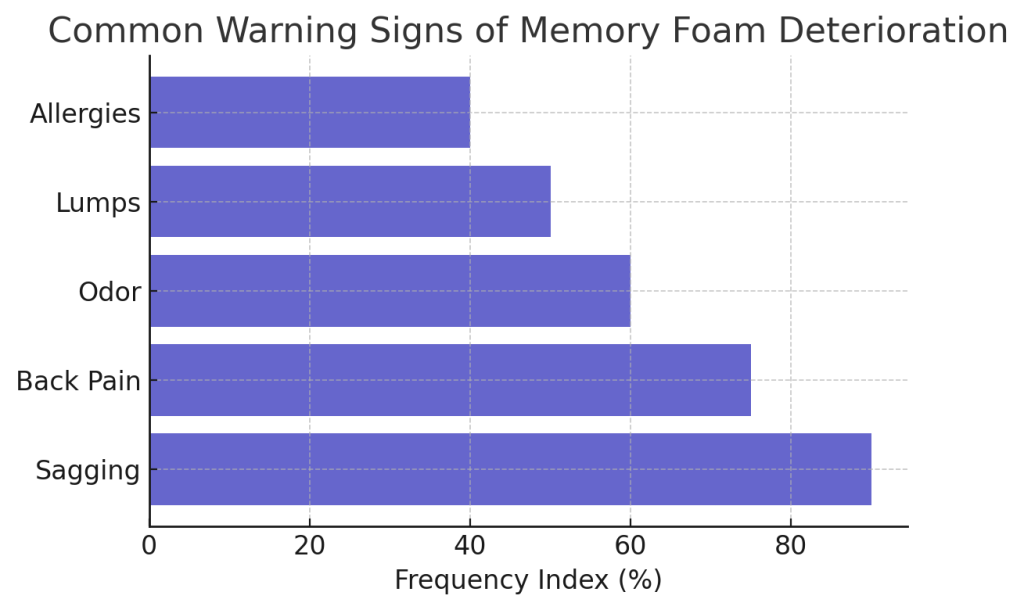
A clear indicator of worn memory foam is visible sagging. If the depressions where you sleep are more than 1.5 inches deep, the foam has lost its ability to restore. The imprint of our body affects the spine and causes uneasiness and backache. Hold a straight edge across the mattress to check it for level. The foam in your mattress won’t support you anymore.
Increased Morning Pain and Stiffness.
If you’re waking up with new aches or old aches have gotten worse, your memory foam mattress might be failing. As foam breaks down, it stops relieving pressure points. You may find yourself tossing and turning more as your body struggles to get comfortable. You will see this loss of support more often in older mattresses (7+ years) or foam of lower density.
Lumps, Bumps, and Uneven Surfaces.
Internal foam layers may migrate or clump over time, causing unsightly lumps and unevenness. This happens when the bond between foam layers weakens or when foam degrades unevenly. You may feel as though you are trying to sleep on a surface with hills and valleys rather than a flat, supportive surface.
Persistent Odors and Off-Gassing.
The new memory foam always smells of chemicals, but if your older mattress has a smell that indicates it is breaking down. If your mattress still has strong smells after four weeks of off-gassing, the foam may be disintegrating. Low quality materials are often present in cheaper foams.
Other Warning Signs.
Additional signs you need a new mattress include.
- Older foam attracts dust mites that worsen allergies.
- Visible cracks or tears in the foam.
- The mattress no longer returns to its original shape.
- You sleep better elsewhere (hotels, guest beds).
Average Lifespan – Here’s What You Can Expect
A memory foam mattress will normally last for approximately 7 to 10 years, with regular usage. But, the replacement schedule of this mattress depends on quality and care. Most premium brands with a high density foam are closer to the truth. Using a Tempur-Pedic , Saatva and Luxe Mattress for over 12 years is not uncommon with proper care.
Most mattresses that cost below £400 tend to break down from memory foam within the first 3-5 years.
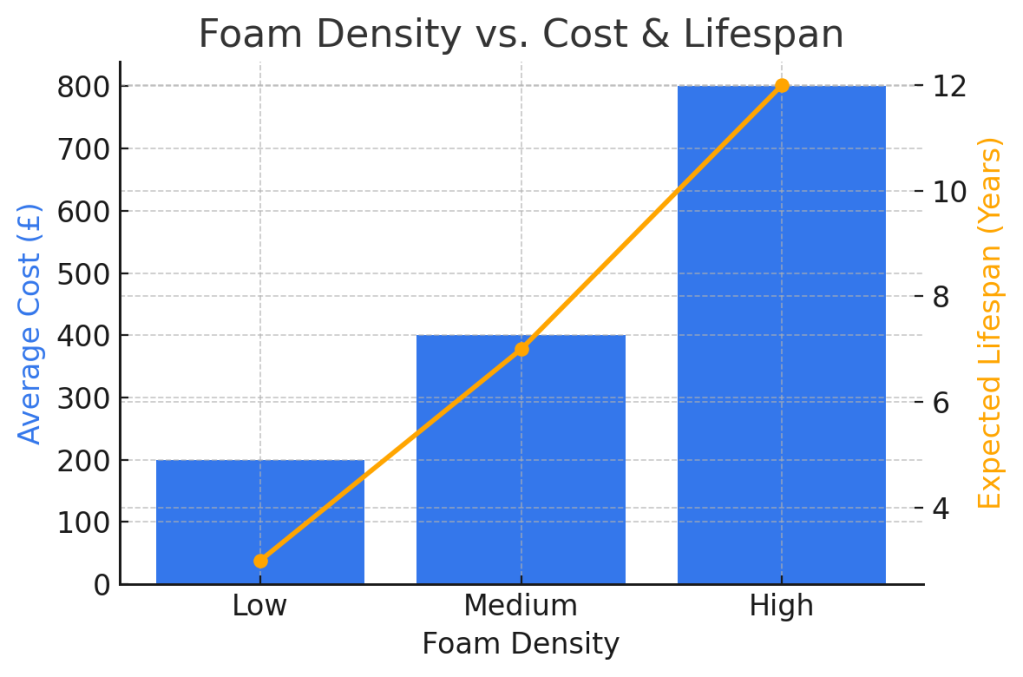
These lower-cost models tend to use less-dense foams that compress and sag faster. Warranties are always worth looking at when buying – a reputable manufacturer with a 10-year warranty against defects will give you an indicator of durability.
Your memory foam mattress’s lifespan ultimately depends on.
- Foam density (higher = longer-lasting).
- Frequency of use (primary vs guest bed).
- Weight of sleepers (heavier use = faster wear).
- Maintenance practices (protectors, rotation).
Tips to Extend the Life of Your Memory Foam Mattress.
Taking good care of your memory foam mattress will greatly affect its lifespan. The foam will sustain support and comfort, and prolong memory foam degradation with these measures. These tips can extend the life of your mattress for years.
Invest in a Quality Mattress Protector.
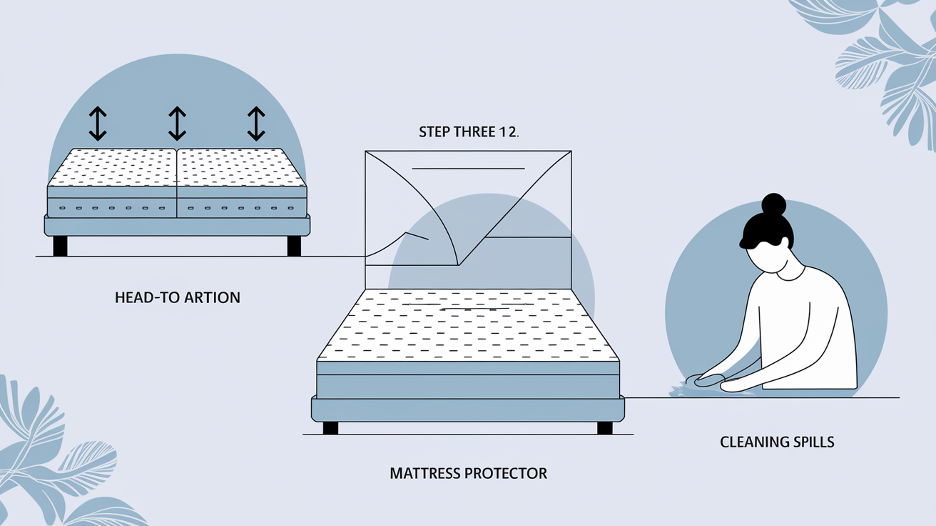
A waterproof mattress protector is your first line of defence against spillage, sweat, and dust mites. These contaminants break down foam fibers over time. Choose breathable protectors that don’t trap heat and allow airflow to preserve the integrity of the foam. Wash the protector once a month so allergens won’t penetrate the mattress.
Regular Rotation Prevents Uneven Wear.
To help keep the wear and tear on your memory foam mattress evenly distributed, you should rotate your mattress from head-to-foot every 3-6 months. You don’t want to flip your memory foam bed but rotating can prevent permanent impressions. This advice is especially helpful for couples with different sleeping positions or body types. Write down the date of rotation on the calendar.
Prompt Stain Treatment Preserves Materials.
If you clean spills right away, the liquid won’t sink into the foam layers. Use a soap solution to blot stains, never use detergents or wet excessively. Memory foam must never be soaked because water ruins it. If you have a stubborn stain, use a foam cleaner as recommended by the manufacturer.
Proper Foundation Support Matters.
A supportive base prevents premature memory foam wear. The gaps in slatted foundations can be 3 inches apart at the maximum. Solid platform beds or adjustable bases also work well. Don’t use an old box spring with your new memory foam mattress. The new foam mattress will break down quicker on an uneven surface. Check the center support of the bed frame for queen and larger sizes.
Additional Care Considerations.
Keep the room temperature moderate because it degrades the foam. Give new mattresses a full 24-48 hours to expand before use. Try not to sit too often at the edges of your mattress, as this will compress the foam at the edges unevenly. You might want to consider getting a mattress topper. A topper will wear out first before the actual mattress does.
When Is It Time to Replace Your Memory Foam Mattress?
When should you replace which know when to replace your memory foam mattress will help you sleep well. Most mattresses need to be replaced every seven to ten years, but some signs appear sooner.
Age and Visible Wear.
Once your mattress reaches 7 years, evaluate its condition. Slumping more than 1.5 inches is a fault. If your body leaves a permanent imprint in the foam, it can no longer support you.
Comfort and Sleep Quality.
If you are tossing and turning more or waking up with new aches, your mattress isn’t supporting you properly. If you sleep better elsewhere, you probably need a new mattress.
Health Considerations.
Your allergy flare-ups may be due to dust mites in old foam. If you detect smells or see mold, change it right away.
Conclusion: Invest Wisely, Sleep Better.
By knowing about the durability of memory foam, you will be able to maximize your investment in sleep health. Caring for your high-density foam mattress well, will give you the best long-term value for money. Using good protectors and foundations really helps your mattress last longer.
You should swap our saggy mattress or warped mattress ASAP. A quality memory foam mattress maintains your proper spinal alignment for years. By buying the right and maintaining regularly, sleep stays undisturbed and back pain is prevented.
Choose only premium certified foams from recognized brands. Your mattress is the base of your rest every day, and remember, choosing well will pay you back. Keep track of how old your mattress is and watch for signs of wear to replace it at just the right time.
FAQs.
1. Can memory foam mattresses be flipped?
Most modern memory foam mattresses are single-sided. Rotate your mattress the whole 180 degrees every 3-6 months for equal wear distribution. Alternate side sleeping might just save your mattress from getting indentations that can become permanent.
2. Are mattress warranties accurate for estimating lifespan?
Warranties lasting longer than expected don’t necessarily mean more durability. Most 20-year warranties are prorated after 10 years, worth less. Mainly covers defective manufacturing and not normal wearing out.
3. Are off-gassing odors dangerous?
The new memory foam has a chemical smell but it goes away after 72 hours. Off-gassing processes include harmless VOC emissions that meet CertiPUR-US safety standards. Proper ventilation eliminates odors faster.
4. Can mattress toppers prolong a memory foam bed’s life?
For quality purposes, 2-3 inch mattress toppers absorb wear and tear to extend your mattress. They especially come in handy to refresh mattresses too old to replace.