






The Science Behind Sleep Meditation: How It Rewires the Brain for Rest
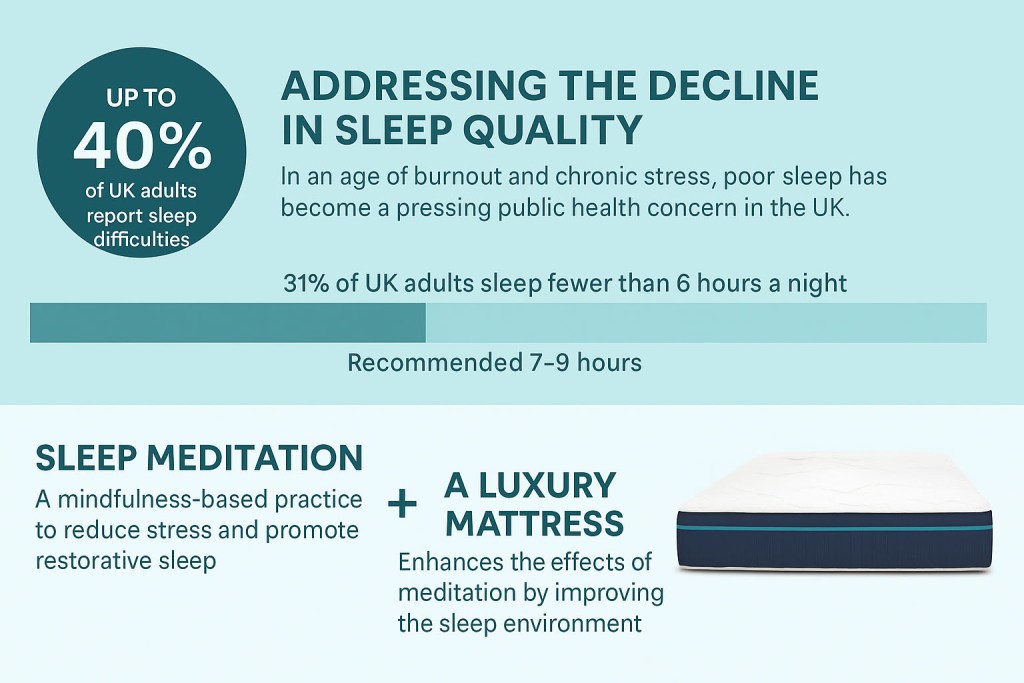
In an age where burnout, digital fatigue, and chronic stress are commonplace, the quality of our sleep has become one of the most pressing public health concerns especially in the UK. According to the Sleep Charity UK, up to 40% of adults report difficulties sleeping. Meanwhile, a recent study by Aviva found that 31% of UK adults regularly sleep for fewer than six hours per night, which is well below the recommended seven to nine hours. This alarming trend has serious implications for our mental health, productivity, and overall well-being.

One emerging intervention showing great promise is sleep meditation, a mindfulness-based practice that helps calm the mind and reduce stress hormones. It focuses on creating the internal conditions for restful, restorative sleep. But to fully benefit from sleep meditation, it’s important to consider both mental techniques and physical factors. Particularly important is the sleep environment. From brainwave activity to bedroom setup, this article explores how sleep meditation works, why it’s scientifically valid, and how a luxury mattress can significantly enhance its effects.
What Is Sleep Meditation?
Sleep meditation, sometimes referred to as guided sleep meditation or yoga nidra, is a form of mindfulness designed to relax the body and reduce cognitive arousal before sleep. It typically involves:
- Slow, controlled breathing
- Body scans
- Visualisation techniques
- Calm auditory cues or guided narration
Unlike traditional meditation, which aims for present-moment awareness, sleep meditation’s goal is to lead the body into a sleep-ready state. It does this by turning down the activity of the sympathetic nervous system which is responsible for the stress response. It also encourages the parasympathetic nervous system, which supports rest and digestion.
How Sleep Meditation Rewires the Brain
Scientific research, including neuroimaging studies from institutions like the University of Oxford, has shown that mindfulness-based practices like sleep meditation can alter brain activity and structure. When practiced regularly, meditation reduces the activity in the amygdala, which is the part of the brain involved in emotional reactivity. It also increases thickness in areas associated with attention regulation and sensory processing.
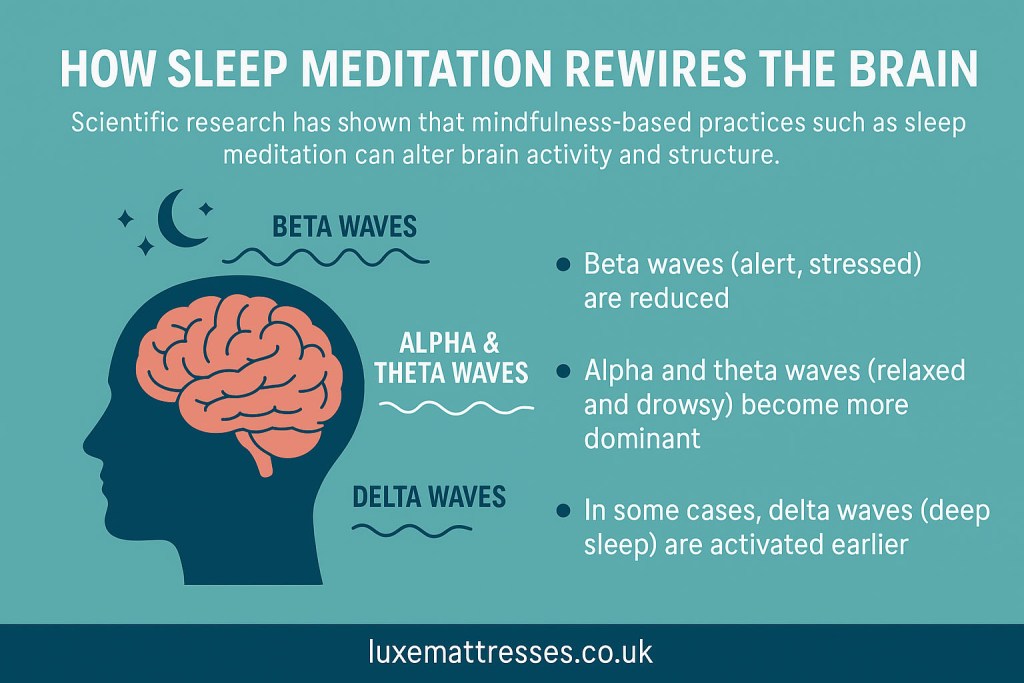
Sleep meditation also directly influences brainwave patterns:
- Beta waves (alert, stressed) are reduced
- Alpha and theta waves (relaxed and drowsy) become more dominant
- In some cases, delta waves (deep sleep) are activated earlier
This change in neural activity supports faster sleep onset, deeper sleep cycles, and fewer nighttime awakenings.
Impact on Mental Health and Mood
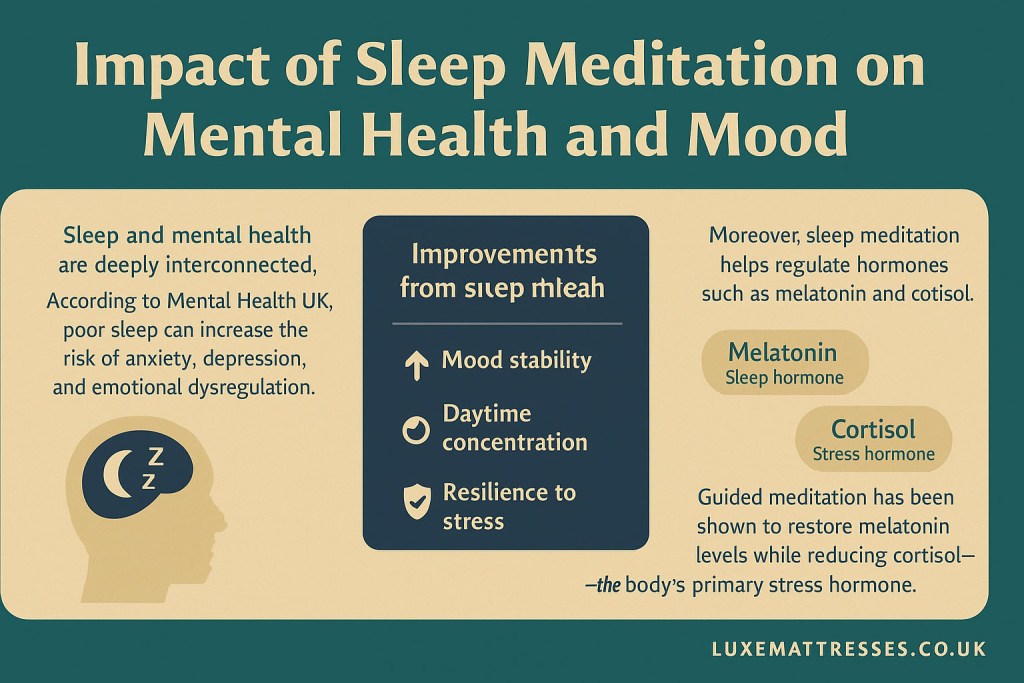
Sleep and mental health are deeply interconnected. According to Mental Health UK, and Luxe Publication, poor sleep can increase the risk of anxiety, depression, and emotional dysregulation. In contrast, studies suggest that even 10 minutes of guided sleep meditation per night can result in significant improvements in:
- Mood stability
- Daytime concentration
- Resilience to stress

Moreover, sleep meditation helps regulate hormones such as melatonin and cortisol. Melatonin, the sleep hormone, is often suppressed in people who use screens late into the evening or who are chronically stressed. Guided meditation has been shown to restore melatonin levels. Additionally, it reduces cortisol, which is the body’s primary stress hormone.
The Overlooked Role of the Sleep Environment
While mindfulness techniques play a vital role in improving sleep quality, they work best when paired with an appropriate physical environment. This is where the concept of a luxury mattress becomes highly relevant not as an indulgence, but as an essential component of sleep health.
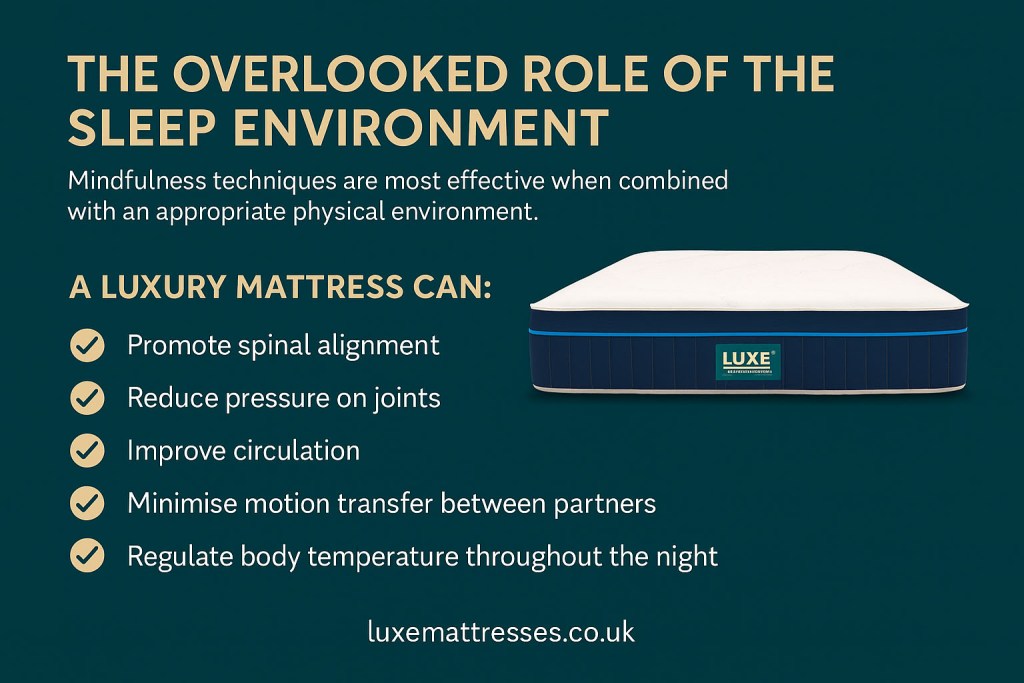
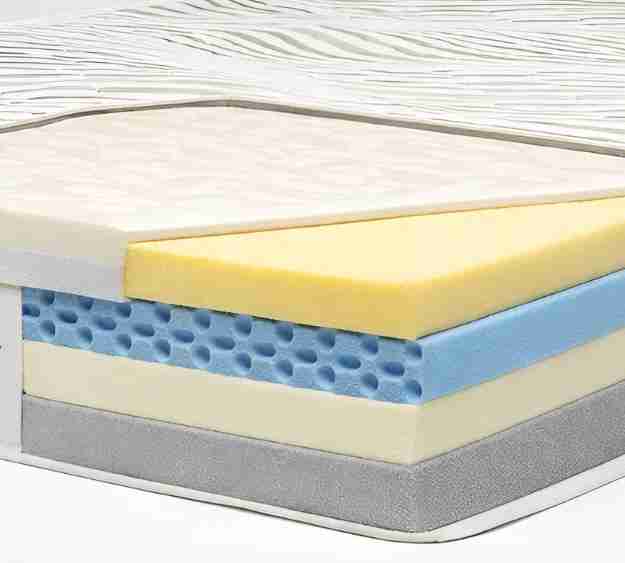
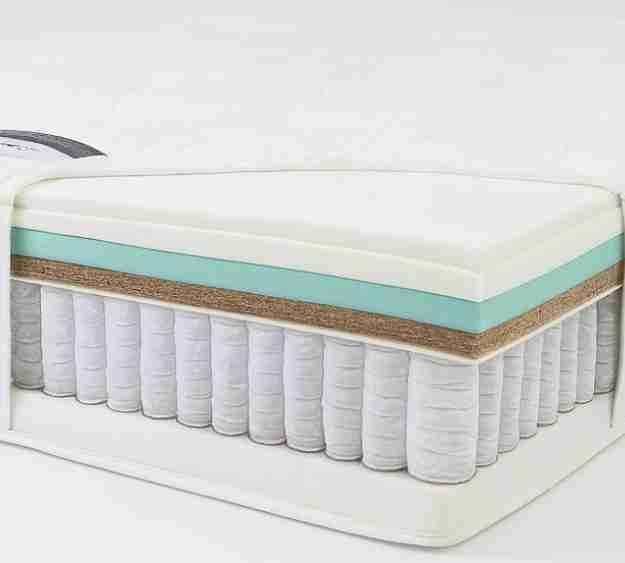
According to the Sleep Council UK, one of the top causes of poor sleep is an uncomfortable or unsupportive mattress. A luxury mattress crafted with high-density foam, natural latex, pocket springs, and breathable organic materials-can:
- Promote spinal alignment
- Reduce pressure on joints
- Improve circulation
- Minimise motion transfer between partners
- Regulate body temperature throughout the night
This matters because physical discomfort can override even the most skilled meditation practice. The brain may struggle to enter deep relaxation if the body is contending with poor posture, heat retention, or pressure points. In this sense, a luxury mattress supports sleep meditation by removing physical barriers to mental calm.
Psychological Benefits of Combining Sleep Meditation and Environmental Support
When sleep meditation is combined with the right physical sleep environment including a quality mattress, calming colours, reduced noise, and controlled lighting its benefits are amplified. This holistic approach to sleep taps into biopsychosocial health. It addresses biological needs, such as comfort and temperature. Additionally, it integrates psychological needs, such as stress reduction, and social/environmental factors like bedroom setup and technology use.
For instance:
- A 2021 survey by Dreams UK found that 57% of Britons admitted to using their phone right before bed something known to delay melatonin production. Pairing meditation with a screen-free, physically inviting sleep environment can counteract these behaviors.
- NHS guidelines for insomnia treatment increasingly include lifestyle-based recommendations such as mindfulness training and environmental optimisation, not just medication.
Building a Routine That Works
Implementing sleep meditation doesn’t require dramatic lifestyle changes. Here’s how you can begin integrating it into your routine, especially if you’re in the UK and affected by winter-related mood shifts or high stress from urban living:
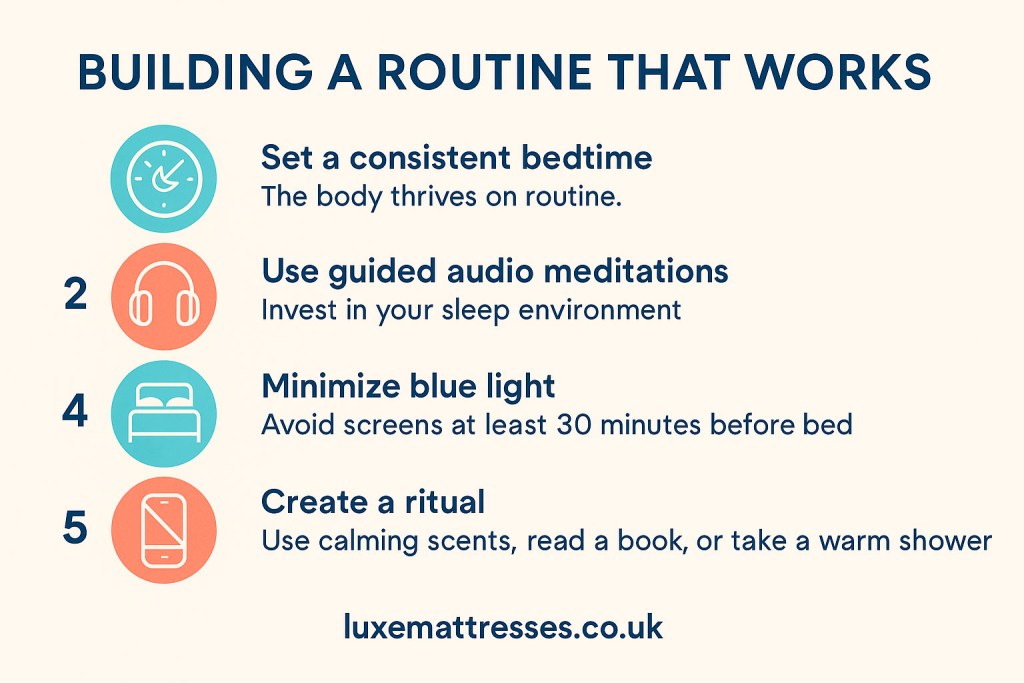
- Set a consistent bedtime: The body thrives on routine.
- Use guided audio meditations: Apps like Headspace, Insight Timer, or Calm offer UK English voices. These apps provide short meditations tailored for sleep.
- Invest in your sleep environment: Opt for a luxury mattress that suits your posture and comfort needs. This choice is especially important if you experience back pain, night sweats, or disrupted sleep.
- Minimise blue light: Avoid screens at least 30 minutes before bed.
- Create a ritual: Use calming scents like lavender, read a book, or take a warm shower before beginning your meditation.
FAQs
Does sleeping help rewire your brain?
Yes, sleep drives neuroplasticity by consolidating memories, strengthening synapses, and clearing waste via glymphatic system essential for learning and adaptation.
Did the Dalai Lama say sleep is the best meditation?
Yes, he stated “Sleep is the best meditation,” emphasizing rest’s restorative power for mind and body akin to deep contemplative practice.
Does meditation rewire your brain?
Yes, meditation boosts neuroplasticity, thickening prefrontal cortex for focus/emotion regulation and shrinking amygdala for reduced stress.
What is the 20 minute rule for insomnia?
If unable to sleep after 20 minutes, leave bed for a dull activity (reading) until drowsy, retraining brain to associate bed with sleep only.
What is the 3-3-3 rule for insomnia?
3 a.m. wake: Get up after 3 minutes; 3 deep breaths; 3 positive thoughts/mantras resets anxiety without clock-checking.
What is the Japanese 18 minute nap?
Inemuri (“sleeping while present”) allows short 15-20 minute workplace naps for refreshment, culturally accepted as dedication, not laziness.?
Final Thought
In the conversation around sleep quality, it’s easy to focus solely on techniques. Common techniques include breathing methods, relaxation tracks, or digital detoxes. However, true rest is both a mental and physical process. By blending science-backed sleep meditation with the comfort of a well-crafted luxury mattress, individuals can create conditions that support long-term sleep health and emotional resilience.
As public awareness around sleep continues to grow especially in light of NHS campaigns around sleep hygiene and mental health it’s crucial to understand that no single tool offers a cure-all. Instead, it’s the combination of mental training and physical support that leads to deep, meaningful rest.
After all, sleep isn’t a luxury. But sleeping on a luxury mattress while mastering the art of meditation? That just might be one of the best investments in your well-being.