


Best Eco Mattresses: 2025 Guide | Sleep Healthier
Sustainable Sleep: The Rise of Eco-Friendly Mattresses
We sleep for about a third of our lives, yet most “normal†mattresses are hiding a dirt secret. Mattresses come loaded with various harmful substances, from petroleum-based foams and synthetic flame retardants to adhesives leaking volatile organic compounds (VOCs) which can cause headaches, allergies and all manners of chronic diseases.
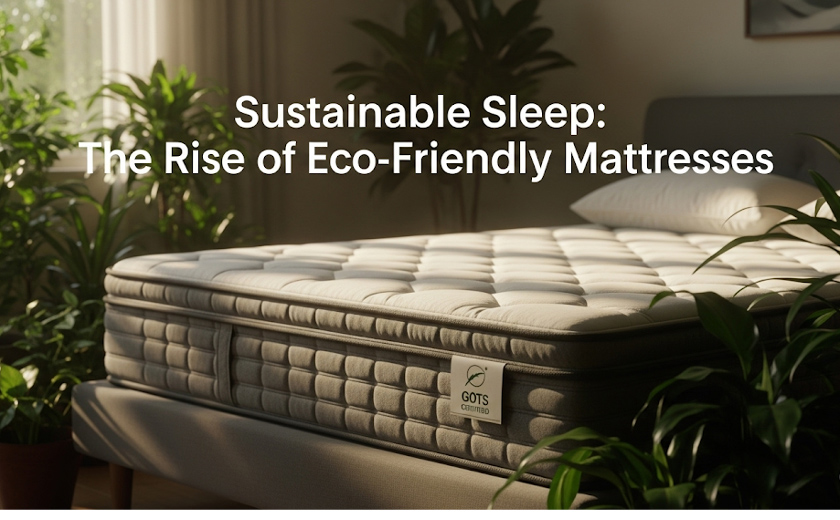
This isn’t just a trend; it’s a cultural shift. More and more health-conscious shoppers, mostly millennials and Gen Z, won’t compromise on what they are breathing for 8 hours every night. They are opting for materials like organic latex and wool that are hypoallergenic and nontoxic. Values that put the planet first are meanwhile changing the markets. Traditional non-biodegradable mattresses take 500 years to decompose in landfills. However, certified biodegradable and sustainably sourced eco-friendly mattresses are increasing in popularity.
In just three weeks, they believe that the total market value will reach $3.2 billion.
Ready to sleep cleaner? Let’s begin.
Why Choose Eco-Friendly Mattresses?
Natural mattresses solve two important problems – toxic sleeping environment as well as landfill overload. They refuse artificial flavours, colours, and other harmful chemicals like most other options do.
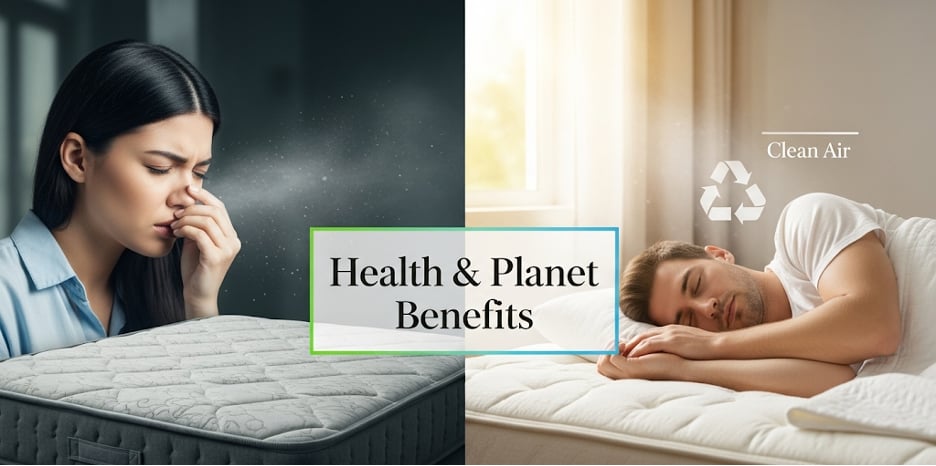
Health Benefits of Non-Toxic Sleep.
Most mattress designs have VOCs (volatile organic compounds) which are due to the use of synthetic foam, flame retardants, etc. Migraine, vomiting and long-term respiratory problems can result from it Common exposure to VOCs can make asthma worse and disturb hormone levels.
Non-toxic sleep starts with natural materials. Organic latex resists dust mites and mold. Wool wicks moisture without chemical treatments. These features provide true allergy prevention.
The mattress is made from tightly woven organic cotton. These block allergens like pet dander or pollen. They help sensitive sleepers breathe easier. You’ll experience less congestion at night if you sleep on a certified organic mattress.
Environmental Impact Reduction.
Traditional mattresses create ecological harm. Most contain petroleum-based foams. These take 500+ years to decompose. Over 20 million mattresses clog landfills annually. They release methane and toxic chemicals into soil.
Sustainable mattress designs break this cycle. They prioritize biodegradability. It takes a natural latex, organic cotton, and hemp three to ten years to decompose. Some brands use plant-based foams from renewable sources.
Landfill waste drops sharply with circular designs. Brands, like Avocado, recycle old mattresses into new products. Others offer take-back programs. This cuts much of the waste volume which is 60% vs. regular disposal.
True organic mattress production also saves resources. Farming of organic cotton uses 91 percent less water than farming of conventional cotton. Natural latex harvesting sustains rubber tree forests. These rainbow eco-practices protect ecosystems and provide comfort.
Certifications & Standards Explained
Eco friendly mattresses rely on verified standards for true sustainability. Trust comes from clear proof, not marketing claims. Third-party certifications separate genuine eco-options from greenwashed products. They ensure materials are safe, ethical, and planet-positive.
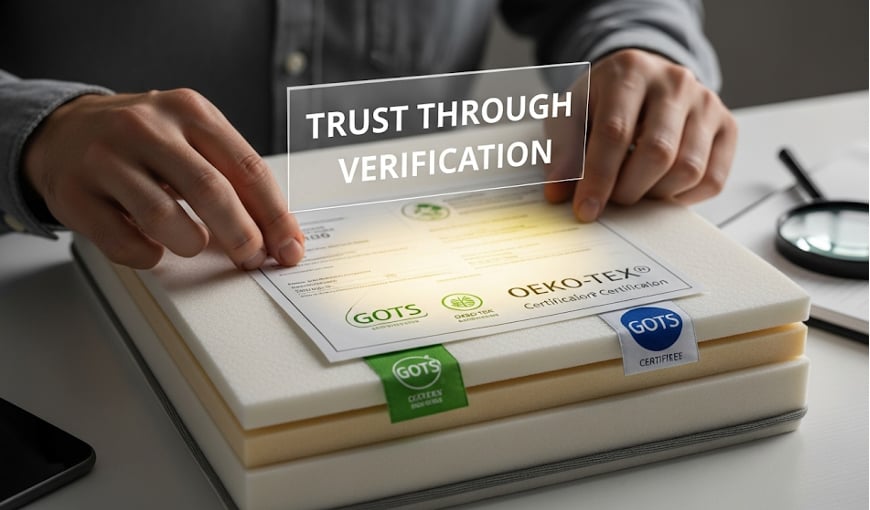
GOTS and GOLS: Gold Standards for Organic Materials
GOTS certification (Global Organic Textile Standard) covers textiles like organic cotton or wool. It requires 95% organic content and tracks every step from farm to finished product. Factories pass annual checks for chemical use, wastewater treatment, and fair labor. Banned items include formaldehyde, toxic dyes, and synthetic pesticides.
GOLS (Global Organic Latex Standard) focuses on organic latex. Like GOTS, it mandates 95% certified organic raw material. Rubber tree farms must avoid chemical fertilizers. Latex processing prohibits fillers, PVC, and heavy metals. Every supplier in the chain needs transaction certificates for full traceability.
Both standards enforce social rules. Workers earn fair wages with safe conditions. Child labor is banned. Non-toxic sleep starts here because these rules block harmful chemicals near you.
Beyond Basics: Greenguard Gold and OEKO-TEX®
Greenguard Gold tests air safety. It measures volatile organic compounds (VOCs) emitted from mattresses. Certified products must stay below 7.3 parts per billion of formaldehyde—a strict limit for schools and hospitals. This prevents indoor air pollution linked to headaches or asthma.
OEKO-TEX® Standard 100 checks for toxins inside materials. It scans for heavy metals, pesticides, and allergenic dyes. Unlike GOTS, it doesn’t require organic farming. But it ensures every thread, zipper, or latex layer meets safety thresholds. This supports hypoallergenic properties for sensitive groups.
These mattress certifications complement GOTS/GOLS. While GOTS confirms organic sourcing, Greenguard Gold proves the final product won’t pollute your air. OEKO-TEX® fills gaps by screening non-organic parts like adhesives.
Eco-Friendly Materials Breakdown
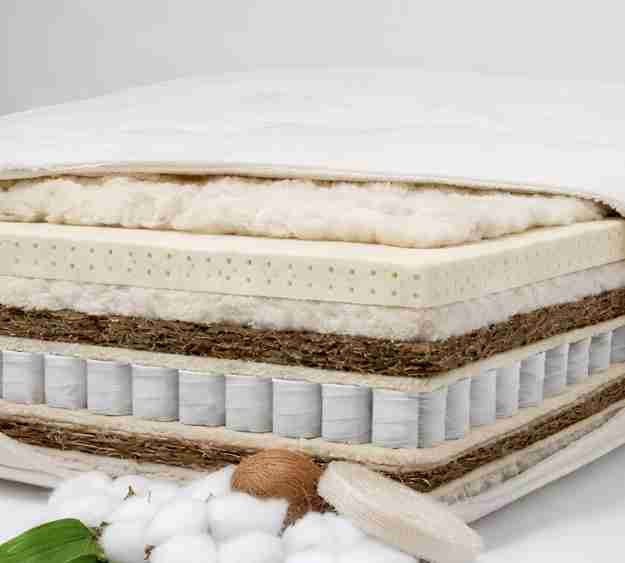
Certifications like GOTS ensure materials meet strict standards. Now, let’s examine what these sustainable materials actually contain. Eco friendly mattresses use three core components: latex, cotton, and wool. Each brings unique benefits verified by science and sourcing practices.
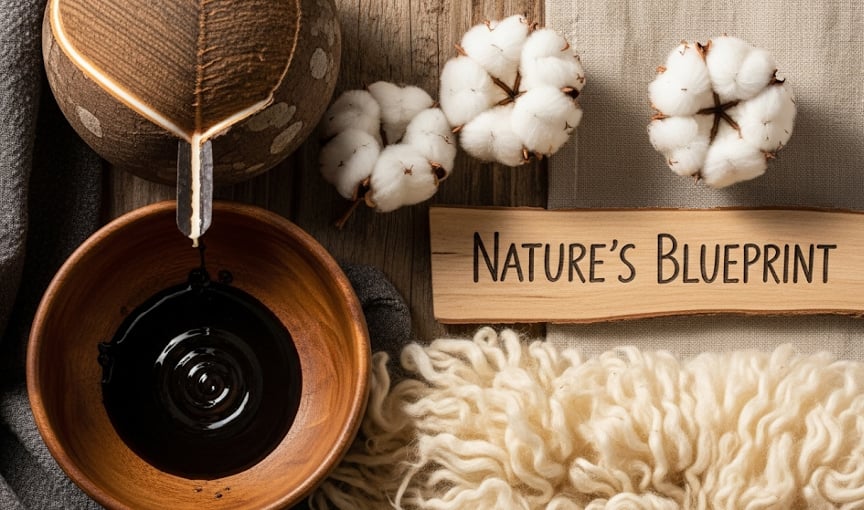
Natural Latex: Durability Meets Sustainability
Natural latex comes from rubber trees (Hevea brasiliensis). Ethical farms in Sri Lanka or Thailand use non-toxic tapping methods. They collect sap without killing trees. This process supports biodiversity and local economies.
The sap gets whipped into foam using the Dunlop process. No synthetic fillers are added. The result is a resilient material that outlasts memory foam. Durability tests show natural latex maintains shape for 15+ years. It resists sagging better than petroleum-based foams.
Latex has natural hypoallergenic properties. Its cellular structure blocks dust mites and mold. Open air pockets enhance airflow for cooler sleep. Unlike polyurethane foam, it emits near-zero volatile organic compounds.
When disposal comes, natural latex is biodegradable. It decomposes in 3-5 years versus 500+ for synthetics. Brands like PlushBeds use Forest Stewardship Council-certified plantations. This protects endangered habitats while producing material.
Organic Cotton and Wool: Breathability & Safety
Organic cotton starts with non-GMO seeds. Farmers avoid synthetic pesticides. They rely on crop rotation and natural predators. These methods use 91% less water than conventional cotton. The final fabric does not contain formaldehyde and chemical softeners.
Organic wool comes from free-range sheep. Ranchers never use toxic dip baths. The wool gets cleaned with vegetable-based soaps. This preserves its natural lanolin. That waxy substance repels liquids and stains.
Together, these materials create breathability. Cotton fibers allow air circulation. Wool can absorb moisture of 30% of its weight without feeling wet. This duo regulates temperature year-round. You do not sweat at night with these chemical phase-change coatings.
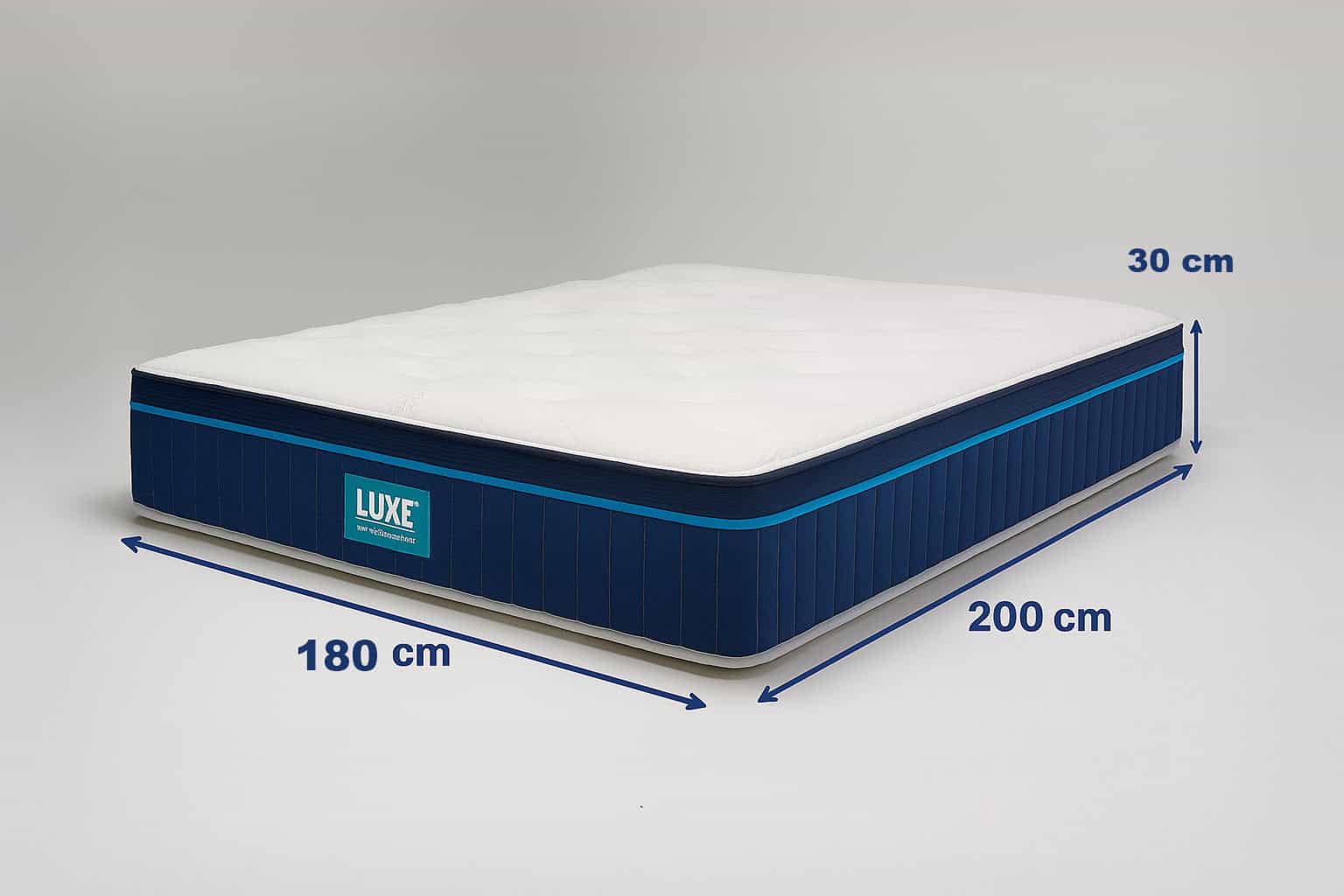
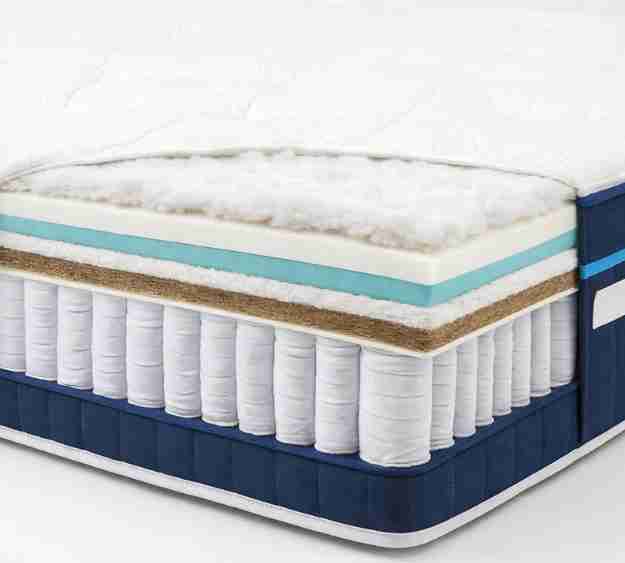
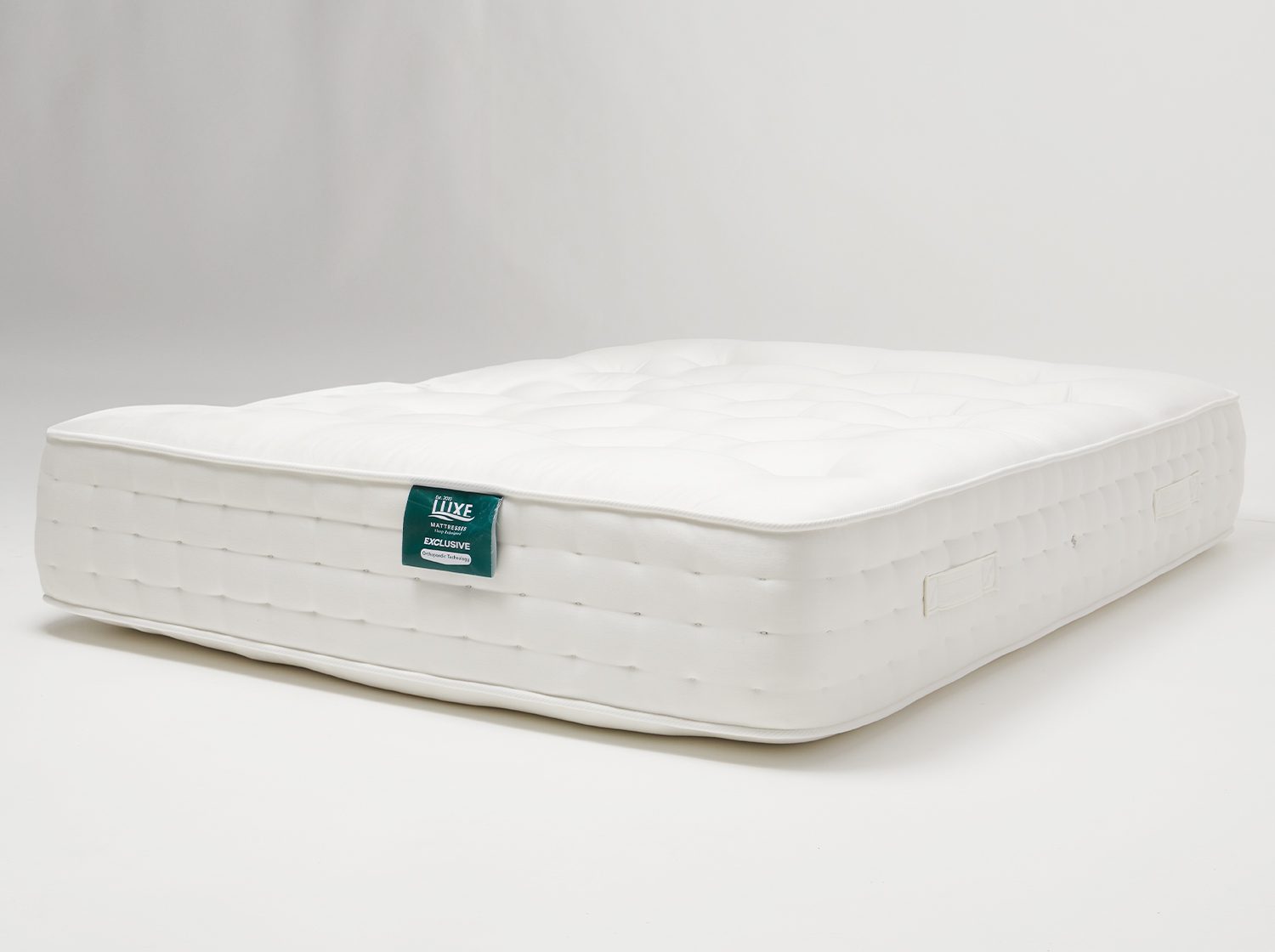
Luxe Mattresses based in the UK shows this commitment with their natural range. They ensure farm-to-factory traceability by using organic cotton covers and British wool fillings. The lanolin present in the wool naturally wicks moisture without treatment while GOTS tracked cotton is pesticide free. You can get your hands on a Luxe mattress which uses safe and nature-friendly sleep materials.
Carbon Footprint of Mattress Production
Conventional mattresses require heavy energy consumption. Producing one polyurethane foam mattress emits 120–150 kg of CO₂. This equal driving 300 miles in a gas car. Petroleum-based foams need oil extraction and chemical processing. These steps guzzle energy and spike carbon footprint levels.
Water use is another concern. Growing cotton for traditional mattresses soaks 5,000+ gallons per crop cycle. Most comes from irrigated farms. This strains rivers and groundwater. Dyeing fabrics adds more water waste. Up to 200 gallons per mattress enter polluted wastewater.
Sustainable options cut these impacts. Organic cotton farming uses rain-fed fields. It slashes water needs by 91%. Natural latex comes from rubber trees. Harvesting needs no synthetic fertilizers. Brands like Avocado power factories with solar energy. This trims carbon footprint by 40%.
Landfill Crisis and Circular Solutions
Americans trash 20 million mattresses yearly. These stack 50,000 high daily in landfills. Traditional units take 500+ years to decompose. Their steel springs, polyester layers, and foam release toxins. Chemicals seep into soil as they break down.
Recycling initiatives fight this waste. Over 75% of mattress materials are recyclable. Steel springs become construction rebar. Foam turns into carpet padding. The Mattress Recycling Council (MRC) recycled 15 million mattresses by 2025. This saved 14.9 million cubic yards of landfill space. It also reused 575 million pounds of materials.
Circular solutions are expanding. Four states charge $16–$22.50 fees per new mattress. California, Connecticut, Oregon, and Rhode Island fund free drop-off sites. Extended producer responsibility laws push brands to design recyclable products. Harrison Spinks grows hemp for coils. Orbis makes foam from old mattresses. These sustainable mattress designs support reuse.
Eco friendly mattresses boost biodegradability. CocoCore uses coconut husks and bamboo. These decompose in 3–10 years. Brands like Restolex offer take-back programs. They recycle old units into new ones. This closes the loop on waste.
How to Choose Your Eco-Friendly Mattress
Understanding environmental impacts helps. Now, apply that knowledge to your purchase. Selecting the right eco-friendly mattresses requires matching materials to your body, verifying certifications, and testing comfort. This guide covers all steps.
Step 1: Match Materials to Sleep Needs
Sleep position dictates material choice. Side sleepers need pressure relief at shoulders and hips. Natural latex or memory foam hybrids work best. Stomach sleepers require firm support to prevent back sag. Tight-top organic cotton mattresses are ideal.
Body weight changes support needs. People over 230 pounds need thicker natural latex (over 9″) or reinforced coils. Lighter sleepers (under 130 pounds) prefer softer organic wool toppers. These prevent joint pressure.
Temperature issues need specific solutions. Hot sleepers require breathability. Look for organic cotton covers and ventilated latex cores. Wool’s moisture-wicking also cools. Brands like Birch use phase-change graphite infusions for extra cooling.
Pain conditions demand tailored support. Sciatica sufferers benefit from zoned latex layers. These cushion hips while firming the lumbar area. Arthritis patients need motion-isolating hypoallergenic foams to reduce pressure points.
Step 2: Verify Certifications
GOTS certification is non-negotiable for textiles. Check the supplier’s transaction certificate online. Real IDs include 5–8-digit codes like “CU863637â€. Avoid vague claims like “made with organic materialsâ€.
OEKO-TEX® Standard 100 covers non-organic parts. Verify certification at oeko-tex.com. Search by brand name. This confirms zippers, adhesives, and thread meet safety thresholds.
Greenguard Gold matters for off-gassing concerns. Certified mattresses emit less than 0.05 ppm formaldehyde. This prevents morning headaches. Check current certificates at ul.com. Expired labels are red flags.
Extended producer responsibility programs show brand ethics. Companies like Avocado publish recycling rates. Saatva plants trees for every sale. These prove commitment beyond mattress certifications.
Testing Eco Friendly Mattresses: Trial Periods & Return Policies
Trial periods are essential. Most eco-friendly mattresses offer 100+ night trials. Expect 30 nights for your body to adjust. Keep a sleep journal tracking back pain and restlessness.
Return policies vary widely. Brands like Nectar offer free returns with full refunds. Others charge $99–$200 pickup fees. Read fine print on stains, dents, or mandatory foundation use. Some void warranties without approved bed frames.
Warranty length signals durability. Look for 15–25-year coverage. Non-prorated warranties are best. They replace defects at no cost. Prorated plans decrease value yearly. Birch’s lifetime warranty is industry-leading.
Test for hypoallergenic claims. During trials, monitor allergy symptoms. True non-toxic materials reduce sneezing and congestion within 2 weeks. If reactions continue, return the mattress.
Maximizing Mattress Longevity and Care
Choosing the right eco-friendly mattresses is step one. Proper maintenance ensures your investment delivers decades of non-toxic comfort. These care guidelines protect both performance and sustainability.
Cleaning Organic Materials Safely
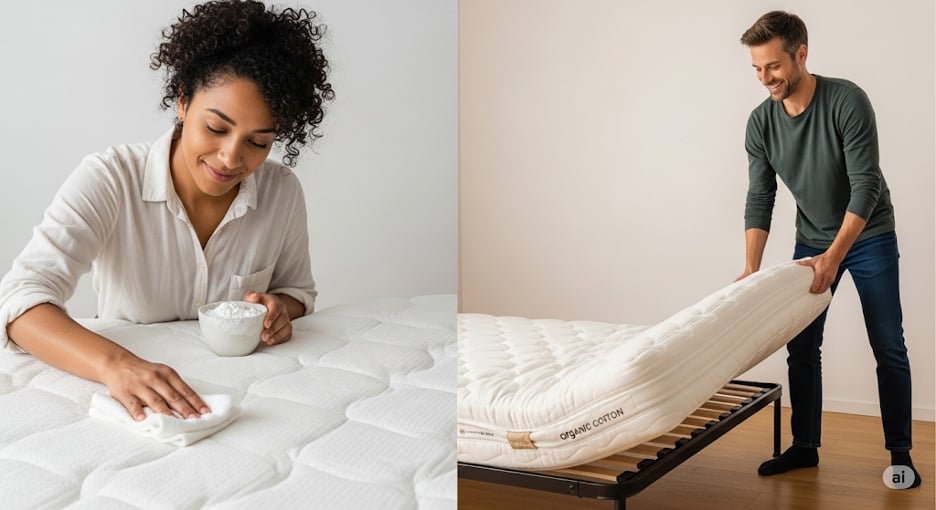
Organic cotton covers need gentle cleaning. Blot spills immediately with cold water and mild soap. Avoid soaking or harsh scrubbing. This prevents fiber damage and maintains breathability. For stains, use baking soda paste. Apply lightly, wait 15 minutes, then dab away. Never use bleach or chemical sprays. They break down sustainable materials and void warranties.
Organic wool layers require special attention. Vacuum monthly using an upholstery attachment. This removes dust without compressing fibers. For liquid accidents, absorb moisture with a clean cloth. Then sprinkle cornstarch to draw out residue. Brush gently after 30 minutes. Wool’s natural lanolin resists stains when maintained properly. This preserves mattress longevity and hypoallergenic benefits.
Rotate your mattress head-to-foot every 3 months. This prevents body impressions and uneven wear. Use a non-toxic protector like Avocado’s GOTS-certified barrier. It shields against spills while allowing airflow. Direct sunlight exposure fades natural dyes. Keep your sleep space cool and shaded.
Warranty and Lifespan Expectations
Quality eco-friendly mattresses last 15–25 years. Natural latex cores offer the best durability. They resist sagging 3x longer than memory foam. Hybrid models with pocketed coils typically reach 20 years. Sustainable materials like organic wool and cotton outlast synthetics when cared for.
Understand warranty coverage details. Most protect against:
- Sagging deeper than 1.5 inches
- Material splits or cracks
- Manufacturing defects in cover stitching
Common exclusions include:
- Stains without protector use
- Damage from improper foundations
- Normal softening of materials
Brands like Birch offer lifetime warranties. Others like Avocado provide 25-year coverage. Always register your mattress within 60 days. Keep purchase receipts and photos of tags. Submit claims promptly with documentation.
Maximize mattress longevity through support systems. Use slatted bases with gaps under 3 inches. This prevents moisture buildup and maintains breathability. Replace foundations every 8 years to match mattress integrity.
Conclusion: The Future of Sleep is Green
Investing in eco-friendly mattresses supports well-being and planetary health. This choice delivers non-toxic sleep free from volatile organic compounds and allergens. It also cuts landfill waste and carbon emissions. Science confirms these benefits.
Health wins are immediate. Users report fewer headaches and allergy symptoms. Spinal alignment improves with durable natural latex support. Children and sensitive groups breathe safer air. Long-term exposure risks drop sharply.
Environmental gains grow yearly. Every sustainable mattress diverts 50–100 lbs of waste from dumps. Organic cotton farming saves billions of gallons of water. Brands adopting circular solutions recycle 90%+ of old units.
Your final step matters: Prioritize certifications when purchasing. Look for:
- GOTS certification tags on cotton/wool layers
- GOLS IDs for organic latex cores
- Active Greenguard Gold or OEKO-TEX® codes
Without these labels, “eco-friendly†claims lack proof. Verified brands like Avocado and Birch publish certification numbers publicly. Demand the same transparency from all manufacturers.
Experience Luxe’s Certified Comfort
Ready to join 10,000+ UK sleepers in sustainable rest? Explore Luxe’s award-winning natural mattresses with 100-night trials and 10-year warranties.