

100-Night Trial · Refund to night 60 · Exchange to night 100
Free Nationwide Delivery
Covered by Our Own Warranty
Call us at: 020 4572 5122
0% APR Finance Available
The Science Behind Sleep Meditation: How It Rewires the Brain for Rest
March 9, 2026

The Science Behind Sleep Meditation: How It Rewires the Brain for Rest

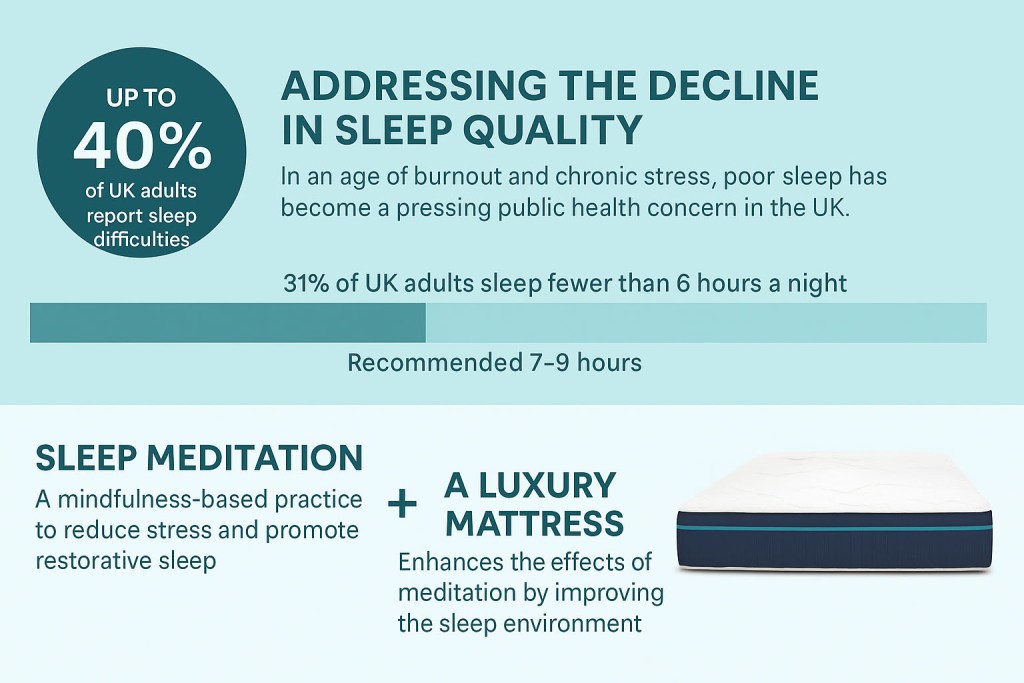
In an age where burnout, digital fatigue, and chronic stress are commonplace, the quality of our sleep has become one of the most pressing public health concerns especially in the UK. According to the Sleep Charity UK, up to 40% of adults report difficulties sleeping. Meanwhile, a recent study by Aviva found that 31% of UK adults regularly sleep for fewer than six hours per night, which is well below the recommended seven to nine hours. This alarming trend has serious implications for our mental health, productivity, and overall well-being.

poor sleep statistics

One emerging intervention showing great promise is sleep meditation, a mindfulness-based practice that helps calm the mind and reduce stress hormones. It focuses on creating the internal conditions for restful, restorative sleep. But to fully benefit from sleep meditation, it’s important to consider both mental techniques and physical factors. Particularly important is the sleep environment. From brainwave activity to bedroom setup, this article explores how sleep meditation works, why it’s scientifically valid, and how a luxury mattress can significantly enhance its effects.

What Is Sleep Meditation?

Sleep meditation, sometimes referred to as guided sleep meditation or yoga nidra, is a form of mindfulness designed to relax the body and reduce cognitive arousal before sleep. It typically involves:

  • Slow, controlled breathing
  • Body scans
  • Visualisation techniques
  • Calm auditory cues or guided narration
impact of sleep meditation on mental health

Unlike traditional meditation, which aims for present-moment awareness, sleep meditation’s goal is to lead the body into a sleep-ready state. It does this by turning down the activity of the sympathetic nervous system which is responsible for the stress response. It also encourages the parasympathetic nervous system, which supports rest and digestion.

How Sleep Meditation Rewires the Brain

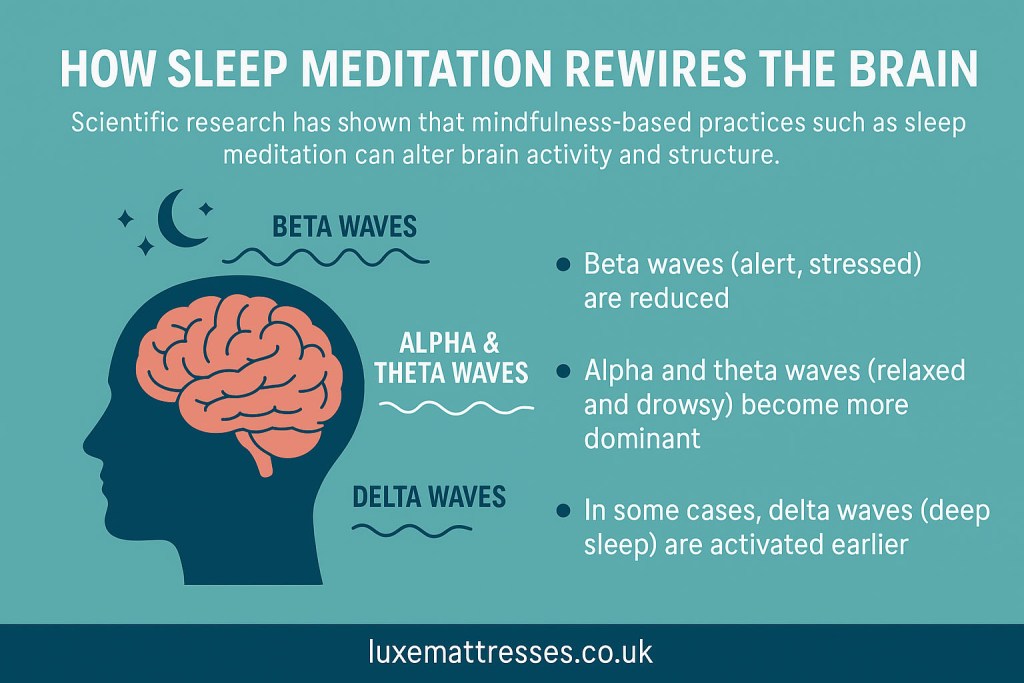
Scientific research, including neuroimaging studies from institutions like the University of Oxford, has shown that mindfulness-based practices like sleep meditation can alter brain activity and structure. When practiced regularly, meditation reduces the activity in the amygdala, which is the part of the brain involved in emotional reactivity. It also increases thickness in areas associated with attention regulation and sensory processing.
how sleep meditation brain relaxation

Sleep meditation also directly influences brainwave patterns:

  • Beta waves (alert, stressed) are reduced
  • Alpha and theta waves (relaxed and drowsy) become more dominant
  • In some cases, delta waves (deep sleep) are activated earlier

This change in neural activity supports faster sleep onset, deeper sleep cycles, and fewer nighttime awakenings.

Impact on Mental Health and Mood

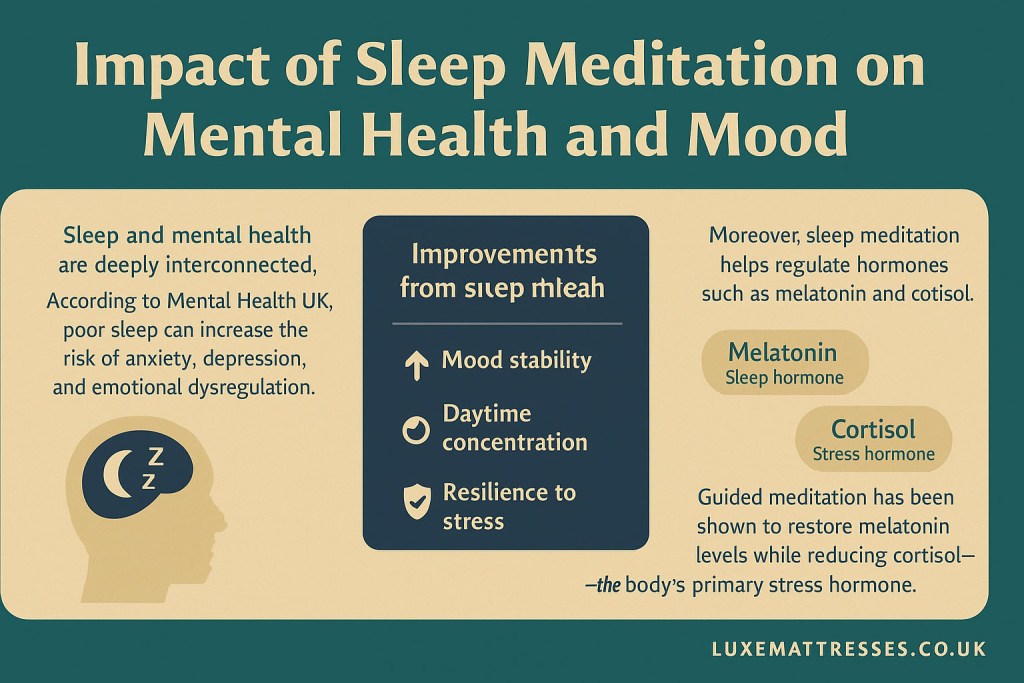
Sleep and mental health are deeply interconnected. According to Mental Health UK, and Luxe Publication, poor sleep can increase the risk of anxiety, depression, and emotional dysregulation. In contrast, studies suggest that even 10 minutes of guided sleep meditation per night can result in significant improvements in:

  • Mood stability
  • Daytime concentration
  • Resilience to stress
impact of poor sleep on health

Moreover, sleep meditation helps regulate hormones such as melatonin and cortisol. Melatonin, the sleep hormone, is often suppressed in people who use screens late into the evening or who are chronically stressed. Guided meditation has been shown to restore melatonin levels. Additionally, it reduces cortisol, which is the body’s primary stress hormone.

The Overlooked Role of the Sleep Environment

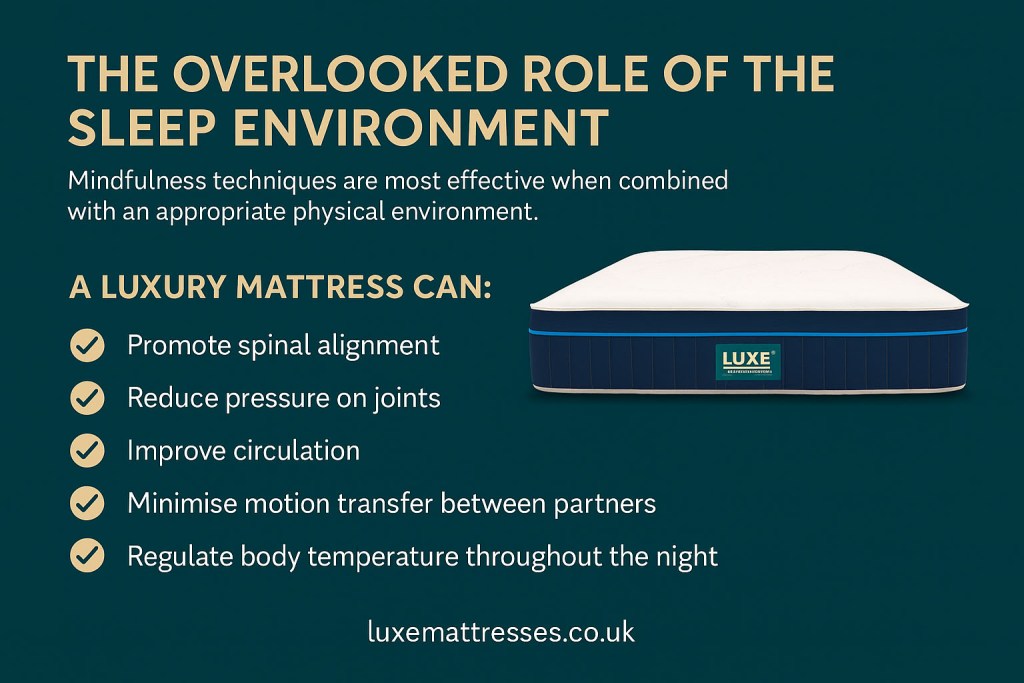
While mindfulness techniques play a vital role in improving sleep quality, they work best when paired with an appropriate physical environment. This is where the concept of a luxury mattress becomes highly relevant not as an indulgence, but as an essential component of sleep health.
does sleep environment effect sleep mode

According to the Sleep Council UK, one of the top causes of poor sleep is an uncomfortable or unsupportive mattress. A luxury mattress crafted with high-density foam, natural latex, pocket springs, and breathable organic materials-can:

  • Promote spinal alignment
  • Reduce pressure on joints
  • Improve circulation
  • Minimise motion transfer between partners
  • Regulate body temperature throughout the night

This matters because physical discomfort can override even the most skilled meditation practice. The brain may struggle to enter deep relaxation if the body is contending with poor posture, heat retention, or pressure points. In this sense, a luxury mattress supports sleep meditation by removing physical barriers to mental calm.

Psychological Benefits of Combining Sleep Meditation and Environmental Support

When sleep meditation is combined with the right physical sleep environment including a quality mattress, calming colours, reduced noise, and controlled lighting its benefits are amplified. This holistic approach to sleep taps into biopsychosocial health. It addresses biological needs, such as comfort and temperature. Additionally, it integrates psychological needs, such as stress reduction, and social/environmental factors like bedroom setup and technology use.
recommended hour or sleep

For instance:

  • A 2021 survey by Dreams UK found that 57% of Britons admitted to using their phone right before bed something known to delay melatonin production. Pairing meditation with a screen-free, physically inviting sleep environment can counteract these behaviors.
  • NHS guidelines for insomnia treatment increasingly include lifestyle-based recommendations such as mindfulness training and environmental optimisation, not just medication.

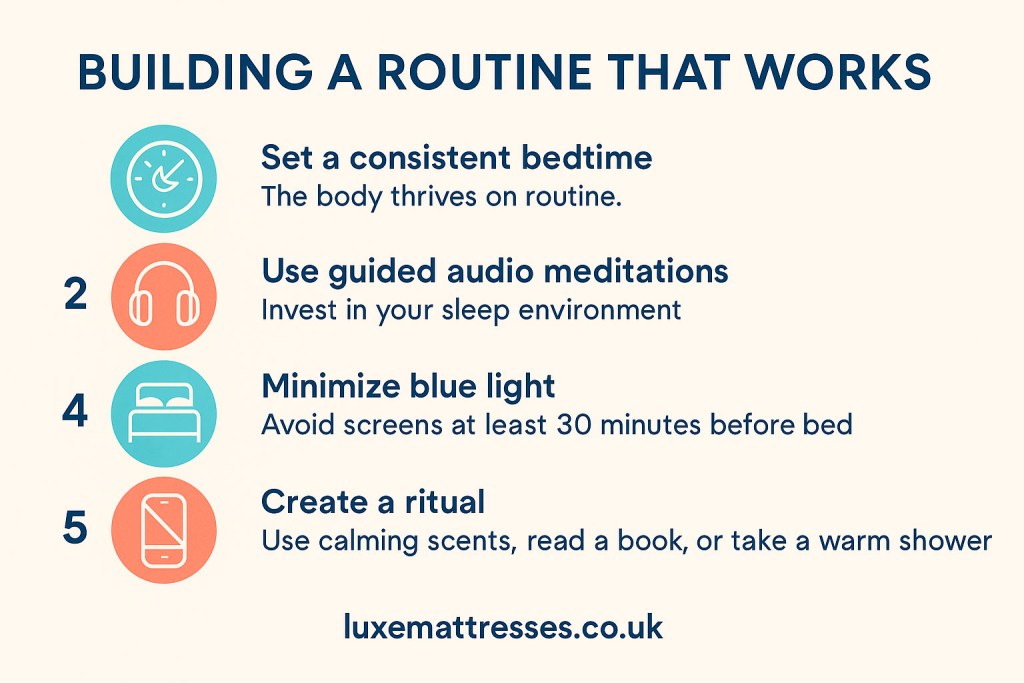
Building a Routine That Works

Implementing sleep meditation doesn’t require dramatic lifestyle changes. Here’s how you can begin integrating it into your routine, especially if you’re in the UK and affected by winter-related mood shifts or high stress from urban living:
how to improve sleep
  1. Set a consistent bedtime: The body thrives on routine.
  2. Use guided audio meditations: Apps like Headspace, Insight Timer, or Calm offer UK English voices. These apps provide short meditations tailored for sleep.
  3. Invest in your sleep environment: Opt for a luxury mattress that suits your posture and comfort needs. This choice is especially important if you experience back pain, night sweats, or disrupted sleep.
  4. Minimise blue light: Avoid screens at least 30 minutes before bed.
  5. Create a ritual: Use calming scents like lavender, read a book, or take a warm shower before beginning your meditation.

FAQs

Does sleeping help rewire your brain?

Yes, sleep drives neuroplasticity by consolidating memories, strengthening synapses, and clearing waste via glymphatic system essential for learning and adaptation.

Did the Dalai Lama say sleep is the best meditation?

Yes, he stated “Sleep is the best meditation,” emphasizing rest’s restorative power for mind and body akin to deep contemplative practice.

Does meditation rewire your brain?

Yes, meditation boosts neuroplasticity, thickening prefrontal cortex for focus/emotion regulation and shrinking amygdala for reduced stress.

What is the 20 minute rule for insomnia?

If unable to sleep after 20 minutes, leave bed for a dull activity (reading) until drowsy, retraining brain to associate bed with sleep only.

What is the 3-3-3 rule for insomnia?

3 a.m. wake: Get up after 3 minutes; 3 deep breaths; 3 positive thoughts/mantras resets anxiety without clock-checking.

What is the Japanese 18 minute nap?

Inemuri (“sleeping while present”) allows short 15-20 minute workplace naps for refreshment, culturally accepted as dedication, not laziness.?

Final Thought

In the conversation around sleep quality, it’s easy to focus solely on techniques. Common techniques include breathing methods, relaxation tracks, or digital detoxes. However, true rest is both a mental and physical process. By blending science-backed sleep meditation with the comfort of a well-crafted luxury mattress, individuals can create conditions that support long-term sleep health and emotional resilience.

As public awareness around sleep continues to grow especially in light of NHS campaigns around sleep hygiene and mental health it’s crucial to understand that no single tool offers a cure-all. Instead, it’s the combination of mental training and physical support that leads to deep, meaningful rest.

After all, sleep isn’t a luxury. But sleeping on a luxury mattress while mastering the art of meditation? That just might be one of the best investments in your well-being.
How Many Hours of Sleep Do You Really Need? (Use Our Sleep Calculator)
March 9, 2026

How Many Hours of Sleep Do You Really Need? (Use Our Sleep Calculator)

Estimated reading time: 6 minutes

Sleep is a fundamental component of overall health, influencing everything from cognitive function to immune response. Using a sleep calculator can help you find the perfect balance. While general guidelines suggest that adults need between 7 to 9 hours of sleep per night, individual needs can vary based on age, lifestyle, and health conditions. Understanding your unique sleep requirements is essential for optimising rest and well-being.
1. Understanding Sleep Cycles and Their Impact

calculate sleep debt

Sleep is composed of multiple cycles, each lasting approximately 90 minutes. These cycles include stages of light sleep, deep sleep, and REM (rapid eye movement) sleep. Waking up at the end of a sleep cycle, rather than in the middle, can lead to feeling more refreshed and alert. Aligning your sleep schedule with these natural cycles can enhance sleep quality and daytime functioning.

2. Personalized Bedtime and Wake-Up Calculations

Bedtime Calculator

Determining the optimal time to go to bed involves considering your desired wake-up time and the number of complete sleep cycles you aim to achieve. For instance, if you need to wake up at 6:30 AM and want to complete five sleep cycles (7.5 hours), your ideal bedtime would be around 11:00 PM. This calculation also accounts for the average time it takes to fall asleep, typically about 15 minutes.

Sleep Calculator

Plan your optimal bedtime and wake-up times based on your body’s natural sleep cycles. Wake up refreshed and energized every morning.

Why Use This Calculator?

  • Calculate the ideal bedtime based on when you need to wake up
  • Find the optimal wake-up time based on when you go to bed
  • Work with your body’s natural 90-minute sleep cycles
  • Minimize grogginess and maximize morning energy
  • Based on sleep science research
Use Sleep Calculator

Wake-Up Time Calculator

Conversely, if you plan to go to bed at a specific time, calculating the best wake-up time involves ensuring you complete full sleep cycles. For example, going to bed at 10:00 PM and aiming for six sleep cycles (9 hours) would suggest a wake-up time of 7:00 AM.

3. Assessing and Managing Sleep Debt

What Is Sleep Debt?

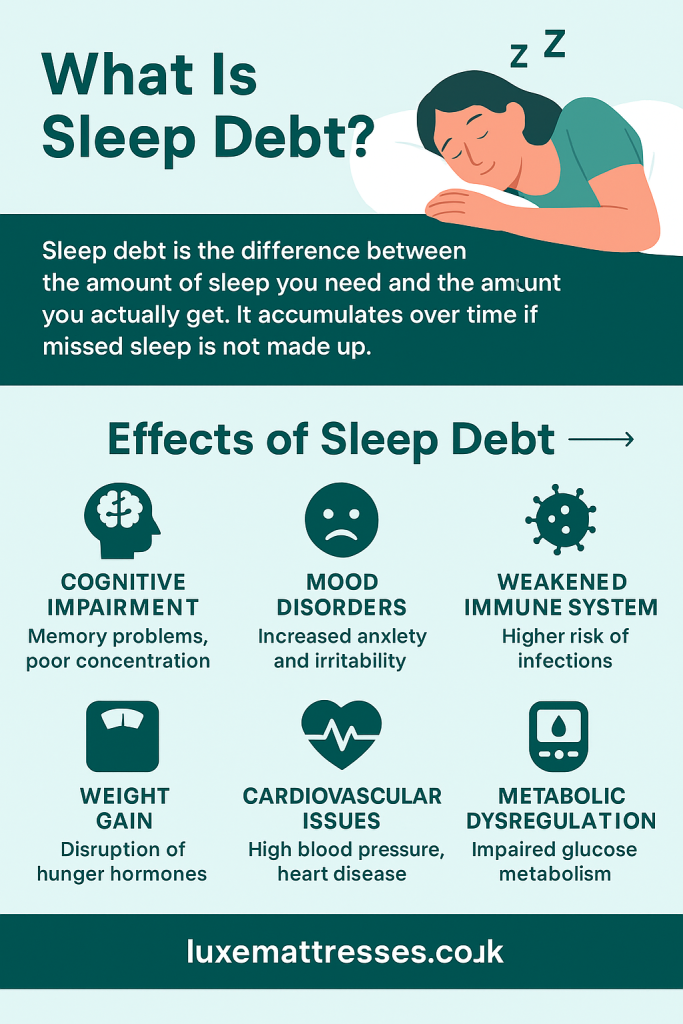
Sleep debt accumulates when you consistently get less sleep than your body requires. For example, if your body needs 8 hours of sleep per night but you only get 6 hours, you accrue a sleep debt of 2 hours per night. Over a week, this amounts to 14 hours of lost sleep.

what is sleep debt?

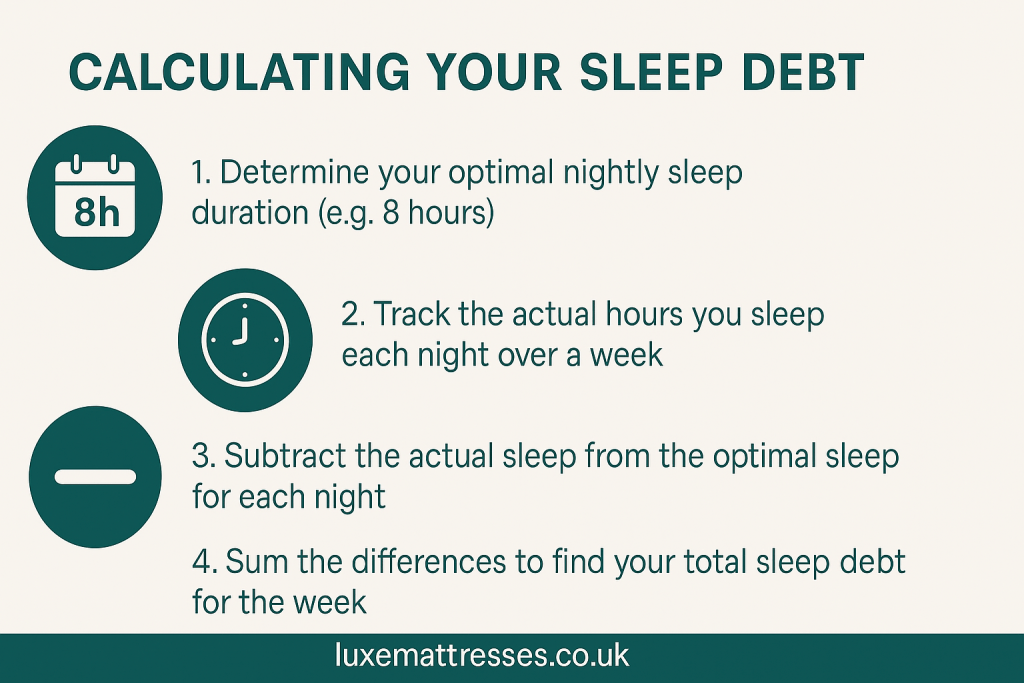
Calculating Your Sleep Debt

To calculate your sleep debt:

  1. Determine your optimal nightly sleep duration (e.g., 8 hours).
  2. Track the actual hours you sleep each night over a week.
  3. Subtract the actual sleep from the optimal sleep for each night.
  4. Sum the differences to find your total sleep debt for the week.

Comprehensive Sleep Quiz

Discover your personalized sleep score and get expert recommendations to improve your sleep quality. This quiz takes about 5-7 minutes to complete.

Why Take This Quiz?

  • Get a comprehensive analysis of your sleep habits
  • Receive personalized recommendations from sleep experts
  • Find the perfect mattress match for your sleep style
  • Learn science-backed tips to improve your sleep quality
  • Get personalized product recommendations
Take the Sleep Quiz

Managing sleep debt involves adjusting your schedule to allow for additional sleep, improving sleep hygiene, and addressing any underlying sleep disorders.

4. Evaluating Sleep Quality and Establishing Benchmarks

Assessing sleep quality goes beyond duration. Key factors include:

  • Sleep Latency: Time taken to fall asleep.
  • Sleep Efficiency: Percentage of time in bed spent sleeping.
  • Nighttime Awakenings: Frequency and duration of awakenings during the night.

Establishing benchmarks for these factors helps in identifying areas for improvement and tracking progress over time.

5. Discovering Your Sleep Personality

Understanding your sleep personality can provide insights into your sleep patterns and needs. Common sleep personalities include:

  • The Light Sleeper: Easily awakened by noise or light.
  • The Deep Sleeper: Rarely disturbed during sleep.
  • The Night Owl: Prefers late bedtimes and wake-up times.
  • The Early Bird: Naturally inclined to sleep and wake early.

Identifying your sleep personality can guide you in tailoring your sleep environment and routines for optimal rest.

6. Personalized Sleep Recommendations

Based on your sleep assessments and personality, consider the following personalized recommendations:

  • For Light Sleepers: Use white noise machines, blackout curtains, and maintain a consistent sleep schedule.
  • For Deep Sleepers: Ensure alarm clocks are effective in waking you and avoid oversleeping.
  • For Night Owls: Gradually adjust bedtime earlier and limit exposure to screens before bed.
  • For Early Birds: Maintain consistent sleep and wake times, even on weekends.

Additionally, selecting a mattress that aligns with your sleep preferences can enhance comfort and support, contributing to better sleep quality.

7. The Hidden Dangers of Sleep Debt

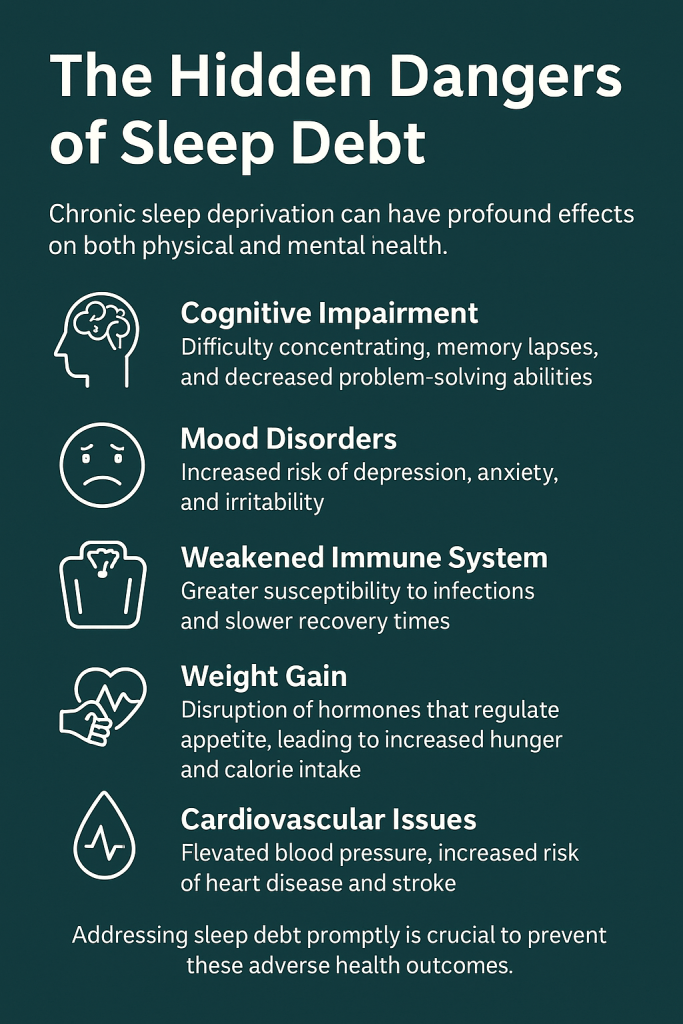
Chronic sleep deprivation can have profound effects on both physical and mental health. Some of the potential consequences include:

  • Cognitive Impairment: Difficulty concentrating, memory lapses, and decreased problem-solving abilities.
  • Mood Disorders: Increased risk of depression, anxiety, irritability and Mental health effects
  • Weakened Immune System: Greater susceptibility to infections and slower recovery times.
  • Weight Gain: Disruption of hormones that regulate appetite, leading to increased hunger and calorie intake.
  • Cardiovascular Issues: Elevated blood pressure, increased risk of heart disease and stroke.
  • Metabolic Dysregulation: Impaired glucose metabolism, increasing the risk of type 2 diabetes.
dangers of sleep debt

Addressing sleep debt promptly is crucial to prevent these adverse health outcomes.

FAQs

How many hours of sleep do I truly need?

Adults truly need 7-9 hours per night for optimal health, per AASM/CDC guidelines less increases risks like heart disease and cognitive decline.

Is 4 hours of sleep really enough?

No, 4 hours is chronically insufficient for most, leading to impaired cognition, weakened immunity, and higher chronic disease risk; only rare short sleepers thrive on it.

What is the 10 5 3 2 1 sleep rule?

10 hours before bed: no caffeine; 5 hours: no alcohol/eat; 3 hours: no work/exercise; 2 hours: no naps; 1 hour: no screens promotes quality sleep.

Do some people really need 12 hours of sleep?

Yes, some like those with hypersomnia or recovery needs require 10-12 hours, but most adults over 9 signals underlying issues like depression.?

Who sleeps for 90% of the day?

Koalas sleep up to 90% (18-22 hours/24), an adaptation for low-nutrient eucalyptus diets requiring energy conservation.?

Conclusion

Understanding and aligning with your unique sleep needs is essential for maintaining long-term health and well-being. With the help of tools like our sleep calculator, you can evaluate your current sleep patterns, identify potential sleep debt, and uncover your individual sleep personality. These insights empower you to make smarter, more tailored decisions about your nightly routine. By adopting personalized strategies and enhancing your sleep environment, you’ll set the foundation for more restorative, high-quality sleep and better overall daily performance.

How Sleep Affects Your Immune System: The Science Behind Rest and Recovery
March 7, 2026

How Sleep Affects Your Immune System: The Science Behind Rest and Recovery

Estimated reading time: 8 minutes

Imagine waking up tired, your body fighting off the common cold or flu despite every other preventative strategy. What if the secret to a healthier immune system isn’t expensive supplements or fad diets but the quality of your sleep? The connection between how sleep affects your immune system is stronger than most realise. 

In today’s high-stress lifestyle, with stress and long working hours, sleep often gets pushed to the side, and so does your body’s ability to battle off illness. That’s why learning the science of sleep and immunity is more important than ever. From the mattress you rest your head on to your bedtime routine, small changes can make a difference in your immune health. 

The Science of Sleep and Immunity

Sleeping is not a passive activity but a complex biological process necessary for immune function. Immune defense mechanisms that are in a dormant state when a person is awake are activated during deep sleep. It is the time of renewal when the immune system can rebuild and repair itself.

One of the key players is cytokines, which are small proteins that help regulate immune responses. Some cytokines are produced and released during sleep to fight infection and inflammation. Without adequate sleep, the body’s production of these protective cytokines is inhibited, making it harder for the body to defend against disease.

the science of sleep

T-cells, which are white blood cells that detect and destroy infection, become more active while you sleep, too. Phases of deep sleep have been discovered to cause the proliferation and activation of these cells so your immune system becomes stronger.

Research explains that sleep assists the immune system as it enables the body to develop antibodies and fight infections. The body’s circadian rhythm, which is responsible for sleep and wakefulness, also manages immune function, which further strengthens the relationship between sleep and immunity.

Disturbed sleep patterns, such as decreased deep sleep, can undermine this immune stimulation process. That is why a proper sleeping environment is crucial to having a healthy immune system. A supportive mattress, such as the Luxe Nova Hybrid Mattress, promotes deeper and longer sleep. Ultimately, you get to start your day with a fight against infection.

When you understand these concepts, you will realise why sleep is so much more than simple relaxation. It’s an active time of immune restoration and rehearsal.

How Lack of Sleep Affects the Immune System

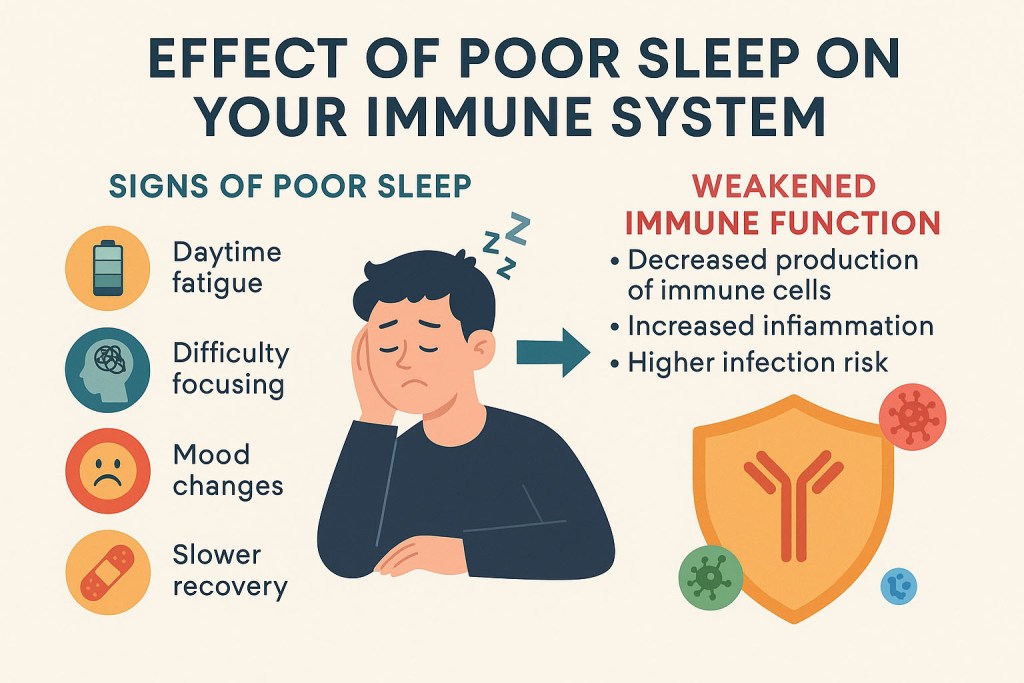
Long-term sleep deprivation has a proven ill effect on the immune system, making us more vulnerable to infection. So, theoretically, if you consistently sleep less than six hours per night, your body generates fewer cytokines and infection-fighting white blood cells, weakening your body’s natural defence.

effect of poor sleep on your immune system

Research indicates that those who sleep normally fewer than the recommended hours a night are much more susceptible to catching colds and other illnesses.

Sleep deprivation also wreaks havoc with the body’s balance of inflammation, resulting in chronic low-grade inflammation, which is harmful in the long term.

Sleep deprivation influences the speed at which the immune system reacts to new infections. Vaccines, for instance, are less effective in individuals who have a poor sleeping pattern since the immune response is compromised. This is particularly relevant in the UK, where seasonal flu, influenza, and other infections strain the healthcare system annually.

Sleep Calculator

Plan your optimal bedtime and wake-up times based on your body’s natural sleep cycles. Wake up refreshed and energized every morning.

Why Use This Calculator?

  • Calculate the ideal bedtime based on when you need to wake up
  • Find the optimal wake-up time based on when you go to bed
  • Work with your body’s natural 90-minute sleep cycles
  • Minimize grogginess and maximize morning energy
  • Based on sleep science research
Use Sleep Calculator

Therefore, the answer to “Does sleep deprivation weaken the immune system?” is a resounding yes, and it is evidence-supported. Sleep deprivation renders your body less efficient at identifying and fighting off invaders and makes you more susceptible to attack.

Real-world situations testify to this. Night shift workers, who usually work nonstandard shifts, have increased infection and illness rates. Likewise, students who stay up all night to study for exams discover that their immunity is low and thus are susceptible to colds.

Poor sleep over the long term typically not only decreases immune function but potentially also raises the risk of inflammatory-linked chronic diseases like diabetes and heart disease.

How Good Sleep Boosts Your Immune System

Having quality sleep has a very positive impact on your immune system. As discussed before, when you get deep sleep, your body increases the production of infection-fighting cells, such as natural killer cells and T-cells, which roam around and destroy harmful viruses and bacteria.

Research also shows that well-rested people have a greater response to vaccines. For instance, people who are well-rested before, during, and after inoculation produce more effective protective antibodies that enable their bodies to develop long-lasting immunity.

can mattress improve sleep and immune systen

Chronic inflammation, which accompanies poor sleep, harms tissue and breaks down immune defences. Proper rest keeps inflammation at bay, which promotes general health.

If you find it hard to get a good night’s sleep, it’s about time you invest in a good quality and comfortable mattress. Luxe Mattresses is all about creating mattresses that are specifically crafted for maximum comfort and support, which lead to longer deep sleep cycles. A better mattress will most likely provide you with the good sleep your immune system requires to operate at its best.

Good sleep also helps with mental health. Mind.org.uk discusses that poor sleep can worsen anxiety and depression, which can reduce immune response. In contrast, quality sleep enhances the mind and body.

Check out this article to learn how your mattress can impact mental health and stress levels.

In a nutshell, we can say that sleeping is the strongest natural way of increasing your immune system, reducing the risk of illness, and aiding in recovery.

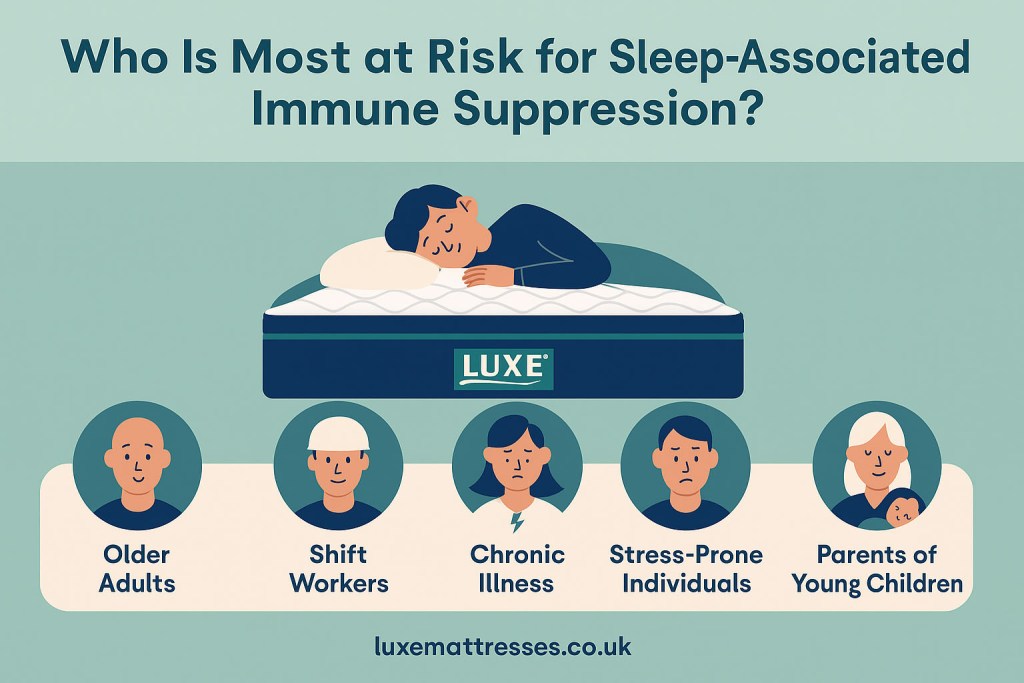
Who is most at risk for sleep-associated immune suppression?

who is most at risk for sleep associated immune suppression

People often underestimate sleep affect on immune system, the Certain groups are particularly vulnerable to weakened immune systems due to insufficient sleep. They include shift workers whose sleep patterns are interrupted, which influences their immune system and predisposes them to infections and slower healing.

Students, especially during examination periods, lose sleep, weakening their immunity. The older people also experience alterations in sleeping behaviors and immunity naturally, making them susceptible to sickness if there is not good quality sleep.

Patients with chronic illness also sleep poorly and struggle with immunity. Diabetes or heart disease is exacerbated by sleep deprivation, contributing to a spiralling effect on health.

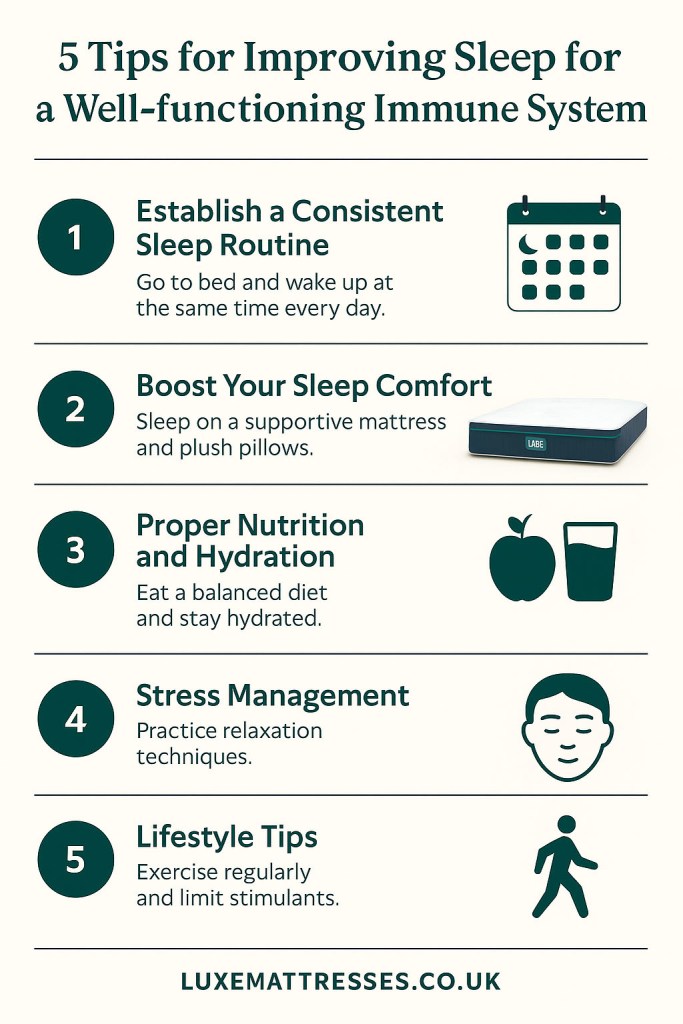
5 Tips for Improving Sleep for a Well-functioning Immune System

tips for improving sleep and immune system

Establish a Consistent Sleep Routine

One of the easiest things to do to strengthen your immune system is to maximise the quality of your sleep. Establishing a regular sleep routine synchronises your body’s internal rhythm so that you sleep more soundly. Rising and retiring at the same time every day, weekends included, instills a rhythm that is immune-friendly.

Boost Your Sleep Comfort

Your sleeping arrangement matters. Having a good mattress, like the Majestic 9000, to support the body to avoid pains and facilitate uninterrupted sleep is very important. Keeping the room cool, dark, and quiet also facilitates deep sleep. 

Choosing the right mattress firmness can also help reduce snoring and sleep apnea symptoms; learn more about this in can a firm mattress help with snoring and sleep apnea?.

Proper Nutrition and Hydration

Sleep and immunity are also affected by nutrition and hydration. Avoid heavy meals, caffeine, and alcohol close to bedtime as they disrupt sleep patterns. A proper diet rich in minerals and vitamins supports sleep and immunity.

Stress Management

Stress needs to be managed as stress upsets the quality of sleep. Techniques like meditation, mindfulness, or even deep breathing can calm the mind during the night, and the individual will be able to sleep comfortably. According to NHS reports, reducing stress improves sleep as well as immunity.

Lifestyle Tips

Cutting down on screen time at bedtime is another big step. Blue light emitted from screens will delay the release of melatonin, the hormone that makes your body sleep. It doesn’t take radical lifestyle adjustments to make these changes. Small, persistent habits can be a big sleep quality booster.

The Takeaway Message

Sleep is the key to a robust immune system. When you priorities restorative sleep with better habits and a quality mattress like the Majestic 9000 or Luxe Nova Hybrid Mattress, you enhance your body’s natural protection. Remember: better sleep means better immunity, so invest in rest to protect your health from what lies ahead.

FAQs

How does sleep affect the immune system?

Sleep promotes the growth of infection-fighting cells and also maintains inflammation in check, thus making your immune system stronger.

Does lack of sleep weaken the immune system?

Yes. Sleep deprivation over time depresses immune cell function and raises the risk of infection.

What are the most effective methods to enhance immunity while sleeping?

You should adhere to a regular sleeping pattern, establish a sleeping environment, control stress, and refrain from taking stimulants close to bedtime.

How many hours should I sleep to maintain a healthy immune system?

Most adults need 7″9 hours of quality nighttime sleep for optimal immunity.

Can stress affect sleep and immunity as well?

Yes, definitely. Stress interferes with sleep and also directly impairs immune functions.

Are there superior mattresses for immune health?

Supportive beds that permit deep, uninterrupted sleep, such as Luxe Mattresses, contribute to enhanced immune function.

Everything You Need to Know About Mattress for Kids in 2026
March 7, 2026

Everything You Need to Know About Mattress for Kids in 2026

Estimated reading time: 13 minutes

Choosing the right mattress for kids is essential for their health and comfort. In 2026, factors such as support, safety, and durability are vital. Luxe Mattresses offers various options designed for children, featuring customizable firmness and cooling technology to promote healthy sleep. They provide high-quality memory foam, hybrid, and organic mattresses tailored to children’s needs.

Why Choosing the Right Mattress for Kids is Crucial

A good mattress supports kids’ growing bodies, ensuring they rest well and wake up ready for the day ahead. Understand these important parameters before finalising a mattress for kids.

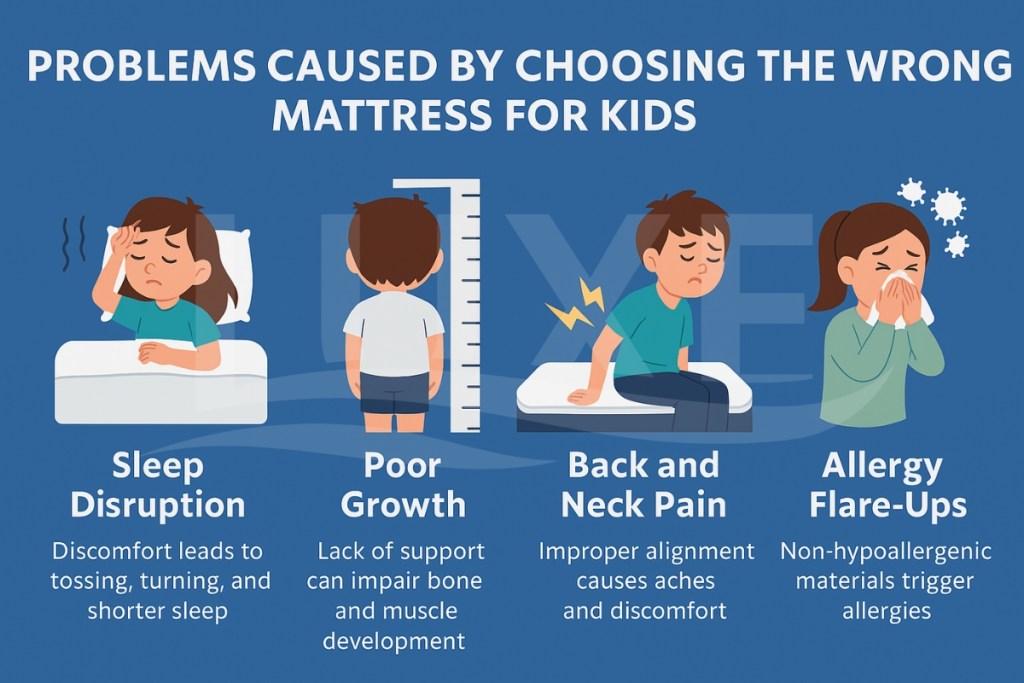
problem caused by choosing the wrong mattress for kids

Impact on Sleep Quality and Overall Health

Choosing the right mattress greatly affects a child’s sleep quality. A comfortable mattress helps kids get the deep, restful sleep they need. Good sleep is essential for their overall health, as it allows their body to recover and stay energised for the next day.

Role in Supporting Growing Bones and Muscles

A mattress that provides proper support is important for a child’s developing body. As kids grow, their bones and muscles need extra support to prevent discomfort and to ensure healthy development. A supportive mattress helps avoid aches and strains, promoting better posture and overall growth.

Importance of Comfort for Better Sleep Patterns and Mental Development

Comfort is key to a child’s ability to sleep well, and Luxe Mattresses are developed considering this characteristic. When kids are comfortable, they fall asleep more easily and stay asleep longer. This leads to better sleep patterns, which are crucial for mental development. Good sleep helps improve mood, learning, and memory, contributing to a child’s cognitive and emotional well-being.

What to Look for in a Mattress for Kids in 2025

The best mattress for kids is important for their comfort. It affects not just their sleep quality but also children’s overall health and development. Luxe Mattresses offers different varieties of Mattresses that provide a comfortable sleep to your kids.

feature to look for in a kid's mattress

1. Comfort and Support

When choosing a mattress for kids, comfort and support are the top priorities. A medium-firmness mattress is ideal because it offers the right balance for spinal support. This helps keep the spine in a natural position while kids sleep. Comfort is important because it helps kids sleep more soundly without tossing and turning. A comfortable mattress ensures they rest well, which is essential for their growth and development.

2. Safety Features

Safety is crucial when selecting a mattress for kids. It is important to choose one made from non-toxic materials. These materials are safe for children, preventing exposure to harmful chemicals. Hypoallergenic and breathable fabrics are also important. They reduce the risk of allergies and keep the mattress fresh by allowing air to circulate, ensuring a safe and healthy sleep environment.

3. Durability

A durable mattress is a must for growing children. Kids can be tough on mattresses, so choosing long-lasting materials is essential. A durable mattress can handle the wear and tear that comes with active children, ensuring that it lasts for many years. Investing in a durable mattress saves money in the long run since it won’t need to be replaced frequently.

4. Ease of Maintenance

A mattress that is easy to maintain makes life simpler for parents. Look for mattresses with washable covers. This feature makes cleaning easier and ensures the mattress stays fresh. Moisture-resistant features are also important, as they help prevent damage from spills or accidents. These features help keep the Luxe Mattresses in good condition for a longer time.

5. Sustainability

Sustainability is an important factor in 2025. Choosing a mattress made from eco-friendly materials is a great way to help protect the environment. Look for mattresses that use sustainable manufacturing processes and materials. These mattresses are better for the planet and still provide the same comfort and durability that kids need.

Types of Mattresses for Kids

There are different types of mattresses in the market. Luxe Mattresses offers different products for different age groups. Here are a few top names for your kids.

type of mattresses for kids

Memory Foam Mattresses

Memory foam mattresses are known for their ability to contour to the body. This can be great for kids who need extra support. They provide excellent pressure relief, which helps with comfort. However, memory foam can sometimes retain heat, making it less ideal for warmer climates. It is also important to note that these mattresses can be heavier and harder to move around. Memory foam is best for kids who need specific support, especially for joint pain or body alignment.

Innerspring Mattresses

Innerspring mattresses have coils inside that offer firm support. These mattresses are generally lighter and more breathable, which helps with temperature control. The coils provide a springy feel, which can be great for kids who move around a lot while sleeping. However, they may not offer as much pressure relief as memory foam. Innerspring mattresses are a good choice for active kids who prefer a firmer, bouncier feel.

Hybrid Mattresses

Hybrid mattresses combine foam layers and inner springs to offer the best of both worlds. They provide the comfort of memory foam with the support of springs. The foam layers add softness and pressure relief, while the springs give firm support and bounce. Hybrid mattresses are great for kids who need both comfort and support. They are ideal for growing children who might have changing sleep preferences.

Organic Mattresses

Organic mattresses are made with eco-friendly, natural materials like organic cotton, wool, or latex. These mattresses are free from harmful chemicals and are a safer option for kids with allergies or sensitive skin. They are also more environmentally friendly, making them a great choice for eco-conscious families. Luxe Mattresses’ Organic mattresses provide natural comfort and support, though they can sometimes come at a higher price.

Adjustable Mattresses

Adjustable mattresses can change firmness levels, which is great as kids grow and their needs change. These mattresses allow parents to adjust the support to suit their child’s current comfort level. They are versatile and can be customised for different sleep preferences. Adjustable mattresses are a great long-term option for kids since they can adapt as the child grows.

The advancement of technology will change the trends for mattresses for kids in 2026. Check this important technological knowledge before buying a Luxe Mattresses for your kids.

what is a smart mattress with sleep tracking technology

Smart Mattresses with Sleep Tracking Technology

Smart mattresses are becoming more popular in 2025. These mattresses have built-in technology that tracks a child’s sleep patterns. By monitoring sleep quality, these mattresses can help parents understand their child’s sleep habits. Some smart mattresses can even adjust their firmness based on the child’s sleep position. This technology helps improve sleep quality and overall health.

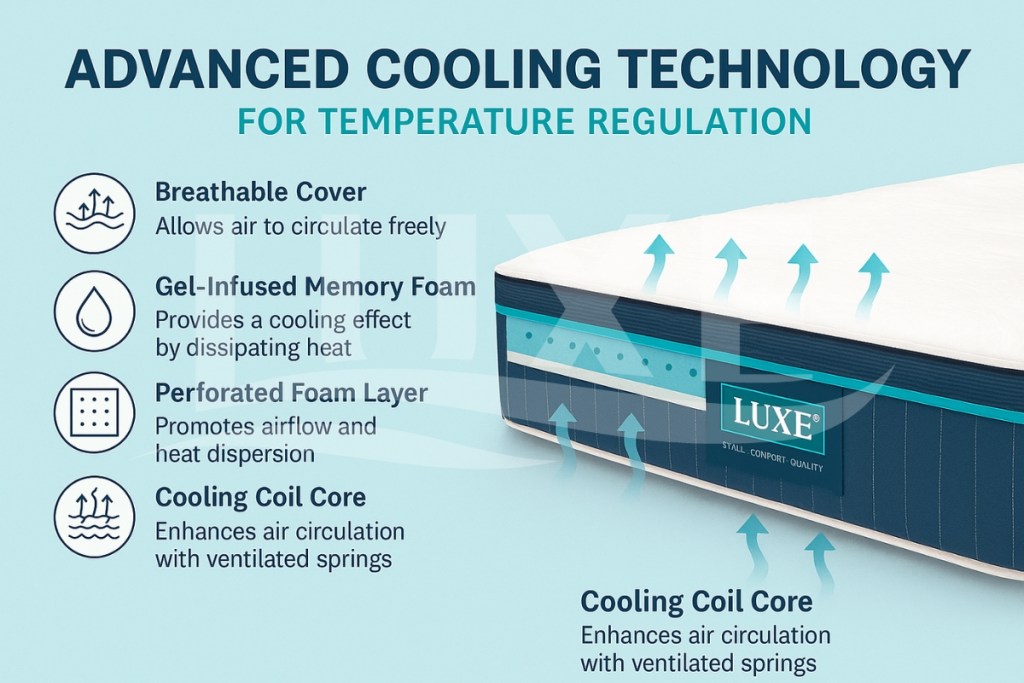
Advanced Cooling Technology for Temperature Regulation

Temperature regulation is another key trend. Mattresses with advanced cooling technology help keep kids comfortable throughout the night. These mattresses prevent overheating by using materials that wick away moisture and allow air to flow. This technology is especially useful for kids who tend to get too hot while sleeping, ensuring they stay cool and comfortable for better sleep. Luxe Mattresses offers LTX cooling gel for most of its products.

advanced cooling technology for temperature regulation

Increased Focus on Eco-Friendly and Non-Toxic Materials

In 2025, there is a growing focus on eco-friendly and non-toxic materials in kids’ mattresses. More manufacturers are using organic cotton, natural latex, and other safe, eco-conscious materials. These mattresses are free from harmful chemicals, making them a safer choice for kids, especially those with sensitive skin or allergies. Eco-friendly mattresses also have less impact on the environment.

Incorporation of Antimicrobial Properties

Another important trend is the addition of antimicrobial properties to kids’ mattresses. These properties help prevent the growth of bacteria, mould, and dust mites, which can trigger allergies. Mattresses with antimicrobial treatments are more hygienic and ensure that kids sleep in a cleaner environment. This feature is especially beneficial for families with allergy-prone children, check our full guide ” how bad mattresses impact on your health“.

Personalisation Options

Personalisation is becoming a trend in kids’ mattresses. Some mattresses now offer customisation based on weight, age, or sleep preferences. For example, parents can choose different firmness levels to suit their child’s needs. Personalised mattresses help ensure that kids get the best support and comfort, which can improve sleep quality and overall health as they grow.

How to Choose the Best Mattress for Your Child

Choosing the best mattress for kids depends upon many factors. Choose the mattress by following these guidelines.

children's mattress considerations

Consider Your Child’s Age and Weight

When choosing a mattress, consider your child’s age and weight. As kids grow, their needs change. Younger children often need a softer mattress for comfort, while older children may require a firmer mattress for better support. The weight of your child also plays a role in how much support they need. Heavier children may benefit from a firmer mattress to prevent sinking too deep, while lighter children can use softer mattresses.

Sleep Position Preferences

Your child’s sleep position can also determine the best mattress. Side sleepers often prefer a softer mattress that cushions the shoulders and hips. Back sleepers usually need a medium-firm mattress for support. Stomach sleepers require a firmer mattress to keep their spine aligned properly. Understanding your child’s sleep habits can help you choose the right type of mattress for them.

Budget Considerations

It is important to find a mattress that fits your budget without sacrificing quality. There are plenty of affordable options that still provide great comfort and support. Look for mattresses that offer a good balance of features like durability, comfort, and support at a reasonable price. Investing in a good-quality mattress now will save you from having to replace it too soon.

Allergies and Sensitivities

If your child has allergies or sensitive skin, look for mattresses made from hypoallergenic and breathable materials. These materials help reduce the risk of allergic reactions by preventing the buildup of dust mites and bacteria. Choose mattresses that are certified to be free of harmful chemicals, ensuring your child sleeps in a safe and healthy environment.

Top Mattress Brands for Kids in 2025

There are multiple brands in the world right now. Here are a few top names to consider when choosing the best mattress for your kids.

Memory Foam Mattress

Luxe Mattresses memory foam mattresses are designed for comfort and support, focusing on better sleep. They feature 3D Orthopaedic Technology for targeted support, keeping your spine aligned and reducing pressure on your back, shoulders, and hips. Unlike regular memory foam, Luxe adapts to your body’s shape, weight, and movement, maintaining perfect posture all night. 

extra firm mattress for kids

With added support layers, precision foams, and features like motion isolation and temperature-regulating foam, these mattresses help ease back pain, reduce muscle tension, and improve sleep. They also include hypoallergenic materials, custom firmness options, advanced aeration, and long-lasting durability. With its all-foam design, it’s perfect for toddlers and younger kids who do not need as much support as older children.

LuxeOrganic™ Hybrid

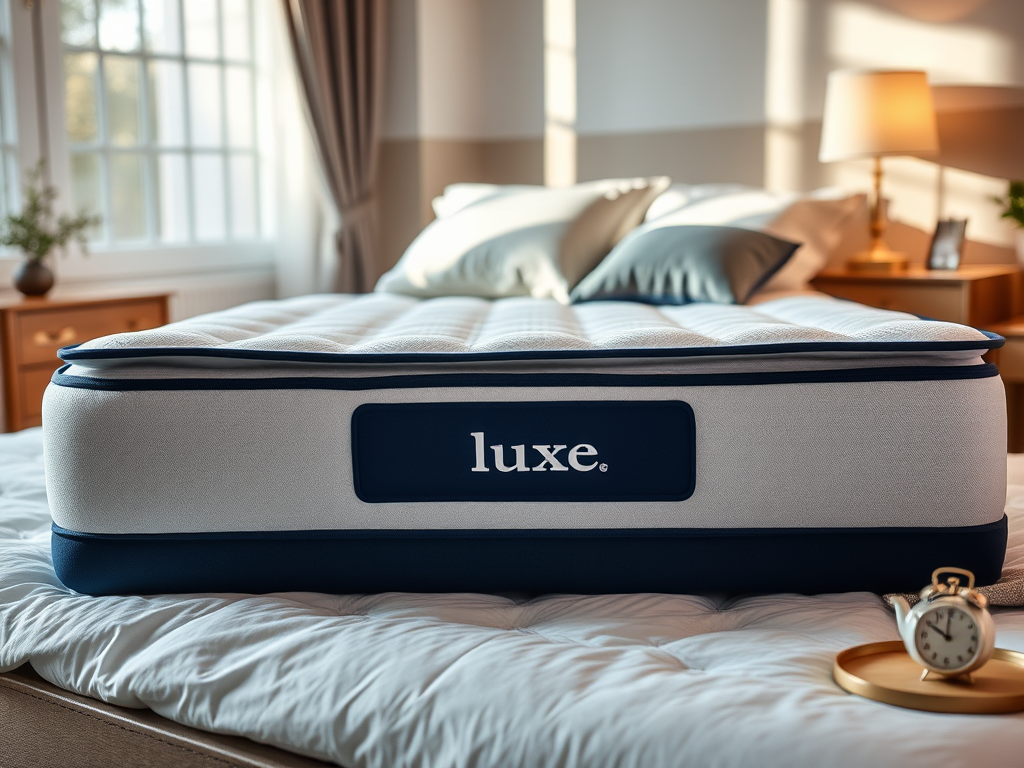
The Luxe Organic™ Hybrid mattress combines organic luxury with great support for your kids. It features a triple-layer spring system and Zero Gravity™ memory foam with LTX Cooling Gel for comfort. The breathable British comfort layers keep your child cool and relaxed, while the hypoallergenic, fire-resistant cover adds extra safety.

LuxeOrganic™ Hybrid for kids
Mattress

This Luxe Mattresses is perfect for all sleep styles, promoting good spinal alignment and temperature regulation. It’s durable and comes with a 10-year guarantee for lasting comfort. Plus, with a full refund policy, you can buy with peace of mind. The discounted price of this mattress is £524.

Luxe-Organic Natural Pillow Top

The Luxe-Organic Natural Pillow Top mattress offers luxurious comfort and organic support with an 11-layer system. It features 1500 micro pocket springs, organic latex, breathable British wool, and Zero Gravity™ foam for a cool, comfortable night’s sleep. The mattress provides excellent body support with gentle pushback where needed, offering the perfect balance of pressure relief and bounce.

Ideal for deep rest, it isolates movement and keeps the surface fresh. The mattress includes an organic cotton pillow top, coir for base support, and a hypoallergenic fire-resistant cover. The price for this Luxe Mattresses is £899. With a combination of layers for cooling, stability, and pressure relief, it’s designed for long-term comfort and durability.

Why Luxe Mattresses Stands Out

Luxe Mattresses offers different comforts to your kids, which is why it stands out among others in the market.

Customisable Firmness (CP-CP40-48™ Base Foam)

Our mattresses let you choose the firmness level that fits your preference, whether soft, firm, or extra-firm. The base foam allows for a tailored sleep experience, giving you the perfect support for your body.

Memory Foam (V-44 to V-60™)

Memory foam layers add softness and support. They adjust to your body, relieving pressure points and ensuring comfort so you wake up feeling refreshed.

Zero Gravity Foam™

If you prefer a bouncy feel, Zero Gravity foam™ provides just the right amount of responsiveness. It supports your movements and keeps you comfortable without sinking too deeply.

LTX-Cooling Gel™

For hot sleepers, LTX-Cooling Gel™ helps regulate body temperature. It reduces heat buildup, keeping the mattress cool and helping you sleep more comfortably through the night.

Last Words for Mattresses for Kids

Investing in the right mattress for your child is an investment in their health and development. Luxe Mattresses offer a range of options that balance comfort, support, and durability, making them ideal for kids. With features like temperature regulation, hypoallergenic materials, and custom firmness, these mattresses ensure a good night’s sleep for your little ones. By prioritising comfort and safety, Luxe Mattresses helps promote healthy sleep habits and overall well-being. Choosing the right mattress today sets the foundation for your child’s growth and development tomorrow.
FAQs

1. How do I choose the right firmness for my child’s mattress?

For most children, a medium-firm mattress is ideal. It provides the right balance of support and comfort, helping to align the spine while still being soft enough for comfort. However, you can choose from soft, firm, or extra-firm options based on your child’s specific preferences and needs.

2. Are Luxe Mattresses safe for children?

Yes, Luxe Mattresses are designed with safety in mind. They are made from non-toxic, hypoallergenic materials that are safe for children, including breathable, antimicrobial covers. Plus, they meet all safety regulations, ensuring a healthy sleep environment.

3. How often should I replace my child’s mattress?

It’s recommended to replace your child’s mattress every 5 to 7 years. However, if you notice any signs of wear or your child begins to complain about discomfort, it may be time for a replacement sooner.

4. Will a memory foam mattress work for my child?

Yes, Luxe’s memory foam mattresses are a great choice for children. They contour to your child’s body, providing excellent support while relieving pressure points. Just make sure to choose a model with breathable materials to prevent heat buildup.

5. How do I maintain my child’s mattress?

To maintain your child’s mattress, rotate it regularly (every 3-6 months) to ensure even wear. Use a mattress protector to guard against stains and allergens, and keep the mattress in a dry, cool environment to help it last longer.

How long memory foam lasts?
March 6, 2026

How Long Does Memory Foam Last? Understanding Material Degradation Over Time

Estimated reading time: 11 minutes

Have you ever slept on a mattress that isn’t supportive? Memory foam mattress mainly relieves pressure and provides comfort.  Just like any other product, memory foam mattresses will lose effectiveness over time. Finding out how long memory foam lasts can save you more than just money. It can hugely affect the quality of your sleep and health, not to mention whether or not your spine can attain proper support.

A quality memory foam mattress can last anywhere between 7 and 10 years. Proper care and maintenance may prolong the lifespan of a mattress. It also depends on the density of foam, the usage pattern and other such things.

Let’s discuss memory foam that wears out, or how to identify older memory foam and extend the life of your memory foam with useful tips.

What Affects the Lifespan of Memory Foam Mattresses?

The length of time a memory foam mattress lasts. By knowing these, you can buy better and take care of your mattress better. The lifespan of a memory foam mattress depends on the following key factors.

Foam Quality and Density Determine Durability.

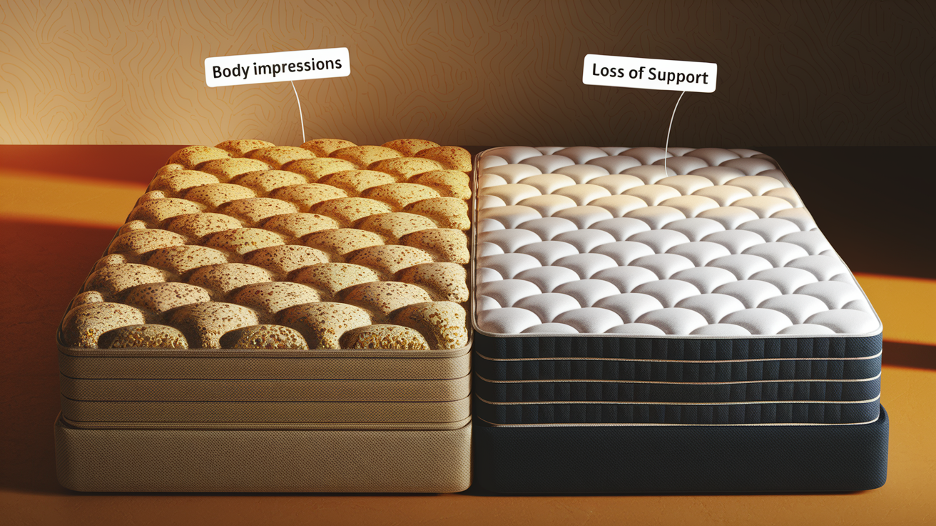
Mattress foam density is an important factor of memory foam durability. Foam that weighs a minimum of 5 lbs will not sag and maintain better support. Foam with a density lower than 3 lbs breaks down faster, causing body impressions and loss of comfort. Memory foam quality indicators refer to their density ratings, and CertiPUR-US certification means the foam is not harmful to health.

Weight Distribution Impacts Wear and Tear.

Extra weight from heavier people or uneven weight distribution stresses the mattress. Over time, foam breakdown speeds up, especially in poor-quality or low-density foam. A mattress that is used for one person will last longer than one for two people. A strong bed frame provides proper support that distributes weight evenly and removes the pressure points that can cause damage.

Usage Habits Affect Longevity.

The frequency you use the mattress affects its mattress longevity. Memory foam mattress in a guest bedroom will have a longer life than one in nightly use. Often moving around and sitting with feet dangling or jumping on the bed can speed foam deterioration. Using without maintaince can degrade the material quickly over time.

Maintenance Extends or Shortens Lifespan.

Poor maintenance habits speed up wear. Not using a mattress protector makes the foam vulnerable to sweat and spillage, which disintegrates it. Not rotating the mattress causes unequal wear in the memory foam. To keep foam in good condition, make sure to cover it up with a breathable foam or fabric cover and clean any spill immediately. A well-cared-for mattress can last more than a decade.

Foam Density and Its Role in Longevity.

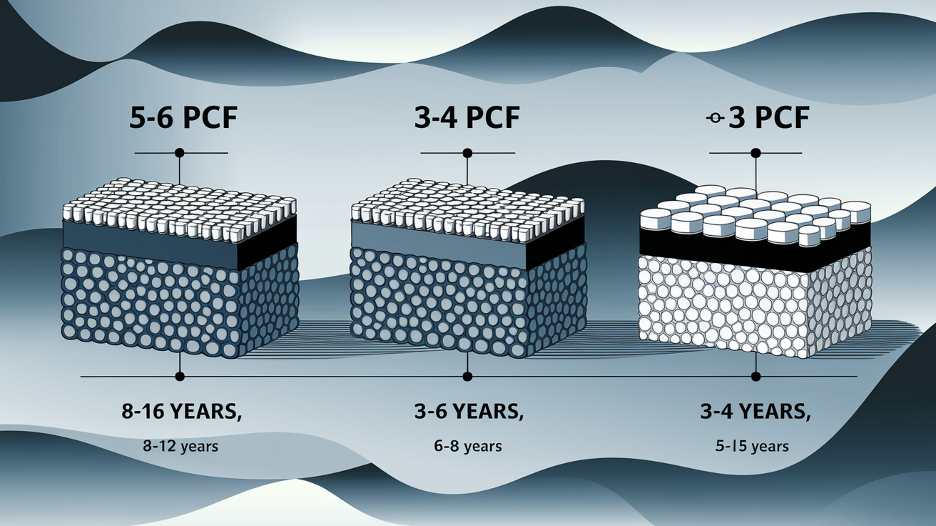
The density of foam decides how long your memory foam mattress will continue to support you. The specification of pounds per cubic foot (PCF) allows you to evaluate how strong the item is, and in other words how much wear and tear it can withstand through daily use, Want to dive deeper into foam densities? Click here to explore our detailed guide on memory foam density and what it means for support and durability.

Foam density and degradation

High-Density Memory Foam (5-6 PCF).

When chosen carefully and used properly, a high-density memory foam mattress can last up to 15 years.  The responsive cell construction shields you from body impressions from heavier sleepers. With optimal support and spinal alignment, this particular density level offers superior pressure relief, making it the ideal choice for primary beds.  Most luxury mattress brands are using 5 – 6 PCF foam in the comfort layer.

Medium-Density Memory Foam (3-4 PCF).

Medium-density foam offers a balance of comfort and durability. Life expectancy is 6-8 years. Although it is not as expensive as HDF mattresses, indentations may form over time, particularly in people who weigh more than 200 pounds. This density is suitable for guest beds or lighter people who wish to pick up a softer feeling with good longevity.

estimated memory foam lifespan by density

Low-Density Memory Foam (<3 PCF).

Cheap, low-density memory foam mattresses can wear out in 3 to 5 years. Less dense frameworks compress easily and sag quite a bit; along with this, they also lose support. These mattresses might be fine for kids’ beds or for an occasional sleepover, but aren’t recommended long-term for adults.

Density vs. Thickness Considerations.

When evaluating the lifespan of a memory foam mattress, thickness does not matter as much as density. A 10 inches mattress which has a foam weight of 5 PCF will outlast a 12 inches mattress which has 2.5 PCF. Don’t rely on the height of your mattress to judge quality; always check the foam density specs. Foam that is denser absorbs motion and allows for better temperature control throughout the night.

Signs Your Memory Foam Mattress is Wearing Out.

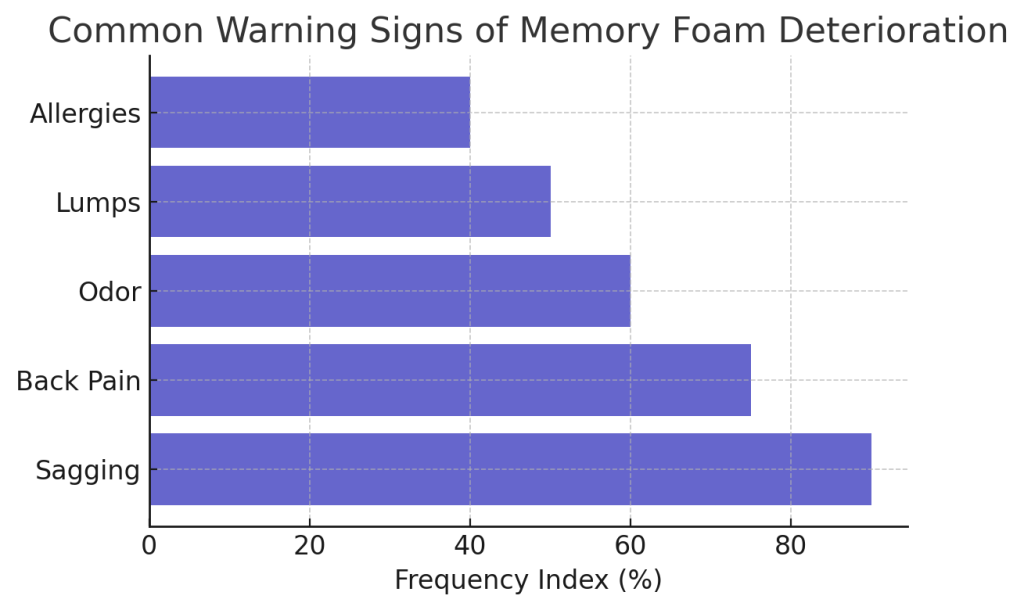
A memory foam mattress doesn’t last forever. Memory foam signs are important for figuring out if it need a replacement or not. Neglecting these warning signs may cause sleep quality and back issues.  Key indicators that your mattress is showing its age. 

signs of memory foam mattress wearing

Visible Sagging and Body Impressions.

A clear indicator of worn memory foam is visible sagging. If the depressions where you sleep are more than 1.5 inches deep, the foam has lost its ability to restore. The imprint of our body affects the spine and causes uneasiness and backache. Hold a straight edge across the mattress to check it for level. The foam in your mattress won’t support you anymore.
Increased Morning Pain and Stiffness.

If you’re waking up with new aches or old aches have gotten worse, your memory foam mattress might be failing. As foam breaks down, it stops relieving pressure points. You may find yourself tossing and turning more as your body struggles to get comfortable. You will see this loss of support more often in older mattresses (7+ years) or foam of lower density.
common warning signs of memory foam deterioration

Lumps, Bumps, and Uneven Surfaces.

Internal foam layers may migrate or clump over time, causing unsightly lumps and unevenness. This happens when the bond between foam layers weakens or when foam degrades unevenly.  You may feel as though you are trying to sleep on a surface with hills and valleys rather than a flat, supportive surface.

Persistent Odors and Off-Gassing.
The new memory foam always smells of chemicals, but if your older mattress has a smell that indicates it is breaking down.  If your mattress still has strong smells after four weeks of off-gassing, the foam may be disintegrating.  Low quality materials are often present in cheaper foams.
Other Warning Signs.

Additional signs you need a new mattress include.

  • Older foam attracts dust mites that worsen allergies.
  • Visible cracks or tears in the foam.
  • The mattress no longer returns to its original shape.
  • You sleep better elsewhere (hotels, guest beds).

Average Lifespan – Here’s What You Can Expect

A memory foam mattress will normally last for approximately 7 to 10 years, with regular usage. But, the replacement schedule of this mattress depends on quality and care. Most premium brands with a high density foam are closer to the truth. Using a Tempur-Pedic , Saatva and Luxe Mattress for over 12 years is not uncommon with proper care.

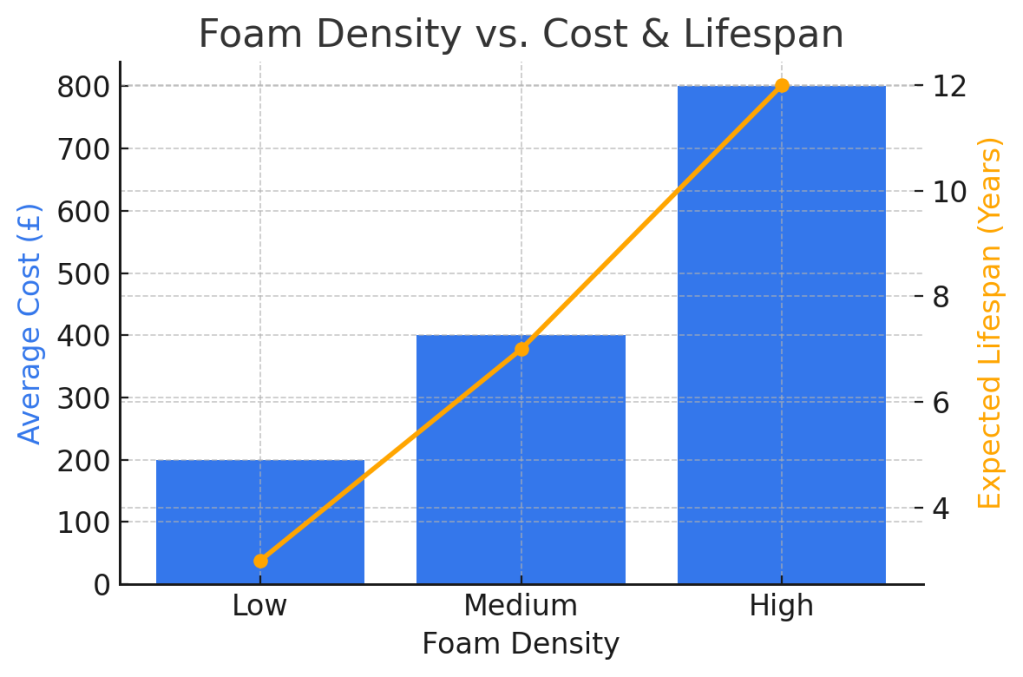
Most mattresses that cost below £400 tend to break down from memory foam within the first 3-5 years.

foam density vs cost and lifespan

These lower-cost models tend to use less-dense foams that compress and sag faster. Warranties are always worth looking at when buying – a reputable manufacturer with a 10-year warranty against defects will give you an indicator of durability.

Your memory foam mattress’s lifespan ultimately depends on.

  • Foam density (higher = longer-lasting).
  • Frequency of use (primary vs guest bed).
  • Weight of sleepers (heavier use = faster wear).
  • Maintenance practices (protectors, rotation).

Tips to Extend the Life of Your Memory Foam Mattress.

Taking good care of your memory foam mattress will greatly affect its lifespan. The foam will sustain support and comfort, and prolong memory foam degradation with these measures. These tips can extend the life of your mattress for years.

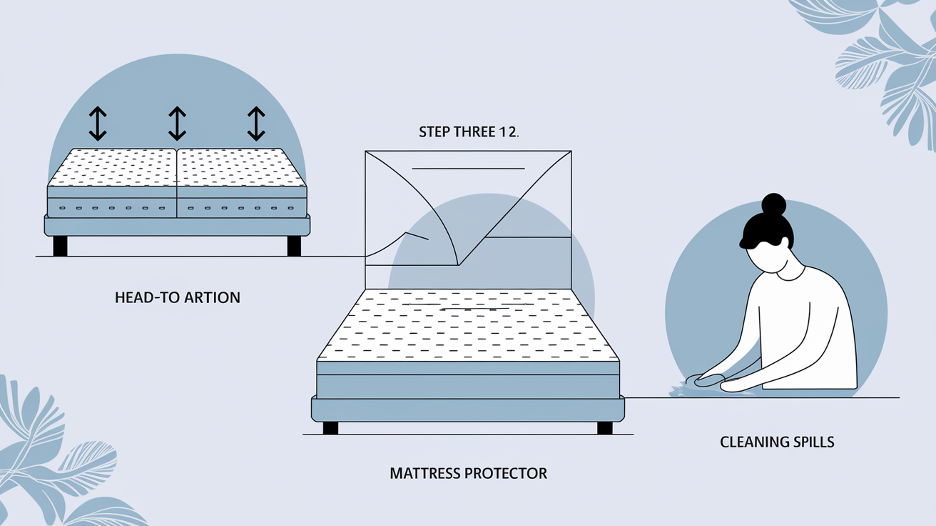
tips to extend life of your mattress

Invest in a Quality Mattress Protector.

A waterproof mattress protector is your first line of defence against spillage, sweat, and dust mites. These contaminants break down foam fibers over time. Choose breathable protectors that don’t trap heat and allow airflow to preserve the integrity of the foam. Wash the protector once a month so allergens won’t penetrate the mattress.

Regular Rotation Prevents Uneven Wear.

To help keep the wear and tear on your memory foam mattress evenly distributed, you should rotate your mattress from head-to-foot every 3-6 months.  You don’t want to flip your memory foam bed but rotating can prevent permanent impressions. This advice is especially helpful for couples with different sleeping positions or body types. Write down the date of rotation on the calendar.

Prompt Stain Treatment Preserves Materials.

If you clean spills right away, the liquid won’t sink into the foam layers. Use a soap solution to blot stains, never use detergents or wet excessively.  Memory foam must never be soaked because water ruins it. If you have a stubborn stain, use a foam cleaner as recommended by the manufacturer.

Proper Foundation Support Matters.

A supportive base prevents premature memory foam wear. The gaps in slatted foundations can be 3 inches apart at the maximum. Solid platform beds or adjustable bases also work well. Don’t use an old box spring with your new memory foam mattress. The new foam mattress will break down quicker on an uneven surface. Check the center support of the bed frame for queen and larger sizes.

Additional Care Considerations.

Keep the room temperature moderate because it degrades the foam. Give new mattresses a full 24-48 hours to expand before use.  Try not to sit too often at the edges of your mattress, as this will compress the foam at the edges unevenly.  You might want to consider getting a mattress topper. A topper will wear out first before the actual mattress does.

When Is It Time to Replace Your Memory Foam Mattress?

When should you replace which know when to replace your memory foam mattress will help you sleep well. Most mattresses need to be replaced every seven to ten years, but some signs appear sooner.

Age and Visible Wear.

Once your mattress reaches 7 years, evaluate its condition. Slumping more than 1.5 inches is a fault. If your body leaves a permanent imprint in the foam, it can no longer support you.

Comfort and Sleep Quality.

If you are tossing and turning more or waking up with new aches, your mattress isn’t supporting you properly. If you sleep better elsewhere, you probably need a new mattress.

Health Considerations.

Your allergy flare-ups may be due to dust mites in old foam. If you detect smells or see mold, change it right away.

Conclusion: Invest Wisely, Sleep Better.

By knowing about the durability of memory foam, you will be able to maximize your investment in sleep health. Caring for your high-density foam mattress well, will give you the best long-term value for money.  Using good protectors and foundations really helps your mattress last longer.

You should swap our saggy mattress or warped mattress ASAP.  A quality memory foam mattress maintains your proper spinal alignment for years. By buying the right and maintaining regularly, sleep stays undisturbed and back pain is prevented.

Choose only premium certified foams from recognized brands. Your mattress is the base of your rest every day, and remember, choosing well will pay you back. Keep track of how old your mattress is and watch for signs of wear to replace it at just the right time.

FAQs.

1.    Can memory foam mattresses be flipped?

Most modern memory foam mattresses are single-sided. Rotate your mattress the whole 180 degrees every 3-6 months for equal wear distribution. Alternate side sleeping might just save your mattress from getting indentations that can become permanent.

2.    Are mattress warranties accurate for estimating lifespan?

Warranties lasting longer than expected don’t necessarily mean more durability. Most 20-year warranties are prorated after 10 years, worth less.  Mainly covers defective manufacturing and not normal wearing out.

3.    Are off-gassing odors dangerous?

The new memory foam has a chemical smell but it goes away after 72 hours. Off-gassing processes include harmless VOC emissions that meet CertiPUR-US safety standards. Proper ventilation eliminates odors faster.

4.    Can mattress toppers prolong a memory foam bed’s life?

For quality purposes, 2-3 inch mattress toppers absorb wear and tear to extend your mattress.  They especially come in handy to refresh mattresses too old to replace.

Why The Right Mattress Becomes More Important As You Age
March 6, 2026

Why The Right Mattress Becomes More Important As You Age

As the years pass, sleep doesn’t just feel more precious it becomes vital, and the right mattress can play a crucial role in supporting aging bodies and improving sleep quality. Our bodies change, our bones feel a little less forgiving, and restful sleep becomes harder to come by. Back pain? Common. Joint stiffness? Practically expected. But here’s the good news: the right mattress can make a profound difference.

More than a sleep surface, it’s a daily tool for recovery, posture and peace of mind. It’s no surprise that choosing the right mattress becomes more important with every passing year.

Why The Right Mattress Becomes More Important As You Age

Best Mattress for Seniors with Back Pain

Waking up sore isn’t normal. Yet, for millions of seniors, back pain has become a morning routine. In many cases, the culprit isn’t just age. It’s the mattress. A medium-firm mattress, backed by the Sleep Foundation, helps realign the spine and distribute body weight more evenly. It cushions where it should and supports where it must. 

Curious about which models cut? Explore our firm mattress guide for tried-and-tested relief.

Best Mattress for Seniors with Back Pain

Best Mattress for Arthritis and Joint Pain

Arthritis doesn’t sleep so your mattress must fight harder. Seniors often deal with chronic joint pain in the hips, shoulders, or knees. Here’s where memory foam shines: it conforms to your body’s natural curves, reducing tension in the joints and softening the pressure. The National Institute on Aging even recommends mattress upgrades to manage pain. 

We’ve answered your top questions in our Memory Foam FAQs starting there if you’re seeking deep soothing rest.

Best Mattress for Hot Sleepers

Feeling too warm at night? You’re not alone. Seniors often report overheating, particularly during light stages of sleep. Traditional foam traps heat, which is why modern cooling solutions like gel-infused layers or ventilated hybrids are essential. 

According to Zoma Sleep, hybrid mattresses with breathable designs provide the balance hot sleepers crave. Need cooling without sacrificing support? Our cooling mattress collection was built just for that.

Best Mattress for Seniors with Mobility Issues

Mobility changes everything including how you get into and out of bed. A low-profile sagging mattress becomes more than inconvenient; it becomes unsafe. That’s why seniors with mobility concerns search for mattresses with firm edge support and a responsive top layer

Mattress Clarity lists hybrid mattresses as best-in-class for easy movement and support. For practical solutions, check out our expert breakdown of hybrid mattresses.

Best Adjustable Beds for Seniors

Imagine controlling your comfort with the push of a button. Adjustable beds allow just lifting your head to stop snoring or elevating your legs to reduce swelling. For seniors managing circulation issues or acid reflux, this flexibility isn’t a luxury; it’s a necessity. 

The Sleep Foundation confirms that pairing an adjustable base with memory foam or hybrid mattresses dramatically improves comfort. Look for “adjustable base compatible” when shopping.

Signs Your Mattress Is Too Old

Your mattress might not look tired but your body knows better. Sagging uneven spots or waking up sore are red flags. If your mattress is over seven to ten years old, it’s likely past its prime. 

According to SleepFoundation.org, replacing your mattress can immediately boost sleep quality and reduce allergens. Still unsure? Our mattress care guide helps you assess whether it’s time to upgrade.

Is A Firm Or Soft Mattress Better For Seniors?

This question comes up more often than you’d think and the answer isn’t one-size-fits-all. Generally, medium-firm mattresses strike the right balance for spinal health and joint comfort. But if you’re lightweight or sleep on your side, a slightly softer feel may be better. 

Healthline explains how softness and firmness affect older bodies. We compare both options clearly in our firm vs soft mattress guide.

How Often Should Seniors Replace Their Mattress?

Older sleepers are more sensitive to pressure motion and dips in support. Even if your mattress still “feels fine,” its internal structure might be failing. Foam compresses. Springs weaken. 

Experts advise replacement every seven to ten years or sooner if pain or poor sleep emerges. Our guide on when to replace your mattress breaks down exactly what to look for.

Conclusion

You’ve earned your rest. Your mattress helps you enjoy it. Whether you’re battling back pain chasing cooler nights or just needing better support, your sleep setup should evolve with your body. The right mattress isn’t a luxury, it’s a strategy for healthy aging. 

Browse our Luxe Mattress Collection and take the next step toward deeper, more restorative sleep.

How Long Does a Mattress Last? Uncover the Truth About Lifespan
March 5, 2026

How Long Does a Mattress Last? Uncover the Truth About Lifespan

If you don’t want to wake up in the morning with shoulder and back pain, replace your mattress timely. Understanding mattress lifespan is crucial, especially if you bought this mattress a few years ago. How long does a mattress last? This is an important question to ask once you start experiencing issues with the quality of sleep. 

An average person sleeps for almost 236,228 hours in his lifetime and that’s a lot. We all want these hours to be most comfortable time of our life and it is only possible if you have the right mattress. This article will make you understand when to replace a mattress and how long a quality mattress lasts. 

Understanding Mattress Lifespan

The lifespan of a mattress depends on different factors and can vary depending on your sleeping habits and maintenance routine. Before answering the question “How long should a mattress last,” we need to understand the basic concept of mattress longevity. 

What is Mattress Longevity?

For how long does a mattress maintain its structure, offer needed support, and remain in good shape? This period is called mattress longevity. A cheap mattress may collapse after a year or two while quality mattresses can easily last for 5-8 years. Different factors affect the mattress longevity. 

Factors Influencing Mattress Lifespan

The quality of the mattress is not the only factor defining the potential lifespan here. How do you keep your mattress clean and what are your sleeping habits? These aspects also influence the lifespan of a mattress. Here are some important factors that determine mattress lifespan:

Average Lifespan of Different Mattress Types

How long does a mattress last? There is no one right answer to this question because the average lifespan varies from one mattress type to another. Here is the average lifespan for popular mattress types that we have available in the UK market. 

Mattress TypeAverage LifespanWhy to Replace?
Innerspring Mattress5-7 yearsReduced support due to lost resiliency of coils, padding layers also degrade and compress
Memory Foam Mattress8-10 yearsMemory foam starts losing supportive properties and the filling becomes softer over time. 
Latex Mattress10-15+ yearsMostly durable mattresses that can last for decades and maintain original support and shape
Hybrid Mattress7-10 yearsIf the coils lose resiliency or the foam becomes softer, it is time to replace the hybrid mattress. 

How Often Should You Change Your Mattress?

Companies and sleep experts recommend replacing mattresses every 7-10 years, regardless of the mattress type. The actual time to buy a new mattress depends on the personal habits and other factors discussed in the above sections. If you feel that the quality of sleep is not the same and you don’t feel comfortable in bed anymore, go for the new one. 

Signs It’s Time for a Replacement

Deteriorating quality of sleep and your body will clearly tell you when it’s the right time to replace the mattress. Still, there will be visible signs of deformation and degrading in the mattress, indicating the need for a new mattress. Here are some common signs suggesting the need for a new one. 

1.    Impressions of Sagging

When you start seeing dips on the surface that don’t go away, you need a new one as the support of the mattress is dead now. 

2.    Allergies 

Your old mattress might be home to dust mites, allergens, and mold, without you even knowing. Running nose, itchy eyes and similar allergies might be caused by old mattress. 

3.    Pains and Aches 

Once you start experiencing constant pain in your shoulders, neck, or back, this might be due to a poor mattress. A restful night’s sleep will become a nightmare if you don’t replace the mattress soon. 

4.    Noises

Creaking and squeaking sounds from the coils of the mattress are also a clear sign to replace the mattress. These sounds may not be noticeable in memory foam mattresses. 

5.    Other Beds Feel More Comfortable.

Did you feel more comfortable sleeping elsewhere? If other beds and mattresses feel more comfortable, your old mattress is failing you. 

How Long Should You Keep a Mattress?

The actual performance of the mattress determines how long should you keep it but for starters, the rule of 7-10 years is good. If the mattress is in good condition and offers comfort and support even after 10 years, you can keep it. There are no hard and fast rules to keep or replace a mattress. All these factors only help to make you the right decision. 

Tips to Extend Your Mattress Life

We understand that you invested a good amount of money on the quality mattress and you don’t want to replace it sooner. If you don’t take good care of the mattress, it may not last even for 2-3 years. 

But with proper care, you can extend the life of a mattress beyond the claimed period. Here are some practical tips that can help you extend the expected mattress life:

  • Every 3-6 months, rotate the mattress 180 degrees, changing sides helps to distribute wear evenly
  • Vacuum or clean your mattress more often, don’t use any harsh chemicals
  • After every few months, remove the cover and let the mattress air out for a few hours
  • If possible, place your mattress in direct sunlight after every season
  • Use a breathable and quality mattress cover to avoid dust and liquid spills
  • Place the mattress on a dry and even surface only

FAQs

How long do mattresses actually last?

Quality mattresses last 7-10 years on average, with latex models up to 15 years and innersprings as low as 5-8 years depending on use and materials.?

Is a 10 year old mattress still good?

Rarely, a 10-year-old mattress often sags, loses support, and harbors allergens; replace if you wake with pain or notice lumps.?

When should you throw out a mattress?

Replace at 7-10 years or sooner if it causes back pain, has deep indentations (>1.5 inches), stains, or excessive noise.?

Can a mattress last 15 years?

High-end latex or hybrid mattresses can reach 15 years with proper care (rotation, protector), but most wear out by 10.?

How bad is a 20 year old mattress?

Extremely, a 20-year-old mattress is a hygiene hazard with dust mites, mold risk, and zero support, linked to poor sleep and health issues.?

Is there a mattress that will last 20 years?

No consumer mattress reliably lasts 20 years; even durable latex tops out at 15-20 with ideal conditions, but warranties max at 25 years.?

Conclusion

For a quality mattress, it should last for almost 7-10 years but as we have discussed, there are many factors influencing the lifespan of the mattress. Users need to pay attention to the clear signs of wear and tear. 

Buying a new mattress is a big investment so we want you to make an informed decision. Invest in the right product only and then take good care of the mattress. If you take care of things, they last.

Mattress Recycling UK: How to Dispose of a Mattress Responsibly
March 5, 2026

Mattress Recycling UK: How to Dispose of a Mattress Responsibly

Mattress recycling in the UK is becoming increasingly important as millions of old mattresses are discarded every year, many of which end up in landfills and take decades to decompose. Choosing responsible disposal methods helps recover useful materials like steel, foam, and fabric while reducing environmental waste. Whether you’re replacing an aging bed or upgrading your sleep setup, understanding how to dispose of a mattress responsibly ensures a cleaner home and a healthier planet.

Why Mattress Recycling Matters

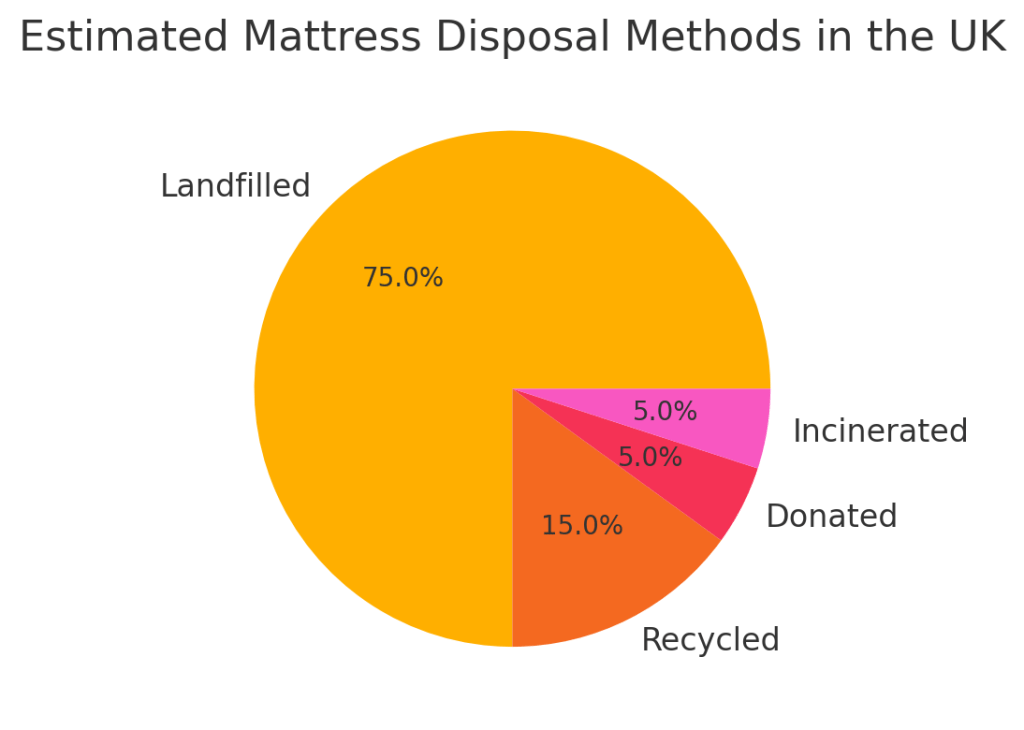
Over 7 million mattresses are discarded each year in the UK. The vast majority end up in landfills, taking decades to decompose. A single mattress can contain foam, springs, textiles, and wood materials that, if not recycled properly, contribute to soil, water, and air pollution.

By choosing eco-friendly mattress disposal methods, you help conserve resources, reduce your carbon footprint, and support the UK’s shift toward sustainable waste management.

The Environmental Impact of Improper Disposal

When mattresses are dumped or burned, the damage extends far beyond lost space in landfills. Improper disposal can lead to:

  • Soil and groundwater contamination
  • Increased carbon emissions from incineration
  • Hazards to waste workers and sanitation services
  • Fines or penalties from local councils
environment impact severity of mattress landfilling

Best Options for Mattress Recycling in the UK

The good news is that mattress recycling in the UK has improved significantly in recent years. Whether you’re in London or a rural area, there are several safe and effective options for disposing of your old bed.

1. Professional Mattress Collection Services

Several companies offer specialised mattress recycling London services. These providers pick up your old mattress from your home, transport it to a recycling facility, and ensure all components—foam, metal, fabric—are responsibly processed.

these are the one of the best private companies which you can use, first mile, collect your old bed and the mattress recycling people.

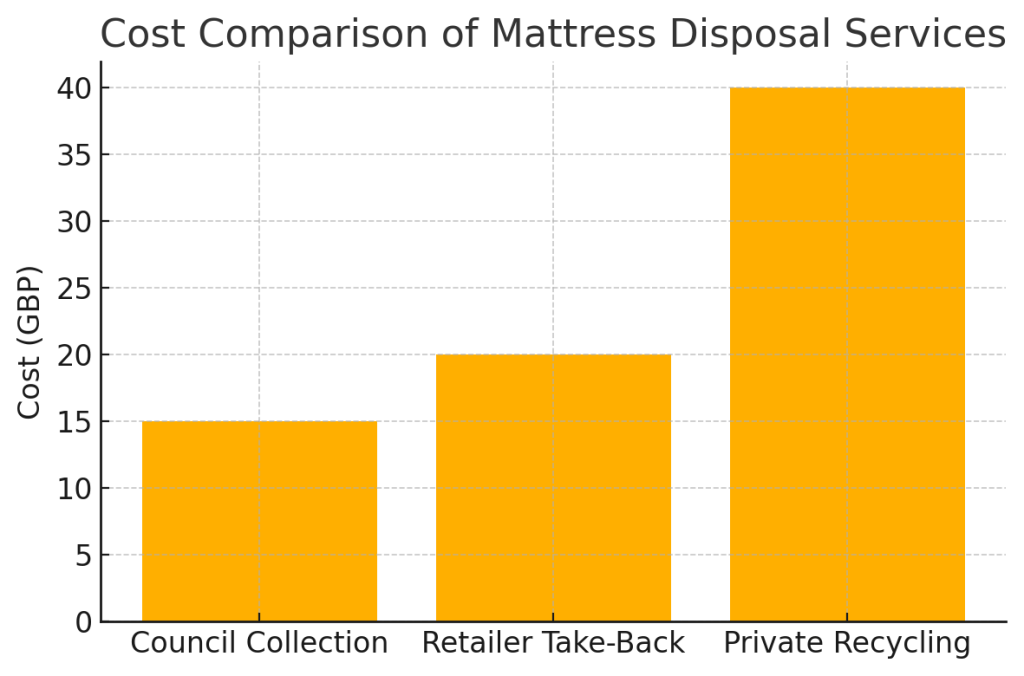
Prices typically range from £25–£50 depending on your location and service level. Some providers even offer zero-landfill guarantees, ensuring your mattress doesn’t contribute to environmental damage.

2. Council Recycling Centres

Many local councils offer mattress collection through bulky waste services or allow drop-offs at recycling centres. Availability and fees vary, so contact your local authority to confirm options. If you live in the capital, you can find mattress recycling London services through borough-specific programs.

cost comparison of mattress disposal services

3. Mattress Retailer Take-Back Schemes

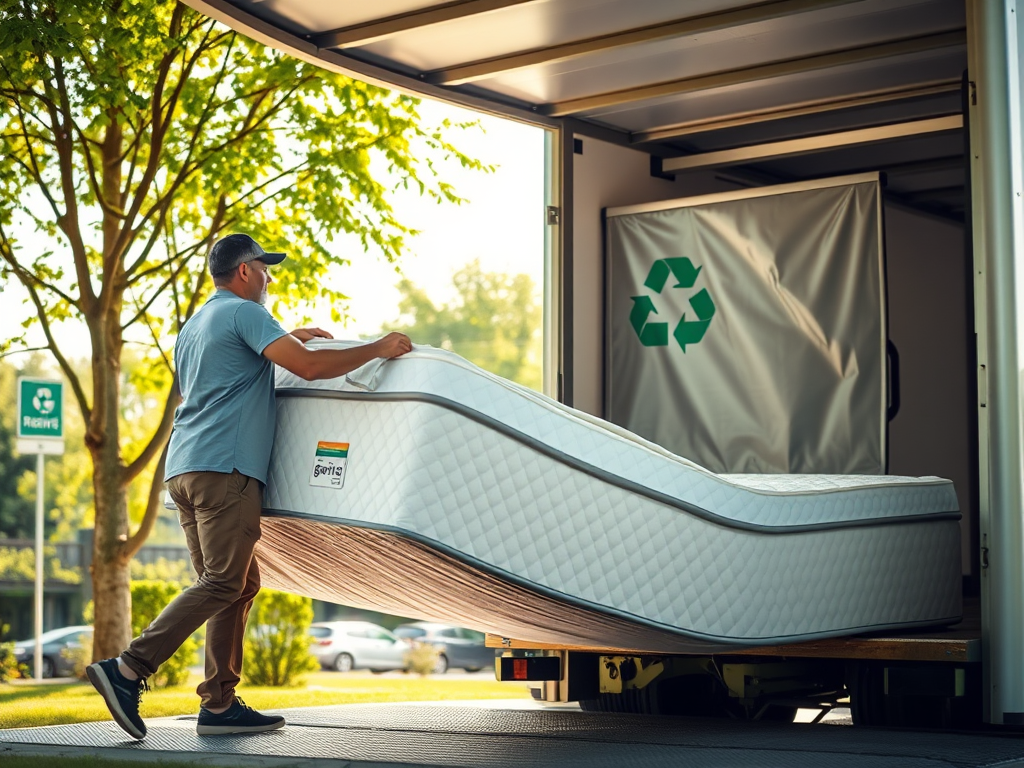
If you’re purchasing a new mattress, ask the retailer if they offer a take-back service. Many large brands partner with recycling firms to collect your old mattress upon delivery of the new one. This is often the most convenient and cost-effective option for responsible disposal.

4. Donate to Local Charities (If in Good Condition)

Charities like British Heart Foundation or Emmaus may accept mattress donations, provided the item is clean and free from stains or structural damage. Always call ahead to confirm they accept mattresses and to schedule collection.

How to Prepare Your Mattress for Recycling or Donation

Whether you’re donating, recycling, or booking a collection, proper preparation makes the process smoother:

  • Clean the surface: Vacuum both sides and spot-clean any stains.
  • Wrap for transport: Use a mattress bag or plastic sheeting to protect the item during handling.
  • Disassemble if DIY recycling: Separate springs, foam, and fabric only if you’re equipped and know how to handle materials safely.

How to Recycle a Mattress at Home (Advanced)

If you’re a hands-on recycler, you can dismantle your old mattress and take each part to a designated facility. Here’s how:

  1. Cut and remove the outer fabric layer
  2. Separate metal springs, foam padding, and wood frame
  3. Drop off materials at a local recycling centre (check accepted items first)

?? Use gloves and safety gear. Metal springs and nails can cause injury.

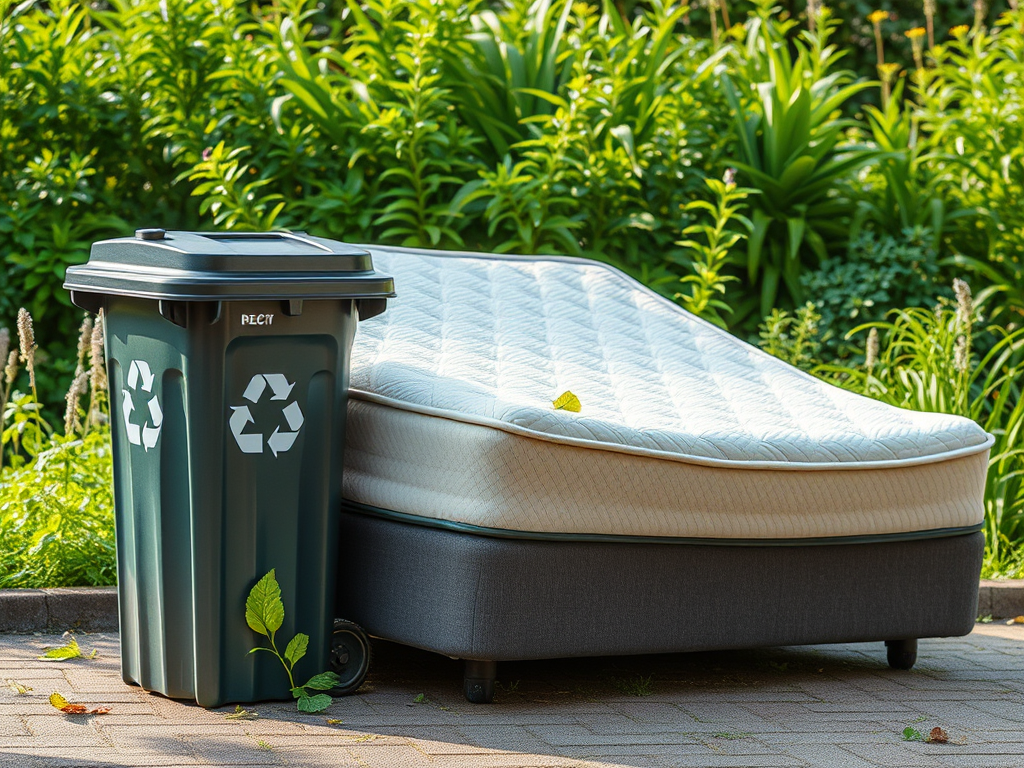
estimated mattress disposal methods in the UK

Costs of Mattress Recycling & Removal in the UK

The cost of mattress disposal UK varies depending on the service:

  • Council bulky waste collection: £0 – £25 (location-dependent)
  • Private mattress recycling service: £25 – £50
  • Retailer take-back scheme: Often included in delivery or offered for a small fee

What Happens After Mattress Recycling?

At recycling facilities, your mattress is broken down into its components:

  • Steel springs: Melted down and reused in manufacturing
  • Foam and padding: Reused in carpet underlay or insulation
  • Wooden frames: Repurposed or mulched for compost
  • Fabrics: Recycled into textile-based products

Choosing mattress recycling in London or elsewhere reduces landfill pressure and supports a circular economy.

FAQs About Mattress Recycling

Can I recycle any type of mattress?

Yes, most standard mattresses including memory foam, spring, and latex can be recycled if handled by a licensed facility.

Do councils in London offer mattress collection?

Yes, but services vary by borough. Some charge a small fee while others offer limited free collections. Check your local council’s website for details.

What’s the most eco-friendly way to dispose of a mattress?

Booking with a certified mattress recycling service is the most sustainable choice. They ensure proper material separation and avoid landfill use.

Can I burn my mattress to get rid of it?

No. Burning mattresses releases toxic fumes and is illegal in most UK areas. It also poses a serious fire hazard.

Is mattress recycling free in the UK?

Not always. Some councils offer free pickup, but most services will charge between £25–£50 depending on the provider and location.

Conclusion

When it comes to mattress recycling UK, responsible disposal is more accessible than ever. Whether you choose a council program, private service, or retailer take-back, you’re helping to reduce waste and protect the environment.

Residents in urban areas, particularly those looking for mattress recycling London services, have a wide range of options from charity collections to eco-certified recycling firms. Remember, every mattress recycled means one less in a landfill. Do your part by choosing a greener path for disposal.

Ready to replace your old mattress? Check if your retailer offers a recycling scheme or book a pickup with a licensed disposal partner today.

Discover the Best Bed for Overweight Person: Top Picks for Comfort and Support
March 4, 2026

Discover the Best Bed for Overweight Person: Top Picks for Comfort and Support

Estimated reading time: 8 minutes

Peaceful sleep is essential for everyone for a healthier life. When it comes to finding the best bed for overweight people, the choice of mattress is critical. For overweight individuals, good night’s sleep can be a real challenge without the right mattress. What is the best bed for an overweight person and what type of mattress offers the right support for bulky sleepers?

If your current mattress isn’t providing the support you need and leaves your body feeling anything but relaxed, this guide is here to help you find the right heavy-duty solution. Not all mattresses are built for every body type, especially for individuals who are overweight and find their mattress starts to sag just weeks after purchase.

If that sounds familiar, an extra firm mattress may be exactly what you need. Designed with high-density foam, these mattresses are built to handle greater weight without sinking or losing their shape. When made with quality materials, they can remain supportive and stable for up to 8 years or more.

In this guide, we’ll walk you through the top-rated extra firm mattresses specifically suited for heavier individuals, offering comfort, durability, and proper spinal alignment.

Understanding the Needs of Overweight Sleepers

People with a heavier body type need to consider different factors when choosing a mattress compared to the average sleeper. The ideal mattress for heavier individuals should be built to support additional weight without compromising its structure or durability.

If you’ve tried multiple mattresses and still haven’t found the right fit, it might be time to take our Mattress Finder Quiz. It’s designed to match you with the most suitable options based on your unique needsand we’re confident it will help you find the perfect mattress at last.

Smart Mattress Quiz

Find your perfect mattress match with our personalized recommendation system. Based on your sleep style, health needs, and comfort preferences.

Why Take This Quiz?

  • Get tailored mattress recommendations for your specific needs
  • Save time researching – we’ve done the analysis for you
  • Compare mattresses that match your sleep style and budget
  • Understand which mattress features matter for your comfort
  • Exclusive discounts on recommended mattresses
Take the Mattress Quiz

Softer mattresses may not support their body weight. Best bed for overweight person should also ensure optimized temperature regulation. 

Why Mattress Selection Matters

The right mattress is equally important for a normal sleeper and heavy person. Here is why they need to consider the selection of the best bed for overweight persons:

  • Providing essential support to keep the body aligned
  • Distribute pressure evenly across the body 
  • Prevent heat retention by maximizing airflow across the bed

Common Sleep Issues for Heavy People

Overweight issues can be related to personal habits or any other medical issue. There are certain sleeping challenges faced by some people due to their bulky appearances, including:

  • Back pain due to poor mattress support
  • Joint pain and aches in different body parts
  • Sleep apnea due to lack of comfort
  • Overheating as the body compresses the mattress easily
  • Harder to change positions while sleeping 

Types of Mattresses for Heavy People

Different types of mattresses perform differently for heavy people. Companies have dedicated mattresses with reinforced surfaces for bulky sleepers. Here are popular mattress types for the target consumer segment.

1.   Memory Foam vs. Innerspring

memory foam mattress vs hybrid mattress, vs inner spring mattress

Firm memory foam with higher density can be a good option for heavy people. Thicker mattresses maintain the original support for longer. 

If you opt for innerspring mattresses, make sure the coils are robust and can withstand heavy weight. A low-quality innerspring mattress can be a liability. 

2.   Hybrid Mattresses 

Hybrid mattresses combine the features of memory foam and innerspring mattresses. The same goes for hybrid mattresses when it comes to quality and thickness. Firmer mattresses person well to prevent unnecessary sinkage. 

3.   Latex Mattresses 

Latex mattresses are popular among all types of sleepers, including overweight persons. They have firmer surface and heavy sleepers don’t sink easily. If you have any type of allergy, a latex mattress might be best bed for you. 

Best Mattresses for Heavy People 

What’s the best bed for an overweight person to buy in 2025? Well, as always, we have done the tough work for our readers. Here are the top three best mattresses for overweight people for a good night’s sleep. 

1.   Luxe Nova Hybrid mattress- (Specialized Bariatric Mattress)

Luxe Nova mattress
Mattress

If you want cloud-like comfort without compromising on the support for your heavy body, the Luxe Nova Hybrid mattress is the best pick. Whether you want reinforced coils or breathable material, this mattress for heavy people has everything you need. 

It is a thicker mattress that can maintain support and original shape for years. Here are some unique properties of this hybrid mattress, specially engineered for overweight people. 

  • Premium quality outer cover for better airflow
  • Perfectly balanced firmness with superior comfort
  • 100-night trial for customer satisfaction
  • Free delivery for selected areas
  • Best for side and combination sleepers
  • Made of cooling gel memory foam

2.   Majestic 9000 (Budget-Friendly Option)

extra firm mattress

Is back pain bothering you and your mattress is failing at even distribution of weight across the body? Do you want the best affordable mattress for overweight people? Well, Majestic 9000 is the mattress of your dreams. 

For a very reasonable price, this is an aesthetically pleasing mattress that offers superior comfort and support for all types of sleepers. Hypoallergenic material and fine quality fabrics make it best for sleepers who are allergic to dust, mites and other common triggers. 

  • One of the most affordable mattresses for heavy people
  • Ideal airflow for hot sleepers, especially couples
  • Memory foam offers superb support without too much firmness
  • Keeps spine straight even for the bulky users

3.   Luxe Natural Organic Mattress- (Luxury Selection)

Luxe-Organic Natural Pillow Top
Mattress

Here’s your sentence rewritten with “Natural Organic Mattress” used naturally and smoothly:

Consumers are turning to organic materials for different products, and a Natural Organic Mattress is becoming a popular choice for healthier sleep. Triple-layered springs offer enhanced support, while memory foam easily adjusts according to your body, ensuring exceptional spinal alignment without letting your body sink into the mattress.

It is on the softer side of mattresses but offers the right support. Body weight does not build pressure on any specific joints and the sleeper feels more comfortable in the bed. 

  • Medium-firm mattress for overweight persons
  • Cooling gel helps to prevent heat retention
  • Lasts for years without any structural damage
  • Best for hot back and side sleepers

Features to Look for in a Bed

A mattress or bed is a big investment and you should pay special attention to features that will impact the quality of your sleep. When you are an overweight fellow, you need to be even more careful about mattress selection. Here are a few tips for you to choose the best bed for an overweight person:

  1. Check the maximum weight capacity the bed can support
  2. Considering the firmness of the mattress, a medium-firm mattress works best for heavy sleepers
  3. All components of the mattress should be of higher quality
  4. What’s the claimed lifespan of the mattress?
  5. Always buy from a trusted brand. 

Top Brands for Heavyweight Mattresses

Not every brand offers special mattresses for heavyweight people. In the UK, there are limited brands known for having dedicated heavyweight mattresses, including:

Luxe Mattresses– This brand has an established clientele in the UK and offers a wide range of mattresses, including heavyweight mattresses. Our recommendations will make your search easier while shopping at Luxe Mattresses. 

Saatva– With decent reputation in the market, Saatva is known to offer quality bedding accessories. You can try their firmer mattresses according to your body weight.

Conclusion- Choosing the Right Bed for Your Needs

With top recommendations from Luxe Mattresses for bulky fellows, choosing the best beds for an overweight person is not hard. Whether you want an affordable mattress or want to choose a premium mattress, there is a right option just according to your needs. Never compromise on the quality of sleep, regardless of your body weight. 

FAQs


What type of mattress is best for overweight people

The best mattresses for overweight individuals are typically extra firm or medium-firm options made with high-density foamrobust innerspring coils, or latex. These materials offer enhanced support, durability, and resistance to sagging under increased weight.


How firm should a mattress be for a heavy person?

medium-firm to extra-firm mattress is ideal. It provides the necessary support to maintain spinal alignment and prevents excessive sinkage. Firmness should also depend on your sleeping position—side sleepers may prefer medium-firm, while back or stomach sleepers might need something firmer.


Do mattresses for heavy people last longer than regular ones?

They can—if designed properly. Mattresses built specifically for heavier individuals often use higher-quality, denser materials that can last 7–10 years, depending on usage, build quality, and care.


Can an overweight person sleep on a memory foam mattress?

Yes, but it should be high-density memory foam (5 lb/ft³ or higher). Lower-density foam may sag or lose support quickly. A hybrid memory foam mattress with reinforced coils is often a better option for both support and pressure relief.


What mattress features should heavy sleepers look for?

Key features include:

High weight capacity (at least 250–300 lbs per side)
Edge support to prevent roll-off
Cooling technology (gel foam or breathable covers)
Reinforced coils or thick comfort layers
Minimum 10–12 inch thickness for lasting support

How to Dispose of a Mattress Safely: Tips for Eco-Friendly Practices
March 4, 2026

How to Dispose of a Mattress Safely: Tips for Eco-Friendly Practices

Once you have decided to upgrade to a better mattress, getting rid of the old one is important. You cannot keep that old mattress in home as it is no longer needed and takes space for no reason. So, how to dispose of a mattress safely? You cannot simply throw the mattress in the street. 

Local waste collection services may not assist you with the disposal of bulky mattresses. There are certain ways to ensure proper recycling of the mattress. If you are in the UK and want to learn how to get rid of a mattress, this guide is for you. 

Understanding the Importance of Responsible Mattress Disposal

Millions of mattresses end up in landfills, taking up space and generating harmful gases. Due to the variety of components, a mattress can take decades to decompose. 

Responsible mattress disposal ensures that every component is properly recycled. This approach helps with conserving natural resources, reducing waste, and minimizing carbon footprint. 

Environmental Impact of Improper Disposal

When left untreated, mattresses can be a disaster for the environment. Directly or indirectly, the improper disposal of mattresses contributes to:

  • Water and soil contamination
  • Air pollution due to toxic fumes
  • Issues for the waste management authorities 

Benefits of Eco-Friendly Practices

As a responsible member of society, you need to do your part in building a sustainable and greener community. Here are some benefits that the eco-friendly disposal of mattresses in the UK has to offer:

  • Avoid any penalties or fines due to improper waste disposal
  • Conserving landfill space
  • Donate mattresses to support charity organizations
  • Promote green initiatives and sustainability 

Options for Mattress Disposal

The best way to dispose of a mattress depends on the local laws, available services, condition, and type of mattress. How to dispose of a mattress for free UK if local waste management does not collect the used beds or mattresses? Here are three possible options to get rid of an old mattress.

1-  Mattress Collection Services 

Many companies specialize in the eco-friendly collection and recycling of old mattresses. These old mattress removal and disposal services typically offer pickup and proper disposal of the mattresses for a reasonable price. 

By spending a little on a professional mattress collection service, you can relax as they will recycle it or hand it over to the charity, if the mattress is in good shape. You don’t need to worry about the removal or disposal of the old mattress anymore.

2-  Local Recycling Program 

Some local municipalities have recycling centers that accept used beds and mattresses. Not all municipalities in the UK have recycling centers, so contact them to confirm the details. 

Metal springs, wood, filling, and foam are separated for future use. Some departments and programs may offer pickup for a price. 

3-  Donating to Charities 

If your mattress does not have any structural damage, stains, or bed bugs, you can consider donating it to the local charities. Usually, these charities also have specific terms for used mattresses, and they accept mattresses if it is in good condition. 

It is advised to call ahead to confirm if they accept mattresses and what the available options are for the removal and pickup of the mattresses. 

How to Prepare Your Mattress for Disposal?

Does your selected mattress disposal service offer removal and pickup? If yes, then you don’t need to make any special efforts to prepare your mattress for disposal. Otherwise, here are a few steps that are required to get your old mattress ready for disposal.

1-  Cleaning and Sanitising 

Start with vacuuming both sides of the mattress. Spot-clean any stains and use baking soda to remove any other marks on the mattress surface. Most charities and recycling programs are more likely to accept a clean mattress free of cost, for more details check this article.

2-  Disassemble the Mattress 

DIY recycling of a mattress is not easy, and it is better to leave it to the professionals. Still, you can recycle the old mattress at home by disassembling these components. Start with:

  • Removing the fabric cover
  • Separate metal, filling, and foam components
  • Pack the leftovers to transport to the relevant facility or landfill 

While disassembling the mattress, use protective gloves and other essentials. Handling sharp metals and coils might be risky, so make sure to use protective gear. 

Steps for an Old Mattress Collection

If you opt for a professional pickup service, this may involve a cost. Municipal collection centers may offer free pickup service for certain areas only. Here are the steps, whether you opt for a free or paid old mattress collection service. 

1-  Scheduling a Pick-Up

Contact the local recycling center or the sanitation department and book a slot. Schedule the pickup date and time. The company will let you know about guidelines regarding packaging and curbside placement. 

2-  Costs Involved in Mattress Removal

Charges for old mattress removal and disposal UK are different, depending on the location and service provider. During the bulk collection period, local municipalities may offer free service.

For paid 3rd party collection service providers, it can cost £24-£50. Ask the company about these charges before finalizing your slot. 

FAQs

What is the best way to dispose of an old mattress?

Donate to a charity if it’s clean and usable, or use local recycling services that dismantle it for parts like metal springs and foam avoid landfills by wrapping it in plastic first.

What are the 5 R’s of waste disposal?

Refuse, Reduce, Reuse, Repurpose, Recycle prioritizing prevention over disposal to minimize environmental impact.

What makes a mattress eco-friendly?

Made with natural/sustainable materials like organic cotton, wool, or latex; CertiPUR-US certified foam free of harmful chemicals; recyclable components and low-VOC production.

Can I cut a mattress in half?

Yes, but wear protective gear and use a box cutter or saw to slice layers safely; recycle pieces separately to avoid landfill fees.

Why are mattresses not flippable anymore?

Modern designs have distinct comfort/support sides (e.g., pillow-top on one), preventing even wear older innerspring models were fully reversible.

What is the easiest way to cut up a mattress?

Lay it flat, cut piping and seams with a utility knife, peel off fabric/foam, then remove springs with pliers dispose parts at recycling centers.

Conclusion

This guide gives you a detailed idea about how to dispose of a mattress safely without polluting the environment. Avoid dumping mattresses in landfills, as mattress recycling can reduce the waste buildup. 

Use the services provided by the 3rd party mattress collection services and recycling companies. If DIY recycling of the mattress is not possible, clean the mattress before donating it to the charity. 

An old mattress does not have to harm the environment, as a little effort into sustainable mattress recycling can make a huge difference. Your conscious actions help in building a greener and sustainable community. Dispose of mattresses responsibly for safer environments and cleaner surroundings. 

Product has been added to your cart