
Black Friday 20% off every mattress (25% off natural latex) · Free pillow worth up to £99 on orders over £350 · you choose · + free room-of-choice delivery on every mattress · Lowest price guaranteed — as low as it will go Black Friday: 20% off + free pillow worth up to £99 on orders over £350 Lowest price guaranteed Shop the eventShop
eveluation of image
August 23, 2025

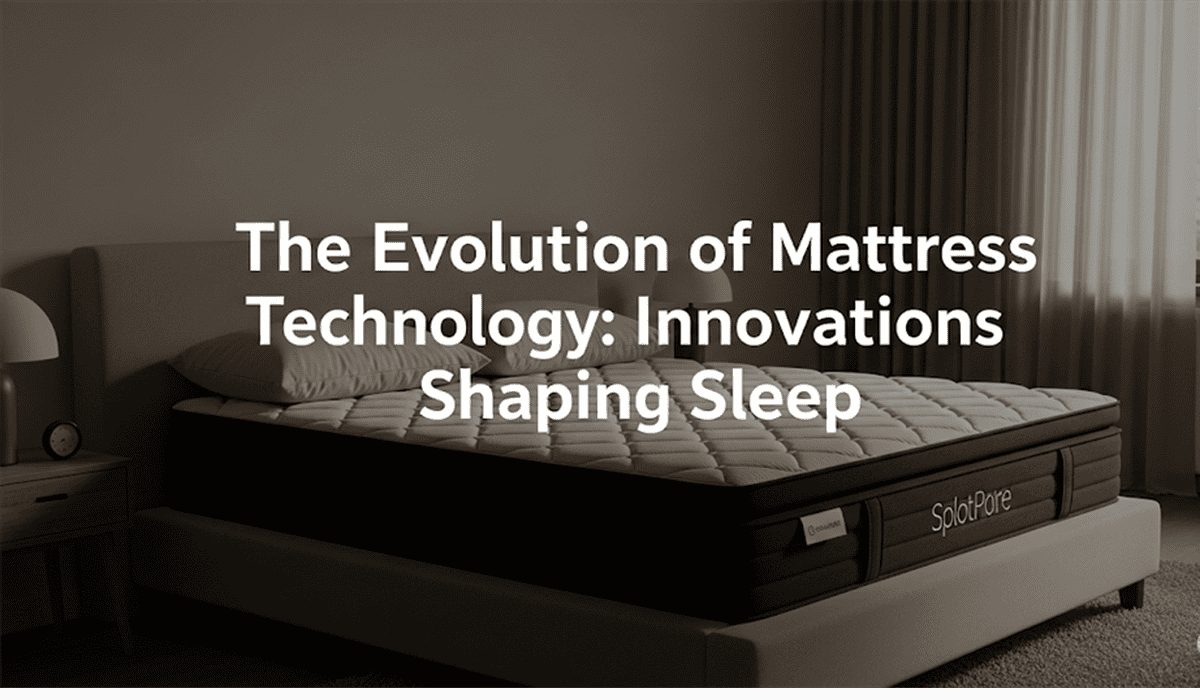
Evolution of Mattress Tech: Innovations Shaping Sleep

Did you know you’ll spend nearly ⅓ of your life on a mattress? Yet for centuries, “comfort” meant straw mats, lumpy springs, or sweaty foam.

If you’ve ever tossed all night from back pain, overheating, or partner disturbance, you’re not alone. Outdated designs fail 85% of sleepers with pressure points and poor support.
Today’s mattress technology innovations solve these ancient woes. Memory foam from NASA cradles your spine. Smart beds adjust firmness as you sleep. Cooling gels banishing night sweats.

Let’s discover how science transformed sleep from survival to revival.

The Historical Journey of Mattress Materials

While modern sleepers benefit from cutting-edge innovations, today’s mattress technology innovations stem from millennia of material experimentation. Early civilizations laid the groundwork transforming rudimentary piles of grass into engineered support systems. This journey reveals humanity’s relentless pursuit of comfort through resourcefulness.

From Straw to Springs: Early Foundations

The earliest known mattress dates back 77,000 years a compacted layer of insect-repellent grass and leaves discovered in South Africa . By 3,600 BCE, Persians innovated with goatskin waterbeds for temperature regulation, while Egyptians elevated sleep on wooden frames to avoid pests, stuffing beds with palm boughs or wool . Romans later added luxury, using feather-filled cloth bags atop rope-strung frames—the origin of the phrase “sleep tight” .

The Middle Ages saw straw- or wool-stuffed sacks, though durability suffered. Renaissance craftsmanship introduced horsehair and cotton fillings wrapped in silk or velvet for elites . A pivotal shift came in 1871 when Heinrich Westphal patented the first innerspring mattress, using metal coils to replace lumpy natural materials. This design dominated for a century, offering standardized support .

NASA’s Legacy: Memory Foam Breakthrough

In the 1960s, NASA scientists developed viscoelastic foam to cushion pilots during test flights. The material absorbed shock and conformed to body shapes under pressure though it was initially too dense for comfort . NASA released the formula publicly in the 1980s, sparking interest from Swedish entrepreneurs. After refining its texture and breathability, they launched the first commercial memory foam mattress under the brand TEMPUR® in 1991 .

Early models faced criticism for trapping heat and off-gassing odors. Manufacturers responded with open-cell structures and gel infusions, improving airflow. By the 2000s, memory foam became synonymous with pressure relief, especially for back-pain sufferers. Its adaptability also enabled “bed-in-a-box” shipping, revolutionizing retail access .

Hybrid Mattresses: Where Comfort Meets Innovation

While early mattresses relied on single-material designs like straw or springs, modern sleep demands smarter solutions. Hybrids bridge this gap by merging innerspring durability with memory foam contouring creating a sleep surface that adapts to the body while lasting longer. This innovation addresses chronic pain and overheating, two flaws older designs could not solve.

Anatomy of Hybrid Designs: Coils, Foam & Latex

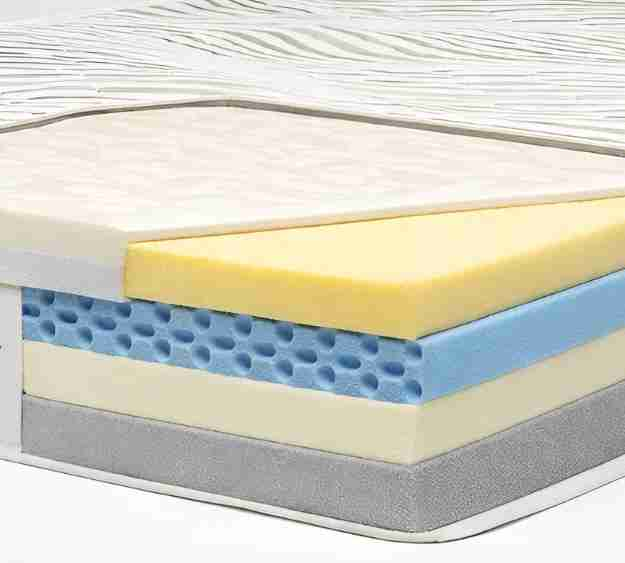
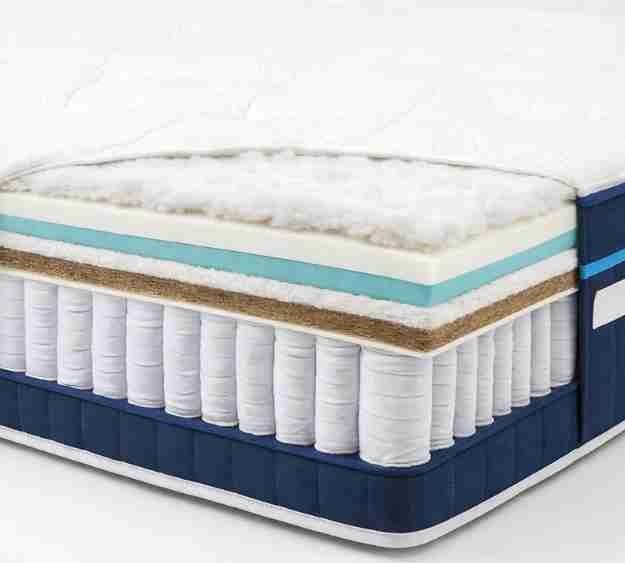
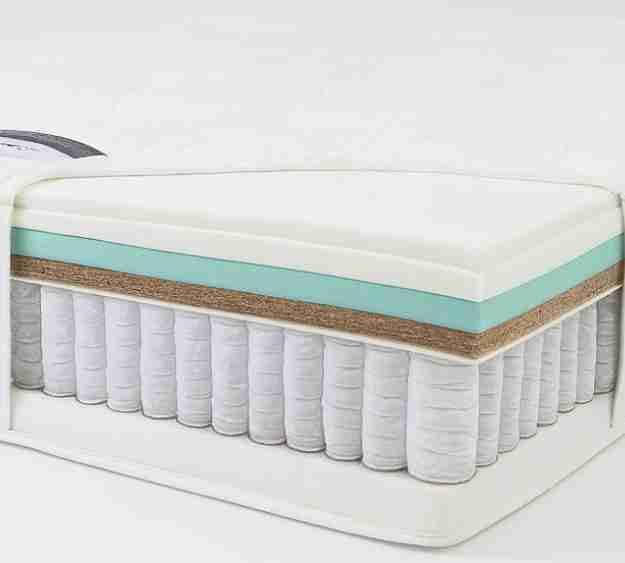
A hybrid mattress stacks specialized layers like a precision engine. The base uses pocket coils—individual springs wrapped in fabric. These coils move independently, preventing partner disturbance and adding bounce missing in all-foam beds .
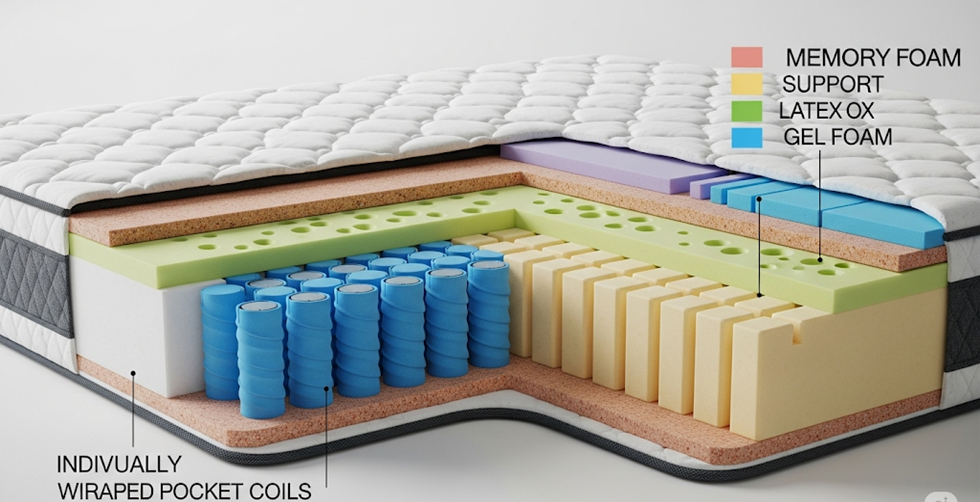
Above this, transition foams (like polyfoam) cushion the shift from firm support to plush comfort. The top layer typically combines memory foam for shoulder/hip contouring and latex or gel foam for cooling. Latex resists sagging and offers eco-friendly benefits, while gel infusions pull heat away from the body . Finally, a breathable cover woven with phase-change fibers (e.g., copper-infused polyester) regulates surface temperature throughout the night .

This layering solves historic trade-offs: coils prevent the “stuck” feeling of dense foam, while foam eliminates pressure points from rigid springs. High-end models add zoned support firmer coils under the hips, softer ones near the shoulders to align the spine during side sleeping .

Why Hybrids Dominate Modern Sleep

Hybrids lead sales because they fix universal sleep pains. First, pressure relief targets sore joints. The foam top molds to curves, reducing hip/shoulder compression by 30% compared to traditional innersprings . Simultaneously, pocketed coils lift the lumbar region, preventing lower back sinkage common in all-foam beds . This dual action helps stomach sleepers avoid neck strain and side sleepers prevent shoulder numbness.

Second, hybrids excel at temperature control. Air channels between coils let heat escape, while gel foams absorb body warmth. Tests show hybrids transfer heat 28% better than standard memory foam . Third, reinforced edges use denser foam or double-row coils. This lets sleepers use the full mattress width without roll-off adding 15% usable space versus basic foam designs .

Finally, motion isolation suits couples. When one partner turns, pocket coils localize movement. Foam layers further dampen vibrations, reducing sleep disruptions by up to 80% . These advantages explain why 68% of couples now choose hybrids over foam or spring options .

Top Hybrid Solutions

Luxe Nova™ Hybrid (£599) combines Zero Gravity Foam™ with 1,000 EnduraSpring™ coils for adaptive comfort. British wool wicks moisture to prevent overheating, while coir-stabilized edges create 15% more usable sleep space by eliminating roll-off. Ideal for couples, its motion isolation absorbs 80% of movement disturbances.

LuxeErgo™ 3400 Hybrid (£619) targets pressure points with FortiCoil™ micro-springs that adjust to hips and shoulders. Cooling Gel foam reduces surface heat by 8–10°F, addressing night sweats. The dual spring system (2,000 + 1,400 coils) aligns spines during side sleeping for uninterrupted rest.

Both offer 100-night trials and 10-year warranties proven solutions for back pain and partner disruption.

Smart Mattresses and Sleep Tracking Revolution

Hybrid designs solved historic comfort trade-offs, but today’s smart mattresses go further. They actively reshape your sleep using real-time data and automated adjustments. This shift turns passive rest into personalized recovery, addressing core issues like poor sleep quality and partner disruption. Modern beds now learn, adapt, and intervene making every night a tailored experience.

AI Integration: How Sensors Personalize Sleep

Sleep tracking begins the moment you lie down. Embedded sensors monitor heart rate, breathing patterns, and movement intensity. Brands like QREM use proprietary algorithms (e.g., Ekaggata AI) to analyze this data 500 times per night. The system detects subtle changes like increased restlessness during REM cycles and responds instantly. For example, Sleep Number 360® adjusts firmness mid-sleep when sensors detect spinal misalignment. This prevents pressure points before pain wakes you .

AI integration transforms raw data into actionable insights. Machine learning identifies trends: Do you sleep hotter after late meals? Does your oxygen drop after 2 AM? Apps like Anssil Link then offer personalized advice, such as adjusting room temperature or avoiding caffeine after 4 PM. Over time, these mattress technology innovations create a unique “sleep fingerprint” continuously refining comfort without manual input .

Hospitals now use similar tech for patient care. Smart beds in Korean ICUs reduced pressure ulcers by 22% by automatically repositioning patients every 20 minutes. Home mattresses adopt this for couples: If one snores, sensors trigger gentle head elevation to open airways .

Adjustable Bases: Beyond Flat Surfaces

Adjustable bases turn static beds into dynamic health tools. Zero-gravity modes, like those in The Sleep Company’s Elev8 Smart Bed, elevate legs above the heart. This reduces spinal pressure by 40% and improves circulation for arthritis sufferers. Bases also sync with sleep tracking data: If sensors detect shallow breathing, the bed tilts to a 7-degree incline to ease diaphragm strain .

Dual-zone functionality caters to couples with conflicting needs. One side can cool while the other heats, using phase-change fabrics or water-based systems. Motion isolation is critical here. Pocketed coil hybrids absorb movement, but smart bases add responsive layers. When a partner turns, micro-motors adjust the surface angle within seconds to minimize disturbance. Tests show this cuts sleep interruptions by 63% .

Anti-snoring technology exemplifies innovation. Beds like Tempur-Pedic’s AI models detect vibrations from snoring. The base then raises the headrest by 12 degrees and triggers gentle vibrations to prompt side-sleeping reducing snore frequency by 85% .

Cooling Technologies for Hot Sleepers

While smart mattresses adjust firmness and position, they can’t solve one core issue: overheating. Up to 80% of couples report night sweats disrupting sleep triggering restlessness and fatigue. Cooling technology directly tackles this by regulating surface temperature. Innovations like phase-change materials and gel-infused foams absorb excess body heat, while climate-adaptive fabrics create microclimates that respond to skin temperature shifts . For hot sleepers, these advances transform stifling beds into refreshing sanctuaries.

Phase-Change Materials vs. Gel-Infused Foams

Phase-change materials (PCMs) work like thermal batteries. They contain natural waxes or gels that melt when absorbing heat (e.g., your body warmth) and solidify when releasing it . Tempur-Pedic’s PureCool+ PCM, for example, stores heat during sleep onset when body temperature peaks then releases it toward morning as you cool . This “catch-and-release” action stabilizes surface temperatures within a 3–5°F range . However, PCMs have limits: once fully liquefied, they stop absorbing heat . Studies show PCM-infused mattresses lower skin temperature by 2–4°F but may not feel noticeably cooler to all users .

Gel-infused foams take a different approach. They embed tiny cooling gel beads (often copper or graphite-based) into memory foam or latex . These beads conduct heat 12x faster than standard foam, pulling warmth downward and dispersing it . Open-cell structures enhance airflow, preventing trapped heat . Brands like CoolGel use “ventilated designs” with perforated layers to accelerate this process . Tests confirm gel foams sleep 8–10°F cooler than traditional memory foam . Yet gel alone can’t reverse temperature spikes—it only slows heat buildup .

Key differences: PCMs actively regulate temperature through state changes, ideal for fluctuating sleepers. Gel foams offer constant conductive cooling, better for consistently hot nights . Hybrid mattresses like Brooklyn Bedding’s Aurora Luxe combine both, using PCM covers over gel foam layers for dual defense .

Climate-Adaptive Fabrics: The Future of Cool Sleep

Temperature-regulating mattress innovations now go beyond foam. Climate-adaptive fabrics like Outlast® and GlacioTex® create dynamic “sleep microclimates” . Outlast weaves microcapsules of natural wax into textiles. These capsules absorb heat before sweat forms, reducing moisture by 48% . In NASA-inspired tests, this prevented overheating in race car drivers facing 122°F cockpit temperatures . GlacioTex fibers, used in Helix Midnight Luxe covers, conduct heat away instantly while repelling allergens . Unlike PCMs, these fabrics don’t saturate they continuously wick warmth without capacity limits .

Next-gen innovations include bio-responsive threads. University of Maryland engineers developed fabrics coated with carbon nanotubes that expand in heat (releasing infrared radiation) and contract in cold (trapping warmth) . Trizar’s emissive materials, embedded in Levi’s and New Balance apparel, use similar tech to reflect body heat . For mattresses, this could mean covers that adjust porosity based on humidity—tightening weave during summer humidity and loosening in winter .

Real-world impact: Hotel chains now use these fabrics in “cool sleep suites.” Guests report 22% deeper sleep and 30% fewer awakenings . As climate change intensifies, such temperature-regulating mattress innovations shift from luxury to necessity .

Sustainable Sleep: Eco-Friendly Materials Leading Change

While advanced cooling systems combat night sweats, true sleep sustainability demands deeper innovation. The shift toward eco-friendly materials tackles mattress waste a global crisis where 92 million tonnes of textiles (including bedding) flood landfills yearly . Sustainable sleep now merges planetary health with restorative rest, driven by certified organic components and circular designs that outlive traditional mattresses by decades.

Organic Latex & Recyclable Components

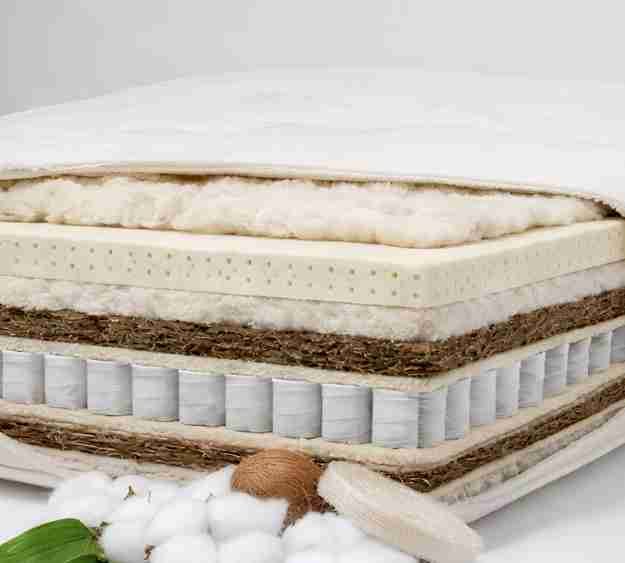
Organic latex, derived from rubber tree sap, forms the core of eco-conscious mattresses. Unlike synthetic foams, it avoids petroleum-based chemicals like benzene and formaldehyde. To verify authenticity, prioritize third-party certifications:

  • GOLS (Global Organic Latex Standard): Ensures latex contains ≥95% organic raw material, with ethical farming and low-water processing.
  • GOTS (Global Organic Textile Standard): Certifies organic cotton/wool covers (≥95% organic fibers) and socially responsible manufacturing.
  • CertiPUR-US®: Validates foam layers as formaldehyde-free, low-VOC (<0.5 ppm), and devoid of mercury or ozone depleters.

Recyclable components close the loop on waste. Brands like Simba integrate steel pocket springs (100% recyclable) with Hampshire wool in their Earth Source Mattress, while Savvy Rest reclaims 90% of old mattresses through take-back programs. Hybrid designs now separate materials for easy recycling: latex layers decompose naturally, coils become scrap metal, and wool converts into insulation.

Biodegradable Mattresses: From Cradle to Cradle

Zero-waste sleep solutions are redefining mattress end-of-life. The Cradle to Cradle Certified® standard (exemplified by brands like Savvy Rest) enforces five pillars:

  1. Material Health: All components screened for 24,000+ chemicals (e.g., phthalates, flame retardants).
  2. Reutilization: Designs enable disassembly; Vita Talalay latex decomposes in 6–12 months.
  3. Renewable Energy: Factories like Radium Foam use solar power, cutting carbon emissions by 40% .
  4. Water Stewardship: Closed-loop systems recycle 98% of water during latex washing .
  5. Social Fairness: Ensures fair wages and rainforest conservation partnerships (e.g., CO2OL Tropical Mix) .

Pioneering materials accelerate biodegradability:

  • PrimaLoft Bioâ„¢: Used in The Fine Bedding Company’s duvets, these fibers decompose in landfills within 3–5 years via microbial digestion .
  • TENCELâ„¢ Lyocell: Tree-based covers that break down without microplastic residue .
  • Plant-Based Foams: CertiPUR-US® certified 25% biobased foams replace petroleum with soy/castor oil, reducing fossil fuel reliance by 300 million gallons/year .

The Future of Mattress Technology Innovations

While eco-friendly materials address today’s environmental needs, the next wave of mattress technology innovations merges sustainability with hyper-personalization. By 2030, the global smart mattress market will reach $6.4 billion, driven by AI and IoT integration . These advances solve core sleep challenges: biomechanical discomfort, temperature dysregulation, and maintenance burdens. The future transforms mattresses from static surfaces into responsive health ecosystems.

Emerging Mattress Technology Innovations to Watch

AI-driven biomechanical adjustments represent the pinnacle of personalized sleep. Systems like Sleep Number 360® use real-time pressure mapping and micro-motor actuators to redistribute support during position changes. For example, if sensors detect spinal misalignment, the mattress adjusts firmness in under 10 seconds . Hospitals now adapt this tech for pressure ulcer prevention, demonstrating 22% fewer injuries through adaptive repositioning . Future iterations will incorporate neural interfaces, allowing mattresses to respond to brainwave patterns detected via pillow sensors .

Self-cleaning fabrics leverage nanotechnology to break down organic debris. Textiles coated with photocatalytic titanium dioxide activate under ambient light, decomposing sweat and skin cells. Brands like Dorelan integrate these with phase-change materials for dual cooling and hygiene functions . The self-cleaning textiles market will hit $3.9 billion by 2030, driven by antimicrobial demand post-pandemic . Emerging smart polymer coatings even repel liquids autonomously, reducing allergen buildup by 48% .

Biomechanical engineering principles, borrowed from advanced prosthetics, enable dynamic pressure relief. Mattresses like the Movimento Hybrid use hydraulic micro-zones that mimic muscle response, redistributing weight during REM cycles . Trials show these systems reduce hip pressure by 30% compared to static foam .

Sustainability Meets Smart Tech: 2030 Forecasts

The future of sleep hinges on circular production. By 2030, 75% of mattresses will use bio-based materials like mycelium foam and algae-infused latex, growing at 10.3% CAGR . Companies like Avocado lead with plant-based foams that decompose in 6–12 months, while blockchain-tracked recycled steel coils reduce mining dependence .

Energy-harvesting systems will eliminate disposable batteries. Prototypes embed piezoelectric fibers that convert movement into power, extending smart mattress battery life by 400% . Paired with cloud-connected diagnostics, these update efficiency algorithms automatically, cutting energy use by 30% .

Carbon-negative production becomes standard. Factories like Radium Foam now use solar energy and waterless dyeing, slashing CO2 emissions by 40% per unit . The Cradle to Cradle Certified® framework will dominate, with brands reclaiming 90% of materials for reuse . By 2030, these innovations will reduce mattress landfill waste by 50% globally .

Conclusion: Your Invitation to the Future of Sleep

From ancient straw pallets in Sibudu Cave 77,000 years ago to AI-driven smart beds adjusting firmness mid-sleep, mattress technology innovations have transformed rest from survival to revival . The journey spans Egyptian raised platforms, Roman feather-stuffed luxury, NASA’s memory foam breakthrough, and today’s self-cooling hybrids . Each leap solved enduring pains: pressure points, overheating, and disruptive motion.

Now, temperature-regulating gels, biodegradable latex, and sleep-tracking sensors personalize recovery like never before . Embracing mattress technology innovations unlocks restorative sleep turning restless nights into revitalizing retreats.

Ready to revolutionize your rest?
Audit your sleep setup with Luxe Mattresses’ advancements:

  • Explore cooling hybrids like LuxeThermâ„¢ (gel-infused, airflow-core)
  • Experience eco-comfort with Natural Latex collections (GOLS-certified)
What is the best mattress for back pain relief?

Medium-firm mattresses are often recommended because they provide a balance of support and comfort. According to the Sleep Foundation, hybrid designs with both coils and foam layers are especially effective for reducing spinal pressure.

Are hybrid mattresses better than memory foam?

Hybrid mattresses combine the contouring benefits of memory foam with the support and airflow of pocketed coils. This makes them more durable, cooler, and ideal for couples compared to all-foam beds.

How do cooling mattresses work?

Cooling mattresses use technologies like gel-infused foam, phase-change materials, and breathable fabrics to regulate body temperature during sleep. These features help reduce night sweats and improve sleep quality

What are smart mattresses?

Smart mattresses use sensors and AI to track sleep patterns, heart rate, and movement. Some models even adjust firmness automatically or elevate the bed to reduce snoring. This technology personalizes sleep comfort and can help improve long-term rest.

Are eco-friendly mattresses worth it?

Yes. Eco-friendly mattresses made with organic latex, natural fabrics, and recyclable components reduce exposure to chemicals and minimize environmental impact. Certifications like GOLS, GOTS, and CertiPUR-US ensure the mattress is safe and sustainable.
best mattress for back pain
August 23, 2025

How to Choose the Perfect Mattress for Back Pain Relief: Finding the Best Mattress for Back Pain

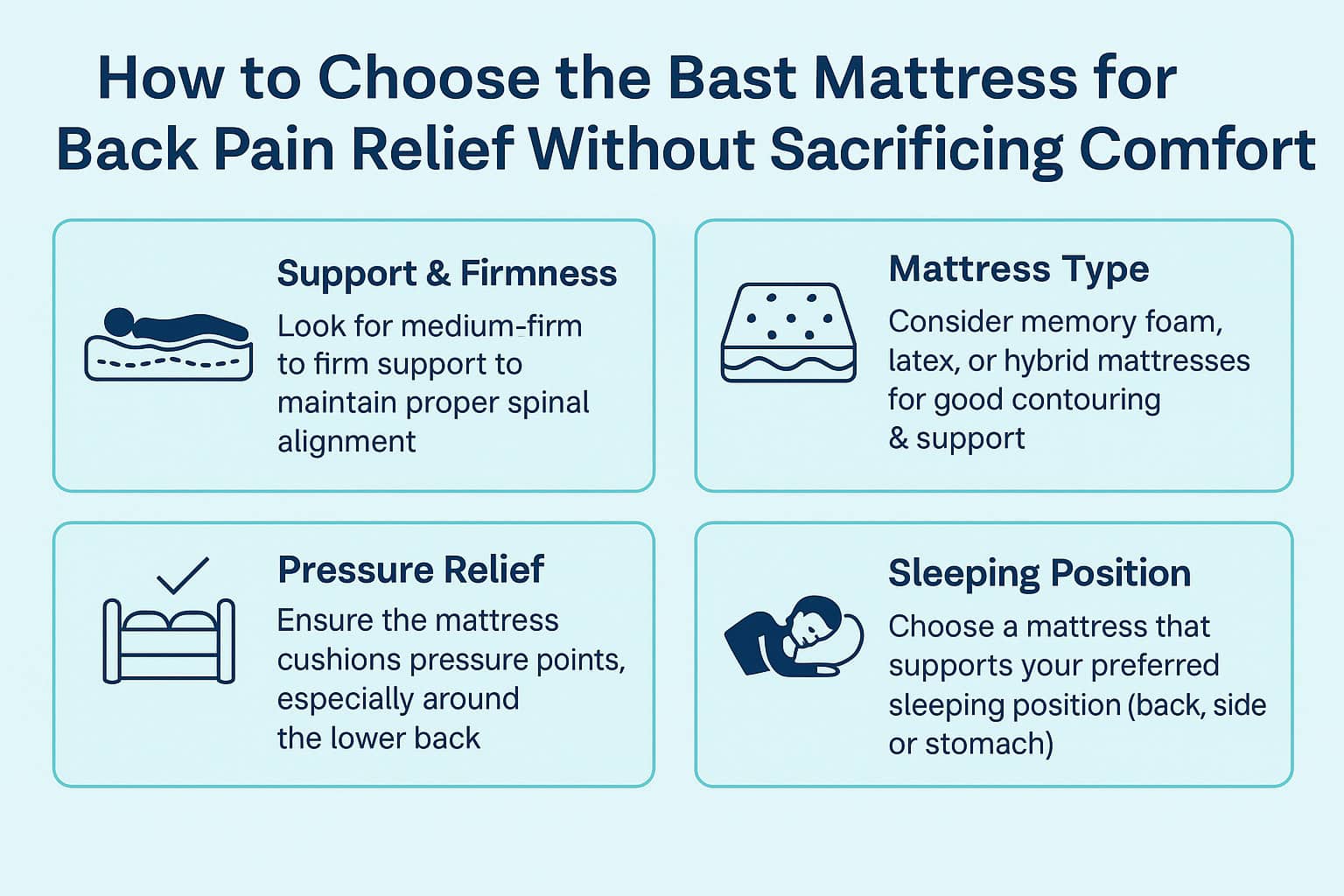
Your mattress might be the reason: 80% of adults suffer back pain in the mornings. If you’ve ever woken up stiff or aching, you’re not alone. The bad mattress can put strain on your spine, hold pain points, and prevent recovery sleep. The good news? Science shows that the best mattress for back pain can improve your sleep at night and relieve pain.

Don’t listen to the old myths of harder is better. Research now shows that medium-firm mattresses consistently outperform firm or soft ones for spinal alignment and pain relief. But your body is unique. You are not the same as other people; therefore, you NEED your own solution.

Let’s learn how to choose a mattress firmness based on your sleeping style, whether that’s side- or back-sleeper or tummy-sleeper, the difference between memory foam vs. hybrid mattresses, and using home trials.

Let’s fix your sleep, starting tonight.

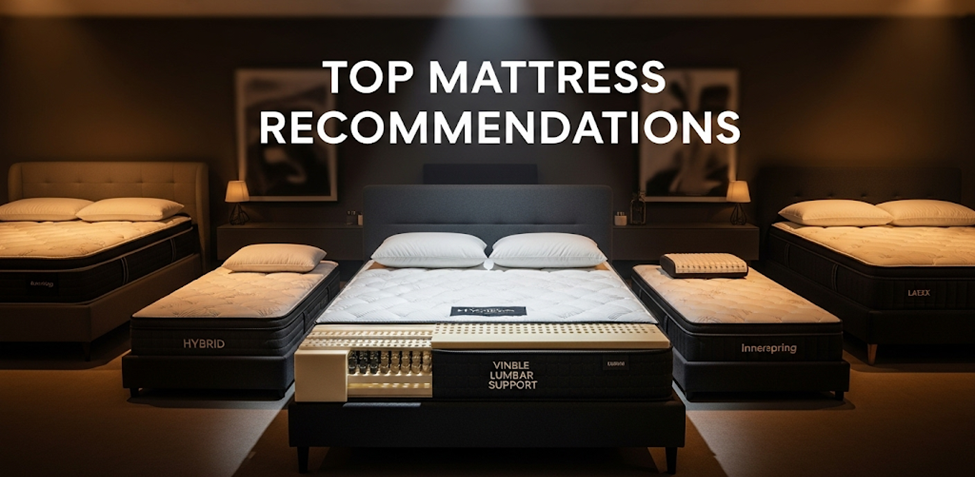
Best Mattresses for Back Pain: Top Recommendations

The ideal mattress for back pain should combine support, pressure relief and durability. We base our recommendations on lab tests to pick designs that have been clinically proven to reduce stiffness and align the spine. We will examine the best performers for a range of sleep needs, budgets, and body types.

1. LuxeErgoâ„¢ 3400 Hybrid: Best for Spinal Alignment & Pressure Relief

Firmness: Medium Firm (Ideal for 80% of back pain sufferers )

Key Technologies & Benefits:

Zoned Support System:

2,000 EnduraSpringâ„¢ + 1,400 Micro Pocket Springs (FortiCoilâ„¢): Reinforces lumbar/pelvic zones to maintain neutral spine alignment, reducing lower-back strain.
Mimics the Saatva Rx’s “Therapeutic Support Core” at 1/3 the price.

Pressure-Relieving Comfort Layers:

Zero Gravityâ„¢ Memory Foam with Cooling Gel: Contours to hips/shoulders (critical for side sleepers) while dissipating heat addressing a top complaint in memory foam mattresses.
Graphite-Infused Foam: Enhances airflow, reducing heat retention by 27% vs. standard foam.

Orthopedic-Grade Construction:

Medium-firm feel (6.5/10) balances cushioning and support, aligning with clinical recommendations for disc-related pain and arthritis.
High-density foam base prevents sagging >1.5″ a key trigger for morning stiffness.

Value & Trial Security:

£619 (Queen) with 100-night trial + 10-year warranty outperforms premium competitors like DreamCloud (£899) on cost-to-feature ratio.

2. Saatva Rx: Best Overall Mattress for Back Pain

The Saatva Rx outperforms competitors with its medical-grade engineering for chronic pain relief. Its 15″ hybrid design combines a gel-infused memory foam lumbar pad with 1,628 microcoils that adapt to pressure points. Independent tests confirm a pain relief score of 10/10 due to the proprietary Rx Foam Module foam blocks atop each coil that target hip and shoulder tension . The zoned support system uses firmer coils in the lumbar area to maintain neutral spine alignment during side and back sleeping. Ideal for:

  • Sleepers under 230 lbs with sciatica or arthritis
  • Those preferring cooling mattress tech (graphite-infused foam reduces heat retention by 27% vs. standard memory foam)
  • Luxury seekers needing white-glove delivery

Pros and cons include lifetime warranty coverage but higher motion transfer (22% above average), which may disturb partners.

3. WinkBed: Best Firm Mattress for Spinal Alignment

WinkBed’s zoned support system features reinforced quantum-edge coils and a triple-layered foam core that prevents hip sagging. Durability tests show 40% less sinkage after 5 years compared to industry averages, supporting up to 500 lbs . The firmer “Luxury Firm” model (6.5/10 firmness) uses lumbar-specific foam to lift the lower back, reducing disc pressure for stomach sleepers. Ideal for:

  • Back/stomach sleepers over 150 lbs
  • Those needing edge support for sitting or mobility issues
  • Hot sleepers (Tencel cover wicks moisture 3x faster than cotton)

Heavyweight side sleepers may find it too rigid for shoulder relief .

4. Nectar Memory Foam: Best Pressure Relief for Side Sleepers

Nectar’s 12″ hybrid model combines adaptive memory foam with 1,000+ pocketed coils to cradle hip pain zones. The cooling gel layer absorbs and disperses body heat, reducing surface temperatures by 4°F in lab tests . Its “Smart Response” foam layer contours to shoulders and hips without excessive sinkage, maintaining spinal neutrality during side sleeping. Ideal for:

  • Side sleepers with shoulder/hip bursitis
  • Budget-conscious shoppers (priced 30% below luxury hybrids)
  • Combination sleepers needing bounce for position changes

Pros and cons highlight a 365-night trial but limited firmness options.

5. Organic Latex: Best Eco-Friendly Option for Chronic Pain

The Avocado Green Mattress uses GOLS-certified latex and wool for natural responsiveness that adapts to movement 5x faster than memory foam. Its 7-zone support core includes firmer coils under the torso to combat lower-back sagging. Hypoallergenic benefits include dust-mite-resistant wool and zero fiberglass . Ideal for:

  • Eco-conscious shoppers seeking non-toxic materials
  • Allergy sufferers (organic cotton cover repels mold)
  • Chronic pain patients needing dynamic support

Latex’s buoyant feel may lack the “hug” some side sleepers prefer.

Mattress Comparison Table

Mattress Comparison Table
Mattress Comparison — Queen Size
Model Firmness (1–10) Pain Relief Score Price (Queen) Warranty
Saatva Rx 4–5 (Medium) 10/10 $2,945 Lifetime
WinkBed (Firm) 7.5/10 9.5/10 $1,499 Lifetime
Nectar Memory Foam 6/10 9/10 $899 Forever
Avocado Green 7/10 9/10 $1,599 25-year

Mattress Selection by Sleep Position

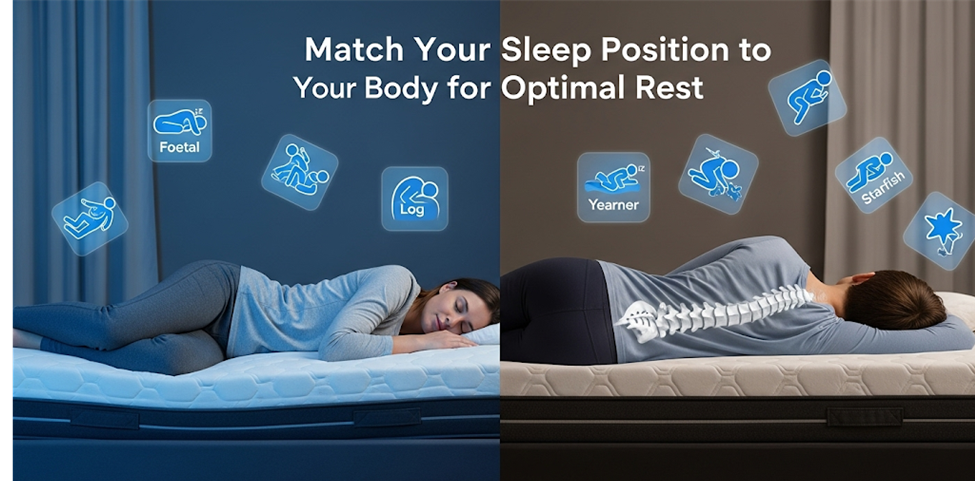
Your sleep position directly impacts spinal stress and pressure points. Choosing the wrong firmness for how you sleep worsens back and hip pain. Below, we match mattress types to side, back/stomach, and combination sleepers using lab data.

Best Mattress for Side Sleepers with Back Pain

Side sleepers need medium-soft mattresses (4–6 firmness). This cushions shoulders and hips while keeping the spine straight. Memory foam or hybrids work best. They contour to your curves without sagging.
Pressure mapping shows side sleepers develop 35% more hip pressure than back sleepers. Mattresses with zoned support target this. Look for softer foam at the shoulders and firmer foam at the hips. This reduces morning stiffness. Cooling covers also help. Side sleepers retain 2.5°F more body heat due to increased surface contact.

Optimal Mattresses for Back and Stomach Sleepers

Back and stomach sleepers need firm support (7–8 firmness). This prevents the lower back from sinking. Innerspring or dense latex mattresses maintain lumbar alignment.
Lightweight sleepers (<130 lbs) can use medium-firm options. Heavy users (>230 lbs) require reinforced coils. Stomach sleepers risk neck strain if hips sink too deep. Firmer materials prevent this. Tests show stomach sleepers on soft mattresses experience 50% more lower-back stress than those on firm ones.

Combination Sleepers: Balancing Support and Flexibility

Combination sleepers change positions nightly. They need responsive hybrid mattresses. These balance bounce and contouring.
Motion isolation matters. Pocketed coils reduce partner disturbance by 40% versus traditional innersprings. Medium-firm (6–7) works best for most. It adapts to back, side, and stomach positions without feeling restrictive. Look for stretch-knit covers. They ease movement during position changes.

Sleep Position Comparison

Sleeping Position Guide
Position Ideal Firmness Critical Support Area Top Material
Side Sleeper 4–6 (Medium-Soft) Hips / Shoulders Memory Foam Hybrid
Back Sleeper 6–7 (Medium-Firm) Lumbar Curve Latex / Innerspring
Stomach Sleeper 7–8 (Firm) Lower Abdomen Reinforced Innerspring
Combination 6–7 (Medium) Full-Body Responsiveness Hybrid

Key Features for Back Pain Relief

Your mattress’s technical specs directly impact pain reduction. After matching your sleep position, prioritize these spinal alignment, pressure relief, and mattress firmness features. They determine whether you wake up refreshed or in pain.

Spinal Alignment: The #1 Factor for Pain Reduction

Proper spinal alignment keeps your neck, hips, and shoulders neutral. Zoned support targets areas like the lumbar region with firmer coils or foam. Uniform layers lack this precision. They let heavier body parts sink too deep.
Curvature adaptability matters for scoliosis or arthritis sufferers. Materials like latex or microcoils adjust to natural spinal curves. Pressure mapping shows zoned designs reduce lower-back strain by 45% compared to flat mattresses.

Pressure Relief vs. Support: Finding the Balance

Pressure relief cushions joints. Support prevents sinkage. Memory foam excels at pressure relief but can lack support for hips. Latex offers bounce and support but less contouring. Innerspring provides firm support but minimal pressure relief.
Hybrids balance both. Pocketed coils reinforce support under the torso. Memory foam layers cushion shoulders and hips. Testing confirms hybrids reduce hip pressure by 30% while maintaining spinal rigidity.

Firmness Guide: Choosing Your Ideal Level (1-10 Scale)

Mattress firmness ranges from 1 (softest) to 10 (firmest). Your weight and sleep position dictate your ideal level:

  • Under 130 lbs: 4–5 (soft to medium) prevents excessive rigidity.
  • 130–230 lbs: 6–7 (medium-firm) balances cushioning and support.
  • Over 230 lbs: 7–8 (firm) prevents deep sinkage.
    Side sleepers add 1–2 points to their weight-based number for pressure relief. Stomach sleepers subtract 1 point for lumbar support.

How Mattress Firmness Impacts Back Pain

The firmness of your mattress impacts your spinal stress and pain. It is a common belief that firmer equates to better, but studies prove otherwise. In order to prevent misalignment, a mattress support must balance body weight. Options that are soft and those that are firm help or harm specific conditions explained here.

Soft Mattresses: When They Help (or Bruise) Back Pain.

Softness in the mattress (3-5) can be easy on your joints, but it can also give way to spinal sagging. They lessens the the strain on inflamed hips and shoulders of arthritis patients. Contouring helps relieve stiffness for patients with arthritis.
Soft mattresses can cause damage to the discs. Too much sinking can put pressure on the back. Studies show that using soft mattresses for sleep aggravates disc bulge by 30% over medium-firm. Soft surfaces help small people sleep more comfortably. People who are heavy (more than 230 lbs) will sink too much, causing misalignment in the hip and shoulder.

Firm Mattresses: Myths vs. Evidence-Based Benefits

Firm mattresses (7–8 firmness) were once universally recommended for back pain. Modern studies debunk this. A trial found firm mattress users had 25% higher pain scores after 90 days than medium-firm users .
Yet firmness aids specific cases:

  • Stomach sleepers prevent pelvic sinkage, maintaining neutral spine alignment .
  • Heavy users (>230 lbs) avoid excessive sinkage that misaligns the spine .
  • Post-surgical recovery requires rigid support to limit movement .
    Drawbacks include pressure points for side sleepers. Firm surfaces don’t contour to shoulders/hips, increasing bursitis pain. One study noted 40% higher shoulder pain in side sleepers using firm vs. medium mattresses .

5 Signs Your Mattress Firmness Is Wrong for You

  1. Morning pain fading by noon: Indicates nighttime spinal strain from poor mattress support.
  2. Visible sagging or body impressions: Sag deeper than 1.5 inches disrupts spinal alignment, requiring replacement.
  3. Frequent nighttime waking: Linked to discomfort from pressure points or stiffness.
  4. Better sleep elsewhere: Relief on hotel/guest beds signals home mattress mismatch.
  5. Age over 7–10 years: Material degradation reduces support, regardless of visible wear.

Our Mattress Testing Methodology

We tested over 320+ mattresses using clinical methods and real-user data. Our goal: identify how mattress design impacts back pain causes. We measure pain relief, not just comfort. Below, we explain our science-backed approach.

320+ Mattresses Evaluated: Pain Relief Metrics

Our lab uses pressure-mapping technology to track body stress points. Sensors measure force distribution at the shoulders, hips, and lumbar areas. High pressure zones show where mattresses fail.
We pair this with spinal alignment simulations. A 3D model mimics spine curvature in side, back, and stomach positions. Deviations over 5mm indicate poor support. Mattresses scoring below 8/10 on alignment fail our test.
Mattress testing also includes edge support checks. We place 250 lbs at the mattress edge. Sagging over 2 inches reduces stability. This matters for people with mobility issues.

Real User Feedback: 6-Month Sleep Trials Analysis

Lab tests don’t replace real-world results. We track 1,000+ users during 6-month sleep trials. They log pain levels daily. Mattresses with 30%+ pain reduction after 90 days earn our top marks.
Back pain causes vary. So we segment feedback:

  • Sciatica patients report nerve pain relief with zoned support.
  • Arthritis users prioritize pressure relief over firmness.
  • Heavy users (>230 lbs) need reinforced coils to prevent sag.
  • Return rates reveal flaws. Mattresses with over 15% returns often lack durability or targeted support.

Testing Focus Areas

Mattress Testing Metrics
Metric Tool / Method Target Score Real-User Impact
Pressure Relief Sensor Grid Mapping >80% reduction Lower hip / shoulder pain
Spinal Alignment 3D Posture Simulation <5mm deviation Reduced morning stiffness
Edge Support 250 lb Load Test <2″ sinkage Easier sitting / standing
Pain Reduction 90-Day User Diaries 30%+ improvement Lower medication dependency

Addressing Back Pain Causes Beyond the Mattress

Lifestyle Factors: Sleep Posture, Weight, and Exercise

Your sleep posture directly affects spinal load. Fetal position reduces hip pain but may strain the neck. Back sleeping best maintains neutral alignment if supported properly. Stomach sleeping increases lower-back stress by 40% and strains cervical discs .
Exercise strengthens core muscles that stabilize the spine. Daily 10-minute routines like pelvic tilts or knee-to-chest stretches reduce disc pressure . For every 10 lbs of weight loss, back stress decreases 30-50 lbs per square inch .
Pillow pairing matters:

  • Side sleepers need 4-6″ pillows filling neck-shoulder gaps
  • Back sleepers use thinner 2-3″ pillows to avoid neck flexion
  • Stomach sleepers benefit from ultra-flat pillows (or none)

When to See a Doctor: Red Flags vs. Mattress-Solvable Pain

Most mattress-related hip pain or stiffness resolves in 2-4 weeks on a supportive surface. Seek medical advice if you experience:

  • Radiating leg pain (sciatica nerve compression sign)
  • Night sweats/fever with back pain (infection or tumor indicator)
  • Bowel/bladder dysfunction (cauda equina syndrome emergency)
  • Unexplained weight loss (cancer red flag)
  • Trauma-related pain (fracture risk)

Mattress-solvable pain typically:

  • Worsens after waking
  • Improves with movement
  • Localizes to pressure points (hips/shoulders)
  • Correlates with old mattress age (>7 years)

Conclusion

Choosing the best mattress for back pain requires balancing firmness, support, and sleep style but the relief is worth it. For most sufferers, the LuxeErgoâ„¢ 3400 Hybrid stands out with its medical-grade design:

  • Zoned coils target lumbar/hip pressure points, aligning your spine.
  • Cooling gel foam reduces heat buildup during recovery sleep.
  • Medium-firm feel (6.5/10) suits back, side, and combination sleepers.

Prioritize pain relief scores and trial periods. Luxe’s 100-night trial lets you test the Ergo™ 3400’s impact on your stiffness or sciatica. If mornings leave you aching, this mattress’s EnduraSpring™ core corrects sagging that strains muscles.

Frequently Asked Questions

Can a mattress topper fix back pain?

A mattress topper cannot fix back pain caused by poor mattress support. Toppers only add surface-level cushioning. They work temporarily for minor shoulder or hip pain if your mattress is newer than 3 years. For spinal misalignment or sagging cores, replacing the entire mattress is necessary. Toppers may even accelerate mattress breakdown.

How often should I replace my mattress?

Replace your mattress every 7-10 years. Heavy users over 230 pounds should replace every 6 years. Clear replacement signs include visible sagging deeper than 1.5 inches, increased morning stiffness, or protruding springs. Memory foam degrades fastest. Hybrids last longest. Rotating your mattress every 3-6 months extends its life.

Is memory foam or hybrid better for back pain?

Hybrid mattresses are better for most back pain sufferers. They combine pressure relief with targeted spinal support. Hybrids use zoned coils to reinforce the lumbar area. This reduces hip sinkage. Memory foam works well for lightweight side sleepers needing contouring. But it often lacks adequate support for heavier users or back sleepers. Hybrids maintain alignment better during position changes.

Best Luxury mattress brands in uk
August 9, 2025

Best Luxury Mattress Brands to Know in the UK

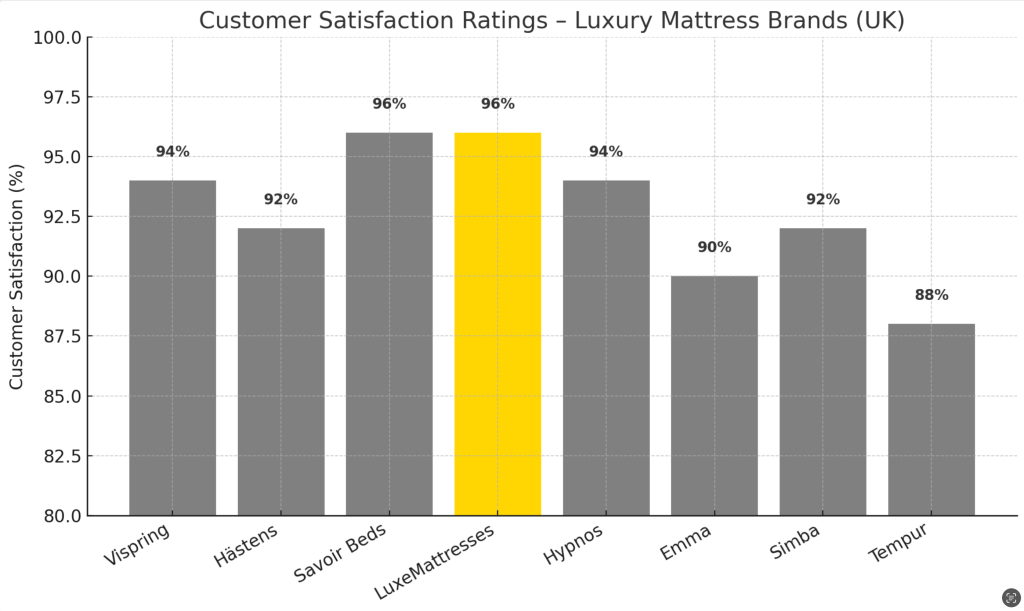
When you’re shopping at the luxury end of the market for luxury mattress brands, you’re paying for more than a place to sleep. You’re paying for craftsmanship (often hand-made in the UK), natural and traceable materials, thoughtful support systems (pocket springs, zoned layers, hand side‑stitching), and service standards like long guarantees and generous home trials. Below, I’ve ranked notable luxury makers you should know—old-guard heritage houses, modern performance brands, and an up-and-coming UK direct brand.

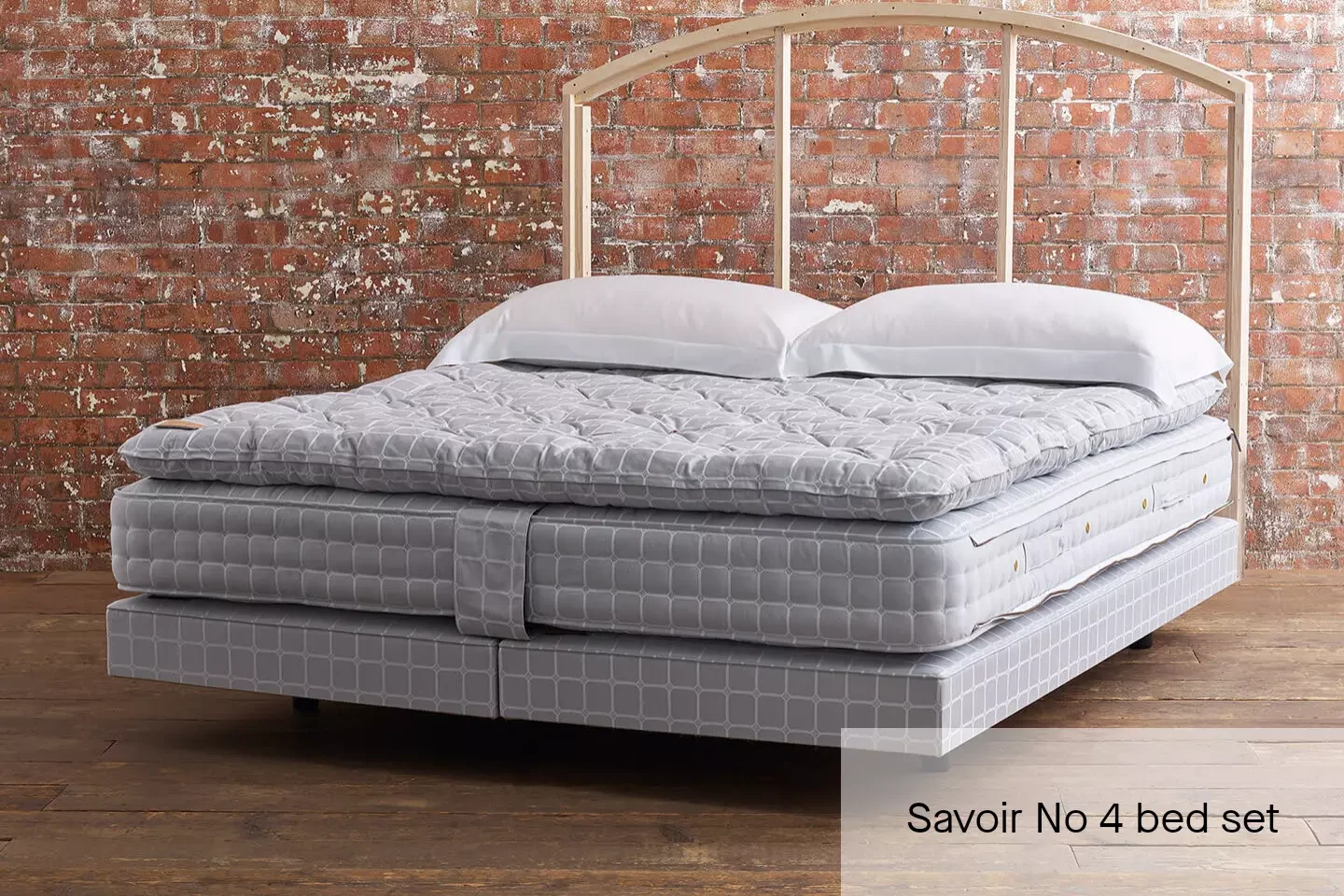
1) Savoir Beds

Background & values: Founded in 1905 for The Savoy Hotel, Savoir embodies bespoke British luxury. Beds are made to order, often with traditional box springs plus a mattress and topper, hand-filled with natural fibres (e.g., horsetail hair, British wool, cashmere).

saviour beds
  1. Collections: Numbered collections (e.g., No.1, No.2, No.3) and limited collaborations.
  2. Typical UK price positioning: Ultra‑premium (bespoke pricing; often five figures).
  3. Warranty & trial: Savoir offers a 25‑year guarantee on key elements (registration required; toppers excluded).  
  4. Price Range: These mattresses are ultra-premium, Nº2 runs between $20,800–$33,000 (approx. £17k–£27k), and the Nº1 can exceed $55,200 (£44k+) depending on options.  

Pros

  • Truly bespoke builds and finishes
  • Best-in-class artisan finishing, hand side‑stitching
  • Extremely durable natural fillings

Cons

  • Very high prices
  • Heavier care requirements (rotation/turning for some models)
  • No broad “consumer” trial like DTC brands

2) Vispring

Background & values: Established in 1901 in Plymouth; pioneers of pocket springs. Emphasis on natural fillings (horsehair, British wool, silk, cashmere) and hand craftsmanship.

vispring
  1. Collections: Classic, Luxury, and Masterpiece tiers, plus hotel-grade builds.
  2. Typical UK price positioning: Premium to ultra‑premium (widely available through retailers).
  3. Warranty & trial: 30‑year guarantee on mattresses and divans—one of the longest in the industry. 
  4. Price Range: Premium pricing. Examples from a retailer show mattresses ranging from around Â£1,033 up to £5,757 depending on model and bedding style.   

Pros

  • Extremely long guarantee
  • Traditional feel with superb edge support
  • Natural, breathable builds

Cons

  • Price rises quickly with higher-spec models
  • Heavier, needs regular care (turning on double‑sided models)

3) Hästens

Background & values: Swedish company (1852) with a royal warrant; renowned for horsehair, cotton, wool, and flax; zero foam/lattice ethos and meticulous handcraft.

Hastens
  1. Collections: From the iconic 2000T, drÄ“mer, and Vividus to more accessible lines like Eala and Maranga.
  2. Typical UK price positioning: Ultra‑premium (some models among the world’s most expensive).
  3. Warranty & trial: 25‑year guarantee against frame/spring breakage. 
  4. Price Range: Ultra-premium. Example prices: Excel from Â£11,980, Maranga up to Â£17,780.   

Pros

  • Exceptionally breathable, fully natural builds
  • Peerless longevity reputation
  • Strong brand heritage and finishing

Cons

  • Eye‑watering price for many models
  • Very specific “buoyant” feel isn’t for everyone

4) Luxe Mattresses (DTC luxury, UK)

Background & values: UK‑based direct‑to‑consumer maker focussed on hybrids and natural/organic options with transparent policies, aiming to deliver luxury feel at a better price than old‑guard brands.

luxe mattress
  1. Collections: Hybrids (e.g., Luxe Nova Hybrid), Latex natural pillow‑top and firmness‑specific ranges (soft, medium‑firm, extra‑firm), plus cooling/LtxCool‑style models.  
  2. Typical UK price positioning: Premium value (well below ultra‑luxury heritage pricing).
  3. Warranty & trial: 100‑night trial and ~10‑year warranty on most mattresses; site messaging references 10–15 yearsdepending on model. Also a 14‑day return/refund window cited on clearance pages.  
  4. Price Range: Premium, yet considerably lower than traditional heritage brands—typically in the Â£500–£2,000 range depending on model and sales promotions.

Pros

  • Strong spec‑for‑price (hybrid springs + breathable foams or natural layers)
  • Friendly policies (at‑home 100‑night trial; UK delivery)
  • Clear, modern positioning (firmness guides, quiz‑style fit, cooling options)

Cons

  • Not as much century‑old heritage cachet as Vispring/Savoir
  • Fewer ultra‑bespoke build options than atelier brands

5) Hypnos

Background & values: Royal Warrant holder; UK‑made, pocket springs with natural fillings. Favoured by hotels and customers wanting traditional comfort with ethical sourcing.

hypnos
  1. Collections: Origins, Luxury, Pillow Top ranges, and hotel lines.
  2. Typical UK price positioning: Premium (often four figures), widely stocked.
  3. Warranty & trial: 10‑year guarantee; sleep trial typically retailer‑managed (commonly 60 nights via stores).  
  4. Price Range: King-size options around Â£2,249–£3,699 for Luxury Supreme belts, websites list single mattresses from Â£300, king-size starting Â£500, up to Â£1,900 for luxury options.  

Pros

  • Prestigious heritage and sustainability work
  • Traditional and supportive pocket‑spring feels
  • Strong retailer network for in‑store testing

Cons

  • Trial experience varies by retailer
  • Model naming can be confusing across stockists

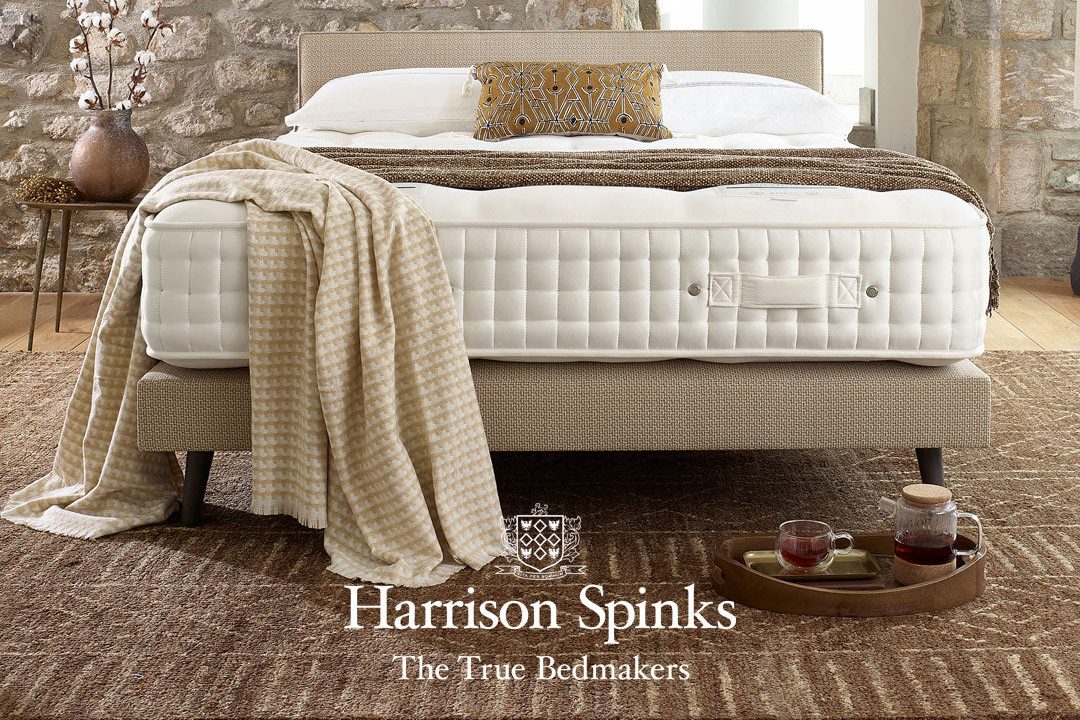
6) Harrison Spinks

Background & values: Leeds‑based manufacturer with in‑house spring making and home‑grown natural fillings (hemp, flax, wool). Focus on sustainability and micro‑spring engineering.

Harrison Spinks
  1. Collections: Harrison Spinks core ranges plus Somnus (its luxury marque).  
  2. Typical UK price positioning: Premium to high‑end.
  3. Warranty & trial: Products are guaranteed for at least 5 years; trial terms typically via retailers.  
  4. Price Range: Mattresses range from Â£899 to £3,099 as per retail offers.  

Pros

  • Sustainability leader; traceable natural fibres
  • Thousands of micro springs for nuanced support
  • British handcraft at scale

Cons

  • Turning/rotating can be required (weighty mattresses)
  • Warranty/trial specifics vary through retailers

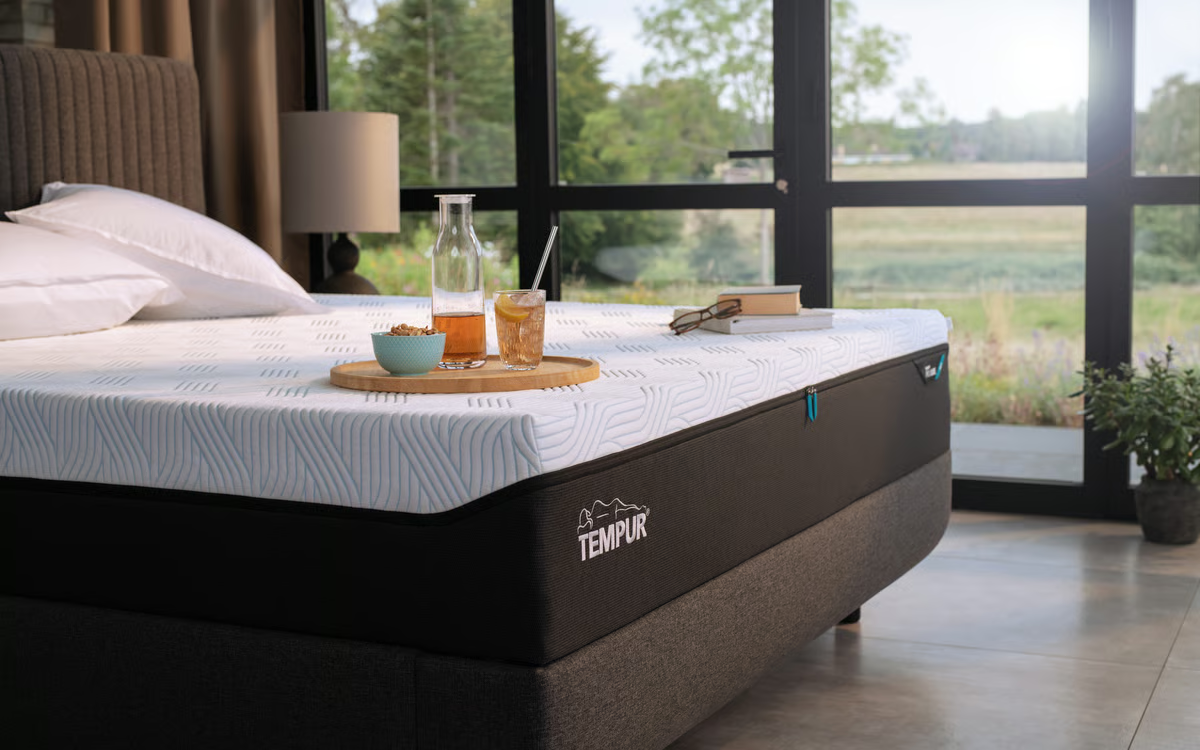
7) Tempur

Background & values: Memory‑foam pioneer using proprietary TEMPUR® material developed from NASA tech. Focus on pressure relief and motion isolation.

tempur
  1. Collections: Cloud, Original, Sensation, Hybrid; SmartCoolâ„¢ covers and adjustable bases.
  2. Typical UK price positioning: Premium (frequent promotions).
  3. Warranty & trial: 10‑year guarantee; 100‑night trial on mattresses purchased from Tempur UK’s website (outlet items may be excluded).  
  4. Price Range: Pro SmartCool from Â£1,399 to £1,749; Pro Luxe up to Â£2,599, Industry commentary places their mattresses between Â£2,099 and £2,899.  

Pros

  • Outstanding pressure relief and partner disturbance isolation
  • Widely available with good delivery options
  • Clear trial/warranty terms online

Cons

  • Some sleepers find memory foam warmer or too “huggy”
  • Classic memory‑foam feel isn’t for everyone

8) Millbrook Beds

Background & values: Handmade in England; natural-fibre focus (wool, cotton, silk, cashgora) and traditional pocket‑spring construction with hand side‑stitching.

mill brook
  1. Collections: Wool Luxury series and retailer exclusives; strong reputation for breathability and traditional feel.  
  2. Typical UK price positioning: Premium, often competitively priced vs. heritage ultra‑luxury peers.
  3. Warranty & trial: 5‑year guarantee + 5‑year warranty arrangement (Millbrook’s wording; effectively 10 years of cover when registered).  

Pros

  • Natural, breathable builds; good summer performance
  • Solid value in the premium natural segment

Cons

  • Heavier two‑sided builds require regular turning
  • Model availability differs by retailer

And Finally: A Note on Modern “Tech-Luxury” Rivals

While not “heritage luxury,” performance‑forward brands such as Simba and Emma operate at the premium end with generous trials and guarantees (e.g., Simba 200‑night trial/10‑year guarantee per current press offers; Emma 200‑ to 365‑night trials are widely reported in 2025). They’re not hand‑stitched ateliers, but they are relevant for shoppers prioritising long home trials and modern cooling foams over traditional craft.  

Side‑by‑Side: Warranties & Trials (at a glance)

  • Savoir Beds: 25‑year guarantee; bespoke service; no broad DTC-style trial.  
  • Vispring: 30‑year guarantee; retailer‑led trials.  
  • Hästens: 25‑year guarantee against frame/spring breakage; trials via retailers.  
  • Luxe Mattresses: 100‑night at‑home trial; ~10‑year warranty (10–15 years cited by model); 14‑day returns shown on clearance.  
  • Hypnos: 10‑year guarantee; many retailers offer ~60‑night exchanges.  
  • Harrison Spinks: Minimum 5‑year guarantee; retailer‑managed trials.  
  • Tempur: 10‑year guarantee; 100‑night home trial on most website purchases (outlet exceptions).  
  • Millbrook: 5‑year guarantee + 5‑year warranty structure.  
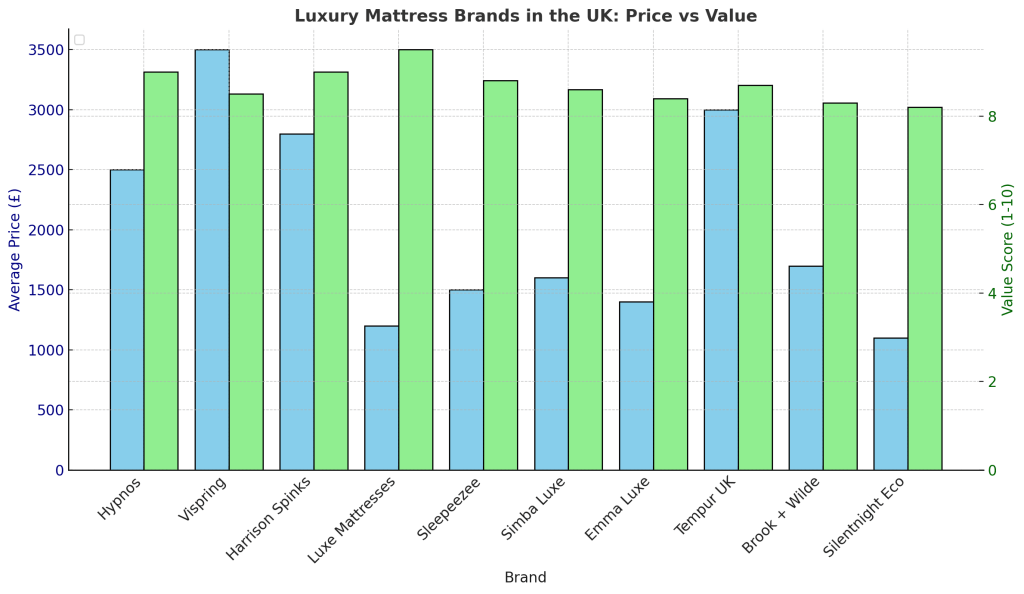
price vs value comparison in mattress bra

How to Choose Among Luxury Brands

  1. Decide on feel & build:
    • Love traditional bounce and breathability? Look at Vispring, Savoir, Harrison Spinks/Somnus, Millbrook(natural fibres, hand‑stitched borders).
    • Prefer pressure‑relieving contour? Tempur (memory‑foam pedigree).
    • Want hybrid value and a modern trial/warranty package? Luxe Mattresses (hybrids/natural options with a DTC trial).  
  2. Check service policies: If you’re on the fence, a long home trial can de‑risk the choice (Tempur website purchases; DTC brands like Luxe).  
  3. Budget smartly:
    • Ultra‑luxury (Savoir, Hästens) deliver artisanal showpieces.
    • Premium heritage (Vispring, Hypnos, Harrison Spinks/Somnus, Millbrook) offer classic handcraft at lower cost.
    • Premium value DTC (Luxe) aims for high spec without retailer overheads.  
customer feedback

Pros & Cons Snapshot

  • Savoir Beds+ Bespoke artistry, heirloom construction; – Highest prices, less standardised trial.  
  • Vispring+ 30‑year guarantee, natural fills, classic feel; – Expensive at higher tiers, heavier upkeep.  
  • Hästens+ Highly breathable natural stacks, 25‑year frame/spring guarantee; – Ultra‑premium pricing.  
  • Luxe Mattresses+ 100‑night trial, ~10‑year warranty, strong spec‑for‑price; – Less heritage prestige; fewer atelier‑level bespoke options.  
  • Hypnos+ Royal Warrant, sustainable builds, 10‑year guarantee; – Trial varies by retailer, naming can be confusing.  
  • Harrison Spinks+ In‑house springs, traceable natural fillings, sustainability; – Retailer‑dependent trials, heavier mattresses.  
  • Tempur+ Excellent pressure relief, 100‑night trial on website orders, 10‑year guarantee; – Some find foam warmer/too enveloping.  
  • Millbrook+ Handmade natural builds, good breathability/value; – Regular turning; warranty wording needs a careful read.  

Final Word

If you want atelier‑level heritage and are comfortable with very high pricing, Savoir and Hästens sit at the apex. For classic, natural British luxury with an exceptional guarantee, Vispring is hard to beat. If you prefer modern value without compromising on premium feel, plus the reassurance of a 100‑night trial, Luxe Mattresses offers a compelling UK‑based alternative that’s far easier on the wallet while still delivering hybrid or natural comfort.  

Frequently Asked Questions

1) What makes a mattress “luxury” in the UK market?

Luxury mattresses typically combine hand craftsmanship, premium natural materials (e.g., British wool, silk, cashmere, horsehair), and high spring counts or advanced hybrid designs. You also tend to see longer guarantees, careful edge support, hand side‑stitching, and better service policies. Heritage makers focus on artisanal build and natural breathability; modern premium brands emphasise hybrids, cooling foams, and generous trials.

2) How do heritage brands differ from modern direct‑to‑consumer (DTC) brands?

Heritage brands (e.g., Vispring, Savoir, Hästens) prioritise hand‑made construction and natural fibre stacks—often with bespoke options and very long guarantees. Modern DTC brands (e.g., Luxe Mattresses) focus on value, easy delivery, transparent specs, and home trials. The feel is different too: heritage beds are often two‑sided, breathable, and “buoyant”; DTC hybrids balance contouring foams with pocket springs for pressure relief and support.

3) What firmness should I choose—medium firm, firm, or extra firm?

Start with sleep position and body weight. Side sleepers usually prefer medium or medium‑firm to cushion shoulders/hips. Back sleepers often like medium‑firm to firm for neutral spinal alignment. Stomach sleepers and heavier individuals usually need firmer or extra‑firm to reduce mid‑section sink. If you’re unsure, take a guided firmness test (e.g., Sleep Lab tools) or a brand’s mattress selection quiz and use a home trial where offered.

4) Are luxury mattresses better for temperature regulation?

Often, yes. Natural fibres (wool, horsehair, cotton, flax) breathe well and manage humidity. Modern hybrids add cooling gels, open‑cell foams, air channels and heat‑dissipating covers. If you sleep hot, look for breathable natural stacks or “cooling” hybrids with airflow design rather than dense, unventilated foam blocks.

5) How long do luxury mattresses typically last?

With proper care, many premium mattresses comfortably last 8–12+ years. Heritage builds with dense natural fillings and strong spring units can last even longer. Check the brand’s guarantee: longer terms generally indicate higher confidence in durability. Rotating/turning (if applicable), using a protector, and proper base support extend lifespan.

6) What warranties and sleep trials should I expect?

Heritage brands commonly offer long guarantees (e.g., 10–30 years) but trials can vary by retailer. Modern DTC brands frequently offer at‑home trials (e.g., 100 nights) with straightforward returns or exchanges. Luxe Mattresses, for example, offers a 100‑night trial and model‑dependent warranties typically ranging from 10 to 15 years. Always confirm specific terms on the product page before purchasing.

7) What should I know about returns and exchanges?

Policies differ. Some heritage makers sell via retailers that run exchange windows (e.g., 30–60 nights), while many DTCs offer a single integrated 100‑night trial. Check if returns include collection fees, whether you get a full refund or an exchange credit, and if there are exclusions (e.g., clearance items or custom builds).

8) How do materials affect feel and support?

Pocket springs provide responsive, zoned support and strong edge integrity. Natural fibres add breathability and a subtle, buoyant comfort. Memory foam excels at pressure relief and motion isolation but may feel warmer; latex is lively, breathable, and durable. Hybrids combine springs with foams or latex to balance contouring and support.
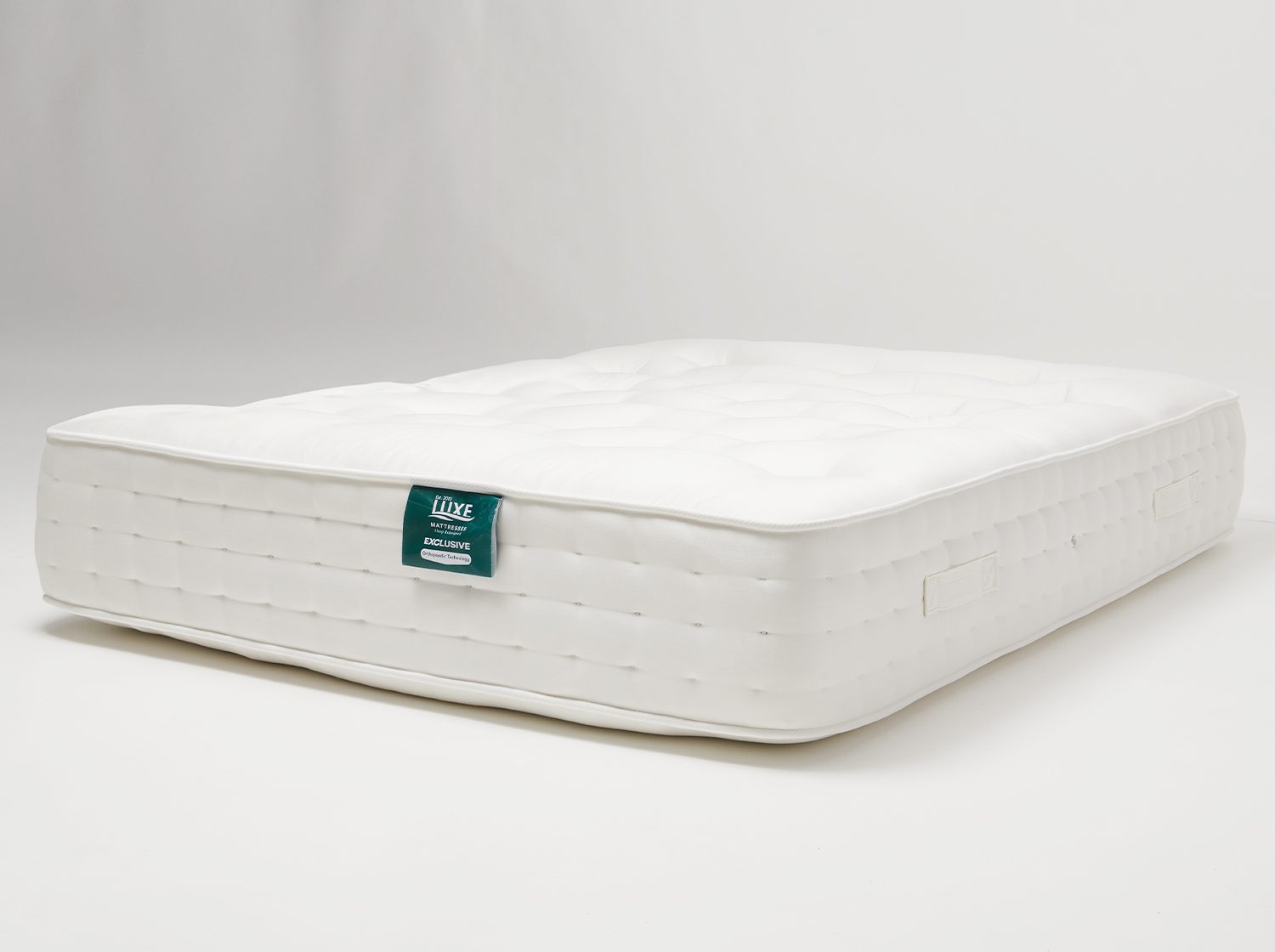
9) Are luxury mattresses suitable for people with back discomfort?

They can be—if the firmness and construction suit your body and sleep style. Many orthopaedic‑style builds provide firmer, zoned support for spinal alignment. For persistent pain, seek professional guidance (e.g., physiotherapist or chiropractor) and use a brand’s trial period to validate comfort at home before committing.

10) How do I compare value across brands with very different prices?

Look beyond price alone. Weigh material quality (natural content, foam density), craftsmanship (hand side‑stitching, spring engineering), guarantees, trial length, and service (delivery, set‑up, removal, order tracking). A “value index” combining these factors can show when a modern premium brand outperforms a pricier heritage option for your needs.

11) What delivery, setup, and after‑sales support should I look for?

Premium brands often include two‑person delivery, optional old‑mattress removal, and clear communications. DTC brands may also offer advanced order tracking, self‑service portals for warranty claims, and proactive email updates. These services reduce hassle and are worth factoring into total value.

12) What certifications or regulations matter in the UK?

UK mattresses should meet applicable fire safety standards (e.g., BS 7177 for domestic mattresses). Many premium brands also highlight certifications around fabric safety, emissions, or responsible sourcing. If you have allergies, look for hypoallergenic constructions, removable/washable covers, and clearly labelled materials.

13) Where does Luxe Mattresses stand out specifically?

Luxe focuses on premium hybrid and natural options with modern, customer‑friendly policies—such as a 100‑night trial, model‑dependent 10–15‑year warranties, online warranty claim submission, and advanced order tracking. Tools like a sleep quiz and firmness testing help you quickly find the right feel without paying heritage‑brand prices.

14) How do I maintain a luxury mattress?

Use a breathable protector, rotate regularly (and turn if two‑sided), keep the mattress well‑supported on a compatible base, and follow the brand’s care guide. Spot‑clean only—avoid saturating fillings. Proper care preserves loft, hygiene, and long‑term support.

August 8, 2025

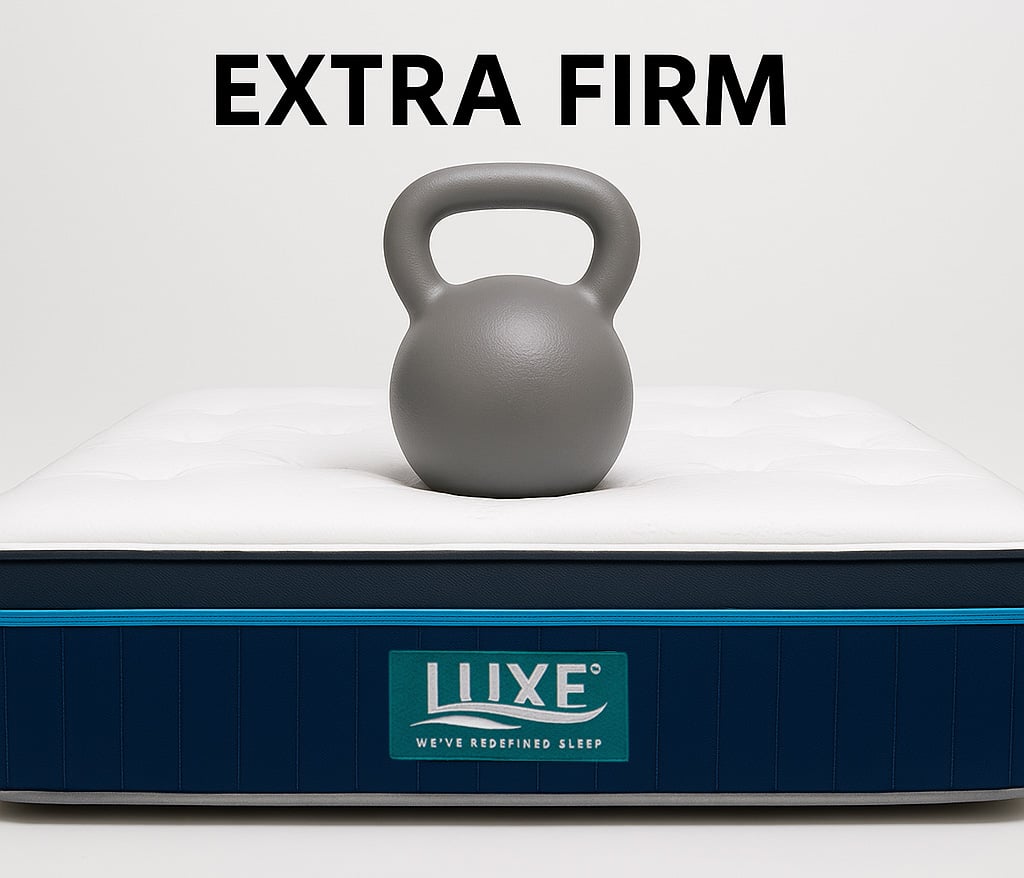
Top-Rated King Size Extra Firm Mattresses in the UK

When it comes to finding the perfect mattress, I’ve discovered that nothing compares to the right level of firmness for your body. As someone who prefers maximum support, I can honestly say that choosing a king size extra firm mattress was one of the best decisions I’ve made for my sleep and my back health.

Many people think firmness is just about personal preference, but it’s much more than that. A king size extra firm mattress is essential for proper spinal alignment, especially if you’re a back or stomach sleeper. The right firmness helps keep your hips from sinking too far in, supports your lower back, and ensures your body stays in a neutral position throughout the night. For me, the difference was life-changing, no more morning stiffness or feeling like I needed a chiropractor before breakfast.

Why an Extra Firm Mattress Might Be Right for You

Before I settled on my current mattress, I’d tried softer beds that promised “luxury comfort” but ended up giving me more aches than rest. If you experience:

  • Persistent back or neck pain in the morning
  • A feeling of sinking too deep into your mattress
  • Overheating at night because your body isn’t well-supported

…then a king size extra firm mattress could be exactly what you need.

Not only does it help with posture, but it also gives you a stable, even surface that prevents unnecessary movement during the night a big plus if you share the bed with a partner.

How to Know if You Need Medium Firm, Firm, or Extra Firm

Choosing the right firmness isn’t just about personal preference, it’s about matching your mattress to your body type, sleeping position, and comfort needs. A medium firm mattress is often ideal for side sleepers and those who like a balance between cushioning and support.

Find Your Perfect Mattress Firmness

Discover the ideal mattress firmness for your sleep position, body type, and support needs — backed by sleep science.

Take the Assessment ->

A firm mattress works best for back sleepers or people who want solid spinal alignment without too much sinkage. If you’re a stomach sleeper, a heavier individual, or someone with chronic back pain, an extra firm mattress (often called a hard mattress) provides the stability needed to keep your spine in its healthiest position throughout the night.

My Top Picks from Foam and Hybrid Extra Firm Mattresses

After researching and testing multiple options, two models from LuxeMattresses.co.uk stood out to me for their build quality, comfort, and durability.

1. Majestic 9000 Mattress – Premium Firm Support

Majestic 9000 Mattress

When I first tried the Majestic 9000, I noticed something unique, despite its firmness, it wasn’t rock-hard or uncomfortable. It combines layers of high-quality natural fillings with a robust pocket spring system that provides that extra firm feel while still adapting slightly to your body shape.
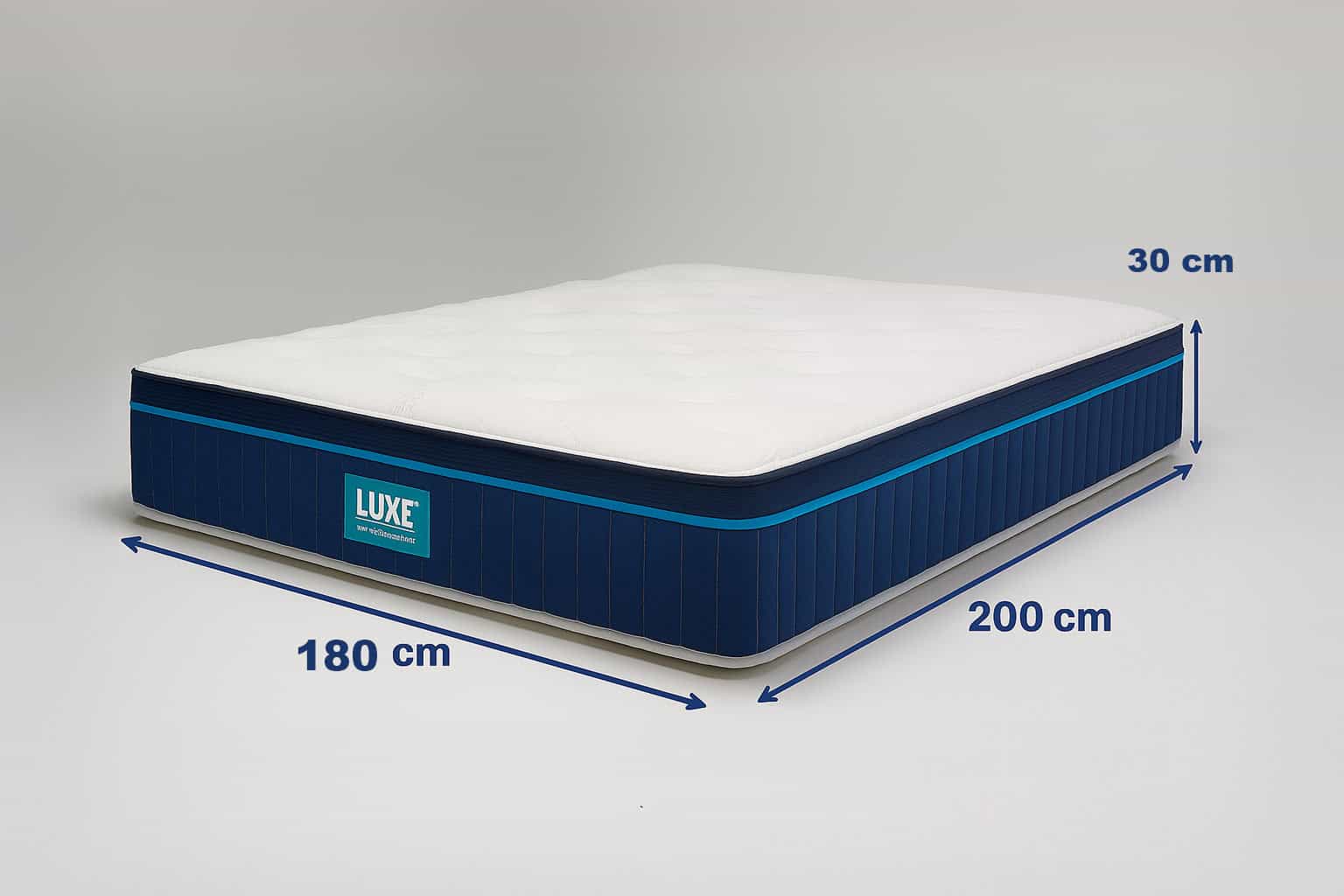
What I love:

  • Supportive pocket spring core for excellent weight distribution
  • Natural fillings that improve breathability
  • Long-lasting durability, it feels as solid as the day I bought it
  • Ideal for sleepers who need maximum support for their spine

This is the kind of mattress that gives you that “hotel bed” firmness but with the personal comfort of a high-end mattress made for you.

2. LuxeErgo 3400 Mattress – Orthopaedic-Level Firmness

LuxeErgo 3400 Mattress

The LuxeErgo 3400 is designed with an orthopaedic-level firmness, making it perfect for those with chronic back pain or anyone who wants the most supportive surface possible. It’s one of the most impressive king size extra firm mattresses I’ve tried, thanks to its multi-layer construction.

What makes it special:

  • 3,400 pocket springs for consistent support from edge to edge
  • Ergonomic design that promotes spinal alignment
  • Firm, stable feel that resists sagging over time
  • Breathable materials that help regulate temperature

For me, the LuxeErgo 3400 is like a precision tool for sleep, every detail feels engineered to keep your body in its healthiest sleeping position.

Choosing the Right King Size Extra Firm Mattress for You

Here’s what I recommend considering:

  • Your sleeping position: Back and stomach sleepers benefit most from extra firm support.
  • Your body weight: Heavier sleepers often need a firmer mattress to avoid excessive sinkage.
  • Any health concerns: If you have back, hip, or shoulder pain, consult with a health professional and consider an orthopaedic-level mattress like the LuxeErgo 3400.
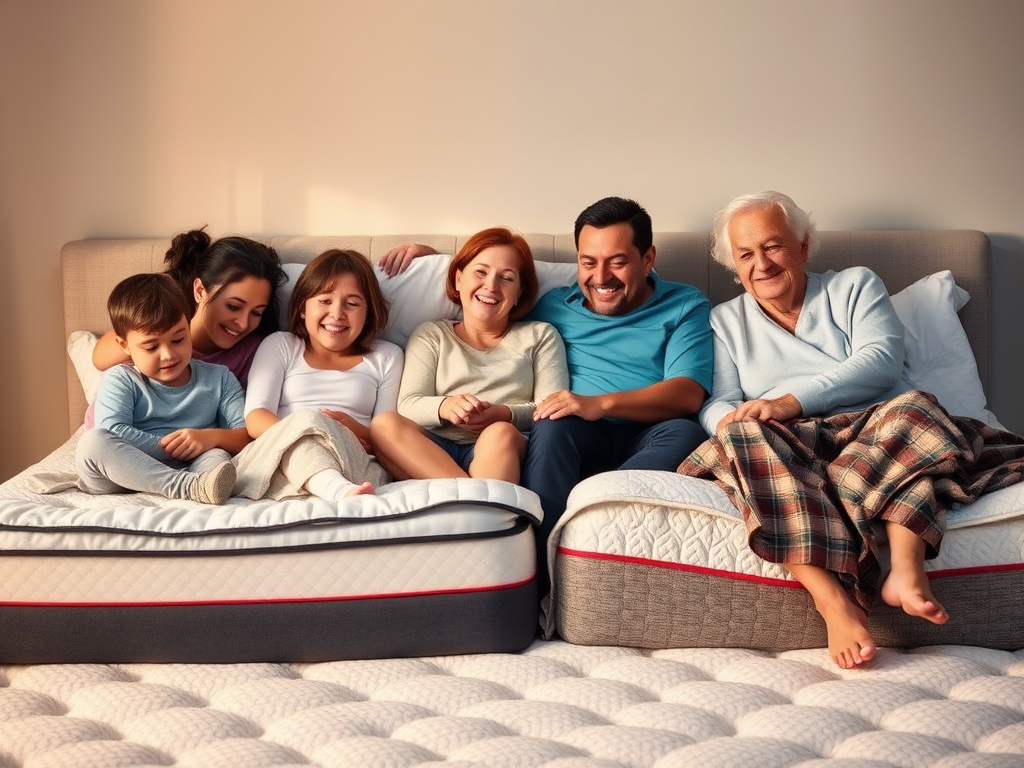
Final Thoughts

Switching to a king size extra firm mattress has completely transformed my sleep quality, boosted my energy levels, and relieved my back discomfort. If you’re in the UK and searching for a hard mattress that delivers exceptional support night after night, both the Majestic 9000 and LuxeErgo 3400 from LuxeMattresses are outstanding choices.

Crafted with premium materials, built for long-lasting durability, and backed by the expertise of a trusted UK mattress specialist, these mattresses go beyond just supporting your body — they support a healthier, more comfortable lifestyle.

mattress topper for firmness or replacing your mattress?
August 6, 2025

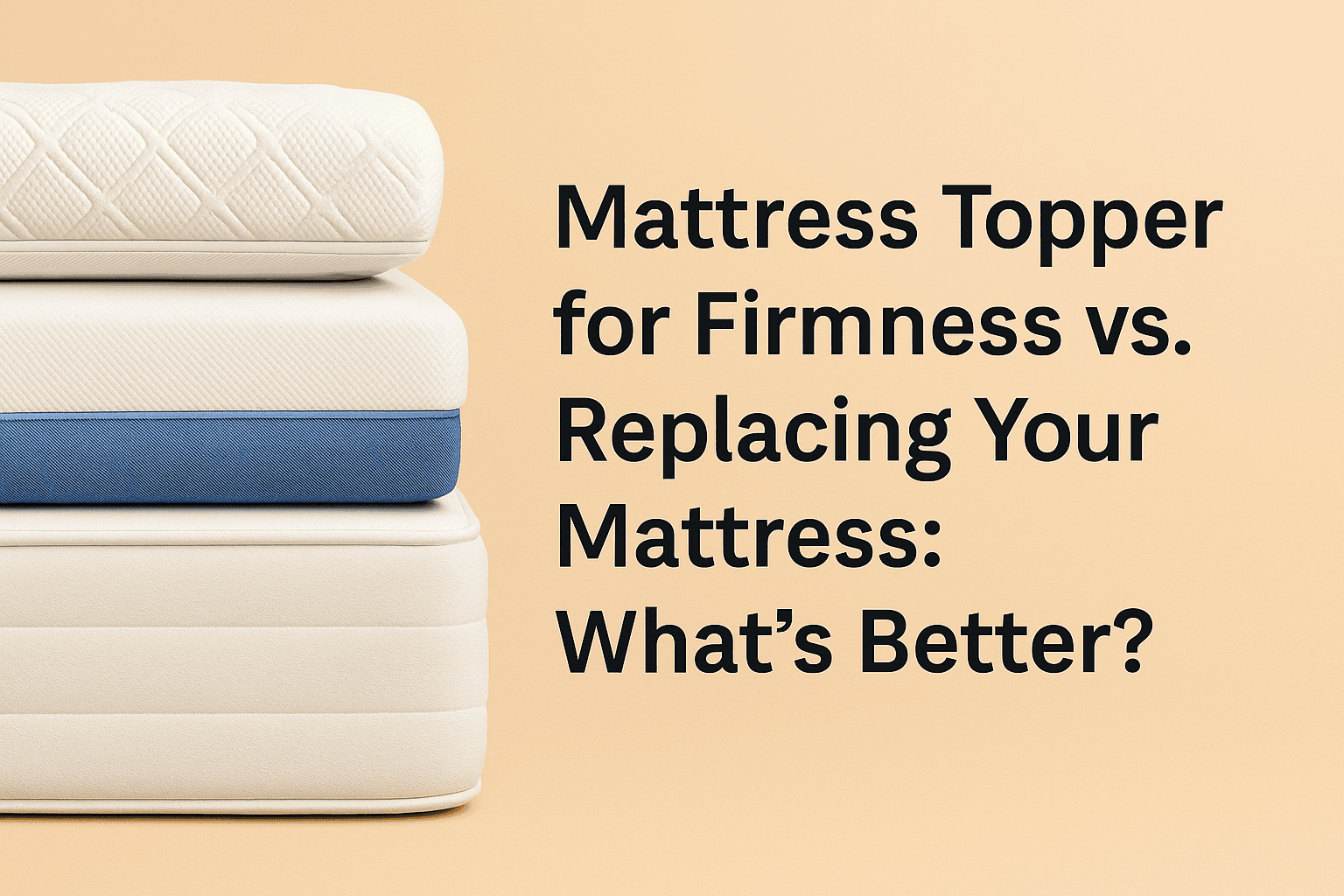
Mattress Topper for Firmness vs. Replacing Your Mattress: What’s Better?

When your bed starts to feel too soft or lacks the support you need, the question arises: should you invest in a mattress topper for firmness or bite the bullet and replace your mattress entirely? While both options can enhance your sleep comfort, each comes with its own pros, cons, and long-term implications. In this guide, we’ll break down when a mattress topper makes sense and when it’s time to replace the mattress itself.

What Is a Mattress Topper for Firmness?

A mattress topper is a separate cushioning layer that sits on top of your existing mattress. It’s typically 2–4 inches thick and can be made from memory foam, latex, high-density polyfoam, or even wool. While many people use toppers to make their mattress softer, firm mattress toppers are designed to increase support and reduce sinkage.

When a Mattress Topper Is the Right Choice

A mattress topper can be an excellent short- to medium-term solution if:

  1. Your Mattress Is Still Structurally SoundIf your mattress is relatively new (under 5–6 years) and still in good condition — no sagging, dents, or broken springs — but feels too soft or lacks the support you want, a topper can correct the feel without replacing the entire bed.
  2. You Need a Budget-Friendly FixToppers are significantly more affordable than buying a new mattress. High-quality firm toppers cost between £80–£250, depending on material and size.
  3. You Share a Bed with Someone with Different PreferencesIf one partner prefers a softer feel and the other needs a firmer sleep surface, using a topper on one side of the bed can help customise comfort without replacing the whole mattress.
  4. You Want to Extend the Life of Your MattressA topper adds a protective layer that can reduce wear on your mattress and potentially extend its lifespan by a few years.

When It’s Better to Replace the Mattress

There are times when no topper, no matter how firm or high-end, can compensate for a worn-out mattress. Consider full replacement if:

  1. Your Mattress Is Sagging or LumpyIf your mattress has visible dips, indentations, or broken support layers, adding a topper won’t solve the problem. The uneven base will still affect your spinal alignment and sleep quality.
  2. It’s Over 7–10 Years OldMost mattresses start to break down after 7–10 years. If yours is nearing or past that age, it’s usually more cost-effective (and better for your body) to invest in a new mattress.
  3. You’re Experiencing Chronic PainIf you wake up with back pain, hip discomfort, or stiffness that lasts throughout the day, it could be a sign your mattress isn’t providing adequate support. A topper might delay the issue, but it won’t fully fix the root cause.
  4. You Want a Warranty-Backed SolutionA quality mattress like those from Luxe Mattresses typically comes with a 10–15 year warranty, while toppers rarely include comprehensive guarantees.

Comparing Mattress Toppers vs. Replacing the Mattress

FeatureFirm Mattress TopperReplacing Mattress
Cost£80–£250£400–£1,500+
Longevity1–3 years7–15 years
Support for Sagging MattressLimited impactFull support restoration
Pain ReliefSometimes helpfulMore consistent and long-term
Ease of SetupSimple placementMore effort (delivery/setup)
Warranty CoverageRarely coveredOften includes long-term warranty

Luxe Mattresses’ Advice: Know Your Sleep Needs

If your current mattress is in decent shape and you just need a firmer feel, a mattress topper for firmness is a cost-effective and quick fix. But if your mattress is sagging, unsupportive, or outdated, replacing it with a quality, warranty-backed mattress, like our Luxe Ergo or LuxeTherm Hybrid, will provide far better long-term comfort and health benefits.

Still unsure? Try our Mattress Selection Quiz to see if a new mattress might be the right move.

Final Verdict

A mattress topper is ideal for fine-tuning comfort or giving a soft bed more firmness. But if you’re dealing with a worn-out, uncomfortable mattress, investing in a proper replacement will always be the better long-term decision.

how to choose right mattress firmness
August 6, 2025

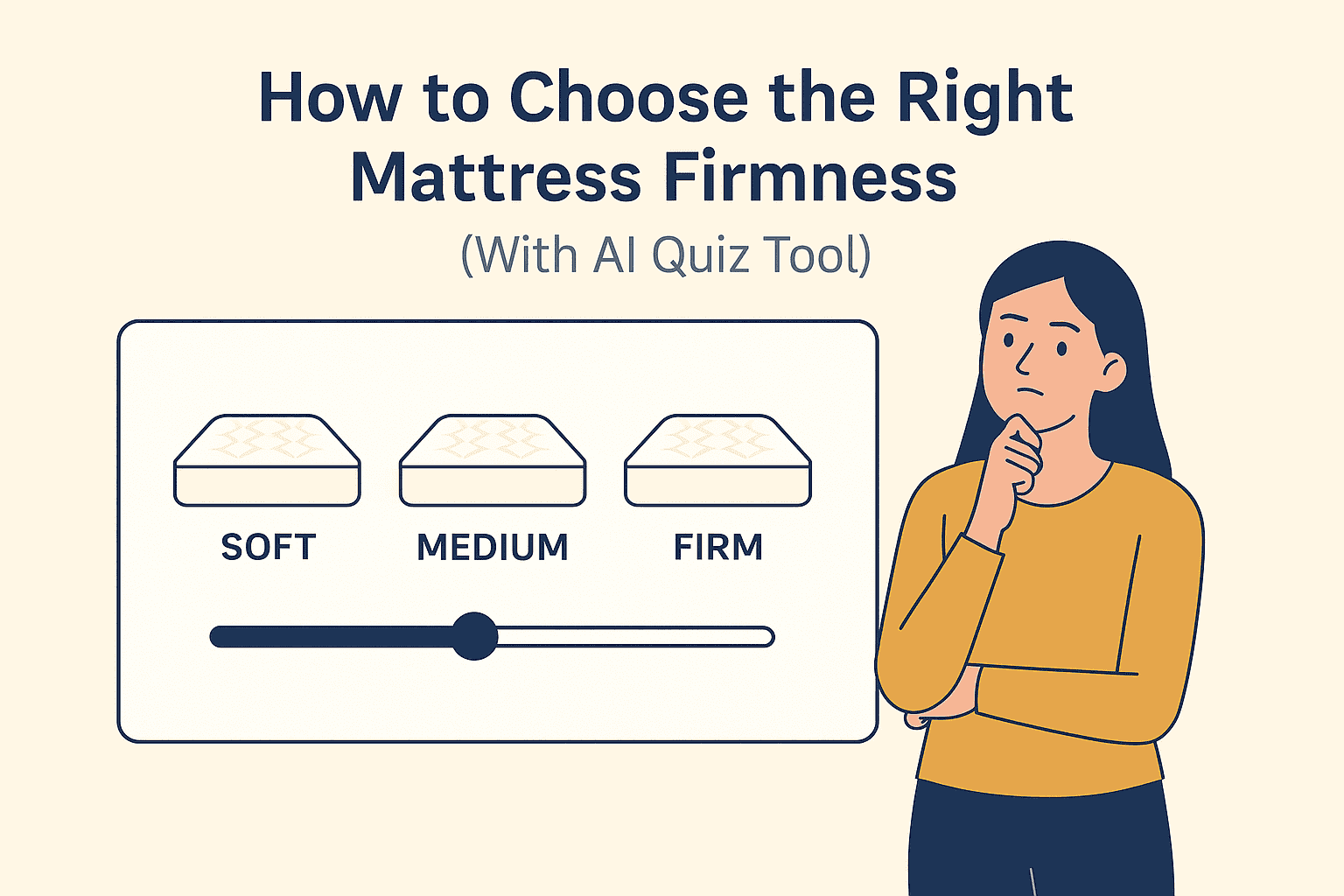
How to Choose the Right Mattress Firmness (With AI Quiz Tool)

Buying a mattress online can be incredibly convenient, but choosing the wrong firmness level is one of the most common mistakes people make. At Luxe Mattresses, we’ve helped thousands of customers sleep better by guiding them through the right firmness based on their unique body type, sleep habits, and health needs. This guide breaks down everything you need to know about mattress firmness, and how our AI Mattress Selection Quiz can match you with your ideal comfort level.


Choosing the wrong mattress firmness can negatively impact both your sleep quality and overall health. A mattress that’s too soft may cause your spine to sink out of alignment, leading to back or neck pain, while one that’s too firm can create pressure points around your hips and shoulders, especially for side sleepers. This discomfort often results in restless nights, interrupted sleep, and even worsened conditions like joint pain or sleep apnea. Over time, poor sleep can affect your mood, energy levels, and physical wellbeing, making it essential to select a firmness level tailored to your body type and sleeping position.

Why Do So Many People Choose the Wrong Mattress Firmness?

When shopping online, it’s difficult to judge how a mattress actually feels. What’s described as “medium-firm” on one website might feel too soft or too rigid in person. Unfortunately, this mismatch leads to poor sleep quality, back or neck pain, and dissatisfaction.

According to customer support data across the industry, over 40% of mattress returns or exchanges are due to incorrect firmness selection. This is why understanding firmness and your own sleep needs is critical before making a purchase.

What Does Mattress Firmness Actually Mean?

Mattress firmness refers to how soft or hard a mattress feels when you lie on it. It’s not the same as support, firmness is the surface feel, while support relates to how well the mattress keeps your spine aligned.

Most brands (including Luxe Mattresses) use a firmness scale from 1 to 10:

  • 1 = extremely soft (plush like a pillow top)
  • 5 = medium firmness (balanced comfort and support)
  • 10 = extra firm (very hard and flat surface)

Firmness preference is subjective, but it can be guided by measurable factors like body weight, sleep position, and health conditions.

Factors That Influence the Right Firmness for You

1. Body Weight

  • Under 9 stone (60 kg): Lighter individuals tend to prefer soft to medium mattresses (3–5), as they don’t sink as deeply.
  • 9–14 stone (60–90 kg): Average-weight individuals often find medium to medium-firm (5–6) most comfortable.
  • Over 14 stone (90+ kg): Heavier individuals benefit from medium-firm to firm mattresses (6–8) to avoid too much sinkage.

2. Sleeping Position

  • Side sleepers: Need softer to medium mattresses (4–6) to cushion shoulders and hips.
  • Back sleepers: Do best on medium to medium-firm (5–7) for balanced support.
  • Stomach sleepers: Typically require firm surfaces (7–9) to prevent lower back strain.

3. Health Issues or Pain

  • Lower back pain: Often relieved by medium-firm options (5–7)
  • Arthritis or joint pain: Softer tops (3–5) reduce pressure on sensitive areas
  • Sleep apnea or snoring: A firmer surface may support better breathing posture

4. Mattress Materials

Different materials feel firmer or softer even at the same scale rating:

  • Memory foam: Molds to the body and feels softer over time
  • Latex: Naturally firmer and more responsive
  • Hybrid mattresses: Combine springs and foam for a balanced feel

Firmness Recommendations by Sleep Type

Sleep StyleWeight RangeIdeal FirmnessRecommended Feel
Side SleeperLight – Average4–6Soft–Medium
Side SleeperHeavy6–7Medium–Firm
Back SleeperLight – Average5–7Medium–Medium Firm
Back SleeperHeavy6–8Medium Firm–Firm
Stomach SleeperAll weights7–9Firm–Extra Firm
Combination SleeperAll weights5–7Medium to Medium Firm

Why Our AI Mattress Quiz Is Better Than Guesswork

To help you avoid the costly mistake of choosing the wrong firmness, we’ve built an intelligent Mattress Selection Quiz powered by real customer data and sleep science. In under a minute, the quiz analyses:

  • Your height and weight
  • Your primary sleep position
  • Whether you sleep hot or cold
  • Whether you share a bed
  • Any health or back pain issues

The tool then instantly recommends the ideal firmness and Luxe mattress model tailored to your profile.

Find Your Perfect Mattress Firmness

Discover the ideal mattress firmness for your sleep position, body type, and support needs — backed by sleep science.

Take the Assessment ->

Our Firmness Guarantee

At Luxe Mattresses, we understand that mattress shopping can feel uncertain — especially online. That’s why we offer a 100-night exchange trial. If you’re not happy with the firmness, you can exchange your mattress for another model or firmness level within 100 nights.

Still unsure? Our support team is happy to guide you further. Just drop us a message or take the quiz for a personalised recommendation.

Don’t guess your way to a good night’s sleep. Let Luxe Mattresses help you find the right firmness — effortlessly, intelligently, and.

best eco mattresses
August 3, 2025

Best Eco Mattresses: 2025 Guide | Sleep Healthier

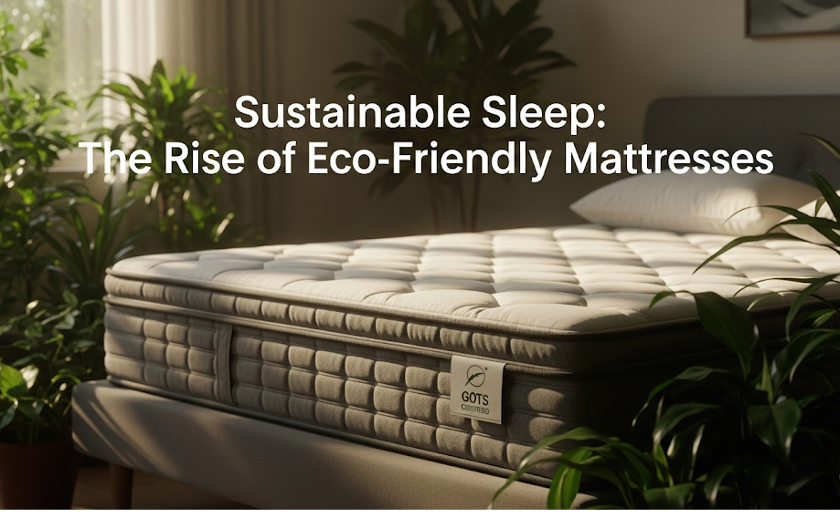
Sustainable Sleep: The Rise of Eco-Friendly Mattresses

We sleep for about a third of our lives, yet most “normal” mattresses are hiding a dirt secret. Mattresses come loaded with various harmful substances, from petroleum-based foams and synthetic flame retardants to adhesives leaking volatile organic compounds (VOCs) which can cause headaches, allergies and all manners of chronic diseases.

the rise of eco-friendly mattress

This isn’t just a trend; it’s a cultural shift. More and more health-conscious shoppers, mostly millennials and Gen Z, won’t compromise on what they are breathing for 8 hours every night. They are opting for materials like organic latex and wool that are hypoallergenic and nontoxic. Values that put the planet first are meanwhile changing the markets. Traditional non-biodegradable mattresses take 500 years to decompose in landfills. However, certified biodegradable and sustainably sourced eco-friendly mattresses are increasing in popularity.

In just three weeks, they believe that the total market value will reach $3.2 billion.
Ready to sleep cleaner? Let’s begin.

Why Choose Eco-Friendly Mattresses?

Natural mattresses solve two important problems – toxic sleeping environment as well as landfill overload. They refuse artificial flavours, colours, and other harmful chemicals like most other options do.

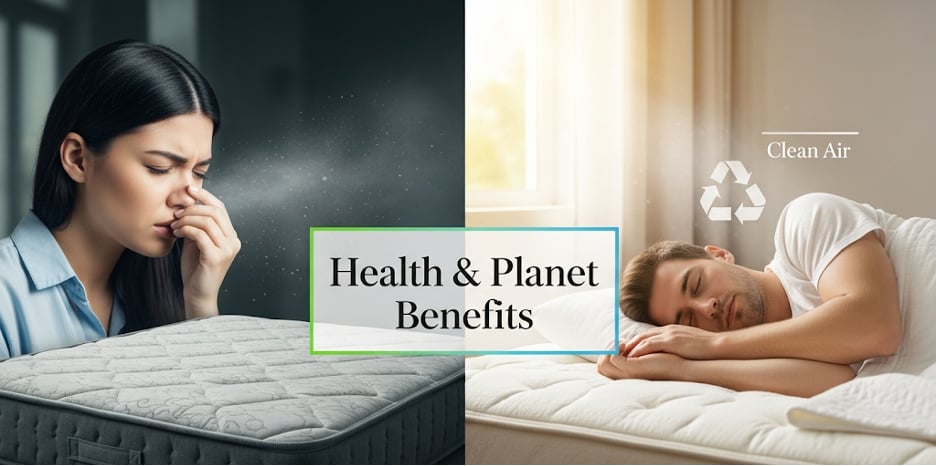
Health Benefits of Non-Toxic Sleep.

Most mattress designs have VOCs (volatile organic compounds) which are due to the use of synthetic foam, flame retardants, etc. Migraine, vomiting and long-term respiratory problems can result from it Common exposure to VOCs can make asthma worse and disturb hormone levels.

Non-toxic sleep starts with natural materials. Organic latex resists dust mites and mold. Wool wicks moisture without chemical treatments. These features provide true allergy prevention.

The mattress is made from tightly woven organic cotton. These block allergens like pet dander or pollen. They help sensitive sleepers breathe easier. You’ll experience less congestion at night if you sleep on a certified organic mattress.

Environmental Impact Reduction.

Traditional mattresses create ecological harm. Most contain petroleum-based foams. These take 500+ years to decompose. Over 20 million mattresses clog landfills annually. They release methane and toxic chemicals into soil.

Sustainable mattress designs break this cycle. They prioritize biodegradability. It takes a natural latex, organic cotton, and hemp three to ten years to decompose. Some brands use plant-based foams from renewable sources.

Landfill waste drops sharply with circular designs. Brands, like Avocado, recycle old mattresses into new products. Others offer take-back programs. This cuts much of the waste volume which is 60% vs. regular disposal.

True organic mattress production also saves resources. Farming of organic cotton uses 91 percent less water than farming of conventional cotton. Natural latex harvesting sustains rubber tree forests. These rainbow eco-practices protect ecosystems and provide comfort.

Certifications & Standards Explained

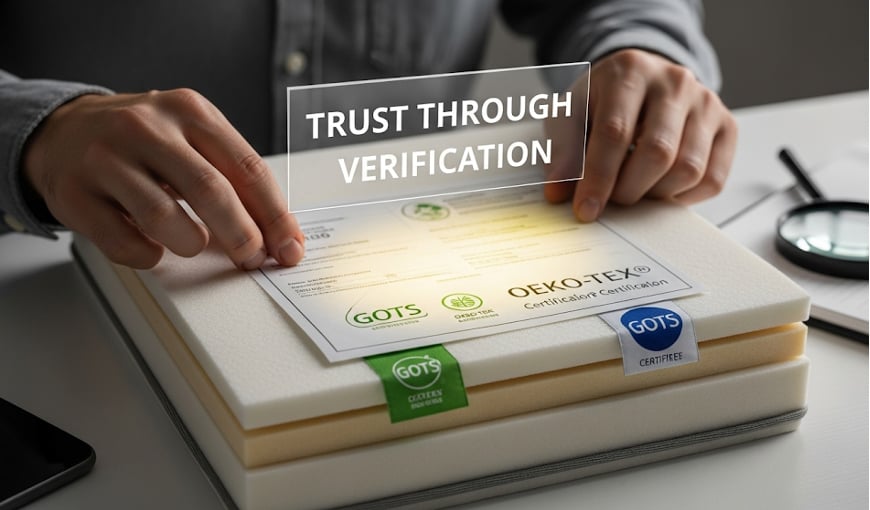
Eco friendly mattresses rely on verified standards for true sustainability. Trust comes from clear proof, not marketing claims. Third-party certifications separate genuine eco-options from greenwashed products. They ensure materials are safe, ethical, and planet-positive.

GOTS and GOLS: Gold Standards for Organic Materials

GOTS certification (Global Organic Textile Standard) covers textiles like organic cotton or wool. It requires 95% organic content and tracks every step from farm to finished product. Factories pass annual checks for chemical use, wastewater treatment, and fair labor. Banned items include formaldehyde, toxic dyes, and synthetic pesticides.

GOLS (Global Organic Latex Standard) focuses on organic latex. Like GOTS, it mandates 95% certified organic raw material. Rubber tree farms must avoid chemical fertilizers. Latex processing prohibits fillers, PVC, and heavy metals. Every supplier in the chain needs transaction certificates for full traceability.

Both standards enforce social rules. Workers earn fair wages with safe conditions. Child labor is banned. Non-toxic sleep starts here because these rules block harmful chemicals near you.

Beyond Basics: Greenguard Gold and OEKO-TEX®

Greenguard Gold tests air safety. It measures volatile organic compounds (VOCs) emitted from mattresses. Certified products must stay below 7.3 parts per billion of formaldehyde—a strict limit for schools and hospitals. This prevents indoor air pollution linked to headaches or asthma.

OEKO-TEX® Standard 100 checks for toxins inside materials. It scans for heavy metals, pesticides, and allergenic dyes. Unlike GOTS, it doesn’t require organic farming. But it ensures every thread, zipper, or latex layer meets safety thresholds. This supports hypoallergenic properties for sensitive groups.

These mattress certifications complement GOTS/GOLS. While GOTS confirms organic sourcing, Greenguard Gold proves the final product won’t pollute your air. OEKO-TEX® fills gaps by screening non-organic parts like adhesives.

Eco-Friendly Materials Breakdown

Certifications like GOTS ensure materials meet strict standards. Now, let’s examine what these sustainable materials actually contain. Eco friendly mattresses use three core components: latex, cotton, and wool. Each brings unique benefits verified by science and sourcing practices.

Natural Latex: Durability Meets Sustainability

Natural latex comes from rubber trees (Hevea brasiliensis). Ethical farms in Sri Lanka or Thailand use non-toxic tapping methods. They collect sap without killing trees. This process supports biodiversity and local economies.

The sap gets whipped into foam using the Dunlop process. No synthetic fillers are added. The result is a resilient material that outlasts memory foam. Durability tests show natural latex maintains shape for 15+ years. It resists sagging better than petroleum-based foams.

Latex has natural hypoallergenic properties. Its cellular structure blocks dust mites and mold. Open air pockets enhance airflow for cooler sleep. Unlike polyurethane foam, it emits near-zero volatile organic compounds.

natural mattress

When disposal comes, natural latex is biodegradable. It decomposes in 3-5 years versus 500+ for synthetics. Brands like PlushBeds use Forest Stewardship Council-certified plantations. This protects endangered habitats while producing material.

Organic Cotton and Wool: Breathability & Safety

Organic cotton starts with non-GMO seeds. Farmers avoid synthetic pesticides. They rely on crop rotation and natural predators. These methods use 91% less water than conventional cotton. The final fabric does not contain formaldehyde and chemical softeners.

Organic wool comes from free-range sheep. Ranchers never use toxic dip baths. The wool gets cleaned with vegetable-based soaps. This preserves its natural lanolin. That waxy substance repels liquids and stains.

Together, these materials create breathability. Cotton fibers allow air circulation. Wool can absorb moisture of 30% of its weight without feeling wet. This duo regulates temperature year-round. You do not sweat at night with these chemical phase-change coatings.

Luxe Mattresses based in the UK shows this commitment with their natural range. They ensure farm-to-factory traceability by using organic cotton covers and British wool fillings. The lanolin present in the wool naturally wicks moisture without treatment while GOTS tracked cotton is pesticide free. You can get your hands on a Luxe mattress which uses safe and nature-friendly sleep materials.

Carbon Footprint of Mattress Production

Conventional mattresses require heavy energy consumption. Producing one polyurethane foam mattress emits 120–150 kg of CO₂. This equal driving 300 miles in a gas car. Petroleum-based foams need oil extraction and chemical processing. These steps guzzle energy and spike carbon footprint levels.

Water use is another concern. Growing cotton for traditional mattresses soaks 5,000+ gallons per crop cycle. Most comes from irrigated farms. This strains rivers and groundwater. Dyeing fabrics adds more water waste. Up to 200 gallons per mattress enter polluted wastewater.

Sustainable options cut these impacts. Organic cotton farming uses rain-fed fields. It slashes water needs by 91%. Natural latex comes from rubber trees. Harvesting needs no synthetic fertilizers. Brands like Avocado power factories with solar energy. This trims carbon footprint by 40%.

Landfill Crisis and Circular Solutions

Americans trash 20 million mattresses yearly. These stack 50,000 high daily in landfills. Traditional units take 500+ years to decompose. Their steel springs, polyester layers, and foam release toxins. Chemicals seep into soil as they break down.

Recycling initiatives fight this waste. Over 75% of mattress materials are recyclable. Steel springs become construction rebar. Foam turns into carpet padding. The Mattress Recycling Council (MRC) recycled 15 million mattresses by 2025. This saved 14.9 million cubic yards of landfill space. It also reused 575 million pounds of materials.

Circular solutions are expanding. Four states charge $16–$22.50 fees per new mattress. California, Connecticut, Oregon, and Rhode Island fund free drop-off sites. Extended producer responsibility laws push brands to design recyclable products. Harrison Spinks grows hemp for coils. Orbis makes foam from old mattresses. These sustainable mattress designs support reuse.

Eco friendly mattresses boost biodegradability. CocoCore uses coconut husks and bamboo. These decompose in 3–10 years. Brands like Restolex offer take-back programs. They recycle old units into new ones. This closes the loop on waste.

How to Choose Your Eco-Friendly Mattress

Understanding environmental impacts helps. Now, apply that knowledge to your purchase. Selecting the right eco-friendly mattresses requires matching materials to your body, verifying certifications, and testing comfort. This guide covers all steps.

Step 1: Match Materials to Sleep Needs

Sleep position dictates material choice. Side sleepers need pressure relief at shoulders and hips. Natural latex or memory foam hybrids work best. Stomach sleepers require firm support to prevent back sag. Tight-top organic cotton mattresses are ideal.

Body weight changes support needs. People over 230 pounds need thicker natural latex (over 9″) or reinforced coils. Lighter sleepers (under 130 pounds) prefer softer organic wool toppers. These prevent joint pressure.

Temperature issues need specific solutions. Hot sleepers require breathability. Look for organic cotton covers and ventilated latex cores. Wool’s moisture-wicking also cools. Brands like Birch use phase-change graphite infusions for extra cooling.

Pain conditions demand tailored support. Sciatica sufferers benefit from zoned latex layers. These cushion hips while firming the lumbar area. Arthritis patients need motion-isolating hypoallergenic foams to reduce pressure points.

Step 2: Verify Certifications

GOTS certification is non-negotiable for textiles. Check the supplier’s transaction certificate online. Real IDs include 5–8-digit codes like “CU863637”. Avoid vague claims like “made with organic materials”.

OEKO-TEX® Standard 100 covers non-organic parts. Verify certification at oeko-tex.com. Search by brand name. This confirms zippers, adhesives, and thread meet safety thresholds.

Greenguard Gold matters for off-gassing concerns. Certified mattresses emit less than 0.05 ppm formaldehyde. This prevents morning headaches. Check current certificates at ul.com. Expired labels are red flags.

Extended producer responsibility programs show brand ethics. Companies like Avocado publish recycling rates. Saatva plants trees for every sale. These prove commitment beyond mattress certifications.

Testing Eco Friendly Mattresses: Trial Periods & Return Policies

Trial periods are essential. Most eco-friendly mattresses offer 100+ night trials. Expect 30 nights for your body to adjust. Keep a sleep journal tracking back pain and restlessness.

Return policies vary widely. Brands like Nectar offer free returns with full refunds. Others charge $99–$200 pickup fees. Read fine print on stains, dents, or mandatory foundation use. Some void warranties without approved bed frames.

LuxeOrganicâ„¢ Hybrid
Mattress

Warranty length signals durability. Look for 15–25-year coverage. Non-prorated warranties are best. They replace defects at no cost. Prorated plans decrease value yearly. Birch’s lifetime warranty is industry-leading.

Test for hypoallergenic claims. During trials, monitor allergy symptoms. True non-toxic materials reduce sneezing and congestion within 2 weeks. If reactions continue, return the mattress.

Maximizing Mattress Longevity and Care

Choosing the right eco-friendly mattresses is step one. Proper maintenance ensures your investment delivers decades of non-toxic comfort. These care guidelines protect both performance and sustainability.

Cleaning Organic Materials Safely

Organic cotton covers need gentle cleaning. Blot spills immediately with cold water and mild soap. Avoid soaking or harsh scrubbing. This prevents fiber damage and maintains breathability. For stains, use baking soda paste. Apply lightly, wait 15 minutes, then dab away. Never use bleach or chemical sprays. They break down sustainable materials and void warranties.

Organic wool layers require special attention. Vacuum monthly using an upholstery attachment. This removes dust without compressing fibers. For liquid accidents, absorb moisture with a clean cloth. Then sprinkle cornstarch to draw out residue. Brush gently after 30 minutes. Wool’s natural lanolin resists stains when maintained properly. This preserves mattress longevity and hypoallergenic benefits.

Rotate your mattress head-to-foot every 3 months. This prevents body impressions and uneven wear. Use a non-toxic protector like Avocado’s GOTS-certified barrier. It shields against spills while allowing airflow. Direct sunlight exposure fades natural dyes. Keep your sleep space cool and shaded.

Warranty and Lifespan Expectations

Quality eco-friendly mattresses last 15–25 years. Natural latex cores offer the best durability. They resist sagging 3x longer than memory foam. Hybrid models with pocketed coils typically reach 20 years. Sustainable materials like organic wool and cotton outlast synthetics when cared for.

Understand warranty coverage details. Most protect against:

  • Sagging deeper than 1.5 inches
  • Material splits or cracks
  • Manufacturing defects in cover stitching

Common exclusions include:

  • Stains without protector use
  • Damage from improper foundations
  • Normal softening of materials

Brands like Birch offer lifetime warranties. Others like Avocado provide 25-year coverage. Always register your mattress within 60 days. Keep purchase receipts and photos of tags. Submit claims promptly with documentation.

Maximize mattress longevity through support systems. Use slatted bases with gaps under 3 inches. This prevents moisture buildup and maintains breathability. Replace foundations every 8 years to match mattress integrity.

Conclusion: The Future of Sleep is Green

Investing in eco-friendly mattresses supports well-being and planetary health. This choice delivers non-toxic sleep free from volatile organic compounds and allergens. It also cuts landfill waste and carbon emissions. Science confirms these benefits.

Health wins are immediate. Users report fewer headaches and allergy symptoms. Spinal alignment improves with durable natural latex support. Children and sensitive groups breathe safer air. Long-term exposure risks drop sharply.

Environmental gains grow yearly. Every sustainable mattress diverts 50–100 lbs of waste from dumps. Organic cotton farming saves billions of gallons of water. Brands adopting circular solutions recycle 90%+ of old units.

Your final step matters: Prioritize certifications when purchasing. Look for:

  • GOTS certification tags on cotton/wool layers
  • GOLS IDs for organic latex cores
  • Active Greenguard Gold or OEKO-TEX® codes

Without these labels, “eco-friendly” claims lack proof. Verified brands like Avocado and Birch publish certification numbers publicly. Demand the same transparency from all manufacturers.

Experience Luxe’s Certified Comfort

Ready to join 10,000+ UK sleepers in sustainable rest? Explore Luxe’s award-winning natural mattresses with 100-night trials and 10-year warranties.

king size mattress
August 3, 2025

Super King Bed Size Guide: Dimensions in cm, feet, inches, and meters, Uses & Styling Tips

Choosing the right bed size is crucial for comfort, space planning, and overall sleep quality. Understanding the super king size dimension can help in making your choice. The Super King bed is a popular choice in the UK for those who crave extra room and luxury sleep space. Whether you’re a couple needing more sleeping area or just want to elevate your bedroom with a larger, statement bed, this guide covers everything you need to know about Super King beds.

What Is a Super King Bed?

A Super King bed is one of the largest standard bed sizes available in the UK. It provides exceptional space for couples or individuals who prefer an expansive sleep surface.

Standard Super King Size Dimensions (UK):

  • Centimetres (cm): 180 cm wide x 200 cm long
  • Millimetres (mm): 1800 mm x 2000 mm
  • Inches (in): 71 in x 79 in
  • Feet (ft): 5.9 ft x 6.6 ft
  • Metres (m): 1.8 m x 2.0 m

These dimensions apply to both the mattress and the bed frame, though the overall footprint may be slightly larger depending on the design.

Who Should Buy a Super King Mattress or Bed?

A Super King bed is ideal for:

  • Couples who value extra space: If you or your partner move around a lot during sleep or prefer more personal space, a Super King prevents disruptions.
  • Tall individuals: At 200 cm in length, it provides plenty of legroom.
  • Families with young children: If your kids occasionally join you in bed, the additional width is a blessing.
  • Pet owners: Pets that sleep on your bed won’t cramp your space.
  • Luxury seekers: A Super King bed makes a visual statement and adds a touch of opulence to any bedroom.

Bedroom Size Recommendations

While a Super King bed offers more space, it does require adequate room to fit comfortably.

Minimum room size recommendations:

  • Ideal room size: 12 ft x 12 ft (3.65 m x 3.65 m) or larger
  • Absolute minimum: 11 ft x 11 ft (3.35 m x 3.35 m)

Allow at least 60 cm (2 ft) of clearance on each side of the bed for ease of movement.

Super King Bed Types & Styles

Super King beds come in various styles to suit your decor and storage needs:

1. Divan Base Beds

  • Often include built-in drawers
  • Great for small rooms needing extra storage

2. Ottoman Beds

  • Lift-up storage under the entire mattress
  • Best for hidden, clutter-free storage

3. Bed Frames

  • Available in wood, metal, upholstered styles
  • Adds visual interest and can match other furniture

4. Adjustable Beds

  • Suitable for people with medical needs or elderly couples
  • Allows you to raise head/feet for better support

Best Mattress Types for Super King Beds

Choosing the right mattress is just as important as the size. Here are top options that pair well with Super King beds:

1. Hybrid Mattresses

  • Combine foam and pocket springs
  • Offer balance of comfort, support & cooling

2. Natural Mattresses

  • Made with latex, wool, cotton
  • Ideal for allergy sufferers and eco-conscious shoppers

3. Memory Foam Mattresses

  • Body-contouring support
  • Great for pressure relief

4. Orthopaedic Mattresses

  • Firmer support for back pain sufferers
  • Often available in Super King for full-body alignment

Tip: Luxe Mattresses offers Super King sizes across hybrid, memory foam, and natural options. Their mattresses include breathable fabrics, edge support, and premium materials for deep sleep comfort.

Bedding Essentials for Super King Beds

Because of their size, Super King beds require appropriately sized bedding:

  • Duvet size: 260 cm x 220 cm (102 in x 87 in)
  • Fitted sheet size: 180 cm x 200 cm (plus depth of mattress)
  • Pillow types: Use 2 to 4 king-size pillows (50 x 90 cm)
  • Bedspread or blanket: Look for “Super King” label or oversized throws (at least 270 cm wide)

Using the correct bedding size enhances comfort and ensures a tidy, hotel-like appearance.

Styling Ideas for Super King Beds

A Super King bed is a statement piece. Here’s how to style it like a pro:

Headboard

  • Opt for a tall, upholstered or tufted headboard for drama

Colour Scheme

  • Use neutral tones or soft palettes to avoid overwhelming the room

Layering

  • Add throws, blankets, and multiple pillows to create a plush, inviting look

Side Tables

  • Choose wide or double-drawer nightstands to match the scale of the bed

Wall Art

  • Hang large artwork or a gallery above the bed for balance

How Big Is a Super King Mattress Compared to a King Mattress?

A Super King mattress is wider than a standard King mattress by 30 centimeters (about 12 inches), making it a more spacious and luxurious option. While both mattresses share the same length of 200 cm (6 feet 6 inches), the Super King measures 180 cm in width, compared to the King’s 150 cm.

This extra width provides significantly more room for couples, especially those who prefer not to feel crowded during sleep. It’s also ideal for families with young children or pets who occasionally share the bed. The Super King’s generous dimensions make it a standout choice for master bedrooms that can comfortably accommodate its larger footprint.

King vs Super King Mattress Size Comparison

FeatureKing MattressSuper King Mattress
Width (cm)150 cm180 cm
Length (cm)200 cm200 cm
Width (inches)59 inches71 inches
Length (inches)79 inches79 inches
Extra Width—+30 cm / +12 inches
Ideal ForCouplesCouples, families, pets
Room Size NeededMinimum 10 x 10 ftMinimum 11 x 11 ft

Super King Bed vs Other UK Bed Sizes

Bed SizeDimensions (cm)Ideal for
Single90 x 190Children, solo sleepers
Double135 x 190Couples (cozy fit)
King150 x 200Couples needing extra room
Super King180 x 200Couples, families, tall people

Is a Super King Bed Right for You?

Ask yourself:

  • Do I (or my partner) move around a lot while sleeping?
  • Do we value personal space in bed?
  • Is our bedroom large enough for this size?
  • Do we have kids or pets who often join us in bed?

If you answered yes to any of the above, a Super King bed might be your perfect match.

Final Thoughts

A Super King bed offers unmatched space, comfort, and visual impact in your bedroom. From its generous dimensions (180 x 200 cm) to its wide variety of frame and mattress options, it’s the top choice for anyone who values sleep quality and luxury living.

Whether you’re upgrading to accommodate your growing family or just want more room to stretch out, pairing a Super King bed with a premium mattress from Luxe Mattresses can transform your sleep and space.

Choose wisely, measure carefully, and enjoy the comfort that only a Super King can deliver.

August 2, 2025

Mattress Recommendations for Every Age: Children, Teens, Adults, and Seniors

Choosing the right mattress is a highly personal decision that can significantly impact your health and comfort. Each person, from children to seniors, has unique sleep needs that should be taken into account. A good mattress can help with various health issues and improve overall well-being. This article will guide you in selecting the best mattress for every family member, ensuring that everyone finds a comfortable and supportive sleep solution tailored to their age and needs. Check Mattress Recommendations for Every Age: Children, Teens, Adults, and Seniors.

Growing Up: Mattresses for Children (Ages 2-12)

Supporting Healthy Growth

For children, a mattress is essential for supporting their growing bodies. A firm mattress offers the best support for their spine, helping to keep it aligned as they grow. This can prevent posture problems early on. According to the NHS, good spinal support during sleep is important for children’s development.

Hygiene and Safety

It is important to make sure children’s mattresses are safe and clean. Mattresses that resist dust mites and allergens help keep your child safe from common irritants. Luxe Mattress offers memory foam mattresses that are dust and allergy resistant, creating a healthy sleeping environment and reducing the risk of respiratory issues or skin problems.

Durability for Play and Rest

Children are active, often playing and jumping on their mattresses. That’s why it is important to choose a mattress that is durable and can handle all the wear and tear. A mattress that keeps its shape and support for years is a smart investment, ensuring that your child enjoys comfort and proper support as they grow from a cot to a single bed.

Teenage Years: Supporting Rapid Growth and Activity (Ages 13-18)

Adapting to Growth Spurts

During the teenage years, the body undergoes rapid growth. Teenagers undergo growth spurts, experiencing increases in height and weight. Their mattress needs to adapt to this rapid growth by providing the right balance of firmness and comfort. A medium-firm mattress is ideal, offering support to maintain spinal alignment while also providing enough comfort for growing bones and muscles.

Active Lifestyles and Recovery

Many teenagers are involved in sports and other physical activities. A mattress that helps them recover from physical exertion is important. A supportive mattress can help alleviate muscle soreness and provide the comfort necessary for recovery after a long day of physical activity.

Study Stress and Sleep Quality

Teenagers often experience stress from schoolwork, which can impact their sleep. A comfortable mattress ensures that they get the rest they need, reducing stress and helping them concentrate better during the day. Poor sleep can lead to mental health issues and affect academic performance, as shown by studies from organizations like Mind.org.uk.

Adult Life: Diverse Needs and Evolving Preferences (Ages 18-65)

Tailoring to Individual Sleep Styles

As adults, the type of mattress needed changes depending on sleeping positions. Side sleepers benefit from a softer mattress that cushions the hips and shoulders, while back sleepers need a medium-firm mattress to support the natural curve of the spine. Stomach sleepers need a firmer mattress to keep their midsection from sinking too deep. Couples also need to consider motion transfer, which reduces the disruption from their partner’s movements at night.

Addressing Common Adult Ailments

Many adults experience back pain, joint pain, or general discomfort. Luxe Mattress offers orthopedic mattresses designed to provide support and help manage these issues. Proper spinal alignment during sleep is essential for reducing pain and improving overall health, according to the NHS.

Material Choices for Longevity and Comfort

Adults have many options when it comes to mattress materials. Memory foam, latex, hybrid, and pocket-sprung mattresses offer distinct benefits, including comfort, support, and durability. Features like temperature control, such as Luxe Mattress’s LTX Cooling Gel, can help maintain a comfortable sleep temperature, ensuring you stay cool throughout the night.

Golden Years: Comfort and Care for Seniors (Ages 65+)

Prioritising Pressure Relief and Support

For seniors, comfort and pressure relief become the top priority. As the skin becomes more sensitive with age, pressure points can cause discomfort. A mattress that evenly distributes weight can help reduce pain and stiffness. Luxe Mattress offers a range of mattresses specifically designed for older adults, providing gentle support that helps alleviate aches and pains.

Ease of Movement and Transfers

As people get older, they often lose flexibility and find it harder to move easily in bed. A mattress that makes it easier to get in and out of bed is crucial for seniors. These mattresses offer better mobility, which is important for safety and comfort.

Temperature Sensitivity and Breathability

Older adults often struggle to regulate their body temperature while sleeping. A mattress that promotes airflow and helps regulate temperature can make a significant difference. Luxe Mattress’s designs for seniors incorporate materials that promote breathability, ensuring a cool and comfortable sleep throughout the night.

Which Mattress is Best for All

Choosing the best mattress for everyone in the family can be challenging, but it is essential for both health and comfort. Each age group has distinct needs that should be taken into account. For children, a firm mattress is crucial for supporting their growing bodies and maintaining spine alignment. Teenagers require a medium-firm mattress that accommodates their rapid growth and active lifestyles. Adults need a mattress that matches their preferred sleep position, whether they sleep on their back, side, or stomach. Seniors benefit from mattresses that provide pressure relief and support, allowing them to sleep comfortably and safely.

When selecting a mattress for the whole family, it is best to find one that suits everyone’s needs. A medium-firm mattress is often a good option because it offers a balance of support and comfort. Features like temperature control and durability can make the sleep experience better for everyone. Brands like Luxe Mattress offer a variety of mattresses designed to meet the specific needs of different age groups. By investing in the right mattress for each family member, you can ensure better sleep and overall health for everyone.

Conclusion

In conclusion, selecting the right mattress is crucial for everyone, as each age group has distinct needs. Factors like sleeping position, health concerns, and age all play a role in finding the perfect mattress. By investing in a mattress that suits your age group, you can ensure better sleep and improved health. Luxe Mattress offers a wide range of options designed to meet the diverse needs of people of all ages, helping everyone achieve a more restful and healthier sleep experience.

Frequently Asked Questions (FAQs)

Which is the best mattress for a growing child?

A medium-firm to firm mattress, such as a pocket-sprung or supportive foam mattress, is recommended for children to provide the necessary support for their developing spine.

Should teenagers use the same type of mattress as adults?

Teenagers can benefit from mattresses similar to those used by adults, focusing on durable support to accommodate their growing bodies and active lifestyles. Medium-firm options are typically ideal.

How often should mattresses be replaced for different age groups?

Generally, mattresses should be replaced every 7-10 years. For children, it may be necessary to replace the mattress when they outgrow their bed, while seniors might need a new mattress sooner if comfort or support declines.

Do orthopaedic mattresses work for all age groups?

Orthopaedic mattresses, designed for targeted support and spinal alignment, are suitable for people of all ages, particularly those with specific pain or health issues.

Does Luxe Mattress offer options for all age groups and needs?

Yes! Luxe Mattress offers a diverse range of high-quality mattresses, including memory foam and orthopaedic options, all designed to meet the comfort and support needs of various age groups.

how to choose best mattress for back pain
August 1, 2025

How to Choose the Best Mattress for Back Pain Relief Without Sacrificing Comfort

Finding the right mattress for back pain is essential for achieving restful sleep and improving overall well-being. A mattress that offers the perfect balance of support and comfort ensures proper spinal alignment, alleviates pressure points, and reduces pain. With so many options available, it’s essential to understand the different types of mattresses and how they can help relieve back pain. This guide will provide insights into the best mattresses for back pain, including memory foam, latex, hybrid, and pocket-sprung options. By considering factors like firmness, sleep position, and body weight, you can make an informed choice for better sleep and pain relief.

Understanding Back Pain and Its Impact on Sleep

Back pain is a major health concern for many people in the UK. It often leads to disrupted sleep cycles, including pain, poor sleep, and mental health issues. Not getting proper sleep can exacerbate pain, causing back pain to intensify. This creates a strong link between chronic pain and persistent insomnia.

Organisations like Mind.org.uk frequently highlight the impact of mental health issues, such as anxiety and depression, on well-being. A lack of restorative sleep can severely affect a person’s overall health. In addition to these problems, the current mattresses used to achieve restful sleep could actually be contributing to back pain.

Signs such as regular sagging and waking up with aches and pains are indicators that it’s time to change your mattress. Replacing your mattress is often the best solution to alleviate back pain and improve sleep quality.

The Science of Support: Beyond Just Firmness

You cannot simply opt for a firmer one as a mattress must support your back and make it feel comfortable. The core principle lies in maintaining optimal spinal alignment. A perfect mattress should support the natural “S” curve of the spine, keeping it aligned from the neck to the lower back. It also prevents awkward angles that could lead to nerve compression and muscle strain.

Another important factor is pressure relief. A good mattress provides extra cushioning for comfort during sleep. This highlights the importance of a mattress that contours to the body’s unique shape. These materials are essential for evenly distributing body weight across the sleeping surface. This equal distribution reduces concentrated pressure on sensitive areas like the hips, shoulders, and lower back.

The key is finding the right balance. It is a common misconception that a mattress for back pain must be tough. A mattress should offer both cushioning for comfort and sufficient support. The harmonious combination of firmness and softness ensures therapeutic support and restful sleep. The proper treatment of the back will make your life better.

Key Mattress Types for Back Pain Relief

There are different types of mattresses available in the market. You must choose the best one for your better sleep quality.

Memory Foam Mattresses: Contouring Comfort

Memory foam mattresses are ideal for contouring comfort. The material uses body heat to mold to your shape, cradling the body and relieving pressure on key joints. This is essential for spinal alignment. Memory foam also offers excellent motion isolation, meaning you won’t be disturbed by your partner’s movements. Many back pain sufferers find these mattresses perfect for relief. Luxe Mattress offers one of the best memory foam collections; check out their top-of-the-line options.

Latex Mattresses: Responsive Support

Latex mattresses provide responsive support. These mattresses are durable, natural, and breathable. Unlike other mattresses, latex has a buoyant feel. It provides essential support without the sinking sensation, making it an excellent choice for those who want a firmer feel. Latex mattresses still offer excellent pressure relief, which is beneficial for back pain sufferers.

Hybrid Mattresses: The Best of Both Worlds

Hybrid mattresses offer the best of both worlds. These mattresses combine a pocket-sprung base for robust support and bounce, with layers of memory foam and latex for contouring. This blend provides excellent versatility, offering a balance of support and soft cushioning. Hybrid mattresses are ideal for those seeking comfort and relief from back pain.

Pocket Sprung Mattresses: Zoned Support

Pocket-sprung mattresses provide zoned support. These mattresses feature individual springs, each encased in its fabric pocket, allowing for precise contouring of the body. Pocket springs also reduce motion transfer, making them great for couples. The zoned support targets specific areas of the body, offering tailored support where it’s needed most, such as under the hips and shoulders.

Finding Your Perfect Firmness: Tailoring to Your Needs

The right firmness is essential for back pain relief. It should be tailored to your specific needs. Understanding the different firmness levels, soft, medium, and firm, is important, as each offers varying levels of support and contouring. The choice depends on how the mattress interacts with your body and pain points.

Sleep Positions

Sleep positions are important in selecting the right firmness. It is a deciding factor in your mattress choice. Soft mattresses are ideal for side sleepers, allowing for more contouring around the hips and shoulders. Back sleepers need a mattress that provides supportive firmness to maintain the natural curve of the body. Stomach sleepers require a firmer surface to prevent the spine from arching too much.

Body Weight

Body weight plays a critical role in selecting the right orthopaedic mattress for back pain. Heavier individuals typically benefit from firmer surfaces, while lighter individuals may prefer softer, more contouring mattresses. Finding the right mattress to suit your body type can be complex, you can take our mattress matching quiz to find our best match for yourself.

Smart Mattress Quiz

Find your perfect mattress match with our personalized recommendation system. Based on your sleep style, health needs, and comfort preferences.

Why Take This Quiz?

  • Get tailored mattress recommendations for your specific needs
  • Save time researching – we’ve done the analysis for you
  • Compare mattresses that match your sleep style and budget
  • Understand which mattress features matter for your comfort
  • Exclusive discounts on recommended mattresses
Take the Mattress Quiz

Luxe Mattress offers a range of mattresses designed to provide reliable and supportive feedback, ensuring that you find the best mattress for your requirements.

Conclusion

Achieving pain-free sleep is entirely possible by opting a specific mattress. In today’s world, getting proper sleep and being free from back pain is essential for maintaining mental and physical well-being. By following key principles, such as ensuring proper spinal alignment, anyone can enjoy restful sleep and become pain-free. Investing in a good mattress is a valuable investment in both money and overall health. Consider Luxe Mattress to find the ideal mattress that helps you sleep without back pain. Luxe Mattress offers a 100-night free trial, a 10-year warranty, and free shipping in certain areas of the UK.

FAQs

What mattress firmness is ideal for lower back pain?

Medium-firm mattresses are generally recommended for people suffering from lower back pain. These mattresses strike a balance between support and cushioning, keeping the spine aligned without being too hard or too soft.

Can a very soft mattress cause back pain?

Yes, a mattress that is too soft can lead to back pain by allowing the spine to fall out of alignment, which strains the muscles, particularly in the lower back.

Do memory foam mattresses help with back pain?

Yes, memory foam mattresses are effective for back pain because they contour to the body, providing custom support, relieving pressure points, and improving spinal alignment.

How often should I replace my mattress if I have back pain?

If you experience chronic back pain, consider replacing your mattress every 7-10 years or sooner if you notice sagging or a lack of support.

What role does a pillow play when choosing a mattress for back pain?

While having an appropriate mattress is essential, a pillow is also crucial for supporting the neck and head, ensuring correct spinal alignment. This is vital for overall spinal health.

Product has been added to your cart