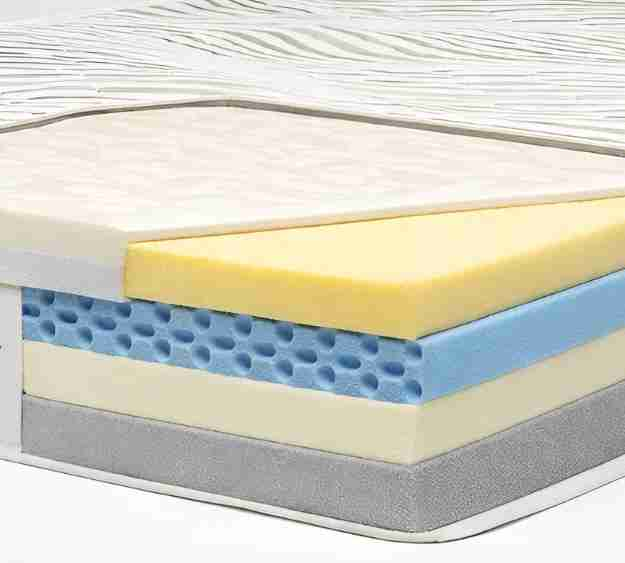
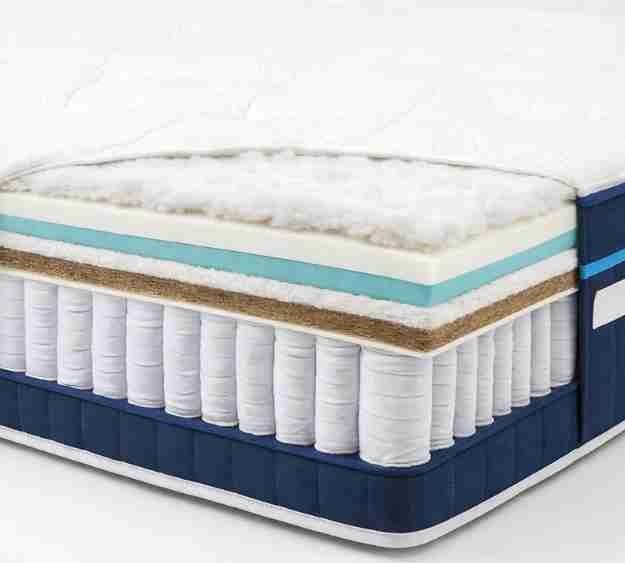
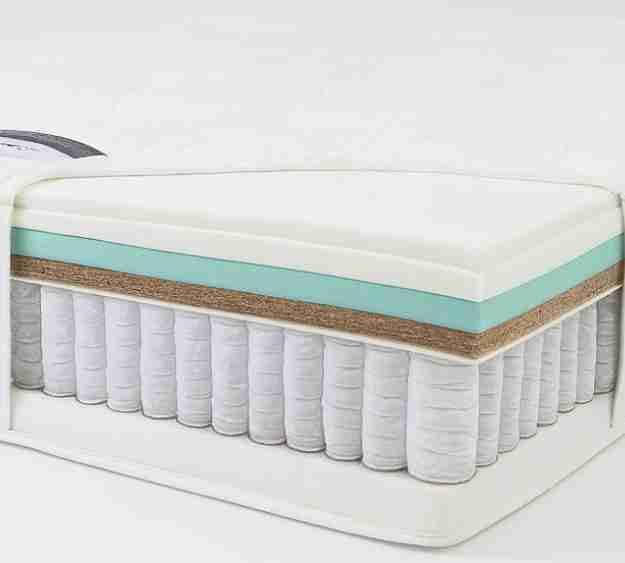
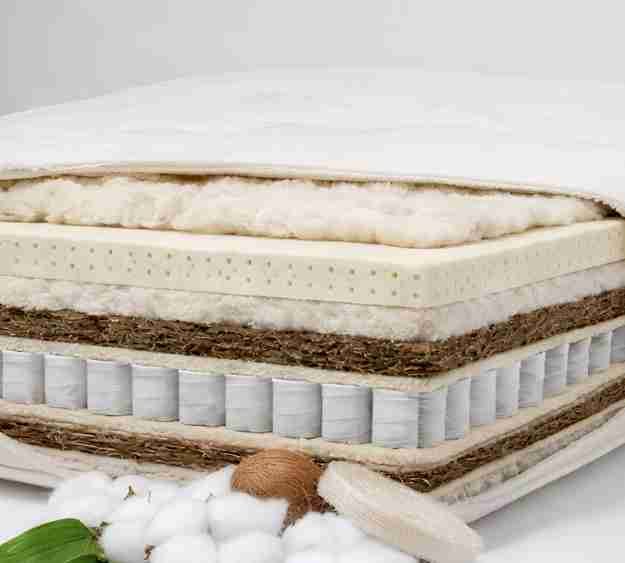
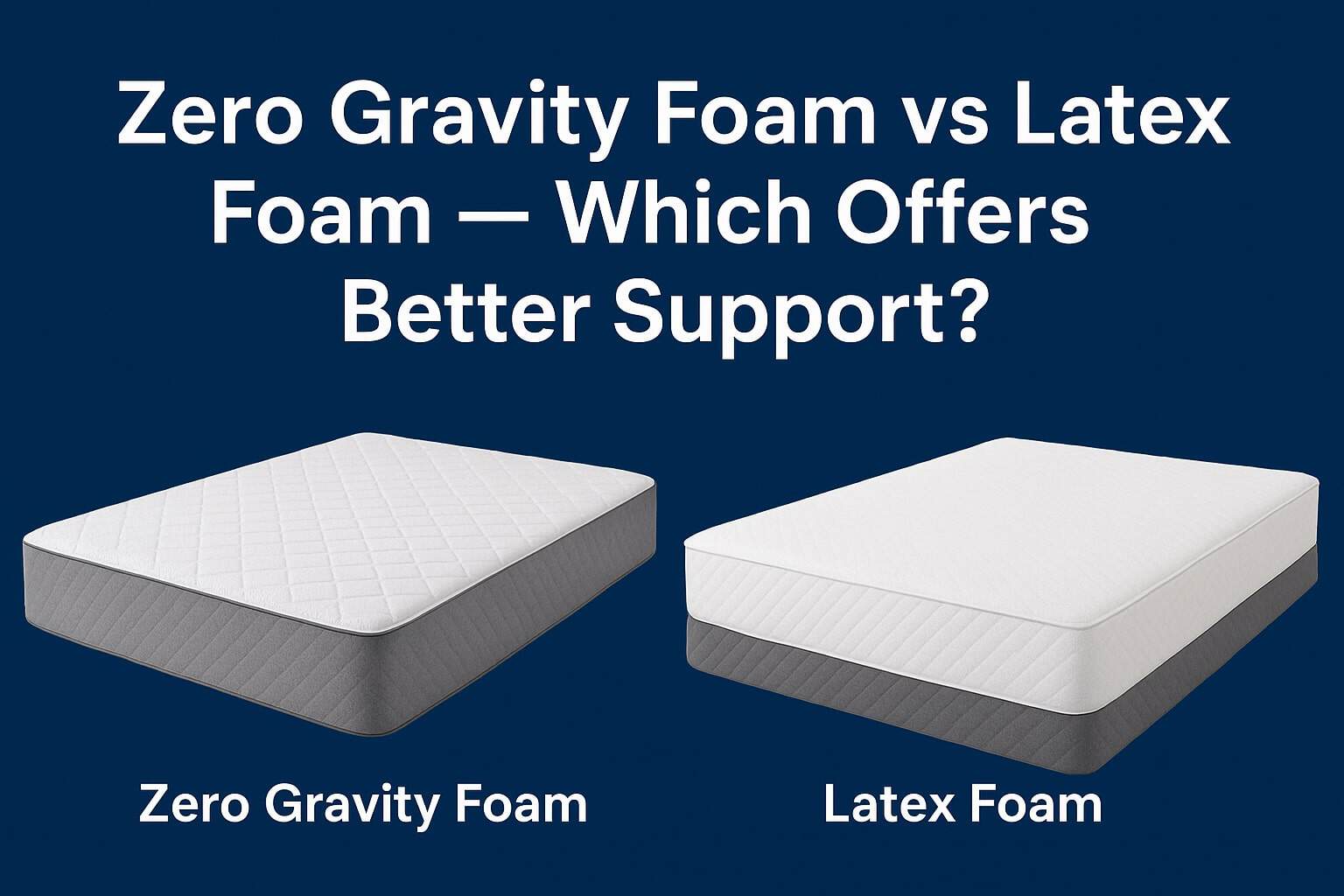
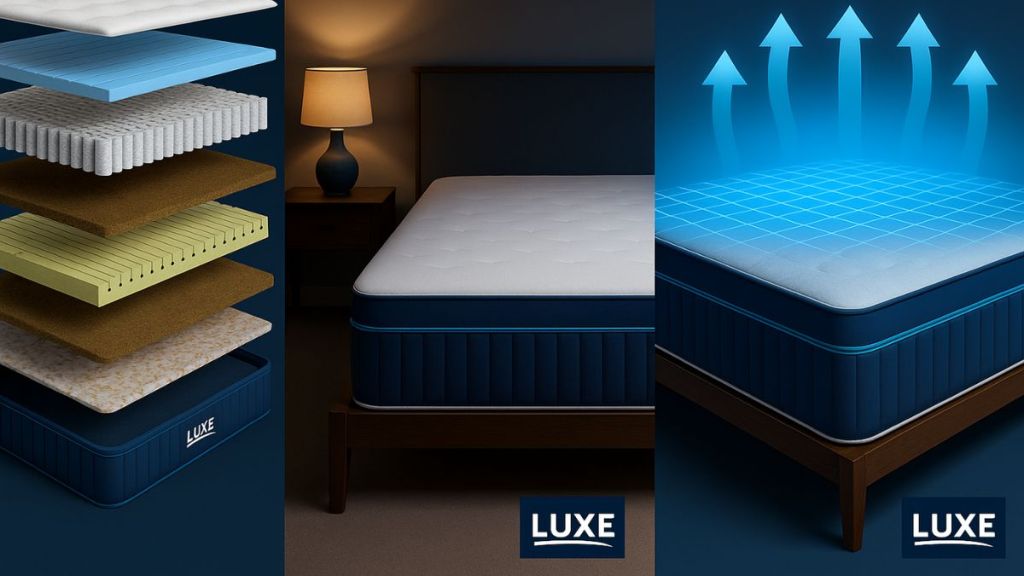
When it comes to achieving restful, pain-free sleep, the choice between zero gravity foam vs latex foam is becoming a hot topic in 2025. Both foams are designed to enhance comfort, but they differ significantly in structure, feel, and support.
Zero gravity foam is a modern innovation that mimics a weightless sleep sensation by evenly distributing body pressure, while latex foam derived from natural rubber offers springy, responsive support and exceptional durability.
In this detailed comparison, we’ll explore how zero gravity foam vs latex foam performs in terms of support, comfort, breathability, and sustainability. If you’re looking for the perfect mattress material, this guide will help you make an informed decision.
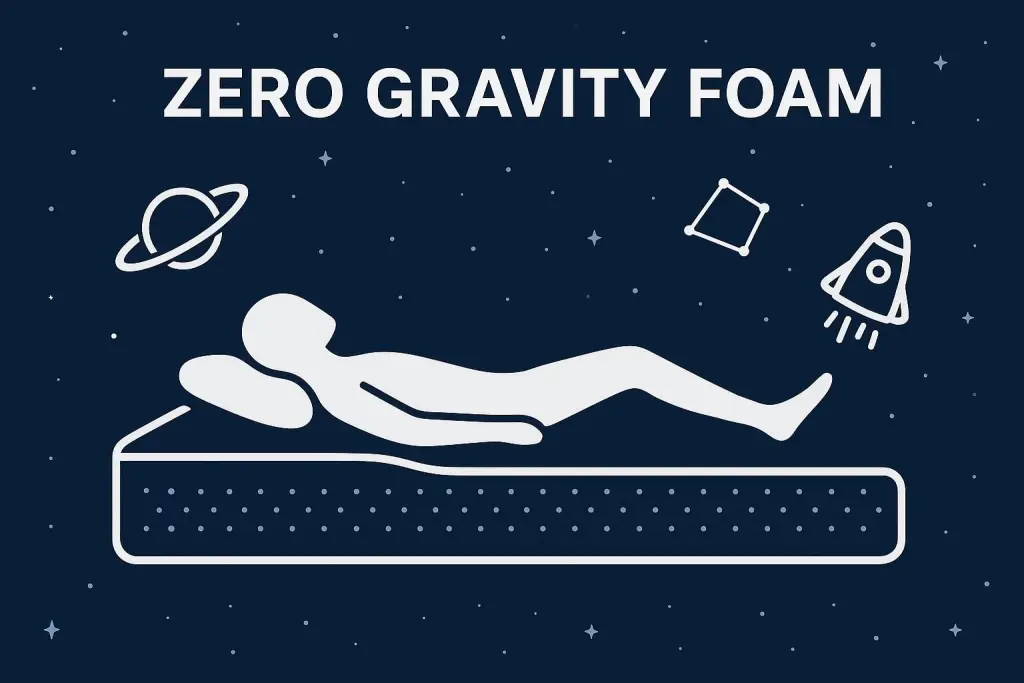
What is Zero Gravity Foam?
Zero gravity foam is an advanced viscoelastic material engineered to mimic the sensation of floating in space. It contours precisely to your body, reducing pressure on the spine, shoulders, and hips.
Key Features of Zero Gravity Foam:
Pressure-Free Comfort: Designed to relieve tension points for a weightless feel.
Adaptive Response: Adjusts to body movements without sinking too deep.
Cooling Properties: Infused with gel particles or open-cell technology for improved airflow.
Ideal For: Sleepers with joint pain, back pain, or those who prefer soft yet supportive surfaces.
In short, zero gravity foam provides deep comfort and excellent spinal alignment, making it a top pick for those seeking superior ergonomic design.
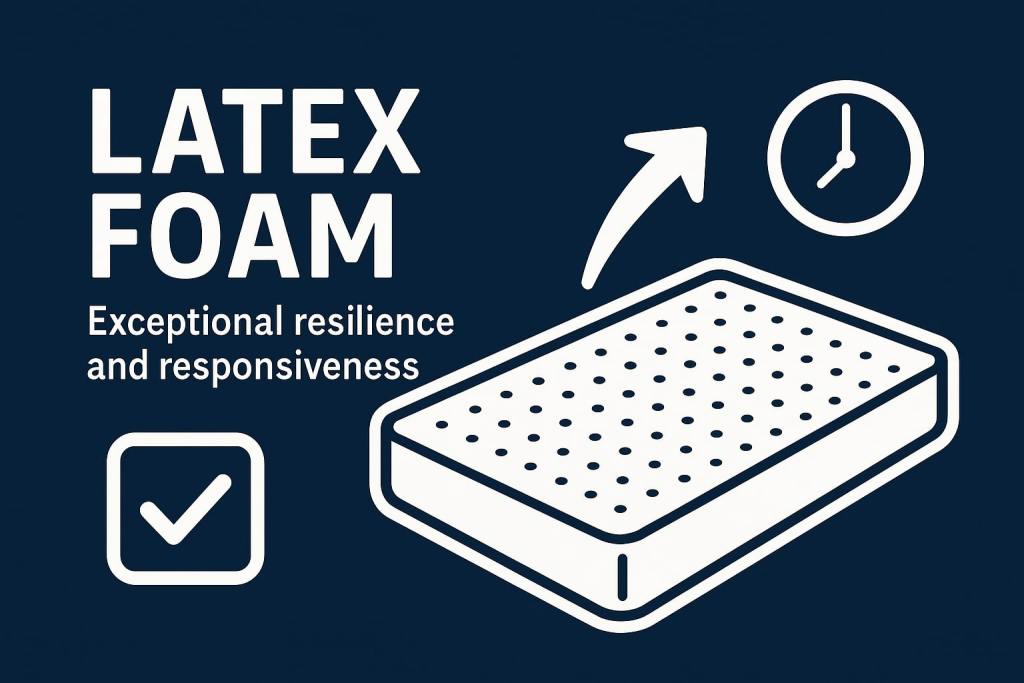
What is Latex Foam?
Latex foam is crafted from natural or synthetic rubber, offering exceptional resilience and responsiveness. Unlike traditional foams, it instantly bounces back when pressure is removed, maintaining its shape and structure over time.
Types of Latex Foam:
Natural Latex: Derived from rubber tree sap, known for being part of eco-friendly mattress materials.
Synthetic Latex: Created from petrochemicals, offering a lower-cost option but less elasticity.
Blended Latex: Combines both natural and synthetic latex for balanced performance.
Key Benefits of Latex Foam:
Natural Elasticity: Provides buoyant support and prevents the “stuck†feeling.
Durability: Outlasts many other foams by several years.
Hypoallergenic: Naturally resistant to dust mites and mold.
Eco-Friendly: Ideal for buyers looking for eco-friendly mattress materials.
Latex foam is preferred by eco-conscious buyers who want sustainability without compromising on support or bounce.
Quick Comparison — Zero Gravity Foam vs Latex Foam
Feature
Zero Gravity Foam
Latex Foam
Material Source
Synthetic viscoelastic foam
Natural or synthetic rubber
Support Type
Contouring and adaptive
Responsive and springy
Feel
Weightless, body-hugging
Firm, bouncy, and supportive
Cooling Ability
Moderate to high (gel-infused)
Excellent (natural ventilation)
Durability
8–12 years
10–15 years
Maintenance
Low
Moderate (requires occasional flipping)
Eco-Friendliness
Varies (depends on additives)
High (natural latex option)
Price Range
Moderate to premium
Premium
Best For
Pressure relief and spine alignment
Responsiveness and longevity
This table highlights that while both materials provide outstanding comfort, your personal preferences soft contouring vs firm bounce will determine which is right for you.
Comfort and Support: The Core of Comparison
When comparing zero gravity foam vs latex foam, the real difference lies in how each material delivers comfort and support. While both aim to enhance your sleep experience, their unique structures create distinct sensations one cradles your body in weightless softness, while the other lifts you with firm, natural elasticity.
Zero Gravity Foam: Deep Pressure Relief
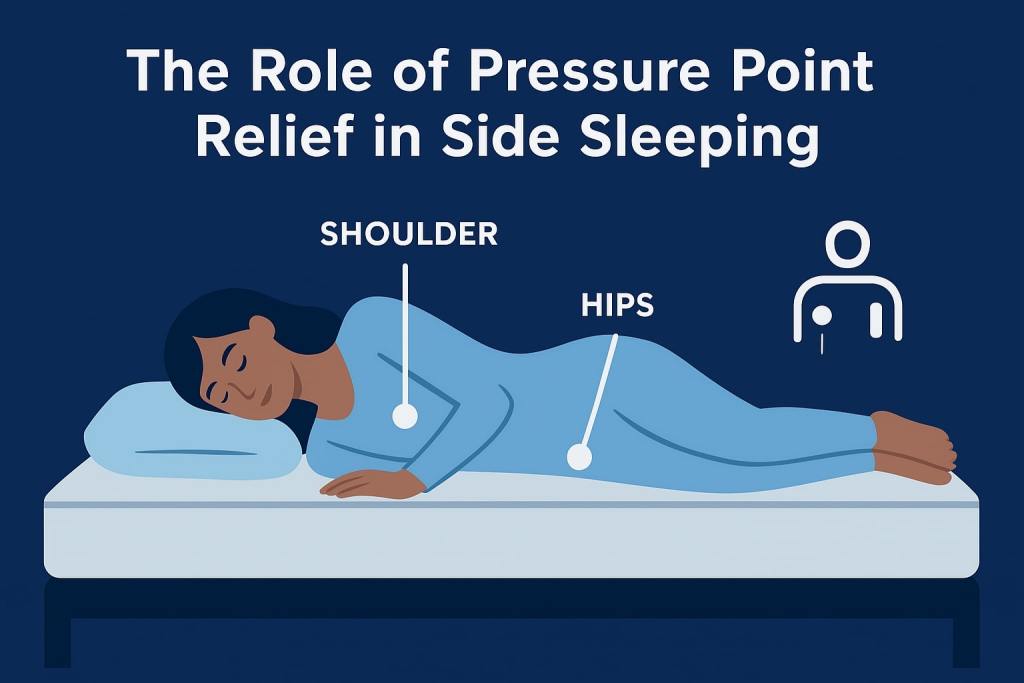
Zero gravity foam is engineered to cradle your body, dispersing weight evenly. It reduces stress on sensitive areas like the hips and shoulders, providing unmatched pressure relief.
Latex Foam: Responsive and Supportive
In contrast, latex foam supports your body with natural elasticity, gently pushing back against pressure rather than absorbing it. This responsiveness helps maintain spinal alignment throughout the night.
Verdict:
For pain relief and softness, zero gravity foam wins.
For firmness, bounce, and spine health, latex foam is the better choice.
Durability and Longevity
A major deciding factor between zero gravity foam vs latex foam is how long each lasts.
Zero Gravity Foam: Typically retains performance for up to 8-12 years, depending on density and quality.
Latex Foam: Known for superior endurance, lasting 10–15 years with minimal sagging.
If longevity and investment value matter most, latex takes the lead.
Temperature Regulation
Hot sleepers often struggle with traditional memory foam due to heat retention.
Zero Gravity Foam
Modern zero gravity foams incorporate cooling technologies like gel infusions or open-cell structures to improve airflow and reduce heat build-up.
Latex Foam
Latex’s open-cell structure and natural ventilation make it inherently breathable. It stays cool without any chemical additives, making it ideal for warm climates.
Winner: Latex foam, for its naturally cool sleep surface.
Eco-Friendliness and Materials
Sustainability is another key concern in 2025.
Zero Gravity Foam: While some are produced using plant-based oils, most remain synthetic. This can limit their sustainability credentials.
Latex Foam: Derived from the sap of rubber trees, latex is renewable, biodegradable, and part of eco-friendly mattress materials.
If environmental impact matters to you, latex foam is the greener option.
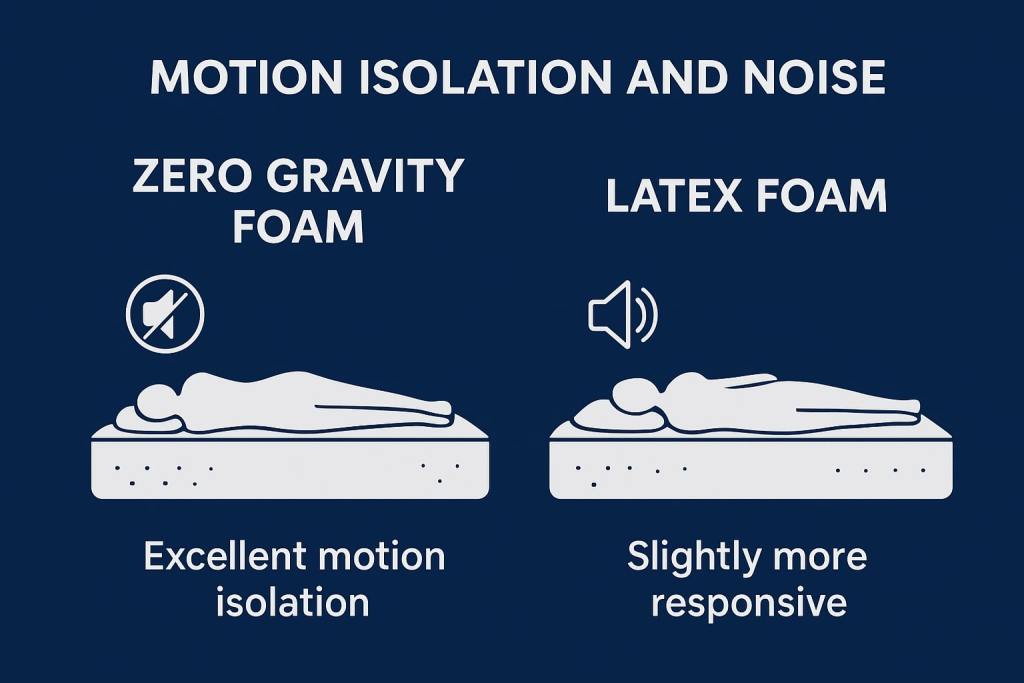
Motion Isolation and Noise
When it comes to motion isolation and noise, the debate between zero gravity foam vs latex foam highlights how each material manages movement and quietness during sleep.
Zero Gravity Foam
Provides excellent motion isolation, making it perfect for couples. Movement on one side of the bed barely transfers to the other.
Latex Foam
While latex performs well in this area, it’s slightly more responsive, meaning some motion transfer may still occur.
Result: For minimal disturbance, zero gravity foam performs best.
Firmness and Feel
Sleep Type
Ideal Foam Type
Reason
Side Sleepers
Zero Gravity Foam
Cushions pressure points and shoulders
Back Sleepers
Latex Foam
Maintains spine alignment
Stomach Sleepers
Latex Foam
Prevents midsection sinking
Combination Sleepers
Either
Depends on firmness preference
The firmness scale differs for everyone, but generally:
Zero Gravity Foam: Soft to medium-firm feel.
Latex Foam: Medium-firm to firm with more bounce.
Maintenance and Care
Zero Gravity Foam: Requires minimal maintenance; just rotate every 6 months.
Latex Foam: Needs occasional flipping and airing to maintain freshness.
Both types resist sagging, but latex’s structure keeps it newer for longer.
Pros and Cons
Type
Pros
Cons
Zero Gravity Foam
Excellent pressure relief, motion isolation, and adaptive comfort
May trap heat, synthetic materials
Latex Foam
Naturally cool, durable, and eco-friendly
Heavier and more expensive
Which One Should You Choose?
Your choice between zero gravity foam vs latex foam depends on your sleep style and personal priorities.
Choose Zero Gravity Foam if you:
Want a plush, pressure-relieving surface
Prefer a weightless, contouring experience
Need motion isolation for a partner
Choose Latex Foam if you:
Prefer a firmer, more supportive surface
Value natural elasticity and eco-friendly design
Want durability and natural materials
Both materials provide excellent comfort, but the right pick depends on whether you prefer soft contouring or resilient bounce.
Final Thoughts
The debate of zero gravity foam vs latex foam boils down to personal needs. If you value deep contouring comfort, zero gravity foam is ideal. If you prefer resilience, longevity, and sustainability, latex foam is unmatched.
Both provide impressive support systems that enhance posture and rest quality. The best choice depends on your lifestyle, body type, and values comfort or eco-friendliness. In 2025, the winning mattress is the one that supports not just your body, but your well-being and the planet too.
FAQs
Which is better for back pain — zero gravity foam or latex foam?
Both perform well, but zero gravity foam offers better pressure relief, while latex foam provides firmer spinal support.
Does latex foam last longer than zero gravity foam?
Yes, natural latex foam typically lasts 10–15 years, outlasting zero gravity foam by several years.
Is latex foam more eco-friendly than synthetic foam?
Absolutely. Latex foam is made from renewable resources and is part of eco-friendly mattress materials.
Does zero gravity foam trap heat?
Modern zero gravity foams include cooling gel layers or ventilation systems to reduce heat retention.
Which foam is better for couples?
Zero gravity foam is better for couples because of its motion isolation and quieter structure.
In this comprehensive zero gravity foam mattress review, we’ll explore firsthand what customers in the UK and beyond are saying about sleep surfaces built with Zero Gravity foam. We’ll cover user satisfaction, mattress feedback, key benefits, and practical drawbacks helping you decide if this style suits your needs.
What is a Zero Gravity Foam Mattress?
A zero gravity foam mattress review often describes a mattress that features a viscoelastic foam layer engineered to replicate a weightless sleeping feel sometimes called anti-gravity or zero-compression foam. Brands use the term Zero Gravity foam to describe a memory-foam variant that contours deeply, supports the spine, and integrates with cooling or hybrid technologies. Zero Gravityâ„¢ foam as offering œfloating feel and œenhanced pressure relief. In short: this mattress type aims to combine body-hugging comfort with effective support.
Why the Buzz in Customer Reviews UK?
UK customers searching for mattress alternatives often highlight multiple factors in their Mattress Feedback and user satisfaction comments:
Staff mention that Zero Gravity foam is used to keep you œon top of the bed rather than sinking in, which helps with spinal alignment.
Many reviewers emphasis improved cooling and less motion transfer, especially in shared-bed situations. For instance, the Zero Gravity foam is paired with cooling tech to better suit hot sleepers.
Users often report fewer pressure-point complaints (shoulders/hips) and better comfort when switching from older foam mattresses.
What Users Are Saying: Summary of Mattress Feedback
Here’s a distilled summary of real user feedback gathered from UK sources, blogs, and brand review pages regarding Zero Gravity foam mattresses:
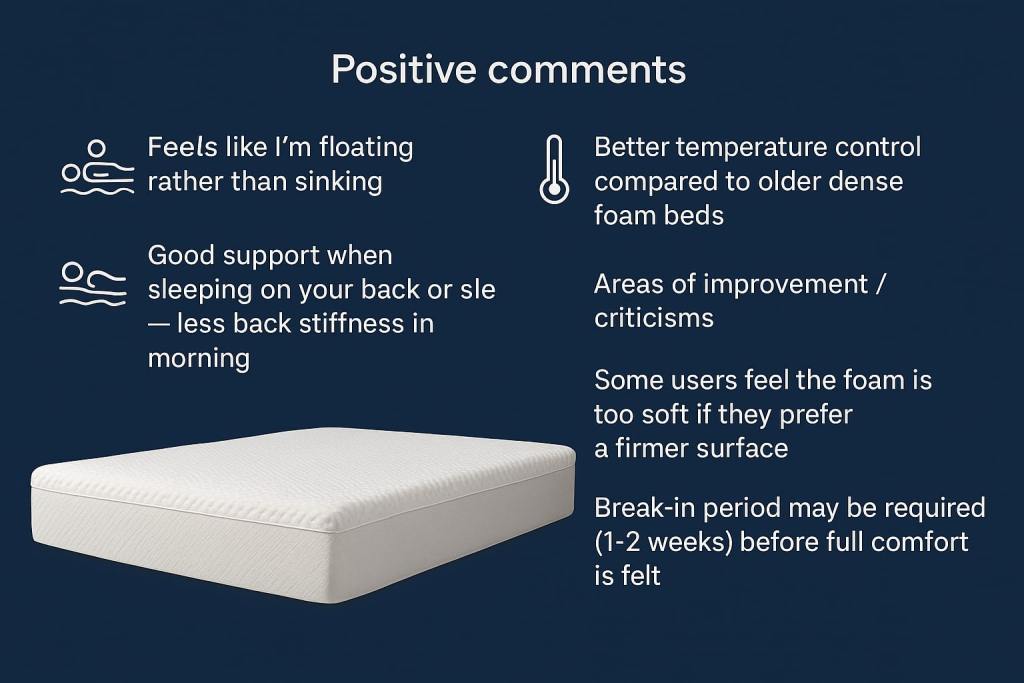
Positive comments:
œFeels like I’m floating rather than sinking “ common phrase in user satisfaction posts
Better temperature control compared to older dense foam beds
Good support when sleeping on your back or side — less back stiffness in morning
Quiet mattress (especially compared to spring-coils) — fewer disturbances
Improved comfort for couples due to minimal motion transfer
Areas of improvement / criticisms:
Some users feel the foam is too soft if they prefer a firmer surface
Break-in period may be required (1-2 weeks) before full comfort is felt
A few note the mattress is heavier and harder to manoeuvre
In rare cases, posts mention less bounce and œtrapped sensation if used on wrong base or with improper support
Table: What Users Like vs What to Check
Feature
User Praise
What to Check
Comfort & Contouring
Many reviewers say the mattress œhugs body and reduces pressure
Ensure you adjust firmness – check if your version is medium/firm or soft
Cooling
Good feedback on dissipating heat via infusion in Zero Gravity foam mattresses.
Confirm the exact cooling tech used in model (gel, open-cell, etc.)
Motion Isolation
Couples appreciate fewer movements felt when partner shifts
If you are a heavier sleeper, check edge support and overall thickness
Support / Spinal Alignment
Users mention less back-ache and better sleep posture in reviews
Make sure mattress base/frame is suitable to preserve support
Durability
Some say foam retains shape for years
Verify warranty and return policy
Real Customer Reviews (UK Focus)
Zero Gravity foam is described as œan advanced version of memory foam, offering superior adaptability and enhanced pressure relief at key points.
They also note that this foam combined with their cooling layers is suitable for hot sleepers who previously struggled with heat build-up.
Value proposition on their site emphasises œfloating feel and œanti-gravity sensations created by this foam layer.
Key Features Highlighted in Reviews
When you read a dedicated zero gravity foam mattress review, the following features keep showing up:
Adaptive Foam Layer – Users say the mattress conforms to their shape quickly.
Surface Comfort vs Support – Many find it comfortable yet still supportive, a balance not always achieved in earlier foam mattresses.
Cooling & Breathability – Especially appreciated by users with warmer rooms or who sleep hot.
Motion Isolation – Very popular among couples or those sharing a bed.
Edge Support & Base Compatibility – Good feedback when used with quality foundations; less so when placed on older sagging bases.
Break-in Time – Some users say it takes up to 2–3 weeks to fully adapt.
Deep Dive: What Reviewers Say About Comfort & Support
Comfort Feedback: In many zero gravity foam mattress review write-ups, users say they float rather than sink, meaning the top layer allows some contouring but feels uplifted rather than caving. The brand positioning at emphasises this.
Support Feedback: Support tends to be rated highly when the mattress is paired with a good base/foundation and if the user’s body weight and sleep position match the mattress firmness. Some note that after switching to Zero Gravity foam, back-ache reduced and they woke up less often.
Cooling Feedback: Reviewers with warmer bedrooms say the mattress kept them cooler than their previous foam bed. LuxeMattresses features articles stating that Zero Gravity foam combined with cooling tech improves heat dissipation.
Realistic Limitations Highlighted in Reviews
No mattress is perfect for everyone, and from multiple mattress feedback sources the following caveats appear:
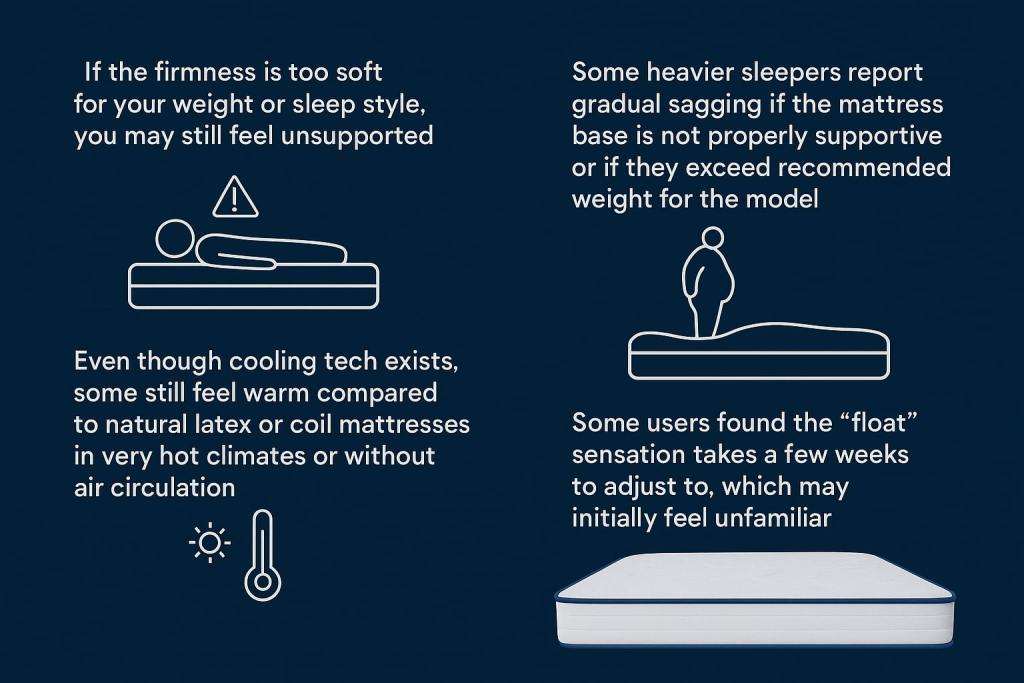
If the firmness is too soft for your weight or sleep style, you may still feel unsupported.
Some heavier sleepers report gradual sagging if the mattress base is not properly supportive or if they exceed recommended weight for the model.
Even though cooling tech exists, some still feel warm compared to natural latex or coil mattresses in very hot climates or without air circulation.
Some users found the float sensation takes a few weeks to adjust to, which may initially feel unfamiliar.
How to Interpret These Reviews Before You Buy?
When reading zero gravity foam mattress review articles or user posts, keep these best-practice tips in mind:
Check the firmness level the user had vs your own sleep style/weight.
Note how long they had the mattress before posting feedback many benefits come after break-in.
Look for mentions of œcooling, œedge support, œmotion isolation key features of this foam type.
Compare results for your base or bed frame setup; poor base = poor results.
Review the warranty, trial period, and return policy many UK brands like LuxeMattresses offer long warranties and trials but check fine print.
What the Reviews Say?
Feature
What Users Typically Note
What To Confirm
Contouring & comfort
Floating feel, less pressure
Firmness match, side/back/stomach style
Support & alignment
Better morning back feel
Edge support, base quality
Cooling & breathability
Cooler than older foams
Cooling layer details, room temp
Partner disturbance
Minimal motion transfer
Couples keyword, test partner movement
Longevity & durability
Good shape retention
Warranty length, sagging reports
Verdict: Does the Real-User Feedback Add Up?
From the aggregated zero gravity foam mattress review feedback available especially in UK markets, the commentary is broadly positive. Users consistently highlight the comfort shift, better sleep postures, and cooling improvements vs older foam beds. However, the best outcomes tend to come when the mattress is paired with appropriate firmness for the sleeper, proper base support, and time for break-in. Onto the five FAQs which address common questions.
Final Thoughts
In reviewing all the zero gravity foam mattress review feedback available from customer reviews UK, brand commentary, and user forums the technology clearly offers significant benefits in comfort, support, and partner-friendly design. For many buyers, switching to a mattress featuring Zero Gravity foam means fewer pressure points, better cooling, and improved sleep posture.
If you’re considering one, ensure you match firmness to your sleep style, choose a solid base, and allow a few weeks for adjustment. Use the review insights above to guide your decision and read recent user reviews for the specific model you’re interested in.
In short: Real users say Zero Gravity foam mattresses deliver on the promise but you’ll get the best outcomes when you align your preferences, setup, and expectations.
FAQ’s
What should I look for in a zero gravity foam mattress review?
Look for user comments about comfort (“float” or “hugging”), cooling, motion isolation, and how the mattress felt after a few weeks. These elements reflect real satisfaction.
Do zero gravity foam mattresses work for couples?
Yes, reviews repeatedly highlight minimal motion transfer and better partner sleep quality, making them good for shared beds.
How long do zero gravity foam mattresses last according to reviews?
Many UK reviews say good models maintain support 8–10 years.
This article explains why UK sleepers with back, hip, or shoulder pain are switching to firm hybrid mattresses. Hybrids blend pocket-spring lift with foam comfort, stopping pelvic dip and shoulder jamming. It compares hybrids with memory-foam and spring beds, shows firmness by sleep position, and maps REM-Fit options. Readers learn how to test firmness at home, why UK sizes matter, and how durability keeps alignment. It finishes with practical buying steps for 2025, focused on LuxeMattresses.co.uk shoppers. Simple, clear guidance.
Introduction
For many sleepers searching ˜Hybrid Mattress UK Firm‘, the real issue isn’t hype at all, it’s the way back pain, hip pain, or even shoulder pain shows up every single morning across the UK. Millions of people keep changing pillows, stretching, or taking breaks at work, but nobody tells them that the mattress could be the real culprit. We also know the UK market is noisy, every brand says its mattress is œorthopaedic or œperfect for posture, so it’s hard to know which one to choose.
This guide pulls the marketing curtain aside and shows you, step by step, how firm hybrid builds work, when they help, and when you actually need a softer comfort layer on top. Another pattern UK clinicians report is that people upgrade pillows, chairs, even cars, but keep sleeping on an old mattress for 8–12 years. During that time the comfort foams oxidise, the springs lose tension, and the sleeper’s body weight changes.
So the bed that once felt supportive slowly turns into a surface that lets the hips rotate and the shoulders collapse inward. When that happens, even a small disc issue or hip bursitis starts shouting. That’s the stage where a structured hybrid with a clear support core becomes a genuine fix, not a luxury buy.
Back, Hip & Shoulder Pain in the UK: Are Hybrids Really Helping? (2025 Expert View)
UK clinics, physios, and even NHS-backed health pages all repeat one thing: poor sleep posture turns small aches into proper musculoskeletal problems. In 2025, UK sleep specialist Lindo Mavuso (interviewed on 09/19/2025) explained that a lot of the cases she sees look like “mystery painâ€, but when she asks about the bed, the problem becomes obvious, the sleeper is on a sagging, uneven, or over-soft surface.
That’s why people keep asking, Do hybrid mattresses help with back, hip and shoulder pain? and Are they better than memory foam or spring-only beds? Her answer was clear: hybrids can help because they combine lift and contouring, but only if the firmness matches the sleeper’s body and pain profile. Otherwise, even a premium hybrid becomes another piece of marketing hype.
This is a 2025 expert guide, so we’re talking specifically to UK adults who spend long hours sitting, commuting, or working from home. If that’s you, you’ve probably already read at least one what is a hybrid mattress uk explainer or skimmed a couple of hybrid mattress uk reviews to see if real people actually got pain relief. But the question underneath all those searches is the same: are hybrid mattresses firm enough for chronic lower-back cases, or are they just comfy hotel-style beds?
Most of these searches boil down to one thing: finding aHybrid Mattress UK Firm enough to stabilize the spine without making the hips or shoulders scream. We’ll map REM-Fit models later in the article so you can see real examples.
What Is a Hybrid Mattress in the UK (and Why It’s Different from Memory Foam Only)
In the UK market, a hybrid mattress is simply a mattress that mixes two proven systems, pocket springs for support and foam layers for comfort. The springs sit underneath like scaffolding and keep the body lifted, while the foam sits on top and molds to your curves. This is different from memory-foam-only beds, which give you a hugging feeling but sometimes let the lower back sink too far.
It’s also different from spring-only beds, which hold you up but can feel bouncy or unforgiving on sore joints. So when people type “what is a hybrid mattress ukâ€, they’re really checking whether this mixed build is worth paying for.
Are hybrid mattresses firm? It depends on two things: the tension of the pocket springs and the density of the comfort foams. A hybrid with soft coils and super-plush foam will feel medium-soft, while a hybrid with higher-gauge coils and denser foams will sit in the medium-firm to firm range.
In most hybrid mattress UK reviews, people highlight that hybrids feel “more supportive than foam but softer than an all-spring bedâ€, which is exactly what joint-pain sleepers want. If you want cushioning without losing lift, a Hybrid Mattress UK Firm model gives you that balance, you don’t roll into a dip, but your shoulders aren’t pressing on hard springs either.
Another thing to remember is that UK brands design their hybrids for UK frames and UK climate. If you import a mattress made for warmer regions, it might feel softer than advertised because foams react to temperature.
Local mattresses tend to balance breathability with year-round comfort, so you don’t overheat in July but you also don’t feel like you are lying on a board in January. That’s a big plus for people with arthritis or shoulder pain, because cold, hard beds can increase stiffness.
Science of Pain & Sleep — Why Mattress Alignment Matters
Pain during sleep is not random. It usually comes from misalignment. Think of your spine as a suspension bridge: it needs to stay in one long, neutral line while you lie down. When the mattress is too soft, certain areas, usually the hips, sink deeper, and when the mattress is uneven or sagging, the shoulders end up taking more weight than they should. That creates pressure points and makes the whole sleep setup go out of sync with the body. NHS guidance also warns that poor sleep posture can lead to long-term musculoskeletal issues in working-age UK adults, especially when combined with sedentary jobs.
A good hybrid counters this because it uses shock absorbers (the springs) to hold the main load and foam contours to spread pressure out. The result is that pressure points melt away instead of building up. If your current bed leaves a clear body impression or you feel like you roll into the middle, that’s classic misalignment and it will keep feeding the pain cycle until you change the surface.
When alignment is right, your muscles can finally switch off. Your neck doesn’t have to hold the head up, your mid-back doesn’t have to fight gravity, and your hips aren’t twisting to compensate. That deep relaxation window is when tissue repair actually happens. On a poor surface, the body keeps micro-correcting all night, so you wake up feeling as if you never really slept. A hybrid that follows body contours while keeping the spine neutral shortens this correction phase and gives you more real rest per hour.
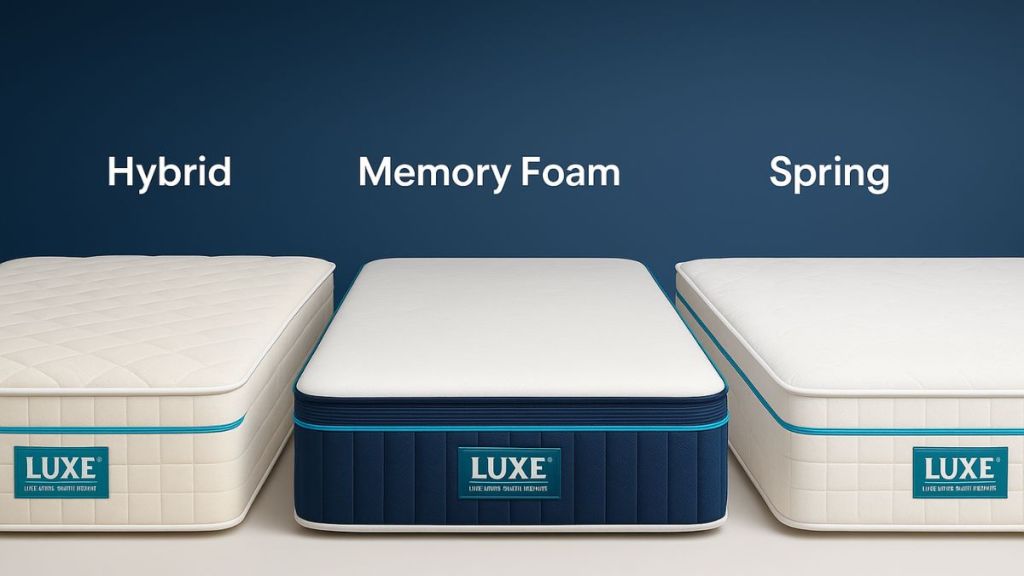
Hybrids vs Memory Foam vs Spring Mattresses: Which One Actually Reduces Pain?
Memory-Foam-Only Beds
Memory-foam-only mattresses contour the body, easing shoulder and hip pressure, but overly soft or warm foam lets heavier areas sink, reducing spinal lift. UK sleepers with back pain often discover the mattress, not lifestyle, caused problems. Hybrids outperform here consistently.
Spring-Only Mattresses
Traditional spring mattresses lift superbly and stay cooler, yet many UK adults with hip or shoulder pain find them too firm because bones rest nearer the coils. Without comfort layers, pressure points return quickly, especially for lighter sleepers seeking relief.
Hybrid Mattresses (Springs + Foam)
Hybrid designs join pocket springs with supportive foam, creating scaffolding for spinal alignment while cushioning joints. This construction stops pelvic dipping seen in memory foam alone and harshness from spring beds. UK reviewers praise the balanced feel for chronic discomfort.
Cooling Advantage for UK Sleepers
Because hybrids use breathable, open-cell foams and space between pocket springs, airflow improves and heat escapes faster. Hot sleepers in the UK report temperatures better than on memory-foam-only models. Hybrid mattress UK reviews highlight cooler nights plus better pressure relief.
Why a Hybrid Mattress UK Firm Setup Wins
For sleepers needing real spinal lift, a Hybrid Mattress UK Firm configuration keeps the pelvis from dipping while foam smooths pressure over shoulders and hips. This support-plus-comfort combo outperforms soft memory foam, especially for lower-back pain aggravated by daily sitting.
Budget Spring Beds and Linked Coils
Some UK spring beds still use linked coils, which transfer motion and create hard pressure points. Without pocket springs or decent foams, joints suffer again. Hybrids upgrade that core with isolated coils, making everyday pain management far more realistic long-term.
Pocket Springs for Asymmetrical Pain
Individually wrapped pocket springs respond to each zone, letting one shoulder sink without dragging the whole mattress downward. That’s vital for asymmetrical issues like right-shoulder pain from desk work. Foam layers above refine comfort, so support stays targeted and stable.
Durability, Alignment and 2025 Guides
Pain relief fades when mattresses lose height, so durability matters. Hybrids using stronger steel and higher-density comfort foams keep alignment longer, delaying the pain cycle. That’s why 2025 UK buying guides increasingly prioritise hybrid builds over cheaper, faster-sagging memory-foam-only options.
Firmness Levels for Different Pain Types (Back, Hip, Shoulder)
Now we get to the real diagnostic part. Not all pain is the same, so not every sleeper should pick the same firmness. When UK sleepers say they have “back painâ€, most of the time they actually need medium-firm, not rock hard, not marshmallow.
Medium-firm gives posture support and stops lumbar sagging, which is where pain often begins. If you sleep mostly on your back and your main issue is lower-back compression, go for a Hybrid Mattress UK Firm feel with reinforced lumbar zoning; it will keep the natural curve supported while you sleep, which is like gentle therapy at night.
Firm Hybrid Mattress (for Back Sleepers)
Back sleepers who want maximum stability often search for the best firm hybrid mattress uk because they’re tired of waking up stiff. A firm hybrid with zoned coils will hold the shoulders and hips in line and reduce morning tightness.
Extra-Support / Heavy Sleepers
Heavier or taller sleepers sometimes need even more tension. For them, the firmest hybrid mattress uk options with high-tension springs are the safest bet because they don’t bottom out overnight and they keep the spine lifted even when weight is concentrated in the midsection.
Medium-Firm for Most UK Adults
Most adults, especially mixed sleepers, do well on best firm hybrid mattress uk models, because you get a blend of support and pressure relief. It’s the sweet spot for couples, guest rooms, and anyone who keeps changing positions through the night.
In mixed households where one person has hip sensitivity while the other just wants posture support, the best medium firm hybrid mattress uk style works better. You can even look at UK-based suppliers instead of importing so the size, warranty, and returns stay simple.
But if hip pain dominates, a slightly softer top over a Hybrid Mattress UK Firm base works better because the hips get extra cushioning while the springs still stop the pelvis from dipping. Shoulder-dominant sleepers, especially women with narrower frames, often blame the pillow when the real issue is that the mattress is not letting the shoulder sink.
If the mattress surface is too unyielding, the shoulder has to rotate forward or up, which strains the upper back. That’s why zoned hybrids, where the shoulder area is slightly softer than the hip area, have become popular.
They let you lie straight without jamming the shoulder into the springs. At the same time, the hip zone stays stronger, so you don’t end up with a banana-shaped spine. You can also drop an internal link here to a mattress firmness guide UK to help readers self-assess.
Hybrid Mattress Firmness by Sleeping Position (Side, Back, Stomach, Combo)
Position matters as much as pain. Around 60% of UK adults are side sleepers, which means their shoulders and hips are the two main pressure points. For them, a hybrid with zoned shoulder relief and a medium-soft top works, but the support layer underneath should still be steady. This is why so many side sleepers look up medium firm hybrid mattress uk — they want softness on top but not a hammock underneath.
Back sleepers who don’t want a hammock shape should stay in the Hybrid Mattress UK Firm range, especially if they work desk jobs or drive a lot. That firmer tension prevents the middle of the body from dipping and keeps breathing easier because the chest stays open.
Stomach sleepers in the UK often need a slightly tougher Hybrid Mattress UK Firm spec to keep the pelvis level and stop the lower back from crunching. Combination sleepers — the ones who roll from side to back to stomach — should look for responsive springs so the mattress adapts quickly to each pose without creating dips.
Body weight deserves a mention here too. A 55-kg side sleeper and a 95-kg back sleeper will not experience the same mattress the same way. Lighter sleepers often need a touch more surface softness so that their joints make contact with the comfort foam. Heavier sleepers, on the other hand, compress the foams faster and should look for higher-density comfort layers plus stronger coils. This is another reason hybrids are winning right now: you can tune both layers instead of being stuck with one material doing all the work.
How to Test Mattress Firmness (In-Store & At Home) — No More Guesswork
Guessing firmness in a showroom is how a lot of UK buyers end up with the wrong bed. Use the 1–10 UK firmness scale instead: 1–3 is soft, 4–6 is medium, 7–10 is firm. When you visit a store, lie on the mattress for at least 15 minutes in your real sleep position — not just a quick showroom bounce. Check whether your shoulders can sink slightly while your hips stay aligned. If your hand slips too easily under your lower back, the surface is too firm. If you can’t slip your hand in at all, it may be too soft and will sag after a few months.
Always use the at-home trial if the brand offers 30 nights or more. This matters even more when you buy during a hybrid mattress uk sale, because sale pressure sometimes makes people pick too soft or too hard. If after 3–4 nights your lower back still aches, move up to a slightly firmer Hybrid Mattress UK Firm model, your body is telling you it needs more lift.
Don’t be shy about using measuring tools at home. Place your phone horizontally at mattress level and take a side photo while you’re lying down. If the line from ear to shoulder to hip to ankle is straight, you’re close to ideal alignment. If the hips drop lower than the shoulders, you need more support. If the shoulders are floating above the rest of the body, you probably chose a surface that is too stiff for side sleeping.
REM-Fit Hybrid Recommendations (400 / 500 Ortho / 600 Lux) for UK Pain Profiles
Let’s map this to real products so it’s not just theory. REM-Fit is one of the UK-available hybrid brands that keeps its range simple.
REM-Fit 400 Hybrid → balanced, breathable, good for shoulder pressure, guest rooms, teenagers, or anyone on a budget who still wants springs plus foam.
REM-Fit 500 Ortho Hybrid → adds high-tension springs and stronger lumbar support, ideal for back-pain sufferers and also for stomach sleepers who must not sink at the hips.
REM-Fit 600 Lux Hybrid → deeper comfort layers and zoned coils; the go-to for hip-pain sleepers, side sleepers, and people who want luxury comfort without losing alignment.
All of them use edge-to-edge coils, cooling memory foam, and sensible trial terms — 200-night mattress trial and up to a 15-year guarantee.
Why Size Matters with Firm Hybrids
Firmness is only half the story; mattress size affects spinal freedom, partner movement, and how well springs perform. UK buyers choosing firmer hybrids should confirm size first, then depth, so support feels intentional, not cramped or tilted at mattress edges.
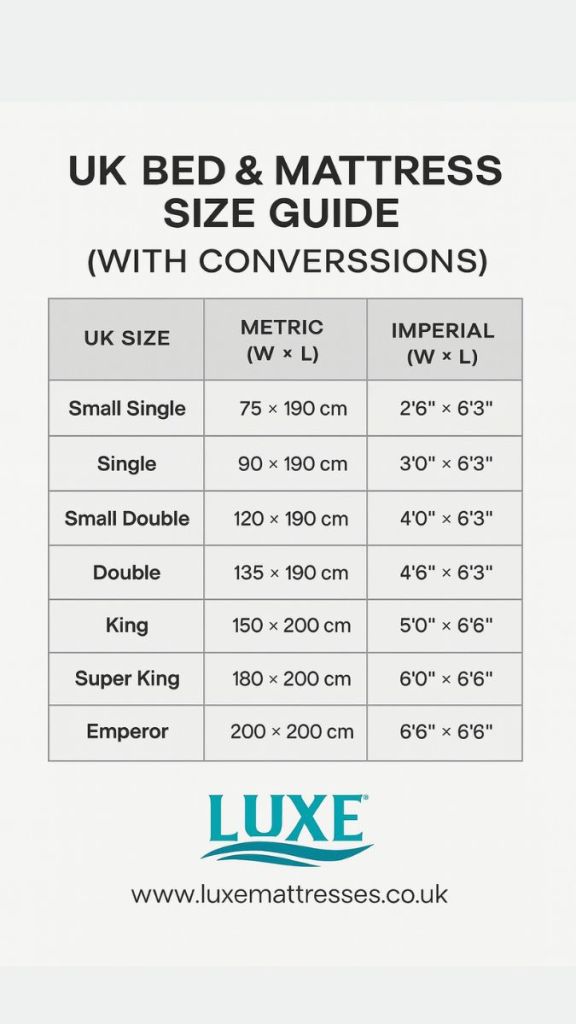
Standard UK King: 150 — 200 cm
Most couples searching hybrid mattress uk king want 150 by 200 centimetres, the standard UK king footprint. That wider surface reduces roll-together from pocket springs and lets each sleeper stay on their ideal firmness zone without drifting into the middle.
Always Check the Frame Footprint
Always check the bed-frame footprint, especially ottoman or storage bases, because external dimensions can steal walking space indoors. A mattress that fits the room can still crowd bedside tables, doors, or radiators when the frame adds bulky trim around it.
Plan Delivery and Access First
Plan delivery routes before ordering larger hybrids. Boxed mattresses enter easily, but once expanded they will not bend around tight stairs. Carefully measure doors, landings, turns, and lifts so a super-king or tall headboard doesn’t become an expensive, awkward return.
Why UK Sizes Help Guest Rooms
Guest rooms, Airbnb setups, and rentals work best with standard UK sizes because bedding stays affordable and replaceable locally. Keeping UK dimensions ensures fitted sheets hug corners properly, even when rotating the mattress or hosting sleepers with different body weights.
See the Full UK Size Chart
For full measurements and depth pairings, view the UK size chart on LuxeMattresses.co.uk online today. Matching length, width, height, and target firmness keeps hybrid buying simple and helps compare discounted models quickly without extra guessing about frame compatibility issues altogether.
Conclusion
Firm hybrid mattresses became popular in the UK because they fix what old, sagging beds can’t: alignment. They lift the pelvis, protect shoulders, and keep the spine neutral for longer hours of rest. When firmness matches weight, sleep position, and pain type, people finally wake up mobile, not stiff. That’s why 2025 guides, physios, and even budget buyers now start with hybrids.
Choose a UK-made, zoned, medium-firm or firm hybrid, test it at home, and keep your body working. Rotate it, use proper bedding sizes, and you lock in support, airflow, and value for years across the whole household. Daily.
FAQ’s
Are hybrid mattresses firm enough for lower-back pain in the UK?
Yes, if you pick a model with stronger spring tension and don’t let the top foam be overly plush.
What’s better for UK sleepers, hybrid or memory foam for hip pain?
Hybrids with deeper comfort layers often win because they cushion the hip yet keep the pelvis level.
Which firmness is best for shoulder pain if I sleep on my side?
A medium to medium-firm hybrid with zoned shoulders normally works best.
Can I get a hybrid king in a medium-firm?
Yes, most UK brands sell king-size hybrids in soft, medium, and firm profiles.
Do I need an ortho model or will a regular hybrid do?
If pain is daily or work-related, go ortho; if pain is occasional, a balanced hybrid is enough.
UK shoppers keep seeing hybrid beds in every best mattress guide, so the big question is: why are they everywhere and are they worth it for me? This 2025 breakdown explains why the hybrid mattress UK market is growing so fast, what makes hybrids different from pure memory foam, and how the spring + foam build gives both comfort and support. We’ll answer the real pain points, back pain and pressure relief, heat build-up, durability, and “is it really worth the higher price?†, and we’ll compare hybrids with traditional mattresses so you can make an informed decision.Â
You’ll also see what to look for in UK models (pocket springs, cooling foams, edge support, trial periods) and where brands like Luxe Mattresses, Simba, Nectar fit in. By the end, you’ll know whether a hybrid is the right all-rounder for your sleep style, budget, and room size, and when to wait for a hybrid mattress sale.
Introduction
UK shoppers keep asking why mattresses changed so much recently. Every major best mattress guide now features several hybrid models. The UK search data shows hybrid mattress ukrising very fast. People want a combination of support and comfort instead of saggy or rigid beds. They also want products with decent lifespan information and honest specs provided. This introduction frames the 2025 UK edition for informed buyers.
Hybrid designs combine support, cooling, and pressure relief in one build. That mix helps improve sleep quality, spinal health, and daily energy. Most lists now show hybrids because the majority prefer balanced feeling. This article explains technology, benefits, and limits without brand bias involved. By the end you can compare every hybrid mattress uk confidently. Read slowly and note entities highlighted for Semantic SEO structure.
What Is a Hybrid Mattress?
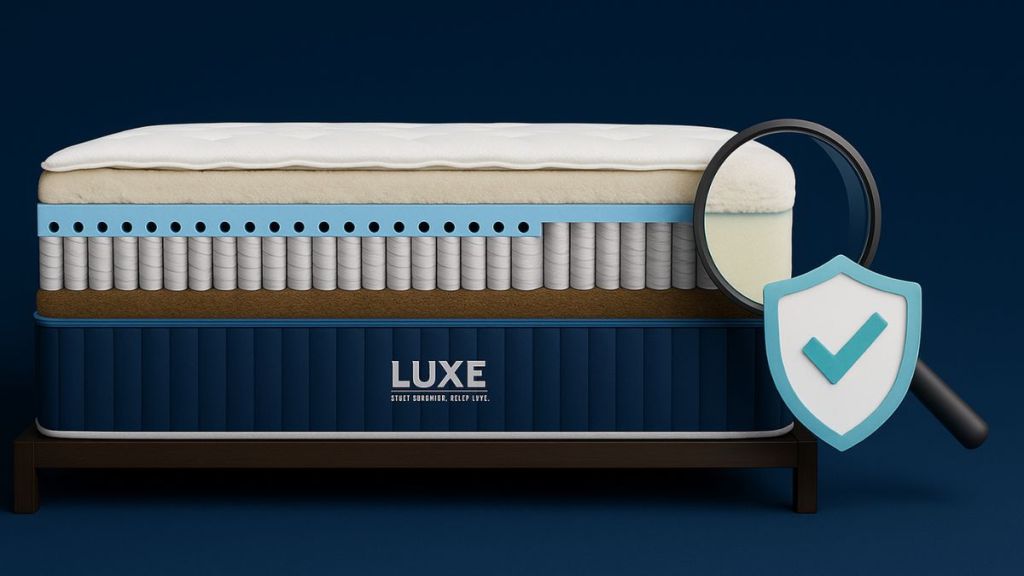
At its core a hybrid mattress blends coils with foams. Manufacturers call it the innerspring mattress’ older and smarter sibling. It uses pocket springs or individually wrapped springs for steady lifting. Above those coils sit memory foam, latex, or responsive polyfoam. This layering lets a hybrid mattress suit mixed sleeping households easily. Different shapes, sizes, and comfort levels help UK shoppers pick confidently.
Coils give bounce, airflow, and edge stability around the mattress perimeter. Foams provide contouring that protects shoulders, hips, and lower backs nightly. This combination appeals to side, back, stomach, and combination sleepers together. UK shoppers like that one bed can please two different sleepers. That versatility is why many people call it a hybrid bed mattress. Some models even use cooling covers to improve temperature during muggy summers.
Key Construction / Components of a Hybrid
Hybrid construction matters because quality varies across every hybrid mattress uk. These components explain why some models last longer and feel cooler.
Coil system and zoning
Good hybrids use pocket springs that react individually under weight. Zoned coils support hips firmly while letting shoulders sink comfortably. Higher spring counts often deliver finer body mapping and better stability. Check spring gauge because thinner coils compress faster across heavy sleepers.
UK buyers should confirm height and steel quality inside the coil unit. This data separates basic builds from premium coolest hybrid mattress lines. Always read specification sheets before trusting brochure style marketing language.
Comfort and transition foams
Above the coils sit contouring foams that spread body pressure. Brands mix latex foam, polyfoam, and gel foams for comfort. Transition layers stop you dropping straight onto the spring network below. Thicker comfort stacks help side sleepers protect joints through longer nights.
Denser foams resist early impressions and keep alignment consistent for years. This layering makes hybrids feel responsive instead of swampy or sluggish. Shoppers should compare actual foam densities when judging construction quality today.
Cooling features and covers
Heat control is a big reason hybrids beat classic memory foam. Pocket springs push air upward which cools the upper comfort layers. Many brands add PCM, gel beads, or breathable bamboo knit covers.
These features matter for heavy sleepers and warm UK bedrooms alike. Look for removable covers because regular washing improves hygiene and durability. Cooling design is where the coolest hybrid mattress really stands out. Hot sleepers should prioritise these technologies during final comparison and purchase.
Edge reinforcement, delivery, and sizes
Edge support decides whether couples can actually use full mattress width. Reinforced edges prevent roll off and make sitting more comfortable daily. British retailers usually deliver boxed with clear setup and trial instructions.
Check availability in Single, Small Double, Double, King, and Super King. Some platforms also stock EU sizes for taller or athletic UK sleepers. Construction details here influence price, warranty, and long term satisfaction. Better transparency helps shoppers make informed, confident, and repeatable mattress decisions.
Benefits of Hybrid Mattresses
Hybrids solve multiple sleep problems within the growing hybrid mattress uk market. They balance cushioning, airflow, and support better than many older designs.
Balanced comfort and support
Coils keep the spine aligned while foams cushion pressure joints. This balance works for back sleepers, side sleepers, and combination sleepers. People who dislike sinking can still enjoy gentle responsive comfort. It is the reason many lists mention best hybrid mattresses repeatedly.
The feel sits between bouncy springs and hugging memory foam beds. That middle ground makes it a great all-rounder mattress. Families choosing shared beds often appreciate this kind of dependable neutrality.
Pressure relief and spinal alignment
Pressure points appear around shoulders, lower back, hips, and knees. Hybrid foams distribute weight so one area does not carry everything. Zoned coils further protect heavy zones like pelvis and lumbar spine. This helps office workers, parents, and athletes wake with fewer aches.
Couples can choose a hybrid double mattress for shared relief nightly. Correct pressure management also reduces nighttime restlessness and partner disturbance. Good relief plus airflow leads to deeper, more restorative sleep cycles.
Temperature regulation and airflow
Because hybrids breathe, hot sleepers experience steadier temperatures overnight. Air moves through coils and carries heat away from foam layers. Gel infusions and breathable fabrics support this natural ventilation process nicely.
This benefits women experiencing hormonal temperature swings during the year. It also helps heavier bodies that usually sink and trap heat. The result is cooler, calmer, and longer sleep for many households. These advantages make hybrids ideal for UK loft rooms or flats.
Edge strength, motion control, and durability
Most hybrids build in stronger edges than pure memory foam mattresses. This makes getting out of bed easier for older or injured sleepers. Pocket springs also limit motion transfer to acceptable levels for couples.
It may not match full foam but feels stable enough nightly. Durable coils and quality foams can last ten years with rotation. Choose a hybrid king size mattress if two people sleep nightly. That size and structure prevent crowding while keeping the sleep surface consistent.
Potential Drawbacks of Hybrids
Even the best hybrids inside the hybrid mattress uk category have limits. Understanding them protects buyers from disappointment after the courier leaves.
Price and overall weight
Hybrids usually cost more than simple open coil or foam beds. Multiple foams, pocket springs, and reinforced edges raise production expenses. They are heavier, so rotating or moving upstairs needs two people. Budget buyers should watch seasonal offers or bundle promotions carefully.
Some people downgrade to smaller sizes to stay within target budgets. A hybrid mattress. still offers value when lifespan and comfort are considered. Always compare warranty length against the advertised price before purchasing.
Motion transfer compared to all foam
Because coils bounce, hybrids pass slightly more motion than pure foam. Light sleepers may notice partners getting up or changing positions overnight. Thicker top layers and better pocketing reduce this disturbance a lot.
People needing silence should trial models with deeper, slower foams. Some couples jump straight to full foam for maximum motion isolation. Consider a hybrid mattress king size if extra width is possible. Extra space often matters more than raw motion isolation numbers.
Contouring depth, heat, and one sided formats
Not every hybrid contours as deeply as premium memory foam mattresses. One sided designs mean you cannot flip to refresh the surface. Cheaper foams can trap heat if ventilation layers are missing entirely. Some rolled models can deform if stored compressed for many months. Open the box soon after delivery to protect internal spring recovery. Use a protector because spills and sweat can void manufacturer warranties. Maintained correctly, hybrids still deliver long term, reliable sleeping comfort.
Should I Buy a Hybrid Mattress?
The next section helps match user type with correct mattress choice. This guidance keeps the hybrid mattress uk conversation realistic and specific.
Buy a hybrid if these points describe you
Buy if you sleep on your back or your stomach. These positions are like firm coils that stop hips dropping too far. Combination sleepers also love hybrids because surfaces recover very quickly. Heavier people get edge support and deeper compression without losing alignment.
Hot sleepers benefit from coils and breathable covers in warmer areas. Back pain sufferers appreciate lumbar stability plus modern pressure relief layers. This set of needs describes most ordinary British sleeping households today.
Do not buy a hybrid if this sounds familiar
Do not buy if you are extremely light and petite. Soft all foam beds will cradle you more comfortably each night. People sharing with very restless partners may still feel movements. Those chasing the deepest memory foam hug should pick pure foam.
Some side sleepers want extra contouring around shoulders and upper arms. These customers may prefer latex or high depth viscoelastic constructions. Matching preference properly prevents expensive returns and wasted delivery costs.
How to Choose the Best Hybrid Mattress in the UK
Choosing the right model is easier when you follow clear steps. This framework works for beginners, retailers, and content writers describing products.
Begin with sleep position and firmness
Start by deciding your usual and secondary sleeping positions nightly. Back and stomach sleepers should focus on medium firm to firm ranges. Side sleepers should look for thicker comfort systems above five centimetres.
Combination sleepers must prioritise responsiveness to change posture without effort. Sleep position affects everything from coil gauge to pillow selection later. Documenting this first prevents confusion once you see marketing comparisons. Position led shopping usually produces the happiest long term outcomes.
Materials, cooling, edge support, and UK sizing
Next, review materials, foam densities, and declared cooling technologies carefully. Denser foams resist breakdown and keep spinal alignment stable for years. Gel, bamboo, or breathable knit covers are great for warm sleepers.
Couples should check edge support construction before buying online without testing. Confirm UK sizes from Single through Super King before ordering delivery. This is where a king size hybrid mattress becomes attractive. Size, materials, and cooling together decide the final ticket price.
Price bands, trials, and seasonal offers
Finally, compare price points, trial periods, and available promotions across stores. Entry level builds under five hundred pounds cover basic hybrid requirements. Higher tiers bring better coils, thicker foams, and longer warranties.
Always watch for a hybrid mattress sale around seasonal events. Trials let you test motion isolation, heat, and firmness at home. Return policies matter for online orders travelling across the UK. This last step protects budgets while keeping performance expectations realistic.
Hybrid Mattress Myths Busted (2025 UK)
Marketing sometimes confuses buyers, so myth busting becomes very useful. Here are common statements UK shoppers read and the real explanations.
Myth: hybrids sag quickly
People say hybrids sag fast, yet have good springs last year. Dense comfort foams and proper rotation keep surfaces feeling supportive longer. Expect eight to twelve years from reputable European or UK brands.
Protect the top with a breathable mattress protector to reduce wear. Poor base slats can cause dips, so check bed frames. Realistic care routines matter more than headline lifespan figures online. Treat the mattress properly and sagging becomes a distant problem.
Myth: hybrids always sleep hot
Another myth says hybrids trap heat like heavy memory foam. Pocket springs pump air naturally, defeating heat in most UK rooms. Cooling foams and advanced fabrics reinforce this ventilation for hot sleepers.
Only very cheap builds without airflow layers feel cramped and sweaty. Always read construction notes before judging the category unfairly everywhere. This myth ignores real engineering progress made since 2020 era launches. Modern hybrids stay cool enough for shared couples and attic bedrooms.
Myth: firm is always better for backs
Shoppers also believe firmer means healthier for every kind of back. However support needs differ according to body weight and sleeping style. Light side sleepers often need softer shoulders for perfect spinal lines. Heavier stomach sleepers need resistance so hips do not collapse inward.
The best hybrid mattress for you matches posture, not influencer opinions. Listen to your body over generic firmness advice from brand representatives. That approach builds trust and reduces unnecessary mattress replacements later.
Myth: every hybrid feels identical
Finally, some claim all hybrids feel the same after unboxing. Coil gauge, spring count, zoning, and foam depth change massively. Premium models can even copy hotel style pillow top sensations.
Entry builds feel bouncier because comfort stacks remain much thinner. Noise levels also differ depending on encasement and upholstery quality inside. This is why specification sheets and real user reviews matter. Use data, not slogans, when selecting your long term sleep system.
Hybrid Mattresses vs Hybrid Foam Mattresses (Technical / 2025 Update)
Tech language on retailer sites can confuse people comparing two categories. This breakdown separates coil based hybrids from foam based hybrid styles.
Coil plus foam hybrid mattresses
True hybrids use pocket springs for support and stability underneath. Foams above handle contouring, pressure relief, and mild motion isolation. This layout offers bounce, airflow, and great edge support together. It matches what most buyers imagine when reading a memory foam hybrid mattress.
Sportspeople and combination sleepers usually prefer this clearer, responsive feeling. These builds suit family homes needing versatile and durable sleeping solutions. Check spring count and foam depth before confirming any expensive order.
Foam heavy or foam only hybrid mattresses
Foam hybrid mattresses stack several foams without a coil core. They contour deeply and move silently, ideal for light sensitive sleepers. However they run warmer and the edges can feel weaker when sitting.
Always compare density and ILD numbers to assess long term support. This style mimics some hospital or rehabilitation beds using visco foams. Use it when you prioritise cuddling softness over springy quick response. It is still a hybrid memory foam mattress in marketing language.
Which option should UK shoppers choose?
Picking between them depends on heat, weight, and room layout. Hot sleepers and heavier bodies should pick coil hybrids first. Apartment dwellers wanting silence can pick foam based alternatives instead. Both approaches work when specs, trial periods, and warranties stay transparent.
Retail staff should present actual data sheets to reduce return rates. Educated 2025 shoppers expect honest comparisons between similar looking products. This clarity strengthens brand authority and improves future content marketing too.
Alternatives to Hybrid Mattresses
Hybrids are not the only route toward healthy and supported sleep. Consider these alternatives when tastes, ethics, or budgets differ a little.
Natural and two sided fibre mattresses
Natural two sided mattresses use wool, cotton, and sometimes horsehair. They breathe exceptionally well and can be flipped during the year. Craftsmanship levels are high, so prices stay higher than rolled hybrids. These mattresses suit buyers wanting fewer synthetic materials near skin.
They also help households reduce microplastic dust inside small bedrooms. This route costs more upfront but delivers very dependable durability. Writers should mention this when mapping alternatives to the hybrid mattress.
Premium pocket spring or upholstered mattresses
Premium pocket spring mattresses compete strongly above five hundred pounds. They use taller springs, natural fibres, and very luxurious quilted covers. They regulate temperature well and support backs without foam sinking.
People who dislike foam response often enjoy these traditional builds. Some retailers discount them during the same hybrid mattress sale periods. Check whether turning handles and dual season toppers are also included. These extras add value for families rotating beds between bedrooms.
Budget boxed and rolled mattress options
Some households simply need the lowest possible upfront purchase price. Boxed and rolled mattresses help renters or students furnish bedrooms quickly. They lack advanced cooling and can show impressions earlier than hybrids.
Still, they provide short term comfort without heavy delivery logistics. Later, families can upgrade toward the best hybrid bed lines. This staged approach keeps cash flow healthy during expensive life periods. Always recycle old mattresses responsibly using council or retailer schemes.
Shop UK-Standard Hybrid Mattresses at Luxe Mattresses
To experience balanced performance, explore Luxe Mattresses today for choices. Our store curates a UK hybrid mattress collection across single to super king. You can filter by cooling, firmness, height, and pocket spring counts. Each listing shows materials, delivery windows, and trial or return policies.
This clarity helps compare every hybrid mattress uk with rival marketplaces quickly. Buyers also receive guidance about pairing pillows and protectors for longevity.
We highlight three practical picks for different British sleeping situations. These options match most bedrooms, budgets, and common couple complaints easily. Choose the one that mirrors your position, weight, and heat sensitivity.
Remember to check for timing around bank holiday promotion periods. Smart timing can unlock strong discounts without reducing specification quality. Visit the hybrid mattress category page to see current in stock items.
pressure relief hybrid for side sleepers needing softer shoulder zones
cooling hybrid for hot sleepers in lofts or south facing rooms
king size hybrid mattress for couples needing width and edge support
Conclusion
Hybrid mattresses gained popularity because they meet real 2025 UK expectations. They combine comfort, support, airflow, and durability inside one reliable platform. When you pick a hybrid mattress uk you choose balance deliberately. You also choose technology that welcomes different sleeping styles nightly. This article covered meaning, entity links, and real world buying steps. Use it as pillar content and interlink supporting UK mattress guides.
Next, audit your existing pages and add structured data for trust. Explain materials clearly, avoid myths, and showcase transparent specification tables. Link out to respected UK sleep sources for better topical authority. Then close with offers highlighting seasonal hybrid memory foam mattress deals. This approach satisfies users, search engines, and brand positioning together. Done consistently, even competitive niches can rank around hybrid mattress uk.
FAQ’s
Which hybrid mattress is the best in the UK?
The best hybrid mattress in the UK depends on your sleep position, weight, and budget, but models from Luxe Mattresses , Simba, and Nectar balance support, cooling, and value for most sleepers.
What are the negatives to a hybrid mattress?
Hybrids usually cost more, are heavier to move, and can transfer slightly more motion than full-foam beds; cheaper versions may trap heat or use one-sided designs that limit long-term maintenance.
Is it worth getting a hybrid mattress?
For many UK sleepers it’s worth it because hybrids combine coil support, foam pressure relief, and better airflow, making them comfortable for couples, hot sleepers, and mixed positions over years.
What is a hybrid mattress NHS?
In NHS or healthcare wording, a hybrid mattress usually means a mattress combining foam comfort with a supportive base, designed to reduce pressure, improve circulation, and help patients at risk.
What is the lifespan of a hybrid mattress?
A quality hybrid mattress in the UK typically lasts eight to twelve years, provided foams are dense, springs are well-constructed, and the user rotates it and protects it from moisture.
Sharing a bed is often romantic until it isn’t. Many couples face the nightly struggle of one person tossing and turning while the other tries to stay asleep. Motion transfer, differing firmness preferences, and temperature differences can all make it tricky to find a mattress that truly satisfies both partners.
That’s where the orthopedic double mattress comes in. Specifically designed for two sleepers, these mattresses offer therapeutic orthopedic support that keeps the spine properly aligned while also providing balanced mattress comfort. They reduce motion disturbance, ease pressure points, and allow both partners to enjoy quality rest.
In this guide, we’ll explore what an orthopedic double mattress really is, the key features to look for, top recommendations, and how couples can choose the right firmness and support for their unique sleeping styles.
What Does “Orthopedic Double Mattress†Really Mean?
orthopedic double mattress
An orthopedic double mattress is not just any regular bed. It’s engineered to promote good posture, relieve joint and muscle pain, and support the natural curves of the spine. The “double†size means it’s designed for two people, making it ideal for couples who value space without upgrading to a king size.
Unlike standard double mattresses, orthopedic versions have a firmer feel and advanced construction that helps reduce pressure on the back, shoulders, and hips. They often feature zoned layers or reinforced cores that maintain consistent orthopedic support across the entire surface.
The combination of the right width and therapeutic design ensures each partner gets adequate support, whether you’re sitting on the edge or lying in the middle. This balance between mattress firmness and flexibility helps both partners sleep comfortably and wake up refreshed.
Why Support and Comfort Are Key for Couples?
For couples, comfort isn’t just about softness it’s about stability and balance. Here’s why the right orthopedic double mattress matters:
Shared load: Two bodies mean double the weight. Even mattress support prevents sagging and ensures durability.
Different sleeping positions: If one is a side sleeper and the other a back sleeper, adaptable mattress comfort is essential.
Motion isolation: A well-made orthopedic double mattress absorbs movement, so one partner’s tossing doesn’t disturb the other.
Pain relief: Targeted support in the hips, shoulders, and spine helps both partners maintain good posture and avoid aches.
Simply put, a quality orthopedic mattress can transform sleepless nights into restorative rest for two.
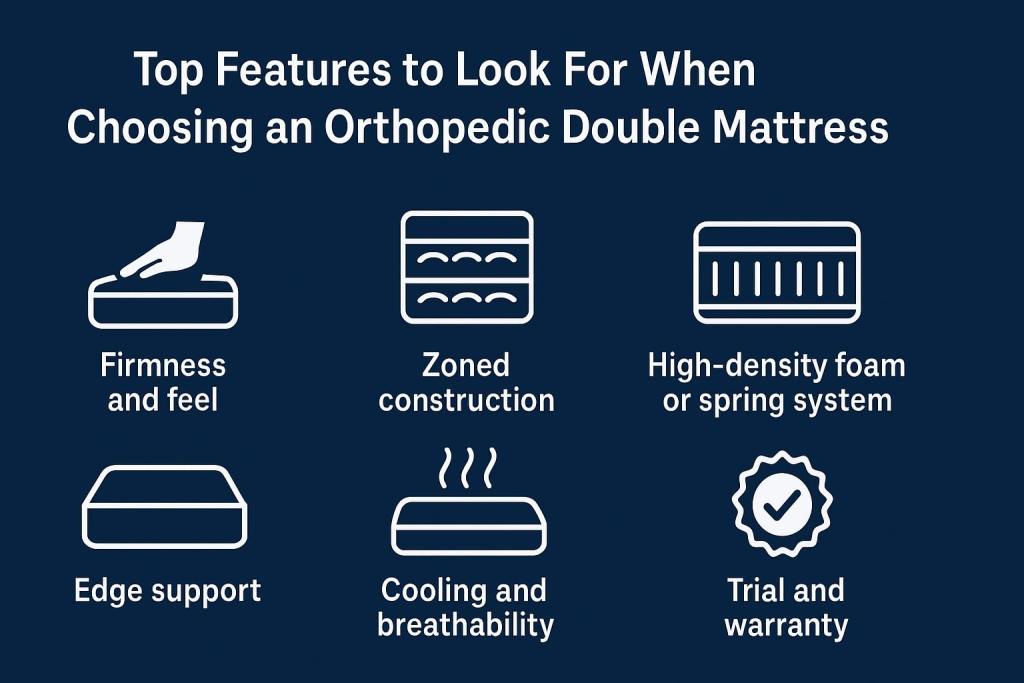
Top Features to Look For When Choosing an Orthopedic Double Mattress
orthopedic double mattress
When shopping for the best orthopedic double mattress, here are the features that make the biggest difference for couples:
Firmness and feel: A medium-firm to firm level often works best for couples. It balances comfort and orthopedic support.
Zoned construction: Look for mattresses that provide targeted reinforcement for areas like the hips and lower back.
High-density foam or spring system: These materials offer lasting shape and mattress firmness, ensuring both partners stay aligned.
Edge support: Prevents that “rolling off†feeling and provides stable sitting edges.
Cooling and breathability: Couples often generate more body heat, so breathable fabrics and gel-infused foams are ideal.
Trial and warranty: Always choose brands offering sleep trials and long warranties. It allows both partners to test the mattress thoroughly before committing.
Each of these features contributes to better mattress comfort and durability both essential for couples who want restful sleep and long-term value.
Recommended Orthopedic Double Mattresses for Couples
Below are three highly rated options that combine comfort, durability, and exceptional orthopedic support perfect for two sleepers.
1. Majestic 9000 Orthopedic Mattress – Firm and Supportive
If you and your partner prefer a firm sleeping surface, the Majestic 9000 delivers exactly that. This mattress features a multi-zone spring system with high-density foam that maintains spine alignment and reduces motion transfer. The breathable cover promotes airflow, making it suitable for warmer sleepers. Couples will appreciate its mattress firmness that ensures good posture and stability throughout the night.
2. Majestic 11000 Orthopedic Mattress – Extra Firm for Heavier Sleepers
For heavier couples or those who experience chronic back discomfort, the Majestic 11000 provides extra-firm orthopedic support. Its reinforced coils and thick comfort layers offer superior stability, especially at the edges. Despite its firmness, it doesn’t feel rock-hard the top layer provides just enough plushness for comfortable sleep while keeping the spine correctly aligned.
3. UK-Made Orthopedic Range – Medium-Firm Balance for Mixed Sleepers
The UK-Made Orthopedic Range is ideal for couples with different sleeping styles. The hybrid design combines springs for bounce and foam layers for contouring, giving a balance between firmness and flexibility. It’s particularly good for couples who share a double bed and want individualized comfort without separation.
These options have been chosen based on their performance, quality, and ability to meet the specific needs of couples. Whether you prefer a firm or medium-firm mattress, the right orthopedic double mattress can make a remarkable difference in how well you rest together.
Matching Firmness and Support to Your Sleep Style (for Couples)
Every couple is unique and so are their sleep styles. Finding the ideal orthopedic double mattress means matching firmness and support to how you both sleep.
Sleep Style Combination
Recommended Firmness
Reason
One partner side sleeper, other back sleeper
Medium-firm hybrid
Balances comfort for pressure points with spinal alignment
Both back sleepers
Firm mattress
Provides strong lumbar support and maintains good posture
Mixed weights (one light, one heavy)
Medium-firm with reinforced core
Prevents uneven sinking and keeps orthopedic support even
Both side sleepers
Medium firmness
Allows gentle contouring without losing support
The goal is balance not too soft to lose shape, and not too firm to feel uncomfortable. A good orthopedic double mattress adapts to both partners’ needs, maintaining mattress firmness while providing personalized mattress comfort.
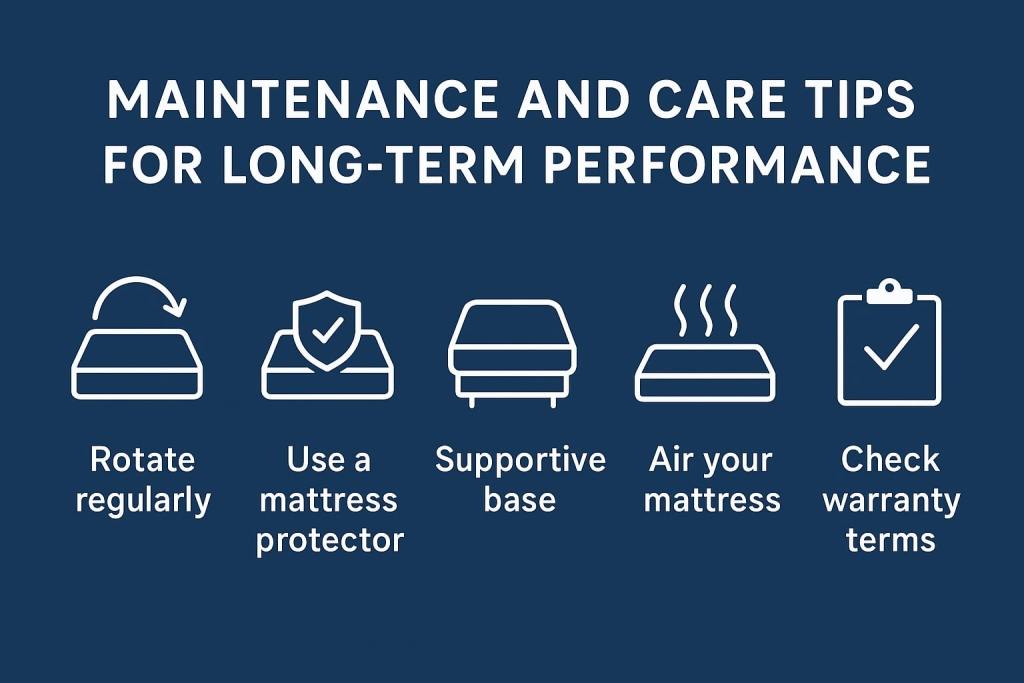
Maintenance and Care Tips for Long-Term Performance
orthopedic double mattress
To ensure your mattress continues to perform well for years, here are simple maintenance tips for couples:
Rotate regularly: If the design allows, rotate every 3–6 months to distribute the shared load evenly.
Use a mattress protector: Protects against spills, sweat, and the wear of daily use.
Supportive base: Always use a sturdy bed frame or double bed base that prevents sagging.
Air your mattress: Allow ventilation to reduce moisture and odor build-up.
Check warranty terms: Especially useful if one partner later feels the mattress is too firm or soft.
With regular care, your orthopedic double mattress will retain its comfort, support, and durability keeping both partners happy and well-rested for years.
Conclusion
A well-chosen orthopedic double mattress gives couples the perfect combination of therapeutic support and luxurious comfort. It helps align the spine, relieves pressure, and keeps movement to a minimum so you can sleep soundly beside your partner without compromise.
Instead of settling for a mattress that only satisfies one person, invest in one that caters to both of you. The right choice promotes good posture, consistent mattress firmness, and peaceful sleep every night.
When buying, focus on firmness balance, build quality, and orthopedic support. Take advantage of trial periods offered by trusted brands. After all, a restful night’s sleep together is the foundation of happier mornings. Explore our best supportive mattresses for couples that bring comfort.
FAQs
What type of mattress is best for combination sleepers?
Combination sleepers should look for a medium-firm orthopedic double mattress with hybrid construction. It offers the bounce of springs for easy movement and the contouring comfort of foam for pressure relief.
What kind of bed is best for sleep?
A sturdy double bed frame that provides solid base support is ideal. It prevents sagging and ensures your mattress maintains proper structure for maximum mattress comfort.
What is the difference between a mattress and an orthopedic bed?
An orthopedic bed usually refers to a bed frame or adjustable base designed for medical or posture support. An orthopedic double mattress, on the other hand, is a mattress engineered to provide spine alignment and pain relief through specialized materials.
Which type of mattress is best for sleeping?
A medium-firm orthopedic double mattress is often considered best for most couples. It offers balanced mattress firmness, proper orthopedic support, and overall comfort that helps maintain good posture while sleeping.
When it comes to getting the perfect night’s sleep, choosing the right mattress material can make all the difference. In the world of modern sleep technology, the debate of zero gravity foam vs memory foam is one of the most common and for good reason.
Both foams are designed to cradle your body and relieve pressure, but they work in slightly different ways. While memory foam has been a trusted favorite for years, zero gravity foam is the newer, more advanced contender that promises a lighter, more balanced sleep experience.
In this guide, we’ll break down the real differences between these two materials, focusing on comfort, support, durability, motion isolation, and temperature regulation foam performance helping you decide which one suits you best.
Understanding the Basics: Zero Gravity Foam vs Memory Foam
zero gravity foam vs memory foam
Let’s start with what makes each foam unique.
Foam Type
Core Feature
Sleeping Feel
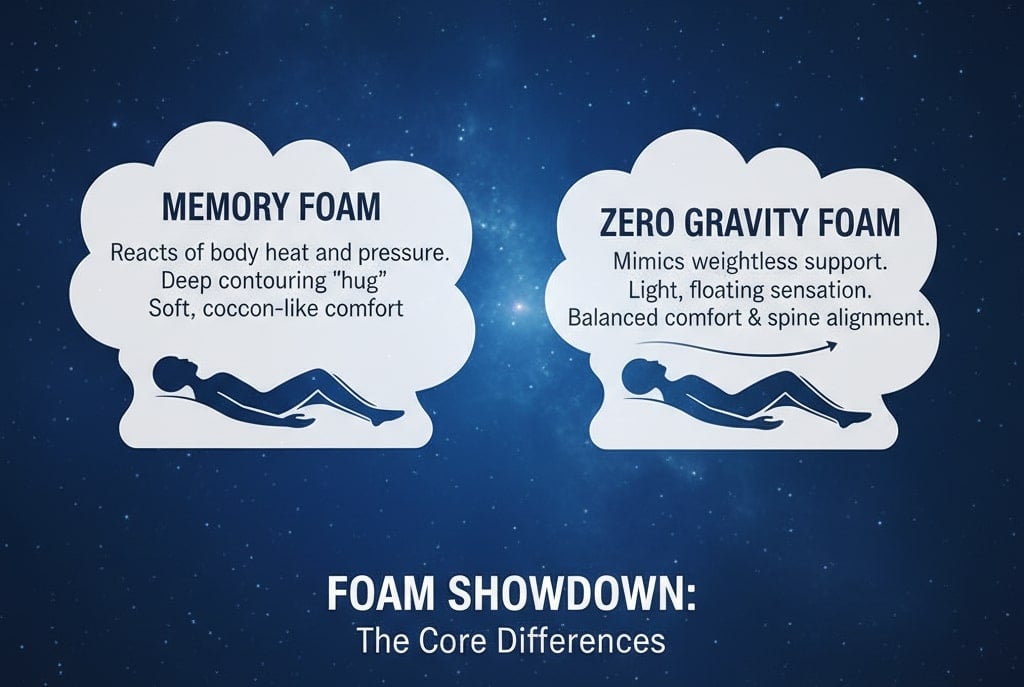
Ideal For
Memory Foam
Reacts to body heat and pressure
Deep contouring hug feel
People who like soft, cocoon-like comfort
Zero Gravity Foam
Designed to mimic weightless support
Light, floating sensation
Those who prefer balanced comfort and spine alignment
Memory foam molds closely to your body, which can feel cozy but may trap heat. In contrast, zero gravity foam uses adaptive technology to evenly distribute weight, reduce pressure, and enhance airflow creating a floating, supportive feeling.
This makes the zero gravity foam vs memory foam debate all about how you want your bed to feel snug and embracing, or buoyant and balanced.
Comfort and Pressure Relief
Both foams are designed for comfort, but the sensation differs:
Memory Foam: Known for its contouring comfort, it hugs the body and provides targeted support, making it great for people with joint pain. However, it can sometimes feel too soft or restrictive for combination sleepers.
Zero Gravity Foam: Offers excellent comfort without the “stuck†feeling. It supports natural body curves while distributing pressure more evenly, keeping your spine aligned.
When comparing zero gravity foam vs memory foam, many sleepers prefer zero gravity for its combination of pressure relief and mobility ideal if you toss and turn at night.
Support and Spinal Alignment
Proper spinal alignment is crucial for preventing pain and stiffness.
Memory foam can offer excellent lumbar support if it’s dense enough. However, lower-quality versions may sag over time.
Zero gravity foam, on the other hand, is engineered to maintain structural integrity and adaptive support even after years of use.
This makes a big difference in foam comparison UK tests, where durability and structure are key. Zero gravity foam tends to stay consistent longer, supporting posture and pressure points better over time.
Motion Isolation: For Couples Who Share a Bed
If you share your bed with a partner, motion isolation is an essential factor to consider.
Memory foam performs well in absorbing movement one partner can turn over without disturbing the other.
Zero gravity foam goes a step further by combining responsiveness with motion control. Its advanced layers absorb movement while maintaining a buoyant feel, so you get stability without that “sinking in†sensation.
In short, for couples comparing zero gravity foam vs memory foam, both deliver good motion control, but zero gravity foam adds that extra layer of balanced support.
Temperature Regulation and Breathability
zero gravity foam vs memory foam
Overheating at night can ruin even the most comfortable sleep. That’s why temperature regulation foam is now a major focus in mattress design.
Memory Foam: Traditional versions tend to trap body heat. Newer models add gel or open-cell structures for better cooling, but airflow can still be limited.
Zero Gravity Foam: Typically uses advanced open-cell technology or cooling layers that promote constant airflow, making it far superior for temperature regulation foam performance.
If you live in a warm climate or tend to sleep hot, zero gravity foam will likely keep you cooler and more comfortable.
Durability and Longevity
The foam comparison UK market has shown that longevity varies depending on material density and construction.
Foam Type
Average Lifespan
Durability Rating
Memory Foam
6–8 years
Moderate
Zero Gravity Foam
8–12 years
High
While memory foam can lose resilience over time, zero gravity foam tends to maintain shape and support for longer. The structure is more advanced and resistant to sagging giving it a longer practical lifespan.
In the zero gravity foam vs memory foam debate, zero gravity foam wins this round hands down for long-term performance.
Motion Comfort vs Floating Comfort: How They Feel
Let’s break down how each foam feels under your body:
Memory Foam: Deeply cradles your body, creating a “hugged†feeling. Great for side sleepers who need extra pressure relief.
Zero Gravity Foam: Makes you feel like you’re floating. It supports evenly without that sinking sensation, making it ideal for combination or back sleepers.
If you prefer sleeping “in†your mattress, go for memory foam. But if you want to sleep “on†it with a light, floating sensation, zero gravity foam will win you over.
Maintenance and Care
Caring for your mattress affects both comfort and longevity.
Memory Foam: Needs protection from moisture and occasional rotation.
Zero Gravity Foam: Requires similar care, but its structure resists compression better.
Simple zero gravity mattress care tips apply here too: use a breathable mattress protector, clean spills immediately, and rotate every 6 months for even wear.
For long-term durability, zero gravity foam has a clear edge due to its advanced material resilience.
Who Should Choose Which?
Here’s a quick guide to help you decide:
Your Sleep Style
Best Choice
Why
Hot sleeper
Zero Gravity Foam
Superior airflow and cooling
Side sleeper
Memory Foam
Excellent contouring comfort
Back sleeper
Zero Gravity Foam
Promotes spinal alignment
Couple
Zero Gravity Foam
Great motion control and balance
Budget-conscious
Memory Foam
Lower initial cost
When it comes to zero gravity foam vs memory foam, the right choice depends on your priorities whether it’s deep contouring comfort or light, balanced support.
Real-World Foam Comparison UK Insights
According to foam comparison UK reviews, customers report fewer complaints about sagging, overheating, and motion transfer with zero gravity foam than with traditional memory foam.
Sleep testers particularly praise the “floating†comfort of zero gravity models, saying it helps relieve joint pressure and reduce morning stiffness. The material’s innovation makes it ideal for people seeking a mix of support and breathability.
Pros and Cons
Feature
Zero Gravity Foam
Memory Foam
Comfort Feel
Floating, balanced
Deeply contouring
Support
Even spinal alignment
Targeted pressure relief
Motion Isolation
Excellent
Excellent
Temperature Regulation Foam
Superior airflow
Moderate
Durability
8–12 years
6–8 years
Cost
Higher
Lower
Ideal For
Couples, hot sleepers
Side sleepers, solo sleepers
Environmental and Health Aspects
zero gravity foam vs memory foam
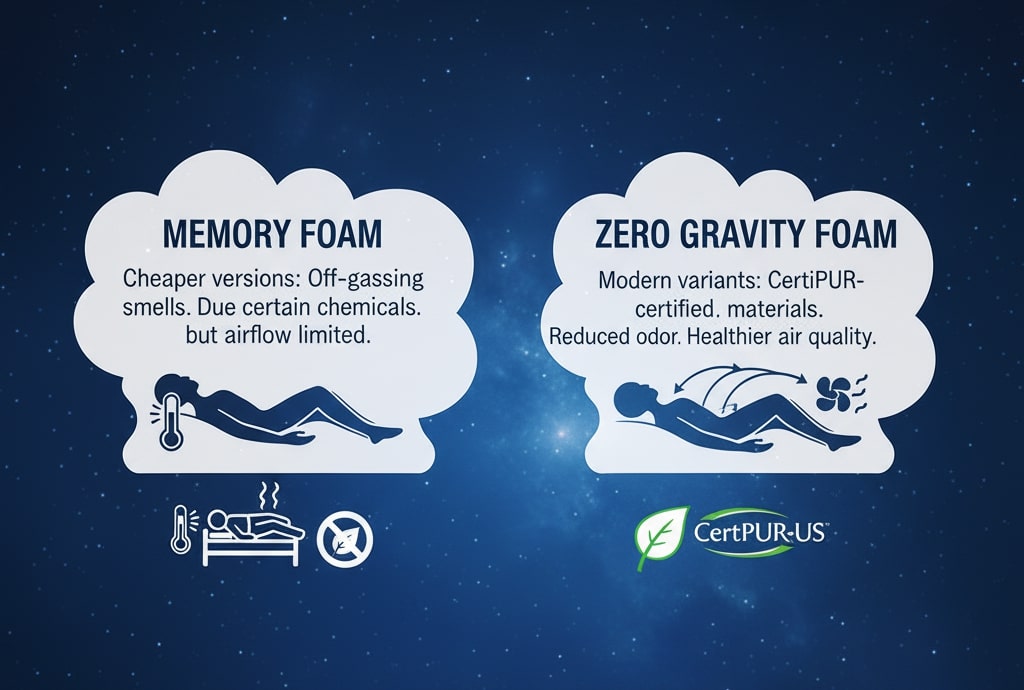
Both foam types are generally safe, but there are differences:
Memory Foam: Some cheaper versions may emit off-gassing smells due to certain chemicals used in production.
Zero Gravity Foam: Most modern variants are made with cleaner, CertiPUR-certified materials that reduce odor and promote healthier air quality.
Environmentally, zero gravity foam also tends to have better sustainability ratings thanks to improved manufacturing standards seen in recent foam comparison UK results.
Final Thoughts
After comparing all aspects comfort, support, cooling, and durability the winner in most categories is zero gravity foam.
It provides a perfect balance between softness and support, offers superior temperature regulation foam performance, and has excellent motion isolation for couples. While memory foam remains a solid choice for those who prefer a cozy, contouring sleep surface, zero gravity foam delivers a more modern and adaptive sleep experience.
So, in the zero gravity foam vs memory foam debate, your ideal pick depends on what you value more:
For cloud-like softness and deep body contouring, choose memory foam.
For cooler, balanced, long-lasting comfort, go for zero gravity foam.
Either way, investing in a quality mattress is investing in your health, posture, and peace of mind.
FAQs
Which lasts longer — zero gravity foam or memory foam?
Zero gravity foam generally lasts longer, with an average lifespan of 8–12 years, compared to 6–8 years for memory foam. Its advanced structure enhances mattress durability UK performance.
Does zero gravity foam sleep cooler than memory foam?
Yes. It’s designed as a temperature regulation foam, promoting better airflow and reducing heat buildup compared to traditional memory foam.
Is zero gravity foam better for back pain?
For many people, yes. It supports proper spinal alignment and evenly distributes pressure, helping reduce back and shoulder pain.
Do both foams offer good motion isolation?
Absolutely. Both materials minimize motion isolation, but zero gravity foam maintains more surface balance while isolating movement effectively.
Which foam is better value for money?
While memory foam is cheaper upfront, zero gravity foam’s superior durability and cooling make it a better long-term investment.
When buying a new bed, it’s easy to feel overwhelmed by the different sizes available. Among UK shoppers, one of the most common confusions is the difference between astandard double mattress and aking size mattress.
At first glance, the two may look similar but the differences in width, comfort, and room suitability can significantly affect your sleep experience. Understanding these distinctions helps you choose the size that fits your space, your body, and your lifestyle perfectly.
The Basics: UK Mattress Size Comparison
Let’s start with a clear breakdown of measurements according to official UK standards. For a full overview, see ourUK mattress size guide.
Mattress Type
Dimensions (cm)
Difference
Ideal For
Standard Double Mattress
135 × 190 cm
—
Couples or solo sleepers who want balanced comfort in mid-sized rooms.
King Size Mattress
150 × 200 cm
+15 cm wider, +10 cm longer
Taller individuals or couples seeking extra sleeping space and luxury comfort.
Quick Summary: A King mattress is 15 cm wider and 10 cm longer than a Double mattress, offering noticeably more room for two people to sleep comfortably without disturbing each other.
Understanding the Standard Double Mattress
Thestandard double mattress is the most popular size in UK households. Measuring 135 cm wide and 190 cm long, it offers an ideal middle ground between space efficiency and comfort.
Comfort Level Guide: Why People Choose a Double
Perfect for couples who don’t need excessive space.
Ideal for smaller bedrooms, typically 3m × 3m or less.
Affordable bedding and frame options are widely available.
Easier to move and rotate compared to larger mattresses.
Expert Insight: For couples who enjoy closeness or have smaller rooms, the standard double mattress remains a practical and cozy choice. However, it can feel snug for two people who toss and turn or prefer extra space for movement.
Understanding the King Size Mattress
A King size mattress measures 150 cm × 200 cm, giving you 10 cm more length (perfect for tall sleepers) and 15 cm extra width (for comfort and independence).
Comfort Level Guide: Why People Upgrade to a King
More personal sleeping space ideal for restless sleepers or couples with differing schedules.
Better comfort for tall individuals, as the 200 cm length prevents feet from hanging off.
Luxury sleeping experience, especially when paired with deeper, plush mattresses.
Adds an elegant, hotel-like presence to large bedrooms.
Expert Insight:
If your bedroom allows, upgrading to a King can transform your comfort level. It’s particularly beneficial for light sleepers who value space and reduced partner motion.
Key Differences Between a Standard Double and a King Size Mattress
Here’s a detailedUK bed size comparison covering dimensions, comfort, and room planning factors.
Feature
Standard Double
King Size
Difference
Dimensions
135 × 190 cm
150 × 200 cm
King adds 15 cm width + 10 cm length
Sleeping Space per Person
67.5 cm
75 cm
+7.5 cm more per person
Comfort Level
Moderate comfort for couples
Superior comfort and motion isolation
Best Room Size
3 × 3 m or smaller
3.6 × 3.6 m or larger
Bedding Availability
Widely available and affordable
Slightly costlier, luxury range
Aesthetic Presence
Compact and practical
Grand, luxurious, hotel-style
In essence, the King mattress provides that little bit of extra breathing room that makes a big difference for quality sleep especially when paired with adeep mattress built with high-end hybrid or orthopedic layers.
Room Size Advice: Choosing the Right Fit
Before buying, measure your bedroom carefully. The general rule: leave at least 60 cm of walking space around all sides of your bed.
For a Standard Double Mattress:
Recommended room size: minimum 3 m × 3 m.
Works well in medium or smaller bedrooms.
Allows space for side tables, storage, or small dressers.
For a King Size Mattress:
Recommended room size: minimum 3.6 m × 3.6 m.
Better for master bedrooms with generous walking clearance.
Ideal if you value a spacious, elegant layout.
If your bedroom feels cramped after placing a double, a King will likely overpower the space. Comfort should include room movement not just mattress dimensions.
Choosing between a standard double mattress and a King often comes down to how you sleep.
Solo Sleepers: A double feels generous for one person.
Couples: The King offers 15 cm more width, perfect for uninterrupted rest.
Tall Sleepers: If you’re over 6 ft, the King prevents your feet from hanging off.
Families & Pets: The King gives extra room to stretch without disruption.
Health and Posture Considerations
Both mattresses can support healthy posture when paired with quality materials, but depth and firmness differ slightly.
Double Mattress (135 × 190 cm): Best combined with medium-firm or orthopedic support.
King Mattress (150 × 200 cm): Allows advanced layering for better body contouring.
For more detail on ergonomic height and construction, visit ourmattress depth guide.
Price and Bedding Differences
While the standard double mattress remains budget-friendly, a King naturally costs more both for the mattress and accessories.
Category
Standard Double
King Size
Mattress Cost Range
£300 – £900
£500 – £1,500
Bedding Cost Range
£20 – £70
£30 – £100
Bed Frame Price
Lower
Slightly higher
Availability
Very common
Widely available but premium options dominate
The price gap reflects size, comfort layers, and the craftsmanship that defines brands likeLuxe Mattresses, where every model is engineered for lasting quality.
Style and Bedroom Aesthetic
Beyond comfort, mattress size also affects your room’s look and balance.
A standard double keeps proportions neat in smaller bedrooms, while a King enhances symmetry and luxury in spacious suites. For more visual guidance, see ourcomplete mattress and bed size chart.
Luxe Mattresses’ Perspective: Choosing the Perfect Size
AtLuxeMattresses.co.uk, we design every mattress to meet UK households’ real needs from compact doubles to grand King sizes.
Our Focus:
Ergonomic precision for perfect airflow and posture.
True UK dimensions for guaranteed frame compatibility.
Luxury layering with premium materials in 25–30 cm depth ranges.
When deciding between a standard double mattress and a King, consider your room proportions, sleeping habits, and comfort expectations.
Final Thought
The choice between a standard double mattress and a King size mattress depends on your space, comfort, and lifestyle. If you value practicality, the double is ideal; if you seek indulgence, the King transforms your nights into a luxury experience.
AtLuxeMattresses.co.uk, every mattress whether double or King is handcrafted to UK specifications for balance, durability, and design.
For more detailed guidance, explore our related guides:
When most people buy a mattress, they focus on size or firmness but the depth of a mattress is just as important. Yourstandard mattress depth doesn’t only affect comfort, it influences how your bedding fits, how easily you get in and out of bed, and even the visual balance of your bedroom. In the UK, mattresses come in several thickness options. UnderstandingUK mattress thickness standards helps you choose a bed that feels comfortable, fits your bedding, and suits your lifestyle perfectly.
Understanding Mattress Depth: What Does It Actually Mean?
A mattress’s depth, sometimes called height or thickness, refers to the distance from its top surface to its bottom edge. It is typically measured in centimetres (cm) in the UK.
This dimension might seem minor, but it directly impacts:
Support and durability: Deeper mattresses often contain more layers for better comfort.
Temperature control: A thicker mattress can retain more heat depending on materials used.
Ease of use: Getting in and out of bed becomes easier or harder depending on total height.
Generally, most UK mattresses range from 20 cm to 30 cm deep, though certain luxury or orthopedic designs can go up to 35 cm or more.
Mattress Type
Common Depth
Typical Comfort Level
Budget Foam Mattress
15–20 cm
Light, portable, ideal for guest or kids’ beds
Hybrid Mattress
23–28 cm
Balanced support and airflow
Memory Foam Mattress
25–30 cm
Deep contouring comfort
Orthopedic Mattress
25–35 cm
Firm, targeted spinal support
So when you’re comparing models, don’t just look at the feel and consider howmattress thickness shapes your overall sleep experience.
Why Mattress Depth Matters More Than You Think
1. Proper Bedding Fit Depth
Your fitted sheets, protectors, and toppers are designed with a specific bedding fit depth in mind.
If your mattress is too thick, standard sheets might pop off the corners.
If it’s too thin, the sheets may look loose and wrinkled.
To get a perfect fit:
Mattresses up to 20 cm = “shallow†fitted sheets.
Mattresses 20–28 cm = “standard†fitted sheets.
Mattresses 28 cm or more = “extra-deep†fitted sheets.
Matching your bedding fit depth not only makes your bed look neater but also keeps your mattress protected and hygienic.
2. Comfort and Ergonomics
Your standard mattress depth also affects your comfort height standard, the total height of your bed once the mattress is placed on the frame.
For most adults, the ideal bed height (from the floor to the top of the mattress) is between 55 cm and 65 cm. This height aligns naturally with the knees, making it easy to sit down and stand up.
A too-low bed can strain your back and knees.
A too-high bed can make it difficult for shorter individuals to get on comfortably.
So, when choosing your mattress, consider your own height, your bed frame, and your mobility.
3. Aesthetic and Bedroom Design Balance
The right depth also plays a big role in your bedroom’s appearance. A tall, plush mattress can make a bed look luxurious and inviting, ideal for traditional or classic interiors. On the other hand, a slim profile mattress suits a minimalistic, modern aesthetic especially when paired with a low-platform bed.
Your comfort height standard should feel balanced high enough to look premium but not so tall that it overwhelms the bed frame.
What Is the Standard Mattress Depth in the UK?
In the UK, the standard mattress depth generally falls between 23 cm and 28 cm, with 25 cm being the most common average.
This measurement isn’t a strict rule, but rather an industry average designed to fit mostUK bed frames and sizes.
Mattress Profile
Depth Range
Common Use Case
Low Profile
≤ 20 cm
Guest rooms, bunk beds, kids’ rooms
Standard Profile
20–28 cm
Everyday UK mattresses
Deep Profile
28–35 cm+
Luxury, orthopedic, and hotel-grade mattresses
Choosing within this range depends on your personal preference and how your mattress interacts with the rest of your bedroom setup.
Mattress Depth by Material and Construction
Each type of mattress construction brings its own typical depth. Let’s explore how material composition influences overall mattress thickness.
Memory Foam Mattresses
Usually 25–30 cm thick, these have multiple layers of foam that mould to your body. The extra depth allows better contouring for joints and spine support.
Pocket Spring Mattresses
Typically 22–28 cm deep. The coil structure requires space for springs, padding, and fabric layers.
Hybrid Mattresses
Around 25–30 cm deep. They combine coils and foam for comfort and resilience, making them ideal for couples with different sleep preferences.
Latex Mattresses
Ranging from 20–25 cm. Natural latex provides firm support and bounce, even at moderate depths.
Orthopedic Mattresses
The thickest category, often 25–35 cm. These are built for posture alignment and spinal care, using dense foam and reinforced springs.
Matching Mattress Depth With Bed Frame Types
Your bed base or frame also affects what mattress depth will feel right.
Here’s a quick compatibility guide for common UK bed types:
Bed Frame Type
Ideal Mattress Depth
Reason
Divan Base
25–28 cm
Creates perfect overall height and even edge support
Platform Bed
20–30 cm
Works well with most depths; modern low design
Ottoman Storage Bed
20–25 cm
Makes lifting mechanism easier
Adjustable Bed
≤ 25 cm
Allows smooth bending and flexibility
Canopy or Four-Poster
25–30 cm
Complements taller, luxury setups
Checking your frame height and depth compatibility before buying can save you from bedding frustrations later. For full dimensions by size category, see ourUK mattress size guide.
How to Measure Your Mattress Depth Correctly
To avoid confusion when buying bedding or a replacement mattress:
Remove all sheets and toppers.
Use a measuring tape from the bottom seam (where it touches the base) to the top edge.
Round to the nearest centimetre.
Add any topper height if you plan to use one regularly.
For instance, a 25 cm mattress plus a 5 cm topper means your bedding should fit 30 cm deep.
The Relationship Between Depth and Support
Many people assume that the deeper a mattress is, the better it performs but that’s not always true. Quality of materials matters far more than centimetres.
A good 25 cm hybrid mattress with high-density foam and pocket springs will outperform a 35 cm mattress made with low-quality foam.
Depth contributes to:
Layer stability: Thicker beds have room for comfort and transition layers.
Edge support: A deeper mattress can hold weight better at edges.
Motion isolation: More layers often mean less motion transfer between partners.
However, going beyond 35 cm doesn’t necessarily improve comfort; it can make bedding harder to find and raise your sleeping surface uncomfortably high.
How Luxe Mattresses Engineers the Perfect Depth
AtLuxeMattresses.co.uk, every model is carefully designed around UK comfort height standards.
We focus on:
Balanced support: Combining the right number of layers within 25–30 cm depth.
Easy bedding fit: All our mattresses align with standard and extra-deep fitted sheets available in the UK.
Luxury feel: Premium quilting and foam density to create a plush yet stable surface.
This attention to standard mattress depth ensures your purchase fits seamlessly into your bedroom aesthetically and ergonomically.
Practical Buying Tips for the Right Mattress Depth
Measure your bed frame height before purchase. Combine it with the mattress depth to maintain an overall bed height of about 60 cm.
Check bedding specifications. Choose fitted sheets that fit 2–3 cm deeper than your actual mattress.
Consider your mobility. If you struggle to climb onto taller beds, stay closer to the 20–25 cm range.
Account for toppers or protectors. They add a few centimetres that can alter bedding fit.
Balance comfort and practicality. The deepest mattress isn’t always the best find your sweet spot between comfort and usability.
“Thicker mattresses are always softer.†Not necessarily. Firmness depends on foam density and coil tension, not just depth.
“All UK mattresses have the same depth.†Incorrect. While 25 cm is standard, variations exist based on materials and design.
“Extra-deep sheets fit all beds.†They can look baggy on thinner mattresses, so match sheet depth to mattress size.
Final Thought
Choosing the right standard mattress depth is about more than measurements; it’s about matching comfort, practicality, and style. The correct UK mattress thickness ensures your bedding fits neatly, your posture stays supported, and your bed looks beautifully proportioned.
Whether you prefer a low-profile minimalist bed or a luxurious hotel-style setup, always aim for harmony between mattress depth, frame height, and bedding design.
For precision-crafted comfort and perfectly balanced comfort height standards, explore the exclusive range atLuxeMattresses.co.uk where every mattress is built to fit both your sleep and your style.
Shopping in the UK for a queen size bed mattress starts with clarity on sizes and measurements. “Queen size†is an Americansize term (≈152×203 cm); the closest UK everyday option is King size at 150×200 cm, a small difference that matters for sheets, bed frame fit, and room planning. Our guide maps common intents like mattress queen size measurements, mattress size for queen bed, and queen vs king mattress measurements, then compares UK, European, and US dimensions at a glance.
Use the UK bed & mattress size guide to review different mattress sizes from Small Single to Emperor, including double mattress dimensions UK, super king size mattress dimensions UK, and a quick king size mattress size chart. A practical checklist covers sleeper height, sharing with a partner, available space, and bed mattress measurements. For frames, confirm internal dimensions, style overhang, and mattress depth; rotate (and flip if double-sided) for lasting support. Need flexibility? Consider zip and link or adjustable bases.
Where to buy: compare national retailers, specialists, department stores, and online shops with trials and clear return policies. Prefer buying online? Shortlist transparent sites likeLuxe Mattresses (handy size filters and policies). Finally, verify access (doors, staircases), confirm delivery windows, keep packaging, and test during the trial. Result: the right king bed size in cm, correct dimensions of a king size mattress, and confident, comfortable sleep.
Introduction
If you’re in the market for a new mattress or bed, the size is one of the most important factors to get right. This guide distills expert advice on UK measurements, clears up the UK vs European differences, and shows you where to shop, online and in-store, with zero confusion about bed frames or returns. We’ll also map common questions (like mattress queen size measurements and mattress size for queen bed) to practical, real-world decisions so you can buy once and sleep well.
Quick UK Reality Check — What Does “Queen Size†Mean Here?
In the UK, “Queen size†is not a standard size term. It’s an American label measuring ≈ 152 × 203 cm (60″ × 80″). The closest everyday UK option is King size, which is 150 × 200 cm (5’0″ × 6’6″). That’s a tiny difference in measurements, but it matters for fitted sheets, frames, and room space. If you’ve lived in Europe or shopped at EU retailers before, note that European King is usually 160 × 200 cm, again, close, but not identical.
Compare at a glance (Tip Box):
Label
Width × Length
US Queen
152 × 203 cm
UK King
150 × 200 cm
EU/European King
160 × 200 cm
Use these to answer common queries like queen vs king mattress measurements, king vs queen mattress dimensions, what size is a king size mattress and what size is a king size bed. If you need the exact dimensions of a king size bed or dimensions of a king size mattress, the UK standard is 150 × 200 cm for the mattress; the bed frame around it may add extra centimetres depending on style.
Key sentence: “Queen size†is American (≈ 152 × 203 cm); the closest UK everyday option is King size (150 × 200 cm).
UK Bed & Mattress Size Guide
The table below summarises mattress sizes and bed sizes used in the UK, with measurements in both metric and imperial. Use this as your reference “size rules†sheet before you buy a bed frame or linens.
This section neatly answers searches like different mattress sizes, different size mattress dimensions, double mattress dimensions UK, standard double mattress dimensions UK, UK standard double bed size, double bed size, size of double bed mattress, mattress size of double bed, dimensions for double bed mattress, and 3/4 bed mattress dimensions. For bigger formats, you’ll also cover super king size mattress dimensions UK, king mattress size in centimeters, kingsize bed dimensions, kingsize mattress measurements, and any king size mattress size chart needs.
European note:European frames (e.g., some IKEA lines) assume European mattresses, often 140 × 200 (Double), 160 × 200 (King), 180 × 200 (Super King). Always match the bed frame label to the mattress dimensions to avoid gaps or tight fits.
How to Choose Your “Queen-Equivalent†in the UK (Checklist)
Use this fast checklist to weigh key factors, room and space, height, sleepers (solo or partner), comfort preferences, and support, then choose with confidence.
Who is it for? Solo sleepers, couples, or families that co-sleep?
Couples often favour King for motion isolation and width.
Taller sleepers benefit from 200 cm length.
How tall are you? If you’re tall, that extra length (200 cm in King and above) matters for leg comfort.
How wide do you need?
How wide is a king size bed?150 cm.
Width of a king size bed / what width is a king size bed? Same answer: 150 cm usable mattress width.
Will you share the bed? Two adults sleep better with at least King width; Super King adds breathing room and reduces disturbance.
Room & layout constraints Measure wall spans, radiators, skirtings, door swings. Leave circulation width (ideally 60–90 cm) on each side.
Bed frame compatibility Check the bed mattress measurements against internal frame measurements; slatted frames sometimes run tight at the corners.
Personal comfort & support Combine size with your preferred firmness and materials (springs, foam, hybrid) for the right pressure relief.
Special cases
Regular mattress size and individual mattress size needs (e.g., for caravans, box rooms) may require custom cuts or “shorty†lengths.
Mobility or access concerns? Consider zip-and-link pairs to assemble in the room.
If your goal is the Queen (US) feel in Britain, shortlist the King (150 × 200 cm) and confirm door/stair access before ordering.
Bed Frame Compatibility & Depth (Avoid Costly Returns)
The right bed frame can make or break your purchase. A divan base matches the mattress footprint exactly, while wooden/metal frames and fabric bed frames add thickness at the edge (headboard/footboard), which affects room clearance. Always verify dimensions and mattress depth together.
Measure internal platform size: Frame cavities must match the nominal mattress width/length, don’t assume labels alone.
Allow for head/foot design: Roll-top or sleigh frames push the bed outward, stealing hallway space. Mind mattress depth: Deeper profiles feel luxurious but may require deep-pocket sheets.
Rotation and flipping: Regular rotating and occasional flipping (if double-sided) help foams and fillings settle evenly.
This is where buyers usually ask: what are the dimensions of a king size mattress? (150 × 200 cm in the UK), king size mattress measurements, king size measurements mattress, and mattress size king compared to Double or Super King. Keep those figures handy to cross-check with the frame spec sheet.
Practical tip:Before pairing any queen size bed mattress with a statement frame, confirm the frame’s internal deck size and the overall footprint once the headboard and footboard are attached.
Where to Buy in the UK
Different shopping channels suit different needs. Use the pros/cons below to match your situation.
National & Regional Mattress Retailers (In-Store Trials)
Value: Real-world lie-down tests, quick advice from trained staff, removal of old mattresses, and set delivery dates.
Best for: People who need to feel before they buy, couples tuning comfort preferences, or anyone unsure about firmness.
Specialist Mattress Stores
Value: Deeper expert support, more nuanced materials discussion (springs vs foams vs hybrids), and targeted solutions for sleepers with back or shoulder issues.
Best for: Shoppers with specific requirements who want detailed support and personalised recommendations.
Department & Furniture Stores (One-Trip Shopping)
Value: Match bed frame + mattress + linens in a single visit.
Best for: Coordinated room design and people who want to see full setups and style in context.
Online-Only Mattress Retailers (Trials & Returns)
Value: Transparent sizing information, comparison tools, generous home trials, and time-slot deliveries.
How to do it well:
Double-check the measurements (cm and inches) before checkout.
Confirm the return window, packaging rules, pick-up process, and refund timelines.
Look for clear size filters for King/Double/Super King and sheet depth options.
If you prefer to buy online, consider shortlisting a retailer with clear UK sizing and an easy trial/returns flow. A natural example is Luxe Mattresses for UK-standard sizes and straightforward product pages that emphasise measurements and care details, useful when you want to compare options without leaving home.
Across all four channels, you’ll naturally answer questions like what size is king size, what size is a king bed mattress, what size are king size beds, king sized beds sizes, mattress queen size measurements, mattress size for queen bed, king bed size in cm, and king mattress size in centimeters.
Micro-Checklist before you pay:measurements, room plan, access route, bed frame match, depth, return window.
Who Each Common UK Size Suits (Use-Case Mini-Guides)
Small Single (75 × 190 cm): Great for children and very narrow rooms; keeps floor space free for desks or wardrobes.
Single (90 × 190 cm): A solid guest or teen option; budget-friendly; fits most spare rooms.
Small Double (120 × 190 cm): “Three-quarter†width; cosy couples or sprawly teens in medium rooms.
Double (135 × 190 cm): The UK staple. Works for couples who don’t mind close quarters, or for solo sleepers who want elbow room.
King (150 × 200 cm): Popular with couples for extra leg room and less motion transfer; nicer for taller sleepers.
Super King (180 × 200 cm): Family-friendly width; ideal if young kids join in the mornings; excellent comfort levels.
Emperor (200 × 200 cm): A popular riser in large homes; impressive features and a true statement bed.
These mini-guides address the intent behind queries like how big is a king size bed, what is king size bed size, what is the size of a king size bed, and what size is a king size bed. For couples seeking a queen size bed mattress equivalent without importing US dimensions, UK King is the right starting point.
Access, Delivery & Returns (Don’t Skip This)
Access is the silent deal-breaker. Measure staircases, landings, tight turns, and door widths; older houses often have narrow passages. For very large items (like Super King and Emperor), consider two long single zip-and-link; they travel easier and assemble perfectly on the base.
Delivery day: Clear the route, protect corners, and agree time windows.
Returns: Photograph packaging as you open; keep bags/boxes until you’ve decided to keep the mattress.
Trial periods: Use them,sleep for multiple nights before judging.
This is where people ask king size mattresses how big and king size mattress size dimensions, those details also help estimate manoeuvring space. Getting a queen size bed mattress up narrow stairs? If in doubt, ask the retailer about split bases, rolled deliveries, or installer assistance.
FAQ’s
Is there a UK “Queen†size, what should I buy instead?
No standard UK “Queen.†In the UK, the closest match is King (150 × 200 cm). The American “Queen†is ≈ 152 × 203 cm, a touch wider/longer. (See also: queen vs king mattress measurements.)
What are UK King dimensions in cm and feet?
150 × 200 cm, which is 5’0″ × 6’6″, the standard UK Kingmeasurements. (Related: king bed size in cm, king mattress size in centimeters, and what are the dimensions of a king size mattress.)
Will a UK King mattress fit my existing bed frame?
Check the bed frame’s internal dimensions first. Divan base = same footprint as the mattress; framed beds add bulk at the edges. (See also: what width is a king size bed and width king size mattress.)
What if I want “Queen feel†but less room space?
Consider Small Double or Double depending on sleepers and room. (double bed mattress size, plus note that “double mattress size†is a common misspelling, stick to “mattress†in your copy.)
How deep should my mattress be and do sheets matter?
Depth affects profile and sheet fit. Deep-pocket sheets may be needed for taller profiles; rotate (and flip if double-sided). This ties to understanding your regular mattress size needs for bedding.
Conclusion
Finding the right queen size bed mattress in the UK isn’t complicated when you understand the differences between American, UK, and European mattress sizes. Since “Queen size†isn’t a standard British size, most UK shoppers will find the King (150×200 cm) to be the perfect equivalent, balancing comfort, support, and space efficiency. Always verify measurements, ensure bed frame compatibility, and consider mattress depth for the best long-term comfort.
For a smooth buying experience, compare different mattress sizes, explore in-store trials, and check online retailers with clear size charts and return policies. If you’re purchasing online, Luxe Mattresses offers a reliable UK-based platform with detailed sizing information, flexible trials, and premium comfort options. With accurate dimensions of a king size mattress, you’ll confidently choose a size that fits your room and sleep style, bringing home better rest and value.
For side sleepers, the right mattress can mean the difference between waking up refreshed and waking up sore. If you’re someone who spends most of the night curled on your side, a zero gravity foam mattress could be your best solution yet.
Engineered to provide contouring comfort, deep pressure point relief, and superior shoulder support foam, this next-generation sleep technology is quickly becoming the top pick for side sleepers everywhere.
Let’s explore why the zero gravity foam is making waves in the sleep industry and how it can help you rest in perfect balance.
What Is Zero Gravity Foam for Side Sleepers?
At its core, zero gravity foam is designed to replicate a weightless sleeping experience the same concept used in NASA’s zero-gravity posture. This posture keeps your body in perfect alignment, with minimal stress on joints and muscles.
For side sleepers, who often face shoulder and hip pressure, this design is a game-changer. Unlike traditional foam that compresses unevenly, zero gravity foam evenly distributes body weight while maintaining softness where you need it most.
The result? A floating, cradled sensation that supports your curves and eliminates morning stiffness.
Why Side Sleepers Need a Special Mattress?
Sleeping on your side is one of the healthiest positions it supports digestion, promotes spinal alignment, and can reduce snoring. But it also creates unique pressure points on the shoulders and hips.
That’s why side sleepers need:
Adaptive contouring comfort
Deep pressure point relief
Targeted shoulder support foam
Traditional mattresses often fail here, either being too firm (causing discomfort) or too soft (leading to misalignment). Zero gravity foam for side sleepers solves both issues perfectly.
The Science Behind Zero Gravity Foam
Let’s understand how zero gravity foam for side sleepers works scientifically.
Feature
Function
Benefit to Side Sleepers
Pressure Equalization
Spreads body weight evenly
Prevents shoulder & hip pain
Contouring Comfort
Adapts to natural body curves
Enhances spinal alignment
Temperature Regulation
Open-cell structure enhances airflow
Keeps you cool throughout the night
Motion Isolation
Minimizes partner disturbance
Ensures undisturbed sleep
Shoulder Support Foam
Reinforced zones around upper body
Provides extra cushioning
This balance of softness and stability makes zero gravity foam for side sleepers the most innovative solution for personalized comfort.
Zero Gravity Foam vs. Regular Memory Foam
Wondering how zero gravity foam for side sleepers differs from traditional memory foam? Let’s compare.
Feature
Zero Gravity Foam for Side Sleepers
Traditional Memory Foam
Support Level
Adaptive and balanced
Often too soft or rigid
Contouring
Precise and responsive
Slow to adjust
Temperature Control
Advanced airflow design
Tends to trap heat
Pressure Point Relief
Excellent
Moderate
Durability
10–12 years
6–8 years
Shoulder Support Foam
Integrated zones
Basic padding only
Clearly, the zero gravity foam for side sleepers offers superior innovation and long-term comfort.
How Zero Gravity Foam Promotes Healthy Side Sleeping?
If you prefer sleeping on your left or right side, the zero gravity foam for side sleepers has specific benefits that improve both comfort and health:
1. Perfect Spinal Alignment
It supports the natural curve of your spine, keeping your head, neck, and hips in balance.
2. Pressure Point Relief
It gently cushions the shoulders and hips, where most side sleepers feel discomfort.
3. Enhanced Shoulder Support Foam
Targeted zones in the upper portion prevent shoulder compression ideal for those who wake with sore arms.
If you share your bed, the foam isolates movement so you won’t feel your partner tossing or turning.
All these features combine to make zero gravity foam a truly next-level sleep experience.
Key Benefits of Zero Gravity Foam for Side Sleepers
Benefit
How It Helps
Pressure Relief
Eases discomfort on hips and shoulders
Spinal Alignment
Promotes better posture
Enhanced Comfort
Cradles your curves without sinking
Cooling System
Prevents overheating
Durability
Maintains structure for years
Every feature in zero gravity foam aims to enhance long-term health and comfort especially for those struggling with chronic back or shoulder pain.
The Role of Pressure Point Relief in Side Sleeping
Pressure point relief is one of the most important aspects of side-sleeping comfort. Since your body weight presses heavily on fewer points (mainly the hips and shoulders), regular mattresses often cause strain or numbness.
The zero gravity foam for side sleepers eliminates these hotspots by evenly dispersing body weight. This not only reduces pain but also promotes better blood circulation allowing you to wake up energized instead of sore.
It’s this unique pressure point relief mechanism that has made zero gravity foam a favorite among health-conscious sleepers.
Shoulder Support Foam The Secret Weapon
For side sleepers, shoulder comfort can make or break sleep quality. The shoulder support mattress layer in zero gravity for side sleepers ensures your upper body gets extra cushioning without sinking too deep.
This tailored zone provides:
Pain-free shoulder rotation
Proper pressure absorption
Relief for people with shoulder stiffness or frozen shoulder
That’s why physical therapists and sleep specialists often recommend shoulder support foam in zero gravity mattresses to patients dealing with chronic shoulder or neck pain.
How Zero Gravity Foam Improves Sleep Quality?
Zero gravity foam isn’t just about support it’s about transforming the way you rest.
Here’s how it upgrades your sleep:
Reduces tossing and turning
Prevents heat buildup
Promotes relaxation through contouring comfort
Provides continuous body alignment
Ensures you wake up refreshed every morning
When used consistently, zero gravity foam for side sleepers helps your body recover faster and reduces fatigue.
Real-Life Benefits What Users Report?
Users who switched to zero gravity foam for side sleepers often report:
Before
After Switching
Sore shoulders and hips
Noticeable pressure point relief
Frequent waking
Continuous, deep sleep
Sweaty nights
Cooler, more breathable experience
Stiff mornings
Relaxed, pain-free muscles
The improvement in comfort and rest is so noticeable that many say they can’t go back to traditional mattresses again.
How to Choose the Best Zero Gravity Foam for Side Sleepers?
Before investing in one, make sure you choose a high-quality zero gravity foam for side sleepers mattress.
Things to Look For:
Firmness: Medium to medium-soft is ideal.
Materials: Ensure the mattress includes shoulder support foam.
Breathability: Choose models with gel-infused or ventilated designs.
Warranty: Minimum 10 years for long-term use.
Trial Period: A 100-night trial helps you decide if it suits your comfort needs.
A little research ensures you get the right contouring comfort for your unique sleep style.
Is Zero Gravity Foam Worth It?
Absolutely. While zero gravity foam for side sleepers may cost a bit more than traditional options, the benefits better alignment, deeper rest, and long-term health make it a worthwhile investment.
You’re not just buying a mattress; you’re buying quality sleep, pain-free mornings, and total comfort.
Care Tips for Zero Gravity Foam Mattresses
To extend the lifespan of your zero gravity foam for side sleepers:
Use a breathable, waterproof cover.
Rotate every 6 months.
Keep it on a solid or slatted base.
Avoid harsh cleaners; spot clean gently.
Proper maintenance ensures your mattress performs at its best for years.
Conclusion
When it comes to comfort, alignment, and pressure-free rest, the zero gravity foam for side sleepers is in a league of its own.
Offers pressure point relief for hips and shoulders
Includes shoulder support foam for balanced cushioning
Provides exceptional contouring comfort
Maintains cool, breathable sleep
Promotes pain-free mornings and full-body recovery
If you’re a side sleeper searching for the ideal blend of support and softness, the zero gravity foam for side sleepers is truly the perfect match.
FAQs
What makes zero gravity foam ideal for side sleepers?
Its design provides even pressure point relief and contouring comfort, perfectly supporting the hips and shoulders.
Does zero gravity foam include shoulder support?
Yes, high-quality models feature shoulder support foam zones to cushion the upper body and prevent stiffness.
How long does a zero gravity foam mattress last?
Typically 8–12 years, maintaining excellent support and comfort for side sleepers.
Is zero gravity foam too soft for side sleepers?
No. It offers balanced firmness that adapts to your body while preventing deep sinking.
Can zero gravity foam help with shoulder or hip pain?
Absolutely. Its pressure point relief and ergonomic design are especially effective for reducing pain in these areas.