

100-Night Trial · Refund to night 60 · Exchange to night 100
Free Nationwide Delivery
Covered by Our Own Warranty
Call us at: 020 4572 5122
0% APR Finance Available
Can Blue Light Actually Delay Your Sleep? Here's What the Science Says
March 18, 2026

Can Blue Light Actually Delay Your Sleep? Here’s What the Science Says

We’ve all been there, scrolling through our phones late into the evening or falling asleep to a glowing screen. It’s convenient, even comforting. But the question is becoming harder to ignore: can blue light really affect your sleep?

As science continues to explore the relationship between light, hormones, and the brain’s internal clock, the evidence is increasingly clear. Blue light, particularly from screens, has a measurable impact on sleep quality, and it starts with how it interferes with your body’s natural rhythms.

This article breaks down how blue light disrupts your sleep cycle, the role of melatonin suppression, and what practical steps you can take to protect your rest in today’s screen-saturated world.

First, What Is Blue Light?

Blue light is a high-energy, short-wavelength form of visible light that sits close to ultraviolet on the spectrum. It’s naturally present in sunlight and plays an important role in regulating your circadian rhythm, the internal clock that tells you when to feel awake and when to wind down.

But here’s the twist: while blue light during the day helps keep you alert and focused, exposure to it at nightsends mixed signals to your brain, often making it harder to fall asleep.

Screens, whether from your mobile, tablet, TV, or even LED lighting, emit a significant amount of blue light. And with rising screen time before bed, the effect is becoming a widespread issue.

How Your Body Knows When It’s Time to Sleep?

The key player here is melatonin, a hormone your brain produces in response to darkness. It helps signal that it’s time to wind down. Once melatonin levels rise, your body starts preparing for rest: your temperature drops, your mind slows, and sleep becomes more inviting.

However, blue light tricks the brain into thinking it’s still daytime. As a result, melatonin production slows or stops, making it more difficult to fall asleep naturally.

According to the NHS, consistent evening exposure to artificial light can shift your internal clock by up to two hours. That means later bedtimes, more fragmented sleep, and groggy mornings.

What the Science Actually Says About Blue Light and Sleep

This isn’t just theory. A growing body of research backs up the link between blue light exposure and poor sleep outcomes.

One of the most cited studies, published in the journal Proceedings of the National Academy of Sciences, compared people who read from screens before bed with those who read printed books. The screen readers:

  • Took longer to fall asleep
  • Had less REM sleep
  • Produced less melatonin
  • Felt less alert the next morning

The science here is fairly straightforward: blue light delays sleep onset, disrupts your circadian rhythm, and reduces sleep depth. Over time, it can even contribute to long-term sleep disorders and mood issues.

Screen Time Before Bed: The Modern Sleep Saboteur

You don’t have to be a scientist to observe the impact. Try this: go screen-free for an hour before bed and see how you feel. Most people notice:

  • They fall asleep faster
  • Their mind is quieter
  • Their sleep feels deeper

That’s because you’re allowing your natural melatonin rhythm to rise, uninterrupted.

Yet for many, screen time before bed has become routine, whether it’s TV, TikTok, or endless news articles. The cumulative effect? Wired brains, disrupted rhythms, and the growing sense that, even after sleep, you’re not fully rested.

How Blue Light Affects Your Circadian Rhythm

The circadian rhythm is like your body’s 24-hour internal operating system. It governs everything from energy levels to hormone release. Light exposure, especially blue light, is one of the main signals it responds to.

When blue light shows up at the wrong time (i.e. night):

  • It delays melatonin release
  • It shifts your sleep-wake cycle
  • It reduces time spent in deeper sleep stages
  • It can lead to sleep apnoea

In other words, even if you’re getting the right number of hours in bed, the quality of that sleep may suffer.

Over time, this misalignment can lead to social jet lag, that groggy feeling on workdays that disappears at weekends, as well as reduced concentration, irritability, and lower resilience to stress.

What Happens When Sleep Is Constantly Delayed?

Even occasional screen exposure at night can have short-term consequences. But when it becomes chronic, that’s when the health risks multiply.

Consistently low melatonin and poor sleep can lead to:

  • Mood swings
  • Weight gain
  • Weakened immunity
  • Impaired memory
  • Increased risk of conditions like anxiety and depression

As Mind.org.uk outlines, good sleep is essential to mental health, and melatonin disruption plays a bigger role than many realize.

What You Can Do About It (Without Giving Up Screens Entirely)

Let’s be realistic, screens aren’t going anywhere. But you can limit their impact.Here’s how to protect your sleep from blue light:

1. Set a “Digital Sunset”

Start powering down devices an hour before bed. Replace scrolling with a book, bath, or quiet music.

2. Use Night Mode or Blue Light Filters

Most phones and tablets now offer a warm-light or “Night Shift” setting that reduces blue light exposure.

3. Try Blue Light Glasses

If screen use is unavoidable, blue-light-blocking lenses can help reduce exposure, though evidence is mixed; many users report benefits.

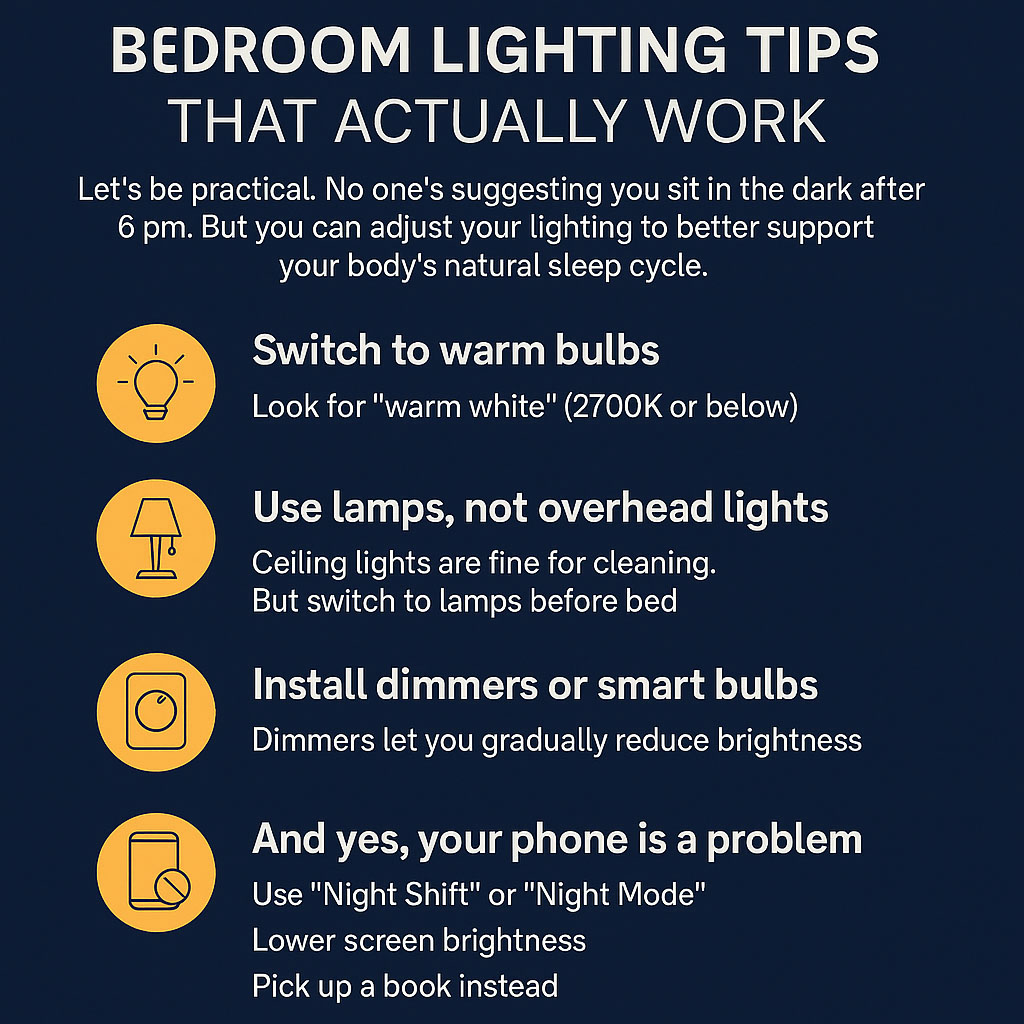
4. Change Your Lighting

Swap bright white bulbs for warmer tones in the evening. Dimmable lights help tell your body that it’s time to wind down.

5. Invest in a Sleep-Conducive Bedroom

Even if your screens are under control, your bed setup matters. A poor mattress or an overly lit room can undo the best habits.

At LuxeMattresses, we offer mattresses designed to support natural rest. Whether it’s pressure-relieving comfort or breathable materials that keep your temperature just right, our products are built to align with your circadian needs.

For more insights, visit our blog on improving your sleep environment.

Case Study: A Simple Change That Worked

Liam, a 29-year-old designer from Sheffield, found himself scrolling until midnight most nights, and wondering why he felt like he’d barely slept. After learning about blue light and melatonin, he made three adjustments:

  • Switched to amber lighting after 9pm
  • Set his phone to Night Shift at sunset
  • Upgraded to a LuxeMattresses model to address overnight restlessness

Within a week, he was falling asleep 30 minutes earlier. Within two, he stopped needing coffee to get through the morning.

Final Thoughts

In a world where digital screens are constant companions, it’s easy to forget that our biology hasn’t evolved to keep up. Blue light may seem harmless, but its effect on your sleep and health is real and backed by science.

The solution isn’t to ditch screens entirely. It’s to create habits and spaces that support your natural rhythms. That starts with awareness and continues with small changes like lighting, screen settings, and the kind of mattress that supports true rest.

To learn more about building a home and routine that aligns with your body’s natural sleep cycle, visit the LuxeMattresses blog or browse our mattress collection built for deeper, undisturbed rest.

FAQs

What’s the relationship between blue light and sleep?

Blue light delays melatonin production and shifts your circadian rhythm, making it harder to fall and stay asleep.

Is all screen light bad for sleep?

Primarily the blue wavelength spectrum is the issue. Warmer-toned lights have less impact, especially when used with reduced brightness.

How long before bed should I turn off screens?

Ideally, at least one hour. More time is better, but even 30 minutes can help reset your melatonin cycle.

Can a better mattress offset blue light effects?

Not directly, but if blue light delays sleep, a supportive mattress ensures that the sleep you do get is deep and restorative. Explore our range for more.

Are blue light glasses worth it?

They may help if you work late or use screens regularly at night. Their impact varies, but many users find them helpful.

Is screen time worse on phones than TVs?

Not necessarily. Phones tend to be closer to the eyes, which can intensify the effect. But brightness, timing, and duration matter more than device type.

What’s one small habit I can change today?

Set your phone to warm light mode after 8 pm. It takes two taps and can make a real difference over time.
How to Measure Your Room for the Perfect Super King Size Mattress Fit
March 17, 2026

How to Measure Your Room for the Perfect Super King Size Mattress Fit

Creating the ideal bedroom starts with proper planning and accurate measurements. Measuring your room for a super king size mattress ensures that your bed fits perfectly without overwhelming the space. Since a super king mattress offers maximum comfort and luxury, it also requires enough room for movement, furniture, and a balanced layout.

By understanding your room dimensions and visualizing the placement, you can design a spacious, functional, and relaxing sleep environment.

Understanding Super King Size Mattresses

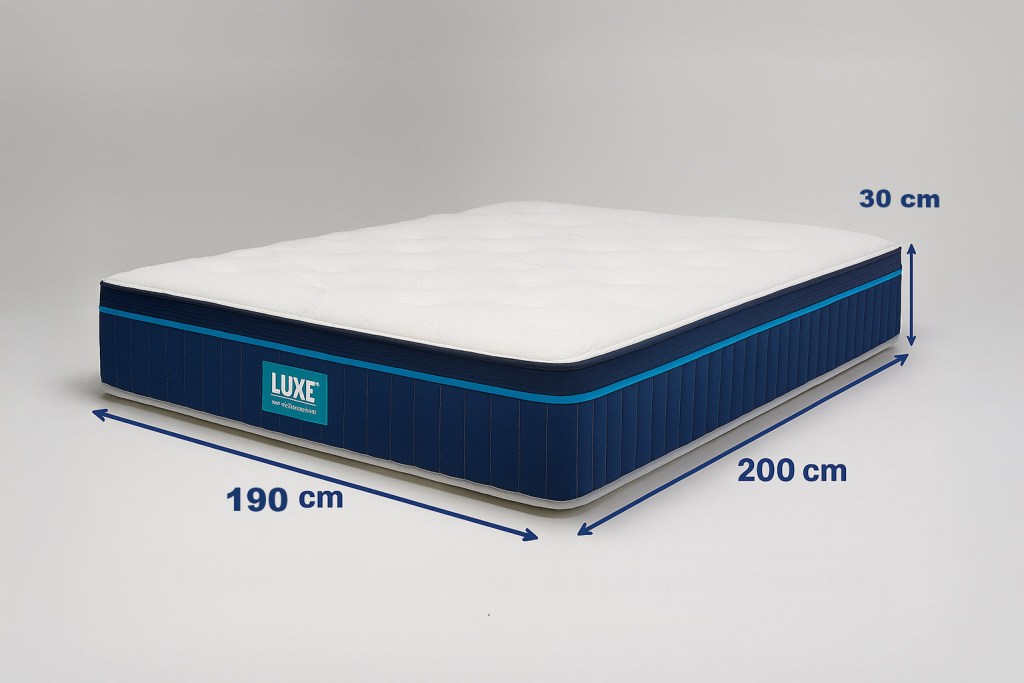
A super king size mattress is the epitome of luxury in the realm of sleep. Measuring approximately 180 cm by 200 cm (or 72 inches by 78 inches), these mattresses offer ample space for couples and even families who co-sleep. The generous dimensions mean that each person has plenty of space to move freely throughout the night, reducing disturbances from tossing and turning. This size is especially beneficial for taller individuals or those who simply relish the idea of sprawling out in bed.

super king size mattress

Before making a purchase, it’s important to understand that a super king size mattress isn’t just a one-size-fits-all solution. There are various types of super king mattresses available, including memory foam, latex, hybrid, and innerspring. Each type offers different levels of support, firmness, and comfort. Additionally, super king size mattresses come in different thicknesses, which can affect their overall height and the type of bedding that will fit properly.

Investing in a super king size mattress is a commitment to both comfort and space. Therefore, it’s crucial to ensure that your bedroom can accommodate such a large piece of furniture. This involves not just fitting the mattress itself but also considering the bed frame, surrounding furniture, and walking space. Proper measurement and planning are key to making the most of this luxurious addition to your home.

Importance of Accurate Room Measurement

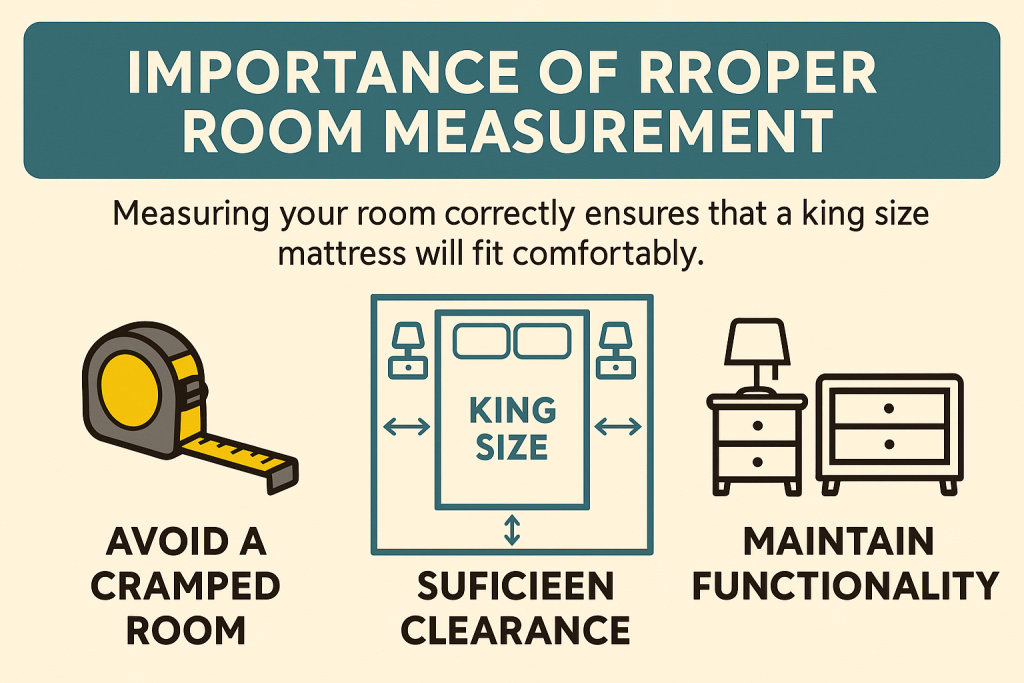
Accurate room measurement is vital when preparing for a super king size mattress. This process is more than just ensuring the mattress fits; it’s about creating a harmonious and functional bedroom layout. A mattress that’s too large for the space can make the room feel cramped and claustrophobic, while one that’s too small may leave the room feeling empty and unbalanced. Precise measurements help in striking the right balance.

importance of proper room measurement

Another critical reason for accurate measurement is to avoid potential logistical issues. Imagine purchasing a super king size mattress only to find out it doesn’t fit through your doorways, hallways, or staircase. Such scenarios can lead to unnecessary stress, additional costs, and even damage to your new mattress or home. By measuring accurately, you can ensure a smooth delivery and installation process.

Accurate room measurement also plays a role in determining the placement of other bedroom furniture. You’ll want to ensure there’s enough space for nightstands, dressers, and any other pieces you plan to include in your bedroom. Proper planning can enhance the overall aesthetic and functionality of your space, making it a true sanctuary for rest and relaxation.

Tools Needed for Measuring Your Room

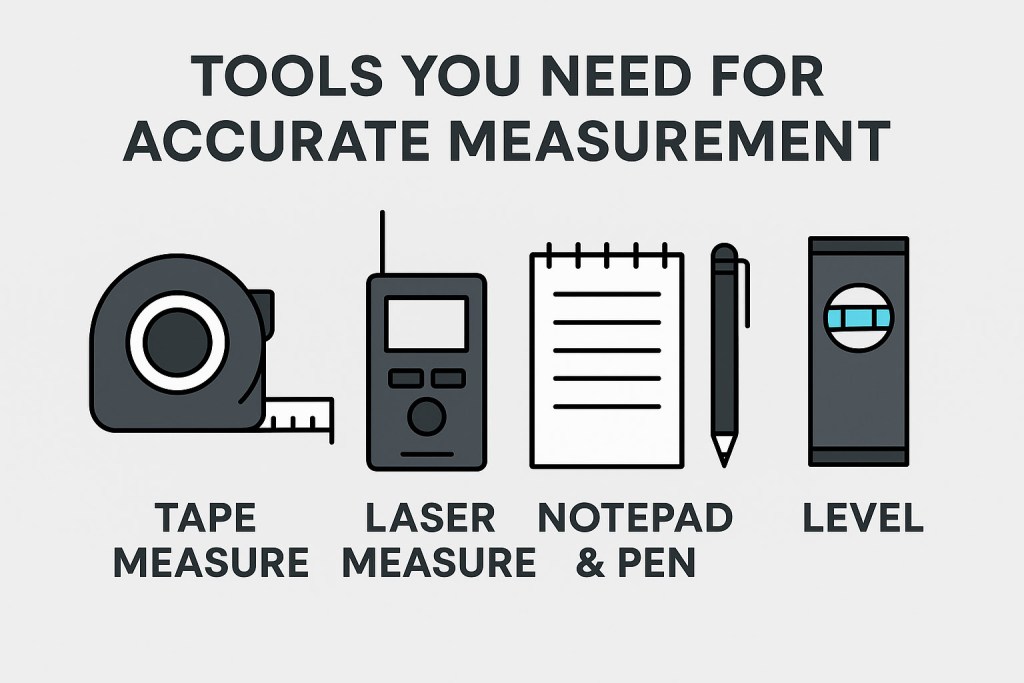
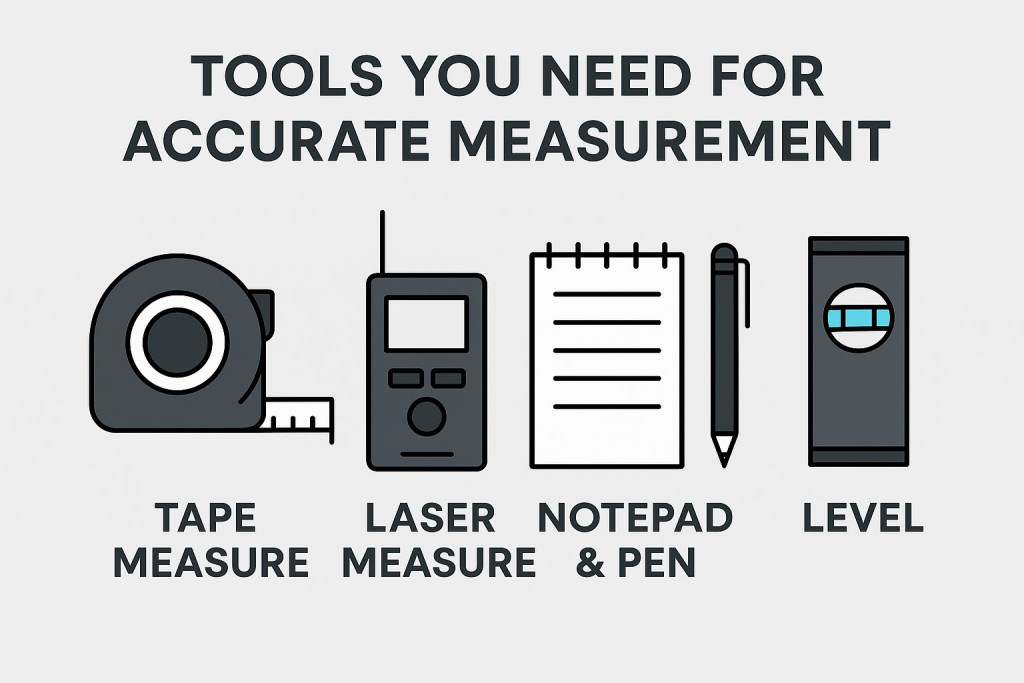
Before you begin measuring your room, gather the necessary tools to ensure precision and efficiency. A tape measure is the most essential tool for this task. Opt for a sturdy, retractable tape measure that’s at least 25 feet long to accommodate larger spaces. A laser measure can also be useful for getting quick and accurate measurements, especially in larger rooms.

tools you need for accurate room measurement

A notepad and pen are indispensable for recording your measurements. It’s helpful to create a rough sketch of your room layout and note down the dimensions as you go. This visual aid can make it easier to plan and visualize the placement of your super king size mattress and other furniture. Additionally, a smartphone or digital camera can be useful for taking reference photos of your room and its dimensions.

Don’t forget a level tool, especially if your room has sloped ceilings or uneven floors. Ensuring that your measurements account for any irregularities will help you achieve a more accurate fit. Having these tools on hand will streamline the measuring process and help you avoid any errors that could impact your room’s layout and functionality.

Step-by-Step Guide to Measuring Your Room

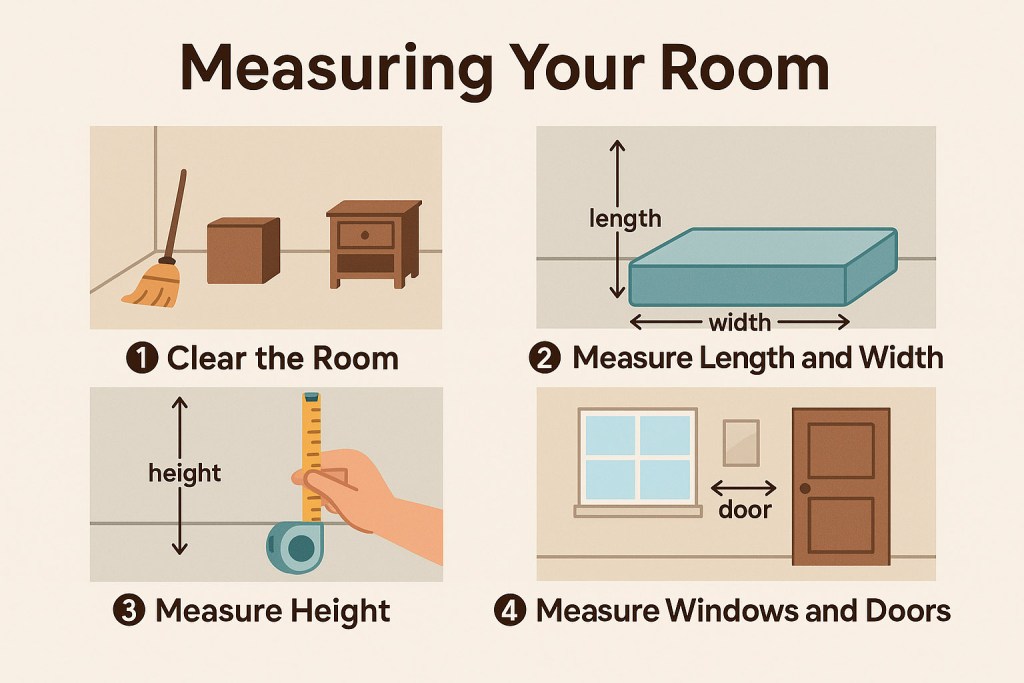
Begin by measuring the length and width of your room. Start from one corner and extend your tape measure to the opposite corner, ensuring it’s straight and taut. Record these measurements accurately, as they’ll serve as the foundation for determining if your super king size mattress will fit. Repeat this process for the other dimensions of your room, including any alcoves or recesses.

room measurement guide

Next, measure the height of your room. This is particularly important if you plan to have a tall bed frame or headboard. Measure from the floor to the ceiling at several points around the room to account for any variations. Note these measurements, as they’ll help you choose a bed frame that fits well within your space.

After measuring the main dimensions, measure the doorways, windows, and any other architectural features that could impact the placement of your mattress. Ensure you have enough clearance for the mattress to be maneuvered into the room. This includes measuring the width and height of door frames, hallway widths, and staircase dimensions. These measurements will help you avoid any unexpected challenges during the delivery and setup of your super king size mattress.

Factors to Consider Beyond Mattress Size

While the size of the mattress is a major consideration, other factors can significantly impact the overall fit and feel of your bedroom. The bed frame, for instance, can add substantial dimensions to the mattress. Consider the style and size of the bed frame, including any additional features like headboards, footboards, or storage drawers. These elements can affect how much space is left around the bed for movement and other furniture.

things to consider before buying mattress

The height of the mattress and bed frame combined is another critical factor. A higher bed might require a step stool for comfort, especially for shorter individuals or those with mobility issues. It’s also essential to consider the thickness of the mattress itself, as a thicker mattress will raise the overall height of the bed. Ensure that the combined height is comfortable for getting in and out of bed.

Additionally, think about the placement of other furniture in your bedroom. Nightstands, dressers, and wardrobes all need to be factored into your room’s layout. Ensure there’s adequate space around the bed for these items and that they don’t obstruct movement or create a cramped environment. Proper planning and consideration of these factors will help you create a balanced and functional bedroom.

Common Mistakes to Avoid When Measuring

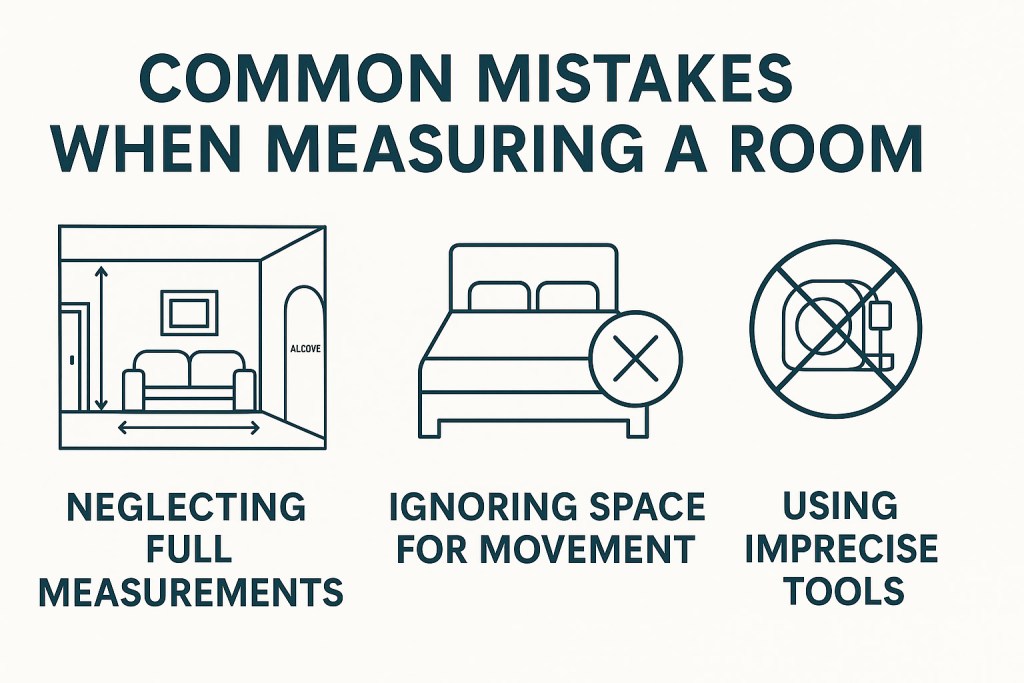
One of the most common mistakes when measuring a room for a super king size mattress is not accounting for the space needed for other furniture. It’s easy to focus solely on the mattress and forget about the additional items that will share the space. Ensure you measure and plan for the placement of nightstands, dressers, and any other critical pieces to avoid a cluttered room.

common mistakes to avoid when measuring room

Another frequent error is overlooking the clearance needed for moving the mattress into the room. Doorways, hallways, and staircases can all present significant challenges if not measured accurately. It’s essential to ensure that the mattress can be maneuvered through these spaces without causing damage to the mattress or your home. Measure these areas carefully and consider any tight corners or narrow passages.

A less obvious mistake is failing to consider the height of the bed. When measuring, it’s important to account for the combined height of the mattress and bed frame. A bed that’s too high or too low can be uncomfortable and inconvenient. Ensure that the height is suitable for getting in and out of bed easily. By avoiding these common mistakes, you can ensure a smoother process and a more comfortable bedroom setup.

How to Visualise Mattress Placement in Your Room

Visualizing the placement of your super king size mattress in your room can help you achieve the perfect layout. Start by sketching a floor plan of your room, including all dimensions and architectural features. This visual aid can help you experiment with different placements for your mattress and other furniture. Use graph paper or a digital tool to create a scaled representation for more accuracy.

room layout design

Once you have a floor plan, consider using painter’s tape to outline the dimensions of the mattress on the floor. This technique provides a real-world visual of how much space the mattress will occupy. It allows you to see how the mattress will fit with other furniture and walkways, helping you make any necessary adjustments before purchasing.

If you prefer a digital approach, consider using room design software or apps. These tools allow you to create a virtual layout of your room and experiment with different furniture arrangements. Some apps even offer 3D visualization, giving you a more immersive experience. By visualizing the placement of your mattress, you can ensure a harmonious and functional bedroom layout.

Tips for Optimising Space Around Your Mattress

Optimizing the space around your super king size mattress is essential for creating a comfortable and functional bedroom. Start by ensuring there’s enough clearance around the bed for easy movement. Aim for at least two feet of walking space on each side and at the foot of the bed. This will make it easier to get in and out of bed and navigate the room.

tips for maximising space

Consider the placement of furniture to maximize space. Nightstands should be within easy reach but not so close that they create a cramped feeling. If space is limited, consider wall-mounted nightstands or shelves to free up floor space. Additionally, choose dressers and wardrobes that complement the size of your room. Taller, narrower pieces can provide ample storage without taking up too much floor space.

Think about vertical space as well. Utilize wall space for storage and decor to keep the floor area open. Shelving units, wall hooks, and floating shelves can provide storage and display options without encroaching on valuable floor space. By optimising the space around your mattress, you can create a balanced and spacious bedroom that feels both functional and inviting.

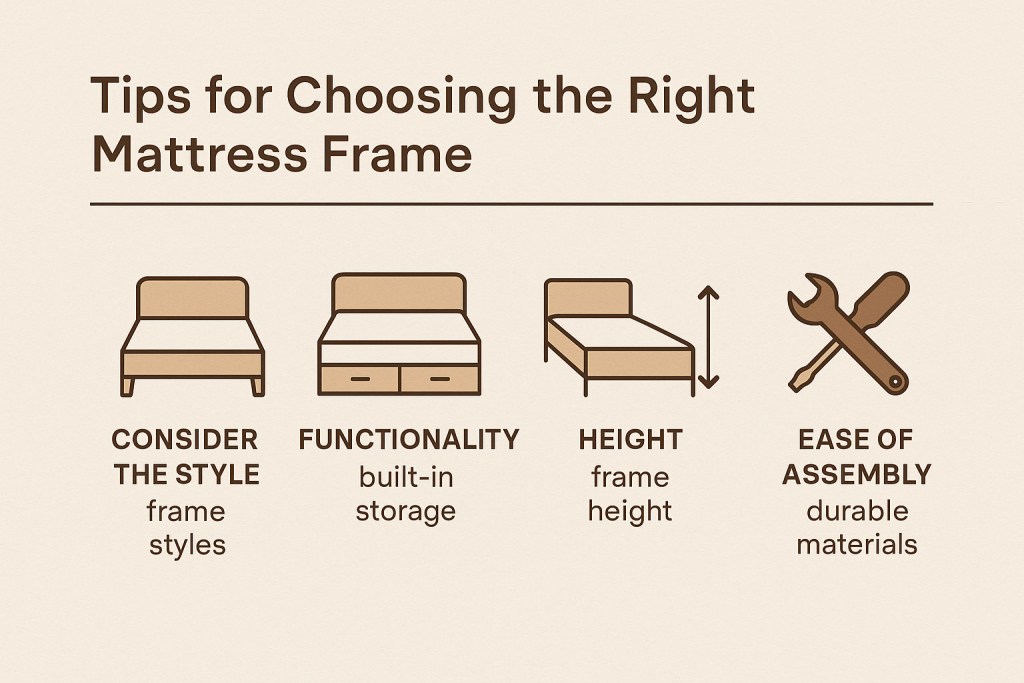
Choosing the Right Bed Frame for Your Super King Mattress

Choosing the right bed frame is crucial for complementing your super king size mattress and enhancing your bedroom’s overall aesthetic. When selecting a bed frame, consider the style and design that best suits your taste and room decor. Options range from sleek, modern frames to ornate, traditional designs. The bed frame should not only support the mattress but also contribute to the room’s ambiance.

tips for choosing the right mattress

Pay attention to the dimensions of the bed frame, as it can add significant size to the mattress. Measure the width, length, and height of the frame, including any additional features like headboards or footboards. Ensure that the frame fits comfortably within your room’s layout and leaves enough space for other furniture and movement.

Consider the material and construction of the bed frame for durability and support. Wooden frames offer a classic look and sturdy construction, while metal frames provide a more contemporary feel and are often easier to assemble. Upholstered frames add a touch of luxury and comfort but may require more maintenance. Choose a frame that balances style, functionality, and durability to complement your super king size mattress perfectly.

Conclusion

Achieving the perfect fit for your super king size mattress requires accurate measurements, smart planning, and the right layout. By considering room dimensions, bed height, and furniture placement, you can create a comfortable and well-balanced space. With simple tools like floor plans or tape, you can avoid mistakes and design a bedroom that feels both spacious and relaxing.

Ultimate Guide: How to Measure Your Room for a Perfect-Fit Euro Queen Size Mattress
March 17, 2026

Ultimate Guide: How to Measure Your Room for a Perfect-Fit Euro Queen Size Mattress

Finding the perfect-fit Euro queen size mattress can transform your sleep experience, but it all starts with knowing how to measure your room accurately. Whether you’re upgrading your current mattress or moving into a new space, ensuring the right dimensions is essential to create a comfortable and cozy atmosphere. In this ultimate guide, we’ll walk you through the simple yet effective steps to measure your room, taking into account essential factors like layout, furniture placement, and clearance space.

With a few easy techniques, you’ll gain the confidence to choose a mattress that not only fits perfectly but also enhances your overall bedroom design. Say goodbye to restless nights and hello to a well-measured sanctuary where relaxation reigns supreme! Let’s dive into the details of getting those measurements right to ensure your mattress fits like a dream.

Understanding Euro Queen Size Mattresses

When it comes to choosing a mattress, understanding the specific dimensions and characteristics of a Euro queen size mattress is crucial. Unlike the standard queen size mattress, which typically measures 60 inches wide by 80 inches long, the Euro queen size mattress is slightly larger. It measures approximately 63 inches wide by 79 inches long.

This slight variation in size can make a significant difference in terms of comfort and fit within your bedroom. The additional width provides more space for sleepers to move around, making it an excellent choice for couples who value extra sleeping space without upgrading to a king size bed.

Euro Queen size mattress

Euro queen size mattresses are also known for their superior construction and materials. Originating from Europe, these mattresses often feature high-quality materials such as memory foam, latex, or pocketed coils. The combination of these materials not only offers enhanced support and comfort but also contributes to the durability and longevity of the mattress. As a result, investing in a Euro queen size mattress can be a wise choice for those seeking both comfort and value for money.

Moreover, a Euro queen size mattress can add a touch of elegance and sophistication to your bedroom. The slightly larger dimensions can create a more grandiose appearance, making your bed the focal point of the room. Whether you prefer a minimalist design or a more elaborate decor style, a Euro queen size mattress can seamlessly integrate into various bedroom aesthetics. Understanding these unique features is the first step in ensuring you choose the right mattress for your needs.

Importance of Accurate Room Measurements

Accurate room measurements are the foundation of selecting the right mattress size. Without precise measurements, you run the risk of purchasing a mattress that either overwhelms the space or leaves too much room, disrupting the overall harmony of your bedroom. Ensuring that your mattress fits perfectly requires a thorough understanding of your room’s dimensions, including the length, width, and height. These measurements will help you determine how much space your mattress will occupy and how it will interact with other furniture pieces in the room.

Importance of Accurate Room Measurements

In addition to the physical dimensions of the mattress, accurate room measurements also account for clearance space. Clearance space refers to the area around the mattress that allows for easy movement and access. This includes space for walking around the bed, opening drawers, and using other furniture without obstruction. Neglecting to consider clearance space can result in a cramped and uncomfortable living environment, which can negatively impact your overall quality of life.

Furthermore, accurate measurements are essential for optimizing the functionality and aesthetics of your bedroom. A well-measured room ensures that your mattress complements the layout and design of the space. This can enhance the visual appeal of your bedroom and create a more inviting and relaxing atmosphere. By taking the time to measure your room accurately, you can avoid common pitfalls and ensure that your Euro queen size mattress fits perfectly, providing you with the ultimate sleep experience.

Tools You Need for Measuring Your Room

Measuring your room for a Euro queen size mattress requires a few essential tools to ensure accuracy and ease. The first and most important tool is a tape measure. A tape measure allows you to obtain precise measurements of your room’s dimensions, including the length, width, and height. Opt for a tape measure that extends to at least 25 feet to accommodate larger rooms and provide flexibility in measuring various areas.

tools you need for accurate measurements

In addition to a tape measure, a notepad and pen are essential for recording your measurements. Keeping a detailed record of your room’s dimensions will help you visualize the layout and make informed decisions when selecting your mattress. It’s also helpful to have a calculator on hand to perform any necessary calculations, such as determining the total square footage of your room or adjusting measurements for furniture placement.

A level is another useful tool for measuring your room. A level ensures that your measurements are accurate and consistent, particularly when measuring the height of the room or the placement of furniture. Using a level can help you avoid discrepancies and ensure that your mattress fits perfectly within the space. Additionally, consider using painter’s tape or masking tape to mark specific areas of the room. This can provide a visual reference for measuring and help you plan the layout more effectively.

Step-by-Step Guide to Measuring Your Room

Measuring your room for a Euro queen size mattress involves several key steps to ensure accuracy and precision. Begin by clearing the room of any obstacles or furniture that may obstruct your measurements. This will provide a clear and unobstructed view of the room’s dimensions. Once the room is clear, start by measuring the length and width of the room. Place the tape measure along the longest wall and extend it to the opposite end of the room. Record the measurement on your notepad. Repeat this process for the width of the room.

room measurement guide

Next, measure the height of the room. This is particularly important if you have a low ceiling or plan to use a canopy bed or other tall furniture. Use the tape measure to measure from the floor to the ceiling, ensuring that the tape measure is straight and level. Record the height measurement on your notepad. It’s also helpful to measure the height of any windows or door frames, as these can impact the placement of your mattress and other furniture.

After obtaining the basic dimensions of the room, consider any additional features that may affect the placement of your mattress. This includes measuring the dimensions of any built-in furniture, such as wardrobes or shelves, as well as the placement of electrical outlets and heating vents. These features can impact the layout of your room and should be taken into account when selecting your mattress. By following these steps, you can ensure that your room measurements are accurate and comprehensive.

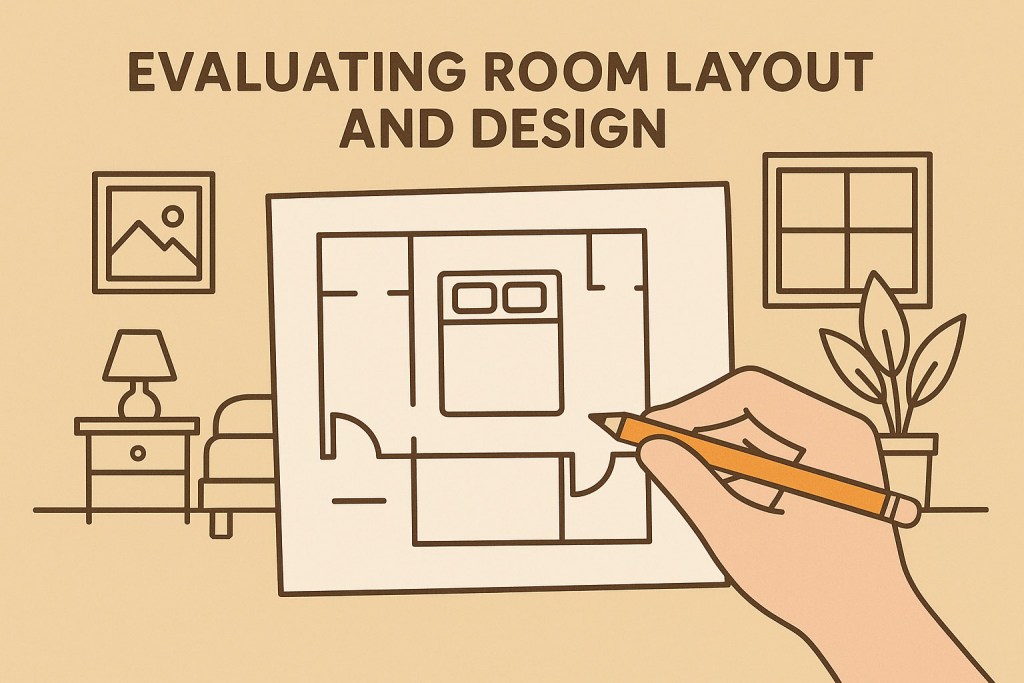
Considering Room Layout and Design

When measuring your room for a Euro queen size mattress, it’s important to consider the overall layout and design of the space. The placement of your mattress should complement the flow and functionality of the room, creating a harmonious and balanced environment. Start by identifying the focal point of the room, such as a window, fireplace, or artwork. Positioning your mattress in relation to this focal point can enhance the visual appeal of the room and create a more inviting atmosphere.

Considering Room Layout and Design

Consider the placement of other furniture pieces in the room, such as nightstands, dressers, and chairs. These items should be arranged in a way that allows for easy access and movement around the room. Ensure that there is enough clearance space between the mattress and other furniture to avoid a cramped and cluttered appearance. It’s also important to consider the placement of lighting fixtures, such as lamps and ceiling lights, to ensure that the room is well-lit and functional.

In addition to the physical layout of the room, consider the overall design and aesthetic. Choose a mattress and bedding that complement the color scheme and style of the room. For example, a Euro queen size mattress with a sleek and modern design may be well-suited for a contemporary bedroom, while a more traditional mattress may complement a classic or vintage decor style. By considering both the layout and design of the room, you can create a cohesive and visually appealing space that enhances your overall sleep experience.

Common Mistakes to Avoid When Measuring

Measuring your room for a Euro queen size mattress may seem straightforward, but there are several common mistakes that can lead to inaccurate measurements and a poor fit. One of the most common mistakes is failing to account for clearance space. While it’s important to measure the dimensions of the room, it’s equally important to consider the space needed for walking around the bed and accessing other furniture. Neglecting to account for clearance space can result in a cramped and uncomfortable living environment.

common mistakes to avoid when measuring room

Another common mistake is measuring only the length and width of the room, without considering the height. The height of the room is particularly important if you have a low ceiling or plan to use a tall bed frame or canopy. Failing to measure the height can result in a mattress that is too tall for the room, causing visual and functional issues. Additionally, it’s important to measure any built-in furniture or architectural features, such as wardrobes, shelves, and windows, as these can impact the placement of your mattress.

Using an inaccurate or unreliable measuring tool is another common mistake. A tape measure is the most accurate tool for measuring your room, but it’s important to ensure that it is properly calibrated and in good condition. Using a measuring tool that is worn or damaged can result in inaccurate measurements. It’s also important to measure multiple times and cross-check your measurements to ensure accuracy. By avoiding these common mistakes, you can ensure that your room measurements are precise and that your Euro queen size mattress fits perfectly.

How to Choose the Right Mattress Based on Measurements

Once you have accurately measured your room, you can confidently choose the right Euro queen size mattress that fits perfectly within the space. Start by considering the dimensions of the mattress in relation to the room’s measurements. Ensure that there is enough clearance space around the mattress for easy movement and access. If your room is on the smaller side, consider a mattress with a lower profile or a platform bed to maximize space.

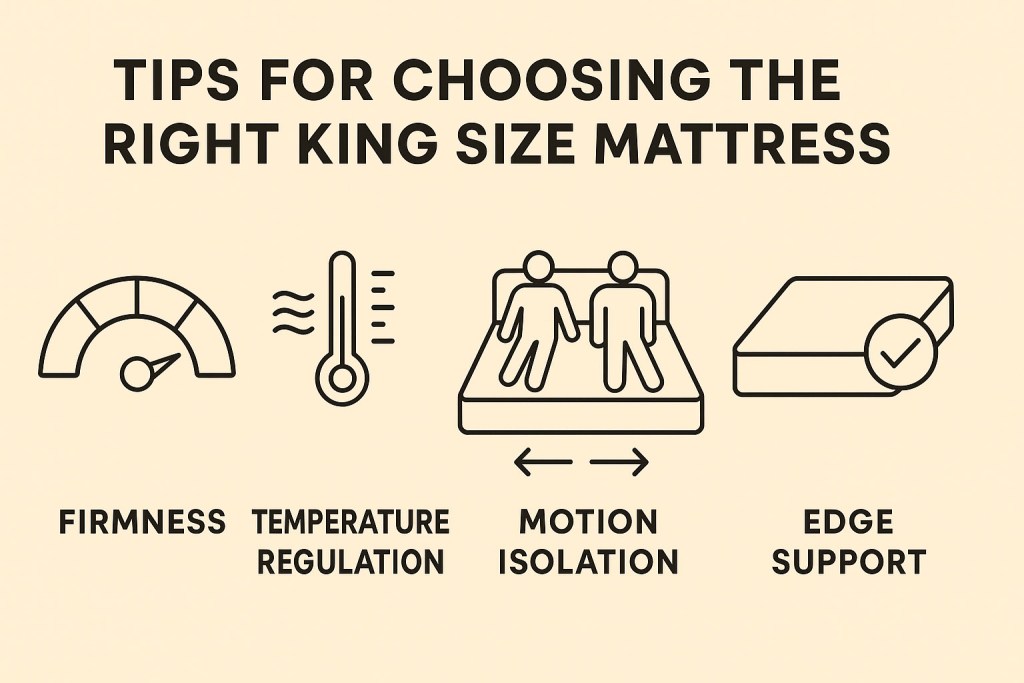
tips to choosing right king size mattress

In addition to the dimensions, consider the type of mattress that best suits your needs. Euro queen size mattresses are available in various materials, including memory foam, latex, and pocketed coils. Each material offers different levels of support and comfort, so it’s important to choose one that aligns with your sleep preferences. For example, if you prefer a mattress that conforms to your body and provides pressure relief, a memory foam mattress may be the best choice. If you prefer a more responsive and supportive mattress, consider a latex or pocketed coil mattress.

It’s also important to consider the overall design and aesthetic of the mattress. Choose a mattress that complements the style of your bedroom and enhances the visual appeal of the space. Many Euro queen size mattresses feature sleek and modern designs that can seamlessly integrate into various decor styles. Finally, consider the durability and warranty of the mattress. Investing in a high-quality mattress with a good warranty can provide peace of mind and ensure that you enjoy a comfortable and restful sleep for years to come.

Tips for Maximising Space Around Your Mattress

Maximizing space around your Euro queen size mattress is essential for creating a comfortable and functional bedroom. Start by choosing a bed frame that optimizes space. Platform beds and storage beds are excellent options for maximizing space, as they provide additional storage without taking up extra floor space. These bed frames can help declutter your room and create a more organized and spacious environment.

Tips for Maximising Space Around Your Mattress

Consider the placement of other furniture pieces in the room. Arrange nightstands, dressers, and chairs in a way that allows for easy access and movement around the bed. Avoid placing too many large furniture pieces in the room, as this can create a cramped and cluttered appearance. Instead, opt for multifunctional furniture that serves multiple purposes, such as a dresser that doubles as a vanity or a bench with built-in storage.

Utilise vertical space to maximise the functionality of your room. Install shelves, hooks, and wall-mounted storage to keep items off the floor and create more open space. This can help create a more organized and visually appealing room. Additionally, consider the placement of lighting fixtures to ensure that the room is well-lit and functional. By maximising space around your mattress, you can create a more comfortable and inviting bedroom that enhances your overall sleep experience.

FAQs

What is the difference between queen and euro queen?

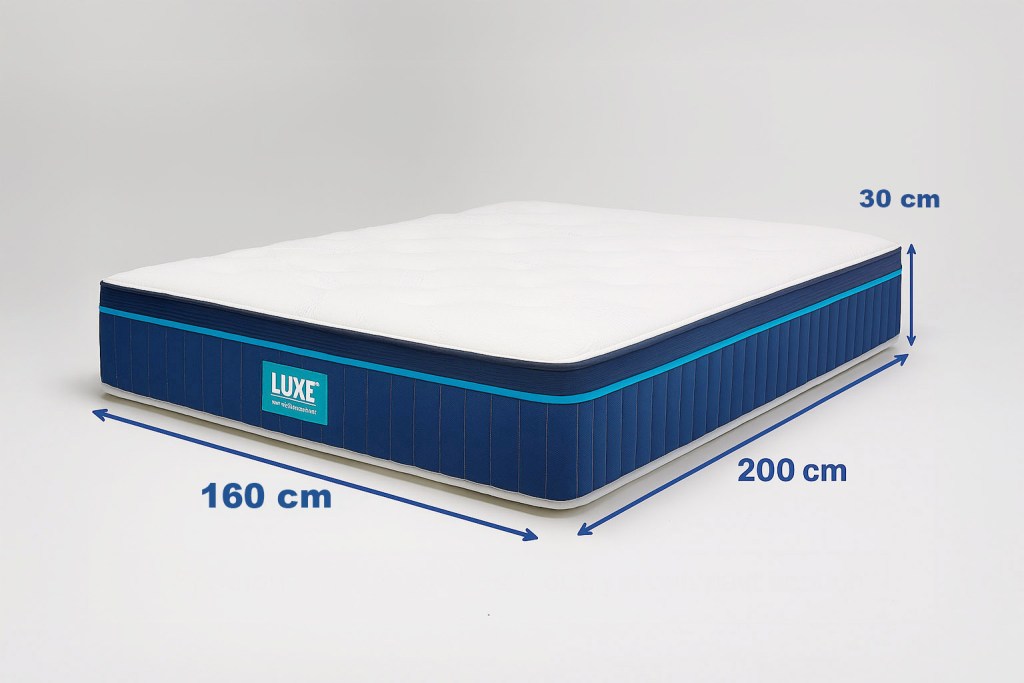
Standard queen is 60″x80″ (152×203 cm); Euro queen is wider at 63″x79″ (160×200 cm), offering more sleeping space but harder to fit in smaller rooms.

How wide should a room be to fit a queen size bed?

Minimum 10 feet wide for a queen (60″ wide) plus 2 feet clearance on each side; ideally 12+ feet for furniture.

How often should you replace a bed?

Replace every 7-10 years, or sooner if sagging, lumpy, or causing pain lifespan varies by type (innerspring 8 years, latex 15).

Can a queen bed fit in a 12×12 room?

Yes, a standard queen (60″x80″) fits a 12×12 (144 sq ft) room with ~2 ft walkways cozy for couples but workable.

Can a queen bed fit in an 11×10 room?

Tight squeeze 60″x80″ queen in 110 sq ft leaves minimal clearance (~1.5 ft sides); better for full/twin, feels cramped.

Is a king size bed too big for a 12×12 room?

Yes, king (76″x80″) overwhelms a 12×12 (144 sq ft) with <2 ft clearance; minimum room 13×13+ for comfort.

Conclusion: Ensuring a Perfect Fit for Your Euro Queen Mattress

Ensuring a proper fit for your Euro queen size mattress is crucial for a comfortable bedroom. By understanding its dimensions and features, you can make informed decisions that suit your sleep needs. Accurate room measurements are essential, and a step-by-step guide can help avoid mistakes. Consideration of the room’s layout ensures the mattress enhances space functionality.

Addressing frequently asked questions about Euro queen mattresses can further aid in making the best choice. Taking the time to measure correctly will create a restful environment, leading to improved sleep quality.

How to Check Room Size for a Queen Size Bed: A Detailed Mattress Fit Guide
March 16, 2026

How to Check Room Size for a Queen Size Bed: A Detailed Mattress Fit Guide

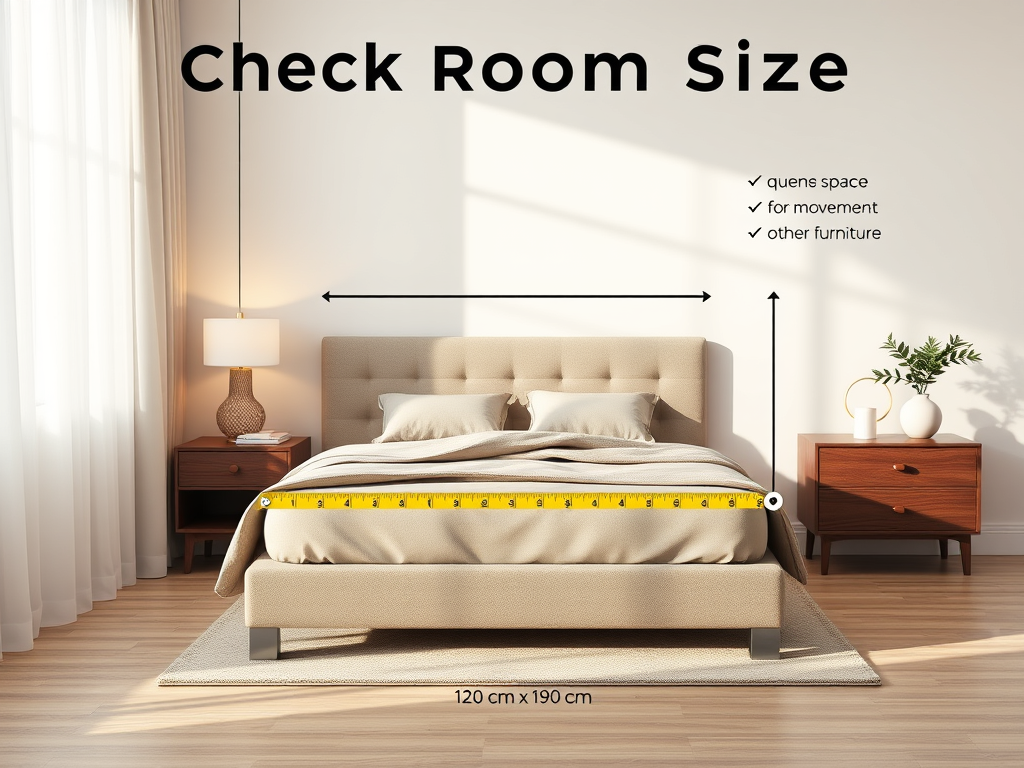
Choosing the right bed starts with making sure your space can accommodate it comfortably. Checking room size for a queen size bed is essential to ensure the mattress fits well without making the bedroom feel crowded. A queen size bed offers generous sleeping space, but it also requires enough room for walking areas, bedside tables, and other furniture. By measuring your room dimensions and planning the layout carefully, you can create a balanced bedroom that feels spacious, practical, and comfortable for everyday living.

to read the detailed guide about mattress sizes click here.

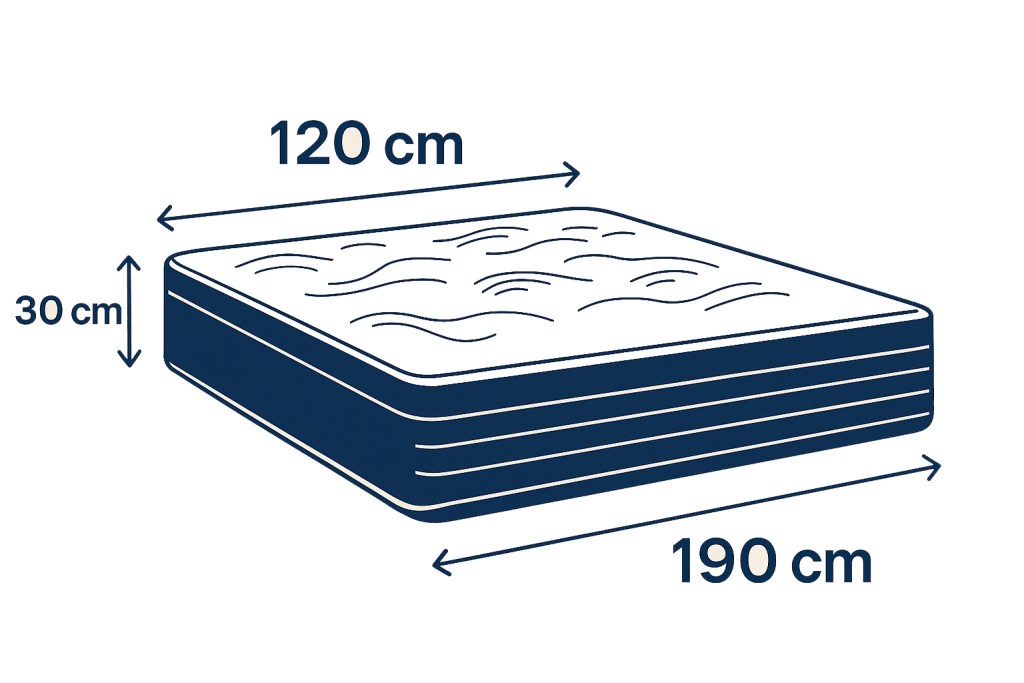
In the UK, a standard queen size mattress typically measures 120 centimetres wide by 190 centimetres long. This is roughly 4 feet wide by 6 feet 3 inches long (4ft x 6ft 3in). It falls between the UK’s small double and double sizes, offering extra space for individual sleepers or for compact guest rooms where a full double might be too tight. This guide will walk you through how to determine whether your room can comfortably fit a queen size bed, and how to assess your bedroom’s layout with precision and practicality.

Understanding Queen Size Bed Dimensions

A queen size mattress in the UK is not the same as a US queen. The UK version is slightly smaller and is often used in homes where space is a concern. Measuring 120 cm in width (approximately 4 feet) and 190 cm in length (approximately 6 feet 3 inches), it is noticeably more spacious than a single or small double mattress but requires less room than a full double or king size. This makes it a popular choice for guest bedrooms, smaller master bedrooms, or studio flats.

Understanding Queen Size Bed Dimensions

When evaluating your room for fit, you must go beyond the bed’s measurements and factor in additional clearance on all sides to allow for ease of movement, as well as space for other furniture.

Measuring Your Room Accurately

Start by measuring your bedroom’s length and width using a tape measure. Ideally, take measurements in both centimetres and feet/inches to compare with the mattress size and general furniture dimensions. Record the exact dimensions of the usable floor space, which excludes built-in wardrobes, alcoves, or protrusions from walls.

Measuring Your Room Accurately

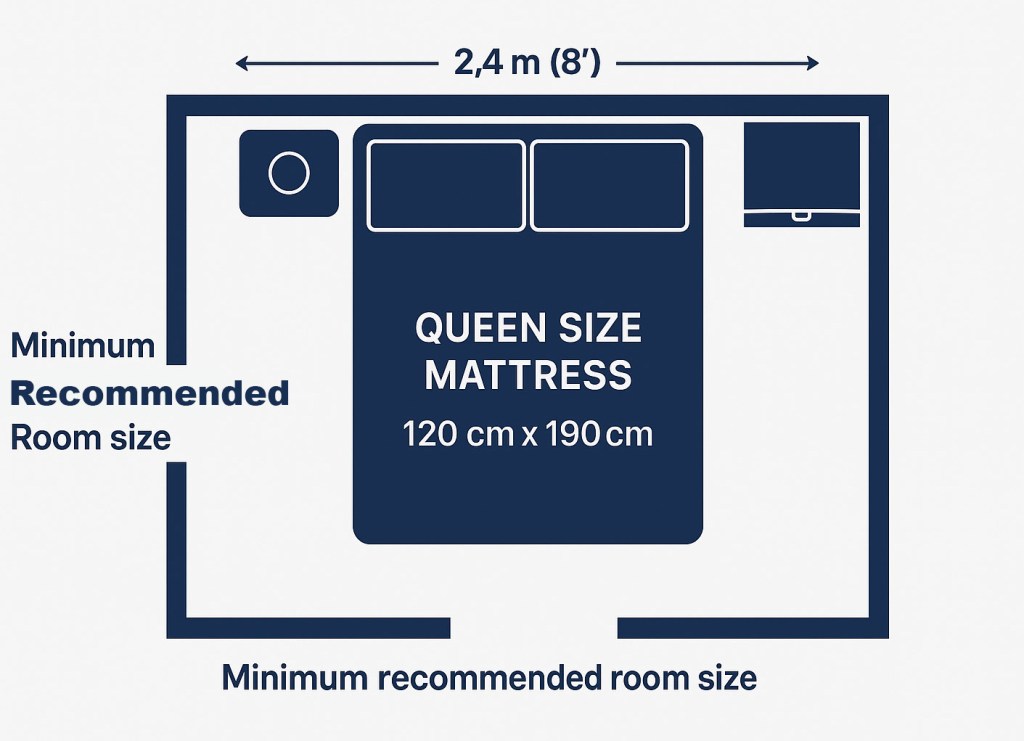
To comfortably fit a queen size mattress in your room, the minimum recommended room size is about 2.4 metres by 3 metres, which is roughly 8 feet by 10 feet. This gives you the bare minimum clearance to walk around the bed and to fit bedside tables or other small furniture items.

For a more comfortable arrangement, a room that measures 3 metres by 3.3 metres (10 feet by 11 feet) or larger is ideal. This allows for better spacing between the bed and walls, unobstructed opening of drawers or closet doors, and the inclusion of larger furnishings like wardrobes or desks.

Planning for Walking Clearance and Furniture

One of the most overlooked aspects when placing a bed is walking clearance. Even if the bed physically fits in the room, it won’t be functional or comfortable if it’s squeezed against the wall or blocks access to other parts of the room.

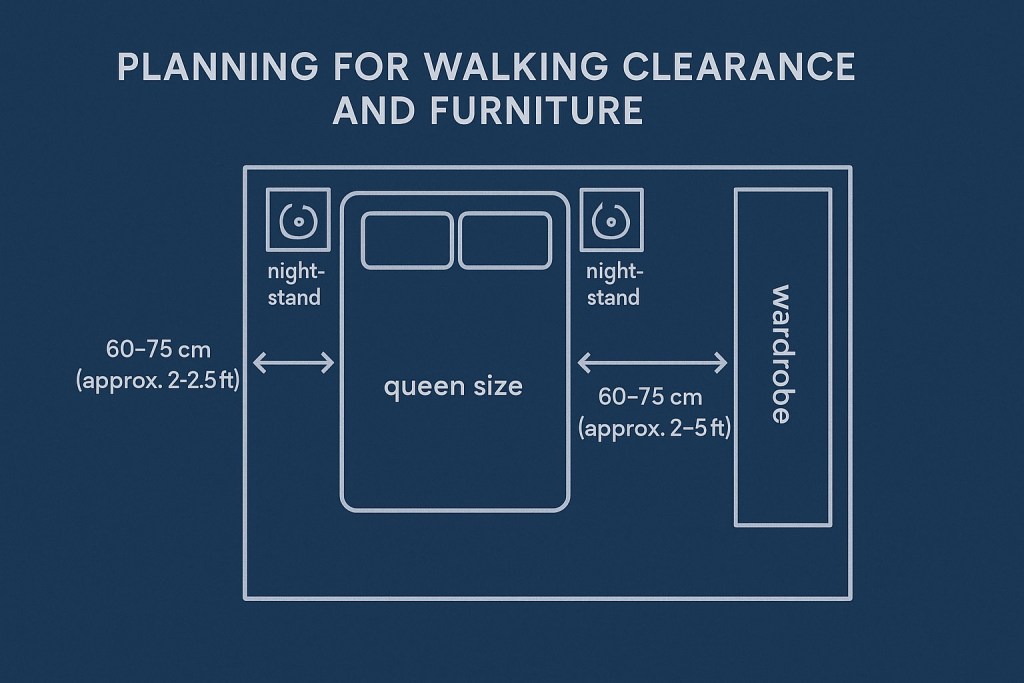
A good rule of thumb is to leave at least 60 to 75 centimetres (approximately 2 to 2.5 feet) of walking space on each side of the bed and at the foot. This allows enough room to comfortably walk, change sheets, or move around without bumping into furniture. If your room includes features like radiators, swinging doors, or deep-set windowsills, make sure those are accounted for in your layout.

Planning for Walking Clearance and Furniture

Furniture placement is equally important. Common items in a bedroom such as nightstands, a chest of drawers, or a wardrobe must be included in your layout plan. Most nightstands are about 40 to 50 cm wide and need space on either side of the bed. A wardrobe may require up to 60 cm depth and another 50 to 60 cm in front for door clearance. If you plan to include a desk or dressing table, ensure it doesn’t crowd the walking path or bed placement.

Using Layout Tools or the Tape Outline Method

Once you’ve taken your measurements, one of the best ways to visualise fit is the tape outline method. Use painter’s tape or masking tape to mark out the exact dimensions of the queen size mattress on the floor 120 cm by 190 cm (or 4ft by 6ft 3in). Extend the tape to mark a clearance buffer of 60 to 75 cm around the mattress to simulate walking space, to read the all standard sizes and bed calculator click here.

Using Layout Tools or the Tape Outline Method

This method allows you to physically stand inside the projected space and assess whether it feels too cramped or if the flow of the room remains functional. You can also position placeholder furniture using boxes or other items to mimic dressers or nightstands. This hands-on approach often gives a clearer perspective than simply imagining the layout on paper.

If you prefer digital tools, there are many free online room planners available that allow you to input room dimensions and virtually position furniture and mattresses. These tools can be helpful for trying out multiple configurations before committing to a purchase.

Mattress Height and Bed Frames Matter Too

Another factor to consider is mattress height and the bed frame style. Some queen mattresses are low-profile, while others with extra cushioning or pillow-tops may be quite tall. Combined with a high platform or storage bed frame, your bed height can easily exceed 65 to 70 cm, which may be uncomfortable for some people or obstruct windowsills and wall outlets.

In smaller rooms, a low-profile frame can help make the space feel more open. Alternatively, a storage or ottoman bed frame may help reduce the need for extra drawers or wardrobes by offering under-bed storage, making better use of the floor area.

Special Considerations for Small Bedrooms

If your bedroom is particularly compact, say less than 8 feet wide or under 2.5 metres, placing a queen bed may still be possible, but you’ll need to make sacrifices elsewhere. This might include pushing the bed against one wall, which limits access to one side. While not ideal for couples, this setup can work for single sleepers or in guest rooms.

Floating shelves instead of nightstands, wall-mounted lighting instead of lamps, or sliding wardrobe doors rather than swinging ones can all help maximise space in tight layouts. Carefully selecting multi-functional furniture will go a long way in preserving comfort and accessibility.

FAQs

How wide should a room be to fit a queen size bed?

Minimum 10 feet wide for a queen (60″ wide) plus 2 feet clearance on each side; ideally 12+ feet for furniture.?

Can a queen bed fit in a 12×12 room?

Yes, a standard queen (60″x80″) fits a 12×12 (144 sq ft) room with ~2 ft walkways cozy for couples but workable.

Can a queen bed fit in an 8×10 room?

Barely the 60″x80″ queen overcrowds an 8×10 (80 sq ft); only 1-2 ft clearance max, better for twin/full.

Will a 60×80 fit a queen size bed?

Yes, 60″x80″ are the exact standard queen mattress dimensions worldwide.

Are there two different sizes of queen beds?

Yes, standard (60″x80″), Olympic (66″x80″), California (60″x84″) offer variations for width/length needs.

Are all queens 60×80?

No, while standard queens are 60″x80″, Olympic/California variants differ; always check specs.

Final Thoughts

To determine whether your bedroom can accommodate a UK queen size mattress, begin by understanding the dimensions: 120 cm wide by 190 cm long, or 4 feet by 6 feet 3 inches. Measure your room and account not just for the footprint of the bed, but also for adequate clearance and placement of essential furniture.

The absolute minimum room size is about 8 feet by 10 feet, but 10 feet by 11 feet or larger will offer a more comfortable setup. Use tape on the floor to mark mattress dimensions and walkable space, and plan around doors, windows, and any existing furniture. Don’t forget to factor in the height of the mattress and bed frame to ensure vertical clearance is also suitable.

Ultimately, with thoughtful planning and realistic layout expectations, a queen size bed can fit comfortably in most medium-sized UK bedrooms while still allowing for a functional and aesthetically pleasing design.

Finding the Perfect Fit: How to Measure Room Size for a Single Bed
March 16, 2026

Finding the Perfect Fit: How to Measure Room Size for a Single Bed

Estimated reading time: 10 minutes

Finding the perfect sleeping setup starts with understanding your space. Measuring room size for a single bed helps ensure the bed fits comfortably without making the room feel cramped. A single bed is ideal for small bedrooms, guest rooms, or children’s spaces, but proper planning is essential to allow enough room for movement and other furniture. By carefully checking the room dimensions, bed size, and layout, you can create a balanced bedroom that feels both functional and comfortable.

Understanding the Importance of Room Size Measurement

Accurate room measurements are crucial for setting up a bedroom, ensuring furniture fits well and creating a comfortable, inviting space, especially in smaller areas where every inch matters. This prevents overcrowding and fosters a well-organised environment.

measuring room size

Accurate room measurements are essential for making informed decisions about furniture size and type, particularly for a single bed. Understanding the dimensions helps select furniture that maximizes utility while maintaining style and comfort, avoiding issues of items being too large or small for the space.

Furthermore, proper measurements enhance the bedroom’s functionality, allowing for movement and the placement of additional essentials like wardrobes or nightstands. For more ideas on optimizing small bedrooms, Apartment Therapy provides helpful layout inspiration, contributing to a well-planned and serene atmosphere for relaxation.

Standard Dimensions of a Single Bed

Understanding the standard dimensions of a single bed is crucial as it forms the basis for all subsequent measurements and planning. Typically, a single bed measures around 38 inches in width and 75 inches in length.

However, there can be slight variations depending on the manufacturer and the region, so it’s always a good idea to check the exact dimensions of the bed you are considering. This basic measurement provides a starting point for determining how much space the bed will occupy and how it will fit within the room.

single size mattress dimensions

The content discusses various bed types, highlighting the twin bed, which is 39 inches wide, and the twin XL bed, which is the same width but 80 inches long. It emphasizes the importance of considering these variations for added comfort and room suitability. Additionally, the text notes that the height of the bed, usually ranging from 16 to 24 inches, impacts the room’s aesthetics and accessibility, making it essential to ensure that the bed fits well within the space without hindering other elements like windows or wall art.

Tools You Need for Accurate Measurement

To measure your room accurately, you will need a few essential tools that will make the process easier and more precise. The most important tool is a tape measure, ideally one that is at least 25 feet long. A retractable tape measure is particularly useful as it allows for easy handling and accurate measurement of both large and small distances. Make sure the tape measure is sturdy and has clear, easy-to-read markings to ensure precision.

tools you need for accurate measurements

For effective room measurements, a laser measuring tool is highly beneficial, especially for larger or irregularly shaped spaces, as it provides quick and accurate results. While not essential, it can enhance efficiency and precision in home improvement projects.

Additionally, having a notepad and pen to record measurements is crucial. Drawing a simple floor plan with wall dimensions and features aids in organizing the data. A level is also important for ensuring measurements are straight and accurate, particularly for wall-mounted items.

How to Measure Your Room for a Single Bed

Measuring your room accurately involves several steps to ensure that you capture all necessary dimensions and details. Begin by measuring the length and width of the room. Place the tape measure at one end of the room and extend it to the opposite end, ensuring that the tape is straight and taut.

Record the measurements for both the length and width, and double-check them to ensure accuracy. These dimensions will give you the overall size of the room and help you determine how much space is available for the bed and other furniture.

single size mattress room requirement

To properly plan your room layout, measure the height of the ceiling, especially for taller furniture like wardrobes or bunk beds, to ensure adequate clearance. Additionally, take note of measurements for alcoves, recesses, and irregular areas that could affect furniture placement.

Also, measure the dimensions of doors and windows, including their distances to the nearest wall or corner, to avoid obstructing these features and to allow for proper functionality and access to light and ventilation.

Considering Additional Furniture and Space Requirements

When planning the layout of your room, it’s important to consider not only the size of the bed but also the space required for additional furniture and movement. Common bedroom furniture includes nightstands, wardrobes, dressers, and desks, each of which requires its own space.

Measure the dimensions of these pieces and consider their placement in relation to the bed. Ensure that there is enough room for you to move comfortably around the room and access each piece of furniture without obstruction.

spaces require in room for single room size

When designing a room, it’s essential to accommodate space for daily activities and movement, ensuring at least 24 inches of clearance around the bed. Multi-functional furniture can help in small areas. Additionally, electrical outlets and light switches should be easily accessible and not obstructed by furniture, which may require the use of extension cords or power strips. By addressing these considerations, you can create a functional and comfortable space.

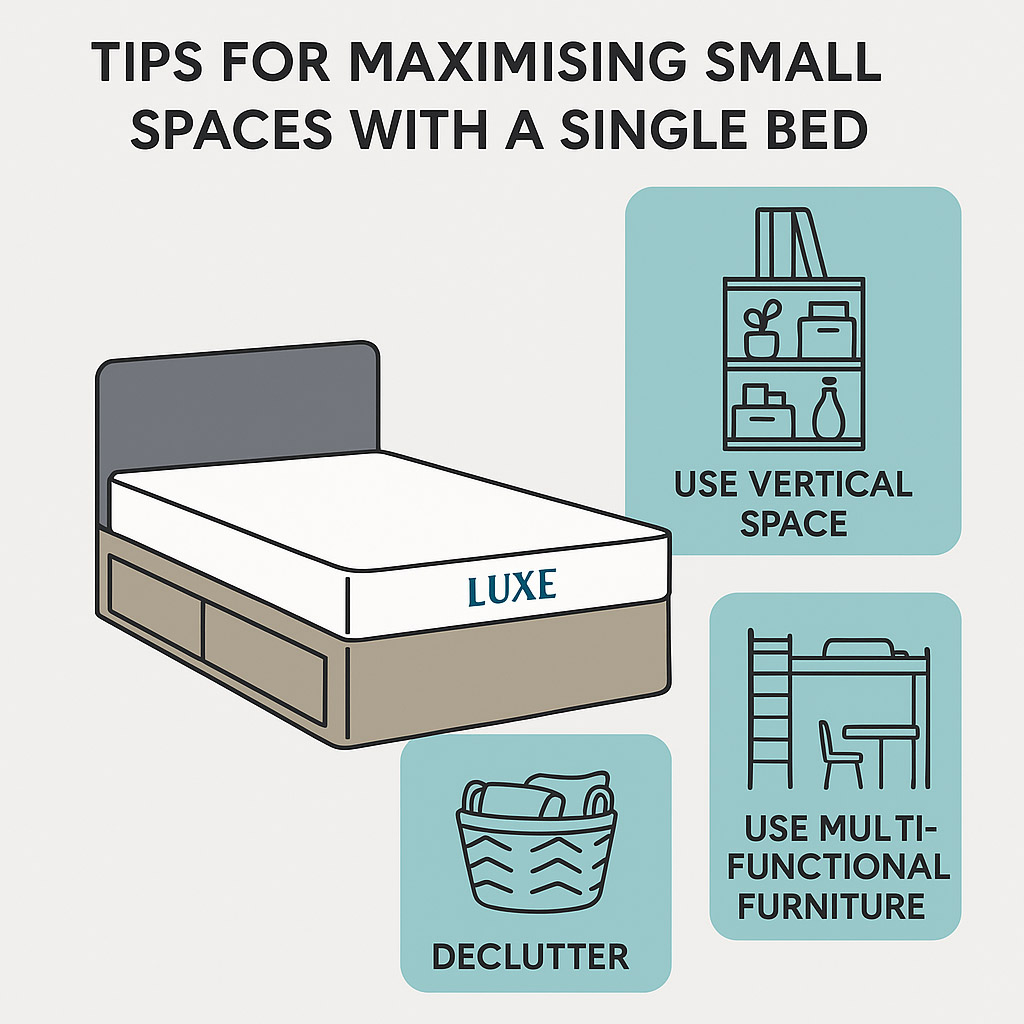
Tips for Maximising Small Spaces with a Single Bed

Maximising a small space with a single bed requires creativity and strategic planning. One effective strategy is to use multi-functional furniture that serves more than one purpose. For example, a single bed with built-in storage drawers can provide valuable space for clothing, bedding, or other items, reducing the need for additional furniture.

Similarly, a loft bed can create additional floor space underneath for a desk, seating area, or storage. These solutions help make the most of limited space while maintaining a clean and organized look.

how to maximising small spaces with single bed

To maximize small spaces, effectively use vertical space by incorporating tall bookshelves, wall-mounted shelves, and hanging organizers. Utilize areas above the bed for shelving or artwork, and employ hooks or racks to elevate items off the floor, enhancing the illusion of a larger room. Light and neutral colors for walls and furniture can further create a sense of openness.

Decluttering is crucial; retain only essentials and employ creative storage solutions like baskets and under-bed boxes. Regularly evaluate belongings to eliminate unnecessary items, fostering a tidy environment that makes the space feel larger and more inviting.

Common Mistakes to Avoid When Measuring Room Size

When measuring room size for a single bed, avoid common mistakes for accuracy. Firstly, measure the entire room, including walls, alcoves, and architectural features, to prevent inaccuracies. Secondly, consider the necessary space for movement and additional furniture to ensure functionality and comfort. Lastly, use precise measuring tools and double-check measurements, as inaccuracies can lead to poor planning and fitting issues.

common mistakes when measuring a room size

Visualising Your Space: Using Floor Plans and Design Apps

Visualizing your space can significantly improve the planning process for a well-designed room. You can start by sketching a simple floor plan with the room’s dimensions and features to experiment with furniture arrangements. Additionally, design apps like Roomstyler, Planner 5D, and SketchUp can enhance this process by allowing you to input precise dimensions and visualize layouts in a virtual setting, often with 3D views. These tools also enable experimentation with colour schemes, materials, and decor, helping to avoid costly mistakes and ensuring a functional and attractive space.

Real-Life Examples of Room Layouts with Single Beds

Real-life examples of room layouts offer valuable inspiration for design. A small guest room features a single bed against one wall, complemented by a narrow nightstand and wall-mounted lamp to save space, with a tall wardrobe for storage and a small desk in a corner. Light colors and minimal decor enhance the room’s openness.

In a child’s bedroom, the single bed is positioned in a corner to free up play space. A low bookshelf and storage bins help organize toys, while a small desk is used for homework. Bright decor adds personality and invites fun.

A compact studio apartment utilizes a loft bed for extra floor space or a daybed with storage drawers for dual functionality. The bed’s placement creates defined living areas, while vertical storage and wall-mounted shelves optimise space, blending functionality with style for an efficient living environment.

FAQs

How big does a room need to be to fit a single bed?

Minimum 7×10 feet (twin/single: 38″x75″) for bed plus walking space; ideally 10×10 feet for furniture/drawers.

Can a full bed fit in a 10×11 room?

Yes, full/double (54″x75″) fits a 10×11 room (110 sq ft) with ~2-3 ft clearance on sides, cozy but functional for one/two people.?

How many beds can fit in a 12×12 room?

Two twin beds (38″x75″ each) with nightstands; one queen max 144 sq ft allows bunking or trundle for more.?

Is a 20 by 20 room big?

Yes, 400 sq ft qualifies as large/master bedroom size, fitting king bed, seating, office luxury standard.?

Is a 12×12 room considered small?

Borderline small for adults (144 sq ft) fine for kids/single with twin bed; tight for queen/double.?

How many people can you fit in a 20×20 room?

Comfortably 20-30 seated; standing/event capacity ~80-100 (4-5/sq ft); fire code limits ~49.

Conclusion: Achieving the Perfect Fit for Your Space

Achieving the perfect fit for your space requires careful planning and accurate measurements, with a focus on your needs and preferences. Understanding room size and the dimensions of a single bed aids in effective furniture placement and layout. Utilizing the right tools enhances measurement accuracy while encouraging a functional and comfortable environment.

Incorporating additional furniture considerations and tips for maximizing small spaces can lead to a well-organized room. Avoiding common mistakes and using design tools can improve the planning process. Real-life layout examples offer inspiration for your own designs.

Ultimately, creating a harmonious blend of comfort, functionality, and style is key to transforming your space. By measuring accurately and planning thoughtfully, you can create a serene sanctuary that reflects your personal taste, whether it’s for a guest room, child’s retreat, or compact studio. Embrace the journey to discover the perfect fit for your space!

Understanding Mattress Softness Levels and Who They’re Designed For
March 13, 2026

Understanding Mattress Softness Levels and Who They’re Designed For

Selecting the right mattress based on a single design feature, such as mattress firmness level, is a basic requirement. To achieve the right level of comfort, ensure that your mattress retains its shape. Mattress firmness is definitely not One-Size-Fits-All. What is “soft” to one person may feel too mushy or unsupportive for someone else. This is why mattress companies have implemented guide scales to rate their products.

They make it quicker for people to make informed opinions dependent on their sleep style conditions and the needs of their bodies. In our guide below, we’ll break down levels of mattress softness, who benefits from each, and how to find a suitable one for your body type. Are you already looking? Please browse through our mattress collections, featuring a diverse range of comfort levels designed with a logical approach.

What Is the Mattress Firmness Scale?

Most mattress makers use a 1-10 firmness scale, with 1 being the softest and 10 being the hardest. 

  • 1-3: Soft – Very plush and cushiony, contours closely to the body.
  • 4-6: Medium – Balanced contour and support. Suits most sleepers.  
  • 7-10: Firm – Minimal sinkage, ideal for heavier bodies or back or stomach sleepers. 

According to the Sleep Foundation, most people prefer a mattress rated between 5 and 7, which provides the proper combination of topography and spinal column alignment.

What Is the Mattress Firmness Scale?

Who Benefits from a Soft Mattress (1-3)?

Soft mattresses with plush foams or pillow-top designs offer heavy sinkage and body contouring. They’re especially suitable for these kinds of people:

soft firmness
soft firmness
  1. Side Sleepers

When you roll over, a soft mattress might just be the dream solution for five seriously satisfying reasons. First, trying one out is quick and low-effort. Second, if you’re a side-sleeper, you know the struggle: pressure points in your shoulders and hips can ruin a good night’s rest. A well-designed soft mattress cushions those areas, smoothing things out and encouraging better spinal alignment, so your muscles don’t have to work overtime just to keep you comfortable.

  • Lightweight People (below 130 lbs)

Lighter bodies don’t compress a mattress as much as a heavier form. A more rigid bed will provide the balance you need. The softer mattresses are often very flexible and have a soft feel.

  • Pregnant Women

In some ways, similar to and different from the female body, especially when pregnant or larger. We’ll go into them in detail in a later article. An expert pregnant woman has tested our luxury mattress topper; see how it helped her get through those tough months and eventually get back into shape after childbirth.

A soft mattress can literally cradle uncomfortable areas and relieve pain with extraordinary tenderness. If you want to know more about this subject, read our article on reducing pregnancy discomfort with the right mattress.

Who Might Want a Medium Mattress (4–6)?

Medium firmness attracts the largest portion of the mattress market and is suitable for a wide variety of sleepers.

medium firmness

1. Couples

When two people with different sleeping habits share the same bed, a medium-firm mattress is a compromise between damping and support-enhancing in feel.

2. Combination Sleepers: 

Those who shift from side to back or stomach positions during the night. 

3. Average Weight Sleepers (130–230 lbs)

Medium beds provide a medium level of body contouring and lumbar support, making them suitable for sleepers within the average weight range.

Who Prefers a Firm Mattress (7–10)?

People who need strong overall support and don’t want to sink too deep into the bedding would prefer a firm mattress.

firmness firm

1. Stomach Sleepers

The demands of a (regular “you” form) body sleeping face right down: hips need to be kept elevated, and stern is a circle. A firm mattress supports the necessary angle of alignment.

2. Heavier Individuals (230+ lbs)

It is common for heavier individuals to sink more deeply into softer beds, resulting in poor sleep throughout the night. A firmer mattress tends to give stable, upward support.

3. Back pain patients

According to the National Library of Medicine, medium-firm to firm mattresses may help reduce lower back pain and improve sleep quality at a functional level.

Key Factors Affecting People’s Perception of That Firmness

1.    Material Type

Soft memory foam cradles the body and feels more yielding.

Naturally buoyant and stably buoyant, latex foam feels medium to firm in texture.

Innerspring and hybrid mattresses get support from coils, which make them firmer than latex and give better edge support.

Explore our latex and hybrid mattress  range for firm yet breathable options.

2.    Body Weight

The same mattress has a different feel to different individuals. Heavier people sink and press the layers more sharply. Thus, from their point of view, the bed is softer than it is intended to be.

3.    Layer Thickness

A soft top layer on a firm base can give the feeling of soft comfort combined with stability underneath; it’s perfect for those who desire a bit of luxuriousness without the sinking feeling.

FAQs

Soft Or Hard Bed For Side Sleepers?

A soft to medium mattress is usually better for side sleepers because it cushions the shoulders and hips while keeping the spine in line.

Can a soft mattress also be supportive?

Yes, softness only refers to surface comfort, whilst support concerns the alignment of the spine. A well-designed mattress will offer both things through different materials for each layer and a responsive support core.

How can I tell if my bed is too Soft or too Firm?

If you wake up with a sore back or feeling pressure points in your shoulders or hips, your bed may not be a good match for your sleep style. A soft bed should gently cradle you without allowing any part of your body, such as the lower back, to sink. A firm one should support throughout without any added pressure points.

Final Thoughts

Understanding the firmness levels of a mattress is key to finding the right one for you. The feel of a mattress varies from person to person, but knowing what kind of sleeper you are, your weight, and your preferred level of bodily comfort can help narrow down an otherwise variable search. Finding the perfect support is what you seek in a comfortable mattress.

The right level of firmness leads to improved sleep quality, whether you’re seeking soft pressure relief or a firm spinal design.

In your next mattress, look for a combination of comfort layers with support cores that work, as is the case with our premium mattress collection.

10 Bedroom Plants That Boost Air Quality and Help You Sleep Better
March 13, 2026

10 Bedroom Plants That Boost Air Quality and Help You Sleep Better

Are you not sleeping well? You’re definitely not alone. Whether it’s racing thoughts, stuffy air, or the blue glow of your phone, a lot can get in the way of a good night’s sleep. But one thing that often gets overlooked is bedroom greenery.

According to RHS, adding the right plants for sleep to your room can have a powerful effect, not just on how you sleep, but also on how you feel during the day.Some plants purify the air. Others help calm your mind. And a few even release oxygen while you sleep.

This article will look at ten of the best low-maintenance bedroom plants that improve air quality, ease anxiety, and help you switch off. If you’re building a healthier sleep environment, this is an excellent place to start.

Do Plants Really Improve Air Quality While You Sleep?

Yes, certain houseplants can genuinely improve air quality while you sleep, making your bedroom a healthier place to rest. According to studies, including NASA’s Clean Air Study, plants like snake plantpeace lily, and aloe vera can filter out common indoor pollutants such as formaldehyde, benzene, and carbon monoxide.

Some, like the snake plant and aloe vera, are especially useful because they release oxygen at night unlike most plants that only do so during the day. This can lead to better airflow, fewer sleep disturbances, and a generally calmer breathing environment, particularly in modern UK homes where windows are often kept shut. While plants won’t replace a ventilation system, they’re a simple, natural, and visually calming way to support cleaner air and better sleep.

Why Do Plants Help With Sleep?

Let’s break it down. Plants aren’t magic, but they do a few simple things well:

They clean the air – Certain varieties remove toxins like formaldehyde, benzene, and even mould spores. You’ll breathe easier, especially in modern homes where windows stay shut most of the year.

They give off oxygen – Some houseplants release oxygen at night, improving airflow in your bedroom and reducing sleep disturbances.

They ease stress – Just being near greenery can be calming, according to Mind.org.uk. Plants reduce cortisol levels, and some even give off scents that naturally lower your heart rate.

And let’s be honest coming home to a room that feels fresh, clean, and alive makes it easier to relax.

The Sleep-Boosting Plant List (No Green Thumb Required)

These plants were picked not just for their sleep benefits, but also for being realistic. You don’t need a background in botany to keep them alive.

1. Snake Plant

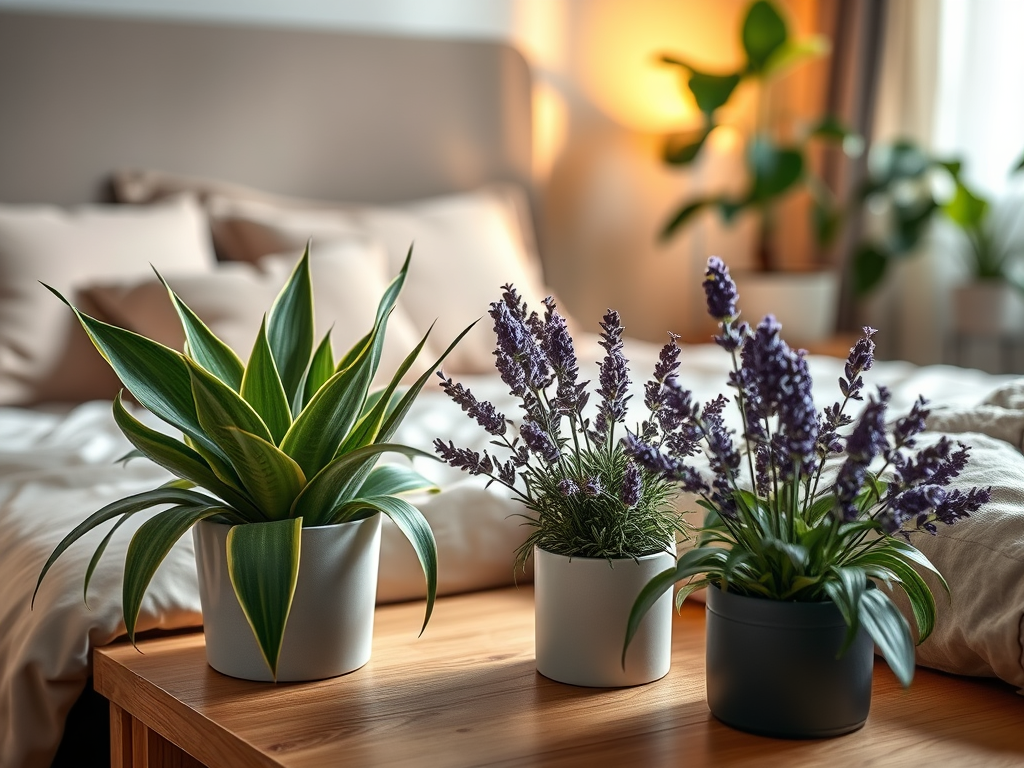
Snake Plant

Why it helps: It emits oxygen at night and removes toxins

Good for: Busy people, forgetful waterers

Care level: Practically bulletproof – water once every couple of weeks

With its upright leaves and sculptural look, the snake plant fits into any style of room. It’s a brilliant pick if your bedroom doesn’t get much sunlight perfect for UK winters.

2. Jasmine

Jasmine

Why it helps: Its natural fragrance reduces anxiety and promotes deep sleep

Good for: Light sleepers, stress-prone minds

Care level: Medium – likes regular misting and indirect light

One study even found that jasmine helps people fall asleep faster and feel more alert in the morning. A proper multitasker.

3. Lavender

Lavender

Why it helps: Calms the nervous system with a subtle scent

Good for: Those who struggle to unwind at night

Care level: Needs bright light and good drainage

Lavender is often used in pillow sprays and bath oils, but having the actual plant by your bed adds an extra layer of calm to your sleep setup.

4. ZZ Plant

ZZ Plant

Why it helps: Cleans indoor air and tolerates pretty much anything

Good for: Low-light rooms and people who forget to water

Care level: Easy – water sparingly and let it do its thing

It doesn’t flower or scent the air, but the ZZ plant earns its place by being low-effort and visually striking great for modern spaces.

5. Peace Lily

Peace Lily

Why it helps: Purifies the air and boosts humidity

Good for: Those with allergies or dry skin

Care level: Medium – keep the soil damp and avoid direct sunlight

This one’s great if you live in a flat with dry air. Its air-purifying abilities are well-documented, including by NASA’s Clean Air Study.

6. English Ivy

English Ivy

Why it helps: Reduces mould and airborne allergens

Good for: Smaller bedrooms or shared rooms

Care level: Needs occasional pruning and a bright spot

Hang it from a shelf and let it trail down for a gorgeous, cottagecore touch. A favourite in older UK homes where damp is a concern.

7. Aloe Vera

Aloe Vera

Why it helps:It emits oxygen at night and looks sleek

Good for: Minimalist bedrooms

Care level: Very easy – water every few weeks, give it some sun

Aloe does double duty: it purifies air and acts as a natural remedy for burns or dry skin. Plus, it never clashes with your decor.

8. Spider Plant

Spider Plant

Why it helps: Fights indoor pollution and increases oxygen

Good for: First-time plant parents

Care level: Super low maintenance – tolerates neglect

It also produces little “baby” plants you can snip off and pot elsewhere. Very satisfying.

9. Areca Palm

Areca Palm

Why it helps:It adds humidity and clears carbon dioxide

Good for: Dry homes with central heating

Care level: Moderate – likes regular watering and bright light

This one adds a lush feel to any room. Think calming, resort vibes without the price tag.

10. Valerian

Valerian

Why it helps: The scent of its flowers has a sedative effect

Good for: People who struggle to stay asleep

Care level: Slightly fussy – needs full sun and good drainage

It’s less common indoors, but definitely worth a try if you want something beyond the usual lavender and jasmine.

Styling Tips: Make It Work in Your Space

Your bedroom shouldn’t feel like a greenhouse. Even one or two well-chosen plants can completely change the feel of the space.

  • Go vertical: Use floating shelves or hang ivy to save space
  • Choose calming colours: Pair green plants with soft beige, grey, or white pots
  • Keep it tidy: Don’t overdo it. You want serenity, not a jungle
  • Pair with proper sleep gear: Plants can’t fix an uncomfortable bed

Speaking of which, if your mattress is old, noisy, or just not cutting it, it might be time to upgrade. At LuxeMattresses, we design sleep surfaces that support deeper rest and look great in any bedroom. Explore our mattress collection for calm environments or check out our guide to improving sleep quality.

Why Plants + Mental Health Go Hand in Hand

This isn’t just about sleep. The act of nurturing a plant watering it, seeing new leaves can be grounding and therapeutic. Mind.org.uk encourages nature connection as a way to manage stress, depression, and overwhelm.

You don’t need a garden to benefit. Even a single plant on your windowsill gives you something to connect with. And when it’s part of your bedroom, it reinforces the idea that the room is for rest, not scrolling or stressing.

Combine with a Thoughtful Sleep Routine

Plants are one piece of the puzzle. To make the most of their benefits, combine them with good sleep habits:

  • Switch off screens an hour before bed
  • Keep lighting soft in the evenings
  • Use blackout curtains or an eye mask
  • Stick to a consistent sleep time
  • Choose a supportive mattress that suits your sleep position

LuxeMattresses offers solutions tailored to all of the above whether you sleep hot, need back support, or just want something that fits your minimalist, plant-filled haven. Find your perfect mattress here.

Final Thoughts

Bringing a few plants for sleep into your bedroom won’t solve everything, but it can absolutely help. Cleaner air, a calmer mind, and a cosier space are all steps in the right direction. Start simple. Add one plant. See how it feels. Then layer in more when you’re ready.

Because in the end, better sleep doesn’t always come from big changes. Sometimes it starts with something as small as a single leaf.

FAQs

What are the best plants for sleep?

Lavender, snake plant, jasmine, and peace lily are excellent choices for air quality and relaxation.

Do plants really clean the air?

Yes. Some remove toxins and release oxygen, especially the snake plant, aloe, and spider plant.

Are bedroom plants safe for pets?

Some, like peace lily and ivy, are toxic if ingested. Stick to a spider plant or a palm if you’ve got furry companions.

Can I keep plants in a dark bedroom?

Absolutely. ZZ plants, snake plants, and spider plants all tolerate low light, which is great for UK winters.

How many plants should I have?

Start with one or two. Too many might raise humidity or feel cluttered. Keep it calm and balanced. 

Bedroom Temperature Hacks to Sleep Cooler All Year Round 
March 12, 2026

Bedroom Temperature Hacks to Sleep Cooler All Year Round 

Waking up hot, sticky, and restless? You’re not the only one. Whether it’s a muggy summer night or the central heating’s cranked too high in winter, sleeping hot can ruin your rest. But there’s good news: a few practical changes can help you achieve cooler sleep, whatever the season.

In the UK, where the weather never quite makes up its mind, getting your bedroom temperature right is key to improving your sleep environment. From breathable bedding and cooling mattresses to clever ventilation tricks, we’ve gathered the best tips to help you stay cool, comfortable, and undisturbed all night.

Why Sleeping Cooler Matters?

First, let’s look at the science. Your body temperature naturally dips when you’re asleep. If your bedroom is too warm, it interferes with that process, making it harder to falland stayasleep. According to the Best Advice, an ideal sleep temperature is around 16–18°C. Much warmer than that, and you’re more likely to toss and turn.

Overheating can also disrupt the deeper stages of sleep, which are essential for mental and physical recovery. If you’re waking up groggy or feeling like you haven’t slept at all, heat could be part of the problem.

1. Choose a Mattress Designed for Cooler Sleep

If your mattress traps heat, no amount of fan blowing or window cracking will help. Some materials, especially traditional memory foam, are known for holding onto body heat.

What to look for:

  • Open-cell foam or gel-infused layers to encourage airflow
  • Hybrid mattresses with springs for breathability
  • Cooling covers made with moisture-wicking fabrics

At Luxe Mattresses, our cooling mattress collection is designed with airflow and temperature regulation in mind. Whether you’re a hot sleeper or sharing a bed, choosing the right base layer for your custom bed is one of the most effective ways to achieve a cooler night’s sleep.

2. Switch to Breathable Bedding

Your sheets, duvet, and pillowcases can make or break your sleep comfort. Heavy or synthetic bedding often traps heat and moisture close to your body.

Better choices include:

  • Cotton (especially percale weave) – crisp, breathable, and ideal for all seasons
  • Linen – temperature-regulating and naturally cooling
  • Bamboo – soft, moisture-wicking, and eco-friendly
  • Wool duvets – surprisingly breathable and great at managing both heat and cold

Also, consider swapping out your duvet with the seasons. A 4.5 tog is often more than enough for UK summers, while layering up in winter gives you more control.

3. Use Ventilation to Your Advantage

Even in cooler months, stale or still air can make a room feel warmer than it is. A bit of airflow can go a long way in keeping your bedroom fresh.

Ventilation hacks:

  • Open windows strategically – Even 10 minutes in the evening can lower the overall room temperature
  • Cross-breeze setup – Open two windows or a door and a window opposite each other for better airflow
  • Add a fan – A quiet fan not only cools the room but also provides white noise for light sleepers
  • Try the frozen bottle trick – Place a frozen water bottle in front of the fan for DIY air con

In flats or homes where window opening isn’t ideal, consider a portable air purifier with cooling mode, especially helpful during pollen season or for those with allergies.

4. Cool Yourself Down Before Bed

Your sleep and heat relationship isn’t just about the room; it’s also about your body. Helping yourself cool down before climbing under the covers can improve how quickly you fall asleep.

Try:

  • lukewarm shower (not cold because it can trigger a rebound heating effect)
  • Cooling body sprays with peppermint or eucalyptus
  • cold flannel on the back of your neck or wrists
  • Swapping your evening cup oftea or a glass of water with ice and lemon

Some people even sleep with a cooling eye mask or wear light, moisture-wicking sleepwear, great if you’re prone to night sweats or hot flushes.

5. Control Bedroom Heat Sources

Without even realising it, your room may be warming itself up unnecessarily.

Tips to reduce indoor heat:

  • Turn off electronics – Devices give off heat even when idle
  • Keep blinds or blackout curtains closed during hot days to block sunlight
  • Don’t run heated blankets or warm bulbs past spring
  • Move your bed away from radiators or direct sunlight

If you live in a new-build or insulated property, your bedroom may retain heat more than older homes. It’s worth using a basic room thermometer to track overnight temps, you might be surprised at what’s causing the discomfort.

6. Consider Cooling Accessories

A few clever accessories can make a noticeable difference, especially in summer or in heat-retaining flats.

  • Cooling mattress toppers – Add a breathable layer to an existing mattress
  • Moisture-wicking pillowcases – Keep your head cool and dry
  • Chill pads or cooling gel pillows – These work wonders for warm sleepers
  • Natural fibre sleepwear – Avoid synthetic pyjamas that trap sweat

LuxeMattresses offers a range of mattresses that pair perfectly with your bedding for an all-in-one cooler sleep system.

7. Adjust Your Evening Routine

What you do in the hours before bed can affect how cool or warm you feel once you’re under the covers.

Smart tweaks include:

  • Avoid heavy meals late at night – digestion raises body temperature
  • Stop intense workouts at least two hours before bed
  • Dim the lights – harsh lighting can subtly heat a room and delay melatonin
  • Wind down with less tech – phones and tablets heat your face and overstimulate your brain

Why Cooler Sleep Helps Beyond Comfort

Sleeping cool isn’t just about feeling better, it’s about sleeping deeper. According to research shared by the Sleep Foundation, cooler temperatures help you reach deeper stages of non-REM sleep, where most of the brain and body restoration happens.

For people with anxiety, menopause, or chronic conditions like insomnia, keeping the sleep environment cool can make a big difference to recovery and mental health. And as experts point out, small physical improvements to your space, like air flow and comfort, can offer real psychological benefits too.

Final Thoughts

If you’re aiming for cooler sleep, don’t just rely on the weather to cooperate. From smarter bedding to breathable mattresses and proper ventilation, there are plenty of ways to take control of your sleep environment.

You don’t need to turn your bedroom into an icebox, but by working with your body’s natural rhythms and upgrading your sleep setup, you’ll feel the difference quickly. Whether you run hot year-round or just during heatwaves, the right materials and habits will help you rest better, night after night.

FAQs

What’s the best bedroom temperature for sleep?

According to the NHS, around 16–18°C is ideal. Much warmer, and you’re likely to wake throughout the night.

Can my mattress cause me to sleep hot?

Yes. Traditional foam mattresses often trap heat. Look for cooling gel layers, hybrid builds, or breathable covers.

Which bedding is best for hot sleepers?

Cotton, linen, and bamboo are all breathable and wick away moisture. Avoid polyester or heavy duvets unless it’s winter.

Does sleeping with a fan help?

Yes, fans improve airflow and lower the room’s surface temperature. They also offer helpful white noise for light sleepers.

How can I sleep cool in winter?

Use layers instead of heavy duvets, avoid overheating the room, and choose a mattress and bedding that regulate temperature effectively. 

How to Turn Your Bedroom Into a Stress-Free Sleep Sanctuary 
March 12, 2026

How to Turn Your Bedroom Into a Stress-Free Sleep Sanctuary

After a long day, your bedroom should feel like a retreat, not just another room in the house, but a space where stress melts away and rest comes naturally. Sadly, for many of us, our sleep space is anything but relaxing. Cluttered, noisy, poorly lit, and let’s not get started on the old mattress that’s seen better years.

So, how do you create a truly stress-free bedroom? One that supports both physical comfort and emotional calm? In this article, we’ll explore exactly that, from lighting and colour to texture, layout, and sound, helping you build a bedroom setup for sleep that genuinely restores you.

Why Your Sleep Environment Matters?

Good sleep isn’t just about how tired you feel at bedtime. Your body needs certain signals, low light, cool air, and quiet surroundings, to switch into rest mode. And your mind? It’s even fussier. A cluttered or chaotic bedroom can trigger stress and keep your nervous system on high alert.

According to NHS sleep guidelines, creating the right environment is one of the most effective ways to improve both sleep quality and duration. When your bedroom actively supports relaxation, falling asleep becomes easier, and staying asleep does too.

The Science Behind a Calming Bedroom

Your sleep environment affects your brain more than you might think. Light affects melatonin. Colors influence mood. Texture, sound, even smell, all signals to your brain whether it’s safe to unwind or whether it should stay alert.

When done well, these small sensory cues combine into one message: it’s time to rest. When done poorly, they keep your brain stimulated, long after your body is ready to lie down.

1. Light: Set the Mood for Sleep

Light is arguably the most important factor in a calming bedroom. Harsh overhead lighting tells your brain to stay awake, while soft, warm-toned lighting signals wind-down time.

What helps

  • Warm bulbs (think amber, not blue-white)
  • Lamps instead of ceiling lights
  • Dimmer switches or smart bulbs for gradual transitions
  • Blackout curtains or blinds to keep early morning light out

Your lighting should mimic dusk in the evening. Too much brightness can delay the release of melatonin, the hormone that helps your body fall asleep naturally.

2. Colour: The Psychology of Calm

Colours influence how we feel, often without us even realising. For a stress free bedroom, stick to soothing tones that encourage stillness rather than stimulation.

Best choices

  • Soft blues and greys (linked to calm and clarity)
  • Warm neutrals like beige, taupe, or soft white
  • Pale sage or olive green for a nature-inspired touch
  • Dusky pink or lavender for a bit of gentle warmth

Avoid bright reds, stark whites, or anything overly saturated. A bedroom isn’t the place for visual energy; it’s a space to downshift.

3. Textures: Invite Comfort, Not Clutter

We often think of décor as visual, but touch matters just as much, especially when it comes to comfort. The goal is to create layers of softness that feel inviting the moment you enter the room.

Suggestions

  • Invest in high-quality bedding, breathable cotton, or linen
  • Add a plush throw or knitted blanket at the foot of the bed
  • Layer cushions with soft fabrics like velvet or brushed cotton
  • Opt for a padded headboard if you sit up in bed

Importantly, don’t overdo it. A few well-placed textures are better than an overload of soft furnishings that feel fussy rather than restful.

4. Noise Control: Create a Quiet Zone

A truly stress-free bedroom needs to feel insulated from the outside world. Even low-level noise, from traffic, neighbours, or inside the home, can disrupt sleep cycles and raise cortisol levels.

What works

  • Thick curtains or rugs to absorb sound
  • White noise machines or sleep sound apps
  • Earplugs for particularly noisy settings
  • Soft ambient playlists to soothe your mind (instrumentals work best)

If you share a bed, consider a mattress with motion isolation, like those from LuxeMattresses, so your partner’s movements don’t disturb your rest.

5. Scent: Don’t Overlook the Power of Smell

Scent affects memory, mood, and even stress hormone levels. A light, calming fragrance can subtly cue your brain to relax, but it must be gentle, not overpowering.

Calming options

  • Lavender is backed by studies for its anxiety-reducing effects
  • Chamomile or sandalwood, warm and grounding
  • Eucalyptus, for a fresh, clear feeling

Try a pillow spray, oil diffuser, or natural sleep mist. Consistency helps. When your brain starts to associate that scent with bedtime, it strengthens your wind-down cue.

6. Layout: Keep It Simple and Spacious

The way you arrange your room matters more than you think. Cluttered spaces trigger low-level stress. Clean lines, open space, and an uncluttered floor give your brain a sense of calm.

Tips

  • Keep bedside tables clear
  • Store cables, chargers, and clutter out of sight
  • Avoid using your bedroom as an office or workout space
  • Let your bed be the centrepiece, and give it space to breathe

Of course, make your bed every morning. It’s a simple gesture that sets the tone for calm and makes returning to bed feel more intentional.

7. Your Mattress: The Heart of a Sleep Sanctuary

Even if your room is beautifully styled, if your mattress causes discomfort, your nervous system won’t fully relax. A lumpy, unsupportive, or overly warm mattress can prevent you from entering deep sleep or make it harder to fall asleep in the first place.

LuxeMattresses offers beds designed specifically for comfort, airflow, and pressure relief. Whether you sleep hot, share with a partner, or simply haven’t upgraded in a decade, the right mattress can transform your entire sleep environment.

To learn more about which mattress fits your needs, see our expert mattress guide.

Final Thoughts

Creating a stress-free bedroom doesn’t require a full renovation; it just takes some intention. Soften your lighting. Choose calming colours. Clear the clutter. Add texture that invites rest, and scent that calms the mind. And above all, ensure the space physically supports your sleep, starting with a mattress designed for it.

When you give your bedroom purpose, as a sanctuary, not just a storage space, your sleep improves. And when sleep improves, so does everything else.

To learn more about designing your sleep space or investing in comfort that truly lasts, visit the LuxeMattresses blog or explore our premium sleep solutions made to support better nights, naturally.

FAQs

What’s the easiest way to create a stress-free bedroom?

Start with lighting. Switch to warm-toned bulbs, add a lamp for evenings, and use blackout curtains. That one change often has the biggest impact.

Do calming colours really make a difference?

Yes. Soft, muted tones help reduce mental stimulation. Bold or bright colours, even if you love them, can keep your brain alert when it should be winding down.

How can I improve my sleep environment on a budget?

Declutter. Clean the space. Add a warm-toned bulb, and swap your pillowcase for something soft and breathable. Small tweaks often go a long way.

Does scent really help with sleep?

Studies show lavender and similar essential oils reduce stress and improve sleep onset. A light spray or diffuser can signal to your brain that it’s time to relax.

What’s the best bedroom setup for sleep if I live near noise?

Layer curtains, add soft furnishings to dampen sound, and use a white noise machine or earplugs. Also, choose a mattress with motion isolation to block internal disruptions.

Can a mattress really change how I sleep?

Absolutely, A supportive, breathable mattress helps your body stay in deep sleep longer and prevents micro-wakeups caused by discomfort or heat. Explore the LuxeMattresses collection for the most sleep-supportive options.

Should I use my bedroom for other activities?

Ideally not. Using your bedroom for work, TV, or exercise can confuse your brain’s sleep cues. Keep the space restful and dedicated to sleep and relaxation.

Lighting Matters: How to Use Light to Regulate Your Sleep Cycle
March 11, 2026

Lighting Matters: How to Use Light to Regulate Your Sleep Cycle

Ever found yourself wide awake at midnight, even though you’re exhausted? Or struggled to feel alert in the morning, no matter how early you went to bed? You might be surprised to learn how much the light effect on sleep contributes to these issues. The connection between light and sleep is stronger than you may realize.

The light you’re exposed to throughout the day, and especially in the evening, plays a huge role in how well you sleep. And with so many of us staring at screens late into the night, our sleep cycles are taking a hit. The good news? With a few tweaks to your lighting setup, you can help your body rest when it’s meant to.

Let’s dive into how light affects your circadian rhythm, why timing matters, and what you can do to build a sleep-friendly bedroom even in the middle of winter.

Your body runs on a 24-hour internal clock, known as your circadian rhythm. It’s the reason you feel naturally tired at night and awake in the morning (well, on a good day, anyway). And this rhythm is mostly set by light.

circadian rhythm
  • Bright light in the morning signals to your brain: time to wake up.
  • Darkness in the evening cues the release of melatonin, your sleep hormone.

But here’s the catch: artificial light especially from overhead LEDs and digital screens can seriously mess with that system. According to the Sleep Foundation, too much light in the evening delays melatonin production, making it harder to drift off when you should.

What About Artificial Lighting At Home?

Modern lighting is incredibly bright. Too bright, in fact. Especially if you’ve got white ceiling lights, recessed spotlights, or backlit TVs, and when those stay on late into the night, your body gets the message: stay awake.

The result? You might feel wired at bedtime, or worse, toss and turn for ages even after switching the lights off.

Here’s where bedroom lighting tips come into play. Soft, warm light in the evening helps your body wind down more naturally. Harsh overhead lighting? Not so much.

Bedroom Lighting Tips That Actually Work

Let’s be practical. No one’s suggesting you sit in the dark after 6 pm. But you can adjust your lighting to better support your body’s natural sleep cycle.

1. Switch to warm bulbs

Look for bulbs labelled “warm white” (2700K or below). These create a soft glow that mimics candlelight perfect for winding down.

2. Use lamps, not overhead lights

Ceiling lights are fine for cleaning or getting dressed. But in the hour or two before bed, stick to table or bedside lamps with softer tones.

3. Install dimmers or smart bulbs

Dimmers let you gradually reduce brightness as bedtime approaches. Smart bulbs can even shift from bright white in the morning to amber at night.

(The Luxe Mattresses mattress setup guide includes more ways to create a restful evening atmosphere without overhauling your space.)

best bedroom lighting for good sleep

And yes, your phone is a problem.

We all do it check Instagram before bed or scroll through emails “just quickly.” However, blue light from screens is a well-known melatonin blocker. It tells your brain to stay alert when it should be powering down.

Here’s how to fix it:

  • Use “Night Shift” or “Night Mode” on your phone
  • Lower screen brightness in the evening
  • Try blue-light blocking glasses if you must scroll
  • Better yet, leave your phone in another room and pick up a book

According to Mind.org.uk, reducing screen time at night doesn’t just improve sleep it also helps ease anxiety and racing thoughts.

Light in The Morning Matters Too

While most sleep advice focuses on what you do at night, your morning light routine is just as important.

Getting natural daylight within the first hour of waking helps reset your body clock and boosts alertness. Even a walk around the block or five minutes in the garden can do the trick.

If you wake before sunrise or during dark UK winters, consider using a light therapy lamp or a sunrise alarm clock. These mimic natural light and can help with energy dips, especially for those dealing with seasonal low mood.

Light Therapy: Worth It?

Light therapy isn’t just for people with Seasonal Affective Disorder. It’s helpful for anyone who:

  • Struggles with groggy mornings
  • Works night shifts
  • Feels tired all day and alert at night
  • Has an inconsistent sleep schedule

Sit near a 10,000-lux light box for 20–30 minutes in the morning ideally between 6am and 9am. This exposure helps realign your circadian rhythm and can reduce the “midday slump.”

Design a Bedroom That Works with Your Body, Not Against It

Your bedroom shouldn’t feel like an operating theatre. It should feel soft, cosy, and ready to wind down when you are. Here’s how to make that happen:

Keep light sources low

Table lamps and wall sconces beat overhead lights every time.

Choose layered lighting

Use a mix of sources bedside lights, dimmable bulbs, maybe even string lights—for flexibility.

Block outside light at night.

Streetlights and early sunrises can be just as disruptive. Blackout curtains or a good eye mask make a huge difference.


Pair this with a supportive mattress like the ones from Luxe Mattresses and you’ve got a recipe for better rest. Explore our collection of sleep-friendly mattresses or learn how to build the perfect minimalist sleep environment.

Light, Mood, and Mental Health

The connection between light and sleep, and how light effects on sleep cycles, goes deeper than just falling asleep quickly. It also affects mood, focus, and even symptoms of anxiety and depression.

how light effect mode and mental health

As Mind.org.uk explains, proper exposure to light (especially natural light) can lift mood, reduce stress, and help regulate emotions something many of us could use a bit more of.

So, if you’re feeling low or out of sync, adjusting your light exposure might be a small but powerful step in the right direction.

Common Lighting Mistakes to Avoid

Even well-meaning routines can include some lighting habits that quietly undermine your sleep. Keep an eye out for:

  • Cool white or “daylight” bulbs in the bedroom
  • Leaving the TV or phone screen on until you fall asleep
  • Keeping your lights on full brightness late at night
  • Not getting enough daylight before noon
  • Using overhead spotlights exclusively after 7 pm

Sometimes, the simplest changes like switching a bulb or moving a lampcan bring surprising results.

Final Thoughts

We often focus on what we eat or how much we exercise, but overlook the impact of something as basic as light. The truth is, your body’s sleep rhythm isn’t just about bedtime routines or the number of hours you clock. It’s about timing. It’s about light. And it’s about teaching your body when to be alert and when to let go.

So, try adjusting your lighting, both natural and artificial, to match what your body actually needs. Pair that with a calm space, a supportive mattress from LuxeMattresses, and a phone that stays out of the bed, and you might just sleep better than you have in years.

FAQs

What type of light is best for sleeping?

Warm, soft lighting (around 2700K) is ideal. It mimics sunset tones and won’t disrupt melatonin production.

Does morning light help sleep?

Yes, getting sunlight within an hour of waking helps reset your body clock and improve night-time rest.

Are smart bulbs worth it for sleep?

They definitely let you shift colour temperature throughout the day and create bedtime-friendly lighting routines.

Can I use my phone before bed if I use Night Mode?

Night Mode helps, but it’s still best to limit screen use entirely before sleep. Try reading or journaling instead.

What if I wake up before the sun?

Use a sunrise alarm or light therapy lamp to simulate daylight. It helps signal to your brain that it’s time to start the day. 

Product has been added to your cart