
100-Night Trial · Refund to night 60 · Exchange to night 100
Free Nationwide Delivery
Covered by Our Own Warranty
Call us at: 020 4572 5122
0% APR Finance Available
How Many Hours of Sleep Do You Really Need? (Use Our Sleep Calculator)
March 9, 2026

How Many Hours of Sleep Do You Really Need? (Use Our Sleep Calculator)

Estimated reading time: 6 minutes

Sleep is a fundamental component of overall health, influencing everything from cognitive function to immune response. Using a sleep calculator can help you find the perfect balance. While general guidelines suggest that adults need between 7 to 9 hours of sleep per night, individual needs can vary based on age, lifestyle, and health conditions. Understanding your unique sleep requirements is essential for optimising rest and well-being.

1. Understanding Sleep Cycles and Their Impact
calculate sleep debt

Sleep is composed of multiple cycles, each lasting approximately 90 minutes. These cycles include stages of light sleep, deep sleep, and REM (rapid eye movement) sleep. Waking up at the end of a sleep cycle, rather than in the middle, can lead to feeling more refreshed and alert. Aligning your sleep schedule with these natural cycles can enhance sleep quality and daytime functioning.

2. Personalized Bedtime and Wake-Up Calculations

Bedtime Calculator

Determining the optimal time to go to bed involves considering your desired wake-up time and the number of complete sleep cycles you aim to achieve. For instance, if you need to wake up at 6:30 AM and want to complete five sleep cycles (7.5 hours), your ideal bedtime would be around 11:00 PM. This calculation also accounts for the average time it takes to fall asleep, typically about 15 minutes.

Sleep Calculator

Plan your optimal bedtime and wake-up times based on your body’s natural sleep cycles. Wake up refreshed and energized every morning.

Why Use This Calculator?

  • Calculate the ideal bedtime based on when you need to wake up
  • Find the optimal wake-up time based on when you go to bed
  • Work with your body’s natural 90-minute sleep cycles
  • Minimize grogginess and maximize morning energy
  • Based on sleep science research
Use Sleep Calculator

Wake-Up Time Calculator

Conversely, if you plan to go to bed at a specific time, calculating the best wake-up time involves ensuring you complete full sleep cycles. For example, going to bed at 10:00 PM and aiming for six sleep cycles (9 hours) would suggest a wake-up time of 7:00 AM.

3. Assessing and Managing Sleep Debt

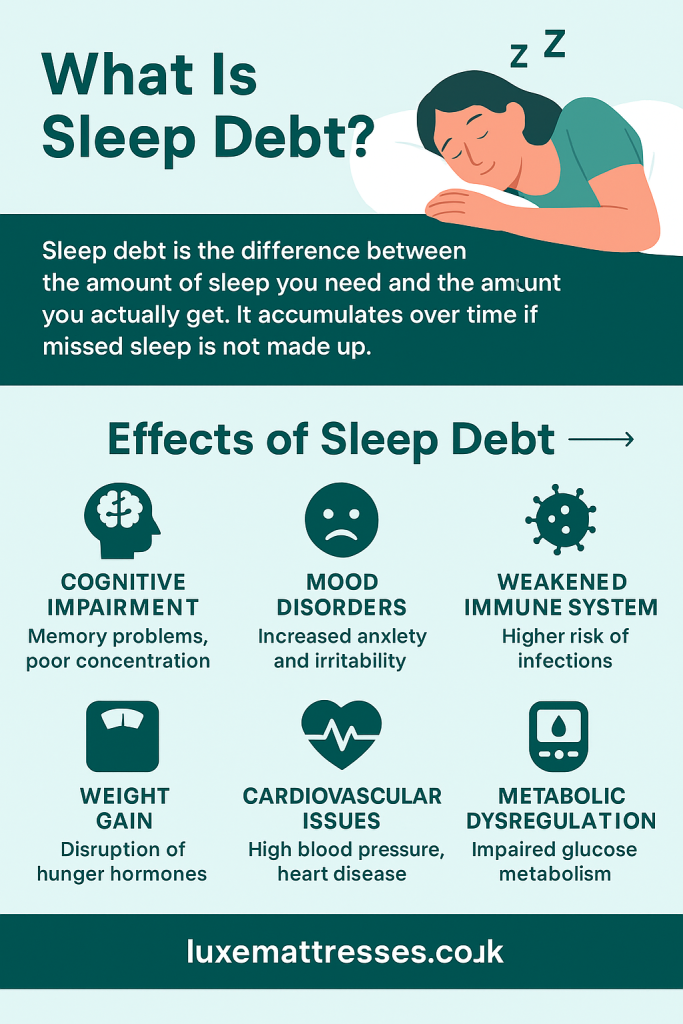
What Is Sleep Debt?

Sleep debt accumulates when you consistently get less sleep than your body requires. For example, if your body needs 8 hours of sleep per night but you only get 6 hours, you accrue a sleep debt of 2 hours per night. Over a week, this amounts to 14 hours of lost sleep.
what is sleep debt?

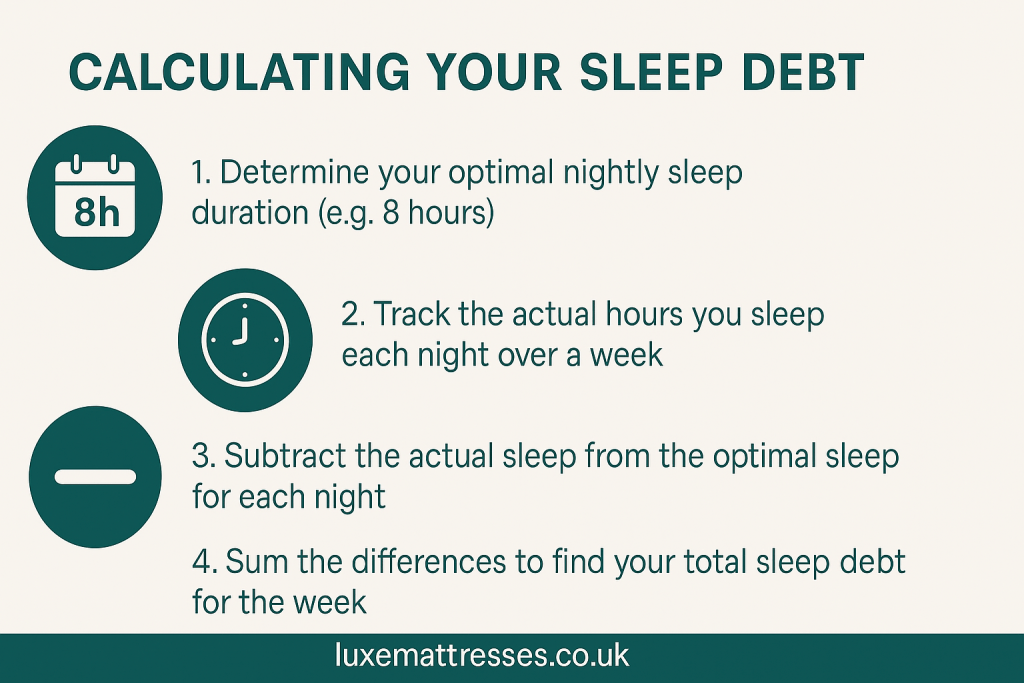
Calculating Your Sleep Debt

To calculate your sleep debt:

  1. Determine your optimal nightly sleep duration (e.g., 8 hours).
  2. Track the actual hours you sleep each night over a week.
  3. Subtract the actual sleep from the optimal sleep for each night.
  4. Sum the differences to find your total sleep debt for the week.

Comprehensive Sleep Quiz

Discover your personalized sleep score and get expert recommendations to improve your sleep quality. This quiz takes about 5-7 minutes to complete.

Why Take This Quiz?

  • Get a comprehensive analysis of your sleep habits
  • Receive personalized recommendations from sleep experts
  • Find the perfect mattress match for your sleep style
  • Learn science-backed tips to improve your sleep quality
  • Get personalized product recommendations
Take the Sleep Quiz

Managing sleep debt involves adjusting your schedule to allow for additional sleep, improving sleep hygiene, and addressing any underlying sleep disorders.

4. Evaluating Sleep Quality and Establishing Benchmarks

Assessing sleep quality goes beyond duration. Key factors include:

  • Sleep Latency: Time taken to fall asleep.
  • Sleep Efficiency: Percentage of time in bed spent sleeping.
  • Nighttime Awakenings: Frequency and duration of awakenings during the night.

Establishing benchmarks for these factors helps in identifying areas for improvement and tracking progress over time.

5. Discovering Your Sleep Personality

Understanding your sleep personality can provide insights into your sleep patterns and needs. Common sleep personalities include:

  • The Light Sleeper: Easily awakened by noise or light.
  • The Deep Sleeper: Rarely disturbed during sleep.
  • The Night Owl: Prefers late bedtimes and wake-up times.
  • The Early Bird: Naturally inclined to sleep and wake early.

Identifying your sleep personality can guide you in tailoring your sleep environment and routines for optimal rest.

6. Personalized Sleep Recommendations

Based on your sleep assessments and personality, consider the following personalized recommendations:

  • For Light Sleepers: Use white noise machines, blackout curtains, and maintain a consistent sleep schedule.
  • For Deep Sleepers: Ensure alarm clocks are effective in waking you and avoid oversleeping.
  • For Night Owls: Gradually adjust bedtime earlier and limit exposure to screens before bed.
  • For Early Birds: Maintain consistent sleep and wake times, even on weekends.

Additionally, selecting a mattress that aligns with your sleep preferences can enhance comfort and support, contributing to better sleep quality.

7. The Hidden Dangers of Sleep Debt

Chronic sleep deprivation can have profound effects on both physical and mental health. Some of the potential consequences include:

  • Cognitive Impairment: Difficulty concentrating, memory lapses, and decreased problem-solving abilities.
  • Mood Disorders: Increased risk of depression, anxiety, irritability and Mental health effects
  • Weakened Immune System: Greater susceptibility to infections and slower recovery times.
  • Weight Gain: Disruption of hormones that regulate appetite, leading to increased hunger and calorie intake.
  • Cardiovascular Issues: Elevated blood pressure, increased risk of heart disease and stroke.
  • Metabolic Dysregulation: Impaired glucose metabolism, increasing the risk of type 2 diabetes.
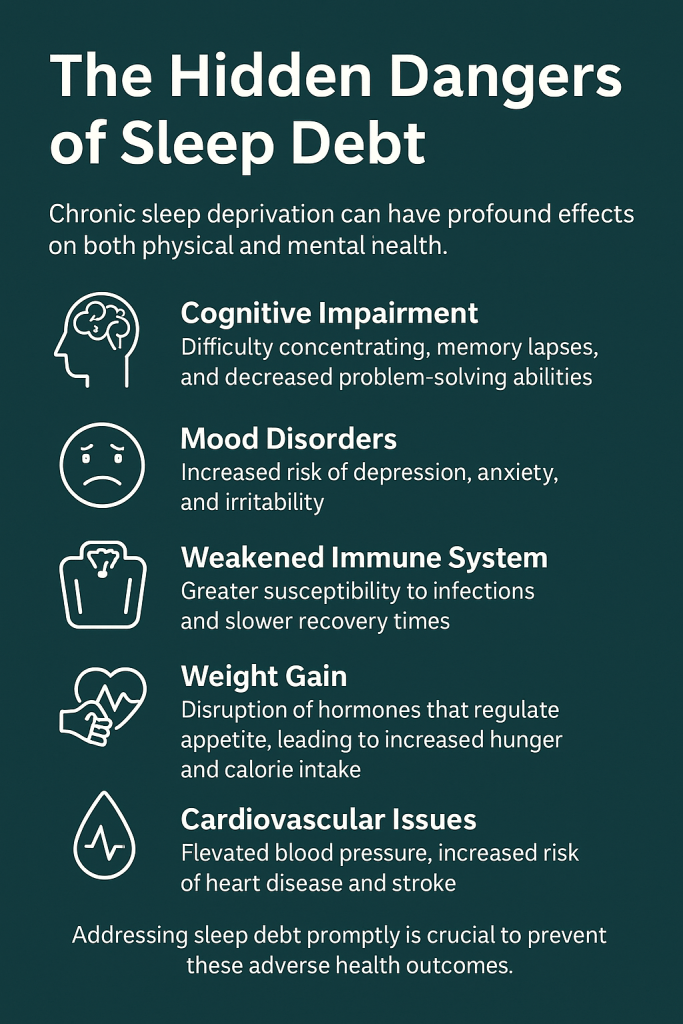
dangers of sleep debt

Addressing sleep debt promptly is crucial to prevent these adverse health outcomes.

FAQs

How many hours of sleep do I truly need?

Adults truly need 7-9 hours per night for optimal health, per AASM/CDC guidelines less increases risks like heart disease and cognitive decline.

Is 4 hours of sleep really enough?

No, 4 hours is chronically insufficient for most, leading to impaired cognition, weakened immunity, and higher chronic disease risk; only rare short sleepers thrive on it.

What is the 10 5 3 2 1 sleep rule?

10 hours before bed: no caffeine; 5 hours: no alcohol/eat; 3 hours: no work/exercise; 2 hours: no naps; 1 hour: no screens promotes quality sleep.

Do some people really need 12 hours of sleep?

Yes, some like those with hypersomnia or recovery needs require 10-12 hours, but most adults over 9 signals underlying issues like depression.?

Who sleeps for 90% of the day?

Koalas sleep up to 90% (18-22 hours/24), an adaptation for low-nutrient eucalyptus diets requiring energy conservation.?

Conclusion

Understanding and aligning with your unique sleep needs is essential for maintaining long-term health and well-being. With the help of tools like our sleep calculator, you can evaluate your current sleep patterns, identify potential sleep debt, and uncover your individual sleep personality. These insights empower you to make smarter, more tailored decisions about your nightly routine. By adopting personalized strategies and enhancing your sleep environment, you’ll set the foundation for more restorative, high-quality sleep and better overall daily performance.

How long memory foam lasts?
March 6, 2026

How Long Does Memory Foam Last? Understanding Material Degradation Over Time

Estimated reading time: 11 minutes

Have you ever slept on a mattress that isn’t supportive? Memory foam mattress mainly relieves pressure and provides comfort.  Just like any other product, memory foam mattresses will lose effectiveness over time. Finding out how long memory foam lasts can save you more than just money. It can hugely affect the quality of your sleep and health, not to mention whether or not your spine can attain proper support.

A quality memory foam mattress can last anywhere between 7 and 10 years. Proper care and maintenance may prolong the lifespan of a mattress. It also depends on the density of foam, the usage pattern and other such things.

Let’s discuss memory foam that wears out, or how to identify older memory foam and extend the life of your memory foam with useful tips.

What Affects the Lifespan of Memory Foam Mattresses?

The length of time a memory foam mattress lasts. By knowing these, you can buy better and take care of your mattress better. The lifespan of a memory foam mattress depends on the following key factors.

Foam Quality and Density Determine Durability.

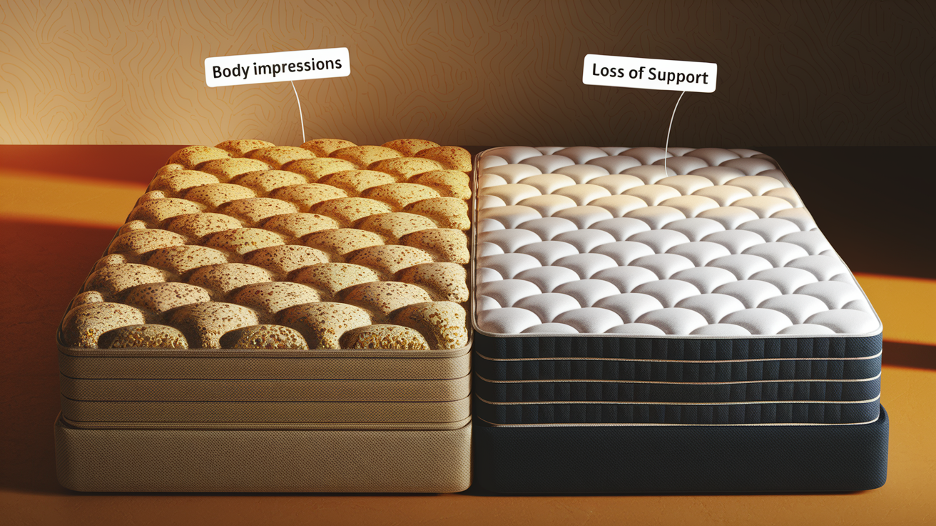
Mattress foam density is an important factor of memory foam durability. Foam that weighs a minimum of 5 lbs will not sag and maintain better support. Foam with a density lower than 3 lbs breaks down faster, causing body impressions and loss of comfort. Memory foam quality indicators refer to their density ratings, and CertiPUR-US certification means the foam is not harmful to health.

Weight Distribution Impacts Wear and Tear.

Extra weight from heavier people or uneven weight distribution stresses the mattress. Over time, foam breakdown speeds up, especially in poor-quality or low-density foam. A mattress that is used for one person will last longer than one for two people. A strong bed frame provides proper support that distributes weight evenly and removes the pressure points that can cause damage.

Usage Habits Affect Longevity.

The frequency you use the mattress affects its mattress longevity. Memory foam mattress in a guest bedroom will have a longer life than one in nightly use. Often moving around and sitting with feet dangling or jumping on the bed can speed foam deterioration. Using without maintaince can degrade the material quickly over time.

Maintenance Extends or Shortens Lifespan.

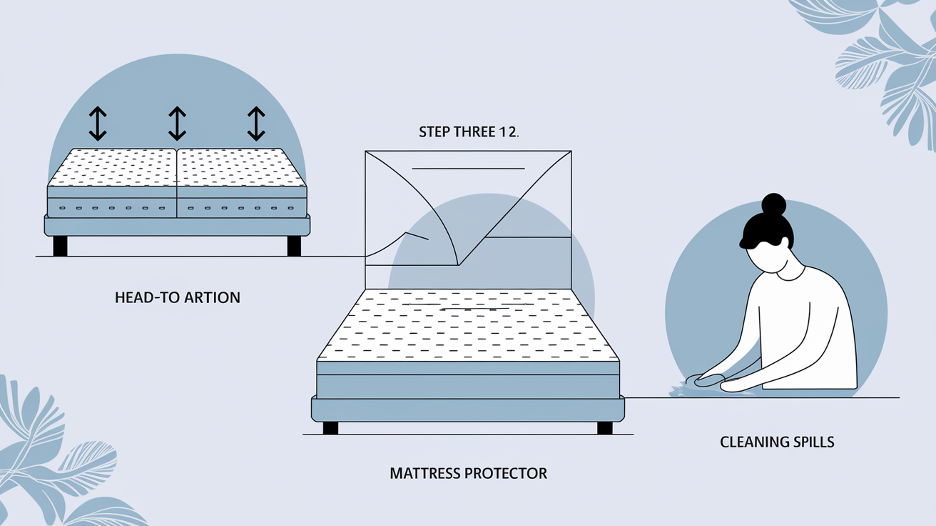
Poor maintenance habits speed up wear. Not using a mattress protector makes the foam vulnerable to sweat and spillage, which disintegrates it. Not rotating the mattress causes unequal wear in the memory foam. To keep foam in good condition, make sure to cover it up with a breathable foam or fabric cover and clean any spill immediately. A well-cared-for mattress can last more than a decade.

Foam Density and Its Role in Longevity.

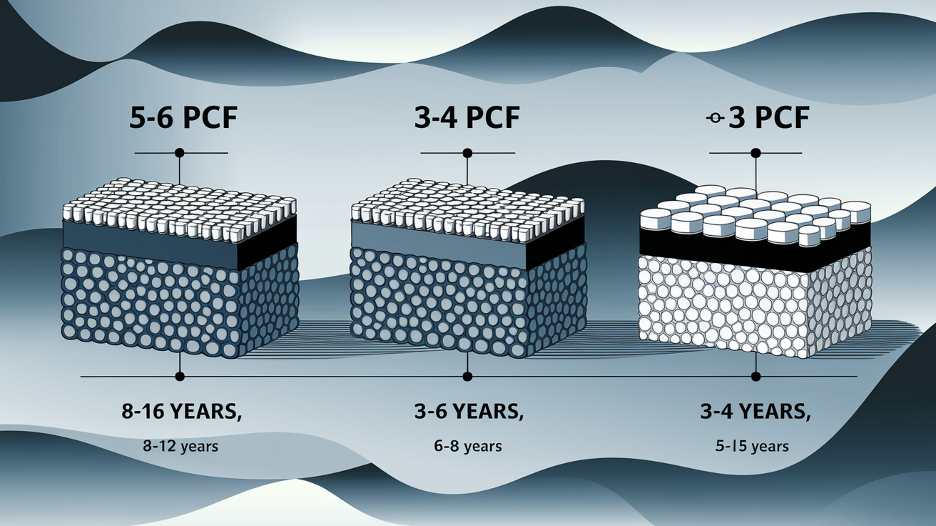
The density of foam decides how long your memory foam mattress will continue to support you. The specification of pounds per cubic foot (PCF) allows you to evaluate how strong the item is, and in other words how much wear and tear it can withstand through daily use, Want to dive deeper into foam densities? Click here to explore our detailed guide on memory foam density and what it means for support and durability.

Foam density and degradation

High-Density Memory Foam (5-6 PCF).

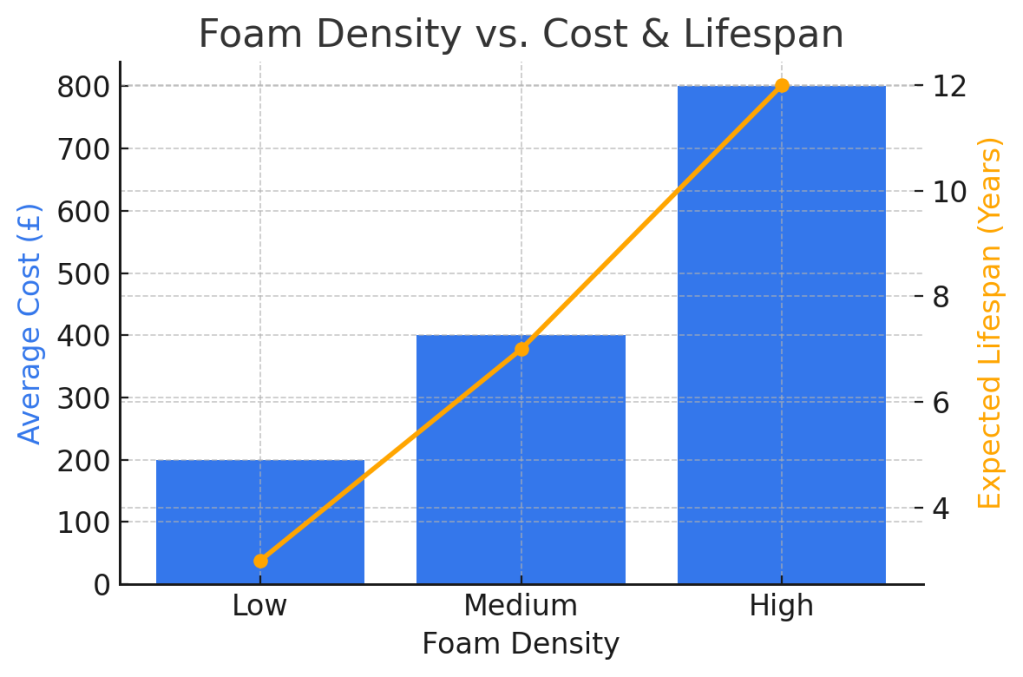
When chosen carefully and used properly, a high-density memory foam mattress can last up to 15 years.  The responsive cell construction shields you from body impressions from heavier sleepers. With optimal support and spinal alignment, this particular density level offers superior pressure relief, making it the ideal choice for primary beds.  Most luxury mattress brands are using 5 – 6 PCF foam in the comfort layer.

Medium-Density Memory Foam (3-4 PCF).

Medium-density foam offers a balance of comfort and durability. Life expectancy is 6-8 years. Although it is not as expensive as HDF mattresses, indentations may form over time, particularly in people who weigh more than 200 pounds. This density is suitable for guest beds or lighter people who wish to pick up a softer feeling with good longevity.

estimated memory foam lifespan by density

Low-Density Memory Foam (<3 PCF).

Cheap, low-density memory foam mattresses can wear out in 3 to 5 years. Less dense frameworks compress easily and sag quite a bit; along with this, they also lose support. These mattresses might be fine for kids’ beds or for an occasional sleepover, but aren’t recommended long-term for adults.

Density vs. Thickness Considerations.

When evaluating the lifespan of a memory foam mattress, thickness does not matter as much as density. A 10 inches mattress which has a foam weight of 5 PCF will outlast a 12 inches mattress which has 2.5 PCF. Don’t rely on the height of your mattress to judge quality; always check the foam density specs. Foam that is denser absorbs motion and allows for better temperature control throughout the night.

Signs Your Memory Foam Mattress is Wearing Out.

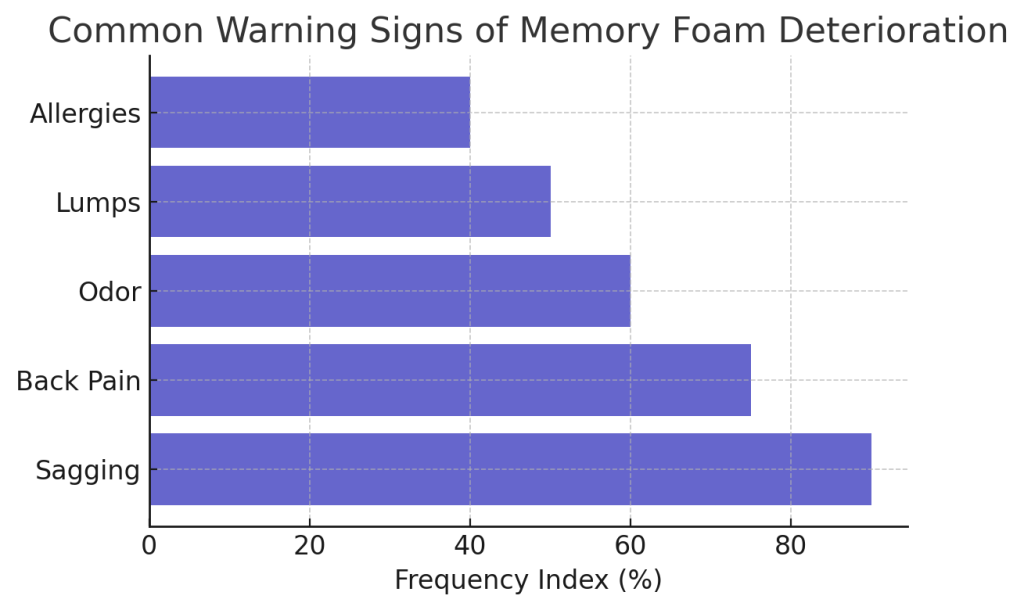
A memory foam mattress doesn’t last forever. Memory foam signs are important for figuring out if it need a replacement or not. Neglecting these warning signs may cause sleep quality and back issues.  Key indicators that your mattress is showing its age. 

signs of memory foam mattress wearing

Visible Sagging and Body Impressions.

A clear indicator of worn memory foam is visible sagging. If the depressions where you sleep are more than 1.5 inches deep, the foam has lost its ability to restore. The imprint of our body affects the spine and causes uneasiness and backache. Hold a straight edge across the mattress to check it for level. The foam in your mattress won’t support you anymore.

Increased Morning Pain and Stiffness.

If you’re waking up with new aches or old aches have gotten worse, your memory foam mattress might be failing. As foam breaks down, it stops relieving pressure points. You may find yourself tossing and turning more as your body struggles to get comfortable. You will see this loss of support more often in older mattresses (7+ years) or foam of lower density.

common warning signs of memory foam deterioration

Lumps, Bumps, and Uneven Surfaces.

Internal foam layers may migrate or clump over time, causing unsightly lumps and unevenness. This happens when the bond between foam layers weakens or when foam degrades unevenly.  You may feel as though you are trying to sleep on a surface with hills and valleys rather than a flat, supportive surface.

Persistent Odors and Off-Gassing.

The new memory foam always smells of chemicals, but if your older mattress has a smell that indicates it is breaking down.  If your mattress still has strong smells after four weeks of off-gassing, the foam may be disintegrating.  Low quality materials are often present in cheaper foams.

Other Warning Signs.

Additional signs you need a new mattress include.

  • Older foam attracts dust mites that worsen allergies.
  • Visible cracks or tears in the foam.
  • The mattress no longer returns to its original shape.
  • You sleep better elsewhere (hotels, guest beds).

Average Lifespan – Here’s What You Can Expect

A memory foam mattress will normally last for approximately 7 to 10 years, with regular usage. But, the replacement schedule of this mattress depends on quality and care. Most premium brands with a high density foam are closer to the truth. Using a Tempur-Pedic , Saatva and Luxe Mattress for over 12 years is not uncommon with proper care.

Most mattresses that cost below £400 tend to break down from memory foam within the first 3-5 years.

foam density vs cost and lifespan

These lower-cost models tend to use less-dense foams that compress and sag faster. Warranties are always worth looking at when buying – a reputable manufacturer with a 10-year warranty against defects will give you an indicator of durability.

Your memory foam mattress’s lifespan ultimately depends on.

  • Foam density (higher = longer-lasting).
  • Frequency of use (primary vs guest bed).
  • Weight of sleepers (heavier use = faster wear).
  • Maintenance practices (protectors, rotation).

Tips to Extend the Life of Your Memory Foam Mattress.

Taking good care of your memory foam mattress will greatly affect its lifespan. The foam will sustain support and comfort, and prolong memory foam degradation with these measures. These tips can extend the life of your mattress for years.

tips to extend life of your mattress

Invest in a Quality Mattress Protector.

A waterproof mattress protector is your first line of defence against spillage, sweat, and dust mites. These contaminants break down foam fibers over time. Choose breathable protectors that don’t trap heat and allow airflow to preserve the integrity of the foam. Wash the protector once a month so allergens won’t penetrate the mattress.

Regular Rotation Prevents Uneven Wear.

To help keep the wear and tear on your memory foam mattress evenly distributed, you should rotate your mattress from head-to-foot every 3-6 months.  You don’t want to flip your memory foam bed but rotating can prevent permanent impressions. This advice is especially helpful for couples with different sleeping positions or body types. Write down the date of rotation on the calendar.

Prompt Stain Treatment Preserves Materials.

If you clean spills right away, the liquid won’t sink into the foam layers. Use a soap solution to blot stains, never use detergents or wet excessively.  Memory foam must never be soaked because water ruins it. If you have a stubborn stain, use a foam cleaner as recommended by the manufacturer.

Proper Foundation Support Matters.

A supportive base prevents premature memory foam wear. The gaps in slatted foundations can be 3 inches apart at the maximum. Solid platform beds or adjustable bases also work well. Don’t use an old box spring with your new memory foam mattress. The new foam mattress will break down quicker on an uneven surface. Check the center support of the bed frame for queen and larger sizes.

Additional Care Considerations.

Keep the room temperature moderate because it degrades the foam. Give new mattresses a full 24-48 hours to expand before use.  Try not to sit too often at the edges of your mattress, as this will compress the foam at the edges unevenly.  You might want to consider getting a mattress topper. A topper will wear out first before the actual mattress does.

When Is It Time to Replace Your Memory Foam Mattress?

When should you replace which know when to replace your memory foam mattress will help you sleep well. Most mattresses need to be replaced every seven to ten years, but some signs appear sooner.

Age and Visible Wear.

Once your mattress reaches 7 years, evaluate its condition. Slumping more than 1.5 inches is a fault. If your body leaves a permanent imprint in the foam, it can no longer support you.

Comfort and Sleep Quality.

If you are tossing and turning more or waking up with new aches, your mattress isn’t supporting you properly. If you sleep better elsewhere, you probably need a new mattress.

Health Considerations.

Your allergy flare-ups may be due to dust mites in old foam. If you detect smells or see mold, change it right away.

Conclusion: Invest Wisely, Sleep Better.

By knowing about the durability of memory foam, you will be able to maximize your investment in sleep health. Caring for your high-density foam mattress well, will give you the best long-term value for money.  Using good protectors and foundations really helps your mattress last longer.

You should swap our saggy mattress or warped mattress ASAP.  A quality memory foam mattress maintains your proper spinal alignment for years. By buying the right and maintaining regularly, sleep stays undisturbed and back pain is prevented.

Choose only premium certified foams from recognized brands. Your mattress is the base of your rest every day, and remember, choosing well will pay you back. Keep track of how old your mattress is and watch for signs of wear to replace it at just the right time.

FAQs.

1.    Can memory foam mattresses be flipped?

Most modern memory foam mattresses are single-sided. Rotate your mattress the whole 180 degrees every 3-6 months for equal wear distribution. Alternate side sleeping might just save your mattress from getting indentations that can become permanent.

2.    Are mattress warranties accurate for estimating lifespan?

Warranties lasting longer than expected don’t necessarily mean more durability. Most 20-year warranties are prorated after 10 years, worth less.  Mainly covers defective manufacturing and not normal wearing out.

3.    Are off-gassing odors dangerous?

The new memory foam has a chemical smell but it goes away after 72 hours. Off-gassing processes include harmless VOC emissions that meet CertiPUR-US safety standards. Proper ventilation eliminates odors faster.

4.    Can mattress toppers prolong a memory foam bed’s life?

For quality purposes, 2-3 inch mattress toppers absorb wear and tear to extend your mattress.  They especially come in handy to refresh mattresses too old to replace.

Why The Right Mattress Becomes More Important As You Age
March 6, 2026

Why The Right Mattress Becomes More Important As You Age

As the years pass, sleep doesn’t just feel more precious it becomes vital, and the right mattress can play a crucial role in supporting aging bodies and improving sleep quality. Our bodies change, our bones feel a little less forgiving, and restful sleep becomes harder to come by. Back pain? Common. Joint stiffness? Practically expected. But here’s the good news: the right mattress can make a profound difference.

More than a sleep surface, it’s a daily tool for recovery, posture and peace of mind. It’s no surprise that choosing the right mattress becomes more important with every passing year.

Why The Right Mattress Becomes More Important As You Age

Best Mattress for Seniors with Back Pain

Waking up sore isn’t normal. Yet, for millions of seniors, back pain has become a morning routine. In many cases, the culprit isn’t just age. It’s the mattress. A medium-firm mattress, backed by the Sleep Foundation, helps realign the spine and distribute body weight more evenly. It cushions where it should and supports where it must. 

Curious about which models cut? Explore our firm mattress guide for tried-and-tested relief.

Best Mattress for Seniors with Back Pain

Best Mattress for Arthritis and Joint Pain

Arthritis doesn’t sleep so your mattress must fight harder. Seniors often deal with chronic joint pain in the hips, shoulders, or knees. Here’s where memory foam shines: it conforms to your body’s natural curves, reducing tension in the joints and softening the pressure. The National Institute on Aging even recommends mattress upgrades to manage pain. 

We’ve answered your top questions in our Memory Foam FAQs starting there if you’re seeking deep soothing rest.

Best Mattress for Hot Sleepers

Feeling too warm at night? You’re not alone. Seniors often report overheating, particularly during light stages of sleep. Traditional foam traps heat, which is why modern cooling solutions like gel-infused layers or ventilated hybrids are essential. 

According to Zoma Sleep, hybrid mattresses with breathable designs provide the balance hot sleepers crave. Need cooling without sacrificing support? Our cooling mattress collection was built just for that.

Best Mattress for Seniors with Mobility Issues

Mobility changes everything including how you get into and out of bed. A low-profile sagging mattress becomes more than inconvenient; it becomes unsafe. That’s why seniors with mobility concerns search for mattresses with firm edge support and a responsive top layer. 

Mattress Clarity lists hybrid mattresses as best-in-class for easy movement and support. For practical solutions, check out our expert breakdown of hybrid mattresses.

Best Adjustable Beds for Seniors

Imagine controlling your comfort with the push of a button. Adjustable beds allow just lifting your head to stop snoring or elevating your legs to reduce swelling. For seniors managing circulation issues or acid reflux, this flexibility isn’t a luxury; it’s a necessity. 

The Sleep Foundation confirms that pairing an adjustable base with memory foam or hybrid mattresses dramatically improves comfort. Look for “adjustable base compatible” when shopping.

Signs Your Mattress Is Too Old

Your mattress might not look tired but your body knows better. Sagging uneven spots or waking up sore are red flags. If your mattress is over seven to ten years old, it’s likely past its prime. 

According to SleepFoundation.org, replacing your mattress can immediately boost sleep quality and reduce allergens. Still unsure? Our mattress care guide helps you assess whether it’s time to upgrade.

Is A Firm Or Soft Mattress Better For Seniors?

This question comes up more often than you’d think and the answer isn’t one-size-fits-all. Generally, medium-firm mattresses strike the right balance for spinal health and joint comfort. But if you’re lightweight or sleep on your side, a slightly softer feel may be better. 

Healthline explains how softness and firmness affect older bodies. We compare both options clearly in our firm vs soft mattress guide.

How Often Should Seniors Replace Their Mattress?

Older sleepers are more sensitive to pressure motion and dips in support. Even if your mattress still “feels fine,” its internal structure might be failing. Foam compresses. Springs weaken. 

Experts advise replacement every seven to ten years or sooner if pain or poor sleep emerges. Our guide on when to replace your mattress breaks down exactly what to look for.

Conclusion

You’ve earned your rest. Your mattress helps you enjoy it. Whether you’re battling back pain chasing cooler nights or just needing better support, your sleep setup should evolve with your body. The right mattress isn’t a luxury, it’s a strategy for healthy aging. 

Browse our Luxe Mattress Collection and take the next step toward deeper, more restorative sleep.

How Long Does a Mattress Last? Uncover the Truth About Lifespan
March 5, 2026

How Long Does a Mattress Last? Uncover the Truth About Lifespan

If you don’t want to wake up in the morning with shoulder and back pain, replace your mattress timely. Understanding mattress lifespan is crucial, especially if you bought this mattress a few years ago. How long does a mattress last? This is an important question to ask once you start experiencing issues with the quality of sleep. 

An average person sleeps for almost 236,228 hours in his lifetime and that’s a lot. We all want these hours to be most comfortable time of our life and it is only possible if you have the right mattress. This article will make you understand when to replace a mattress and how long a quality mattress lasts. 

Understanding Mattress Lifespan

The lifespan of a mattress depends on different factors and can vary depending on your sleeping habits and maintenance routine. Before answering the question “How long should a mattress last,” we need to understand the basic concept of mattress longevity. 

What is Mattress Longevity?

For how long does a mattress maintain its structure, offer needed support, and remain in good shape? This period is called mattress longevity. A cheap mattress may collapse after a year or two while quality mattresses can easily last for 5-8 years. Different factors affect the mattress longevity. 

Factors Influencing Mattress Lifespan

The quality of the mattress is not the only factor defining the potential lifespan here. How do you keep your mattress clean and what are your sleeping habits? These aspects also influence the lifespan of a mattress. Here are some important factors that determine mattress lifespan:

Average Lifespan of Different Mattress Types

How long does a mattress last? There is no one right answer to this question because the average lifespan varies from one mattress type to another. Here is the average lifespan for popular mattress types that we have available in the UK market. 

Mattress TypeAverage LifespanWhy to Replace?
Innerspring Mattress5-7 yearsReduced support due to lost resiliency of coils, padding layers also degrade and compress
Memory Foam Mattress8-10 yearsMemory foam starts losing supportive properties and the filling becomes softer over time. 
Latex Mattress10-15+ yearsMostly durable mattresses that can last for decades and maintain original support and shape
Hybrid Mattress7-10 yearsIf the coils lose resiliency or the foam becomes softer, it is time to replace the hybrid mattress. 

How Often Should You Change Your Mattress?

Companies and sleep experts recommend replacing mattresses every 7-10 years, regardless of the mattress type. The actual time to buy a new mattress depends on the personal habits and other factors discussed in the above sections. If you feel that the quality of sleep is not the same and you don’t feel comfortable in bed anymore, go for the new one. 

Signs It’s Time for a Replacement

Deteriorating quality of sleep and your body will clearly tell you when it’s the right time to replace the mattress. Still, there will be visible signs of deformation and degrading in the mattress, indicating the need for a new mattress. Here are some common signs suggesting the need for a new one. 

1.    Impressions of Sagging

When you start seeing dips on the surface that don’t go away, you need a new one as the support of the mattress is dead now. 

2.    Allergies 

Your old mattress might be home to dust mites, allergens, and mold, without you even knowing. Running nose, itchy eyes and similar allergies might be caused by old mattress. 

3.    Pains and Aches 

Once you start experiencing constant pain in your shoulders, neck, or back, this might be due to a poor mattress. A restful night’s sleep will become a nightmare if you don’t replace the mattress soon. 

4.    Noises

Creaking and squeaking sounds from the coils of the mattress are also a clear sign to replace the mattress. These sounds may not be noticeable in memory foam mattresses. 

5.    Other Beds Feel More Comfortable.

Did you feel more comfortable sleeping elsewhere? If other beds and mattresses feel more comfortable, your old mattress is failing you. 

How Long Should You Keep a Mattress?

The actual performance of the mattress determines how long should you keep it but for starters, the rule of 7-10 years is good. If the mattress is in good condition and offers comfort and support even after 10 years, you can keep it. There are no hard and fast rules to keep or replace a mattress. All these factors only help to make you the right decision. 

Tips to Extend Your Mattress Life

We understand that you invested a good amount of money on the quality mattress and you don’t want to replace it sooner. If you don’t take good care of the mattress, it may not last even for 2-3 years. 

But with proper care, you can extend the life of a mattress beyond the claimed period. Here are some practical tips that can help you extend the expected mattress life:

  • Every 3-6 months, rotate the mattress 180 degrees, changing sides helps to distribute wear evenly
  • Vacuum or clean your mattress more often, don’t use any harsh chemicals
  • After every few months, remove the cover and let the mattress air out for a few hours
  • If possible, place your mattress in direct sunlight after every season
  • Use a breathable and quality mattress cover to avoid dust and liquid spills
  • Place the mattress on a dry and even surface only

FAQs

How long do mattresses actually last?

Quality mattresses last 7-10 years on average, with latex models up to 15 years and innersprings as low as 5-8 years depending on use and materials.?

Is a 10 year old mattress still good?

Rarely, a 10-year-old mattress often sags, loses support, and harbors allergens; replace if you wake with pain or notice lumps.?

When should you throw out a mattress?

Replace at 7-10 years or sooner if it causes back pain, has deep indentations (>1.5 inches), stains, or excessive noise.?

Can a mattress last 15 years?

High-end latex or hybrid mattresses can reach 15 years with proper care (rotation, protector), but most wear out by 10.?

How bad is a 20 year old mattress?

Extremely, a 20-year-old mattress is a hygiene hazard with dust mites, mold risk, and zero support, linked to poor sleep and health issues.?

Is there a mattress that will last 20 years?

No consumer mattress reliably lasts 20 years; even durable latex tops out at 15-20 with ideal conditions, but warranties max at 25 years.?

Conclusion

For a quality mattress, it should last for almost 7-10 years but as we have discussed, there are many factors influencing the lifespan of the mattress. Users need to pay attention to the clear signs of wear and tear. 

Buying a new mattress is a big investment so we want you to make an informed decision. Invest in the right product only and then take good care of the mattress. If you take care of things, they last.

How to Dispose of a Mattress Safely: Tips for Eco-Friendly Practices
March 4, 2026

How to Dispose of a Mattress Safely: Tips for Eco-Friendly Practices

Once you have decided to upgrade to a better mattress, getting rid of the old one is important. You cannot keep that old mattress in home as it is no longer needed and takes space for no reason. So, how to dispose of a mattress safely? You cannot simply throw the mattress in the street. 

Local waste collection services may not assist you with the disposal of bulky mattresses. There are certain ways to ensure proper recycling of the mattress. If you are in the UK and want to learn how to get rid of a mattress, this guide is for you. 

Understanding the Importance of Responsible Mattress Disposal

Millions of mattresses end up in landfills, taking up space and generating harmful gases. Due to the variety of components, a mattress can take decades to decompose. 

Responsible mattress disposal ensures that every component is properly recycled. This approach helps with conserving natural resources, reducing waste, and minimizing carbon footprint. 

Environmental Impact of Improper Disposal

When left untreated, mattresses can be a disaster for the environment. Directly or indirectly, the improper disposal of mattresses contributes to:

  • Water and soil contamination
  • Air pollution due to toxic fumes
  • Issues for the waste management authorities 

Benefits of Eco-Friendly Practices

As a responsible member of society, you need to do your part in building a sustainable and greener community. Here are some benefits that the eco-friendly disposal of mattresses in the UK has to offer:

  • Avoid any penalties or fines due to improper waste disposal
  • Conserving landfill space
  • Donate mattresses to support charity organizations
  • Promote green initiatives and sustainability 

Options for Mattress Disposal

The best way to dispose of a mattress depends on the local laws, available services, condition, and type of mattress. How to dispose of a mattress for free UK if local waste management does not collect the used beds or mattresses? Here are three possible options to get rid of an old mattress.

1-  Mattress Collection Services 

Many companies specialize in the eco-friendly collection and recycling of old mattresses. These old mattress removal and disposal services typically offer pickup and proper disposal of the mattresses for a reasonable price. 

By spending a little on a professional mattress collection service, you can relax as they will recycle it or hand it over to the charity, if the mattress is in good shape. You don’t need to worry about the removal or disposal of the old mattress anymore.

2-  Local Recycling Program 

Some local municipalities have recycling centers that accept used beds and mattresses. Not all municipalities in the UK have recycling centers, so contact them to confirm the details. 

Metal springs, wood, filling, and foam are separated for future use. Some departments and programs may offer pickup for a price. 

3-  Donating to Charities 

If your mattress does not have any structural damage, stains, or bed bugs, you can consider donating it to the local charities. Usually, these charities also have specific terms for used mattresses, and they accept mattresses if it is in good condition. 

It is advised to call ahead to confirm if they accept mattresses and what the available options are for the removal and pickup of the mattresses. 

How to Prepare Your Mattress for Disposal?

Does your selected mattress disposal service offer removal and pickup? If yes, then you don’t need to make any special efforts to prepare your mattress for disposal. Otherwise, here are a few steps that are required to get your old mattress ready for disposal.

1-  Cleaning and Sanitising 

Start with vacuuming both sides of the mattress. Spot-clean any stains and use baking soda to remove any other marks on the mattress surface. Most charities and recycling programs are more likely to accept a clean mattress free of cost, for more details check this article.

2-  Disassemble the Mattress 

DIY recycling of a mattress is not easy, and it is better to leave it to the professionals. Still, you can recycle the old mattress at home by disassembling these components. Start with:

  • Removing the fabric cover
  • Separate metal, filling, and foam components
  • Pack the leftovers to transport to the relevant facility or landfill 

While disassembling the mattress, use protective gloves and other essentials. Handling sharp metals and coils might be risky, so make sure to use protective gear. 

Steps for an Old Mattress Collection

If you opt for a professional pickup service, this may involve a cost. Municipal collection centers may offer free pickup service for certain areas only. Here are the steps, whether you opt for a free or paid old mattress collection service. 

1-  Scheduling a Pick-Up

Contact the local recycling center or the sanitation department and book a slot. Schedule the pickup date and time. The company will let you know about guidelines regarding packaging and curbside placement. 

2-  Costs Involved in Mattress Removal

Charges for old mattress removal and disposal UK are different, depending on the location and service provider. During the bulk collection period, local municipalities may offer free service.

For paid 3rd party collection service providers, it can cost £24-£50. Ask the company about these charges before finalizing your slot. 

FAQs

What is the best way to dispose of an old mattress?

Donate to a charity if it’s clean and usable, or use local recycling services that dismantle it for parts like metal springs and foam avoid landfills by wrapping it in plastic first.

What are the 5 R’s of waste disposal?

Refuse, Reduce, Reuse, Repurpose, Recycle prioritizing prevention over disposal to minimize environmental impact.

What makes a mattress eco-friendly?

Made with natural/sustainable materials like organic cotton, wool, or latex; CertiPUR-US certified foam free of harmful chemicals; recyclable components and low-VOC production.

Can I cut a mattress in half?

Yes, but wear protective gear and use a box cutter or saw to slice layers safely; recycle pieces separately to avoid landfill fees.

Why are mattresses not flippable anymore?

Modern designs have distinct comfort/support sides (e.g., pillow-top on one), preventing even wear older innerspring models were fully reversible.

What is the easiest way to cut up a mattress?

Lay it flat, cut piping and seams with a utility knife, peel off fabric/foam, then remove springs with pliers dispose parts at recycling centers.

Conclusion

This guide gives you a detailed idea about how to dispose of a mattress safely without polluting the environment. Avoid dumping mattresses in landfills, as mattress recycling can reduce the waste buildup. 

Use the services provided by the 3rd party mattress collection services and recycling companies. If DIY recycling of the mattress is not possible, clean the mattress before donating it to the charity. 

An old mattress does not have to harm the environment, as a little effort into sustainable mattress recycling can make a huge difference. Your conscious actions help in building a greener and sustainable community. Dispose of mattresses responsibly for safer environments and cleaner surroundings. 

How Mattress Firmness Affects Couples: The Pros and Cons of Extra Firm Beds 
March 3, 2026

How Mattress Firmness Affects Couples: The Pros and Cons of Extra Firm Beds 

Sleeping with a partner is nice. But it can also be tricky, especially when it comes to the mattress. You both want good sleep, but what if one likes soft beds and the other likes a firm mattress?

Many couples look at the idea of an extra firm mattress. It’s strong, flat, and doesn’t sink much. But is it the right choice for two people?

In this blog, we’ll talk about how firmness affects couples, what makes an extra firm mattress helpful, and what things to watch out for. We’ll also help you choose the best firm mattress for two people.

What Is Mattress Firmness?

Let’s start with the basics.

Firmness means how soft or hard a mattress feels when you lie on it.

  • A soft mattress feels cushiony. You sink into it.
  • A firm mattress feels solid. You don’t sink as much.
  • An extra firm mattress feels very solid. You stay on top of it. Some people call it a rock hard mattress.

It’s not good or bad, it just depends on what your body needs to sleep well.

Why Mattress Firmness Matters for Couples

When two people sleep in one bed, their needs might not match. Firmness becomes more important than you might think. Here’s why:

1. Different Body Weights

If one person is heavier than the other, they might sink more on a soft mattress. This can make the bed feel uneven. One person might feel like they’re rolling toward the other. That’s not fun. A hard mattress gives better support and keeps both people on the same level. It stays flat, even if you’re heavier.

2. Different Sleep Styles

People sleep in different ways:

If you and your partner sleep differently, it can be hard to agree on what feels best.

3. Movement During Sleep

Some people toss and turn a lot. On a soft bed, this movement shakes the whole mattress. If your partner moves at night, it can wake you up. A firm mattress moves less. That means more peaceful sleep for both of you.

Pros of Extra Firm Mattresses for Couples

Here’s why many couples try an extra firm mattress:

1. Strong Support

A firm mattress gives strong support. It helps keep your spine straight while you sleep. If both people have back pain or want better posture during sleep, a back support mattress can really help. In addition, these mattresses help correct your posture, which is important for couples who do desk jobs. 

2. Helps with Weight Balance

A soft mattress might sag in the middle when two people lie on it. But a hard mattress stays firm. It doesn’t bend or sink much, even with more weight. This helps both partners feel steady and comfortable.

3. Less Bouncing

On a soft bed, every move is felt. A firm mattress absorbs those movements. You won’t feel it much if your partner gets up or rolls over. This means better sleep and fewer wake-ups.

4. Cooler Sleep

Extra firm beds don’t hug the body too much. That means air can move around your body better. If you or your partner gets hot at night, this is a big plus.

Cons of Extra Firm Mattresses for Couples

Not every couple loves a rock hard mattress. Here are a few things to think about before you decide:

1. Might Feel Too Hard

If you’re used to a soft bed, switching to an extra firm mattress may be uncomfortable at first. Your body may need time to get used to it, so don’t get frustrated because the first few nights might be tough. 

2. May Not Work for Side Sleepers

If one of you sleeps on your side, a very hard mattress might cause pressure on your hips and shoulders. It can feel stiff or painful. You might need to add a soft mattress topper to fix this. If that’s the case, don’t hesitate to invest in a topper.

3. One-Size-Does-Not-Fit-All

Sometimes one person loves the firm feel, but the other doesn’t. That can lead to arguments and poor sleep. You’ll need to find a middle ground or look at custom options.

Tips to Choose the Best Firm Mattress for Couples

Choosing a mattress together doesn’t have to be hard. Here are some simple tips:

1. Talk to Each Other

Start by sharing what each of you likes. Do you have back pain? Do you get hot at night? Does one of you move a lot? These things matter. Understanding each other helps you find a good match.

2. Choose a Mattress That Fits Both

Some mattresses are made just for couples. These beds offer strong edges, firm support, and better motion control. Look for these features if you’re buying a firm mattress.

3. Try Medium-Firm First

If one of you likes soft and the other likes extra firm, try a medium-firm mattress. It’s a safe middle choice. You can always make it feel firmer with a topper.

4. Test Before You Buy

Many companies let you test the mattress at home for 30, 60, or 100 nights. If it doesn’t work for both of you, you can return it. This helps you buy with confidence.

5. Split Firmness Option

Some beds come with two sides, one firm, one soft. This is perfect if your sleep styles are very different. It costs a bit more, but you both sleep better.

FAQs About Mattress Firmness

Q: Will an extra firm mattress hurt my back?

A: Not usually. In fact, many people find it helps. A back support mattress keeps your spine in line. But it should still feel comfortable, not like sleeping on the floor.

Q: Can a firm bed be cozy?

A: Yes. Some firm mattresses have soft top layers. You get comfort plus support. You can also add a soft mattress topper for extra cushion.

Q: What if only one of us likes firm beds?

A: Try a split bed or compromise with a medium-firm mattress. You can also adjust one side with a topper. There are many ways to make both people happy.

Final Thoughts

A good mattress is important, especially when you share it with someone. If you’re both looking for more support, better posture, or fewer sleep disruptions, an extra firm mattress might be a great option. Here’s a quick reminder of the good and not-so-good things:

Pros

  • Great support for your back and body
  • Helps with movement control
  • Lasts longer and holds shape better
  • Stays cooler at night

Cons

  • May feel too hard at first
  • Might not be soft enough for side sleepers
  • One partner might not like it

The best firm mattress is the one that works for both of you. It doesn’t have to be perfect; it just has to help you sleep well together.

Take your time, try different options, and remember: better sleep leads to a better relationship.

Hard Mattress Myths Debunked: What Science and Sleep Experts Say 
March 2, 2026

Hard Mattress Myths Debunked: What Science and Sleep Experts Say 

Estimated reading time: 6 minutes

There’s a lot of talk about mattresses, especially the hard mattress. While there are many hard mattress myths, many people still believe firmer means better. The old advice? Get a rock hard mattress for back pain. Simple, right?

Well, not really.

New research and expert insights show that some of the most common beliefs about firm mattresses aren’t exactly true. Some are outdated. Some just don’t work for everyone.

Common Mattress Myths vs. What Science Really Says
Mattress Myth Scientific Fact
Hard mattresses are best for back pain Medium-firm mattresses often relieve back pain better by supporting natural spinal curves.
Firm mattresses last longer Durability depends on material quality, not just firmness.
Everyone sleeps better on a firm mattress Sleep needs vary—side sleepers often need softer surfaces.
Soft mattresses are bad for the back Soft top layers with supportive cores can aid spinal alignment.
Firmness means higher quality Quality is defined by material density, support zones, and construction.

Here’s what the science says, and what to really look for when choosing a mattress.

Myth 1: Hard Mattresses Are Better for Back Pain

This is probably the most common one. The idea is that the harder the surface, the better the support. People picture lying flat on something solid to keep the spine straight.

What experts say

Too much firmness can actually create pressure points, especially around the hips and shoulders. That leads to discomfort, and sometimes more pain. The goal is to support the spine’s natural curve, not to flatten it.

Many studies have found that a medium-firm mattress often works better for people with lower back pain than a very hard one. The mattress should hold the body in a neutral positionwithout being stiff or unforgiving.

Myth 2: A Firm Mattress Means High Quality

Firmness and quality are often mixed up. Some shoppers assume that a heavy, extra firm mattress must be better built than a softer one.

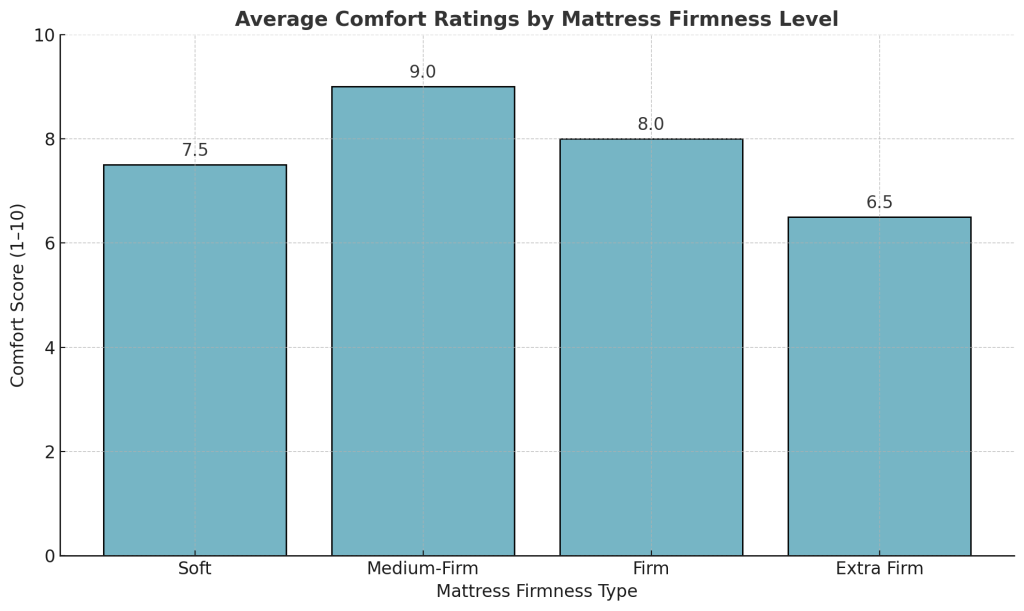
the chart showing average comfort ratings by mattress firmness level

The real story

Quality comes from good materials and solid construction, not how firm the surface feels. A mattress can feel supportive without being rock hard. And a mattress can be rock hard and still fall apart in a year.

The best firm mattress is one that lasts, supports the body well, and fits the sleeper’s needs.

Myth 3: The Harder, the Longer It Lasts

It might seem like a firm mattress will hold its shape longer than a softer one. But durability doesn’t depend on firmness alone.

What matters

  • Foam density
  • Coil strength
  • Edge support
  • Overall design

A poorly made hard mattress will sag or lose shape, no matter how stiff it feels on day one. A well-built mattress with the right balance of comfort and support will last much longer.

Myth 4: Everyone Sleeps Better on a Firm Mattress

This belief ignores one key thing: not everyone sleeps the same way.

Some sleep on their side. Others on their back. Some on their stomach. Each position places different pressure on the body. That’s why a one-size-fits-all rule doesn’t really work.

chart showing how pressure relief varies by mattress firmness

What sleep experts suggest

  • Side sleepers need pressure relief on the hips and shoulders. A rock hard mattress may cause soreness.
  • Back sleepers usually benefit from a firm or medium-firm mattress to keep the spine aligned.
  • Stomach sleepers often need a firmer surface to stop the hips from sinking too deep.

Sleep is personal. The best firm mattress is the one that matches body type and sleeping style, not just what a label says.

Myth 5: Soft Mattresses Are Bad for Your Back

This one isn’t always true either. Soft doesn’t mean unsupportive.

Here’s how it really works

Many back support mattresses use layers. The top can feel soft while the lower layers provide the support. Some memory foam mattresses contour to the body while still keeping the spine in a neutral position.

In some cases, especially for lighter sleepers or those with joint pain, something with a soft feel might actually be better.

What Science Says About Mattress Firmness

Several clinical studies have tested how mattress firmness affects sleep quality and back pain. One major finding: medium-firm mattresses tend to work best for the largest group of people, especially those with chronic back issues.

Overly firm beds can cause the body to tense up and may lead to restlessness or stiffness. Overly soft beds can cause poor spinal alignment. A balance is often the ideal solution.

Choosing the Right Mattress: What to Look For

So, how do you choose the best firm mattresswithout falling for the myths?Here are some simple tips:

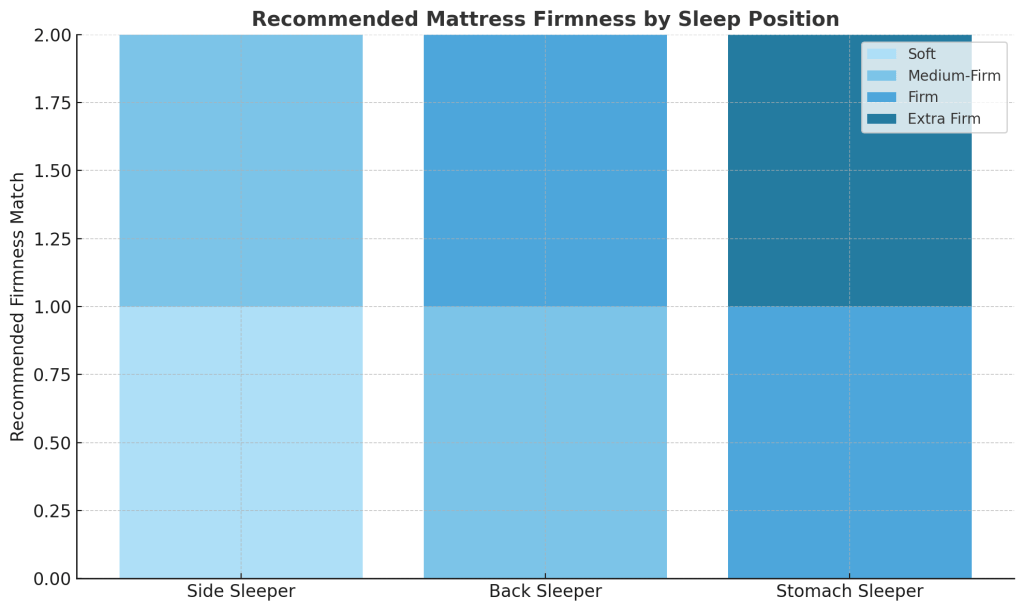
sleep position vs. mattress firmness chart

 Body Type

  • Heavier sleepers may prefer firm or extra firm mattresses for better support.
  • Lighter sleepers often do better on softer surfaces that allow more contouring.
Sleep StyleLightweight (<150 lbs)Average (150–200 lbs)Heavy (>200 lbs)
Side SleeperSoftMediumMedium-Firm
Back SleeperMediumMedium-FirmFirm
Stomach SleeperMedium-FirmFirmExtra Firm

Sleep Position

  • Back sleepers = firm or medium-firm
  • Side sleepers = soft to medium
  • Stomach sleepers = firm

Try Before You Buy

Many brands now offer home trials. These can last anywhere from 30 to 100 nights. Trying a mattress in your own space is the best way to know if it really works.

Materials Matter

Look for high-density foam, strong springs, and breathable materials. These affect comfort, durability, and temperature control more than firmness level alone.

Signs a Mattress Is Too Firm

Not sure if your mattress is too hard? Here are a few red flags:

  • Waking up with sore hips or shoulders
  • Numbness in arms or legs
  • Tossing and turning to get comfortable
  • Morning stiffness in the lower back

In those cases, the mattress might be too firm, or just not the right fit. A mattress topper can help in the short term, but a better mattress might be the long-term fix.

Expert Quotation about hard mattresses

“A mattress that’s too hard can actually misalign your spine rather than support it. The goal is neutral posture, not stiffness.”

— Dr. Elena Marshall, Orthopedic Therapist (Paraphrased)

“Medium-firm mattresses tend to offer the best balance of support and pressure relief for most body types.”

— Dr. Michael Tan, Sleep Medicine Specialist (Paraphrased)

“People often confuse firmness with durability, but materials and build quality matter far more.”

— Karen Liu, Certified Physical Therapist (Paraphrased)

“For side sleepers especially, a rock-hard mattress can lead to shoulder and hip discomfort. A touch of softness helps distribute pressure.”

— Dr. Sarah Bennett, Sleep Ergonomics Expert (Paraphrased)

“There is no one-size-fits-all when it comes to firmness. Your ideal mattress depends on your sleep position, weight, and spinal health.”

— Dr. Amir Qureshi, Sleep Science Researcher (Paraphrased)

Conclusion 

A hard mattress isn’t automatically better. It’s not the best choice for everyone, and in many cases, it can cause more harm than good.

A well-made back support mattress gives proper alignment, reduces pressure, and feels comfortable, not painful. Whether it’s a firm mattress, extra firm mattress, or something softer, the right one will support healthy sleep and help the body recover during the night.

Always choose based on comfort, support, and personal sleep habits, not just firmness labels.

FAQs

Is a hard mattress good for back pain?

Not for everyone. A mattress that’s too hard can cause pressure and discomfort. Medium-firm is often better for back support.

What’s the difference between firm and extra firm?

Firm mattresses feel supportive with some give. Extra firm mattresses are harder and less cushiony. Some people prefer them, others don’t.

Can a mattress be too firm?

Yes. A rock hard mattress can cause soreness, especially in the hips and shoulders.

What’s a back support mattress?

It’s a mattress designed to help keep your spine aligned while you sleep. It doesn’t have to be extremely firm, just supportive in the right areas.

Is firmness the most important thing?

No. Support, comfort, materials, and personal sleep style matter more. The best firm mattress is one that fits you.

How to Soften a Rock-Hard Mattress Without Replacing It
March 2, 2026

How to Soften a Rock-Hard Mattress Without Replacing It

Buying a new mattress isn’t always easy or cheap. If you’ve ended up with a rock-hard mattress that feels more like a wooden board than a cozy bed, you’re not alone. There are several methods on how to soften your mattress if it felt okay in the store, or maybe someone recommended a firm mattress for your back, but now you’re stuck with a sleep surface that’s too stiff to enjoy.

The good news? You don’t have to replace it right away. There are simple ways to soften a hard mattress and make it more comfortable, without spending hundreds on a new one.

Let’s break down why your mattress feels so firm and what you can do to fix it quickly and affordably.

Why Does Your Mattress Feel So Hard?

Before we look at solutions, it helps to understand the problem. Here are a few reasons your extra firm mattress might feel too stiff:

1. It’s New

Brand-new mattresses, especially memory foam or latex ones, often feel much firmer during the first few weeks. That’s because the materials need time to break in and adjust to your body.

2. Wrong Type for Your Body

A mattress that feels great to one person can be uncomfortable to another, thats why you need to understand that which mattress suitable for your body type. Lighter people usually need a softer surface because they don’t sink into the mattress as much. If you’re not heavy enough to compress the material, a firm mattress might feel rock-hard to you.

3. Cold Room

Some materials, like memory foam, can feel stiffer in cold temperatures. If your bedroom is chilly, your back support mattress might feel much firmer than it does in a warm showroom.

4. It’s Truly Extra Firm

Some mattresses are made to be ultra-supportive. A rock hard mattress or extra firm mattress is designed for people who need serious support, but not everyone finds that comfortable especially side sleepers.

Easy Ways to Soften Your Hard Mattress

Here are proven ways to make your mattress feel softer without buying a new one. These are low-cost, low-effort fixes that can make a huge difference.

1. Use a Mattress Topper

This is one of the quickest and most effective ways to soften a firm mattress. A mattress topper is a thick layer of foam, latex, or padding that sits on top of your mattress. It adds softness, cushioning, and pressure relief.

What to Look For

  • Memory foam or latex toppers: They mold to your body and reduce pressure points.
  • 2–4 inches thick: Enough to feel the difference, but not so thick that you sink too deep.
  • Ventilated or gel-infused foam: Helps keep you cool while you sleep.

A good topper can turn a rock hard mattress into something much more sleepable without replacing it.

2. Break It In

If your mattress is new, it might just need time. Sleep on it every night for a few weeks. You can also walk gently across it (no shoes) to help soften it faster. This distributes weight and loosens up the materials.

3. Warm Up the Room

If your hard mattress feels even firmer when it’s cold, try increasing your bedroom temperature a little. Memory foam especially responds to heat and softens with body warmth. A slightly warmer room can help the mattress conform to your shape better.

4. Use a Heated Blanket or Mattress Pad

Before bed, turn on a heated blanket or mattress pad to warm up the surface. This helps soften memory foam and make a back support mattress feel a little more flexible. Just be sure to follow safety instructions and turn it off before you fall asleep if needed.

5. Rotate or Flip the Mattress

Not all mattresses are made to be flipped, but many can at least be rotated. If you’re always sleeping in the same spot, rotating the mattress 180 degrees can help even out the firmness. Some double-sided mattresses let you flip them, and one side may be softer.

6. Change Your Bed Base

Sometimes, the foundation under your mattress can make it feel firmer than it really is. A solid platform bed or slats with no give can make even the best firm mattress feel like a rock.

Try switching to a box spring, adding a bunkie board with a bit of cushion, or using a slightly flexible slatted base. It might be just enough to soften the feel of the bed.

7. Layer with Blankets or Comforters

If you don’t have a mattress topper, layering thick blankets or comforters under your sheet can add a bit of padding. It’s not a perfect solution, but it’s free and can take the edge off a rock-hard mattress.

8. Sleep Position Adjustments

If you’re a side sleeper, a very firm mattress can cause shoulder and hip pain. Try sleeping with a pillow between your knees or under your side to reduce pressure.

Stomach and back sleepers often need firmer support, but even then, an extra firm mattress might feel too much. Adjusting your pillow height or using a thinner one can help relieve tension.

9. Check Your Pillow Setup

Your mattress isn’t the only thing that affects comfort. If your pillows aren’t supporting your head and neck properly, it can make your bed feel even worse.

Try a new pillow that matches your sleep position and body shape. When your head and neck are in proper alignment, you’ll sleep better even on a hard mattress.

10. Give It Time

Sometimes, you just need to let your body adjust. Your old mattress may have been too soft, and your body got used to poor posture. A new firm mattress might feel uncomfortable at first, but it could offer better support in the long run especially if it’s a back support mattress made for spinal health.

Give it 30 days if you can. If it still feels like a brick after that, then you can consider one of the above fixes or think about replacing it.

When to Consider a Replacement

If you’ve tried everything and still wake up sore, tired, or uncomfortable, your mattress may not be the right fit. Not all firm mattresses are created equal. What feels like the best firm mattress in the store might not feel the same at home.

Also, if your mattress is over 8–10 years old and has lost its shape or support, softening it may not be enough. That’s when it’s time to shop for something new.

Conclusion

A rock hard mattress can seriously affect your sleep, but you don’t have to live with it or toss it out right away. There are simple ways to make it feel softer, from using a topper to adjusting the room temperature.

The key is to find the right balance between support and comfort. Whether you’re dealing with a brand-new extra firm mattress or trying to breathe new life into an old back support mattress, these tips can help you sleep better without breaking the bank.

Remember: the best sleep setup is one that fits your body, your sleep style, and your comfort needs.

FAQs

Can a mattress topper really make a firm mattress softer?

Yes! A high-quality topper, especially memory foam or latex, can completely change how your mattress feels.

How long does it take to break in a firm mattress?

It can take 2–4 weeks for most people. Sleeping on it every night will help speed things up.

Is a firm mattress better for your back?

Not always. A back support mattress should support your spine without causing pressure points. That’s why many people prefer a medium-firm option instead of rock hard.

What’s the best way to soften a mattress quickly?

Try a memory foam topper, heat up the room slightly, and layer some blankets while the mattress breaks in.

Can I flip my mattress to make it softer?

Only if it’s designed to be flipped. Some mattresses have different firmness levels on each side, but most modern mattresses are one-sided. 

References

https://www.turmerry.com/blogs/dreamerry/how-to-make-a-firm-mattress-softer#:~:text=A%20mattress%20can%20feel%20firmer,your%20bed%20frame%2C%20and%20more.

https://www.mattressonline.co.uk/advice/how-to-make-firm-mattress-softer?srsltid=AfmBOoo1-9vsvNO0-CQN5_kHRwJLw7A0I_Zs3J2AolHU5bZJIytaARz

Who Should Sleep on an Extra Firm Mattress?
February 28, 2026

Who Should Sleep on an Extra Firm Mattress?

The right firm mattress guarantees support and peaceful sleep, but an extra firm mattress guarantees maximum spinal support and reduced sinkage. 

However, before committing to a mattress with extra firmness, you want to ask the right questions and determine if it is the right choice for you. 

Common questions you want to ask include, which category of individuals needs an extra firm mattress? What are the benefits of an extra firm mattress? And what makes it different from a regular mattress? What is the best extra firm mattress available on the market? 

This article answers all these questions and helps you decide if an extra-firm mattress is right for you.

What is an Extra Firm Mattress?

When shopping for a mattress, it’s easy to feel overwhelmed firmness levels, temperature regulation, your body weight, foam vs. hybrid construction, and so much more. But one thing I can help you figure out right now is this: Is a firm mattress the right choice for you?  An extra-firm mattress offers unmatched support and stability with very little sinkage. Built with high-density materials, reinforced coils, and no plush top layers, it’s designed to keep your spine properly aligned and eliminate unnecessary sagging giving you a supportive, no-nonsense sleep surface.

What’s the Difference Between a Firm and an Extra-Firm Mattress?

Choosing between a firm and an extra-firm mattress can be tricky they may sound similar, but there are some important differences to keep in mind: to read more detailed article click here

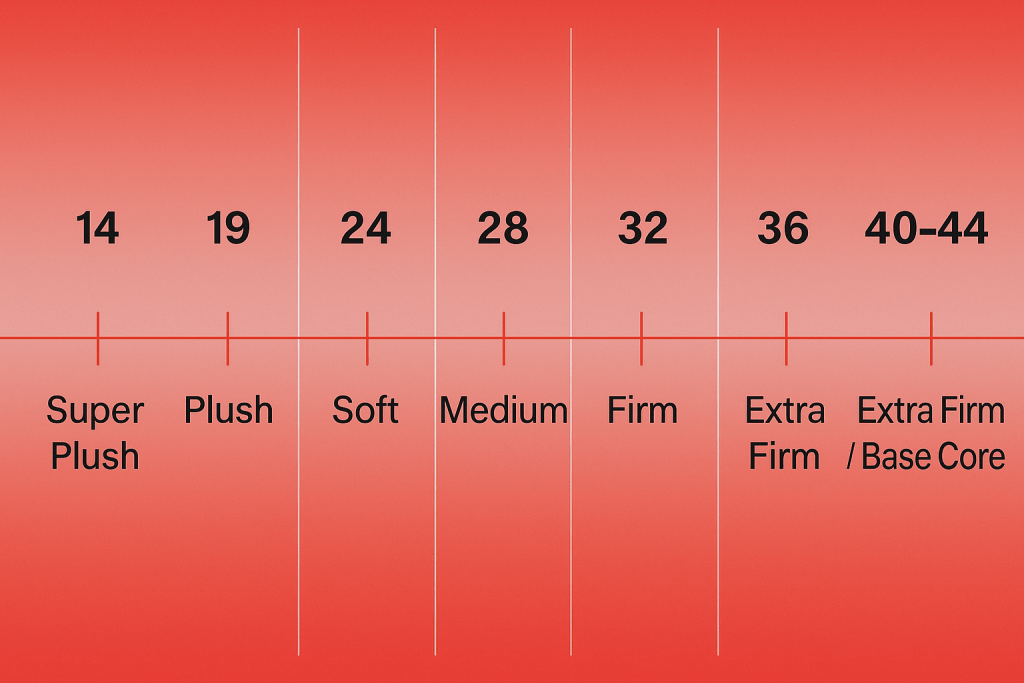
Firmness Level

luxe mattress firmness rating scale
Firmness rating

Firm mattresses typically fall between 7 and 8 on a firmness scale of 1 to 10, offering a solid feel with moderate support. Extra-firm mattresses, on the other hand, rate between 9 and 10, providing a much firmer and more supportive surface with minimal sinkage, to know more about it read more about firmness levels

Support

Firm mattresses are a great choice for back and stomach sleepers, offering balanced support without feeling too hard. Extra-firm mattresses are better suited for people with chronic back or joint pain, or anyone needing maximum spinal support and alignment throughout the night.

Durability

While both types are built to last, extra-firm mattresses often edge out in long-term durability thanks to their dense materials and reinforced construction. If you’re looking for a mattress that holds its shape and supports proper posture for years to come, extra-firm is a strong contender.

In short, if your priority is structured support and spinal alignment, an extra-firm mattress may be the right fit for you.

Do You Need an Extra Firm Mattress?

Smart Mattress Quiz

Find your perfect mattress match with our personalized recommendation system. Based on your sleep style, health needs, and comfort preferences.

Why Take This Quiz?

  • Get tailored mattress recommendations for your specific needs
  • Save time researching – we’ve done the analysis for you
  • Compare mattresses that match your sleep style and budget
  • Understand which mattress features matter for your comfort
  • Exclusive discounts on recommended mattresses
Take the Mattress Quiz

Honestly, not everyone needs an extra-firm mattress. However, if you fall into any of the following categories, you may consider getting one. 

1. Back and Stomach Sleepers

If you sleep on your back, you need a mattress that keeps your spine neutral. An extra-firm mattress also prevents your hips from sinking too deeply, thereby reducing lower back pain.

2. People with Back Pain

If you suffer from chronic back pain, an extra-firm mattress can help keep your back aligned, leading to proper alignment. Most orthopaedic mattresses are designed to be extra firm for this purpose.

3. Plus-Size Individuals 

Overweight or larger individuals are advised to use extra firm mattresses since they provide more support. Individuals with heavy body weight sink into a soft mattress, which may lead to discomfort and body pains. Therefore, an extra mattress provides the needed stability and comfort.

4. Those Who Prefer Minimal Sinkage 

Some people don’t like anything that “shrinks,” including soft mattresses. If you prefer a firm and supportive mattress that you don’t have to sink into but rather sleep on, an extra-firm mattress is the ideal choice.

5. Those with Scoliosis

If you have a spinal condition, an extra-firm mattress can provide support to help manage your condition.

Features of an Extra Firm Mattress 

1. Better Spinal Alignment 

Looking for the best mattress recommended by orthopedists because it’s an excellent choice for people with chronic conditions? An extra firm mattress has a flat surface that ensures parts of the body are in proper alignment. 

This alignment prevents the formation of any unnatural curvatures that can either cause or worsen pain. If you are recovering from an injury or battling chronic conditions, the support your extra firm mattress provides can create a healing environment.

2. Reduced Pressure Build-up 

Some people may find an extra-firm mattress uncomfortable due to its firmness. That’s not true, as they allow for an even distribution of weight, preventing a buildup of pressure on the hips or shoulders. 

3. Durability

One of the selling points of extra-firm mattresses is their durability and longevity. They are made from high-density foam and tightly packed springs, which make them resistant to sagging and wearing out for a long time. Their durability makes them a worthy investment. They outlast firm mattresses that can lose shape.

4. Improved Posture 

It’s not until you have a back or joint condition that you get an extra-firm mattress. By using an extra-firm mattress, you can prevent waking up with back or body pain and maintain proper posture. 

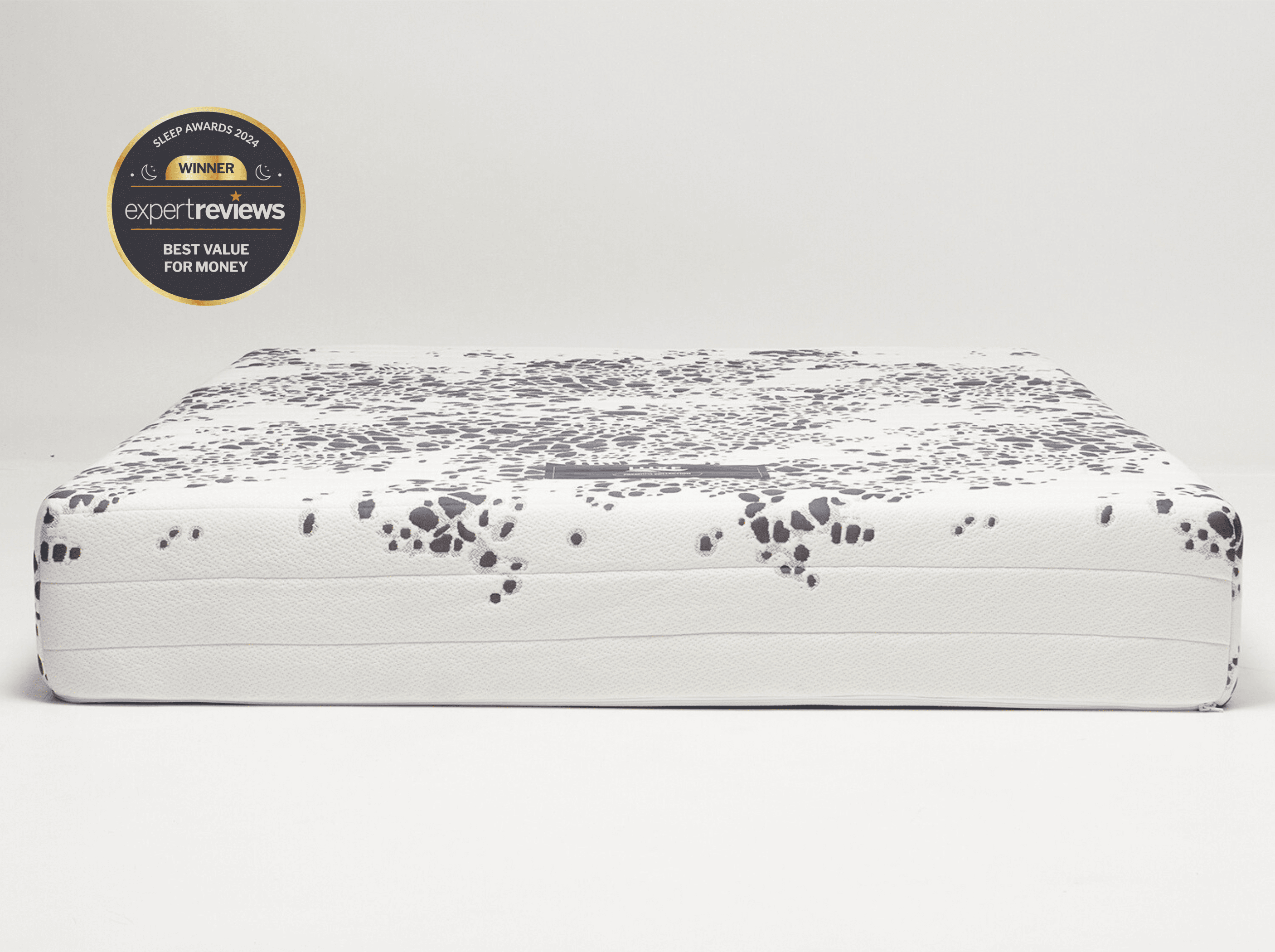
Why Majestic 9000 Extra Firm Mattress is Perfect

Are you looking for a mattress that screams quality, durability, good alignment, and promotes better sleep? Look no further, the Majestic 9000 mattress has what you need, for further details and comparison you can check out this Firm mattress shopping guide. 

majestic 9000
mattress

Outstanding features of the Majestic 9000 Mattress include:

1. Orthopaedic Support 

Our mattress is designed with CA40, memory, and reflex foam layers. All these layers work together to conform and improve your body posture. 

Majestic 9000 can help with the reduce body, spine, and joint pains. 

2. Motion Isolation

If you share your bed with your partner, siblings, or others, you definitely want a mattress that won’t sink but remains solid. Our Majestic 9000 is the right choice for you. It is perfect for overweight individuals and light sleepers.

3. Antibacterial and Anti-mite Protection

We care about the well-being of our clients, so we infused the top layer with silver nanoparticles. Silver nanoparticles are naturally antibacterial and allow a clean surface that is resistant to bacteria and fungi. They also protect against mites, which can cause irritation or allergies. 

Conclusion

As discussed earlier, an extra-firm mattress isn’t for everyone. However, if you have any health issues, such as back pain, shoulder pain, joint pain, or a chronic disease, you may consider getting one. 

Additionally, if you are a side sleeper, overweight, or want a mattress with minimal shrinkage, then an extra-firm mattress is for you. The extra-firm and firm mattress debate depends on your personal needs, but the extra-firm mattresses, such as the Majestic 9000 mattress, offer outstanding benefits.

Are you ready to upgrade your sleep? Check out our extra-firm Majestic 9000 mattress and other Luxe Mattresses with different firmness levels.

Nighttime Wellness Rituals
October 14, 2025

Things You Must Do Before Going to Sleep for a Restful Night

Sleep is one of the most crucial aspects of health and well-being. But getting a full night of restful sleep isn’t just about lying down; it’s about preparing your mind and body properly. The habits and routines you follow before going to sleep can significantly affect the quality of your rest. In this blog, we’ll cover everything you need to do before going to sleep to ensure better sleep, improved energy, and overall wellness.

Why Preparation Matters Before Going to Sleep?

Many people focus on the number of hours they sleep, but what you do before going to sleep is just as important. A good pre-sleep routine helps:

  • Calm your mind
  • Signal your body that it’s time to rest
  • Improve deep sleep and REM sleep
  • Boost overall sleep quality

Without proper habits before going to sleep, even 8 hours of rest may feel insufficient.

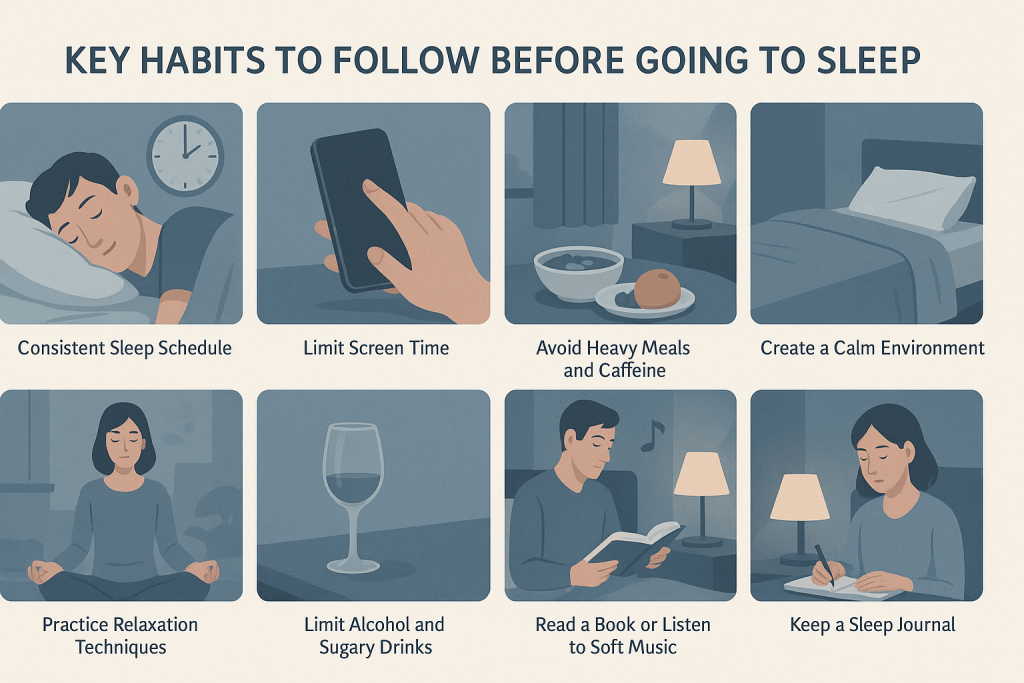
Key Habits to Follow Before Going to Sleep

Here are the most effective things you should do before going to sleep:

Calm Sleep Rituals

1. Stick to a Consistent Sleep Schedule

Going to bed and waking up at the same time daily trains your body clock. Adults should aim for 7–9 hours, while children and teens need more.

2. Limit Screen Time

Phones, tablets, and TVs emit blue light, which suppresses melatonin, the sleep hormone. Try to avoid screens at least 60 minutes before going to sleep.

3. Avoid Heavy Meals and Caffeine

Eating a heavy meal or drinking caffeine late at night can disrupt your sleep cycle. Eat light dinners and avoid coffee or energy drinks in the evening.

4. Create a Calm Environment

Your bedroom should be cool, dark, and quiet. Invest in comfortable bedding and blackout curtains to make your room sleep-friendly before going to sleep.

5. Practice Relaxation Techniques

Meditation, deep breathing, or gentle stretching can reduce stress levels and help your body prepare for rest. Doing this before going to sleep signals your brain that it’s time to unwind.

6. Limit Alcohol and Sugary Drinks

Alcohol may make you drowsy initially but disrupts deep sleep later. Sugary drinks can spike energy levels, making it harder to fall asleep.

7. Read a Book or Listen to Soft Music

Engaging in calming activities like reading a book or listening to soothing music before going to sleep can help transition your mind into a restful state.

8. Keep a Sleep Journal

Jot down your thoughts or worries in a notebook. Clearing your mind before going to sleep reduces anxiety and prevents restless nights.

Ideal Pre-Sleep Routine Table

Bedtime Routine Table
Time Before Bed Activity Purpose
2–3 hours Eat light dinner Prevents indigestion and sleep disturbance
1 hour Limit screen time Reduces blue light and improves melatonin production
30 min Relaxation techniques (meditation, stretching) Calms mind and body
15 min Light reading or soft music Signals the brain it’s time to sleep
5 min Journaling or reflection Clears thoughts for better sleep

This table shows a practical guideline for activities before going to sleep to maximize sleep quality.

Things to Avoid Before Going to Sleep

Even with good habits, certain activities can sabotage your rest:

  • Intense Exercise: Working out vigorously right before bed can raise heart rate and delay sleep.
  • Stressful Conversations or Work: Avoid stressful topics or work-related tasks before going to sleep.
  • Overhydration: Drinking too much water before bed may lead to waking up frequently.
  • Bright Lights: Exposure to bright or artificial lights can delay your sleep onset.

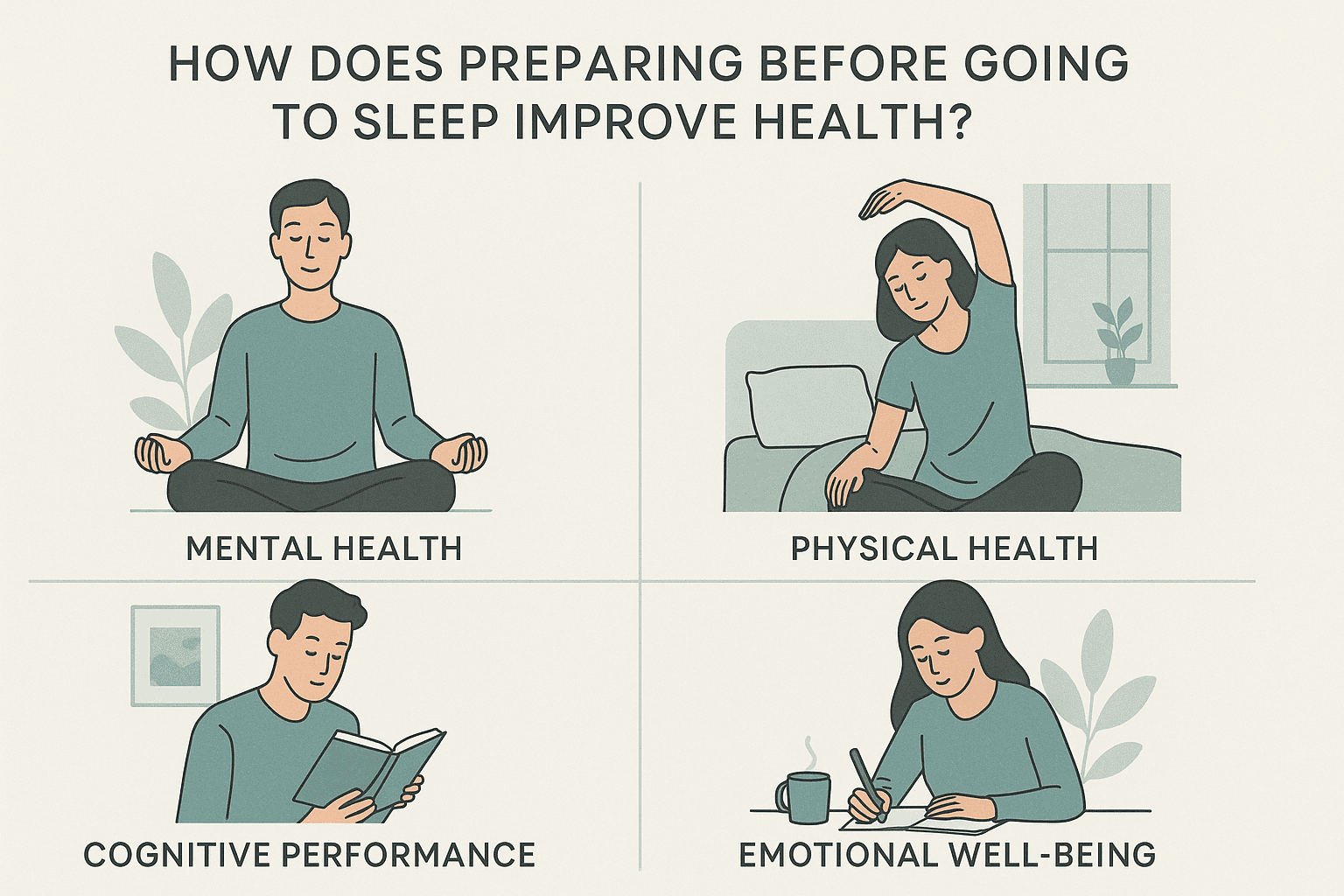
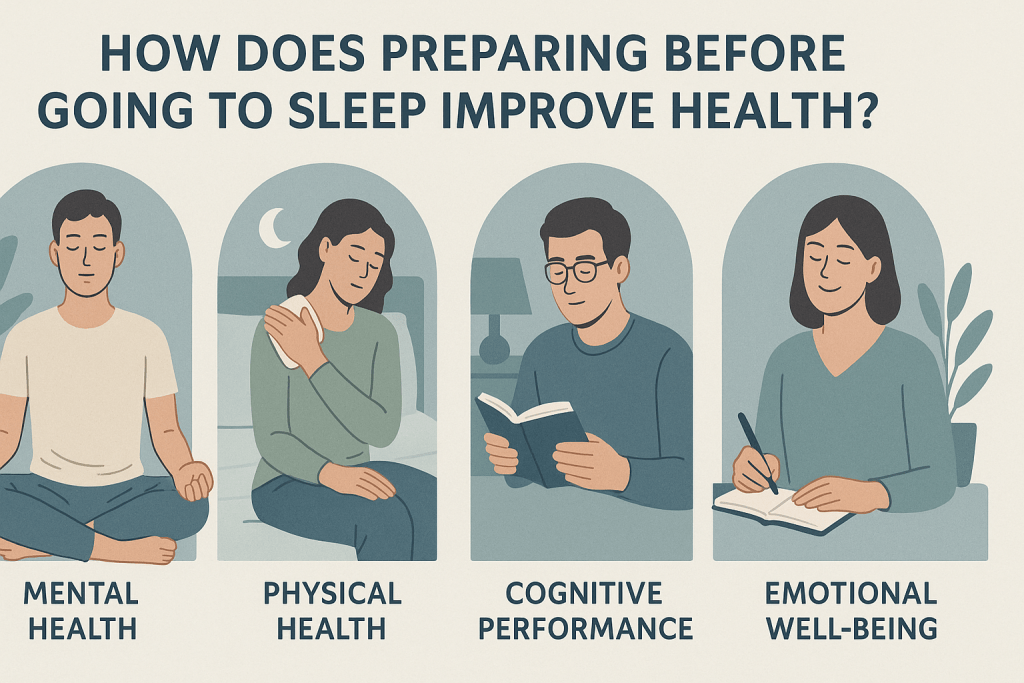
How Does Preparing Before Going to Sleep Improve Health?

Following a proper routine before going to sleep affects multiple areas of your health:

Bedtime Wellness Routine
  1. Mental Health – Reduces stress, anxiety, and depressive symptoms.
  2. Physical Health – Supports muscle recovery, hormone regulation, and immune function.
  3. Cognitive Performance – Enhances focus, memory, and creativity.
  4. Emotional Well-being – Promotes a stable mood and better emotional regulation.

In short, your pre-sleep habits lay the foundation for restorative and deep sleep cycles.

FAQs 

1. What is the most important thing to do before going to sleep?

The most effective step is creating a calming routine that signals your body it’s time to rest, such as limiting screens and practicing relaxation techniques.

2. Can I use my phone before going to sleep?

It’s best to avoid phones and other screens at least 1 hour before bedtime to improve melatonin production.

3. How long should my pre-sleep routine be?

A 30–60 minute routine is sufficient for most people, including relaxation techniques, light reading, and journaling.

4. Are naps okay if I want to improve sleep at night?

Short naps earlier in the day are fine, but avoid long or late afternoon naps as they can interfere with sleep before going to sleep.

5. Does exercise help before going to sleep?

Light stretching or yoga can help, but intense workouts should be done earlier in the day.

Conclusion

Preparing your body and mind properly before going to sleep is essential for quality rest. By following a consistent routine, avoiding stimulants, and creating a calming environment, you can significantly improve your sleep quality. Remember, it’s not just about the number of hours you sleep, but also what you do in the hours before going to sleep that counts.

Start small by incorporating one or two of these habits and gradually build a full pre-sleep routine. Over time, your body will thank you with deeper, more restorative sleep, better energy, and improved overall health. Visit our website for more useful sleep guides.

Product has been added to your cart