
100-Night Trial · Refund to night 60 · Exchange to night 100
Free Nationwide Delivery
Covered by Our Own Warranty
Call us at: 020 4572 5122
0% APR Finance Available
Sleep Quality Essence
October 13, 2025

Is 7 Hours of Sleep Enough? Understanding the Ideal Sleeping Hours for Your Health

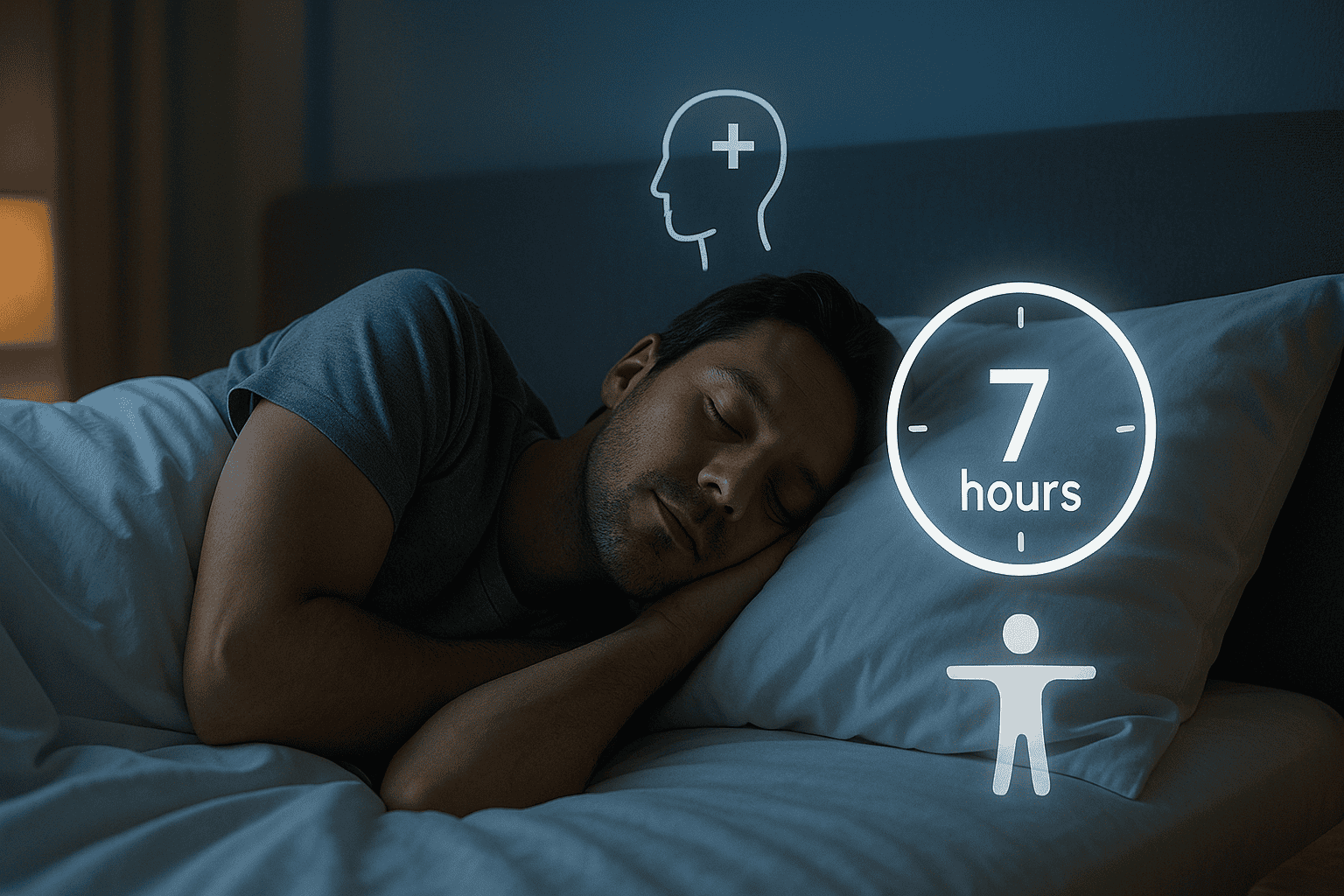
Sleep is one of the most essential aspects of health that many people underestimate. While adults are often told to get 7–8 hours of rest, a common question arises: is 7 hours of sleep enough for optimal physical and mental well-being? The answer isn’t one-size-fits-all. It depends on your lifestyle, age, and health condition. In this blog, we’ll break down everything you need to know about sleeping hours, how they affect your body, and how to ensure you get the most out of your rest.

Understanding Sleeping Hours

Sleeping hours are not just a number, they are the time your body spends in essential restorative processes. During sleep, your brain consolidates memories, repairs tissues, and balances hormones. A full night’s rest cycles through light sleep, deep sleep, and REM sleep, each playing a vital role in restoring your body and mind.

Sleep is divided into several stages:

  • Light Sleep (Stage 1 & 2): Prepares the body for deeper sleep.
  • Deep Sleep (Stage 3): Restorative sleep that helps with physical repair.
  • REM Sleep: Supports mental health, memory, and emotional processing.

Knowing the structure of your sleeping hours is key to answering whether 7 hours of sleep is enough for your body.

Is 7 Hours of Sleep Enough for Adults?

Experts often recommend 7–9 hours of sleep for adults. But is 7 hours of sleep enough for everyone?

  • For many healthy adults, 7 hours can be sufficient.
  • Some people need 8–9 hours to feel fully rested.
  • Others may function well on slightly less, but a consistent lack of sleep can lead to long-term health issues.

Here’s a quick table showing recommended sleeping hours by age:

Recommended Sleeping Hours Table
Age Group Recommended Sleeping Hours Notes
Infants (0“1) 12“16 hours Includes naps
Children (6“12) 9“12 hours Vital for growth
Teenagers (13“18) 8“10 hours Supports learning
Adults (18“64) 7“9 hours Depends on lifestyle
Older Adults (65+) 7“8 hours Sleep quality may decline

This table highlights why the question is 7 hours of sleep enough may have different answers for different age groups.

Signs That Your Sleeping Hours Are Not Enough

Even if you log 7 hours, your body may need more. Look for these signs:

  • Feeling groggy or drowsy during the day
  • Poor focus and memory
  • Mood swings or irritability
  • Low immunity and frequent sickness
  • Difficulty recovering from workouts

If you experience these symptoms, it may be time to reconsider your sleeping hours.

Factors That Affect How Much Sleep You Need
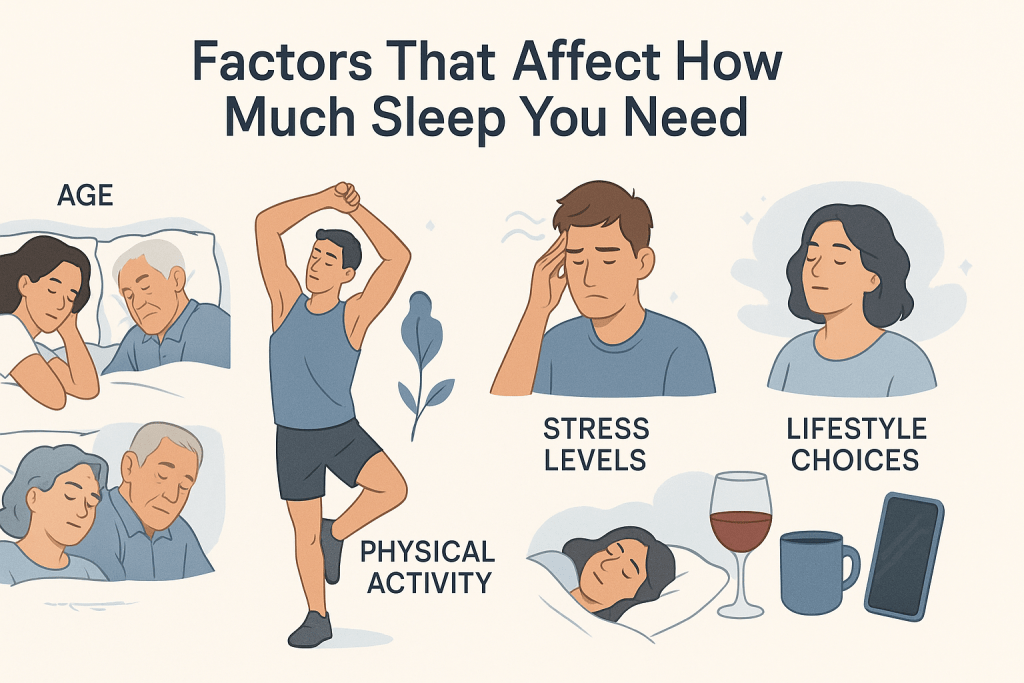
Several factors influence whether 7 hours of sleep is enough:

1. Age

Younger people typically need more sleep. Adults can function for 7–8 hours, while older adults may need slightly less.

2. Physical Activity

Athletes or highly active people require more restorative sleeping hours for muscle recovery.

3. Stress Levels

High stress increases your need for quality sleep, and 7 hours may not be sufficient.

4. Health Conditions

Chronic illnesses or mental health issues can impact sleep quality and quantity.

5. Lifestyle Choices

Alcohol, caffeine, and screen time affect your ability to achieve restorative sleep.

How to Make the Most of Your Sleeping Hours?

If 7 hours of sleep is enough for you, make sure your sleep is high quality. Here are tips to optimize your sleeping hours:

  • Maintain a consistent sleep schedule: Go to bed and wake up at the same time daily.
  • Create a sleep-friendly environment: Keep your bedroom dark, quiet, and cool.
  • Limit screen time: Reduce blue light exposure before bed.
  • Watch your diet: Avoid heavy meals and caffeine close to bedtime.
  • Exercise regularly: Physical activity improves sleep quality.
  • Practice relaxation techniques: Meditation or deep breathing before bed can help.

Benefits of Getting Enough Sleeping Hours

Proper sleep improves your overall health in numerous ways:

  • Boosts Immunity: Adequate sleep helps fight off infections.
  • Enhances Brain Function: Memory, focus, and decision-making improve.
  • Supports Emotional Health: Reduces anxiety and depression risks.
  • Regulates Weight: Sleep balances hunger hormones.
  • Improves Longevity: Quality sleep is linked to longer life expectancy.

These benefits emphasize why evaluating whether 7 hours of sleep is enough is important for long-term health.

Common Misconceptions About Sleeping Hours

Misconceptions About Sleep
  • “I can catch up on sleep during weekends” – Oversleeping on weekends can disrupt your sleep cycle.
  • “I function fine for 6 hours” – Some may cope short-term, but chronic sleep deprivation accumulates.
  • “Older adults don’t need sleep” – Older adults still require quality sleep, even if their duration is shorter.

FAQs 

1. Is 7 hours of sleep enough for everyone?
It depends on age, health, and activity level. For many adults, it’s sufficient, but some may need more.

2. How do I know if my sleeping hours are enough?
If you feel rested, alert, and energetic during the day, your sleeping hours are likely adequate.

3. Can short naps replace sleeping hours at night?
Short naps can help, but they cannot replace continuous nighttime sleep.

4. What happens if I consistently get less than the recommended sleeping hours?
Chronic sleep deprivation can lead to cognitive issues, mood disorders, weight gain, and weakened immunity.

5. How can I improve the quality of my sleeping hours?
Stick to a consistent sleep routine, reduce screen time before bed, maintain a healthy diet, and create a calming sleep environment.

Conclusion

So, is 7 hours of sleep enough? For many adults, it is. However, the quality of your sleep and individual needs matter more than just the number of hours. Tracking your sleeping hours, maintaining a consistent schedule, and improving your sleep environment can help ensure that your body gets the rest it truly needs.

Remember, sleep isn’t a luxury, it’s a vital part of your health. Optimizing your sleeping hours ensures you wake up refreshed, energized, and ready to tackle the day. Read more about our mattresses and sleep guides.

Deep Sleep Serenity
October 10, 2025

How Much Deep Sleep Do You Need? Unlocking the Secrets to Restful Nights

Sleep is one of the most essential functions of our body, yet so many of us overlook its true importance. We often count the number of hours we sleep, but the real secret to feeling refreshed lies in the quality of our sleep, especially deep sleep. This restorative stage is when your body and brain recharge, repair, and prepare for the next day.

But the big question remains: how much deep sleep do you need? The answer is not always simple. It depends on your age, lifestyle, health, and daily stress levels. In this blog, we’ll dive into what deep sleep really is, why it matters, and how you can improve it.

What is Deep Sleep?

Deep sleep, also known as slow-wave sleep, is one of the most important stages of your sleep cycle. It’s during this stage that:

  • Your body repairs tissues and muscles
  • Growth hormones are released
  • Your immune system strengthens
  • Memories and learning get consolidated

Without enough deep sleep, you may feel physically tired, mentally foggy, and less focused, even if you slept for 7–8 hours.

How Much Deep Sleep Do You Need?

Experts generally recommend that adults get 20“25% of their total sleep time in deep sleep. For most people, this equals about 1.5 to 2 hours of deep sleep per night.

Here’s a quick breakdown:

Sleep Guide
Age Group Average Sleep Needed Recommended Deep Sleep
Infants (0“1 year) 12“16 hours 4“5 hours
Teenagers (13“18) 8“10 hours 2“3 hours
Adults (18“64) 7“9 hours 1.5“2 hours
Older Adults (65+) 7“8 hours 1“1.5 hours

So, the real answer to how much deep sleep you need depends on your age and overall health. For most healthy adults, 1.5–2 hours each night is ideal.

Why Deep Sleep is So Important

Deep sleep isn’t just about “resting.” It’s a powerhouse stage of your sleep cycle that helps your body in multiple ways:

  • Physical Recovery: Muscles rebuild, tissues heal, and energy stores refill.
  • Brain Function: Improves learning, focus, and memory.
  • Hormone Regulation: Balances hormones that control appetite, stress, and growth.
  • Immune Health: Strengthens the body’s defense against illness.

Without enough deep sleep, you may struggle with fatigue, weakened immunity, or difficulty concentrating.

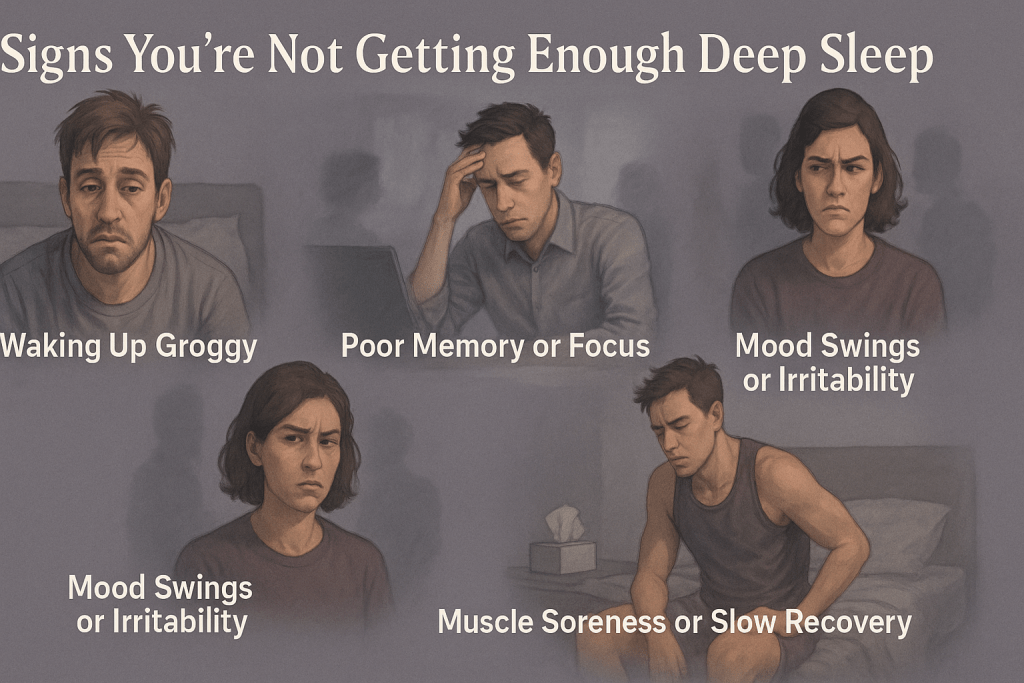
Signs You’re Not Getting Enough Deep Sleep

You might be wondering: “Am I really hitting my nightly deep sleep goal?” Some common signs that you’re not include:

Signs of Sleep Deprivation
  • Waking up groggy even after 7–8 hours of sleep
  • Poor memory or focus during the day
  • Mood swings or irritability
  • Frequent illnesses
  • Muscle soreness or slow recovery from workouts

If you notice these, it may be time to check how much deep sleep you need and improve your sleep habits.

How to Improve Deep Sleep Naturally

Here are some simple and effective ways to boost your deep sleep:

 Sleep Harmony

1. Stick to a Sleep Schedule

Going to bed and waking up at the same time every day trains your body clock.

2. Create a Sleep-Friendly Environment

Keep your bedroom cool, dark, and quiet. Invest in a comfortable mattress and pillow.

3. Limit Blue Light Before Bed

Phones, laptops, and TVs emit blue light that disrupts melatonin production. Switch them off an hour before sleeping.

4. Watch What You Eat and Drink

Avoid caffeine and heavy meals before bedtime. Herbal teas or warm milk can help relax you.

5. Exercise Regularly

Daily movement, even light exercise, helps your body fall into deeper stages of sleep.

6. Practice Relaxation Techniques

Meditation, deep breathing, or light stretching before bed can promote deep sleep.

7. Avoid Alcohol Before Bed

While alcohol may make you sleepy, it interferes with the deep sleep stage.

Deep Sleep vs. Other Sleep Stages

To understand how much deep sleep do you need, it’s useful to compare it with other sleep stages:

  • Light Sleep (Stage 1 & 2): The transition into sleep, makes up about 50% of the cycle.
  • Deep Sleep (Stage 3): The most restorative stage, about 20–25%.
  • REM Sleep: Where dreams occur, crucial for creativity and emotional health.

All stages matter: light sleep, deep sleep and REM sleep, but deep sleep is the foundation of rest.

Key Takeaways

  • How much deep sleep do you need? Around 1.5–2 hours for most adults.
  • Deep sleep equals 20–25% of your total sleep cycle.
  • Without enough deep sleep, your body and mind struggle to recharge.
  • Lifestyle changes like regular schedules, exercise, and screen-free nights can improve your deep sleep.

FAQs 

1. How much deep sleep do you need if you sleep less than 7 hours?

You still need about 20–25% of your total sleep as deep sleep. So, within 6 hours, you should aim for at least 1 — 1.5 hours.

2. Can you get too much deep sleep?

Not usually. Your body regulates itself, but oversleeping in general may signal underlying health issues.

3. How do I know if I’m getting enough deep sleep?

Using sleep trackers, noticing how refreshed you feel, and checking for signs of fatigue can help you measure.

4. Does age affect how much deep sleep you need?


Yes. Younger people naturally get more deep sleep, while older adults often see a decline

5. Can naps give me deep sleep?

Short naps mostly keep you in light sleep stages. Long naps (over 90 minutes) may enter deep sleep, but it’s not as restorative as nighttime sleep.

Conclusion

So, how much deep sleep do you need? The golden number for most adults is about 1.5 to 2 hours per night. While the exact amount varies by age and health, focusing on sleep quality is just as important as sleep quantity. By improving your sleep environment and habits, you can maximize your deep sleep and wake up truly refreshed.

Remember: sleep isn’t a luxury, it’s a necessity. Invest in your rest, and your body will thank you.

Peaceful Magnesium Sleep
October 9, 2025

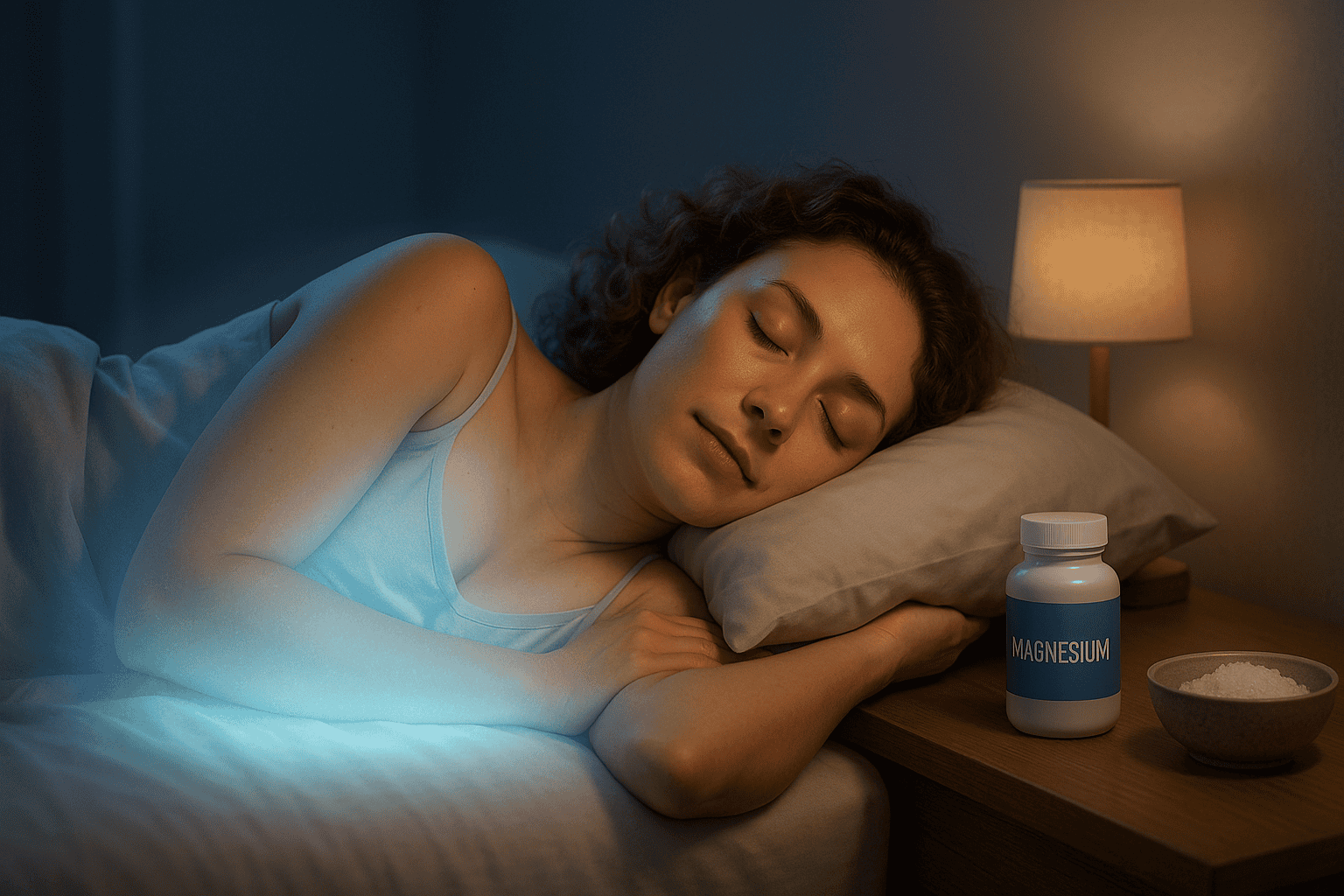
Does Magnesium Help You Sleep? The Truth Behind Better Rest

Introduction

Sleep is one of the most important parts of our daily routine, yet millions of people struggle with sleepless nights, tossing and turning, or waking up feeling tired. If you’ve been searching for natural remedies to improve rest, you may have come across magnesium. But does magnesium help you sleep? Or is it just another wellness trend that sounds good on paper but doesn’t actually work?

In this blog, we’ll dive deep into the role of magnesium, explain how it works in the body, and uncover whether magnesium for sleep really makes a difference.

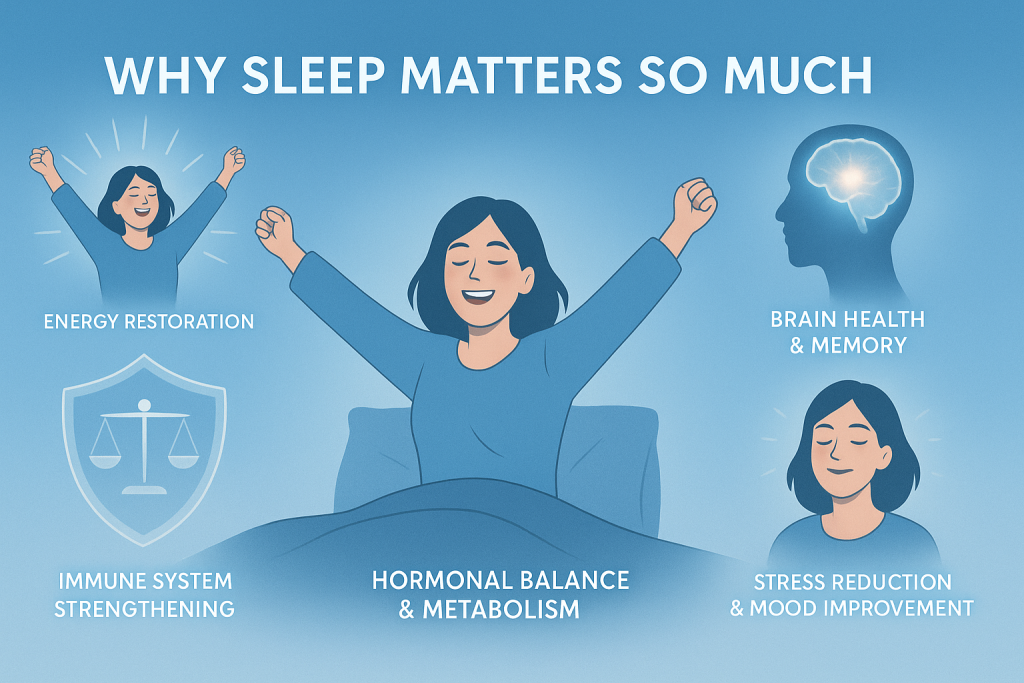
Why Does Sleep Matter So Much?

Before we discuss magnesium for sleep, let’s quickly highlight why quality rest is essential:

The Power of Sleep
  • Restores energy and repairs tissues
  • Supports brain health and memory
  • Strengthens the immune system
  • Balances hormones and metabolism
  • Reduces stress and improves mood

When you’re not sleeping well, everything from your concentration to your long-term health suffers. That’s why many people turn to natural remedies like magnesium.

What Is Magnesium?

Magnesium is a mineral found in your body and in many foods, such as leafy greens, nuts, seeds, and whole grains. It’s involved in more than 300 biochemical processes, including energy production, nerve function, and muscle relaxation.

One of magnesium’s most talked-about roles is its ability to promote calmness and relaxation, making people wonder: does magnesium help you sleep better at night?

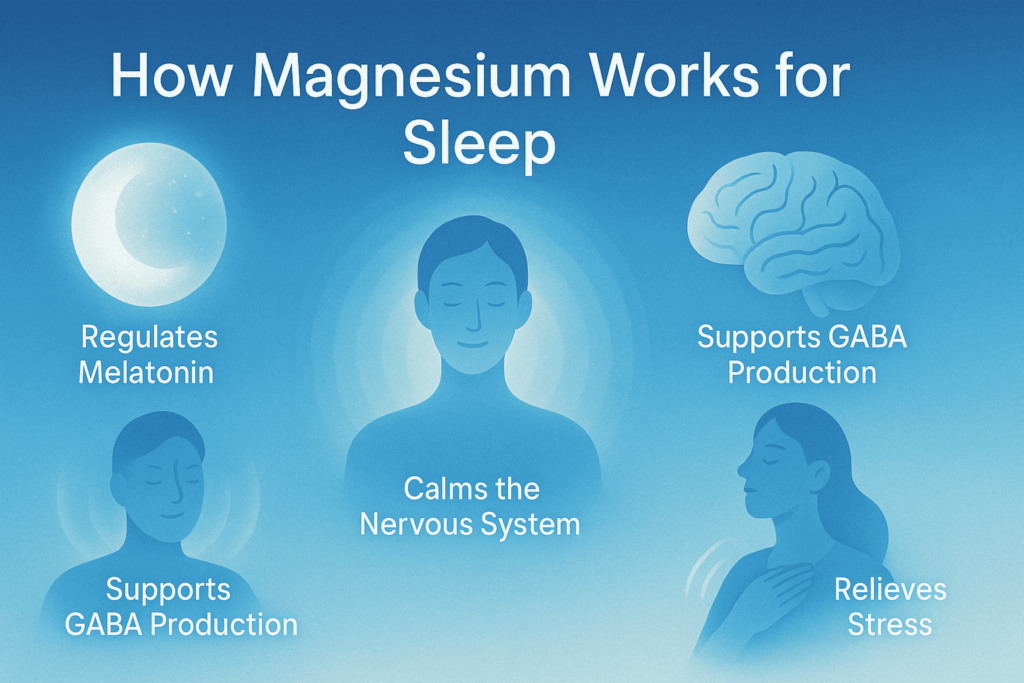
How Magnesium Works for Sleep?

Research suggests that magnesium for sleep may be effective because of its impact on the nervous system and brain chemistry. Here’s how it helps:

Magnesium's Sleep Benefits
  • Regulates Melatonin: Magnesium helps control melatonin, the hormone that signals when it’s time to sleep.
  • Calms the Nervous System: It activates the parasympathetic nervous system, which helps the body relax.
  • Supports GABA Production: Magnesium increases GABA (gamma-aminobutyric acid), a neurotransmitter that reduces brain activity, allowing you to fall asleep easier.
  • Relieves Stress: Since magnesium helps regulate cortisol, the stress hormone, it can reduce bedtime anxiety.

So yes, there’s scientific reasoning to support that magnesium for sleep may actually improve the quality of your sleep.

Magnesium Sources and Their Sleep Benefits

Source of Magnesium Magnesium Content (approx.) How It Supports Sleep
Spinach (1 cup cooked) 157 mg Relaxes muscles & calms nerves
Almonds (1 oz) 80 mg Helps regulate melatonin
Pumpkin seeds (1 oz) 168 mg Boosts GABA activity
Dark chocolate (1 oz) 64 mg Improves mood & relaxation
Magnesium supplements Varies by product Direct support for better sleep

Signs You Might Be Low in Magnesium

Before jumping to supplements, it’s helpful to know if you’re lacking this mineral. Low levels can cause:

  • Muscle cramps or spasms
  • Fatigue or weakness
  • Trouble sleeping
  • Anxiety or irritability
  • Headaches

If these symptoms sound familiar, then you may benefit from increasing magnesium for sleep naturally or through supplements.

Does Magnesium Help You Sleep? Research Findings

This is the big question: does magnesium help you sleep? According to multiple studies:

  • People with insomnia who took magnesium reported falling asleep faster and waking up less during the night.
  • Older adults with magnesium deficiency noticed improved sleep quality after supplementation.
  • Those dealing with stress and anxiety reported that magnesium for sleep worked well to calm their minds before bed.

While results vary, the overall evidence points to magnesium having a positive effect on rest especially for those with low levels.

Best Forms of Magnesium for Sleep

If you’re considering supplementation, not all types are equal. The best magnesium for sleep includes:

  • Magnesium Glycinate: Gentle on the stomach, highly absorbable, and great for relaxation.
  • Magnesium Citrate: Good absorption, but may have a mild laxative effect.
  • Magnesium Threonate: Known for brain benefits, which may also support deep sleep.
  • Magnesium Oxide: Less absorbable, but sometimes used in higher doses.

Choosing the right type depends on your needs and digestive comfort.

Benefits of Magnesium for Sleep

  • Calms nerves and reduces stress
  • Improves melatonin regulation
  • Relaxes muscles for easier rest
  • Reduces nighttime awakenings
  • Supports deeper, restorative sleep

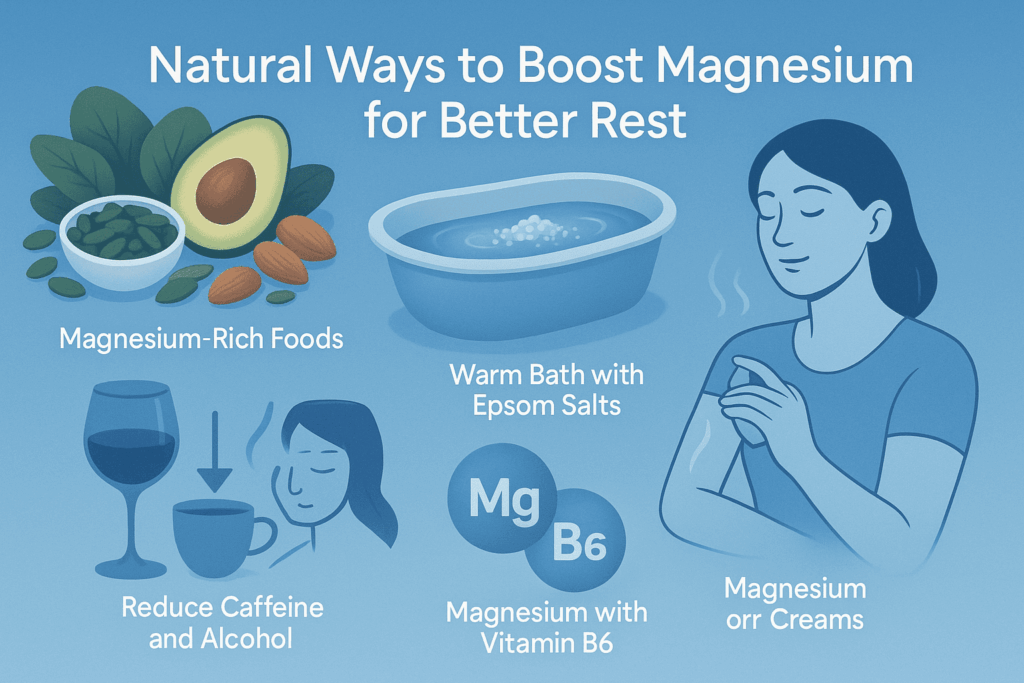
Natural Ways to Boost Magnesium for Better Rest

If supplements aren’t your first choice, you can improve magnesium intake naturally:

Boost Magnesium Naturally
  1. Eat Magnesium-Rich Foods – Spinach, avocado, pumpkin seeds, and almonds.
  2. Take a Warm Bath with Epsom Salts – Absorbs magnesium through the skin.
  3. Try Magnesium Oil or Creams – Topical options can aid relaxation.
  4. Reduce Caffeine and Alcohol – Both deplete magnesium in the body.
  5. Pair Magnesium with Vitamin B6 – Helps the body absorb magnesium more effectively.

These lifestyle tips can make a big difference in your sleep quality.

FAQs 

Q1: Does magnesium help you sleep instantly?

Not instantly, but many people notice improvements within a few days to a couple of weeks of consistent use.

Q2: What is the best time to take magnesium for sleep?

About 30 minutes before bedtime is ideal.

Q3: Can too much magnesium cause problems?

Yes, excessive magnesium can lead to diarrhea, nausea, or low blood pressure. Stick to recommended doses.

Q4: Can children use magnesium for sleep?

Only under medical advice, since children’s needs differ from adults.

Q5: Which foods are best for magnesium for sleep?

Pumpkin seeds, leafy greens, almonds, and dark chocolate are excellent sources,

Final Thoughts: Does Magnesium Help You Sleep?

So, the answer is yes, does magnesium help you sleep? For many people, it does. While it’s not a magic pill, research supports that magnesium for sleep can improve relaxation, regulate sleep hormones, and calm the nervous system.

Whether you choose magnesium-rich foods, supplements, or soothing Epsom salt baths, this mineral may be the missing piece in your bedtime routine. Just remember to start with safe doses and consult a professional if you have any health concerns.

If you’re ready to say goodbye to restless nights, adding more magnesium for sleep might just be the natural solution you’ve been looking for.

Peaceful Sleep Alignment
October 9, 2025

The Best Mattress for Back Pain: A Complete Guide to Better Sleep

If you’ve ever woken up with stiffness or struggled through the night tossing because of back pain, you know how much it affects your daily life. Your mattress plays a huge role in supporting your spine, aligning your body, and helping you recover while you sleep. Choosing the best mattress for back pain can feel overwhelming, especially with so many options out there.

In this guide, we’ll break down how the right mattress can reduce back pain, what to look for when buying a mattress for back pain, and the top choices people love.

Why Back Pain and Mattresses Are Connected?

Your spine has a natural curve that needs proper support when lying down. A poor-quality or old mattress can put pressure on certain areas, causing or worsening back pain. Over time, sleeping on the wrong surface may lead to misalignment, stiffness, and discomfort.

The best mattress for back pain is one that:

  • Keeps your spine aligned
  • Distributes your weight evenly
  • Reduces pressure points
  • Provides the right balance of firmness and comfort

If you’re already experiencing back pain, your mattress could either be part of the problem or part of the solution.

Signs Your Mattress Is Causing Back Pain

Not sure if your mattress is behind your back pain? Watch out for these signs:

Mattress and Back Pain
  • You wake up with stiffness that eases during the day
  • You feel more comfortable on a hotel bed or someone else’s mattress
  • There are visible sags or lumps in your bed
  • You toss and turn frequently to get comfortable
  • You notice worsening back pain after sleeping

If any of these sound familiar, it’s probably time to start looking for the best mattress for back pain that suits your needs.

Types of Mattresses for Back Pain Relief

When searching for the best mattress for back pain, it’s important to know what each type offers:

1. Memory Foam Mattress

  • Adapts to body shape
  • Reduces pressure points
  • Provides excellent spinal alignment

Memory Foam Mattress is great for people who suffer from lower back pain.

2. Hybrid Mattress

  • Combines memory foam and innerspring
  • Offers both support and cushioning
  • Balanced for most back conditions

A strong candidate for the best mattress for lower back pain if you want versatility.

3. Latex Mattress

  • Naturally supportive and durable
  • Offers a firm but bouncy feel
  • Resistant to sagging

Excellent for long-term back pain relief.

Comparison Table: Best Mattress for Back Pain

Mattress Type Composition Main Benefit
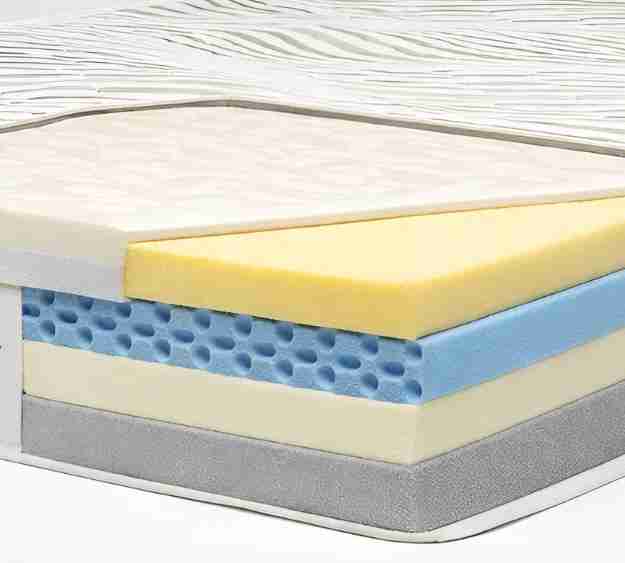
Memory Foam High-density base foam, Zero Gravityâ„¢ foam, gel-infused memory foam Pressure relief & spinal alignment
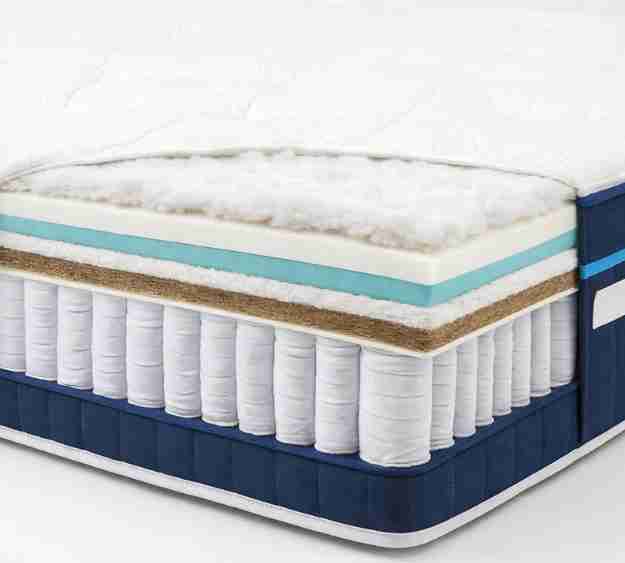
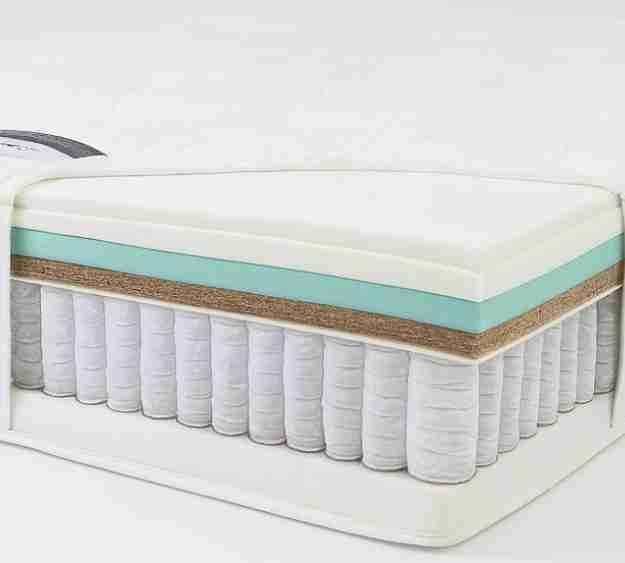
Hybrid Pocket springs (EnduraSpringâ„¢) + comfort layers of foam/latex Balanced comfort & support
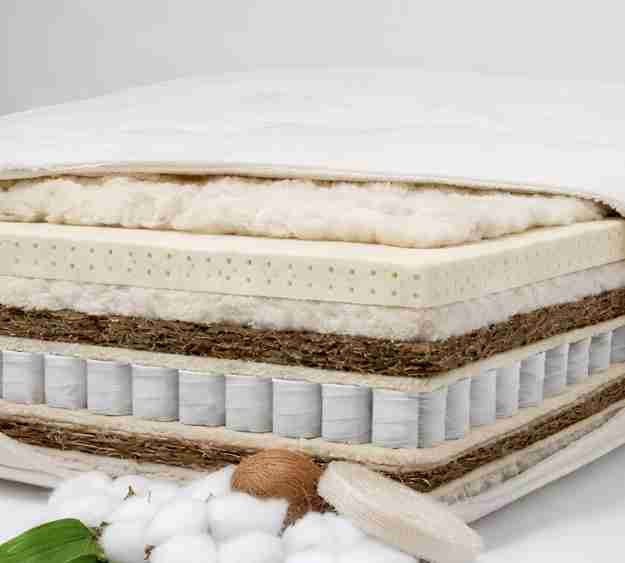
Latex / Natural Natural latex, organic cotton, British wool, durable foams Long-lasting support & eco-friendliness

How to Choose the Best Mattress for Back Pain

Finding the right mattress isn’t about picking the most expensive one, it’s about choosing what works for your body. Here’s what to consider:

1. Firmness Level

  • Too soft → causes sinking and misalignment
  • Too firm → creates pressure points
  • Medium-firm → widely recommended as the best mattress for back pain

2. Sleeping Position

  • Back sleepers: Medium-firm for spinal alignment
  • Side sleepers: Softer surface to reduce shoulder/hip pressure
  • Stomach sleepers: Firmer mattress to prevent arching

Your sleeping position plays a key role in reducing back pain.

3. Body Weight

  • Lightweight sleepers: Softer mattresses work better
  • Heavy sleepers: Firmer options prevent sinking and help with back pain

4. Durability

Sagging is one of the biggest culprits of back pain. Always check the warranty and durability before buying.

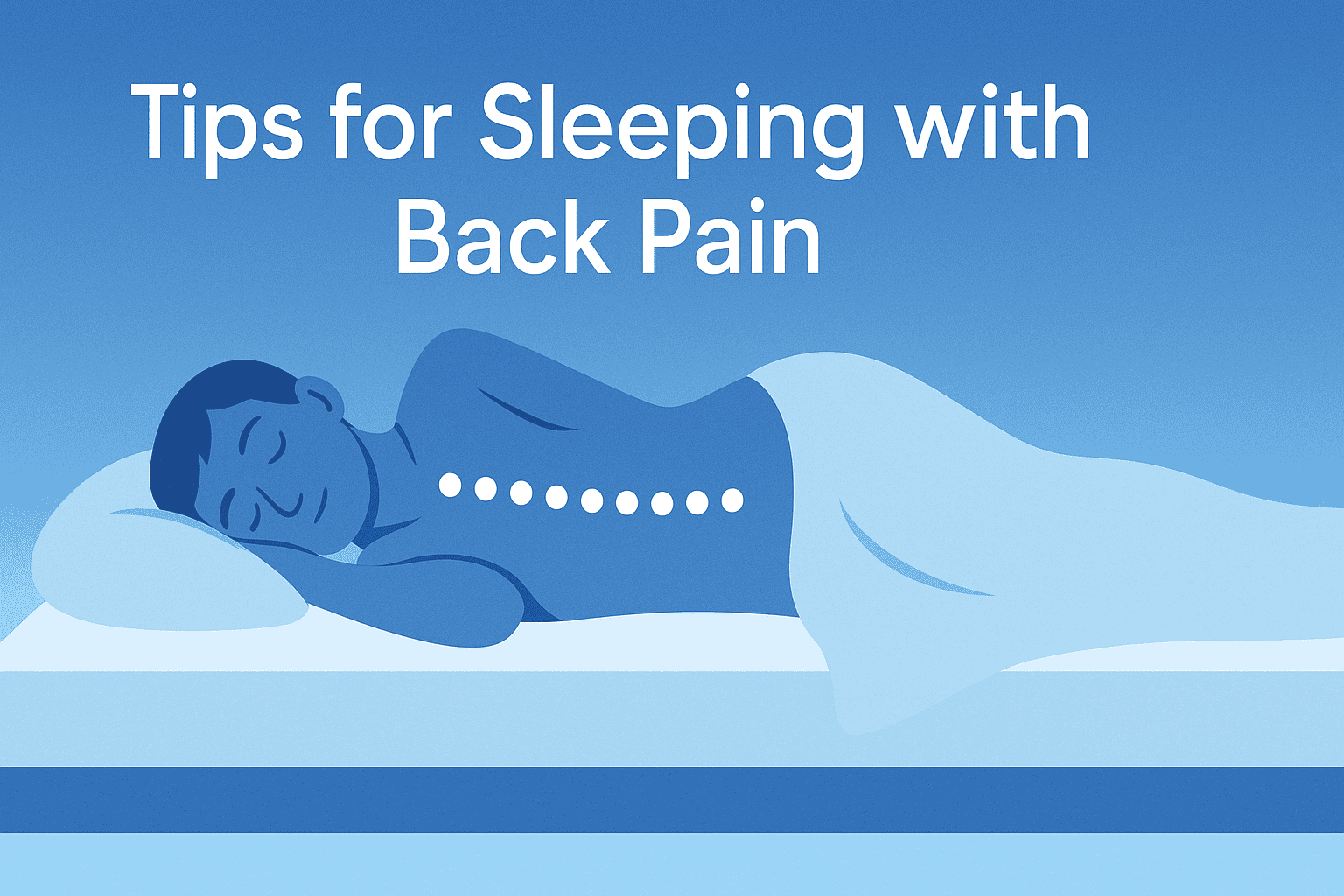
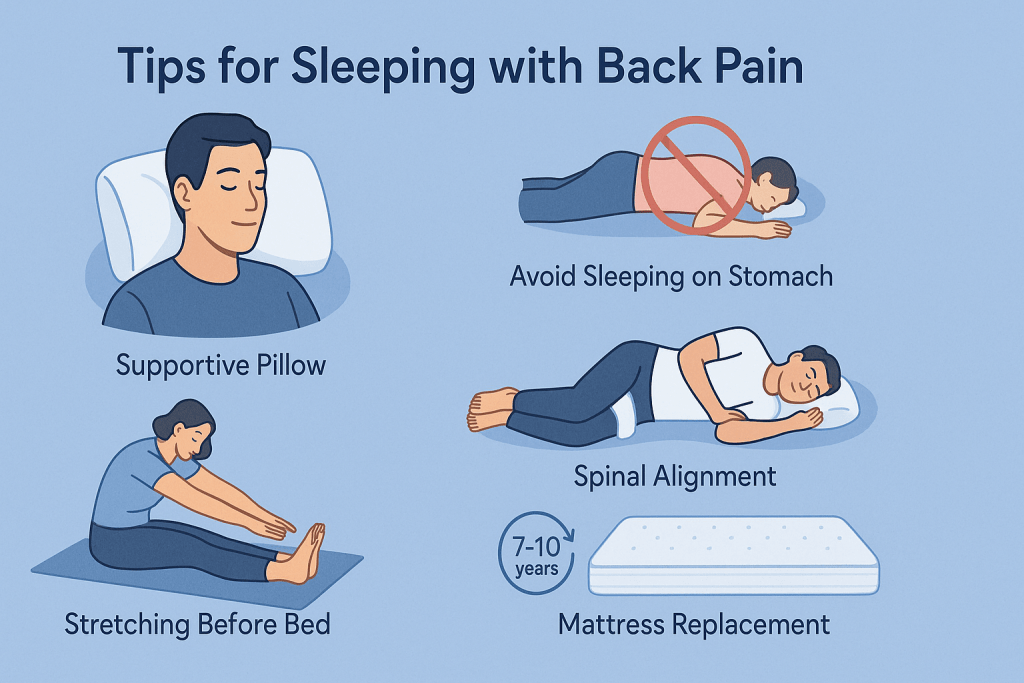
Tips for Sleeping with Back Pain

Even the best mattress for back pain won’t help if you don’t practice good sleep habits. Try these tips:

Back Pain Sleep Tips
  • Use a supportive pillow for neck alignment
  • Avoid sleeping on your stomach if you already have back pain
  • Stretch lightly before bed to relax muscles
  • Keep your spine straight with a small pillow under your knees (for back sleepers) or between your knees (for side sleepers)
  • Replace your mattress every 7–10 years

FAQs 

Q1: What firmness is best for back pain?

A medium-firm mattress is usually considered the best mattress for back pain because it balances support and comfort.

Q2: Can a mattress cause back pain?

Yes. An old or unsupportive mattress can trigger or worsen back pain.

Q3: How long before I notice improvement in back pain after buying a new mattress?

It can take a few weeks for your body to adjust, but many notice back pain relief within days.

Q4: Should I choose memory foam or hybrid for back pain?

Both are great choices. Memory foam is better for contouring, while hybrids combine support and bounce making them strong options for the best mattress for back pain.

Q5: How often should I replace my mattress if I have back pain?

Every 7–10 years, or sooner if sagging or worsening back pain occurs.

Conclusion

Living with back pain can feel exhausting, but the right mattress can make a world of difference. Instead of waking up sore and stiff, you could start your mornings refreshed and pain-free. The best mattress for back pain is the one that aligns your spine, supports your weight, and fits your sleeping style.

Remember:

  • Choose medium-firm support
  • Match your mattress to your sleeping position
  • Don’t overlook durability and quality

By investing in the best mattress for back pain, you’re not just buying a bed, you’re investing in your health, comfort, and overall well-being.You can visit our website to explore the best back pain mattress options designed to give you maximum comfort and support.

Single Mattress Insights
October 2, 2025

Single Mattress Size – Everything You Need to Know Before Buying

When it comes to choosing the right mattress, a single mattress size is one of the most popular options for people who want a comfortable yet space-saving bed. Whether you are buying it for your child, a guest room, or even for yourself, the single mattress size offers great versatility. Many people find it confusing to pick the right mattress because they are unsure about exact measurements, space requirements, and comfort levels. In this blog, we will explore everything you need to know about single mattress size, along with the exact single mattress dimensions, benefits, and tips for buying the best one for your needs.

What is a Single Mattress Size?

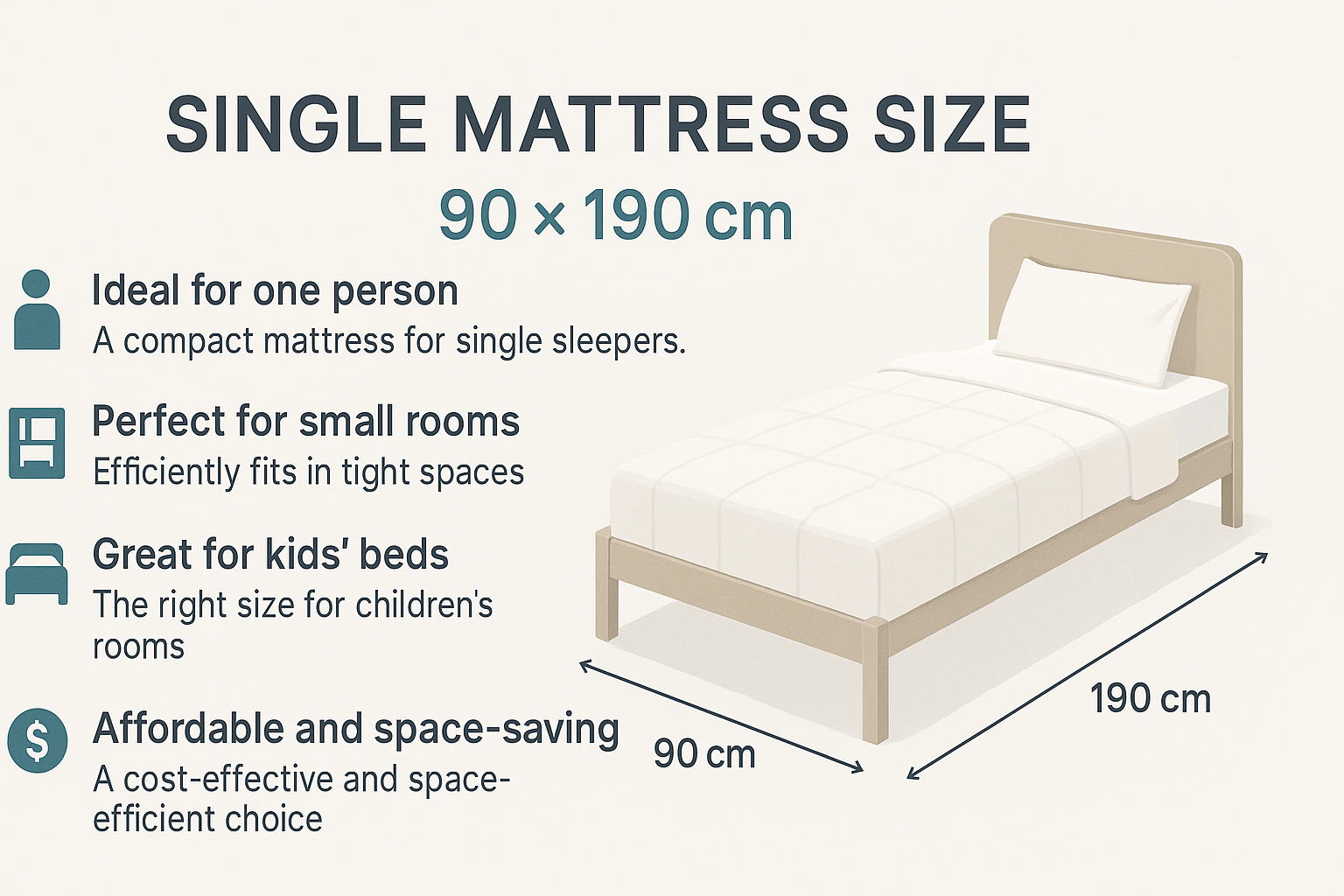
A single mattress size is typically designed for one person. It is smaller than a double or queen mattress but still provides enough sleeping space for a comfortable night’s rest.Thus the single mattress dimensions (90 cm × 190 cm) are the reference point for beds, frames, sheets, and accessories. When you aim to purchase a single mattress size, you want to ensure that your frame, bedding, and room layout are all suited for those single mattress dimensions.

The single mattress size is also ideal for hostels, dorm rooms, small bedrooms, and rental apartments where space is limited. Since it is lightweight and compact, moving and setting up a single mattress size is much easier compared to larger mattresses.

Why the Single Mattress Size (90 × 190 cm) Matters

Understanding that the single mattress dimensions are 90 × 190 cm helps in many ways:

  • Fit in your frame: If your bed frame is built for 90 by 190 cm, a true single mattress size will match snugly.
  • Room planning: You can allocate floor space in your room based on those single mattress dimensions.
  • Bedding and accessories: Sheets, covers, mattress protectors, and toppers must match the single mattress size (90 × 190 cm).
  • Comparisons to other regions: In some other countries, a “twin” mattress might be a different size but for UK standard dimensions, single mattress size means 90 × 190 cm.

Single Mattress Size for Different Users

For Children and Teenagers

A single mattress size (90 × 190 cm) is often ideal for a children’s bed. It gives enough length for growing kids while not occupying too much room. Because the single mattress dimensions are modest, you can still include desks, wardrobes, or shelves in the same room without overcrowding.According to sleep foundation, for growing children, choose a mattress that provides firm support to properly support their bones and joints

For Adults Sleeping Alone

Many adults choose a single mattress size when space is tight, such as in studio flats or small homes. The 90 × 190 cm single mattress dimensions allow a full-length sleep for single sleepers, provided they are not exceptionally tall (over ~190 cm). If you are significantly taller, some brands offer “extra-long single” variants, but the standard “single” line uses single mattress dimensions of 90 by 190 cm.

Guest Rooms & Spare Beds

Because the single mattress size is compact and cost-effective, it’s frequently used in guest rooms. A spare bed with single mattress dimensions is easy to manage, move, and tend to without consuming too much floor area.

Single Mattress Size vs. Larger Sizes: When to Use It

Let’s compare the single mattress size (90 × 190 cm) with a few larger sizes to see when it is and isn’t appropriate:

Mattress Size Comparison
Size Name Width (cm) Length (cm) Notes
Single Mattress 90 190 This is the single mattress size
Double Mattress 135 190 Common for couples in smaller rooms
Queen Size Mattress 120 190 A midpoint between double and king
King Size Mattress 150 200 More spacious for couples
Super King Mattress 180 200 Largest standard UK size
  • Single Mattress Size (90 × 190 cm): Ideal for one person, small rooms, child beds, guest beds.
  • Double Mattress (135 × 190 cm): Gives more width for a person who moves around, or for couples in narrow bedrooms.
  • Queen Size (120 × 190 cm): Offers more width than a single but remains comfortable in many rooms.
  • King / Super King (150 × 200 cm / 180 × 200 cm): Best suited when space is abundant.

If your room is too narrow or you’re primarily a single sleeper, the single mattress size is a smart choice. But if you anticipate needing more space or potentially sleeping with a partner, one of the larger sizes may be better.According to sleep foundation, to avoid a cramped feeling, we recommend leaving about 24 inches of space around each side of your bed.

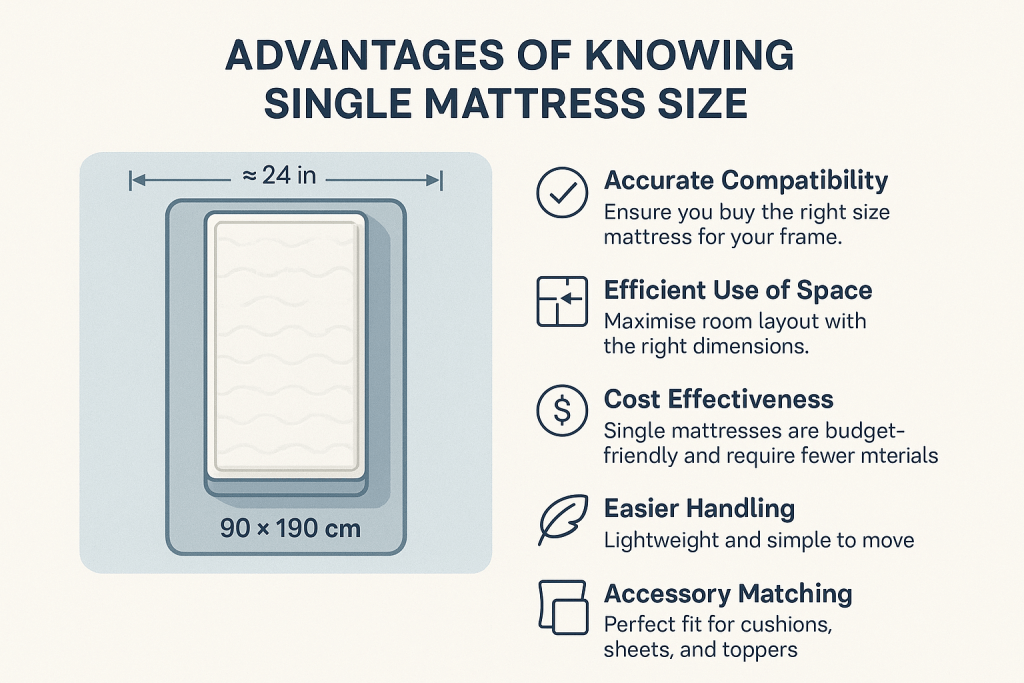
Advantages of Knowing and Using Single Mattress Size Correctly

  • Accurate compatibility: You won’t buy a mattress that’s too large or too small for your frame.
  • Efficient use of space: Your room is laid out knowing the single mattress dimensions.
  • Cost effectiveness: Single mattresses are generally cheaper and fewer materials needed for the single mattress size.
  • Easier handling: A mattress of single mattress size is lighter and simpler to move.
  • Accessory matching: Better matching for cushions, sheets, toppers, everything tailored to your single mattress dimensions.

    According to the Sleep foundation, to avoid a cramped feeling, we recommend leaving about 24 inches of space around each side of your bed.

Single Mattress Size Bedding and Accessories

Once you buy a single mattress size, you’ll also need the right bedding. Since the single mattress dimensions are smaller than double or queen, you should buy sheets, blankets, and toppers designed for single mattress size. This ensures a neat and snug fit.

Many bedding stores specifically mention whether a product is for single mattress dimensions, so you can easily find the right size.According to sleep charity, in order to enjoy a restful night’s sleep, you must pay some attention to your environment.

Final Thoughts

The single mattress size is a compact, practical, and widely used mattress dimension especially in smaller homes, bedrooms, and for single sleepers. With LuxeMattresses, the single mattress dimensions are precisely 90 cm × 190 cm, as listed under their size options.

By using the table above, confirming the single mattress dimensions before purchase, and matching your frame and bedding, you can confidently choose a mattress that fits perfectly. Whether this bed is for a child, guest, or solo adult, knowing the true single mattress size ensures you make an informed decision.

FAQs

1. Is a single mattress size good for adults?

Yes, the single mattress size is suitable for adults, especially those who sleep alone or live in smaller spaces. However, taller adults may prefer an “extra-long single” if available.

2. What bedding fits a single mattress size?

You should buy bedding specifically marked for single mattress size (90 × 190 cm). This includes sheets, duvet covers, and mattress protectors designed to fit these single mattress dimensions.

3. Can two people sleep on a single mattress size?

A single mattress size is meant for one sleeper. While two people could technically fit, it would be very cramped. For couples, a double or larger mattress is recommended.

4. How much space does a single mattress take up in a room?

With single mattress dimensions of 90 × 190 cm, the bed will take up just under 1 m × 2 m of floor space. It’s ideal for smaller bedrooms, guest rooms, and kids’ rooms.

5.  Is a single mattress cheaper than other sizes?

Yes. Generally, the single mattress size is more affordable because it requires fewer materials. It’s a budget-friendly choice for individuals or families.

Mattress Sizes UK
October 1, 2025

The Complete Guide to King Mattress Size

When it comes to getting the perfect night’s sleep, choosing the right mattress size plays a huge role. Among all options, the king mattress size stands out as one of the most popular choices for couples and families. With its generous dimensions, it provides ample space to stretch out, move freely, and sleep without disturbances. The king mattress size is especially ideal if you share your bed with a partner, children, or even pets, as it offers both comfort and room to breathe.

In this guide, we’ll explore everything you need to know about the king mattress size from dimensions and comparisons to care tips so you can make the best choice for your bedroom.

What Is the “King Mattress Size”?

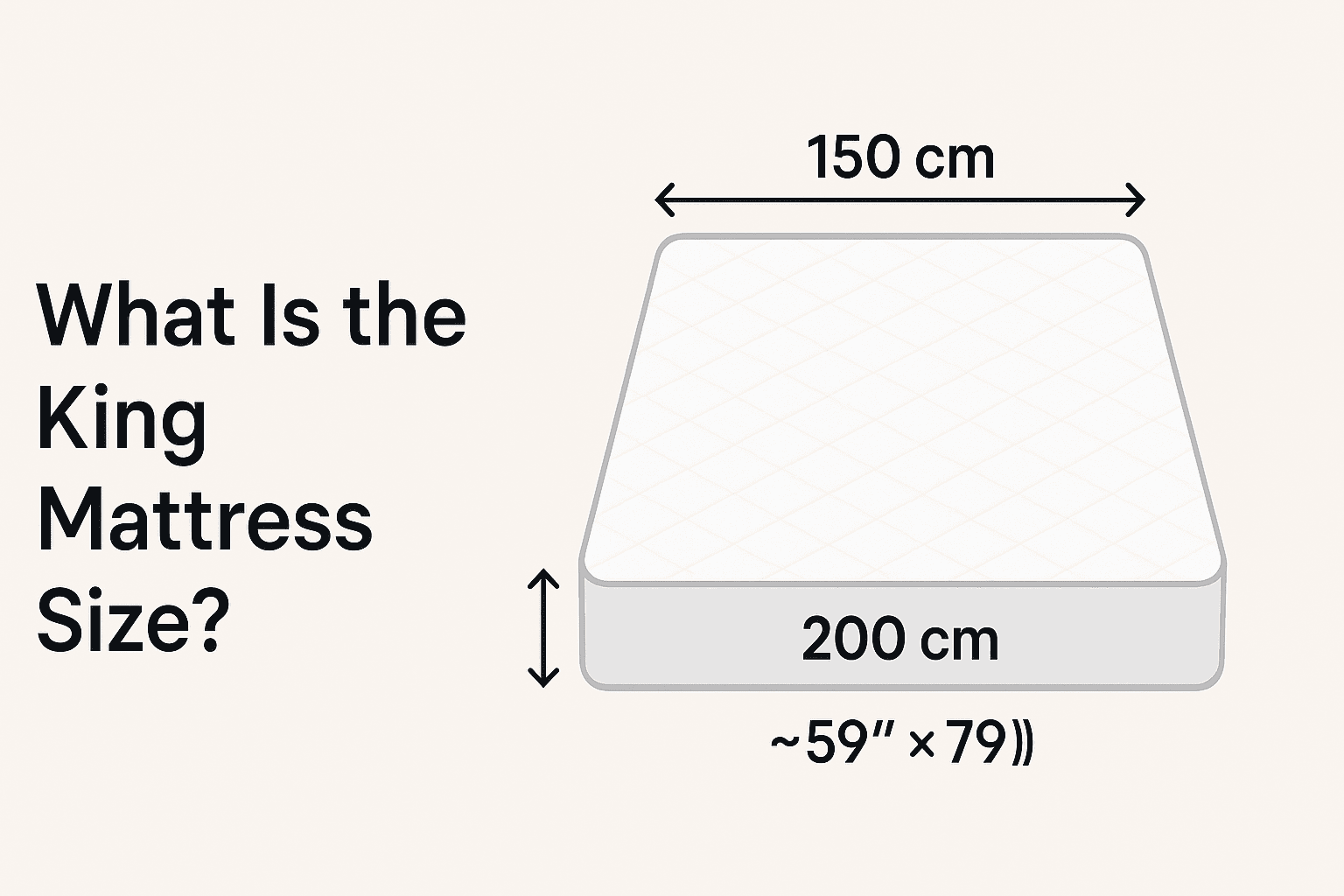
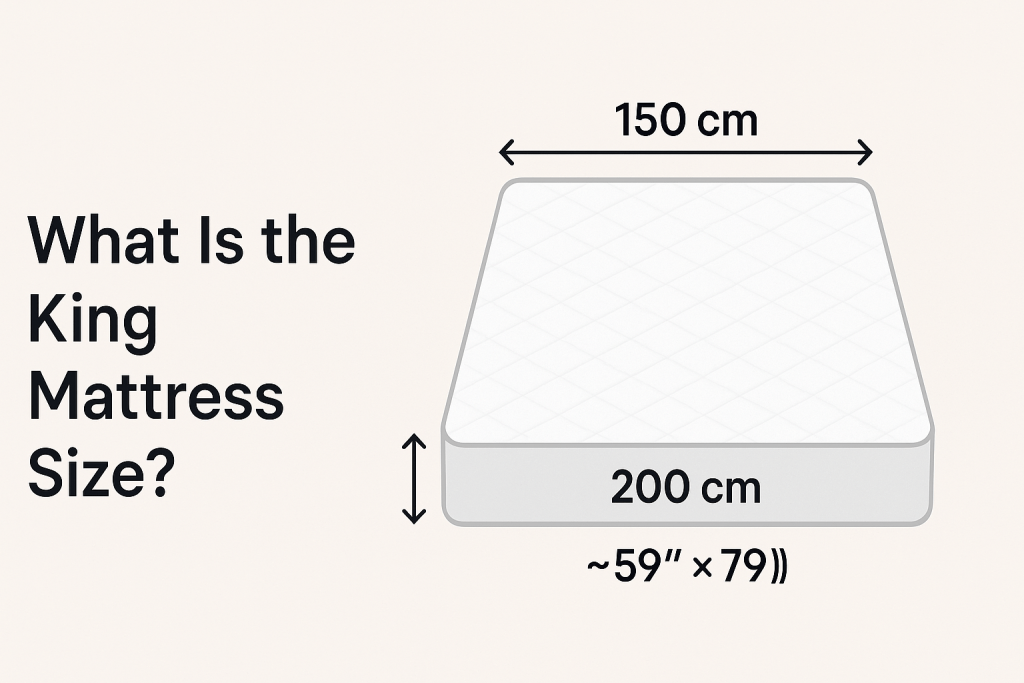
When mattress makers refer to a king mattress size, they typically mean a mattress that balances generous sleeping space with usability in many bedrooms. It is larger than a double bed, offering extra width and length for couples, families, or anyone who loves more sleeping space. The king mattress size is ideal for master bedrooms, giving comfort and room to stretch out without feeling crowded. The king size mattress is 150 cm × 200 cm (roughly 59″ × 79″).

King Mattress Size vs Other Standard Sizes

To better understand whether a king mattress size is right for you, it helps to see it in context. Here’s a comparative table showing how the king size stacks up:

Mattress Size Table
Mattress Type Dimensions (cm) Approx. in Inches Notes
Single / Twin 90 × 190 ~ 35.4″ × 74.8″ Ideal for one person, small rooms
Small Double / Queen (UK) 120 × 190 ~ 47.2″ × 74.8″ A bit wider than single
Double 135 × 190 ~ 53.1″ × 74.8″ Common “standard” couple’s size
King 150 × 200 ~ 59″ × 79″ The king mattress size
Super King 180 × 200 ~ 70.9″ × 79″ Wider than king by 30 cm (≈12″)

From that chart, you see that the king mattress size is comfortably larger than double size, but smaller than super king, often making it a good compromise between spaciousness and manageability.

Why Choose a King Mattress Size?

Here are several reasons many people opt for a king mattress size:

Why Choose King
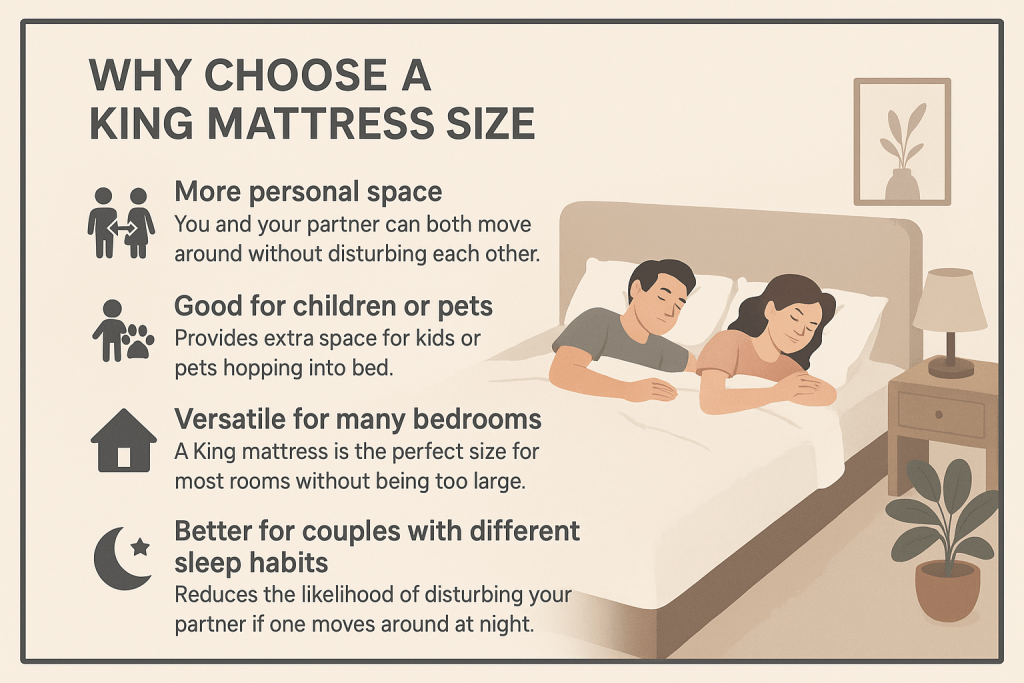
  1. More personal space — You and your partner both get ample room to move around without disturbing each other.
  2. Good for children or pets — If kids or pets sometimes hop in, a king gives some buffer room.
  3. Versatile for many bedrooms — A super king may be too wide for many master rooms; a king often “fits just right.”
  4. Better for couples of differing sleep habits — If one person tosses and turns, they’re less likely to disturb the other.

Things to Check Before Ordering a King Mattress Size

To make sure a king mattress size works well for your space and lifestyle, here are key considerations:

  • Bedroom dimensions: Measure the room, allowing for space to walk around, open wardrobe doors, etc.
  • Bed base or frame: Ensure your bed base supports 150 × 200 cm.
  • Doorways, stairs, and corridors: Can the mattress be delivered through tight spaces?
  • Weight and handling: A king mattress will weigh more to check whether two people are needed to move it.
  • Bedding & accessories: Sheets, mattress protectors, and toppers must match the king dimensions.
  • Mattress firmness and construction: Even for the same size, materials (memory foam, hybrid, latex) will affect feel and performance.

According to the sleep foundation, it’s important to take other factors into account when choosing the right king mattress. These include not only mattress quality and performance, but also your budget, bedroom size, and even the logistics of moving the mattress.

Best King Mattress Models 

Here are a few mattress models that you can find in the king mattress size variant:

  • Luxe Organic Hybrid — available in king size (150 × 200 cm) as one of the options.
  • Majestic 9000 — listed in their size guide including king size 150 × 200 cm.
  • Luxe-Latex Natural Pillow Top — also offered with options including king size. 

According to sleep charity, always choose a mattress that feels comfortable for your body type

Tips for Using & Caring for a King Mattress Size

Once you have a king mattress size, here are tips to maximize comfort, longevity, and performance:

  • Rotate regularly — Even though some modern mattresses are one-sided, if yours is double-sided, flip/rotate it every few months.
  • Use a proper base — A sturdy bed frame or slatted base helps support the mattress evenly.
  • Protect with a mattress protector — Accidents and spills happen; protect your investment. According to sleep foundation , use a mattress protector and wash your sheets regularly to keep dirt, sweat, and allergens from seeping into the mattress.
  • Clean lightly — Vacuum occasionally; follow manufacturer recommendations for stains.
  • Mind temperature — Use breathable bedding to keep the mattress ventilated.
  • Follow warranty instructions — For example, some warranties require you to register and maintain the mattress.

Frequently Asked Questions (FAQs)

1. What exactly is the king mattress size in the UK?

In the UK, the king mattress size sold by Luxe is 150 cm × 200 cm (≈ 59″ × 79″).

2. How does the king mattress size compare to super king?

A super king is 180 × 200 cm. So a super king gives roughly 30 cm more width than a king mattress size. 

3. Is a king mattress size big enough for two people?

Yes, for most couples, a king mattress size gives plenty of space for two adults to sleep comfortably especially in the UK dimensions. The super king offers more, but often isn’t necessary.

4. Will king size bedding be easy to find?

Yes, because king mattress size (150 × 200 cm) is standard in the UK, you’ll find bedding, mattress protectors, toppers, and sheets to match without much difficulty.

5. Can I get a king mattress size in different materials or firmness?

Definitely. Luxe offers models like the Luxe Organic Hybrid and Luxe-Latex Natural Pillow Top in the king size format. You just choose the material and firmness you prefer at that size.

6. What to watch out for when buying a king mattress size?

Make sure your room and doorways can accommodate the king mattress size, check mattress base compatibility, confirm delivery logistics, and always verify the warranty terms. Also check whether the mattress is handlable by two people.

Conclusion

Choosing the right mattress size is one of the most important decisions for achieving quality sleep and creating a comfortable bedroom. The king mattress size (150 × 200 cm) strikes the perfect balance between spaciousness and practicality. It provides ample room for couples, families with kids, or even pets while still fitting comfortably in most bedrooms. Compared to smaller sizes, the king mattress size offers more personal space and comfort, without overwhelming your room like a super king might.If you’re considering upgrading to a king mattress size, exploring trusted options is key. You can visit Luxe Mattresses to find high-quality king mattresses designed for durability, comfort, and restful sleep.

top memory foam
September 29, 2025

The Comfort Revolution: Why a Memory Foam Topped Mattress is the Top Memory Foam Mattress Choice?

Getting a good night’s sleep is more than just closing your eyes; it’s about giving your body the support and comfort it needs to recover. One of the most effective ways to ensure this is by choosing the right mattress. Over the past two decades, memory foam has changed the way people sleep, and today, the memory foam topped mattress has become the go-to choice for many households. When it comes to comfort, pressure relief, and durability, it is often considered the top memory foam mattress available.

In this article, we’ll dive deep into why this mattress style is so popular, how it is designed and explore its benefits.

What is a Memory Foam Topped Mattress?

A memory foam topped mattress combines a supportive base, often made of springs or high-density foam, with a thick memory foam layer on top. The upper layer responds to body heat and weight, molding itself to your unique shape. This ensures even distribution of weight, reducing pressure on sensitive joints and muscles.

Unlike traditional spring mattresses that push back against your body, the top memory foam mattress adapts to you. This contouring effect helps with spinal alignment and reduces discomfort caused by poor sleeping posture.

Composition of a Memory Foam Topped Mattress

The quality of a memory foam topped mattress lies in its layered design. Each layer contributes to comfort, durability, and support:

  1. Comfort Layer (Memory Foam Top)
    This is the star of the mattress. It’s made from viscoelastic foam that responds to body heat and pressure, contouring around you for personalized comfort. The thickness of this layer often ranges between 2 to 4 inches.
  2. Transition Layer
    Below the top foam, you’ll usually find a transition layer made from slightly firmer foam. This prevents you from sinking too deeply into the mattress and adds a supportive feel.
  3. Support Core
    The base is typically made from high-density polyfoam or pocketed coils in hybrid designs. This layer ensures stability, structural integrity, and long-lasting durability.
  4. Breathable Cover
    The outer fabric is often made with breathable materials like cotton blends, bamboo fibers, or cooling textiles. Some covers are infused with gel or phase-change materials to regulate temperature.

This combination of layers is what makes the top memory foam mattress both supportive and comfortable, ensuring restful nights. The Sleep Charity suggests creating a calming bedtime routine, such as dimming lights and avoiding screens, to prepare your body for a restful night’s sleep. Pairing this routine with a supportive mattress can improve sleep quality significantly. 

 Memory Foam Mattress

Benefits of Choosing the Top Memory Foam Mattress

Here are the most valuable reasons why people continue to prefer a memory foam topped mattress:

  1. Personalized Comfort
    The foam hugs your body, making you feel as though the mattress was designed just for you.
  2. Excellent Spinal Alignment
    By supporting your natural curve, the top memory foam mattress helps prevent back and neck pain. According to the Sleep Foundation, choosing a mattress that supports your natural spinal alignment is one of the most important steps for improving sleep quality
    Motion Isolation
    Ideal for couples, the foam absorbs movement so one partner’s turning doesn’t disturb the other.
  3. Hypoallergenic Qualities
    Dense foam deters dust mites and allergens, making it great for people with sensitivities.
  4. Durability
    With proper care, a memory foam topped mattress lasts longer than many traditional mattresses.

Memory Foam Topped Mattress vs. Other Mattress Types

To better understand the value, let’s compare the top memory foam mattress with other common mattress types:

Memory Foam Mattress Comparison
Feature Memory Foam Topped Mattress Hybrid Mattress Latex Mattress
Comfort Level High – contours to body High – mixed feel Medium-Firm
Motion Isolation Excellent Good Fair
Spinal Support Excellent Good Good
Allergen Resistance High Medium High
Price Range Mid to High Mid to High High

From this comparison, it’s clear that the memory foam topped mattress is a strong competitor, especially for sleepers who want pressure relief and minimal motion transfer.

How to Choose the Right Memory Foam Topped Mattress

With so many options on the market, finding the top memory foam mattress can be overwhelming. Keep these tips in mind:

  • Thickness of Foam Layer: Thicker foam means more comfort.
  • Firmness Level: Side sleepers usually prefer medium-soft, while back or stomach sleepers may prefer medium-firm.
  • Cooling Technology: Look for gel-infused or breathable foam to prevent overheating.
  • Budget vs. Quality: While it’s tempting to go for the cheapest option, investing in a high-quality memory foam topped mattress will save you from replacing it too soon.

Caring for Your Mattress

Once you’ve invested in the top memory foam mattress, you’ll want it to last. Here are simple maintenance tips:

  • Use a mattress protector to guard against spills and dust.
  • Rotate the mattress every 3–6 months to prevent sagging.
  • Keep it clean by vacuuming occasionally.
  • Allow it to breathe by uncovering it once in a while.

These steps will help your memory foam topped mattress remain in excellent shape for years.

Why is the Top Memory Foam Mattress Worth the Investment?

A mattress isn’t just furniture, it’s a wellness tool. Choosing a memory foam topped mattress means choosing better sleep, fewer aches, and improved daily performance. Most users notice:

  • Reduced back and joint pain.
  • Deeper, more restorative sleep.
  • Better mood and energy levels.

When compared to cheaper mattresses that lose shape quickly or cause discomfort, the top memory foam mattress proves to be a wise long-term investment.

Final Thoughts

The sleep industry is filled with countless mattress types, but few can compete with the balance of comfort, support, and durability offered by the memory foam topped mattress. For anyone who values restful nights and energetic mornings, this is truly the top memory foam mattress worth considering.

From pressure relief to motion isolation, the advantages are clear. Whether you’re upgrading an old bed or buying your first premium mattress, choosing a memory foam topped mattress could be one of the best decisions you make for your health and well-being. If you’re ready to experience the comfort yourself, you can also check out our products.

Frequently Asked Questions (FAQs)

Q1: How long does a memory foam topped mattress last?

A high-quality memory foam topped mattress can last 8–10 years with proper care.

Q2: Does memory foam get too hot?

Older models did retain heat, but most modern top memory foam mattresses now include cooling technology like gel layers or breathable covers.

Q3: Is it good for people with back pain?

Yes, it’s one of the best choices. The foam keeps your spine aligned and reduces pressure on your back.

Q4: Can I use it on any bed frame?

Most memory foam topped mattresses work well on platform beds, slatted bases, or adjustable frames. Just ensure the foundation is sturdy.

Q5: Is it safe for kids or elders?

Absolutely. Its supportive yet soft design makes it comfortable for people of all ages. Elders often appreciate the pain relief it provides.

Q6: How do I know if it’s the top memory foam mattress for me?

If you wake up sore, toss and turn at night, or feel your partner’s movement constantly, switching to the top memory foam mattress may solve those issues

small double mattress
September 27, 2025

Mattress Topper Small Double: Improve Your Sleep Without Buying a New Mattress

When it comes to improving sleep, a mattress topper can be a simple yet highly effective solution. If your bed feels too firm, too soft, or just a bit worn out, adding a mattress topper small double can instantly transform your sleeping experience.

In the UK, small double mattresses and toppers are increasingly popular because they fit perfectly in smaller bedrooms while still providing more space than a single bed. Whether you want better comfort, pressure relief, or to extend the life of your mattress, the mattress topper small double is an excellent investment.

small double mattress

What is a Mattress Topper Small Double?

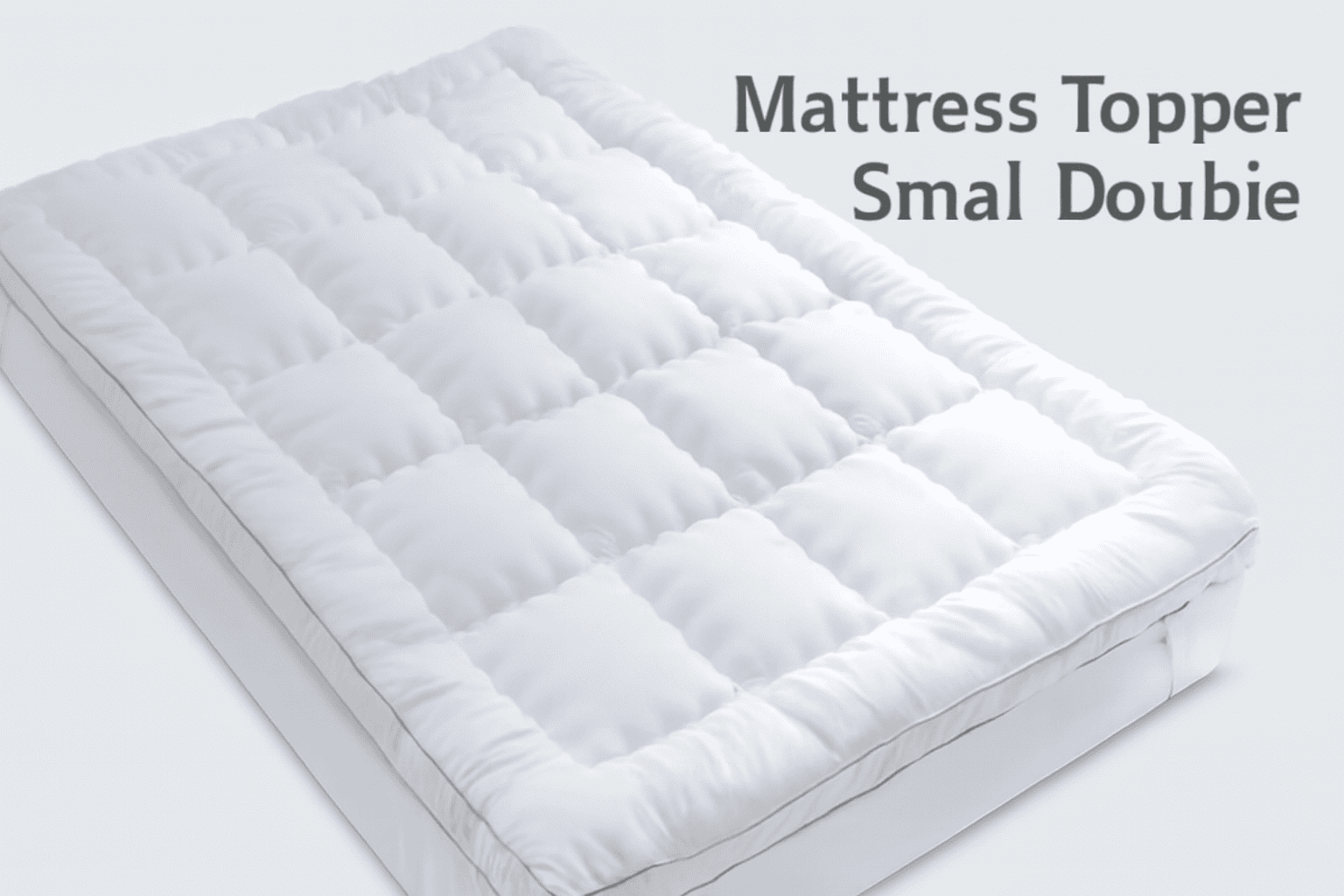
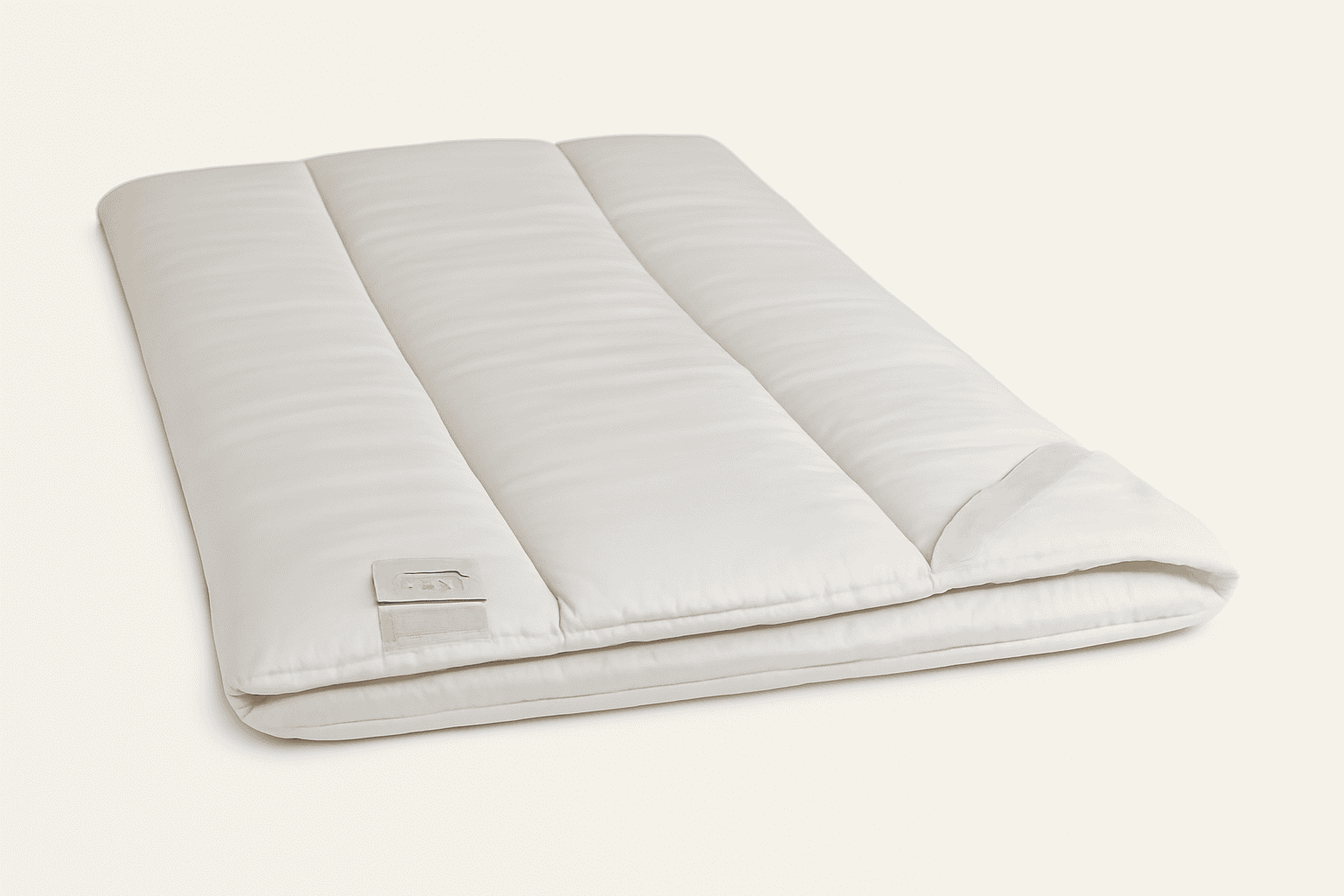
A mattress topper small double is an extra cushioned layer that sits directly on top of your mattress. Its purpose is to add more comfort, support, or softness to your bed without replacing the entire mattress.

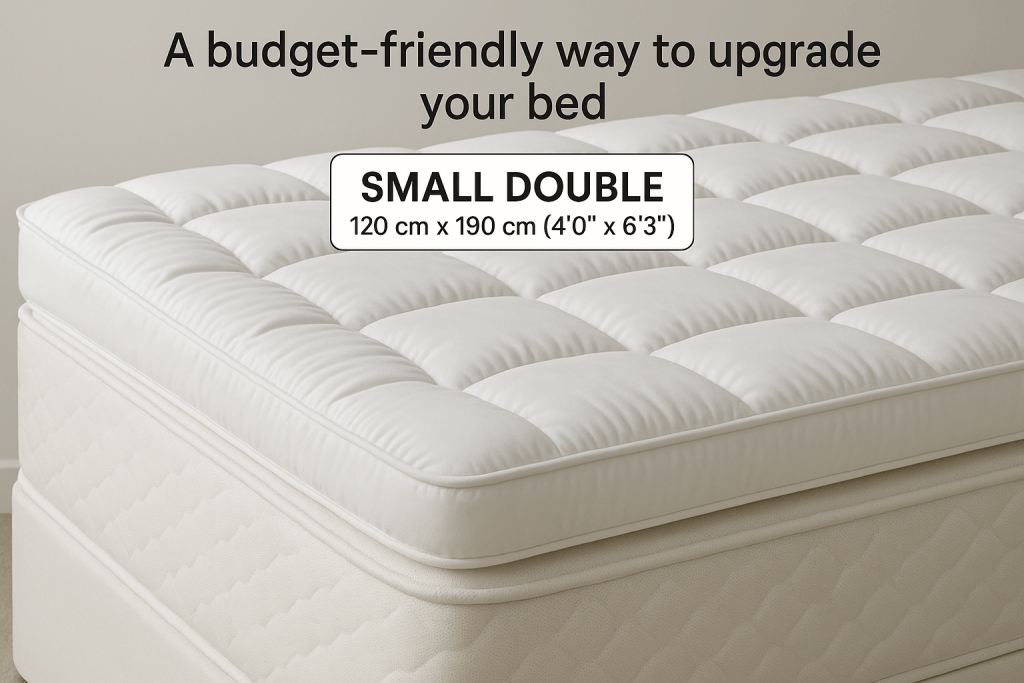
The “small double” refers to the size. In the UK, this size is 120 cm x 190 cm (4’0″ x 6’3″). It’s slightly wider than a single but narrower than a standard double, making it ideal for small bedrooms, teenagers, guest rooms, or solo sleepers who want extra space.

In short, a small double mattress topper is:

  • A removable layer for added comfort.
  • A budget-friendly way to upgrade your bed.
  • Designed to fit small double mattresses perfectly.

What is a Mattress Topper Small Double Made Of?

The material of a mattress topper small double plays a big role in how it feels and performs. Different toppers are made from different materials, each with unique benefits:

1. Memory Foam

One of the most popular materials, memory foam molds to your body shape and provides excellent pressure relief. It’s perfect for people with back or joint pain.

2. Latex

Latex toppers are naturally hypoallergenic, bouncy, and breathable. They last longer than foam toppers and offer great support.

3. Cooling Gel 

Some toppers are made with cooling gel or infused materials to regulate temperature. These are ideal for hot sleepers who often wake up sweating.
The National Sleep Foundation highlights that your sleep surface plays a vital role in overall sleep quality. If your mattress feels too firm or too soft, adding a mattress topper can improve comfort and support without the cost of replacing the entire bed. A topper that matches your body’s needs such as memory foam for pressure relief or cooling gel for temperature regulation can help reduce tossing and turning, making it easier to get restorative sleep.

Choose the Right Thickness for Maximum Comfort

When it comes to memory foam mattress toppers, thickness really matters. Most options range between 2 to 4 inches, and the right choice depends on how much comfort and support you’re looking for. A thicker topper usually adds more cushioning, making it a great option if your mattress is old, too firm, or simply uncomfortable.

Here’s a simple breakdown to help you decide:

Mattress Topper Table
Thickness Comfort Level Best For Key Benefits
2-Inch Memory Foam Topper Light comfort People with a firm but good-condition mattress Softens the surface slightly, doesn’t raise bed height much
3-Inch Memory Foam Topper Balanced softness & support Most sleepers Provides enough cushioning for comfort without being too thick
4-Inch Memory Foam Topper Maximum comfort & deep cushioning Side sleepers, people with firm, uneven, or worn-out mattresses Offers plush, cloud-like feel with significant pressure relief

Why Choose a Mattress Topper Small Double?

The mattress topper small double isn’t just about adding softness. It comes with a range of practical benefits:

1. Extends the Life of Your Mattress

Mattresses can be expensive, and if yours is starting to sag, you might think replacement is the only option. But a mattress topper small double can give your bed a new lease of life, saving you money.

2. Improves Sleep Comfort

Whether you prefer a soft, plush feel or a firmer surface, the mattress topper small double can help adjust your mattress to suit your sleep style.The Sleep Charity advises keeping a consistent sleep–wake schedule and making your bedroom cool, dark, and quiet for better rest.

3. Pressure Relief

Memory foam toppers in particular provide excellent support for your back, shoulders, and hips, reducing discomfort and promoting deeper sleep.

4. Temperature Control

Many mattress topper small double options are designed with cooling materials, making them ideal for hot sleepers who wake up during the night.

5. Affordable Upgrade

Instead of investing in a brand-new mattress, a mattress topper small double gives you a budget-friendly way to upgrade your sleep setup.

According to The Sleep Foundation, your sleep surface plays a major role in how well you rest each night. Using a topper can enhance comfort, improve spinal alignment, and reduce tossing and turning. 

How to Choose the Right Mattress Topper Small Double

When buying a small double mattress topper, keep the following in mind:

  1. Thickness – Thicker toppers (around 4 inches) add extra cushioning, while thinner ones (2 inches) provide subtle firmness changes.
  2. Firmness – Choose a firmer topper if your mattress feels too soft, and a softer one if your bed feels too hard.
  3. Material – Memory foam, latex, feather, or cooling gel all offer different experiences.
  4. Breathability – Look for toppers with airflow designs if you’re prone to overheating.
  5. Ease of Cleaning – A topper with a removable, washable cover is always a plus.
  6. Allergies – Latex or hypoallergenic materials may be best for allergy sufferers.

Explore our buying guide for mattress toppers to find the right fit.

Caring for Your Mattress Topper Small Double

To make your mattress topper small double last longer, follow these care tips:

  • Use a mattress protector to guard against spills and dirt.
  • Rotate the topper regularly to prevent sagging.
  • Air it out occasionally to keep it fresh.
  • Always follow manufacturer cleaning instructions.

Conclusion

The mattress topper small double is a versatile and affordable way to upgrade your sleeping experience. Measuring 120 cm x 190 cm (4’0″ x 6’3″), it’s perfect for smaller bedrooms, guest rooms, or solo sleepers who want more space than a single bed.

From memory foam to cooling gel, the right mattress topper small double can transform your bed, relieve pressure, and extend the life of your mattress.

Before buying, consider your sleeping habits, budget, and comfort needs and don’t forget to check our website for more detailed guides and product recommendations.

Adding a mattress topper small double may just be the best step you take towards deeper, more restful sleep.

FAQs About Mattress Topper Small Double

1. Can two adults sleep on a small double with a topper?

Yes, but space is limited. It’s ideal for solo sleepers or couples who don’t mind close sleeping.

2. How thick should a mattress topper for a small double be?

A thickness of 2–4 inches is recommended depending on your comfort needs.

3. Will a mattress topper fix a sagging mattress?

It can improve comfort temporarily, but it’s not a permanent solution for a severely worn-out mattress.

4. What’s the difference between a small double and a double topper?

A small double is 120 cm wide, while a standard double is 137 cm wide making the small double 17 cm narrower.

5. How long does a small double mattress topper last?

With proper care, most toppers last between 3–5 years.

6. Are mattress toppers good for back pain?

Yes, especially memory foam and latex, which provide excellent spinal support.

7. Is a small double mattress topper worth it?

Absolutely. It’s an affordable way to improve comfort, extend mattress life, and enhance sleep quality.

single mattress topper
September 26, 2025

Single Mattress Topper: The Perfect Choice for Comfort and Better Sleep

When it comes to enjoying restful nights, many people overlook the role of a single mattress topper. While a mattress itself provides the foundation, the topper adds an extra layer of comfort, support, and luxury to your sleep experience. For those who are considering a single mattress with topper, this combination can be the perfect solution for achieving both relaxation and value for money.

Whether you live in a small apartment, are a student, or simply prefer a single bed, adding a mattress topper can transform the way you sleep. In this blog, we’ll dive into everything you need to know about single mattress toppers, why a single mattress with topper is a smart investment, and how to choose the right one for your needs.

single mattress topper

What Is a Single Mattress Topper?

A single mattress topper is an additional cushioned layer placed on top of a mattress. Its main purpose is to improve comfort, add support, and extend the lifespan of the mattress. Toppers are available in different materials, thicknesses, and firmness levels, giving you the flexibility to choose one that suits your sleep preferences.

When paired with a single mattress with a topper, it creates a perfect sleeping system that balances both affordability and comfort. Instead of investing in an entirely new mattress, you can simply add a topper to enhance your existing bed.

Why Choose a Single Mattress with a Topper?

If you’re wondering why people often prefer a single mattress with a topper, here are some of the key reasons:

  1. Cost-Effective Solution
    Buying a brand-new mattress can be expensive. A single mattress topper is far more budget-friendly, and when paired with your mattress, it gives you the same luxurious feel as high-end beds.
  2. Comfort Upgrade
    If your mattress feels too firm or too soft, a topper can fix that. A single mattress with a topper allows you to customize your bed without replacing the entire mattress.
  3. Better Sleep Quality
    A single mattress topper improves sleep quality by easing pressure on the body and adding extra comfort. It helps you wake up refreshed and energized. The topper helps relieve pressure points, ensuring you wake up refreshed. This is especially important if you experience back or joint pain.
  4. Extended Mattress Life
    Placing a topper on your mattress reduces wear and tear. Your single mattress with topper will last longer, saving you money in the long run.
  5. Great for Guests and Students
    If you’re setting up a guest room or a hostel bed, a single mattress topper instantly boosts comfort without requiring a huge investment.
why choose sngle mattress topper

Who Should Use a Single Mattress with a Topper?

You may wonder if a single mattress topper is right for you. Here are situations where a single mattress with a topper can be a game-changer:

  • Students in hostels or dorms: Hostel mattresses are often basic and uncomfortable. Adding a topper instantly improves sleep quality.
  • People with back or joint pain; can benefit from using a single mattress topper, as it provides extra cushioning and support. It helps relieve pressure points, keeps the spine aligned, and reduces discomfort, making sleep more restful.
  • Budget-conscious buyers: If you don’t want to spend on a new bed, a single mattress with a topper is a smart alternative.
  • Guest rooms: Make your guests feel at home without investing in a costly mattress.
  • People with old mattresses: Instead of replacing your mattress, add a topper to give it new life.

How to Choose the Best Single Mattress Topper

When selecting a single mattress topper, consider the following factors:

  1. Material – Decide whether you want memory foam, latex, wool, or gel based on your needs.
  2. Thickness – Thicker toppers (3–4 inches) offer more cushioning, while thinner ones (1–2 inches) provide light comfort.
  3. Firmness – Choose soft, medium, or firm depending on your sleep position.
    • Side sleepers may prefer softer toppers.
    • Back and stomach sleepers often need firmer ones.
  4. Breathability – If you sleep hot, choose a gel or latex topper for better airflow.
  5. Allergies – Opt for hypoallergenic toppers like latex or wool if you have sensitivities.
  6. Budget – A single mattress with topper offers many price options, so choose one that balances cost and quality.

Caring for Your Single Mattress with Topper

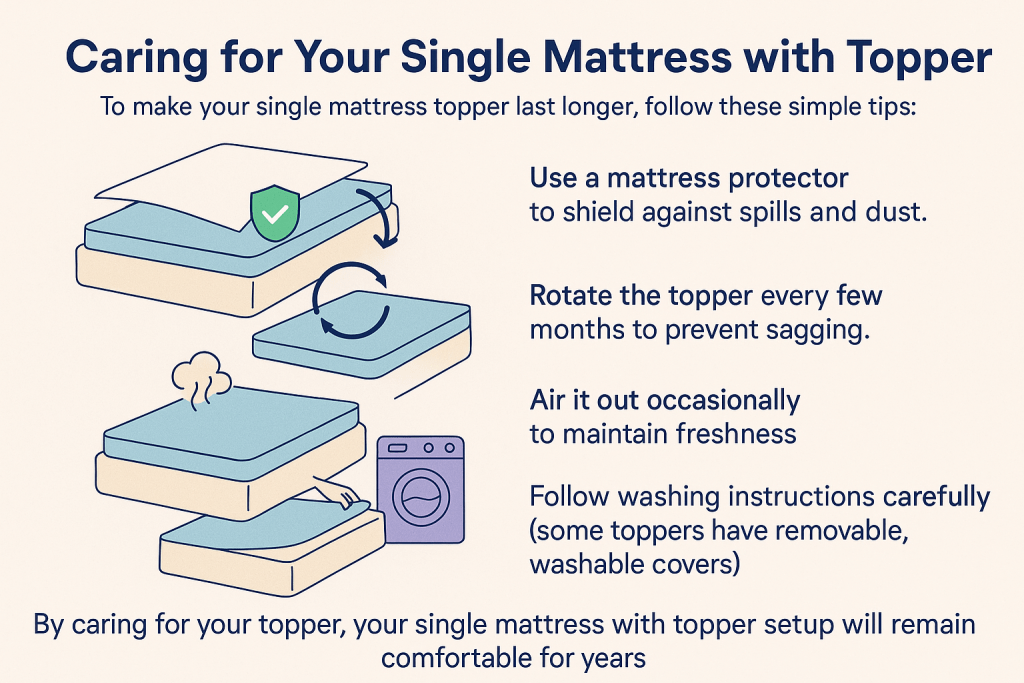
To make your single mattress topper last longer, follow these simple tips:

  • Use a mattress protector to shield against spills and dust.
  • Rotate the topper every few months to prevent sagging.
  • Air it out occasionally to maintain freshness.
  • Follow washing instructions carefully (some toppers have removable, washable covers).

By caring for your topper, your single mattress with topper setup will remain comfortable for years.

caring mattress

Benefits of Investing in a Single Mattress Topper

Still unsure whether a topper is worth it? Here’s a quick list of benefits that show why a single mattress topper is a wise investment:

  • Enhances comfort instantly
  • Supports posture and reduces body aches
  • Protects your mattress from damage
  • Affordable and practical solution
  • Adapts to different sleep needs
  • Ideal for small spaces and single beds

Clearly, choosing a single mattress with a topper is not just about comfort it’s also about long-term value.

Single Mattress Topper vs Buying a New Mattress

Many people ask: Should I buy a new mattress or simply add a topper? The answer depends on your situation.

  • If your mattress is completely worn out with broken springs or sagging beyond repair, replacing it might be the better choice.
  • However, if your mattress is still in good condition but lacks comfort, a single mattress topper can fix the issue at a fraction of the price.

For budget-conscious sleepers, going for a single mattress with a topper is the smartest move.

Final Thoughts

A single mattress topper is one of the simplest yet most effective ways to improve your sleep quality. Whether you’re a student, setting up a guest room, or simply looking to refresh your bed, investing in a single mattress with topper is a decision you won’t regret.

It’s affordable, practical, and versatile. With the right topper, you can enjoy hotel-like comfort every night without spending a fortune on a new bed. From memory foam to wool, there’s a topper for every sleeper, making it the perfect upgrade for your single bed.

FAQs About Single Mattress Topper

1. What is a single mattress topper used for?

A single mattress topper is an extra cushioned layer placed on top of your mattress. It improves comfort, provides better support, and helps extend the life of your mattress.

2. Can a single mattress topper make my bed softer?

Yes! If your mattress feels too firm, adding a single mattress topper can instantly make it softer and more comfortable without losing support.

3. Is a single mattress topper good for back pain?

A high-quality single mattress topper, especially memory foam, can help reduce back pain by keeping your spine aligned and relieving pressure points while you sleep.

4. How thick should a single mattress topper be?

It depends on your comfort needs. A 2-inch topper adds light cushioning, while a 3–4 inch topper gives extra softness and support for deeper comfort.

5. Does a single mattress topper keep you cool at night?

Modern toppers are designed with breathable materials and cooling technologies like gel-infused foam. This prevents overheating and keeps you comfortable all night.

6. Can I use a single mattress topper instead of buying a new mattress?

If your mattress is still in good shape but not comfortable enough, a topper is the perfect solution. However, if your mattress is old, saggy, or damaged, it’s better to replace it.

7. How do I clean and maintain a single mattress topper?

Most toppers come with removable, washable covers. To keep it fresh, use a mattress protector, air it out occasionally, and follow the care instructions provided.

Double mattress
September 25, 2025

What is a Double Mattress Size?

When it comes to buying a new bed, one of the first decisions you’ll face is choosing the right mattress size. In the UK, a double mattress is one of the most popular options, striking the perfect balance between comfort and practicality. It’s larger than a single, giving you more room to stretch out, but it’s also smaller than a king, meaning it won’t overwhelm your bedroom.

A double mattress is a great choice for a wide range of sleepers whether you’re a couple, a solo sleeper who loves extra space, or a parent buying for a teenager who’s outgrown their single bed. It is also a common choice for guest rooms, as it offers enough sleeping space without requiring a large bedroom.

Double mattress

Double Mattress Size Breakdown

One of the main reasons a double mattress is so popular is because it’s a standardised size in the UK. This makes it easy to find matching bed frames, sheets, duvets, and mattress protectors without much hassle.

Here’s a clear breakdown of the dimensions:

Mattress TypeImperial SizeMetric Size
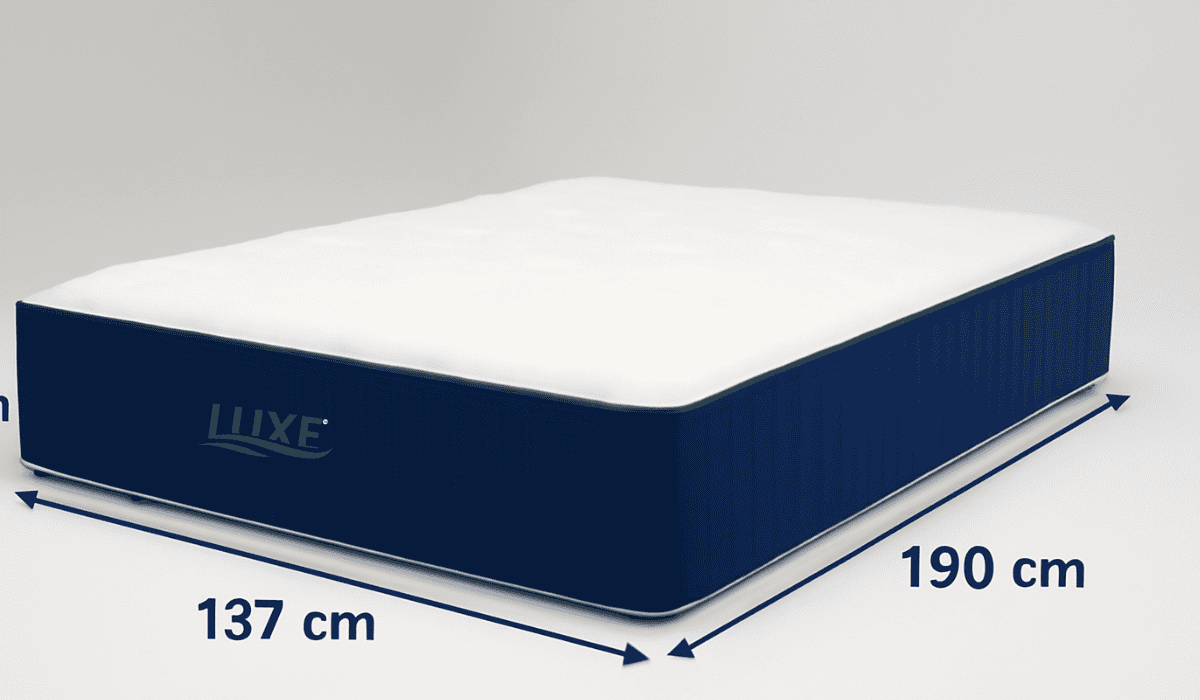
Double4’6” x 6’3”137 cm x 190 cm

So, the UK double mattress size is 4 feet 6 inches wide and 6 feet 3 inches long (137 cm x 190 cm).

To put it simply, this size is just about right for two average-sized adults who want a cosy night’s sleep or a single sleeper who loves extra space.

According to The Sleep Foundation, the size of your mattress can directly affect sleep quality, with restricted space leading to disrupted rest. 

Why Choose a Double Mattress?

A double mattress is often referred to as the “versatile option” in bedding. Here’s why it continues to be a top choice for households across the UK:

  • For Couples: While not as wide as a king, a double still gives enough room for two people to share a bed comfortably.
  • For Singles: A single sleeper gets loads of extra space to spread out without the mattress feeling oversized.
  • For Teenagers: A fantastic step up from a single bed, providing more room as they grow.
  • For Guest Rooms: Large enough for visitors to sleep comfortably, yet small enough to fit into a standard-sized guest room.
  • For Smaller Homes: Many UK bedrooms are modest in size, making a double mattress a space-efficient solution.
  • If you’re still comparing mattress sizes, you can read our detailed guide to mattress sizes .

What is this mattress made of?

This mattress is carefully designed for comfort, support, and durability. On top, the premium quilted cover keeps you cool and dry by wicking away moisture. The Zero Gravityâ„¢ gel-infused memory foam gently cradles your body, while 1,400 FortiCoilâ„¢ micro pocket springs respond individually to your movements for pressure relief.

A natural blend of British wool and cotton adds breathability and softness. Beneath that, 2,000 EnduraSpringâ„¢ coils provide long-lasting support, stabilized by a firm layer of coir (coconut fiber). Open-cell breathable foams enhance airflow, and the outer fabric is fire-resistant and antimicrobial.

Double Mattress vs. Other Mattress Sizes

To help you understand where a double mattress fits in, let’s compare it briefly to other sizes:

  • Single Mattress (90 cm x 190 cm) – Best for children or solo sleepers with limited room space.
  • Small Double Mattress (120 cm x 190 cm) – Slightly smaller than a double, often called a “three-quarter bed.”
  • Double Mattress (137 cm x 190 cm) – Standard size, ideal for couples or singles wanting more space.
  • King Mattress (150 cm x 200 cm) – Wider and longer than a double, perfect for couples who want extra legroom.
  • Super King Mattress (180 cm x 200 cm) – The largest UK size, offering hotel-style luxury at home.

This comparison shows how the double mattress sits right in the middle, making it the most versatile choice.

How Mattress Size Impacts Sleep

The size of your mattress isn’t just about fitting your room it also plays a big role in how well you sleep. If you and your partner feel cramped, you’re more likely to toss and turn throughout the night. On the other hand, if you have enough room to move freely, your sleep tends to be deeper and more refreshing.

The Sleep Charity points out that sleep quality is often tied to personal space. When people feel comfortable and unrestricted, they experience better rest.

So, if you’re a couple who likes cuddling up but also values space to roll over without bumping elbows, a double mattress could be the sweet spot.

Types of Double Mattresses

Not all double mattresses are the same. You’ll find a wide variety of options to suit your sleeping style and preferences:

  • Memory Foam Double Mattress: Moulds to your body for excellent pressure relief.
  • Hybrid Double Mattress: Combines memory foam and springs for balanced comfort.
  • Orthopaedic Double Mattress: Designed for people with back or joint pain.
  • Latex Double Mattress: Naturally hypoallergenic and breathable.

Each type has its pros and cons, so choosing the right mattress depends on your personal needs. If you’re unsure, explore our buying guide.

Conclusion

A double mattress size in the UK measures 4’6” x 6’3” (137 cm x 190 cm) and is one of the most popular bed sizes for good reason. It’s versatile, practical, and suits a wide range of sleeping needs from couples to single sleepers who enjoy extra space. It also fits well in average-sized UK bedrooms, making it the go-to choice for many households.

Whether you’re upgrading your own bed, furnishing a teenager’s room, or preparing for guests, a double mattress offers a comfortable and convenient solution.

If you’d like to browse different types of mattresses or find the perfect double mattress for your needs, head over to our product pages and discover the best fit for your lifestyle.

FAQs About Double Mattress Size

1. What’s the difference between a double and a king-size mattress?

A king-size mattress is larger, measuring 150 cm x 200 cm, while a double is 137 cm x 190 cm.

2. How much does a double mattress weigh?

It depends on the materials used. Foam mattresses tend to be lighter, while spring and hybrid mattresses can weigh anywhere between 40-43 kg.

3. Is a double mattress suitable for two adults?

Yes, it fits two average-sized adults comfortably, though couples who like extra space often prefer a king.

4. Can you use a double mattress for bunk beds or loft beds?

In most cases, no. Double mattresses are best for standard bed frames, but always check your frame’s weight and size limits.

5. How long does a double mattress last?

Most good-quality double mattresses last between 7–10 years, depending on usage and care.

6. What type of bed frame works best with a double mattress?

Standard wooden or metal double bed frames work perfectly. You can also find divan bases or storage bed frames designed for doubles.

7. Is a double mattress good for small rooms?

Yes, it’s the perfect balance between sleeping space and room space, especially in modest UK bedrooms.

8. Are double mattresses good for teenagers?

Absolutely. They provide plenty of growing room and often last well into adulthood.

Product has been added to your cart