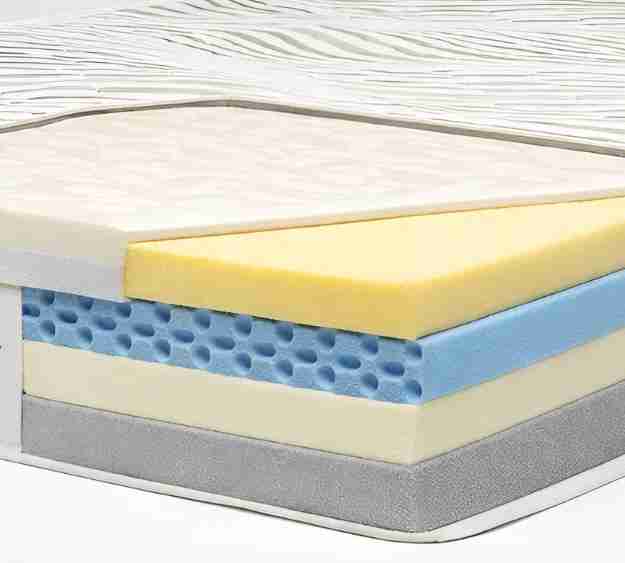
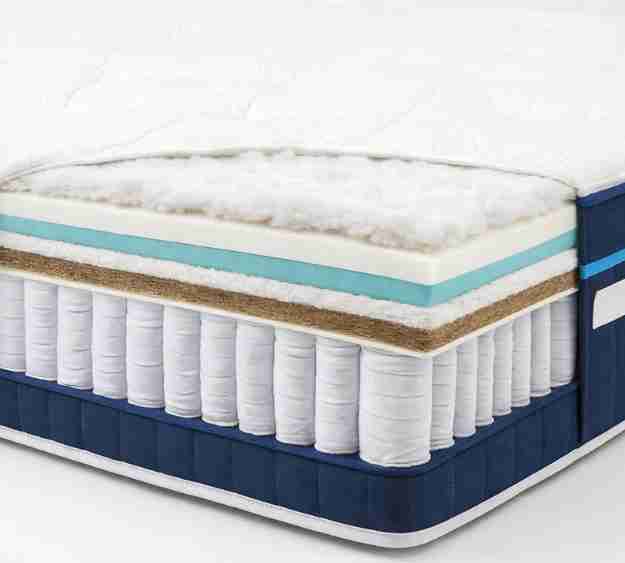
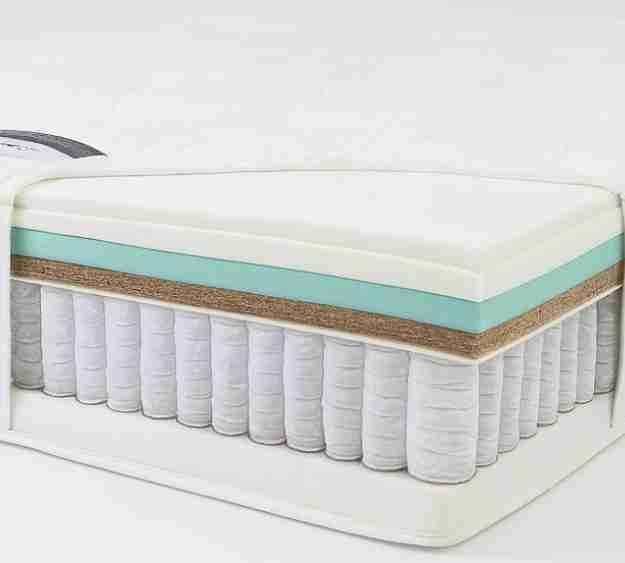
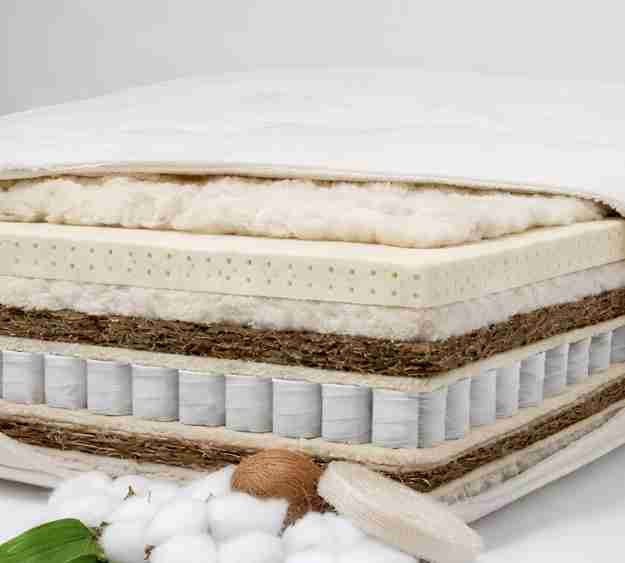
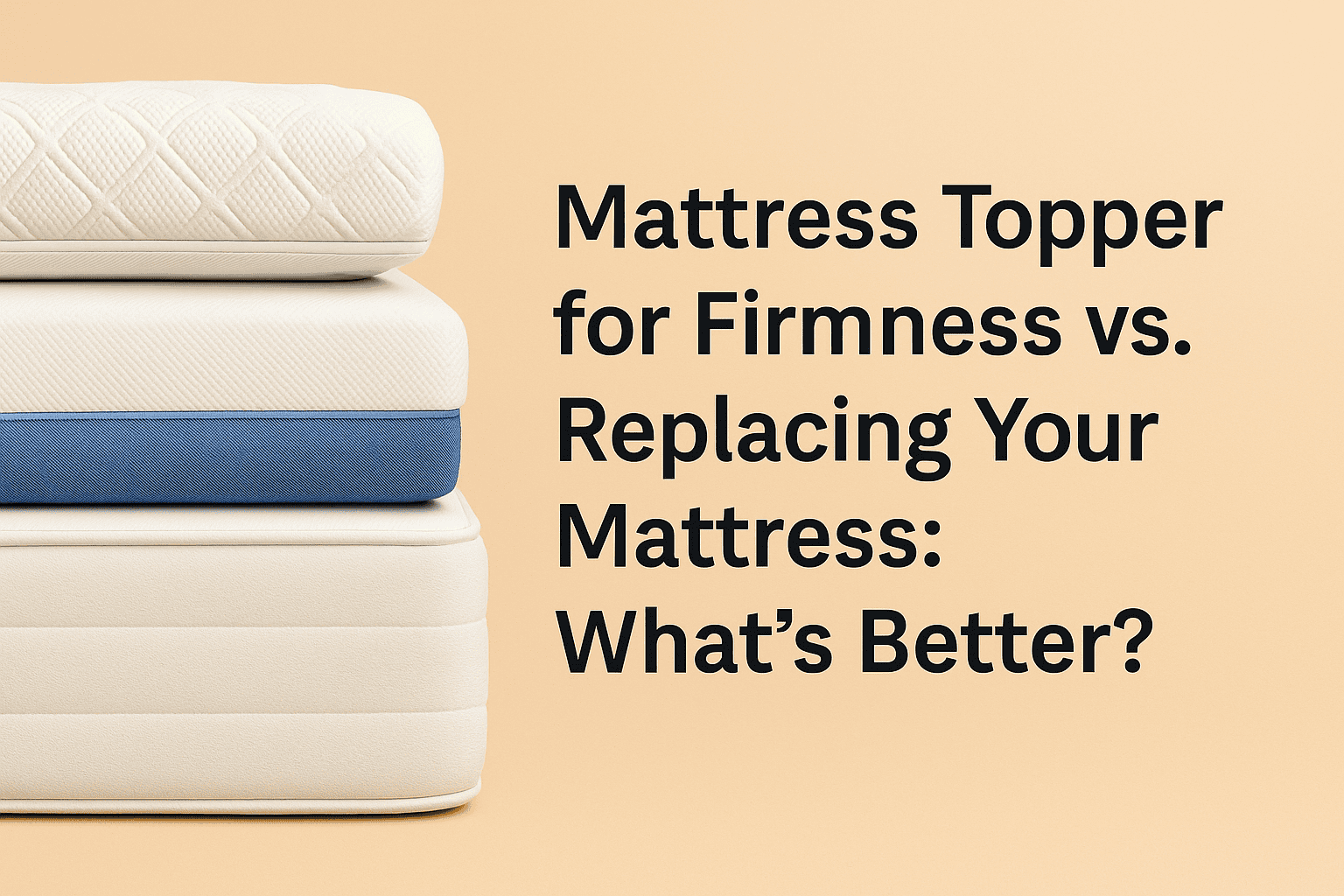
When your bed starts to feel too soft or lacks the support you need, the question arises: should you invest in a mattress topper for firmness or bite the bullet and replace your mattress entirely? While both options can enhance your sleep comfort, each comes with its own pros, cons, and long-term implications. In this guide, we’ll break down when a mattress topper makes sense and when it’s time to replace the mattress itself.
What Is a Mattress Topper for Firmness?
A mattress topper is a separate cushioning layer that sits on top of your existing mattress. It’s typically 2–4 inches thick and can be made from memory foam, latex, high-density polyfoam, or even wool. While many people use toppers to make their mattress softer, firm mattress toppers are designed to increase support and reduce sinkage.
When a Mattress Topper Is the Right Choice
A mattress topper can be an excellent short- to medium-term solution if:
Your Mattress Is Still Structurally SoundIf your mattress is relatively new (under 5–6 years) and still in good condition — no sagging, dents, or broken springs — but feels too soft or lacks the support you want, a topper can correct the feel without replacing the entire bed.
You Need a Budget-Friendly FixToppers are significantly more affordable than buying a new mattress. High-quality firm toppers cost between £80–£250, depending on material and size.
You Share a Bed with Someone with Different PreferencesIf one partner prefers a softer feel and the other needs a firmer sleep surface, using a topper on one side of the bed can help customise comfort without replacing the whole mattress.
You Want to Extend the Life of Your MattressA topper adds a protective layer that can reduce wear on your mattress and potentially extend its lifespan by a few years.
When It’s Better to Replace the Mattress
There are times when no topper, no matter how firm or high-end, can compensate for a worn-out mattress. Consider full replacement if:
Your Mattress Is Sagging or LumpyIf your mattress has visible dips, indentations, or broken support layers, adding a topper won’t solve the problem. The uneven base will still affect your spinal alignment and sleep quality.
It’s Over 7–10 Years OldMost mattresses start to break down after 7–10 years. If yours is nearing or past that age, it’s usually more cost-effective (and better for your body) to invest in a new mattress.
You’re Experiencing Chronic PainIf you wake up with back pain, hip discomfort, or stiffness that lasts throughout the day, it could be a sign your mattress isn’t providing adequate support. A topper might delay the issue, but it won’t fully fix the root cause.
You Want a Warranty-Backed SolutionA quality mattress like those from Luxe Mattresses typically comes with a 10–15 year warranty, while toppers rarely include comprehensive guarantees.
Comparing Mattress Toppers vs. Replacing the Mattress
Feature
Firm Mattress Topper
Replacing Mattress
Cost
£80–£250
£400–£1,500+
Longevity
1–3 years
7–15 years
Support for Sagging Mattress
Limited impact
Full support restoration
Pain Relief
Sometimes helpful
More consistent and long-term
Ease of Setup
Simple placement
More effort (delivery/setup)
Warranty Coverage
Rarely covered
Often includes long-term warranty
Luxe Mattresses’ Advice: Know Your Sleep Needs
If your current mattress is in decent shape and you just need a firmer feel, a mattress topper for firmness is a cost-effective and quick fix. But if your mattress is sagging, unsupportive, or outdated, replacing it with a quality, warranty-backed mattress, like our Luxe Ergo or LuxeTherm Hybrid, will provide far better long-term comfort and health benefits.
Still unsure? Try our Mattress Selection Quiz to see if a new mattress might be the right move.
Final Verdict
A mattress topper is ideal for fine-tuning comfort or giving a soft bed more firmness. But if you’re dealing with a worn-out, uncomfortable mattress, investing in a proper replacement will always be the better long-term decision.
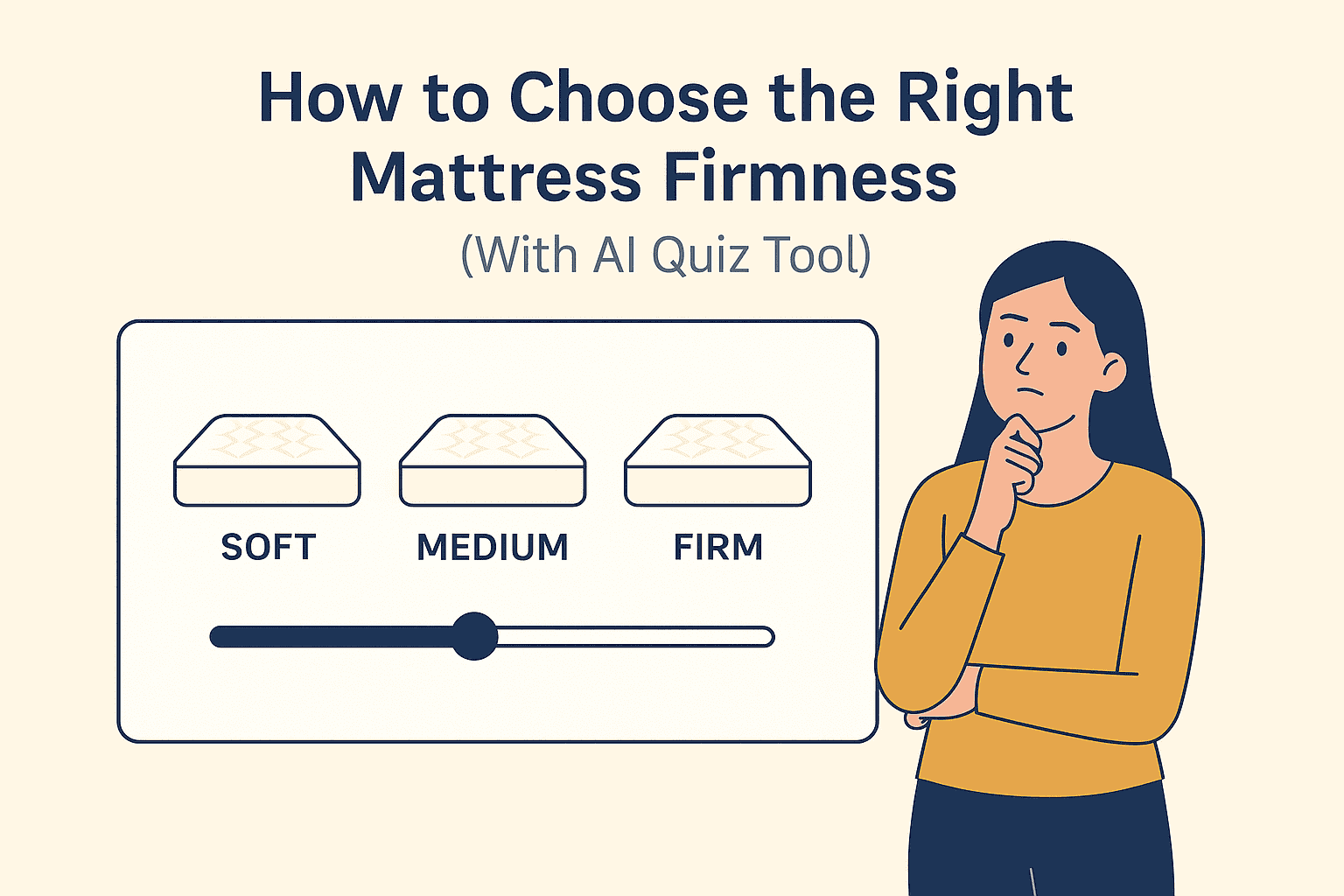
Buying a mattress online can be incredibly convenient, but choosing the wrong firmness level is one of the most common mistakes people make. At Luxe Mattresses, we’ve helped thousands of customers sleep better by guiding them through the right firmness based on their unique body type, sleep habits, and health needs. This guide breaks down everything you need to know about mattress firmness, and how our AI Mattress Selection Quiz can match you with your ideal comfort level.
Choosing the wrong mattress firmness can negatively impact both your sleep quality and overall health. A mattress that’s too soft may cause your spine to sink out of alignment, leading to back or neck pain, while one that’s too firm can create pressure points around your hips and shoulders, especially for side sleepers. This discomfort often results in restless nights, interrupted sleep, and even worsened conditions like joint pain or sleep apnea. Over time, poor sleep can affect your mood, energy levels, and physical wellbeing, making it essential to select a firmness level tailored to your body type and sleeping position.
Why Do So Many People Choose the Wrong Mattress Firmness?
When shopping online, it’s difficult to judge how a mattress actually feels. What’s described as “medium-firm†on one website might feel too soft or too rigid in person. Unfortunately, this mismatch leads to poor sleep quality, back or neck pain, and dissatisfaction.
According to customer support data across the industry, over 40% of mattress returns or exchanges are due to incorrect firmness selection. This is why understanding firmness and your own sleep needs is critical before making a purchase.
What Does Mattress Firmness Actually Mean?
Mattress firmness refers to how soft or hard a mattress feels when you lie on it. It’s not the same as support, firmness is the surface feel, while support relates to how well the mattress keeps your spine aligned.
5 = medium firmness (balanced comfort and support)
10 = extra firm (very hard and flat surface)
Firmness preference is subjective, but it can be guided by measurable factors like body weight, sleep position, and health conditions.
Factors That Influence the Right Firmness for You
1. Body Weight
Under 9 stone (60 kg): Lighter individuals tend to prefer soft to medium mattresses (3–5), as they don’t sink as deeply.
9–14 stone (60–90 kg): Average-weight individuals often find medium to medium-firm (5–6) most comfortable.
Over 14 stone (90+ kg): Heavier individuals benefit from medium-firm to firm mattresses (6–8) to avoid too much sinkage.
2. Sleeping Position
Side sleepers: Need softer to medium mattresses (4–6) to cushion shoulders and hips.
Back sleepers: Do best on medium to medium-firm (5–7) for balanced support.
Stomach sleepers: Typically require firm surfaces (7–9) to prevent lower back strain.
3. Health Issues or Pain
Lower back pain: Often relieved by medium-firm options (5–7)
Arthritis or joint pain: Softer tops (3–5) reduce pressure on sensitive areas
Sleep apnea or snoring: A firmer surface may support better breathing posture
4. Mattress Materials
Different materials feel firmer or softer even at the same scale rating:
Memory foam: Molds to the body and feels softer over time
Latex: Naturally firmer and more responsive
Hybrid mattresses: Combine springs and foam for a balanced feel
Firmness Recommendations by Sleep Type
Sleep Style
Weight Range
Ideal Firmness
Recommended Feel
Side Sleeper
Light – Average
4–6
Soft–Medium
Side Sleeper
Heavy
6–7
Medium–Firm
Back Sleeper
Light – Average
5–7
Medium–Medium Firm
Back Sleeper
Heavy
6–8
Medium Firm–Firm
Stomach Sleeper
All weights
7–9
Firm–Extra Firm
Combination Sleeper
All weights
5–7
Medium to Medium Firm
Why Our AI Mattress Quiz Is Better Than Guesswork
To help you avoid the costly mistake of choosing the wrong firmness, we’ve built an intelligent Mattress Selection Quiz powered by real customer data and sleep science. In under a minute, the quiz analyses:
Your height and weight
Your primary sleep position
Whether you sleep hot or cold
Whether you share a bed
Any health or back pain issues
The tool then instantly recommends the ideal firmness and Luxe mattress model tailored to your profile.
Find Your Perfect Mattress Firmness
Discover the ideal mattress firmness for your sleep position, body type, and support needs — backed by sleep science.
At Luxe Mattresses, we understand that mattress shopping can feel uncertain — especially online. That’s why we offer a 100-night exchange trial. If you’re not happy with the firmness, you can exchange your mattress for another model or firmness level within 100 nights.
Still unsure? Our support team is happy to guide you further. Just drop us a message or take the quiz for a personalised recommendation.
Don’t guess your way to a good night’s sleep. Let Luxe Mattresses help you find the right firmness — effortlessly, intelligently, and.
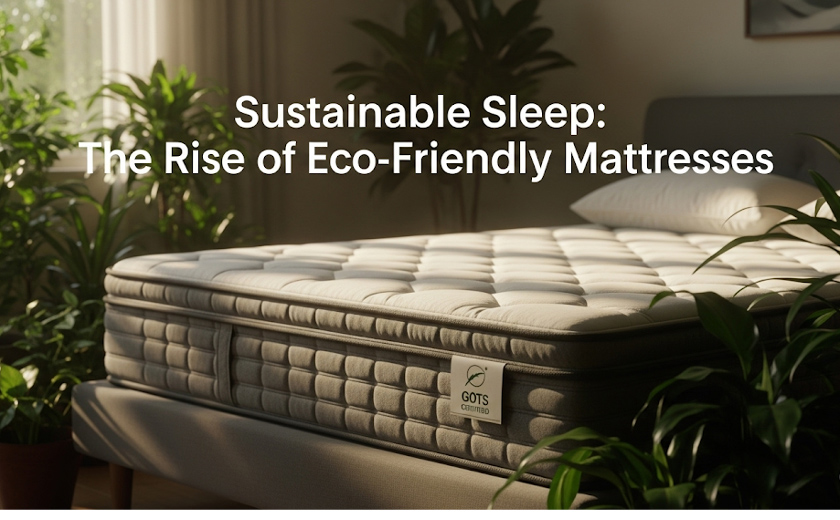
Sustainable Sleep: The Rise of Eco-Friendly Mattresses
We sleep for about a third of our lives, yet most “normal†mattresses are hiding a dirt secret. Mattresses come loaded with various harmful substances, from petroleum-based foams and synthetic flame retardants to adhesives leaking volatile organic compounds (VOCs) which can cause headaches, allergies and all manners of chronic diseases.
This isn’t just a trend; it’s a cultural shift. More and more health-conscious shoppers, mostly millennials and Gen Z, won’t compromise on what they are breathing for 8 hours every night. They are opting for materials like organic latex and wool that are hypoallergenic and nontoxic. Values that put the planet first are meanwhile changing the markets. Traditional non-biodegradable mattresses take 500 years to decompose in landfills. However, certified biodegradable and sustainably sourced eco-friendly mattresses are increasing in popularity.
In just three weeks, they believe that the total market value will reach $3.2 billion. Ready to sleep cleaner? Let’s begin.
Why Choose Eco-Friendly Mattresses?
Natural mattresses solve two important problems – toxic sleeping environment as well as landfill overload. They refuse artificial flavours, colours, and other harmful chemicals like most other options do.
Health Benefits of Non-Toxic Sleep.
Most mattress designs have VOCs (volatile organic compounds) which are due to the use of synthetic foam, flame retardants, etc. Migraine, vomiting and long-term respiratory problems can result from it Common exposure to VOCs can make asthma worse and disturb hormone levels.
Non-toxic sleep starts with natural materials. Organic latex resists dust mites and mold. Wool wicks moisture without chemical treatments. These features provide true allergy prevention.
The mattress is made from tightly woven organic cotton. These block allergens like pet dander or pollen. They help sensitive sleepers breathe easier. You’ll experience less congestion at night if you sleep on a certified organic mattress.
Environmental Impact Reduction.
Traditional mattresses create ecological harm. Most contain petroleum-based foams. These take 500+ years to decompose. Over 20 million mattresses clog landfills annually. They release methane and toxic chemicals into soil.
Sustainable mattress designs break this cycle. They prioritize biodegradability. It takes a natural latex, organic cotton, and hemp three to ten years to decompose. Some brands use plant-based foams from renewable sources.
Landfill waste drops sharply with circular designs. Brands, like Avocado, recycle old mattresses into new products. Others offer take-back programs. This cuts much of the waste volume which is 60% vs. regular disposal.
True organic mattress production also saves resources. Farming of organic cotton uses 91 percent less water than farming of conventional cotton. Natural latex harvesting sustains rubber tree forests. These rainbow eco-practices protect ecosystems and provide comfort.
Certifications & Standards Explained
Eco friendly mattresses rely on verified standards for true sustainability. Trust comes from clear proof, not marketing claims. Third-party certifications separate genuine eco-options from greenwashed products. They ensure materials are safe, ethical, and planet-positive.
GOTS and GOLS: Gold Standards for Organic Materials
GOTS certification (Global Organic Textile Standard) covers textiles like organic cotton or wool. It requires 95% organic content and tracks every step from farm to finished product. Factories pass annual checks for chemical use, wastewater treatment, and fair labor. Banned items include formaldehyde, toxic dyes, and synthetic pesticides.
GOLS (Global Organic Latex Standard) focuses on organic latex. Like GOTS, it mandates 95% certified organic raw material. Rubber tree farms must avoid chemical fertilizers. Latex processing prohibits fillers, PVC, and heavy metals. Every supplier in the chain needs transaction certificates for full traceability.
Both standards enforce social rules. Workers earn fair wages with safe conditions. Child labor is banned. Non-toxic sleep starts here because these rules block harmful chemicals near you.
Beyond Basics: Greenguard Gold and OEKO-TEX®
Greenguard Gold tests air safety. It measures volatile organic compounds (VOCs) emitted from mattresses. Certified products must stay below 7.3 parts per billion of formaldehyde—a strict limit for schools and hospitals. This prevents indoor air pollution linked to headaches or asthma.
OEKO-TEX® Standard 100 checks for toxins inside materials. It scans for heavy metals, pesticides, and allergenic dyes. Unlike GOTS, it doesn’t require organic farming. But it ensures every thread, zipper, or latex layer meets safety thresholds. This supports hypoallergenic properties for sensitive groups.
These mattress certifications complement GOTS/GOLS. While GOTS confirms organic sourcing, Greenguard Gold proves the final product won’t pollute your air. OEKO-TEX® fills gaps by screening non-organic parts like adhesives.
Eco-Friendly Materials Breakdown
Certifications like GOTS ensure materials meet strict standards. Now, let’s examine what these sustainable materials actually contain. Eco friendly mattresses use three core components: latex, cotton, and wool. Each brings unique benefits verified by science and sourcing practices.
Natural Latex: Durability Meets Sustainability
Natural latex comes from rubber trees (Hevea brasiliensis). Ethical farms in Sri Lanka or Thailand use non-toxic tapping methods. They collect sap without killing trees. This process supports biodiversity and local economies.
The sap gets whipped into foam using the Dunlop process. No synthetic fillers are added. The result is a resilient material that outlasts memory foam. Durability tests show natural latex maintains shape for 15+ years. It resists sagging better than petroleum-based foams.
Latex has natural hypoallergenic properties. Its cellular structure blocks dust mites and mold. Open air pockets enhance airflow for cooler sleep. Unlike polyurethane foam, it emits near-zero volatile organic compounds.
When disposal comes, natural latex is biodegradable. It decomposes in 3-5 years versus 500+ for synthetics. Brands like PlushBeds use Forest Stewardship Council-certified plantations. This protects endangered habitats while producing material.
Organic Cotton and Wool: Breathability & Safety
Organic cotton starts with non-GMO seeds. Farmers avoid synthetic pesticides. They rely on crop rotation and natural predators. These methods use 91% less water than conventional cotton. The final fabric does not contain formaldehyde and chemical softeners.
Organic wool comes from free-range sheep. Ranchers never use toxic dip baths. The wool gets cleaned with vegetable-based soaps. This preserves its natural lanolin. That waxy substance repels liquids and stains.
Together, these materials create breathability. Cotton fibers allow air circulation. Wool can absorb moisture of 30% of its weight without feeling wet. This duo regulates temperature year-round. You do not sweat at night with these chemical phase-change coatings.
Luxe Mattresses based in the UK shows this commitment with their natural range. They ensure farm-to-factory traceability by using organic cotton covers and British wool fillings. The lanolin present in the wool naturally wicks moisture without treatment while GOTS tracked cotton is pesticide free. You can get your hands on a Luxe mattress which uses safe and nature-friendly sleep materials.
Carbon Footprint of Mattress Production
Conventional mattresses require heavy energy consumption. Producing one polyurethane foam mattress emits 120–150 kg of CO₂. This equal driving 300 miles in a gas car. Petroleum-based foams need oil extraction and chemical processing. These steps guzzle energy and spike carbon footprint levels.
Water use is another concern. Growing cotton for traditional mattresses soaks 5,000+ gallons per crop cycle. Most comes from irrigated farms. This strains rivers and groundwater. Dyeing fabrics adds more water waste. Up to 200 gallons per mattress enter polluted wastewater.
Sustainable options cut these impacts. Organic cotton farming uses rain-fed fields. It slashes water needs by 91%. Natural latex comes from rubber trees. Harvesting needs no synthetic fertilizers. Brands like Avocado power factories with solar energy. This trims carbon footprint by 40%.
Landfill Crisis and Circular Solutions
Americans trash 20 million mattresses yearly. These stack 50,000 high daily in landfills. Traditional units take 500+ years to decompose. Their steel springs, polyester layers, and foam release toxins. Chemicals seep into soil as they break down.
Recycling initiatives fight this waste. Over 75% of mattress materials are recyclable. Steel springs become construction rebar. Foam turns into carpet padding. The Mattress Recycling Council (MRC) recycled 15 million mattresses by 2025. This saved 14.9 million cubic yards of landfill space. It also reused 575 million pounds of materials.
Circular solutions are expanding. Four states charge $16–$22.50 fees per new mattress. California, Connecticut, Oregon, and Rhode Island fund free drop-off sites. Extended producer responsibility laws push brands to design recyclable products. Harrison Spinks grows hemp for coils. Orbis makes foam from old mattresses. These sustainable mattress designs support reuse.
Eco friendly mattresses boost biodegradability. CocoCore uses coconut husks and bamboo. These decompose in 3–10 years. Brands like Restolex offer take-back programs. They recycle old units into new ones. This closes the loop on waste.
How to Choose Your Eco-Friendly Mattress
Understanding environmental impacts helps. Now, apply that knowledge to your purchase. Selecting the right eco-friendly mattresses requires matching materials to your body, verifying certifications, and testing comfort. This guide covers all steps.
Step 1: Match Materials to Sleep Needs
Sleep position dictates material choice. Side sleepers need pressure relief at shoulders and hips. Natural latex or memory foam hybrids work best. Stomach sleepers require firm support to prevent back sag. Tight-top organic cotton mattresses are ideal.
Body weight changes support needs. People over 230 pounds need thicker natural latex (over 9″) or reinforced coils. Lighter sleepers (under 130 pounds) prefer softer organic wool toppers. These prevent joint pressure.
Temperature issues need specific solutions. Hot sleepers require breathability. Look for organic cotton covers and ventilated latex cores. Wool’s moisture-wicking also cools. Brands like Birch use phase-change graphite infusions for extra cooling.
Pain conditions demand tailored support. Sciatica sufferers benefit from zoned latex layers. These cushion hips while firming the lumbar area. Arthritis patients need motion-isolating hypoallergenic foams to reduce pressure points.
Step 2: Verify Certifications
GOTS certification is non-negotiable for textiles. Check the supplier’s transaction certificate online. Real IDs include 5–8-digit codes like “CU863637â€. Avoid vague claims like “made with organic materialsâ€.
OEKO-TEX® Standard 100 covers non-organic parts. Verify certification at oeko-tex.com. Search by brand name. This confirms zippers, adhesives, and thread meet safety thresholds.
Greenguard Gold matters for off-gassing concerns. Certified mattresses emit less than 0.05 ppm formaldehyde. This prevents morning headaches. Check current certificates at ul.com. Expired labels are red flags.
Extended producer responsibility programs show brand ethics. Companies like Avocado publish recycling rates. Saatva plants trees for every sale. These prove commitment beyond mattress certifications.
Testing Eco Friendly Mattresses: Trial Periods & Return Policies
Trial periods are essential. Most eco-friendly mattresses offer 100+ night trials. Expect 30 nights for your body to adjust. Keep a sleep journal tracking back pain and restlessness.
Return policies vary widely. Brands like Nectar offer free returns with full refunds. Others charge $99–$200 pickup fees. Read fine print on stains, dents, or mandatory foundation use. Some void warranties without approved bed frames.
Mattress
Warranty length signals durability. Look for 15–25-year coverage. Non-prorated warranties are best. They replace defects at no cost. Prorated plans decrease value yearly. Birch’s lifetime warranty is industry-leading.
Test for hypoallergenic claims. During trials, monitor allergy symptoms. True non-toxic materials reduce sneezing and congestion within 2 weeks. If reactions continue, return the mattress.
Maximizing Mattress Longevity and Care
Choosing the right eco-friendly mattresses is step one. Proper maintenance ensures your investment delivers decades of non-toxic comfort. These care guidelines protect both performance and sustainability.
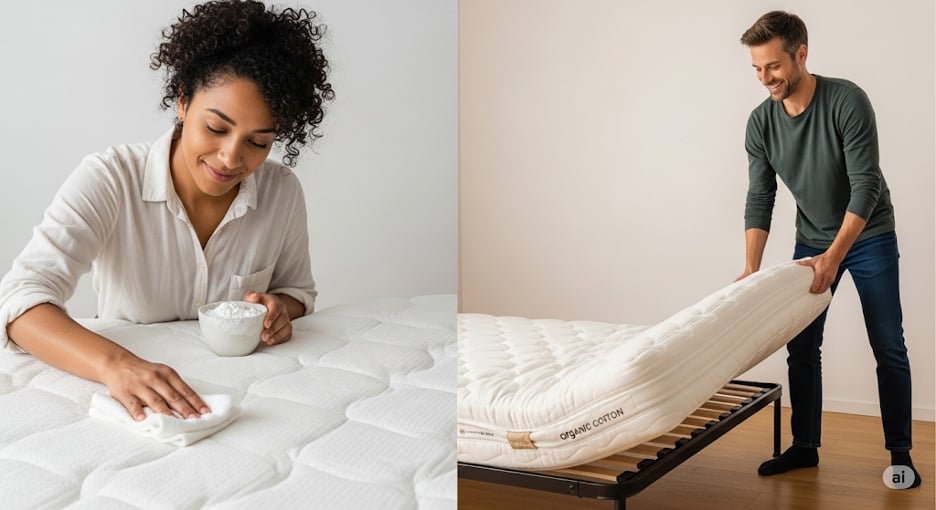
Organic cotton covers need gentle cleaning. Blot spills immediately with cold water and mild soap. Avoid soaking or harsh scrubbing. This prevents fiber damage and maintains breathability. For stains, use baking soda paste. Apply lightly, wait 15 minutes, then dab away. Never use bleach or chemical sprays. They break down sustainable materials and void warranties.
Organic wool layers require special attention. Vacuum monthly using an upholstery attachment. This removes dust without compressing fibers. For liquid accidents, absorb moisture with a clean cloth. Then sprinkle cornstarch to draw out residue. Brush gently after 30 minutes. Wool’s natural lanolin resists stains when maintained properly. This preserves mattress longevity and hypoallergenic benefits.
Rotate your mattress head-to-foot every 3 months. This prevents body impressions and uneven wear. Use a non-toxic protector like Avocado’s GOTS-certified barrier. It shields against spills while allowing airflow. Direct sunlight exposure fades natural dyes. Keep your sleep space cool and shaded.
Warranty and Lifespan Expectations
Quality eco-friendly mattresses last 15–25 years. Natural latex cores offer the best durability. They resist sagging 3x longer than memory foam. Hybrid models with pocketed coils typically reach 20 years. Sustainable materials like organic wool and cotton outlast synthetics when cared for.
Understand warranty coverage details. Most protect against:
Sagging deeper than 1.5 inches
Material splits or cracks
Manufacturing defects in cover stitching
Common exclusions include:
Stains without protector use
Damage from improper foundations
Normal softening of materials
Brands like Birch offer lifetime warranties. Others like Avocado provide 25-year coverage. Always register your mattress within 60 days. Keep purchase receipts and photos of tags. Submit claims promptly with documentation.
Maximize mattress longevity through support systems. Use slatted bases with gaps under 3 inches. This prevents moisture buildup and maintains breathability. Replace foundations every 8 years to match mattress integrity.
Conclusion: The Future of Sleep is Green
Investing in eco-friendly mattresses supports well-being and planetary health. This choice delivers non-toxic sleep free from volatile organic compounds and allergens. It also cuts landfill waste and carbon emissions. Science confirms these benefits.
Health wins are immediate. Users report fewer headaches and allergy symptoms. Spinal alignment improves with durable natural latex support. Children and sensitive groups breathe safer air. Long-term exposure risks drop sharply.
Environmental gains grow yearly. Every sustainable mattress diverts 50–100 lbs of waste from dumps. Organic cotton farming saves billions of gallons of water. Brands adopting circular solutions recycle 90%+ of old units.
Your final step matters: Prioritize certifications when purchasing. Look for:
GOTS certification tags on cotton/wool layers
GOLS IDs for organic latex cores
Active Greenguard Gold or OEKO-TEX® codes
Without these labels, “eco-friendly†claims lack proof. Verified brands like Avocado and Birch publish certification numbers publicly. Demand the same transparency from all manufacturers.
When it comes to buying a new bed or mattress, knowing the exact dimensions is critical. In the UK, king size beds are one of the most popular choices due to the balance of space and comfort they offer. Whether you’re upgrading from a double or optimising a new bedroom layout, understanding king size bed dimensions in different units will help ensure a perfect fit for your lifestyle and your space.
Standard UK King Size Bed Dimensions
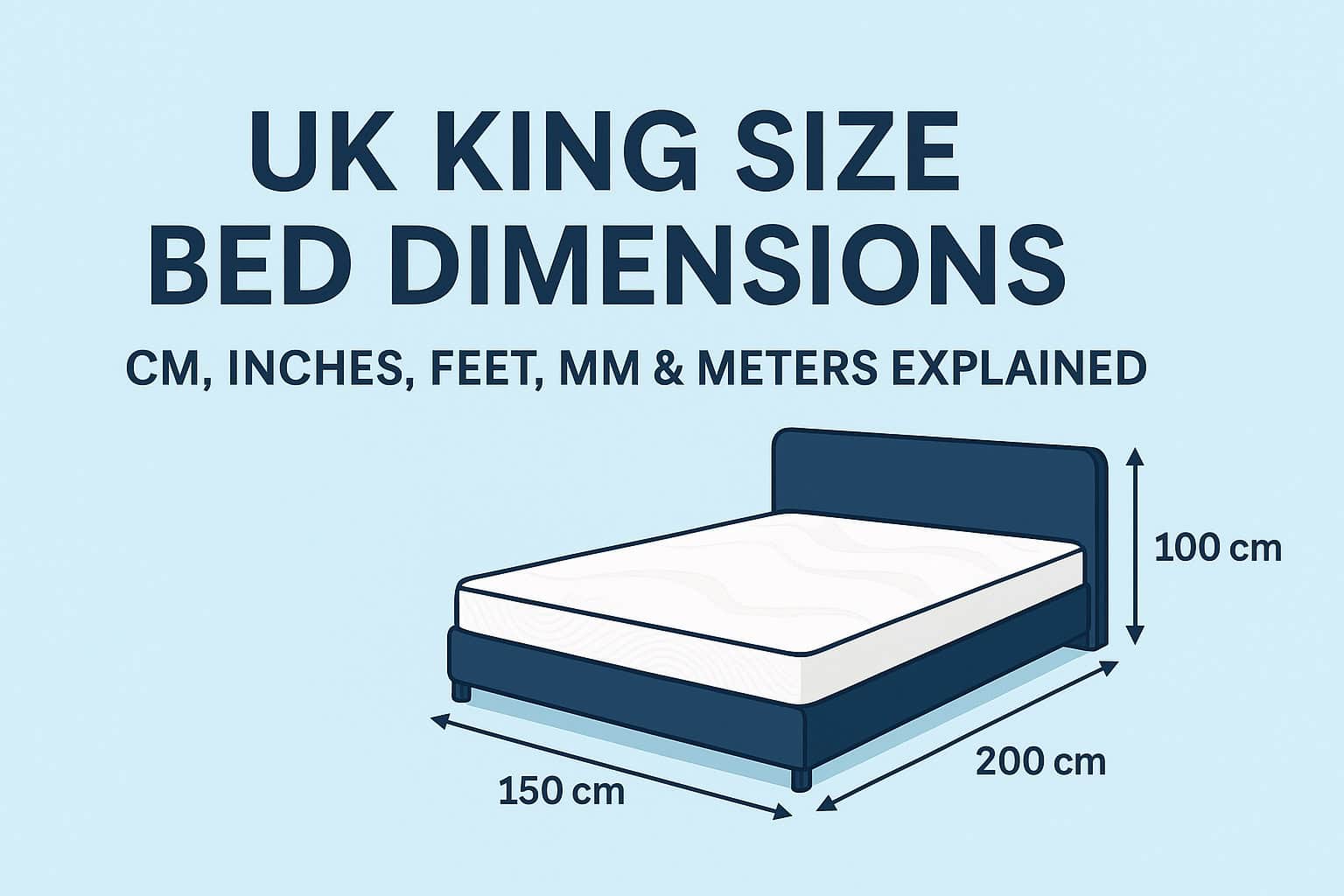
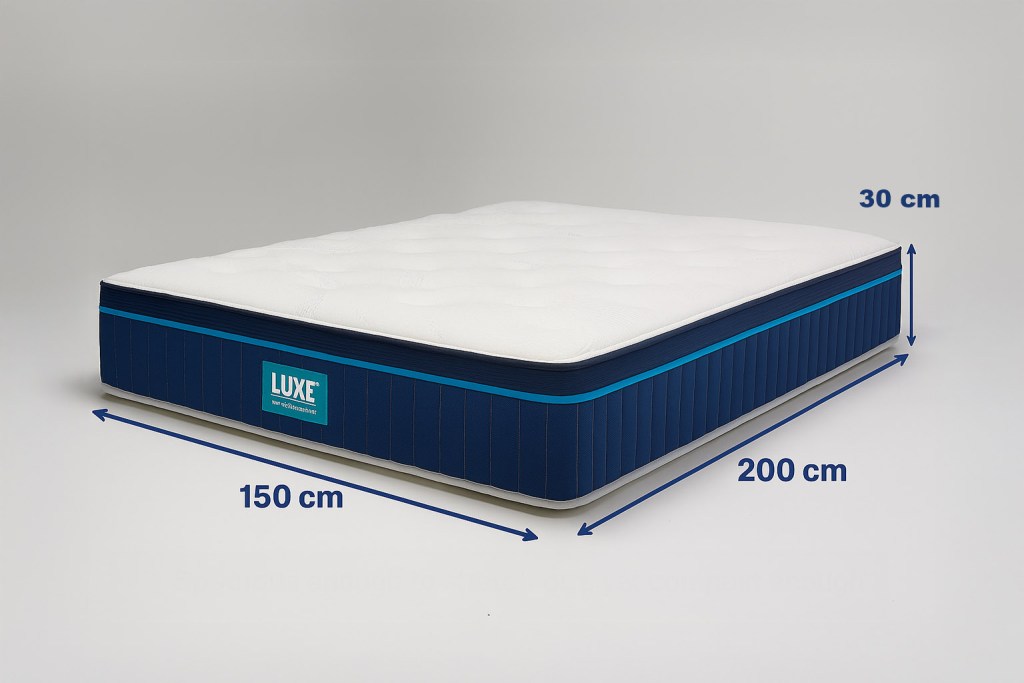
A standard UK king size mattress measures:
150 cm wide x 200 cm long
1.5 metres wide x 2.0 metres long
59.1 inches wide x 78.7 inches long
4.92 feet wide x 6.56 feet long
1500 mm wide x 2000 mm long
These measurements apply to the mattress only. Bed frames may be larger, depending on style, design, or headboard features. Some frames may add an additional 5–10 cm to each side.
UK Bed Size Comparison Chart
To understand how a king size bed compares with other popular UK bed sizes, here’s a full breakdown in multiple units:
Bed Size
Width (cm)
Length (cm)
Width (in)
Length (in)
Width (feet)
Length (feet)
Single
90
190
35.4
74.8
2.95
6.23
Double
135
190
53.1
74.8
4.43
6.23
King
150
200
59.1
78.7
4.92
6.56
Super King
180
200
70.9
78.7
5.91
6.56
This shows that a king bed is 15 cm wider than a double and 30 cm narrower than a super king. It’s also slightly longer than both single and double beds.
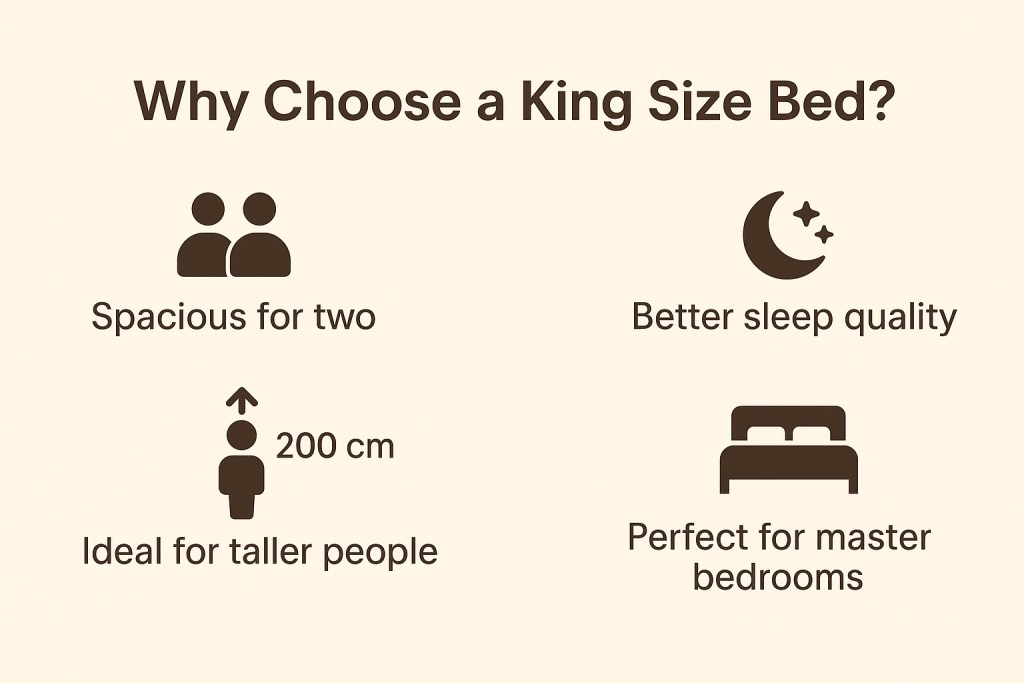
Why Choose a King Size Bed?
A UK king size bed strikes a sweet spot between comfort and space efficiency. Here are some key reasons people choose a king size:
Spacious for two: No more bumping elbows in the middle of the night.
Better sleep quality: More space means fewer disturbances from your partner.
Ideal for taller people: The 200 cm (6.56 ft) length gives ample legroom.
Perfect for master bedrooms: A king bed fits well in medium to large rooms without overwhelming the space.
Tools You Need to Measure Your Space
Before buying a king bed, it’s crucial to assess your room size. Here’s what you’ll need:
Tape Measure (5 metres or longer) – Essential for length and width.
Laser Distance Measurer – For high accuracy in larger rooms.
Painter’s Tape or Chalk – To mark the outline of the bed on the floor.
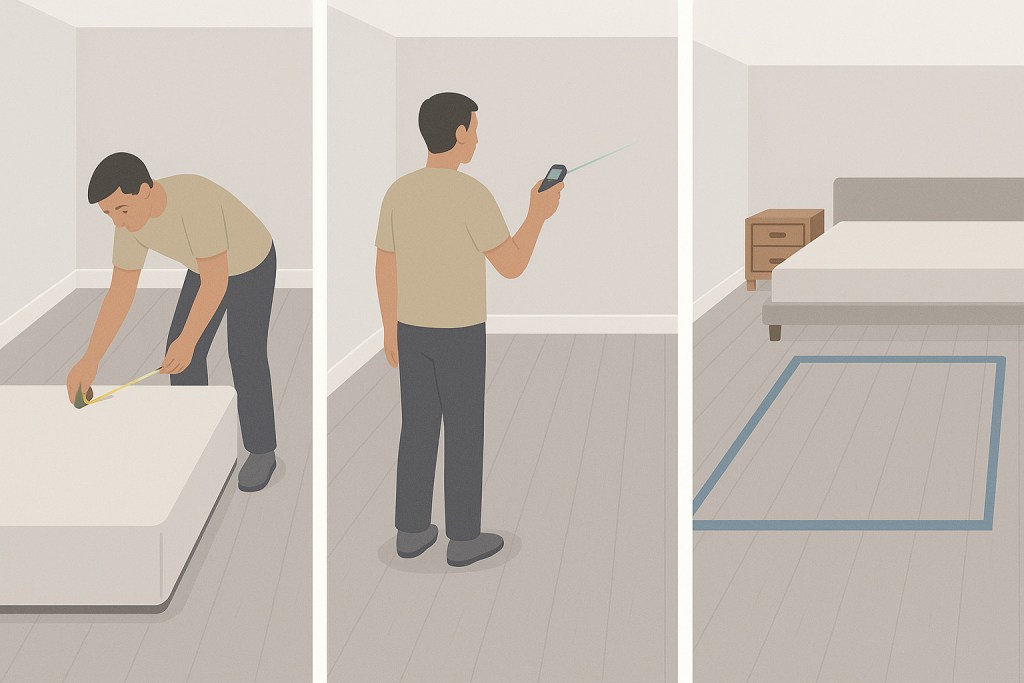
Follow these steps to ensure your room can comfortably accommodate a king bed:
1. Measure the Mattress Area
Mattress dimensions:Â 150 cm x 200 cm
Add frame size: typical frame adds 5–10 cm on each side
Total footprint estimate:Â 160 cm x 210 cm
2. Measure Your Room Size
Ideal minimum room size:Â 3.2m x 3.2m
Allows for movement, bedside tables, and walking clearance
Larger rooms (4m x 4m or more) offer more comfort
3. Use Painter’s Tape or Chalk
Mark the exact footprint on your floor using tape
Include bed frame dimensions
Walk around it to test movement space
Visualising Bed Size vs. Room Size
Below is a simple guide to help you assess room fit:
Room Size (m)
Fit for King Bed?
Comments
3m x 3m
⌠Tight
Bed dominates room; minimal walk space
3.2m x 3.5m
✅ Good
Allows basic furniture + walk space
4m x 4m
â Ideal
Ample space for bed, wardrobes, seating
Tip: For tight spaces, consider a slim-frame or divan-style king bed with under-bed storage.
Tips Before Buying a King Size Bed
Measure stairways and hallways: Especially for king bed frames and headboards.
Modular frames or split bases: Easier to move into upper-floor bedrooms.
Storage options: Look for ottoman or drawer-based king beds for added functionality.
Slim-frame beds: Great for tight rooms while still fitting a full king mattress.
Trial period: Choose a mattress with a trial period if you’re unsure about comfort or fit.
Frequently Asked Questions
Is a UK King the Same as a US King?
No. A UK king is 150 x 200 cm, while a US king is 193 x 203 cm. So, the US king is wider but slightly shorter.
Can I Use European or American Bedding on a UK King?
European king bedding (160×200 cm) may fit but can feel tight. US king bedding will usually be too large.
Are King Mattresses Available in Split Versions?
Yes. Many retailers offer zip and link king mattresses, which are two singles joined together—ideal for tight stairwells.
Final Thoughts
The UK king size bed is a top-tier choice for couples, tall individuals, and anyone looking for luxurious sleep space. With its 150 x 200 cm dimensions, it provides ample width and length while still fitting into most modern bedrooms. Be sure to measure your room, doorways, and available clearance before buying, and don’t forget to factor in the bed frame size too.
A well-planned purchase ensures both comfort and style, giving you the sleep you deserve without crowding your space.
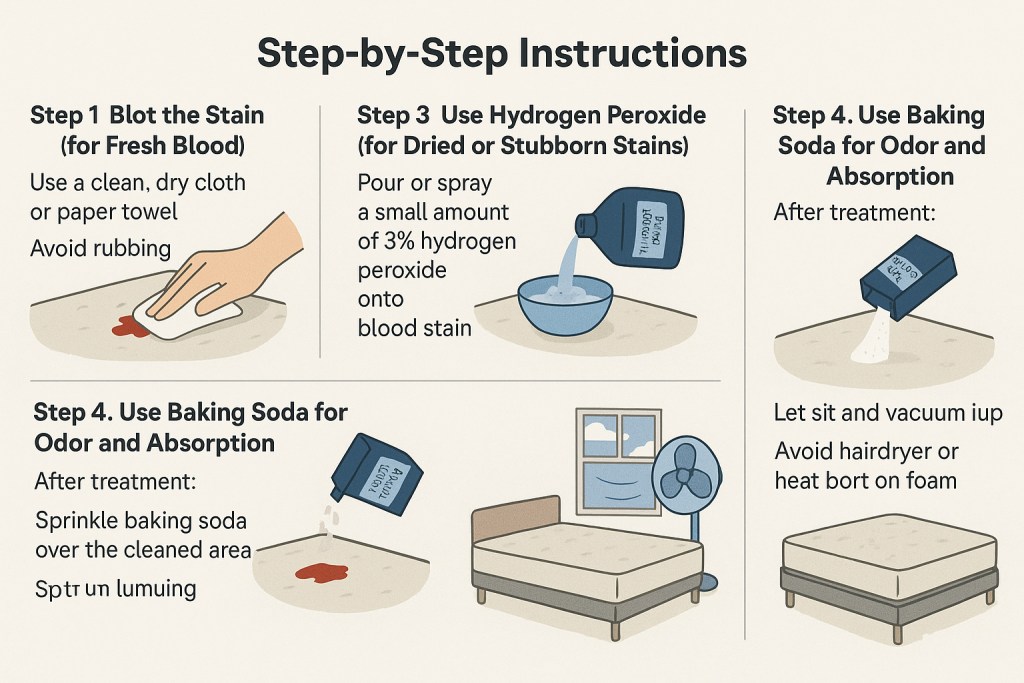
Blood stains on a mattress can be frustrating and tricky to remove, especially when dealing with foam or hybrid models that require special care. Unlike traditional spring mattresses, foam and hybrid mattresses often contain materials like memory foam, latex, and dense comfort layers that can absorb liquids quickly and become damaged with the wrong cleaning methods. But don’t worry, with the right approach, you can remove blood stains effectively without harming your mattress.
In this guide, we’ll walk you through how to remove fresh and dried blood stains from foam and hybrid mattresses safely and thoroughly.
Why Special Care Is Needed for Foam and Hybrid Mattresses
Foam and hybrid mattresses are designed with comfort and pressure relief in mind. They typically feature layers of memory foam or latex, combined with pocket springs or coils (in the case of hybrid models). These materials are highly absorbent and sensitive to excessive moisture, harsh chemicals, or vigorous scrubbing.
Using too much water or cleaning solution can:
Break down the foam structure
Cause mold or mildew
Void your mattress warranty
That’s why gentle, targeted cleaning is crucial.
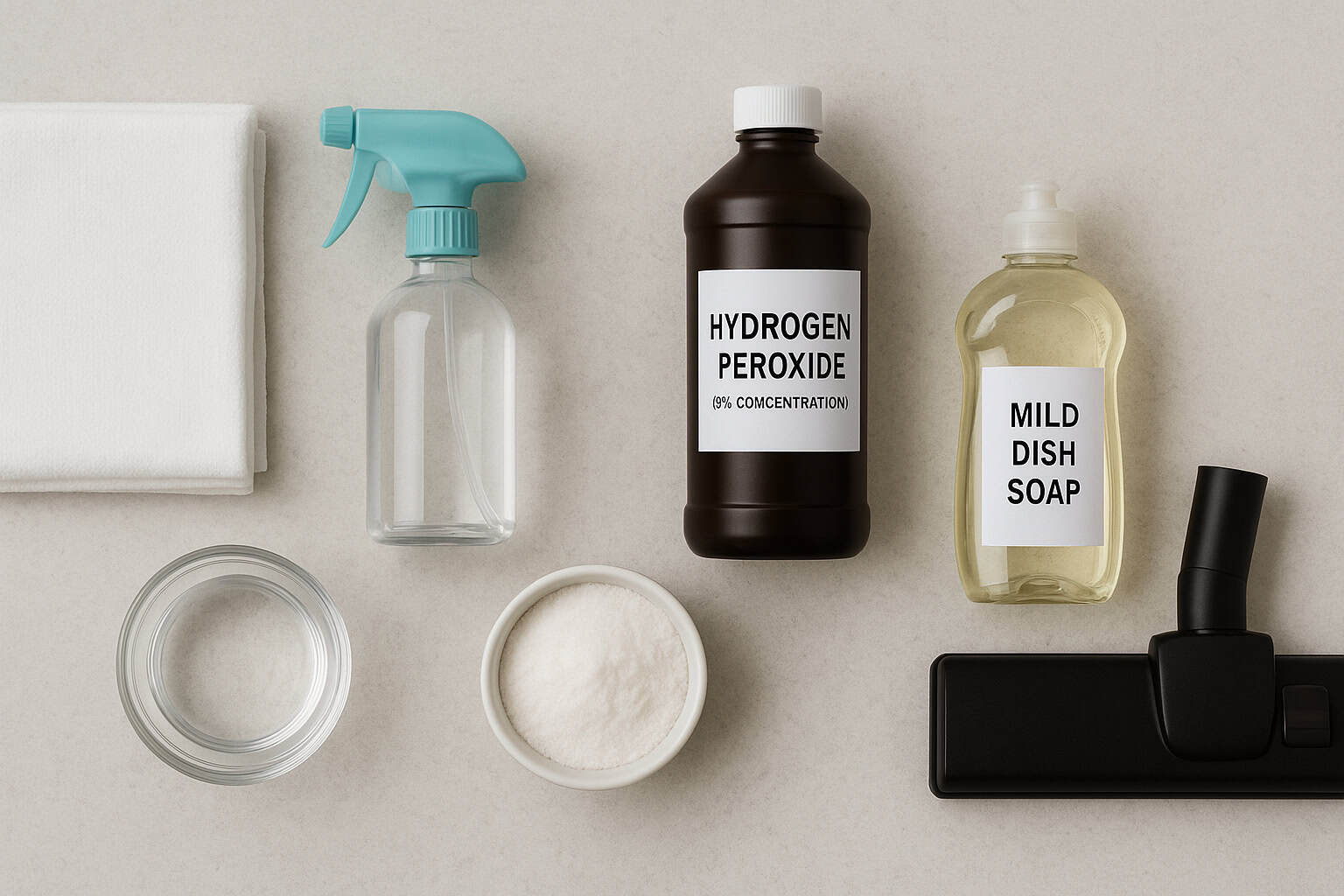
What You’ll Need
Disclaimer:
The products and brands mentioned in this article are listed solely for informational purposes. They are not sponsored, endorsed, or affiliated with our company in any way. We do not own or claim any rights to the mentioned products or trademarks. Always follow manufacturer guidelines and test cleaning solutions on a small, hidden area of your mattress before use.
If the stain covers a large area, has soaked deep into the mattress, or there’s lingering odor or mold, it may be time to consult a professional mattress cleaner. They have the tools and expertise to sanitise without damaging the materials.
Final Thoughts
Blood stains on foam and hybrid mattresses aren’t the end of the world, but quick action and the right techniques make all the difference. Whether it’s a fresh stain or one that’s dried in, you can restore your mattress with a bit of patience and care.
Preventative care, like using a high-quality, breathable, waterproof mattress protector, will save you a lot of stress in the future and extend the life of your mattress.
Frequently Asked Questions
1. Can I use bleach to remove blood stains from a mattress?
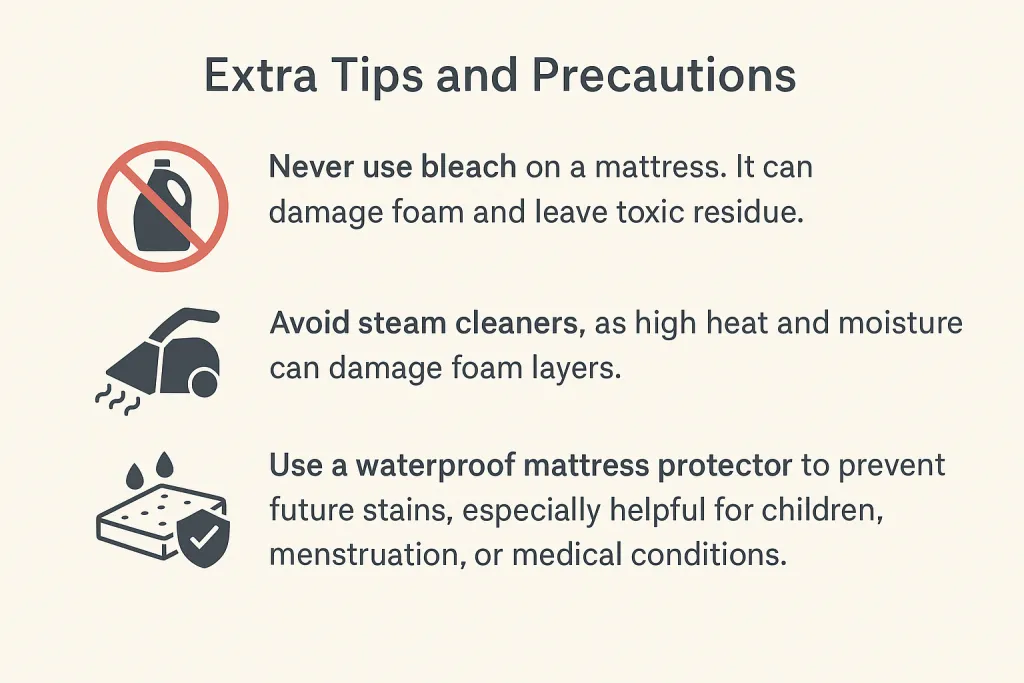
No, bleach can damage foam layers and leave behind toxic residue. It’s best to use safer alternatives like hydrogen peroxide (3%) or a mild enzyme cleaner.
2. What if the blood stain is old and dried?
Dried stains can still be treated with hydrogen peroxide. Let it bubble and break down the stain before blotting and applying baking soda for odor and moisture absorption.
3. Is it safe to get memory foam mattresses wet?
Memory foam is highly absorbent and should not be saturated. Always use minimal moisture and allow the mattress to dry completely in a well-ventilated area.
4. How can I prevent future stains?
Use a high-quality waterproof mattress protector to shield against spills, stains, and bodily fluids. It’s especially helpful for kids, menstruation, or medical concerns.
5. Can I use a steam cleaner on my mattress?
No, steam can break down the foam layers and cause moisture retention, leading to mold or damage. Stick to low-moisture cleaning methods instead.
Imagine ending your day by sinking into a bed so spacious, it feels like your own private retreat. In the UK, bed size plays a huge role in comfort, especially for couples, families, or anyone who values generous sleeping space. While most people are familiar with King and Super King sizes, many are unaware that even larger beds are available, both standard and custom-made.
In this guide, we’ll explore the biggest bed you can get in the UK, how it compares to oversized international options like the Alaskan King, and how choosing the right size can completely transform your sleep experience. Ready to spread out and sleep in style? Let’s dive in.
Understanding UK Bed Sizes: A Comprehensive Guide
When it comes to selecting a bed, understanding the UK’s variety of standard sizes is essential. These sizes cater to different preferences, room dimensions, and sleeping arrangements. Here’s a breakdown of the common options:
Single – 90cm x 190cm (3’ x 6’3â€): Ideal for children or solo sleepers.
Small Double – 120cm x 190cm (4’ x 6’3â€): Great for individuals who want more space.
Double – 135cm x 190cm (4’6†x 6’3â€): A snug fit for two people.
King – 150cm x 200cm (5’ x 6’6â€): Provides extra length and width for couples.
Super King – 180cm x 200cm (6’ x 6’6â€): A luxurious standard option for couples who value extra space.
However, standard beds are just the beginning. For those who demand more room and comfort, larger and custom-made beds like the Emperor, Caesar, and bespoke sizes open the door to a new level of sleep luxury.
The Importance of Choosing the Right Bed Size
Choosing the correct bed size goes beyond simple preference — it directly impacts your comfort, health, and sleep quality. A bed that’s too small can cause discomfort, limit movement, and disrupt sleep, leading to chronic fatigue or pain. Conversely, a bed that overwhelms a room can make the space feel cramped and chaotic.
The right bed size offers:
Unrestricted movement throughout the night, reducing tossing and turning.
Personal sleep zones for couples, children, or pets sharing the bed.
Improved posture and pressure relief, especially with adequate width and length.
Balanced bedroom aesthetics, ensuring your furniture and layout remain functional.
A properly sized bed allows you to stretch, roll, and relax without compromise, creating the perfect environment for restorative sleep and relaxation.
Exploring the Largest Bed Sizes Available in the UK
For those looking beyond Super King, several oversized options offer expansive sleeping surfaces:
Emperor – 200cm x 200cm (6’6†x 6’6â€): A square bed that provides more space than a Super King.Caesar – 245cm x 220cm (8’ x 7’2â€): One of the largest standard oversized beds available in the UK, ideal for families who co-sleep.Custom Beds – Up to 300cm x 240cm (9’10†x 7’10â€) or more: Designed to your specific requirements for maximum space and comfort.
Custom beds offer the freedom to tailor width, length, materials, and firmness. Whether you’re tall, sleep with pets, or just enjoy stretching out, a bespoke bed can be built to fit your lifestyle perfectly.
UK’s Largest Beds vs. the Alaskan King: How Do They Compare?
Globally, the Alaskan King is often cited as the biggest bed size. Let’s compare it with the UK’s oversized options:
Bed Size
UK Dimensions (cm)
UK Dimensions (ft/in)
Notes
Super King
180 x 200
6’ x 6’6â€
Largest standard UK size
Emperor
200 x 200
6’6†x 6’6â€
Square and more spacious than Super King
Caesar
245 x 220
8’ x 7’2â€
Ideal for larger rooms or family beds
Custom Bed (UK)
Up to 300 x 240
9’10†x 7’10â€
Tailored to preference and space
Alaskan King
274 x 274
9’ x 9’
Widest standard oversized bed in the US
Key takeaways:
UK custom beds can be longer than the Alaskan King, which is limited to 274 cm.
Width can exceed that of the Alaskan King with custom options.
Alaskan Kings are rarely available in the UK — custom UK beds are the more accessible, flexible alternative.
In essence, if you’re based in the UK and want a bed as big as (or even bigger than) an Alaskan King, a custom solution is the way to go.
Custom Bed Sizes: Tailoring Your Sleep Experience
For those who want a completely bespoke sleeping solution, custom beds provide the ultimate in personal comfort and luxury. You can design every element of your bed — from size and shape to materials and firmness — ensuring it meets your unique needs.
Custom beds are ideal for:
Tall individuals who require more legroom.
Couples with pets or kids who co-sleep and need extra width.
Large or unusually shaped bedrooms where standard beds won’t work.
Homeowners who want a luxury centrepiece for their bedroom.
With endless options, your bed becomes a statement of comfort and personal style.
Factors to Consider When Choosing a Bed Size
When selecting the perfect bed size, consider the following factors:
Room dimensions – Always measure your space carefully. Leave room for walking, furniture, and comfort.
Number of sleepers – Account for partners, children, or pets who may share your bed regularly.
Height and movement habits – Tall or restless sleepers benefit greatly from additional length and width.
Matching your bed to your space and lifestyle ensures maximum comfort without compromising practicality.
The Impact of Bed Size on Sleep Quality
The right bed size can significantly enhance your sleep quality. More room allows for:
Uninterrupted rest, especially for couples with different sleep styles.
Less pressure on joints due to more space to adjust positions.
Reduced partner disturbance, which is a common cause of poor sleep.
Improved airflow and sleep posture, both of which contribute to better overall health.
As studies suggest, the more space you have to sleep, the better your chances of achieving deep, restorative sleep each night.
Tips for Fitting a Large Bed in Your Bedroom
While large beds offer unmatched comfort, fitting them into your bedroom requires smart planning. Here are a few tips:
Measure your room – Include space for bedside tables, wardrobes, and walking room.
Opt for storage beds – Under-bed drawers or lift-up bases maximize storage.
Use minimalist furniture – Keep the room feeling open and airy.
Choose light colours and mirrors – These visually expand the space, making the bed feel balanced rather than bulky.
Split frames or bases – These help move large beds through narrow hallways or staircases.
Proper layout and furniture choices allow you to enjoy an oversized bed without compromising space or aesthetics.
Accessories for Your Big Bed: Mattresses, Sheets, and More
A big bed needs the right accessories to maximise comfort:
Mattress – Choose a high-quality mattress tailored to the bed size. Hybrid, memory foam, or pocket spring are great options.
Bedding – Go for breathable, soft fabrics like cotton, bamboo, or linen. Ensure they fit the custom size properly.
Pillows and toppers – Provide added support and help customise firmness.
Blankets and duvets – Make sure they offer full coverage and seasonal comfort.
Matching the right accessories to your large bed ensures a cohesive and luxurious sleep experience.
Conclusion: Finding Your Perfect Sleep Solution
The biggest bed you can get in the UK is not limited by standard dimensions — it’s defined by your imagination and comfort needs. Whether it’s an Emperor, Caesar, or a fully custom-built bed, oversized options are available to suit every preference and room layout.
When compared to the Alaskan King, UK custom beds can match, or even surpass, its size, offering flexibility in both design and function. By choosing the right size, pairing it with a quality mattress, and ensuring the space works with your bedroom, you can create a sleep sanctuary like no other.
Say goodbye to cramped nights and hello to deep, luxurious sleep with a bed that’s as big as your dreams.
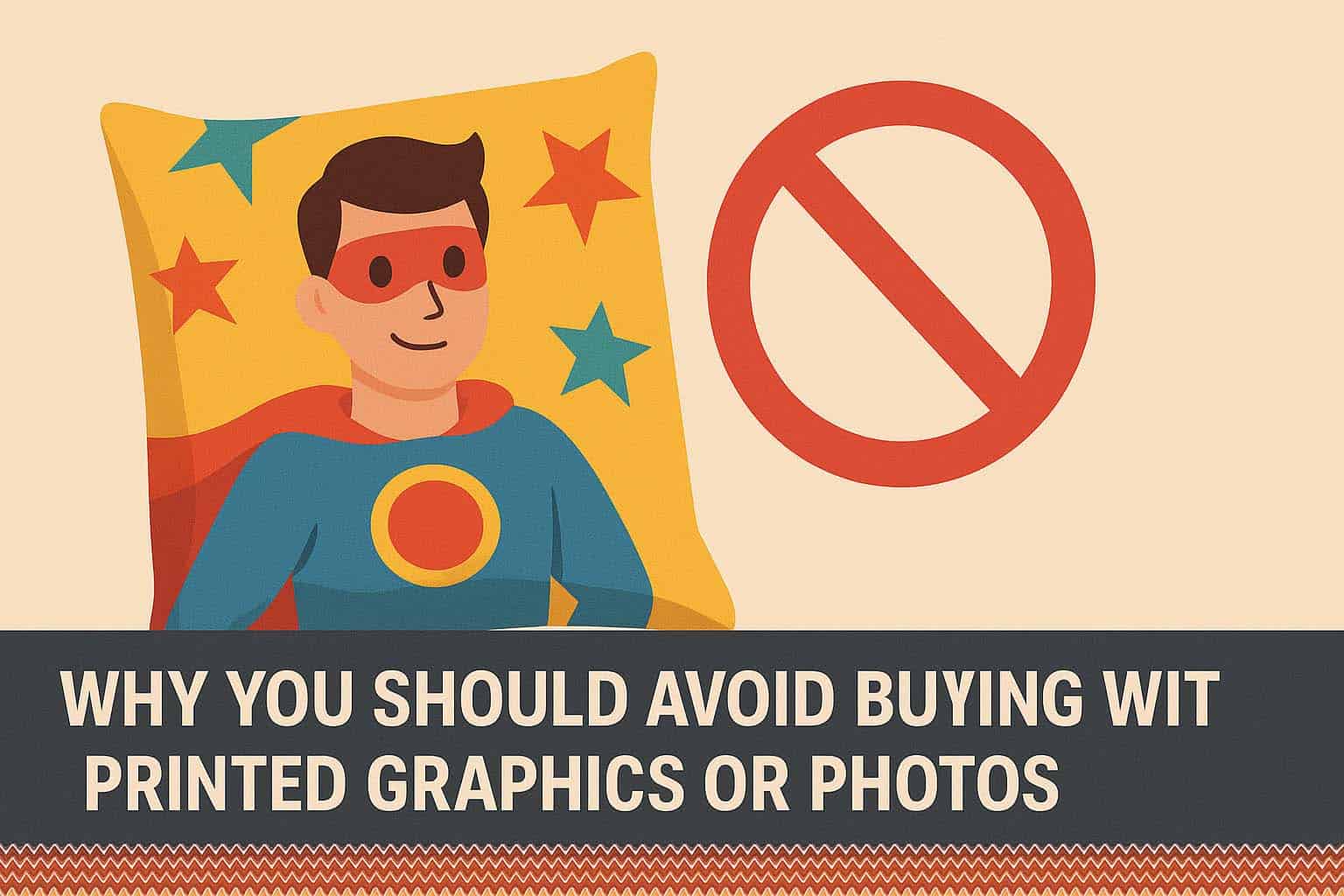
Pillows are meant to provide comfort, support, and restful sleep. They are an essential part of our everyday lives, often in close contact with our face and skin for hours at a time. However, not all pillows are created with your health and well-being in mind. In particular, pillows with printed photos, characters, or colourful graphics may carry hidden risks that are not immediately obvious to consumers.
This article explores the potential dangers of printed pillows, the chemicals involved in producing them, and why they might not be the best choice for your home. We’ll also look at what you should consider before buying a pillow and how to make safer, more informed decisions.
The Appeal of Printed Pillows
Printed pillows, often adorned with photos, cartoon characters, floral prints, or quotes, are popular among children, teenagers, and even adults. These designs are used to:
Personalize a bedroom or living room
Appeal to fans of certain shows or celebrities
Provide a colorful, vibrant aesthetic
However, behind the pretty visuals is a manufacturing process that often involves synthetic fabrics and chemical-laden printing methods. While not all printed pillows are dangerous, many budget or mass-produced options can introduce toxins into your home.
How Are Printed Pillows Made?
Printed pillows are generally made using one of the following methods:
Screen Printing: Uses ink and mesh stencils to apply multiple layers of paint to fabric.
Digital Direct-to-Garment (DTG) Printing: Sprays ink directly onto the fabric and uses heat to set it.
These processes rely heavily on chemicals to ensure colour durability, vibrancy, and wash resistance.
Common Chemicals in Printed Fabrics
Here are some of the key substances used in textile printing, particularly on synthetic pillows:
Formaldehyde: Used to fix dyes and prevent fading. A known skin irritant and carcinogen.
Phthalates: Found in PVC-based inks. Linked to hormone disruption.
Heavy Metals: Lead, cadmium, and mercury may be present in pigments or inks.
Acrylic Resins and Binders: Used to make ink adhere to fabric. May cause respiratory irritation.
Solvents: Such as toluene and benzene, which emit volatile organic compounds (VOCs).
These chemicals are not always declared on product labels and are more likely to be present in unregulated or imported pillows.
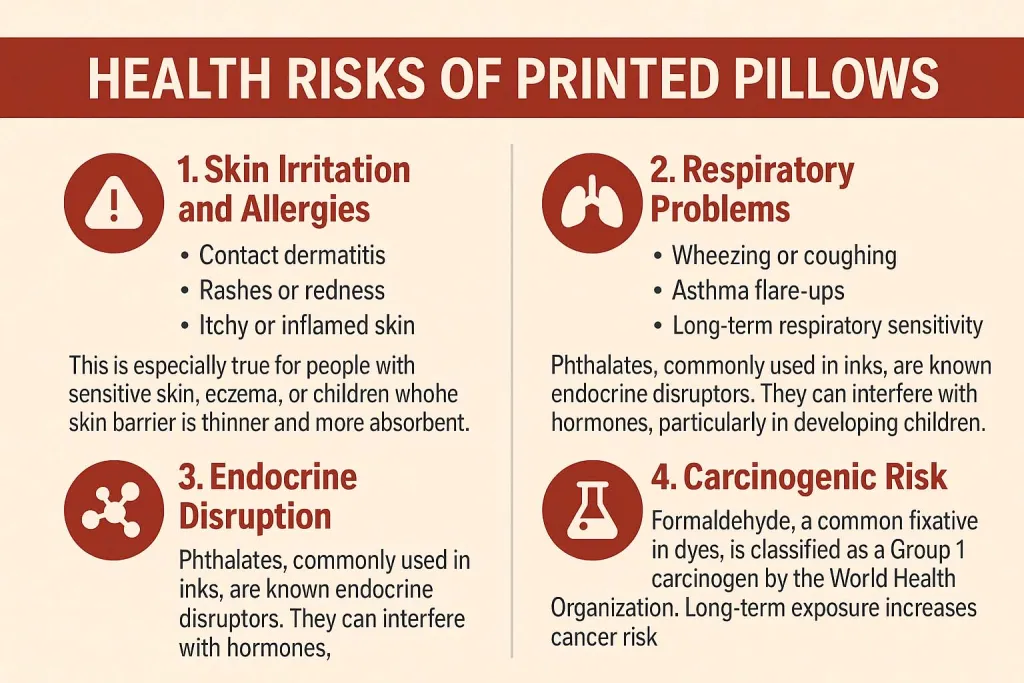
Health Risks of Printed Pillows
1. Skin Irritation and Allergies
Sleeping with your face against printed fabric for hours every night can lead to:
Contact dermatitis
Rashes or redness
Itchy or inflamed skin
This is especially true for people with sensitive skin, eczema, or children whose skin barrier is thinner and more absorbent.
2. Respiratory Problems
Many inks and resins used in printed pillows emit VOCs that can be inhaled during sleep. This can cause:
Wheezing or coughing
Asthma flare-ups
Long-term respiratory sensitivity
3. Endocrine Disruption
Phthalates, commonly used in inks, are known endocrine disruptors. They can interfere with hormones, particularly in developing children.
4. Carcinogenic Risk
Formaldehyde, a common fixative in dyes, is classified as a Group 1 carcinogen by the World Health Organisation. Long-term exposure increases cancer risk.
Real-Life Examples and Reports
A 2021 case reported by a pediatric dermatologist in the UK involved a 4-year-old child who developed a persistent facial rash. After ruling out food and skincare allergens, the family discovered the rash was caused by the child’s polyester pillow featuring printed cartoon characters. The rash subsided within a week of replacing the pillow with an organic cotton alternative.
On Amazon, dozens of users have reviewed printed pillows with complaints like: “Smelled like chemicals,†“Caused my daughter’s skin to break out,†and “Had to throw it away after one night.†These aren’t isolated experiences, especially among cheaper imported products.
Environmental Impact of Printed Pillows
Printed pillows often involve unsustainable practices:
Synthetic Fabrics: Most printed pillows are made of polyester, a plastic-based material derived from petroleum.
Water Waste: Textile dyeing and printing are among the top industrial users of water globally.
Chemical Pollution: Dyes and printing chemicals can leach into local waterways during production.
Non-Biodegradable: These pillows take hundreds of years to break down and contribute to landfill waste.
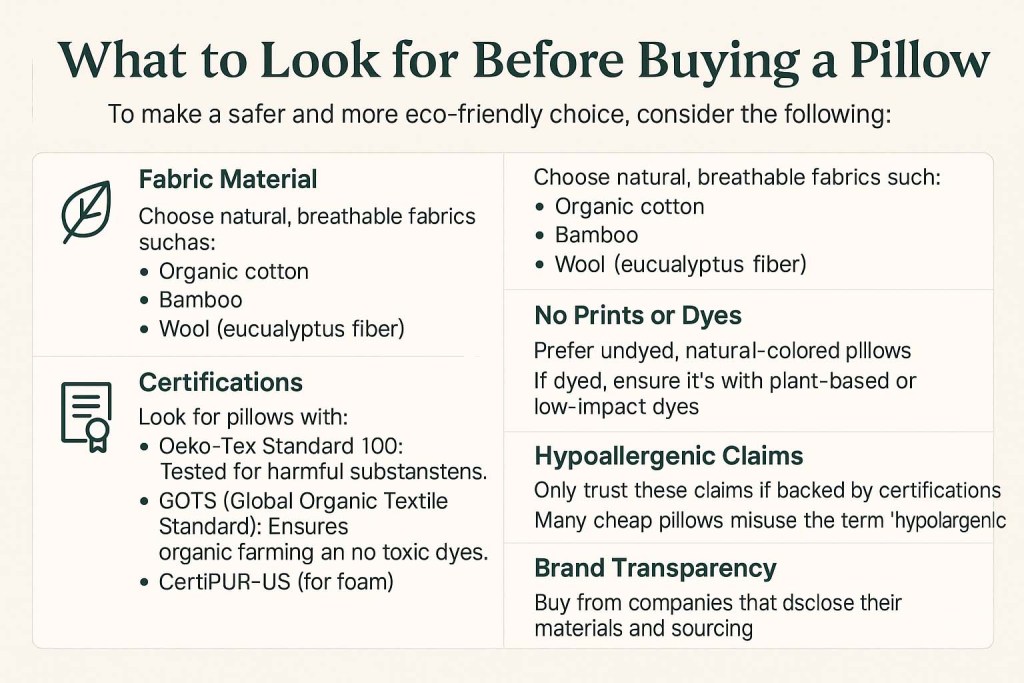
What to Look for Before Buying a Pillow
To make a safer and more eco-friendly choice, consider the following:
1. Fabric Material
Choose natural, breathable fabrics such as:
Organic cotton
Bamboo
Wool
Tencel (eucalyptus fiber)
2. Certifications
Look for pillows with:
Oeko-Tex Standard 100: Tested for harmful substances.
GOTS (Global Organic Textile Standard): Ensures organic farming and no toxic dyes.
CertiPUR-USÂ (for foam): Free from formaldehyde, phthalates, and VOCs.
3. No Prints or Dyes
Prefer undyed, natural-coloured pillows
If dyed, ensure it’s with plant-based or low-impact dyes
4. Smell Test
A strong chemical odor is a red flag
If it smells like paint, plastic, or chemicals, avoid it
5. Hypoallergenic Claims
Only trust these claims if backed by certifications
Many cheap pillows misuse the term “hypoallergenicâ€
6. Brand Transparency
Buy from companies that disclose their materials and sourcing
Avoid generic or unbranded products with no material information
Safer Alternatives to Printed Pillows
If you want a healthy, non-toxic sleep environment:
Organic Cotton Pillows: Soft, breathable, and chemical-free
Natural Latex Pillows: Great support and naturally resistant to dust mites
Kapok Pillows: Plant-based and biodegradable
Wool Pillows: Naturally antimicrobial and flame-resistant
You can always add aesthetic touches with removable pillowcases that meet safety standards instead of compromising the core product.
Final Thoughts
Pillows are not just decorative pieces, they are intimate, functional sleep tools that affect our daily health. While printed pillows might look attractive or entertain your child, they often come with a hidden cost: exposure to toxic chemicals, allergic reactions, poor breathability, and negative environmental impact.
Always prioritize health, comfort, and sustainability over appearance when it comes to bedding. Choose high-quality, certified, and natural materials that support your well-being and the planet.
A pillow should help you sleep soundly, not come with unknown health risks printed on its surface.
When it comes to buying a mattress, price often dominates the conversation, but what really determines how well a mattress performs and how long it lasts? The answer lies in the materials used. Whether you’re seeking pressure relief, spinal alignment, temperature regulation, or long-term durability, the composition of your mattress plays a major role. This article explores why high-quality materials matter, how they affect your sleep, and how mattresses like Luxe Ergo stand as examples of superior craftsmanship.
1. Material Integrity and Longevity
Mattresses made with premium materials are simply built to last. Lower-end mattresses often use low-density foams, synthetic fabrics, and cheaper coil systems that wear out quickly. These can sag within a year or two, leading to poor spinal support and discomfort.
Durable pocket spring systems like 2000+ spring counts for consistent support and motion isolation.
Take, for instance, a mattress that features a 3400-spring dual-layer system and natural fillings, this level of structural complexity and durability isn’t found in budget mattresses.
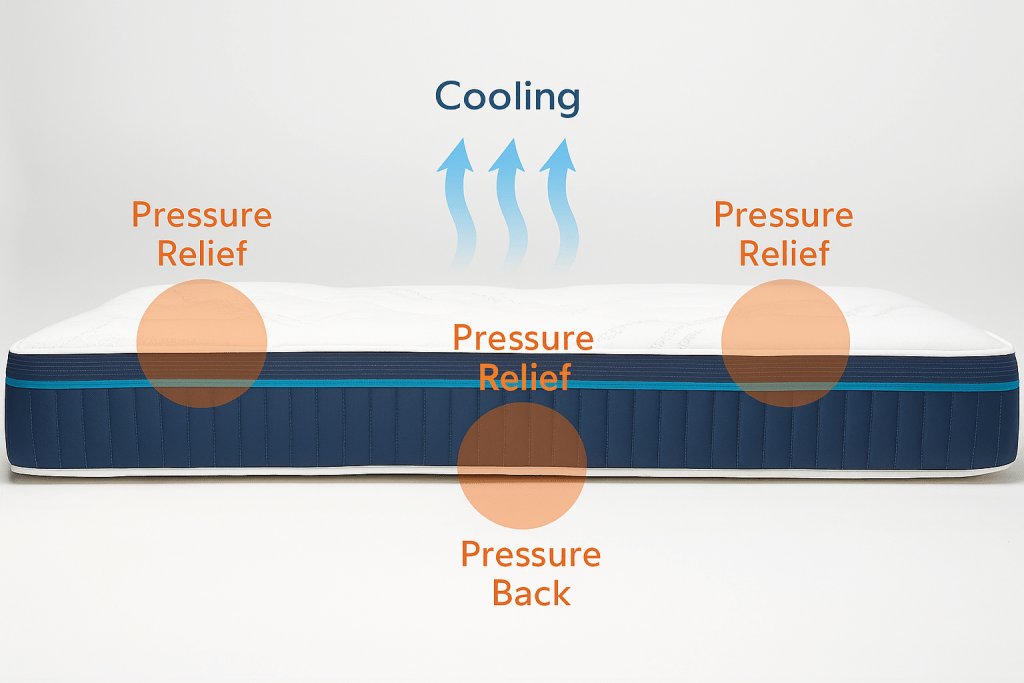
2. Pressure Relief and Spinal Support
The difference in comfort is often immediate when comparing a low-quality mattress to one made with ergonomic, supportive materials. Cheaper beds may fail to contour to your body, causing uneven weight distribution and exacerbating pressure points.
Zero Gravity™ or contouring foam layers that adapt to the body’s curves.
Edge-to-edge support that prevents roll-off and sagging.
These features promote proper spinal alignment and are particularly beneficial for side and back sleepers who need a mattress that accommodates pressure points without compromising firmness.
3. Cooling and Breathability
Temperature regulation is a critical factor in restful sleep, especially for hot sleepers. Cheaper mattresses typically trap heat due to poor ventilation and synthetic fabric covers.
Quality mattresses often include:
Open-cell gel foams that dissipate heat.
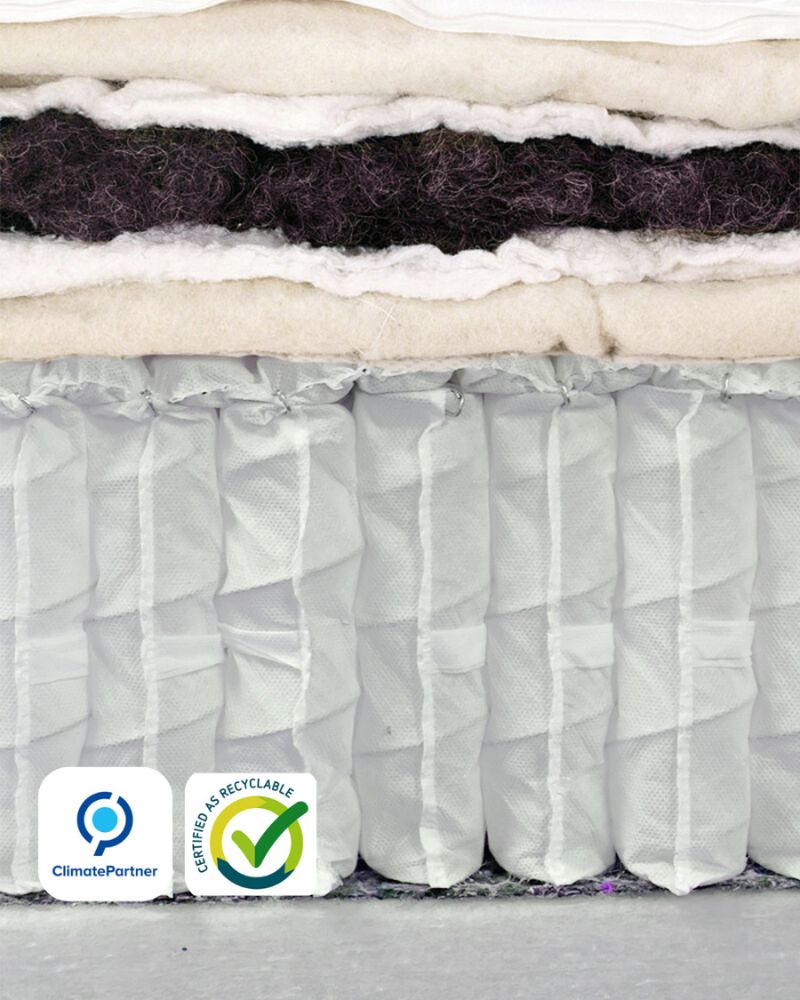
Natural materials like British wool, cotton, and bamboo that wick away moisture.
Ventilated spring systems that allow for continuous airflow throughout the mattress core.
For example, mattresses that use layered breathable fibres with integrated airflow channels offer night-long temperature control without the need for external cooling technology.
4. Health and Hypoallergenic Properties
Another benefit of investing in a well-constructed mattress is its ability to support a healthier sleep environment. Budget mattresses can harbor dust mites, bacteria, and allergens due to poor materials and lack of antimicrobial treatment.
Hypoallergenic materials like natural latex or certified organic cotton.
Removable and washable covers that help maintain hygiene over time.
Some mattresses go as far as integrating naturally antimicrobial properties in their fibres, ideal for allergy sufferers and families with young children.
5. Consistency Over Time
Cheap mattresses tend to lose their performance fast. Soft spots, coil failure, and uneven surfaces make them unreliable after just a short period. Conversely, premium mattresses offer:
Consistent firmness throughout their lifespan.
30-year spring performance warranties or guarantees on material durability.
Resilience to body impressions, thanks to higher-quality foam layers and reinforced cores.
Mattresses that include advanced support systems with independently encased springs and reinforced perimeter zones are engineered to withstand years of nightly use without deterioration.
6. Ethical Manufacturing and Sustainability
A growing concern for consumers is how sustainable their purchases are. High-end mattresses are often made using ethically sourced, eco-friendly materials. Cheaper alternatives tend to rely on synthetic, petroleum-based foams and materials that are harmful to the environment.
Premium mattress brands tend to offer:
GOTS-certified natural fibres like wool and cotton.
Non-toxic, CertiPUR-US® certified foams.
Sustainable manufacturing practices, including reduced plastic packaging and low-carbon delivery methods.
Choosing a mattress made with sustainability in mind not only supports better health and comfort but also reflects environmental responsibility.
7. Real-World Example: A High-Quality Mattress in Practice
Consider a mattress with the following features:
Dual coil system (over 3000 springs)
Natural British wool and cotton
Thermo-regulating gel-infused foam
Medium-firm comfort with edge-to-edge support
Hypoallergenic, breathable, and built in the UK
These specifications aren’t just marketing buzzwords, they represent a mattress designed to provide full-body support, healthy airflow, and resilience, with materials sourced for both performance and sustainability. When stacked against generic foam mattresses or mass-produced budget models, the difference in comfort and quality is clear.
8. Why Material Costs Reflect Value
High-quality materials cost more, but they also deliver more. When you pay for superior components, you’re investing in
Longer product lifespan
Better health outcomes
Higher sleep quality
Reduced long-term replacement costs
Mattresses built with premium materials are not always heavily marketed, and many direct-to-consumer models allocate their budget to product development rather than flashy advertising. This often makes them more affordable than heavily branded alternatives without compromising on build quality.
9. Are High Price Tags Justified? Comparing to Standard Mattresses
One of the most common hesitations buyers have when considering premium mattresses is price. Standard or “budget†mattresses can range from £150–£400 for a double size, often sold at mass-market retailers or online marketplaces. In contrast, a high-quality mattress with premium materials—like natural wool, advanced cooling foams, and a multi-zone spring system, may cost £700–£1,200 or more depending on its construction.
So what justifies the difference?
Cheaper mattresses:
Often use lower-density polyurethane foams
May lack reinforced edge support or zoned comfort layers
Tend to sag within 1–3 years with daily use
Have minimal breathability, leading to heat retention
Usually carry shorter warranties (1–5 years)
Higher-quality mattresses:
Built with dense foams or natural materials that last 8–12+ years
Offer advanced ergonomic zoning for pressure relief
Include anti-microbial, hypoallergenic features
Provide breathable layers that reduce overheating
Backed by extensive warranties (10–25 years)
Over time, a low-cost mattress might need to be replaced multiple times, while a high-end one may continue to deliver consistent support and comfort for more than a decade. This makes the cost-per-year of premium models comparable or even more economical than entry-level mattresses.
10. How to Know If a Mattress Is Worth the Price
Before purchasing a mattress, especially one with a higher price tag, it’s important to evaluate whether the investment matches its advertised value. Here’s how you can tell:
Check the Materials
Look for:
Natural fillings like wool, cotton, or latex
High-density foams (preferably 5 lbs/ft³ and above)
Pocket spring counts (above 1000 for adequate support)
Certifications like CertiPUR-US®, GOTS, OEKO-TEX®, or equivalent
Research the Construction
Ask:
Does it offer zoned support for different body areas?
Are there breathable layers for temperature regulation?
Is there reinforced edge support to prevent sagging?
Review the Warranty and Trial Period
A mattress offering a 10+ year warranty and a trial period of 30–200 nights shows confidence in durability and customer satisfaction.
Read Verified Reviews
Consumer feedback, especially from independent platforms, can reveal performance insights that marketing claims might not.
Evaluate the Brand’s Transparency
A trustworthy brand will be clear about its sourcing, certifications, and material breakdown. Beware of vague product descriptions with no real technical information.
Conclusion
Choosing a mattress isn’t just about picking a comfortable surface, it’s about selecting the materials, structure, and craftsmanship that directly impact your sleep quality, health, and long-term satisfaction.
High-quality mattresses stand apart because of what lies beneath the surface: breathable natural fibres, dense and durable foams, advanced spring systems, and thoughtful ergonomic design. These components don’t just feel better, they last longer, support your body more effectively, and often include certifications for safety and sustainability.
While premium mattresses may come with higher price tags, they also offer longer warranties, improved durability, and significantly better value over time. Compared to lower-end alternatives that often sag or deteriorate within a few years, an investment in a well-constructed mattress can ultimately prove more economical and far more beneficial to your health.
Before buying, ask not just “How much does it cost?†but also “What am I getting for the cost?â€. A well-made mattress supports spinal alignment, regulates temperature, isolates motion, and even resists allergens all contributing to a deeper, healthier sleep.
Because when it comes to your sleep, comfort should never be a compromise. And in mattresses, quality isn’t just a feature, it’s the foundation.
A good night’s sleep starts with choosing the right bed size. For many people in the UK, a double bed offers the perfect balance between space-saving and comfort. Whether you’re furnishing a guest room, outfitting a new home, or upgrading from a smaller size, understanding double bed size measurements is essential. This comprehensive guide will cover everything you need to know about double bed size measurements in inches, centimetres (cm), and feet, and how to choose the right bed for your space and sleeping needs.
What Are the Standard Double Bed Size Measurements in the UK?
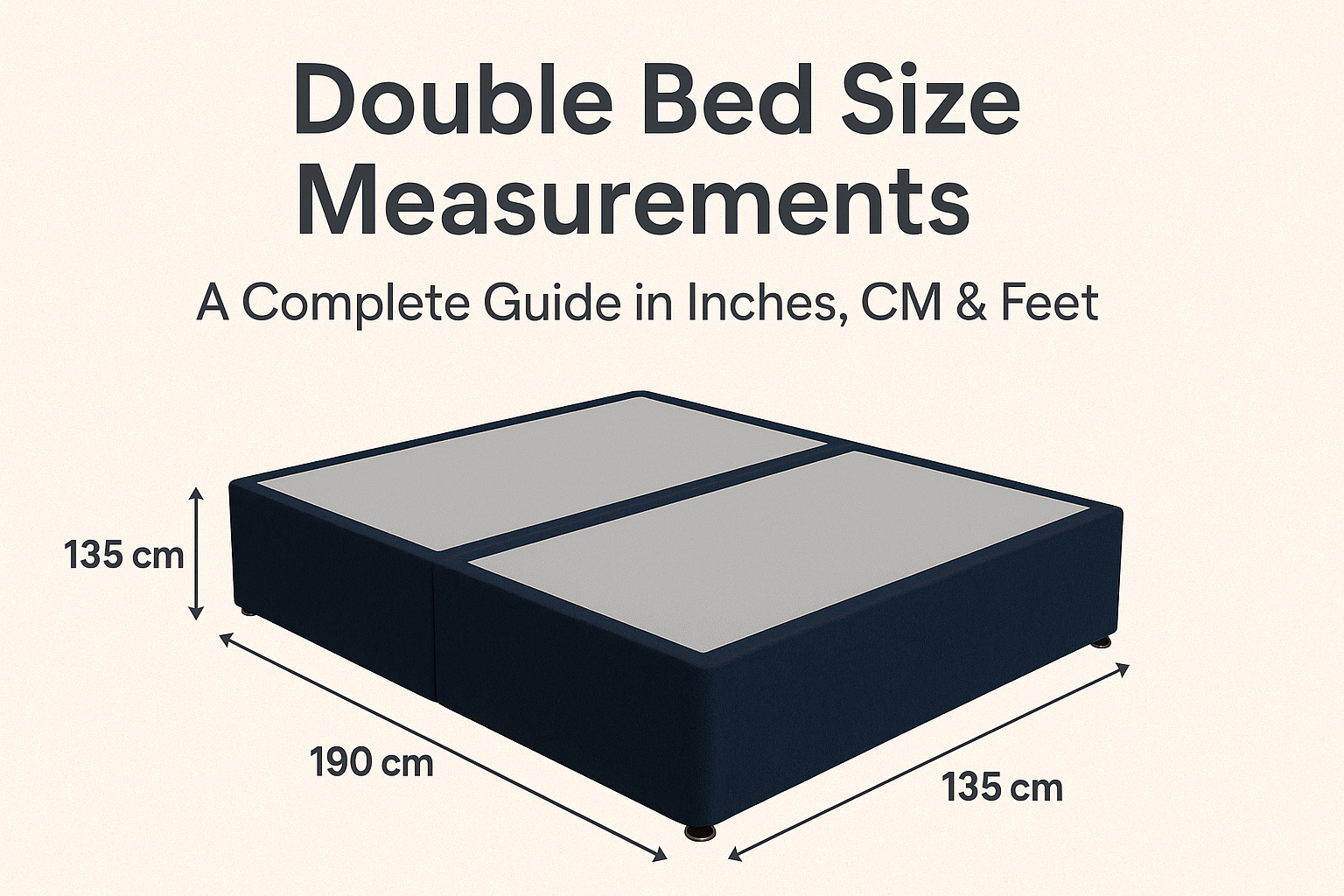
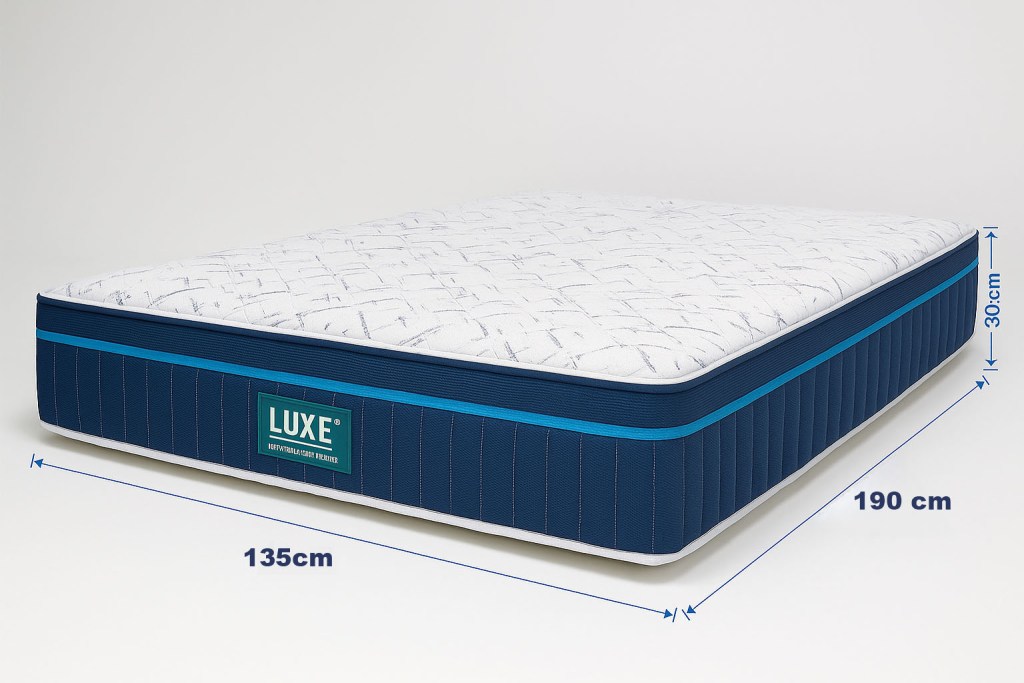
In the UK, the standard double bed size refers to the size of the mattress, not including the frame. The standard dimensions are:
135 cm x 190 cm
54 inches x 75 inches
4 feet 6 inches x 6 feet 3 inches
These dimensions apply to the mattress itself. However, the bed frame may be slightly larger, depending on its design and materials. Always measure the outer frame if you’re working with limited room space.
Double Bed Frame Dimensions
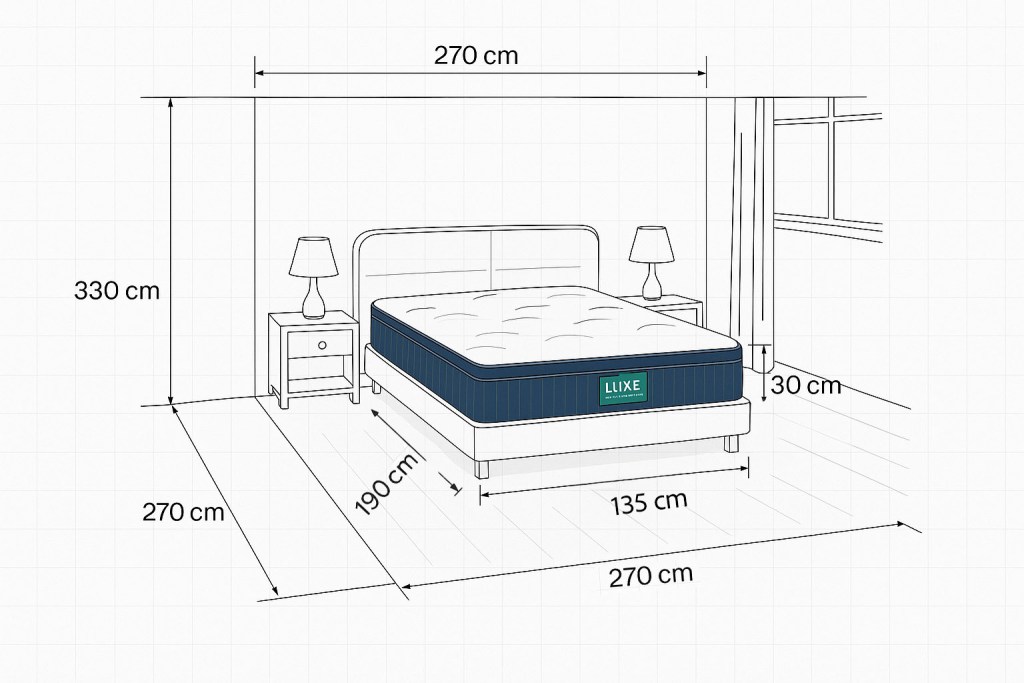
While the mattress size is standardized, bed frame sizes can vary. The outer dimensions of a double bed frame typically add 2 to 5 inches (5 to 12 cm) on each side to accommodate design features like padded edges, built-in storage, or headboards and footboards.
Example:
Mattress: 135 cm x 190 cm (4ft 6in x 6ft 3in)
Frame: Up to 145 cm x 200 cm (4ft 9in x 6ft 7in), depending on style
Tip: Always allow extra space for the frame if you are planning your room layout.
Room Size Requirements for a Double Bed
A standard double bed is suitable for most average-sized UK bedrooms. The recommended minimum room size for a double bed is:
2.4m x 3m (240 cm x 300 cm)
7.9ft x 9.8ft
This space allows for walking room around the bed and space for furniture like bedside tables or wardrobes.
If you’re tight on space, consider a storage bed or wall-mounted furniture to maximize functionality.
Double Bed Size Measurements in CM, Inches, and Feet (Quick Reference)
Unit
Width
Length
CM
135 cm
190 cm
Inches
54 inches
75 inches
Feet
4 ft 6 in
6 ft 3 in
This is the industry standard across most UK and European mattress manufacturers.
Who Should Choose a Double Bed?
A double bed is ideal for:
Single adults who want extra space
Teenagers or growing children
Couples with smaller bedrooms
Guest rooms where flexibility is needed
A double bed is roomier than a single (90 cm x 190 cm) or a small double (120 cm x 190 cm) but smaller than a king (150 cm x 200 cm) or super king (180 cm x 200 cm).
Small Double Bed (a.k.a. Queen or Three-Quarter Size):
120 cm x 190 cm (47 inches x 75 inches / 4ft x 6ft 3in)
Standard Double Bed:
135 cm x 190 cm (54 inches x 75 inches / 4ft 6in x 6ft 3in)
Key Difference: A double bed gives an additional 15 cm (6 inches) of width, which can make a big difference for two sleepers.
Mattress Depth and Considerations
Besides length and width, depth plays a role in comfort and fit with bed sheets and protectors.
Standard mattress depth: 20–30 cm (8–12 inches)
Extra-deep mattresses: up to 40 cm (16 inches)
Make sure your fitted sheets are designed to accommodate your chosen depth. For thicker mattresses, deep-pocket sheets are recommended.
Bedding and Accessories: What Fits a Double Bed?
When shopping for bedding, it’s important to match the size to your mattress:
Duvet size: 200 cm x 200 cm (79 inches x 79 inches)
Fitted sheet: 135 cm x 190 cm (with added depth for thick mattresses)
Flat sheet: 230 cm x 275 cm (90 inches x 108 inches)
Mattress protector: Match mattress dimensions and thickness
Always double-check the packaging, as UK, EU, and US sizes can differ slightly.
Tips for Choosing the Right Double Bed
Measure Your Room First Ensure there’s enough clearance for walking space, storage, and other furniture.
Consider the Bed Frame Size Don’t just measure the mattress space, account for decorative frames, footboards, or storage bases.
Think About Who Will Use It If two people will be using the bed regularly, consider whether a double provides enough width or if a king might be more comfortable.
Check Access Points Make sure the bed can fit through doorways and staircases when delivered!
Common FAQs about Double Bed Size Measurements
Q1. What are the exact double bed size measurements in inches?
54 inches wide by 75 inches long.
Q2. How many cm is a standard double bed in the UK?
135 cm wide by 190 cm long.
Q3. Can two adults sleep on a double bed comfortably?
Yes, although it may feel tight for larger individuals or those who move frequently in their sleep.
Q4. Will a double bed fit in a small bedroom?
Yes, but ensure the room is at least 2.4m x 3m to allow for movement and furniture.
Q5. What’s the difference between a double and a king bed?
A king bed is 15 cm wider and 10 cm longer (150 cm x 200 cm).
Q6. Is a double bed the same size in the US?
No. The US “Full” bed is similar but slightly shorter.
Q7. What size duvet should I buy for a double bed?
A 200 cm x 200 cm duvet offers full coverage.
Q8. Are all double beds 135 x 190 cm?
Most are, but always check the specifications as custom beds may vary.
Q9. What mattress depth works best for a double bed?
20–30 cm is standard; thicker mattresses need deep-pocket sheets.
Q10. Can a small double sheet fit a standard double bed?
No. It will be too tight. Always match your bedding to mattress size.
Conclusion
Choosing the right bed starts with understanding double bed size measurements in cm, inches, and feet. A double bed (135 cm x 190 cm) offers an excellent mix of comfort and space efficiency for solo sleepers, couples, and guest rooms. Be sure to consider your room dimensions, usage needs, and mattress depth when selecting both your bed and accessories. With the correct measurements in mind, your new double bed can transform your sleep and space effortlessly.
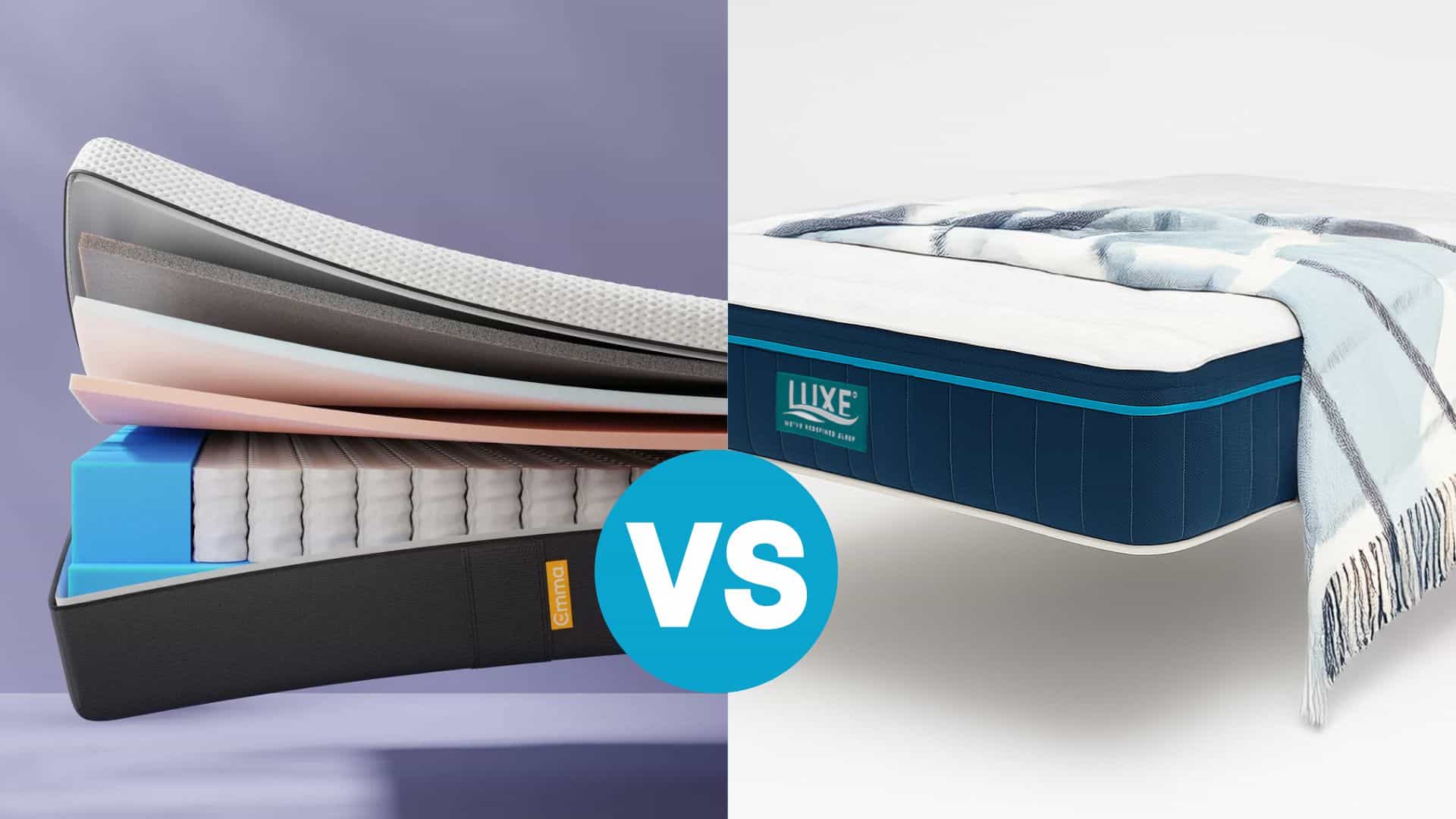
Finding the right mattress is critical for achieving restorative sleep, especially for individuals who tend to sleep hot or experience night sweats. The Emma Luxe Cooling Mattress is marketed as one of the most advanced foam mattresses for temperature regulation and comfort. In comparison, the LuxeThermâ„¢ Hybrid Mattress takes a different approach, combining natural materials with hybrid construction to achieve both cooling and ergonomic support. This article offers a detailed, side-by-side evaluation of both mattresses based on cooling performance, construction, firmness, materials, support, and value.
Disclaimer: The comparison we have performed is completely non-biased and based solely on publicly available information provided on the official product websites or trusted third-party referral sources. All specifications, features, and prices have been referenced accurately to the best of our knowledge at the time of writing.
Emma Luxe Cooling Mattress vs LuxeThermâ„¢ Hybrid Mattress Comparison
Dynamic Spring Adaptability + Pressure Relief Layers
Recommended For
Hot sleepers who prefer foam feel
Hot sleepers needing bounce, airflow & ergonomic support
Price (King Size)
£1,179
£699
Trial Period
200 Nights
100 Nights + 14-Day Return
Warranty
10 Years
10 Years
Made in
United Kingdom
United Kingdom
Temperature Regulation and Cooling Performance
The Emma Luxe Cooling Mattress is designed around its phase-change material-infused foams. It uses graphite-infused memory foam and Emma’s proprietary cooling layers to dissipate body heat. The open-pore design helps to improve airflow through the foam, reducing the tendency of traditional memory foam to retain heat.
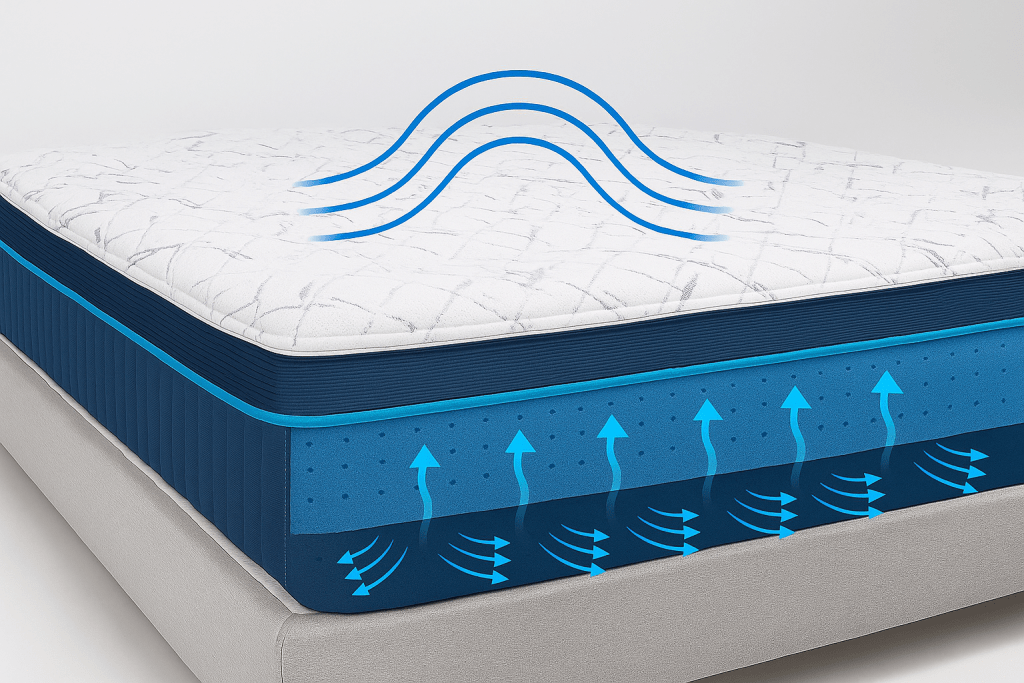
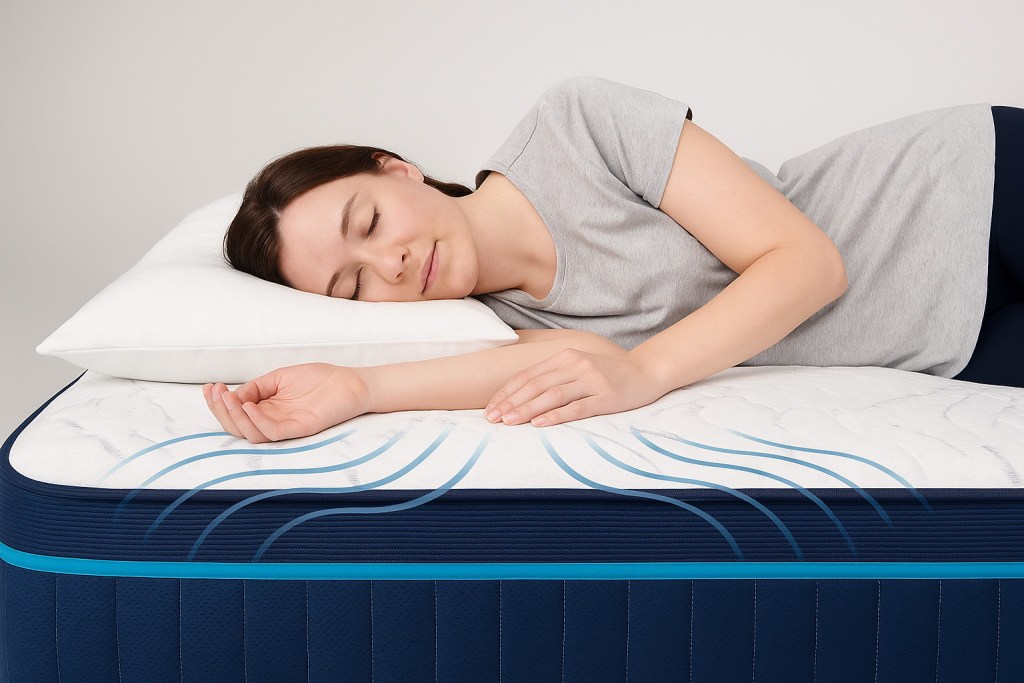
By contrast, the LuxeThermâ„¢ Hybrid Mattress incorporates a dual approach to cooling:
LTX Cooling Techâ„¢ Graphite-Infused Gel Foam, designed to extract and disperse body heat efficiently.
UltraDry Moisture-Wicking Cover, made with breathable fibres that pull moisture away from the surface to create a consistently dry and comfortable sleeping environment.
The 2000 EnduraSpringâ„¢ coil system promotes natural airflow throughout the core, something foam-only mattresses often lack.
While both mattresses are built with cooling in mind, the LuxeThermâ„¢ Hybrid offers mechanical airflow through its springs and a layered breathable design, making it especially effective for sleepers in warmer climates or those sensitive to temperature fluctuations.
Construction and Materials
The Emma Luxe Cooling Mattress consists entirely of layered foams. It typically includes the following:
Graphite-infused foam for cooling
Adaptive memory foam for contouring
HRX (High Resiliency Extra) support foam for base stability
A moisture-wicking and soft-touch cover
This all-foam construction is designed for contouring comfort and motion isolation, but may retain some heat and lacks bounce or deep-core airflow.
The LuxeThermâ„¢ Hybrid Mattress has a more complex multi-material build:
Graphite-infused LTXâ„¢ Cooling Gel foam
Zero Gravityâ„¢ Memory Foam for plush contouring with better responsiveness than traditional memory foam
High-resilience pressure-relief foam layer for added buoyancy and comfort
2000 individually pocketed coils for full-body support and motion control
Natural coir stabilising base, which adds firmness and airflow
Fire-resistant, antimicrobial cover that supports hygiene over long-term use
LuxeThermâ„¢ places strong emphasis on natural ventilation, antimicrobial safety, and temperature regulation through its construction, which is well-suited for health-conscious consumers.
Firmness and Sleep Feel
The Emma Luxe Cooling Mattress is rated medium-firm, around 6.5 to 7 out of 10 on the firmness scale. It provides a soft cradle without being too plush, ideal for back and side sleepers. The foam layers slowly adapt to body contours, which may result in a sinking feeling for some sleepers.
The LuxeThermâ„¢ Hybrid offers a medium firmness of approximately 5 out of 10, which strikes a balance between plush comfort and supportive resilience. The foam layers gently cradle the body while the coil support system maintains alignment and reduces pressure points. The hybrid construction also adds a degree of bounce, which foam-only mattresses typically lack.
In summary:
Emma Luxe Cooling Mattress: deeper contouring, less bounce, firmer profile
LuxeThermâ„¢ Hybrid: more responsive feel, adaptive support, balanced firmness
Motion Isolation and Support
For couples or restless sleepers, motion transfer is a key factor. The Emma Luxe Cooling Mattress performs well in this category due to its dense foam construction. Movements on one side of the bed are minimally felt on the other.
The LuxeThermâ„¢ Hybrid Mattress also excels in motion isolation. Its individually wrapped pocket springs move independently, preventing ripple effects across the mattress surface. Combined with Zero Gravityâ„¢ foam, the LuxeThermâ„¢ provides both motion control and adaptive contouring, making it a good option for shared beds.
Support is another differentiator. While Emma’s HRX foam delivers zoned support, LuxeTherm™’s 2000-coil system adjusts to body weight and posture more naturally. This ensures spinal alignment across all sleeping positions.
Hygiene and Allergen Control
The Emma Luxe Cooling Mattress features a removable, washable cover that is hypoallergenic. The foam is CertiPUR certified, meaning it’s free of harmful chemicals.
The LuxeThermâ„¢ Hybrid Mattress goes further by incorporating:
A fire-resistant, antimicrobial outer fabric
A natural coir layer that resists dust mites and prevents mould buildup
Materials that enhance long-term hygiene without added chemical treatments
These features make LuxeThermâ„¢ particularly attractive for allergy sufferers or those looking for a more natural, breathable sleeping environment.
Price and Value
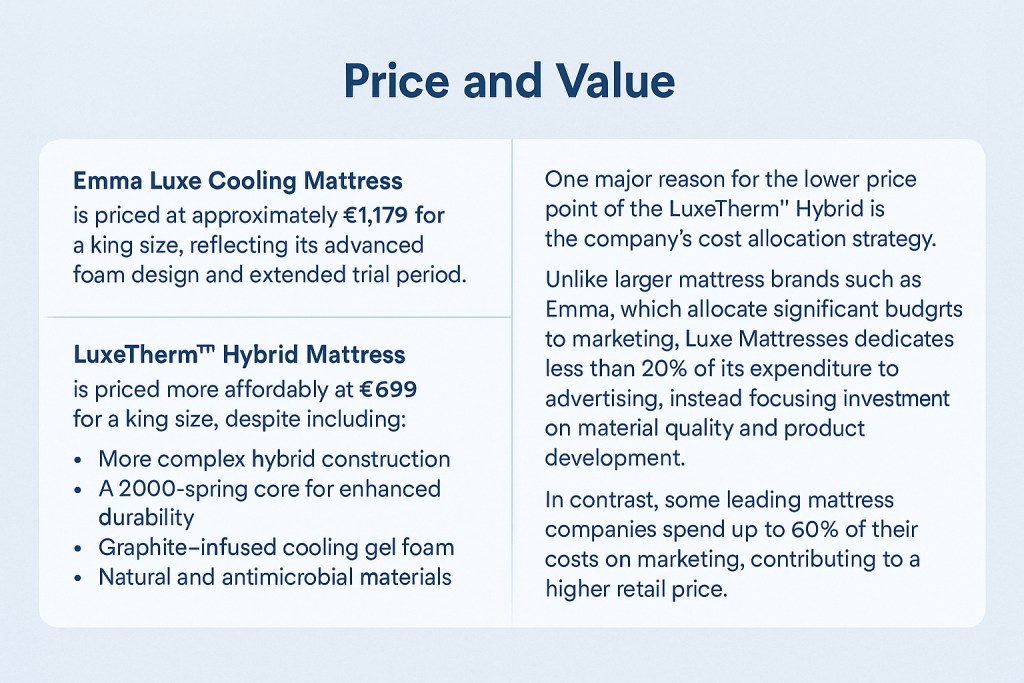
The Emma Luxe Cooling Mattress is priced at approximately £1,179 for a king size, reflecting its advanced foam design and extended trial period.
The LuxeTherm™ Hybrid Mattress is priced more affordably at £699 for a king size, despite including:
More complex hybrid construction
A 2000-spring core for enhanced durability
Graphite-infused cooling gel foam
Natural and antimicrobial materials
One major reason for the lower price point of the LuxeTherm™ Hybrid is the company’s cost allocation strategy. Unlike larger mattress brands such as Emma, which allocate significant budgets to marketing, Luxe Mattresses dedicates less than 20% of its expenditure to advertising, instead focusing investment on material quality and product development. In contrast, some leading mattress companies spend up to 60% of their costs on marketing, contributing to a higher retail price.
Final Analysis
Both the Emma Luxe Cooling Mattress and the LuxeThermâ„¢ Hybrid Mattress are engineered for cool, restorative sleep. The Emma Luxe Cooling Mattress is best suited to those who prefer a denser, all-foam construction with a firmer feel. However, the LuxeThermâ„¢ Hybrid offers a more breathable, natural sleep solution with advanced cooling technologies and supportive hybrid design, at a significantly lower price.
While personal preferences and sleep needs vary, hot sleepers seeking long-term value, pressure relief, and climate control may find the LuxeThermâ„¢ Hybrid to be a more comprehensive and cost-effective solution.