When it comes to getting a good night’s sleep, mattress size matters. Choosing the right mattress isn’t just about comfort it’s about practicality, space efficiency, and ensuring you wake up refreshed and pain-free. In the UK, mattress sizes vary and differ slightly from international standards, particularly those in the US. This article will walk you through the various UK mattress sizes, including their dimensions in centimetres (cm), inches, and feet, helping you select the best fit for your bedroom.
Why Mattress Size Matters
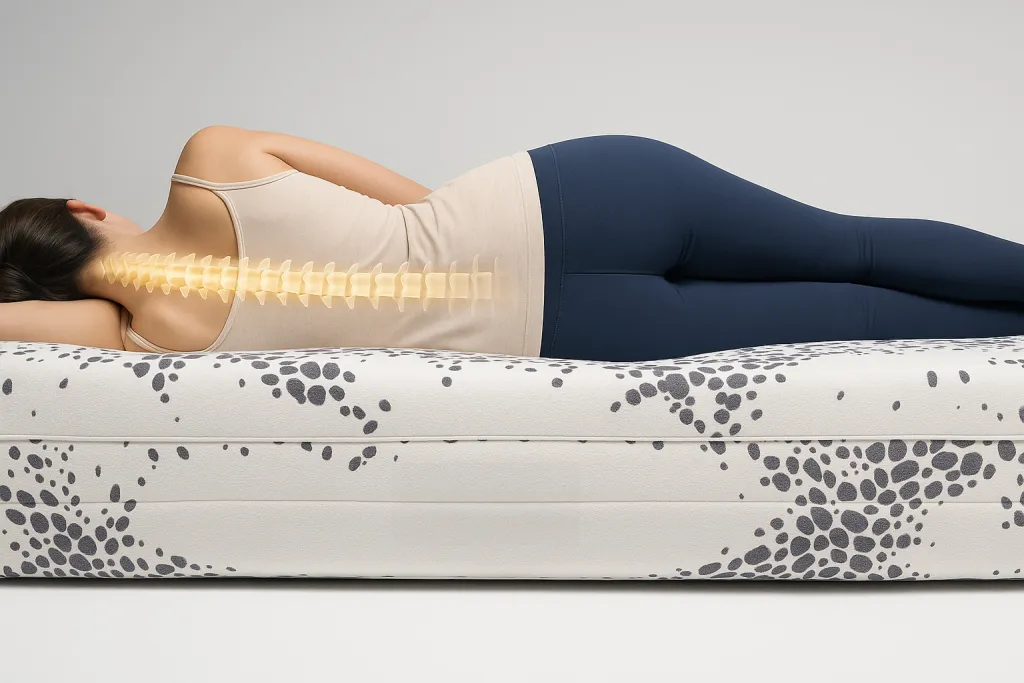
Sleep Quality: A properly sized mattress supports your body, aligns your spine, and reduces motion transfer.
Room Fit: Choosing the right size helps make the best use of your available bedroom space.
Sharing the Bed: Couples or families sharing a bed need ample space to move without disturbing each other.
UK Mattress Sizes Breakdown
Each mattress type serves a unique purpose, from children’s beds to luxurious options for master bedrooms. Here is a breakdown of all the major UK sizes:
1. Small Single Mattress
Dimensions:
75 x 190 cm
2’6” x 6’3”
29.5” x 74.8”
Best For: Young children, compact guest rooms, and narrow spaces. Perfect for bunk beds or small bedrooms.
2. Single Mattress
Dimensions:
90 x 190 cm
3’0” x 6’3”
35.4” x 74.8”
Best For: One adult, teens, or growing children. This standard size fits well in smaller bedrooms and student accommodations.
3. Small Double Mattress (Also Known as Queen in UK)
Dimensions:
120 x 190 cm
4’0” x 6’3”
47.2” x 74.8”
Best For: Individuals who need more space or couples living in small apartments. It’s also a great option for guest rooms.
4. Double Mattress
Dimensions:
135 x 190 cm
4’6” x 6’3”
53.1” x 74.8”
Best For: Couples or single sleepers who prefer extra room. It’s the most common mattress size in UK households.
5. King Size Mattress
Dimensions:
150 x 200 cm
5’0” x 6’6”
59.0” x 78.7”
Best For: Couples who like extra space. Offers a perfect balance between roominess and floor space usage.
6. Euro Queen Mattress
(European Standard)
Dimensions:
160 x 200 cm
5’3” x 6’6”
63” x 78.7”
Best For: Those who want a bit more space than a UK king without jumping to super king. Ideal for IKEA or continental bed frames.
7. Super King Size Mattress
Dimensions:
180 x 200 cm
6’0” x 6’6”
70.9” x 78.7”
Best For: Large bedrooms, families with children or pets who share the bed. Ultimate in space and comfort.
Mattress Size Comparison Table (UK
Mattress Type
Dimensions (CM)
Dimensions (Inches)
Dimensions (Feet & Inches)
Small Single
75 x 190
29.5” x 74.8”
2’6” x 6’3”
Single
90 x 190
35.4” x 74.8”
3’0” x 6’3”
Small Double (Queen)
120 x 190
47.2” x 74.8”
4’0” x 6’3”
Double
135 x 190
53.1” x 74.8”
4’6” x 6’3”
King
150 x 200
59.0” x 78.7”
5’0” x 6’6”
Euro Queen
160 x 200
63” x 78.7”
5’3” x 6’6”
Super King
180 x 200
70.9” x 78.7”
6’0” x 6’6”
Choosing the Right Mattress Size
1. Consider Your Room Size
Ensure you leave space around the bed for movement, furniture, and comfort. Oversized beds can make small rooms feel cramped.
2. Your Height and Build
Taller or larger individuals will find a better night’s rest on a king or super king size.
3. Sleeping Partners
Couples or those sharing with pets/kids should consider at least a king or super king size mattress.
4. Sleep Style
Back, side, and stomach sleepers may require different sleeping surfaces and mattress lengths.
Conclusion: Choosing the Perfect Mattress Size in the UK
Understanding mattress dimensions in centimetres, inches, and feet is essential to making a smart purchase. Whether you need a compact single for a child or a luxurious super king for maximum comfort, there’s a perfect size for everyone. Use the mattress size guide above to match your sleep needs with the correct bed dimensions.
Making the right choice ensures restful sleep, efficient use of space, and an improved bedroom experience overall.
When it comes to improving sleep, there’s no such thing as a one-size-fits-all solution. Each person’s sleep is shaped by unique factors ranging from their daily habits and stress levels to their environment, routine, and physical needs. That’s why personalized sleep assessments or “sleep quizzes” include a wide array of questions designed to uncover the full story behind how you sleep.
The sleep quiz available on our platform is developed using trusted data and methodologies from several leading sleep research authorities. These include:
Each question in the quiz serves a purpose, whether it’s assessing sleep onset, duration, consistency, or how external and internal factors affect your rest. In this article, we’ll explore what these questions are, why they matter, and how your answers help form a tailored snapshot of your sleep health an important step toward better rest and well-being.
Bedtimes and Wake Times: Mapping Your Rhythm
Questions like:
What time do you typically go to bed on weekdays?
What time do you wake up on weekdays?
These determine your chronotype, whether you are naturally a morning person or a night owl. Sleep experts use this to understand whether your biological rhythm aligns with your daily routine. Mismatches between internal clocks and social obligations (like work schedules) can lead to “social jetlag,” which contributes to fatigue, poor focus, and sleep disorders.
The data also helps determine sleep consistency, a crucial factor in sleep quality. Irregular schedules often lead to disturbed REM cycles and trouble falling or staying asleep.
Sleep Duration and Catching Up
How many hours of sleep do you typically get each night?
Do you try to “catch up” on sleep during weekends or days off?
Sleep deprivation can’t be completely offset by weekend lie-ins, but patterns of catch-up sleep suggest chronic sleep debt. These answers help identify whether a person is unknowingly under-rested. Long-term sleep debt is associated with decreased cognitive function, metabolic disorders, and mood instability.
Sleep Latency: How Long It Takes You to Fall Asleep
How long does it usually take you to fall asleep?
This question offers insight into both sleep hygiene and possible underlying stress or discomfort. Sleep latency—the time between getting into bed and falling asleep is considered healthy if it’s under 30 minutes. Longer durations may be linked to screen use, caffeine, anxiety, or physical discomfort such as an unsupportive mattress or poor sleep posture.
Sleep Position: Pressure and Alignment
What is your primary sleeping position?
Whether someone sleeps on their back, side, or stomach dramatically affects pressure distribution and spinal alignment. This helps match individuals with appropriate sleep surfaces. For instance, side sleepers tend to need softer surfaces that relieve pressure on shoulders and hips, while stomach sleepers require firmer surfaces to prevent spinal sagging.
Understanding sleeping position is central to addressing body pain, especially lower back or neck strain.
Sleep Aids and Medication
How often do you use sleep aids or medication to help you sleep?
This helps assess whether sleep quality is natural or artificially supported. Frequent use of aids may suggest chronic insomnia, anxiety, or physical discomfort. It can also point to dependencies or ineffective underlying strategies, especially if sleep quality remains poor even with intervention.
Caffeine and Alcohol Intake
How much caffeine do you consume daily?
How does alcohol consumption affect your sleep?
Both substances are well-known to affect sleep. Caffeine is a stimulant that can reduce melatonin production and delay sleep onset, especially if consumed late in the day. Alcohol, while initially sedating, disrupts REM cycles and increases nighttime waking.
How much time do you spend on screens within 1 hour of bedtime?
This question addresses exposure to blue light, which can delay melatonin secretion. Screen time also tends to stimulate the brain, especially when engaging with interactive content (like scrolling or gaming). Reduced screen exposure correlates with faster sleep onset and better sleep depth.
Environmental Factors
Select any issues with your sleep environment (light, temperature, noise, mattress comfort, etc.)
Environment plays a critical role in how the body settles into sleep. Too much light can suppress melatonin. Noise even subtle, can trigger micro-awakenings. Temperature extremes can cause discomfort that fragments sleep. Mattress discomfort is a frequent complaint that often links back to poor pressure relief or inadequate spinal support.
These insights allow sleep advisors to recommend simple, targeted improvements, like blackout curtains, sound dampening, or material changes in bedding.
Bedtime Routines and Sleep Regularity
Do you have a consistent bedtime routine?
Sleep is a learned behavior, and routine trains the brain to enter rest mode. A regular pattern of winding down (e.g., dimming lights, reducing stimulation, performing hygiene rituals) improves sleep onset and sleep quality. Inconsistent routines may cause delays in falling asleep or fragmented rest.
Dream Recall
How often do you remember your dreams?
While dreams themselves are subjective, dream recall is often a proxy for uninterrupted REM sleep. Those who remember dreams more frequently may be waking at the end of REM cycles. Alternatively, not remembering dreams may suggest sleep that’s too shallow or fragmented.
This helps determine whether sleep is reaching all the necessary stages particularly restorative REM and deep sleep.
Daytime Napping
How often do you take naps during the day?
Napping is often a compensatory behavior for poor sleep at night. Regular napping may indicate sleep fragmentation or disorders like sleep apnea. On the other hand, power naps under 30 minutes can be healthy and restorative, so the key is frequency and duration.
Stress Levels
How would you rate your current stress level?
Chronic stress is one of the top reasons for poor sleep. Elevated cortisol levels can keep the brain alert, reduce melatonin production, and disrupt the sleep-wake cycle. This information helps assess whether physical solutions (like a new mattress) need to be paired with stress-reduction strategies such as mindfulness or changes in bedtime behaviour.
How the Data Comes Together
Each of these questions forms a piece of the puzzle. When analyzed together, they create a holistic profile of the sleeper, incorporating:
This comprehensive analysis allows sleep experts or intelligent algorithms to identify areas for change, recommend tailored solutions, and improve overall sleep hygiene. Whether the intervention is behavioural, environmental, or physical (such as changing mattress type), the goal is always the same: restoring balance to the natural sleep cycle.
Final Thoughts
Understanding sleep means looking beyond surface-level symptoms. It requires examining habits, choices, body needs, and surroundings. The wide range of questions in a sleep quiz might seem excessive at first, but each is essential for drawing accurate insights.
Ultimately, the science of sleep starts with self-awareness, and every answer brings us closer to a better night’s rest. For those seeking even deeper insights, using a reliable sleep calculator can help determine optimal bedtime and wake-up schedules based on your sleep cycles and habits. These tools complement quizzes by turning your data into practical, personalised advice.
Comprehensive Sleep Quiz
Discover your personalized sleep score and get expert recommendations to improve your sleep quality.
This quiz takes about 5-7 minutes to complete.
Why Take This Quiz?
Get a comprehensive analysis of your sleep habits
Receive personalized recommendations from sleep experts
Find the perfect mattress match for your sleep style
Learn science-backed tips to improve your sleep quality
Whether someone struggles to fall asleep, wakes often, or feels unrefreshed in the morning, these data points can help identify patterns that lead to smarter, more personalized solutions.
Ultimately, the science of sleep starts with self-awareness and every answer brings us closer to a better night’s rest.
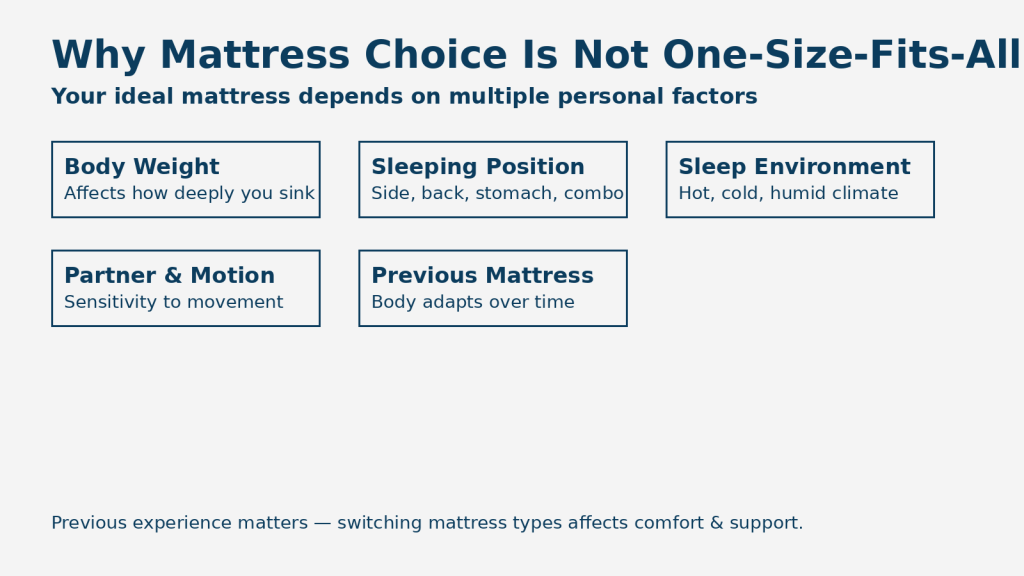
Choosing the best mattress for back pain is not as straightforward as picking the firmest or most expensive option. One of the biggest mistakes people make is assuming that a single type of mattress will work for everyone. In reality, mattress selection is highly personal and depends on multiple factors that most people don’t even consider before making a purchase.
There are several variables involved, including body weight, sleeping position, body temperature, geographical location, previous mattress experience, and whether you sleep alone or with a partner. Even factors like how much you sweat at night or how sensitive you are to motion can significantly affect your choice. All of these elements play a role in determining what truly becomes the best mattress for back pain for an individual.
Why Mattress Choice Is Not One-Size-Fits-All
You cannot generalise mattress suitability because every individual has different sleeping habits and physical requirements. Someone who sleeps on their back in a cold environment will need a completely different mattress compared to someone who sleeps on their side in a warm, humid climate.
For example, your decision should always consider:
Your body weight and how deeply you sink into the mattress
Whether you sleep on your side, back, stomach, or switch positions
Whether you sleep with a partner and how sensitive you are to movement
The type of mattress you have used previously (foam, hybrid, latex, etc.)
Previous experience matters more than most people realise. If someone has always slept on a firm foam mattress, switching directly to a soft hybrid can feel uncomfortable and even worsen back pain initially.
Understanding Back Pain and Mattress Support
When people search for the best mattress for back pain, they often don’t realise that back pain itself varies.
Lower back pain is the most common issue and is usually caused by improper spinal alignment during sleep. This happens when the shoulders remain on the surface of the mattress, but the hips dip too deeply due to uneven weight distribution. As a result, the spine curves unnaturally, creating pressure throughout the night. read more…
This issue can occur regardless of sleeping position, whether you sleep on your back, side, or stomach. The key problem is always the same: lack of proper support.
Upper back pain, on the other hand, is more common in side sleepers. It is typically caused by pressure building up around the shoulders and upper back when the mattress does not allow enough contouring.
How Sleeping Position Affects Mattress Choice
Sleeping position plays a crucial role in determining the best mattress for back pain.
If you are a side sleeper, an extra firm foam mattress may not be the best option. Firm foam mattresses are not flexible and do not allow your shoulders to sink into the mattress. This creates a gap between your shoulders and hips, leading to spinal misalignment and increased pressure.
In such cases, better options include:
Pocket spring mattresses (for flexibility and support)
Hybrid mattresses (for balanced cushioning and support)
Memory foam mattresses (for pressure relief)
Pocket springs are particularly effective because they respond individually to body weight, allowing proper alignment.
If you are a back or stomach sleeper, the situation is different. You generally need a more stable surface that prevents your hips from sinking too much. This is where firmer mattresses, especially high-density foam, can be more effective.
Types of Mattresses for Back Pain
Hybrid Mattress (Best Overall Option)
Hybrid mattresses are often considered the best mattress for back pain because they combine multiple materials to deliver both comfort and support.
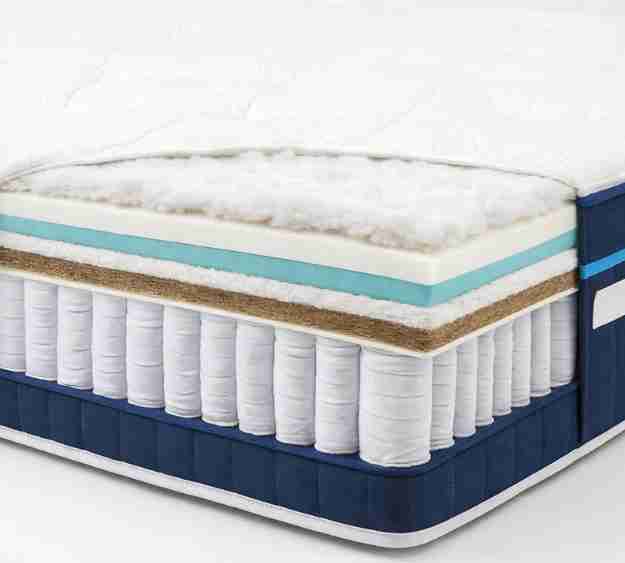
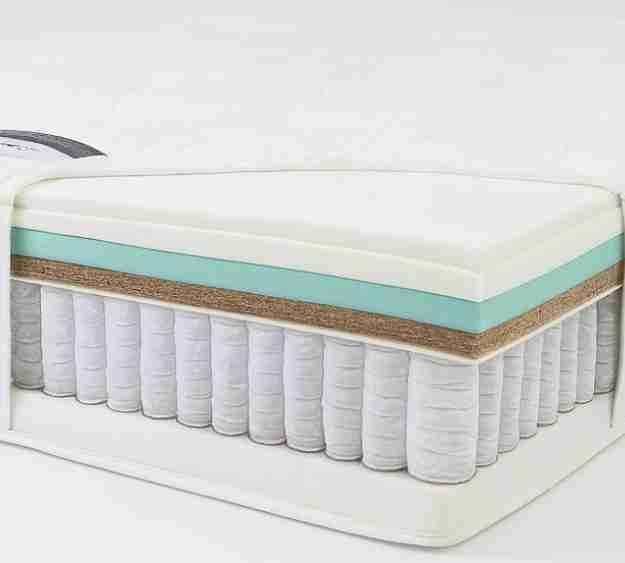
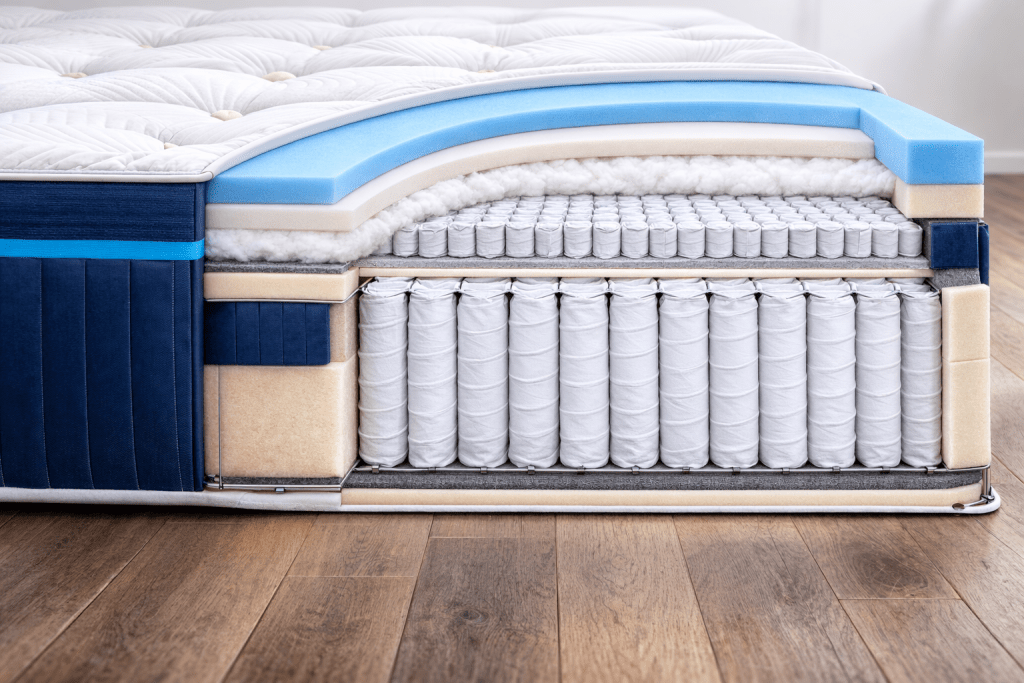
A true hybrid mattress includes:
Pocket springs for structural support
Micro pocket springs for pressure relief
Foam or latex layers for cushioning
Natural materials like wool, cotton, and coconut fibre
Premium hybrid mattresses use dual or even triple spring systems, which significantly improve support, reduce motion transfer, and help regulate temperature.
These mattresses provide a balanced feel, not too soft, not too hard and adapt to different sleeping positions. They also offer strong edge support, especially when built with reinforced or metal framing, making them more durable than standard “mattress-in-a-box” designs.
Memory Foam Mattress
Memory foam mattresses are a popular choice and can work well for combination sleepers, as well as back, stomach, and side sleepers.
They are particularly effective for:
Pressure relief
Body contouring
Reducing discomfort around joints
However, one common drawback is temperature regulation. Memory foam tends to retain heat, which can make it uncomfortable for hot sleepers.
Foam Mattress (Firmest Option)
Foam mattresses made from high-density materials are the firmest option available. These mattresses provide minimal to no sink and do not contour to the body.
The feel is often described as:
“Sleeping on a wooden surface with slight flexibility.”
extra firm foam mattress
These mattresses are commonly preferred in countries like India, Pakistan, and China, where people are more accustomed to harder sleeping surfaces.
However, they may not be suitable for everyone, especially for those who have never used a firm mattress before. It usually takes a few weeks for the body to adjust.
When You Should Switch to a Foam Mattress
If you have already tried multiple pocket spring or hybrid mattresses and still experience back pain, switching to a high-density foam mattress may be necessary.
Initially, it may feel uncomfortable for 3–5 weeks, but once your body adapts, it can significantly improve spinal alignment and reduce long-term back pain.
Best Mattress for Back Pain (Top Recommendations)
Based on experience and practical results, here are the three best options:
For those who need solid, no-sink support, this is one of the best options.
It is made using high-density foam (CP-C48 to CP-C52) and is available in:
Extra firm
Rock hard
The rock hard version provides an ultra-stable surface with no sinking at all. It is ideal for back and stomach sleepers and people who require strict orthopaedic support.
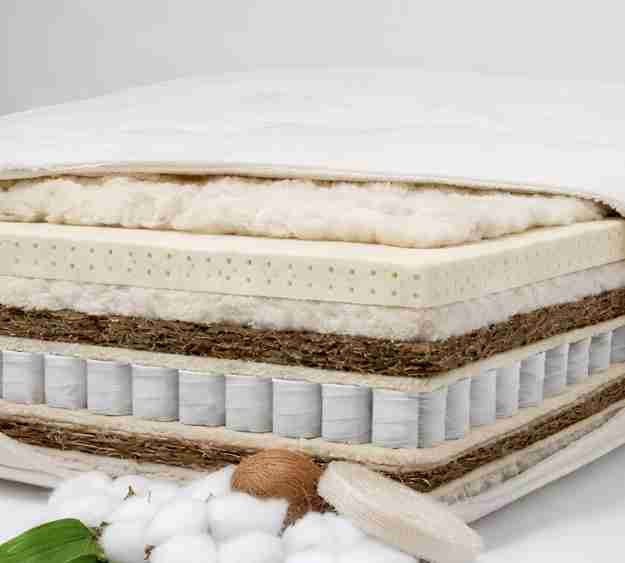
This mattress is made using natural materials such as:
Wool
Cotton
Coconut coir
Micro pocket springs
Endura pocket springs
It offers a more luxurious feel while still maintaining strong support. It is suitable for those who prefer natural materials with a balance of comfort and stability.
Final Advice
If you are searching for the best mattress for back pain, the most important thing to understand is that the right choice depends on your body, your sleeping position, and your previous experience.
Hybrid mattresses like the Luxe Ergo 3400 are generally the safest and most effective option for most people. However, if you need maximum support and sleep on your back or stomach, a high-density foam mattress like the Majestic 11000 can be a better solution.
For those who prefer natural materials with a premium feel, latex-based hybrid mattresses provide an excellent balance.
At the end of the day, the best mattress is the one that keeps your spine aligned, reduces pressure, and allows your body to recover properly during sleep.
1. What is the best mattress for back pain?
The best mattress for back pain is one that keeps your spine in a neutral, straight position while you sleep. For most people, a hybrid mattress Luxe Ergo 3400 works best because it combines support from pocket springs with cushioning from foam or natural layers.
If you need stronger support, especially for back or stomach sleeping, a high-density foam mattress (extra firm or rock hard) can be more effective. For side sleepers, a mattress with more cushioning, such as a hybrid or memory foam, is usually better to reduce pressure on shoulders and hips.
2. Is a firm mattress better for back pain?
A firm mattress can help with back pain, but it is not always the best option for everyone. If the mattress is too soft, your hips may sink, causing poor spinal alignment. However, if it is too firm, especially for side sleepers, it can create pressure points on the shoulders and upper back.
The key is balanced support:
Back and stomach sleepers ? benefit from firmer mattresses Side sleepers ? need some cushioning along with support
3. Why does my back hurt after sleeping?
Back pain after sleeping is usually caused by poor spinal alignment during the night. This can happen when:
The mattress is too soft and your body sinks unevenly The mattress is too firm and doesn’t allow natural contouring Your sleeping position puts pressure on certain areas The mattress has lost support over time
When your spine is not properly aligned, pressure builds up for several hours, leading to stiffness and pain in the morning.
If you’ve ever slept on a mattress that feels too soft, sinks under your weight, or leaves you waking up with back discomfort, you’ve probably wondered:
What is the hardest mattress you can actually buy in the UK?
The answer isn’t as simple as picking the “firmest” option. Many mattresses are marketed as firm, but very few deliver true extra firm support – the kind that keeps your body stable, aligned, and fully supported throughout the night.
In this guide, we’ll break down what the hardest mattress really means, what makes a mattress firm or soft, and which options in the UK genuinely deliver that ultra-supportive feel.
What Does “Hardest Mattress” Actually Mean?
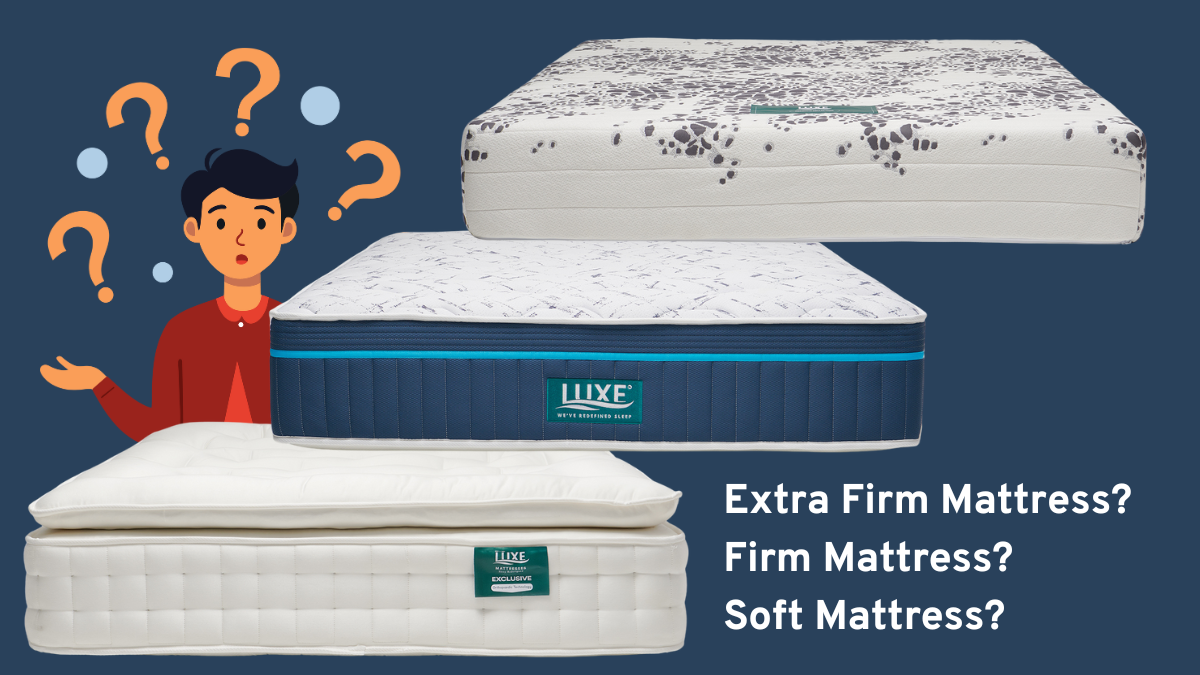
The hardest mattress is typically referred to as an extra firm or ultra firm mattress, usually rated around 9–10 out of 10 on the firmness scale.
But firmness isn’t just a label it’s about how the mattress behaves under your body.
A truly hard mattress:
Has minimal sink
Offers strong resistance to weight
Keeps your body on top of the surface rather than inside it
This is why people often describe it as feeling stable, flat, and highly supportive almost like a structured surface with just enough give to remain comfortable.
What Makes a Mattress Hard or Soft?
Not all mattresses are created equal. The difference between soft, medium, and hard comes down to materials, density, and construction. Foam Density – The Core Factor
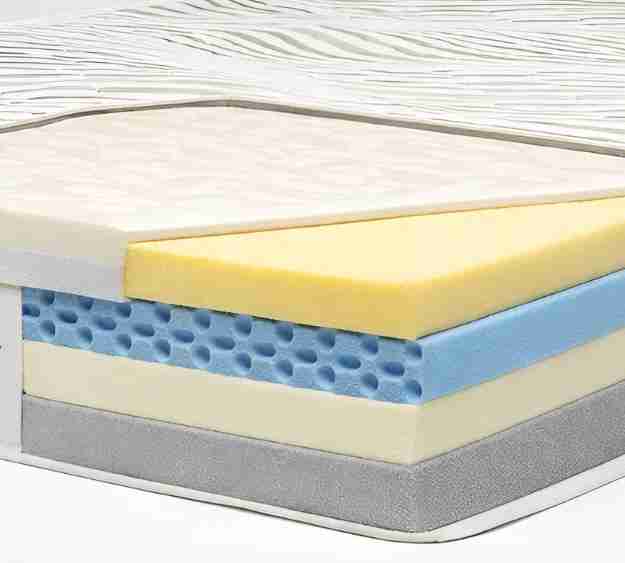
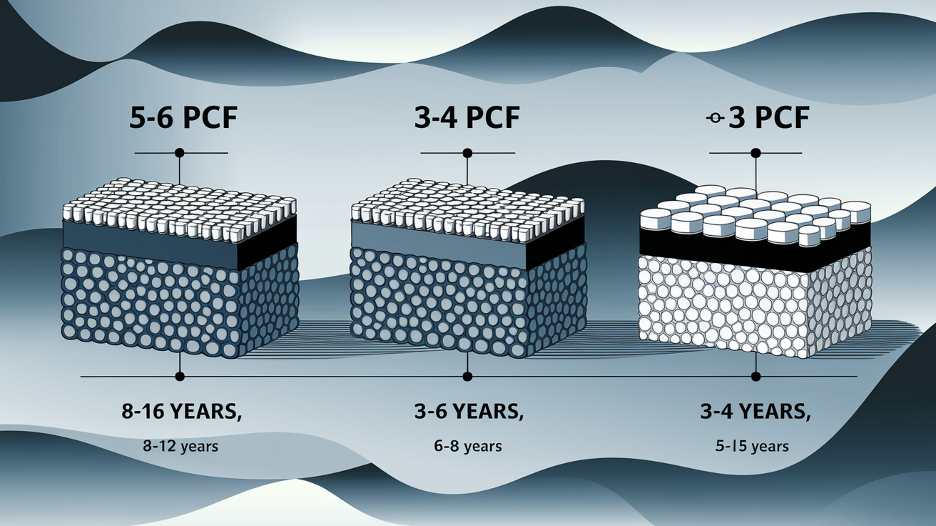
Foam density and degradation
One of the biggest factors is foam density.
Low-density foam ? soft, compresses easily
Medium-density foam ? balanced feel
High-density foam ? firm, durable, and resistant
The hardest mattresses use high-density foam, which doesn’t collapse under weight and maintains its shape over time. This is what creates that “no sinking” feeling.
Layering Structure
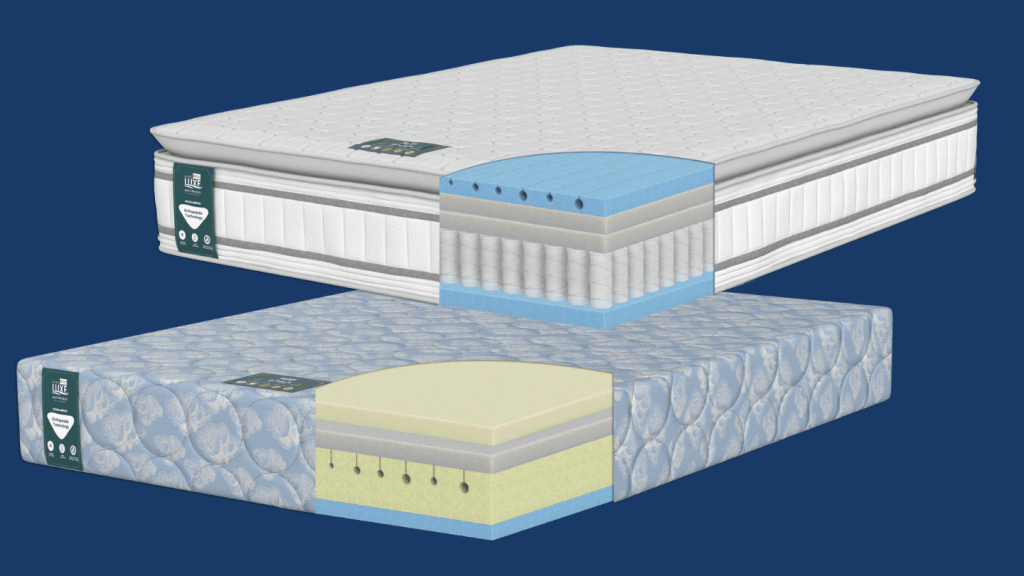
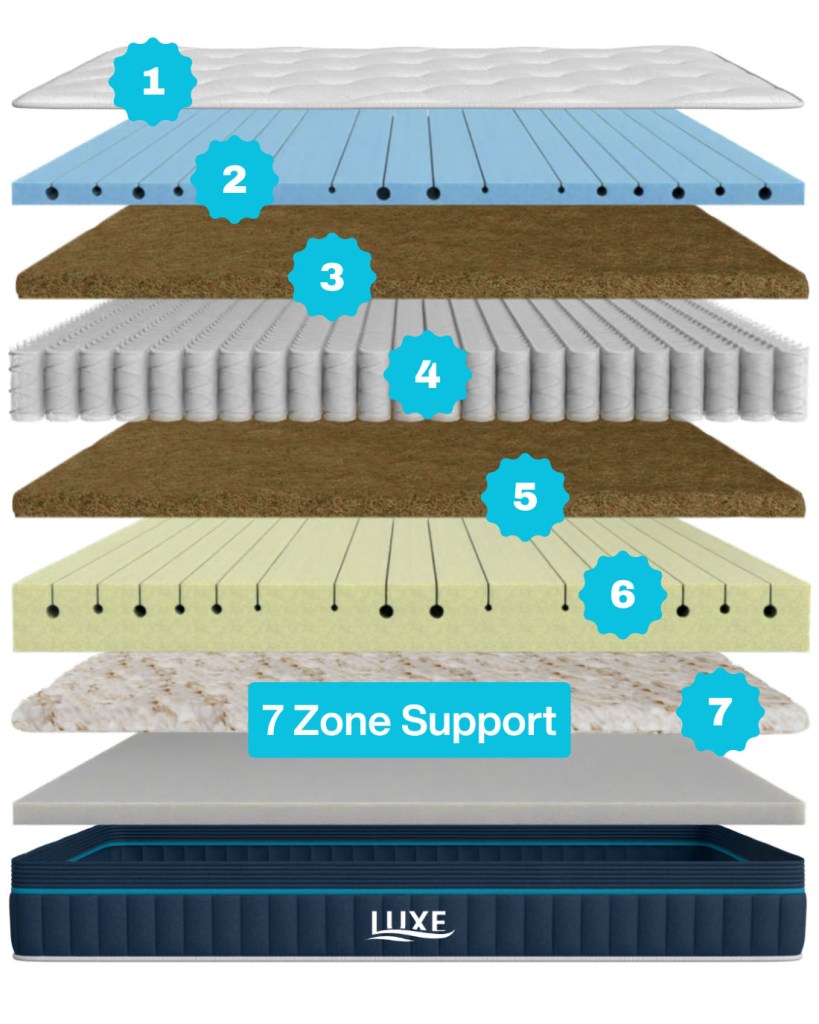
A mattress isn’t just one block it’s built in layers.
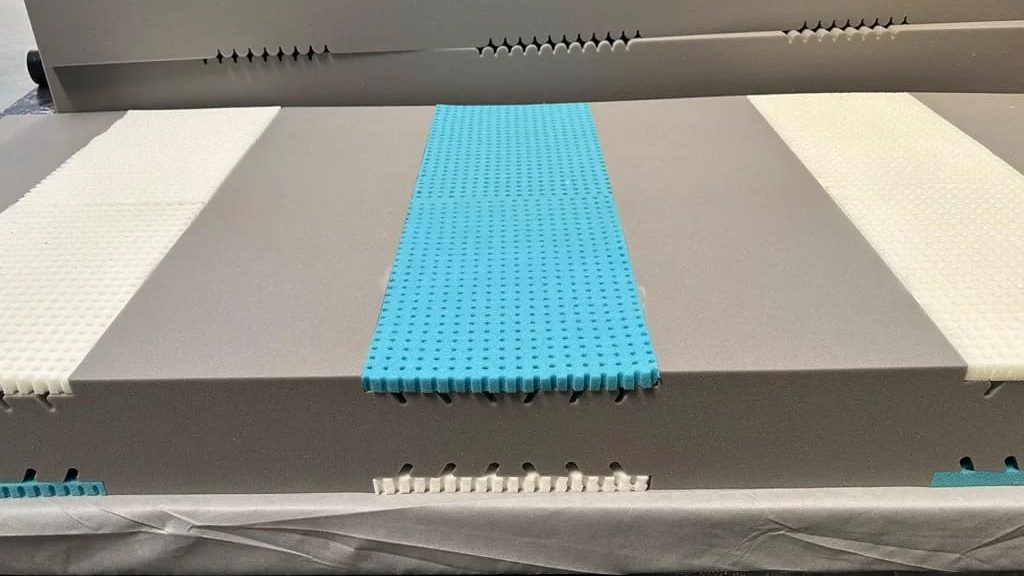
zoning-support-system foam mattress
Top layer ? controls initial feel
Middle layer ? spreads body weight
Core layer ? provides main support
In hard mattresses, the deeper layers are significantly firmer, which stops your body from sinking too far.
Support System
he type of construction also matters:
Foam mattresses ? usually the hardest and most stable
Pocket sprung mattresses ? firm but with slight movement
Hybrid mattresses ? combine firmness with some comfort
If you’re looking for the absolute hardest feel, foam-based designs tend to deliver the most rigid support.
Who Should Choose a Hard Mattress?
Hard mattresses aren’t for everyone, but for the right person, they can be a game changer.
They’re best suited for:
Back sleepers who need spinal support
Stomach sleepers who need a flat surface
Heavier individuals who require stronger resistance
Anyone who dislikes the feeling of sinking
These mattresses help keep your spine aligned and reduce unwanted movement during sleep.
Who Should Avoid It?
If you’re a side sleeper or prefer a softer feel, a hard mattress may feel uncomfortable.
It can create pressure on:
Shoulders
Hips
In these cases, a medium or hybrid option may be better.
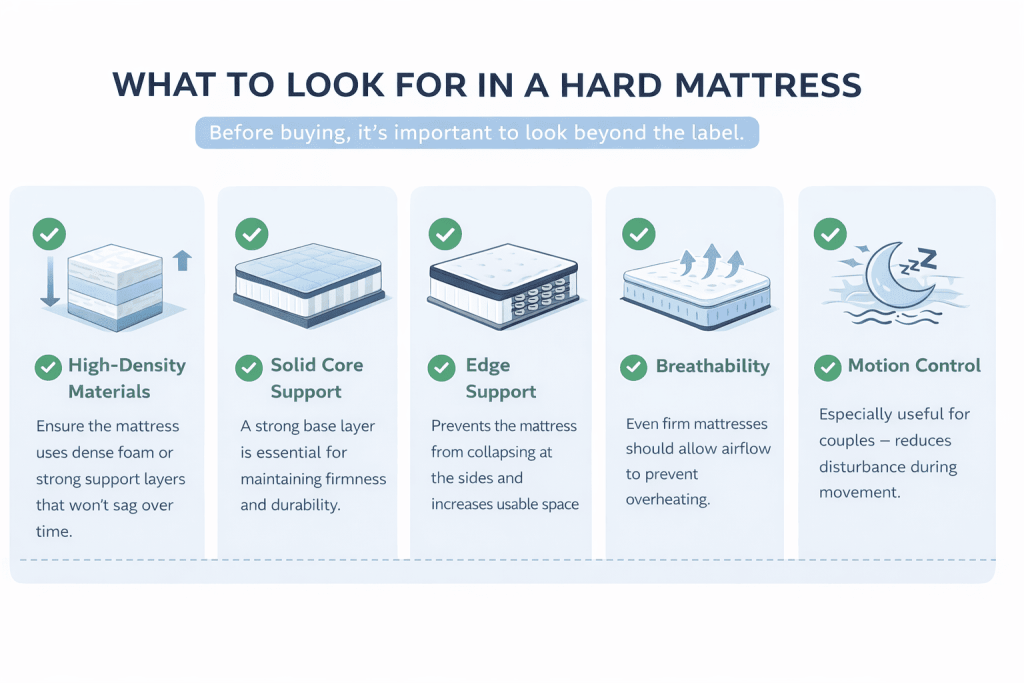
What to Look for in a Hard Mattress
Before buying, it’s important to look beyond the label.
Top Hardest Mattresses in the UK
Here are some of the best options if you’re looking for true firmness:
A good option if you want firmness with a bit of bounce.
Hard Mattress Comparison (Detailed Analysis)
Feature
Majestic 11000
Majestic 9000
Imperial 2000
Type
High-density foam
High-density foam
Pocket spring
Firmness Level
Ultra Firm (10/10)
Extra Firm (9/10)
Firm (7–8/10)
Core Structure
Solid foam block (no springs)
Multi-layer foam
2000 pocket springs
Foam Density Profile
Very high-density foam
High-density layered foam
Mixed comfort layers
Sinkage
Very low (near zero)
Low
Medium
Spinal Alignment
Excellent
Very good
Good
Pressure Relief
Low
Moderate
Higher
Motion Isolation
Excellent
Excellent
Moderate
Edge Support
High
High
Moderate
Breathability
Moderate
Moderate
High
Durability
Very high
High
Medium
Best For
Maximum support, back/stomach sleepers
Firm comfort with slight give
Balanced firmness & airflow
What to Consider Before Buying
Your Sleep Position
Back & stomach ? hard mattress works best
Side ? may need softer cushioning
Your Body Weight
Heavier individuals ? benefit from firm support
Lighter individuals ? may find it too hard
Personal Preference
Some people prefer a flat, structured surface – others prefer softness.
There’s no universal “best,” only what works for your body.
Final Thoughts
The hardest mattress in the UK isn’t just about firmness – it’s about how well it supports your body over time.
If you’re looking for:
Strong support
No sinking
Proper spinal alignment
Then an extra firm mattress like the Majestic 11000 can make a significant difference to your sleep quality.
But like any mattress, the key is choosing one that matches your body, your sleep position, and your comfort preference.
Frequently Asked Questions
What is the hardest mattress?
The hardest mattress is usually an extra firm or ultra firm mattress rated around 9 to 10 on the firmness scale. It provides minimal sink, high resistance, and keeps the body supported on the surface for better spinal alignment.
Is a hard mattress good for back pain?
A hard mattress can help with back pain by keeping the spine in a neutral position and preventing excessive sinking. It is especially suitable for back and stomach sleepers, as well as heavier individuals who need stronger support.
Who should use an extra firm mattress?
Extra firm mattresses are ideal for back sleepers, stomach sleepers, and heavier individuals who require strong support and minimal sink.
Is a hard mattress too firm for side sleepers?
Yes, a hard mattress can feel too firm for side sleepers because it may create pressure on the shoulders and hips. Side sleepers usually benefit more from a medium or medium-firm mattress.
What makes a mattress hard or soft?
Firmness depends on foam density, layer structure, and support system. High-density foam and strong core layers create a firmer feel, while softer materials allow more sink.
Do hard mattresses last longer?
Yes, hard mattresses often last longer because they use high-density materials that resist sagging and maintain their structure over time.
What is the best hard mattress in the UK?
The best hard mattress depends on your needs, but high-density foam mattresses such as the Majestic 11000 are designed to provide maximum firmness, durability, and support.
What should I look for when buying a hard mattress?
Look for high-density materials, strong core support, good edge stability, breathability, and durability for long-term comfort and performance.
Introduction: The Problem with “Firm” Mattresses Today
The term firm mattress has become diluted in the modern sleep industry. If you are searching for an extra firm mattress, many products marketed as “firm” still allow excessive compression under load, leading to spinal misalignment, uneven pressure distribution, and long-term material fatigue.
A true extra firm mattress must achieve three critical outcomes:
Minimal surface deflection under body weight
Controlled compression through layered density
Long-term structural integrity without sagging
The Majestic 11000 has been engineered specifically around these principles, making it fundamentally different from conventional firm mattresses.
Engineering an Extra Firm Mattress: What Actually Matters
To understand why the Majestic 11000 stands out, it’s important to look beyond marketing and focus on material engineering.
Low-density foams (<25 kg/m³) compress easily and lose structure
Medium-density foams (25–35 kg/m³) offer moderate support but degrade over time
High-density foams (35–50+ kg/m³) provide strong resistance to compression and long-term durability
The Majestic 11000 utilises high-density reflex foam in its core, designed to:
Resist deep compression under body weight
Maintain surface firmness across the entire mattress
Prevent long-term sagging and deformation
This is what creates the “low-sink, high-resistance” profile associated with a true hard mattress.
2. Layered Foam Architecture (Graduated Density Design)
Unlike basic foam mattresses, the Majestic 11000 is built using a multi-layered density structure, where each layer performs a specific mechanical function.
? Top Layer: Controlled Comfort Layer
A high-density memory foam layer is used, not for softness, but for:
The Majestic 11000 stands apart because it is designed from an engineering-first perspective, not a marketing one.
By combining:
High-density foam construction
Multi-layer load distribution
Low-sink structural design
…it delivers what most mattresses fail to achieve – true extra firm support with long-term reliability.
1. What is an extra firm mattress?
An extra firm mattress is designed to provide a very stable and supportive sleep surface with minimal sink. Unlike medium or soft mattresses, it keeps your body on top of the mattress rather than allowing it to sink in, helping maintain proper spinal alignment.
2. Who should use an extra firm mattress?
An extra firm mattress is ideal for:
Back sleepers Stomach sleepers Heavier individuals People who prefer a hard, supportive feel
It is especially beneficial for those who need strong support and reduced body sink.
3. Is an extra firm mattress good for back pain?
Yes, an extra firm mattress can help with back pain by keeping the spine in a neutral position and preventing excessive sinking in the lower back area. However, the right level of firmness depends on individual preference and body type.
4. Is an extra firm mattress too hard to sleep on?
For some people, especially side sleepers, an extra firm mattress may feel too hard because it offers very little cushioning. However, for those who prefer a solid and supportive surface, it can feel comfortable and stable.
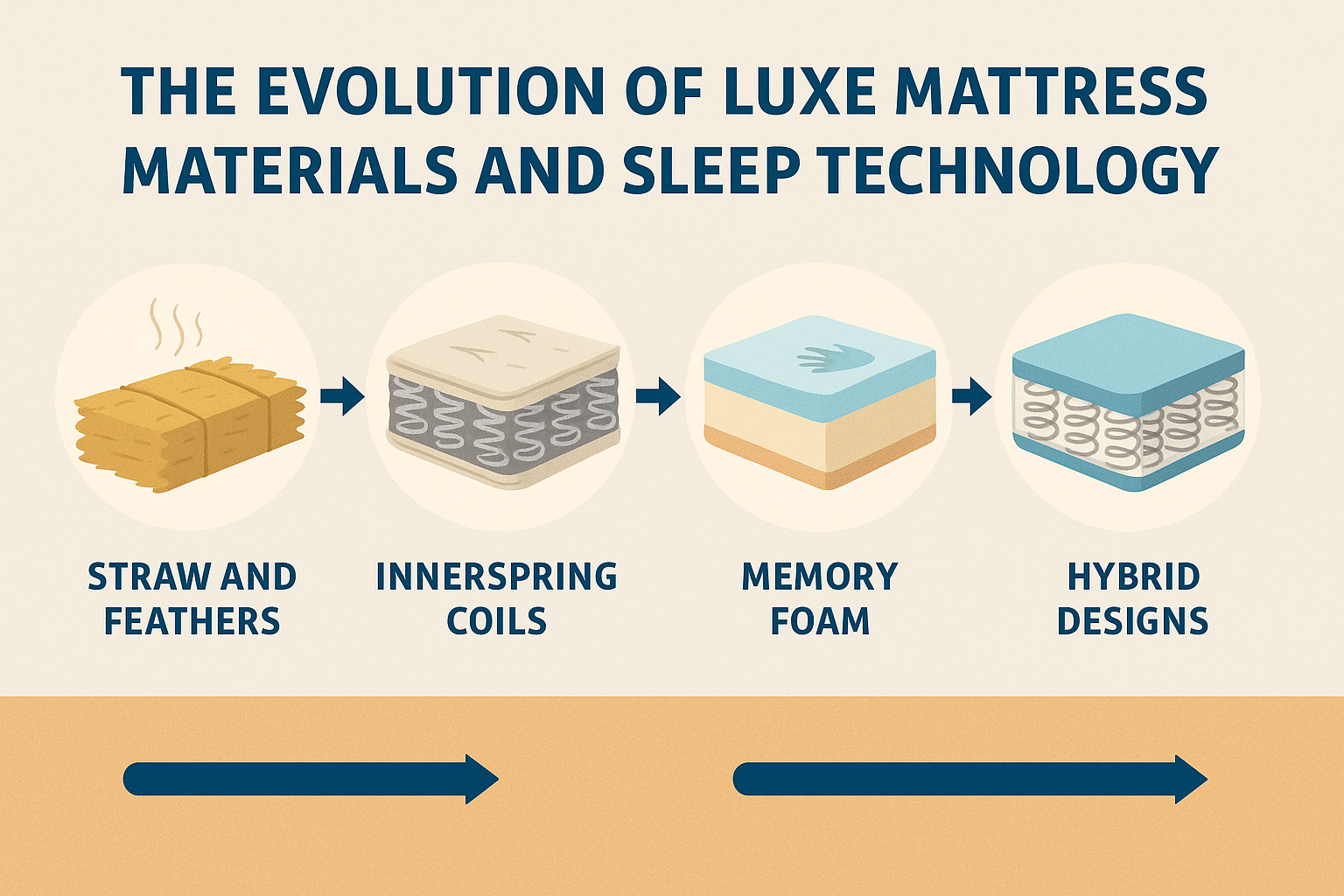
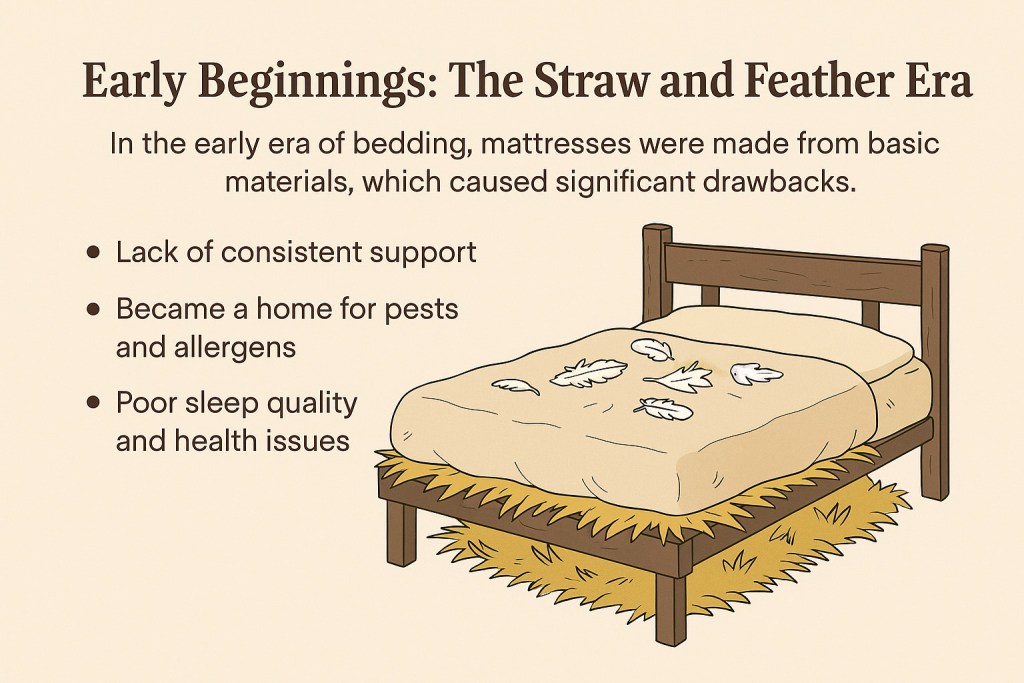
Mattresses have come a long way from their early days. Initially, they were crafted from simple materials, such as straw and feathers. These beds were uncomfortable and provided little support. They also attracted pests, which compromised sleep quality and led to health issues. In the 19th century, innerspring mattresses were introduced.
They were much better, offering more support and durability. Today, technology has brought many improvements. Modern mattresses feature temperature control, enhanced support, and hypoallergenic materials. Brands like Luxe Mattress are leading the way in making beds that help you sleep better and stay healthier. Check out the Evolution of Luxe Mattress Materials and Sleep Technology.
From Basic Beds to Bespoke Comfort: A Historical Overview
Early Beginnings: The Straw and Feather Era
In the early era of bedding, mattresses were made from basic materials, which caused significant drawbacks. Picture beds used natural materials such as straw, feathers, and hey. While suffering from a basic cushion, these beds lack consistent support.
Therefore, getting insufficient sleep leads to various health issues, such as aches and pains while walking. Moreover, organic feeling also becomes a home for pests and allergens. It causes poor indoor air quality and hygiene issues. It also causes poor sleep quality and causes major health issues.
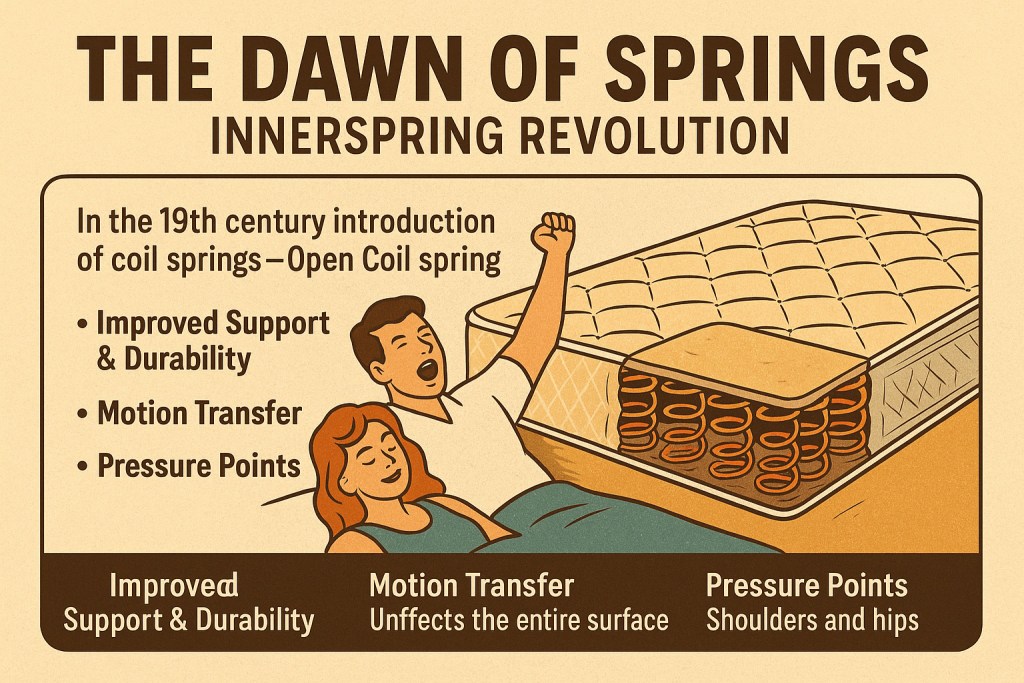
The Dawn of Springs: Innerspring Revolution
The 19th century experienced a significant change in mattress history with the introduction of coil springs. In early design, open coil and Bonnell spring systems were used where the soil was interconnected. The improvements were significant in support and durability. Beds became more comfortable, offering a bouncy feel, and lasted longer than old straw and feather beds. However, the innerspring Mattress has some limitations.
innerspring revolution
However, at that time, an unnoticeable change was made to enhance mattress quality. The interconnected nature of the Mattress meant considerable motion transfer. For example, if one person moved, the entire bed would ripple, causing disturbance for their partner. Additionally, these beds feature pressure-relieving points on the shoulders and hips. Additionally, these mattresses are prone to sagging and lose support over time.
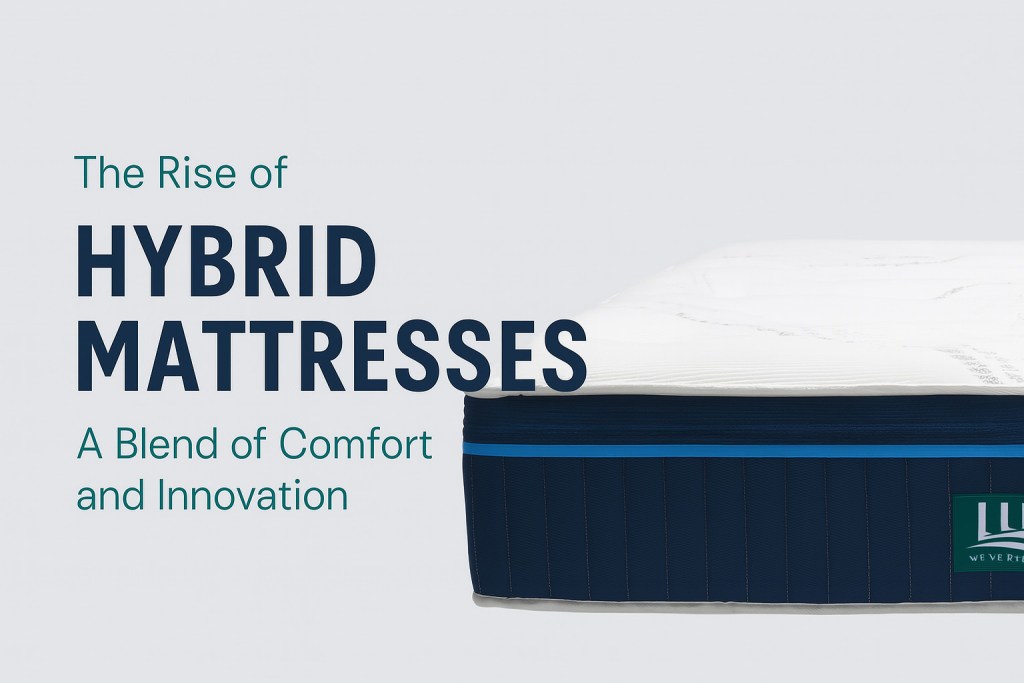
The Rise of Hybrid Mattresses: A Blend of Comfort and Innovation
The evolution of mattress technology reached a major milestone with the introduction of hybrid mattresses, designed to combine the best of both worlds: the support of innerspring coils and the comfort of foam or latex.
Hybrid mattresses often feature individually wrapped coils for better motion isolation, topped with memory foam or natural latex layers for pressure relief and contouring. This structure allows them to adapt to different sleep styles, offering both firm support and plush comfort where needed.
According to the Sleep Foundation, hybrid models are ideal for those who want bounce and breathability without sacrificing cushioning. They’re also better at temperature regulation compared to traditional foam beds, thanks to open-cell foam and enhanced airflow systems.
This design reduces common issues like overheating and motion transfer, making hybrid mattresses a smart choice for couples or combination sleepers who value versatility.
The Modern Standard: Natural and Luxury Mattresses
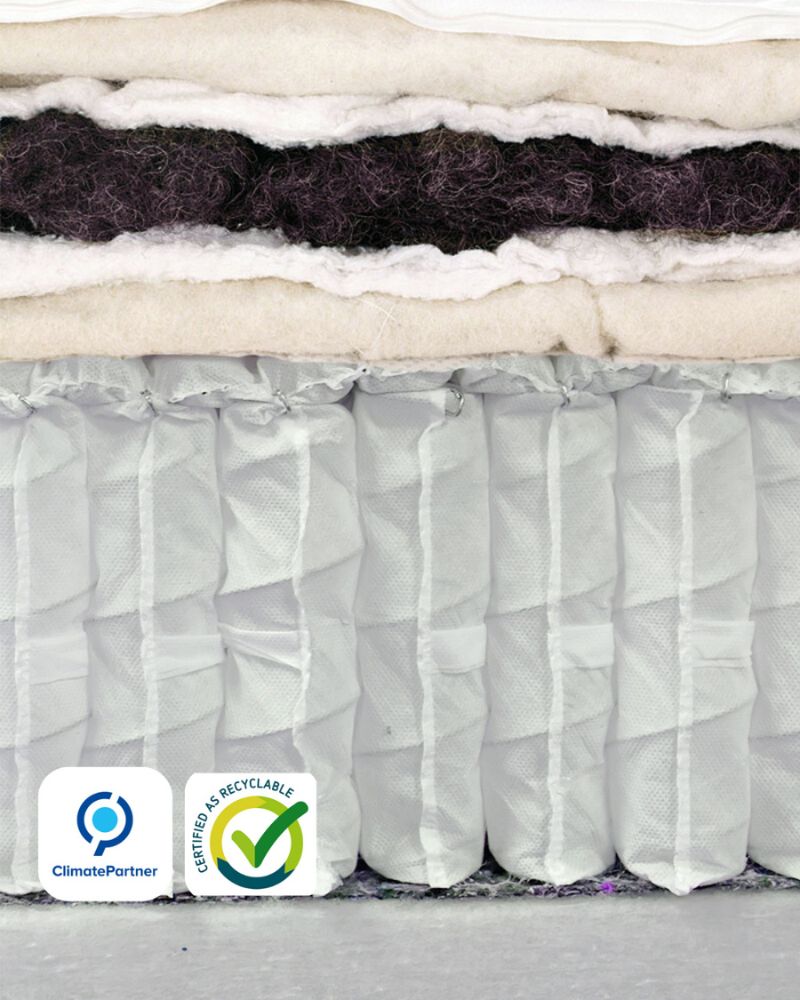
As awareness of health and sustainability grows, many consumers are turning to natural and luxury mattresses crafted with organic, non-toxic materials. These include GOTS-certified cotton, natural latex, organic wool, and bamboo fibres — all of which are hypoallergenic and highly breathable.
Unlike conventional mattresses, natural models are free from synthetic adhesives, polyurethane foam, and flame-retardant chemicals. This makes them an excellent choice for people with asthma, eczema, or chemical sensitivities, and helps improve indoor air quality, as outlined by the EPA.
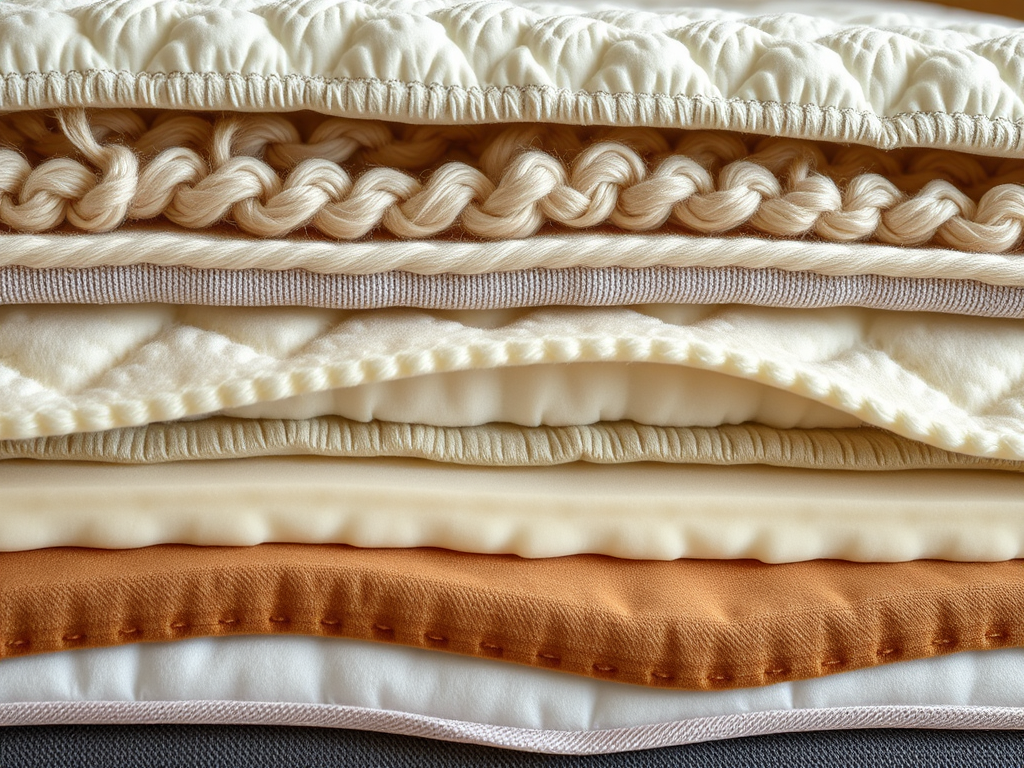
Luxury mattresses also prioritise long-term durability and comfort, often featuring zoned support systems, temperature-regulating layers, and artisan-level craftsmanship. Many are handmade in the UK, offering both high performance and a low environmental footprint.
For those seeking deep, restorative sleep and long-term wellness benefits, a natural luxury mattress is more than a comfort upgrade, it’s a health-conscious investment in everyday living.
Advancements in Sleep Technology and Mattress Features
Temperature Regulation Technologies
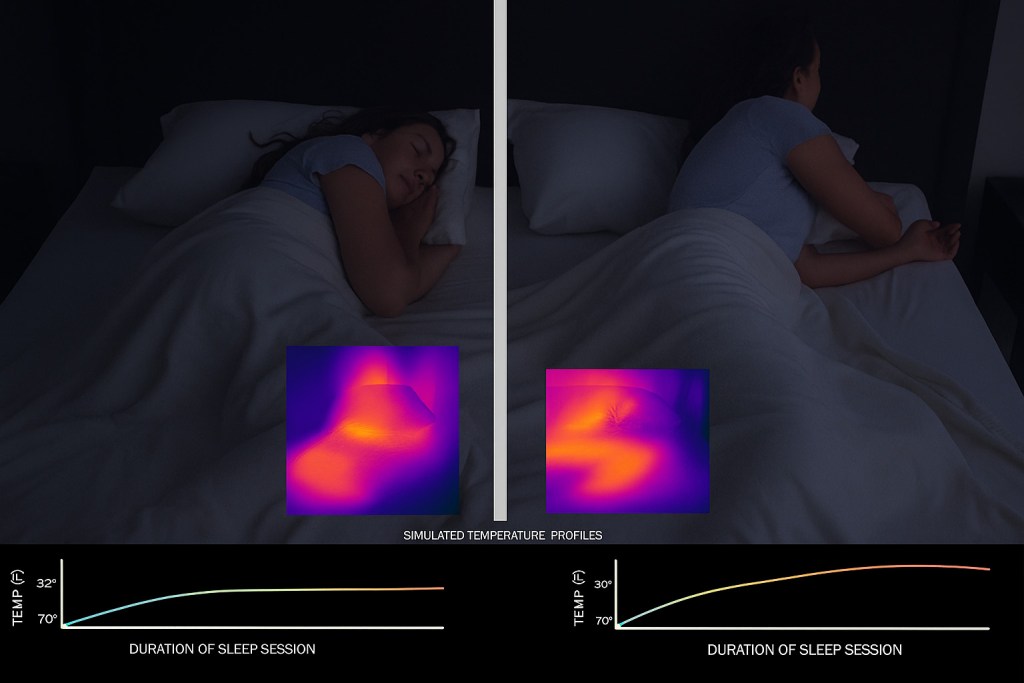
In modern technology, several factors make modern mattresses the most reliable for achieving quality sleep. First on this list is temperature regulation technologies; temperature is big problem for the hot sleepers, people who sweat or get hot when they sleep, to understand that you can ready here. nowadays, mattresses regulate body temperature more effectively by utilising different types of phase change materials (PCMs), which help hot sleepers maintain their body temperature at a comfortable range throughout the night.
For Residents who often have cold nights and tend to be hot in bed, this is a great advancement. Things like gel added to foam and foam with open cells allow the air to flow through. These mattresses are made from breathable fabrics that absorb and release heat.
Zoned Support Systems
The Human Body is not flat, as it needs different supports for every part of the body. Therefore, the Mattress should be firmer under the hips and lower back. Under the shoulder, the Mattress should be softer. This helps to straighten the spine and reduce back pain.
Edge Support Reinforcement
Edge Support Reinforcement makes the Mattress stronger and lasts longer. In this technique, mattresses become stronger from the edges. Many mattresses come up with Hypoallergenic and Antimicrobial Treatments.
This means that these mattresses are free from dust mites, allergens, and germs. With this technique, individuals who suffer from allergies or asthma can breathe and sleep more easily. These advancements in the mattress industry undoubtedly contribute to maintaining a healthy lifestyle and overall well-being.
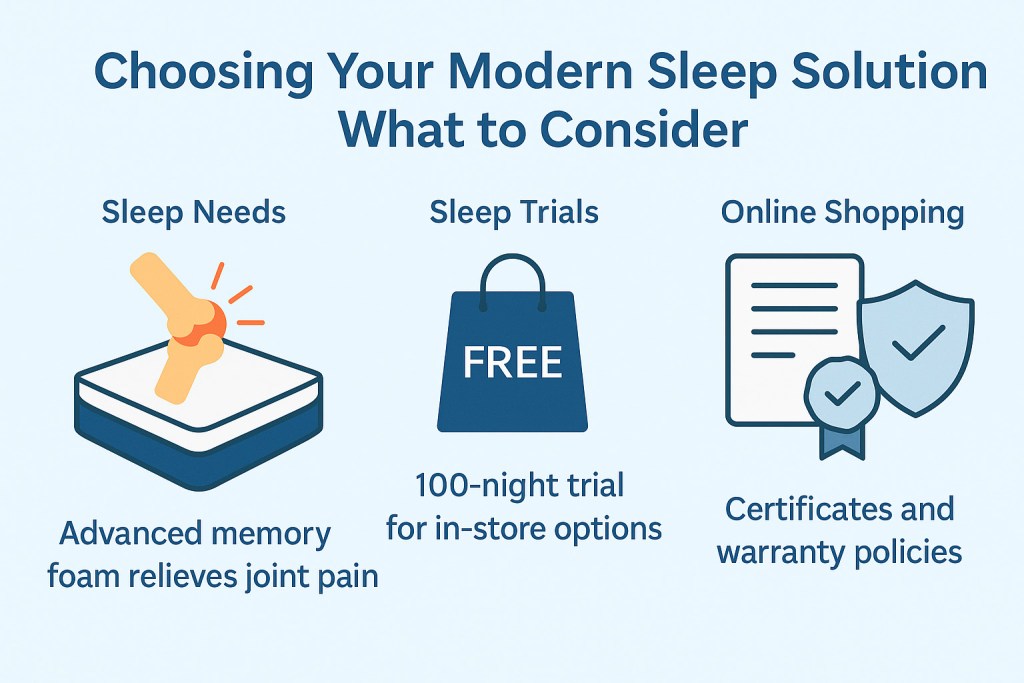
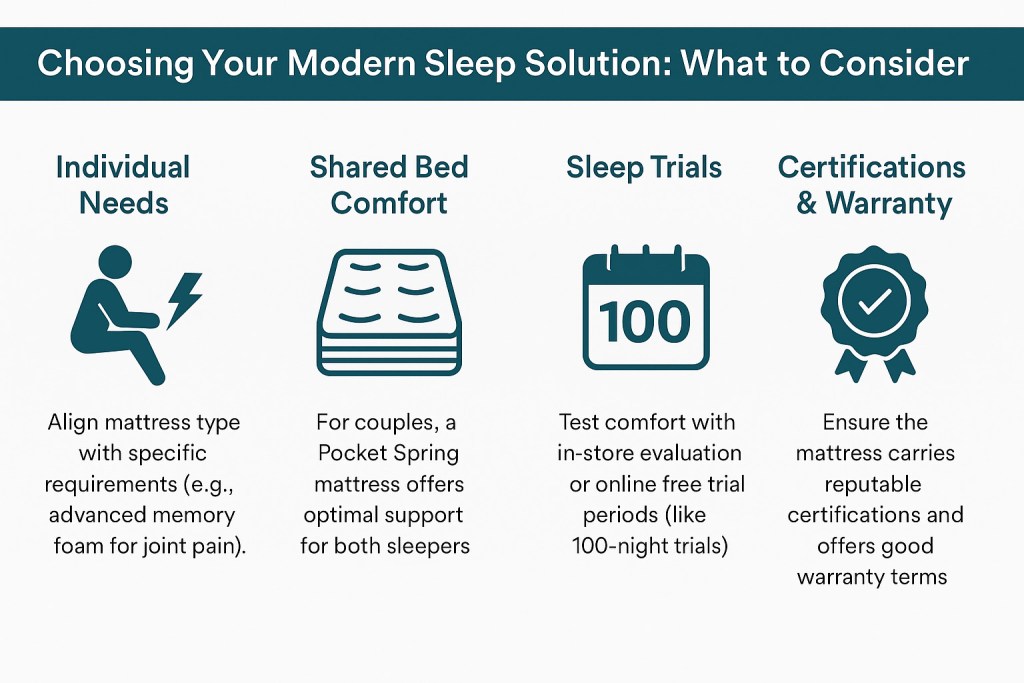
Choosing Your Modern Sleep Solution: What to Consider
In the world of modernisation, where technology plays a part in every aspect of our lives. In the world of Mattresses, modern tools and materials have revolutionised the industry with a vast range of options. So, the role of people or users is to align their needs with that technology. For example, if a person regularly experiences joint pain, they need advanced memory foam to alleviate this pain.
In a shared bed system, a Pocket Spring mattress is ideal for ensuring both users get proper sleep. The second thing is the sleep trial. In-store purchasing allows the user to test the quality of the bed and choose the one that suits them best. For example, Luxe Mattress offers its customers a free 100-night trial. This offer is the best to get high-quality mattresses online.
In online shopping, checking out the certificates and understanding the warranty policies are crucial in getting the best Mattress. These factors must be considered to ensure every step is clear and straightforward when purchasing a mattress that aligns with the customer’s needs. You can decide which Mattress you should buy.
How are Luxe Mattresses staying innovative in sleep technology?
Technology plays a crucial role in every aspect of human life. And it has changed the life of every person. Therefore, it will change the future. In the mattress industry, innovation is a must to ensure the best sleep and rest for humans. Modern technologies, such as personalized climate control and the use of AI in creating better mattresses for sleep, are being developed.
These technologies are going to change the sleep quality of humans. In these developments, Luxe Mattress is a leader in the market, offering its customers the highest quality products. Therefore, Luxe Mattress continually researches and implements modern technologies to make its customers’ lives more productive with its mattresses.
Luxe Mattresses: Pioneering UK Sleep Innovation
Luxe Mattress is mostly focused on the UK market. Therefore, their main focus is on enhancing the lifestyle of UK customers to make it more productive and advanced. Luxe Mattress utilizes modern technology, including temperature control, to mitigate the extreme climate of the UK.
Zero Gravity Foam™
LTX Cooling Gel™
Endora-Spring Technology™
Forticoil Micro Spring™
3D Orthopaedic Technology
Premium Quality Memory Foam Fusions
Advance Motion Isolation
Pure Latex & Organic Materials
As the temperature in the UK is often low, their main focus is to warm the bed to an adjustable temperature. Luxe Mattress also utilizes high-quality materials to alleviate the pain of its customers. Luxe Mattress primarily uses premium materials at value-for-money rates, ensuring a high-quality sleep experience.
FAQs
Are modern mattresses really better for your health than old ones?
Yes. Modern mattresses offer superior support, hygiene, and pressure relief, promoting better spinal alignment and overall health.
How long do modern mattresses with advanced materials typically last?
Modern mattresses, especially high-quality foam, latex, or hybrid types, typically last 7-10 years, sometimes longer with care.
Do smart mattresses improve sleep quality?
Smart mattresses can improve sleep quality through personalised adjustments, temperature control, and providing insightful sleep data for optimisation.
Are natural and organic mattress materials always superior?
Natural and organic materials offer health and environmental benefits. However, quality and comfort also depend on construction and specific material type.
How has mattress technology helped reduce motion transfer?
Technology, such as individually wrapped pocket springs and dense memory foam layers, significantly isolates motion, ensuring undisturbed sleep for partners.
Conclusion
A journey of mattress materials and sleep technology is truly transformative. The first thing to keep in mind is the importance of sophisticated tools to maintain a healthy lifestyle. This means that the Mattress must have mattress technologies, including temperature control, target support, and a hygienic sleep environment.
Luxe Mattress is a prominent name in the field, offering mattresses equipped with modern technology. Visit the Luxe Mattress website to get quality mattresses and get professional feedback and support. Luxe Mattress offers the best product, backed by a 100-night free trial and a 10-year warranty.
If you have ever had a luxury mattress from the UK, you must have contemplated the luxury of sinking into all that comfort. That magic is brought to you by this fascinating blend of traditional craftsmanship and contemporary sleep technology. Traditional treasures, such as wool and cotton, and hand-stitched layers, remain the core of high-end mattresses. But today’s sleep solutions also incorporate the latest innovations to enhance support, regulate temperature, and correct spinal alignment.
So what exactly elevates the best luxury mattress in the UK from merely sound quality and old-world craftsmanship into a modern-day performer of that level? Let’s learn about it.
1. The Heritage of Handcrafted Quality
Tradition still counts. British mattresses take pride in their hand-tufting, use of natural materials, and the craftsmanship of skilled workers. Brands that are true to traditional production methods utilise techniques passed down from one generation to the next, ensuring both the longevity and integrity of the product.
at Luxe Mattresses, our natural mattress collection upholds these standards with organic latex cores, hand-stitched covers, and fillings that are completely free of chemicals. The result is a mattress that not only respects but also respects environmental and health standards.
According to the NHS, natural fibres, such as wool and cotton, allow the skin to breathe while also promoting hygiene, a double win for a good night’s sleep.
2. Smart Foam and Zoned Support Systems
Modern materials have given rise to zoned support layers and high-resilience foam technology that can mold themselves precisely to the user’s shape. Unlike more conventional uniformly dense cores, zoning systems have several layers of differing firmness. This creates a sleeping surface that mimics natural variations in density, matching the needs of different parts of the human body: soft for the shoulders and firmer in the hip and lumbar areas.
Many of our luxury firm mattresses feature such zoning systems. With spinal alignment, pain, and pressure points drop away. The Sleep Foundation also noted this, added on the left, which pointed out that mattress Zoning is essential for good sleeping posture. Indeed, high-density memory foam models have emerged, combining the increased responsiveness and reduced heat retention of newer technologies with a traditional sense of firmness. It’s a win-win situation for everyone!
3. Modern Elements Teamed with Traditional Natural Materials:
Today’s top luxury mattresses in the UK combine eco-friendly components with traditional materials for unparalleled comfort and sustainability. Here are some major inventions:
Graphite-induced foam: A contemporary addition to heat rolls, body-to-fit sleep positions and softness which makes for good sleeping conditions
Latex hybrids: Organic latex has all the natural bounce and breathability, while modern foams give pressure relief.
Eco-friendly mattress materials: Organic wool is a naturally flame-retardant, hypoallergenic material with temperature control, and it is widely used in our natural mattress line.
By combining traditional natural resources with state-of-the-art technology, these mattresses provide lasting comfort without the use of artificial chemicals or allergens.
4. Temperature-Regulated Sleep Technology
Regulating the temperature at which one sleeps is a significant innovation in contemporary luxury beds. Although wool and cotton are both naturally cool materials, this has been taken further by new developments such as:
Phase Change Materials (PCMs): These fabrics respond to body temperature in real-time, absorbing heat when you’re hot and releasing it to keep you cool for comfort.
Open-cell foam and perforated cores: These two features of air movement are valuable to British consumers experiencing night sweats or women undergoing hormonal changes.
Cooler environments help people to sleep more deeply, ‘says Harvard Health.’ This is what our technology-enhanced natural mattresses provide.
5. Easy Adjustment Layers plus Custom Configurations for Every Customer
An increasingly popular trend in luxury mattress design is customizability, which caters to modern demands while maintaining a high level of comfort. Whether you want a mattress with split firmness options for couples or to add a pillow top at a later date, modular mattresses are a necessity in high-end sleep technology today.
Many models now feature:
Options for dual-zone firmness (handy when two different people share the same bed)
Ergonomic side decks (for even better edge support)
The fine-tuning of the mattress over time will better cater to your health, weight, or sleep preferences.
6. Eco-Certification: A New Face on Luxury.
To today’s buyers, nothing is more out of reach than the mere price tag; what they desire is sustainable materials, ethical sourcing, and low chemical emissions. For the finest luxury mattresses in the UK, they must be certified green by organizations such as OEKO-TEX®, GOTS, or CertiPUR-US®.
At LuxeMattresses, our priorities are that our mattresses contain:
100% natural latex
Organic cotton ticking
Adhesives and treatments with zero VOCs.
This not only leads to cleaner indoor air but also harmonizes with the current UK trend toward eco-conscious living.
FAQs
Are modern high-end mattresses still primarily handmade?
Yes. A high-grade luxury mattress will still incorporate elements of hand-tufting, stitching, and traditional manufacturing although these are combined with technological materials and zoned cores designed to perform more effectively.
How can I determine if a luxury mattress is temperature-regulated?
Look for materials such as organic wool, gel-infused foam, or phase-change fabric covers. These features can help retain a stable sleep temperature.
Conclusion
The modern “luxury mattress” vibe? It doesn’t take itself too seriously and certainly isn’t blindly “breaking through.” It integrates conventional handicraft and modern technology to benefit sleep in the UK on all fronts.
Shopping for the best luxury mattress in the UK? Look for these design features:
Top-grade natural materials
Zoned ergonomics throughout
Competitive climate control
Accredited environmental responsibility
Sustainably made
At Luxe Mattresses UK, our carefully selected range of natural and hybrid luxury mattresses meets these exact criteria. It’s where heritage meets high tech!
For those seeking to future-proof their sleep with the comfort of tradition and the precision offered by modern science, explore our stores now and redefine your sleep experience today.
Choosing the right mattress plays a crucial role in your overall health and sleep quality. That’s why it’s important to understand how to choose the right firmness for your mattress. With so many mattress types available such as memory foam, hybrid, innerspring, and organic it can understandably feel overwhelming to find the one that truly suits your needs.
To help you navigate this decision, this guide will walk you through the essential factors to consider when buying a mattress. Also, we’ll help you identify the ideal type based on your sleep style and body type. Finally, we’ll answer some of the most common questions to ensure you’re fully informed and confident in your choice.
Why the Right Mattress Matters for Your Sleep Health
Smart Mattress Quiz
Find your perfect mattress match with our personalized recommendation system.
Based on your sleep style, health needs, and comfort preferences.
Why Take This Quiz?
Get tailored mattress recommendations for your specific needs
Save time researching – we’ve done the analysis for you
Compare mattresses that match your sleep style and budget
Understand which mattress features matter for your comfort
A high-quality mattress does more than just provide a comfortable surface to sleep on – it supports your spine, reduces pressure points, and improves your sleep posture. On the flip side, the wrong mattress can lead to back and neck pain, interrupted sleep, and daytime fatigue. For this reason, investing in a mattress that suits your body type and preferred sleeping position is essential for both your physical and mental well-being. Ultimately, choosing the right mattress can make a significant difference in how you feel each day.
Key Factors to Consider When Choosing a Mattress
When shopping for the perfect mattress, focus on these three main factors:
1. Firmness Level
Mattress firmness is subjective but should align with your body weight and sleep position. Firmness is typically rated on a scale from 1 (very soft) to 10 (very firm).
Soft (1–4): Best for light side sleepers.
Medium (5–7): Ideal for most sleepers; offers a balance of support and comfort.
Firm (8–10): Recommended for back and stomach sleepers or heavier individuals.
2. Mattress Construction
Each mattress type offers different benefits:
Memory Foam: Conforms to your body and relieves pressure points.
Latex: Naturally breathable and responsive with a cooler surface.
Innerspring: Traditional coil support with added bounce and airflow.
Hybrid: Combines foam and springs for balanced support and comfort.
3. Support and Durability
A supportive mattress maintains spinal alignment and prevents sagging over time. Heavier individuals often benefit from firmer, more durable mattresses like hybrids or innersprings, while lightweight sleepers may prefer softer options.
A higher price doesn’t always mean better quality. Focus on:
Material quality
Trial period and return policy
Warranty coverage
Many affordable mattresses offer excellent value without the premium price tag. Look for brands with transparent policies and verified customer reviews.
Final Thoughts
Choosing the perfect mattress is a personal decision that depends on your sleep habits, body type, and comfort preferences. Whether you’re looking for pressure relief, temperature control, or motion isolation, there’s a mattress out there that fits your needs. Use this guide to narrow down your options and invest in the best mattress for a healthier, deeper night’s sleep.
FAQs
How do I know what mattress firmness is right for me?
The right firmness depends on your sleep position and body weight. Side sleepers often prefer soft to medium, while back and stomach sleepers do better with medium-firm to firm mattresses.
Is a hybrid mattress better than memory foam?
Hybrid mattresses offer an ideal balance of support and contouring. At Luxe Mattress, we use a combination of Pocket Springs and Micro-springs in our hybrid designs, which enhance motion isolation and provide targeted support for pressure points. If you’re looking for a mattress that offers bounce, breathability, and pressure relief, a hybrid is often a better choice than pure memory foam.
How long should I try a mattress before deciding?
Ideally, you should test it for at least 30 nights. Many online brands, including Luxe Mattresses, offer a 100-night trial.
Can a mattress help with back pain?
Yes. A supportive, medium-firm mattress can align your spine and reduce pressure points, which often helps alleviate back pain.
What is the best mattress for side sleepers?
Medium-soft to medium-firm mattresses that cushion pressure points and support spine alignment.
How do I know if my mattress is too firm or too soft?
f you wake up with pain or pressure in your shoulders, hips, or lower back, your mattress may not be the right firmness for your body.
Can I test a mattress before buying?
Yes, you can test a mattress before buying. You can also visit in-store to test any mattress for 10–15 minutes in your usual sleep position. Plus, many models come with a 100-night trial for added peace of mind.
What mattress is best for couples with different sleep preferences?
Medium-firm hybrid mattresses with motion isolation offer the ideal balance of comfort and support, especially for couples or light sleepers. Our layered design featuring Zero Gravity Foam, micro-springs, and base foam reduces motion transfer by up to 95%, ensuring an undisturbed night’s sleep.
Creating the ideal bedroom starts with proper planning and accurate measurements. Measuring your room for a super king size mattress ensures that your bed fits perfectly without overwhelming the space. Since a super king mattress offers maximum comfort and luxury, it also requires enough room for movement, furniture, and a balanced layout.
By understanding your room dimensions and visualizing the placement, you can design a spacious, functional, and relaxing sleep environment.
Understanding Super King Size Mattresses
A super king size mattress is the epitome of luxury in the realm of sleep. Measuring approximately 180 cm by 200 cm (or 72 inches by 78 inches), these mattresses offer ample space for couples and even families who co-sleep. The generous dimensions mean that each person has plenty of space to move freely throughout the night, reducing disturbances from tossing and turning. This size is especially beneficial for taller individuals or those who simply relish the idea of sprawling out in bed.
Before making a purchase, it’s important to understand that a super king size mattress isn’t just a one-size-fits-all solution. There are various types of super king mattresses available, including memory foam, latex, hybrid, and innerspring. Each type offers different levels of support, firmness, and comfort. Additionally, super king size mattresses come in different thicknesses, which can affect their overall height and the type of bedding that will fit properly.
Investing in a super king size mattress is a commitment to both comfort and space. Therefore, it’s crucial to ensure that your bedroom can accommodate such a large piece of furniture. This involves not just fitting the mattress itself but also considering the bed frame, surrounding furniture, and walking space. Proper measurement and planning are key to making the most of this luxurious addition to your home.
Importance of Accurate Room Measurement
Accurate room measurement is vital when preparing for a super king size mattress. This process is more than just ensuring the mattress fits; it’s about creating a harmonious and functional bedroom layout. A mattress that’s too large for the space can make the room feel cramped and claustrophobic, while one that’s too small may leave the room feeling empty and unbalanced. Precise measurements help in striking the right balance.
Another critical reason for accurate measurement is to avoid potential logistical issues. Imagine purchasing a super king size mattress only to find out it doesn’t fit through your doorways, hallways, or staircase. Such scenarios can lead to unnecessary stress, additional costs, and even damage to your new mattress or home. By measuring accurately, you can ensure a smooth delivery and installation process.
Accurate room measurement also plays a role in determining the placement of other bedroom furniture. You’ll want to ensure there’s enough space for nightstands, dressers, and any other pieces you plan to include in your bedroom. Proper planning can enhance the overall aesthetic and functionality of your space, making it a true sanctuary for rest and relaxation.
Tools Needed for Measuring Your Room
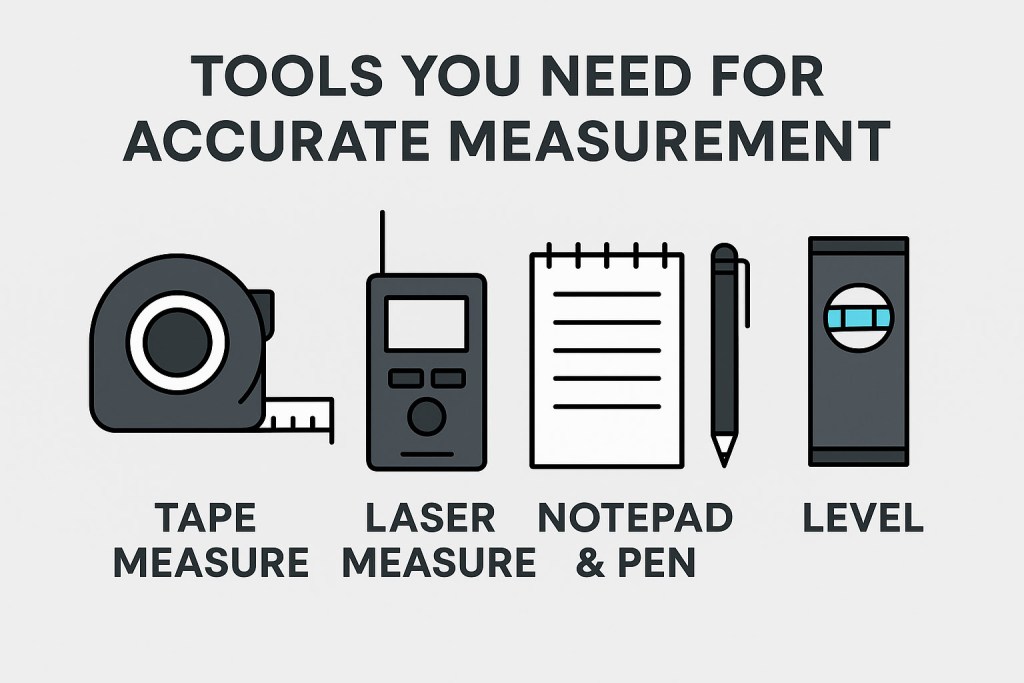
Before you begin measuring your room, gather the necessary tools to ensure precision and efficiency. A tape measure is the most essential tool for this task. Opt for a sturdy, retractable tape measure that’s at least 25 feet long to accommodate larger spaces. A laser measure can also be useful for getting quick and accurate measurements, especially in larger rooms.
A notepad and pen are indispensable for recording your measurements. It’s helpful to create a rough sketch of your room layout and note down the dimensions as you go. This visual aid can make it easier to plan and visualize the placement of your super king size mattress and other furniture. Additionally, a smartphone or digital camera can be useful for taking reference photos of your room and its dimensions.
Don’t forget a level tool, especially if your room has sloped ceilings or uneven floors. Ensuring that your measurements account for any irregularities will help you achieve a more accurate fit. Having these tools on hand will streamline the measuring process and help you avoid any errors that could impact your room’s layout and functionality.
Step-by-Step Guide to Measuring Your Room
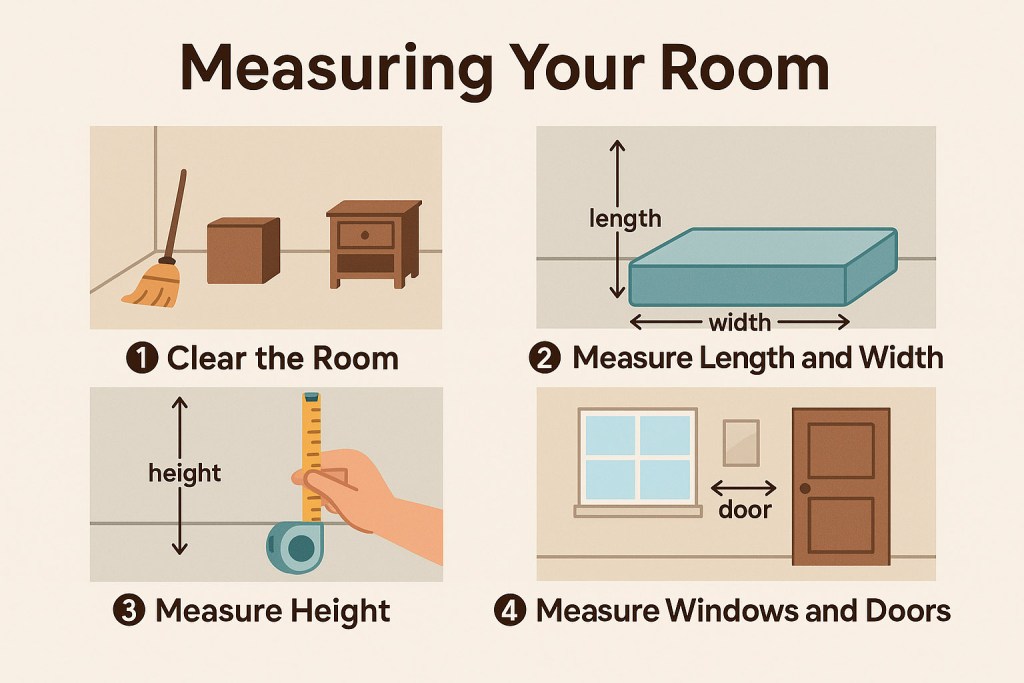
Begin by measuring the length and width of your room. Start from one corner and extend your tape measure to the opposite corner, ensuring it’s straight and taut. Record these measurements accurately, as they’ll serve as the foundation for determining if your super king size mattress will fit. Repeat this process for the other dimensions of your room, including any alcoves or recesses.
Next, measure the height of your room. This is particularly important if you plan to have a tall bed frame or headboard. Measure from the floor to the ceiling at several points around the room to account for any variations. Note these measurements, as they’ll help you choose a bed frame that fits well within your space.
After measuring the main dimensions, measure the doorways, windows, and any other architectural features that could impact the placement of your mattress. Ensure you have enough clearance for the mattress to be maneuvered into the room. This includes measuring the width and height of door frames, hallway widths, and staircase dimensions. These measurements will help you avoid any unexpected challenges during the delivery and setup of your super king size mattress.
Factors to Consider Beyond Mattress Size
While the size of the mattress is a major consideration, other factors can significantly impact the overall fit and feel of your bedroom. The bed frame, for instance, can add substantial dimensions to the mattress. Consider the style and size of the bed frame, including any additional features like headboards, footboards, or storage drawers. These elements can affect how much space is left around the bed for movement and other furniture.
The height of the mattress and bed frame combined is another critical factor. A higher bed might require a step stool for comfort, especially for shorter individuals or those with mobility issues. It’s also essential to consider the thickness of the mattress itself, as a thicker mattress will raise the overall height of the bed. Ensure that the combined height is comfortable for getting in and out of bed.
Additionally, think about the placement of other furniture in your bedroom. Nightstands, dressers, and wardrobes all need to be factored into your room’s layout. Ensure there’s adequate space around the bed for these items and that they don’t obstruct movement or create a cramped environment. Proper planning and consideration of these factors will help you create a balanced and functional bedroom.
Common Mistakes to Avoid When Measuring
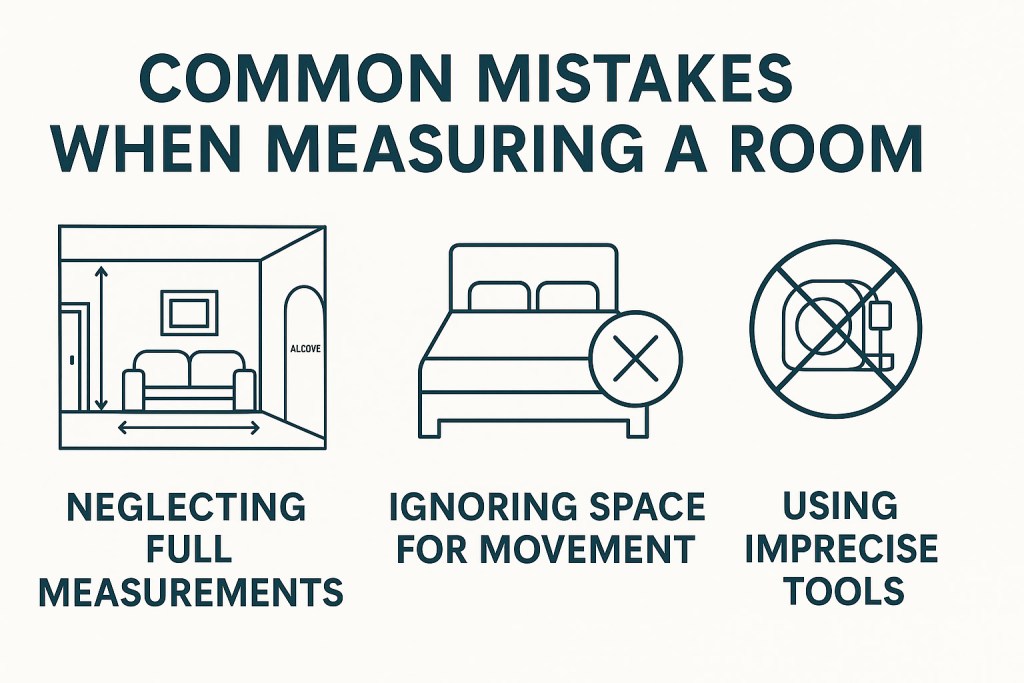
One of the most common mistakes when measuring a room for a super king size mattress is not accounting for the space needed for other furniture. It’s easy to focus solely on the mattress and forget about the additional items that will share the space. Ensure you measure and plan for the placement of nightstands, dressers, and any other critical pieces to avoid a cluttered room.
Another frequent error is overlooking the clearance needed for moving the mattress into the room. Doorways, hallways, and staircases can all present significant challenges if not measured accurately. It’s essential to ensure that the mattress can be maneuvered through these spaces without causing damage to the mattress or your home. Measure these areas carefully and consider any tight corners or narrow passages.
A less obvious mistake is failing to consider the height of the bed. When measuring, it’s important to account for the combined height of the mattress and bed frame. A bed that’s too high or too low can be uncomfortable and inconvenient. Ensure that the height is suitable for getting in and out of bed easily. By avoiding these common mistakes, you can ensure a smoother process and a more comfortable bedroom setup.
How to Visualise Mattress Placement in Your Room
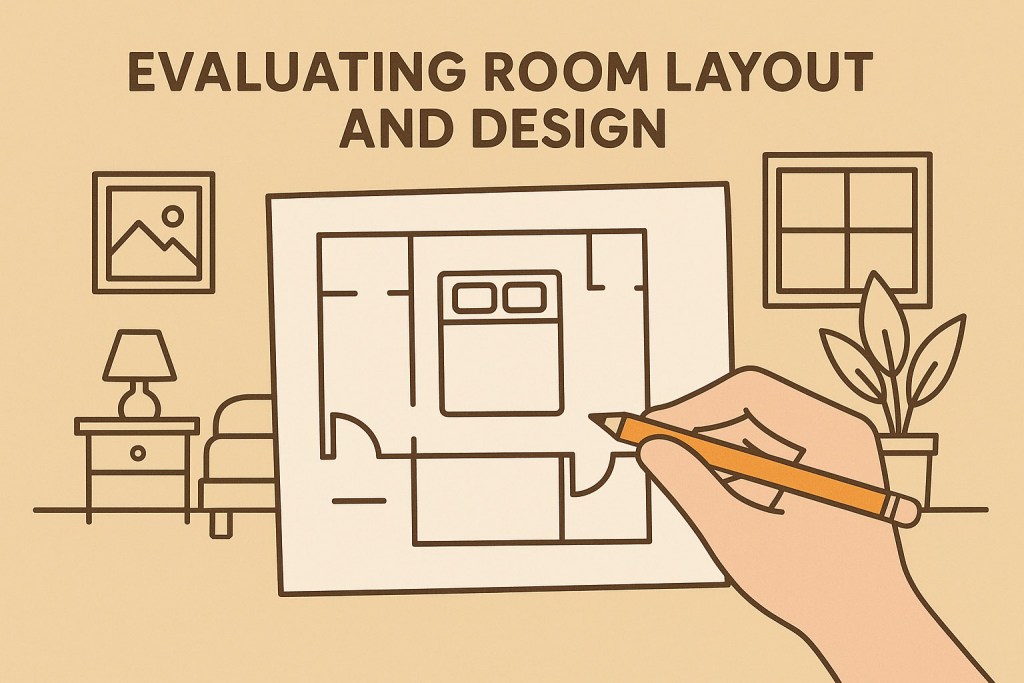
Visualizing the placement of your super king size mattress in your room can help you achieve the perfect layout. Start by sketching a floor plan of your room, including all dimensions and architectural features. This visual aid can help you experiment with different placements for your mattress and other furniture. Use graph paper or a digital tool to create a scaled representation for more accuracy.
Once you have a floor plan, consider using painter’s tape to outline the dimensions of the mattress on the floor. This technique provides a real-world visual of how much space the mattress will occupy. It allows you to see how the mattress will fit with other furniture and walkways, helping you make any necessary adjustments before purchasing.
If you prefer a digital approach, consider using room design software or apps. These tools allow you to create a virtual layout of your room and experiment with different furniture arrangements. Some apps even offer 3D visualization, giving you a more immersive experience. By visualizing the placement of your mattress, you can ensure a harmonious and functional bedroom layout.
Tips for Optimising Space Around Your Mattress
Optimizing the space around your super king size mattress is essential for creating a comfortable and functional bedroom. Start by ensuring there’s enough clearance around the bed for easy movement. Aim for at least two feet of walking space on each side and at the foot of the bed. This will make it easier to get in and out of bed and navigate the room.
Consider the placement of furniture to maximize space. Nightstands should be within easy reach but not so close that they create a cramped feeling. If space is limited, consider wall-mounted nightstands or shelves to free up floor space. Additionally, choose dressers and wardrobes that complement the size of your room. Taller, narrower pieces can provide ample storage without taking up too much floor space.
Think about vertical space as well. Utilize wall space for storage and decor to keep the floor area open. Shelving units, wall hooks, and floating shelves can provide storage and display options without encroaching on valuable floor space. By optimising the space around your mattress, you can create a balanced and spacious bedroom that feels both functional and inviting.
Choosing the Right Bed Frame for Your Super King Mattress
Choosing the right bed frame is crucial for complementing your super king size mattress and enhancing your bedroom’s overall aesthetic. When selecting a bed frame, consider the style and design that best suits your taste and room decor. Options range from sleek, modern frames to ornate, traditional designs. The bed frame should not only support the mattress but also contribute to the room’s ambiance.
Pay attention to the dimensions of the bed frame, as it can add significant size to the mattress. Measure the width, length, and height of the frame, including any additional features like headboards or footboards. Ensure that the frame fits comfortably within your room’s layout and leaves enough space for other furniture and movement.
Consider the material and construction of the bed frame for durability and support. Wooden frames offer a classic look and sturdy construction, while metal frames provide a more contemporary feel and are often easier to assemble. Upholstered frames add a touch of luxury and comfort but may require more maintenance. Choose a frame that balances style, functionality, and durability to complement your super king size mattress perfectly.
Conclusion
Achieving the perfect fit for your super king size mattress requires accurate measurements, smart planning, and the right layout. By considering room dimensions, bed height, and furniture placement, you can create a comfortable and well-balanced space. With simple tools like floor plans or tape, you can avoid mistakes and design a bedroom that feels both spacious and relaxing.
Choosing the right bed starts with making sure your space can accommodate it comfortably. Checking room size for a queen size bed is essential to ensure the mattress fits well without making the bedroom feel crowded. A queen size bed offers generous sleeping space, but it also requires enough room for walking areas, bedside tables, and other furniture. By measuring your room dimensions and planning the layout carefully, you can create a balanced bedroom that feels spacious, practical, and comfortable for everyday living.
to read the detailed guide about mattress sizes click here.
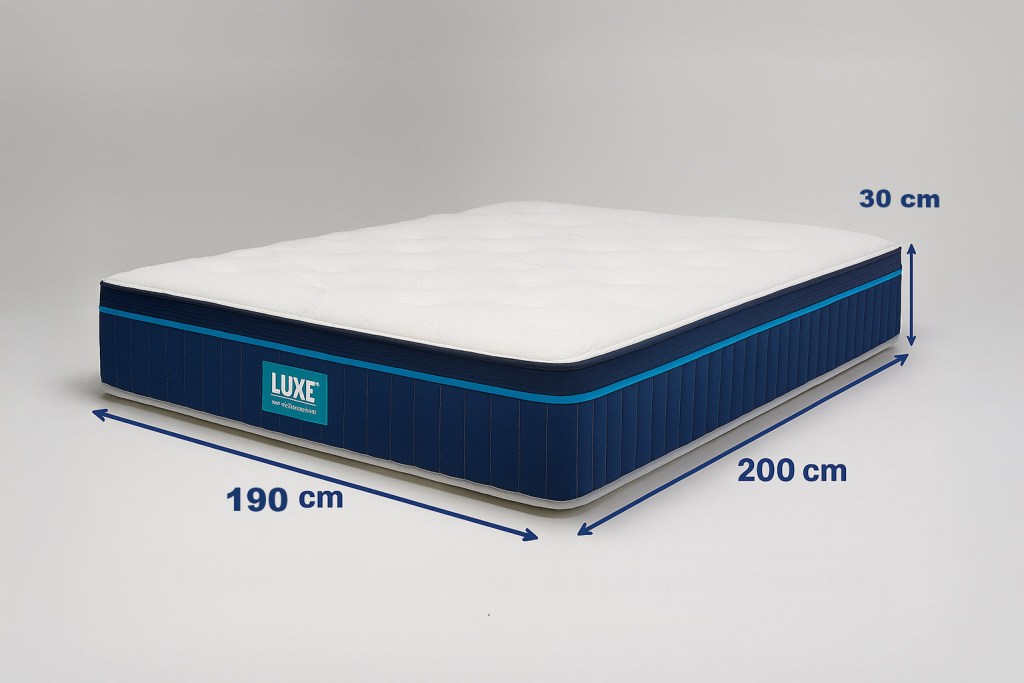
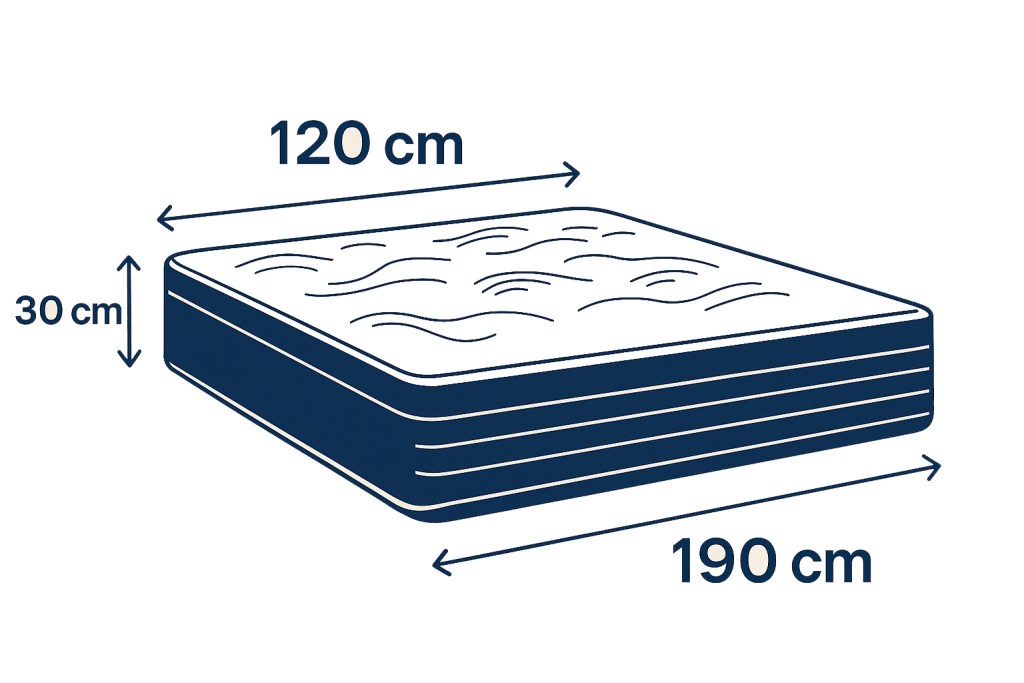
In the UK, a standard queen size mattress typically measures 120 centimetres wide by 190 centimetres long. This is roughly 4 feet wide by 6 feet 3 inches long (4ft x 6ft 3in). It falls between the UK’s small double and double sizes, offering extra space for individual sleepers or for compact guest rooms where a full double might be too tight. This guide will walk you through how to determine whether your room can comfortably fit a queen size bed, and how to assess your bedroom’s layout with precision and practicality.
Understanding Queen Size Bed Dimensions
A queen size mattress in the UK is not the same as a US queen. The UK version is slightly smaller and is often used in homes where space is a concern. Measuring 120 cm in width (approximately 4 feet) and 190 cm in length (approximately 6 feet 3 inches), it is noticeably more spacious than a single or small double mattress but requires less room than a full double or king size. This makes it a popular choice for guest bedrooms, smaller master bedrooms, or studio flats.
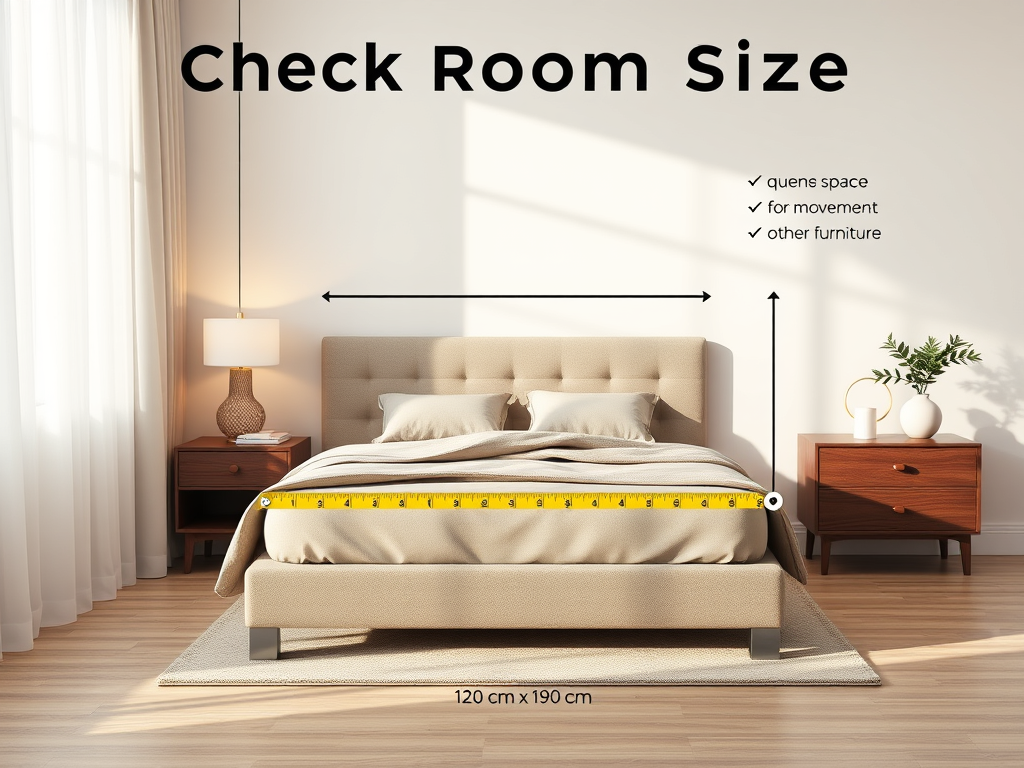
When evaluating your room for fit, you must go beyond the bed’s measurements and factor in additional clearance on all sides to allow for ease of movement, as well as space for other furniture.
Measuring Your Room Accurately
Start by measuring your bedroom’s length and width using a tape measure. Ideally, take measurements in both centimetres and feet/inches to compare with the mattress size and general furniture dimensions. Record the exact dimensions of the usable floor space, which excludes built-in wardrobes, alcoves, or protrusions from walls.
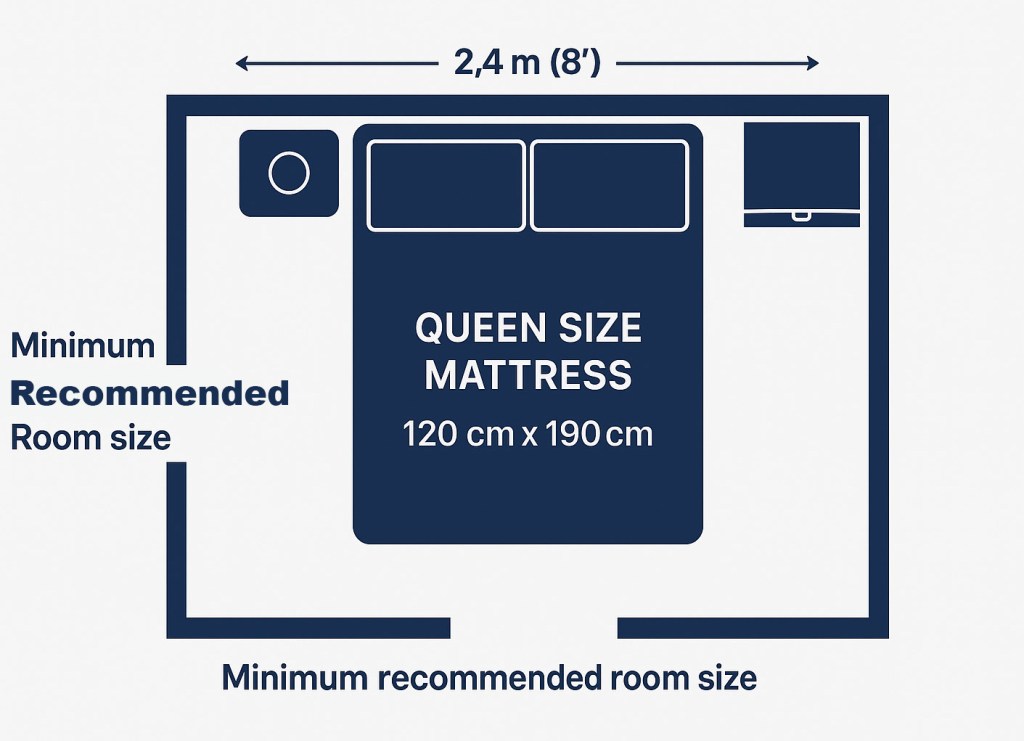
To comfortably fit a queen size mattress in your room, the minimum recommended room size is about 2.4 metres by 3 metres, which is roughly 8 feet by 10 feet. This gives you the bare minimum clearance to walk around the bed and to fit bedside tables or other small furniture items.
For a more comfortable arrangement, a room that measures 3 metres by 3.3 metres (10 feet by 11 feet) or larger is ideal. This allows for better spacing between the bed and walls, unobstructed opening of drawers or closet doors, and the inclusion of larger furnishings like wardrobes or desks.
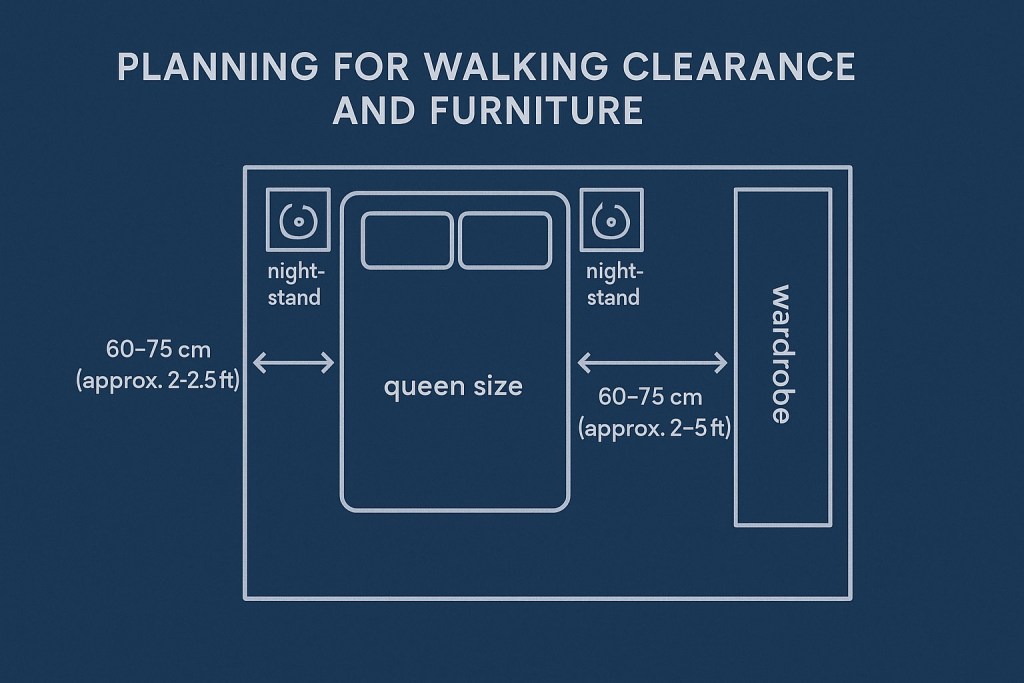
Planning for Walking Clearance and Furniture
One of the most overlooked aspects when placing a bed is walking clearance. Even if the bed physically fits in the room, it won’t be functional or comfortable if it’s squeezed against the wall or blocks access to other parts of the room.
A good rule of thumb is to leave at least 60 to 75 centimetres (approximately 2 to 2.5 feet) of walking space on each side of the bed and at the foot. This allows enough room to comfortably walk, change sheets, or move around without bumping into furniture. If your room includes features like radiators, swinging doors, or deep-set windowsills, make sure those are accounted for in your layout.
Furniture placement is equally important. Common items in a bedroom such as nightstands, a chest of drawers, or a wardrobe must be included in your layout plan. Most nightstands are about 40 to 50 cm wide and need space on either side of the bed. A wardrobe may require up to 60 cm depth and another 50 to 60 cm in front for door clearance. If you plan to include a desk or dressing table, ensure it doesn’t crowd the walking path or bed placement.
Using Layout Tools or the Tape Outline Method
Once you’ve taken your measurements, one of the best ways to visualise fit is the tape outline method. Use painter’s tape or masking tape to mark out the exact dimensions of the queen size mattress on the floor 120 cm by 190 cm (or 4ft by 6ft 3in). Extend the tape to mark a clearance buffer of 60 to 75 cm around the mattress to simulate walking space, to read the all standard sizes and bed calculator click here.
This method allows you to physically stand inside the projected space and assess whether it feels too cramped or if the flow of the room remains functional. You can also position placeholder furniture using boxes or other items to mimic dressers or nightstands. This hands-on approach often gives a clearer perspective than simply imagining the layout on paper.
If you prefer digital tools, there are many free online room planners available that allow you to input room dimensions and virtually position furniture and mattresses. These tools can be helpful for trying out multiple configurations before committing to a purchase.
Mattress Height and Bed Frames Matter Too
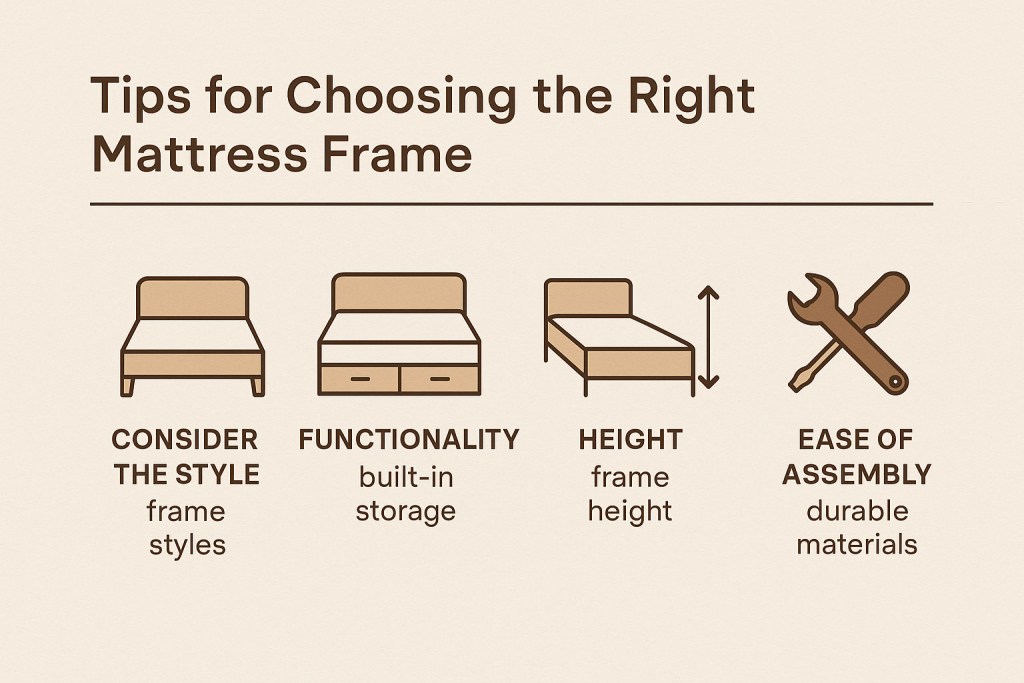
Another factor to consider is mattress height and the bed frame style. Some queen mattresses are low-profile, while others with extra cushioning or pillow-tops may be quite tall. Combined with a high platform or storage bed frame, your bed height can easily exceed 65 to 70 cm, which may be uncomfortable for some people or obstruct windowsills and wall outlets.
In smaller rooms, a low-profile frame can help make the space feel more open. Alternatively, a storage or ottoman bed frame may help reduce the need for extra drawers or wardrobes by offering under-bed storage, making better use of the floor area.
Special Considerations for Small Bedrooms
If your bedroom is particularly compact, say less than 8 feet wide or under 2.5 metres, placing a queen bed may still be possible, but you’ll need to make sacrifices elsewhere. This might include pushing the bed against one wall, which limits access to one side. While not ideal for couples, this setup can work for single sleepers or in guest rooms.
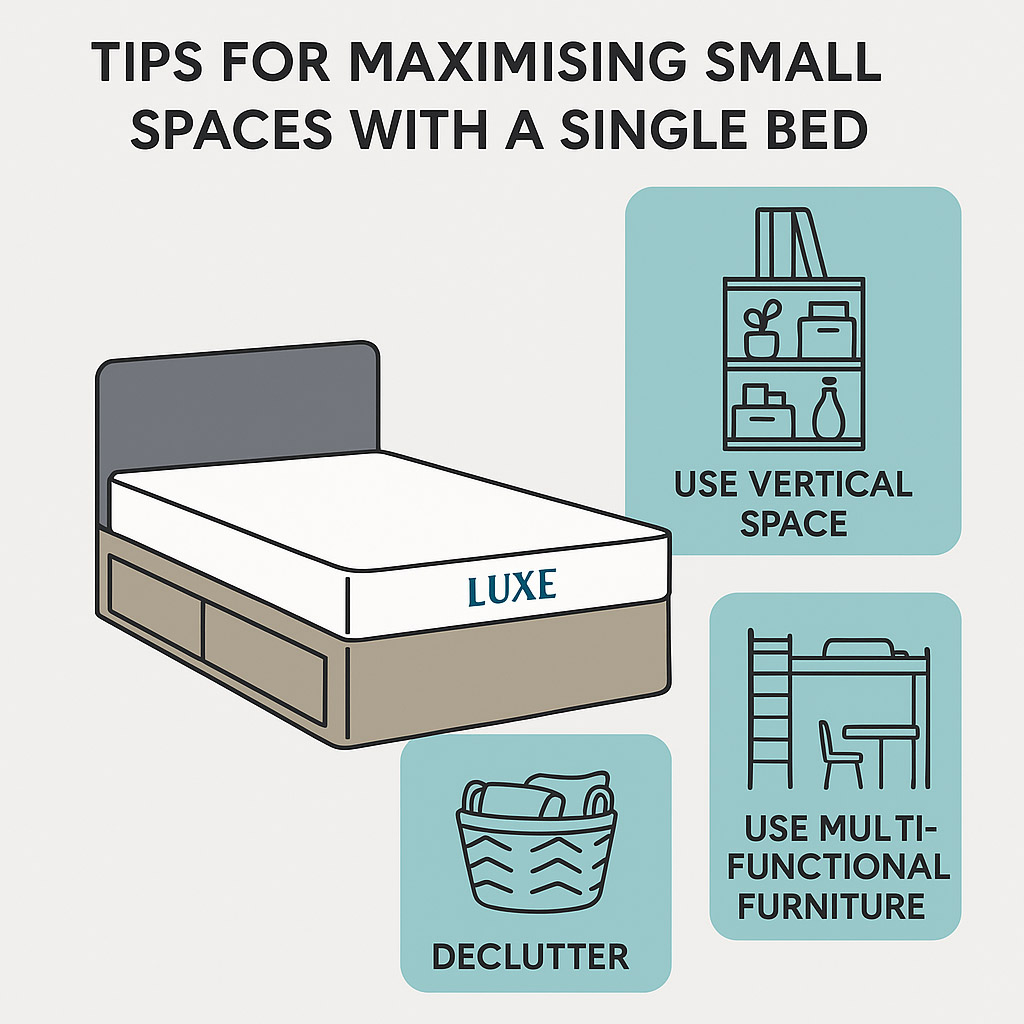
Floating shelves instead of nightstands, wall-mounted lighting instead of lamps, or sliding wardrobe doors rather than swinging ones can all help maximise space in tight layouts. Carefully selecting multi-functional furniture will go a long way in preserving comfort and accessibility.
FAQs
How wide should a room be to fit a queen size bed?
Minimum 10 feet wide for a queen (60″ wide) plus 2 feet clearance on each side; ideally 12+ feet for furniture.?
Can a queen bed fit in a 12×12 room?
Yes, a standard queen (60″x80″) fits a 12×12 (144 sq ft) room with ~2 ft walkways cozy for couples but workable.
Can a queen bed fit in an 8×10 room?
Barely the 60″x80″ queen overcrowds an 8×10 (80 sq ft); only 1-2 ft clearance max, better for twin/full.
Will a 60×80 fit a queen size bed?
Yes, 60″x80″ are the exact standard queen mattress dimensions worldwide.
Are there two different sizes of queen beds?
Yes, standard (60″x80″), Olympic (66″x80″), California (60″x84″) offer variations for width/length needs.
Are all queens 60×80?
No, while standard queens are 60″x80″, Olympic/California variants differ; always check specs.
Final Thoughts
To determine whether your bedroom can accommodate a UK queen size mattress, begin by understanding the dimensions: 120 cm wide by 190 cm long, or 4 feet by 6 feet 3 inches. Measure your room and account not just for the footprint of the bed, but also for adequate clearance and placement of essential furniture.
The absolute minimum room size is about 8 feet by 10 feet, but 10 feet by 11 feet or larger will offer a more comfortable setup. Use tape on the floor to mark mattress dimensions and walkable space, and plan around doors, windows, and any existing furniture. Don’t forget to factor in the height of the mattress and bed frame to ensure vertical clearance is also suitable.
Ultimately, with thoughtful planning and realistic layout expectations, a queen size bed can fit comfortably in most medium-sized UK bedrooms while still allowing for a functional and aesthetically pleasing design.